

10 Best German PEOs in 2026

Best German PEOs Shortlist


A Professional Employer Organization (PEO) in Germany takes on the legal employer role, handling contracts, payroll, benefits, and compliance with German labor law. If you need to hire or manage staff in Germany without setting up a local entity, a PEO can help you keep HR processes compliant while supporting both local and global workforce needs.
This list covers the best German PEOs for easy compliance, accurate payroll, smooth onboarding, tax clarity, and expert HR support, so you can focus on growing your business without missing a beat.
Why Trust Our Software Reviews
Our team has been testing and reviewing software since 2012. As HR experts ourselves, we know how difficult—and important—it is to choose the right software.
For this guide, we evaluated tools using hands-on testing and independent research, scoring tools using our selection criteria. We also draw on insights from industry thought leaders and practicing HR experts.
Our reviews reflect our human editorial judgment, not a sales pitch.
Expert reviewers:
Compare the Best German PEOs
Compare pricing and specs, side by side, for the providers that made your shortlist:
| Tool | Best For | Trial Info | Price | ||
|---|---|---|---|---|---|
| 1 | Best for local entity ownership with no aggregators | Free demo available | From $599/user/month | Website | |
| 2 | Best for end-to-end recruitment sourcing | Free demo available | From $599/employee/month | Website | |
| 3 | Best for AI-assisted HR ops | Free demo available | From $199/employee/month | Website | |
| 4 | Best for native EOR with owned entity | Free demo available | From $549/employee/month | Website | |
| 5 | Best for in-house visa support hiring | Free demo available | From $399/user/month | Website | |
| 6 | Best for proprietary IP protection and local ownership | Free demo available | From $699/user/month | Website | |
| 7 | Best for visa sponsorship and foreign worker mobility | Free demo available | From $399/user/month | Website | |
| 8 | Best for statutory benefits and tax clarity | Free demo available | From $199/user/month | Website | |
| 9 | Best for HR advisory and global payroll | Free demo available | Pricing upon request | Website | |
| 10 | Best for B Corp-certified global EOR | Free demo available | From $699/employee/month | Website |


German PEO Reviews
Below are my detailed summaries of the best PEOs that made it onto my shortlist. My reviews offer a detailed look at the features, best use cases, and integrations to help you find the best one
Best for local entity ownership with no aggregators
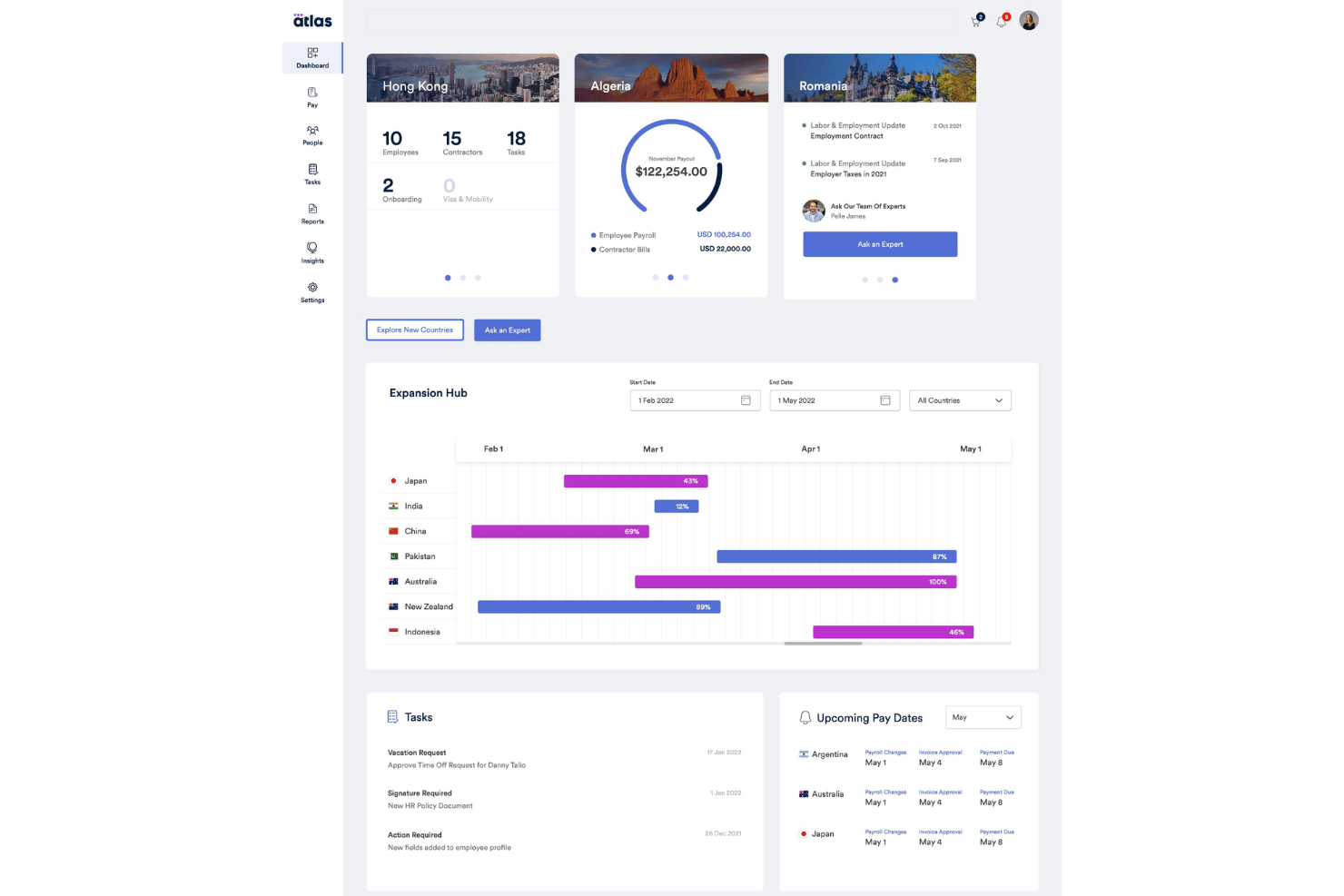
Atlas HXM is a global employer of record platform that lets you hire and pay employees in Germany through its own legal entity, handling employment contracts, payroll, social insurance contributions, and compliance without you needing a local GmbH.
Who Is Atlas HXM Best For?
Atlas HXM is a strong fit for mid-market and enterprise teams expanding into Germany who need a single EOR without third-party intermediaries.
Why I Picked Atlas HXM
Atlas HXM earned a spot because it operates its own legal entity in Germany, ensuring no third-party partner sits between your employees and compliance accountability. When handling termination disputes or works council obligations, you deal with Atlas HXM rather than an outsourced partner. I also appreciate that onboarding covers the full German setup, including tax ID (Steuer-ID) collection, statutory health insurance selection, and work permit coordination.
Atlas HXM Key Features
- Employee self-service portal: Allows employees to view payslips, access tax documents, enroll in benefits, and submit time-off requests via web or mobile app.
- Global Mobility add-on: Covers Blue Card applications, work permit eligibility assessments, and immigration case management for non-EU hires in Germany.
- Agent of Record (AOR) contractor management: Onboards and pays contractors with classification assessments and up to $100,000 in misclassification protection per contractor.
- Multi-currency expense tracking: Manage and approve local business expenses with built-in currency conversion and reimbursement routing
Atlas HXM Integrations
Atlas HXM integrates with Workday, BambooHR, UKG, Dayforce, Paycor, Sage, Okta, Microsoft Azure AD, and Google Workspace, alongside an open API.
Pros and Cons
Pros:
- Built-in contractor misclassification protection
- Proactive German labor law and works council coverage
- Owned German entity ensures full compliance
Cons:
- No dedicated German pension marketplace offering multiple insurers
- No native DATEV integration for payroll export
Best for end-to-end recruitment sourcing
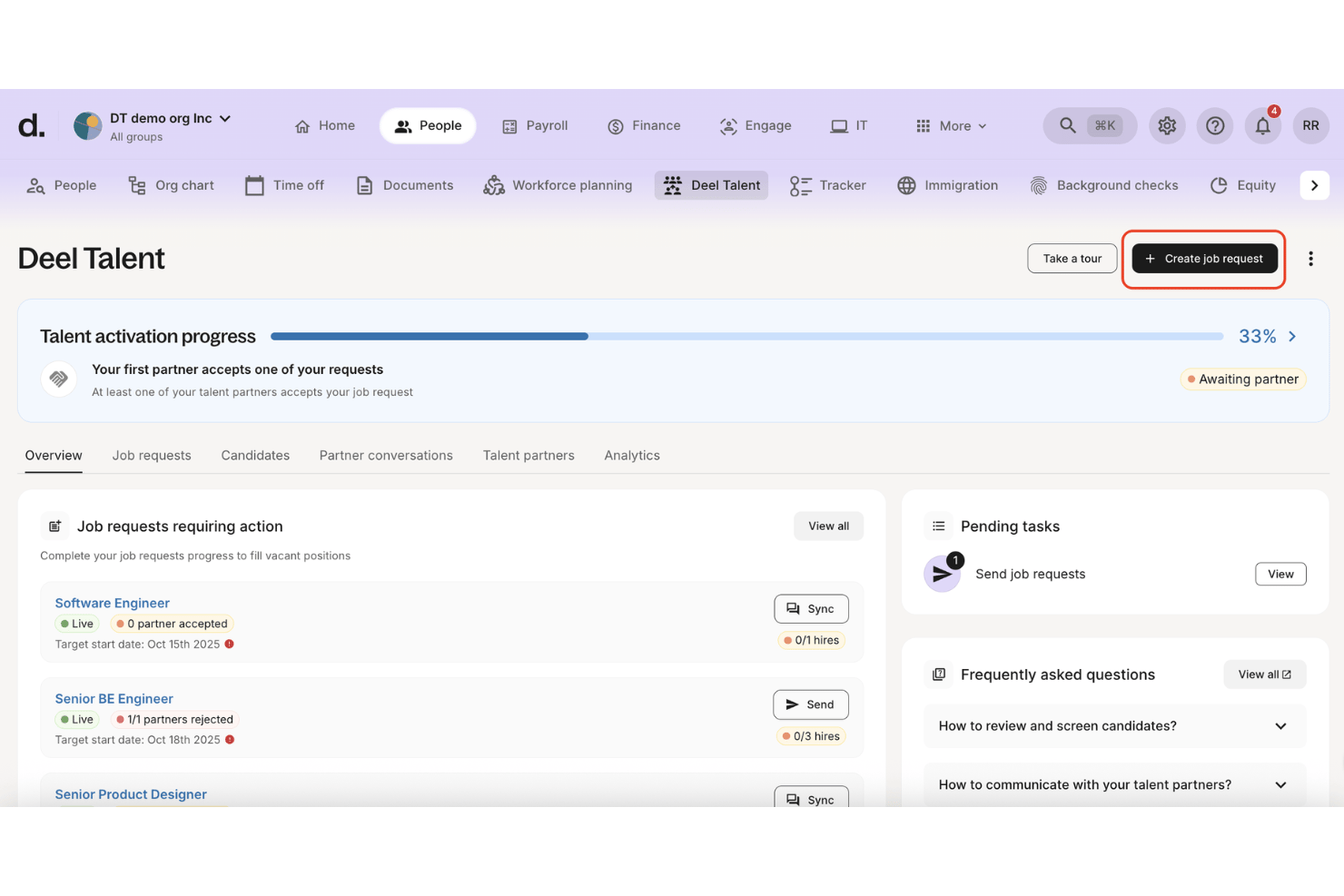
Deel Hire is an all-in-one hiring and employer of record platform that manages global employment, payroll, tax remittance, and statutory benefits.
Who Is Deel Hire Best For?
Deel Hire is a strong fit for international companies hiring in Germany without a local entity, particularly those scaling across multiple countries.
Why I Picked Deel Hire
Deel Hire earned a spot on my shortlist for international scaling due to its owned local entity (Deel Germany GmbH) holding an indefinite AÜG license. This provides long-term regulatory stability under German labor-leasing laws without forcing you to re-evaluate vendor licenses every few years.
Deel Hire Key Features
- Integrated Deel Mobility: Handles EU Blue Card sponsorship, visa eligibility assessments, and renewal tracking directly inside the dashboard.
- Native DATEV and ADDISON sync: Sync local payroll data natively with DATEV and ADDISON to let tax advisors reconcile records without manual exports.
- Works council navigation: Navigate Betriebsrat compliance requirements, covering statutory notification and consultation duties.
- Supplemental benefits marketplace: Access optional private health insurance through carriers like AXA, Allianz, and Unisure alongside statutory benefits.
Deel Hire Integrations
Deel Hire supports DATEV, ADDISON, Workday, Personio, SAP SuccessFactors, BambooHR, NetSuite, and QuickBooks. It also offers a Deel API for custom connections and Zapier integration.
Pros and Cons
Pros:
- Offers integrated EU Blue Card visa support
- Indefinite AÜG license guarantees long-term regulatory compliance
- Native sync with German accounting software
Cons:
- Customer support response times can be slow during peak periods
- Leased hires remain subject to Germany’s standard 18-month assignment cap

Best for AI-assisted HR ops
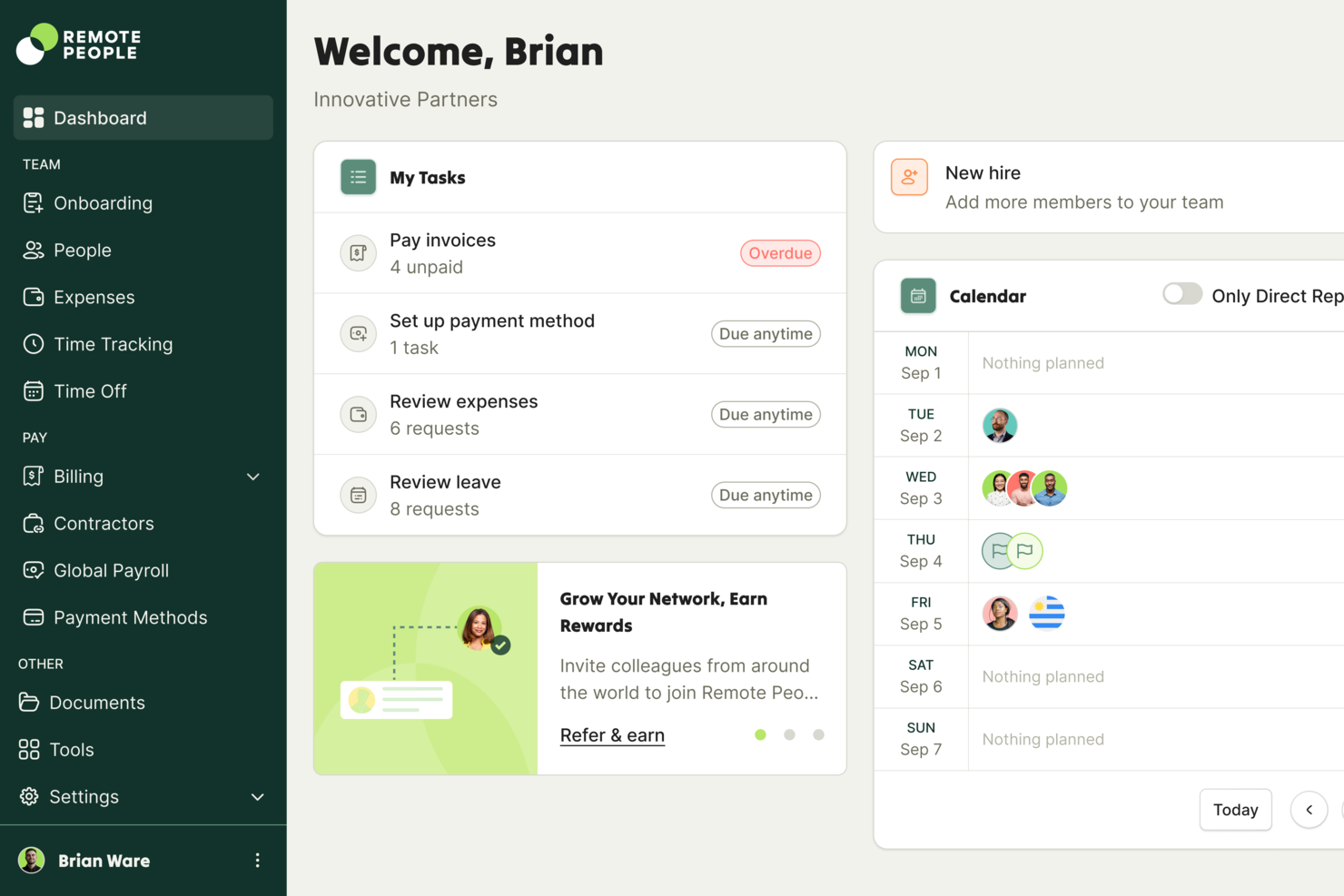
RemotePeople is an AI-enhanced Employer of Record (EOR) service operating through its own German legal entity. It manages localized employment contracts, payroll processing, social security deductions, statutory benefits administration, and visa filings.
Who Is RemotePeople Best For?
RemotePeople is a strong fit for international companies hiring their first German employees who want to fast-track onboarding without setting up a local GmbH.
Why I Picked RemotePeople
RemotePeople stands out for its AI Command Center, which simplifies complex HR operations. You type natural-language instructions—such as executing a gross salary adjustment or initiating a termination—and the platform drafts the action for a human compliance specialist to audit and execute with a timestamped trail. Combined with in-house Works Council (Betriebsrat) guidance, it removes operational friction from German workforce management.
RemotePeople Key Features
- Mini-job & midi-job payroll: Accurately calculates contributions for specific wage brackets, including mini-jobs (up to €603/month) and midi-jobs (€603.01–€2,000/month).
- In-house German recruitment: Offers local headhunting, executive search, and RPO services, bundled with EOR at 2% of the annual salary over 12 months.
- EOR Flex plan: Offers a month-to-month EOR option with no minimum headcount, setup fees, or long-term commitments for market testing.
- German social security administration: Manages your Betriebsnummer registration, DEÜV filings, and statutory contributions.
RemotePeople Integrations
RemotePeople syncs with major tools like BambooHR, ADP, Google Workspace, Okta, Gusto, QuickBooks, and NetSuite. Native DATEV integration or an open API may require manual accounting reconciliation.
Pros and Cons
Pros:
- Bundled in-house recruitment and targeted visa support
- AI-driven workflows expedite compliance and verification
- Owned local entity delivers direct local compliance
Cons:
- Lacks a mobile app for on-the-go employee
- Lacks native DATEV integration

Best for native EOR with owned entity
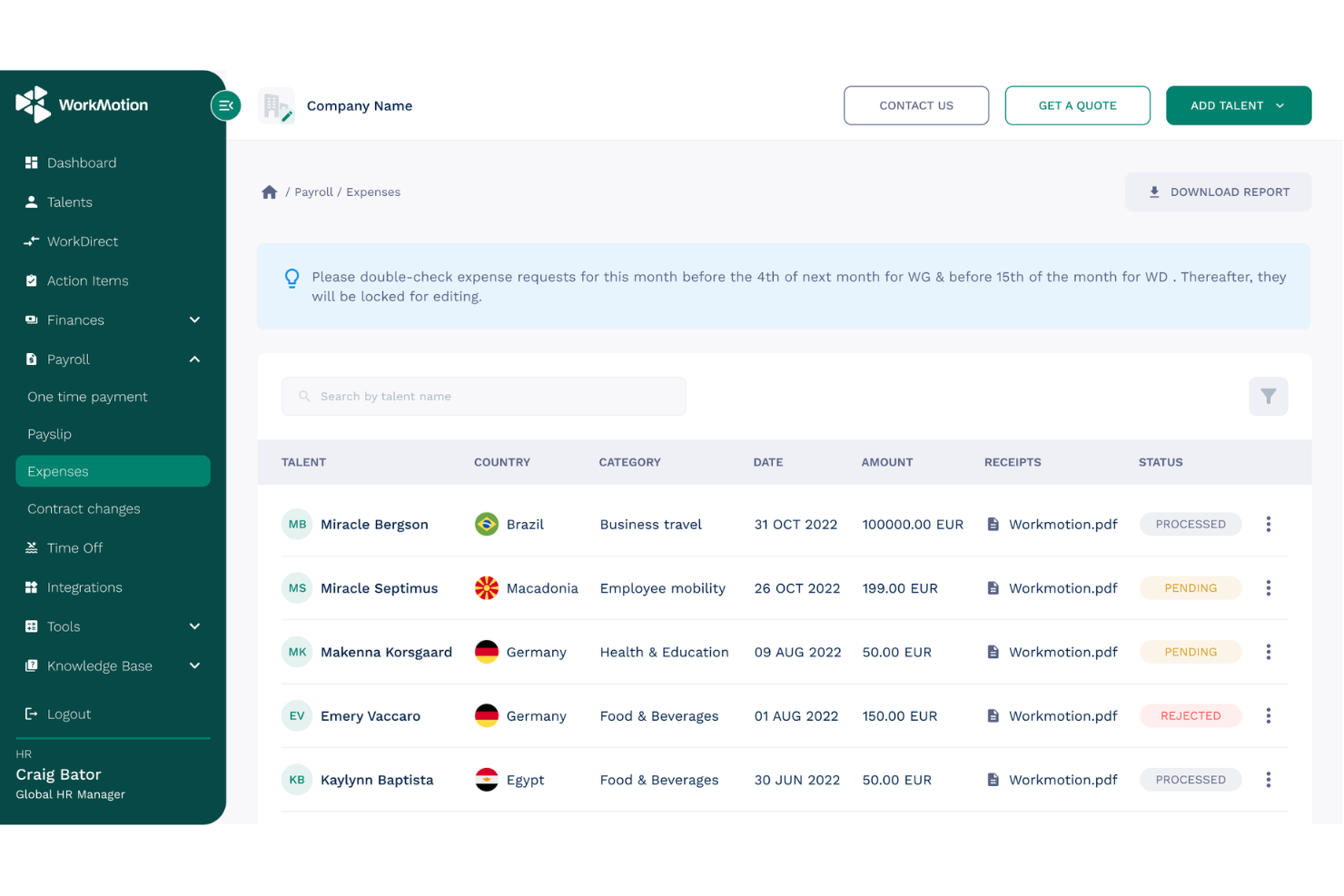
WorkMotion is a Berlin-headquartered employer of record (EOR) platform that simplifies cross-border compliance, contracts, statutory benefits, and payroll.
Who Is WorkMotion Best For?
WorkMotion is a strong fit for companies hiring German employees who want the accountability of a locally owned entity rather than a third-party partner model.
Why I Picked WorkMotion
WorkMotion made the list as a native Berlin-based provider with unique compliance credentials. It is the only EOR on our list holding IEC Gold Certification—meaning its payroll accuracy, data security, and labor law frameworks undergo rigorous independent auditing.
WorkMotion Key Features
- WorkFlex A1 Automation: Automatically generates A1 certificates and Posted Worker notifications for 31 EU/EEA markets, backed by up to €250,000 in liability coverage per case.
- Wanda AI Assistant: Automates routine HR tasks, schedules appointments, and answers local labor law or tax compliance queries.
- Direct foreign employer: Registers your company as a foreign employer without a local entity, offering a compliant alternative that bypasses Germany's 18-month AÜG cap.
- Bi-directional HRIS sync: Bidirectional syncs with Personio and Workday to connect your existing HR stack with WorkMotion's payroll and compliance workflows.
WorkMotion Integrations
WorkMotion integrates with UKGPro, HiBob, HR Cloud, BambooHR, ADP Workforce Now, and DocuSign. It also offers an open API for custom integrations.
Pros and Cons
Pros:
- WorkFlex covers EU cross-border remote work
- IEC Gold Certified for compliance assurance
- Offers an alternative to 18-month leasing limits
Cons:
- Mandatory security deposit doubles upfront costs
- No native DATEV integration for accountants

Pebl
Best for in-house visa support hiring
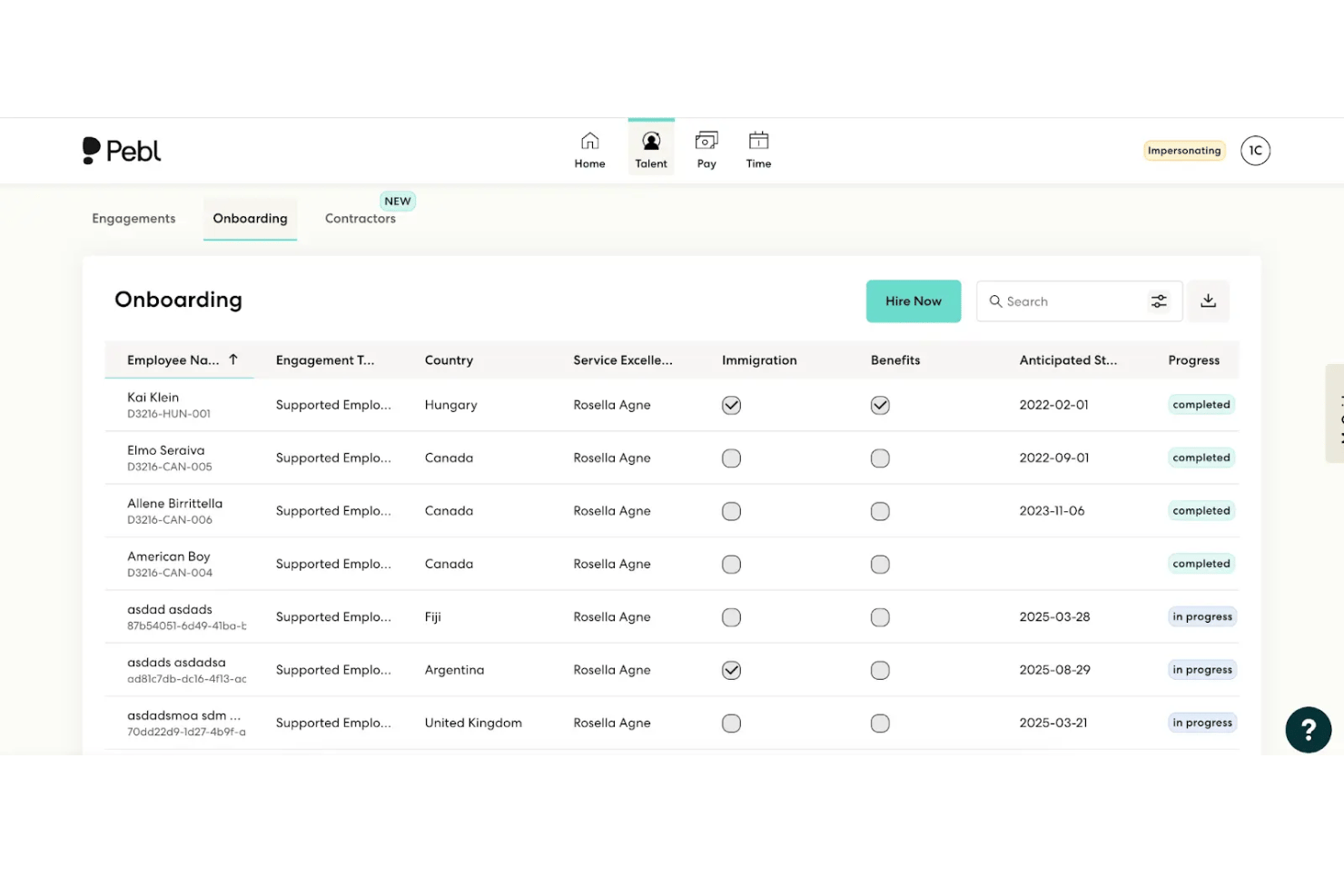
Pebl is a global employer of record platform that handles German employment contracts, EUR payroll with Lohnsteuer and social security contributions, statutory and supplemental benefits, and in-house visa and work permit support.
Who Is Pebl Best For?
Pebl is best suited for growing businesses moving international tech talent to Germany who need expedited Blue Card processing alongside standard EOR infrastructure.
Why I Picked Pebl
Pebl made my shortlist because its in-house immigration team genuinely sets it apart for German talent acquisition. Unlike platforms that outsource visa handling, Pebl processes Blue Card applications and Skilled Immigration Act cases internally, running work permit processes parallel to payroll compliance and contract setup without external delays.
Pebl Key Features
- Baker McKenzie-backed compliance: Rely on German employment contracts, termination procedures, and labor law frameworks vetted by global employment law firm Baker McKenzie.
- EUR payroll: Execute monthly payroll in EUR, calculating and remitting wage tax, solidarity surcharges, church taxes, and all four statutory social security contributions.
- Supplemental benefits administration: Offer German employees private health insurance, occupational pensions, equity awards, and wellness allowances.
- AÜG labor leasing license coverage: Hold an official AÜG permit from the Federal Employment Agency, enabling legal, compliant employee leasing that protects against strict equal pay and reclassification penalties.
Pebl Integrations
Pebl offers 250+ integrations, including Workday, BambooHR, HiBob, Greenhouse, NetSuite, and QuickBooks. An API for custom integrations is also available.
Pros and Cons
Pros:
- Offers comprehensive supplemental benefits options
- Baker McKenzie backs employment contracts and termination
- In-house immigration team handles German visas
Cons:
- Some onboarding tasks require manual CSM support
- No native DATEV payroll integration
Remote
Best for proprietary IP protection and local ownership
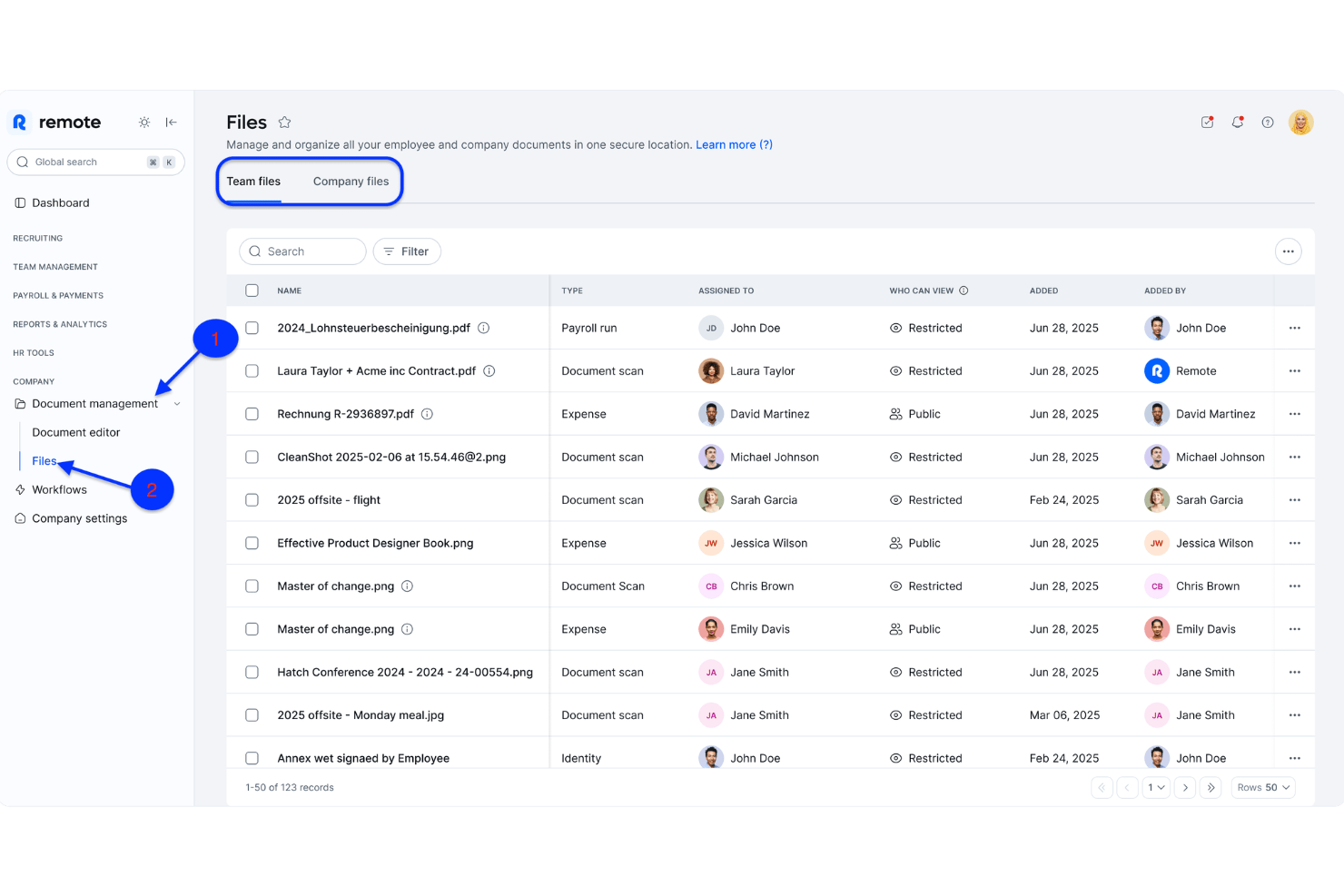
Remote is a global workforce management platform that enables companies to hire, pay, and manage German employees fully compliantly through its wholly-owned local entity.
Who Is Remote Best For?
Remote is a strong fit for software, IP-heavy, and technology companies hiring in Germany that need IP protection built into employment contracts from day one.
Why I Picked Remote
Remote earned a spot on my shortlist because it builds comprehensive IP protection directly into every EOR contract through its IP Guard feature, which is critical when hiring engineering or product teams in Germany. I also appreciate that Remote owns 100% of its German legal entity with zero third-party handoffs, ensuring accountability stays in one place. Additionally, its in-house Germany immigration experts handle Blue Card and skilled worker visa routes to streamline talent relocation.
Remote Key Features
- Compliance Watchtower: Sends proactive notifications when German labor laws, minimum wage thresholds, or statutory contribution rates change.
- bAV pension administration: Handle Germany's occupational pension enrollment, monthly contributions, and optional employer matching.
- AÜG-licensed employment: Issue compliant employment contracts under Remote's employee leasing license to meet German labor-leasing regulations.
- Multi-tier global benefits: Provide access to life insurance and a mental health platform featuring one-on-one therapy across 35+ languages through a single portal.
Remote Integrations
Remote offers 50+ native integrations, including BambooHR, HiBob, Personio, Workday, Greenhouse, QuickBooks, Xero, NetSuite, Carta, and Moss. It also offers an API for custom integrations and supports Zapier.
Pros and Cons
Pros:
- In-house Germany immigration lawyer for visa routes
- IP Guard included in every employment contract
- In-house immigration attorneys handling Blue Cards
Cons:
- No dedicated advisory services for works council setup
- No native DATEV payroll software integration

Playroll
Best for visa sponsorship and foreign worker mobility
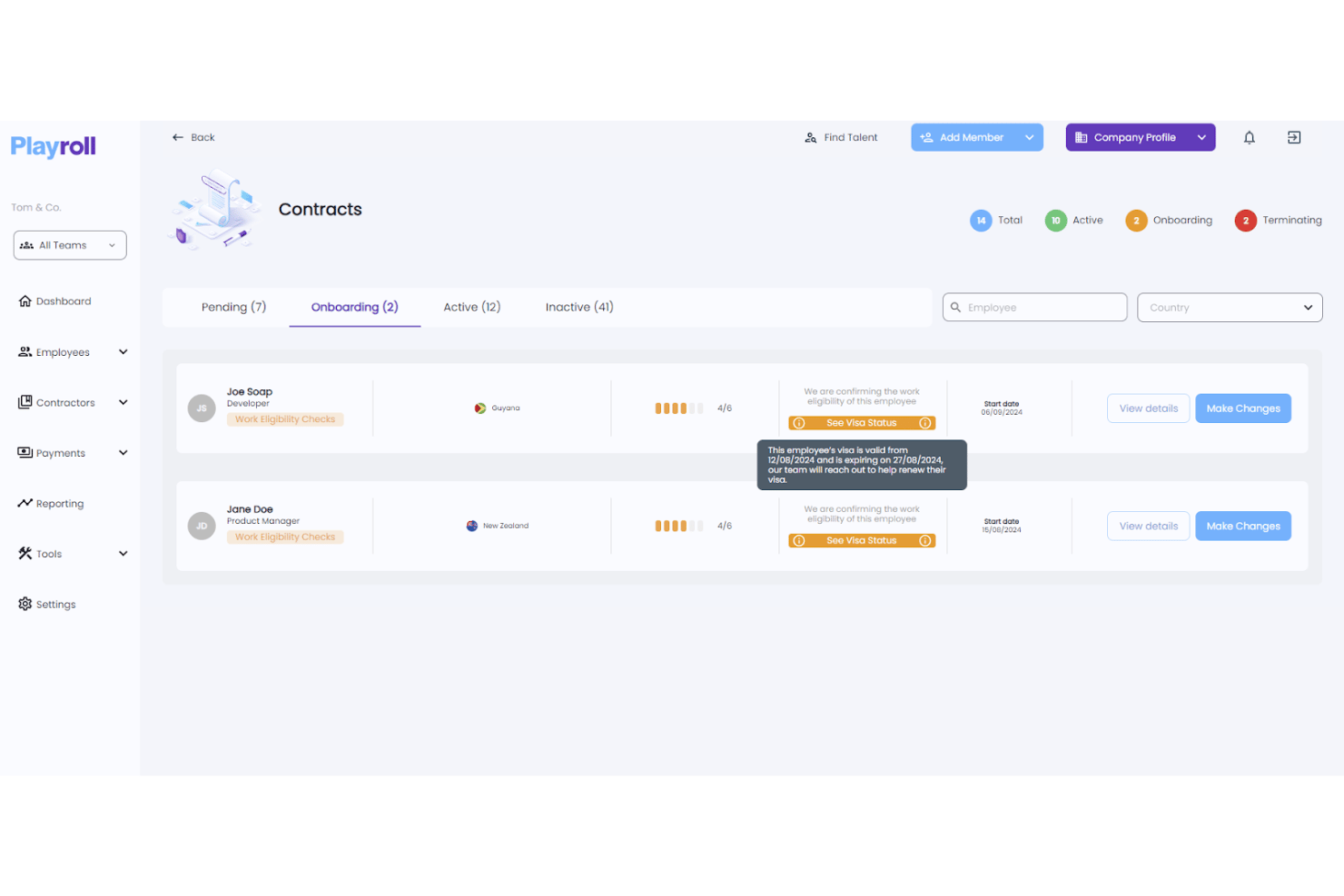
Playroll is a German employer of record with an owned German legal entity covering employment contracts, payroll, statutory social security contributions, and labor law compliance.
Who Is Playroll Best For?
Playroll is a strong fit for companies hiring non-EU talent in Germany, where visa sponsorship and worker mobility support are critical.
Why I Picked Playroll
Playroll made my shortlist because it actively supports visa sponsorship and cross-border worker mobility alongside standard employment compliance. It is ideal for hiring international talent in Germany, coordinating Blue Card-eligible contracts alongside social insurance registration and health fund enrollment. Furthermore, its owned German entity and AÜG licence ensure direct legal accountability rather than third-party subcontracting.
Playroll Key Features
- Orbit AI assistant: Answers Germany-specific hiring, payroll, and labor law questions in real time.
- Employee onboarding: Partner with an assigned Employee Success Manager included in the base fee for a direct point of contact on onboarding and ongoing HR queries.
- Automated payroll variance tracking: Monitor automated payroll analytics dashboards that flag month-over-month discrepancies and run audit workflows before pay run finalization.
- Entity transition support: Manages the employment arrangements transfer from Playroll's owned German entity to your local GmbH when establishing operations.
Playroll Integrations
Playroll integrates with BambooHR, HiBob, Expensify, Carta, Lattice, Veremark, and Jobbatical. It also provides an open API for custom integrations.
Pros and Cons
Pros:
- Handles Betriebsrat and collective agreement requirements
- Supports visa sponsorship and foreign hires
- Dedicated Employee Success Manager included in base pricing
Cons:
- Offers limited German supplemental benefits
- No native DATEV payroll integration

Best for statutory benefits and tax clarity
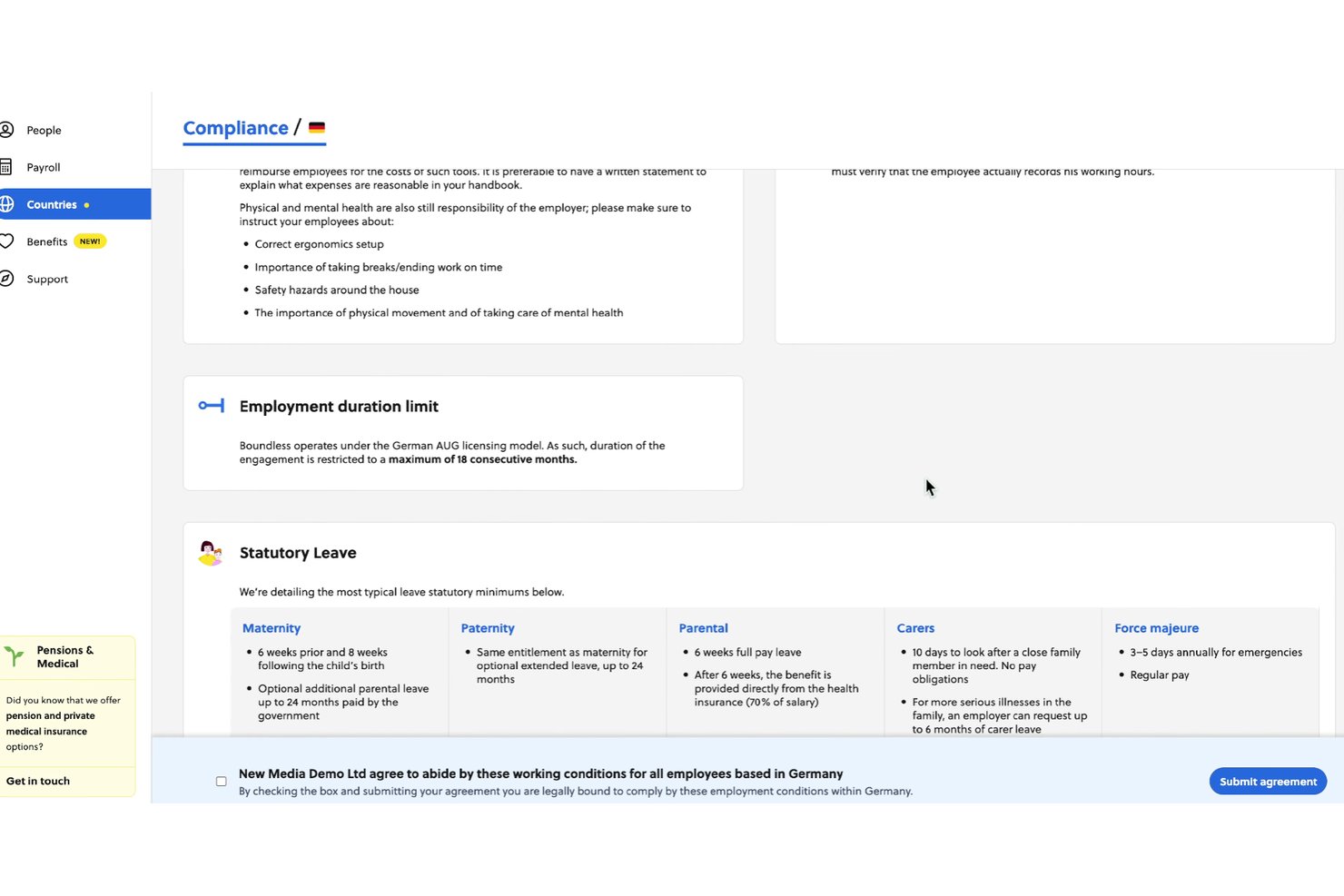
Boundless by Payoneer is a European-focused employer of record, covering German payroll, statutory contributions, labor law compliance, and employee lifecycle management across multiple countries.
Who Is Boundless Best For?
Boundless is an ideal solution for European SMBs and startups expanding into Germany who want transparent pricing and no minimum commitments for their initial hires.
Why I Picked Boundless
I included Boundless because of its complete fee transparency. Germany's statutory employer contributions can be complex, but Boundless breaks down every line item—from health insurance to nursing care—so companies can project exact total hiring costs before sending an offer letter.
Boundless Key Features
- AÜG-compliant employment contracts: Generate both the Framework Agreement and Individual Agreement required under German employee leasing law to ensure leased workers receive equivalent conditions.
- Statutory contribution management: Registers employees across all six German insurance schemes and remits contributions monthly.
- Self-service employee portal: Employees can access payslips, update personal data, and manage bank details through a dedicated portal.
- Agent of Record (AOR) service: Manages contractor compliance and payments in 160+ countries, supporting contractor-to-employee conversions.
Boundless Integrations
Boundless does not offer native integrations. The platform requires manual data exports for external HRIS or accounting reconciliation, with no public API or DATEV integration listed.
Pros and Cons
Pros:
- Affordable entry price point with no minimum hiring commitments
- Fully compliant dual framework
- Transparent employer-cost breakdowns prior to hiring
Cons:
- Employment capped at 18 months under AÜG
- No public A1 certificate or visa workflow
Best for HR advisory and global payroll
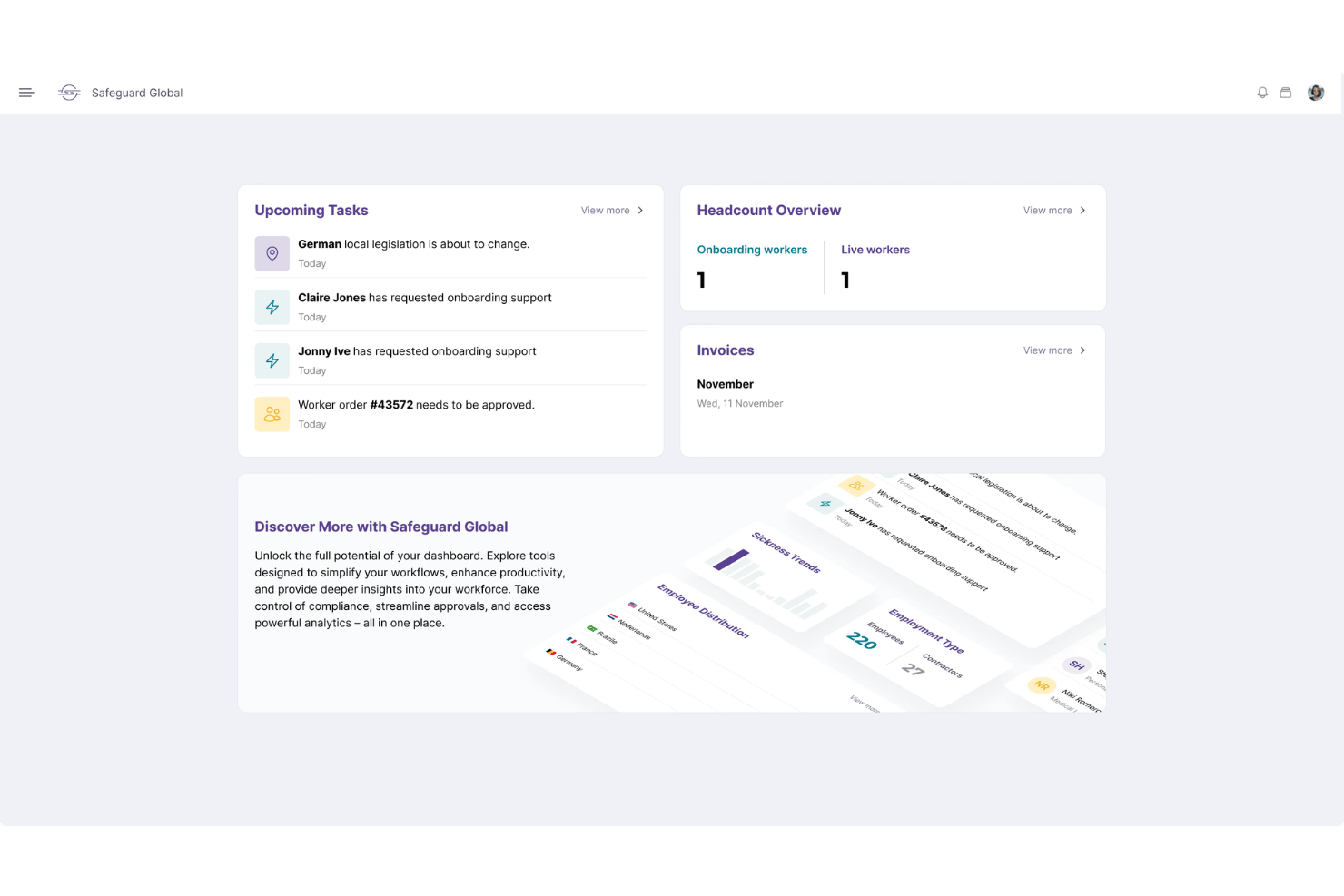
Safeguard Global is a global employer of record and managed payroll platform that lets you hire in Germany through an owned in-country entity, handling employment contracts, payroll, statutory contributions, and benefits administration under a licensed AÜG framework.
Who Is Safeguard Global Best For?
Safeguard Global is a strong fit for enterprise HR teams and international expansion leaders who need an in-country German employment expert, not just a generic platform.
Why I Picked Safeguard Global
Safeguard Global earned its spot because it brings nearly 30 years of in-country German payroll expertise through its owned GEDA entity, backed by a valid AÜG license. I also like that it administers the full German benefits stack, including occupational pensions (bAV) with mandatory employer matches, private health insurance (PKV), Deutschlandticket, and JobRad.
Safeguard Global Key Features
- GIA analytics platform: View real-time reporting dashboards breaking down workforce costs by country, currency, and contract type.
- Workday bi-directional integration: Syncs payroll data, pay slips, time tracking, and accounting journals between platforms.
- Temporary employment management: Onboard and pay contractors at separate rates across multiple tier levels.
- Immigration and work permit support: Handle visa and work permit applications for Germany-based hires, managing cases from initial application through final approval.
Safeguard Global Integrations
Safeguard Global integrates with Workday, SAP SuccessFactors, ADP, and Oracle HCM. An API for custom integrations is also available.
Pros and Cons
Pros:
- Dedicated DACH advisors for compliance guidance
- Supports localized German perks
- Smooth bi-directional sync with Workday and SAP
Cons:
- Onboarding time is slower than top competitors
- EOR model capped at 18 months
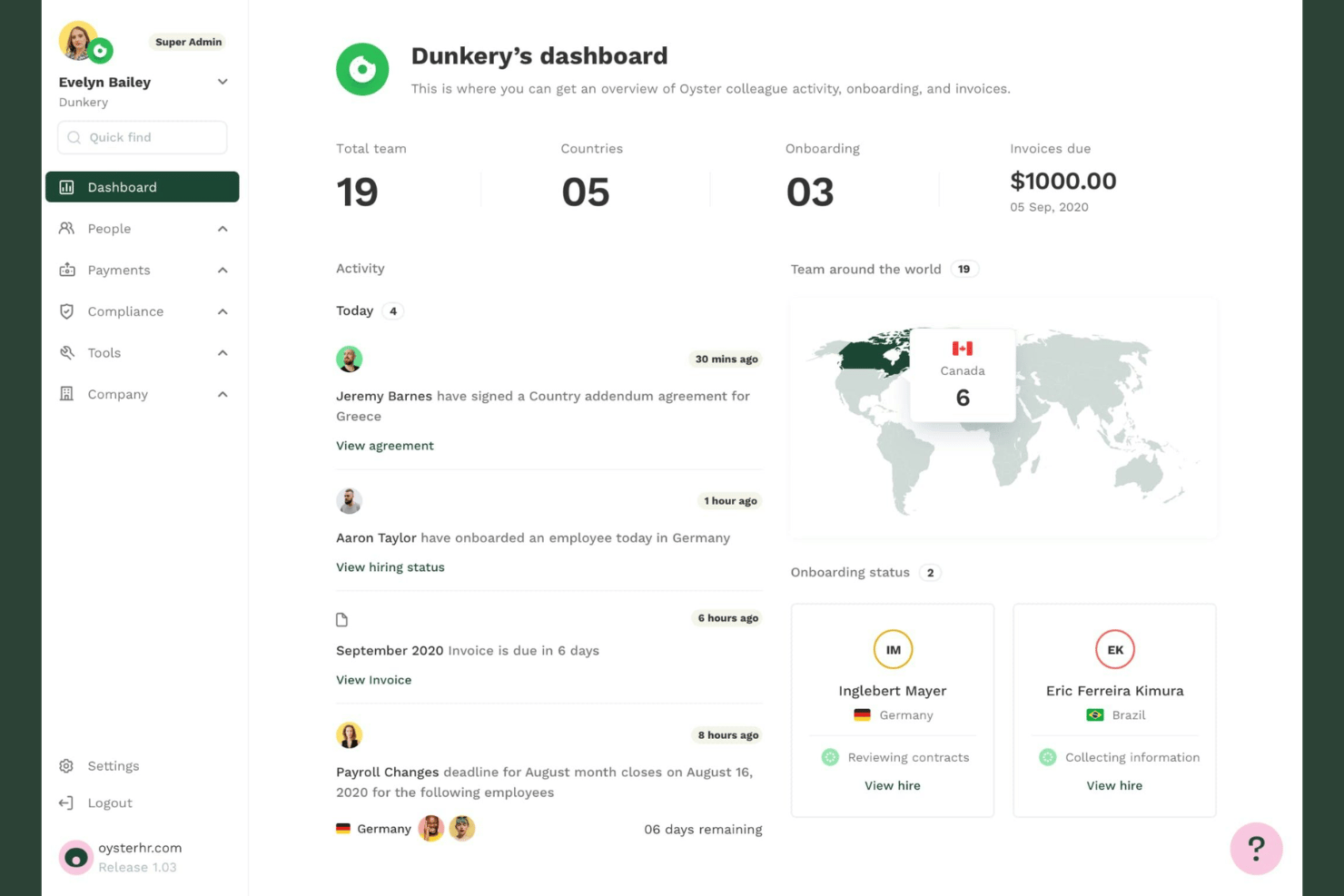
Oyster is a global employer of record platform that handles German employment contracts, EUR payroll, statutory social insurance contributions, benefits administration, and visa sponsorship.
Who Is Oyster Best For?
Oyster is a strong fit for ESG-conscious mid-market companies hiring in Germany, especially those needing built-in visa sponsorship.
Why I Picked Oyster
I included Oyster because it is a major B Corp-certified EOR, which matters if your organization enforces strict ESG procurement mandates. I also like its built-in EU Blue Card visa sponsorship, which handles eligibility checks, applications, and tracking against German salary thresholds without routing you to a third-party immigration agency. Additionally, it automates contributions across all four statutory social insurance schemes alongside Berufsgenossenschaft accident insurance.
Oyster Key Features
- Automated gross-to-net payroll: Calculate and remit income tax, solidarity surcharges, church taxes, and all four statutory social insurance contributions.
- Dismissal protection compliance: Manages notice periods, valid-cause documentation, and termination procedures under German dismissal protection law.
- Contract compliance scoring: Screens employment contracts against German legal requirements and flags gaps before a hire goes live.
- Centralize global expenses: Submit, review, approve, and reimburse employee-related expenses and allowances with automated multi-currency conversion.
Oyster Integrations
Oyster integrates with Xero, QuickBooks Online, NetSuite, and BambooHR. It also provides an API for custom integrations but lacks DATEV integration.
Pros and Cons
Pros:
- Automate pre-hire legal compliance scoring on employment contracts
- B Corp certified for ESG procurement needs
- In-house EU Blue Card visa sponsorship
Cons:
- Operates solely through partner entities than an owned entity
- Onboarding often takes 5–10 business days
Other German PEOs
Here are some additional PEOoptions that didn’t make it onto my shortlist, but are still worth checking out:
- G-P
For enterprise-grade global compliance
- Papaya Global
For international teams expanding into Germany
- Rivermate
For dedicated account manager support
- Mercans
For in-house gross-to-net payroll processing
- Multiplier
For real-time localized contract drafting
- Native Teams
For budget-friendly EOR for solo workers
- Lano
For multi-country payroll consolidation
- Gloroots
For AÜG-licensed onboarding in days


How I Evaluate German PEOs
I divide each evaluation into basic compliance—such as correct Lohnsteuer handling and Kündigungsschutz-compliant contracts—and the unique factors, like owning German entities versus partner models, that distinguish good from great.
Core Functionality (Table Stakes For This List)
When I'm selecting tools for my list, I rank each one on a scale from 0 (does not offer the functionality) to 5 (excels in this area) for each core functionality listed below. I then calculate the tool's total score into a percentage, using 65% as a benchmark to help assess its overall fit for the list.
- German legal employment: I check whether the provider owns a German entity or relies on third-party partners, and how much liability and compliance oversight they retain.
- German payroll processing: Each tool is evaluated on its ability to run monthly payroll with automated wage tax (Lohnsteuer), solidarity surcharge, and church tax deductions in EUR.
- Social security contributions: I look for full registration and remittance across all five pillars—health, pension, unemployment, long-term care, and accident insurance (Berufsgenossenschaft).
- Labor law compliance: Locally compliant contracts, proper notice periods, probation clauses, and termination handling aligned with the Protection Against Dismissal Act (Kündigungsschutzgesetz) all factor in here.
- Statutory and supplemental benefits: The range of benefits matters—I evaluate whether a provider goes beyond mandatory coverage to offer options like company pension insurance schemes, meal vouchers, or mobility allowances.
- Onboarding and HR admin: I look at how well each tool handles German-specific onboarding steps like tax ID (Steuer-ID) collection, health insurance enrollment, and social security registration.
Once I have a list of tools that meet the criteria, I consider what sets each platform apart.
Differentiating Factors (What Sets Vendors Apart)
Here's how I compare and contrast different vendors:
Standout Features
I check whether a provider owns its German entity (GmbH) directly, since that determines liability exposure and onboarding speed versus aggregator-dependent models. Visa and relocation support matters just as much—I evaluate whether Blue Card and Skilled Immigration Act (Fachkräfteeinwanderungsgesetz) processing is handled in-house or outsourced. I also look for works council (Betriebsrat) advisory capabilities, which become essential once your German headcount triggers co-determination thresholds.
Beyond Features
I evaluate whether a provider owns its German GmbH directly or subcontracts locally, since that determines who carries liability for tax errors or wrongful termination claims. Pricing structure matters too—flat per-employee fees versus percentage-of-salary models affect budgeting differently once you factor in German employer social contributions. I also check for native HRIS integrations with platforms like Personio or DATEV, because one-way syncs create reconciliation headaches that eat into your team's time.
How to Choose a German PEO
To protect your business and ensure a smooth employee experience without compliance bottlenecks, choose a PEO aligned with your core operational priorities.
| If your priority is... | Look for... |
|---|---|
| Fast onboarding and payroll | Providers that own a German legal entity |
| Risk protection for termination disputes | Kündigungsschutz-geared contracts and advice |
| Visa and relocation support | In-house Blue Card and Skilled Immigration help |
| Optimized statutory and supplemental benefits | Direct bAV, tax, and allowance administration |
| Easy integration with German HRIS/payroll | Native syncs with Personio or DATEV |
How to Vet Your Shortlist
- Test compliance expertise: Ask for a sample German employment contract showing Lohnsteuer and Kündigungsschutz clause language.
- Confirm local capabilities: Request evidence (in writing) that the provider owns a GmbH entity in Germany—not just a partner registry.
- Try onboarding responsiveness: File a German employee onboarding support ticket and note first-response time in business days.
- Check works council readiness: Ask for their works council (Betriebsrat) advisory protocol once headcount exceeds 5 or 10 employees.
- Choose your model: Decide if full entity ownership (liability on provider) or fast-moving aggregator models (speed, less liability) better fit your needs.
What Are German PEOs?
German PEO providers are companies that offer outsourced human resources services to businesses using a co-employment model. They offer popular HR services such as:
- Managing payroll and tax filings
- Administering employee benefits
- Ensuring compliance with labor laws
- Advising on risk mitigation measures
- Handling HR administrative tasks
- Supporting recruitment and onboarding
- Preparing compliant employment contracts
By working with a German PEO, businesses avoid setting up a local entity while staying compliant and supporting employees with proper HR administration, taxes, and social security requirements. This service is a practical way to expand or manage teams in Germany.
Features of German PEOs
To find the best PEO in Germany, keep an eye out for the following key features:
- Legal Employer: Acts as the official Employer of Record (EOR), ensuring full compliance with German labor laws.
- Payroll Processing: Handles euro salaries, calculates taxes (Lohnsteuer, church tax, etc.), and files with authorities.
- Social Security: Manages mandatory enrollment and remittances across all five social insurance pillars.
- Compliant Contracts: Drafts and maintains legally sound employment contracts with correct probation and notice terms.
- Termination Support: Guides dismissals within the strict framework of the Protection Against Dismissal Act (Kündigungsschutzgesetz).
- Benefits Administration: Administers statutory benefits and extra perks like company pension schemes (bAV) or meal allowances.
- Onboarding & HR: Manages local onboarding requirements, including tax IDs (Steuer-ID) and health insurance registrations.
- Visa & Relocation: Sponsors and processes EU Blue Cards and Skilled Immigration Act visas for international hires.
- Works Council Advisory: Provides guidance on consulting and communicating with works councils (Betriebsrat) at scale.
- Software Integrations: Connects directly with German HRIS and payroll tools like Personio or DATEV to sync data.
Benefits of German PEOs
Using a German PEO provides several benefits for your team and your business. Here are a few you can look forward to:
- Full legal compliance: Ensures your employment contracts, payroll, and HR procedures align with German labor, tax, and social security regulations.
- Faster employee onboarding: Speed up the process of hiring and integrating new team members in Germany.
- Accurate payroll and tax management: These providers handle wage tax (Lohnsteuer), solidarity surcharge, church tax, and payroll filings in euros, reducing errors and administrative time.
- Social security administration: Manage registration and contributions across health, pension, unemployment, long-term care, and accident insurance systems.
- Statutory and supplemental benefits: Offer and administer mandatory benefits as well as extras like company pension schemes (bAV), meal allowances, and mobility perks.
- In-house visa and relocation support: Process Blue Card and Skilled Immigration Act visas, helping international hires move and legally work in Germany.
- Works council advisory: Provide expert guidance on works council (Betriebsrat) formation and compliance, supporting your obligations as your German team grows.
Costs and Pricing of German PEOs
Selecting the right PEO requires an understanding of the various pricing models and plans available. Costs vary based on features, team size, add-ons, and more. The table below summarizes common plans, their average prices, and typical features included in German PEOs:
Plan Comparison Table for German PEOs
| Plan Type | Average Price | Common Features |
|---|---|---|
| Free Plan | $0 | Access to basic resources, introductory PEO info, and limited tool demos. |
| Personal Plan | $300–$500/employee/month | German legal employment setup, basic payroll processing, statutory compliance, and standard onboarding. |
| Business Plan | $500–$800/employee/month | Full payroll and tax management, benefits administration, social security handling, and HR admin support. |
| Enterprise Plan | $800–$1,200/employee/month | Advanced compliance, in-house visa sponsorship, works council advisory, integrations, and customization. |
German PEO FAQs
Here are some answers to common questions that you might have when finding the right PEO:
How do German PEOs handle employment contracts?
They draft and maintain employment contracts that comply with German labor laws. They ensure contracts cover mandatory clauses, such as notice periods and probation, and reflect regulations like the Protection Against Dismissal Act. This protects your business and your employees from disputes and makes onboarding smoother.
Can a German PEO provide visa sponsorship or relocation support?
Yes, many organizations can sponsor Blue Card and Skilled Immigration Act visas for international employees. Some handle this in-house, while others work with external partners. If you plan to hire non-EU employees, confirm the provider’s experience with German visa processes.
What’s the difference between a PEO that owns its German entity and one that uses partners?
A PEO with its own German GmbH (entity) carries direct legal responsibility for compliance and payroll. Providers who use third-party partners may move faster but offer less accountability if an error occurs. Clearly identify which model a provider uses before you sign a contract.
Can a German PEO help with works council requirements?
Yes, experienced providers offer works council (Betriebsrat) advisory. They’ll help you understand thresholds, protocols, and communication requirements when your team size triggers co-determination rights, so you avoid missteps as your business grows.
Do German PEOs integrate with local HR or payroll platforms?
Some offer native integrations with platforms like Personio or DATEV. This keeps your HR and payroll data synchronized and reduces manual work. Always check if a provider can integrate with your preferred systems before onboarding.