

10 Best Guru Alternatives In 2026

Best Guru Alternatives Shortlist


Guru popularized bite-sized knowledge cards, but modern HR teams need AI search that reaches across the entire workplace stack. Centralizing your employee handbook in an AI-powered knowledge hub gives your team hours back every week and empowers staff to find instant, verified policy answers directly in tools that your team uses.
Below, I compare top platforms based on search accuracy, content governance, enterprise security, and HR self-service capabilities to help you find the right fit for your team.
What Is Guru?
Guru is a knowledge management platform that helps teams create, organize, and find internal company information. HR teams use it for policies, onboarding materials, benefits guidance, and employee self-service. Its search and content verification features help employees find current answers while giving owners a way to review outdated information.
Guru Alternatives Comparison Table
Compare pricing and specs side by side for the best alternatives to Guru that made it onto my shortlist.
| Tool | Best For | Trial Info | Price | ||
|---|---|---|---|---|---|
| 1 | Best for wikis embedded in your project workspace | Free plan available | From $7/user/month (billed annually) | Website | |
| 2 | Best for self-healing knowledge base upkeep | Free demo available | Pricing upon request | Website | |
| 3 | Best for AI search across 275+ connected apps | Free demo available | Pricing upon request | Website | |
| 4 | Best for AI-powered help center search | Free demo + 14-day free trial available | From $249/month | Website | |
| 5 | Best for unifying app stack with instant AI Q&A | Free plan + free demo available | From $20/user/month | Website | |
| 6 | Best for content accuracy at scale | Free demo available | Pricing upon request | Website | |
| 7 | Best for AI-driven doc freshness checks | Free demo + 14-day free trial available | From $10/user/month (billed annually) | Website | |
| 8 | Best for keeping intranet content verified | Free demo available | Pricing upon request | Website | |
| 9 | Best for content lifecycle management | Free demo + 15-day free trial available | From $0.99/user/month (billed annually) | Website | |
| 10 | Best for integrated wiki, docs, and projects | Free plan + free demo available | From $10/user/month (billed annually) | Website |

Why Trust Our Software Recommendations
Our team has been testing and reviewing software since 2012. As HR experts ourselves, we know how difficult—and important—it is to choose the right software.
For this guide, we evaluated tools using hands-on testing and independent research, scoring tools using our selection criteria. We also draw on insights from industry thought leaders and practicing HR experts.
Our reviews reflect our human editorial judgment, not a sales pitch.
Expert reviewers:
Guru Alternatives Reviews
Below is a detailed breakdown of the top alternatives to Guru, covering key features, pricing, and pros and cons to help you choose the right fit.

ClickUp
Best for wikis embedded in your project workspace
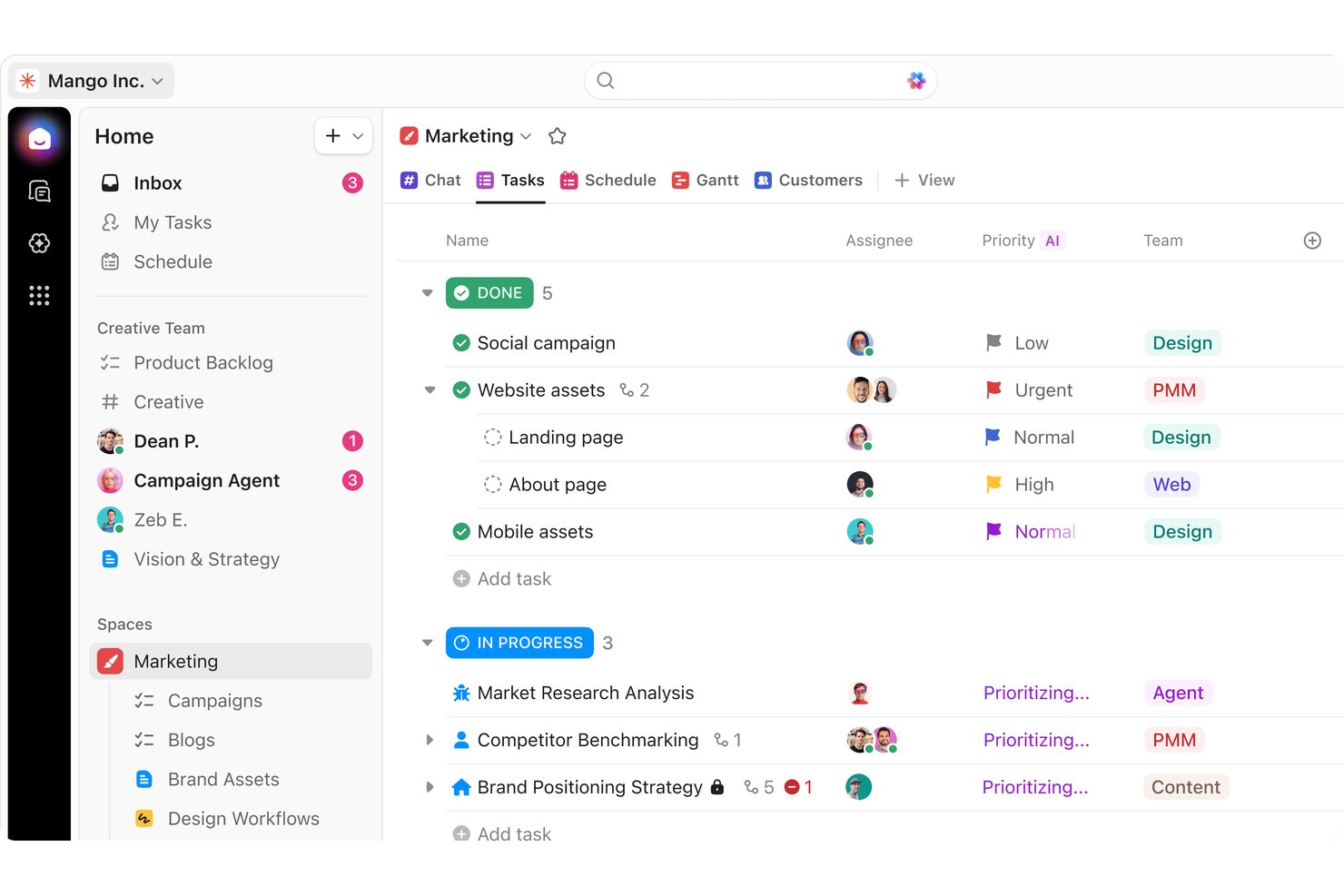
ClickUp is an all-in-one project management and productivity platform that centralizes tasks, docs, visual whiteboards, and goals into customizable workflows.
Who Is ClickUp Best for?
ClickUp fits HR teams that need to manage wiki content alongside onboarding tasks, policy updates, and employee workflows.
Why ClickUp Is a Good Guru Alternative
I picked ClickUp because its Docs and task features keep employee handbook content inside the project workspace. I use shared Docs for policies, then link updates to onboarding tasks and review workflows. This gives HR one place to manage handbook pages alongside related work.
ClickUp Key Features
- Employee handbook template: Start with a ready-made handbook structure for policies and company information.
- Custom fields: Categorize handbook sections with tailored content attributes.
- Version history: Review changes and roll back earlier handbook versions.
- Document permissions: Set view, comment, or edit access for each document.
ClickUp Integrations
ClickUp offers native integrations with Slack, Microsoft Teams, Google Drive, Dropbox, GitHub, GitLab, Figma, Google Calendar, Loom, Sentry, and Zapier. It also provides an API for custom integrations.
Pros and Cons
Pros:
- Page permissions separate viewing and editing
- Centralized docs, tasks, and discussions
- Docs connect directly to onboarding tasks
Cons:
- Many settings complicate wiki navigation
- Large workspaces can load slowly
New Product Updates from ClickUp
ClickUp Adds Meetings Hub, Super Agent Templates, and ZoomInfo Integration
ClickUp adds a searchable Meetings Hub, new ways to clone and template Super Agents, and a ZoomInfo integration through the App Center. These updates improve meeting retrieval, agent reuse, and access to sales intelligence. For more information, visit ClickUp’s official site.

Best for self-healing knowledge base upkeep
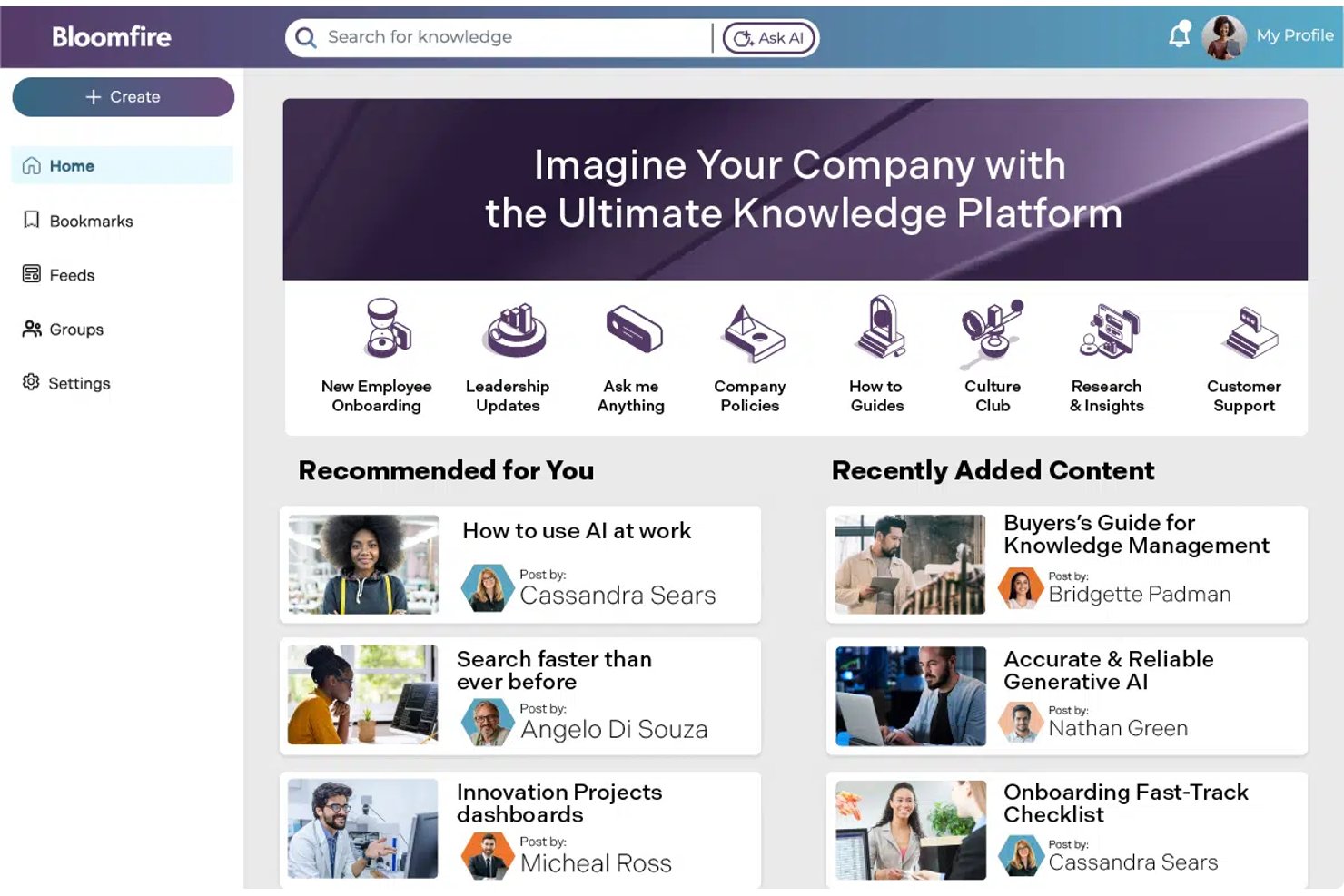
Bloomfire is a knowledge-sharing platform that centralizes employee handbooks, policies, and FAQs, helping distributed organizations keep workplace guidance searchable and accessible.
Who Is Bloomfire Best for?
Bloomfire is a good fit for mid-to-large HR organizations looking to move beyond static wiki pages into an interactive, Q&A-driven knowledge hub.
Why Bloomfire Is a Good Guru Alternative
I picked Bloomfire for self-healing knowledge base upkeep because its smart document updates help keep employee handbooks current. I use AI-powered search and discovery to surface the right policy, while moderation and analytics reveal outdated or underused guidance. That gives my team a practical way to maintain policies and FAQs as workplace rules change.
Bloomfire Key Features
- Knowledge connectors: Connect SharePoint, Google Drive, Salesforce, Teams, and Confluence.
- Employee acknowledgments: Record timestamped confirmations that employees read required content.
- Knowledge checks: Test employee comprehension of handbook policies and other guidance.
- Role-based access: Configure permissions and content views by team or role.
Bloomfire Integrations
Bloomfire integrates with SharePoint, Google Drive, Salesforce, Microsoft Teams, Slack, and GitHub. It also provides an API for custom connections.
Pros and Cons
Pros:
- Employee acknowledgments confirm policy readership
- Moderation helps maintain content accuracy
- AI search surfaces relevant policy guidance
Cons:
- Search occasionally returns inconsistent results
- Reporting requires manual data collection

Glean
Best for AI search across 275+ connected apps
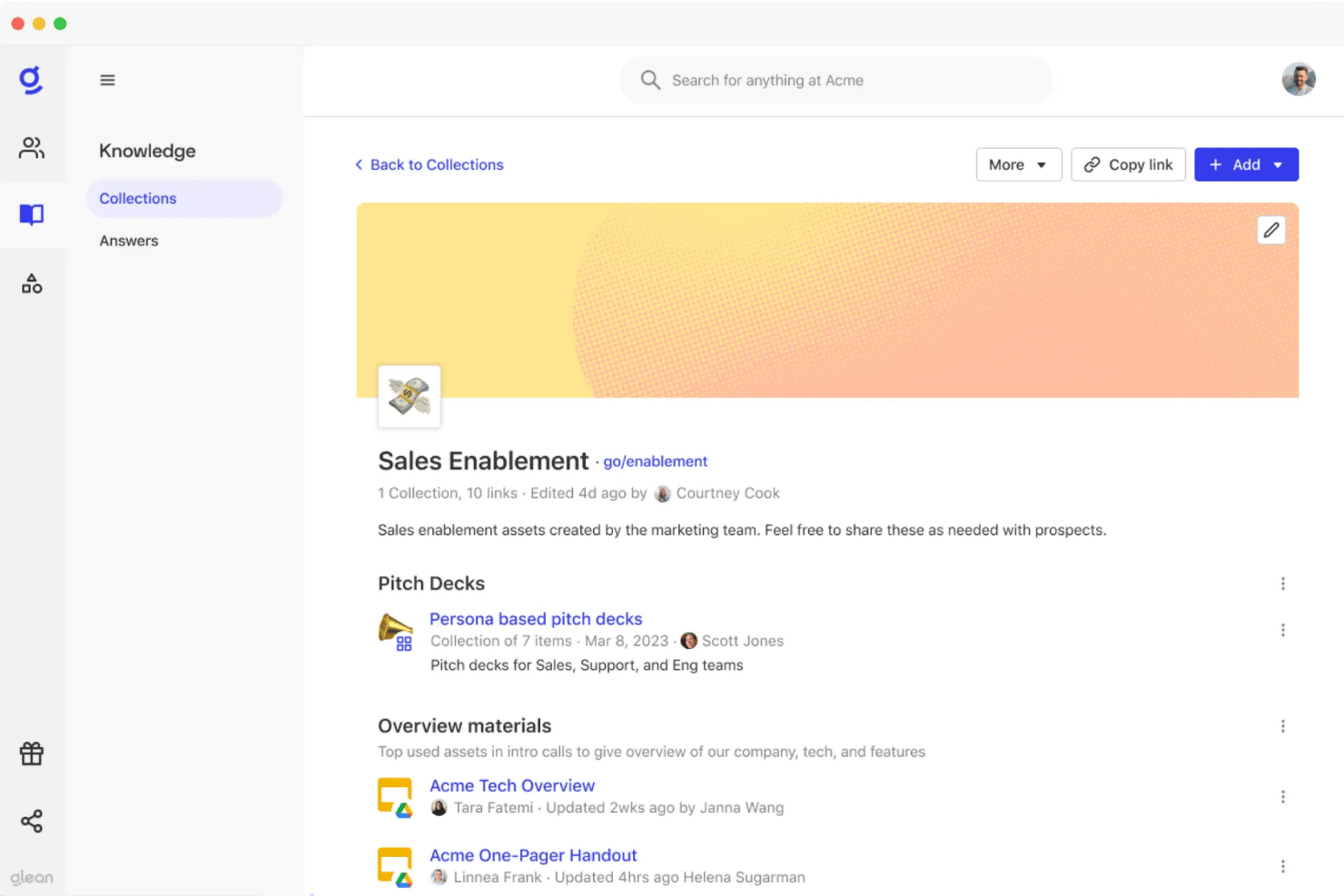
Glean is an AI-powered enterprise search platform that indexes content across your organization's app stack, allowing employees to query documents, tickets, and conversations from a unified search bar.
Who Is Glean Best for?
Glean is best suited for mid-to-large remote teams that need to centralize scattered policy documents across systems like Slack, Google Drive, and Notion into a single source of truth.
Why Glean Is a Good Guru Alternative
I chose Glean because its AI connects natively to 275+ apps, instantly resolving natural-language handbook queries without requiring manual document tagging. Instead of searching Slack, Drive, and HRIS separately, your team can surface, verify, and share authoritative HR policies directly from one interface.
Glean Key Features
- Permission-aware access: Shows employees only the information they’re authorized to view.
- AI workflows: Create assistants that perform actions across workplace tools.
- Query observability: Track searches, answers, and AI-driven actions.
- Compliance certifications: Supports SOC 2 Type II, ISO 27001, GDPR, and HIPAA requirements.
Glean Integrations
Glean supports 275+ integrations, including Slack, Google Drive, Adobe, Affinity, Airtable, Clay, Close, GitHub, and Salesforce. An API for custom connections is also available.
Pros and Cons
Pros:
- AI workflows support actions beyond document retrieval
- Permission-aware access limits unauthorized answers
- Searches across scattered enterprise knowledge sources
Cons:
- Search results sometimes take longer
- Connector setup can require vendor assistance

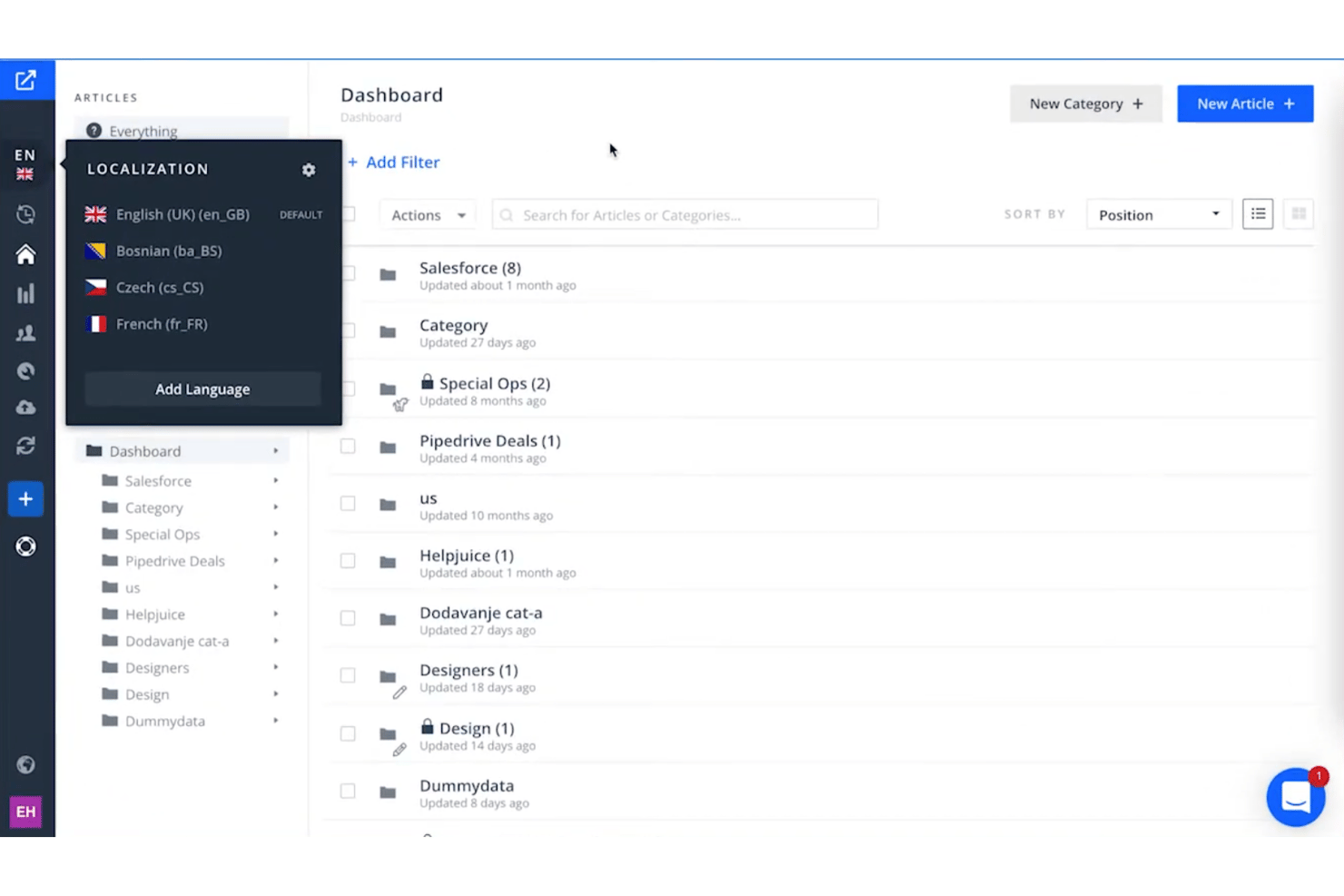
Helpjuice is a knowledge base platform for teams that need to turn employee handbooks, policies, and onboarding guidance into searchable, easy-to-maintain resources.
Who Is Helpjuice Best for?
Helpjuice is best for HR teams who want a single tool for handbooks, policies, and onboarding resource management.
Why Helpjuice Is a Good Guru Alternative
I picked Helpjuice because, unlike traditional keyword matching, Helpjuice uses natural language processing to understand intent—instantly connecting informal questions like "Can I carry over vacation days?" to the correct policy articles, even when terminology doesn't match. Its search analytics expose content gaps by highlighting unanswered employee queries. This gives us a real-time roadmap to fix missing documentation, turning the knowledge base into a truly reliable, intelligent self-service hub.
Helpjuice Key Features
- Article editor and versioning: Format handbook content and review earlier versions.
- Access controls: Restrict articles to specific users or groups.
- Localization: Maintain handbook content in more than 50 languages.
- Knowledge base customization: Adjust the knowledge base without developer support.
Helpjuice Integrations
Helpjuice offers integrations with Slack, Olark, Salesforce, Zapier, and Microsoft Teams. An API for custom integrations is also available.
Pros and Cons
Pros:
- No-code decision trees support structured guidance
- Source citations support trustworthy handbook answers
- AI search handles typos and intent
Cons:
- Category management has counterintuitive elements
- Complex formatting makes the editor cumbersome

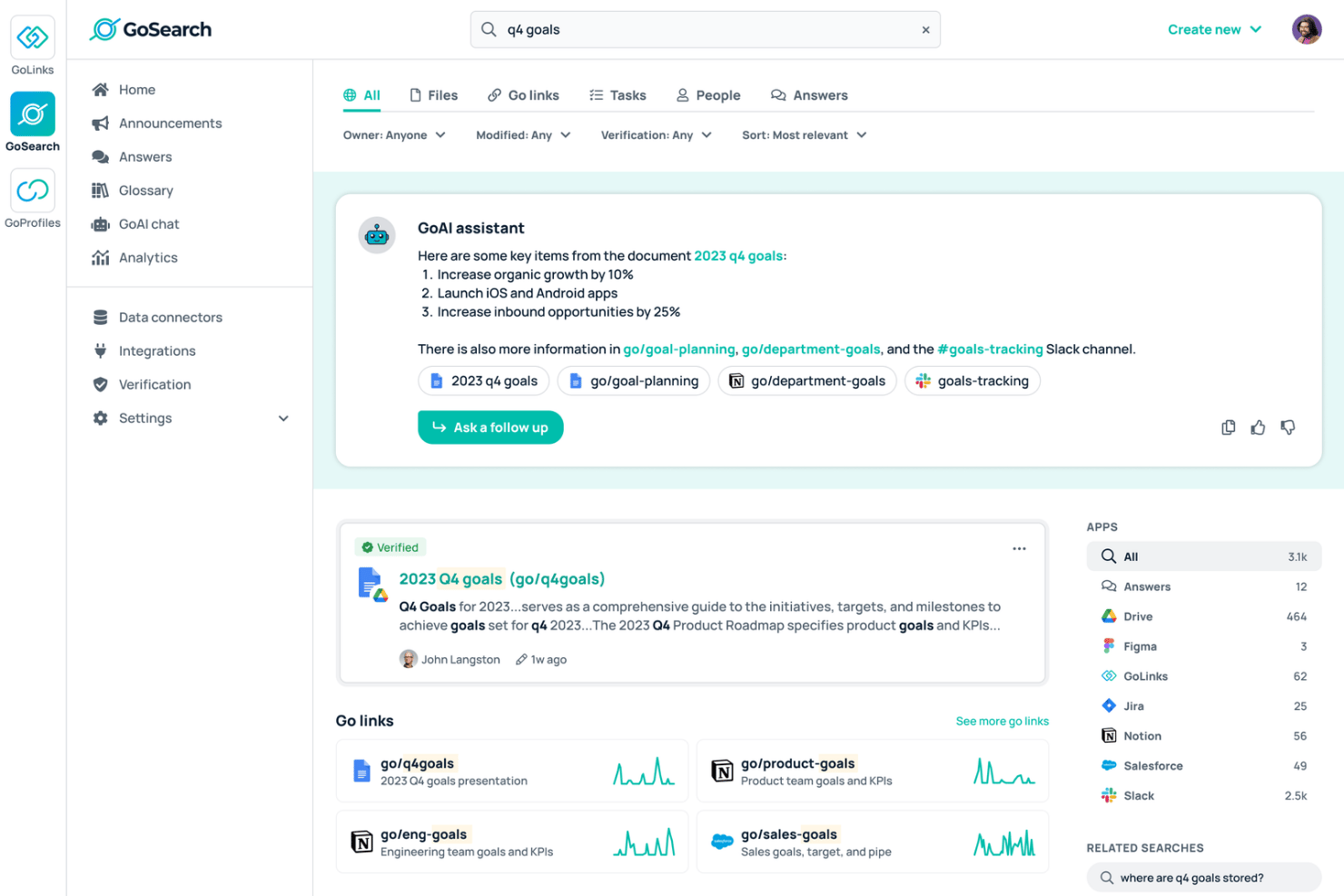
GoSearch is an AI-powered enterprise search platform for HR teams that need to find handbook policies across scattered apps, answer employee questions, and manage workplace knowledge without another standalone system.
Who Is GoSearch Best For?
GoSearch is a good fit for mid-sized to enterprise HR operations teams that want to answer employee policy questions in real time without building and maintaining a duplicate data index.
Why GoSearch Is a Good Guru Alternative
I chose GoSearch because it pairs real-time semantic search with action-oriented AI agents across 100+ native connectors. Unlike traditional tools, GoSearch queries live source data on the fly rather than copying or re-indexing files. This lets teams surface exact policy answers within Slack and Teams while maintaining strict native source permissions and zero data retention.
GoSearch Key Features
- Custom AI agents: Create role-specific agents with tailored instructions and skills.
- No-code workflow builder: Design multi-step HR workflows with drag-and-drop actions.
- Live data querying: Retrieve current policy information without indexing source data.
- Content governance: Suppress sensitive or outdated content and review detected personal data.
GoSearch Integrations
GoSearch connects with 100+ apps, including BambooHR, Google Drive, ChartHop, Deel, Datadog, Linear, Miro, Slack, and Microsoft Teams. It also provides an API for custom connections.
Pros and Cons
Pros:
- No-code workflows support multi-step HR processes
- Live queries reflect current policy information
- Custom AI agents support role-specific HR answers
Cons:
- Broad app coverage may exceed simple wiki needs
- Tailored agents require initial configuration

Shelf
Best for content accuracy at scale
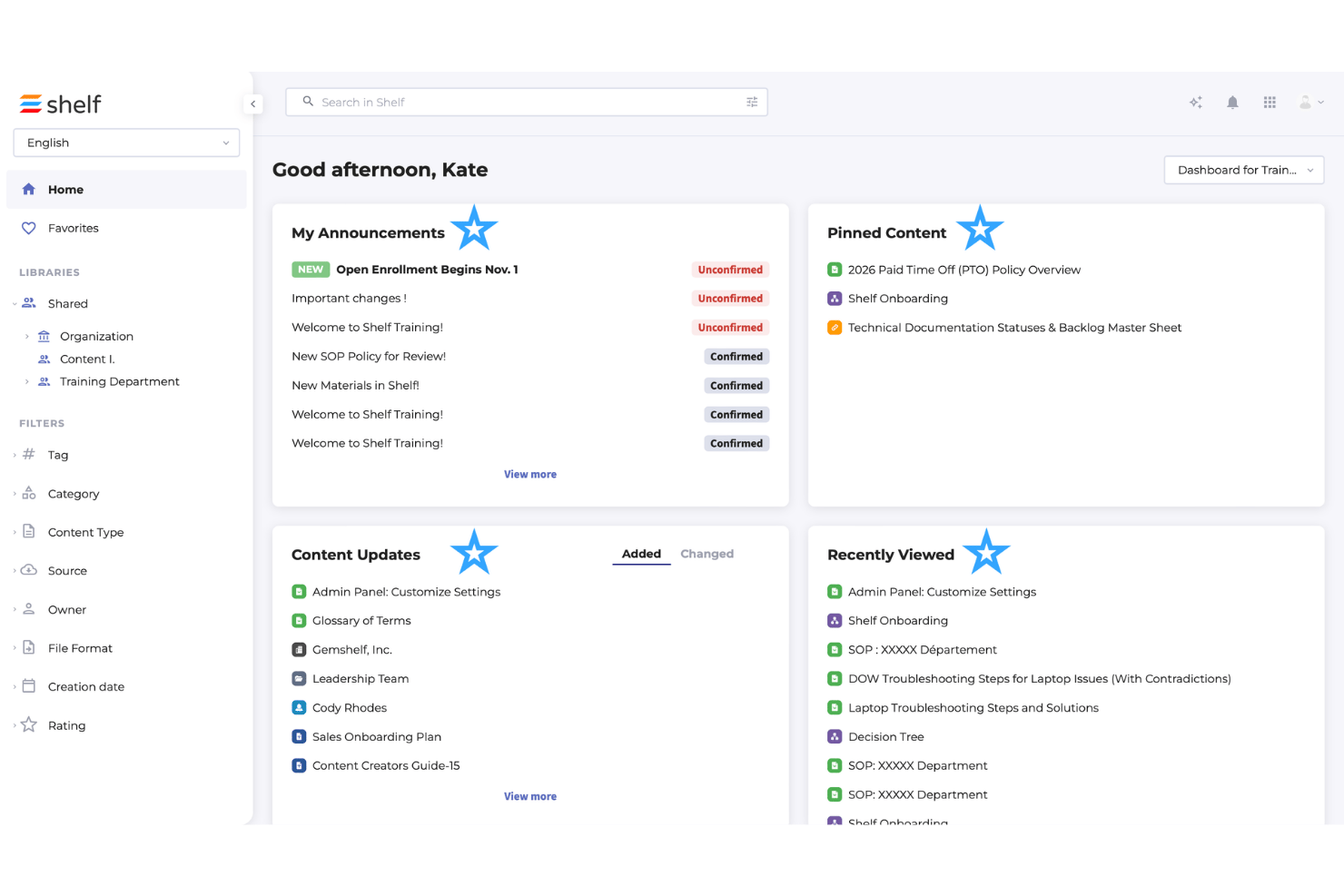
Shelf is an AI-driven knowledge management platform that consolidates company handbooks, compliance policies, and HR guidance into a single, strictly governed knowledge hub.
Who Is Shelf Best for?
Shelf is best for HR operations and compliance teams that need to enforce strict content accuracy and approval workflows across high-volume handbook documentation.
Why Shelf Is a Good Guru Alternative
I chose Shelf because it focuses heavily on content quality control, auditability, and preventing outdated information from reaching employees. Unlike basic wikis or keyword-based alternatives, Shelf continuously identifies redundant or conflicting policy drafts so staff always receive verified, authoritative HR answers.
Shelf Key Features
- Access controls: Restricts sensitive policy drafts and employee documentation based on department, location, or user permissions.
- Publishing workflows: Requires mandatory HR approval and sign-off before any handbook updates or policy revisions go live.
- Content lifecycle management: Sets mandatory expiration dates and audit cycles for policies, alerting document owners to review or archive aging content.
- Duplicate detection: Automatically flags overlapping handbook entries or conflicting policy language across your workspace.
Shelf Integrations
Shelf offers integrations with Slack, Salesforce Service Cloud, Microsoft SharePoint, ServiceNow, Intercom, Zendesk, and Google Drive. It also provides APIs and SDKs for custom integrations.
Pros and Cons
Pros:
- Admin analytics reveal content gaps
- Centralizes scattered knowledge for controlled answers
- AI governance flags outdated, duplicate content
Cons:
- Editors cannot collaborate simultaneously
- Search can rank answers inconsistently

Slite
Best for AI-driven doc freshness checks
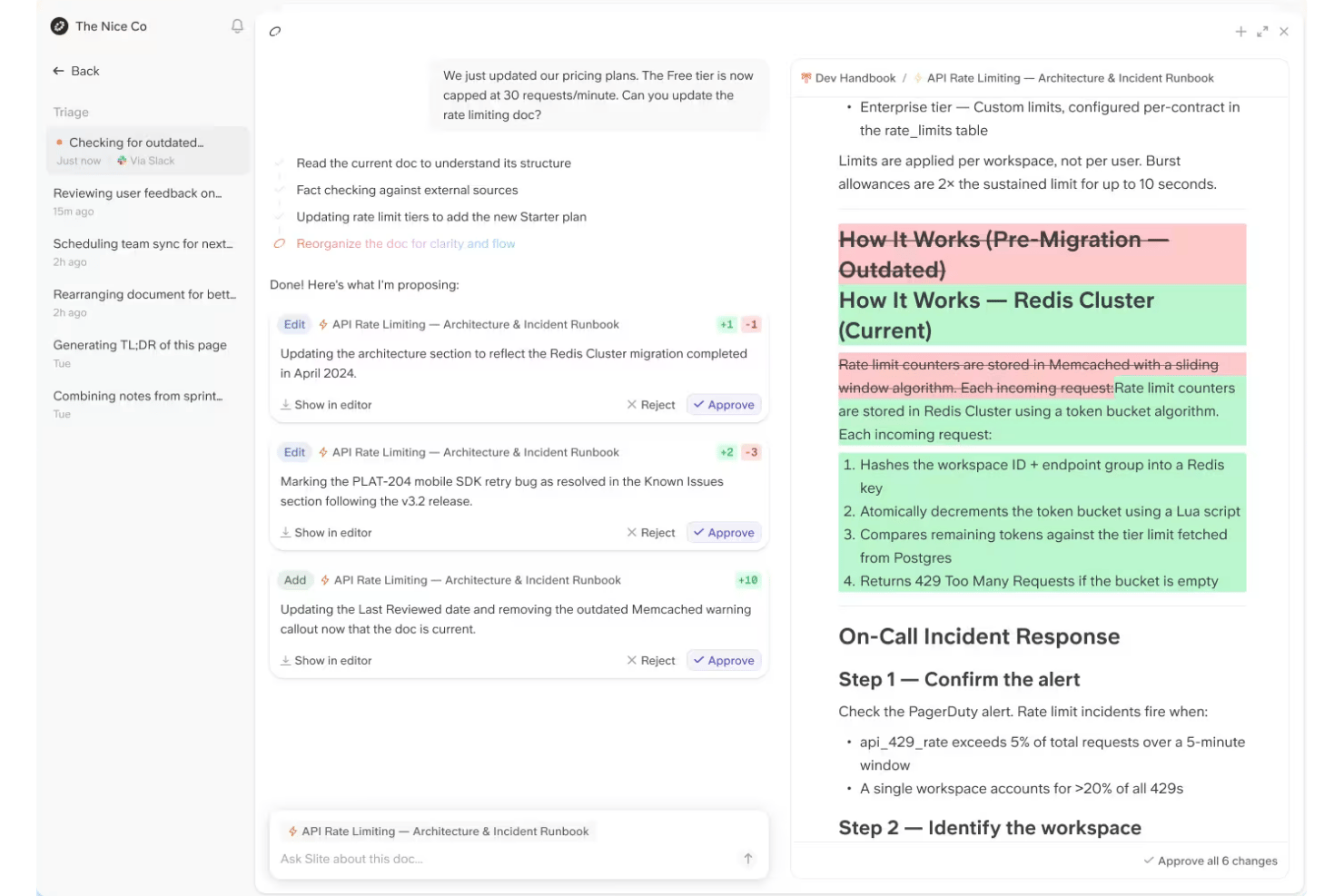
Slite is a collaborative knowledge management software for HR teams that need to create, organize, and share employee handbooks, workplace policies, and internal guidance in one searchable workspace.
Who Is Slite Best for?
Slite is a great fit for HR operations in mid-sized or scaling companies that need automated systems to keep policy documents accurate across external tools like Slack and Google Drive.
Why Slite Is a Good Guru Alternative
I chose Slite because it solves the biggest flaw of traditional wikis: outdated content. Its built-in Slite Agent continually cross-references handbook pages with company conversations in Slack and files in Google Drive, automatically flagging outdated policies and suggesting edits. Paired with mandatory verification schedules, it ensures our HR guidelines remain accurate without requiring manual audits.
Slite Key Features
- Doc permissions: Assign reader, writer, and channel admin roles.
- Cascading access: Apply permissions to subdocs or override them individually.
- Comments: Let readers comment directly on handbook documents.
- Analytics: Track which documents employees read and search for.
Slite Integrations
Slite integrates with BigQuery, Asana, Airtable, Google Drive, Jira, Linear, Salesforce, GitHub, Mural, Zapier, and Vimeo. It also provides an API for custom integrations.
Pros and Cons
Pros:
- Real-time editing supports collaborative handbook writing
- Verification dates prompt handbook reviews
- AI flags outdated claims across connected sources
Cons:
- Limited formatting and customization constrain complex wikis
- Search accuracy can frustrate larger knowledge bases

Simpplr
Best for keeping intranet content verified
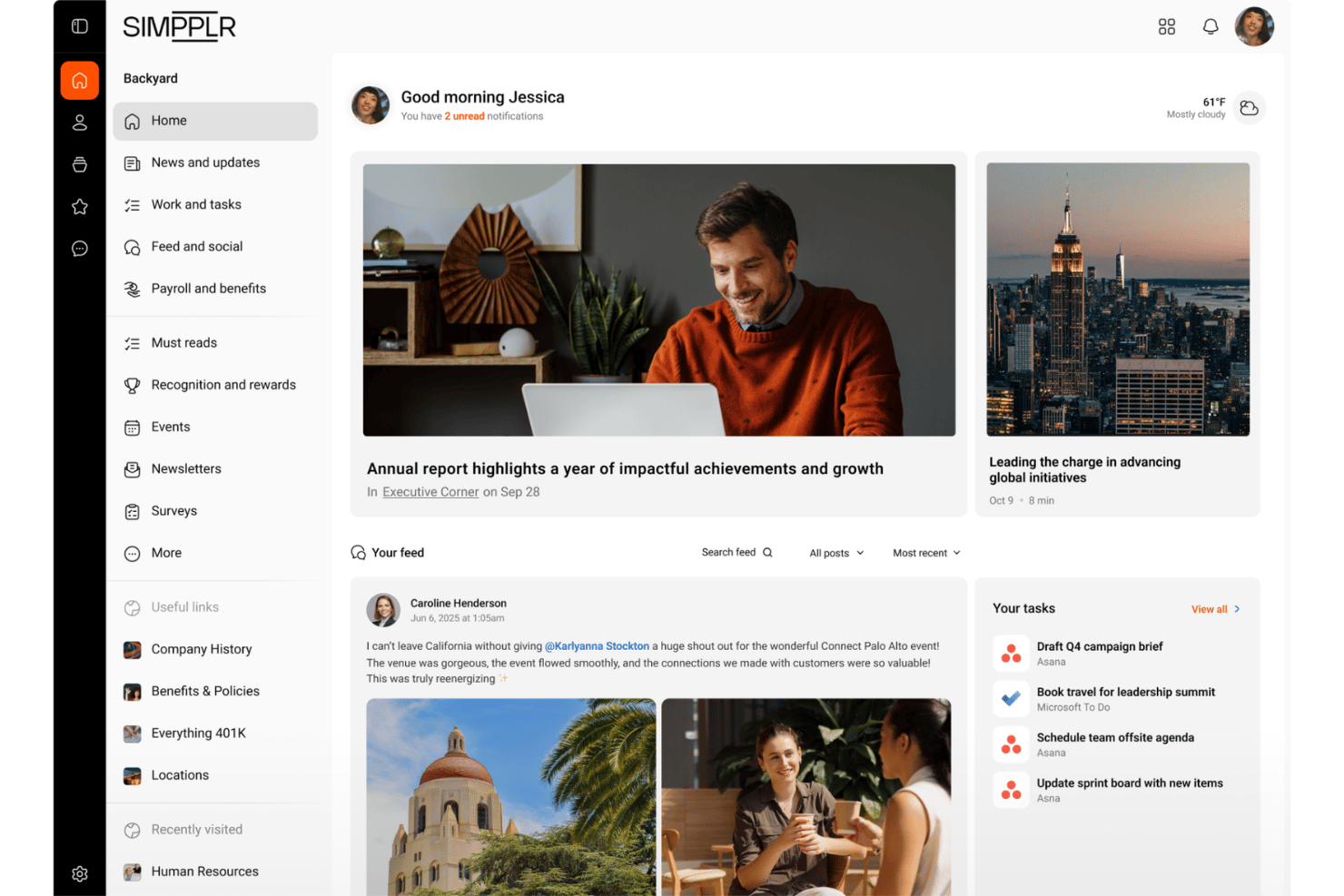
Simpplr is an AI-powered intranet for HR and internal communications teams that centralizes employee communications, handbook content, enterprise search, and knowledge management in one platform.
Who Is Simpplr Best For?
Simpplr suits HR and internal communications teams that need to keep intranet content accurate, current, and verified.
Why Simpplr Is a Good Guru Alternative
I picked Simpplr because its AI-powered intranet keeps employee handbook content current and verified. I use its enterprise search to help employees find approved policies, while knowledge management keeps handbook information alongside internal communications. This makes it a strong Guru alternative when HR needs one trusted source for workplace guidance.
Simpplr Key Features
- Employee communities: Create dedicated spaces for teams, locations, and interests.
- Recognition programs: Configure peer-to-peer recognition experiences.
- Employee listening: Collect feedback through surveys and listening programs.
- Workflow automation: Build forms, notifications, app tiles, and integrations.
Simpplr Integrations
Simpplr offers 200+ integrations, including Google Workspace, SharePoint, ServiceNow, Workday, Okta, Oracle, ADP, Slack, Microsoft Teams, and Zoom. It also provides APIs and custom connections.
Pros and Cons
Pros:
- Adds recognition and listening alongside knowledge management
- Combines handbook content with employee communications
- AI flags outdated intranet pages
Cons:
- Homepage layouts offer limited design control
- Search relevance varies across user reviews

Best for content lifecycle management
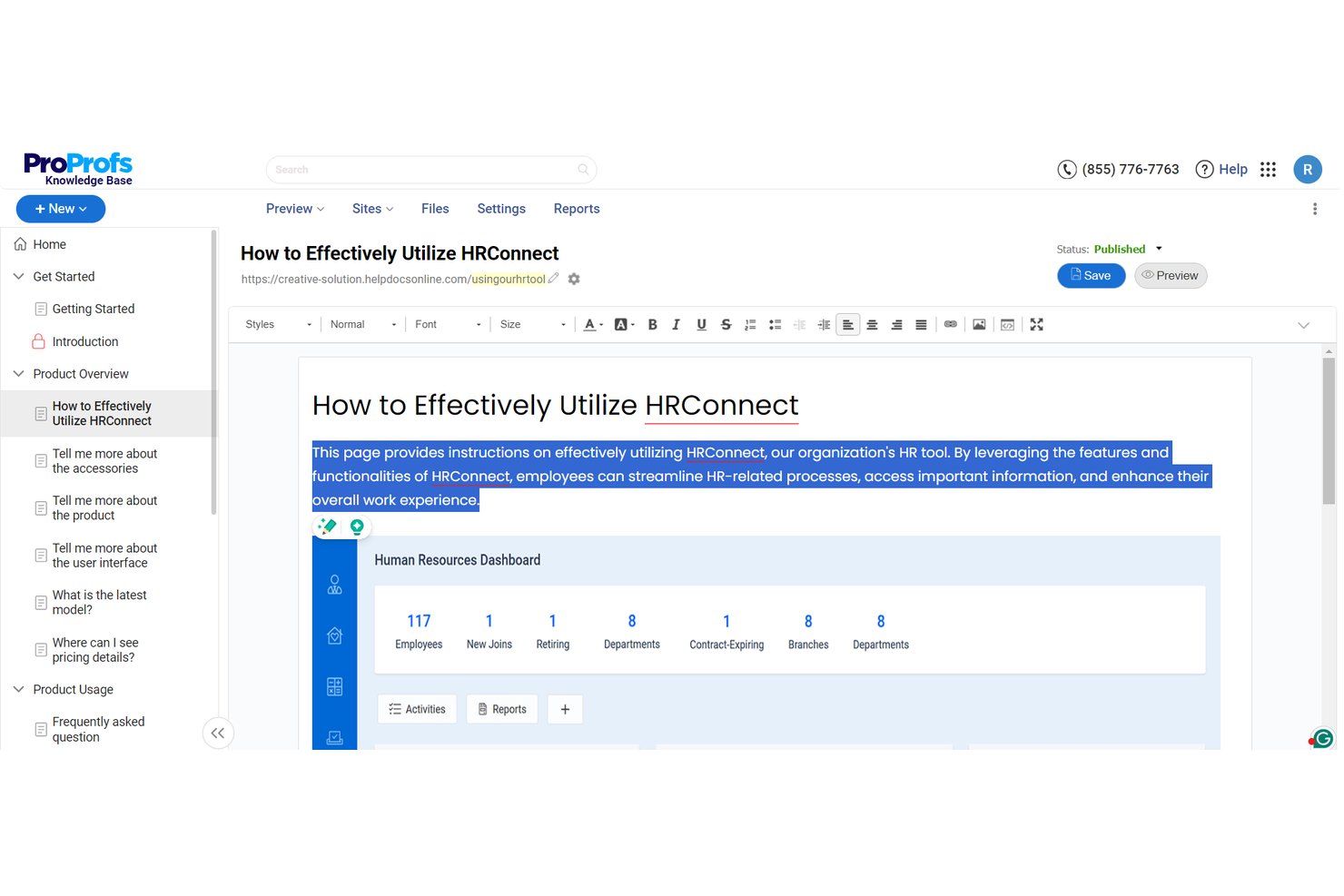
ProProfs Knowledge Base is a web-based documentation tool that allows teams to create, organize, and publish searchable employee handbooks, onboarding guides, and company wikis from a single visual editor.
Who Is ProProfs Knowledge Base Best for?
ProProfs Knowledge Base is ideal for small to mid-sized HR teams that want a simple, no-code platform to build public or private employee handbooks.
Why ProProfs Knowledge Base Is a Good Guru Alternative
I chose ProProfs Knowledge Base because it makes writing, organizing, and updating handbook documentation effortless. Unlike complex enterprise systems, it functions like a familiar word processor, allowing HR teams to import existing Word or PDF policies in bulk and convert them into a fully searchable employee portal in minutes.
ProProfs Knowledge Base Key Features
- Role-based permissions: Protects sensitive HR files by password-protecting pages or restricting handbook access based on roles and departments.
- Brand customization: Tailors the employee portal with custom logos, brand colors, and custom domains.
- Document import: Converts existing Word documents, PDFs, and PowerPoint slides into formatted web pages.
- Content analytics: Highlights popular searches, unreturned queries, and broken links.
ProProfs Knowledge Base Integrations
ProProfs Knowledge Base integrates with Slack, Jira, Salesforce, Zendesk, Freshdesk, Hotjar, Google Analytics, Google Translate, and Wufoo. It also provides a RESTful API for custom integrations.
Pros and Cons
Pros:
- Analytics identify searches and content gaps
- Imports Word, PDF, and PowerPoint documents
- AI supports ongoing handbook content updates
Cons:
- Extensive permissions may require careful administration
- Better suited to formal documentation than quick answers

Notion
Best for integrated wiki, docs, and projects
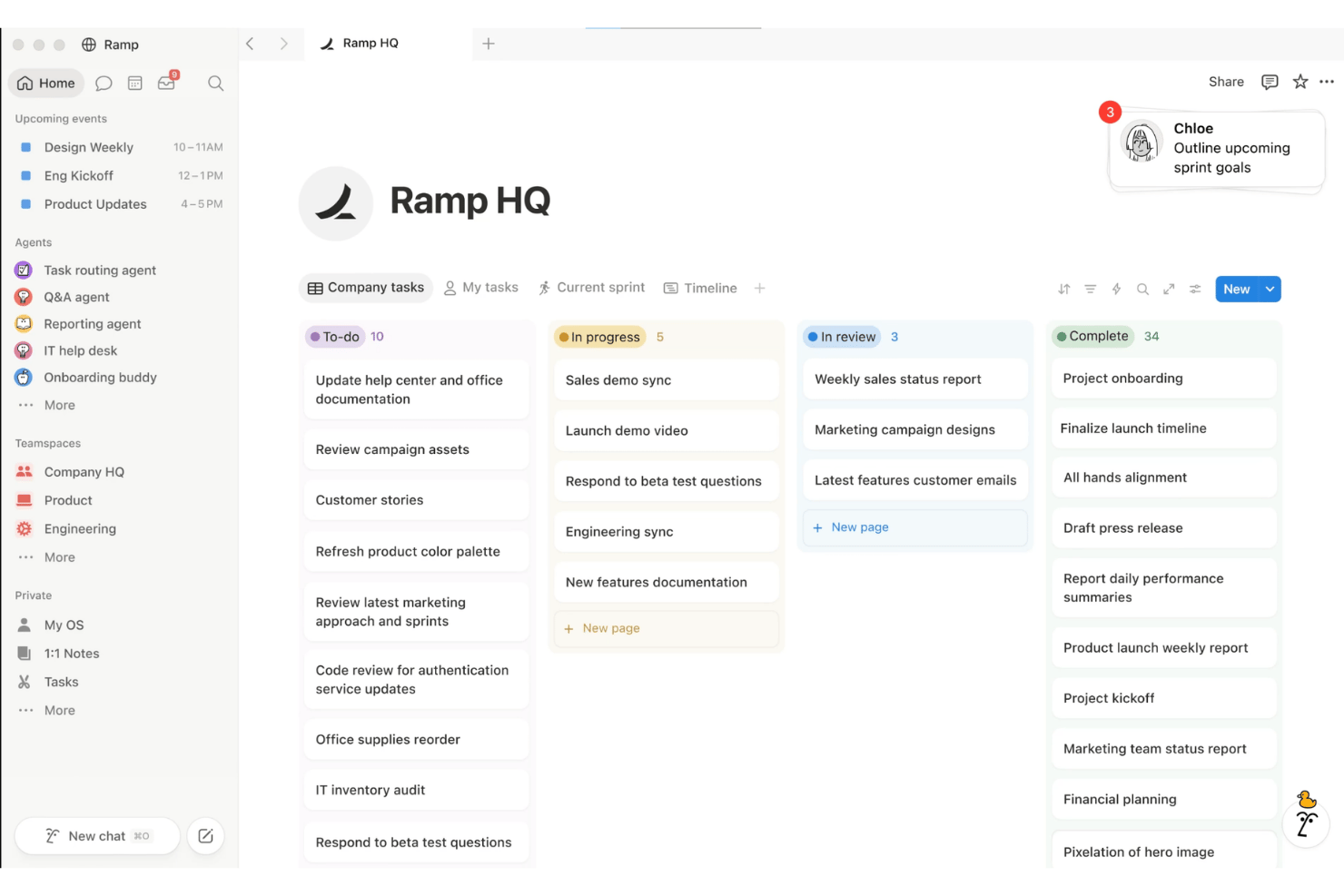
Notion is a customizable, all-in-one knowledge and project management software that combines wikis, relational databases, and project management—allowing teams to house employee handbooks, onboarding roadmaps, and policy records alongside live People Ops workflows.
Who Is Notion Best For?
Notion is best for HR teams at early-stage to fast-growing companies that want a modular, cost-effective alternative to rigid traditional wikis.
Why Notion Is a Good Guru Alternative
I chose Notion because it bridges the gap between static policy storage and daily work execution. Instead of keeping your handbook locked in an isolated knowledge silo, you can interlink policy pages directly with onboarding databases, policy review tasks, and team roadmaps. With features like Notion AI and relational databases, employees can query company guidelines in natural language or track handbook updates across departments without leaving their primary workspace.
Notion Key Features
- Forms: Collect employee requests or feedback and store responses in databases.
- Modular page & database permissions: Enables granular access controls to ensure sensitive People Ops files remain restricted.
- Native automation: Triggers automated notifications whenever a policy status changes to "Pending Leadership Review" or when an onboarding checklist step is completed.
- Real-time collaboration: Co-author policies, leave inline comments, track revision histories, and gather feedback from leadership.
Notion Integrations
Notion integrates with Slack, Google Drive, GitHub, Figma, Microsoft Teams, Jira, Linear, Mixpanel, Loom, Microsoft Entra ID, Trello, and Zapier. An API for custom integrations is also available.
Pros and Cons
Pros:
- Granular permissions and version control support governance
- Database views support structured policy tracking
- Combines internal wiki pages, docs, and project boards
Cons:
- No dedicated article verification workflow
- Flexible structure requires deliberate information architecture
Other Guru Alternatives
Here are some additional alternatives that didn’t make it onto my shortlist but might be a good fit for your needs:
- Document360
For structured, analytics-driven docs
- Stonly
For AI-driven content health monitoring
- Confluence
For Atlassian-native wiki at scale
- Trainual
For HRIS-connected onboarding training
- Tettra
For Slack-first team knowledge upkeep
- SharePoint
For M365-native knowledge storage
- Slab
For wiki content that stays verified
- Archbee
For docs with built-in verification cycles
- Sana
For AI search grounded in Workday data
- Stack Internal
For Q&A knowledge with enterprise security


How I Evaluate Guru Alternatives
I split my evaluation into three parts. First, core functionality: any alternative must let teams store and organize knowledge in a single, structured repository and surface relevant answers quickly through reliable search—this carries the most weight. Second, I look for standout features like AI knowledge agents or verification workflows. Third, I consider implementation support and pricing transparency.
Core Functionality (Table Stakes For This List)
When I'm selecting tools for my list, I score each one on a scale from 0 (does not offer the functionality) to 5 (excels in this area) for each core functionality listed below. I then convert the total into a percentage to help assess each tool's overall fit, with extra weight on any functionalities I've deemed essential.
- Knowledge Repository (Essential): I check whether a platform can house policies, onboarding guides, and benefits docs in a structured, categorized layout that scales across departments.
- Search and Retrieval (Essential): Fast, relevant results matter most when employees need a quick answer about leave entitlements or expense procedures instead of messaging HR directly.
- Content Verification and Freshness: I look for scheduled review reminders, assigned content owners, and staleness flags—features that keep your parental leave policy from drifting out of date unnoticed.
- Workflow Integrations: Tools like Guru and Slite surface answers inside Slack or Teams, so I evaluate whether a platform meets employees where they already ask questions.
- Permissions and Organization: I consider how granularly you can restrict sensitive content—like compensation bands or investigation procedures—by role, team, or department.
- Usage Insights: Analytics that reveal unanswered searches, low-traffic pages, and content gaps help HR teams prioritize what to update or create next.
Once I have a list of tools that meet the criteria, I consider what sets each platform apart.
Differentiating Factors (What Sets Vendors Apart)
Here's how I compare and contrast different vendors:
Standout Features
Verification workflows matter most here. I check whether a platform assigns content owners and triggers re-verification cycles automatically—without that, your parental leave policy quietly drifts out of date. Duplicate and gap detection is the other side of that coin: tools like Guru and Bloomfire flag conflicting or missing docs, which saves HR from answering questions that should already be documented. I also evaluate AI knowledge agents, since a good one pulls context-aware answers from connected apps rather than just returning a list of links.
Beyond Features
I check how easily you can migrate an existing wiki or shared drive without pulling in IT for weeks. Some vendors offer guided import wizards and starter templates that cut rollout time significantly. I also evaluate whether pricing stays reasonable as headcount grows, since a tool that charges full-seat rates for employees who only read content can quietly inflate costs. Security posture matters too—SOC 2 compliance and granular audit logging are non-negotiable when you're housing sensitive HR documents like investigation records or compensation data.
Why Look for Guru Alternatives?
While Guru is great for real-time knowledge management, it falls short of managing HR documents that require strict versioning, compliance tracking, and structured reading experiences.
You might be looking for an alternative because:
- You need a dedicated employee handbook structure
- Your team needs simpler content management
- You want flexible access for occasional readers
- You need deeper HR policy review workflows
- Your organization requires region-specific handbook content
- You need native connections to HR systems
Guru Key Features
Here are some of the key features of Guru to help you contrast and compare what alternative tools offer:
- Knowledge repository: Store policies, onboarding guides, benefits information, and procedures in organized Collections, folders, and Cards.
- AI search and chat: Employees can ask questions in natural language through Search or Chat. Guru returns cited answers from Cards and connected sources, while filters help users narrow results by Collection, author, tag, source, or verification status.
- Verification workflows: Send reminders through email, Slack, or its web app, while administrators can identify overdue content and archive unused, unverified Cards.
- Knowledge Agents: Provide topic-specific AI assistants for areas such as HR or IT. Administrators can connect selected sources, restrict access, and configure agents to answer questions from approved organizational information.
- Source connectors: Connect with more than 100 enterprise applications, databases, and file systems. Connected sources can include tools such as Google Drive, Salesforce, and Slack, allowing employees to search information without checking each system separately.
- Permissions and access controls: Control access to Collections, folders, Cards, connected sources, and Knowledge Agents. Group-based permissions help HR teams restrict sensitive content, such as compensation guidance or investigation procedures, to authorized employees.
- Usage analytics: Analytics reports show Card views, successful searches, searches with no results, verification scores, and frequently viewed unverified content.
- Content authoring and cleanup: Help draft documentation from conversations, meetings, and tickets, then send drafts to subject-matter experts for review. AI tools can also identify duplicate or conflicting information, surface content gaps, and support cleanup.
Costs and Pricing of Guru Alternatives
Selecting the best alternative to Guru requires understanding the pricing models and plans available. Costs vary based on features, team size, add-ons, and more. The table below summarizes common plans, average prices, and typical features.
Plan Comparison Table for Guru Alternatives
| Plan Type | Average Price | Common Features |
|---|---|---|
| Free Plan | $0/user/month | Basic knowledge storage, limited search, and small team access. |
| Personal Plan | $5-$15/user/month | Expanded storage, content organization, and basic integrations. |
| Business Plan | $15-$30/user/month | Advanced search, analytics, permissions, and workflow integrations. |
| Enterprise Plan | $30-$80/user/month | Custom security controls, dedicated support, audit logs, and advanced administration. |