

10 Best Payroll Software in Germany in 2026

Best Payroll Software in Germany Shortlist


Payroll software in Germany helps businesses manage wages, tax filings, and local compliance in line with German labor laws. If you're searching for payroll solutions, you likely need tools that handle complex local regulations, automate tedious processes, and reduce risk for your team.
Picking the right provider matters—not just for compliance, but to give employees confidence that pay is handled accurately. In this guide, you’ll find the best payroll software available in Germany right now and see how each matches specific business needs.
Why Trust Our Software Reviews
Our team has been testing and reviewing software since 2012. As HR experts ourselves, we know how difficult—and important—it is to choose the right software.
For this guide, we evaluated tools using hands-on testing and independent research, scoring tools using our selection criteria. We also draw on insights from industry thought leaders and practicing HR experts.
Our reviews reflect our human editorial judgment, not a sales pitch.
Expert reviewers:
Best Payroll Software in Germany Summary
This comparison chart summarizes pricing details for my top selections for payroll software in Germany to help you find the best one for your budget and business needs.
| Tool | Best For | Trial Info | Price | ||
|---|---|---|---|---|---|
| 1 | Best for hiring without a local entity | Free demo available | From $599/employee/month | Website | |
| 2 | Best for cross-border payroll and global hires | Free demo available | From $29/user/month | Website | |
| 3 | Best for all-in-one HR and payroll features | Free trial + free demo available | Pricing upon request | Website | |
| 4 | Best for digital employee self-service payslips | 14-day free trial | From €12.50/user/month | Website | |
| 5 | Best for GDPR-compliant payroll | Not available | Pricing upon request | Website | |
| 6 | Best for scalable payroll process automation | 30-day free trial | Pricing upon request | Website | |
| 7 | Best for integrated workflows with tax advisors | Not available | From €15.86/month | Website | |
| 8 | Best for small business payroll compliance | 30-day free trial | From €7.90/month | Website | |
| 9 | Best for HR and payroll data integration | Free demo available | Pricing upon request | Website | |
| 10 | Best for Steuerberater-managed payroll processing | Free demo available | Pricing upon request | Website |
Best Payroll Software in Germany Reviews
Below are my detailed summaries of the best payroll software in Germany that made it onto my shortlist. My reviews offer a detailed look at the features, best use cases, and compliance capabilities of each software to help you find the best one for you.
G-P
Best for hiring without a local entity
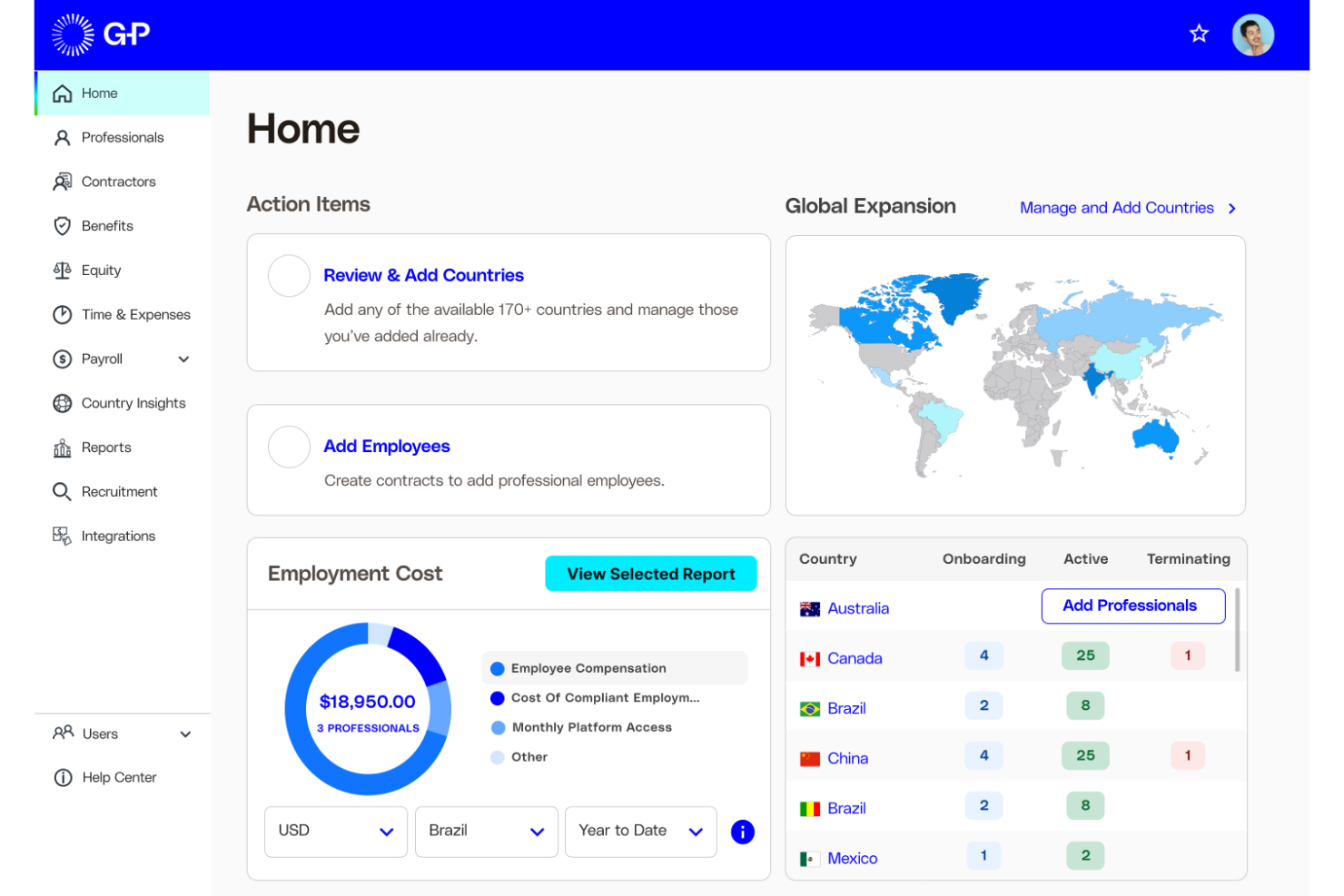
G-P is a global employer of record (EOR) platform that manages payroll, tax withholding, social security contributions, and statutory compliance for companies hiring employees in Germany and 180+ other countries without setting up a local legal entity.
Who Is G-P Best For?
G-P is a strong fit for multinational companies that want to hire employees in Germany without setting up a local legal entity.
Why I Picked G-P
I've included G-P in my top picks because it's the strongest option I've found for companies that need to hire employees in Germany without setting up a local legal entity (GmbH). G-P holds the mandatory AÜG license required to operate as a legal employer in Germany and manages the full Lohnsteuer, Solidaritätszuschlag, and all five social security pillars on your behalf. Its ELStAM integration pulls each employee's Steuerklasse and church tax data directly from the German tax authority during onboarding, so there's no manual lookup required.
G-P Key Features
- AÜG license compliance: G-P holds the mandatory Arbeitnehmerüberlassungsgesetz license required to legally operate as an employer of record in Germany.
- ELStAM-based onboarding: During employee setup, G-P retrieves each worker's Steuerklasse, church tax status, and child allowances directly from the ELStAM system.
- Employee self-service portal: Employees access their payslips, time-off requests, and expense submissions through G-P's self-service portal and mobile app.
- G-P Gia™ AI compliance agent: Gia generates compliant German employment contracts and delivers automated alerts when German payroll or labor regulations change.
G-P Integrations G-P’s integration suite supports 200+ HCM and payroll partners, including Workday, SAP SuccessFactors, ADP, BambooHR, HiBob, and UKG. Its API-first architecture supports custom integrations with HRIS, ERP, and accounting systems.
Pros and Cons
Pros:
- Manages full Lohnsteuer and social security filings
- Eliminates need for a German legal entity
- Handles all required German payroll compliance
Cons:
- No client visibility into ELSTER or DEÜV filings
- Lacks DATEV integration for Steuerberater workflows

Best for cross-border payroll and global hires
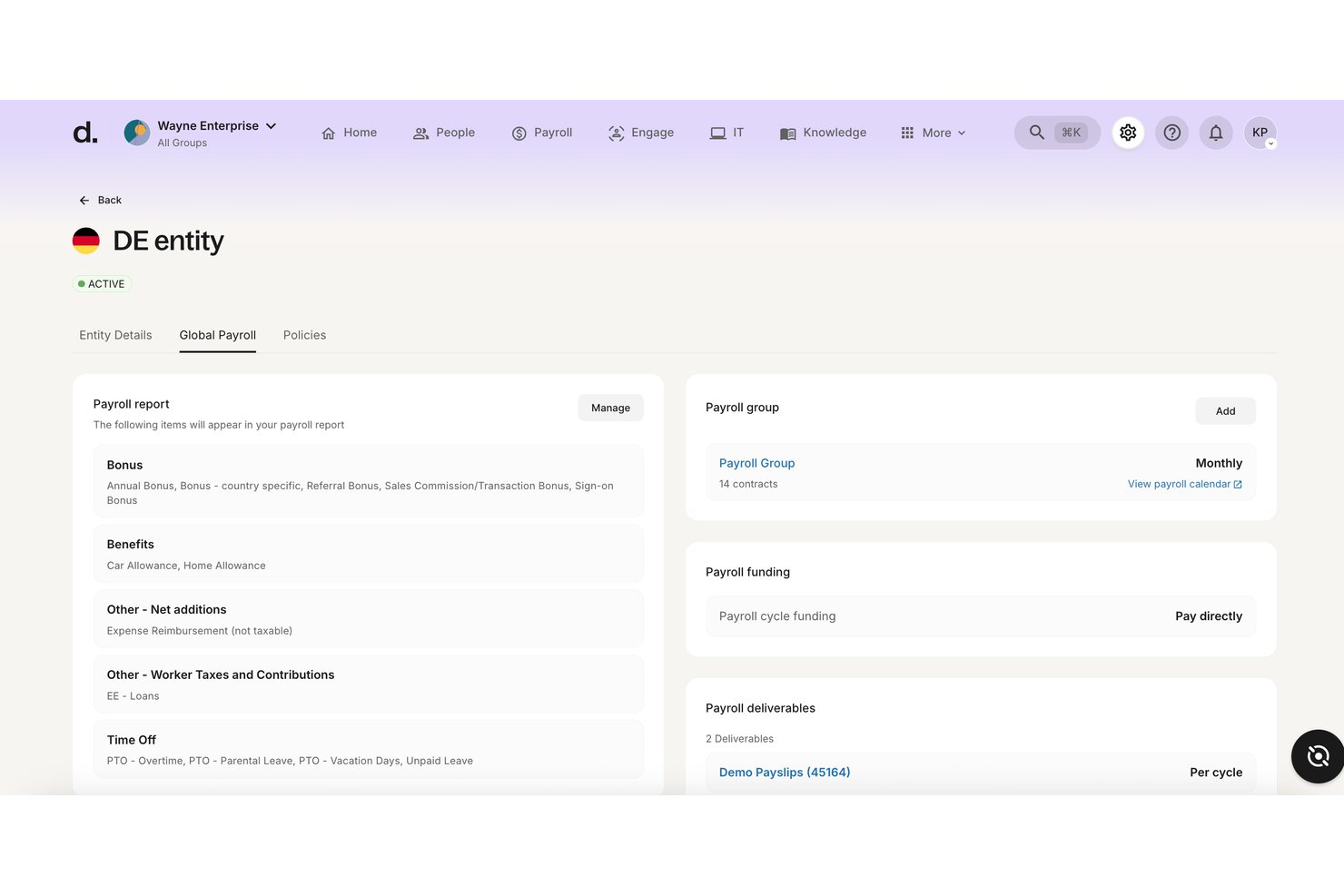
Deel Payroll is a global payroll platform that manages multi-country payroll runs, employer of record services, contractor payments, and compliance across 150+ countries, including Germany.
Who is Deel Payroll Best For?
Deel Payroll is a strong fit for multinational companies and HR directors managing employees across multiple countries, including Germany, without a local legal entity.
Why I Picked Deel Payroll
I've included Deel Payroll in my top picks because it's the only platform I know of that lets you hire and pay an employee in Germany in as little as four days, using Deel's wholly-owned German entity. That means no local entity setup and no third-party subcontracting risk. I also like the Payroll Connect feature, which lets my team view Deel-managed payroll alongside any third-party payrolls in one dashboard, which is genuinely useful when Germany is just one of many countries you're running payroll in.
Deel Payroll Key Features
- Automated compliance engine: Monitors and applies local labor laws, filings, and statutory requirements in Germany automatically before each payroll run.
- Digital employee document management: Centralizes employee contracts, payslips, and onboarding materials in a secure, accessible portal.
- Multi-currency and crypto payroll: Supports payments in over 120 currencies, including local rails and crypto payout options for international teams.
- 130+ native HR and finance integrations: Connects to tools like Workday, SAP, Oracle, NetSuite, BambooHR, and HiBob for unified workforce management.
Deel Payroll Integrations
Deel Payroll offers 130+ native integrations, including Workday, SAP, Oracle, NetSuite, BambooHR, HiBob, Okta, and Azure Active Directory. An API is available for custom integrations.
Pros and Cons
Pros:
- Owned German entity eliminates subcontractor risk
- Runs payroll across 150+ countries simultaneously
- Hire in Germany without a local entity
Cons:
- Costly for businesses with Germany-only payroll
- No native DATEV or ELSTER filing support
HR WORKS
Best for all-in-one HR and payroll features
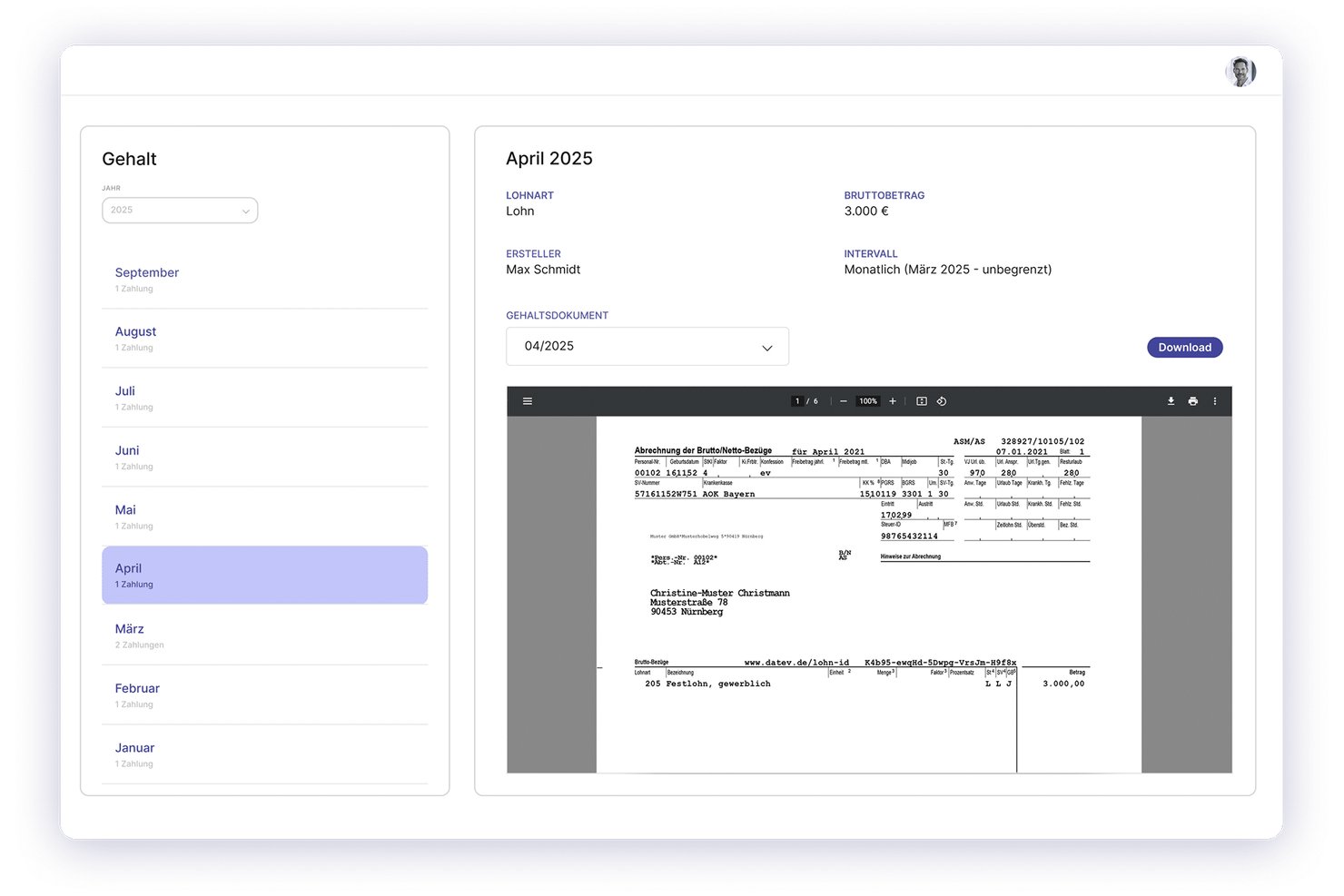
HR WORKS is a German HR and preparatory payroll platform that combines personnel administration, time tracking, expense management, and payroll data preparation with native DATEV and ADDISON integration.
Who is HR WORKS Best For?
HR WORKS is a strong fit for German Mittelstand companies that manage payroll in collaboration with a DATEV-connected tax advisor or external payroll office.
Why I Picked HR WORKS
HR WORKS earns its spot because it pulls HR admin, time tracking, expense management, and payroll preparation into one platform with no system breaks. I like how payroll data flows from time records into the preparatory payroll module. There, I can configure custom wage types (Lohnarten) for VwL and bAV contributions. The bidirectional DATEV sync means my tax advisor works from the same dataset I do.
HR WORKS Key Features
- Automated payslip distribution: Employees get digital access to all payslips and tax certificates through a secure portal.
- Custom wage type configuration: Define and manage Lohnarten including VwL and bAV directly in the payroll-prep module.
- Employee self-service updates: Staff can edit their own master data, reducing manual entry for HR teams.
- Native ADDISON interface: Payroll data can be transferred directly to ADDISON as well as DATEV for outsourced processing.
HR WORKS Integrations
HR WORKS offers native integrations with DATEV and ADDISON for payroll data exchange and accounting workflows. An API is also available for custom integrations with external HR and accounting systems.
Pros and Cons
Pros:
- Covers time tracking, expenses, and payroll in one platform
- DATEV connection transfers data in a single click
- All HR and payroll modules included at one price
Cons:
- Custom reporting options are restricted for complex needs
- Mobile app has limited functionality vs. desktop version
HeavenHR
Best for digital employee self-service payslips
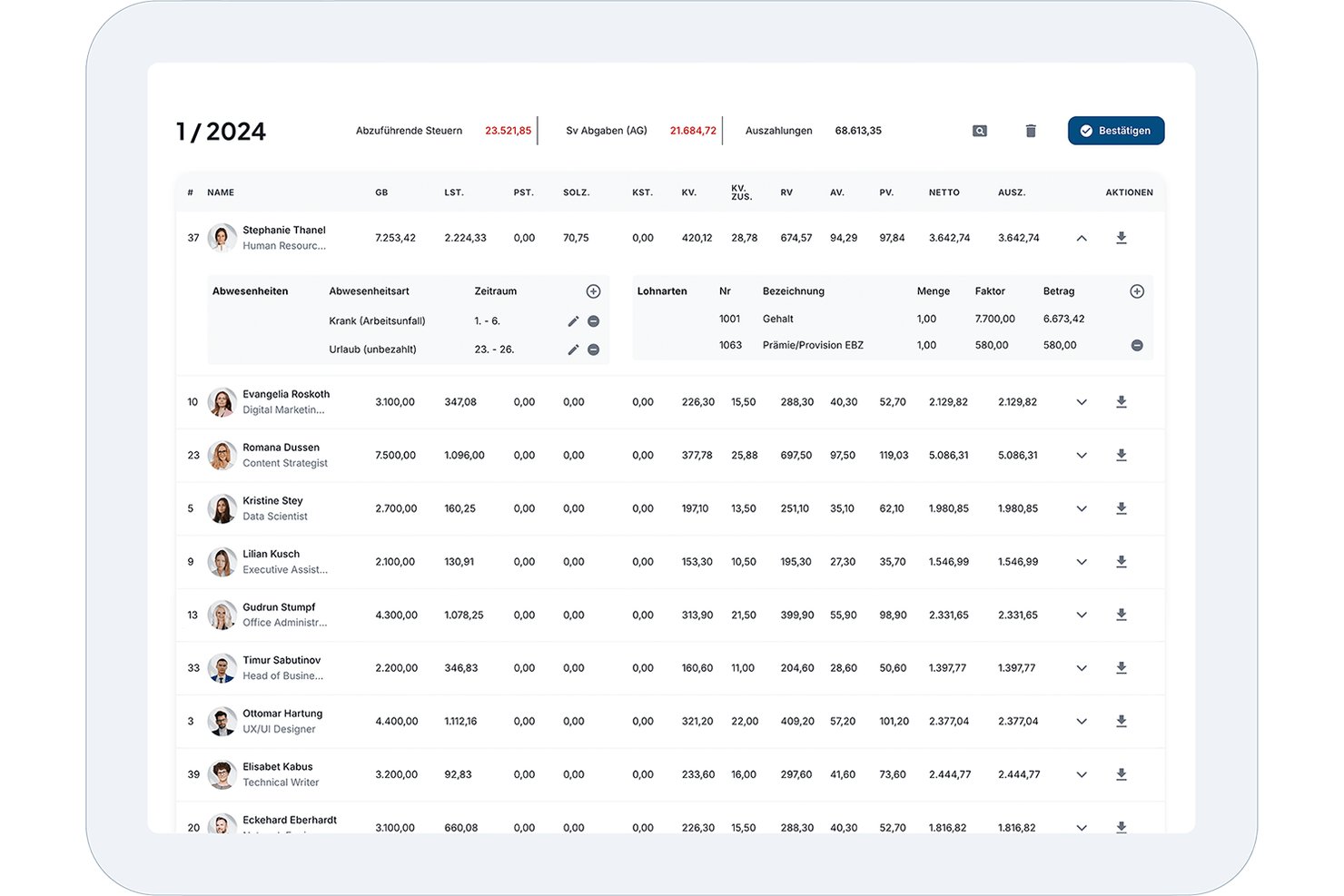
HeavenHR is a German cloud-based HR and payroll platform that combines automated Lohnabrechnung, digital personnel files, absence management, time tracking, and integrated statutory reporting (ELSTER, SV-Meldungen) in a single system built for SMBs.
Who is HeavenHR Best For?
HeavenHR suits small to mid-sized companies in the DACH region that manage payroll in-house without a dedicated Lohnbuchhalter on staff.
Why I Picked HeavenHR
I picked HeavenHR because its live payroll preview is genuinely unique in the German market. Before finalizing a pay run, I can see gross-to-net calculations update in real time, which catches errors before payslips go out. Employees then access those payslips directly through the self-service portal or HeavenHR app, with no manual distribution needed. I also like that employees can update banking details, health insurance, and absence requests through the same portal.
HeavenHR Key Features
- Certified statutory reporting: Automatically generates and submits ELStAM tax data, SV-Meldungen, A1 certificates, and wage tax certificates.
- Digital personnel file: Securely organizes contracts, documents, and employee records in a centralized digital folder.
- Integrated time tracking: Tracks work hours with RFID terminals and mobile app syncing, supporting flexible recording.
- Leave and absence management: Configures paid leave, absence categories, and BUrlG-compliant vacation calculations.
HeavenHR Integrations
Native integrations are not publicly listed.
Pros and Cons
Pros:
- Built-in absence and vacation management
- Digital payslips distributed without manual sending
- Automated ELStAM retrieval speeds up onboarding
Cons:
- No native DATEV direct sync documented
- Reporting customization options are limited
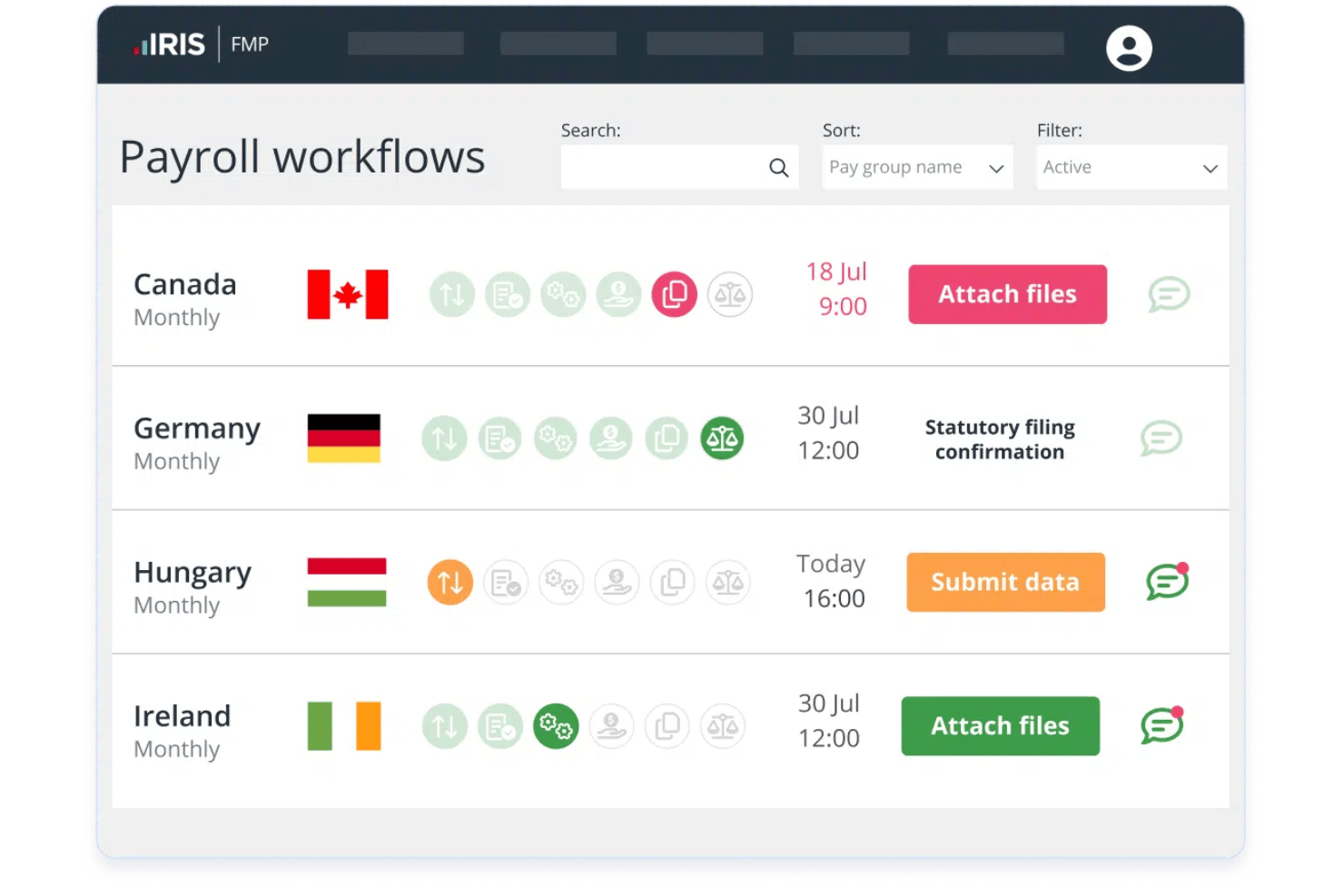
IRIS Global is a managed global payroll service that handles payroll processing, tax compliance, social insurance administration, and statutory reporting for businesses running international operations, including Germany.
Who is IRIS Global Best For?
IRIS Global suits multinational companies and foreign businesses establishing or expanding operations in Germany who need fully managed, compliant payroll without building in-house expertise.
Why I Picked IRIS Global
I've included IRIS Global in my top picks because its GDPR compliance credentials go beyond checkbox compliance. IRIS FMP holds ISO 27001 and ISO 9001 certification, and the IRIS Engage portal processes all payroll data within a secure, encrypted cloud environment. What I find particularly valuable is that IRIS takes complete ownership of German payroll audits, so if the Finanzamt comes knocking, your team isn't scrambling to respond.
IRIS Global Key Features
- Cloud-based payroll portal: Access payroll reports, employee data, and administrative tools securely from anywhere.
- In-country payroll expertise: German payroll calculations and registrations are handled by local specialists, not generic outsourcing teams.
- Automated statutory compliance: Monthly and annual filings with German regulators are managed as part of the service.
- Custom reporting dashboard: Generate payroll and HR reports in multiple currencies, tailored to country and company needs.
IRIS Global Integrations
Native integrations are not publicly listed.
Pros and Cons
Pros:
- ISO 27001 and GDPR-certified data handling
- Dedicated in-country payroll manager assigned per client
- Covers payroll in 135+ countries, including Germany
Cons:
- Limited third-party integrations compared to competitors
- Mobile app (MyIRIS) has mixed usability reviews

Best for scalable payroll process automation
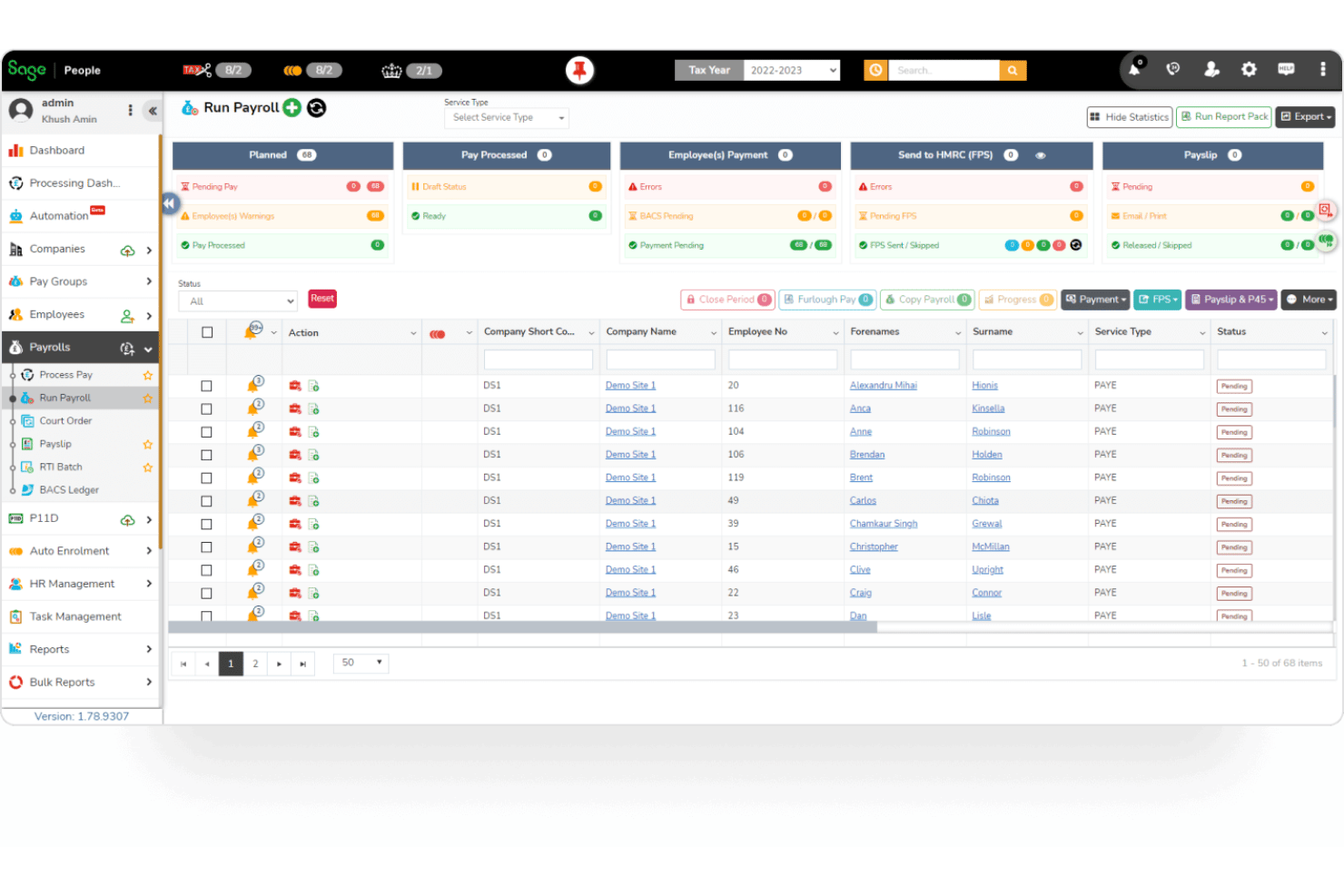
Sage Payroll is a cloud-based German payroll solution that handles gross-to-net calculations, statutory reporting (ELSTER, DEÜV), payslip generation, and employee self-service within a single platform built for SMEs.
Who is Sage Payroll Best For?
Sage Payroll is a strong fit for German SMEs with up to 150 employees that need a self-contained, regulation-ready payroll tool without a dedicated payroll specialist on staff.
Why I Picked Sage Payroll
I picked Sage Payroll as one of the best because of how far it takes payroll automation specifically within the German compliance context. You can configure a recurring pay date once, and Sage handles the full monthly cycle automatically: gross-to-net calculations, payslip generation, and DEÜV and ELSTER submissions, all without needing a separate ITSG certificate. I also like that the same subscription scales from 5 to 150 employees, so growing teams don't have to migrate to a new platform as headcount increases.
Sage Payroll Key Features
- DATEV-compatible data export: Export payroll data in standard formats ready for direct import into DATEV accounting systems.
- German payslip generation: Create statutory-compliant payslips with all relevant pay components and deductions.
- Automatic ELSTER and DEÜV submissions: Electronically file payroll tax and social insurance reports directly from the platform.
- Employee self-service portal: Employees access digital payslips, tax documents, and manage some personal data online.
Sage Payroll Integrations
Sage Payroll offers native integrations with Sage HR and accounting products like Sage 50 and Sage Intacct, and supports DATEV-compatible export for collaboration with tax advisors. An API is available for custom integrations.
Pros and Cons
Pros:
- Scales from 5 to 150 employees
- No ITSG certificate required for submissions
- Handles Minijob and Midijob thresholds automatically
Cons:
- Customer support response times reportedly slow
- Limited support for complex Tarifvertrag scenarios
Best for integrated workflows with tax advisors
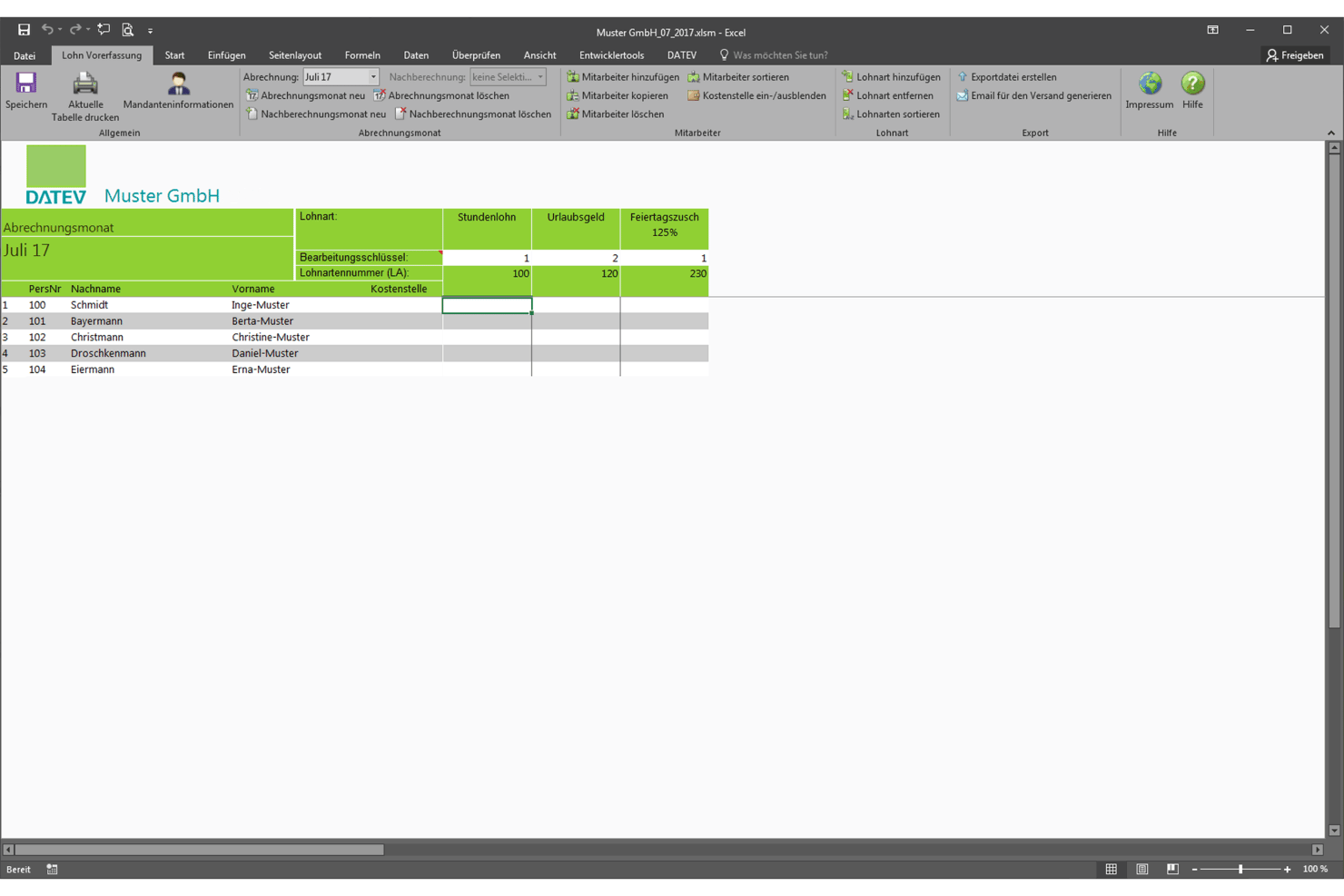
DATEV Lohn und Gehalt is a German payroll software that handles gross-to-net calculations in full compliance with German legislation, statutory e-filing (ELSTER, DEÜV), and payslip generation natively within the DATEV cooperative infrastructure used by tax advisors across Germany.
Who is DATEV Payroll Best For?
It's a strong fit for German Mittelstand companies and payroll specialists who already work within the DATEV ecosystem alongside a tax advisor (Steuerberater).
Why I Picked DATEV Payroll
DATEV Payroll earns its spot on my shortlist because no other payroll tool in Germany is as natively embedded in the tax advisor workflow. When my team runs payroll, data transmits directly to health insurance funds, ELSTER, and banks through the DATEV data center in one click, with no manual export or reformatting. I also appreciate the historical master data feature: if a contribution rate changes retroactively, DATEV recalculates the entire previous year automatically.
DATEV Payroll Key Features
- Tarifvertrag and collective agreement logic: Supports IG Metall, TVöD, and other German industry agreements for bonuses, allowances, and statutory church tax considerations.
- Employee self-service portal: Lets employees securely access their payslips, certificates, and tax documents online.
- Automated ELStAM and SV-Meldungen retrieval: Fetches wage tax data and transmits social security notifications electronically.
- Benefits-in-kind management: Calculates and reports non-cash perks like company cars, meal vouchers, and Jobticket as required by German law.
DATEV Payroll Integrations
DATEV Payroll offers native integrations with DATEV Rechnungswesen, Personio, Factorial, ATOSS, and TimeTac. An API is available for custom integrations.
Pros and Cons
Pros:
- Direct ELSTER submission via DATEV data center
- Retroactive payroll recalculation runs automatically
- Certified GKV compliance for SV reporting
Cons:
- Best suited for existing DATEV ecosystem users
- Admin interface available in German only
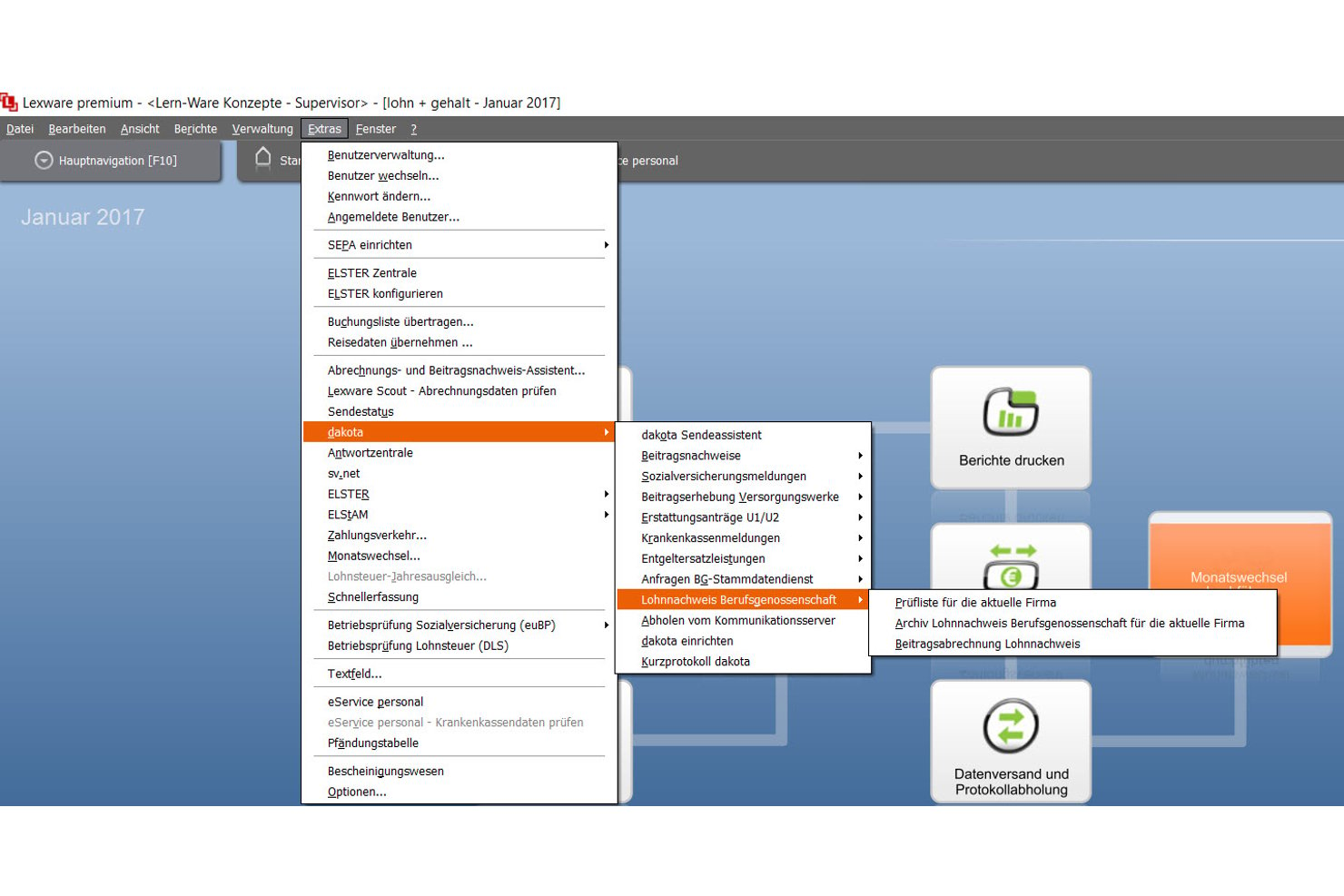
Lexware Payroll is a cloud-based German payroll solution for small businesses that handles gross-to-net calculations, automated statutory filings (ELSTER, SV-Meldungen, BG reports), digital payslip distribution, and direct integration with Krankenkassen and tax offices.
Who is Lexware Payroll Best For?
Lexware Payroll is a strong fit for small German businesses with up to 50 employees that handle everyday tasks like onboarding and offboarding in-house without a dedicated payroll specialist.
Why I Picked Lexware Payroll
I picked Lexware Payroll as one of the best because its ITSG-certified reporting engine automatically dispatches SV-Meldungen directly to Krankenkassen and handles ELSTER filings without any manual input from my team. What I particularly like is the automatic generation of U1 and U2 reimbursement applications, which smaller businesses often miss or file late. The GoBD-compliant archive and TÜV Süd certification mean the compliance trail is always audit-ready.
Lexware Payroll Key Features
- Digital payslip distribution: Employees receive Lohnabrechnungen online in a secure self-service portal.
- GoBD-compliant document archive: All payroll documents are stored and audit-proofed for required retention periods.
- Automated payroll cost posting: Payroll data is transferred directly into Lexware Office accounting without manual entry.
- Cloud-based browser access: Users can manage payroll on any device, including dedicated mobile apps for iOS and Android.
Lexware Payroll Integrations
Lexware Payroll offers native integrations with Lexware Office accounting, supports certified DATEV export via the DLS and euBP interfaces, and connects to over 140 time tracking systems through its marketplace. An API is available for custom integrations.
Pros and Cons
Pros:
- ELStAM retrieval fully automated within payroll runs
- ITSG-certified SV-Meldungen sent directly to Krankenkassen
- Automatic annual Beitragsbemessungsgrenzen and Mindestlohn updates
Cons:
- Customer support response times frequently flagged as slow
- Scaled for up to 50 employees, limiting Mittelstand growth
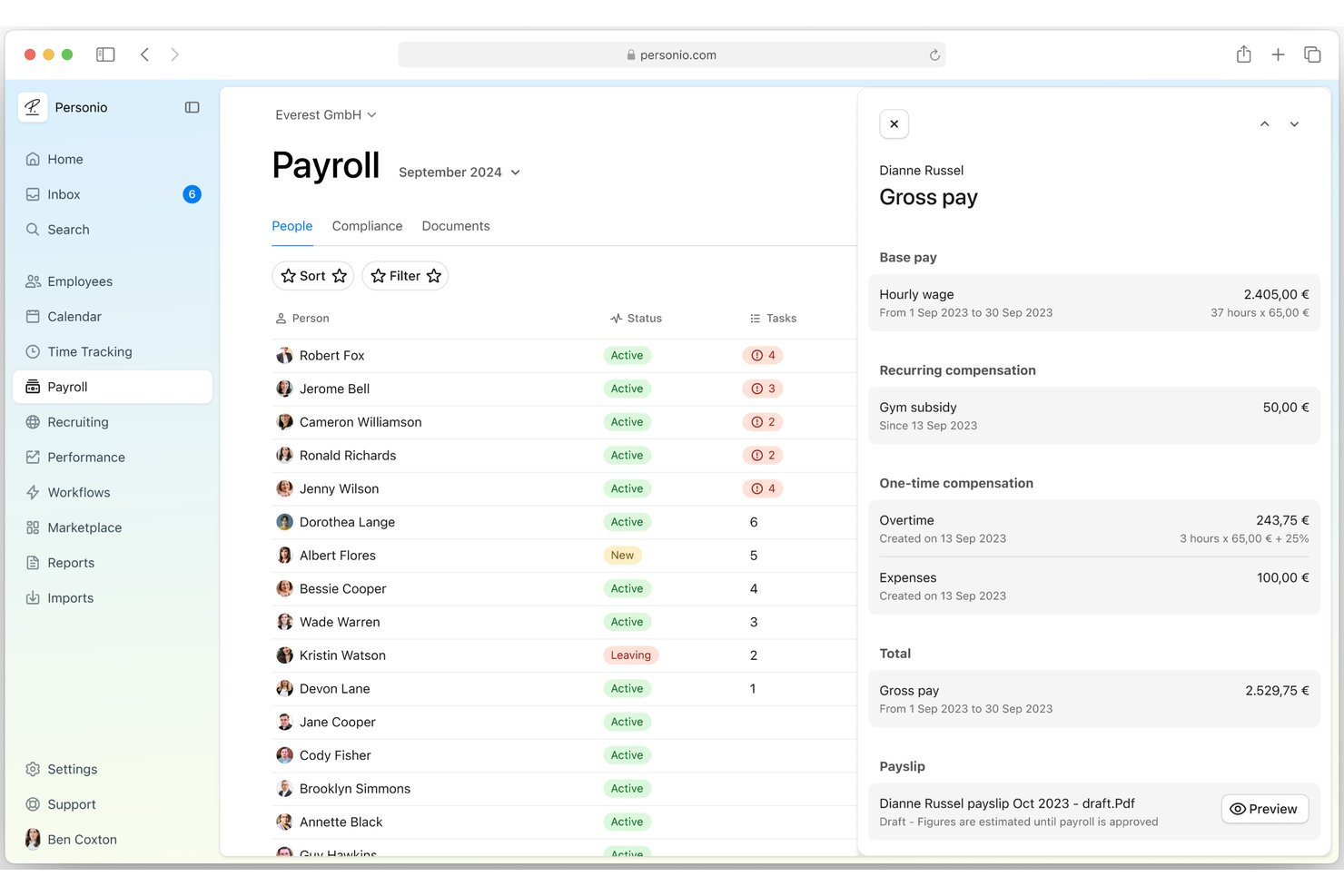
Personio Payroll is a native German payroll solution that handles gross-to-net calculations, statutory reporting, ELSTER and SV-Meldungen submissions, DATEV integration, and payslip generation within a unified HR and payroll platform.
Who is Personio Payroll Best For?
Personio Payroll is a strong fit for German Mittelstand companies that want HR and payroll managed in one system without relying on a separate payroll provider.
Why I Picked Personio Payroll
I've included Personio Payroll in my top picks because HR and payroll data live in a single dataset, not two separate systems that need syncing. When a contract change is logged in the HR module, it flows directly into the payroll run, with automatic input validation catching errors before processing. In practice, that means my team isn't chasing down corrections after payroll has already closed.
Personio Payroll Key Features
- DATEV integration: Export payroll data directly in DATEV-compatible formats for smooth collaboration with tax advisors.
- Automated statutory reporting: Generate and electronically submit reports like ELSTER, SV-Meldungen, and Berufsgenossenschaft filings.
- Employee self-service portal: Employees can access digital payslips, tax certificates, and balances securely online in German or English.
- Benefits-in-kind management: Automatically calculate and manage Sachbezüge, geldwerte Vorteile, and benefits like company cars or meal vouchers.
Personio Payroll Integrations
Personio Payroll offers native integrations with DATEV LODAS, DATEV Lohn und Gehalt, and supports connections to time-tracking tools like Clockodo and Papershift. An API is available for custom integrations.
Pros and Cons
Pros:
- HR changes auto-update payroll records
- Payslips available in German and English
- Natively handles German payroll compliance updates
Cons:
- Limited to German payroll, not multinational
- Payroll module requires full Personio subscription
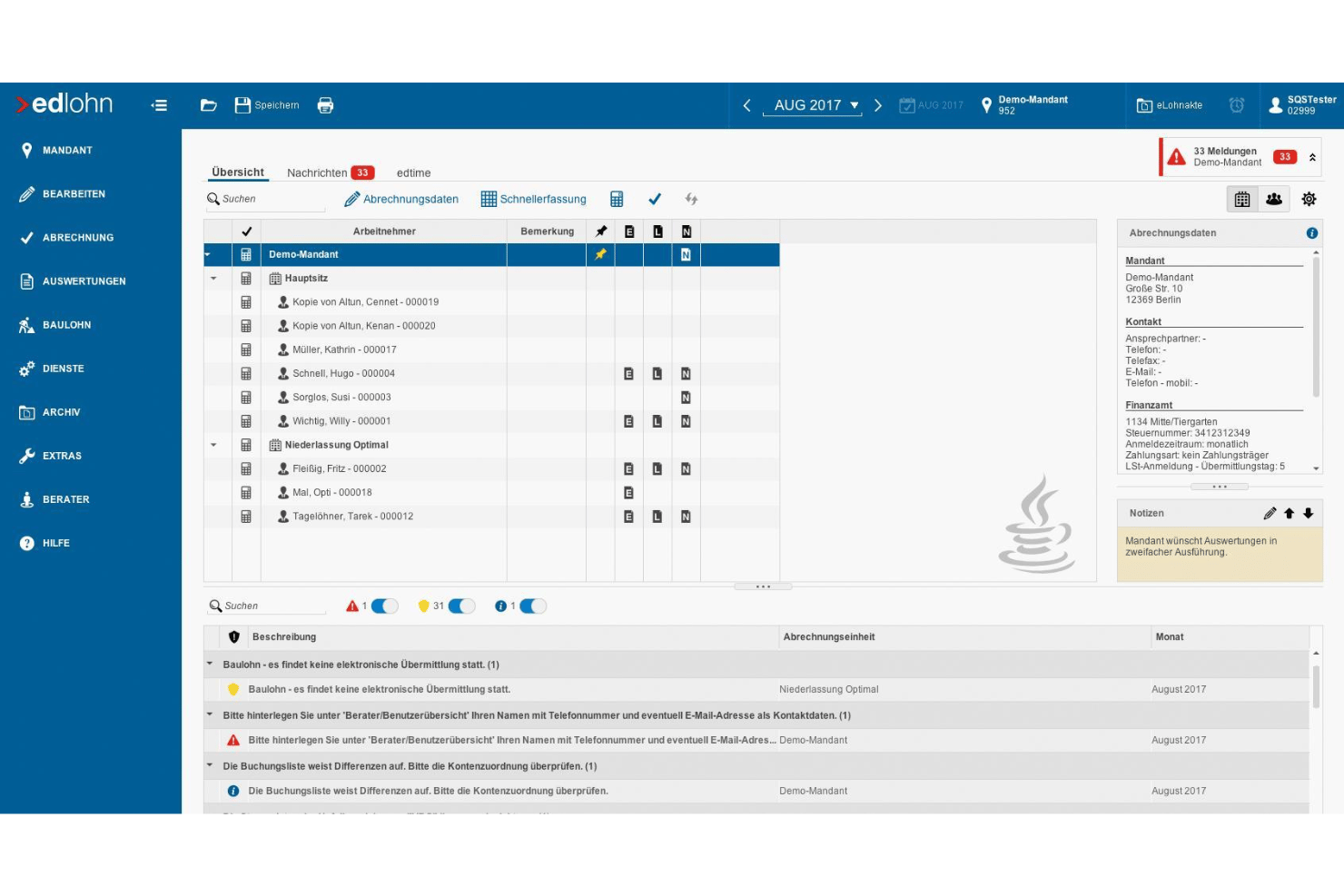
edlohn is a cloud-based payroll platform by eurodata AG built for tax advisors and payroll bureaus, covering German gross-to-net calculations, statutory e-filing via ELSTER and DEÜV, multi-client management, and digital payslip distribution.
Who is edlohn Best For?
edlohn is a strong fit for Steuerberater and Lohnbüros that manage payroll across multiple client accounts from a single platform.
Why I Picked edlohn
I picked edlohn as one of the best because its multi-client architecture is built specifically around how Steuerberater actually work. I like that the edcloud portal lets tax advisors and clients share payroll data securely without email back-and-forth. The built-in ITSG-certified transmission for ELSTER and DEÜV filings means I'm not relying on third-party certificates or manual uploads.
edlohn Key Features
- Compliant payslip generator: Produces German payslips that meet all statutory requirements for digital or print distribution.
- Automated SV-Meldungen and DEÜV reporting: Handles electronic health insurance and social security filings directly from the platform.
- Digital personnel file (eLohnakte): Stores payroll documents and employee records securely for compliance and audits.
- ELStAM data management: Automates electronic wage tax data retrieval and updates linked to each employee.
edlohn Integrations
Native integrations are not publicly listed. An API is available for custom integrations, and time-tracking tools like edtime are supported directly.
Pros and Cons
Pros:
- Automated annual regulatory updates for Lohnsteuer and Mindestlohn
- Multi-client payroll management from one account
- ITSG-certified for GKV social security e-filing
Cons:
- Interface and documentation are German-only
- Primarily designed for Steuerberater, not in-house HR teams
Other Payroll Software in Germany
Here are some additional payroll software in Germany options that didn’t make it onto my shortlist, but are still worth checking out:
- SAP SuccessFactors Employee Central Payroll
For complex enterprise payroll requirements
- SD Worx
For multinational payroll support in Germany
- P&I LogaHR
For configurable payroll automation
- Rippling
For unified HR, IT, and payroll workflows
- Papaya Global
For multinational wage compliance management
- Remote
For simplified payroll setup for remote teams
- ADP GlobalView Payroll
For enterprise-grade German compliance
- Zalaris
For industry-specific payroll configurations
- Lohndirekt
For outsourced payroll for German SMEs


How I Evaluate Payroll Software in Germany
I split my evaluation into two layers: baseline must-haves like ELSTER filing and DATEV export, and the differentiators—like Tarifvertrag support—that set the best tools apart.
Core Functionality (Table Stakes For This List)
When I'm selecting tools for my list, I rank each one on a scale from 0 (does not offer the functionality) to 5 (excels in this area) for each core functionality listed below. Then, I calculate the tool's total score into a percentage. Each tool needs to achieve a minimum total score of 65% to be considered for inclusion.
- German Payroll Calculation: I check whether gross-to-net runs cover Lohnsteuer, Kirchensteuer, Solidaritätszuschlag, and social insurance without requiring manual adjustments.
- Statutory Reporting & E-Filing: Each tool should handle electronic ELSTER submissions, DEÜV-based SV-Meldungen, and Berufsgenossenschaft filings directly from the platform.
- DATEV Integration: Most German businesses work with a Steuerberater, so I look for certified DATEV LODAS or Lohn und Gehalt exports to support that workflow.
- Payslip Generation: Compliant German payslips need every statutory field. I also look for secure digital delivery through an employee portal or encrypted email.
- Tax & Social Insurance: The tool should manage all six Steuerklassen, support multiple Krankenkassen, and apply current contribution ceilings automatically.
- Wage Type Management: I evaluate how each platform handles Urlaubsgeld, Weihnachtsgeld, Sachbezüge, geldwerte Vorteile, and Minijob/Midijob thresholds.
Once I have a list of tools that meet the criteria, I consider what sets each platform apart.
Differentiating Factors (What Sets Vendors Apart)
Here's how I compare and contrast different vendors:
Standout Features
Automated ELStAM retrieval and SV-Meldungen submissions save payroll teams from manually exchanging data with tax authorities and health insurers each cycle. I also look for built-in Tarifvertrag logic—platforms that apply TVöD or IG Metall rules to shift bonuses and holiday pay remove a major source of manual error. Benefits-in-kind handling is another area where tools diverge; calculating company car taxes or meal voucher allowances correctly requires up-to-date regulatory logic that not every platform offers.
Beyond Features
ITSG certification matters because it confirms a platform meets the standards required for social security reporting in Germany. I also evaluate how each tool supports collaboration with a Steuerberater—some offer shared access with a clear division of responsibilities, while others connect through DATEV Unternehmen online for document exchange. Data hosting is another factor I check closely. Payroll data should sit in German or EU data centers with GoBD-compliant archival covering the mandatory 10-year retention period.
How to Choose Payroll Software in Germany
It’s easy to get bogged down in long feature lists and complex pricing structures. To help you stay focused as you work through your unique software selection process, here’s a checklist of factors to keep in mind:
| Factor | What to Consider |
|---|---|
| Scalability | Can the software handle changes in headcount, locations, or legal structures as your business grows? Ask about restrictions or extra fees for growth. |
| Integrations | Does it connect natively with your HRIS, accounting, time tracking, or banking tools? Check for DATEV, Personio, and API options relevant to your stack. |
| Ease of use | Will HR, payroll, and accounting teams get up to speed quickly? Consider demo workflows, interface language, and user support materials. |
| Implementation and onboarding | How long will setup take, and what training or migration help is available? Ask about dedicated support and timeline estimates specific to Germany. |
| Cost | Is pricing transparent and predictable as you add employees or new locations? Watch for setup fees or hidden per-payslip costs in German payroll. |
| Security safeguards | Where and how is sensitive payroll data stored? Ensure GDPR compliance, strong access controls, and German/EU data residency for legal peace of mind. |
| Compliance requirements | Does the vendor update regulatory logic annually for German tax and social security changes? Look for proof of ITSG certification and audit readiness. |
| Support availability | When and how can you access support in German? Will you have live help if ELSTER, SV-Meldungen, or DATEV exports fail before deadline day? |
What is Payroll Software in Germany?
Payroll software in Germany is a specialized tool that automates gross-to-net wage calculations, statutory filings, and payslip generation in compliance with local tax and social security rules. These platforms help HR and payroll teams manage employee data, deductions, and reporting obligations while ensuring adherence to strict German legal and audit standards.
Features
When selecting payroll software in Germany, keep an eye out for the following key features:
- German payroll calculation: Handles gross-to-net pay with automatic application of Lohnsteuer, Kirchensteuer, Solidaritätszuschlag, and social security contribution rules.
- Statutory e-filing: Lets you generate and electronically submit ELSTER tax filings, SV-Meldungen, and DEÜV reports directly to German authorities.
- DATEV integration: Connects your payroll output to DATEV or exports files in DATEV-compatible formats for easy collaboration with tax advisors and accountants.
- Compliant payslip generation: Produces detailed, legally required payslips (Lohnabrechnung) in the German format with all statutory deductions and wage types itemized.
- Employee self-service portal: Offers a secure portal where employees can access payslips, tax certificates, and personal payroll data in both German and English.
- Collective agreement handling: Supports wage components and rules tied to national or regional Tarifverträge, such as holiday bonuses and special shift surcharges.
- Benefits-in-kind management: Automates calculation of non-cash benefits like company cars (geldwerte Vorteile), meal vouchers, and retirement plan contributions.
- Automatic regulatory updates: Keeps payroll logic current with annual tax law changes, minimum wage adjustments, and new social insurance requirements.
- Custom wage type library: Lets you configure and manage various wage types, bonuses, and allowances specific to your workforce and sector.
- GDPR-compliant data security: Ensures payroll records are securely stored in EU datacenters with strict access controls and audit logging for legal compliance.
Benefits
Implementing payroll software in Germany provides several benefits for your team and your business. Here are a few you can look forward to:
- Regulatory peace of mind: The software stays current with German tax, social security, and reporting requirements, reducing compliance risk.
- Faster payroll cycles: Automated gross-to-net calculations, e-filing, and payslip delivery cut down manual work and save valuable time each month.
- Accurate statutory filings: Built-in ELSTER, DEÜV, and SV-Meldungen functions help you generate, submit, and archive mandatory reports with confidence.
- Smooth DATEV collaboration: Native DATEV integration means your tax advisor or accountant can process payroll data without extra data entry or file conversions.
- Empowered employees: Secure, bilingual self-service portals provide workers with instant access to payslips, tax certificates, and wage histories.
- Better data security: GDPR-compliant hosting and access controls ensure sensitive payroll data is protected and audit-ready at all times.
- Scalability for growth: Cloud platforms scale with your workforce, easily supporting new hires, multiple sites, or changes in business structure as you expand.
Costs and Pricing
Selecting payroll software in Germany requires an understanding of the various pricing models and plans available. Costs vary based on features, team size, add-ons, and more. The table below summarizes common plans, their average prices, and typical features included in payroll software in Germany solutions:
Plan Comparison Table for Payroll Software in Germany
| Plan Type | Average Price | Common Features |
|---|---|---|
| Free Plan | $0 | Handles basic payroll runs, produces standard German payslips, supports manual data entry, and includes limited support. |
| Personal Plan | $5-$15/user/month | Offers automated calculations, employee self-service portal, digital payslip delivery, and standard statutory e-filing. |
| Business Plan | $15-$30/user/month | Adds DATEV integration, collective agreement support, configurable wage types, benefits-in-kind management, and audit logging. |
| Enterprise Plan | $30+/user/month | Delivers custom integrations, advanced security, dedicated account management, SLA-backed support, and multi-entity scalability. |
Payroll Software in Germany FAQs
Here are some answers to common questions about payroll software in Germany:
Do I need German-specific payroll software if my company operates in Germany?
Yes, you need payroll software designed for Germany. Local rules for tax, social security, and statutory reporting are complex and change frequently, so using software built for the German market ensures compliance and smoother collaboration with advisors.
How does DATEV integration help my business?
DATEV integration cuts down on double data entry and file transfers between your payroll platform and your Steuerberater. This enhances collaboration, especially when dealing with monthly payslips, accountant reviews, or year-end processing.
What happens if German tax or social insurance laws change during the year?
Leading payroll software is updated annually (and sometimes more often) to reflect all new legal requirements, including tax brackets, contribution rates, or minimum wage changes. Always check that your provider regularly updates regulatory logic.
Can foreign managers use German payroll software in English?
Many platforms offer a bilingual interface or at least English-language payslips and user guides. This is useful for international teams operating in cities like Berlin, Munich, or Frankfurt. Always confirm language options during your selection process.
How does payroll work in Germany?
Payroll in Germany is typically processed monthly. Employers calculate gross salary, deduct income tax and the employee’s share of statutory social-security contributions, and pay the remaining net salary to the employee. Employers also handle required payroll reporting and their own social-security contributions. Because German payroll and tax rules are complex, many businesses use payroll software or outsource payroll to a Steuerberater (tax advisor).
What is the most used payroll software in Germany?
DATEV is the most widely used payroll software in Germany, particularly among SMEs, tax advisors, and payroll service providers. DATEV reported that an average of approximately 14.9 million employees per month were processed using its payroll software in 2025. SAP is particularly strong among large German enterprises.
What are the top software companies in Germany?
Germany’s leading software companies include SAP, DATEV, TeamViewer, Celonis, Software AG, Personio, and DeepL. SAP is Germany’s best-known enterprise software company, while DATEV is a major accounting and payroll technology provider. In G2’s 2026 German Software Companies ranking, SAP, SimScale, TeamViewer, Awin, and Leapsome are the top five.