

Los 10 mejores competidores de SAP para RR. HH. y nóminas en 2026

10 Lista de los mejores competidores de SAP


Los mejores competidores de SAP ofrecen potentes funciones de RR. HH. y ERP sin la complejidad, el coste ni la pesada carga de implementación que suelen conllevar las plataformas diseñadas exclusivamente para grandes empresas.
SAP HCM y SAP SuccessFactors son soluciones sólidas, pero no siempre son la opción adecuada, especialmente para pequeñas y medianas empresas o compañías de rápido crecimiento que necesitan flexibilidad. Los elevados costes de implementación, las pronunciadas curvas de aprendizaje y el exceso de funciones pueden hacer que SAP parezca excesivo si solo necesitas capacidades básicas de RR. HH., como incorporación, nóminas, permisos y gestión del desempeño.
Para ayudarte a encontrar una opción potencialmente más adecuada, he revisado y comparado las principales alternativas a SAP en cuanto a precios, funciones y casos de uso, para que puedas elegir una solución que crezca con tu empresa y se ajuste a tu presupuesto.
Por qué confiar en nuestras reseñas de software
Probamos y analizamos software de RR. HH. desde 2019. Como profesionales de RR. HH., sabemos lo fundamental y difícil que es tomar la decisión correcta al seleccionar un software.
Invertimos en una investigación exhaustiva para ayudar a nuestra audiencia a tomar mejores decisiones de compra de software. Hemos probado más de 2.000 herramientas para distintos casos de uso de RR. HH. y hemos escrito más de 1.000 reseñas exhaustivas de software. Descubre cómo mantenemos la transparencia y consulta nuestra metodología de análisis de software.
Tabla comparativa de competidores de SAP
Esta tabla comparativa resume los detalles de precios de mis principales selecciones de competidores de SAP:
| Tool | Best For | Trial Info | Price | ||
|---|---|---|---|---|---|
| 1 | Mejor para RR.HH. global y cumplimiento | Demo gratuita disponible | Desde $5/empleado/mes | Website | |
| 2 | Mejor para fabricantes pequeños y medianos | Prueba gratuita disponible | Desde $49/usuario/mes (hasta 10 usuarios) | Website | |
| 3 | La mejor para soluciones empresariales integradas | Prueba gratuita de 30 días disponible | Desde $65/usuario/mes (facturado anualmente) | Website | |
| 4 | Ideal para soluciones ERP basadas en la nube | Demostración gratuita disponible | Precio bajo solicitud | Website | |
| 5 | Ideal para la gestión integral de recursos humanos y fuerza laboral | Demostración gratuita disponible | Precios bajo solicitud | Website | |
| 6 | Mejor opción para autoservicio del empleado y análisis de información | Demo gratuita disponible | Precio bajo consulta | Website | |
| 7 | Mejor para procesos de RR. HH. impulsados por IA | Demo gratuita disponible | Desde $7/usuario/mes (mínimo 5 usuarios, facturación anual) | Website | |
| 8 | Ideal para la gestión integral de RR. HH. | Demostración gratuita disponible | Precio a consultar | Website | |
| 9 | Ideal para la gestión de talento basada en IA | Demostración gratuita disponible | Precio a consultar | Website | |
| 10 | Ideal para la gestión unificada de RR. HH. y TI | Demostración gratuita disponible | Precios bajo consulta | Website |

Reseñas de los mejores competidores de SAP
En este análisis, examinaré en profundidad cada uno de los 10 principales competidores de SAP. Repasaré las ventajas y desventajas de cada herramienta, sus funciones y sus mejores casos de uso.
Deel HR
Mejor para RR.HH. global y cumplimiento
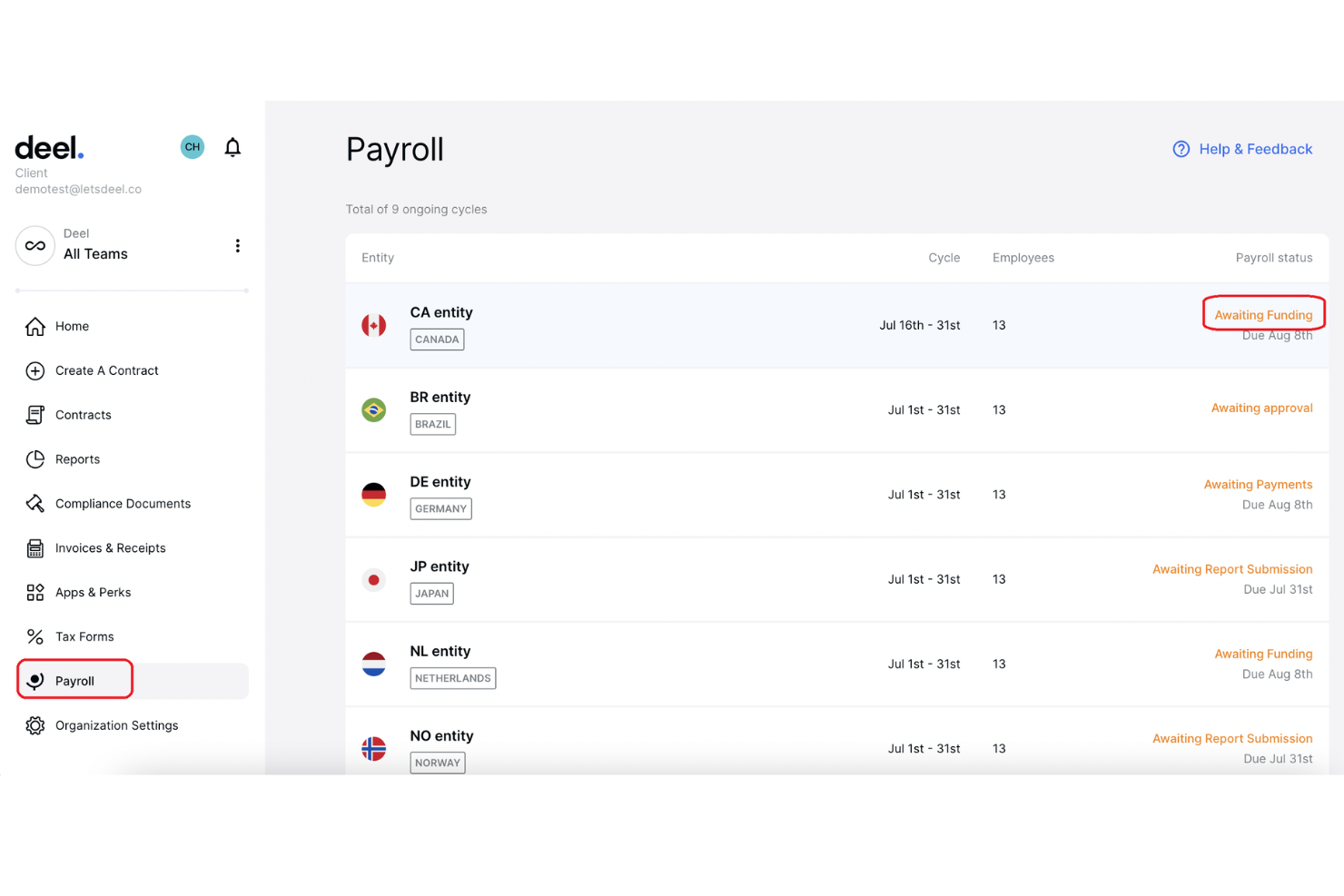
Deel ayuda a los equipos de RR.HH. a contratar, pagar y gestionar empleados y contratistas en más de 150 países sin necesidad de establecer entidades locales, lo que lo hace ideal para empresas que buscan expandirse internacionalmente.
Por qué es un buen competidor de SAP
Elegí Deel porque permite a tu equipo incorporar y pagar trabajadores globales sin tener que crear entidades legales extranjeras, ahorrando semanas de configuración y evitando la complejidad del empleo local.
Su motor de nómina global maneja pagos en múltiples monedas y aplica automáticamente las normas fiscales y laborales locales para que permanezcas en cumplimiento en cada mercado donde operas. Deel también genera contratos localizados tanto para empleados de tiempo completo como para contratistas independientes, asegurando precisión legal a través de las fronteras.
Me gusta que puedes gestionar datos de RR.HH., beneficios, documentación de cumplimiento y pagos desde un panel unificado, lo que reduce el trabajo administrativo y los procesos manuales propensos a errores. Por último, el enfoque de Deel en la conformidad—actualizando contratos y requisitos fiscales a medida que cambian las leyes—te da confianza a medida que crece tu plantilla internacional.
Características clave de Deel
Aquí algunas características clave a destacar:
- Nómina global: Ejecuta nómina en más de 150 países cumpliendo con regulaciones laborales y fiscales locales.
- Employer of Record (EOR): Contrata empleados de tiempo completo en el extranjero a través de Deel actuando como empleador legal.
- Gestión de contratistas: Genera contratos conformes y paga contratistas independientes en monedas locales.
- Motor de cumplimiento: Monitoreo automatizado de leyes laborales y fiscales locales para mantener tus operaciones legalmente actualizadas.
Integraciones de Deel
Las integraciones incluyen Expensify, NetSuite, BambooHR, Workday, Xero, QuickBooks, Zapier, Jira, Okta y Time Doctor.
Pros and Cons
Pros:
- Nómina y cumplimiento global
- Admite tanto empleados como contratistas a nivel global
- Automatiza la creación de contratos según normativas locales
Cons:
- No está optimizado como plataforma centrada en dispositivos móviles
- Personalización profunda limitada para estructuras organizativas complejas
New Product Updates from Deel HR

Deel Expands Stablecoin Wallet to 80+ Countries
Deel expands its Stablecoin Wallet to 80+ countries with dollar-backed balances and optional rewards. This gives eligible contractors more ways to hold and manage earnings inside Deel. For more information, visit Deel’s official site.
 .
.
MRPeasy
Mejor para fabricantes pequeños y medianos
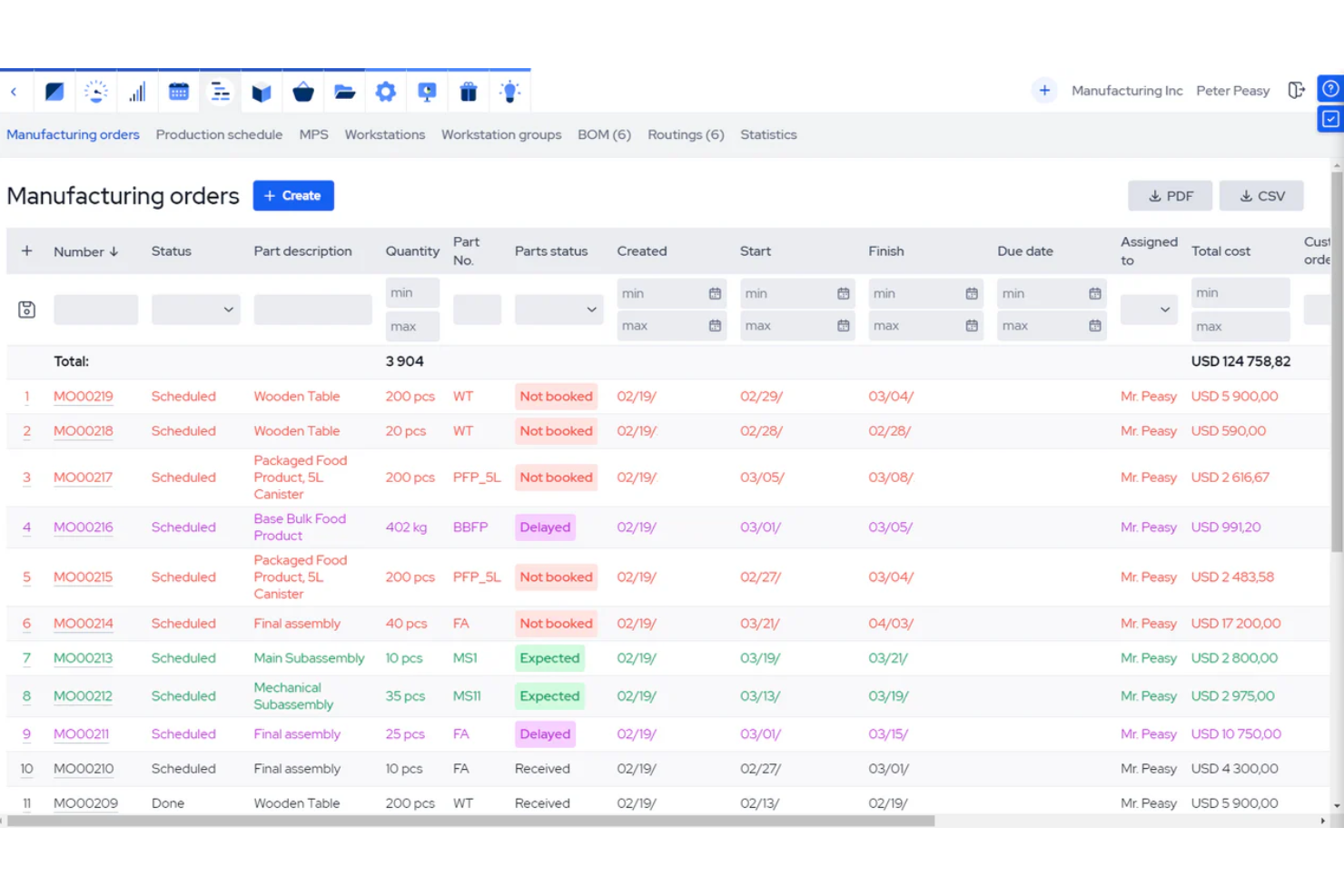
MRPeasy es un sistema de planificación de recursos de fabricación (MRP) basado en la nube, diseñado para fabricantes pequeños y medianos que necesitan una planificación de producción seria sin la complejidad empresarial.
Por qué es un buen competidor de SAP
Elegí MRPeasy porque ofrece a los fabricantes en crecimiento las funciones clave de planificación de producción y control de inventario que realmente utilizan, en lugar de abrumarlos con herramientas solo para grandes empresas.
Puedes planificar y reprogramar la producción con diagramas de Gantt de arrastrar y soltar que consideran automáticamente las restricciones de material y capacidad, ayudándote a prometer plazos de entrega precisos. MRPeasy también rastrea el inventario por lotes, números de serie y escaneos de códigos de barras, para que sepas exactamente qué hay en stock y qué necesitas reordenar.
Su módulo de compras pronostica los requisitos de materiales e incluso rellena automáticamente las órdenes de compra en función de la demanda y las carencias. Finalmente, las herramientas integradas de ventas y cotización te permiten convertir pedidos confirmados en órdenes de trabajo en la planta sin duplicar el ingreso de datos.
Características clave de MRPeasy
Aquí hay algunas características clave que vale la pena destacar:
- Planificación y programación de la producción: Crea y ajusta planes de producción considerando requisitos de material y capacidad mediante herramientas de programación intuitivas.
- Inventario y trazabilidad: Rastrea el stock en tiempo real con soporte para lotes/números de serie y escaneo de códigos de barras para reducir faltantes y exceso de inventario.
- Pronóstico de compras: Sugiere y genera automáticamente órdenes de compra basadas en niveles críticos de stock y órdenes de fabricación abiertas.
- De pedido de venta a producción: Convierte pedidos de venta confirmados directamente en órdenes de fabricación, incluyendo estimaciones de costo y tiempo de entrega.
Integraciones de MRPeasy
Las integraciones incluyen QuickBooks Online, Xero, Shopify, Magento, WooCommerce, BigCommerce, Pipedrive, ShipStation y Zapier para conectar con otros sistemas empresariales.
Pros and Cons
Pros:
- Permite a las empresas optimizar las compras con generación automática de órdenes
- Ofrece una visión clara del embudo de ventas para el seguimiento de pedidos
- Ayuda a estimar rápidamente los costos y plazos de producción
Cons:
- La funcionalidad de la aplicación móvil es menos robusta que la versión de escritorio
- La configuración inicial puede llevar tiempo para ajustarla correctamente
New Product Updates from MRPeasy
MRPeasy Expands REST API v2 With New Data Endpoints
MRPeasy expands REST API v2 with new endpoints for reports, dashboard data, production resources, stock, and settings. This gives users broader programmatic access to operational data. For more information, visit MRPeasy’s official site.
 .
.
La mejor para soluciones empresariales integradas
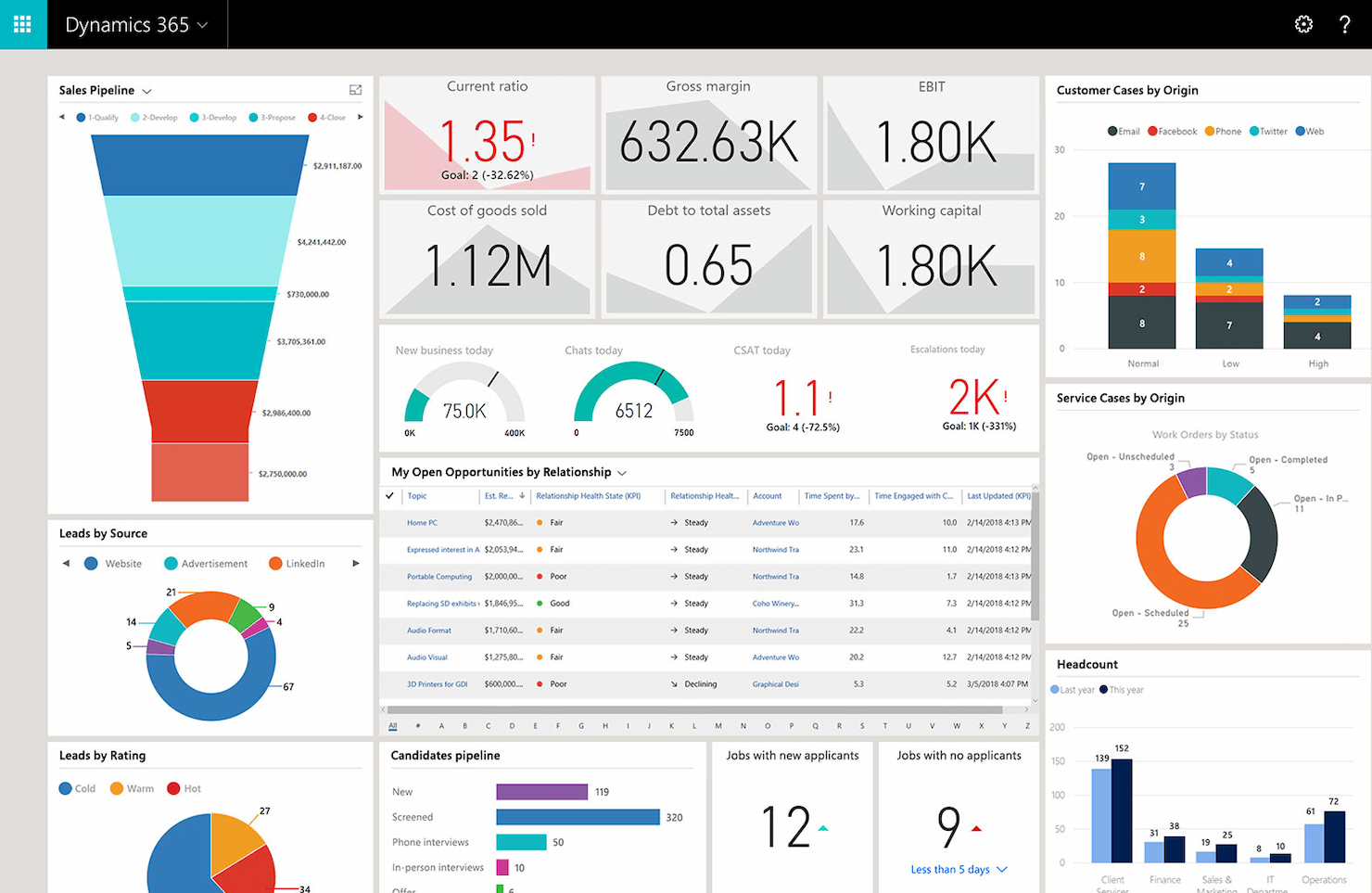
Microsoft Dynamics 365 es una suite de aplicaciones empresariales basada en la nube que unifica las funcionalidades de ERP (planificación de recursos empresariales) y CRM (gestión de relaciones con clientes) en una sola plataforma, ayudando a empresas en crecimiento y medianas a gestionar ventas, finanzas, operaciones y relaciones con clientes con datos y flujos de trabajo compartidos.
Por qué es un buen competidor de SAP
Elegí Microsoft Dynamics 365 porque combina funciones empresariales clave—como CRM y ERP—en una sola plataforma, para que tus equipos de ventas, finanzas y operaciones trabajen a partir del mismo conjunto de datos, reduciendo esfuerzos duplicados y malentendidos.
Su diseño modular te permite comenzar con las aplicaciones que necesitas (por ejemplo, Ventas o Finanzas) y expandirte a otras (como Cadena de Suministro o Servicio al Cliente) a medida que tu empresa crece.
Puedes rastrear un prospecto en el CRM y conectarlo con el cumplimiento de pedidos y finanzas sin cambiar de sistemas, ayudando a que tus equipos se mantengan alineados; y las analíticas y reportes integrados con Power BI brindan al equipo una visibilidad basada en datos sobre las tendencias de rendimiento, no solo informes estáticos.
Características clave de Microsoft Dynamics 365
Aquí tienes algunas características clave que vale la pena destacar:
- Aplicaciones ERP y CRM modulares: Elige y combina capacidades como Ventas, Finanzas, Servicio de Campo y Cadena de Suministro según las necesidades de tu negocio.
- Información impulsada por IA: Analítica incorporada y modelos de puntuación ayudan a priorizar prospectos y a prever el rendimiento del embudo de ventas.
- Acceso en la nube: Trabaja desde cualquier lugar con una plataforma alojada en la nube que apoya a equipos remotos y reduce la carga de infraestructura de TI.
- Extensión Power Platform: Usa Power BI, Power Apps y Power Automate para crear paneles personalizados y automatizaciones de flujos de trabajo.
Integraciones de Microsoft Dynamics 365
Las integraciones incluyen Microsoft 365 (aplicaciones de Office), Outlook, Teams, Power BI, SharePoint, Azure, OneNote, LinkedIn Sales Navigator y herramientas de Microsoft Power Platform (Power Apps, Power Automate).
Pros and Cons
Pros:
- Solución empresarial integral
- Integración fluida con otros productos de Microsoft
- Escalable para empresas de varios tamaños
Cons:
- Altos costos de implementación
- Requiere actualizaciones y mantenimiento constantes
Ideal para soluciones ERP basadas en la nube
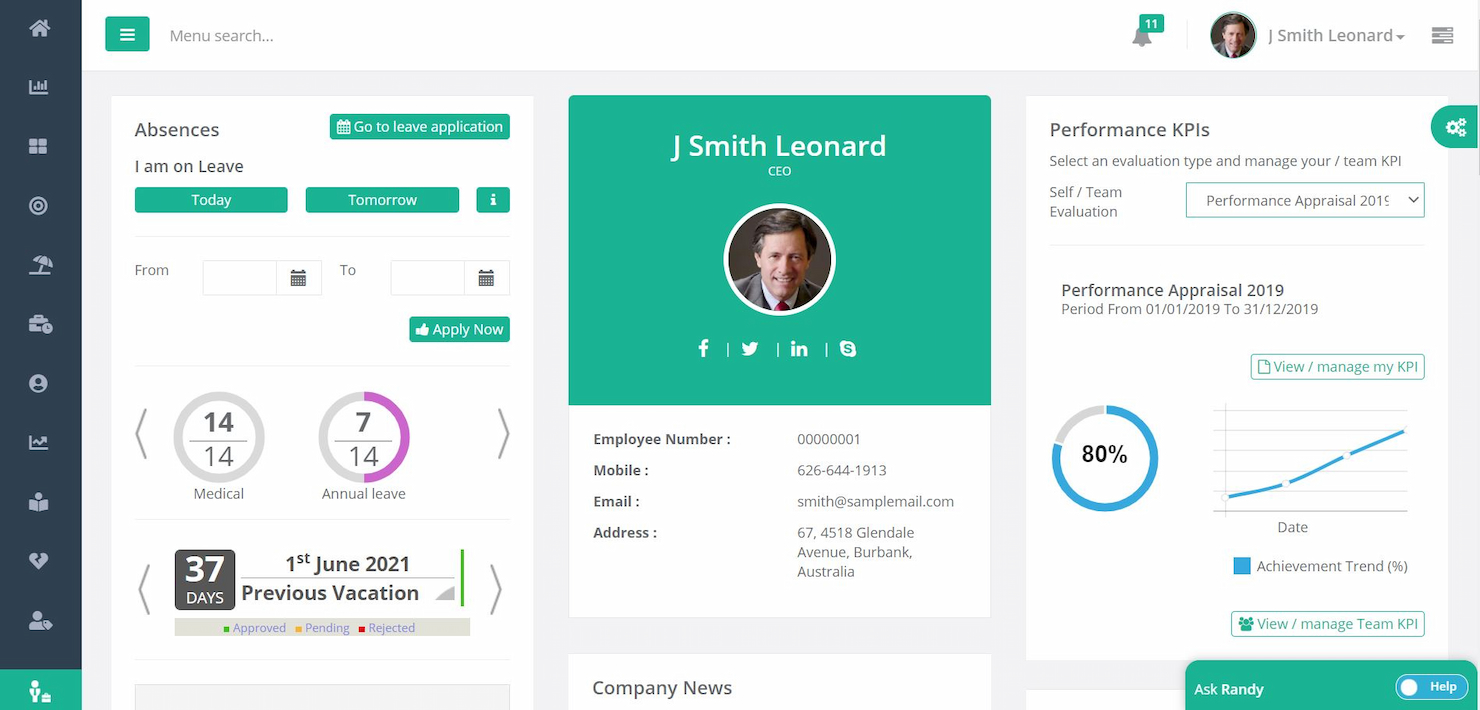
Acumatica es una solución ERP basada en la nube diseñada para ayudar a las empresas a gestionar sus operaciones y finanzas de manera eficiente. Es ideal para soluciones ERP basadas en la nube porque ofrece una funcionalidad integral con la flexibilidad y accesibilidad de una plataforma en la nube.
Por qué es una buena competidora de SAP: Elegí Acumatica para la lista porque proporciona una solución ERP robusta, basada en la nube, que es tanto flexible como escalable. Su capacidad para ofrecer un conjunto integral de herramientas ERP en una plataforma en la nube la convierte en una opción destacada. El enfoque de Acumatica en la flexibilidad y accesibilidad ayuda a las empresas a gestionar sus operaciones sin inconvenientes desde cualquier lugar.
Características destacadas e integraciones:
Características incluyen gestión financiera, contabilidad de gestión de proyectos, CRM, gestión de inventario e informes.
Integraciones incluyen Salesforce, Microsoft 365, Adobe, Avalara, Shopify, Magento, HubSpot, BigCommerce, Smartsheet y DocuSign.
Pros and Cons
Pros:
- Plataforma flexible basada en la nube
- Funcionalidad ERP integral
- Escalable para empresas en crecimiento
Cons:
- La información de precios no está fácilmente disponible
- Puede ser complejo de implementar
UKG Pro
Ideal para la gestión integral de recursos humanos y fuerza laboral
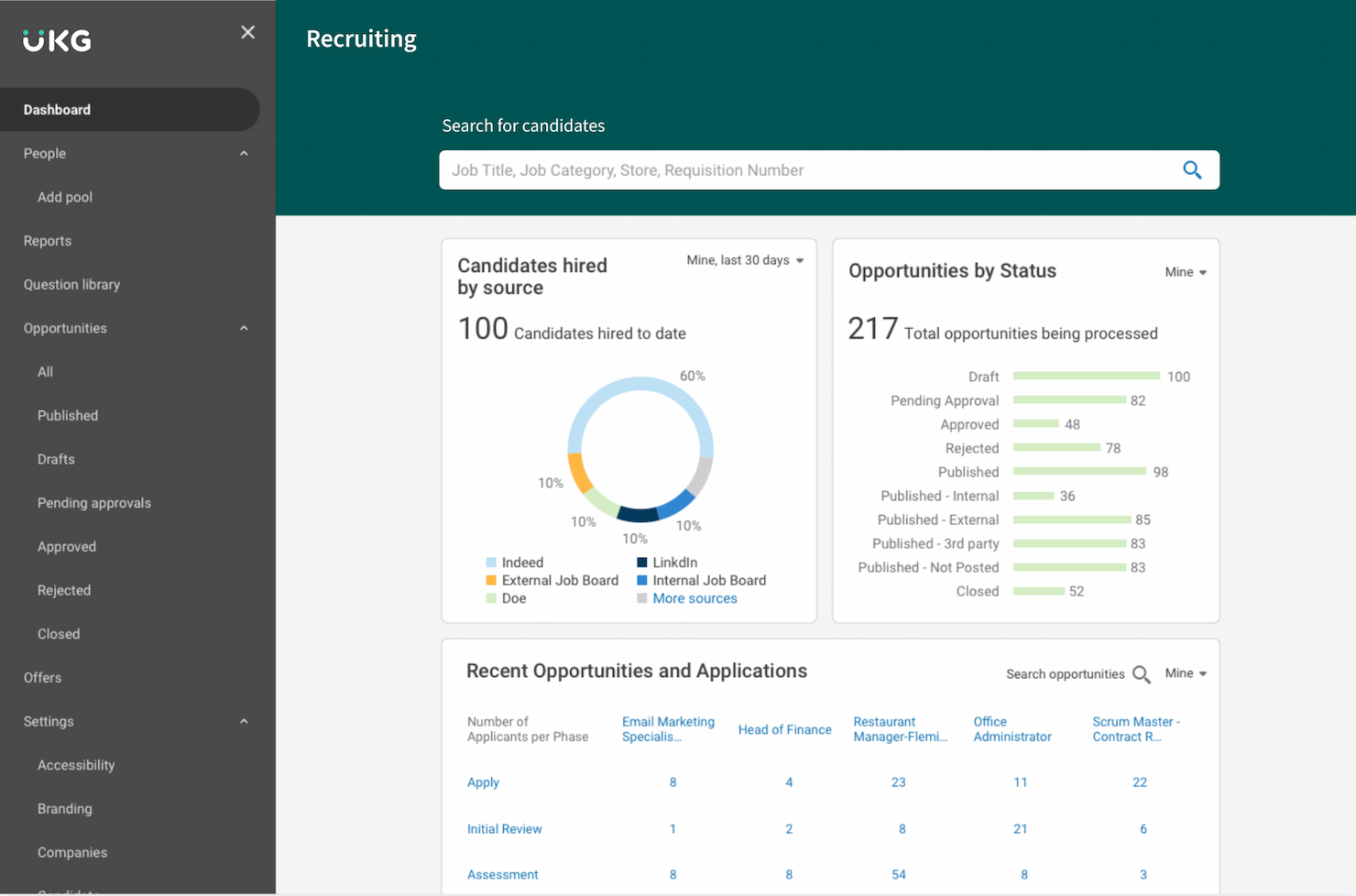
UKG Pro es una herramienta de gestión de RRHH y fuerza laboral diseñada para optimizar los procesos de RRHH y mejorar la eficiencia de la plantilla. Es ideal para una gestión integral de recursos humanos porque ofrece una suite completa de soluciones de RRHH, nómina y gestión de talento que responden a necesidades laborales complejas.
Por qué es un buen competidor de SAP: He seleccionado UKG Pro para la lista porque destaca al proporcionar una solución integral de RRHH que cubre todos los aspectos de la gestión de la fuerza laboral. Su integración de RRHH, nómina y gestión de talento en una sola plataforma lo convierte en una opción atractiva. La capacidad para gestionar procesos complejos de RRHH de manera eficiente diferencia a UKG Pro de otras herramientas.
Características e integraciones destacadas:
Las características incluyen procesamiento de nómina, adquisición de talento, compromiso de empleados, administración de beneficios y analíticas de la fuerza laboral.
Las integraciones incluyen Microsoft 365, Salesforce, SAP, Oracle, QuickBooks, NetSuite, Adobe, Docusign, Google Workspace y Slack.
Pros and Cons
Pros:
- Funciones completas de gestión de recursos humanos y plantilla
- Nómina y gestión de talento integradas
- Potentes capacidades analíticas de la fuerza laboral
Cons:
- Proceso de implementación complejo
- Requiere una formación extensa para nuevos usuarios
Dayforce
Mejor opción para autoservicio del empleado y análisis de información
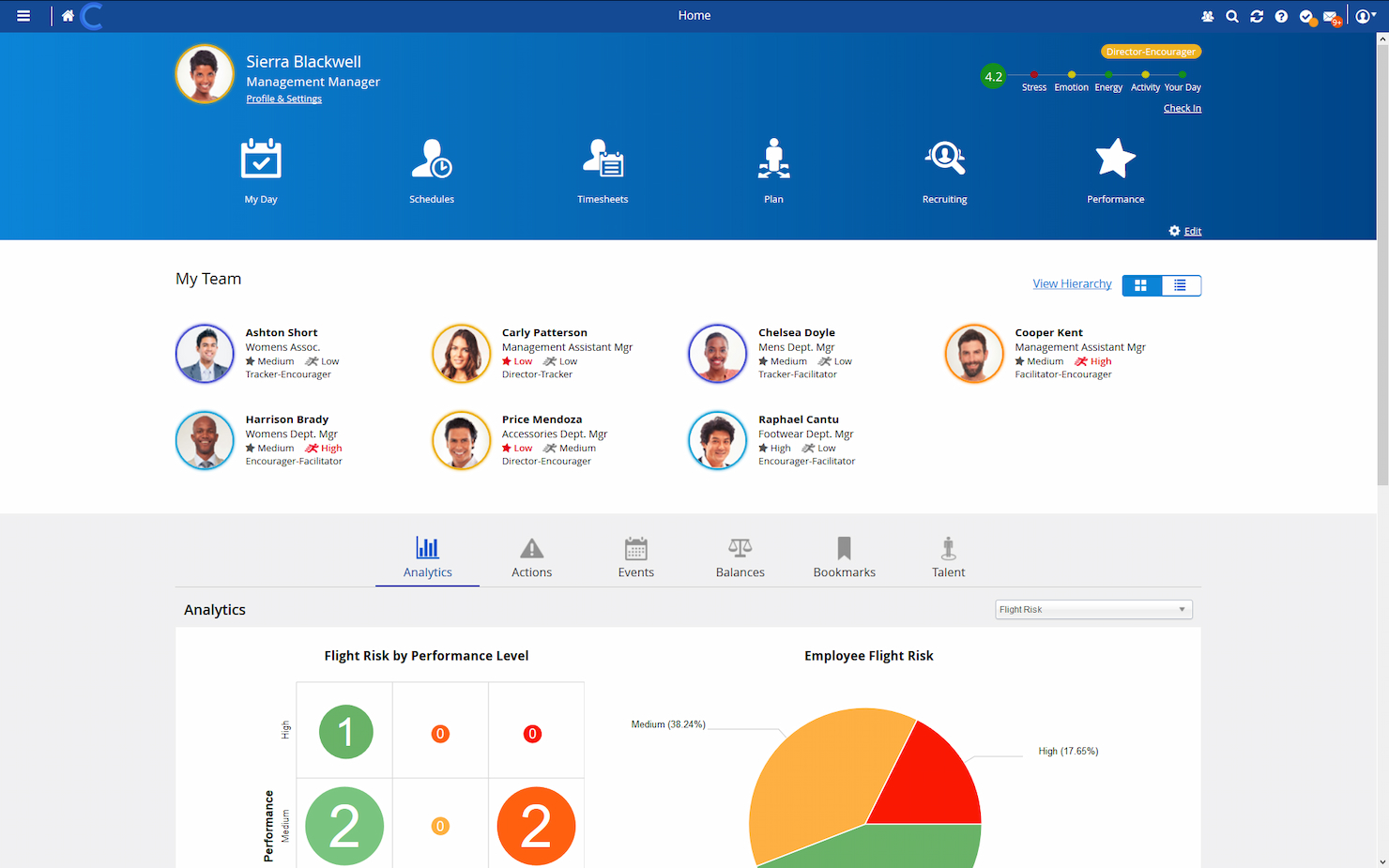
Dayforce es una plataforma integral de HCM que agiliza los procesos de RR. HH. y empodera a los empleados con capacidades de autoservicio. Es ideal para el autoservicio del empleado y el análisis de información porque proporciona herramientas que mejoran el compromiso de la fuerza laboral y ofrecen análisis de RR. HH. procesables.
Por qué es un buen competidor de SAP: Elegí Dayforce para la lista porque sobresale en ofrecer funciones de autoservicio para empleados y análisis profundos. Su capacidad para empoderar a los empleados con opciones de autoservicio y brindar visualizaciones de datos en tiempo real para la toma de decisiones en RR. HH. lo distingue. Comparado con otras herramientas, Dayforce destaca por su enfoque en mejorar el compromiso de los empleados y proporcionar información integral.
Funciones y conectividades destacadas:
Funciones incluyen la gestión de nómina, gestión de la fuerza laboral, adquisición de talento y administración de beneficios.
Conectividades incluyen Microsoft 365, SAP SuccessFactors, Workday, ADP, Oracle HCM, Salesforce, ServiceNow, QuickBooks, LinkedIn y Google Workspace.
Pros and Cons
Pros:
- Amplias capacidades de autoservicio para empleados
- Análisis completos de RR. HH.
- Procesos de RR. HH. simplificados
Cons:
- El proceso de configuración es algo complejo
- Requiere formación para un uso óptimo

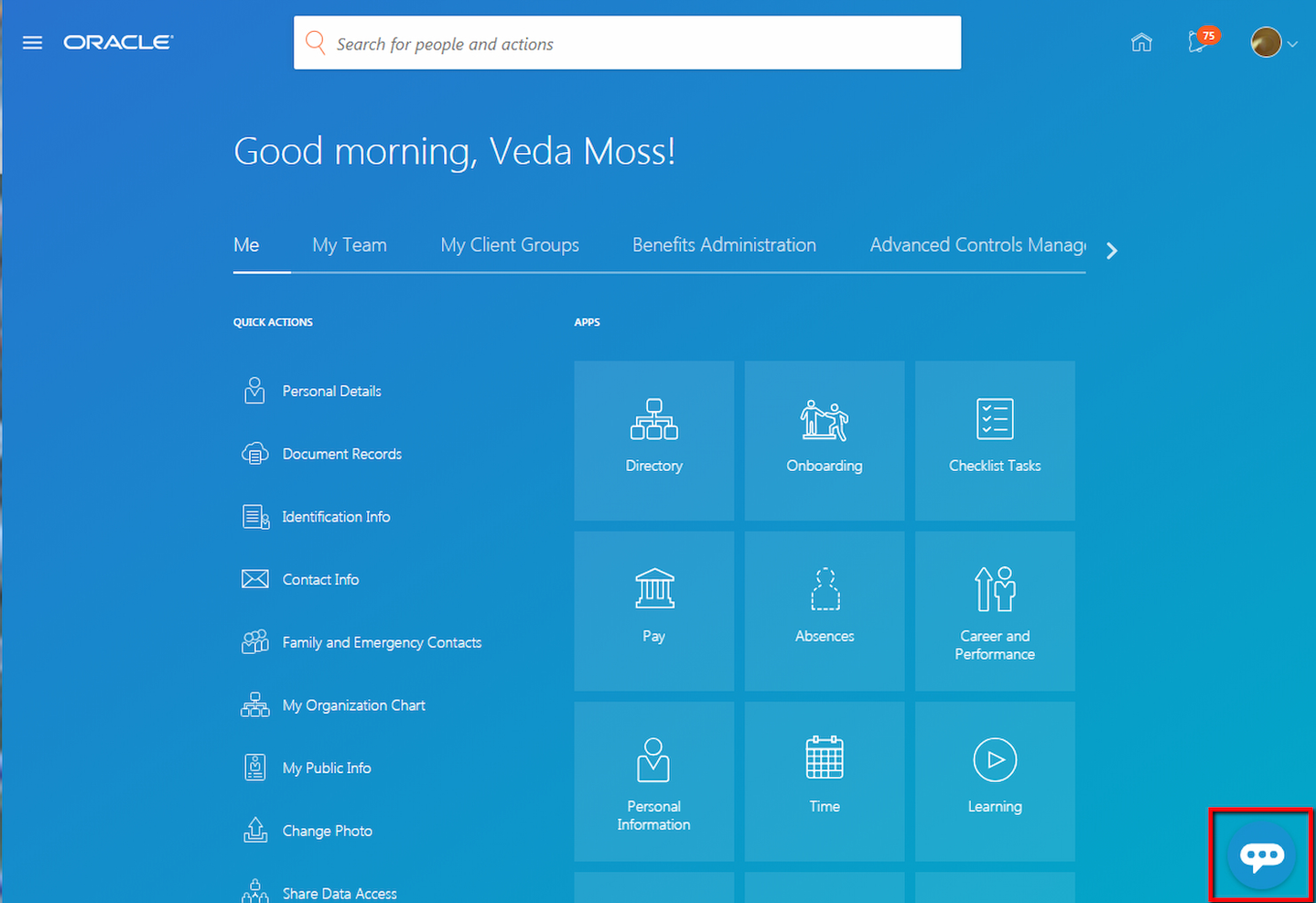
Oracle Fusion Cloud HCM es una herramienta de gestión de capital humano impulsada por IA, diseñada para optimizar los procesos de RR. HH. y mejorar la toma de decisiones. Es la mejor opción para procesos de RR. HH. dirigidos por IA porque aprovecha inteligencia artificial y aprendizaje automático avanzados para automatizar tareas y proporcionar insights predictivos.
Por qué es un buen competidor de SAP: Elegí Oracle Fusion Cloud HCM para la lista porque destaca en la utilización de IA para mejorar las funciones de RR. HH. Sus avanzadas capacidades de inteligencia artificial lo diferencian de otras herramientas, convirtiéndolo en una solución potente para organizaciones que buscan una gestión inteligente de recursos humanos. La capacidad de la herramienta para proporcionar análisis predictivos y automatizar tareas rutinarias la convierte en una opción destacada.
Características destacadas e integraciones:
Las características incluyen reclutamiento impulsado por IA, modelado de la fuerza laboral, gestión del talento y herramientas de análisis avanzado.
Las integraciones incluyen Salesforce, Microsoft 365, Google Workspace, Slack, SAP, LinkedIn, Zoom, Workday, ServiceNow y Docusign.
Pros and Cons
Pros:
- Capacidades avanzadas de IA
- Funcionalidades completas de RR. HH.
- Análisis predictivos
Cons:
- Altos costos de implementación
- Curva de aprendizaje pronunciada
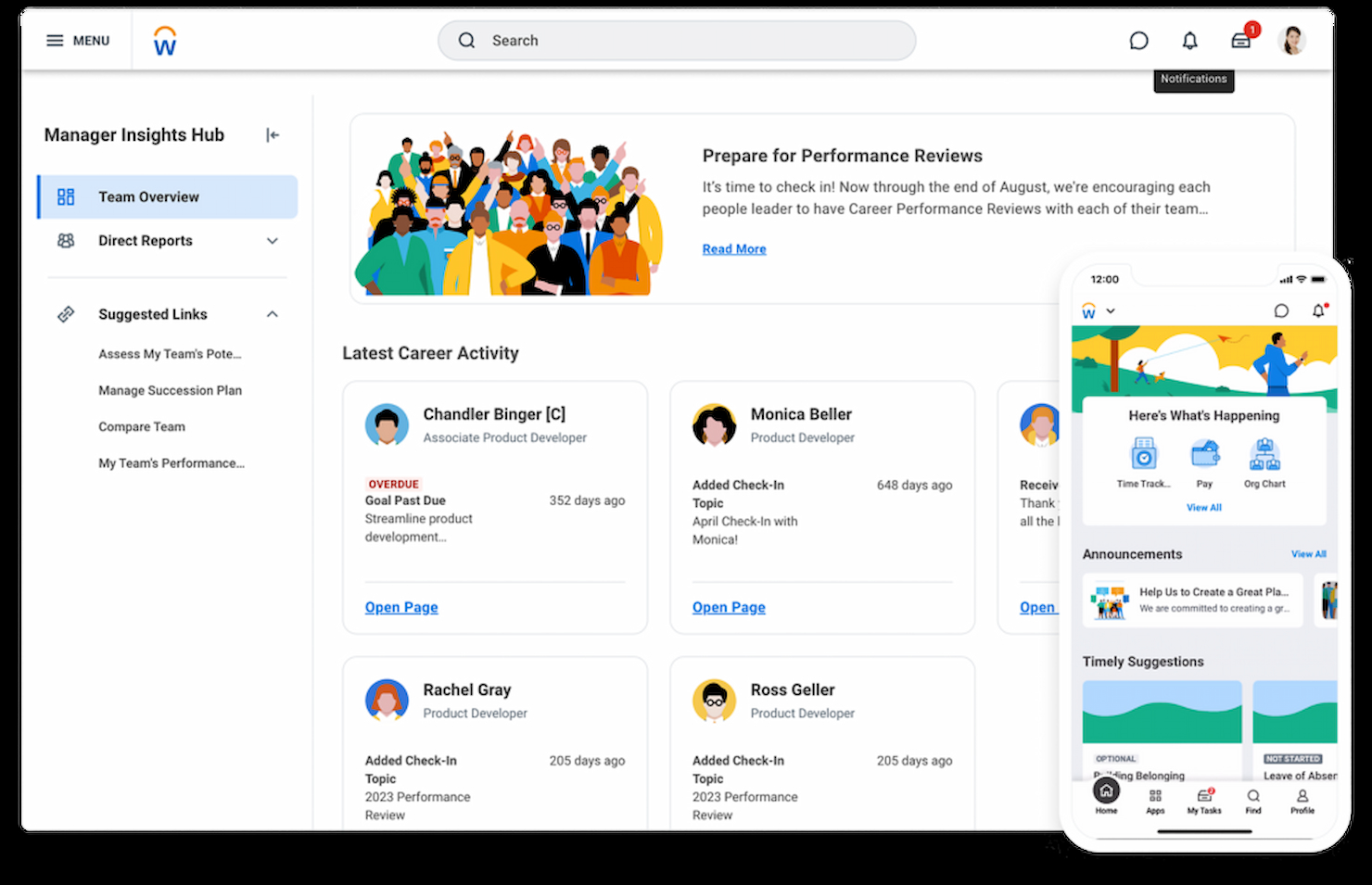
Workday HCM es un software de gestión de capital humano basado en la nube, diseñado para optimizar los procesos de RR. HH. Es ideal para la gestión integral de recursos humanos debido a su extenso conjunto de herramientas que cubren desde el reclutamiento hasta la nómina.
Por qué es un buen competidor de SAP: Workday HCM es una herramienta de gestión de RR. HH. integral que centraliza y agiliza todos los aspectos de la administración del capital humano. Es ideal para la gestión integral de recursos humanos porque integra nómina, gestión del talento y planificación de la fuerza laboral en un único sistema.
Funciones y opciones de integración destacadas:
Funciones: incluye planificación de la fuerza laboral, reclutamiento, nómina, gestión del talento y analítica. Estas funciones permiten a las organizaciones gestionar de manera eficiente todo el ciclo de vida de su fuerza laboral.
Integraciones: incluye integraciones con Salesforce, Microsoft Azure, ServiceNow, Google Cloud, Adobe, IBM, Okta, Slack, Coupa y SAP.
Pros and Cons
Pros:
- Funciones de RR. HH. completas
- Interfaz de usuario intuitiva
- Capacidades analíticas avanzadas
Cons:
- Complejidad en la implementación
- Costoso para organizaciones pequeñas

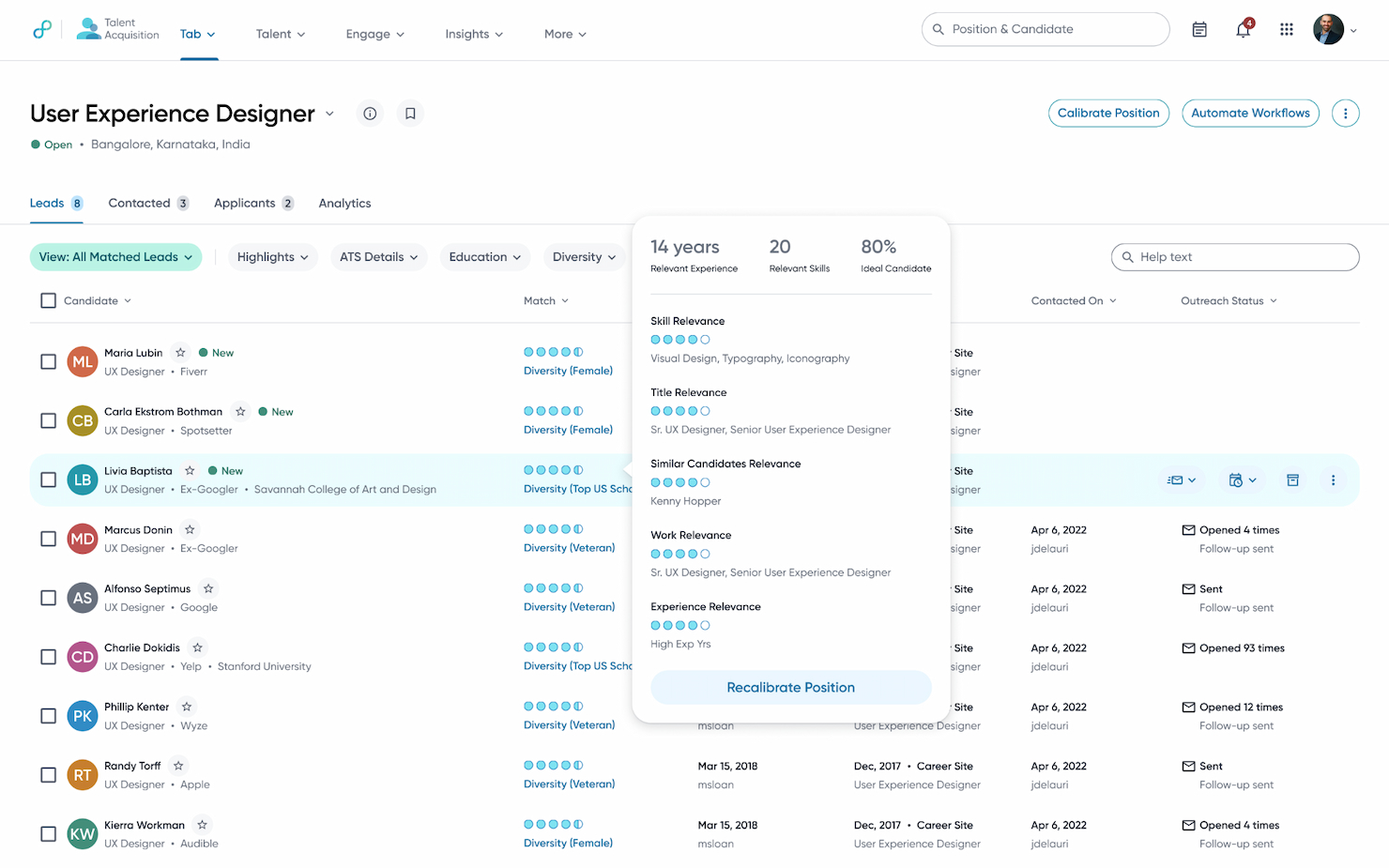
Eightfold es una plataforma de gestión de talento impulsada por IA diseñada para ayudar a las empresas a identificar, contratar y retener a los mejores talentos. Es ideal para la gestión de talento basada en inteligencia artificial porque aprovecha algoritmos avanzados de aprendizaje automático para mejorar los procesos de reclutamiento y optimizar la planificación de la plantilla.
Por qué es un buen competidor de SAP: Elegí Eightfold para la lista porque destaca en el ámbito de la gestión del talento por su uso innovador de la inteligencia artificial. Su capacidad para ofrecer análisis profundos en adquisición y retención de talento lo convierte en una opción atractiva. Al compararlo con otras herramientas, el enfoque único de Eightfold para aprovechar la IA en análisis predictivos y emparejamiento de habilidades lo diferencia.
Características destacadas e integraciones:
Características incluyen adquisición de talento impulsada por IA, gestión del talento y planificación de la fuerza laboral.
Integraciones incluyen Workday, SAP SuccessFactors, Greenhouse, Lever, iCIMS, LinkedIn, Oracle HCM, ADP, SmartRecruiters y Taleo.
Pros and Cons
Pros:
- Capacidades avanzadas de IA para la gestión del talento
- Características completas para adquisición y retención de talento
- Integración con las principales plataformas de RR. HH.
Cons:
- Información de precios no disponible fácilmente
- Costo elevado para empresas más pequeñas

Rippling
Ideal para la gestión unificada de RR. HH. y TI
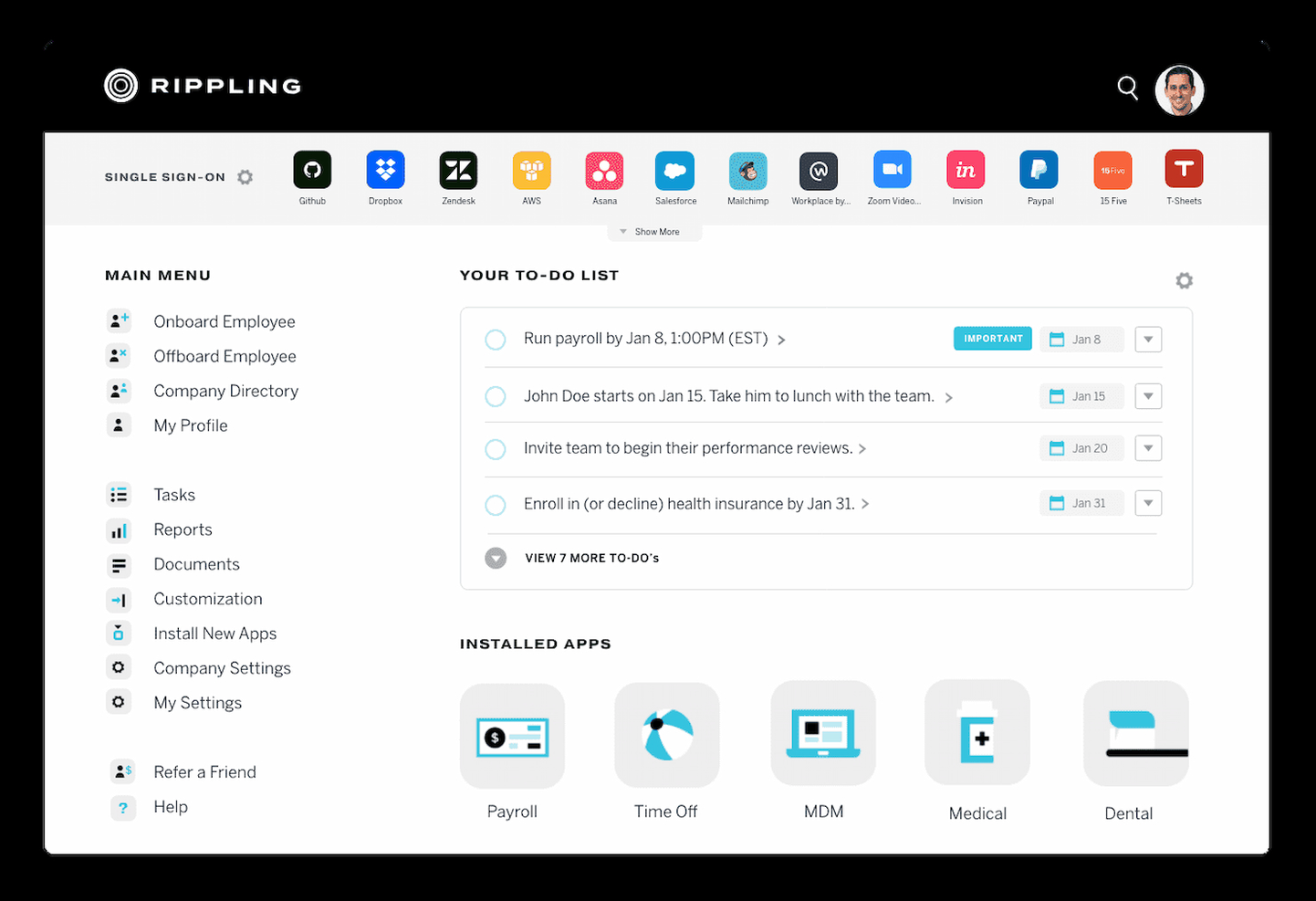
Rippling es una plataforma que unifica la gestión de RR. HH. y TI automatizando la incorporación de empleados, la nómina y la gestión de dispositivos. Es ideal para la gestión unificada de RR. HH. y TI porque integra a la perfección las funciones de recursos humanos con las tareas de TI, optimizando los flujos de trabajo y reduciendo la carga administrativa.
Por qué es un buen competidor de SAP: Elegí Rippling para la lista porque combina de manera única la gestión de RR. HH. y TI en una sola plataforma. Su capacidad para automatizar procesos complejos y ofrecer un enfoque unificado para la gestión de empleados y sus dispositivos lo distingue. Rippling destaca por su simplicidad y eficiencia al manejar tareas de RR. HH. y TI sin complicaciones.
Características destacadas e integraciones:
Las funciones incluyen incorporación automatizada, gestión de nóminas, administración de prestaciones y gestión de dispositivos.
Integraciones incluyen Slack, Google Workspace, Microsoft 365, Zoom, Slack, QuickBooks, Xero, Netsuite, Salesforce y Dropbox.
Pros and Cons
Pros:
- Gestión unificada de RR. HH. y TI
- Incorporación y nómina automatizadas
- Gestión integral de dispositivos
Cons:
- Más costoso para una gestión básica de nóminas
- Requiere capacitación para un uso óptimo
New Product Updates from Rippling

Rippling AI Adds Plugins, Skills, and Automations
Rippling AI now supports plugins, skills, and automations so employees can connect approved third-party tools, package repeatable work into reusable AI instructions, and run recurring workflows under existing Rippling policies and permissions. For more information, visit Rippling's official site.
Otros competidores de SAP
A continuación se incluye una lista de competidores adicionales de SAP que preseleccionamos, pero que no llegaron a la lista principal. Sin duda merece la pena echarles un vistazo.
- Leapsome
Ideal para la gestión del rendimiento y la implicación de los empleados
- BambooHR®
Ideal para software de RR. HH. fácil de usar
- Paylocity
Ideal para procesos de RR. HH. automatizados
- TimeTrex
Ideal para gestionar el seguimiento complejo de los costos laborales
- Paycom
Ideal para la gestión de RRHH en un único software
- ADP Workforce Now
Ideal para soluciones escalables de recursos humanos y nómina


Reseñas de software de RR. HH. relacionadas
Si todavía no has encontrado aquí lo que buscas, consulta estas otras herramientas relacionadas que hemos probado y evaluado:
- Software de RR. HH.
- Software de nóminas
- Software de contratación
- Servicios de empleador registrado
- Sistemas de seguimiento de candidatos
- Software de gestión de la plantilla
Cómo evalúo a los competidores de SAP
Divido mi evaluación en dos capas: las capacidades principales—como nómina global y gestión del talento—que una plataforma debe tener, y los diferenciadores que separan a las alternativas más fuertes de SAP.
Funcionalidad principal (Requisitos básicos para esta lista)
Cuando selecciono herramientas para mi lista, califico cada una en una escala de 0 (no ofrece la funcionalidad) a 5 (destaca en esta área) para cada funcionalidad principal que se muestra a continuación. Luego, calculo la puntuación total de la herramienta en porcentaje. Cada herramienta debe lograr una puntuación total mínima del 75% para ser considerada.
- Gestión central de RRHH y registros de empleados: Evalúo cómo cada plataforma gestiona los datos de los empleados, las estructuras organizativas y el historial laboral—cosas como administrar la plantilla en múltiples entidades o hacer seguimiento de los cambios de puesto a lo largo del tiempo.
- Nómina y administración de beneficios: La nómina multinacional es donde muchas alternativas a SAP difieren, por lo que reviso si una plataforma ejecuta la nómina de manera nativa o depende de socios, y cómo gestiona los ciclos de inscripción de beneficios.
- Suite de gestión del talento: Desde los flujos de trabajo de solicitud a contratación, pasando por evaluaciones de desempeño y la planificación de sucesión, busco plataformas que conecten estas etapas en vez de separarlas en módulos independientes.
- Aprendizaje y desarrollo: Un buen LMS es esencial aquí; evalúo si las plataformas permiten rutas de aprendizaje estructuradas, seguimiento de certificaciones e integraciones de contenido más allá de solo alojar archivos subidos.
- Analítica y reportes de la fuerza laboral: Reviso si una plataforma ofrece tableros configurables y creadores de reportes personalizados, especialmente para casos de uso como proyección de rotación o planificación de plantilla por departamento.
- Gestión de tiempo, asistencia y ausencias: La programación, políticas de permisos y registro de horas deben conectarse directamente con la nómina, así que verifico qué tan integrados están estos módulos y no simplemente añadidos.
Una vez que tengo una lista de herramientas que cumplen con estos criterios, considero qué es lo que diferencia a cada plataforma.
Factores diferenciadores (Lo que distingue a los proveedores)
Así es como comparo y contrasto diferentes proveedores:
Características destacadas
La inteligencia de habilidades impulsada por IA es un diferenciador clave: busco plataformas que deduzcan habilidades del historial de puestos y ofrezcan recomendaciones de movilidad interna. La gestión de compensaciones también es importante, en particular la automatización de ciclos de mérito y el análisis de equidad salarial vinculado directamente con los datos de desempeño. Verifico si una plataforma ofrece extensibilidad mediante APIs abiertas o creadores de flujos de trabajo sin código, ya que los equipos de RRHH suelen necesitar procesos personalizados que van más allá de los módulos estándar.
Más allá de las características
Los plazos de implementación varían mucho: algunas plataformas se pueden desplegar en semanas con plantillas preconfiguradas, mientras que otras requieren meses de configuración personalizada y socios certificados. También evalúo la profundidad del ecosistema, especialmente los conectores preintegrados a sistemas ERP y de finanzas, ya que la mayoría de las migraciones desde SAP implican reestructuración de flujos de datos en toda la infraestructura tecnológica. El costo total de propiedad es otro factor clave; reviso cómo los proveedores agrupan módulos y si los costos continuos por integraciones o actualizaciones generan gastos ocultos.
Funciones de los competidores de SAP
Estas son algunas funciones clave de SAP que el software de la competencia debería poder replicar o mejorar para ser una opción adecuada.
- Interfaz fácil de usar: Simplifica la navegación y reduce el tiempo de formación.
- Escalabilidad: Permite el crecimiento de la empresa sin problemas de rendimiento.
- Personalización: Permite adaptarse a las necesidades específicas de la empresa.
- Capacidades de integración: Se conecta fácilmente con otro software y sistemas empresariales.
- Análisis en tiempo real: Proporciona información actualizada para la toma de decisiones.
- Acceso móvil: Permite su uso en teléfonos inteligentes y tabletas.
- Seguridad: Garantiza la protección de los datos y el cumplimiento de las normativas.
- Atención al cliente: Ofrece servicios de asistencia fiables y accesibles.
- Rentabilidad: Ofrece una buena relación calidad-precio para la inversión.
- Automatización: Reduce las tareas manuales y aumenta la eficiencia.