

10 meilleurs employeurs de référence au Pakistan en 2026

10 Liste des meilleurs employeurs de référence au Pakistan


Un employeur de référence au Pakistan emploie légalement les travailleurs en votre nom et gère la paie locale ainsi que l’administration liée à l’emploi. Le choix du prestataire dépend de l’endroit où votre équipe travaillera, du niveau d’accompagnement dont vous avez besoin en matière de conformité provinciale et de votre intention éventuelle de convertir des prestataires indépendants ou d’embaucher dans d’autres pays.
Cette liste restreinte compare les prestataires selon leurs services au Pakistan, leurs modèles opérationnels et leur accompagnement RH local afin de vous aider à choisir une solution adaptée à vos projets de recrutement.
Tableau comparatif : employeurs de référence au Pakistan
Comparez côte à côte les tarifs et les caractéristiques des employeurs de référence au Pakistan qui figurent dans ma liste restreinte :
| Tool | Best For | Trial Info | Price | ||
|---|---|---|---|---|---|
| 1 | Best for hiring across Pakistan's provinces | Free demo available | From $319/user/month | Website | |
| 2 | Best for contractor-to-employee conversion in Pakistan | Free demo available | From $599/user//month | Website | |
| 3 | Best for hiring in Pakistan without a local entity | Free demo available | From $199/user/month | Website | |
| 4 | Best for owned-entity hiring across Pakistan | Free demo available | From $299/user/month | Website | |
| 5 | Best for multi-country scale beyond Pakistan | Free demo available | From $699/user/month | Website | |
| 6 | Best for province-level Pakistan compliance | Free demo available | From $199/user/month | Website | |
| 7 | Best for province-by-province Pakistani hiring | Free demo available | From $99/user/month | Website | |
| 8 | Best for hiring in Pakistan via owned entity | Free demo available | From $699/user/month | Website | |
| 9 | Best for multi-province Pakistani workforce compliance | Free demo available | From $459/user/month | Website | |
| 10 | Best for Baker McKenzie-vetted Pakistan compliance | Free demo available | From $399/user/month | Website |

Avis sur les employeurs de référence au Pakistan
Vous trouverez ci-dessous mes résumés détaillés des meilleurs employeurs de référence au Pakistan qui figurent dans ma liste restreinte. Mes avis portent sur l’accompagnement de chaque prestataire en matière de conformité, ses services de paie et son expertise RH locale afin de vous aider à trouver la solution la mieux adaptée.

Best for hiring across Pakistan's provinces
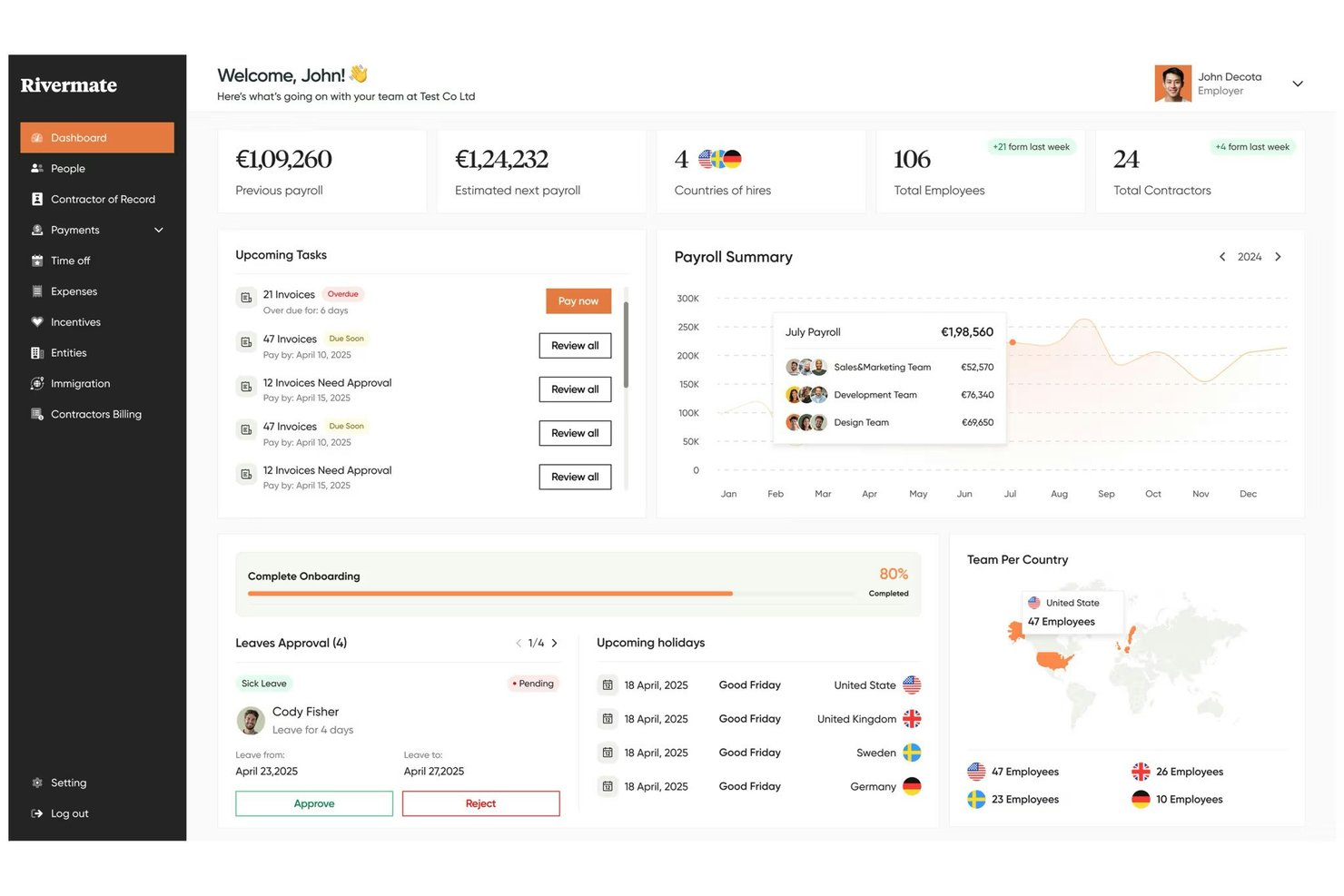
Rivermate is an employer of record platform that covers 180+ countries and handles Pakistani payroll in PKR, statutory benefits like EOBI and provincial social security, bilingual employment contracts, and work permit support.
Who Is Rivermate Best For?
Rivermate is a strong fit for globally expanding companies that need to hire across multiple Pakistani provinces without navigating the country's fragmented, region-specific labor regulations.
Why I Picked Rivermate
I've included Rivermate in my top picks because it's one of the few EOR platforms that explicitly handles Pakistan's fragmented provincial labor landscape, covering distinct minimum wages, social security schemes, and leave rules across Punjab, Sindh, KPK, and Balochistan. I particularly like that it generates bilingual English/Urdu employment contracts tailored to each province and processes EOBI contributions alongside provincial social security automatically. If your team is hiring in multiple Pakistani provinces at once, that built-in provincial compliance coverage is genuinely hard to replicate manually.
Rivermate Key Features
- Provincial minimum wage tracking: Rivermate applies the correct minimum wage for each province, covering distinct rates across Punjab, Sindh, KPK, and Balochistan.
- Salary cost calculator: An employment cost simulator breaks down total monthly PKR payroll costs, including taxes and statutory contributions, before you commit.
- End-to-end work permit management: Rivermate handles Pakistani work visa applications, eligibility checks, renewals, and dependent visas for foreign national hires.
- Dedicated account manager: Every client gets a named account manager reachable via Slack, WhatsApp, email, or phone for day-to-day support.
Rivermate Integrations
Rivermate doesn't have any clearly documented native integrations. Its Pakistan content mentions HRIS, payroll, Slack, and ATS connectivity without naming specific vendors.
Pros and Cons
Pros:
- Handles PKR payroll and statutory contributions
- Reviewers praise responsive human account managers
- Tracks province-specific wage and leave rules
Cons:
- Some reviewers mention salary errors or delays
- Reviewers report limited payroll reporting visibility

Best for contractor-to-employee conversion in Pakistan
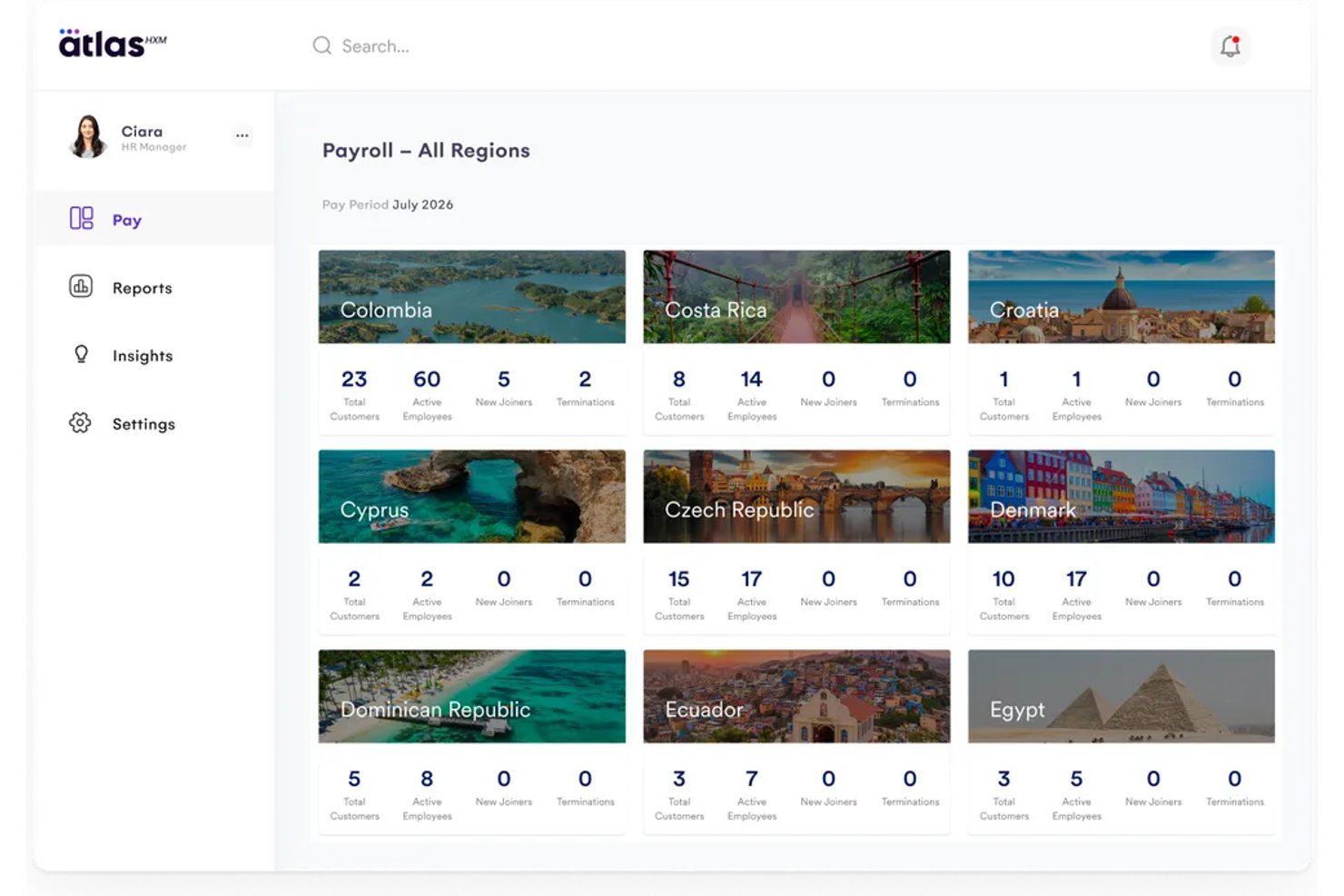
Atlas HXM is an employer of record platform that employs workers in Pakistan through its own direct legal entity, handling payroll in PKR, provincial labor law compliance, statutory contributions, and contractor-to-employee conversion across all four provinces and the Islamabad Capital Territory.
Who Is Atlas HXM Best For?
Atlas HXM is a strong fit for global expansion teams that need to bring Pakistan-based contractors onto compliant employment contracts without setting up a local entity.
Why I Picked Atlas HXM
I've included Atlas HXM in my top picks because its Agent of Record product makes contractor-to-employee conversion a structured process, not an afterthought. It includes a misclassification assessment with up to $100k in classification protection per contractor, and the $99 assessment fee gets credited toward the subscription if the worker converts to an EOR employee. Atlas also owns its legal entity in Pakistan directly, covering provincial labor law differences across Punjab, Sindh, KPK, Balochistan, and the Islamabad Capital Territory in a single engagement.
Atlas HXM Key Features
- Provincial payroll compliance: Payroll runs in PKR with automated income tax withholding, EOBI contributions, and provincial social security deductions across all four provinces and ICT.
- Dedicated HR consultant: Each account gets a named HR consultant backed by in-region experts and 24-hour human support in 15+ languages.
- Anomaly detection in payroll: The payroll engine flags irregularities before processing, with full audit trails and a 2–5 day pre-payday funding window.
- Multi-country centralized reporting: A single dashboard covers headcount, payroll, and compliance data across 160+ countries, with cost comparisons by country.
Atlas HXM Integrations
Atlas HXM lists integrations with Workday, BambooHR, Sage, Ashby, Paycor, UKG, and Dayforce, plus SSO through Okta, Microsoft, and Google Workspace. API access supports custom integrations.
Pros and Cons
Pros:
- Contractor conversion includes classification protection
- Provincial compliance mapping covers five jurisdictions
- Direct-owned Pakistan entity supports accountability
Cons:
- Some reviewers report payroll timing issues
- Gratuity and provident fund remain unconfirmed

Gloroots
Best for hiring in Pakistan without a local entity
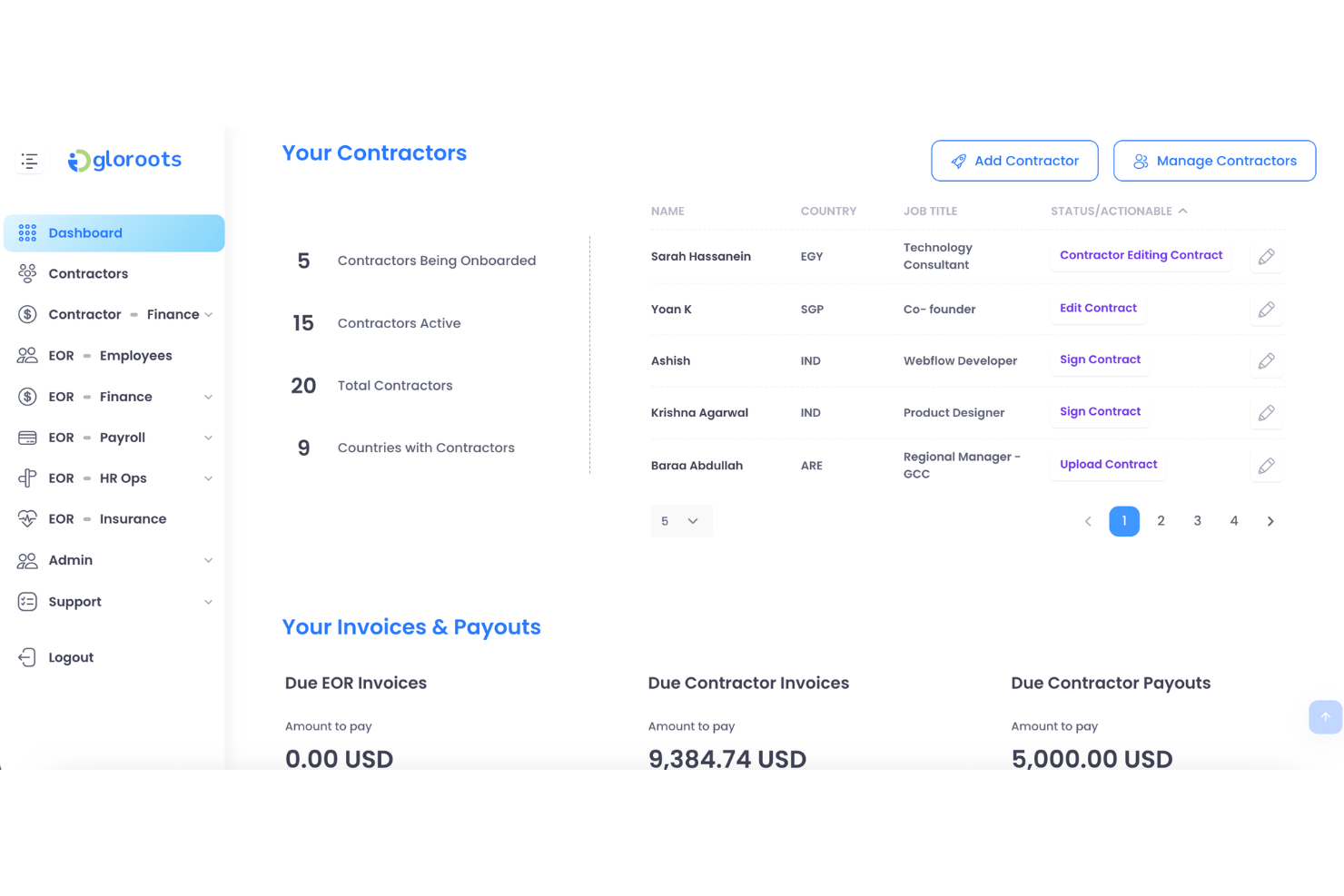
Gloroots is an employer of record platform with its own registered legal entity in Pakistan that handles local payroll in PKR, FBR tax withholding, statutory contributions, compliant contract drafting, and contractor-to-employee conversion.
Who Is Gloroots Best For?
Gloroots suits startups and small teams that want to hire in Pakistan quickly, without the cost or time of setting up a local entity.
Why I Picked Gloroots
I picked Gloroots as one of the best because it operates through its own registered legal entity in Pakistan rather than relying on a partner network, which matters when your payroll runs through FBR tax withholding and four separate provincial social security bodies (PESSI, SESSI, KPESSI, and BESSI). I especially like its contractor-to-employee conversion workflow, which handles backdated statutory enrollment and payroll from the conversion date, a real advantage if you've been working with Pakistani contractors and need to bring them onto compliant employment contracts fast. Onboarding typically wraps up in three to five days.
Gloroots Key Features
- Provincial social security enrollment: Gloroots registers employees with all four provincial social security bodies—PESSI, SESSI, KPESSI, and BESSI—depending on where they're based.
- Multi-currency payroll funding: Clients can fund payroll in USD or crypto, which Gloroots converts to PKR for employee payments.
- Misclassification risk checker: A free tool that flags contractor misclassification risk before you convert workers to employees.
- Electronically signed, localized contracts: Contracts include IP and invention-rights clauses and are stored centrally for audit access.
Gloroots Integrations
Native integrations are not clearly documented. Gloroots offers an enterprise-grade API for custom integrations, but no verified native connectors are listed.
Pros and Cons
Pros:
- Responsive support praised by G2 reviewers
- Converts contractors with backdated statutory enrollment
- Handles Pakistan’s provincial social security enrollment
Cons:
- Conflicting published leave and employer cost figures
- Cannot sponsor Pakistan work visas
Mercans
Best for owned-entity hiring across Pakistan
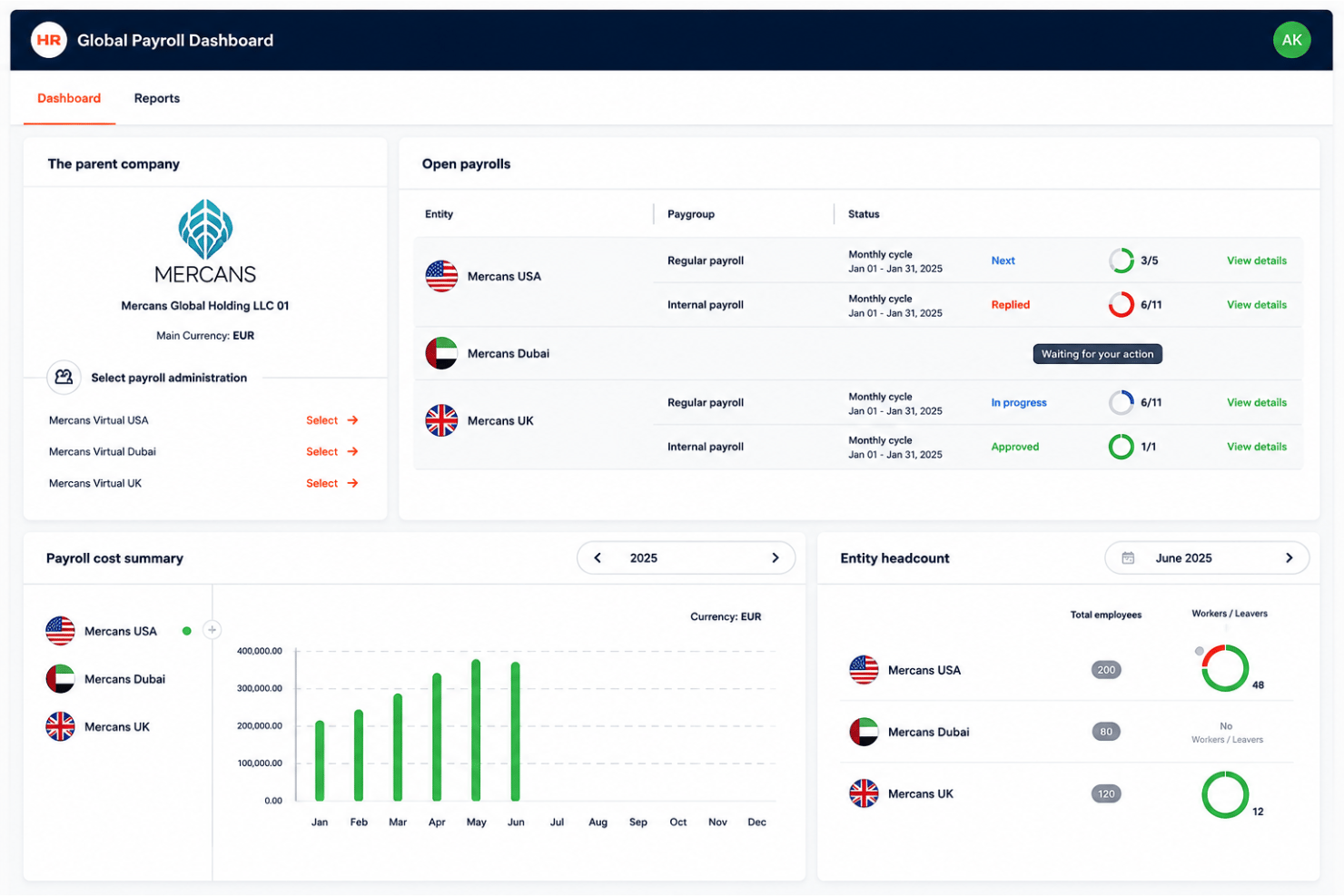
Mercans is an employer of record platform with its own legal entity in Pakistan that handles local payroll, statutory benefits, contract management, and work permit support across 160+ countries through its proprietary HR Blizz system.
Who Is Mercans Best For?
Mercans is a strong fit for global expansion teams that want direct legal entity employment in Pakistan without relying on third-party aggregators.
Why I Picked Mercans
Mercans earns its spot on my shortlist because it owns a legal entity in Pakistan directly, which means your workers are employed through Mercans itself rather than a third-party provider. I find that distinction meaningful: when a termination dispute arises under the Standing Orders Ordinance 1968, there's no aggregator in the middle muddying liability. I also like that the platform covers Pakistan-specific details like provincial social security variations, gratuity calculations, and 2026 FBR tax slab withholding all within HR Blizz.
Mercans Key Features
- Multi-currency payroll processing: HR Blizz runs payroll in 103 currencies, with funds held by your organization until two days before the pay cycle runs.
- HCM system integrations: Pre-built, two-way connectors link HR Blizz to Workday, Oracle Cloud HCM, BambooHR, UKG Pro, and other HCM or ERP platforms.
- Dedicated account manager: A single point of contact handles HR and payroll advisory, replacing the need to coordinate across multiple service teams.
- Visa and work permit administration: Mercans manages expatriate visa applications, work permit documentation, and Board of Investment filings for foreign nationals working in Pakistan.
Mercans Integrations
Mercans offers documented integrations with Workday and Oracle Cloud HCM for HR and payroll data exchange. HR Blizz also supports APIs for custom integrations.
Pros and Cons
Pros:
- Dedicated account managers handle HR queries
- Reviewers praise local labor-law knowledge
- Mercans employs directly through its Pakistan entity
Cons:
- Sparse reviews limit independent validation
- Conflicting EOBI and social security rates

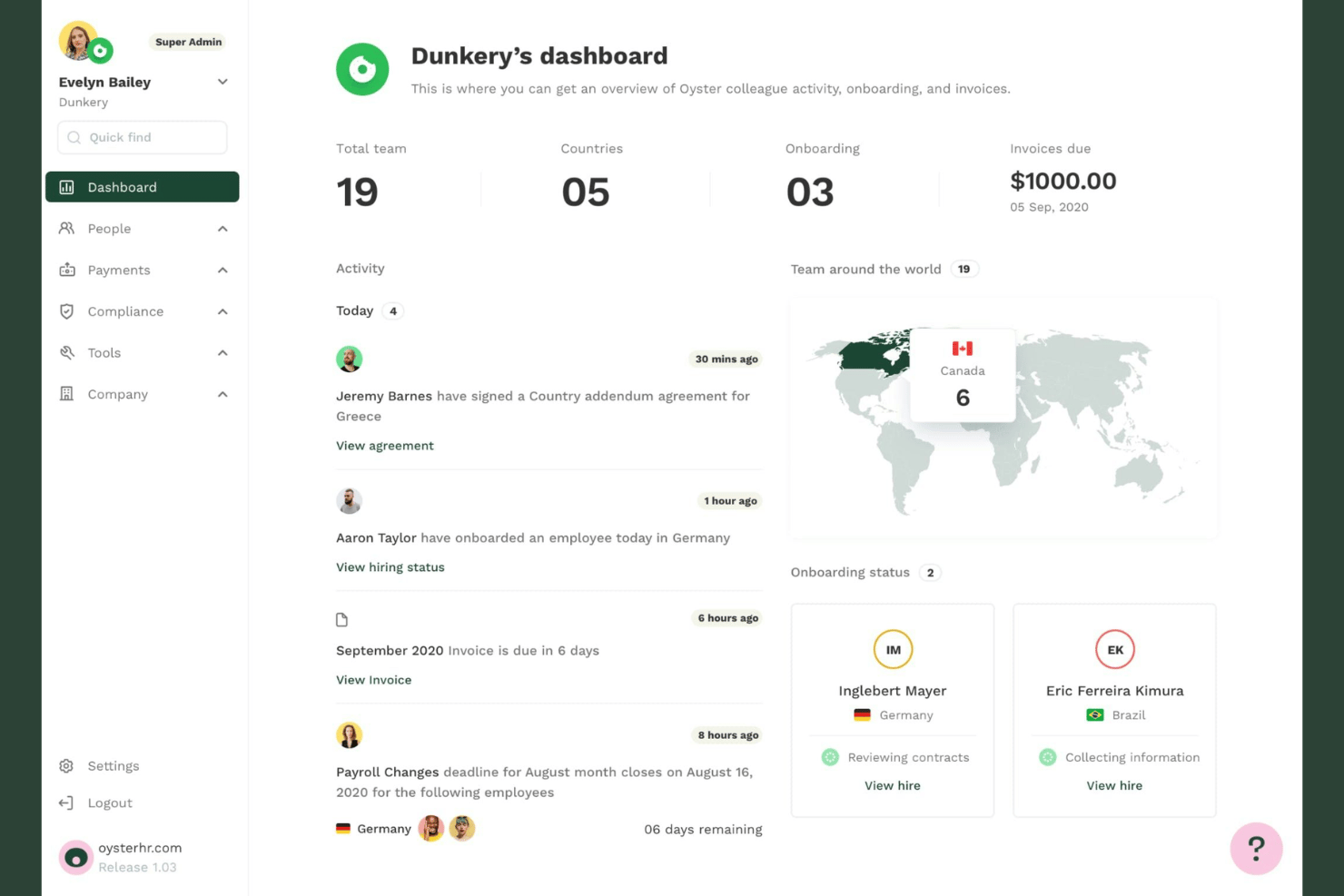
Oyster is a global employer of record platform that handles employment contracts, payroll processing, statutory benefits, and compliance across 120+ countries, including Pakistan.
Who Is Oyster Best For?
Oyster is a strong fit for global expansion teams that are hiring in Pakistan as part of a broader, multi-country workforce strategy.
Why I Picked Oyster
I've included Oyster in my top picks because it's the only platform where I can pair Pakistan EOR with active hiring in 120+ other countries, all without switching tools. If your Pakistan hire is one piece of a broader global headcount push, Oyster's multi-country contract management and salary benchmarking across 130+ countries handle the full picture. I also like that Oyster maps provincial labor code variations for Pakistan, covering EOBI, provincial social security, and Workers' Welfare Fund differences across regions.
Oyster Key Features
- Contract quality scoring: Oyster benchmarks your Pakistan employment contracts against local legal standards and flags terms that fall outside acceptable ranges.
- Contractor conversion tooling: A built-in misclassification risk analyzer and guided three-step conversion process helps you move Pakistan contractors to compliant employee status.
- Multi-currency payroll funding: Fund Pakistan payroll in USD, EUR, GBP, or CAD, with automatic PKR conversion and payslip generation included.
- HRIS and ATS integrations: Oyster connects with HiBob, BambooHR, Greenhouse, Ashby, and others, keeping Pakistan employee data in sync across your existing HR stack.
Oyster Integrations
Oyster offers native integrations with HiBob, BambooHR, Personio, Greenhouse, Ashby, Workable, Xero, QuickBooks, SAP Concur, and Carta. It also provides an API for custom integrations and supports Zapier.
Pros and Cons
Pros:
- Fast onboarding receives positive user feedback
- Localized contract review and legal guidance
- Pakistan-specific labor rules and payroll support
Cons:
- Users report support delays and payroll visibility gaps
- Pakistan entity-versus-partner model remains unclear

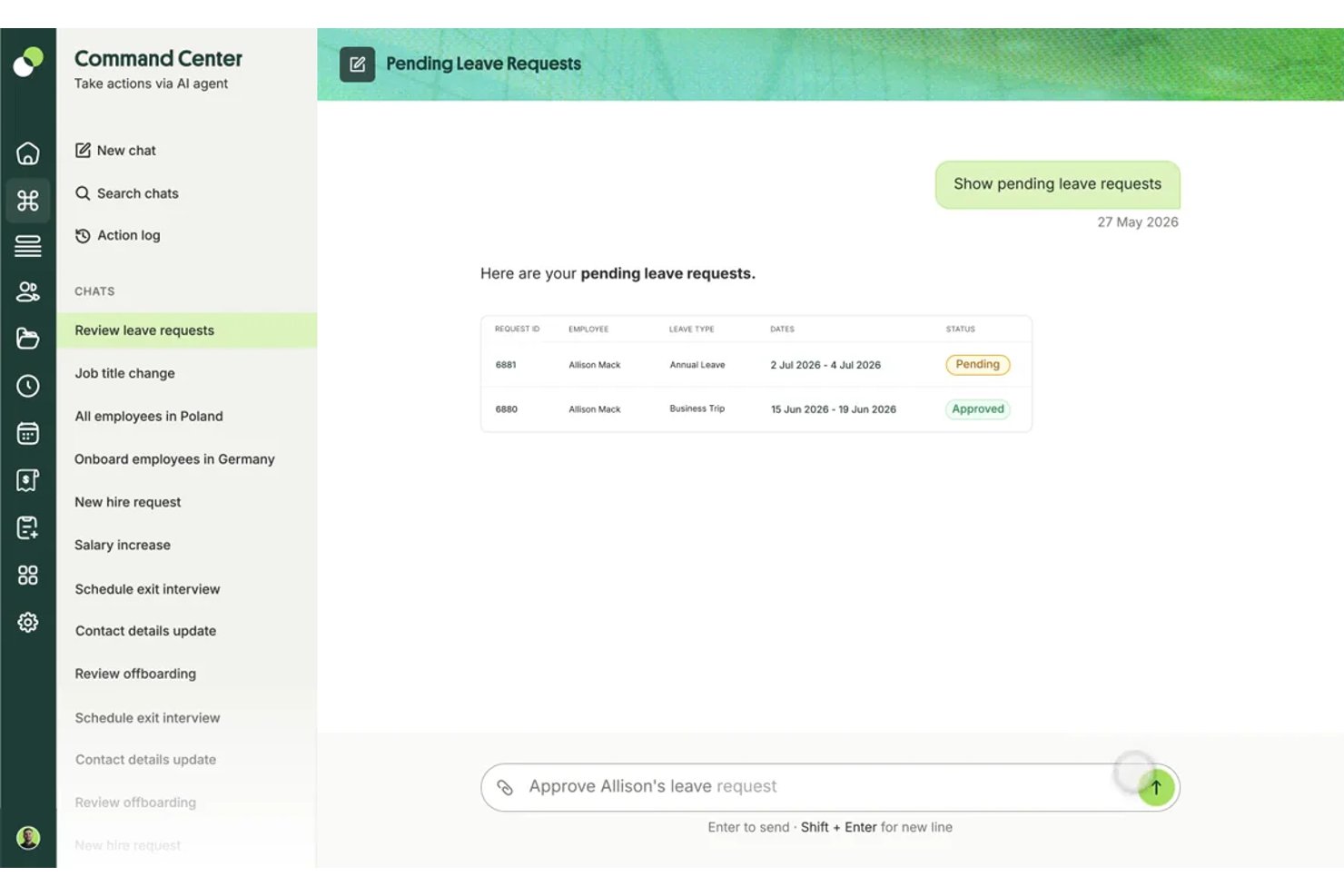
Remote People is an employer of record platform covering 150+ countries that handles Pakistani payroll, statutory contributions (EOBI, ESSI, WWF), labor law compliance across all four provinces, contract drafting, and visa sponsorship for foreign nationals.
Who Is Remote People Best For?
Remote People works well for companies hiring across multiple Pakistani provinces, where navigating different ESSI rates, minimum wages, and maternity leave rules requires granular, location-specific compliance support.
Why I Picked Remote People
I've included Remote People in my top picks because its province-level compliance coverage is the most granular I've seen for Pakistan specifically. It breaks out ESSI rates by province (6% in Punjab, KP, and Balochistan versus 7% in Sindh), maps maternity leave entitlements across ICT, Sindh, Punjab, KP, and Balochistan separately, and tracks minimum wage differences between PKR 40,000 and PKR 37,000 in Balochistan. If you're hiring across multiple provinces, that detail keeps you from applying a one-size-fits-all policy that puts you offside with local law.
Remote People Key Features
- BOI work visa sponsorship: Remote People manages Board of Investment visa applications for foreign nationals, covering Categories A and B and SEZ fast-track visas, with an assigned immigration manager per case.
- FBR income tax withholding: Payroll processing includes automatic withholding under current FBR tax slabs, including the surcharge on high earners, so your Pakistani workers are tax-compliant from day one.
- Bilingual contract drafting: Employment contracts are drafted in either Urdu or English, as permanent or fixed-term agreements, under the Standing Orders Ordinance 1968, typically within 2–3 days of onboarding.
- AI Command Center: An AI-assisted HR tool lets you submit people requests in plain language, with human specialists reviewing changes and every action logged to an audit trail.
Remote People Integrations
Remote People offers integrations with QuickBooks, Xero, BambooHR, ADP Workforce, 7shifts, Google Workspace, Okta, Gusto, Paycom, and Square Payroll. It doesn’t have an open API, and integration depth is limited.
Pros and Cons
Pros:
- Urdu and English contract drafting
- EOBI, ESSI, and FBR withholding
- Province-level compliance detail
Cons:
- Payroll documentation delays reported
- Pakistan entity ownership remains unclear

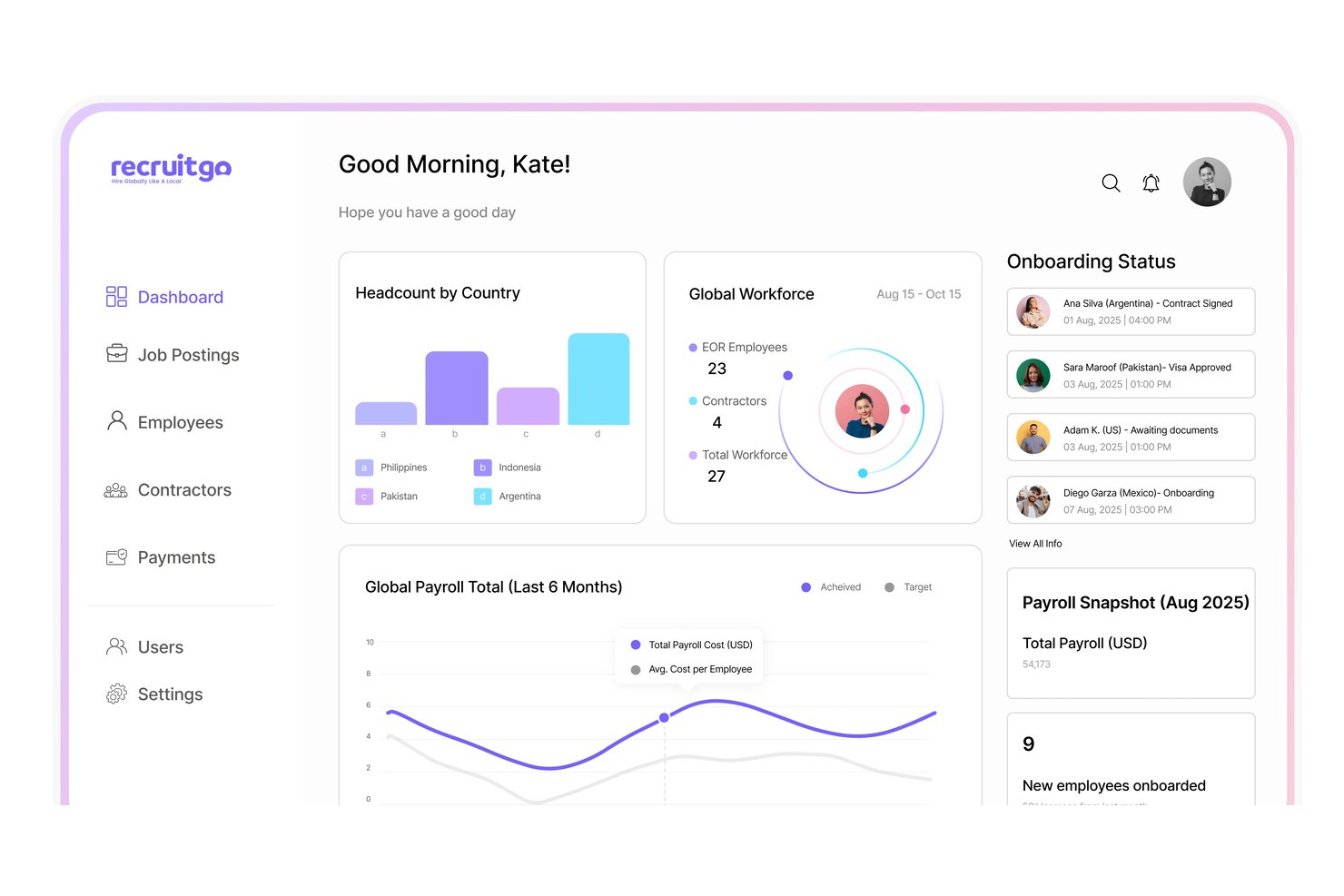
RecruitGo is an employer of record platform covering Pakistan and 40+ countries, handling local payroll in PKR, statutory benefits, labor law compliance, and contract drafting across all four provinces.
Who Is RecruitGo Best For?
RecruitGo is a strong fit for companies hiring across multiple Pakistani provinces who need compliance mapped to each region's distinct labor laws.
Why I Picked RecruitGo
I picked RecruitGo as one of the best because its provincial labor law mapping is genuinely detailed in a way I haven't seen elsewhere: it breaks down minimum wages, social security bodies, sick leave entitlements, and gratuity rules across Punjab, Sindh, KPK, Balochistan, and Islamabad Capital Territory. That matters when you're onboarding someone in Karachi versus Lahore, since the rules aren't the same. I also like that contractor-to-employee conversion is built into the workflow, with a misclassification risk assessment before onboarding begins.
RecruitGo Key Features
- PKR payroll dashboard: A client-facing dashboard displays payslips, cost breakdowns, and multi-country payroll reports in one place, with a dedicated payroll manager assigned to your account.
- Contractor-to-employee conversion: RecruitGo runs a misclassification risk assessment before onboarding and completes the conversion to compliant employment in 5–10 business days.
- Statutory contributions management: RecruitGo calculates and administers EOBI, provincial social security (PESSI, SESSI, PESCI, BESSI), and gratuity accruals on your behalf each pay cycle.
- FBR tax withholding and ATL registration: Income tax is withheld monthly under current FBR slabs, and RecruitGo handles Active Taxpayer List registration and annual tax reconciliation for each employee.
RecruitGo Integrations
RecruitGo integrates with AanyaHR and Talenta to import employee details, and Xero to retrieve invoice data.
Pros and Cons
Pros:
- Contractor conversion includes risk assessment
- Province-specific labor law mapping
- Responsive local payroll support
Cons:
- Visa assistance appears advisory only
- Pakistan entity ownership remains unclear

Remote
Best for hiring in Pakistan via owned entity
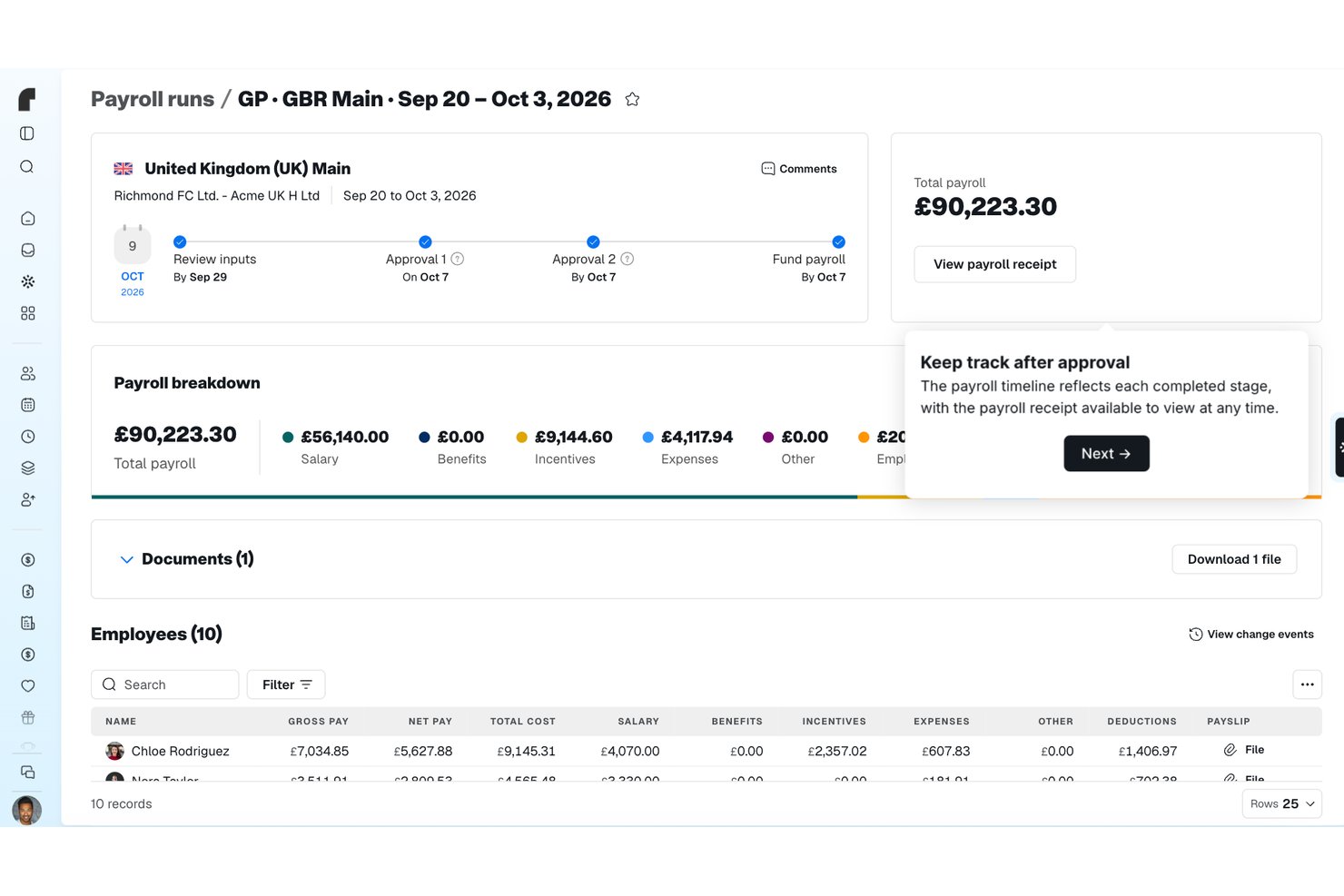
Remote is a payroll and employment provider that lets you hire workers in Pakistan without a local entity, handling contracts, payroll in PKR, and local compliance through its own legal entity on the ground.
Who Is Remote Best For?
Remote is a strong fit for companies hiring their first employee in Pakistan and wanting direct legal accountability through an owned local entity.
Why I Picked Remote
Remote earns its spot on my shortlist because it owns its legal entity in Pakistan outright, with no third-party intermediaries handling compliance or payroll on its behalf. That direct accountability matters when you're hiring your first employee in Karachi or Lahore and need to know exactly who's responsible if something goes wrong. I also like that Remote auto-generates Pakistan-specific employment contracts and manages the full contractor-to-employee conversion process, including right-to-work checks and statutory benefit enrollment, without you needing to raise a support ticket.
Remote Key Features
- Compliance Watchtower: Tracks legal changes across 90+ countries so your Pakistan employment contracts and policies stay current without manual monitoring.
- Unlimited indemnity coverage: Remote assumes full legal liability as the employer of record, with no caps on compliance-related claims.
- Contractor misclassification risk calculator: A built-in tool that assesses classification risk for your Pakistan-based contractors before you decide whether to convert them.
- Split salary payments: Pakistani employees can divide their PKR salary across multiple bank accounts directly through the Remote platform.
Remote Integrations
Remote lists 20 integrations, including BambooHR, Workday, HiBob, Personio, Okta, Greenhouse, QuickBooks, Xero, NetSuite, and Zapier. These connect HR, payroll, accounting, identity, and recruiting workflows for Pakistan-based employees.
Pros and Cons
Pros:
- Reviewers praise onboarding and responsive support
- Contractor conversion preserves employee account continuity
- Owned Pakistani entity avoids third-party employer handoffs
Cons:
- Users report billing and termination handling complaints
- Pakistan page omits EOBI and provincial contributions

Best for multi-province Pakistani workforce compliance
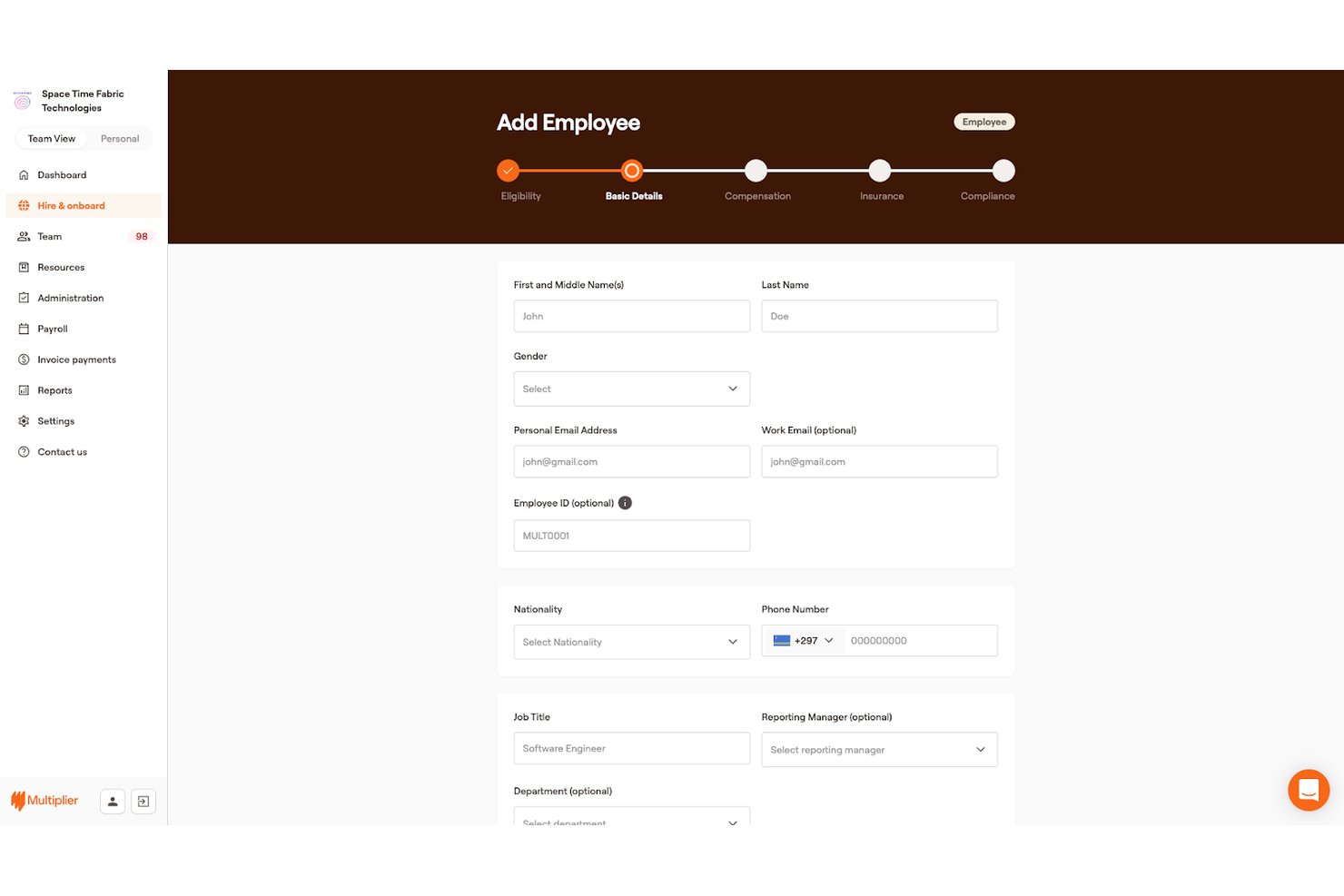
Multiplier is a global employer of record platform with a wholly-owned entity in Pakistan that handles local payroll in PKR, statutory benefits administration, multi-province labor law compliance, and contract generation.
Who Is Multiplier Best For?
Multiplier is a strong fit for global expansion teams and HR managers who need to hire across multiple Pakistani provinces without setting up a local entity.
Why I Picked Multiplier
I've included Multiplier in my top picks because it tracks labor law differences across all four Pakistani provinces, covering distinct minimum wage rates, maternity leave durations, and social security schemes like PESSI in Punjab and SESSI in Sindh. That level of provincial granularity is genuinely rare. I also like that Multiplier's payroll engine automates EOBI and PESSI/SESSI contributions separately, so filings reflect the correct provincial rules rather than a one-size-fits-all federal approach.
Multiplier Key Features
- Onboarding speed: Multiplier onboards employees in Pakistan in as little as 24–72 hours, compared to the 2–3 months it typically takes to set up a local entity.
- Multi-currency billing: Clients can be invoiced in USD, SGD, AUD, EUR, or GBP while employees receive pay in PKR at mid-market exchange rates.
- Contract generation in English and Urdu: Multiplier auto-generates localized employment contracts covering probation, leave, working hours, and notice periods in either language.
- Integrated immigration support: The platform includes work permit applications and dependent visa assistance across 140+ countries, including Pakistan.
Multiplier Integrations
Multiplier integrates with Workday, HiBob, BambooHR, and Personio. HRIS integrations and API access for custom connections are available on the Growth plan.
Pros and Cons
Pros:
- Reviews praise responsive support and quick onboarding
- Own entity carries local employer obligations
- Tracks distinct labor rules across provinces
Cons:
- Foreign-worker sponsorship details remain unclear
- Reviews report invoice errors and processing delays

Pebl
Best for Baker McKenzie-vetted Pakistan compliance
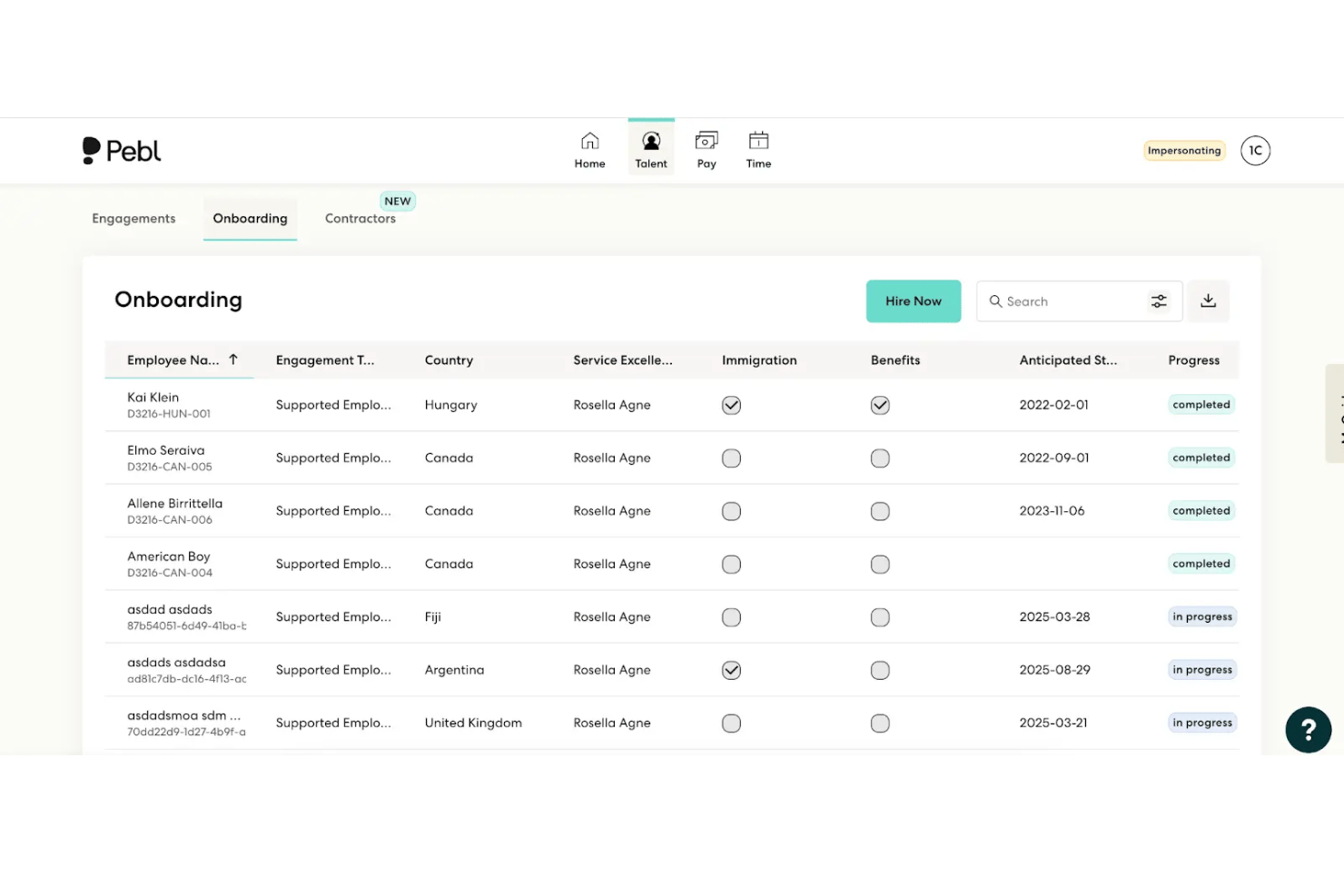
Pebl is an employer of record platform that handles entity-free hiring in Pakistan, covering local payroll in PKR, statutory benefits administration, labor law compliance, and work visa support across 185+ countries.
Who Is Pebl Best For?
Pebl is a strong fit for global expansion leads and HR teams that need Pakistan hiring backed by Baker McKenzie-vetted legal guidance across payroll, benefits, and labor law compliance.
Why I Picked Pebl
I've included Pebl in my top picks because its Pakistan compliance content is vetted by Baker McKenzie, which gives it a legal credibility layer I haven't seen matched elsewhere in this category. In practice, that means my team can rely on its documented guidance covering provincial payroll variations, EOBI and ESSI filings, and statutory benefits like gratuity and the profit bonus, knowing a top-tier law firm has reviewed it. Pebl's in-house immigration team also handles the full Pakistan Employment Visa process, including BOI applications and Ministry of Interior security clearance.
Pebl Key Features
- PKR payroll with multi-authority filing: Pebl processes salaries in Pakistani rupees and handles withholding, EOBI, and provincial social security filings across federal and provincial tax authorities.
- Employment Visa sponsorship: Pebl's in-house immigration team manages the full Pakistan Employment Visa process, including BOI applications and Ministry of Interior security clearance.
- 250+ HR and finance integrations: Connect Pebl to tools like BambooHR, HiBob, ADP Workforce Now, Greenhouse, NetSuite, and QuickBooks via native integrations or API access.
- AI compliance assistant: Alfie, Pebl's built-in AI assistant, answers compliance questions on-demand and is backed by human success managers for escalations.
Pebl Integrations
Pebl offers 250+ documented integrations, including BambooHR, HiBob, Greenhouse, ADP Workforce Now, NetSuite, QuickBooks, and SAP Concur. API access is included for custom connections.
Pros and Cons
Pros:
- In-house team manages visa sponsorship
- PKR payroll covers provincial filings
- Baker McKenzie-vetted Pakistan compliance
Cons:
- Reviewers report delays in complex cases
- Pakistan entity ownership remains undisclosed
Autres employeurs de référence au Pakistan
Voici quelques options supplémentaires qui ne figurent pas dans ma liste restreinte, mais qui méritent tout de même votre attention :
- Payoneer Workforce Management
For Payoneer-backed PKR payroll at scale
- TopSource
For dedicated local HR expert access
- Rippling
For converting Pakistani contractors to employees
- Papaya Global
For multi-country payroll with unified reporting
- Borderless AI
For flat-rate Pakistan hiring at scale
- INS Global
For market entry without a local entity
- WorkMotion
For province-by-province Pakistan compliance
- Tarmack
For multi-country expansion starting in Pakistan
- Playroll
For transparent flat-rate Pakistan hiring
- Cadana
For fintech-backed PKR payroll at scale


How I Evaluate Employer of Record Pakistan
I split my evaluation into three parts. First—and most important—core functionality: the provider must legally employ workers in Pakistan and keep contracts and terminations compliant with local labor law. Then I look at standout features like provincial labor law mapping. Finally, I consider cost transparency and local HR advisory access.
Core Functionality (Table Stakes for This List)
When I'm selecting tools for my list, I score each one on a scale from 0 (does not offer the functionality) to 5 (excels in this area) for each core functionality listed below. I then convert the total into a percentage to help assess each tool's overall fit, with extra weight on any functionalities I've deemed essential.
- Local Entity Employment (Essential): I check whether the provider holds a owned entity in Pakistan or relies on third-party partners, and how much compliance oversight they maintain over that structure.
- Pakistani Labor Law Compliance (Essential): I look for providers that tailor contracts, termination procedures, and leave policies to Pakistan's provincial labor regulations rather than offering generic templates.
- Local Payroll Processing: Accurate PKR salary disbursement with correct statutory deductions like income tax and EOBI matters here. I evaluate how automated the payroll cycle is and whether clients get real-time visibility into calculations.
- Statutory Benefits Administration: Providers like Mercans and Remote People handle social security, provident fund, and gratuity differently. I look at which mandatory benefits each provider actively administers versus simply advising on.
- Contract Drafting and Management: I evaluate whether generated employment contracts reflect Pakistani legal requirements out of the box or need heavy customization from your team before they're usable.
- Visa and Work Permit Support: For teams placing foreign nationals in Pakistan, I consider how much of the work permit process the provider manages end-to-end versus handing paperwork back to the client.
Once I have a list of tools that meet the criteria, I consider what sets each platform apart.
Differentiating Factors (What Sets Vendors Apart)
Here's how I compare and contrast different vendors:
Standout Features
Provincial labor law mapping is the first thing I check. Pakistan's labor codes differ across Punjab, Sindh, KPK, and Balochistan, so I look at whether a provider tracks leave entitlements, termination rules, and social security obligations per province or just applies a single national template. Contractor-to-EOR conversion also matters—I evaluate how smoothly a provider can transition an existing contractor into a compliant employee without gaps in pay or coverage. Providers like Atlas HXM and Remote each handle this differently, and the workflow details affect how fast your team can move. Finally, I consider local HR advisory access, since having an in-country expert available for questions about cultural norms or regulatory gray areas saves HR teams from costly missteps during onboarding or offboarding.
Beyond Features
I evaluate how clearly each provider itemizes Pakistan's statutory costs—EOBI contributions, gratuity, and provincial social security—since vague "all-in" pricing makes it hard to forecast your true employer burden. Onboarding speed matters too; in a competitive talent market, a provider that takes weeks to generate compliant contracts can cost you a top candidate. I also check whether liability for misclassification or compliance gaps sits with the EOR or shifts back to you, because that distinction shapes your long-term legal exposure as you scale headcount across provinces.
Comment choisir un employeur de référence au Pakistan
Choisissez un EOR en vérifiant comment son modèle d’emploi gère la province du travailleur, les coûts obligatoires et les changements prévus dans vos recrutements.
| Si votre priorité est… | Recherchez… |
|---|---|
| La conformité propre à chaque province | Des directives écrites pour la province du travailleur concernant les congés et les exigences en matière de licenciement |
| Des prévisions claires des coûts employeur | Un exemple de ventilation séparant le salaire, l’EOBI, la sécurité sociale provinciale et l’indemnité de départ |
| Le passage d’un prestataire indépendant au statut de salarié | Un plan de transition indiquant les dates de début du contrat, de la paie et de la couverture |
| Le recrutement de ressortissants étrangers | Une confirmation écrite des tâches liées au permis de travail prises en charge par le prestataire |
Comment évaluer votre liste restreinte
- Vérifiez les directives provinciales : Demandez un exemple de contrat de travail et de politique de congés pour la province où votre première recrue travaillera ; comparez leurs conditions avec vos exigences.
- Rapprochez les coûts obligatoires : Demandez un exemple de calcul mensuel de la paie présentant séparément le salaire, l’impôt sur le revenu, l’EOBI, la sécurité sociale provinciale et toute provision pour indemnité de départ.
- Vérifiez le calendrier de transition : Pour une conversion prévue d’un prestataire indépendant, demandez une liste de contrôle d’intégration datée indiquant quand le nouveau contrat de travail et la paie prennent effet.
- Formalisez les responsabilités par écrit : Demandez la clause de l’accord décrivant qui gère les corrections de paie et les problèmes de conformité, puis examinez-la avant de signer.
- Choisissez votre modèle opérationnel : Si la supervision locale directe est votre priorité, comparez une entité détenue en propre à un modèle fondé sur un partenaire ; utilisez la clause de responsabilité du contrat pour déterminer le niveau de supervision dont vous avez besoin.
Que sont les employeurs de référence au Pakistan ?
Un employeur officiel au Pakistan est une organisation tierce qui emploie légalement des travailleurs pour le compte d’une autre entreprise. Il gère généralement les contrats de travail, la paie, les retenues fiscales et l’administration locale de l’emploi, tandis que votre entreprise dirige le travail quotidien du salarié.
Fonctionnalités
Voici les principales fonctionnalités que je recherche chez un employeur officiel au Pakistan :
- Emploi légal local : Le prestataire emploie vos travailleurs par l’intermédiaire de sa propre entité pakistanaise ou d’un partenaire local. Vérifiez le modèle utilisé et déterminez qui reste responsable des obligations liées à l’emploi.
- Conformité au droit du travail pakistanais : Le prestataire adapte les conditions et les processus d’emploi aux règles nationales et provinciales applicables. Cela comprend des conseils sur les contrats, les congés et la rupture du contrat de travail.
- Paie en PKR et retenues fiscales : Le prestataire calcule les salaires en roupies pakistanaises, applique les retenues d’impôt sur le revenu requises et organise le versement des salaires. Les registres de paie vous permettent de vérifier les déductions et les dates de paiement.
- Gestion des avantages légaux : Le prestataire gère les cotisations et avantages applicables, tels que l’EOBI, la sécurité sociale provinciale, le fonds de prévoyance ou l’indemnité de fin de service. Demandez-lui quels éléments il administre et pour lesquels il fournit uniquement des conseils.
- Gestion des contrats de travail : Le prestataire prépare et tient à jour les contrats de travail conformément aux exigences locales et aux conditions convenues. Vous pouvez vérifier des éléments tels que la rémunération, le poste et les congés avant l’intégration.
- Gestion des congés et des ruptures : Le prestataire enregistre les congés et accompagne une sortie conforme aux règles applicables en fonction de la situation et du lieu de travail du salarié. Des processus clairs aident votre équipe à gérer le solde de tout compte et les préavis requis.
- Assistance pour les permis de travail : Pour les ressortissants étrangers, le prestataire explique les démarches liées au permis de travail qu’il prend en charge et celles qui nécessitent votre intervention. Confirmez les responsabilités et les délais avant de faire une offre.
- Conversion d’un prestataire en salarié : Le prestataire coordonne le passage du statut de prestataire à celui de salarié, notamment les dates de début du contrat et de la paie. Un plan de transition daté aide à éviter les interruptions de rémunération ou de couverture.
Avantages
D’après mon expérience, les services EOR au Pakistan peuvent offrir plusieurs avantages pratiques :
- Emploi local : Un EOR peut employer des travailleurs par l’intermédiaire de son entité pakistanaise ou d’un partenaire local, ce qui permet à votre entreprise de recruter sans créer sa propre entité.
- Conformité provinciale : Des contrats, politiques de congés et processus de rupture adaptés localement peuvent aider votre équipe à tenir compte des règles provinciales du travail applicables.
- Paie en PKR : Le traitement de la paie peut calculer les salaires en roupies pakistanaises, avec les retenues d’impôt sur le revenu et les registres de paiement nécessaires à la vérification.
- Gestion des avantages légaux : Les EOR peuvent gérer les obligations applicables liées à l’EOBI, à la sécurité sociale provinciale, au fonds de prévoyance ou à l’indemnité de fin de service, selon le prestataire et la situation du salarié.
- Conseils RH locaux : L’accès à une expertise RH dans le pays peut aider votre équipe à répondre aux questions relatives aux pratiques locales et aux exigences en matière d’emploi.
- Transitions des prestataires : Un processus planifié de conversion d’un prestataire en salarié peut coordonner les dates de début du contrat, de la paie et de la couverture afin de réduire les interruptions pendant la transition.
- Assistance pour les permis de travail : Pour les recrutements étrangers, un EOR peut préciser les démarches liées au permis qu’il prend en charge et celles que votre équipe doit effectuer.
Coûts et tarification
Les frais d’un EOR au Pakistan varient selon le prestataire, la taille de l’équipe et l’étendue des services. La plupart des prestataires facturent par salarié, et les fourchettes ci-dessous correspondent à des frais de service mensuels indicatifs, et non à des prix de forfaits standardisés. Ils excluent le salaire et les coûts légaux à la charge de l’employeur ; un forfait gratuit pour employer des travailleurs n’est généralement pas proposé.
Tableau comparatif des forfaits pour un employeur officiel au Pakistan
| Type de forfait | Prix moyen | Fonctionnalités courantes |
|---|---|---|
| Service EOR gratuit | Généralement non disponible | Les forfaits gratuits n’incluent généralement pas l’emploi légal, le traitement de la paie ni les services de conformité locale. |
| EOR économique | $200–$400 par salarié/mois | Mise en place du contrat de travail, paie en PKR et assistance RH de base. |
| EOR standard | $400–$800 par salarié/mois | Gestion des contrats et de la paie, administration des avantages légaux, ainsi qu’assistance pour les congés et les ruptures. |
| EOR pour grandes entreprises | Tarification personnalisée | Coordination de la paie dans plusieurs pays, assistance personnalisée en matière de conformité et conseils RH dédiés. |
FAQ
Voici les réponses aux questions fréquentes concernant les services d’employeur officiel au Pakistan.
Un EOR remplace-t-il la nécessité de créer une entité pakistanaise ?
Généralement, oui. Un EOR peut employer des travailleurs au Pakistan sans que votre entreprise établisse au préalable une entité locale. L’EOR devient l’employeur officiel et prend en charge l’administration de l’emploi convenue, tandis que votre équipe dirige le travail quotidien. Ce dispositif ne couvre pas automatiquement toutes les activités que votre entreprise peut exercer au Pakistan. Par exemple, les ventes locales, les licences, l’immatriculation fiscale ou d’autres opérations peuvent créer des obligations distinctes. Avant de signer, confirmez le modèle d’entité ou de partenaire de l’EOR et demandez à un conseiller juridique local si vos projets commerciaux plus larges nécessitent une immatriculation au Pakistan.
Les exigences en matière d’emploi diffèrent-elles selon les provinces du Pakistan ?
Oui. Les exigences du droit du travail pakistanais peuvent varier selon la province et les circonstances de l’emploi ; ne supposez donc pas qu’un même contrat ou une même politique s’applique partout. Les règles pertinentes peuvent dépendre du lieu de travail du salarié et du type d’emploi. Demandez à l’EOR de confirmer par écrit les règles provinciales qu’il applique au contrat du salarié, aux congés, à la sécurité sociale et à la procédure de licenciement. Si vous embauchez à Lahore et à Karachi, demandez des explications distinctes pour chaque lieu. Cela permet aux RH de mieux vérifier les obligations avant l’intégration ou l’approbation d’un transfert.
Quels coûts légaux dois-je demander à un EOR d’inclure dans un devis ?
Demandez à l’EOR d’identifier chaque coût applicable plutôt que de supposer que chaque contribution s’applique à chaque embauche. L’EOBI, la sécurité sociale provinciale, le fonds de prévoyance et la gratification peuvent être pris en compte dans le coût d’un emploi au Pakistan, mais les conditions d’éligibilité et le traitement peuvent varier. Demandez un exemple de ventilation de la paie indiquant séparément le salaire brut, la retenue d’impôt sur le revenu, chaque contribution patronale applicable, toute provision au titre des avantages et les frais de l’EOR. Demandez au prestataire d’indiquer les éléments qu’il administre par rapport à ceux sur lesquels il fournit uniquement des conseils. Comparez les prestataires en utilisant les mêmes hypothèses avant d’établir votre budget.
Un EOR peut-il embaucher des ressortissants étrangers au Pakistan ?
Oui, certains EOR prennent en charge l’emploi de ressortissants étrangers au Pakistan, mais confirmez l’étendue des services du prestataire avant de faire une offre. Demandez ce qu’il prend en charge : les demandes de permis ou de visa, les conseils concernant les documents et la coordination avec les autorités. Obtenez par écrit les responsabilités, les délais prévus et les éventuels frais. Vérifiez également que le travailleur peut obtenir et conserver l’autorisation requise pour le poste et le lieu concernés. Ne considérez pas un contrat de travail comme une autorisation de travailler ; confirmez séparément l’autorisation avant de fixer une date de début.