


Intuit Enterprise Suite vs. NetSuite: Confronto e Recensioni degli Esperti per il 2026


As organizations grow, managing finances, payroll, approvals, reporting, and day-to-day operations across multiple teams becomes increasingly complex. Choosing business management software that can support administrative workflows while improving visibility, automation, and control is an important decision.
Intuit Enterprise Suite and NetSuite are two leading business management platforms that help organizations manage financial operations, reporting, workflow automation, and day-to-day administrative processes.
In this comparison, I'll break down their features, pricing, pros and cons, security, and ideal use cases to help you determine which solution is the better fit for your organization.
Intuit Enterprise Suite vs. Oracle NetSuite: An Overview
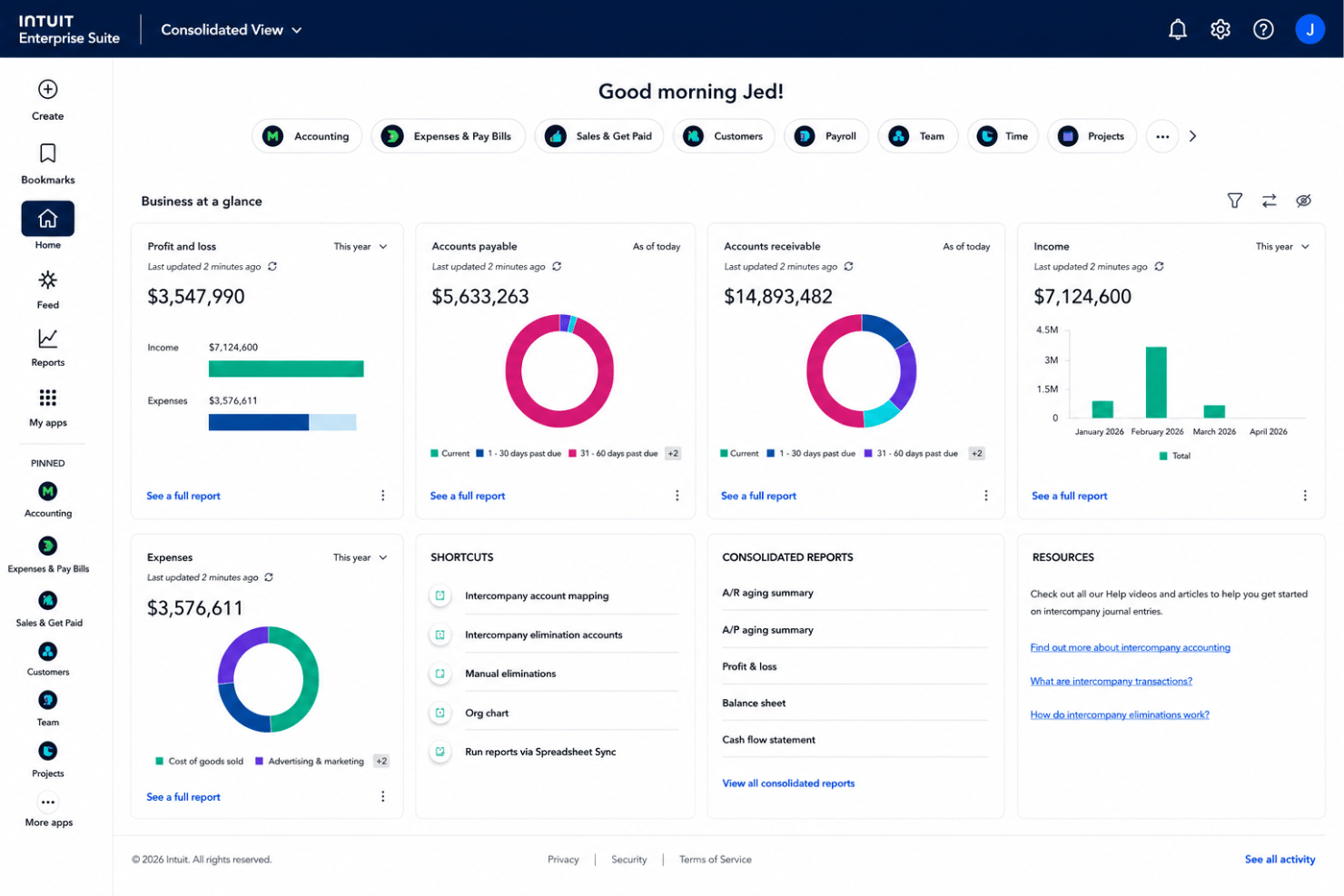
Intuit Enterprise Suite
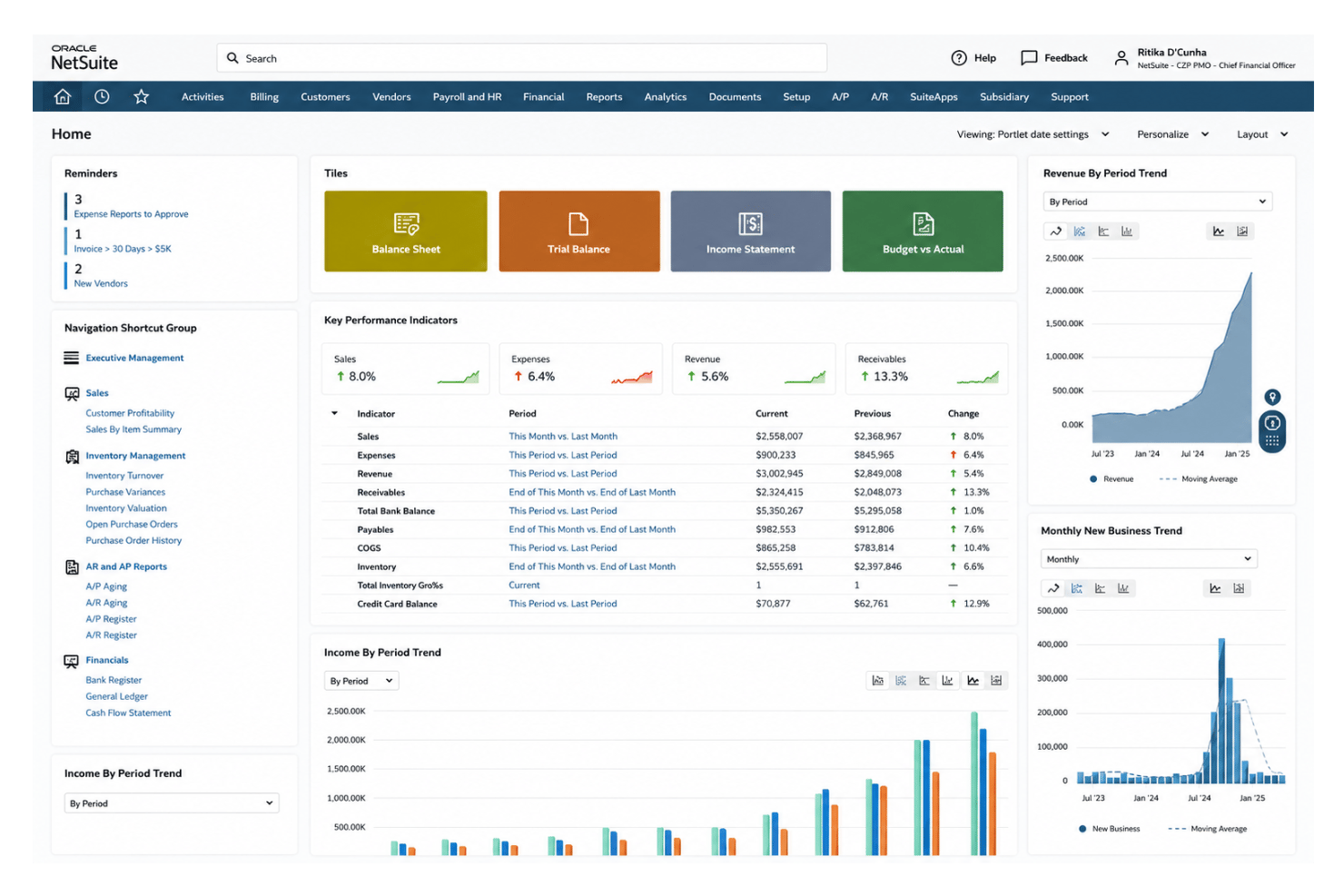
Oracle NetSuite
Perché fidarsi delle nostre recensioni sui software
Il nostro team testa e recensisce software dal 2012. In quanto esperti HR noi stessi, sappiamo quanto sia difficile — e importante — scegliere il software giusto.
Per questa guida, abbiamo valutato gli strumenti attraverso test pratici e ricerche indipendenti, assegnando un punteggio agli strumenti in base ai nostri criteri di selezione. Ci basiamo inoltre sulle competenze di leader di pensiero del settore e di professionisti HR attivi.
Le nostre recensioni riflettono il nostro giudizio editoriale umano, non un discorso di vendita.
Revisori esperti:
Intuit Enterprise Suite vs. Oracle NetSuite Pricing Comparison
| Intuit Enterprise Suite | Oracle NetSuite | |
|---|---|---|
| Free Trial | Free demo available | Free demo available |
| Pricing | Pricing upon request | Pricing upon request |
Intuit Enterprise Suite vs. NetSuite Prezzi & Costi Nascosti
Sia Intuit Enterprise Suite che NetSuite adottano una politica di prezzi personalizzati, quindi è necessario contattare i loro team di vendita per ottenere un preventivo. Il prezzo dipende da fattori quali il numero di utenti, i moduli scelti, i requisiti di implementazione e la complessità generale dell'azienda. Anche se entrambe le piattaforme richiedono una proposta su misura, servizi di implementazione, componenti aggiuntivi, integrazioni e supporto continuo possono aumentare il costo totale oltre al semplice abbonamento base.
Per confrontare efficacemente i prezzi, richiedi un preventivo dettagliato che includa implementazione, supporto, integrazioni, utenti aggiuntivi e moduli opzionali. Considerare i costi oltre la quota di abbonamento iniziale ti aiuterà a determinare quale piattaforma offre il miglior valore a lungo termine in base alle necessità e ai piani di crescita della tua organizzazione.
Intuit Enterprise Suite vs. Oracle NetSuite Feature Comparison
<div class="slate-p" data-slate-node="element" data-block-id="VDyC6l4GXI" data-slate-fragment="JTVCJTdCJTIyY2hpbGRyZW4lMjIlM0ElNUIlN0IlMjJ0ZXh0JTIyJTNBJTIySW50dWl0JTIwRW50ZXJwcmlzZSUyMFN1aXRlJTIwZSUyME5ldFN1aXRlJTIwb2Zmcm9ubyUyMGVudHJhbWJlJTIwZGVsbGUlMjBmdW56aW9uaSUyMGNvbXBsZXRlJTIwcGVyJTIwbGElMjBnaWVzdGlvbmUlMjBhemllbmRhbGUlMkMlMjBjb21wcmVzYSUyMGxhJTIwZ2VzdGlvbmUlMjBmaW5hbnphcmlhJTJDJTIwY29udGFiaWxpdCVDMyVBMCUyMG11bHRpLWVudGl0JUMzJUEwJTJDJTIwYXV0b21hemlvbmUlMjBkZWklMjBmbHVzc2klMjBkaSUyMGxhdm9ybyUyQyUyMHJlY29udGF6aW9uZSUyQyUyMGdlc3Rpb25lJTIwZGklMjBwcm9nZXR0byUyMGUlMjBhcnRpY29saSUyMGJhc2F0aSUyMHN1bGwnSW50ZWxsaWdlbnphJTIwQXJ0aWZpY2lhbGUuJTIwRW50cmFtYmUlMjBsZSUyMHBpYXR0YWZvcm1lJTIwc29ubyUyMHByb2dldHRhdGUlMjBwZXIlMjBhaXRhcmUlMjBsZSUyMG9yZ2FuaXp6YXppb25pJTIwY2hlJTIwY3Jlc2Nvbm8lMkMlMjBvdHRpbWl6emFyZSUyMGxlJTIwb3BlcmF6aW9uaSUyMGUlMjBtaWdsaW9yYXJlJTIwbGElMjB2aXNpYmlsaXQlQzMlQTAlMjBmaW5hbnphcmlhLiUyMiU3RCU1RCIs
| Intuit Enterprise Suite | Oracle NetSuite | |
|---|---|---|
| API | ||
| Budgeting | ||
| Calendar Management | ||
| Customer Management | ||
| Dashboard | ||
| Data Export | ||
| Data Import | ||
| Data Visualization | ||
| Expense Tracking | ||
| External Integrations | ||
| Forecasting | ||
| Inventory Tracking | ||
| Multi-User | ||
| Notifications | ||
| Project Management | ||
| Scheduling | ||
| Supplier Management | ||
| Third-Party Plugins/Add-Ons |
Intuit Enterprise Suite vs. NetSuite Integrazioni
| Integrazione | Intuit Enterprise Suite | NetSuite |
|---|---|---|
| Shopify | ✅ | ✅ |
| Salesforce | ✅ | ✅ |
| PayPal | ✅ | ✅ |
| Stripe | ✅ | ✅ |
| DocuSign | ✅ | ✅ |
| Square | ✅ | ✅ |
| Amazon Marketplace | ✅ | ✅ |
| HubSpot | ✅ | ✅ |
| Knowify | ✅ | ❌ |
| Wix | ✅ | ❌ |
| API | ✅ | ✅ |
| Zapier | ❌ | ✅ |
Sia Intuit Enterprise Suite che NetSuite supportano integrazioni nei settori della finanza, ecommerce, pagamenti, CRM e operations. Intuit Enterprise Suite si affida all’ecosistema più ampio di Intuit per mantenere collegati payroll, pagamenti, gestione del personale, marketing e dati aziendali, mentre NetSuite offre accesso API, supporto Zapier e una maggiore flessibilità di integrazione. Nel complesso, Intuit Enterprise Suite è ideale per team che desiderano flussi di lavoro integrati nel mondo Intuit, mentre NetSuite si adatta meglio a organizzazioni con infrastrutture tecnologiche più complesse ed esigenze avanzate di integrazione.
Intuit Enterprise Suite vs. NetSuite Sicurezza, Conformità & Affidabilità
| Fattore | Intuit Enterprise Suite | NetSuite |
|---|---|---|
| Crittografia dei dati | Crittografa i dati in transito e a riposo per aiutare a proteggere informazioni finanziarie e operative sensibili. | Utilizza la crittografia per i dati aziendali e supporta controlli di autenticazione di livello enterprise. |
| Conformità normativa | Supporta report SOC, pratiche di sicurezza delle informazioni certificate ISO 27001, conformità PCI DSS per i servizi di pagamento applicabili e documentazione VPAT. | Offre ampia documentazione di conformità aziendale, inclusi SOC, ISO, PCI e standard di audit globali. |
| Controlli degli accessi | Include controlli di accesso basati sui ruoli affinché le organizzazioni possano limitare l’accesso a dati sensibili finanziari, delle retribuzioni e operativi. | Offre permessi granulari, MFA, SSO e autenticazione basata su token per ambienti enterprise complessi. |
| Affidabilità | Fornisce risorse di sicurezza e conformità enterprise, anche se un SLA di uptime IES specifico non è divulgato pubblicamente. | Pubblica informazioni più dettagliate su infrastruttura e disponibilità, incluse informazioni su uptime e disaster recovery. |
Intuit Enterprise Suite copre i principali controlli di sicurezza, tra cui crittografia in transito e a riposo, controlli di accesso basati sui ruoli, report SOC, pratiche certificate ISO 27001 e conformità PCI DSS per i servizi di pagamento applicabili. NetSuite, invece, fornisce maggiori dettagli pubblici su infrastruttura, tempi di attività e conformità globale. Nel complesso, Intuit Enterprise Suite si adatta alle aziende in crescita che necessitano di sicurezza per dati finanziari, amministrativi e operativi, mentre NetSuite può essere indicato per organizzazioni con requisiti di conformità più complessi.
Intuit Enterprise Suite vs. NetSuite Facilità d’uso
| Fattore | Intuit Enterprise Suite | NetSuite |
|---|---|---|
| Interfaccia utente | Utilizza un’interfaccia in stile Intuit familiare con navigazione organizzata per finanza, paghe, reportistica e flussi di lavoro. | Adotta un’interfaccia ERP unificata per finanza, CRM, approvvigionamento, inventario, progetti e operazioni globali. |
| Onboarding | Fornisce onboarding guidato, supporto customer success, assistenza nella migrazione dei dati e opzioni di formazione. | Utilizza SuiteSuccess, partner di implementazione, risorse di formazione e supporto alla configurazione per ruolo. |
| Personalizzazione | Supporta workflow configurabili, report, integrazioni, entità, dimensioni e approvazioni. | Consente una personalizzazione ERP approfondita tramite SuiteCloud, SuiteBuilder, SuiteFlow e SuiteScript. |
| Attività quotidiane | Aiuta i team a gestire operazioni finanziarie, paghe, pagamenti, reportistica e approvazioni tramite strumenti Intuit integrati. | Supporta flussi operativi giornalieri su finanza, CRM, inventario, approvvigionamento, progetti e filiali. |
| Supporto & Assistenza | Offre supporto prodotto, guida customer success, piani formativi e opzioni di supporto premium. | Offre servizi di supporto, programmi di formazione, risorse di implementazione e opzioni di supporto tramite partner. |
Intuit Enterprise Suite si concentra su adozione guidata, workflow familiari e strumenti integrati per la gestione aziendale a supporto delle realtà in crescita. NetSuite, invece, supporta processi ERP più ampi, una configurazione più profonda e strutture operative di maggiori dimensioni. La scelta giusta dipende dalle tue esigenze: se preferisci un’esperienza guidata da Intuit o un ambiente ERP altamente configurabile.
Intuit Enterprise Suite vs Oracle NetSuite: Pros & Cons
Intuit Enterprise Suite
- Multi-entity management simplifies financial operations across growing organizations.
- AI-powered automation helps reduce manual financial, administrative, and operational tasks.
- Advanced reporting and real-time business insights improve decision-making.
- May offer more functionality than smaller businesses with basic accounting needs.
- Organizations migrating from simpler accounting software may face a learning curve.
- Advanced customization and complex implementations require additional planning and configuration.
Oracle NetSuite
- Real-time dashboards support detailed and customizable reporting.
- Multi-subsidiary management works across currencies and countries.
- Automates manual tasks in HR, finance, and operations.
- Implementation projects often take several months to complete.
- Advanced features usually require additional modules or fees.
- User interface can feel cluttered in complex workflows.
Best Use Cases for Intuit Enterprise Suite and Oracle NetSuite
Intuit Enterprise Suite
- Multi-Entity Organizations Manage multiple legal entities, automate intercompany transactions, and consolidate financial reporting from a single system.
- Professional Services Firms Track projects, manage financial performance, and automate accounting workflows while improving visibility across teams.
- Technology & SaaS Companies Support growing operations with AI-powered reporting, forecasting, and financial controls as the business scales.
- Construction & Project-Based Businesses Manage project accounting, budgeting, and financial reporting with workflows designed for project-driven organizations.
- Manufacturing, Wholesale & Distribution Monitor financial performance across products, locations, and business units while improving operational visibility.
- Growing Mid-Market Businesses Organizations expanding across multiple entities or locations can benefit from enterprise-level financial management without the complexity of a traditional ERP.
Oracle NetSuite
- Mid-Sized Manufacturers NetSuite's inventory, production, and workflow automation features fit manufacturers managing multiple processes and warehouses.
- Global Companies The platform natively supports subsidiaries, currencies, and tax rules, making it ideal for cross-border and multi-entity businesses.
- Nonprofit Organizations Purpose-built nonprofit editions track grants, finances, and compliance requirements in a unified system.
- Finance Departments Finance teams get automated reporting, advanced analytics, and centralized financials for better decision-making and compliance.
- eCommerce Businesses Direct order, shipping, inventory, and CRM management help eCommerce companies keep up with online sales demands.
- Professional Services Firms Project accounting, resource tracking, and expense management streamline operations for consulting, IT, and service-driven companies.
Chi dovrebbe usare Intuit Enterprise Suite e chi dovrebbe usare NetSuite?
Se cerchi un software gestionale che unisca automazione potenziata dall’AI e strumenti Intuit integrati per finanza, paghe, pagamenti, pagamenti di fatture e reporting, Intuit Enterprise Suite è probabilmente la scelta migliore. È ideale se hai bisogno di gestione multi-entity, reportistica avanzata e implementazione guidata senza assumersi la piena complessità di una tradizionale adozione ERP.
Se invece hai bisogno di un sistema ERP più ampio con AI integrata su operazioni globali, filiali complesse, inventario avanzato, approvvigionamento, CRM e workflow altamente configurabili, NetSuite potrebbe essere la soluzione più indicata. NetSuite Next aggiunge intelligenza conversazionale, workflow agentici e ricerca in linguaggio naturale, risultando adatto ad organizzazioni che desiderano supporto AI su un ambiente ERP completo.
Differences Between Intuit Enterprise Suite and Oracle NetSuite
| Intuit Enterprise Suite | Oracle NetSuite | |
|---|---|---|
| AI Experience | Uses Intuit AI Agents to support automation, financial insights, and workflow assistance across business operations. | Uses NetSuite Next and embedded AI for conversational intelligence, agentic workflows, natural-language search, and broader ERP analysis. |
| Customization Model | Supports configurable workflows, reports, integrations, dimensions, entities, and approvals. | Supports deeper ERP customization through SuiteCloud, SuiteBuilder, SuiteFlow, SuiteScript, and partner extensions. |
| Global Operations Depth | Supports growing businesses with multiple entities, locations, projects, and product lines. | Supports complex global operations through OneWorld, including subsidiaries, currencies, tax rules, and international reporting. |
| Implementation Approach | Uses guided onboarding with customer success support, migration help, training, and a shorter implementation timeline than traditional ERPs. | Uses a more formal ERP implementation model through SuiteSuccess, training, configuration, and implementation partners. |
| Native Financial Services | Includes built-in payment processing, bill pay, and access to business lending through the Intuit ecosystem. | Supports payments and bill pay, but some capabilities may rely on external partners, add-ons, or third-party apps. |
| Visit Intuit Enterprise SuiteOpens new window | Read Oracle NetSuite ReviewOpens new window |
Similarities Between Intuit Enterprise Suite and Oracle NetSuite
| Cloud-Based Access | Both platforms are cloud-based, allowing teams to access business data, workflows, and reports online. |
|---|---|
| Core Financial Management | Both support key financial workflows such as AR, AP, general ledger, project accounting, and financial reporting. |
| Multi-Entity Support | Both help organizations manage multiple entities and consolidate financial data across business units. |
| Reporting & Planning | Both offer reporting, dashboards, forecasting, budgeting, and business intelligence tools for decision-making. |
| User Permissions | Both include role-based permissions to help control access to sensitive business, finance, and operational data. |
| Visit Intuit Enterprise SuiteOpens new window Read Oracle NetSuite ReviewOpens new window | |