

10 Best Employee Retention AI Tools Reviewed in 2026

10 Best Employee Retention AI Tools Shortlist


Keeping your team engaged and satisfied is a challenge. Employee retention AI tools can help you tackle this by leveraging AI to understand and address your team's needs.
These tools offer features like predictive analytics and personalized feedback, helping you identify potential issues before they become big problems. They can also provide insights into employee satisfaction and career growth opportunities.
As someone who's tested and reviewed software independently, I aim to offer you an unbiased look at the best tools out there. In this article, you'll find a selection of top employee retention AI tools that can help boost your team's morale and productivity.
Why Trust Our Software Recommendations
Our team has been testing and reviewing software since 2012. As HR experts ourselves, we know how difficult—and important—it is to choose the right software.
For this guide, we evaluated tools using hands-on testing and independent research, scoring tools using our selection criteria. We also draw on insights from industry thought leaders and practicing HR experts.
Our reviews reflect our human editorial judgment, not a sales pitch.
Expert reviewers:
Employee Retention AI Tools Comparison Table
This comparison table summarizes pricing details for my top employee retention AI tool selections:
| Tool | Best For | Trial Info | Price | ||
|---|---|---|---|---|---|
| 1 | Best for predicting retention across global teams | Free demo available | From $599/user/month | Website | |
| 2 | Best for performance reviews | Free demo available | From $4/user/month (billed annually) | Website | |
| 3 | Best for human capital management | Free demo available | Pricing upon request | Website | |
| 4 | Best for AI-driven HR support | Free demo available | Pricing upon request | Website | |
| 5 | Best for career pathing | Free demo available | Pricing upon request | Website | |
| 6 | Best for workforce planning | Free demo available | Pricing upon request | Website | |
| 7 | Best for communication analytics | Free demo available | From $799/month | Website | |
| 8 | Best for employee feedback | Free demo available | Pricing upon request | Website | |
| 9 | Best for employee recognition | Free demo available | Pricing upon request | Website | |
| 10 | Best for leadership insights | Free demo available | From $2/user/month (billed annually) | Website |

Best Employee Retention AI Tool Reviews
Below are my detailed summaries of the best employee retention AI tools that made it onto my shortlist. My reviews offer a detailed look at the key features, pros & cons, integrations, and ideal use cases of each tool to help you find the best one for you.
Deel HR
Best for predicting retention across global teams
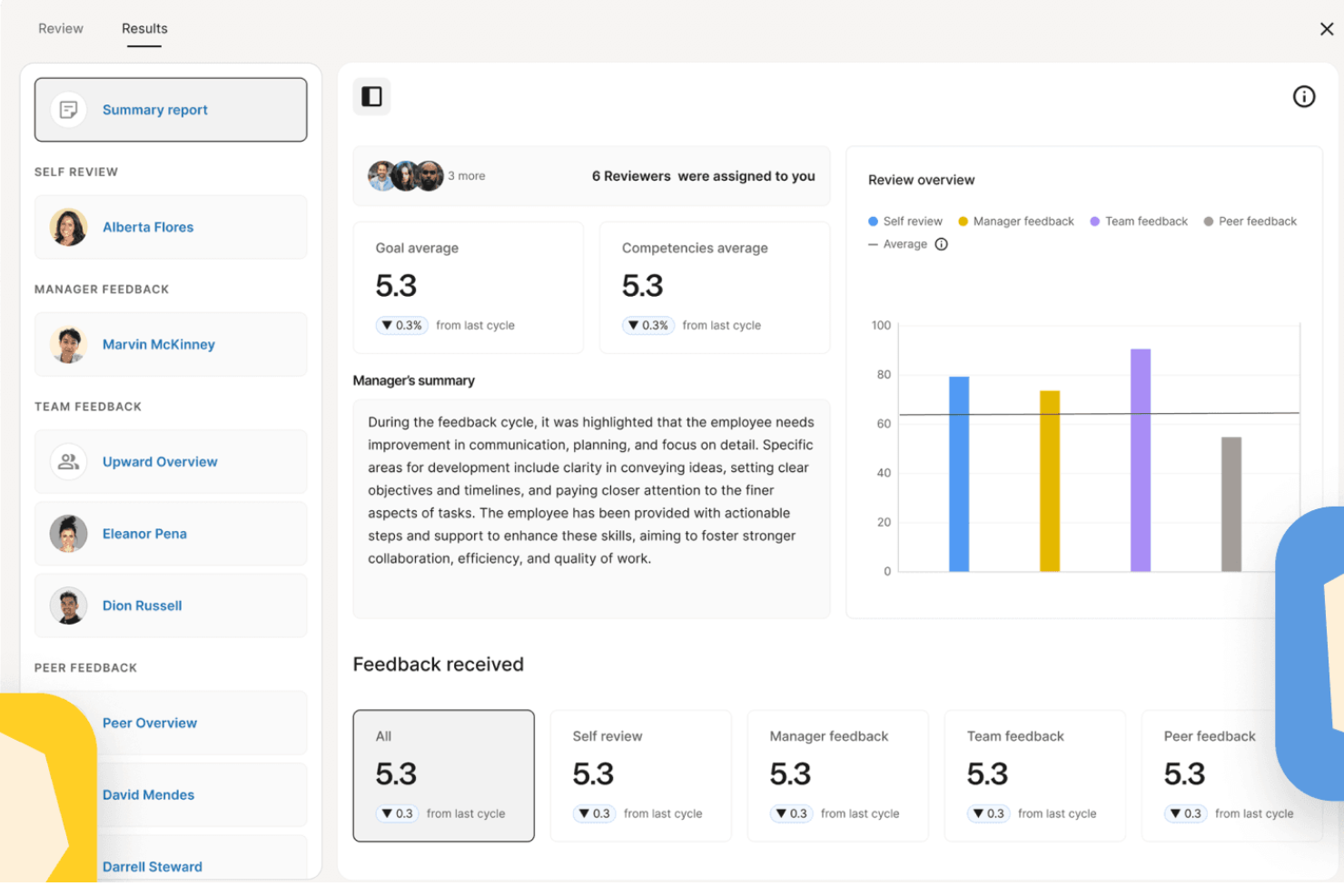
Your efforts to retain great people get a real boost when AI helps you understand what your teams need, where they may be struggling, and how to support their long-term growth. Deel’s AI-powered HR and talent tools give you instant insights into performance, development, compensation, and day-to-day questions that shape the employee experience for your internationally distributed team.
Why I Picked Deel
I picked Deel because it brings AI directly into the core drivers of retention—performance feedback, development, compensation clarity, and everyday support. With tools that draft career paths, training plans, and review cycles for you, your team can focus more on actual coaching rather than administrative work. I also like how the AI surfaces insights from your people data to highlight patterns that influence engagement and satisfaction, especially for global teams. Together, these capabilities help you build a global work environment where employees feel recognized, supported, and fairly compensated.
Deel Key Features
In addition to the retention-focused capabilities I highlighted above, you’ll find these useful when evaluating AI employee retention tools:
- AI-generated career paths and training programs: Quickly produces personalized development materials that help employees see clear opportunities for growth.
- 360° feedback and custom performance cycles: Supports fair, structured reviews that reduce bias and strengthen trust in evaluations.
- Compensation insights tied to performance data: Connects pay decisions with review results to promote transparency and reward top performers.
- Global salary intelligence: Uses data from 150+ countries to help you maintain competitive, equitable pay ranges that support long-term retention.
Deel Integrations
Integrations include Workday, BambooHR, Greenhouse, Lever, Xero, QuickBooks, Slack, Microsoft Teams, Google Workspace, and SAP SuccessFactors.
Pros and Cons
Pros:
- Links compensation and performance to increase pay transparency
- 360° reviews strengthen fairness in performance evaluations
- AI drafts career paths and training plans to support growth
Cons:
- Global insights may feel excessive for single-country teams
- AI cannot replace meaningful manager-employee conversations
New Product Updates from Deel HR

Deel Expands Stablecoin Wallet to 80+ Countries
Deel expands its Stablecoin Wallet to 80+ countries with dollar-backed balances and optional rewards. This gives eligible contractors more ways to hold and manage earnings inside Deel. For more information, visit Deel’s official site.
 .
.
Lattice
Best for performance reviews

Lattice is a performance management platform tailored for HR teams and managers looking to enhance employee engagement and development. It provides tools for performance reviews, goal setting, and real-time feedback to support employee growth.
Why I picked Lattice: It’s ideal for structured performance reviews and succession planning, offering AI features that make evaluations fairer and more efficient. Lattice also provides actionable insights to support employee development and engagement. For example, there’s Pulse to monitor employee engagement and surveys to gather feedback from them. It also allows you to set cascading and personalized goals for your team and track their real-time progress.
Standout features & integrations:
Features include customizable templates and workflows, as well as AI-powered peer feedback summaries that can make performance reviews easier for both HR and employees. Lattice also offers employee engagement surveys and performance analytics to identify areas for improvement.
Integrations include Slack, Microsoft Teams, Google Workspace, BambooHR, Workday, ADP, Okta, Outlook, Salesforce, and Jira.
Pros and Cons
Pros:
- Detailed performance analytics
- Real-time performance feedback
- Goal setting and tracking
Cons:
- Limited customization options
- Learning curve for new users
New Product Updates from Lattice

Lattice Introduces MCP Connector for AI Chat Tools
Lattice introduced Lattice MCP, a new connector that brings talent data into Claude, ChatGPT, and other LLM tools. The connector helps teams access performance context from reviews, 1:1 notes, feedback, goals, and updates within AI chat workflows. For more information, visit Lattice’s official site.
 .
.
Workday
Best for human capital management

Workday is a cloud-based human capital management platform designed for enterprises aiming to optimize workforce planning and talent management. It also prioritizes employee experience by focusing on people-first productivity.
Why I picked Workday: The platform is ideal for empowering high-performing teams, providing dedicated AI tools for managing employee data and productivity. Its AI capabilities include predictive analytics that help you forecast workforce trends/opportunities and plan accordingly. Workday also offers talent optimization features that allow your team to identify skill gaps and develop their potential. It also comes with a learning management system so staff members themselves can initiate their career growth.
Standout features & integrations:
Features include workforce planning, talent management, and payroll processing. Bringing these functions together in one AI system helps HR teams work more efficiently. It also ensures employee data stays accurate and easy to access. This integrated approach also creates a smoother, more reliable experience for employees, from payroll to career development. Additionally, effective workforce planning helps ensure your staff maintains a good work-life balance.
Integrations include Salesforce, Slack, Microsoft Teams, ServiceNow, Okta, Adobe Sign, Docusign, SAP, Oracle, and Google Workspace.
Pros and Cons
Pros:
- Offers predictive workforce planning
- Supports talent optimization
- Empowers employees with self‑service and learning paths
Cons:
- Pricing details aren’t transparent
- Significant learning curve and implementation complexity


Leena AI is an AI-powered tool designed for HR teams and managers seeking to automate repetitive tasks and enhance employee engagement. It comes with pre-built agentic AI colleagues that represent different departments, such as HR, IT, Finance, and Procurement.
Why I picked Leena AI: The platform excels in AI-driven HR support. You can take advantage of the AI chatbots to handle employee inquiries efficiently, freeing up your team to focus on more strategic initiatives that enhance the overall employee experience. Leena AI also offers onboarding automation to simplify the process for new hires. Its feedback collection tools provide valuable insights into employee needs and job satisfaction, helping you make informed decisions.
Standout features & integrations:
Features include employee query management, onboarding automation, and feedback collection, which can improve employee engagement. Leena AI also has KnowledgeGPT to keep your knowledge base current, ensuring employees can easily find accurate, up-to-date information when they need it.
Integrations include Slack, Microsoft, Workday, BambooHR, SAP Ariba, HubSpot, ADP, Oracle, Google Workspace, Salesforce, and Outlook.
Pros and Cons
Pros:
- Supports onboarding automation
- Provides efficient query management
- Automates routine HR tasks
Cons:
- Limited out-of-the-box integrations
- Pricing details are not transparent

Gloat is a talent marketplace platform designed for large enterprises looking to enhance employee career development. It matches employees with internal opportunities, helping them grow within the company, improving retention rates.
Why I picked Gloat: The platform excels in career pathing by using AI to align employee skills with company needs. Its AI-driven matching helps you identify opportunities for employees to develop new skills. This feature supports internal mobility, giving your team a clear path for growth. Additionally, Gloat's insights help managers understand skill gaps and plan for future talent needs.
For employees, the platform supports their career development behind the scenes. It provides AI-driven personalized course and training suggestions, which are all based on their current skills, interests, and career goals. This helps them visualize where they want to grow next and how to get there.
Standout features & integrations:
Features include skill matching, personalized career paths, and internal mobility tracking. These tools help you identify the right opportunities for employee growth. Plus, the ability to integrate with your company’s LXP and LMS enables continuous skill development. Lastly, Gloat helps employees identify their skill gaps themselves and easily find and connect with the right mentors to support them.
Integrations include Workday, SAP SuccessFactors, Oracle, Microsoft Teams, Slack, LinkedIn, Cornerstone, and ServiceNow.
Pros and Cons
Pros:
- Skill gap identification
- Real-time workforce analytics
- Internal career mobility
Cons:
- Customization is necessary for smaller teams
- Less suitable for large enterprises


Quinyx is a workforce management platform designed for businesses looking to optimize scheduling, time tracking, and labor cost management. This fully integrated employee retention AI tool helps managers make data-driven decisions regarding staffing.
Why I picked Quinyx: The platform is designed to support workforce planning by using AI to forecast demand. It then translates those forecasts into precise headcount requirements. Its predictive scheduling involves using AI to integrate employee preferences with business requirements and compliance rules.
Standout features & integrations:
Features include shift management, auto-schedule/auto-assign, and employee self-service. These tools simplify scheduling and help control labor costs while supporting a fair, transparent work environment. By reducing scheduling conflicts and overwork, these tools also help prevent employee burnout and promote overall well-being. Quinyx also offers compliance tracking to ensure adherence to labor regulations.
Integrations include ADP, SAP SuccessFactors, Oracle, HR+ by Visma, and Personio.
Pros and Cons
Pros:
- Supports compliance tracking
- Offers labor cost forecasting
- Provides predictive scheduling
Cons:
- Limited integrations compared to competitors
- No free trial available


Cerkl is an employee communication platform aimed at organizations seeking to enhance internal communication and engagement. It uses AI to deliver insights into various content, from onboarding to training or strategic communications, in order to drive results.
Why I picked Cerkl: The platform excels in communication analytics, offering AI-driven insights to optimize internal messaging. AI-driven analytics show which messages connect with your team, allowing you to refine communications. It gives detailed performance metrics like engagement levels and open rates to measure their impact. By improving how employees stay informed and connected, the platform helps strengthen both engagement and retention
Standout features & integrations:
Features include personalized content delivery, audience segmentation, and engagement tracking. These tools help you send the right message to the right employee groups. Plus, Cerkl lets you design the emails directly from the app. It offers an intuitive builder and content library to help you create company-branded communication materials.
Integrations include Microsoft Teams, Slack, SharePoint, Outlook, Google Workspace, Salesforce, HubSpot, Zoom, Mailchimp, and WordPress.
Pros and Cons
Pros:
- Advanced audience segmentation
- Personalized content delivery
- Detailed communication analytics
Cons:
- Pricing can be expensive compared to competitors
- Limited advanced features for small teams
Best for employee feedback

WorkTango is an employee engagement platform designed for HR professionals and managers aiming to collect and analyze employee feedback. It looks into team sentiment and engagement levels to help HR teams implement targeted interventions, rewards, or development opportunities.
Why I picked WorkTango: The platform excels in employee listening. Its AI capabilities include sentiment analysis that can reveal patterns in team dynamics, engagement levels, and workplace culture. WorkTango offers real-time feedback collection and reporting to keep you informed about employee concerns and team morale. These features help you take quick actions to improve workplace satisfaction.
Standout features & integrations:
Features include employee lifecycle surveys, qualitative feedback theme analysis, and an intuitive dashboard. These tools help you continuously monitor employee sentiment and engagement. WorkTango also provides leaders with information on their employees’ achievements and milestones, as well as helps them run team-specific nominations and awards.
Integrations include Slack, Microsoft Teams, Google Workspace, BambooHR, Workday, ADP, Okta, Outlook, and Jira.
Pros and Cons
Pros:
- Engagement scoring
- Customizable pulse surveys
- Real-time feedback insights
Cons:
- Limited advanced analytics features
- Additional setup requirements for larger teams
Best for employee recognition

Achievers is a recognition and rewards platform designed for companies looking to boost employee engagement and morale. It has a global rewards marketplace that personalizes recognition efforts and drives meaningful interactions within teams.
Why I picked Achievers: The user-friendly platform enables leaders and HR teams to provide employee recognition to top performers, whether they work in-office or remotely. With the help of AI, you can also identify key moments that matter to employees and personalize rewards accordingly. Achievers facilitates diverse recognition programs, including both monetary rewards and peer praise. It makes it easier for you to create an engaging work environment.
Standout features & integrations:
Features include customizable rewards, social recognition, and a points-based system. These tools allow top talent to choose rewards that matter to them. Achievers also offers analytics to measure the impact of recognition programs on engagement.
Integrations include Workday, ADP, Microsoft Teams, Slack, SAP SuccessFactors, LinkedIn, and Google Workspace.
Pros and Cons
Pros:
- Engagement tracking analytics
- Social recognition features
- Personalized recognition programs
Cons:
- Limited customization for small businesses
- Learning curve for new users
Peoplebox.ai
Best for leadership insights

Peoplebox.ai is an AI-driven talent management platform designed for HR teams and managers. It automates goal alignment, people management, and talent features to support employee development. This allows leaders to spot high-potential employees and guide their growth, engagement, and career progression.
Why I picked Peoplebox.ai: The platform's focus on leadership insights sets it apart. It offers AI features, including an AI talent partner named Nova, which assists with hiring and development. Predictive analytics provides valuable insights into employee performance and potential. This makes it easier for your team to make informed decisions and align leadership goals.
Standout features & integrations:
Features include AI-driven interview software, resume screening, and predictive analytics. These all help recruiters with better candidate matching, finding people who align with company culture and values. Nova supports ongoing employee development by helping individuals break goals into actionable tasks and get real feedback on ways to improve.
Integrations include Slack, Microsoft Teams, Google Workspace, Jira, Asana, Notion, and BambooHR.
Pros and Cons
Pros:
- Predictive analytics for insights
- Leadership alignment tools like OKR management (starts at $8/month)
- AI-driven talent management
Cons:
- No mobile app
- No free plan
Other Employee Retention AI Tools
Here are some additional employee retention AI tools options that didn’t make it onto my shortlist, but are still worth checking out:
- 15Five
For continuous feedback and recognition
- Leapsome
For performance and learning cycles
- Culture Amp
For AI leadership coaching and feedback
- HiBob
For HR analytics and insights


How I Evaluate AI Employee Retention Tools
I look for tools where AI goes beyond dashboards—flagging flight risks before a resignation hits your inbox or surfacing the actual drivers behind attrition in a specific team. I split my evaluation into core functionality every tool needs to qualify and the differentiating factors that separate a good fit from a great one.
Core Functionality (Table Stakes For This List)
When I'm selecting tools for my list, I rank each one on a scale from 0 (does not offer the functionality) to 5 (excels in this area) for each core functionality listed below. Then, I calculate the tool's total score into a percentage. Each tool needs to achieve a minimum total score of 65% to be considered for inclusion.
- Attrition Risk Prediction: I check whether the tool uses ML models to generate real risk scores—like flagging a tenured engineer whose collaboration patterns shifted—rather than just reporting past turnover.
- Sentiment & Engagement Analysis: The tool should apply NLP across feedback channels (pulse surveys, open-ended comments, review data) to surface emerging morale issues before they snowball.
- Driver & Root Cause Analytics: I evaluate how well the platform ranks what's actually behind attrition in specific segments, whether that's compensation gaps on one team or manager quality on another.
- AI-Generated Retention Recommendations: Beyond just flagging risk, I look for tools that prescribe tailored actions—like suggesting a career development conversation for a high-performer showing signs of stagnation.
- HRIS & Workforce Data Integration: Strong connectors to platforms like Workday, BambooHR, or SAP SuccessFactors matter because retention models are only as good as the data feeding them.
- Retention Dashboards & Reporting: I evaluate whether HR leaders and managers each get role-appropriate views, with drill-down into team-level trends and the ability to track outcomes over time.
Once I have a list of tools that meet the criteria, I consider what sets each platform apart.
Differentiating Factors (What Sets Vendors Apart)
Here's how I compare and contrast different vendors:
Standout Features
Manager enablement tools are a big differentiator—I look for platforms that push AI-generated talking points or coaching nudges directly to managers ahead of 1:1s with at-risk team members. Passive listening signals also stand out, where a tool analyzes calendar load or collaboration patterns to detect burnout without adding another survey. I also evaluate whether a platform tracks intervention outcomes, connecting specific retention actions back to actual attrition changes over time.
Beyond Features
Ethical AI and bias mitigation matter a lot here because these tools score real people. I check whether a vendor provides model explainability and bias audits across protected classes before HR acts on a risk flag. Data privacy is closely tied—retention platforms ingest sensitive workforce data, so I evaluate certifications like SOC 2 Type II and GDPR compliance alongside role-based access controls. Time-to-value also shapes my assessment. I favor platforms with prebuilt retention models that surface usable insights within weeks rather than requiring months of data science work.
How to Choose Employee Retention AI Tools
It’s easy to get bogged down in long feature lists and complex pricing structures. To help you stay focused as you work through your unique software selection process, here’s a checklist of factors to keep in mind:
| Factor | What to Consider |
|---|---|
| Scalability | Can the tool grow with your business? Consider whether it can handle an increase in users or data without losing performance. Look for signs of seamless scaling, like no downtime during growth. |
| Integrations | Does it work with your existing systems? Check for compatibility with your current HR tools and platforms. Lack of integrations can lead to siloed data and inefficiencies. |
| Customizability | Can you tailor it to your needs? Determine if the tool allows you to adjust settings and workflows to fit your specific processes. Rigid systems may not meet unique business requirements. |
| Ease of use | Is it user-friendly for your team? Evaluate if the interface is intuitive and easy to navigate. A steep learning curve can slow down adoption and reduce effectiveness. |
| Implementation and onboarding | How quickly can you get started? Assess the time and resources needed to implement and onboard. Look for tools with clear guides, support, and a fast setup process. |
| Cost | Is it within your budget? Compare the pricing structure against your budget. Ensure there are no hidden fees and that the cost aligns with the value provided. |
| Security safeguards | Does it protect your data? Verify the tool's security measures, like encryption and access controls, to safeguard sensitive employee information. |
| Support availability | Can you get help when needed? Check if the vendor offers 24/7 support and multiple channels for assistance. Limited support options can lead to prolonged downtime or unresolved issues. |
What Are Employee Retention AI Tools?
Employee retention AI tools are software solutions that use artificial intelligence to help businesses understand and improve employee satisfaction and reduce turnover. HR professionals and managers typically use these tools to gain insights into employee retention strategies and gauge the level of engagement. Predictive analytics, sentiment analysis, and personalized feedback capabilities help with identifying potential turnover risks and enhancing employee engagement. Overall, these tools provide valuable insights and strategies to maintain a stable and motivated workforce.
Features
When selecting employee retention AI tools, keep an eye out for the following key features:
- Predictive analytics: Uses AI to forecast potential employee turnover, performance trends, and promotion readiness.
- Sentiment analysis: Analyzes employee feedback to gauge morale and satisfaction, providing insights into team dynamics.
- Personalized feedback: Offers tailored performance-based feedback to employees to enhance their development plans.
- Skill gap analysis: Identifies areas where employees could improve, guiding training and development efforts.
- Engagement tracking: Monitors engagement levels over time to track retention initiatives.
- Career pathing: Maps out potential career trajectories for employees, motivating them with clear growth opportunities.
- Automated surveys: Send out regular surveys to gather employee feedback without manual intervention.
- Real-time insights reporting: Provides up-to-the-minute data on retention metrics, engagement levels, and workforce performance—enabling quick decision-making and adjustments.
- AI-driven recommendations: Suggest actions and strategies based on data analysis to improve employee retention and satisfaction.
Benefits
Implementing employee retention AI tools provides several benefits for your team and your business. Here are a few you can look forward to:
- Reduced turnover: Predictive analytics allow you to identify at-risk employees and implement proactive strategies to retain them.
- Enhanced engagement: Sentiment analysis offers insights into employee morale, so you can address concerns and boost engagement.
- Targeted skill building: Personalized feedback supports tailored growth plans to foster employee development and satisfaction.
- Efficient resource allocation: Skill gap analysis ensures training efforts are directed where they're needed most to maximize resource use.
- Strategic decision-making: Real-time reporting provides up-to-date information, aiding in quick and informed decision-making.
- Motivated workforce: Clear career pathing helps employees picture their future with the company.
- Time savings: Automated surveys and AI-driven recommendations free up your team for strategic tasks.
Costs & Pricing
Selecting employee retention AI tools requires an understanding of the various pricing models and plans available. Costs vary based on features, team size, add-ons, and more. The table below summarizes common plans, their average prices, and typical features included in employee retention AI tools solutions:
Plan Comparison Table for Employee Retention AI Tools
| Plan Type | Average Price | Common Features |
|---|---|---|
| Free Plan | $0 | Access to basic analytics, limited user accounts, and basic reporting. |
| Personal Plan | $5-$25/user/month | Enhanced analytics, personalized feedback features, and skill gap analysis. |
| Business Plan | $30-$60/user/month | Advanced analytics, predictive insights, integration with HR systems, and automated surveys. |
| Enterprise Plan | $65-$100/user/month | Comprehensive reporting, full customization options, AI-driven recommendations, and dedicated support. |
Employee Retention AI Tools FAQs
Here are some answers to common questions about employee retention AI tools:
How do I measure the ROI of employee retention AI tools?
To measure the ROI, compare the costs of implementing the tool against the savings from reduced turnover and increased productivity. Track metrics like turnover rate and employee engagement before and after using the tool. Consider factors like reduced recruitment costs and improved employee performance. You might also connect specific improvements in team dynamics and satisfaction directly to the insights gained from the AI tool.
Can employee retention AI tools integrate with existing HR systems?
Yes, most employee retention AI tools offer integration capabilities with common HR systems. Check if the tool supports APIs or has built-in connectors for systems like Workday or BambooHR. Ensure your team or IT department has the technical capability to set up and maintain these integrations. Consider consulting with your IT department for a smooth integration process, ensuring that all systems work harmoniously together.
How do I ensure data privacy with employee retention AI tools?
To ensure data privacy, choose tools with strong security measures like encryption and access controls. Verify that the vendor complies with relevant regulations such as GDPR or CCPA. You should also establish internal policies for data access and handling. Regularly audit the tool’s data security practices and update them as needed. Communicate with the vendor to understand their privacy policies and ensure they align with your organization’s standards.