

10 Best Employee Incentive Software Reviewed in 2026

Best Employee Incentive Software Shortlist


The best employee incentive software helps you reward performance, motivate teams, and align individual contributions with your organization’s goals—without adding administrative complexity.
When incentives are managed manually or inconsistently, they can lose their impact and even create disengagement. The right software centralizes rewards programs, tracks performance metrics, and ensures incentives are delivered fairly and transparently, helping you boost productivity and reduce turnover.
Drawing on my experience evaluating workplace management tools, I’ve tested and compared the top employee incentive platforms available today. In this guide, you’ll find in-depth reviews highlighting the features and benefits that matter most.
Why Trust Our Software Reviews
Our team has been testing and reviewing software since 2012. As HR experts ourselves, we know how difficult—and important—it is to choose the right software.
For this guide, we evaluated tools using hands-on testing and independent research, scoring tools using our selection criteria. We also draw on insights from industry thought leaders and and practicing HR experts.
Our reviews reflect our human editorial judgment, not a sales pitch.
Best Employee Incentive Software: Pricing Comparison Chart
This comparison chart summarizes pricing details for my top employee incentive software selections to help you find the best software for your budget and business needs.
| Tool | Best For | Trial Info | Price | ||
|---|---|---|---|---|---|
| 1 | Best with DEI-focused AI coaching tools | Free demo available | Pricing upon request | Website | |
| 2 | Best for Amazon integration rewards | Free demo available | Pricing upon request | Website | |
| 3 | Best for customizable incentive programs | Free demo available | Pricing upon request | Website | |
| 4 | Best for peer recognition and rewards | Free demo available | Pricing upon request | Website | |
| 5 | Best for scheduling milestone celebrations | Free trial available | From $6.99/board | Website | |
| 6 | Best for comprehensive rewards catalog | Free demo available | Pricing upon request | Website | |
| 7 | Best for task completion incentives | Free demo available | Pricing upon request | Website | |
| 8 | Best for personalized recognition solutions | Free demo available | Pricing upon request | Website | |
| 9 | Best for AI-powered recognition | 30-day free trial + free demo available | From $1/user/month + free plan available | Website | |
| 10 | Best for gamified time tracking | 30-day free trial | From $5/user/month | Website |

Best Employee Incentive Software Reviews
This section provides an in-depth analysis and overview of each employee incentive software. Below, I will discuss the pros and cons of each tool, its features, and its best use cases.

Best with DEI-focused AI coaching tools
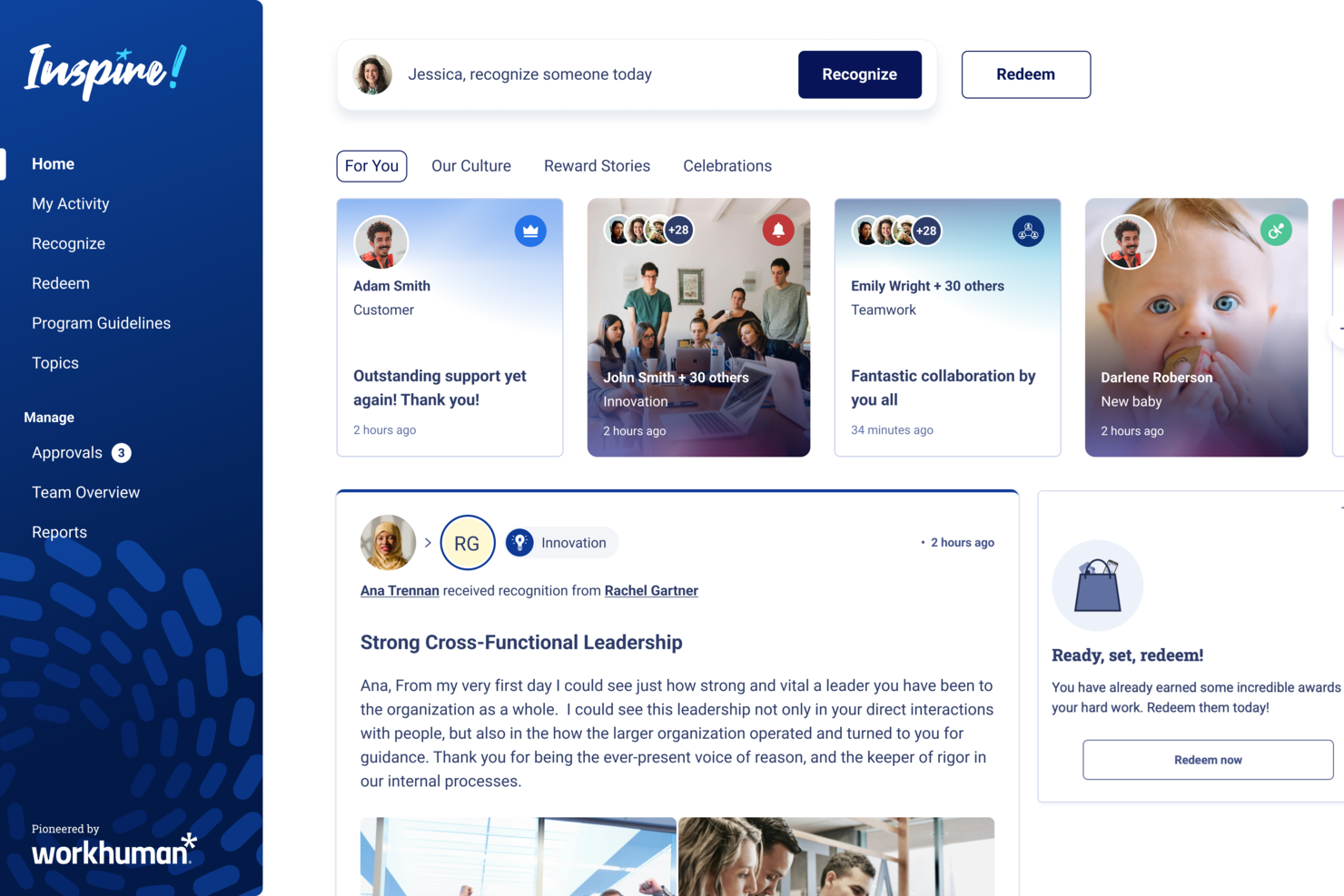
Workhuman offers a platform designed to help organizations build cultures of recognition and engagement at scale. It’s a strong choice for HR teams and business leaders looking to unify global rewards, recognition, and employee feedback in one place. The platform addresses challenges like fostering belonging, supporting diverse workforces, and measuring the impact of recognition programs.
Who Is Workhuman Best For?
Workhuman is a good fit for mid-sized to large organizations seeking to support global, diverse teams with structured recognition and rewards programs.
Why I Picked Workhuman
I picked Workhuman because its DEI-focused AI coaching tools set it apart in the employee incentive software space. The platform uses AI-driven insights to help managers recognize and address bias in recognition and feedback, supporting more equitable and inclusive workplaces. I appreciate how Workhuman’s coaching features provide real-time, actionable suggestions to encourage fair recognition practices across teams. This focus on DEI ensures that incentive programs not only reward performance but also foster a culture of belonging and respect.
Workhuman Key Features
Some other features that make Workhuman a strong choice for employee incentive software include:
- Global rewards catalog: Access a wide range of reward options that can be delivered to employees in over 180 countries.
- Peer-to-peer recognition: Enable employees to recognize each other’s contributions directly through the platform.
- Automated milestone celebrations: Schedule and automate recognition for work anniversaries, birthdays, and other key milestones.
- Real-time analytics dashboard: Track recognition activity, participation rates, and program impact with up-to-date reporting tools.
Workhuman Integrations
Integrations include Microsoft Teams, Microsoft Outlook, Slack, Yammer, Workday, Chrome, Firefox, Safari, and an open API for custom integrations.
Pros and Cons
Pros:
- Automated milestone and anniversary celebrations
- Peer-to-peer recognition and social feed
- AI-driven DEI coaching for managers
Cons:
- Customization of recognition workflows is limited
- Reward catalog can have limited options in some regions
Nectar
Best for Amazon integration rewards

Nectar is an employee engagement platform that offers several different reward options, including gift cards, company-branded swag, custom rewards, and the option to donate to charity. It also provides access to Amazon Business' product catalog.
Why I picked Nectar: Nectar offers a user-friendly platform that makes it easy for organizations to recognize and reward employees in a meaningful way. Its unique integration with Amazon allows employees to choose from various products, making the reward system more appealing and versatile. This direct Amazon integration is particularly beneficial for companies offering a wide range of reward options without the hassle of managing inventory.
Standout features & integrations:
Features include a robust catalog of gift cards, branded company swag, custom rewards, and the option to donate to charity.
Integrations include Slack, Microsoft Teams, BambooHR, Workday, ADP, Google Workspace, Okta, OneLogin, Azure AD, and Zapier.
Pros and Cons
Pros:
- Wide range of gift cards
- Customizable rewards
- Direct Amazon integration
Cons:
- Requires ongoing management
- Limited to Amazon Business catalog
New Product Updates from Nectar

Nectar Enhances Clara AI With Live Platform Data
Nectar introduces live platform data access and expanded knowledge coverage for Clara AI. The updates improve response accuracy and speed while enabling Clara AI to answer questions across more recognition and rewards features. For more information, visit Nectar's official site.
 .
.
Awardco
Best for customizable incentive programs
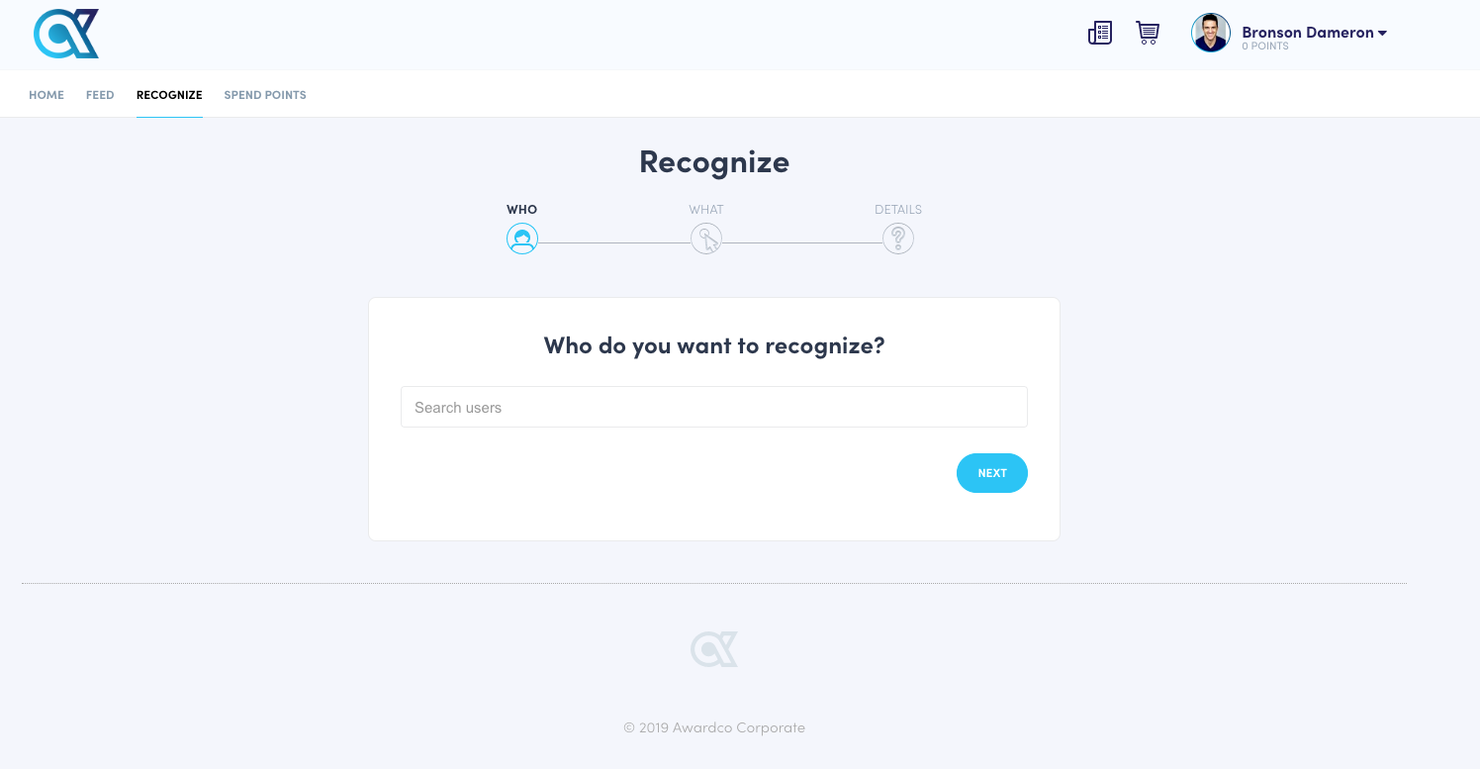
Awardco is built for mid-sized to enterprise organizations that want full control over how employee incentives are designed, funded, and delivered. It supports highly customizable recognition and incentive programs while giving employees access to a massive rewards marketplace through Amazon Business.
Why I Picked Awardco
I picked Awardco because it lets you design incentive programs around your exact business goals instead of forcing you into predefined reward structures. You can create custom rules for who earns rewards, when they’re issued, and how budgets are allocated using configurable program logic and approval workflows.
I also like that rewards are fulfilled through Amazon Business, which gives employees real choice without requiring your team to manage inventory or vendors. And, for organizations running multiple incentive types—such as recognition, sales incentives, or service awards—Awardco keeps everything centralized while still allowing program-level customization.
Awardco Key Features
Here are some key features worth highlighting:
- Program Rules Engine: Define earning criteria, approval flows, and budgets for different incentive programs.
- Global Reward Fulfillment: Deliver rewards internationally through Amazon Business without managing vendors.
- Budget Controls & Reporting: Track spend by program, department, or time period with built-in analytics.
- Automated Award Triggers: Issue rewards automatically based on milestones, performance events, or HR data.
Awardco Integrations
Integrations include Amazon Business, Workday, ADP, BambooHR, UKG, SAP SuccessFactors, Oracle, Slack, Microsoft Teams, and Okta.
Pros and Cons
Pros:
- Highly customizable programs
- Strong automation features
- Deep Amazon integration
Cons:
- Limited customization of recognition features
- Requires internet for full functionality
Kudos
Best for peer recognition and rewards

Kudos is an employee recognition software that enhances workplace culture through meaningful recognition. It seamlessly integrates recognition into daily workflows, making it easy for employees to acknowledge each other’s contributions.
Why I picked Kudos: Kudos excels in fostering a culture of peer recognition, which is vital for employee engagement and morale. The software stands out due to its user-friendly interface and advanced rewards catalog. It also allows for personalized recognition, public acknowledgments, and a points-based reward system that can be tailored to individual or team achievements, helping to boost employee morale and engagement effectively.
Standout features & integrations:
Features include a strong peer recognition system, customizable rewards catalog, advanced analytics, AI-powered recognition assistance, and group eCards.
Integrations include Microsoft Teams, Outlook, Slack, Paycor, ADP, UKG, Workday, SAP SuccessFactors, Paylocity, and BambooHR.
Pros and Cons
Pros:
- Advanced analytics
- Comprehensive rewards catalog
- Easy-to-use interface
Cons:
- Requires active participation to be effective
- Limited reporting capabilities
Best for scheduling milestone celebrations
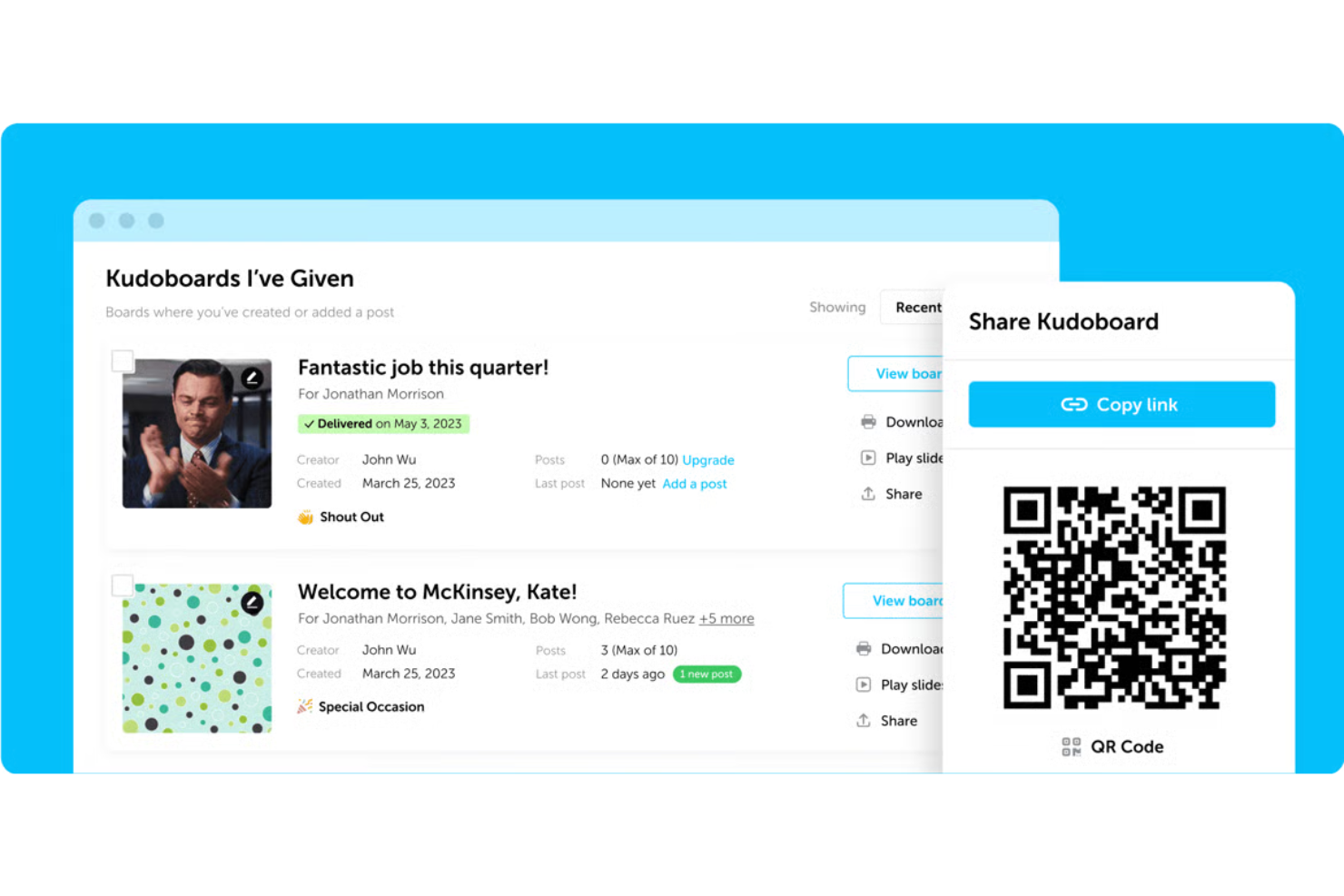
Kudoboard helps teams create milestone recognition that feels planned, personal, and consistent.
Why I Picked Kudoboard
I picked Kudoboard because it makes milestone celebrations easy to plan ahead instead of reacting at the last minute. You can schedule boards in advance so birthdays or anniversaries are delivered automatically, even when teams are distributed.
I like that you can customize each board with company branding, images, videos, and messages, which helps celebrations feel intentional rather than generic. Kudoboard also lets you attach digital gift cards directly to boards, tying recognition to a tangible reward without needing a separate system.
Kudoboard Key Features
Here are some key features worth highlighting:
- Scheduled Board Delivery: Automatically send celebration boards on specific dates like anniversaries or birthdays.
- Multi-Media Contributions: Let employees add messages, images, GIFs, and videos to a shared board.
- Physical Keepsakes: Turn digital boards into printed books or posters for lasting recognition.
- Engagement Analytics: Track participation trends across teams and celebration types.
Kudoboard Integrations
Integrations include Slack, Microsoft Teams, Google Workspace, Okta, Microsoft Active Directory, OneLogin, Workday, ADP, Gusto, and Zenefits.
Pros and Cons
Pros:
- Encourages team participation through shared board
- Schedules milestone celebrations in advance
- Adds gift cards directly to recognition moments
Cons:
- Workflow can feel slow for high-volume recognition needs
- Recognition isn't continuous performance tracking

Best for comprehensive rewards catalog

Vantage Circle is an advanced employee rewards and recognition platform designed to elevate company culture and boost employee engagement. It offers a wide range of global redemption options, including experiences, merchandise, gift cards, and integration with Amazon Business.
Why I picked Vantage Circle: Vantage Circle is known for its extensive and diverse rewards catalog, which stands out from other employee incentive software. The platform's ability to offer various redemption options, including experiences and merchandise, makes it highly versatile. Due to its global reach and diverse offerings, Vantage Circle is best for companies looking for a larger rewards catalog.
Standout features & integrations:
Features include a rich global rewards catalog, integration with Amazon Business, social recognition, automated celebrations, and an advanced dashboard for analytics and insights.
Integrations include Microsoft Teams, Slack, BambooHR, Workday, SAP SuccessFactors, Oracle HCM, ADP, Google Workspace, Okta, and Azure.
Pros and Cons
Pros:
- Robust analytics
- Global redemption
- Diverse reward options
Cons:
- Dependent on internet connectivity
- Limited language support

Best for task completion incentives

Recognize is an employee incentive app and recognition program designed to boost productivity and morale through task completion incentives. It motivates employees to complete tasks efficiently by offering customizable challenges for points.
Why I picked Recognize: Recognize offers a unique focus on task completion incentives, which sets it apart from other employee incentive software. The software stands out due to its ability to create customizable challenges that drive productivity and engagement. Overall, Recognize combines recognition with tangible rewards, encouraging employees to stay focused and motivated.
Standout features & integrations:
Features include customizable challenges, a points-based reward system, robust manager workflows, creating and tracking task completion, and meaningful rewards.
Integrations include Microsoft 365, Microsoft Teams, Outlook, Sharepoint, Yammer, Slack, Gmail, Asana, Bamboo, and Zapier.
Pros and Cons
Pros:
- Robust manager workflows
- Points-based rewards
- Customizable challenges
Cons:
- Requires regular program management
- Limited reward customization

Best for personalized recognition solutions

Reward Gateway is an employee recognition platform that offers solutions for employee recognition, communication, engagement surveys, and well-being. Its personalized recognition solutions, ideal for companies looking to create a continuous culture of recognition and appreciation.
Why I picked Reward Gateway: Reward Gateway is recognized for its advanced and customizable approach to employee recognition. Unlike other platforms, it offers a tailored recognition strategy that aligns with a company's mission, core values, and brand, making it stand out as the best for personalized recognition solutions.
Standout features & integrations:
Features include customized eCards, automated reward and recognition, on-the-spot manager rewards, and a branded mobile app.
Integrations include Amazon, Microsoft Teams, Slack, Open API, and Yapster.
Pros and Cons
Pros:
- Branded mobile app
- Automated rewards
- Customizable recognition
Cons:
- Requires ongoing administrative effort
- Limited free features

Xoxoday
Best for AI-powered recognition
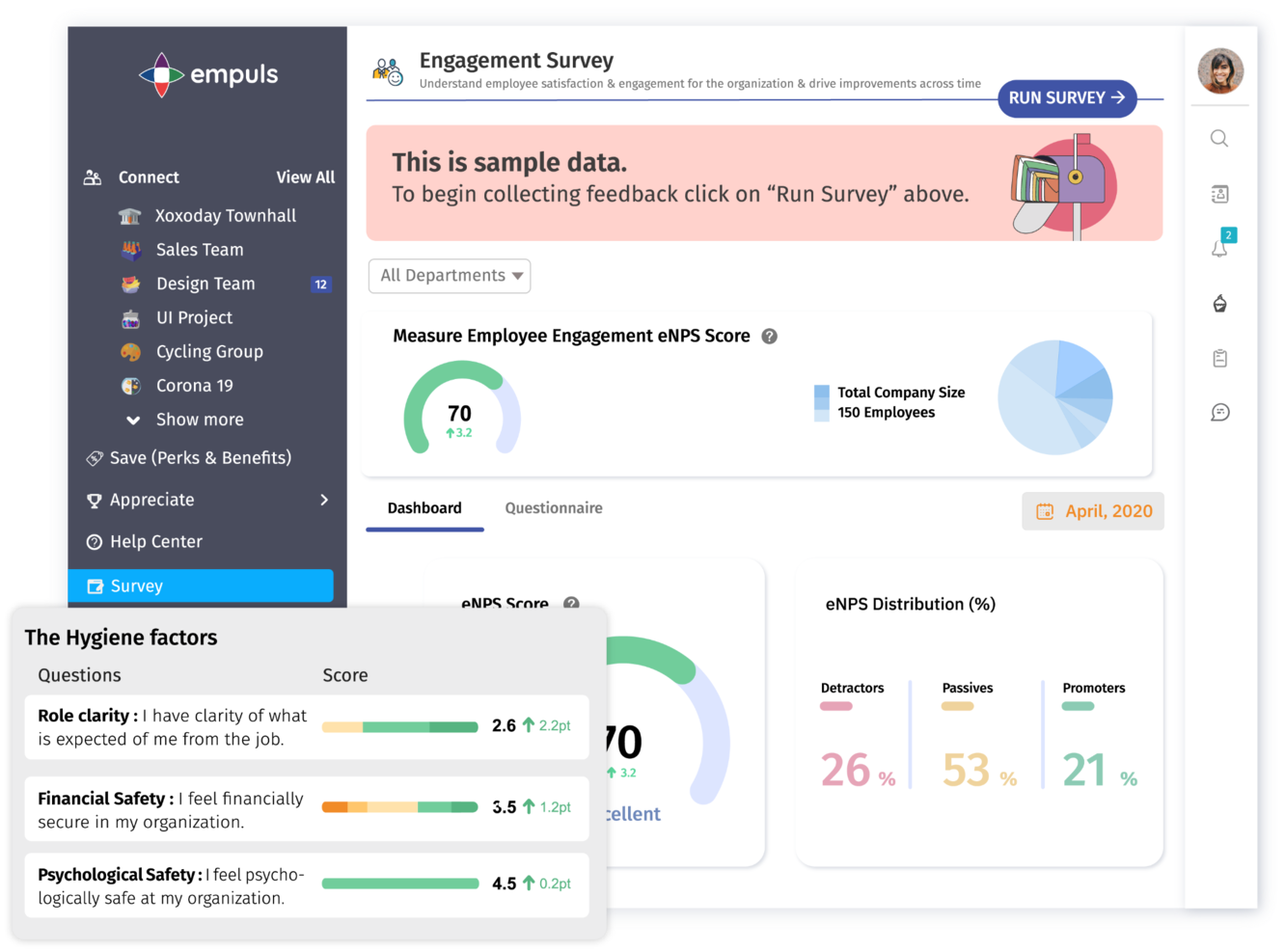
Empuls is an AI-powered employee recognition and incentive software designed to enhance employee engagement and well-being. It leverages AI to provide timely, inclusive, and impactful recognition.
Why I picked Empuls: Empuls is known for its unique AI-powered recognition capabilities, which set it apart from other employee incentive software. The software’s AI features, such as smart nudges and intelligent insights, ensure timely and meaningful recognition, while the platform’s rewards programs help to foster a positive work culture and boost employee morale.
Standout features & integrations:
Features include multiple award types, custom workflows, a built-in rewards store, automated award creation, and intelligent insights.
Integrations include Microsoft Teams, Slack, UKG, SAP SuccessFactors, Google Workspace SSO, Azure AD, BambooHR, Freshteam, and Keka.
Pros and Cons
Pros:
- Built-in rewards store
- Custom workflows
- AI-powered recognition
Cons:
- May need regular management oversight
- Limited integration options

TimeJam is an employee incentive platform that uses gamification to make time tracking more engaging and rewarding. By introducing points, prizes, and team challenges, it encourages employees to log their hours consistently while fostering collaboration and boosting morale. Its integrations with popular tools like Slack, Microsoft Teams, and Harvest make it easy to track time without disrupting existing workflows.
Why I picked TimeJam: I picked TimeJam because it turns routine time tracking into an interactive, motivating experience. Instead of relying on reminders, the platform uses competitions, leaderboards, and performance-based rewards to keep employees engaged. I also like that TimeJam automatically logs tracked hours, reducing administrative effort and giving your team more time to focus on their work. Additionally, its quarterly team reshuffling promotes collaboration and strengthens team spirit across departments.
Standout features & integrations
Features include automated time logging via the TimeJam bot, performance tracking through leaderboards, team-based competitions, and data-driven insights for improving productivity and project estimates.
Integrations include Harvest, Teamwork.com, Forecast, WorkBook, Adaptive Work, Wrike, Tempo, Float, Productive, Clockify, and Scoro.
Pros and Cons
Pros:
- Performance leaderboards provide transparency and recognition
- Automation reduces manual data entry and admin work
- Gamification features motivate consistent time tracking
Cons:
- Marketing cookies may impact the user experience
- No public API for custom integrations
Other Employee Incentive Software
Below is a list of additional employee incentive software that I shortlisted. While they didn’t make the top 10, they’re still valuable and worth further research.
- WorkTango
For aligning incentives with business goals
- Assembly
For Slack and Teams connection
- Guusto
For frontline worker rewards
- Bonusly
For peer-to-peer recognition
- Bucketlist Rewards
For incentive options with 4000+ rewards
- Motivosity
For flexible reward options
- Wellable
For unifying wellness and recognition
- BambooHR®
For comprehensive HR solutions
- Forma.ai
For sales performance management
- CaptivateIQ
For commission tracking
- Global Shares
For equity compensation management
- Terryberry
For employee recognition programs
- Deel Engage
For global team engagement
- Augeo
For customer loyalty programs


Related HR Software Reviews
If you still haven't found what you're looking for here, check out these other related tools that we've tested and evaluated:
- HR Software
- Payroll Software
- Recruiting Software
- Employer of Record Services
- Applicant Tracking Systems
- Workforce Management Software
How I Evaluate Employee Incentive Software
I evaluate each tool against two layers: baseline criteria—like point budgets, HRIS integrations, and a rewards catalog—and differentiators that separate the right fit from a generic solution.
Core Functionality (Table Stakes For This List)
When I'm selecting tools for my list, I rank each one on a scale from 0 (does not offer the functionality) to 5 (excels in this area) for each core functionality listed below. Then, I calculate the tool's total score into a percentage. Each tool needs to achieve a minimum total score of 65% to be considered for inclusion.
- Rewards Catalog: I look for a built-in catalog with enough variety—gift cards, merchandise, experiences, charitable donations—so employees actually want to redeem, not just accumulate points.
- Recognition Mechanisms: Peer-to-peer and manager-to-employee recognition should both be available, ideally with a social feed where shout-outs are visible across the org.
- Points & Budget Management: I check whether admins can set team-level budgets, allocate points by manager, and track spend in real time rather than reconciling manually at month's end.
- Incentive Program Configuration: Each tool should let you build programs around specific triggers like sales targets, tenure milestones, or value-based behaviors—not just one-off spot bonuses.
- Reporting & Analytics: I evaluate whether dashboards go beyond basic redemption counts to show participation rates, recognition trends, and program ROI by department or location.
- HRIS & Collaboration Integrations: Native connections to platforms like Workday, BambooHR, Slack, or Microsoft Teams matter because manual employee syncing breaks down fast at scale.
Once I have a list of tools that meet this criteria, I consider what sets each platform apart.
Differentiating Factors (What Sets Vendors Apart)
Here's how I compare and contrast different vendors:
Standout Features
For distributed teams, global reward fulfillment matters. I look for localized catalogs and multi-currency support so every employee gets meaningful reward options regardless of location. Service awards automation is another factor I weigh because manually tracking hundreds of work anniversaries leads to missed milestones fast. I also evaluate whether a platform offers AI-powered recognition nudges that prompt managers to acknowledge contributions they might otherwise overlook.
Beyond Features
Pricing transparency is one of the first things I check. Some vendors mark up gift card redemptions or charge separate fees for program setup, so I look at the full cost picture beyond the per-employee rate. Implementation speed also varies widely—a 50-person team shouldn't need a three-month rollout. I evaluate whether vendors offer pre-built program templates and dedicated support to shorten time-to-value. Compliance matters too, especially for taxable rewards; I look for SOC 2 Type II certification and built-in tax reporting tools.
How to Choose an Employee Incentive Software
As you work through your unique software selection process, keep the following points in mind:
- Integration with Existing Systems: Ensure the software integrates seamlessly with your current HRIS, communication tools, and other essential systems. This is vital for maintaining workflow efficiency and minimizing disruptions.
- User Experience and Engagement: The software should be user-friendly and engaging to ensure high employee adoption rates. A complex or cumbersome interface can deter usage, defeating the purpose of the incentive program.
- Real-Time Reporting and Analytics: Tracking and analyzing your incentive program's real-time performance is essential. This includes metrics such as the number of recognitions sent, user engagement levels, and budget tracking.
- Customization and Flexibility: The software should allow customization to align with your company’s values and specific needs. This includes tailoring recognition and reward criteria and the rewards offered.
- Cost and ROI: Understand the pricing structure and ensure it fits within your budget while providing a good return on investment. This includes considering both the upfront costs and any ongoing subscription fees.
Trends in Employee Incentive Software
Here are some trends I’ve noticed for employee incentive software, plus what they might mean for the future. I sourced countless product updates, press releases, and release logs to tease out the most important insights.
- Emphasis on Personalization: Decentralized workforces demand personalized incentive strategies. With tailored learning and development initiatives that align with specific career goals, you can boost engagement and inclusivity, building a sense of belonging and job satisfaction.
- Wellness-Centric Incentives: Wellness is now a priority in incentive programs. Companies are integrating non-cash perks like wellness subscriptions and mental health resources. This approach links physical and psychological well-being with professional performance, improving job satisfaction and retention.
- Recognition in a Virtual World: Digital platforms are revolutionizing employee recognition, and as a result, peer-to-peer recognition programs and virtual celebrations are becoming more common. These strategies help to enhance morale and foster a positive work culture in remote workplaces.
- Flexible and Inclusive Reward Structures: Organizations adopt flexible reward structures to meet diverse employee needs. Options like personalized gift cards and additional paid time off ensure that incentives are meaningful.
- AI-Driven Personalization: AI is enhancing the efficiency and impact of incentive programs. It allows for greater personalization, tailoring rewards to individual preferences. This technology is important for engaging a younger workforce that values frequent, authentic recognition.
From AI-driven personalization to the integration of wellness programs and gamification, these innovations are making it easier for companies to create meaningful and impactful incentive programs. Staying informed about these trends will be important for businesses aiming to foster a motivated, loyal, and high-performing team in today’s dynamic work environment.
What is Employee Incentive Software?
Employee incentive software is designed to manage and track employee rewards and recognition programs. It’s used by HR departments, managers, and team leaders to motivate employees, boost morale, and increase productivity through various incentive schemes.
The software generally includes features for setting up reward programs, tracking employee performance, and distributing rewards. It often integrates with other HR tools to comprehensively view employee engagement and performance metrics.
Features of Employee Incentive Software
With the right features, employee incentive software can be a powerful tool used to boost employee motivation, engagement, and productivity. Here are some of the most essential features to look for in employee incentive software:
- Reward catalog: A diverse selection of rewards that lets you offer everything from gift cards to unique experiences. This flexibility means you can motivate everyone on your team, no matter what sparks their enthusiasm.
- Performance tracking: Tools that automatically measure and monitor your employees’ progress toward goals and milestones. This gives you real-time feedback and helps you spot who’s thriving—and who might need a boost.
- Recognition tools: Options like peer-to-peer shoutouts, badges, and public praise, so you can celebrate achievements right away. Making recognition timely helps everyone feel seen and valued, not just once a year.
- Goal setting and management: Systems that let you create, assign, and monitor specific goals for individuals or teams. Clear goals make it much easier for employees to focus and stay motivated because they know exactly what to aim for.
- Customizable program design: The ability to shape how your incentive program looks and operates, from branding to reward structures. You get to build a program that actually fits your culture—not just a cookie-cutter template.
- Reporting and analytics: Dashboards and detailed reports that show you what’s working (and what’s not). You can use this insight to fine-tune your program, making it more effective over time.
- Automated communications: Built-in reminders, congratulatory messages, and updates that keep everyone in the loop. No more forgetting to celebrate those big (or small) wins.
- Integration capabilities: Compatibility with other HR or productivity tools you already use. This saves you from juggling multiple systems and keeps everything running smoothly.
Common Employee Incentive Software AI Features
Beyond the standard employee incentive software features listed above, AI-powered employee incentive software can include features like:
- Automated performance insights: AI analyzes data and highlights patterns in engagement or productivity, helping you spot top performers and those who might need support—without having to dig through spreadsheets.
- Personalized reward recommendations: The system suggests incentives tailored to individual preferences, making it much easier for you to deliver rewards that actually excite people.
- Predictive engagement analytics: AI spots trends and predicts which employees might be at risk of disengagement. This gives you an early heads-up so you can act before issues snowball.
- Smart goal suggestions: AI can suggest relevant, achievable goals for individuals or teams based on performance data and company benchmarks, saving you planning time and helping everyone aim higher.
- Natural language recognition for feedback: The software understands and categorizes open-text feedback or shoutouts, so you can easily track common themes in employee recognition and make improvements where needed.
Benefits of Employee Incentive Software
By implementing employee incentive software, organizations can create a more positive work environment, reduce turnover, and achieve strategic goals more effectively. Along with these benefits are a few more perks you may experience with this type of software, such as:
- Increased Productivity: Employee incentive software helps set clear performance targets and rewards employees for meeting or exceeding these goals. This structured approach motivates employees to work more efficiently and effectively, significantly boosting productivity.
- Better Employee Retention: Incentive software fosters a sense of employee appreciation and loyalty by recognizing and rewarding employee experience. This reduces turnover rates, as employees are more likely to stay with a company that values their contributions, saving the organization costs for hiring and training new staff.
- Enhanced Employee Engagement: Incentive programs integrated into software platforms can significantly increase employee engagement. Engaged employees are more committed to their work and the organization, leading to higher job satisfaction and better performance outcomes.
- Cost Savings: While implementing an incentive program may have upfront costs, the long-term savings are substantial. Reduced turnover, lower absenteeism, and increased productivity lower overall production costs, making the investment in incentive software highly cost-effective.
- Improved Company Culture: Employee incentive software can help build a positive and collaborative company culture. By promoting teamwork and recognizing collective achievements, the software encourages a supportive work environment where employees feel valued and motivated to contribute to the organization's success.
Employee incentive software offers numerous benefits that can transform the workplace. From boosting productivity and retention to enhancing engagement and reducing costs, these programs are essential for any organization looking to foster a motivated and high-performing workforce.
Costs & Pricing of Employee Incentive Software
When considering employee incentive software, understanding the costs and pricing is essential to making an informed decision. Pricing for these platforms can vary widely based on features, scalability, and the size of your organization, with options ranging from basic packages for small businesses to more comprehensive solutions for large enterprises.
This section provides an estimate of average employee incentive software plans and costs.
Plan Comparison Table for Employee Incentive Software
| Plan Type | Average Price | Common Features |
| Free Plan | $0 | Basic recognition tools, limited features, and minimal support |
| Personal Plan | $5-$10/employee/month | Social recognition, basic reporting, and integration with communication tools |
| Business Plan | $10-$30/employee/month | Advanced reporting, custom branding, employee surveys, and wellness initiatives |
| Enterprise Plan | Custom pricing | Comprehensive performance management, custom integrations, and global capabilities |
Understanding the costs and pricing of employee incentive software is crucial for selecting the right solution that fits your organization’s budget while delivering value. By carefully evaluating these factors, companies can choose an employee incentive software that aligns with their financial constraints while maximizing the return on investment through enhanced employee engagement and productivity.
Employee Incentive Software FAQs
Here are some of the commonly asked questions about employee incentive software.
How can employee incentive software integrate with existing HR systems?
Employee incentive software can often be integrated with existing HR systems through APIs (Application Programming Interfaces). This allows for seamless data exchange between the incentive software and HR systems, ensuring that employee information, performance metrics, and other relevant data are synchronized.
Integration can automate the incentive distribution process, reduce manual errors, and provide a unified management platform for HR-related activities. It’s essential to check with the software provider about the specific integration capabilities and any potential customization required.
How can employee incentive software help track and measure performance?
Employee incentive software typically includes robust tracking and analytics features that allow managers to monitor employee performance in real time.
These tools can track performance metrics, such as sales figures, project completion rates, and customer satisfaction scores. The software can generate detailed reports and dashboards, providing individual and team performance insights.
This data can also be used to identify high performers, areas for improvement, and the overall effectiveness of the incentive program. For additional solutions to help with employee performance, take a look at this list of top employee evaluation solutions next.
How can employee incentive software be customized to fit specific business needs?
Most employee incentive software solutions offer customization options to fit specific business needs. This can include setting custom performance metrics, designing unique reward structures, and creating personalized dashboards and reports. Some software providers also offer professional services to help tailor the solution to your company’s requirements. It’s essential to choose flexible and scalable software allowing you to adjust the program as your business grows and evolves.
How secure is employee data within incentive software platforms?
Security is a critical concern for any software handling employee data. Reputable employee incentive software providers implement robust security measures, including data encryption, secure access controls, and regular security audits. It is essential to review the software provider’s security policies and practices and ensure they comply with relevant data protection regulations, such as GDPR or CCPA.
Additionally, consider conducting your security assessments and working with the provider to address potential vulnerabilities.
Can employee incentive software support remote and hybrid work environments?
Many employee incentive software solutions are designed to support remote and hybrid work environments. These platforms often include features such as cloud-based access, mobile apps, and virtual recognition tools, allowing employees to participate in the incentive program regardless of location. This flexibility ensures that all employees can stay engaged and motivated through the incentive program, whether working in the office or remotely.
What’s Next?
To remain up to date on all the latest in people management, subscribe to our newsletter for leaders and managers. You'll receive insights and offerings tailored to leaders and HR professionals straight to your inbox.