

10 Best Employer of Record Services in Bulgaria in 2026

Best Employer of Record Services in Bulgaria Shortlist


Employer of record services in Bulgaria let your company hire locally through a provider that employs workers on your behalf and manages employment administration. The right fit depends on whether you need a local entity, wider EU coverage, or a way to test the market with one hire. This guide compares various providers so you can assess their employment arrangements, payroll coordination, onboarding, and ongoing HR support.
Why Trust Our Software Recommendations
Our team has been testing and reviewing software since 2012. As HR experts ourselves, we know how difficult—and important—it is to choose the right software.
For this guide, we evaluated tools using hands-on testing and independent research, scoring tools using our selection criteria. We also draw on insights from industry thought leaders and practicing HR experts.
Our reviews reflect our human editorial judgment, not a sales pitch.
Expert reviewers:
Comparison Table: Employer of Record Services in Bulgaria
Compare pricing and specs side by side for the employer of record services in Bulgaria that made it onto my shortlist.
| Tool | Best For | Trial Info | Price | ||
|---|---|---|---|---|---|
| 1 | Best for hiring in Bulgaria via a direct local entity | Free demo available | From $299/user/month | Website | |
| 2 | Best for EU-entity-backed hiring in Bulgaria | Free demo available | Pricing upon request | Website | |
| 3 | Best for hiring in Bulgaria via an owned local entity | Free demo available | From $599/employee/month | Website | |
| 4 | Best for testing the Bulgarian market without an entity | Free demo available | From $349/user/month (billed annually) | Website | |
| 5 | Best for hiring in Bulgaria without a local entity | Not available | Pricing upon request | Website | |
| 6 | Best for hiring in Bulgaria via owned local entity | Free demo available | From $599/user/month (billed annually) | Website | |
| 7 | Best for multi-country EU payroll compliance teams | Free demo available | From $499/employee/month | Website | |
| 8 | Best for no-lock-in Bulgarian market entry | Not available | Pricing upon request | Website | |
| 9 | Best for hiring in Bulgaria via own local entity | Free demo available | From $699/employee/month | Website | |
| 10 | Best for market-testing Bulgaria with one hire | Free demo available | From $499/employee/month | Website |

Employer of Record Services in Bulgaria: Reviews
Below are my summaries of the best employer of record services in Bulgaria that made it onto my shortlist. My reviews cover each provider’s employment arrangements, payroll support, and compliance services to help you find the right fit.

Mercans
Best for hiring in Bulgaria via a direct local entity
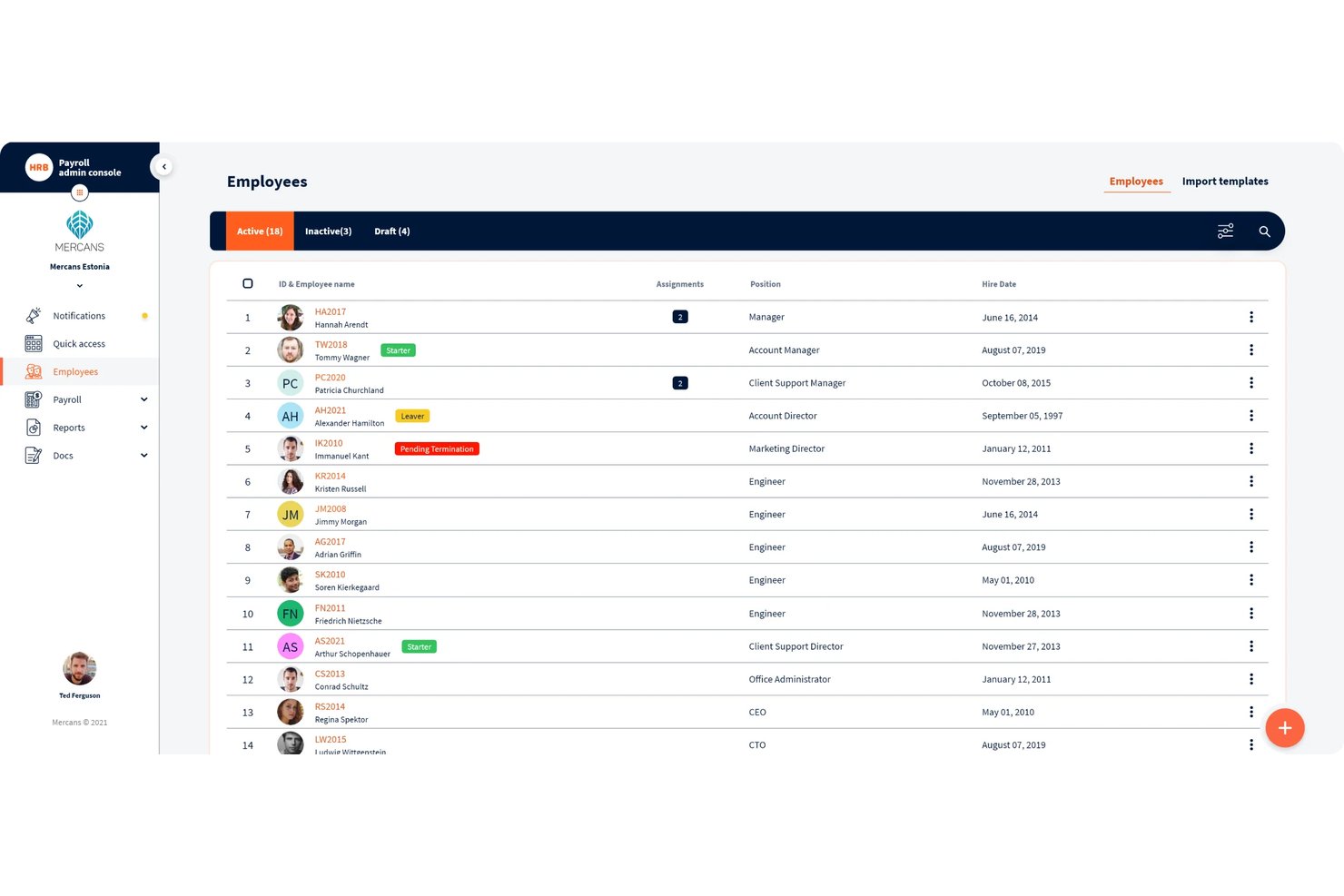
Mercans is an employer of record platform with its own legal entity in Bulgaria that covers employment contracts, payroll, statutory benefits administration, tax and social security remittance, contractor management, and visa sponsorship for non-EU hires.
Who Is Mercans Best For?
Mercans is a strong fit for compliance-focused HR and payroll teams that need direct, entity-backed employment in Bulgaria without subcontracting to local partners.
Why I Picked Mercans
Mercans earns its spot on my shortlist because it runs its own legal entity out of Plovdiv, meaning your Bulgarian hires are employed directly by Mercans, with no subcontracted local partners in the middle. I particularly like that it covers the full compliance picture, including Labour Code contract requirements, severance calculations, and Labour Inspectorate approvals for protected-category dismissals. It also handles visa sponsorship, including the Single Permit and EU Blue Card, which matters if you're placing non-EU talent into Bulgarian roles.
Mercans Key Features
- HR Blizz self-service portal: Employees can access payslips and personal details, while managers handle leave approvals, time and attendance, and expense submissions through the same platform.
- Statutory benefits administration: Mercans manages social security (NSSI) and health insurance (NHIF) contributions, along with leave entitlements and the length-of-service bonus.
- Workday and SAP SuccessFactors integration: HR data syncs bidirectionally between HR Blizz and your existing HCM via REST APIs, with Mercans managing the connection.
- GDPR-aligned data security: Mercans holds SOC 1 and 2, ISO 27001, and ISO 27701 certifications, with EEA-approved Binding Corporate Rules covering cross-border data transfers.
Mercans Integrations
Mercans documents two integrations: Workday via a two-way REST API connection and SAP SuccessFactors. Its Workday connector is listed in Workday Marketplace, while the API-first G2N payroll engine supports custom connectivity.
Pros and Cons
Pros:
- HR Blizz supports payslips and leave requests
- Reviewers praise local labor-law knowledge
- Direct Bulgarian entity avoids local subcontractors
Cons:
- Some reviewers report slow support responses
- Payroll currency references conflict across Bulgaria pages

Best for EU-entity-backed hiring in Bulgaria
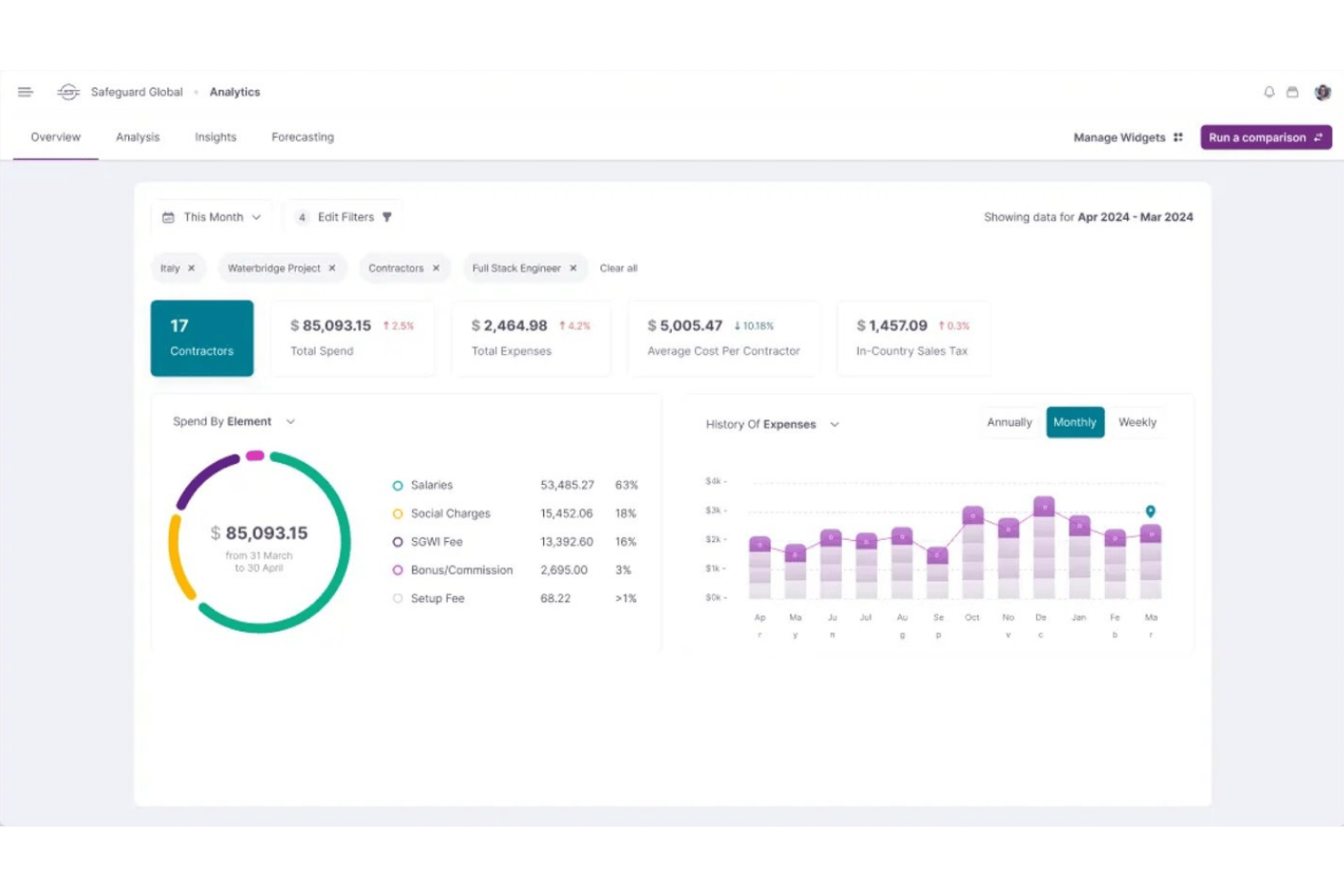
Safeguard Global is a full-service employer of record platform that covers Bulgarian employment contracts, locally compliant payroll in EUR, statutory benefits administration, and tax and social security remittance—without requiring you to set up a local entity.
Who Is Safeguard Global Best For?
Safeguard Global is a strong fit for HR and compliance teams at mid-sized companies that need to hire in Bulgaria as part of a broader EU expansion, backed by owned local entities across the region.
Why I Picked Safeguard Global
I've included Safeguard Global in my top picks because it operates its own Bulgarian entity, Global PEO Services (Bulgaria) EOOD, which means your workers are employed directly rather than through a third-party partner. I find that especially valuable when hiring across the EU, since Safeguard holds owned entities in roughly 20 European countries. Its Bulgaria coverage includes statutory benefits administration, compliant termination support under the Labour Code, and monthly payroll in EUR.
Safeguard Global Key Features
- Worker classification quiz: An interactive tool that evaluates whether your Bulgarian worker should be classified as an employee or contractor before you hire.
- ChatSG AI assistant: An AI-powered Q&A tool that answers country-specific HR and employment law questions, including Bulgarian Labour Code rules.
- Supplemental benefits administration: Optional benefits beyond statutory requirements—such as private medical cover, life insurance, and supplementary pension—sourced and administered through the EOR.
- Spend analytics and payroll reporting: Dashboards that break down labor costs, payroll taxes, and headcount by country, currency, and contract type across your global workforce.
Safeguard Global Integrations
Safeguard Global lists marketplace integrations with Workday and Paycor. Workday’s profile includes PECI, Workday Pay Slips, and Workday Accounting.
Pros and Cons
Pros:
- Listed local entity supports direct employment
- Reviewers praise knowledgeable, responsive support
- Detailed local labor-law guidance
Cons:
- Conflicting contribution rates complicate cost estimates
- Reviewers report inconsistent support response times

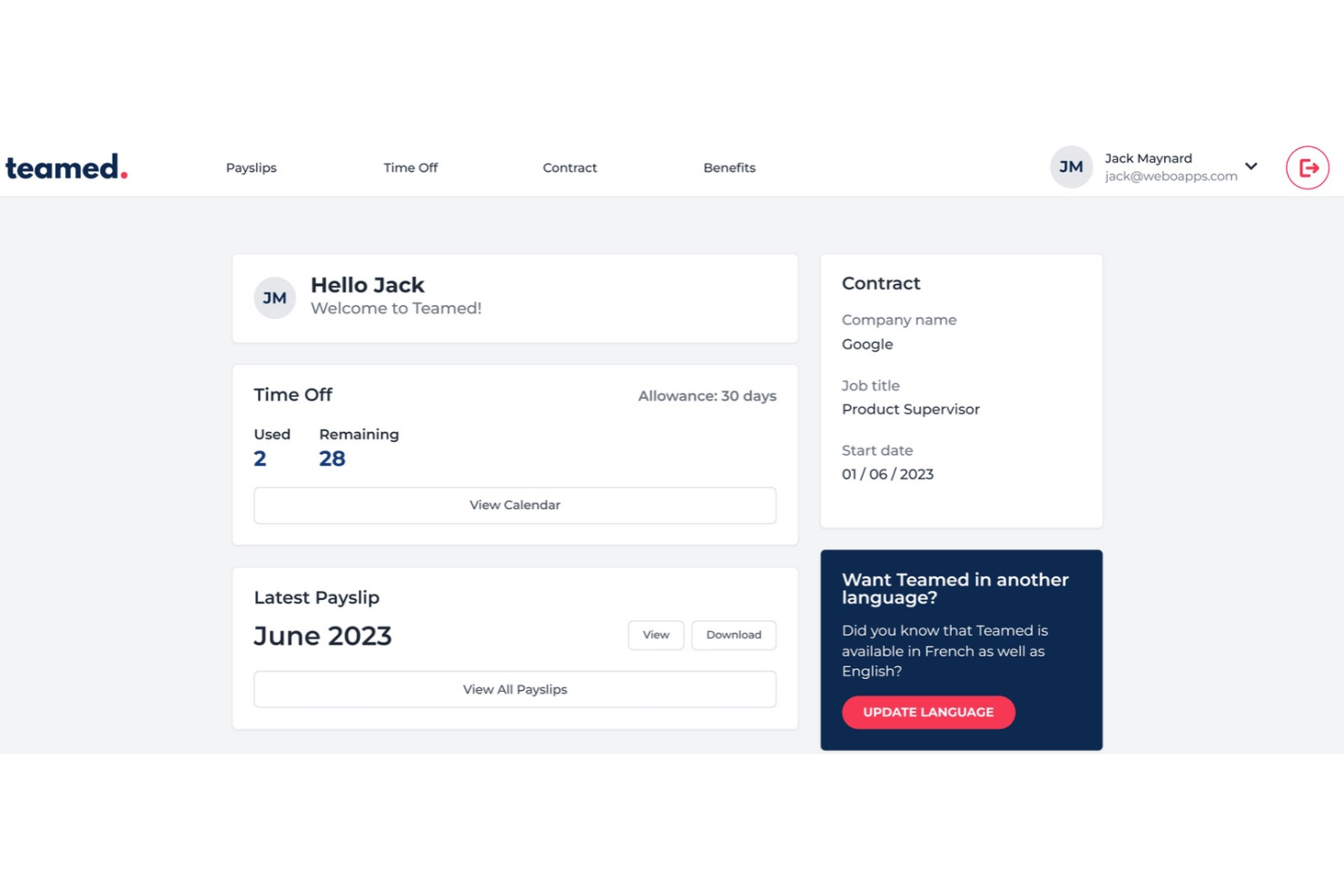
Teamed is an employer of record service that hires employees in Bulgaria through its own locally owned legal entity, handling employment contracts, payroll, statutory benefits administration, and labor law compliance.
Who Is Teamed Best For?
Teamed is a strong fit for startups and small businesses that want to hire in Bulgaria quickly, without setting up a local entity, on a flexible month-to-month basis.
Why I Picked Teamed
I picked Teamed as one of the best because it owns its Bulgarian legal entity outright, which means your hires aren't routed through a third-party partner. In practice, that gives my team direct compliance coverage under the Bulgarian Labour Code, including NRA contract registration before day one and NSSI enrollment handled without any guesswork. I also like that Teamed documents termination procedures down to Article 328, 330, and 331 specifics, so navigating protected employees or mutual-termination offers doesn't require an external lawyer.
Teamed Key Features
- Statutory benefits administration: Teamed handles Bulgarian mandatory contributions, including employer social charges of 18.92–19.62% and employee contributions of 13.78%, plus sick pay and annual leave entitlements.
- Itemised payroll invoicing: Each invoice breaks out gross salary, employer social charges, statutory benefits, local payroll levies, and Teamed's fee as separate line items.
- Contractor management: A separate plan starting at $49/contractor/month covers localised contracts and multi-currency payments for contractors working in Bulgaria.
- EOR-to-entity graduation: Teamed supports moving a worker from EOR employment to your own Bulgarian company (EOOD) without re-onboarding through its entity setup and management service.
Teamed Integrations
Teamed has one fully documented live integration with Personio and lists BambooHR, HiBob, Workday, Xero, QuickBooks, Sage, Greenhouse, Okta, Slack, Gusto, Expensify, Brex, and Zapier as connections configured during onboarding. It has no public API.
Pros and Cons
Pros:
- Reviews praise named specialist support
- Publishes detailed Bulgaria-specific termination guidance
- Owns its Bulgarian employing entity
Cons:
- Payroll currency and frequency need confirmation
- No ISO 27001 or SOC 2

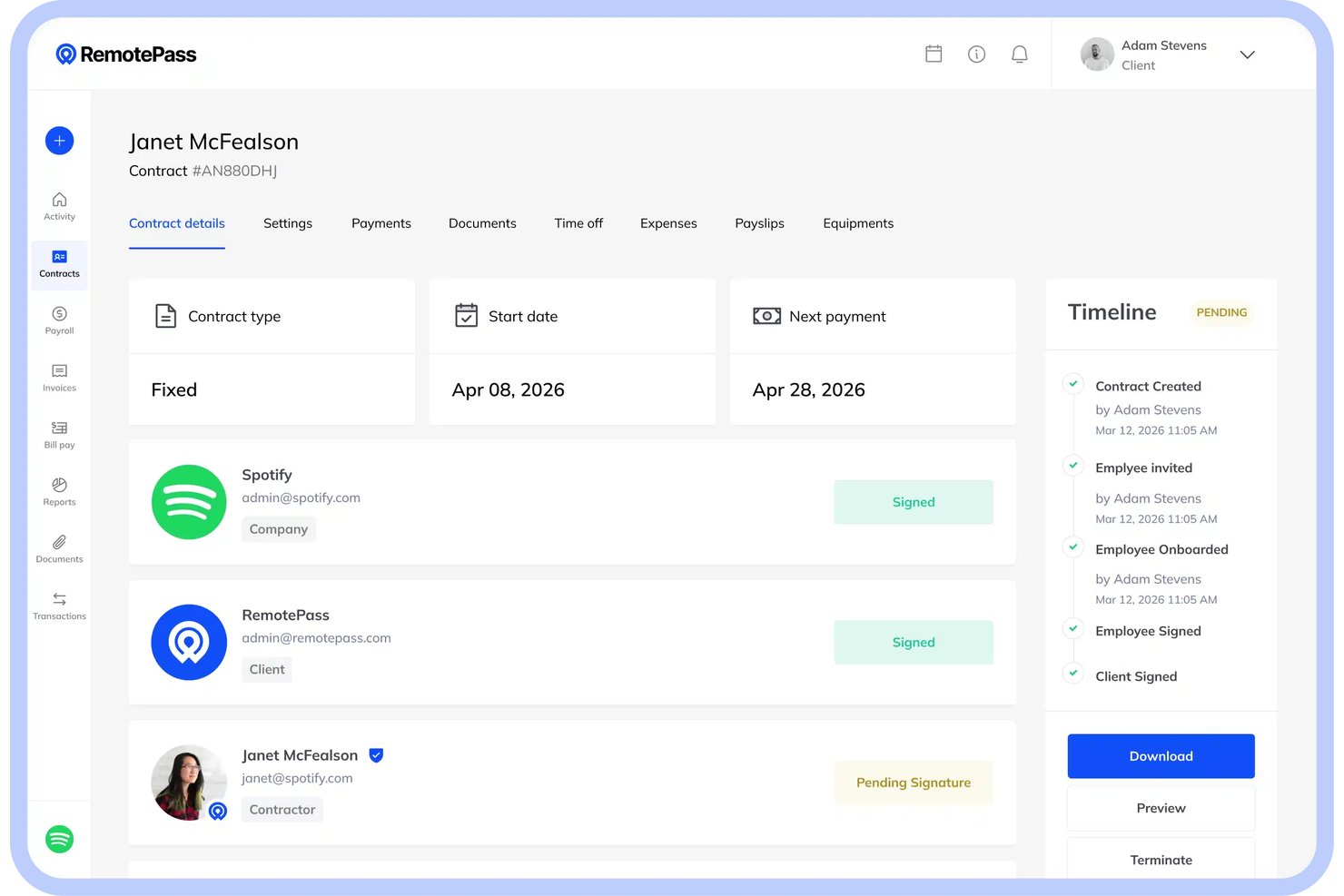
RemotePass is a global employer of record platform that handles Bulgarian employment contracts, payroll processing, statutory benefits administration, and tax and social security remittance without requiring you to set up a local entity.
Who Is RemotePass Best For?
RemotePass is a good fit for startups and early-stage companies that want to hire in Bulgaria before committing to a local entity setup.
Why I Picked RemotePass
I picked RemotePass as one of the best because its Bulgaria-specific compliance content goes deeper than most EOR platforms I've reviewed, covering 2026 payroll contribution rates, Article 331 no-fault termination rules, and the mandatory 0.6% seniority bonus. That level of detail matters when you're testing the Bulgarian market without an entity, since you need an EOR that already understands the local rules. I also like that RemotePass handles the full termination lifecycle, including the 7-day immigration notification requirement for non-EU staff.
RemotePass Key Features
- Statutory benefits administration: RemotePass handles mandatory NSSI and NHIF contributions alongside leave entitlements, including Bulgaria's 410-day maternity leave and 20 days' annual leave.
- Locally compliant contract editor: A smart contract editor generates Bulgarian-language or bilingual employment contracts that meet the country's required clause standards.
- Multi-approver payroll workflows: Payroll runs support up to five approvers, giving HR and finance teams control over sign-off before salaries are processed.
- Visa sponsorship and immigration support: RemotePass manages work permits and notifies immigration authorities within the required 7-day window for non-EU hires in Bulgaria.
RemotePass Integrations
RemotePass offers integrations with NetSuite, Xero, QuickBooks, FreshBooks, Zoho Books, Wafeq, HiBob, BambooHR, and Sapling. It also supports Google Workspace SSO, Slack, and open APIs for custom integrations.
Pros and Cons
Pros:
- Quick setup suits test-market hiring
- Reviewers praise responsive support and payment updates
- Detailed Bulgarian payroll and termination guidance
Cons:
- Country page has conflicting currency guidance
- Bulgaria entity ownership remains unclear

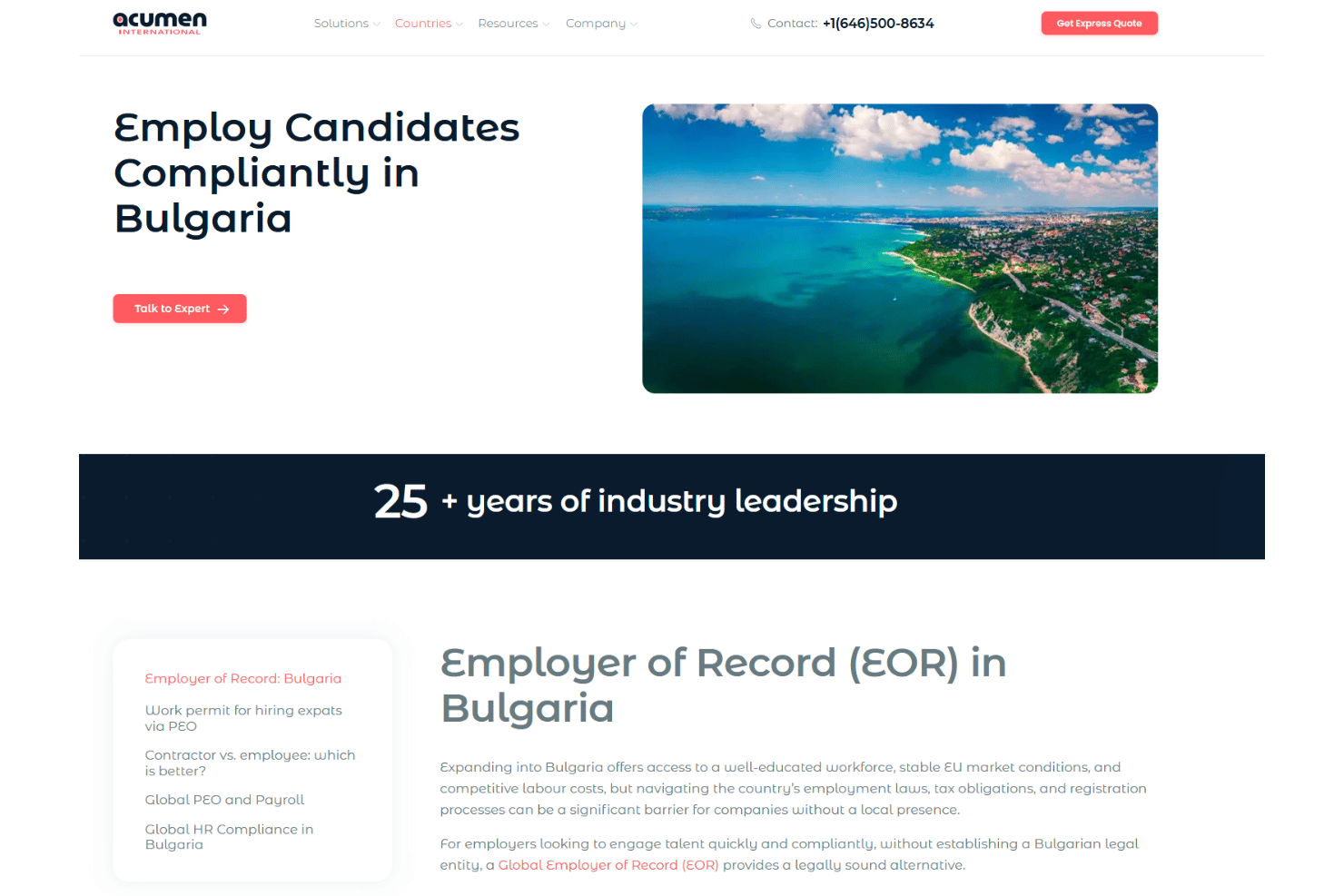
Acumen International is an employer of record service that lets you hire employees in Bulgaria without setting up a local entity, covering employment contracts, payroll, statutory benefits, tax remittance, and immigration support for expat hires.
Who Is Acumen International Best For?
Acumen International is a strong fit for companies entering the Bulgarian market quickly, especially those hiring expats who need immigration and work permit support alongside payroll and compliance.
Why I Picked Acumen International
I've included Acumen International in my top picks because it lets you hire in Bulgaria without registering a local entity, and its immigration support is genuinely built into the service, not bolted on. If you're bringing in an expat hire, Acumen handles work permits and relocation alongside the employment contract and payroll. I also like that it manages terminations within 72 hours and covers legally complex scenarios like protected employees (pregnant staff, union representatives) who require labor inspectorate approval.
Acumen International Key Features
- Statutory benefits administration: Acumen registers employees with social security and health insurance, and manages statutory entitlements including annual leave, sick pay, maternity leave, and parental leave.
- Tax and social security remittance: Acumen calculates and files monthly payroll declarations (forms 1 and 6) with the National Revenue Agency, plus annual income statements, covering both employer and employee contributions.
- Multi-country contract coverage: A single contract and invoice covers hiring across 190+ countries, so you can expand beyond Bulgaria without setting up separate vendor relationships.
- Global Payroll Calculator: Acumen offers an online payroll calculator tool that lets you estimate employment costs in Bulgaria before committing to a hire.
Acumen International Integrations
Acumen International doesn't have any native integrations.
Pros and Cons
Pros:
- Handles statutory benefits and monthly tax filings
- Bulgarian labor-law coverage includes protected-worker terminations
- Immigration and work permits are built in
Cons:
- Payroll figures may lag Bulgaria’s euro transition
- Bulgarian entity ownership remains undisclosed

Remote
Best for hiring in Bulgaria via owned local entity
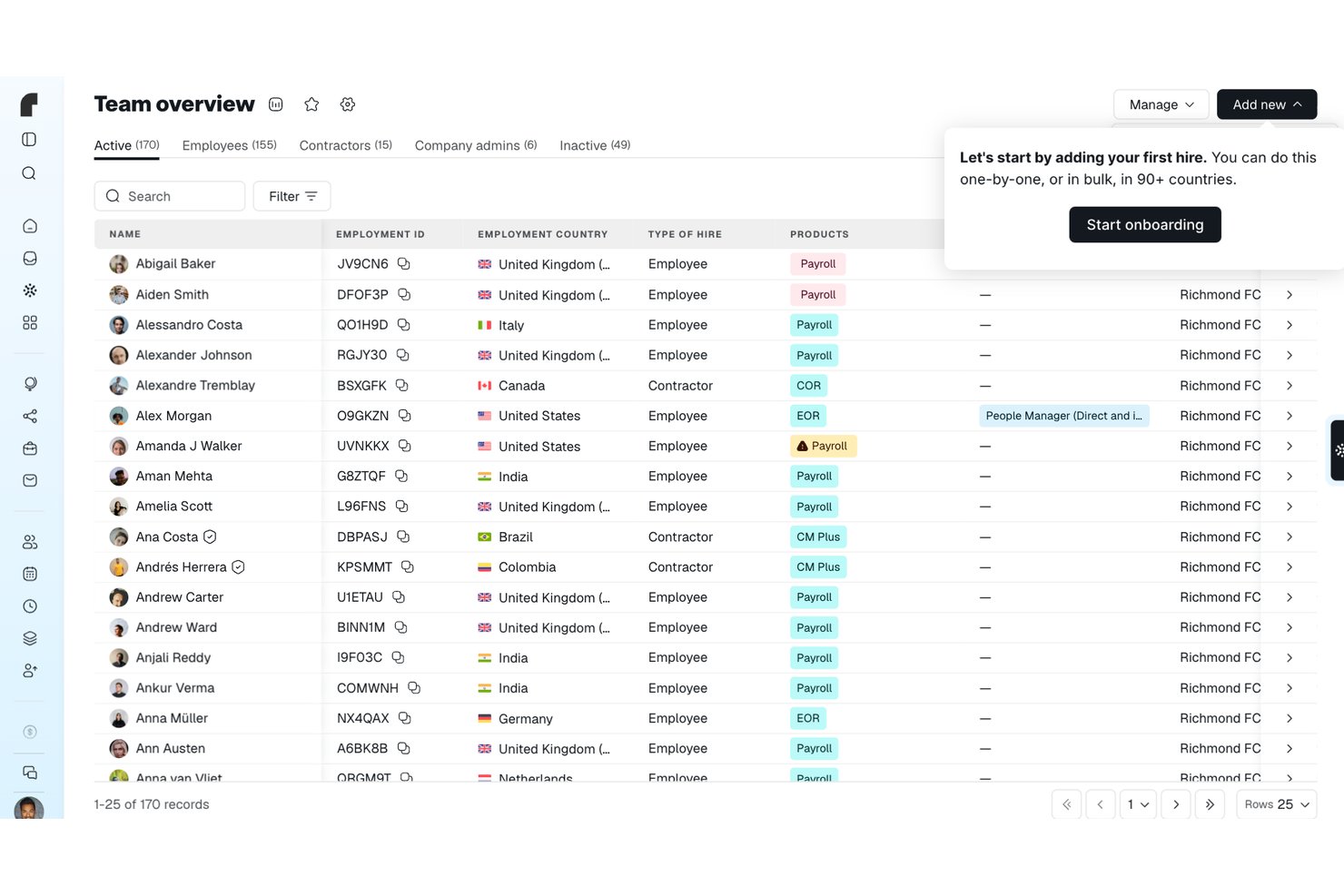
Remote is an employer of record and contractor management provider that lets you hire, onboard, and pay employees in Bulgaria through its own locally owned entity, without setting up a legal presence in the country.
Who Is Remote Best For?
Remote is a strong fit for startups and small teams that want to hire in Bulgaria quickly, without committing to a local entity or long-term contract.
Why I Picked Remote
Remote earns its spot on my shortlist because it owns its Bulgarian entity outright, meaning there's no third-party partner handling your employees behind the scenes. I find that especially valuable when hiring in Bulgaria, since you get direct accountability on contracts, payroll, and compliance from day one. Remote's Compliance Watchtower monitors legal changes across 90+ countries and flags updates automatically, and its IP Guard handles IP transfers during onboarding.
Remote Key Features
- Compliance Watchtower: Monitors legal and regulatory changes across 90+ countries and sends automatic alerts when updates affect your Bulgarian employees.
- Optional benefits administration: Offers supplemental health, life, and mental health coverage in tiered plans you can layer on top of statutory Bulgarian benefits.
- Contractor management: Lets you hire and pay contractors in Bulgaria, with built-in misclassification protection included.
- GDPR-aligned data protection: Hosts employee data in Ireland, with a dedicated DPO, a DPA, and SOC 2 and ISO 27001 certifications.
Remote Integrations
Remote lists 20 integrations, including Workday, BambooHR, HiBob, Personio, Greenhouse, QuickBooks, Xero, NetSuite, Okta, and Slack. Zapier is also listed for additional connectivity.
Pros and Cons
Pros:
- Localized contracts cover Bulgarian employment requirements
- Reviewers praise smooth onboarding and responsive support
- Own Bulgarian entity avoids third-party employers
Cons:
- Some users find initial setup unclear
- Escalated payroll questions can receive slow responses

Best for multi-country EU payroll compliance teams
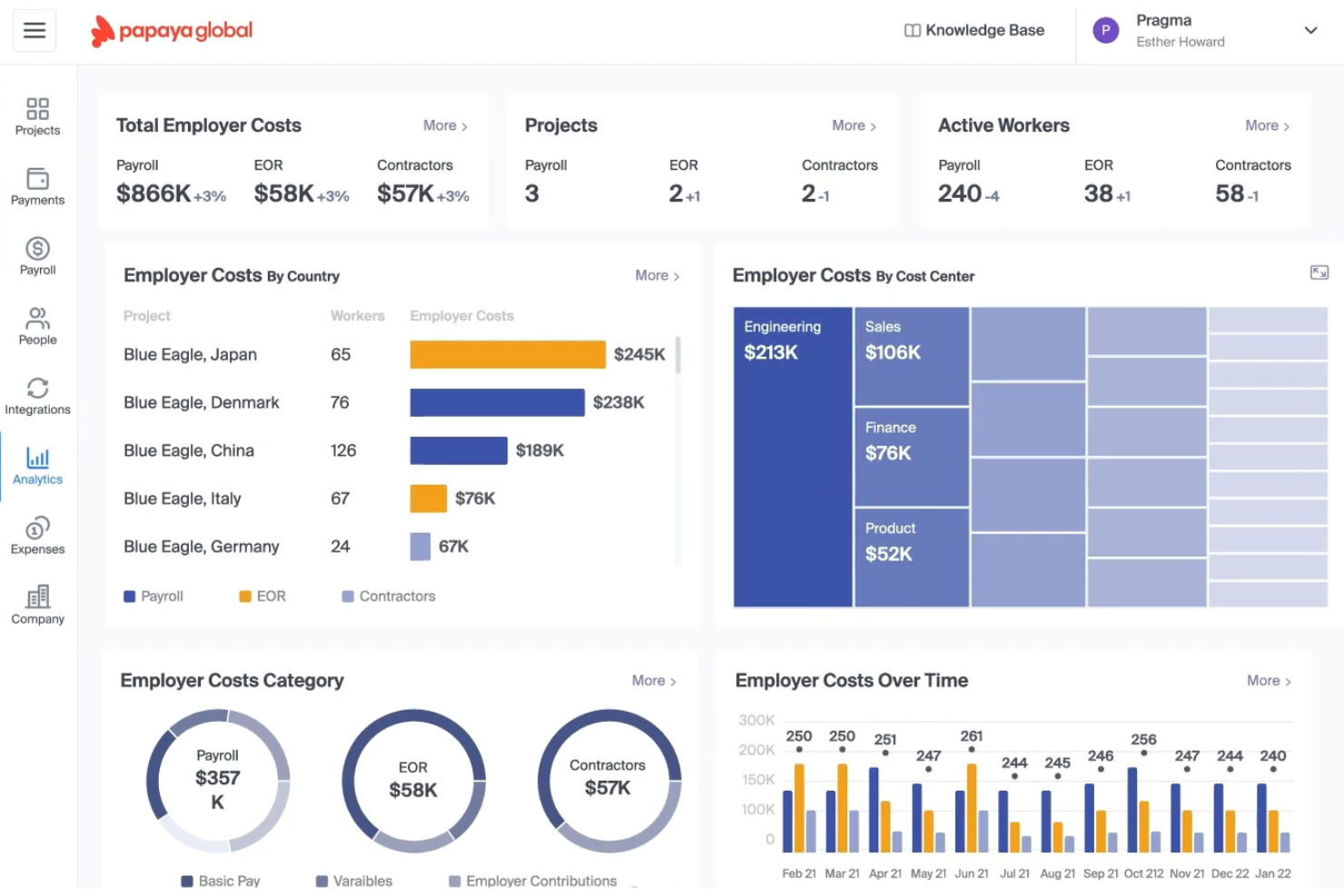
Papaya Global is a global employer of record platform that covers employment contracts, payroll processing, statutory benefits, tax remittance, and compliance management across 180+ countries, including Bulgaria.
Who Is Papaya Global Best For?
Papaya Global is a strong fit for mid-size to enterprise HR and payroll compliance teams managing employees across multiple EU countries from a single platform.
Why I Picked Papaya Global
I've included Papaya Global in my top picks because it's built for HR and payroll compliance teams running multi-country operations across the EU from one platform. I particularly like its named compliance leads, who flag regulatory changes in Bulgaria and other markets before they take effect, plus its AI-powered compliance engine that tracks employment law across 95+ jurisdictions. Its documented coverage of Bulgarian statutory contributions, leave entitlements, and termination reporting rules gives compliance-focused teams a clear, structured foundation to work from.
Papaya Global Key Features
- Statutory contributions tracking: Papaya documents employer and employee social security, health insurance, and income tax rates for Bulgaria with specific contribution percentages.
- AI-powered contract generation: Papaya One auto-generates country-specific employment contracts, with every output reviewed by a compliance specialist before delivery.
- Multi-currency payroll funding: Fund payroll in 15+ currencies and pay out in 130+ currencies, with an FX Match Guarantee through OnePay.
- Workforce analytics dashboard: Workforce OS delivers gross-to-net reporting, journal entry automation, and BI analytics across all active employee countries in one view.
Papaya Global Integrations
Papaya Global offers integrations with NetSuite and Expensify, plus OneData for importing pre-payroll data from HCM, HRIS, ERP, and Excel sources. It also provides API access for custom integrations.
Pros and Cons
Pros:
- Reviewers value consolidated multi-country payroll
- Named compliance leads flag regulatory changes
- Detailed Bulgarian statutory benefits documentation
Cons:
- Bulgarian entity ownership remains unclear
- Bulgaria isn’t named in termination guarantee

Best for no-lock-in Bulgarian market entry
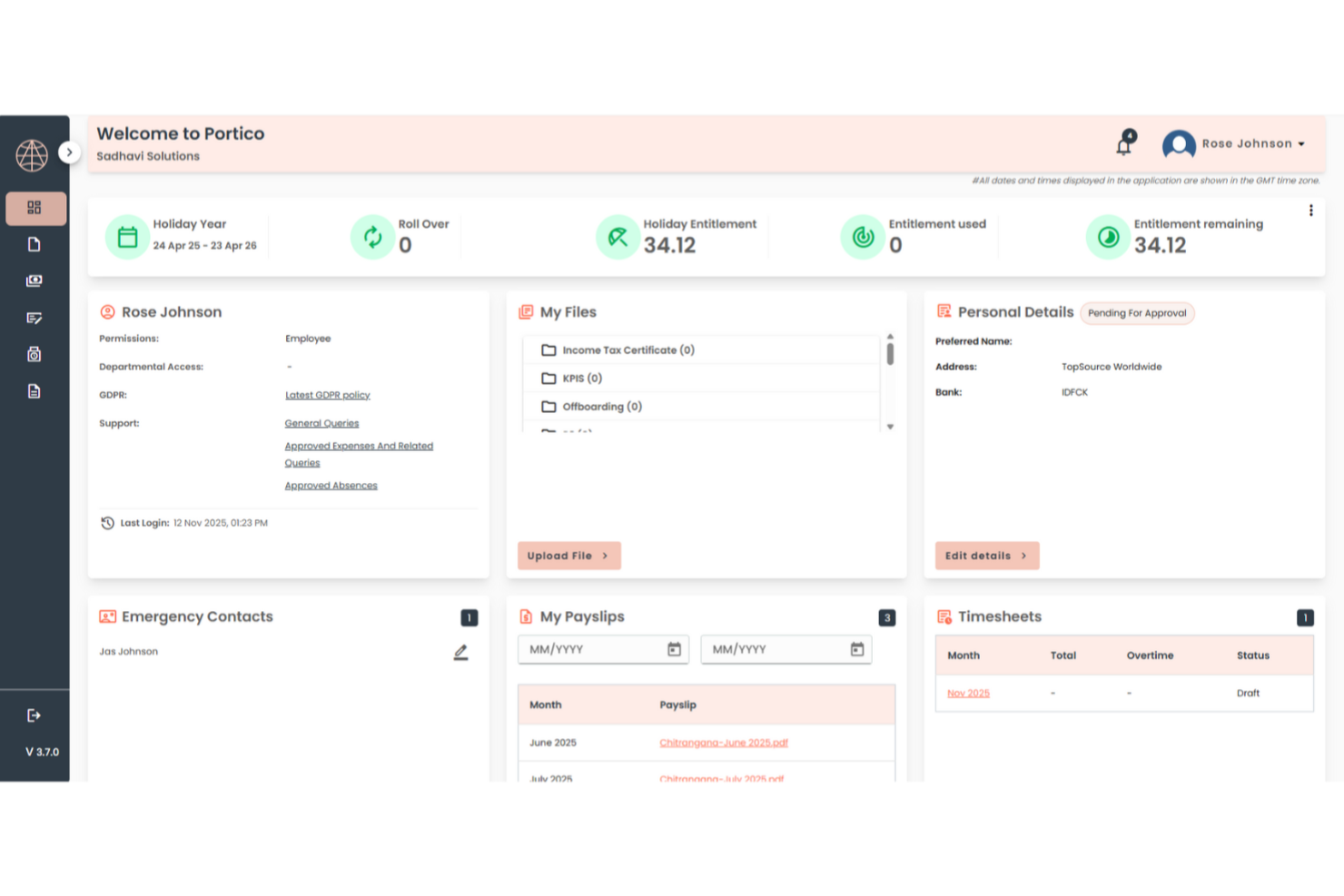
TopSource is a global employer of record service that handles employment contracts, payroll, tax filings, statutory benefits, and HR administration for companies hiring in Bulgaria without registering a local entity.
Who Is TopSource Best For?
TopSource is a strong fit for companies testing the Bulgarian market before committing to a local entity, thanks to its no exit fee, no lock-in model and flat monthly per-employee pricing.
Why I Picked TopSource
I've included TopSource in my top picks because its no exit fee, no lock-in model makes it a genuinely low-risk way to place your first hire in Bulgaria without committing to a local entity. If you're testing the market, you can later transfer employees to your own Bulgarian entity with no penalty. I also like that TopSource handles NRA contract registration within three days and files Declarations 1 and 6 by the 25th of each month, with client approval required before anything is paid or filed.
TopSource Key Features
- Named account manager: Every EOR client gets a dedicated account manager plus 24/5 phone access to in-country experts in English and Bulgarian.
- Pre-approval payroll reporting: TopSource provides a monthly gross-to-net report with itemized employer contributions and threshold flags before anything is paid or filed.
- Portico employee self-service: Employees access payslips, submit leave requests, log expenses, and track attendance via desktop or mobile through the Portico platform.
- HRIS and finance API: Portico connects to systems like Workday, BambooHR, and SAP SuccessFactors to sync workforce and payroll data across your tech stack.
TopSource Integrations
TopSource offers integrations with Workday, SAP SuccessFactors, UKG, BambooHR, HiBob, Personio, Greenhouse, Lever, SmartRecruiters, and Ashby. Its API supports custom HRIS and finance connections.
Pros and Cons
Pros:
- NRA declarations have documented monthly deadlines
- Client approval precedes Bulgarian payroll filing
- Reviewers praise responsive onboarding and employment support
Cons:
- Bulgaria onboarding has no firm timeline
- Conflicting sick-leave guidance complicates benefit administration

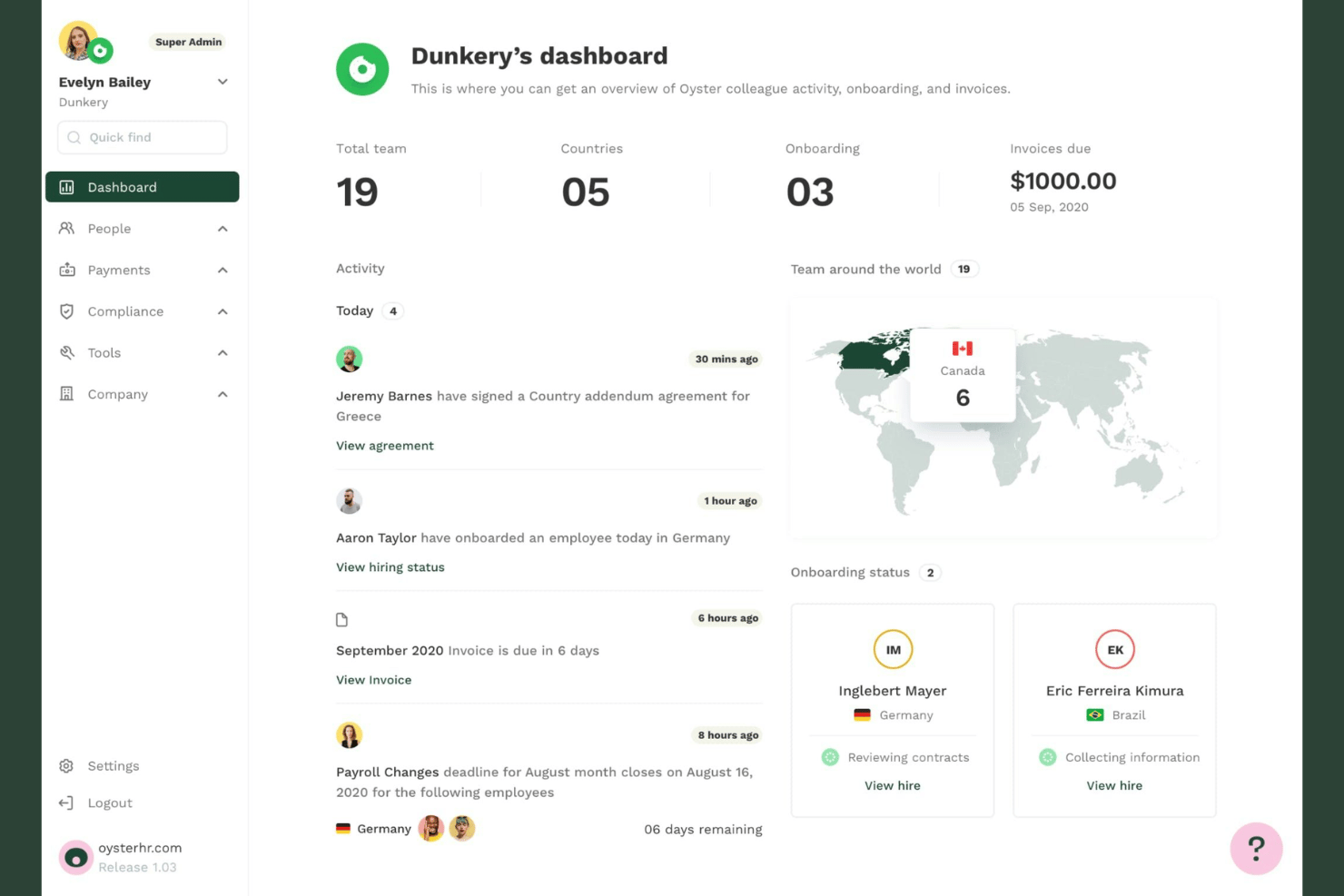
Oyster is an employer of record platform with its own legal entity in Bulgaria that handles local employment contracts, payroll, statutory benefits, tax and social security remittance, and offboarding.
Who Is Oyster Best For?
Oyster is a strong fit for companies hiring their first Bulgarian employee without a local entity, especially if compliance accuracy and fast onboarding are the priority.
Why I Picked Oyster
I've included Oyster in my top picks because it holds its own legal entity in Bulgaria, meaning there's no sub-vendor in the chain handling your employment contracts. In practice, that means I can get a Bulgarian employee onboarded in as little as 48 hours after signing, with a contract written in Bulgarian that already includes mandatory clauses like length-of-service pay. Oyster also assigns a named contact for compliance and termination questions, which matters when you're navigating Bulgaria's specific notice period rules or offboarding an employee.
Oyster Key Features
- Contract quality score: Oyster compares each offer against Bulgarian statutory requirements and flags gaps before you finalize the contract.
- Automated payroll reporting: Download detailed payroll reports and let Oyster handle tax filings and social security remittance directly with Bulgarian authorities.
- In-app leave and timesheet tracking: Employees submit leave requests and log overtime through the Oyster app, with balances adjusted for Bulgarian public holidays.
- Named compliance contact: Oyster assigns you a dedicated contact for compliance and termination questions rather than routing everything through a support ticket queue.
Oyster Integrations
Oyster documents 17 integrations, including BambooHR, HiBob, Personio, Greenhouse, Workable, Xero, QuickBooks, ADP Workforce Now, SAP Concur, and Zapier. An API supports custom integrations, while Slack supports approval workflows.
Pros and Cons
Pros:
- Contracts include Bulgarian statutory pay clauses
- Onboarding can take 48 hours
- Own Bulgarian entity avoids subcontractors
Cons:
- Payroll currency details appear outdated
- Support quality varies across user reviews

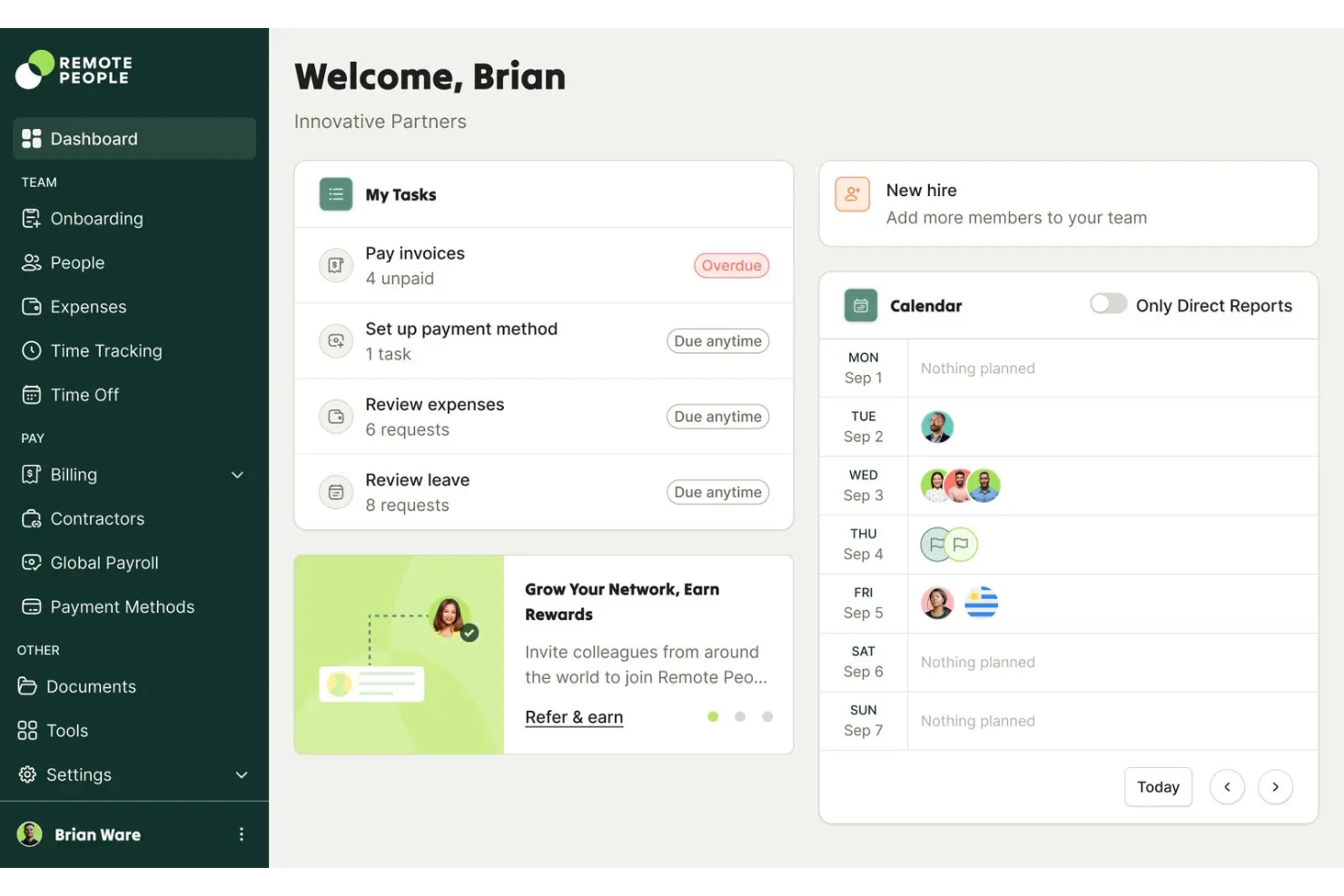
RemotePeople is an employer of record service that hires Bulgarian employees on your behalf, handling employment contracts, payroll, tax withholding, social insurance registrations, and statutory benefits administration without requiring you to set up a local entity.
Who Is RemotePeople Best For?
RemotePeople is a strong fit for startups and small teams that want to place one to fifteen employees in Bulgaria without committing to local entity setup.
Why I Picked RemotePeople
I picked RemotePeople as one of the best because it's specifically built for the "one hire, no entity" scenario that defines early-stage Bulgaria market testing. When a startup wants to place a single developer or operations hire in Sofia to validate demand, RemotePeople registers the employment contract with Bulgaria's National Revenue Agency, enrolls the employee with the NSSI and NHIF, and runs the first payroll, all without the client incorporating locally. I also like that a named account manager is available 24/5 and backed by HR and legal specialists who know Bulgarian Labour Code requirements.
RemotePeople Key Features
- Bilingual employment contracts: RemotePeople drafts Bulgarian-language and bilingual English–Bulgarian contracts that meet Labour Code Article 66 requirements and are registered with the NRA before work begins.
- Statutory contribution administration: The service calculates and remits employer social-security contributions—covering pension, health, unemployment, and work-accident funds—to the NRA each month.
- Employee self-service portal: Employees access payslips, employment documents, and time-off requests through a dedicated online portal.
- EU Blue Card and Single Permit sponsorship: RemotePeople manages end-to-end work-permit applications for non-EU nationals hired through its Bulgaria EOR.
RemotePeople Integrations
RemotePeople lists 70+ integrations, including Workday, SAP SuccessFactors, Oracle HCM, BambooHR, HiBob HR, Personio, and ADP Workforce Now. An API is available for custom integrations, although connection types aren't specified for most listed platforms.
Pros and Cons
Pros:
- Named account managers have HR and legal support
- Reviewers value accessible payslips and employment documents
- Bulgaria onboarding covers contract and statutory registrations
Cons:
- Contract corrections can require repeated back-and-forth
- Some reviewers report slow support follow-ups
Other Employer of Record Services in Bulgaria
Here are a few additional options that didn’t make my shortlist but are still worth checking out:
- WorkMotion
For EU-wide hiring with a Bulgarian entity
- CXC Global
For EU-wide compliance with Bulgarian labor law
- Rivermate
For hands-on Bulgarian HR and payroll support
- Atlas HXM
For EU mobility alongside Bulgarian hiring
- Deel HR
For self-serve Bulgarian hiring month to month
- G-P
For multi-country hiring led by analyst-ranked EOR
- Multiplier
For startups onboarding one hire in Bulgaria
- Native Teams
For low-commitment Bulgarian workforce testing
- Pebl
For Baker McKenzie-vetted Bulgarian hiring
- Lano
For Bulgarian statutory benefits documentation


How I Evaluate Employer of Record Services in Bulgaria
I split my evaluation into three parts. First, and most heavily weighted, is core functionality: the ability to employ workers in Bulgaria without a client entity and manage Bulgarian labor law compliance. Second, I look for standout features like in-country legal entity ownership. Third, I consider local HR advisory support and pricing transparency.
Core Functionality (Table Stakes for This List)
When I'm selecting tools for my list, I score each one on a scale from 0 (does not offer the functionality) to 5 (excels in this area) for each core functionality listed below. I then convert the total into a percentage to help assess each tool's overall fit, with extra weight on any functionalities I've deemed essential.
- Entity-Free Employment (Essential): I check whether the provider can legally employ workers in Bulgaria on your behalf without you registering a local entity.
- Labor Law Compliance (Essential): Each provider's handling of Bulgarian contract terms, probation periods, notice rules, and termination procedures gets close attention.
- Local Payroll Processing: I look for accurate, on-time salary disbursement in Bulgarian lev (BGN), including proper tax withholdings and social contribution calculations.
- Statutory Benefits Administration: Providers should manage mandatory social insurance, health insurance, and paid leave entitlements without requiring heavy involvement from your team.
- Tax and Social Security Remittance: I evaluate whether the provider calculates, withholds, and files all employer and employee contributions directly with Bulgarian authorities on schedule.
- Contract Localization: Employment agreements need to meet Bulgarian legal standards, so I look for role-appropriate contracts with required statutory clauses and bilingual support.
Once I have a list of tools that meet the criteria, I consider what sets each platform apart.
Differentiating Factors (What Sets Vendors Apart)
Here's how I compare and contrast different vendors:
Standout Features
I check whether a provider runs its own registered Bulgarian entity or subcontracts to a local partner, since that directly affects how much control they have over compliance and payroll timing. EU cross-border mobility support also matters—if you're hiring across multiple member states, providers like Remote and WorkMotion let you add Bulgarian employees alongside other EU hires without separate onboarding workflows. I also look at onboarding speed guarantees, because a provider that activates new hires in days rather than weeks can make or break a time-sensitive market entry.
Beyond Features
I look at total cost transparency first—flat-fee versus percentage-of-payroll pricing, plus any hidden charges for contract amendments or termination handling, since these directly affect budget predictability. GDPR-compliant data handling also matters; I check where employee payroll and tax data is stored and whether the provider has clear breach-notification protocols. For teams testing Bulgaria before committing, I evaluate contract flexibility and exit terms so you're not locked in if plans change.
How to Choose Employer of Record Services in Bulgaria
Choose a provider by checking who legally employs your Bulgarian hires, how it documents local obligations, and what your team must handle. Use these priorities to focus your shortlist:
| If your priority is… | Look for… |
|---|---|
| Hiring without a Bulgarian entity | A clear description of the legal employer and any local partner |
| Contract compliance | Bulgarian employment agreements with locally applicable terms |
| Predictable payroll administration | A sample BGN payroll breakdown with taxes and social contributions itemized |
| Flexible market entry | Written exit terms, notice periods, and any termination charges |
How to Vet Your Shortlist
- Review the employment agreement: Request a sample Bulgarian contract and check its probation, notice, and termination clauses with local counsel before signing.
- Test a payroll calculation: Ask for a written breakdown for a sample BGN salary, showing employee and employer contributions, withholding, and remittance responsibilities.
- Identify the employing entity: Request the legal entity’s name and registration details, then ask the provider to identify any subcontracted local partner in writing.
- Map onboarding responsibilities: Request a dated onboarding checklist for one Bulgarian hire, naming required documents, each party’s responsibilities, and the target start date.
- Choose your entity tradeoff: Compare an owned local entity with a partner arrangement, then decide whether direct control or a provider’s local delivery model better fits your risk tolerance; confirm responsibility for employment obligations in the agreement.
What Are Employer of Record Services in Bulgaria?
Employer of record services in Bulgaria let a provider legally employ workers on your behalf while your business directs their day-to-day work. The provider typically manages local employment contracts, payroll, tax withholding, and statutory contributions. This arrangement can help you hire in Bulgaria without establishing a local entity, but confirm who employs the worker and handles each legal obligation before signing.
Features
Here are the main features I look for in employer of record services in Bulgaria:
- Entity-free employment: The provider hires your Bulgarian employees through its own local entity or a disclosed partner, so you can employ people without setting up a Bulgarian company. Confirm which legal entity signs the employment agreement.
- Localized employment contracts: The provider prepares agreements that reflect Bulgarian employment requirements, including applicable terms for probation, working time, notice, and termination. This gives your team a locally grounded starting point for each hire.
- Bulgarian payroll processing: The provider calculates salaries and payroll deductions and pays employees in the agreed currency, typically Bulgarian lev (BGN). Ask for a sample payslip and payroll schedule to see how calculations and payment dates are handled.
- Tax and social contribution administration: The provider calculates, withholds, and remits applicable employee and employer taxes and social contributions to the relevant Bulgarian authorities. Written confirmation of filing and payment responsibilities helps clarify what your team still needs to do.
- Statutory benefits and leave administration: The provider tracks mandatory social and health insurance contributions, paid leave entitlements, and other applicable employment benefits. This helps HR teams manage employee records and payroll changes when leave or eligibility affects compensation.
- Employee onboarding coordination: The provider shares required document lists, collects employee information, and coordinates contract completion and payroll setup. A dated checklist makes it easier to assign tasks and confirm whether the planned start date is realistic.
- Ongoing HR and compliance support: The provider answers employment administration questions and helps manage changes such as salary updates, leave, or contract amendments. Confirm which requests are included and when the provider refers issues to local legal advisers.
- Termination administration: The provider coordinates required notices, final pay calculations, and employment documentation when a worker leaves. Ask how it handles notice periods, unused leave, and any additional termination charges before signing.
Benefits
Here are some practical benefits you can expect from using an employer of record in Bulgaria:
- Hire without a local entity: An EOR employs workers through its own Bulgarian entity or a local partner, so your business doesn’t need to establish one.
- Apply local employment terms: Localized contracts and compliance support help address Bulgarian requirements for probation, working time, notice, and termination.
- Coordinate payroll and remittances: Payroll services calculate salaries and applicable deductions, then handle tax and social contribution payments to the relevant authorities.
- Administer statutory benefits and leave: The provider can track social and health insurance contributions, paid leave, and related payroll changes.
- Coordinate employee onboarding: Document collection, contract completion, and payroll setup can follow a shared checklist with clear responsibilities.
- Manage employment changes and exits: Ongoing HR support can help with salary updates, contract amendments, notices, final pay, and departure documents.
Costs and Pricing
Costs vary by provider, employee count, and service scope. Bulgaria EOR fees commonly run from about $200 to $700 per employee monthly, with some enterprise quotes reaching higher.
These are indicative price bands, not standard plan names. Fees generally cover the EOR service and exclude employee salaries and employer contributions.
Plan Comparison Table for Employer of Record Services in Bulgaria
| Plan Type | Average Price | Common Features |
|---|---|---|
| Free Plan | $0 for EOR services | Pricing inquiry, introductory consultation, and no employment or payroll administration. |
| Personal Plan | $200–$399 per employee/month | Local employment contract, payroll processing, and statutory contribution administration. |
| Business Plan | $400–$699 per employee/month | Local employment contract, payroll and tax administration, statutory benefits support, and onboarding coordination. |
| Enterprise Plan | $700–$940 per employee/month | Employment and payroll administration, HR and compliance support, termination coordination, and tailored service scope. |
FAQs
Here are answers to common questions about employer of record services in Bulgaria:
Who is responsible if the EOR makes a payroll or compliance error?
The named Bulgarian legal employer remains responsible for its statutory employer duties; the services agreement sets out operational tasks and remedies between the parties. Your company still directs day-to-day work and should follow agreed processes for pay changes, leave, and performance issues. If payroll is wrong, notify the provider promptly and keep written records of corrections, filings, and employee communications. Before signing, check who corrects underpayments, pays penalties where applicable, and handles employee claims. A contract can’t remove obligations imposed by law.
Can an EOR employ non-EU nationals in Bulgaria?
Yes, an EOR may employ a non-EU national in Bulgaria, but the EOR arrangement doesn’t itself provide work or residence authorization. Eligibility depends on the person’s status and applicable Bulgarian immigration and employment rules. Ask the provider to confirm in writing whether it supports the required permit process, who submits each application, and whether the employee can start before approval. Verify the case with Bulgarian immigration counsel or relevant authorities. Don’t set a start date based only on a provider’s estimate.
What happens if I switch EOR providers in Bulgaria?
Don’t assume a worker’s employment transfers automatically when you change EORs. The right process depends on the current and incoming legal employers, contract terms, employee consent, and applicable Bulgarian rules. Ask both providers for a written transition plan covering notice, final payroll, accrued leave, benefits records, tax filings, and the new start date. Have local counsel review whether the change affects continuity of service or employee rights. Coordinate communications with the employee before committing to a transfer date.