

10 Best Employer of Record Software in Kenya in 2026

Best Employer of Record Software in Kenya Shortlist


An Employer of Record in Kenya is a third-party organization that legally employs workers on your behalf and handles local employment administration. Providers differ in whether they use their own local entity or a partner, how they support work permits, and how clearly they show costs. This comparison covers options for a first hire, a market test, or hiring across multiple countries so you can choose a model that fits your team.
Why Trust Our Software Recommendations
Our team has been testing and reviewing software since 2012. As HR experts ourselves, we know how difficult—and important—it is to choose the right software.
For this guide, we evaluated tools using hands-on testing and independent research, scoring tools using our selection criteria. We also draw on insights from industry thought leaders and practicing HR experts.
Our reviews reflect our human editorial judgment, not a sales pitch.
Expert reviewers:
Comparison Table: Employer of Record Providers in Kenya
Compare pricing and specs side by side for the Employer of Record providers in Kenya that made it onto my shortlist.
| Tool | Best For | Trial Info | Price | ||
|---|---|---|---|---|---|
| 1 | Best for global hiring with owned entities | Free demo available | From $599/user/month | Website | |
| 2 | Best for low-commitment Kenya market tests | Free demo available | From $199/employee/month | Website | |
| 3 | Best for Kenya hiring through its own entity | Free demo available | Pricing upon request | Website | |
| 4 | Best for testing Kenya with a first hire | Free demo available | From $699/employee/month | Website | |
| 5 | Best for hiring in Kenya with permit support | Free demo available | From $499/employee/month | Website | |
| 6 | Best for Kenyan hires in one HR and IT system | Free demo available | From $8/user/month | Website | |
| 7 | Best for itemized Kenya cost estimates | Free demo available | From $599/employee/month | Website | |
| 8 | Best for testing Kenya with published pricing | Free demo available | From $459/user/month | Website | |
| 9 | Best for budgeting a Kenya market test | Free demo available | From $549/talent/month | Website | |
| 10 | Best for Kenya hiring across global teams | Free demo available | From $599/user/month | Website |

Best Employer of Record Software in Kenya Reviews
Below are my detailed summaries of the best Employer of Record software in Kenya that made it onto my shortlist. My reviews cover local hiring support, compliance services, and pricing for each provider to help you find the right fit.

Best for global hiring with owned entities
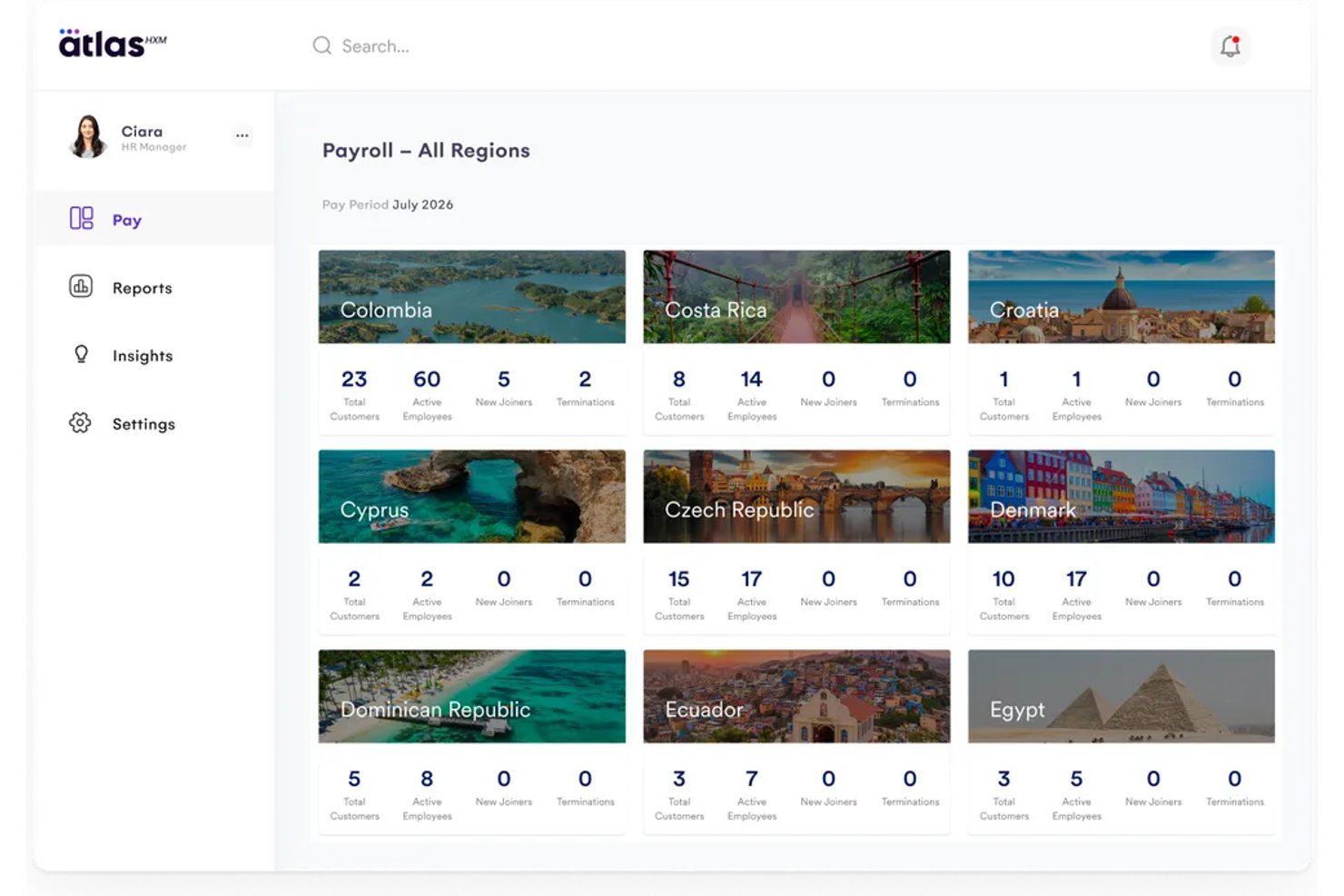
Atlas HXM is an Employer of Record platform that lets you hire and pay employees in Kenya—and 160+ other countries—through its own directly owned legal entities, handling employment contracts, payroll, statutory compliance, and benefits administration.
Who Is Atlas HXM Best For?
Atlas HXM is a strong fit for global expansion teams that need to hire in Kenya and multiple other countries simultaneously through a single, owned-entity provider.
Why I Picked Atlas HXM
I've included Atlas HXM in my top picks because its owned-entity model is the real differentiator here: it employs your Kenyan staff through its own legal entity rather than routing through a third-party partner, which keeps accountability in one place. I also like its dedicated account management and local HR expertise, which provide support for onboarding, employee relations, and compliance. On top of that, Atlas assists with Kenyan work permit applications for foreign hires, making it a practical option for businesses managing both local employment and international mobility.
Atlas HXM Key Features
- KES payroll processing: Atlas runs payroll in Kenyan shillings and manages local tax withholding, statutory contributions, and payroll administration.
- Employee self-service portal: Your Kenyan staff can access payslips, tax documents, time off balances, timesheets, and expense submissions via web or mobile app.
- Multi-system integrations: Atlas connects with HR and payroll tools to sync employee and headcount data.
- Contractor-to-employee conversion: You can convert Kenyan contractors to full employees through the same platform, without setting up a local legal entity.
Atlas HXM Integrations
Atlas HXM supports custom integrations through its Atlas Connect API, but does not publicly document a comprehensive list of supported third-party applications.
Pros and Cons
Pros:
- Localized contracts cover Kenyan employment terms
- API supports automated employee onboarding
- Owned Kenyan entity avoids partner handoffs
Cons:
- Conflicting leave and levy guidance warrants checks
- Visa sponsorship incurs additional per-visa charges

Gloroots
Best for low-commitment Kenya market tests
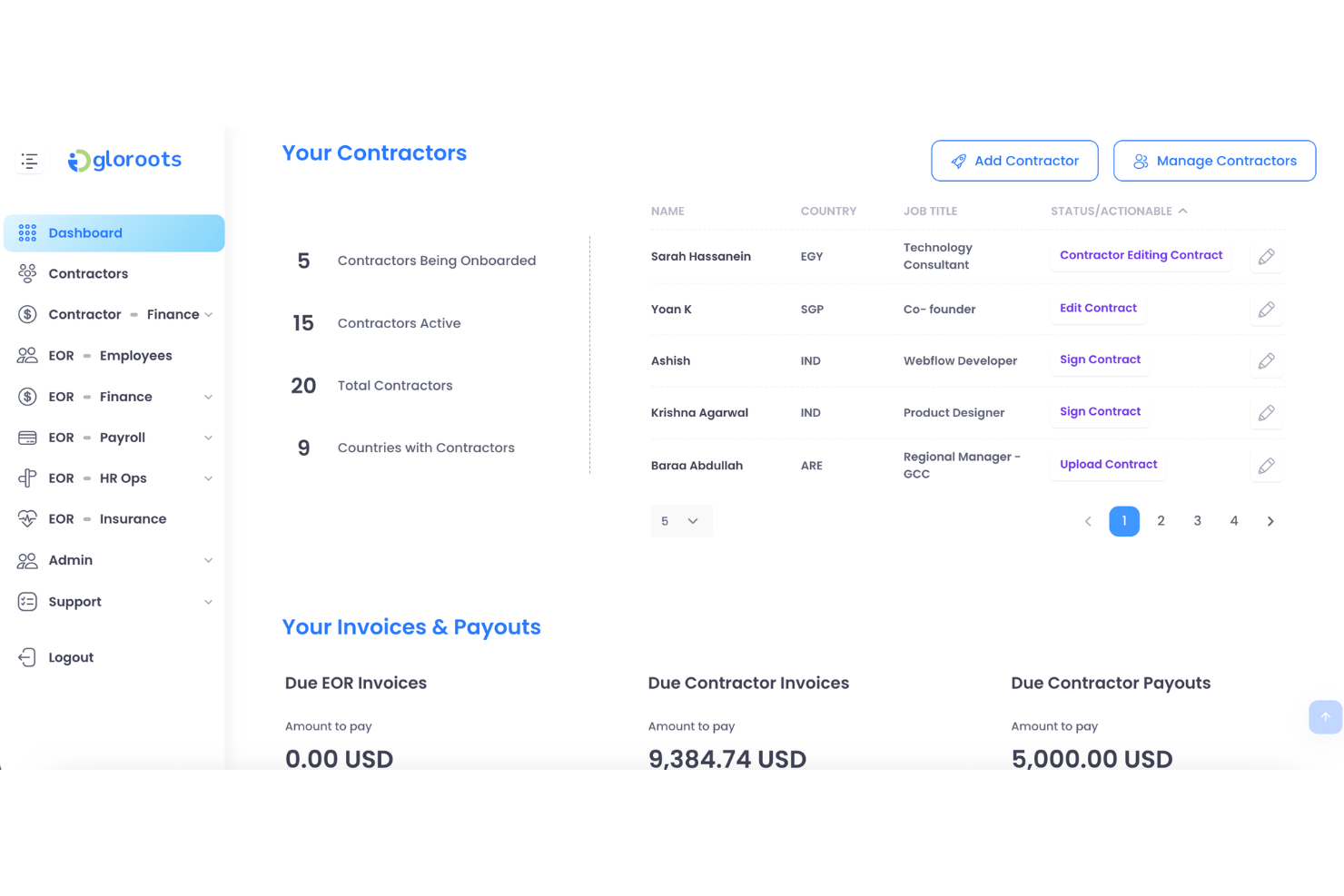
Gloroots is an Employer of Record platform that handles Kenyan employment contracts, payroll, statutory compliance, and benefits administration without requiring you to set up a local entity.
Who Is Gloroots Best For?
Gloroots is a good fit for companies that want to hire in Kenya quickly, without a long-term commitment or local entity.
Why I Picked Gloroots
I picked Gloroots because its monthly billing, no minimum headcount, and lack of default long-term contracts make it a practical option for businesses hiring one or two employees in Kenya. I particularly like that it handles local employment contracts, payroll, and statutory compliance without requiring businesses to establish a Kenyan entity. I also like its flexible offboarding policy, which includes termination documentation and final settlements, with recurring billing stopping from the next cycle.
Gloroots Key Features
- Localized employment contracts: Provides country-specific agreements prepared with local legal expertise to address Kenyan employment requirements.
- Multi-currency payroll: Manages monthly payroll, statutory deductions, tax filings, and payslip records for Kenyan employees.
- Structured onboarding workflow: Coordinates employment contracts, statutory registrations, document collection, and payroll setup for new hires in Kenya.
- Visa and immigration support: Offers work permit guidance, application support, document management, and renewal services through Gloroots Immigration.
Gloroots Integrations
Gloroots documents API integrations with Workday, SAP SuccessFactors, Oracle, BambooHR, and other ERP systems. Native integrations aren’t clearly documented, but API access supports custom connections.
Pros and Cons
Pros:
- Monthly terms suit market testing
- Localized contracts and structured onboarding
- Detailed coverage of Kenyan statutory obligations
Cons:
- No Kenya-specific customer proof points
- Kenyan employing entity remains unverified

Mercans
Best for Kenya hiring through its own entity
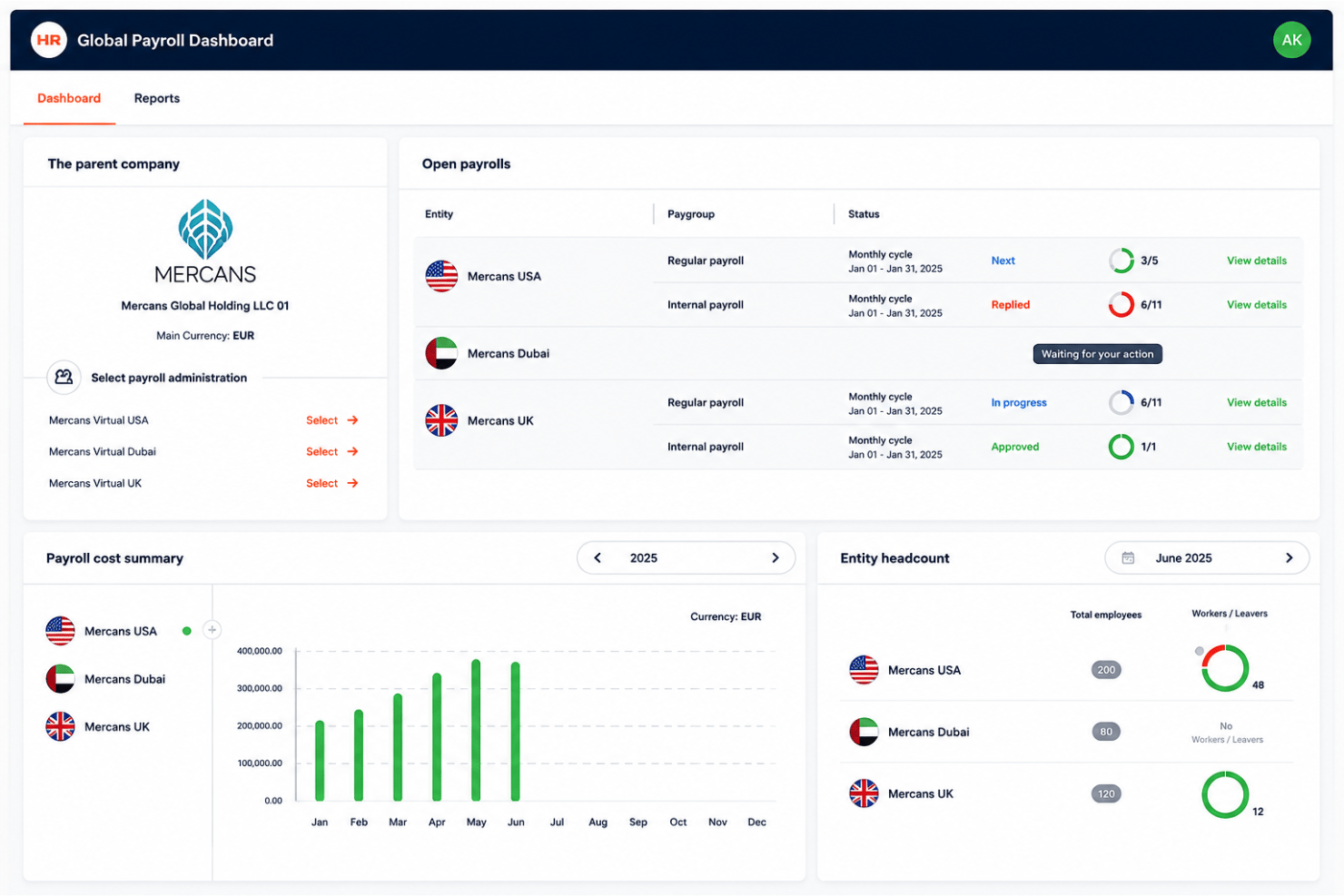
Mercans is an Employer of Record provider for Kenya that handles local entity-based employment, payroll processing, statutory compliance, and contractor management through its own wholly-owned Kenyan entity.
Who Is Mercans Best For?
Mercans works well for finance and payroll controllers who need a direct, entity-owned path into Kenya with automated statutory deductions and KRA iTax integration.
Why I Picked Mercans
I picked Mercans as one of the best because its own-entity EOR approach and listed Nairobi office provide a local presence for businesses hiring in Kenya. That distinction matters when statutory compliance is on the line. Its payroll services cover salary payments, PAYE withholding, NSSF, SHIF, and Affordable Housing Levy administration, alongside statutory filings and employment compliance. I also like that Mercans combines local payroll expertise with its proprietary HR Blizz platform, helping businesses manage Kenyan employees without establishing their own entity.
Mercans Key Features
- Employee self-service portal: Employees access payslips, leave requests, overtime submissions, and expense claims through a single self-service interface.
- Multi-currency payroll with editable exchange rates: Run payroll across 103 currencies with manually adjustable exchange rates for international staff on Kenyan contracts.
- Work permit and visa processing: Offers work permit and immigration assistance for international employees, subject to country-specific requirements.
- HR Blizz platform modules: Access built-in time and attendance tracking, document storage, workflow management, and a help desk through Mercans' native HR platform.
Mercans Integrations
Mercans documents integrations with UKG Pro, HiBob, Oracle Cloud HCM, Dayforce, and Darwinbox through its global payroll platform. Its Kenya EOR service also supports HCM connectivity.
Pros and Cons
Pros:
- Supports Kenyan contractor-to-employee conversions
- Automated statutory deductions and tax forms
- Owned Kenyan entity with Nairobi presence
Cons:
- Contract generation can require manual steps
- Onboarding timelines vary beyond 48-hour claims

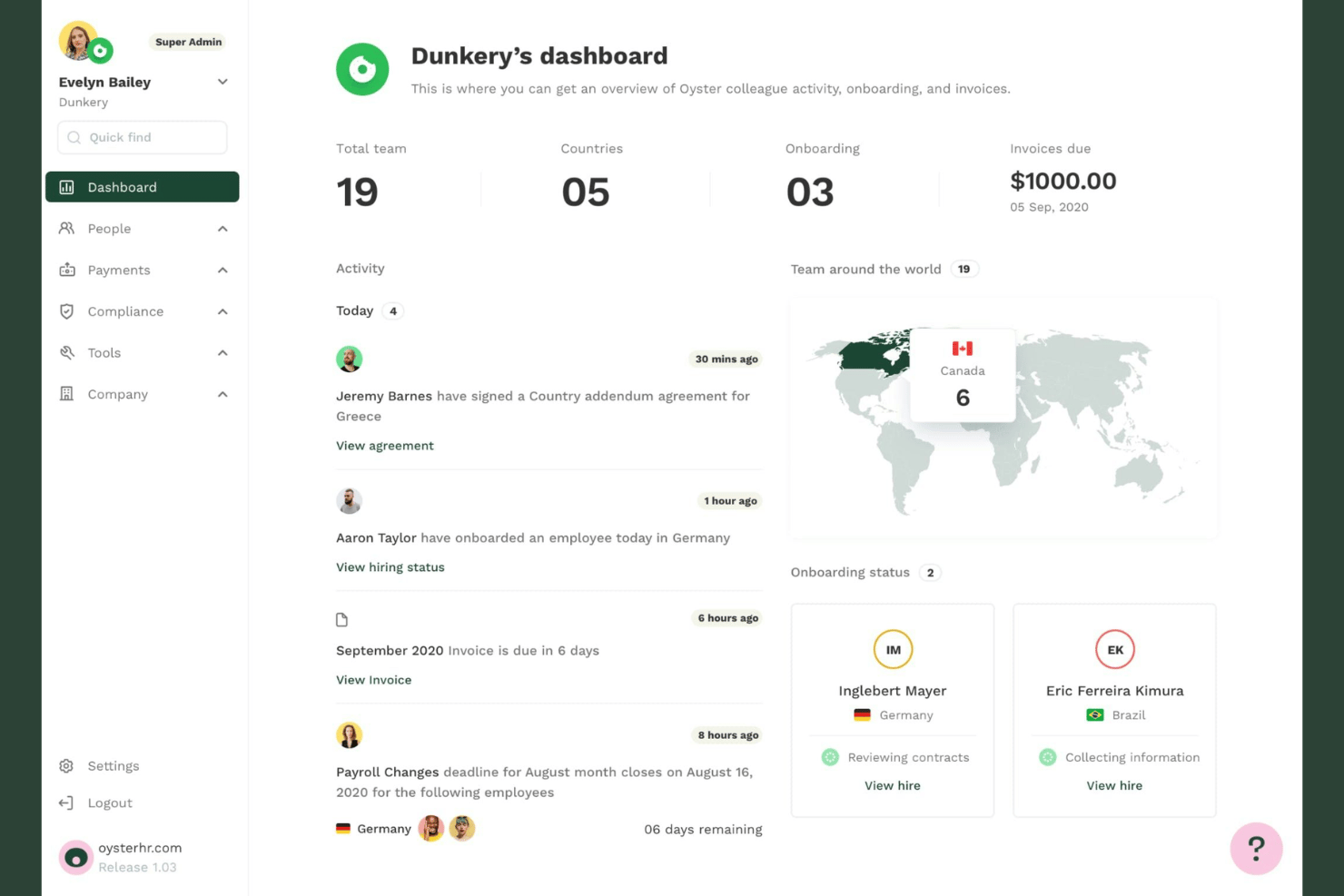
Oyster is a global Employer of Record platform that lets you hire, pay, and manage full-time employees in Kenya without a local entity, handling contracts, PAYE payroll, statutory contributions, and onboarding from a single platform.
Who Is Oyster Best For?
Oyster is a good fit for companies making their first hire in Kenya who want a fast, low-commitment way to test the market before investing in a local entity.
Why I Picked Oyster
I picked Oyster as one of the best because it's built for exactly this scenario: you want one person in Kenya, you want them hired fast, and you don't want to commit to a legal entity yet. Oyster claims 48-hour onboarding in Kenya, legally reviewed, locally compliant employment agreements, and assigns a dedicated country onboarding manager so you're not navigating Kenyan Employment Act requirements alone.
Oyster Key Features
- Kenya cost calculator: Estimates country-specific hiring costs, including employer contributions, taxes, and Oyster's service fee.
- Contract quality score: Oyster scores each generated contract against Kenyan legal minimums, flagging gaps in pay, notice periods, or leave entitlements.
- Multi-currency billing: Clients can be billed in USD, EUR, GBP, or CAD, with payroll processed in KES and currency conversion handled automatically.
- Role-based admin access: Assign different permission levels to team members managing Kenyan hires, controlling who can view contracts, payslips, and employee documents.
Oyster Integrations
Oyster lists integrations with BambooHR, Greenhouse, HiBob, Personio, Slack, Xero, QuickBooks, Carta, ADP Workforce Now, and SAP Concur. It also offers a developer API and Zapier connectivity for custom workflows.
Pros and Cons
Pros:
- Provides Kenya-specific contracts and cost estimates
- Automates KES payroll and statutory remittances
- Kenya-specific visa sponsorship assistance
Cons:
- Published statutory figures need verification
- Kenyan entity ownership remains undisclosed

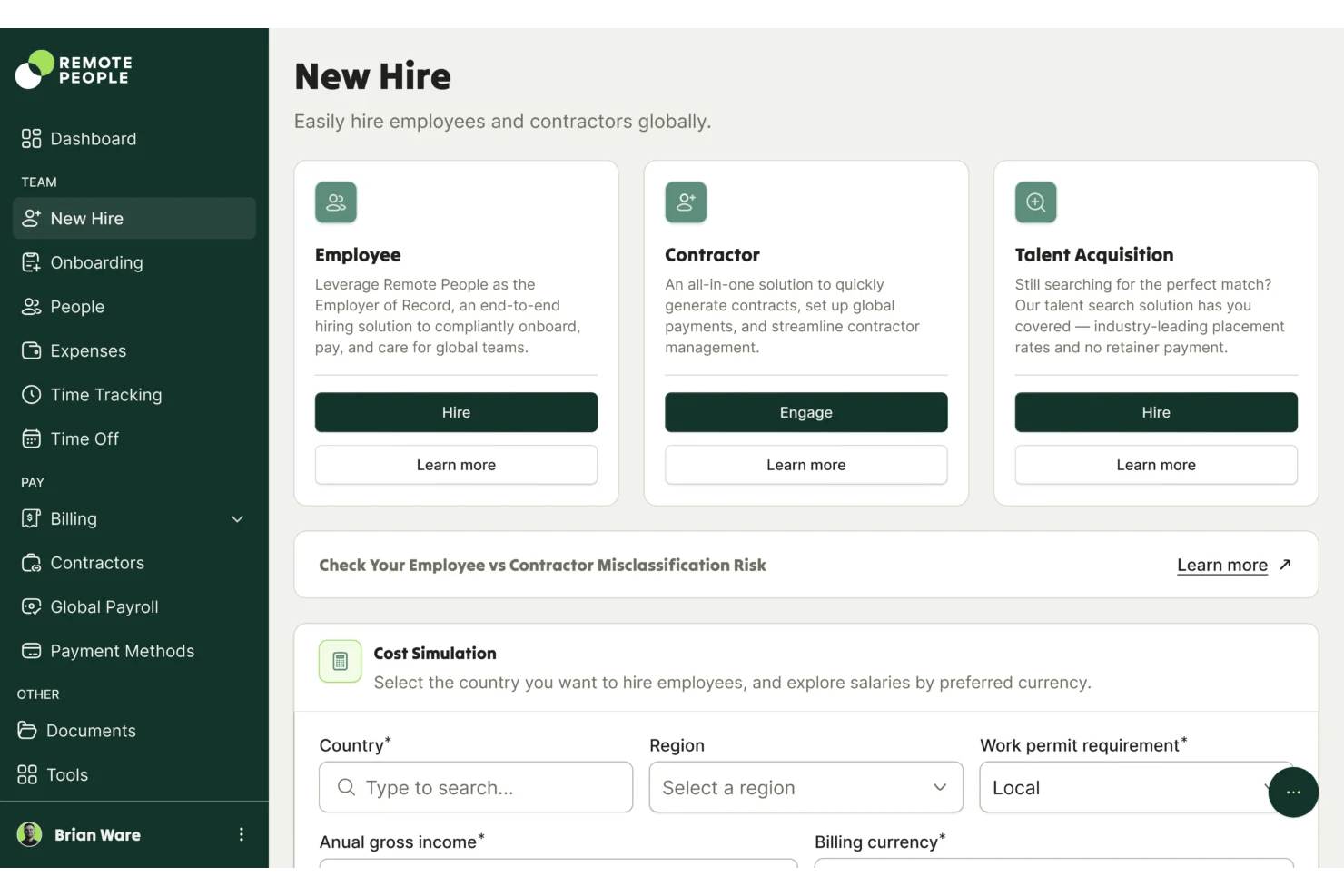
Remote People is an Employer of Record platform that handles Kenyan employment contracts, statutory payroll, compliance with the Employment Act 2007, and work permit sponsorship for foreign hires.
Who Is Remote People Best For?
Remote People works well for companies hiring foreign nationals in Kenya who need a single provider to handle both employment compliance and work permit sponsorship.
Why I Picked Remote People
Remote People earns its spot on my shortlist because it's the one of few Kenya EOR I've found that pairs full employment compliance with in-house work permit sponsorship. Its services cover locally compliant contracts, payroll administration, and support for work permit applications, while its Kenya guide explains Class D permits and interim Special Pass requirements. I also like that it handles PAYE, NSSF, SHIF, and Affordable Housing Levy administration, helping businesses hire in Kenya without establishing a local entity.
Remote People Key Features
- Monthly KES payroll processing: Remote People runs payroll in Kenyan shillings each month, handling PAYE, NSSF, SHIF, and AHL deductions, plus P10 filings to the Kenya Revenue Authority by the 9th of each month.
- Recruit + EOR bundling: You can hire and onboard Kenyan staff through a single provider, with recruitment priced at 2% of annual salary monthly for 12 months alongside the standard EOR fee.
- Command Center AI requests: The platform accepts plain-language HR requests through an AI tool, with a human expert reviewing each action and maintaining full audit logs.
- Multi-country coverage from one dashboard: Remote People covers 150+ countries, so you can manage Kenyan hires alongside staff in Nigeria, Uganda, Rwanda, and South Africa from one account.
Remote People Integrations
Remote People reports 70+ native integrations, including BambooHR, Workday, SAP SuccessFactors, Personio, HiBob, Rippling, and UKG Pro. It also supports SSO with Okta, Microsoft Entra ID, JumpCloud, and Google Workspace, plus an open API.
Pros and Cons
Pros:
- Work permit support includes interim Special Passes
- Kenya guidance covers current statutory contributions
- Manages Kenyan NSSF registration and contributions
Cons:
- Immigration assistance requires separate pricing
- Kenyan entity ownership remains undisclosed

Rippling
Best for Kenyan hires in one HR and IT system
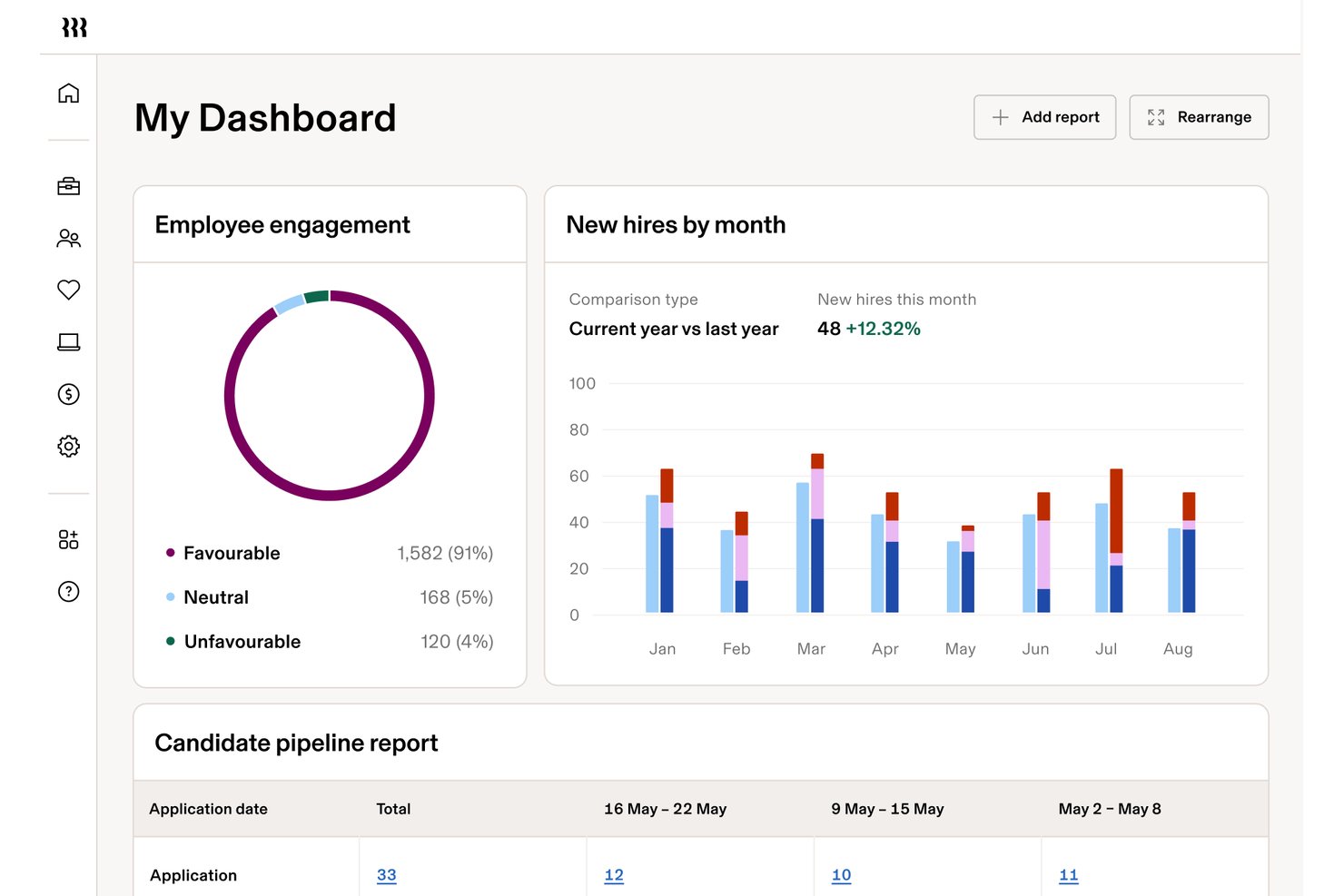
Rippling is an HR, IT, and payroll platform that lets you hire and manage employees in Kenya—and across 100+ countries—without setting up a local entity, handling employment contracts, compliance, payroll, and benefits in one unified system.
Who Is Rippling Best For?
Rippling works well for companies that already use—or plan to use—a unified HR and IT platform and want to add Kenyan hires without switching tools.
Why I Picked Rippling
I've included Rippling in my top picks because it's one of the few platforms where hiring in Kenya and managing that employee's HR, IT, and payroll life cycle happen in one place. When you onboard a Kenyan hire, Rippling automatically generates a locally compliant contract, enrolls them in benefits, sets up app access, and configures devices. I also like its built-in compliance controls and local HR expertise, which support businesses managing Kenyan employees alongside their wider international workforce.
Rippling Key Features
- Multi-model workforce management: Manage Kenyan EOR employees, contractors, and your own-entity staff in one platform without duplicating records.
- Automated app and device provisioning: Automates app access, device configuration, and security policies during employee onboarding.
- 600+ third-party integrations: Connect Rippling to tools like QuickBooks, NetSuite, Xero, Slack, and Google Workspace to keep HR and finance data in sync.
- Worker transition between employment models: Supports contractor-to-employee and EOR-to-own-entity transitions while preserving worker records.
Rippling Integrations
Rippling offers 600+ integrations, including QuickBooks, NetSuite, Xero, Slack, and Google Workspace. Its developer kit supports custom integrations through the Rippling API.
Pros and Cons
Pros:
- HR and IT onboarding in one system
- Localized contract and termination workflows
- Detailed Kenyan compliance guidance
Cons:
- Kenya-specific benefits remain unspecified
- Kenyan employing entity remains unclear
New Product Updates from Rippling

Rippling Expands Automated Compliance With AI Workflows
Rippling expands Automated Compliance with multi-framework support, AI workflows, an audit portal, and trust centers. These updates help GRC teams manage compliance work and audits. For more information, visit Rippling’s official site.

Best for itemized Kenya cost estimates
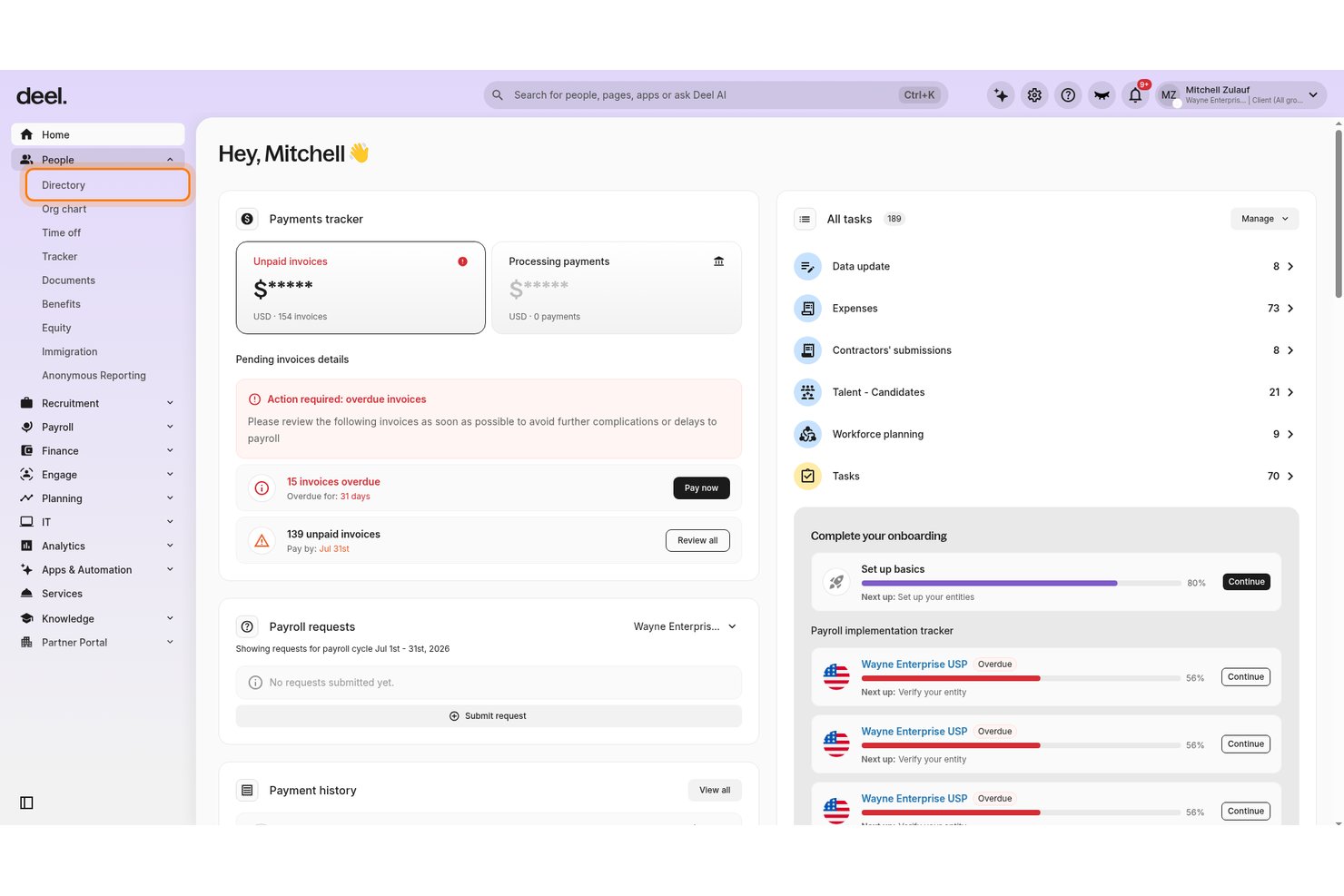
Deel Hire is a global Employer of Record platform that lets you employ workers in Kenya without a local entity, handling payroll in KES, statutory deductions, compliance, contract management, and benefits administration.
Who Is Deel Hire Best For?
Deel Hire is a good fit for finance and expansion teams that need published, itemized employer cost data to budget Kenyan hires before committing to a contract.
Why I Picked Deel Hire
Deel Hire earns its spot on my shortlist because it publishes a fully itemized Kenya employer cost breakdown, helping businesses plan hiring budgets before contacting sales. Its Kenya guide identifies NSSF, WIBA, the Affordable Housing Levy, NITA, and employer liability costs, while its employee cost calculator estimates salary, contributions, benefits, and service fees. I find this useful for comparing potential hiring expenses across countries and preparing international workforce budgets.
Deel Hire Key Features
- Severance accrual billing: Deel adds a monthly severance charge to your invoice to cover Kenya's statutory severance, with any unused amount refunded if the employee resigns.
- Multi-currency payroll: Kenyan employees are paid in KES, with Deel handling automated statutory deduction calculations and monthly payroll processing.
- Optional private health insurance: You can add supplemental health coverage through Unisure or Allianz directly from the Deel benefits dashboard.
- Guided termination workflow: An in-platform termination process walks you through final pay, unused leave payout, and handover steps in line with local law.
Deel Hire Integrations
Deel documents integrations with QuickBooks, Xero, NetSuite, BambooHR, HiBob, Personio, Greenhouse, Ashby, Slack, and Google Workspace. These connect payroll, HR, recruiting, collaboration, and accounting workflows for Kenyan teams.
Pros and Cons
Pros:
- Employee self-onboarding includes contract signing
- Monthly KES payroll calculates statutory deductions
- Itemized Kenya cost estimates support budgeting
Cons:
- Refundable deposit required per EOR hire
- Kenyan legal employer ownership remains undisclosed

Best for testing Kenya with published pricing
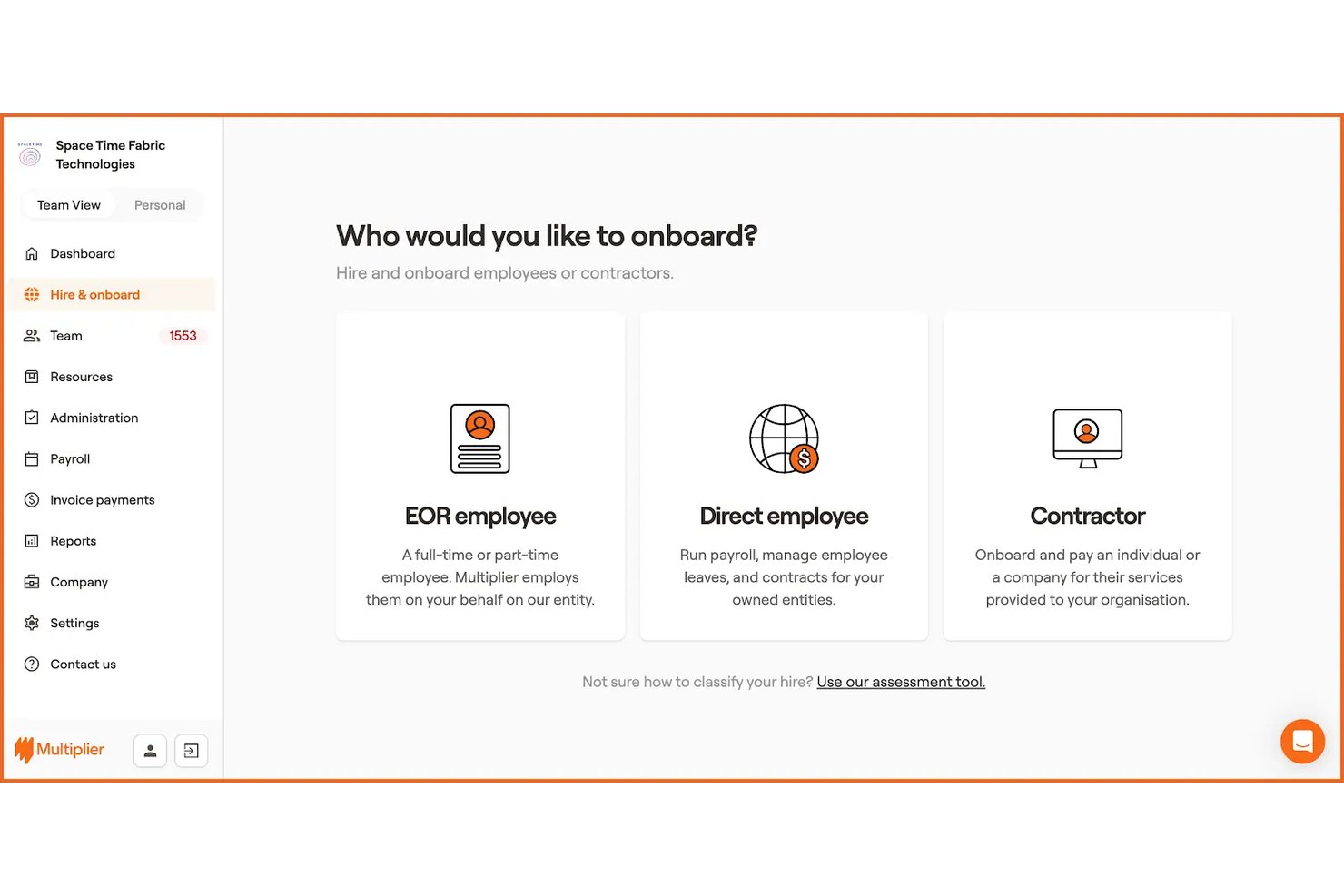
Multiplier is an Employer of Record platform that lets you hire in Kenya without a local entity, handling employment contracts, payroll, statutory compliance, and onboarding.
Who Is Multiplier Best For?
Multiplier works well for global expansion teams that want to hire in Kenya quickly and prefer knowing the cost upfront before committing to a local entity.
Why I Picked Multiplier
Multiplier earns its spot on my shortlist because it's one of the few Kenya EOR providers that publishes flat per-employee pricing upfront, starting at $459/month, so you can model costs before talking to sales. I also like its advertised 24–72-hour onboarding, locally compliant employment contracts, and statutory deductions like PAYE, NSSF, and SHIF handled automatically. That combination makes it a practical first move when you're testing Kenyan market demand without committing to a local entity.
Multiplier Key Features
- Work permit sponsorship: Multiplier handles Class D employment and Class G business permit applications, plus Special Passes for Kenya hires.
- Employee cost calculator: A free tool that estimates salary, statutory contributions, and benefits across 120+ countries in multiple currencies.
- Benefits add-ons: Optional health insurance, life insurance, and background checks can be added to your base EOR plan.
- HRIS and accounting integrations: Connects with BambooHR for employee data and QuickBooks Online for invoice and expense synchronization.
Multiplier Integrations
Multiplier integrates with Workday, BambooHR, Personio, HiBob, and Zoho People to support HR data management. Core includes API access for custom integrations, while other named integrations are not clearly verified.
Pros and Cons
Pros:
- Payroll handles PAYE, NSSF, and SHIF
- Localized contracts cover Kenyan probation and leave
- Supports 24–72-hour employee onboarding
Cons:
- Kenyan entity ownership remains unconfirmed
- Conflicting guidance on SHIF and severance

Best for budgeting a Kenya market test
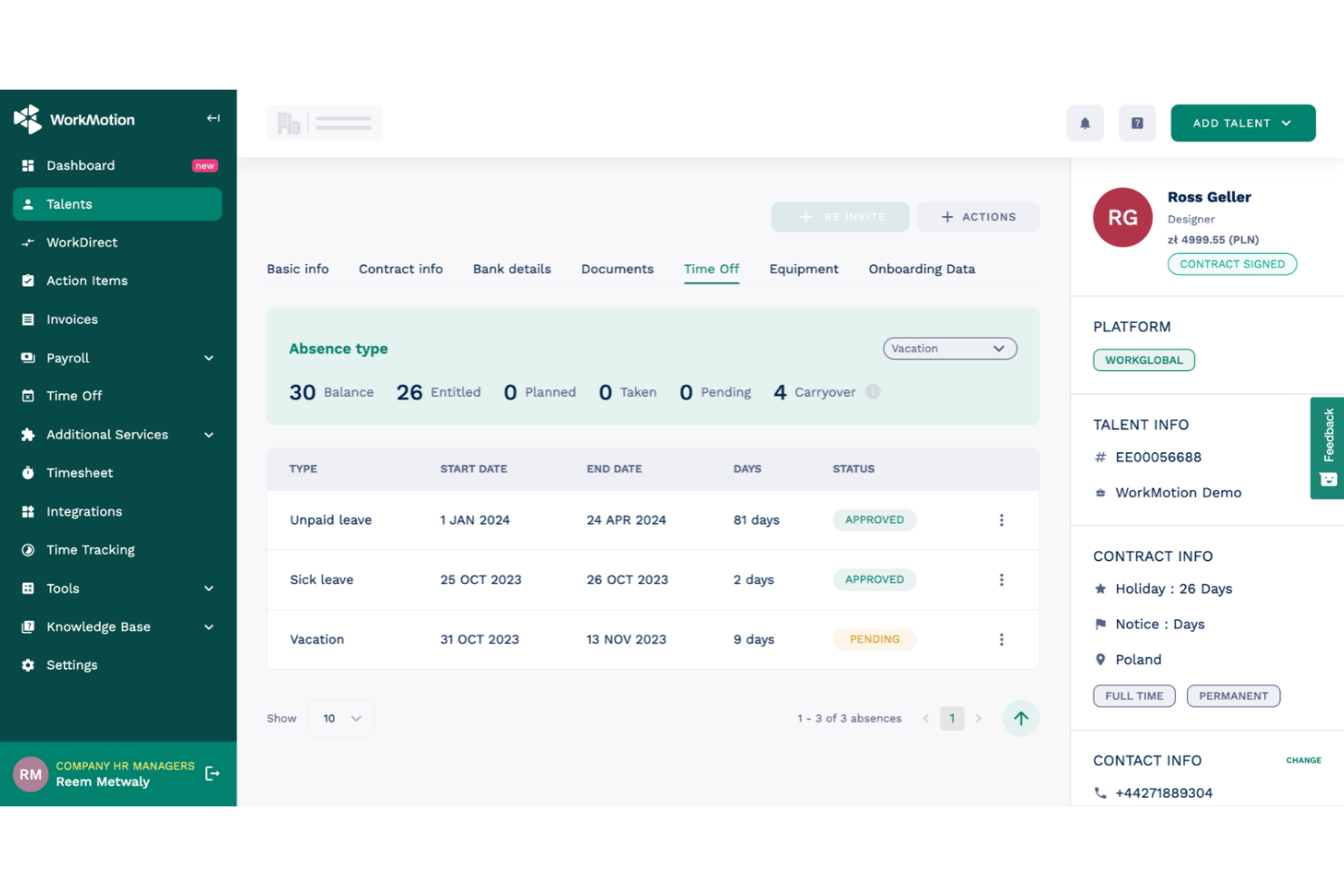
WorkMotion is an Employer of Record platform that handles Kenyan employment contracts, PAYE and statutory contributions (NSSF, SHIF, housing levy), monthly KES payroll, and onboarding without requiring you to set up a local entity.
Who Is WorkMotion Best For?
WorkMotion suits finance-led teams that need a predictable cost structure before committing to a Kenyan entity.
Why I Picked WorkMotion
I picked WorkMotion as one of the best because its free Employment Cost Calculator helps businesses estimate the cost of hiring in Kenya before committing to a new employee. It provides a breakdown of employment expenses, including local statutory contributions such as NSSF, SHIF, and the Affordable Housing Levy, making it useful for planning a Kenya market test. It also offers EOR services starting at $549 per employee per month, covering employment contract preparation, payroll administration, and compliance support.
WorkMotion Key Features
- KES payroll processing: WorkMotion runs monthly payroll in Kenyan shillings, including itemized payslips, statutory deductions, and contribution remittances.
- Automated offboarding tools: An Offboarding Cost Calculator estimates severance, unused leave, and notice costs, with a Complexity Meter and downloadable termination guides.
- HRIS integrations: WorkMotion syncs two-way with platforms like BambooHR, Workday, HiBob, Personio, and ADP Workforce Now.
- Wanda AI assistant: An in-platform AI assistant that supports HR and compliance queries across the countries WorkMotion operates in.
WorkMotion Integrations
WorkMotion lists 25 integrations, including BambooHR, Workday, HiBob, Personio, ADP Workforce Now, Factorial, UKG Pro, and Google Workspace, with two-way HRIS synchronization.
Pros and Cons
Pros:
- Automated Kenyan statutory payroll updates
- Cost calculators map employer costs in KES
- Kenyan compliance guidance covers SHIF transitions
Cons:
- Standard contracts take approximately three business days
- Kenyan employment relies on partner entities

G-P
Best for Kenya hiring across global teams
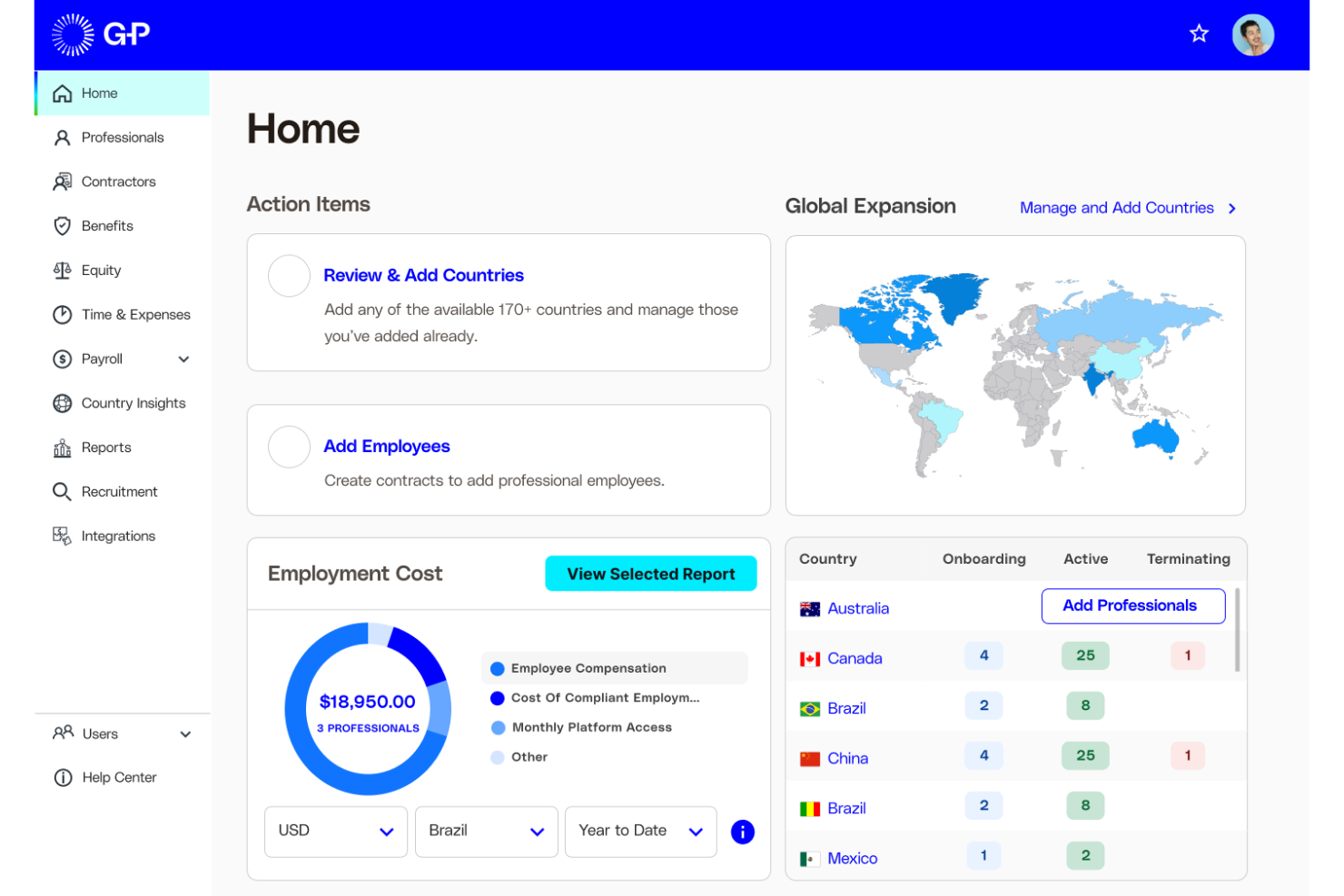
G-P is an Employer of Record platform that lets you hire, onboard, and pay employees in Kenya—and 180+ other countries—handling local contracts, payroll, statutory benefits, and terminations without requiring you to set up a local entity.
Who Is G-P Best For?
G-P is a strong fit for global expansion teams that need to hire in Kenya as part of a broader multi-country workforce strategy.
Why I Picked G-P
I've included G-P in my top picks because it's built for teams hiring across multiple countries at once, making Kenya one node in a broader global workforce rather than a standalone compliance project. When your expansion spans several markets, G-P's AI-guided onboarding handles right-to-work checks and locally compliant contract generation across all of them from one platform. I also like that G-P handles Kenyan payroll and local tax administration, reducing the need to manage country-specific employment processes separately.
G-P Key Features
- AI contract generator: Produces locally compliant employment contracts for Kenya in seconds, pre-populated with statutory terms like KES pay requirements and mandated leave entitlements.
- Multi-system HR integrations: Connects natively with platforms including Workday, SAP SuccessFactors, BambooHR, HiBob, and ADP Workforce Now via built-in integrations and a full API.
- Global compliance engine: Applies AI-guided compliance checks at each hiring step across 180+ countries, with in-country HR and legal experts available throughout the process.
- Onboarding-to-offboarding workflow: Supports onboarding, right-to-work verification, payroll, and termination administration for international employees.
G-P Integrations
G-P offers documented integrations with Workday, BambooHR, SAP SuccessFactors, ADP Workforce Now, UKG Pro, HiBob, Personio, Paylocity, Microsoft Entra ID, and Okta/Auth0. Its API supports custom HR and payroll connections.
Pros and Cons
Pros:
- Guided onboarding includes right-to-work checks
- AI-generated, locally compliant employment contracts
- Broad coverage for Kenya and other markets
Cons:
- Background checks are a separate add-on
- Kenya visa processing isn't supported
Other Employer of Record Software in Kenya
Here are a few additional options that didn’t make my top list but are still worth checking out:
- Payoneer Workforce Management
For Kenyan hires needing work permits
- Remote
For owned-entity hiring across markets
- Papaya Global
For reconciling Kenya payroll globally
- RemoFirst
For Kenya's changing payroll rules
- Borderless AI
For hands-on Kenya payroll support
- Native Teams
For employee and contractor teams
- Pebl
For connecting Kenya hires to 250+ apps
- TopSource
For expert-led Kenyan payroll compliance
- Workpay
For Kenya-to-Africa expansion
- Playroll
For dedicated Kenya HR support


How I Evaluate Employer of Record Software in Kenya
I split my evaluation into three parts. Core functionality carries the most weight: I look for providers that can legally employ workers through a local entity and manage PAYE, NSSF, and NHIF/SHIF compliance. Then I evaluate standout features like work permit support and transparent cost calculators, followed by factors like support responsiveness and pricing value.
Core Functionality (Table Stakes for This List)
When I'm selecting tools for my list, I score each one on a scale from 0 (does not offer the functionality) to 5 (excels in this area) for each core functionality listed below. I then convert the total into a percentage to help assess each tool's overall fit, with extra weight on any functionalities I've deemed essential.
- Local Entity Employment (Essential): I check whether the provider employs workers through its own Kenyan entity or a disclosed partner, and how clearly it assumes employer liability.
- Kenyan Compliance Management (Essential): I look for up-to-date handling of PAYE, NSSF, NHIF/SHIF, statutory leave, and termination rules rather than generic guidance.
- Local Payroll Processing: Each provider should calculate pay in Kenyan Shillings, handle statutory deductions, and manage filings without requiring your team to do manual remittances.
- Contract Generation and Management: I evaluate whether contracts reflect Kenyan statutory terms out of the box or require significant manual editing before they're usable.
- Benefits Administration: Providers should administer statutory benefits directly and ideally offer supplementary options like private health insurance or retirement plans.
- Onboarding and Termination Workflows: I look for structured, Kenya-specific steps covering document collection, probation terms, notice periods, and severance calculations.
Once I have a list of tools that meet the criteria, I consider what sets each platform apart.
Differentiating Factors (What Sets Vendors Apart)
Here's how I compare and contrast different vendors:
Standout Features
I look for a transparent cost calculator that breaks out statutory contributions like NSSF and NHIF/SHIF from the provider's fees, so you can compare true employment costs before committing. Visa and work permit support matters when you're placing foreign nationals in Nairobi—providers like Payoneer and Remote People handle sponsorship steps that would otherwise require local legal counsel. I also evaluate onboarding speed, since a provider that can get a Kenyan hire onto payroll in days rather than weeks makes a real difference when you're testing market viability on a short timeline.
Beyond Features
I check whether a provider owns its Kenyan entity or relies on a third-party partner, since that affects how directly it assumes employer liability. Pricing transparency matters just as much—I look for itemized quotes that separate statutory contributions from platform fees, because hidden setup or offboarding charges can inflate costs fast. I also evaluate how quickly a provider can get a Kenyan hire onto payroll, since delays in contract execution or statutory registration can stall a market test before it starts.
How to Choose an Employer of Record Software in Kenya
Choose an Employer of Record provider in Kenya by matching its legal employment model, statutory administration, permit support, and cost breakdown to your hiring plan.
| If your priority is… | Look for… |
|---|---|
| Clear employer accountability | Written confirmation of the Kenyan employing entity and who carries employer obligations |
| Predictable employment costs | An itemized quote separating provider fees, statutory deductions, and setup or exit charges |
| Hiring a foreign national | A defined work permit scope, including document requirements, responsibilities, and fees |
| A low-commitment market test | Contract terms that specify minimum duration, deposits, and termination costs |
How to Vet Your Shortlist
- Confirm the employing entity: Request the legal entity name and written confirmation of which party appears as employer in the Kenyan employment agreement.
- Test the payroll breakdown: Ask for an itemized payroll illustration for your proposed salary that identifies PAYE, NSSF, current health contributions, and filing responsibilities.
- Verify permit responsibilities: Request a work permit checklist and written responsibility matrix showing who handles each step, required documents, and related fees.
- Review employment terms: Request a sample Kenyan contract and ask the provider to identify its clauses for probation, notice, leave, and termination payments.
- Choose the liability-cost balance: An owned entity can offer a more direct employment relationship, while a partner-led model may suit a test with lower commitment; weigh the accountability and costs in writing.
What are Employer of Record Providers in Kenya?
An Employer of Record provider in Kenya is a third-party organization that legally employs workers on your behalf and manages local employment administration. It can handle Kenyan contracts, payroll, statutory contributions, and employment compliance. Before choosing one, confirm which legal entity employs the worker and who is responsible for filings, permits, and termination obligations.
Features
Here are the main features I look for in an Employer of Record software in Kenya:
- Local entity employment: The provider or a disclosed local partner employs the worker under a Kenyan employment agreement. Confirm which entity assumes employer obligations.
- Kenyan payroll processing: The provider calculates salary in Kenyan shillings, applies statutory deductions, and prepares payroll records for each pay cycle.
- Statutory contributions and filings: The provider calculates and remits required deductions, including PAYE, NSSF, and applicable health contributions such as SHIF.
- Locally compliant contracts: The provider prepares employment agreements that reflect Kenyan requirements, including terms for pay, working hours, leave, probation, and notice.
- Benefits administration: The provider manages statutory benefits and can explain any optional benefits, such as private health coverage, available to your employees.
- Onboarding workflows: The provider collects employee documents, coordinates contract signing, and completes payroll setup and required registrations before the start date.
- Leave and absence tracking: The service records leave entitlements and time off, helping your team apply Kenyan leave policies consistently and maintain accurate payroll records.
- Termination administration: The provider guides the process and calculates final pay, notice, and other applicable termination payments under the employment agreement and local rules.
- Work permit support: For foreign national hires, the provider explains permit requirements, document collection, responsibilities, and related fees.
Benefits
Here are a few common benefits of using an Employer of Record software in Kenya:
- Local employment: An EOR employs your hire through its Kenyan entity or disclosed local partner and clarifies who carries employer obligations.
- Payroll and filings: Kenyan payroll processing can calculate pay in shillings and manage PAYE, NSSF, and applicable health contributions such as SHIF.
- Locally compliant terms: Kenyan employment contracts can address statutory terms, leave, probation, notice, and termination payments.
- Structured onboarding: Document collection, contract signing, payroll setup, and required registrations can help prepare a new hire for their start date.
- Permit guidance: Providers that support work permits can outline requirements, document responsibilities, and related fees for foreign national hires.
- Benefits administration: An EOR can manage statutory benefits and explain available options such as private health coverage.
Pricing
Employer of Record services in Kenya typically cost a few hundred dollars per employee each month. Providers usually charge per employee rather than offering standard free, personal, business, and enterprise plans, so the tiers below are comparison bands, not universal packages.
Plan Comparison Table for Employer of Record Services in Kenya
| Plan Type | Average Price | Common Features |
|---|---|---|
| Free Plan | $0, but EOR services aren’t included | No legal employment, no payroll processing, and no statutory filings. |
| Personal Plan | $200–$400 per employee/month | Local employment, Kenyan payroll processing, and statutory contribution administration. |
| Business Plan | $400–$600 per employee/month | Local employment, payroll and filings, benefits administration, and onboarding support. |
| Enterprise Plan | $600–$800 per employee/month | Local employment, payroll and filings, work permit support, dedicated account management, and custom terms. |
FAQs
Here are answers to common questions about Employer of Record software in Kenya:
Can I hire in Kenya through an EOR without setting up a local company?
Yes, an EOR can generally employ a Kenyan worker without your company first incorporating locally. The EOR’s Kenyan entity or disclosed local partner appears as the legal employer and handles agreed employment administration. Your company still directs the person’s day-to-day work and should check whether its activities create separate Kenyan tax or registration obligations. Ask the provider to identify the employing entity in the contract and explain which responsibilities remain with your business.
How is an EOR different from a staffing agency in Kenya?
An EOR becomes the legal employer under the employment agreement, while your company directs the employee’s day-to-day work. A staffing agency typically recruits or supplies workers, but the legal employment arrangement can vary by contract and service. Don’t rely on the provider’s label alone. Check who signs the employment agreement, runs payroll, handles statutory filings, and manages termination. Those details clarify the arrangement and help your HR and legal teams assess who holds each obligation.
Can an EOR in Kenya hire contractors?
Some EOR providers also offer contractor management, but contractor status depends on the working arrangement, not just the contract title. If your business controls someone’s schedule, duties, and ongoing work, ask a Kenyan employment adviser to assess whether an employment relationship could apply. Request a written explanation of how the provider assesses classification, what documentation it needs, and who bears responsibility if the arrangement is challenged. For a role that functions like an employee position, an EOR employment arrangement may be more appropriate.
What happens if we later set up our own Kenyan entity?
You’ll need to plan a transition from the EOR to your new entity; employment doesn’t transfer automatically just because your company incorporates. Ask the EOR and local counsel how to handle employee consent, contract changes, accrued leave, service dates, benefits, payroll registration, and any notice or termination obligations. Agree on a timeline before changing the employing entity, and document each employee’s terms in writing. This helps prevent gaps in pay, statutory contributions, or employment records during the handover.