

A good Employer of Record in Zambia employs workers on your behalf and handles local employment administration, often without requiring you to set up a Zambian entity. Choosing a partner means checking how it manages local contracts, payroll, statutory filings, and onboarding—not just comparing fees. This guide compares 12 providers, including options for talent sourcing, hiring cost estimates, and contractor-to-employee transitions.
Why Trust Our Software Recommendations
6,700+
Reviews
20
Industry experts
16+
Evaluation factors
14
Years
Our team has been testing and reviewing software since 2012. As HR experts ourselves, we know how difficult—and important—it is to choose the right software.
For this guide, we evaluated tools using hands-on testing and independent research, scoring tools using our selection criteria. We also draw on insights from industry thought leaders and practicing HR experts.
Our reviews reflect our human editorial judgment, not a sales pitch.
Expert reviewers:
- Phil GrayCOO
 Kim BehnkeHR Tech Editor & Analyst
 Josh BarkerPeople Ops Manager

Comparison Table: Employer of Record Providers in Zambia
Compare pricing and specs side by side for the Employer of Record providers in Zambia that made my shortlist.
| Tool | Best For | Trial Info | Price | ||
|---|---|---|---|---|---|
| 1 | Best for included AI contract drafting | Free demo available | From $579/employee/month | Website | |
| 2 | Best for Zambia PAYE, NAPSA and NHIMA filings | Free demo available | From $99/employee/month | Website | |
| 3 | Best for hiring cost and timeline planning in Zambia | Free demo available | From $349/employee/month | Website | |
| 4 | Best for direct employment across the market | Free demo available | From $599/employee/month | Website | |
| 5 | Best for small businesses expanding abroad | Free demo available | Pricing upon request | Website | |
| 6 | Best for four-party contract approval | Free demo available | From €499/employee/month | Website | |
| 7 | Best for contractor-to-employee transitions | Free demo available | From $699/employee/month | Website | |
| 8 | Best for testing Zambia without entity setup | Free demo available | From $399/employee/month | Website | |
| 9 | Best for sourcing and hiring Zambian talent | Free demo available | From $599/employee/month | Website | |
| 10 | Best for hiring via its Zambia subsidiary | Free demo available | From $599/employee/month | Website |


Best Employer of Record Software in Zambia Reviews
Below are my detailed summaries of the best Employer of Record software in Zambia that made it onto my shortlist. My reviews cover local employment support, payroll, and pricing to help you find the right provider for your team.
 Best for included AI contract drafting
- Free demo available
- From $579/employee/month
Visit WebsiteCustomer Rating:4.9/5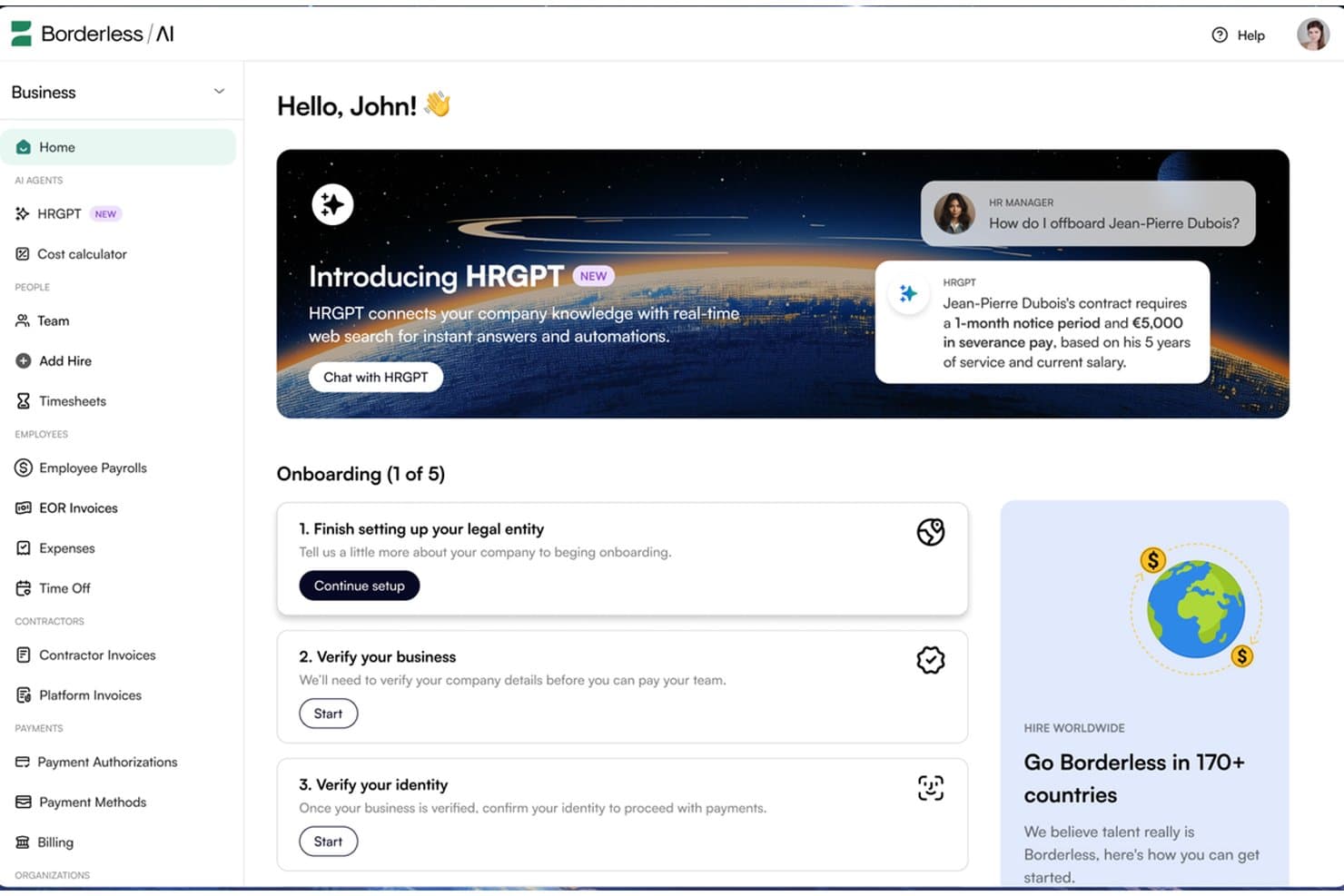
Borderless AI's HRGPT agent answers HR queries and automates offboarding tasks. Borderless AI is an Employer of Record platform that handles international hiring, payroll, tax compliance, statutory contributions, and AI-generated employment contracts across 170+ countries, including Zambia.
Who Is Borderless AI Best For?
Borderless AI is a strong fit for startup founders and small teams making their first international hire in Zambia and needing AI-generated, locally compliant contracts without manual drafting.
Why I Picked Borderless AI
I've included Borderless AI in my top picks because its AI-powered contract generator helps simplify employment documentation for international hires, including those in Zambia. I particularly like that it creates locally tailored contract drafts that employers can review and customize instead of starting from scratch. Borderless AI also handles employment contract compliance, PAYE withholding, and NAPSA contributions through its Zambia EOR service, bringing contract preparation and statutory payroll administration into one platform.
Borderless AI Key Features
- Centralized HR and payroll dashboard: Manage employment records, approval flows, payment schedules, and business policies for Zambia-based employees from a single interface.
- PAYE and statutory contribution processing: Borderless handles Zambian PAYE withholding, NAPSA contributions (5% employer), NHIMA (1%), Workers' Compensation Fund (1%), and Skills Development Levy (0.5%) each payroll cycle.
- Local ZMW payroll runs: Salaries are processed in Zambian kwacha with a structured seven-day timeline from account setup to first payroll.
- 24/7 dedicated support contact: Each client gets a named support contact available around the clock, backed by access to local payroll experts via a dedicated Slack channel.
Borderless AI Integrations
Borderless AI has a marketplace integration with ADP Workforce Now. Workday is listed as an integration, but its capabilities are not specified; API availability is not stated.
Pros and Cons
Pros:
- Automates Zambia-specific tax and statutory deductions
- Dedicated Slack access to local payroll experts
- AI drafts locally tailored Zambian contracts
Cons:
- Work-permit assistance isn’t documented
- Zambia benefit plans lack named insurers
Learn more about Borderless AI: Best for Zambia PAYE, NAPSA and NHIMA filings
- Free demo available
- From $99/employee/month
Visit WebsiteCustomer Rating:4.9/5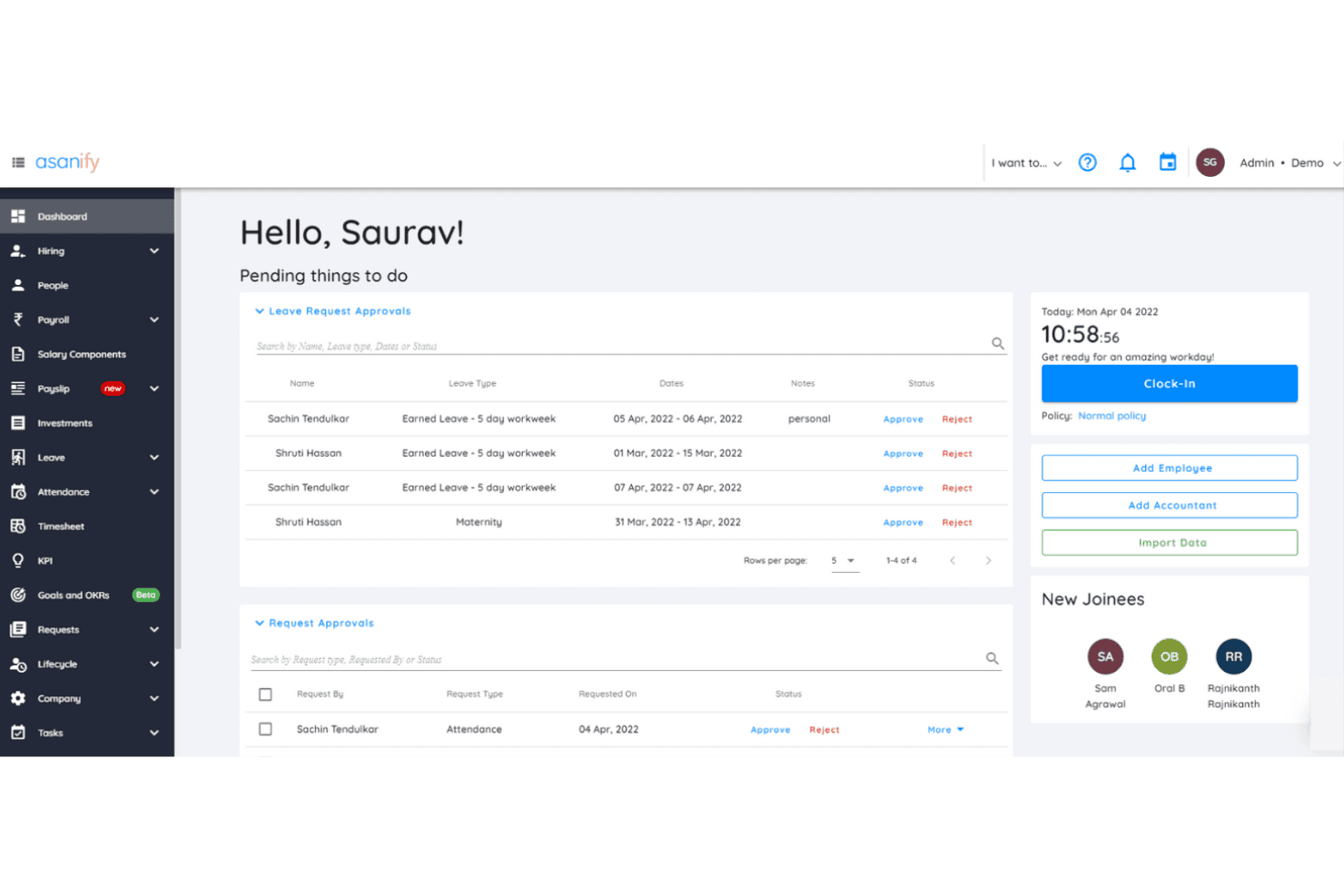
Asanify's dashboard centralizes leave approvals and attendance requests. Asanify is a global Employer of Record platform that handles Zambia-specific payroll processing, statutory compliance, employment contracts, and benefits administration without requiring you to set up a local entity.
Who Is Asanify Best For?
Asanify is a strong fit for startups and small teams hiring their first employees in Zambia and needing hands-on support with PAYE, NAPSA, and NHIMA filings.
Why I Picked Asanify
I've included Asanify in my top picks because it handles Zambia's three core statutory obligations, PAYE, NAPSA, and NHIMA, with local compliance support. I particularly like that it manages NAPSA enrollment during onboarding and manages monthly statutory filings, reducing the need to coordinate separate providers. Zambia-based HR and legal specialists also monitor regulatory changes and run compliance audits, which matters when Employment Code Act requirements shift.
Asanify Key Features
- Employment Code Act-compliant contracts: Asanify drafts and executes employment agreements that meet Zambia's Employment Code Act requirements, covering job duties, compensation, leave, notice periods, and termination conditions.
- Work permit support: Asanify handles work permit applications and renewals for expatriate employees in Zambia.
- Monthly payroll in Zambian Kwacha: Asanify processes payroll on a monthly cycle and disburses salaries directly to employee bank accounts in the local currency.
- Included HRMS platform: The EOR plan includes access to Asanify's HRMS, giving you real-time visibility into employee records, payroll data, and compliance documentation.
Asanify Integrations
Asanify offers integrations with Slack, Microsoft Outlook, and WhatsApp for accessing HR information. API availability for custom integrations isn’t documented.
Pros and Cons
Pros:
- Manages termination settlements and NAPSA exit documentation
- Monthly Kwacha payroll with detailed payslips
- NAPSA enrollment and filing deadlines tracked
Cons:
- Published onboarding timelines conflict
- Zambian employing entity remains undisclosed
Learn more about Asanify: Best for hiring cost and timeline planning in Zambia
- Free demo available
- From $349/employee/month
Visit WebsiteCustomer Rating:4.9/5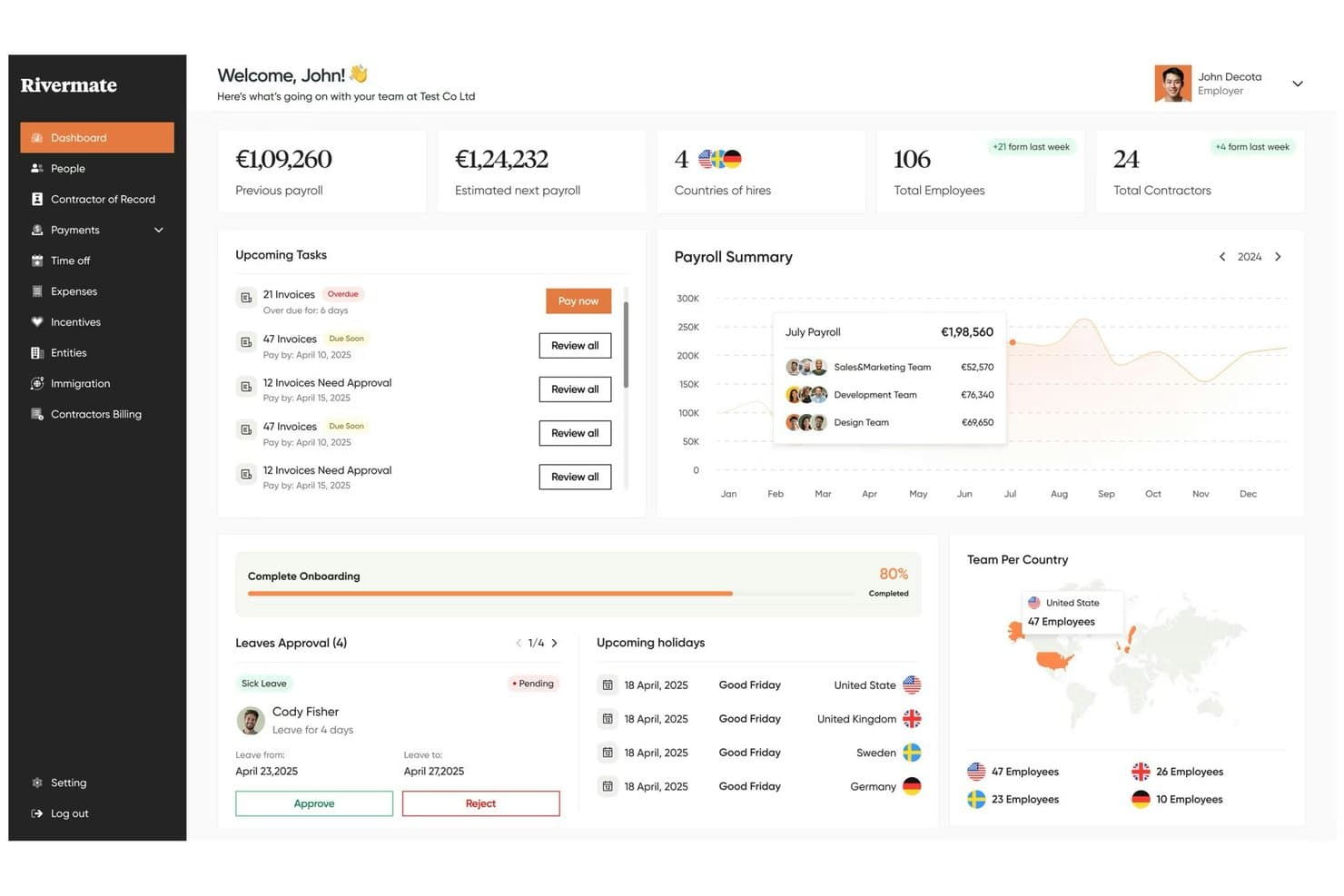
Rivermate centralizes global payroll, headcount, and team tasks in one dashboard. Rivermate is an Employer of Record platform that handles employment contracts, payroll, statutory contributions (NAPSA, NHIMA, PAYE), and benefits administration for companies hiring in Zambia without setting up a local entity.
Who Is Rivermate Best For?
Rivermate is a strong fit for startups and scale-ups that need a clear picture of Zambia hiring costs and timelines before committing to market entry.
Why I Picked Rivermate
I picked Rivermate as one of the best because it publishes more Zambia-specific hiring cost and timeline details. The platform includes an employer cost calculator for Zambia, with exact NAPSA and NHIMA contribution rates and a side-by-side comparison of local entity setup (one to three months) versus EOR onboarding (one to two days for local hires). I also find the guide's work permit breakdown useful, covering permit fees (ZMW 24,000 for issuance) and a realistic six-to-eight-week processing window for foreign hires.
Rivermate Key Features
- Multi-currency payroll: Pay Zambia-based employees in Zambian kwacha or 120+ other currencies through Rivermate's existing banking setup.
- Statutory benefits administration: Manages mandatory leave entitlements, including 24 days of annual leave, 14 weeks of maternity leave, and five days of paternity leave.
- Contractor-to-employee conversion: Supports transitioning contractors into full-time employees with locally compliant contracts and statutory benefits in place.
- 24/7 dedicated account support: Connects your team to a dedicated account manager and local country experts via Slack, WhatsApp, email, or phone.
Rivermate Integrations
Rivermate doesn't have any native integrations documented. Its EOR materials also don't state API availability for custom integrations.
Pros and Cons
Pros:
- Built-in IP protection and legal safeguards
- Local employee onboarding in 1–2 days
- Zambia-specific NAPSA and NHIMA guidance
Cons:
- Visa and immigration pricing available on request
- Zambia service relies on an undisclosed partner
Learn more about Rivermate: Best for direct employment across the market
- Free demo available
- From $599/employee/month
Visit WebsiteCustomer Rating:4.6/5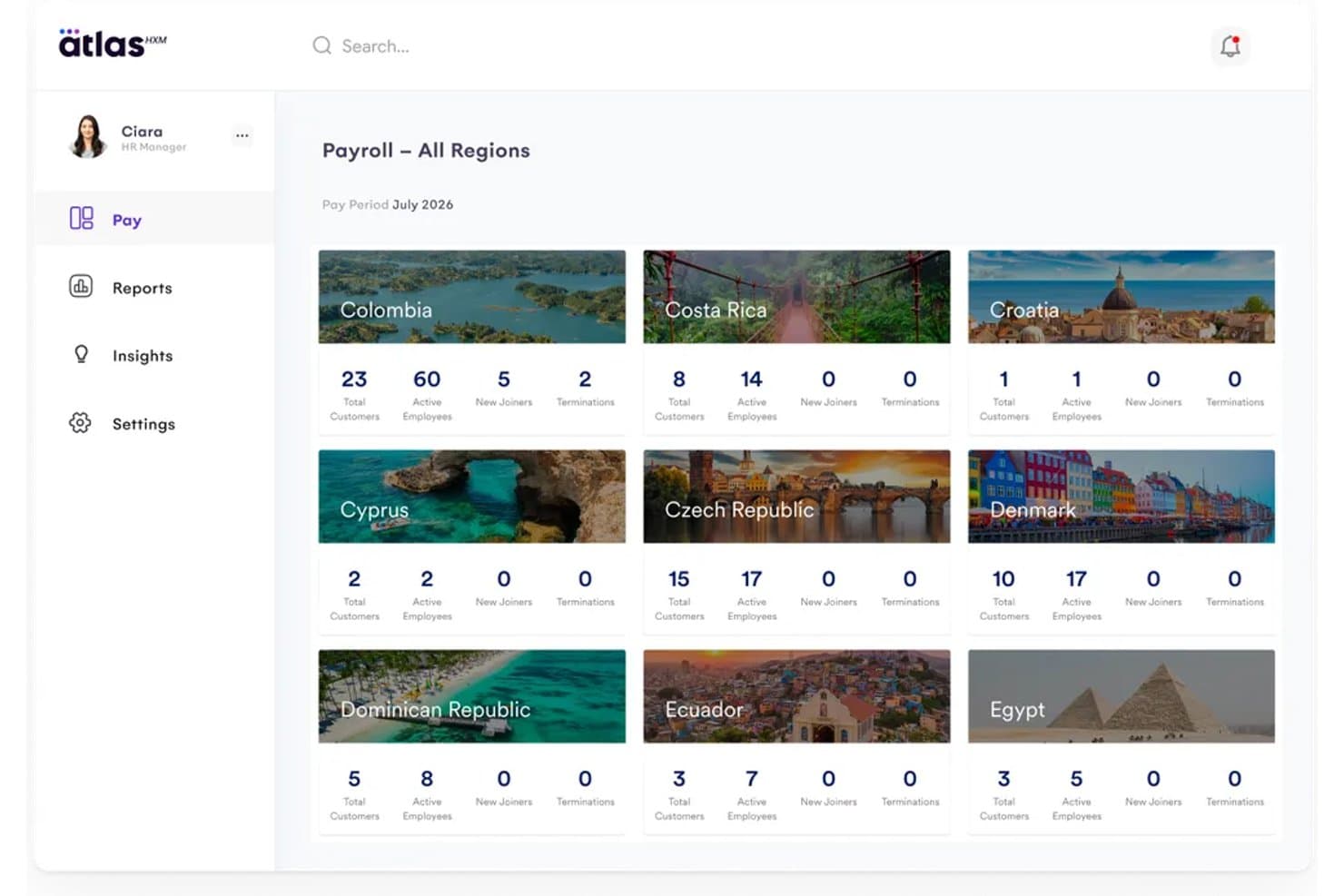
Atlas HXM's payroll dashboard tracks employee data across multiple global regions. Atlas HXM is a global Employer of Record platform that uses its own directly owned entities across 160+ countries to handle employment contracts, payroll, benefits administration, and compliance for companies hiring in Zambia without a local entity.
Who Is Atlas HXM Best For?
Atlas HXM is a strong fit for companies expanding into multiple markets simultaneously, where a single platform for payroll, benefits, and compliance across 160+ countries matters more than regional specialization.
Why I Picked Atlas HXM
I've included Atlas HXM in my top picks because its direct EOR model offers a more centralized approach to international hiring, with Atlas taking responsibility for employment contracts, payroll, and compliance. I particularly like that the platform lets you manage employment across 160+ countries from a single dashboard, so if Zambia is one stop on a broader expansion, you're not juggling separate systems per market. Its centralized payroll and reporting tools also help teams manage statutory payments and employee information without switching between multiple systems.
Atlas HXM Key Features
- Multi-currency payroll processing: Manages international salary payments, statutory deductions, benefits, and expenses through one platform.
- Employee benefits administration: Centralizes statutory benefits and supplemental insurance options, including medical and life coverage.
- Localized onboarding workflows: Supports employee onboarding with document verification, processing, and employment contract issuance.
- SSO and role-based permissions: Provides single sign-on and permission-based access to employee information.
Atlas HXM Integrations
Atlas HXM supports custom integrations through its Atlas Connect API, but does not publicly document a comprehensive list of supported third-party applications.
Pros and Cons
Pros:
- REST API automates onboarding and employee updates
- Payroll records and pay visibility
- Direct employment avoids third-party handoffs
Cons:
- NAPSA and NHIMA handling unverified
- Zambia entity details remain undisclosed
Learn more about Atlas HXM: Best for small businesses expanding abroad
- Free demo available
- Pricing upon request
Visit WebsiteCustomer Rating:4.3/5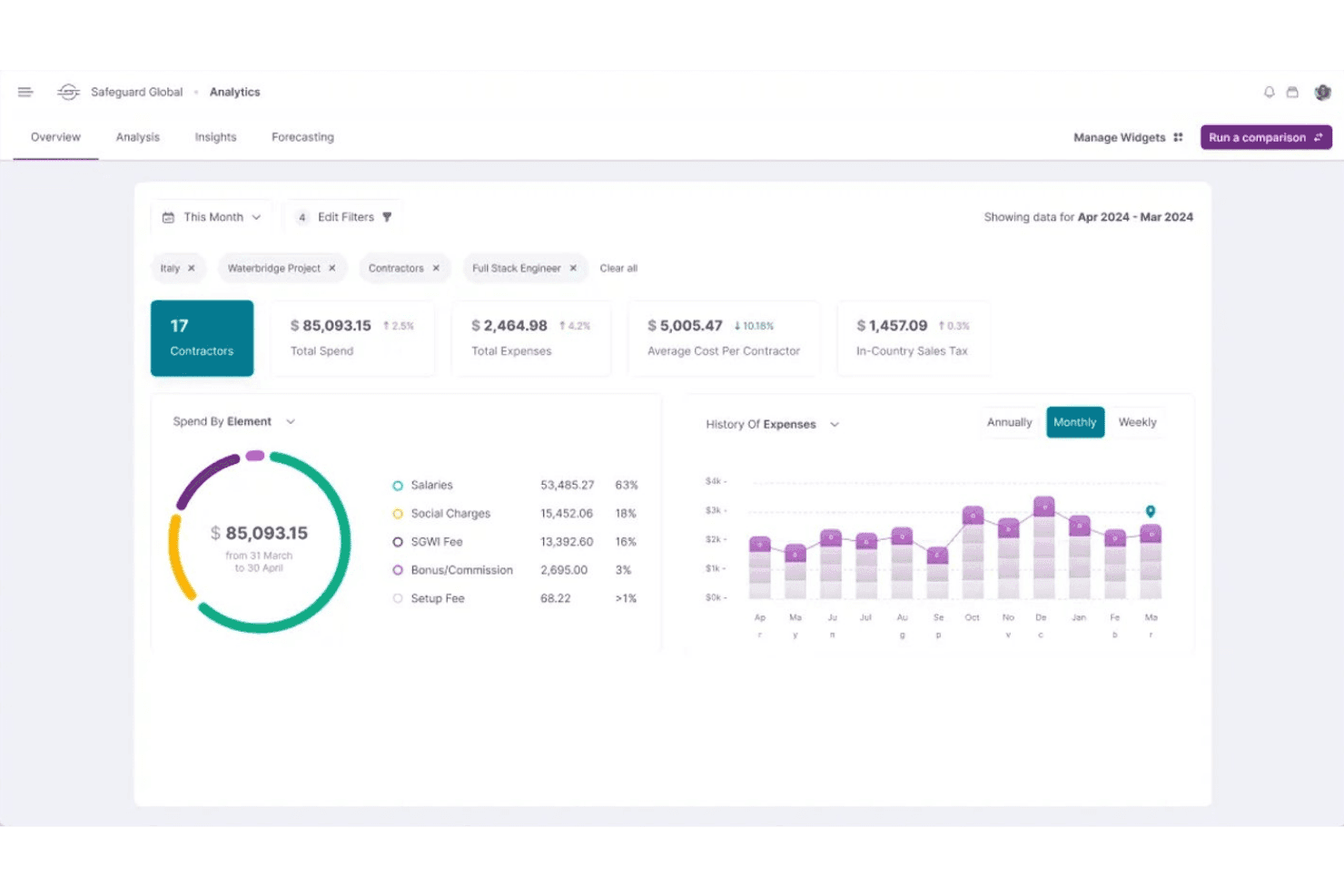
Safeguard Global's analytics dashboard tracks contractor spend and expenses. Safeguard Global is an Employer of Record service that handles hiring, payroll, tax withholding, statutory benefits, and employment contracts for companies bringing on workers in Zambia and 186 other countries—without requiring you to set up a local entity.
Who Is Safeguard Global Best For?
Safeguard Global is a strong fit for small businesses that want to hire in Zambia or other international markets without the overhead of setting up a local entity.
Why I Picked Safeguard Global
I've included Safeguard Global in my top picks because it lets small businesses hire in Zambia without touching entity setup, which removes a significant administrative barrier for teams expanding internationally for the first time. Through its EOR, it handles employment contracts, payroll with tax withholding, and statutory benefits in line with Zambian labor law, so you're not piecing together local compliance on your own. It also covers visa and work permit guidance, which matters when you're bringing in international talent.
Safeguard Global Key Features
- Multi-country workforce analytics: View labor costs, payroll tax amounts, and turnover data filtered by country, currency, contract type, worker role, and spend type across 187 countries.
- Employee self-service portal: Let workers update personal details, upload documents, submit expenses, and manage time-off requests directly in the platform.
- Contractor conversion support: Convert contractors to full-time employees using locally compliant contracts, with onboarding supported in as little as two weeks after the EOR engagement is established.
- Invoice management: Store, filter, and track invoices by country, date, type, and status, with email notifications and in-platform query submission for outstanding balances.
Safeguard Global Integrations
Native integrations are not clearly documented for Safeguard Global’s EOR platform. The platform references API partnerships or integrations, but technical API details and named connectors aren’t published.
Pros and Cons
Pros:
- Country-specific onboarding forms and instant contract previews
- Hiring typically takes one to two weeks
- Zambia hiring without a local entity
Cons:
- Statutory employer costs billed separately from EOR fees
- NAPSA and NHIMA handling lacks detail
Learn more about Safeguard Global: 6Best for four-party contract approval
Lano
- Free demo available
- From €499/employee/month
Visit WebsiteCustomer Rating:4.3/5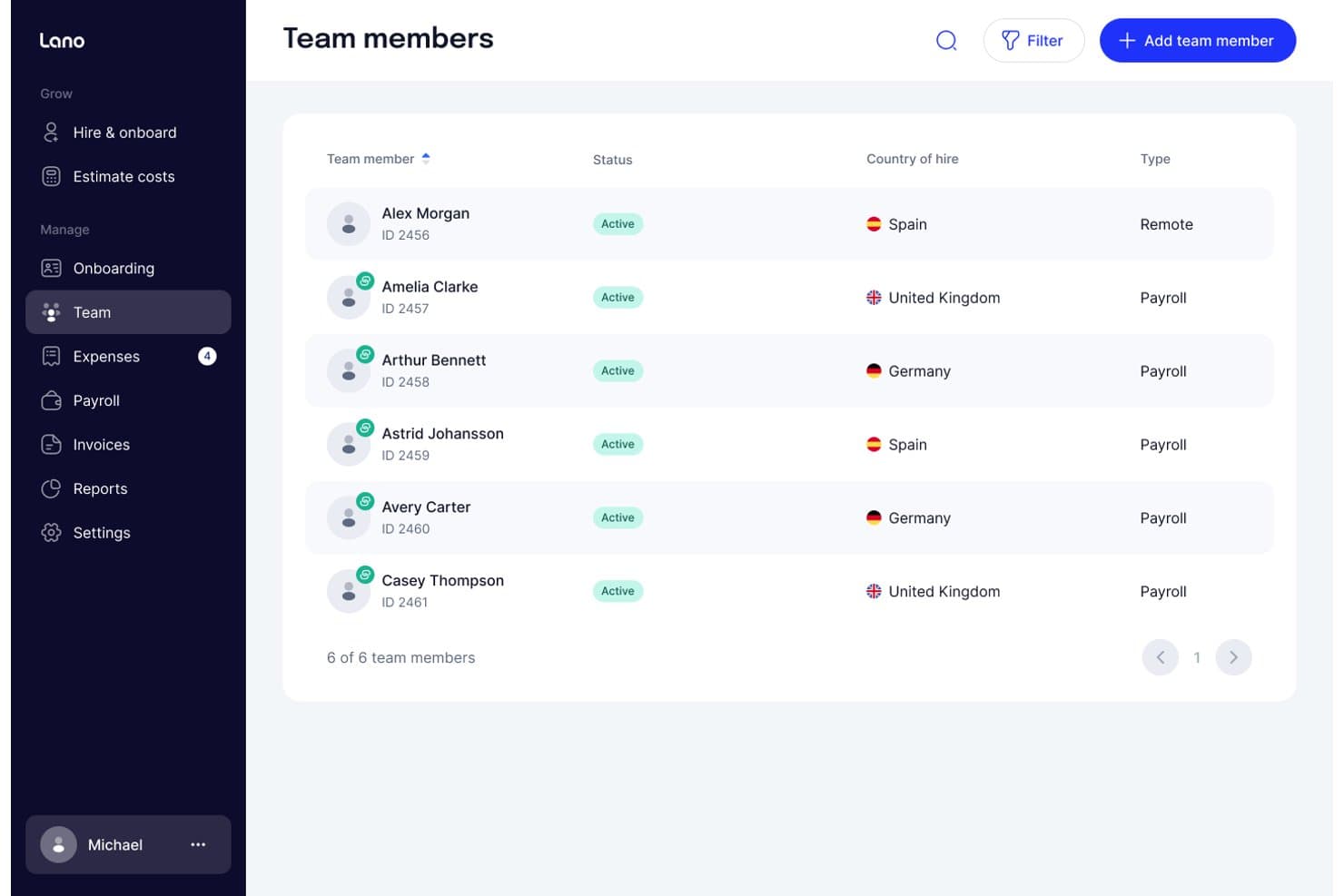
Lano centralizes global team member profiles with country and employment type details. Lano is a global Employer of Record platform that lets you hire full-time employees in 170+ countries—including Zambia—through a vetted local partner network, handling employment contracts, payroll, benefits, and HR administration without requiring you to set up a local entity.
Who Is Lano Best For?
Lano suits startups and scaleups that need to hire across multiple countries quickly and want a single platform to manage contracts, payroll, and PTO without setting up local entities.
Why I Picked Lano
I've included Lano in my top picks because its four-party contract approval process is genuinely one of the best: once a Zambia hire is initiated, the employment contract passes through the candidate, your company, the local EOR partner, and Lano itself before anyone signs. I like that Lano checks each contract for compliance and alignment with its own platform standards, adding a layer of review beyond what most EOR platforms offer. The platform also tracks every hire's status and contract details in one dashboard, so nothing gets lost between approval rounds.
Lano Key Features
- Locally compliant contract customization: Generate employment contracts tailored to local regulations, with options to customize notice periods, probation terms, annual leave, and compensation details for each hire.
- PTO tracking with payroll integration: Employees submit leave requests through the platform, and approved time off automatically creates pay items in the relevant payroll cycle.
- Multi-country hiring dashboard: Track hire status, view contract details, and manage onboarding progress for employees across multiple countries from a single interface.
- Visa and immigration support: Provides immigration assistance for international EOR hires, subject to country-specific availability.
Lano Integrations
Lano offers marketplace integrations with HRIS platforms such as HiBob, Workday Adaptive Planning, and Microsoft Dynamics 365, plus accounting tools including Xero and QuickBooks. It also provides REST API and webhook support for custom integrations.
Pros and Cons
Pros:
- One dashboard tracks cross-country hiring status
- Itemized employment cost estimates before hiring
- Four-party contract review adds approval checks
Cons:
- Partner-dependent service quality can vary
- Zambian statutory contribution details remain unclear
Learn more about Lano: Best for contractor-to-employee transitions
- Free demo available
- From $699/employee/month
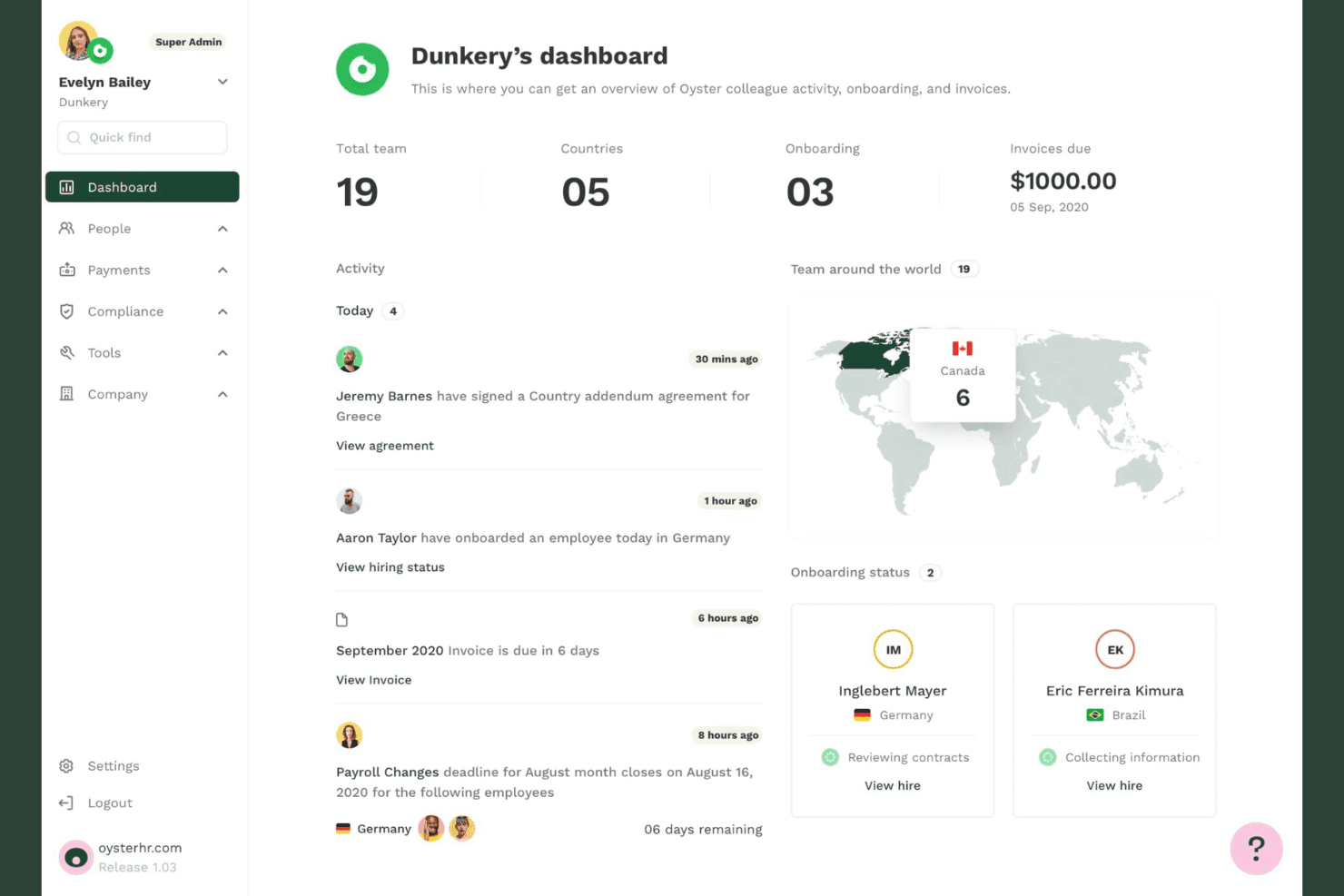
Oyster centralizes team activity, onboarding status, and invoice tracking. Oyster is a global Employer of Record platform that handles compliant hiring, payroll, benefits administration, contract generation, and onboarding for international team members across 120+ countries, including Zambia.
Who Is Oyster Best For?
Oyster is a strong fit for companies that already engage Zambian contractors and want a built-in, platform-native path to convert them to full-time employees.
Why I Picked Oyster
I picked Oyster as one of the best because its built-in misclassification-risk assessment makes contractor-to-employee conversion genuinely practical. You can run a risk check on a Zambian contractor, see a high, moderate, or low result, and convert them to a full-time team member directly within the platform. The contract quality score then benchmarks the new employment offer against local statutory requirements before anyone signs.
Oyster Key Features
- Multi-currency payroll: Pay Zambia-based team members in local currency, with payroll calculated and delivered according to the country's standard salary cadence.
- Guided hiring flow: Step-by-step hiring templates walk you through submitting a hire, setting employment terms, and generating a locally compliant employment contract.
- Time-off and timesheet management: Track leave requests, approvals, vacation balances, and non-standard hours, including overtime, directly in the platform.
- Visa sponsorship support: Oyster lists visa sponsorship as available in Zambia, covering right-to-work validation, information gathering, and application support.
Oyster Integrations
Oyster lists integrations with BambooHR, Greenhouse, HiBob, Personio, Slack, Xero, QuickBooks, Carta, ADP Workforce Now, and SAP Concur. It also offers a developer API and Zapier connectivity for custom workflows.
Pros and Cons
Pros:
- Local-currency payroll follows local cadence
- Contractor risk checks support conversion
- In-app equity grants and equity tax guidance
Cons:
- Zambia’s employing entity isn’t disclosed
- Zambia-specific statutory guidance remains undocumented
Learn more about Oyster: Best for testing Zambia without entity setup
- Free demo available
- From $399/employee/month
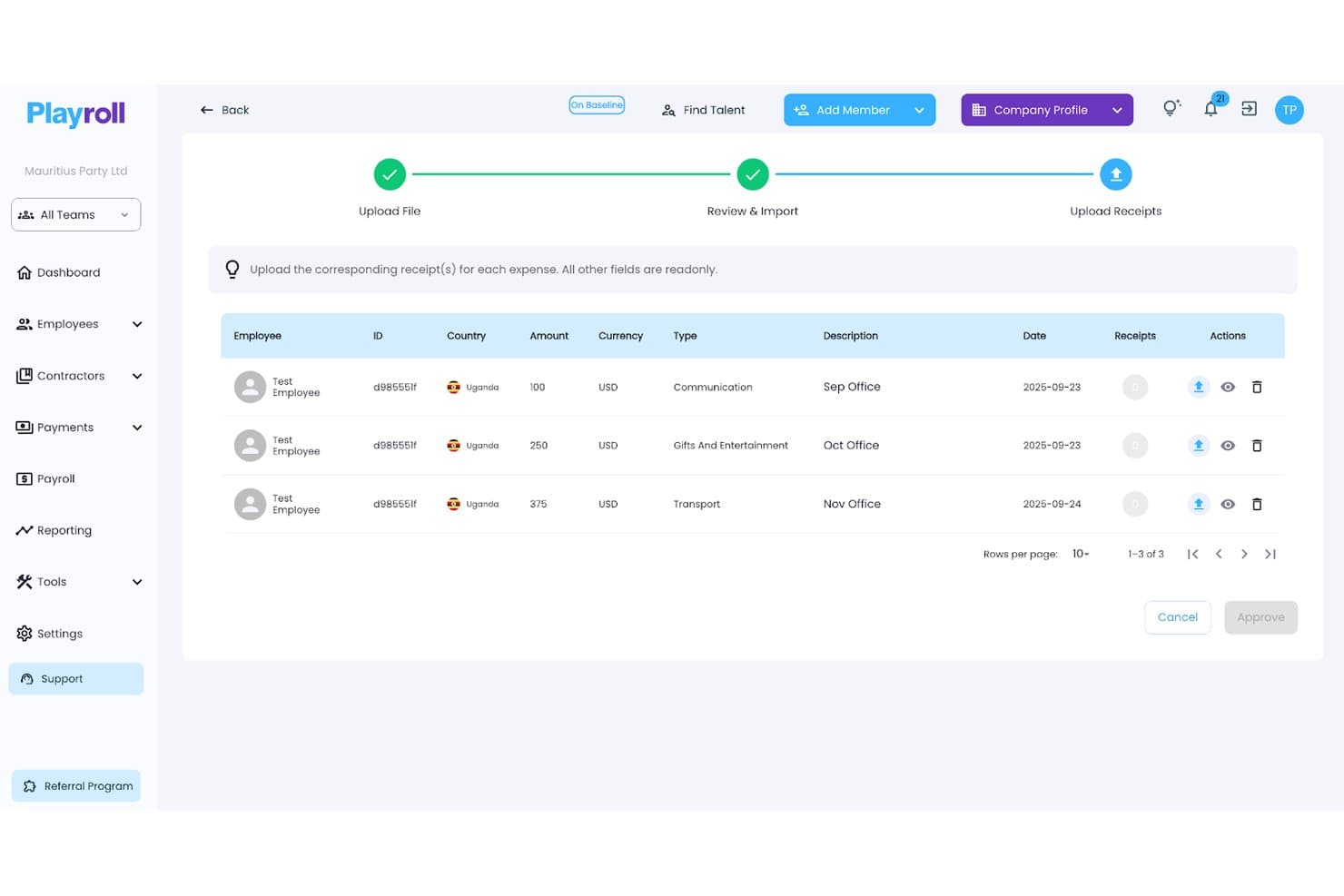
Playroll lets users bulk upload expense receipts with a 3-step import flow. Playroll is an Employer of Record platform that lets you hire, onboard, and pay employees in Zambia—handling Employment Code Act-compliant contracts, PAYE and NAPSA registrations, monthly ZMW payroll, and statutory benefits administration, all without a local entity.
Who Is Playroll Best For?
Playroll is a strong fit for startups and global expansion teams that want to test the Zambian market with a single hire before committing to a local entity.
Why I Picked Playroll
I've included Playroll in my top picks because it lets you hire in Zambia without incorporating locally, acting as the legal Employer on Record while handling Employment Code Act-compliant contracts, PAYE and NAPSA registrations, and monthly ZMW payroll. I particularly like that you can run a single Zambian hire month-to-month with no long-term lock-in, which makes it a low-risk way to test the market before committing to a local entity. Its employee cost calculator and Zambia-specific cost breakdown also help employers estimate statutory contributions, including NAPSA, National Health Insurance, and workers' compensation levies, before hiring.
Playroll Key Features
- Employment Code Act-compliant contracts: Playroll generates written employment contracts in English, covering remuneration, hours, leave, notice, and probation, with digital signing and secure storage.
- BambooHR and HiBob integrations: Sync employee and compensation records between Playroll and your existing HRIS to reduce manual data entry across systems.
- Work permit sponsorship: Playroll offers visa sponsorship assistance, including application preparation, authority coordination, and permit tracking, as an add-on.
- Bonus and commission scheduling: Plan and schedule bonus and commission payments up to 12 months in advance directly within the platform.
Playroll Integrations
Playroll has documented integrations with BambooHR, HiBob, Expensify, and Mesh. It also supports an Open API and custom API integrations for connecting other HR and finance systems.
Pros and Cons
Pros:
- Zambia service handles ZRA and NAPSA registration
- Zambian employee transition to local entity support
- Zambia-specific contracts with digital signatures
Cons:
- Requires refundable one-month salary deposit
- Zambia guides conflict on statutory contribution rates
Learn more about Playroll: Best for sourcing and hiring Zambian talent
- Free demo available
- From $599/employee/month
Visit WebsiteCustomer Rating:4.9/5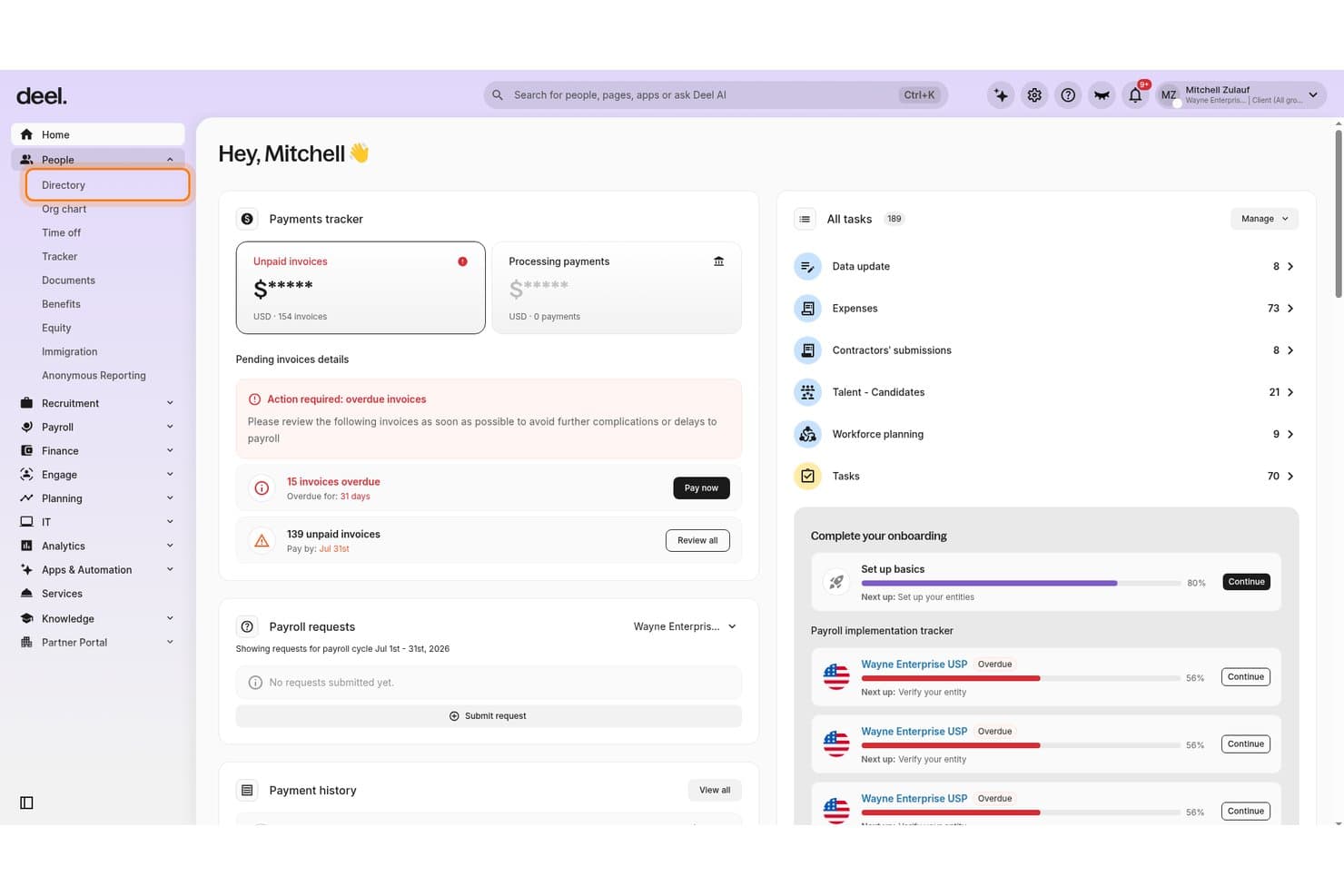
Deel Hire centralizes payments, tasks, and onboarding in one dashboard. Deel Hire is a global Employer of Record platform that handles talent sourcing, employment contracts, payroll in Zambian Kwacha, statutory benefits, and compliance for companies hiring in Zambia without setting up a local entity.
Who Is Deel Hire Best For?
Deel Hire is a strong fit for companies expanding into Zambia that need to source, hire, and pay talent quickly without establishing a local entity.
Why I Picked Deel Hire
I've included Deel Hire in my top picks because it's one of the few platforms that combines talent sourcing with full EOR employment in Zambia, so you're not switching tools between finding a candidate and putting them on payroll. I particularly like that Deel connects you with agency-sourced talent partners, then moves the selected hire directly into an EOR contract with monthly payroll in Zambian Kwacha and statutory benefits like NAPSA, NHIMA, the Skills Development Levy, and Workers' Compensation built in. Deel also advertises onboarding in as little as two days for eligible Zambian hires, making it a useful option for businesses looking to streamline international recruitment and employment.
Deel Hire Key Features
- Contractor-to-EOR conversion: Converts existing contractors into EOR employees with prefilled details and eligible benefits carried over.
- Employment Agreement auto-generation: Deel prepares locally compliant contracts using employee and job details, with legal review available for requested changes.
- Employee self-service portal: Employees access their own payslips, time-off requests, and expense submissions directly through the Deel platform.
- Employer Liability Cost coverage: A mandatory per-employee cost that covers employer-liability insurance, workplace-injury cover, regulatory filings, claims management, and audit support.
Deel Hire Integrations
Deel offers integrations with BambooHR, Workday, HiBob, Personio, NetSuite, and Slack, alongside additional HRIS connections through Merge.dev. It also provides an API for custom EOR workflows. Zambia-specific integration availability is not publicly confirmed.
Pros and Cons
Pros:
- Monthly Zambian Kwacha payroll and payslips
- Agency-sourced candidates can move into EOR
- Automated tax document collection and leave tracking
Cons:
- Full Zambia employment costs require a customized quote
- NAPSA and NHIMA handling lacks detail
Learn more about Deel Hire: 10Best for hiring via its Zambia subsidiary
G-P
- Free demo available
- From $599/employee/month
Visit WebsiteCustomer Rating:4.5/5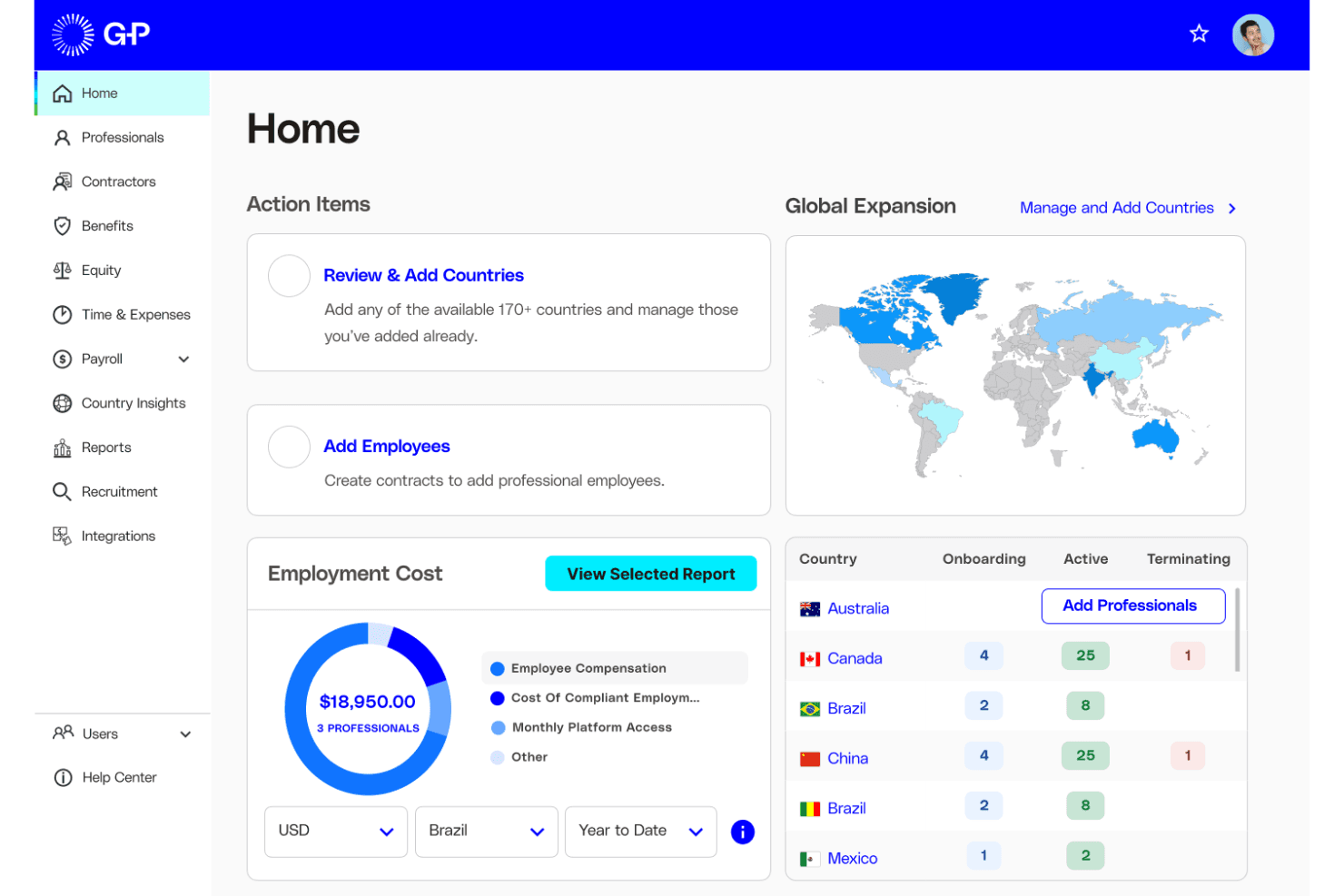
G-P lets users manage global hiring, costs, and employee status by country. G-P is an Employer of Record platform that hires Zambian employees through its own in-country subsidiary, handling payroll, statutory benefits, PAYE deductions, employment contracts, and compliance with the Employment Code Act.
Who Is G-P Best For?
G-P is a strong fit for global expansion teams that need to hire in Zambia quickly, without the overhead of setting up a local entity.
Why I Picked G-P
I've included G-P in my top picks because its Zambia EOR service combines local hiring, payroll, and employment compliance support. G-P states that it uses an existing Zambian subsidiary to employ local hires, allowing businesses to build teams without establishing their own entity. That matters in practice: G-P covers payroll, tax compliance, statutory benefits, and employment contracts, including a Zambia-specific contract template with compensation stated in Zambian kwacha. This makes G-P a practical option for companies looking to centralize their Zambian employment obligations.
G-P Key Features
- AI-guided onboarding: G-P uses AI to guide employee onboarding, including right-to-work verification, reducing manual steps in the process.
- Multi-currency payroll: Supports payroll in 150+ currencies and offers Zambia payroll outsourcing with PAYE compliance support.
- HCM integrations and API access: G-P connects natively with platforms like Workday, BambooHR, and SAP SuccessFactors to sync global employee data.
- Contractor conversion: G-P supports converting contractors to full-time employees, with a focus on reducing misclassification risk.
G-P Integrations
G-P offers native integrations with Workday, BambooHR, SAP SuccessFactors, Paylocity, HiBob, Personio, UKG Pro, and ADP Workforce Now. It also provides an API for custom, bidirectional integrations.
Pros and Cons
Pros:
- AI-generated, compliant employment contracts
- Country-specific payroll and compliance guidance
- Direct hiring through its Zambia subsidiary
Cons:
- Background checks and visa support are add-ons
- Onboarding delays can stall contract finalization
Learn more about G-P:
Other Employer of Record Software in Zambia
Here are a few additional options that didn’t make my shortlist but are still worth checking out:
- 11Papaya GlobalBest for Zambia payroll and labor-law guidance
- 12AtlasBest for direct employment across markets
- 13RipplingBest for linking global hires with HR and IT
- 14RemotePeopleBest for monthly Zambia filing records
- 15MultiplierBest for one view of employees and contractors
- 16RemoFirstBest for Zambia employment-rule planning
- 17WorkMotionBest for linking talent sourcing to employment
- 18Shield GEOBest for Zambia work-permit planning
- 19TeamedBest for contractor-to-entity transitions
How I Evaluate Employer of Record Software in Zambia
I split my evaluation into three parts. First, core functionality—specifically, whether a provider can legally employ workers in Zambia and keep payroll and statutory filings compliant; this carries the most weight. Then I look for standout features like NAPSA and NHIMA automation. Finally, I consider support responsiveness and pricing transparency.
Core Functionality (Table Stakes for This List)
When I'm selecting tools for my list, I score each one on a scale from 0 (does not offer the functionality) to 5 (excels in this area) for each core functionality listed below. I then convert the total into a percentage to help assess each tool's overall fit, with extra weight on any functionalities I've deemed essential.
- Local Employment Infrastructure (Essential): I check whether the provider owns a Zambian entity or uses a disclosed, legally authorized in-country partner with clear accountability.
- Compliance Management (Essential): Each provider should show Zambia-specific guidance on PAYE, NAPSA, and NHIMA obligations rather than generic compliance language.
- Payroll Processing: I look for accurate, on-time payroll in Zambian kwacha with clear payslip reporting and transparent pay-cycle handling.
- Benefits Administration: Providers should manage statutory benefits and offer supplementary options like private health coverage that reflect Zambian market norms.
- Contract Generation: I evaluate whether contracts are localized to Zambian labor law, including probation terms, notice periods, and leave entitlements.
- Multi-Country Platform Access: The platform should let you manage Zambian employees alongside hires in other countries from a single dashboard with consistent reporting.
Once I have a list of tools that meet the criteria, I consider what sets each platform apart.
Differentiating Factors (What Sets Vendors Apart)
Here's how I compare and contrast different vendors:
Standout Features
I check whether a provider handles NAPSA and NHIMA registration and contributions automatically, since missed filings can trigger penalties fast. Contractor conversion tools also matter—providers like Oyster and Deel let you reclassify Zambian contractors into compliant employees without starting from scratch. I look at onboarding speed too, because a provider that can get a Zambian hire on payroll in days gives you a real edge over one that takes weeks.
Beyond Features
I check whether a provider's per-employee pricing is transparent or padded with hidden fees for statutory filings and currency conversion, since unexpected costs can undermine the whole case for using an Employer of Record over setting up a Zambian entity. Speed-to-hire matters too—providers like Deel and G-P that can onboard a Zambian hire in days give you a real advantage when a delayed contract stalls a broader expansion timeline. I also evaluate regional coverage across Sub-Saharan Africa, because most teams hiring in Zambia are planning growth in neighboring markets, and switching providers mid-scale is painful.
How to Choose an Employer of Record Software in Zambia
Choose an Employer of Record provider in Zambia by verifying who employs your staff, which party handles statutory obligations, and what your team can confirm in writing before signing.
| If your priority is… | Look for… |
|---|---|
| If your priority is…Clear local employment accountability | Look for…Disclosure of the Zambian employing entity or in-country partner |
| If your priority is…Accurate statutory payroll handling | Look for…Written responsibility for PAYE, NAPSA, and NHIMA |
| If your priority is…Predictable payroll records | Look for…Kwacha pay-cycle details and sample payslip reporting |
| If your priority is…Locally suitable employment terms | Look for…A Zambia-specific contract covering leave, probation, and notice |
How to Vet Your Shortlist
- Verify the employing party: Request the legal entity name or partner details and a written explanation of which party signs the employment contract.
- Map statutory responsibilities: Ask for a responsibility matrix showing who handles PAYE, NAPSA, and NHIMA registration, calculations, submissions, and payment.
- Review contract terms: Request a sample Zambia employment contract and check its probation, notice, and leave clauses with local counsel before relying on it.
- Test payroll reporting: Ask for a redacted sample payslip and payroll reconciliation, then confirm how the provider reports pay in Zambian kwacha and records statutory deductions.
- Choose your accountability model: Decide whether you prefer a provider’s own Zambian entity or a local partner, and require written confirmation of who resolves employment and filing issues.
What is an Employer of Record Provider in Zambia?
An Employer of Record provider in Zambia is a local entity that legally employs a worker on behalf of a company without a Zambian entity. It handles employment administration such as contracts, payroll, and statutory obligations, while the company directs the worker’s day-to-day activities. The arrangement can help you hire locally, but you should confirm which entity employs the worker and who handles PAYE, NAPSA, and NHIMA.
Features
Here are the main features I look for in an Employer of Record software in Zambia:
- Local employment entity: The provider or its disclosed in-country partner employs the worker and signs the local contract. Clear accountability helps you know which party handles employment issues.
- Zambia-specific compliance: The service explains how it manages PAYE, NAPSA, and NHIMA obligations. Ask who calculates, files, and pays each contribution.
- Payroll in Zambian kwacha: The provider processes salary in the agreed currency and gives you a clear pay-cycle schedule. Payslips should show earnings, deductions, and net pay.
- Statutory benefits administration: The provider manages required contributions and records, and explains any available supplementary benefits. This helps your team understand what’s included in the employment arrangement.
- Localized employment contracts: Contracts reflect applicable Zambian employment terms, including probation, notice, and leave. Review a sample contract to confirm the terms suit the role.
- Employee onboarding: The provider collects required employee information and prepares employment documents before the start date. A defined onboarding process helps HR track outstanding steps.
- Multi-country workforce management: A shared platform lets you view Zambian employees alongside workers in other countries. This can help HR keep employment records and reporting in one place.
- Payroll and compliance reporting: The provider supplies payroll records and filing confirmations for review. These documents help your team reconcile costs and keep an audit trail.
Benefits
Employer of Record services in Zambia can offer several practical benefits:
- Hire without a local entity: A provider or disclosed in-country partner can employ staff and sign local contracts on your company’s behalf.
- Manage statutory obligations: Support for PAYE, NAPSA, and NHIMA can clarify who handles registrations, calculations, filings, and payments.
- Run local payroll: Payroll in Zambian kwacha, with clear pay cycles and payslips, helps your team review earnings and statutory deductions.
- Use locally tailored contracts: Contracts that address Zambian employment terms, including leave, probation, and notice, give HR a basis for reviewing hiring terms.
- Administer employment benefits: Providers can manage statutory contributions and explain available supplementary options, such as private health coverage.
- Keep records across countries: A shared platform can bring Zambian employee records and reporting together with information for hires in other countries.
Pricing
Zambia EOR providers typically charge per employee each month, with costs varying by provider, service scope, and team size. These price bands are indicative, not standardized plans.
Plan Comparison Table for Employer of Record Software in Zambia
| Plan Type | Average Price | Common Features |
|---|---|---|
| Plan TypeFree Plan | Average Price$0 | Common FeaturesNo EOR employment service, no payroll processing, and no statutory filings. |
| Plan TypePersonal Plan | Average Price$200-$399 per employee/month | Common FeaturesLocal employment contracts, payroll processing, and statutory contribution administration. |
| Plan TypeBusiness Plan | Average Price$400-$699 per employee/month | Common FeaturesLocal employment contracts, payroll processing, PAYE, NAPSA, and NHIMA administration, and employee support. |
| Plan TypeEnterprise Plan | Average Price$700+ per employee/month, typically quoted | Common FeaturesMulti-country workforce management, customized service support, payroll and compliance reporting, and negotiated service terms. |
FAQs
Some answers to common questions about Employer of Record software in Zambia:
Can using an EOR prevent my business from creating a permanent establishment in Zambia?
No. An EOR arrangement doesn’t automatically prevent your business from creating a taxable presence in Zambia. Tax exposure can depend on your company’s activities, who negotiates or concludes contracts, and how staff perform their work. The employment structure is only one part of the analysis. Before hiring, ask tax counsel to assess your planned activities and the worker’s authority. Keep that review separate from the EOR’s confirmation of its employment and payroll responsibilities.
Can an EOR hire people in Zambia as independent contractors?
An EOR hires a worker as an employee; that’s different from engaging an independent contractor. Some providers separately offer contractor management, but availability and terms vary. Calling someone a contractor doesn’t settle their legal status. The working relationship, control, and applicable rules matter. If you need a short-term specialist, document the scope, independence, payment terms, and working practices. Get local advice before choosing a contractor arrangement, and ask the provider whether it can support a conversion if classification changes.
What happens when employment ends through an EOR?
Coordinate the decision with the EOR before communicating an end date. Ask the provider to check applicable notice, final-pay, unused-leave, and documentation requirements for the employee’s contract and circumstances. Get the process and responsibilities in writing, including who prepares notices, calculates final amounts, and answers employee questions. Don’t assume your internal policy alone controls the process. For a sensitive or disputed separation, seek local employment-law advice before taking action.
How long does EOR onboarding take in Zambia?
There isn’t one reliable timeline; onboarding depends on the provider’s process and how quickly both sides supply and verify required information. Before setting a start date, request a Zambia-specific checklist covering identity and right-to-work documents, contract approval, payroll cutoffs, and any registrations. Ask the provider to confirm the earliest feasible payroll date in writing. Allow time for missing documents or contract revisions, and don’t promise a start date until the employing party confirms readiness. This also helps coordinate equipment and manager access.