

10 Best Payroll Software For Recruitment Agencies

Best Payroll Software for Recruitment Agencies Shortlist


Choosing the right payroll software for a recruitment agency isn’t just about running payslips. It’s about ensuring seamless contractor payments, staying compliant across multiple jurisdictions, and integrating with your ATS and time-tracking tools without a hitch.
With so many platforms offering similar features on paper, it’s easy to get lost in the weeds and miss what truly matters for a fast-paced, high-volume staffing operation.
Having worked closely with agencies to streamline back-office operations, I’ve personally tested and evaluated top payroll tools to find out which ones actually deliver—from automating multi-state tax filings to handling bulk payments for dozens (or hundreds) of temporary placements. In this guide, I break down the best payroll software options for recruitment teams, focusing on what truly sets them apart for firms that scale fast, hire often, and can’t afford payroll slip-ups.
Why Trust Our Software Recommendations
Our team has been testing and reviewing software since 2012. As HR experts ourselves, we know how difficult—and important—it is to choose the right software.
For this guide, we evaluated tools using hands-on testing and independent research, scoring tools using our selection criteria. We also draw on insights from industry thought leaders and practicing HR experts.
Our reviews reflect our human editorial judgment, not a sales pitch.
Expert reviewers:
Payroll Software for Recruitment Agencies Comparison Table
| Tool | Best For | Trial Info | Price | ||
|---|---|---|---|---|---|
| 1 | Best with integrated time tracking for payroll | Not available | From $599/employee/month | Website | |
| 2 | Best for full-service payroll | Free demo available | From $49/month + $6/month/user | Website | |
| 3 | Best for agencies paying contractors globally | Free demo available | From $29/user/month | Website | |
| 4 | Best for small recruitment agencies | 3-month free trial | Pricing upon request | Website | |
| 5 | Best for US-based companies | 30-day free trial | From $17/month + $4/employee/month | Website | |
| 6 | Best for cloud-based payroll processing | Free trial available | From $125/month (billed annually) | Website | |
| 7 | Best for integrated payroll solutions | Free demo available | From $99/user/month | Website | |
| 8 | Best for comprehensive payroll | Free demo available | Pricing upon request | Website | |
| 9 | Best for staffing agencies | Free demo available | Pricing upon request | Website | |
| 10 | Best for specialized payroll processing | Free demo available | Pricing upon request | Website |


Best Payroll Software for Recruitment Agencies Reviews
This in-depth analysis provides overviews of various payroll software for recruitment agencies. It walks through the pros and cons of each tool, their key features, and their best use cases.
Best with integrated time tracking for payroll
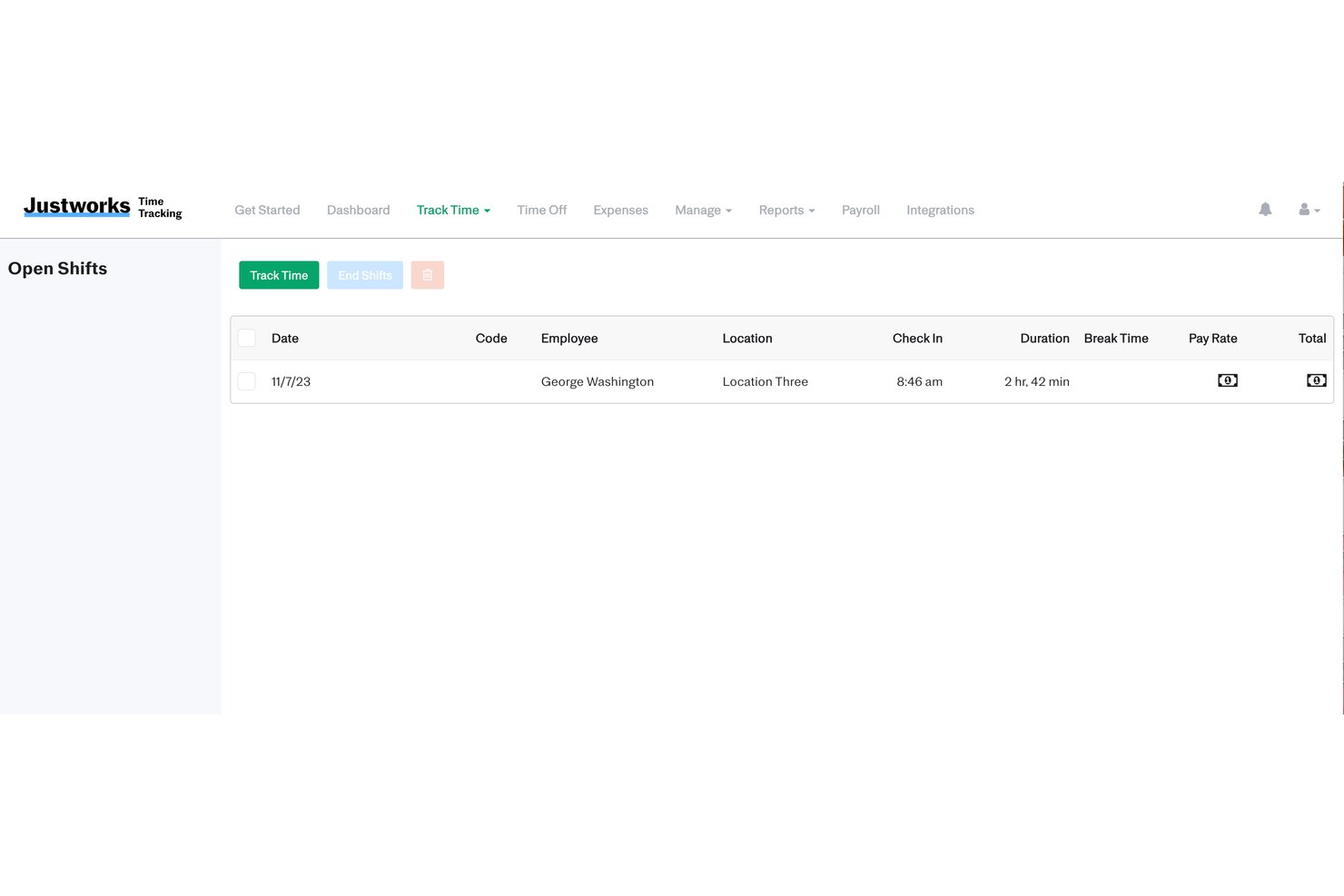
Justworks is a payroll and HR platform for recruitment agencies that combines automated payroll, integrated time tracking, benefits administration, and compliance management in one solution.
Who Is Justworks Best For?
Recruitment agencies with distributed, multi-state teams that need streamlined payroll, HR, and compliance in a single platform.
Why I Picked Justworks
I picked Justworks as one of the best because the integrated time tracking for payroll means my recruiters can manage worker hours and approvals right alongside pay runs. I also use its tools to handle overtime, multi-state payroll, and robust compliance requirements.
Justworks Key Features
- Automated tax filings: Handles federal, state, and local tax filings for direct employees and contractors.
- Employee self-service portal: Gives workers access to paystubs, benefits, and personal information updates.
- Compliance document management: Stores, tracks, and manages important HR and payroll documents securely.
- Benefits administration: Centralizes group health, dental, vision, and retirement plan management within the platform.
Justworks Integrations
Justworks offers 20+ integrations, including QuickBooks, Xero, NetSuite, Sage Intacct, Greenhouse, JazzHR, Lever, 15Five, Leapsome, Carta, Brex, and Vanta.
Pros and Cons
Pros:
- Supports multi-currency global contractor payouts
- Handles multi-state compliance for remote teams
- Simplifies contractor payments and W-2 setups
Cons:
- Custom recruitment workflow features are limited
- Overtime calculations can require manual review
Gusto
Best for full-service payroll
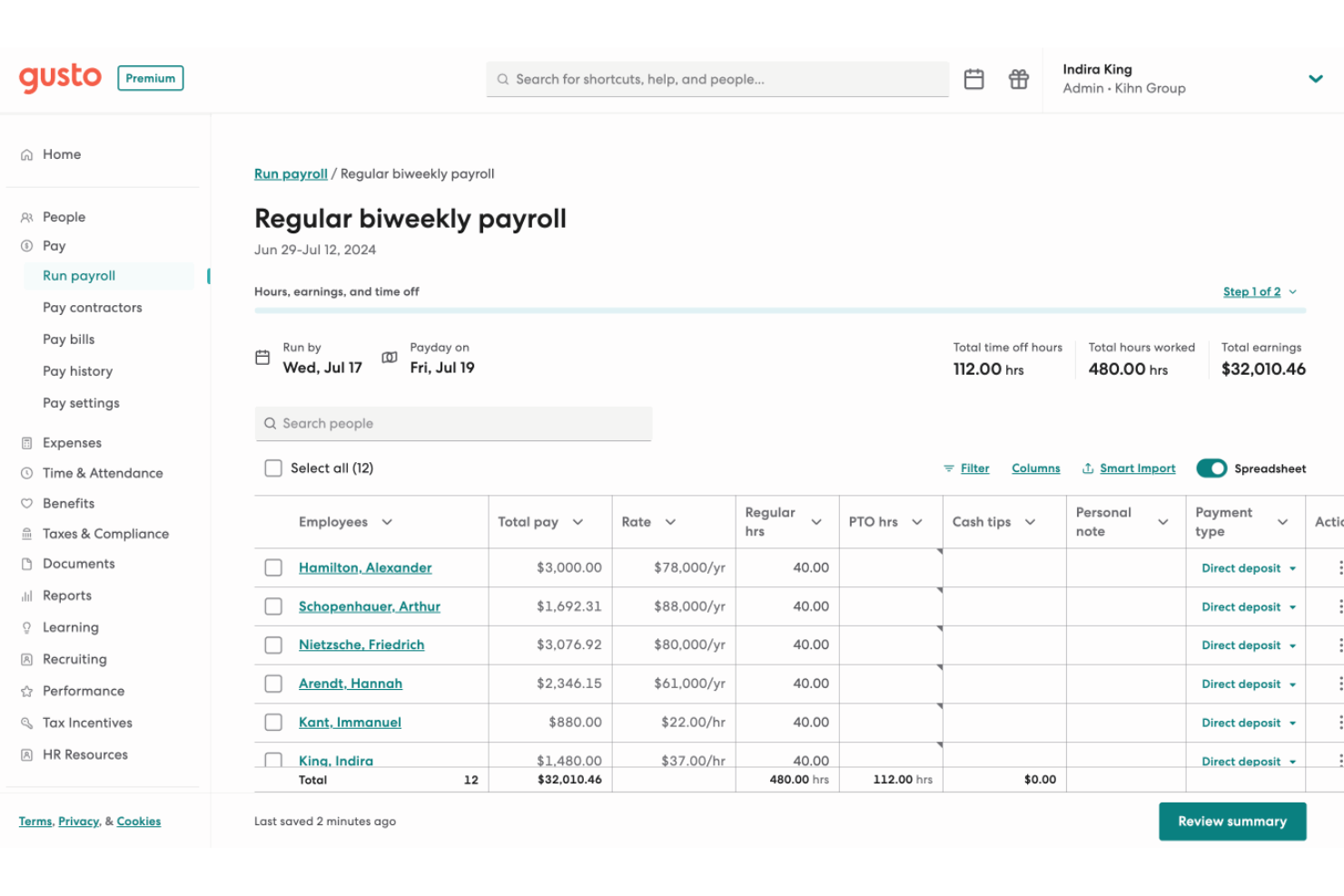
Gusto is a comprehensive payroll and HR platform designed to meet the dynamic needs of recruitment agencies. It offers flexible payroll solutions, built-in compliance, and a suite of HR tools that simplify complex processes. With Gusto, you can tackle the intricate challenges of managing diverse employee types and compensation structures while ensuring compliance with labor laws across different regions.
Why I Picked Gusto
I picked Gusto because it pairs full-service payroll with built-in contractor and hourly payroll support — exactly what agencies often need when managing temporary or contingent workers. Its ability to handle both salaried and hourly employees (and contractors) in one system gives you flexibility across your fluctuating workforce. Plus, Gusto automatically calculates and files all necessary federal, state, and local taxes — a relief if you want to avoid compliance headaches while placing candidates across different jurisdictions.
Gusto Key Features
In addition to its payroll processing capabilities, I also like that Gusto has:
- Employee Self-Service Portal: Allows your team members to access their pay stubs, tax forms, and benefits information online, reducing administrative burdens on HR.
- Customizable Onboarding: Streamlines the hiring process with customizable checklists and document management, ensuring new hires are set up with ease.
- Tax Filing Services: Automates the calculation, filing, and payment of federal, state, and local payroll taxes, minimizing the risk of compliance issues.
- Benefits Administration: Enables you to offer and manage employee benefits, such as health insurance and retirement plans, enhancing your agency's attractiveness to top talent.
Gusto Integrations
Integrations include QuickBooks, Xero, Clover, TSheets, Deputy, When I Work, and Clockify. Gusto also offers an API for custom integrations, allowing you to tailor the platform to your specific business needs.
Pros and Cons
Pros:
- Automatic tax filings and direct deposit simplify payroll compliance.
- Payroll, benefits, and HR in one unified platform.
- Employee self-service portal empowers staff to access pay and forms.
Cons:
- Great for simple pay and HR management but not customizable enough to handle large, complex orgs.
- SMBs that need advanced compliance or niche industry-specific HR modules may find Gusto limiting.
New Product Updates from Gusto
Gusto Adds Solo Advisory Tools and Mobile Money Features
Gusto adds Solo S-Corp Advisory Tools and Gusto Money on Mobile for tax guidance, invoicing, and bill payments. These updates help accountants advise solopreneurs and let users manage business finances from their phones. For more information, visit Gusto’s official site.
Best for agencies paying contractors globally
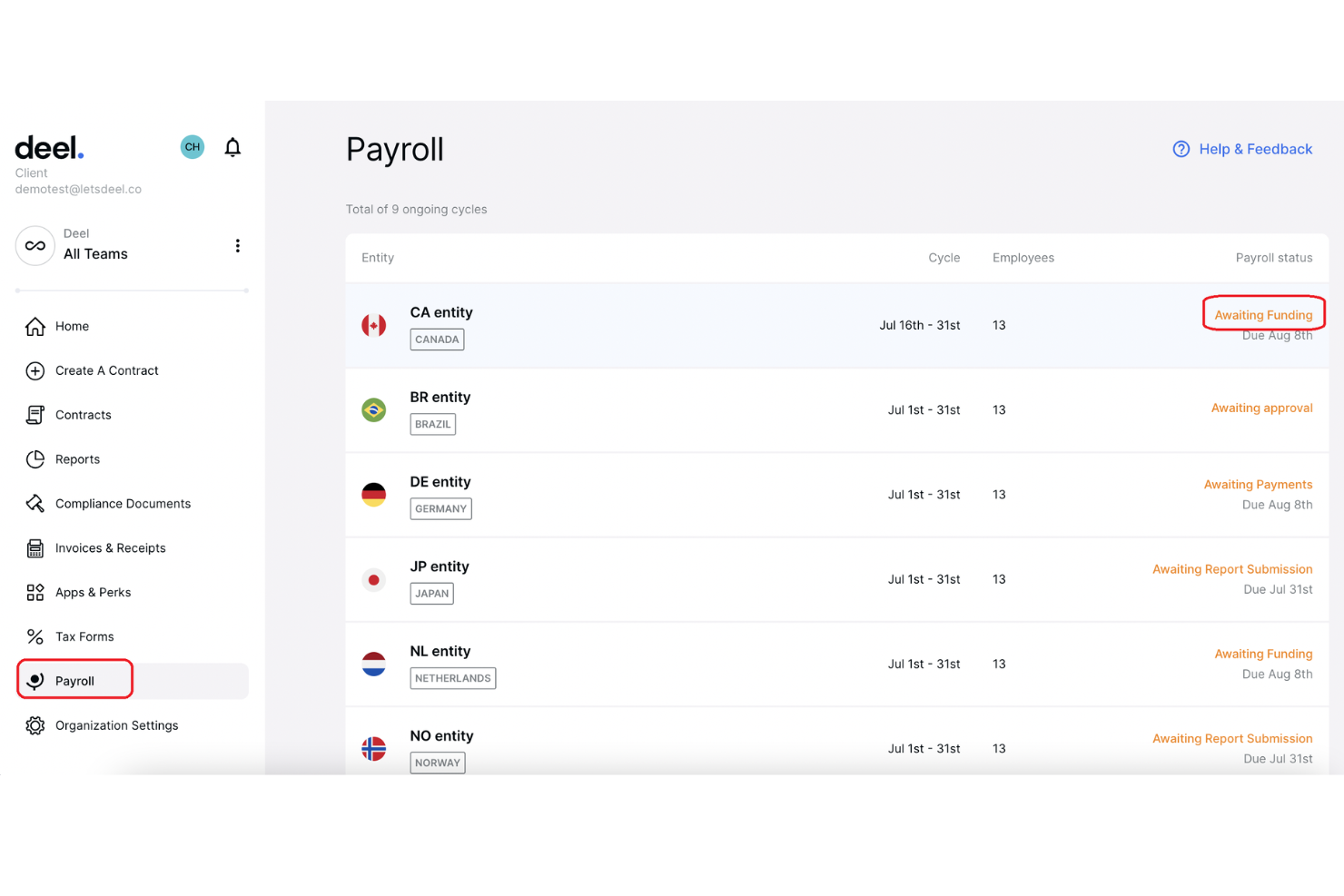
Deel is an HR platform with payroll capabilities that support recruitment agencies by offering a comprehensive suite of features designed to manage global teams.
Why I picked Deel: The platform facilitates the hiring and payment of employees and contractors in over 150 countries, ensuring compliance with local labor laws and regulations. Deel's services include automated payroll, tax filings, and benefits management, which help recruitment agencies handle complex payroll processes.
Standout features and integrations:
Features include documentation and legal compliance, country-specific benefits, in-house visa support, bulk payments, and an HRIS for managing people data, time off, expenses, reporting, and performance.
Integrations include Slack, QuickBooks, Xero, NetSuite, Greenhouse, BambooHR, Okta, Gusto, Expensify, Zapier, DocuSign, HubSpot, Salesforce, and Workday.
Pros and Cons
Pros:
- Automated payroll
- Localized benefits solutions
- Global compliance services
Cons:
- Limited customization options for user roles and access
- No mobile app
Best for small recruitment agencies

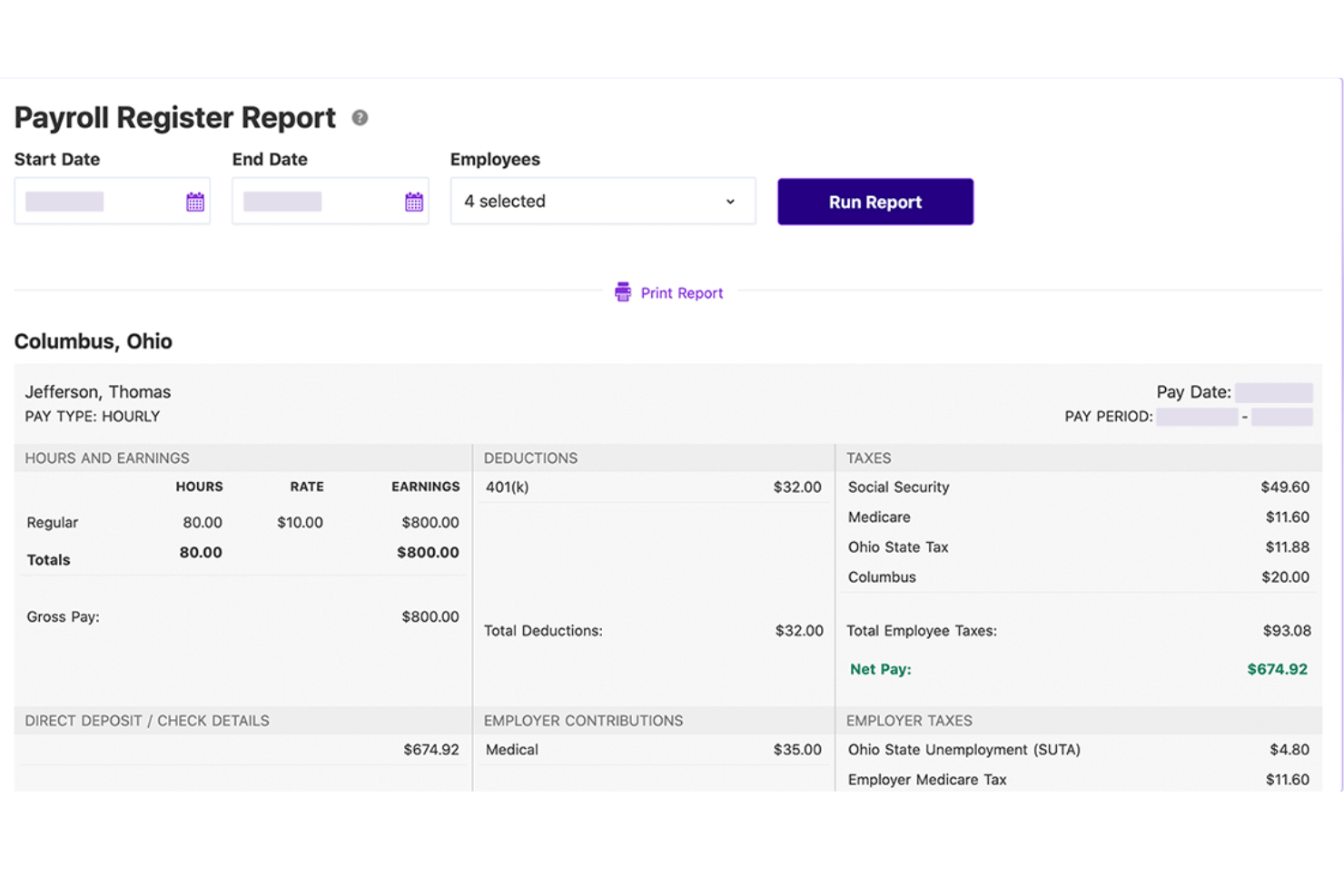
RUN by ADP is a comprehensive payroll and HR platform designed to simplify payroll processing, tax management, and HR tasks for small businesses.
Why I picked RUN by ADP: The platform is ideal for small agencies because it automatically calculates and files payroll taxes, ensuring that agencies remain compliant with state and federal regulations. This feature is particularly valuable for agencies operating in multiple states or dealing with complex tax situations.
Standout features and integrations:
Features include direct deposit, employee self-service portal, HR compliance support, time and attendance tracking, garnishment payment services, new hire reporting, retirement plan services, workers' compensation management, payroll and tax reports, and mobile app access.
Integrations include Quickbooks, Wave, Xero, ClockShark, Points North, TruSaic, Compy, Wex, Synerion, JazzHR, 7Shifts, Snappy Gifts, Absorb LMS, SmartRecruiters, and hundreds more.
Pros and Cons
Pros:
- Customizable reporting features
- Good mobile app with self-service options
- Automates payroll processing and tax filings
Cons:
- Many HR features are limited to higher-tier plans
- Initial setup can be complex

Best for US-based companies
Patriot Payroll is an online payroll software designed to assist US-based businesses, including recruitment agencies, in managing employee payments.
Why I picked Patriot Payroll: Patriot Payroll allows you to pay both W-2 employees and 1099 contractors within the same payroll run. This is particularly beneficial for recruitment agencies that often work with a mix of full-time staff and independent contractors, simplifying the payment process and reducing administrative overhead.
Standout features and integrations:
Features include payroll tax filing services, customizable deductions and contributions, multiple pay frequencies, printable checks, electronic W-2s, contractor payments, time-off accruals, payroll reports, tax liability tracking, employee management, mobile-friendly access, and USA-based customer support.
Integrations include QuickBooks and other Patriot products, like Accounting, Time and Attendance, and HR.
Pros and Cons
Pros:
- Reliable tax calculations
- Detailed payroll reports for better financial analysis
- Responsive customer support
Cons:
- Limited advanced HR features
- Restricted to the US

factoHR
Best for cloud-based payroll processing

factoHR is a payroll software that streamlines payroll processes securely and efficiently. It's best for cloud-based payroll processing due to its encryption, audit trails, and integration capabilities.
Why I picked factoHR: I chose factoHR for its advanced payroll management and advanced recruitment features, including candidate tracking, efficient onboarding processes, and compliance tools. These features ensure efficient and enhanced candidate management. The software has security features with encryption, access control, and enhanced candidate management.
Standout features and integrations:
Features include a payroll process, mobile app access, and a flexible rule engine for custom salary structures.
Integrations include Tally, QuickBooks, SAP, Oracle, Zoho, FreshBooks, Xero, Sage, Microsoft Dynamics, and Wave.
Pros and Cons
Pros:
- Comprehensive attendance and leave management
- Mobile app for on-the-go access
- Automated payroll processing and compliance features
Cons:
- The interface can be unintuitive
- Integration options are limited
Bullhorn
Best for integrated payroll solutions
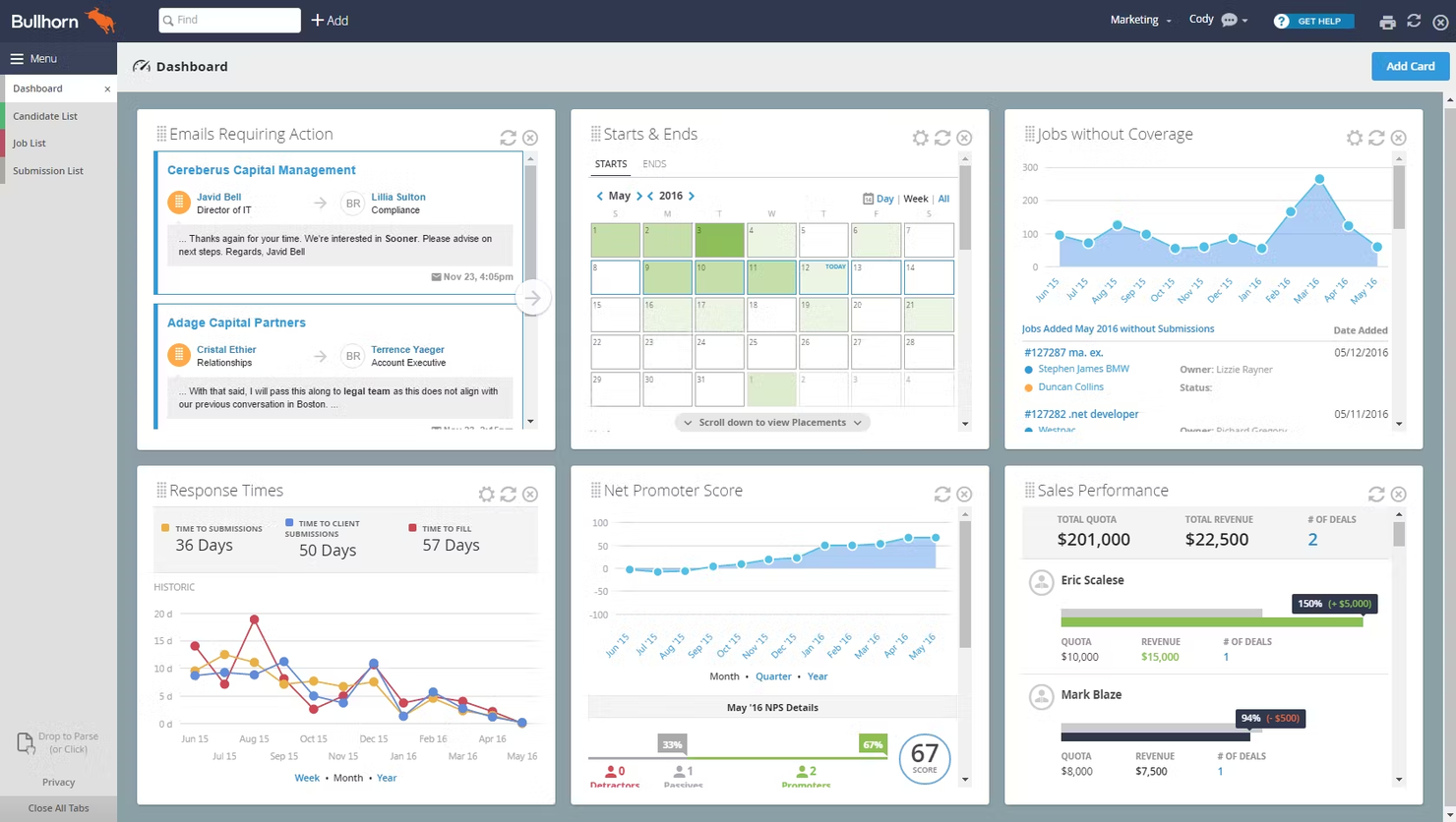
Bullhorn is a software solution that streamlines front and back-office payroll processes. It captures essential information in the front office to automate back-office workflows, ensuring efficient and accurate payroll management and billing.
Why I picked Bullhorn: I chose Bullhorn for its strong integration with its CRM and ATS platforms, providing an all-in-one solution for staffing and recruitment agencies. The software offers real-time payroll processing, automated compliance tracking, reporting capabilities, and advanced analytics that enhance productivity, and a recruitment workflow that allows smooth transitions from candidate placement to payroll processing.
Standout features and integrations:
Features include automating billing and payroll, ad hoc reporting for real-time insights, and integrated payroll services through PrismHR.
Integrations include Salesforce, SourceBreaker, Herefish, Invenias, Connexys, Jobscience, Able, Sterling, and VMS Automation.
Pros and Cons
Pros:
- Automated invoicing and payroll processing
- Strong integration with ATS and CRM
- End-to-end solution for recruitment agencies
Cons:
- Limited reporting and customization options
- The initial setup is complex
ADP
Best for comprehensive payroll
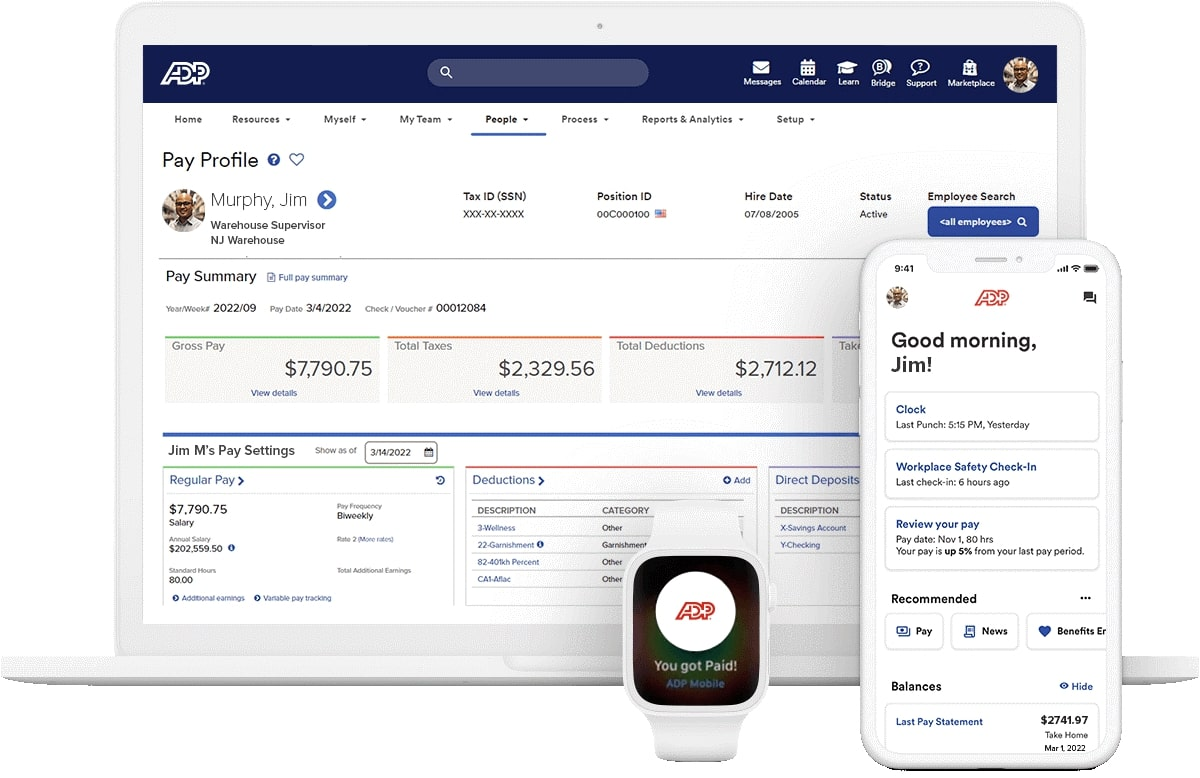
ADP offers a wide range of payroll and HR services for businesses of all sizes. It's best known for its advanced services, making it suitable for any business size.
Why I picked ADP: I chose ADP for its extensive range of payroll and HR services that cater to businesses of all sizes. ADP provides advanced payroll features such as automated tax filing, direct deposit, compliance management, and strong integration capabilities with various HR, accounting, and time-tracking systems. The software is a combination of powerful industry-specific tools and the newest technology that streamlines payroll processing, tax compliance, and employee management.
Standout features and integrations:
Features include automated payroll processing, tax compliance, and employee self-service portals. The platform also offers time and attendance tracking, talent management, and HR outsourcing services.
Integrations include QuickBooks, Xero, Microsoft Dynamics, Oracle, SAP, Workday, BambooHR, Salesforce, Slack, and Google Workspace.
Pros and Cons
Pros:
- Scalable for businesses of all sizes
- Strong compliance and regulatory support
- Extensive payroll and HR features
Cons:
- Complex setup process for new users
- High cost for small businesses
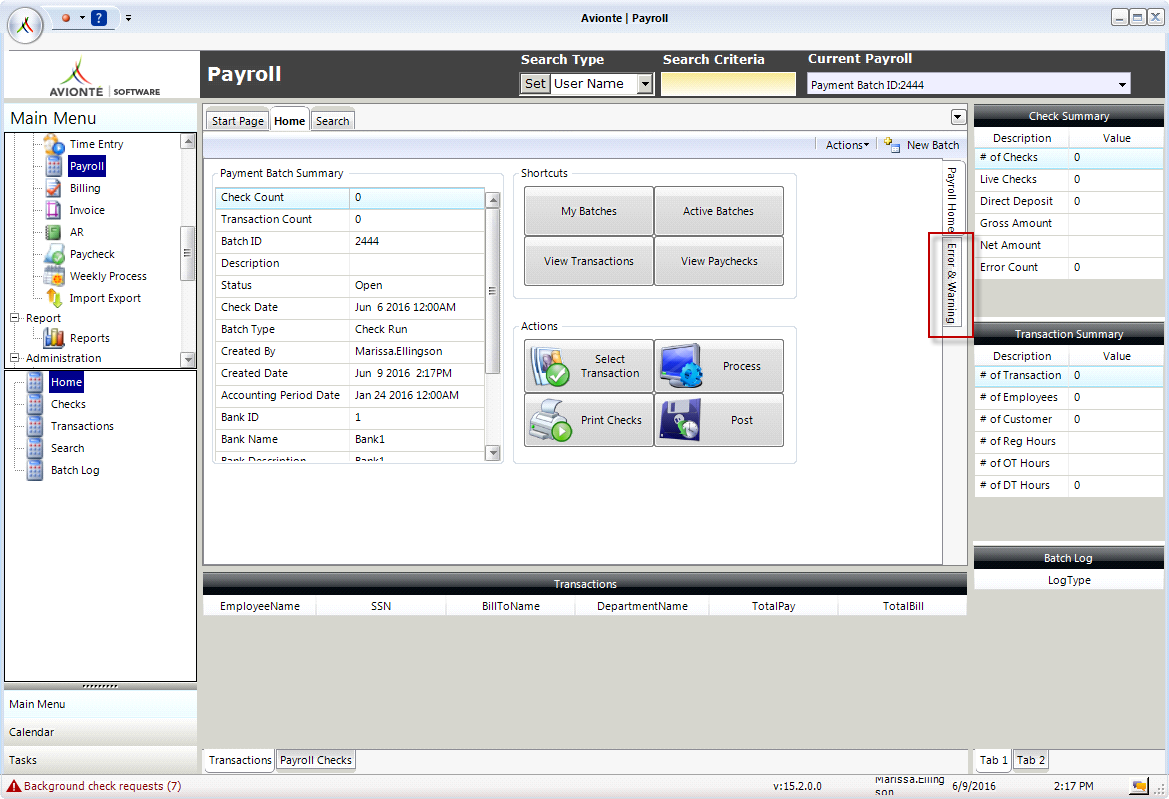
Avionté is a staffing software for automating staffing agencies’ payroll and billing processes. It has fully integrated back-office solutions that streamline operations and administrative costs.
Why I picked Avionté: I chose Avionté because of its seamless integration of payroll and staffing solutions that can handle the complexities of temporary and contract staffing. It offers customizable pay rates, automated compliance tracking, and real-time data insights tailored for recruitment agencies. The software supports applicant tracking and onboarding processes, reporting tools that provide insights on optimizing staffing strategies and flexibility for agencies seeking to streamline payroll operations while maintaining compliance and accuracy.
Standout features and integrations:
Features include time and expense management, payroll processing, custom invoicing, built-in compliance, year-end reporting and tax filing, and business intelligence.
Integrations include NetSuite, Timerack, SimpleVMS, ADP, QuickBooks, Bullhorn, Salesforce, Microsoft Dynamics, Paychex, and Workday.
Pros and Cons
Pros:
- Comprehensive compliance management tools included
- Real-time payroll and billing updates
- Specialized in staffing and recruitment industries
Cons:
- Mobile app limitations
- Time-consuming and complex setup

TempWorks offers a full-service payroll processing platform tailored for staffing companies. It provides reliable, cost-effective billing and payroll processing with built-in compliance and collections support.
Why I picked TempWorks: I chose TempWorks for this list due to its advanced payroll processing system. It provides integrated timekeeping and billing solutions, ensuring a seamless transition from time entry to invoicing. Also, its automated tax filing and customizable reporting features ensure accuracy and compliance, which is crucial for maintaining smooth operations. This combination of strong payroll processing and operational support makes TempWorks an excellent choice for optimizing payroll processes in recruitment agencies.
Standout features and integrations:
Features include payroll funding, tax processing, W-2 management, and powerful analytics for custom reporting.
Integrations include Bullhorn, QuickBooks, ADP, Microsoft Dynamics, Salesforce, Indeed, LinkedIn, and ZipRecruiter.
Pros and Cons
Pros:
- Dedicated mobile app for employees
- Integrated payroll and ATS functions
- Tailored for staffing industry needs
Cons:
- Mobile app lacks full functionality
- High customization costs
Other Payroll Software for Recruitment Agencies
Below is a list of additional payroll software for recruitment agencies that I shortlisted. While they didn’t make the top ten, they’re still worth further research.
- APS
For unified payroll and HR services
- Agile HRO
For compliance with local laws
- COATS Staffing Software
For scalable payroll
- Armada
For flexible shift jobs
- Invatechs Payroll
For automated payroll and invoicing
- Rippling
With advanced workflow automation
- Paycor
For professional services
- Access
For pay and bill management
- OnPay
For easy-to-use payroll software
- Paychex
For comprehensive payroll services


Related HR Software Reviews
If you still haven't found what you're looking for here, check out these other related tools that we've tested and evaluated:
- HR Software
- Payroll Software
- Recruiting Software
- Employer of Record Services
- Applicant Tracking Systems
- Workforce Management Software
How I Evaluate Payroll Software for Recruitment Agencies
I evaluate these tools in two layers: the baseline functionality—like weekly contractor pay runs and IR35 compliance—and the differentiators that separate good from great.
Core Functionality (Table Stakes For This List)
When I'm selecting tools for my list, I rank each one on a scale from 0 (does not offer the functionality) to 5 (excels in this area) for each core functionality listed below. Then, I calculate the tool's total score into a percentage. Each tool needs to achieve a minimum total score of 55% to be considered for inclusion.
- Contractor Pay Processing: I check whether a platform handles high-volume weekly pay runs with variable rates per assignment, since agencies often manage hundreds of temps across dozens of clients simultaneously.
- Timesheet Capture & Integration: Whether timesheets are built in or pulled from an external system, I look for approval workflows and accurate hours-to-pay calculations that prevent underpayments.
- Multi-Employment Model Support: Agencies pay workers under PAYE, umbrella, CIS, and limited company structures, so I evaluate how many of these models each tool manages within a single workflow.
- Client Invoicing & Margins: I look for invoicing tied directly to pay data with per-placement margin visibility, since tracking profitability across client accounts is central to how agencies operate.
- Tax & Compliance Automation: Handling statutory filings, pension auto-enrolment, IR35 status tracking, and holiday pay accruals are all areas I evaluate to gauge how much compliance burden the tool removes.
- Recruitment Platform Integrations: I check for connections to major ATS and CRM systems like Bullhorn, Vincere, and JobAdder, along with open API access for syncing placement and rate data into payroll.
Once I have a list of tools that meet the criteria, I consider what sets each platform apart.
Differentiating Factors (What Sets Vendors Apart)
Here's how I compare and contrast different vendors:
Standout Features
Self-billing automation matters when your agency pays limited company contractors—I look for tools that generate compliant self-bill invoices without manual input. A worker self-service portal also makes a real difference, giving temps a place to submit timesheets and access payslips on their own. I evaluate credit control and factoring integration too, since agencies often wait weeks for client payments while running weekly payroll.
Beyond Features
I look closely at how vendors handle compliance updates, because payroll regulations shift frequently and a slow vendor can leave your agency exposed. Implementation support also matters—migrating worker records and YTD balances mid-tax-year is common for agencies switching providers, so I check whether vendors offer dedicated onboarding with staffing-specific expertise. Data security rounds out my evaluation, especially role-based access controls and secure bank file generation, since agencies process sensitive banking details for hundreds of workers each week.
How to Choose Payroll Software for Recruitment Agencies
As you work through the process of choosing payroll software, keep the following points in mind:
- Flexibility: Recruitment agencies often deal with a diverse workforce that includes temporary, contract, and permanent employees. This diversity necessitates a payroll system that can handle varying pay rates, fluctuating work schedules, and frequent changes in employment status.
- Reporting and Compliance Capabilities: Operating across multiple states or regions means dealing with different labor laws, tax regulations, and reporting requirements. A payroll system with powerful reporting tools can generate accurate reports tailored to various jurisdictions, ensuring compliance and reducing the risk of penalties.
- Integration with Other Systems: Effective staffing management involves more than just payroll processing; it includes time tracking, benefits administration, and client billing. A payroll system that integrates with these auxiliary systems can reduce manual data entry.
- Scalability: As your recruitment agency grows, your payroll system should be able to scale with it. This means handling an increasing number of employees and more complex payroll requirements without performance issues. A payroll system that cannot scale may struggle to process payroll efficiently as the number of employees increases, leading to delays and errors.
- Automated Benefits Management: Managing different benefits schemes automatically is crucial for recruitment agencies that deal with varied terms of employment contracts. A payroll system that automates benefits management can reduce manual effort and ensure accurate benefits administration.
Trends for Payroll Software for Recruitment Agencies
Here are some trends I’ve noticed for payroll software for recruitment agencies, plus what they might mean for the future of the revenue operations industry. I sourced countless product updates, press releases, and release logs to tease out the most important insights.
- Cloud-Based Payroll Systems: Cloud-based payroll systems are becoming essential. They offer seamless accessibility and collaboration which are essential for remote work environments. This trend is important as it allows payroll operations to be executed efficiently, regardless of geographical constraints.
- AI and Automation: AI and automation are transforming payroll processing. These technologies streamline routine tasks, enhance accuracy, and free up time for strategic activities. This helps reduce human error and increase efficiency.
- Real-Time Payroll Analytics: Real-time payroll analytics provide instant access to critical payroll metrics. This empowers businesses to make data-driven decisions and adapt payroll strategies promptly. The importance lies in its ability to enhance financial planning and resource allocation.
- Financial Wellness Programs: Integrating financial wellness programs with payroll is gaining traction. These programs help employees manage their finances better, reducing stress and increasing productivity. This improves employee satisfaction and retention.
- Enhanced Data Security: With the rise of remote work, data security in payroll systems is non-negotiable. Enhanced cybersecurity measures, such as encryption and multi-factor authentication, are being prioritized. This is required to protect sensitive employee information from cyber threats.
Innovations such as AI-driven analytics, mobile accessibility, and enhanced data security are transforming payroll management. Embracing these trends can lead to more accurate payroll processing, improved compliance, and a better overall user experience.
What is Payroll Software for Recruitment Agencies?
Payroll software for recruitment agencies is a tool that manages and automates the payroll process for temporary and permanent staff placements. Recruitment agencies use this software to handle payroll calculations, tax deductions, and compliance with labor laws, ensuring employees and contractors are paid accurately and on schedule.
The software typically includes time tracking, tax management, direct deposit, and reporting features to simplify payroll processing, reduce errors, and maintain compliance with legal requirements.
Features of Payroll Software for Recruitment Agencies
Payroll software for recruitment agencies comes equipped with specialized features to handle the unique challenges of managing temporary and contract workers. Here are some of the key payroll software features you should look for:
- Time Tracking Integration: This feature allows the software to integrate with time tracking systems, reducing the need for manual entry and improving overall efficiency and accuracy.
- Direct Deposit: Direct deposit capabilities ensure that employees receive their pay checks instantly and conveniently, reducing the burden on employers to print and distribute pay checks.
- Expense Management: Automates the expense report and payment processes, saving time and improving the timeliness of reimbursements, ensuring accurate and easily accessible records.
- Compensation Management: Helps manage and allocate a compensation budget in line with the organization’s goals, making it easier to attract and retain workers.
- Employee Self-Service: Allows employees to access and update their profiles, and view vacation balances, pay stubs, and W-2 forms, reducing the HR team's clerical workload.
- Payroll Reports: The ability to run and customize payroll reports is important for gaining insights and making informed decisions based on the company’s metrics.
- Payroll Auditing and Error Reporting: Built-in pre-submit audits proactively flag irregularities, ensuring accuracy and compliance in payroll processing.
- Tax Filing: Automates tax filing and the generation of W-2s, ensuring compliance with changing tax rates and reducing the guesswork in deductions.
- Integrated Payroll: Seamlessly integrates with existing programs, apps, and partners, automating the flow of data and improving user experience.
- General Ledger Mapping: Simplifies mapping payroll activities to the general ledger, ensuring accurate financial records and reducing manual entry.
Choosing the right payroll software for your recruitment agency can significantly streamline payroll processes, improve accuracy, and ensure compliance with tax and labor laws. By considering these essential features, you can select a solution that aligns with your business goals and enhances overall efficiency.
Benefits of Payroll Software for Recruitment Agencies
The right payroll software for recruitment agencies can significantly streamline these processes, offering numerous benefits for users and organizations. Below are some of the primary benefits payroll softwares offer.
- Time-Saving Automation: Payroll software automates many manual tasks involved in payroll processing, such as calculating salaries, tax deductions, and overtime. This automation reduces the time spent on back-office activities, allowing agencies to focus more on recruiting and placing top talent.
- Enhanced Accuracy and Reduced Errors: Manual payroll calculations are prone to errors, leading to financial discrepancies and employee dissatisfaction. Payroll software ensures accurate and error-free payroll processing by automating calculations and providing error detection features, thereby minimizing the risk of mistakes.
- Compliance and Legal Adherence: Recruitment agencies often deal with multiple tax jurisdictions and varying labor laws. Payroll software helps maintain compliance by automatically updating tax rates and labor regulations, ensuring that all payroll activities adhere to current laws, and reducing the risk of legal penalties.
- Improved Data Management: Managing employee data can be challenging, especially with high turnover rates. Payroll software optimizes data management by integrating with applicant tracking systems and other HR tools, ensuring seamless data transfer and reducing manual data entry. This integration helps maintain accurate and up-to-date employee records.
- Employee Self-Service Portals: Self-service portals empower employees to manage their information, such as accessing pay stubs, tax forms, and benefits details. This enhances the employee experience and reduces the administrative burden on HR and payroll teams, leading to more efficient HR processes.
Payroll software offers significant advantages for recruitment agencies, from automating time-consuming tasks to ensuring compliance with legal requirements. By automating complex payroll tasks, agencies can focus more on their core operations and improve overall efficiency.
Costs & Pricing of Payroll Software for Recruitment Agencies
When considering payroll software for recruitment agencies, you should be aware of the various plan options and pricing structures available. The pricing and features of these plans can vary significantly, so it's important to understand what each plan offers to find the best fit for your needs.
This guide provides an overview of various payroll software options, pricing plans, and common features to help you make an informed decision.
Plan Comparison Table for Payroll Software for Recruitment Agencies
| Plan Type | Average Price | Common Features |
| Free | $0 | Basic payroll processing, limited support, and essential features for startups or small agencies needing a cost-effective solution. |
| Basic | $20-$50 | Customizable features, advanced HR tools, dCore payroll processing, direct deposit, tax calculations, and basic reporting. |
| Standard | $50-$100 | Advanced payroll processing, compliance management, time and attendance tracking, and employee self-service portal. |
| Premium | $100-$200 | Comprehensive payroll features, customizable reports, benefits administration, and integration with HR and accounting systems. |
| Enterprise | Custom pricing | All-inclusive payroll management, dedicated support, advanced analytics, and full customization options. |
When selecting payroll software for your recruitment agency, consider the specific needs of your business, such as the number of employees, required features, and budget. Each plan offers different levels of functionality and support, so choose the one that best aligns with your agency's goals and financial constraints.
FAQs About Payroll Software for Recruitment Agencies
Here are some frequently asked questions I’ve received about payroll software for recruitment agencies.
How does payroll software help with tax compliance?
Payroll software helps with tax compliance by automatically calculating and withholding the correct amount of federal, state, and local taxes. It also generates necessary tax forms and ensures timely submission to the relevant authorities. This reduces the risk of errors and penalties associated with manual tax calculations.
Can payroll software integrate with other HR tools?
Yes, many payroll software solutions integrate with other HR tools such as time and attendance systems, benefits administration, and applicant tracking systems. This integration helps streamline data flow and reduces the need for manual data entry, improving overall efficiency.
Is it possible to manage multiple clients with one payroll software?
Yes, some payroll software solutions are designed to handle multiple clients, making them ideal for recruitment agencies. These solutions allow you to manage payroll for different clients from a single platform, ensuring accurate and efficient payroll processing for each client.
How can payroll software improve accuracy in payroll processing?
Payroll software improves accuracy by automating calculations and reducing the likelihood of human errors. It ensures that all payroll data is consistent and up-to-date, and can flag discrepancies for review. This leads to more accurate and reliable payroll processing.
What kind of support can I expect from payroll software providers?
Payroll software providers typically offer support options, including online resources, customer service hotlines, and dedicated account managers. Some providers also offer training sessions and webinars to help users get the most out of their software.