

10 Best PTO Tracking Software Reviewed in 2026

Best PTO Tracking Software Shortlist


Tracking employee PTO can be a headache for any human resources (HR) team. With countless requests and compliance issues, it's easy to feel overwhelmed. PTO tracking software can help by simplifying the process and keeping everything organized.
I've spent time testing and reviewing various PTO tracking solutions, and I'm here to share my top picks. My goal is to offer you an unbiased, well-researched guide to help you make an informed decision.
In this article, you'll find a selection of the best PTO tracking tools, each with unique features to fit your needs. Whether you're managing a small team or a large organization, there's a solution for you. Let's dive in and find the right tool for your team.
Why Trust Our Software Reviews
Our team has been testing and reviewing software since 2012. As HR experts ourselves, we know how difficult—and important—it is to choose the right software.
For this guide, we evaluated tools using hands-on testing and independent research, scoring tools using our selection criteria. We also draw on insights from industry thought leaders and and practicing HR experts.
Our reviews reflect our human editorial judgment, not a sales pitch.
Best PTO Tracking Software Summary
This comparison chart summarizes pricing details for my top PTO tracking software selections to help you find the best one for your budget and business needs.
| Tool | Best For | Trial Info | Price | ||
|---|---|---|---|---|---|
| 1 | Best for integration with Slack and Teams | Free demo available | From $5/employee/month | Website | |
| 2 | Best with customizable open API integrations | Free demo available | From $8/user/month | Website | |
| 3 | Best for unlimited PTO | Free plan available | From $2/user/month (billed annually) | Website | |
| 4 | Best for remote teams | 14-day free trial | From $2/user/month | Website | |
| 5 | Best free option | Free plan + free demo available | Pricing upon request | Website | |
| 6 | Best for customization | Free demo available | Pricing upon request | Website | |
| 7 | Best for payroll integration | 30-day free trial | From $38/month | Website | |
| 8 | Best for large enterprises | Free demo available | Pricing upon request | Website | |
| 9 | Best for real-time PTO balance updates | Free plan available | From $1.50/user/month (billed annually) | Website | |
| 10 | Best for small businesses | Free trial + free demo available | Pricing upon request | Website |
Best PTO Tracking Software Reviews
Below are my detailed summaries of the best PTO tracking software that made it onto my shortlist. My reviews offer a detailed look at the key features, pros and cons, integrations, and ideal use cases of each tool to help you find the best one for you.

Deel HR
Best for integration with Slack and Teams
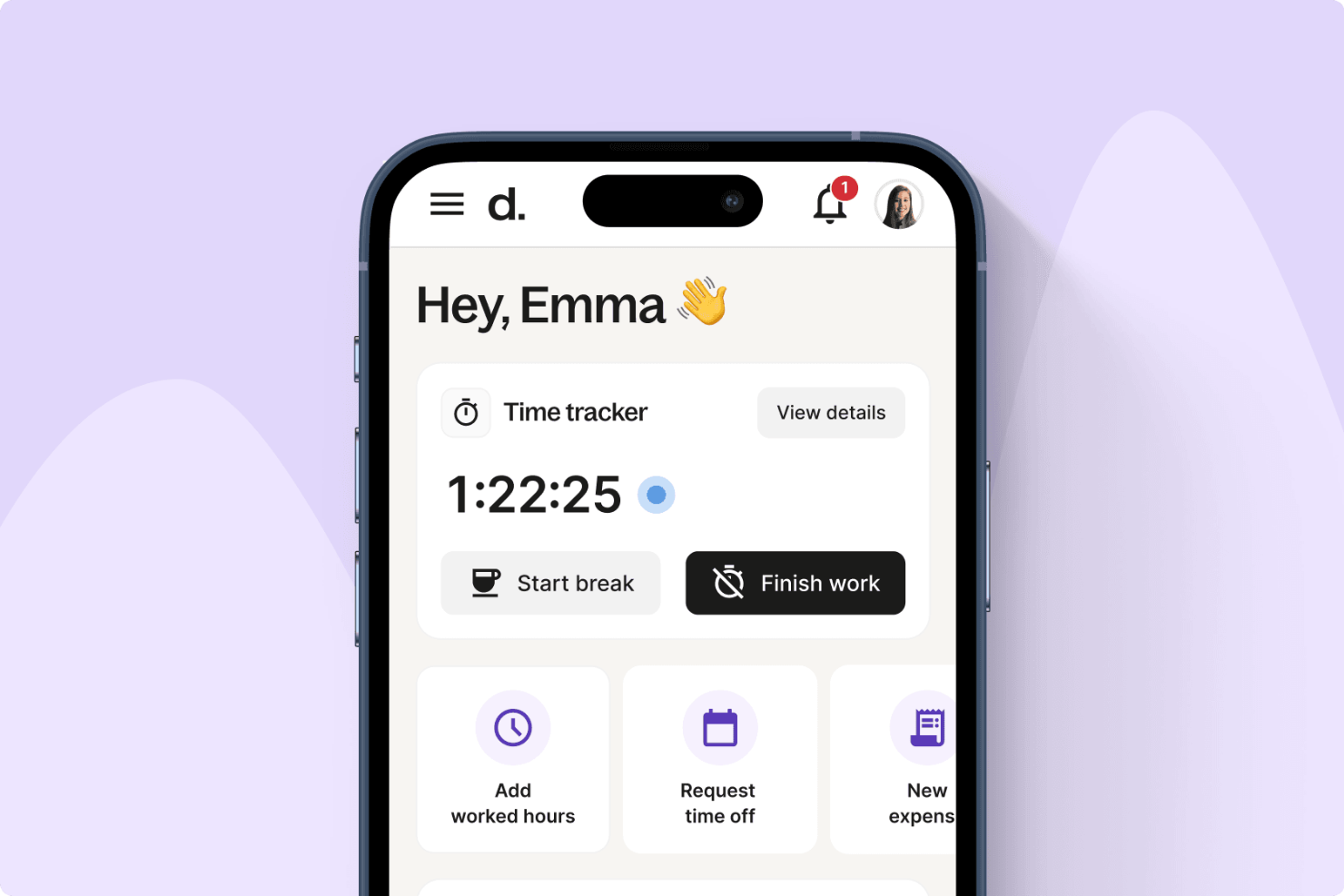
For companies managing global teams, Deel provides PTO tracking that integrates with collaboration tools like Slack and Microsoft Teams. Employees can submit and manage leave requests directly within the platforms they already use, helping reduce back-and-forth communication. Deel also supports compliance with local labor laws and can reflect approved time off in payroll, which may be especially useful for internationally distributed workforces.
Why I Picked Deel
I picked Deel because it lets you manage PTO directly inside Slack and Microsoft Teams, which can make leave management more accessible for distributed teams. I also like that approved time off syncs automatically with payroll, helping you keep records accurate across regions. If you operate internationally, Deel can help you track different leave types while staying aligned with local regulations and internal policies.
Deel Key Features
In addition to its integration with communication platforms, Deel offers several other key features for PTO tracking:
- Time Off Requests: Employees can request and approve time off instantly within the platform, streamlining the approval process.
- Employee Data Updates: Approve employee updates in seconds, ensuring that records are always current.
- Time Tracking: Track hours effortlessly, providing insights into employee work patterns and PTO usage.
- Expense Management: Reimburse expenses faster, integrating financial management with HR processes.
Deel Integrations
Integrations include Slack, Microsoft Teams, BambooHR, Greenhouse, QuickBooks, Xero, Workday, Gusto, Lever, and Expensify.
Pros and Cons
Pros:
- Integrates with major HR systems
- Built-in compliance and contract management
- Global payroll across 150 countries
Cons:
- Limited directory customization options
- Reporting features lack advanced filtering
New Product Updates from Deel HR

Deel Expands Stablecoin Wallet to 80+ Countries
Deel expands its Stablecoin Wallet to 80+ countries with dollar-backed balances and optional rewards. This gives eligible contractors more ways to hold and manage earnings inside Deel. For more information, visit Deel’s official site.
 .
.
Best with customizable open API integrations
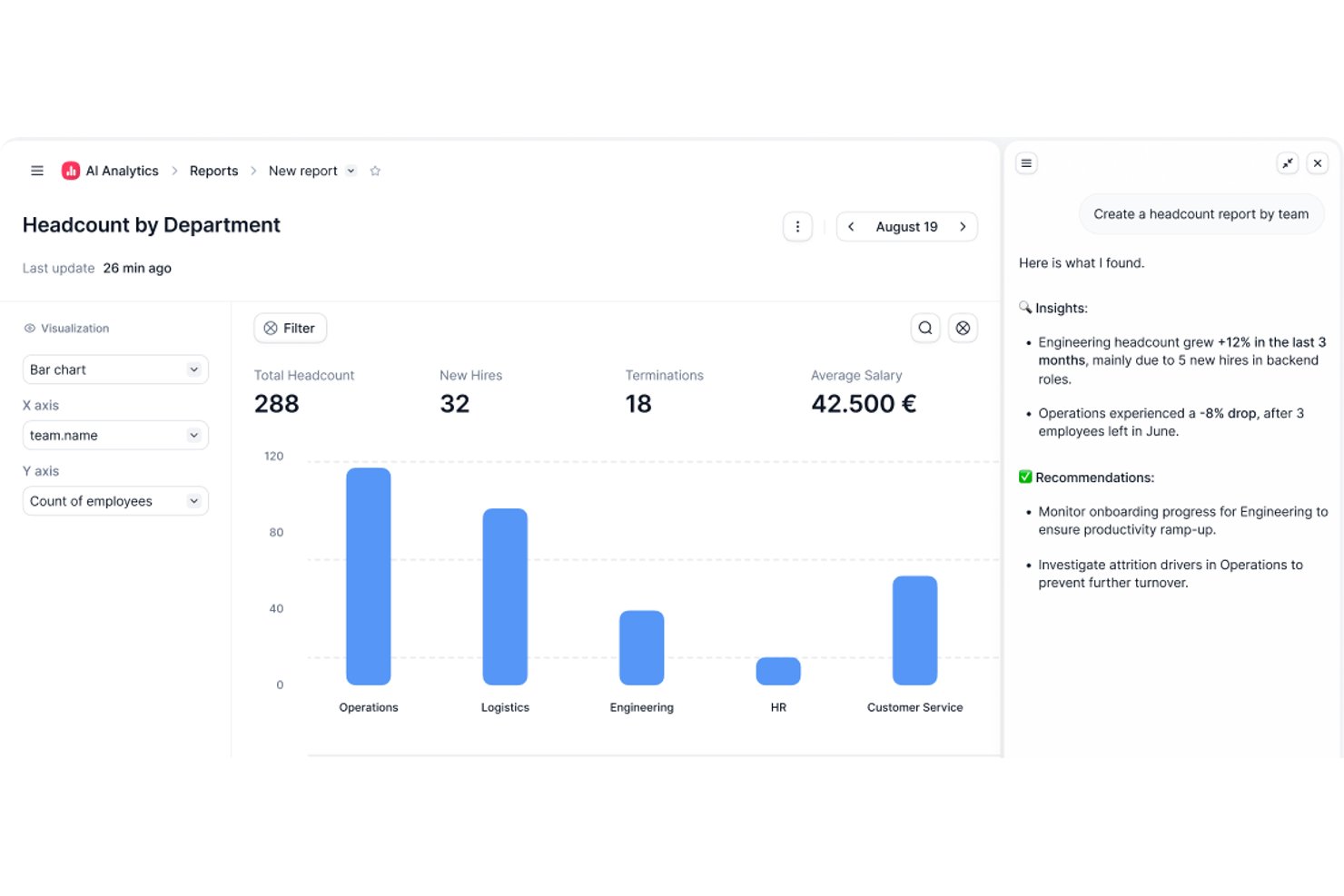
Factorial is HR software designed for businesses needing flexible PTO tracking, policy customization, real-time team calendars, and automated leave management workflows.
Who Is Factorial Best For?
HR teams at small to midsize companies that want centralized PTO tracking and flexible leave policy management.
Why I Picked Factorial
I picked Factorial as one of the best because I can tailor PTO policies and approval workflows for multiple countries and locations, and quickly connect the PTO module to existing payroll apps using Factorial’s customizable open API integrations.
Factorial Key Features
- Team absence calendar: View all team PTO and absences in a centralized, filterable calendar interface.
- Real-time leave balance tracking: Track accruals, usage, and remaining PTO balances for each employee instantly.
- Multi-policy leave management: Set up and manage unlimited leave types and rules for various employee groups.
- Request status notifications: Automatically notify managers and employees about pending, approved, or denied PTO requests.
Factorial Integrations
Factorial offers native integrations with ADP, PayFit, Sage, QuickBooks, Google Calendar, Slack, and Microsoft Outlook. An open API is available for custom integrations.
Pros and Cons
Pros:
- Detailed leave balance and team calendars
- Advanced approval chains for complex team structures
- Policy automation handles multi-country leave compliance
Cons:
- Occasional delays in customer support response
- Custom report building can be limited

Best for unlimited PTO
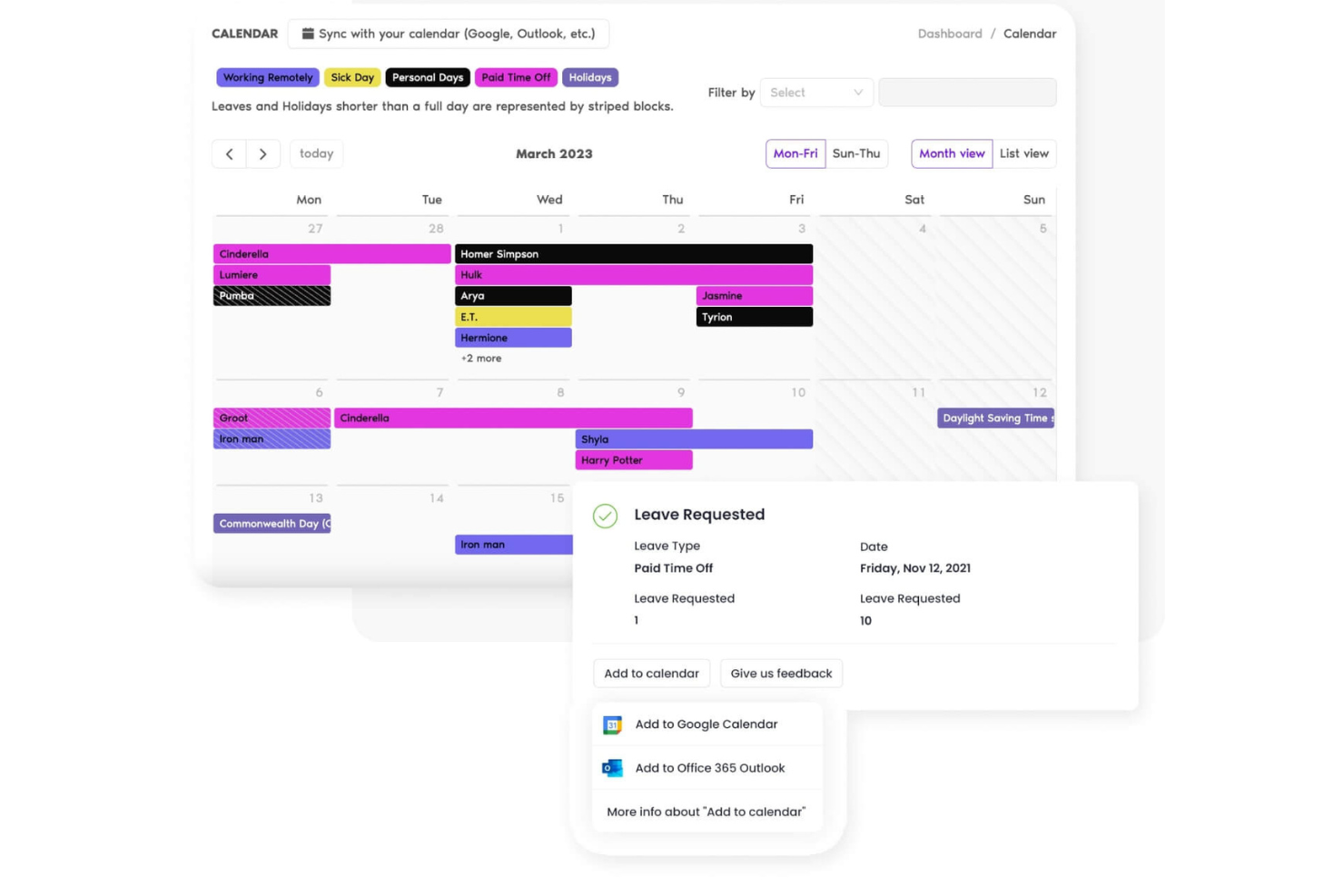
Vacation Tracker is a leave management tool designed for teams that use Slack. It simplifies PTO tracking by allowing users to request and approve employee vacation days directly within Slack, making it ideal for tech-savvy teams.
Why I picked Vacation Tracker: This tool integrates with Slack, making it great for teams already using the platform for communication. You can manage notifications and view leave history, all within Slack. This direct integration ensures that leave management doesn't disrupt your team's workflow.
Standout Features and Integrations:
Features include customizable leave types that let you define specific leave categories to fit your organization's policies. You can also set different leave policies for multiple departments or locations, offering flexibility. The tool provides detailed leave reports, helping you keep track of all time-off requests and approvals.
Integrations include Slack, Microsoft Teams, Google Workspace, and more.
Pros and Cons
Pros:
- Accessible in multiple time zones
- Customizable leave policies
- Strong calendar visibility
Cons:
- Limited support for flexible leave configurations
- Basic reporting and customizations

TalentHR
Best for remote teams
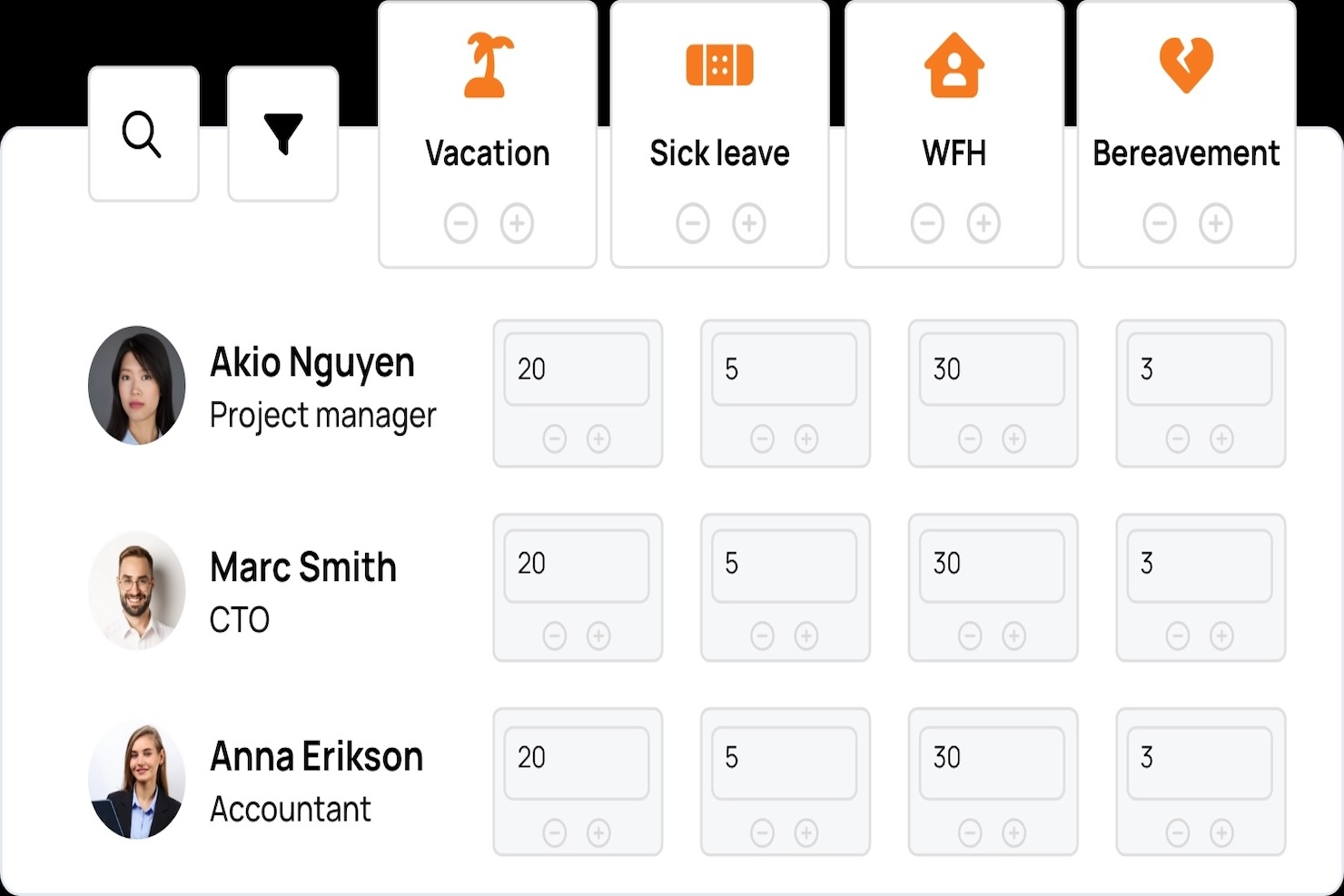
TalentHR is an HR management platform tailored for remote teams. It provides tools for managing PTO, employee data, and performance, making it ideal for distributed workforces.
Why I picked TalentHR: TalentHR excels in supporting remote teams with its intuitive vacation tracking features. The platform's analytics provide insights into leave patterns, and its user-friendly design makes it accessible to teams without a dedicated HR department.
Standout Features and Integrations:
Features include real-time notifications that keep your team informed about leave status changes. You can set up multiple leave types to accommodate various employee needs. The platform also offers performance tracking, helping you keep tabs on employee growth and development.
Integrations include Slack, Microsoft Teams, Google Workspace, WordPress, and more.
Pros and Cons
Pros:
- Transparent pricing
- Built-in reporting tools
- Centralized employee and leave information
Cons:
- Requires high initial setup time
- Limited partial-day leave tracking
Jibble
Best free option
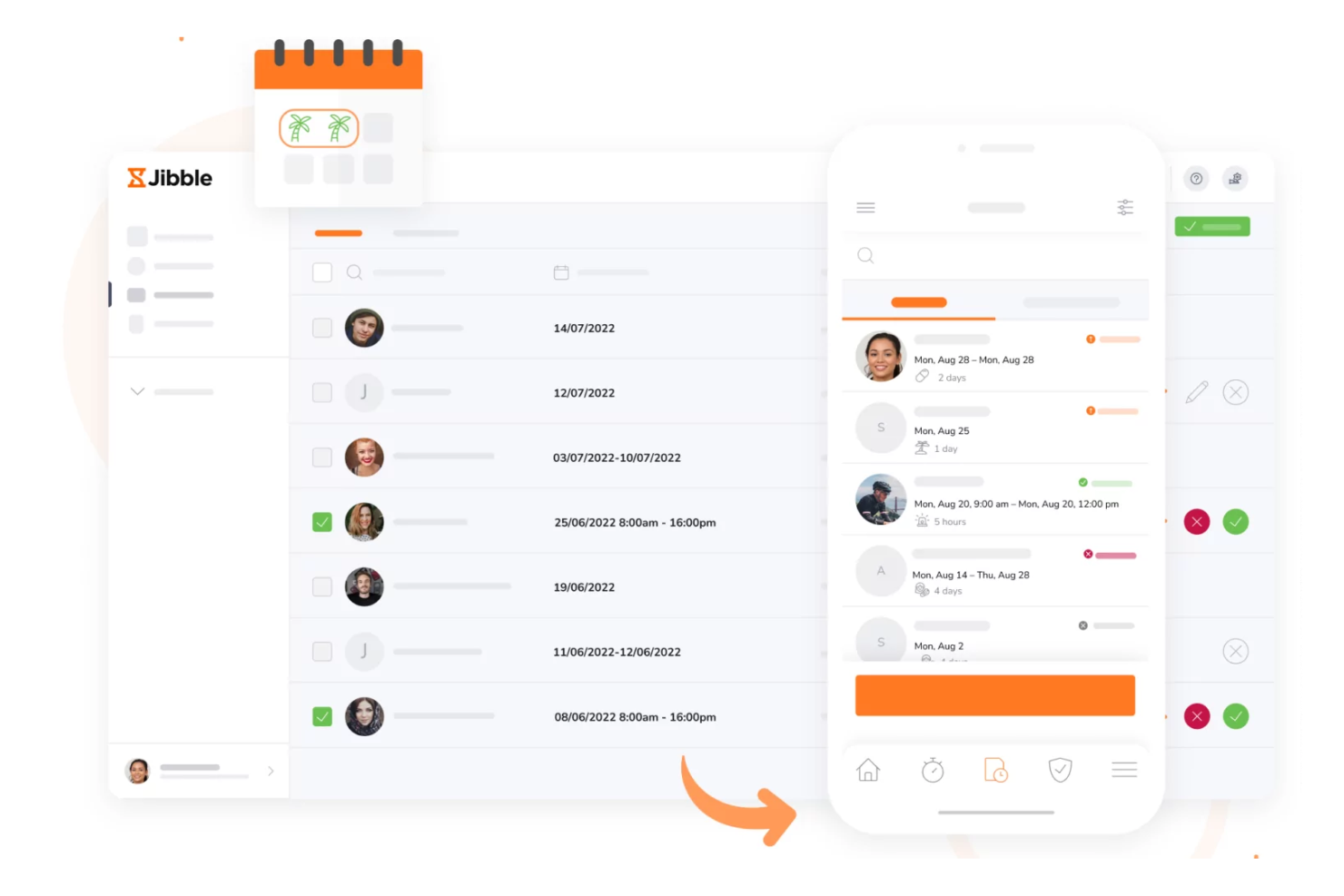
Jibble is a time tracking and attendance management tool aimed at businesses of all sizes. It offers a PTO tracker as part of its suite, allowing teams to manage time-off requests efficiently.
Why I picked Jibble: Jibble offers a free plan, making it a great choice for budget-conscious teams. You can track PTO alongside work hours to save time. The tool provides automated reminders for pending approvals, keeping everyone informed. Its user-friendly interface simplifies the process for both managers and employees.
Standout Features and Integrations:
Features include detailed reporting that helps you analyze time-off patterns and make informed decisions. You can also set up customizable approval workflows to fit your team's specific needs. The tool supports biometric attendance, adding a layer of security to time tracking.
Integrations include Slack, Microsoft Teams, Google Workspace, Asana, Trello, monday.com, Xero, QuickBooks Online, Salesforce, and more.
Pros and Cons
Pros:
- Biometric attendance support
- Multi-device accessibility
- Free plan for unlimited users
Cons:
- No built-in communication tool
- Limited advanced customization

HR Cloud
Best for customization
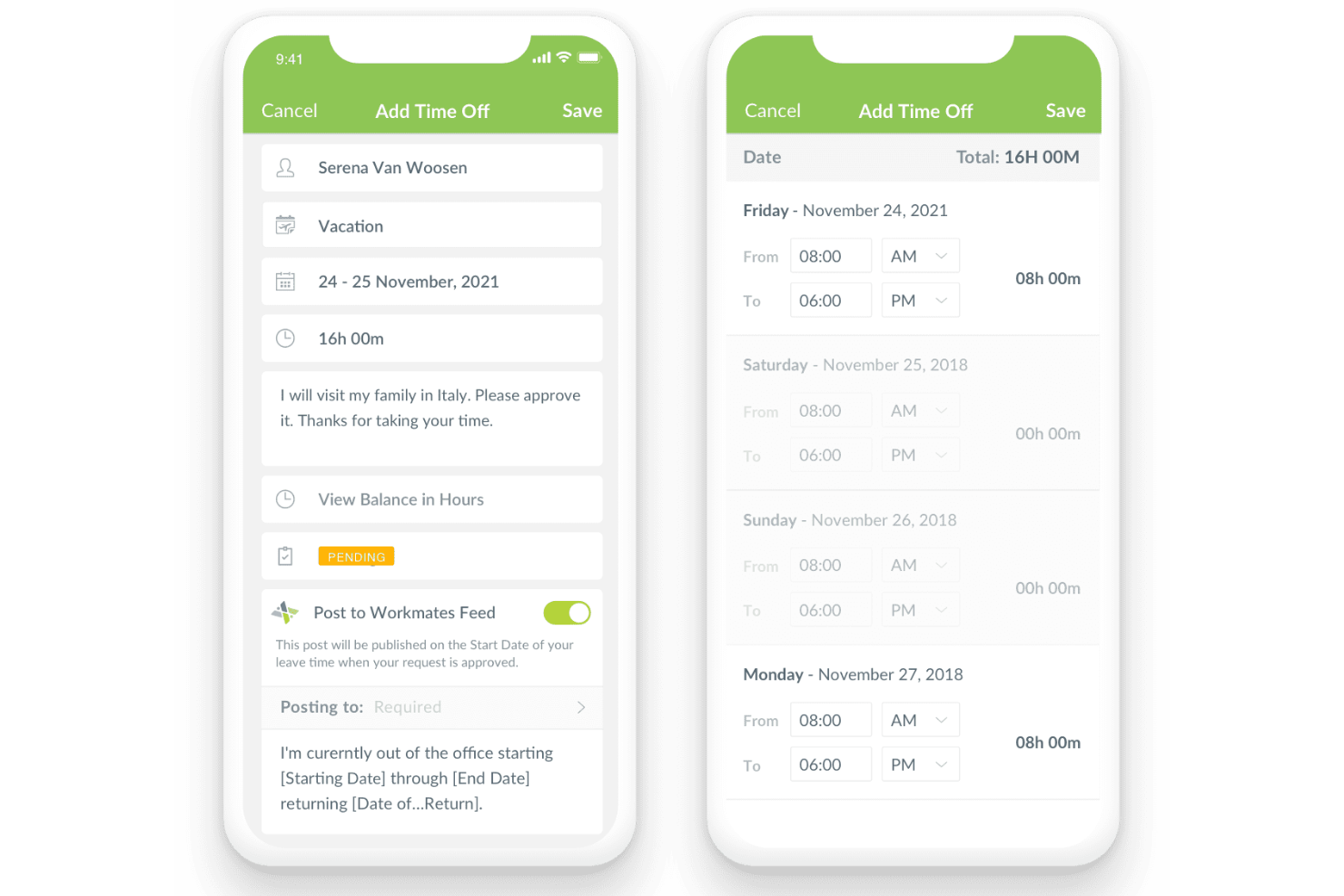
HR Cloud is an HR management platform designed for businesses that need customizable solutions. It offers tools for PTO tracking, onboarding, and employee engagement, catering to diverse organizational needs.
Why I picked HR Cloud: HR Cloud provides extensive customization options, making it ideal for businesses with unique requirements. You can tailor PTO policies to match your specific needs, and the platform's adaptability ensures it fits various organizational structures. Its analytics tools provide insights into employee engagement and leave patterns, helping you make informed decisions.
Standout Features and Integrations:
Features include customizable workflows that allow you to automate repetitive tasks. This reduces human error, and helps prevent administrative burnout. You can also use the platform's engagement tools to boost team morale and communication. Detailed analytics provide insights into PTO usage and employee trends, helping you optimize your HR strategies.
Integrations include Slack, Microsoft Teams, Google Workspace, QuickBooks, and more.
Pros and Cons
Pros:
- Supports diverse organizational structures
- Includes engagement tools
- Provides automated workflows
Cons:
- Complex niche reporting capabilities
- Limited mobile functionality

Best for payroll integration
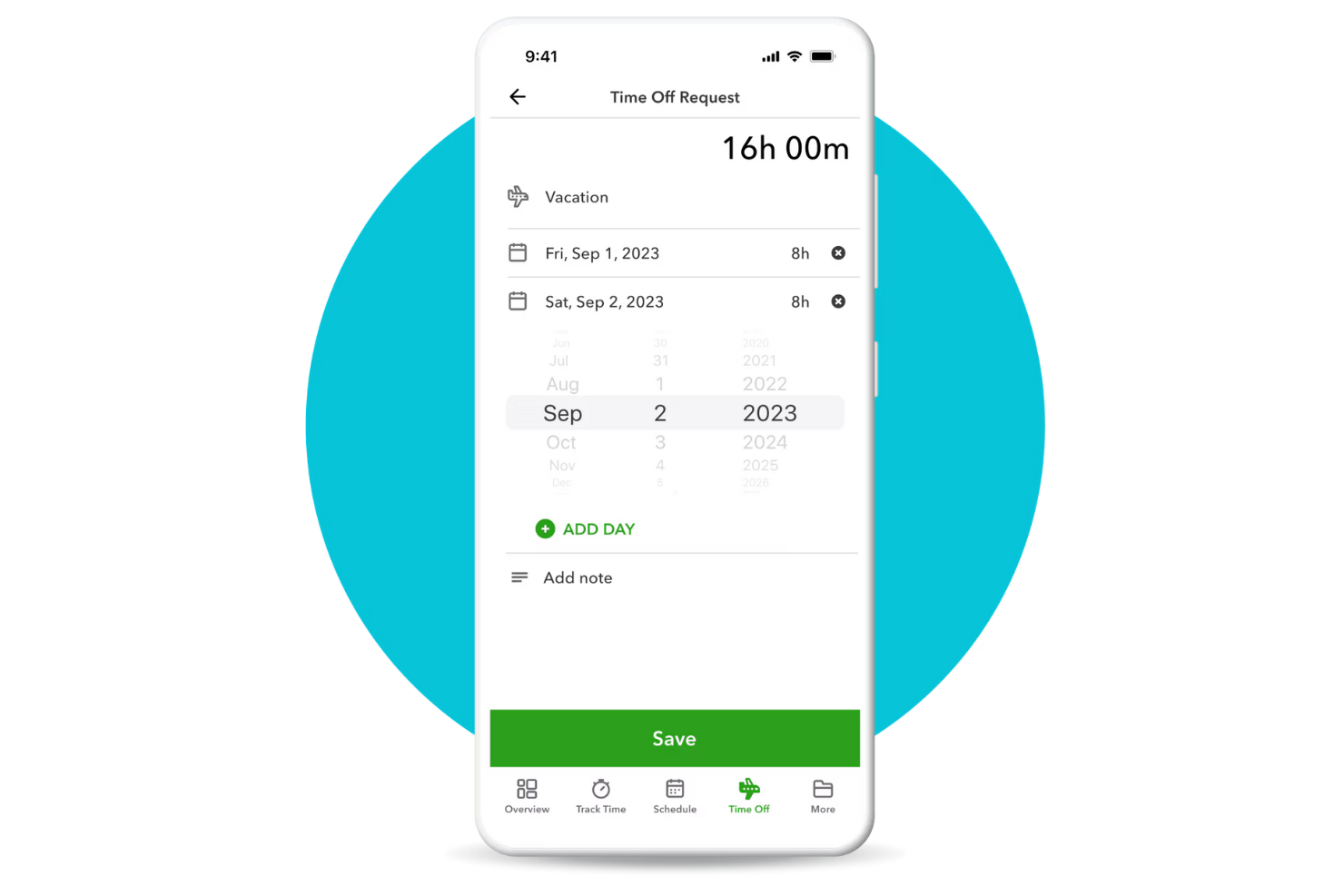
QuickBooks is a financial management software primarily used by small to midsize businesses. It offers PTO tracking features that integrate directly with payroll, simplifying the process of managing employee time-off and ensuring accurate pay calculations.
Why I picked QuickBooks: QuickBooks is ideal for businesses that want to integrate PTO tracking with payroll processing. The tool automatically updates payroll with approved time-off, reducing errors and saving time. Its integration with payroll ensures that you maintain accurate records and compliance.
Standout Features and Integrations:
Features include customizable leave policies that allow you to define rules according to your company's requirements. The tool provides real-time updates on leave balances, so your team always knows their available time-off. Additionally, automated notifications keep managers and employees informed of leave status changes.
Integrations include QuickBooks Time, Shopify, Square, PayPal, Amazon, HubSpot, Salesforce, Mailchimp, Etsy, Stripe, and more.
Pros and Cons
Pros:
- Employee self-service capabilities
- Automated notifications
- Simplified payroll integration
Cons:
- No direct professional support
- PTO accrual setup limited to yearly policies
ADP
Best for large enterprises
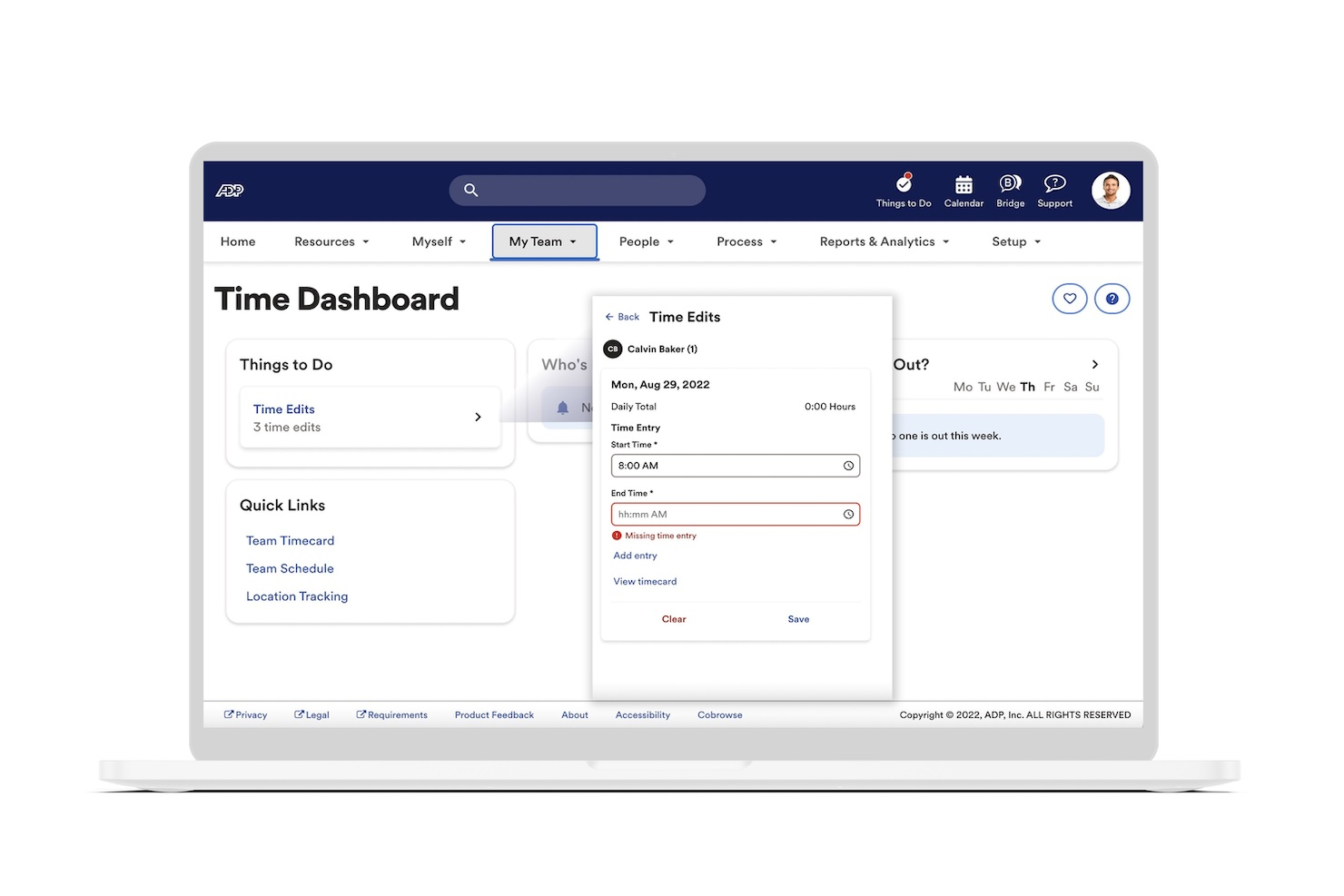
ADP is a workforce management solution designed for large enterprises. It handles time and attendance tracking, payroll, and PTO management, providing a unified platform for HR operations.
Why I picked ADP: ADP is suitable for large enterprises that need a scalable PTO tracking solution. Its ability to handle complex payroll requirements alongside PTO tracking ensures smooth HR operations. You can configure custom leave policies to match your organizational needs.
Standout Features and Integrations:
Features include advanced scheduling capabilities that allow you to manage shifts and time-off requests with ease. The tool also offers real-time analytics that provide insights into attendance and leave data. Its compliance management ensures your team adheres to labor regulations.
Integrations include Workday, Oracle, SAP SuccessFactors, Microsoft Dynamics, QuickBooks, Salesforce, Xero, BambooHR, Netsuite, and more.
Pros and Cons
Pros:
- Automated compliance management
- Advanced scheduling capabilities
- Scalable for large enterprises
Cons:
- Mobile and web interfaces can be out of sync
- Pricing details are not transparent
Best for real-time PTO balance updates
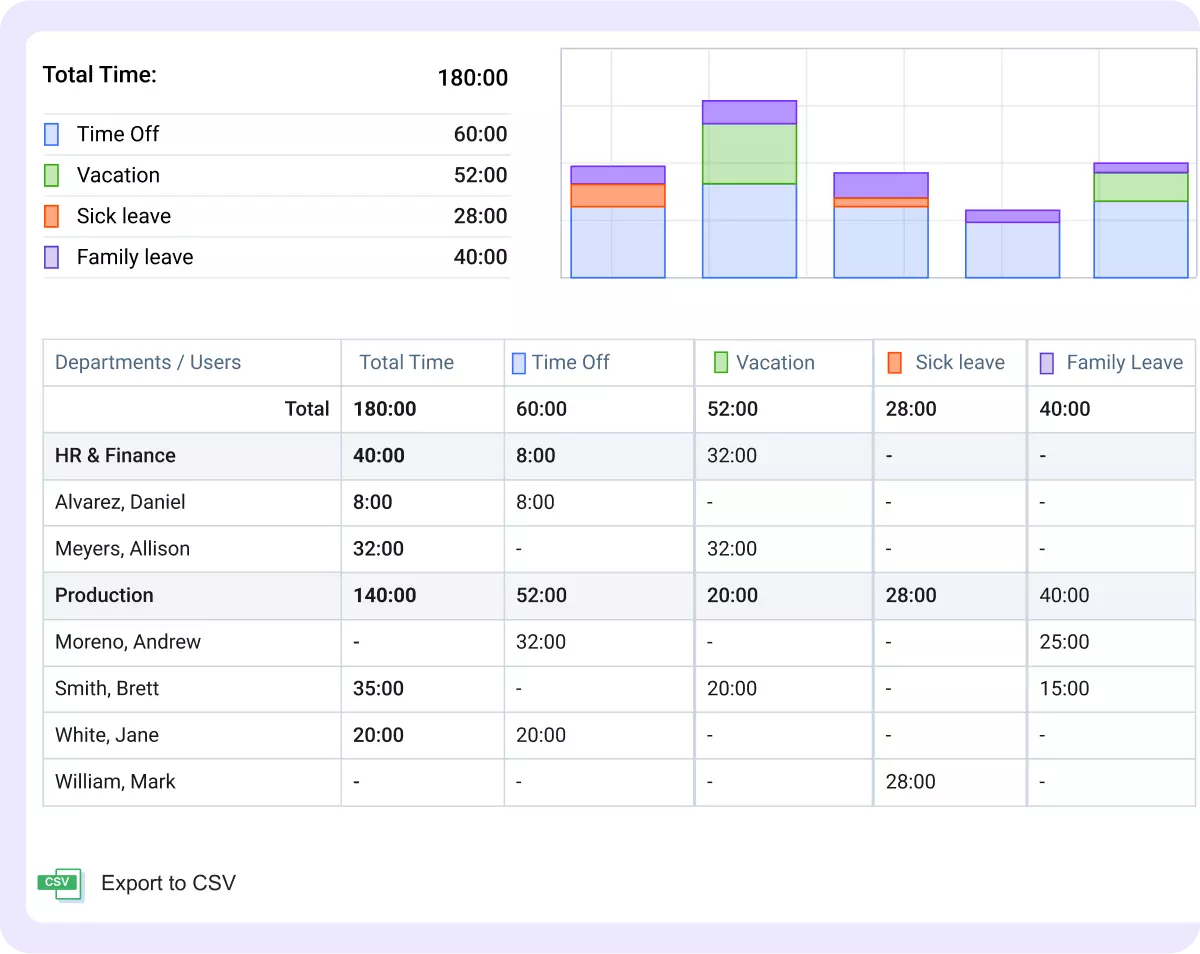
actiPLANS simplifies the process of managing your team's PTO. Designed for organizations of all sizes, actiPLANS is perfect for HR and payroll teams looking to automate leave management and simplify scheduling. Whether you're dealing with complex leave policies or simply want a more efficient way to track PTO, actiPLANS offers the solutions you need to keep your team organized and informed.
Why I Picked actiPLANS
I picked actiPLANS for its ability to provide real-time PTO balance updates, a feature that addresses the challenge of keeping both employees and management informed. The platform's automated PTO routines reduce manual tasks, freeing up time for HR professionals. Additionally, its centralized time-off data ensures that all information is easily accessible, making it a practical choice for those looking to improve their PTO tracking processes.
actiPLANS Key Features
In addition to its automated routines and real-time updates, I also found several other features that make actiPLANS stand out:
- Visual Activity Planning: Allows you to see and manage employee schedules and availability at a glance.
- Effortless Shift Allocation: Simplifies the process of assigning shifts, ensuring that your team is always adequately staffed.
- Simple Event Scheduling: Helps organize team events and meetings without overlapping with leave schedules.
- Unlimited Team Member Grouping: Enables you to categorize employees into groups for easier management and reporting.
actiPLANS Integrations
Integrations include iCal, Microsoft Outlook, Google Calendar, and more.
Pros and Cons
Pros:
- Customizable rules cater to specific organizational policies
- Visual activity planning aids in effective resource scheduling
- Automated PTO routines reduce manual workload for HR teams
Cons:
- PTO balances aren't available on the free plan
- Lack of native integrations could limit connectivity options

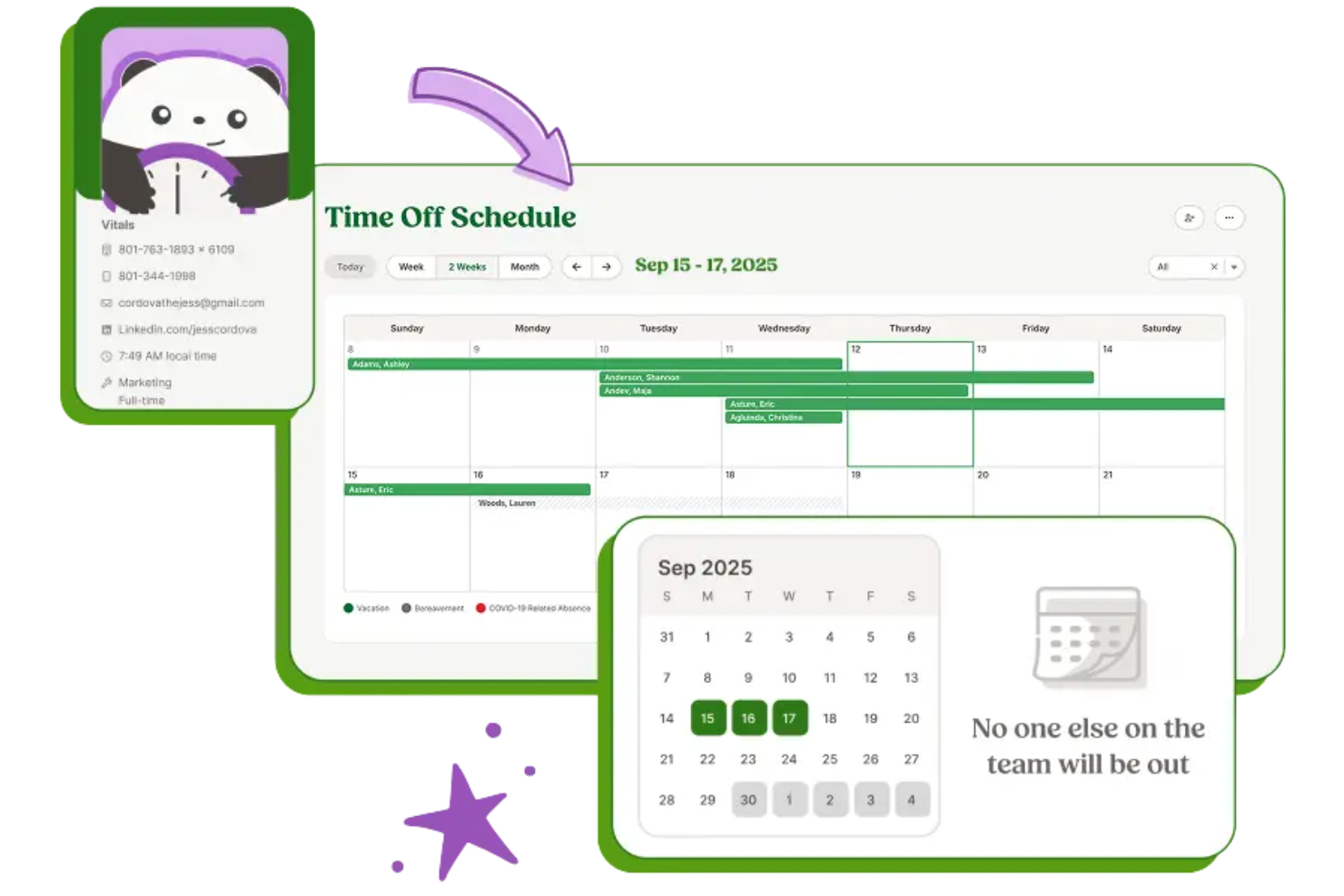
BambooHR is an HR software solution tailored for small to midsize businesses. It offers time-off tracking, employee data management, and performance evaluations to simplify HR functions.
Why I picked BambooHR: BambooHR is perfect for small businesses looking for an all-in-one HR platform. It provides easy PTO requests and approvals, helping you manage team members' days off. Automated reminders ensure no leave requests are missed, and its reporting tools offer insights into leave trends. The platform's user-friendly interface makes it accessible for teams without dedicated HR staff.
Standout Features and Integrations:
Features include customizable employee records, allowing you to store essential information in one place and reduce reliance on spreadsheets. You can also track employee performance with built-in evaluation tools. Detailed analytics provide insights into various HR metrics, helping you make informed decisions.
Integrations include QuickBooks, Xero, Slack, Okta, Google Workspace, LinkedIn, and more.
Pros and Cons
Pros:
- Customizable records
- Flexible reporting options
- Mobile app available on Android
Cons:
- Limited PTO workflow customization
- No native shift scheduling
Other PTO Tracking Software
Here are some additional PTO tracking software options that didn’t make it onto my shortlist, but are still worth checking out:
- TimeOff
For simplicity
- Flamingo
For Slack integration
- Buddy Punch
For ease of use
- Connecteam
For mobile teams
- Paycom
For employee self-service management
- Calamari
For biometric attendance
- Timetastic
For visual calendar view
- GoCo
For HR integration
- Workstatus
For remote workforce management


How I Evaluate PTO Tracking Software
I evaluate PTO tools across two layers—whether they handle accruals, request workflows, and balance tracking reliably, and what makes one option genuinely better than another.
Core Functionality (Table Stakes For This List)
When I'm selecting tools for my list, I rank each one on a scale from 0 (does not offer the functionality) to 5 (excels in this area) for each core functionality listed below. Then, I calculate the tool's total score into a percentage. Each tool needs to achieve a minimum total score of 65% to be considered for inclusion.
- Accrual Rule Automation: I check whether each tool can handle layered accrual logic—like tenure-based tiers, hourly accruals, or carryover caps—without manual adjustments every pay cycle.
- Time-Off Request Workflows: The approval chain matters, so I look for configurable routing, manager delegation options, and built-in reminders that keep requests from sitting unanswered.
- Leave Balance Visibility: Employees and managers should both see real-time balances, pending requests, and usage history without needing to contact HR for a simple balance check.
- Multi-Policy Support: I evaluate how well the tool handles distinct leave types—vacation, sick, parental, bereavement—each with their own accrual rules, eligibility criteria, and limits.
- Team Calendar & Conflict Detection: A shared absence calendar with overlap warnings helps managers avoid approving three people off the same week on a five-person team.
- Payroll & HRIS Integration: I look at whether leave data syncs with payroll and HR systems so balances and deductions stay accurate without duplicate data entry.
Once I have a list of tools that meet this criteria, I consider what sets each platform apart.
Differentiating Factors (What Sets Vendors Apart)
Here's how I compare and contrast different vendors:
Standout Features
Slack and Microsoft Teams integrations make a real difference—when employees can check balances or submit requests from chat, adoption goes up and HR gets fewer repeat questions. I also look at reporting depth, especially whether a tool can surface absence trends by department or flag teams with unusually low PTO usage. For distributed teams, holiday calendar localization is worth evaluating since it saves HR from manually assigning public holidays across multiple regions.
Beyond Features
Integration depth matters a lot here. A PTO tool that connects natively to your payroll and HRIS means leave deductions stay accurate without manual reconciliation at month-end. I also evaluate onboarding support—migrating accrual balances and legacy policies from spreadsheets is tedious, so vendors that offer guided setup or policy migration templates save HR teams real time. Pricing transparency is another factor I check, especially whether per-employee costs stay predictable as headcount grows or if key features get locked behind higher tiers.
How to Choose PTO Tracking Software
It's easy to get bogged down in long feature lists and complex pricing structures. To help you stay focused as you work through your unique software selection process, here's a checklist of factors to keep in mind:
| Factor | What To Consider |
|---|---|
| Scalability | Can the software grow with your team? Consider future expansions and whether the tool can handle increased users and data without additional costs or technical issues. |
| Integrations | Does it integrate with your existing tools? Check compatibility with payroll, HR systems, and communication platforms to avoid workflow disruptions. |
| Customizability | Can you tailor the software to your needs? Look for tools that let you customize leave policies, approval workflows, and user roles to fit your company's processes. |
| Ease of Use | Is the interface intuitive for all users? Choose software with a straightforward design to reduce training time and increase adoption. |
| Implementation and onboarding | How long does it take to set up? Evaluate the vendor's onboarding support, such as training resources and customer assistance, to ensure a smooth transition. |
| Cost | What's the total cost of ownership? Consider not just the subscription price, but also hidden fees, such as charges for additional users or premium support. |
| Security safeguards | How does the software protect your data? Ensure it complies with data protection regulations and offers encryption, user permissions, and regular security updates to safeguard sensitive information. |
| Support Availability | Is help readily available when you need it? Look for vendors that offer 24/7 support, multiple contact options, and a responsive customer service team to assist with any issues. |
What Is PTO Tracking Software?
PTO tracking software is a tool that manages and tracks employee PTO. HR professionals and managers generally use these tools to simplify leave management and ensure compliance with company policies.
Automated leave requests, balance tracking, and integration capabilities help with record-keeping, reducing errors, and improving efficiency. Overall, these tools provide a centralized solution for managing employee time-off effectively.
Features
When selecting PTO tracking software, keep an eye out for the following key features:
- Leave balance tracking: Automatically updates and displays employee leave balances, helping managers and employees stay informed.
- Automated leave requests: Simplify the request and approval process, reducing administrative tasks and minimizing errors.
- Customizable leave policies: Tailor policies to your organization's unique needs, ensuring compliance with company rules.
- Real-time notifications: Keep everyone informed about leave status changes, ensuring transparency and reducing miscommunication.
- Integration capabilities: Connect with existing HR systems and payroll, ensuring smooth data flow and reducing manual entry.
- Detailed reporting: Provides insights into leave patterns and trends, helping managers make informed decisions.
- Mobile accessibility: Enables employees and managers to access PTO information and requests on the go, improving flexibility.
- Security safeguards: Protect sensitive employee data with encryption and compliance with data protection regulations.
- User-friendly interface: Ensures ease of use for all employees, reducing the learning curve and encouraging adoption.
- Biometric attendance tracking: Adds a layer of security and accuracy to time tracking by verifying employee presence.
Benefits
Implementing PTO tracking software provides several benefits for your team and your business. Here are a few you can look forward to:
- Improved accuracy: Automated leave balance tracking reduces errors and ensures accurate records.
- Time savings: Automated leave requests and approvals free up time for HR and managers by reducing manual tasks.
- Better compliance: Customizable leave policies help ensure your organization adheres to labor laws and company rules.
- Improved communication: Real-time notifications keep everyone informed, reducing misunderstandings and improving transparency.
- Informed decision-making: Detailed reporting provides insights into leave trends, helping managers make data-driven decisions.
- Increased flexibility: Mobile access enables employees and managers to conveniently submit PTO requests on the go.
- Data security: Security safeguards protect sensitive employee information and ensure compliance with data protection regulations.
Costs and Pricing
Selecting PTO tracking software requires an understanding of the various pricing models and plans available. Costs vary based on features, team size, add-ons, and more. The table below summarizes common plans, their average prices, and typical features included in PTO tracking software solutions:
Plan Comparison Table for PTO Tracking Software
| Plan Type | Average Price | Common Features |
|---|---|---|
| Free Plan | $0 | Basic leave tracking, limited user access, and simple reporting. |
| Personal Plan | $1-$19/user/month | Leave tracking, mobile access, customizable leave policies, and basic integrations. |
| Business Plan | $25-$57.50/month | Advanced reporting, automated notifications, multiple integrations, and priority support. |
| Enterprise Plan | $8.99+/user/month | Full customizability, dedicated account management, extensive security features, and advanced analytics. |
PTO Tracking Software FAQs
Here are some answers to common questions about PTO tracking software.
How can PTO tracking software integrate with existing systems?
PTO tracking software can integrate with existing systems, such as payroll and HR platforms, to simplify data flow and reduce manual entry. When choosing a software tool, check its compatibility with the tools your team already uses. This ensures a smooth transition and helps maintain data accuracy. Many providers offer APIs or direct integrations with popular platforms such as QuickBooks, ADP, and Google Workspace.
Do I need technical expertise to set up PTO tracking software?
No, most PTO tracking software solutions are designed with user-friendliness in mind, so you don’t need extensive technical expertise. However, having basic computer skills can be helpful. Vendors often provide setup guides, tutorials, and support to assist you. If you’re unsure, ask the provider about their onboarding process and available resources.
Can PTO tracking software handle different types of leave?
Yes, PTO tracking software can manage various types of leave, such as vacation, sick leave, and personal days. You can customize leave categories and policies to match your company’s specific needs. This flexibility helps ensure compliance with company policies and labor laws. When evaluating software, check if it provides easy customization and supports multiple leave types.
Is data stored in PTO tracking software secure?
Yes, reputable PTO tracking software providers prioritize data security. They implement measures such as encryption, access controls, and regular security updates to protect sensitive employee information. Before purchasing, review the vendor’s security protocols and compliance with data protection regulations.
What’s Next:
If you're in the process of researching PTO tracking software, connect with a SoftwareSelect advisor for free recommendations.
You fill out a form and have a quick chat where they get into the specifics of your needs. Then, you'll get a shortlist of software to review. They'll even support you through the entire buying process, including price negotiations.