

10 Best Online Employee Scheduling Tools For 2026

10 Best Online Employee Scheduling Software List


Keeping your team organized and schedules on track can be a real headache. Juggling shifts, managing availability, and ensuring everyone’s on the same page takes time and effort. That’s where online employee scheduling software comes in handy. It’s designed to make your life easier and keep your team running smoothly.
In my experience, having the right tools can transform how you handle scheduling challenges. I’ve tested and reviewed various options to help you find the best fit for your needs. You’ll get an unbiased look at my top picks, along with insights on their features and benefits.
As you read on, you’ll discover which software solutions can truly make a difference for you and your team.
Why Trust Our Software Recommendations
Our team has been testing and reviewing software since 2012. As HR experts ourselves, we know how difficult—and important—it is to choose the right software.
For this guide, we evaluated tools using hands-on testing and independent research, scoring tools using our selection criteria. We also draw on insights from industry thought leaders and practicing HR experts.
Our reviews reflect our human editorial judgment, not a sales pitch.
Expert reviewers:
Online Employee Scheduling Software Comparison Table
This comparison table summarizes pricing details for my top online employee scheduling software selections:
| Tool | Best For | Trial Info | Price | ||
|---|---|---|---|---|---|
| 1 | Best for deskless workers that needs shift information accessible | 14-day free trial | From $29/month (billed annually) | Website | |
| 2 | Best for creating timesheets to integrate with payroll | Free demo available | From $8/user/month | Website | |
| 3 | Best custom workflows for team scheduling | Free plan available | From $9/user/month (billed annually) | Website | |
| 4 | Best for AI-driven labor forecasting | Free demo available | From $5/user/month (billed annually) | Website | |
| 5 | Best online time clock with scheduling | 14-day free trial + free demo available | From $4.99/user/month + $19/month base fee (billed annually) | Website | |
| 6 | Best if you need a complete online HR platform | Free plan available | From $30/location/month + payroll add-on | Website | |
| 7 | Best for shift-based SMBs in Canada | Free 21-day trial + free demo available | From $2.93/user/month (billed annually) | Website | |
| 8 | Best for restaurants | 14-day free trial + free plan available | From $39.99/month | Website | |
| 9 | Best for field service or construction business | 14-day free trial + free demo available | From $40/month | Website | |
| 10 | Best for absence management | Free demo available | Pricing upon request | Website |


Best Online Employee Scheduling Software Reviews
Next is a brief run-through of each online employee scheduling software that made it into my top 10 list. For my 10 favorites, I’ve explained what it does best and included a screenshot of each to showcase their features in action. Plus, there are 20 additional options below if you’d like even more possibilities to consider.
Best for deskless workers that needs shift information accessible
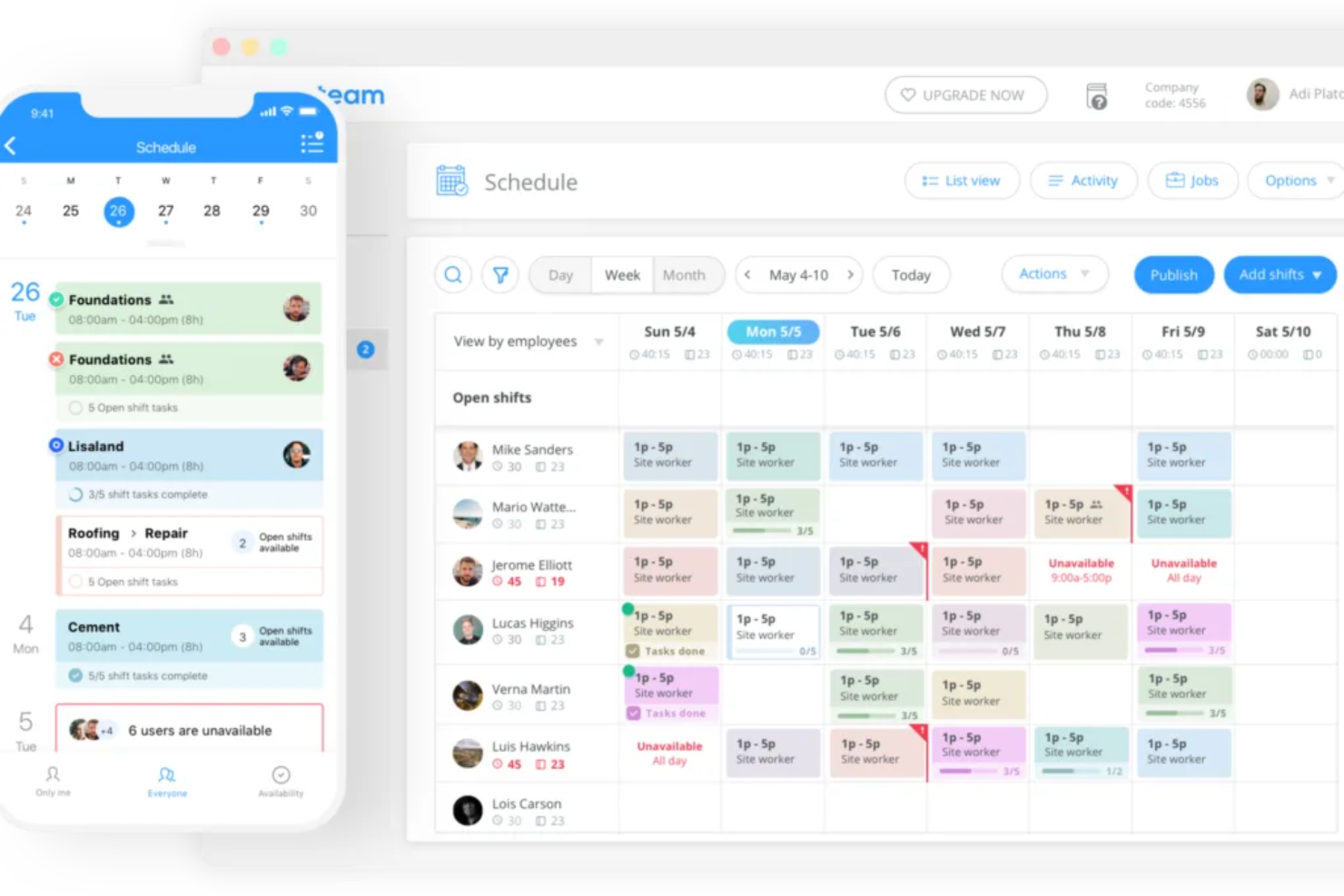
Need more than just staff scheduling software? Connecteam is a complete work management platform managers from all types of industries use to handle their daily operations, scheduling, internal communications, and employee training.
Their time tracking capabilities extend to geofencing which ensures your team is in the right place and won’t clock out when away from the designated work site. Digital forms, checklists, and push notifications or reminders are bonus points that make it a good choice for “deskless” workers.
Integrations include Paychex, Xero, Gusto, QuickBooks Payroll (online + desktop), Zapier, Google Calendar, API access, and others.
New Product Updates from Connecteam

Connecteam Expands Break and Timesheet Controls
Connecteam adds flexible break thresholds, personalized policies, auto-end options, a centralized exceptions report, and improved timesheet issue visibility to help teams manage breaks and timesheets more effectively. For more information, visit Connecteam’s official site.
 .
.
Best for creating timesheets to integrate with payroll
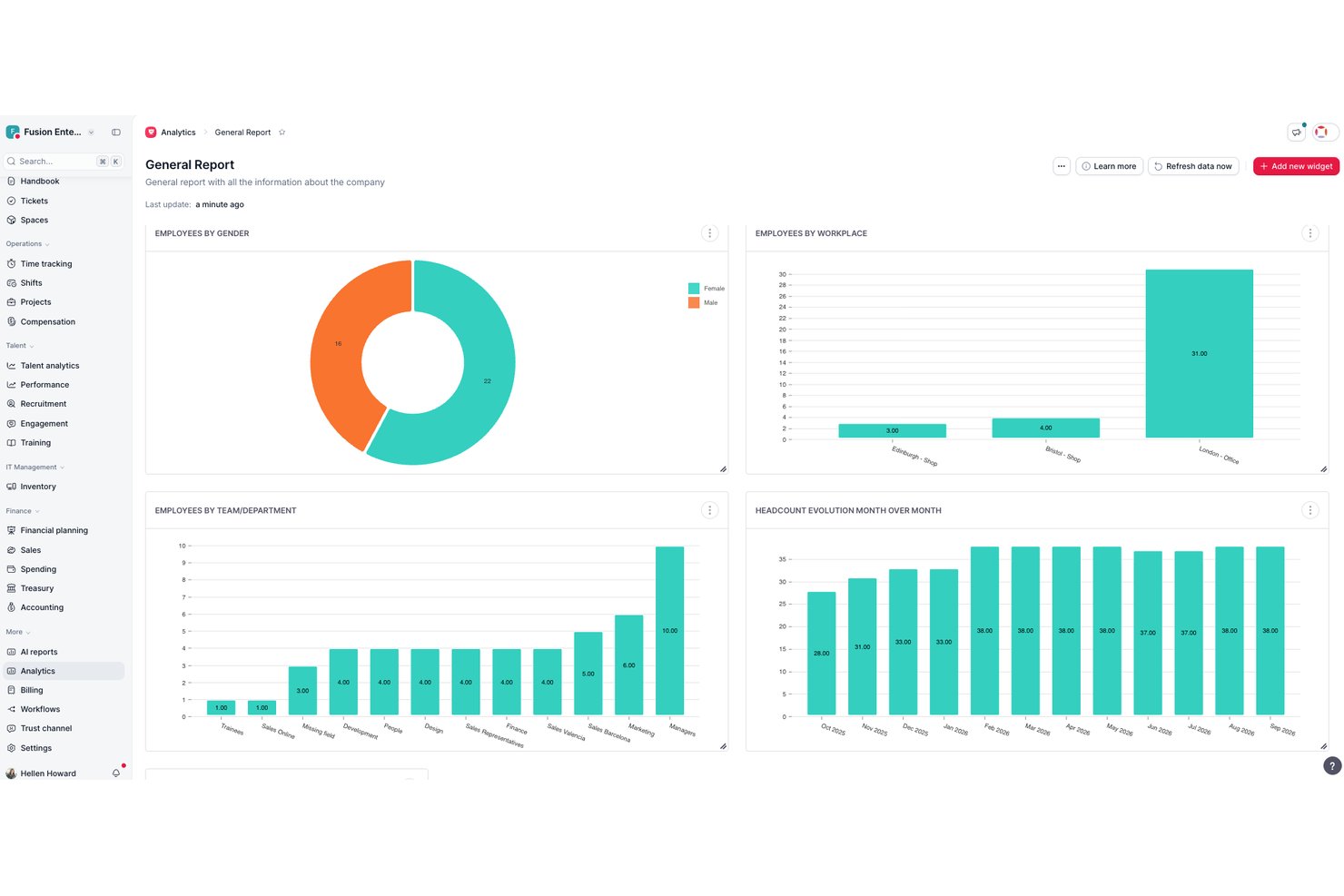
Factorial is an online software that's all about helping businesses manage their workforce in a more efficient manner. I picked Factorial because, let's face it, scheduling can be a real pain. I was looking for something that could simplify the process and help me keep track of who's doing what and when. Factorial seemed to tick all the boxes. It's easy to use, it's got a bunch of cool features, and it's designed specifically for businesses of any size.
What really makes Factorial stand out from the crowd are its features. It's got this awesome calendar view that lets you see your entire team's schedule at a glance. You can easily add shifts, assign tasks, and even set reminders. Plus, it's got a time tracking feature that's super handy for keeping tabs on how much time everyone's spending on their tasks. But my absolute favorite feature has to be the absence management. It lets you manage all types of absences, from vacations to sick days, all in one place.
Factorial further distinguishes itself by prioritizing employee well-being through a dedicated module that allows employees to provide anonymous feedback, report concerns, and suggest improvements. This module provides a secure space for employees to express their opinions without fear of reprisal, fostering an open and transparent communication culture. It also includes sentiment analysis capabilities that help HR teams identify trends and address potential issues proactively.
Integrations include Sage, Gmail, Payflow, Dynamics 365, LinkedIn, TravelPerk, PowerBI, Indeed, Recruitee, Slack, and other.

Best custom workflows for team scheduling
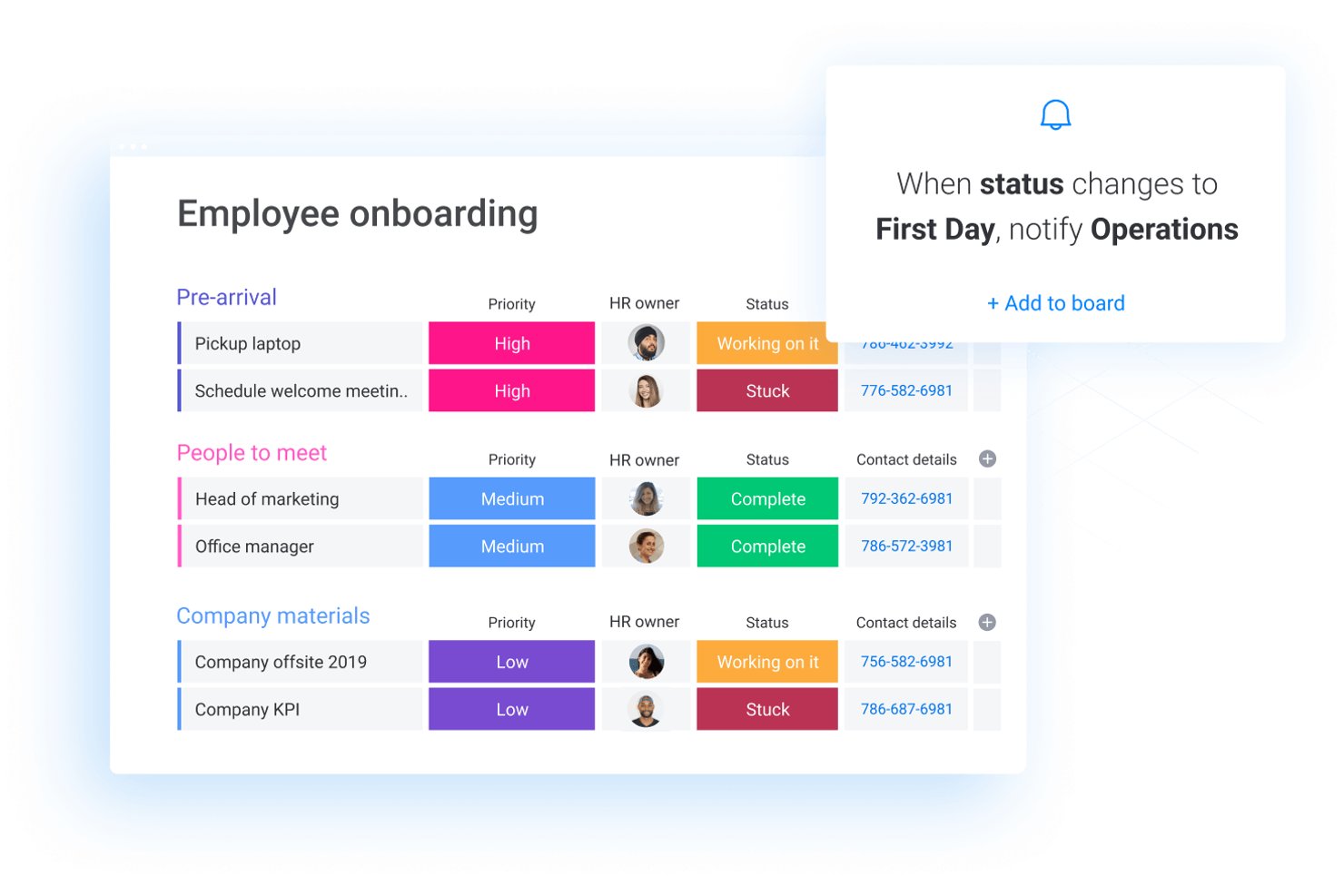
monday AI Workspace is a customizable work management platform that lets teams build scheduling workflows, manage tasks and resources, automate processes, and coordinate work across projects using boards, timelines, and AI-powered tools.
Who Is monday AI Workspace Best For?
It's a strong fit for operations and project-based teams at mid-size to large organizations that need to build custom scheduling workflows across multiple departments.
Why I Picked monday AI Workspace
monday AI Workspace earns its spot on my shortlist because of how far you can take a custom scheduling workflow without writing a single line of code. I use the board-and-column system to build shift rosters that automatically notify team members when their assignments change, using automation triggers tied to status columns. What I find especially useful is layering the Timeline and Calendar views on the same board, so I can see coverage gaps and individual workloads side by side.
monday AI Workspace Key Features
- Resource management: Assign, balance, and view workloads for employees across projects using dashboard widgets and capacity tools.
- Automations builder: Set up custom triggers that automate schedule updates, notifications, and status changes across workflows.
- Time tracking column: Record hours spent on assigned tasks directly in boards for basic time logging and reconciliation.
- Calendar and timeline views: Visualize scheduled work, filter by team or individual, and compare overlapping assignments within an interactive calendar or Gantt interface.
monday AI Workspace Integrations
monday.com offers hundreds of integrations through its built-in integrations and marketplace, including tools like Slack, Salesforce, HubSpot, Google Workspace, Microsoft Teams, and Zoom. It also supports Zapier and provides an API for custom integrations.
Pros and Cons
Pros:
- Strong automation tools reduce manual scheduling tasks
- Flexible board views for visualizing team coverage
- Highly customizable shift scheduling workflow builder
Cons:
- Limited native shift swap and availability features
- No built-in labor compliance or rules engine
New Product Updates from monday AI Workspace
monday AI Workspace Adds Human Approval Routing
monday AI Workspace adds a human-in-the-loop approval block to AI Workflows, sending approval requests and routing workflow paths based on responses. For more information, visit monday AI Workspace's official site.

Best for AI-driven labor forecasting
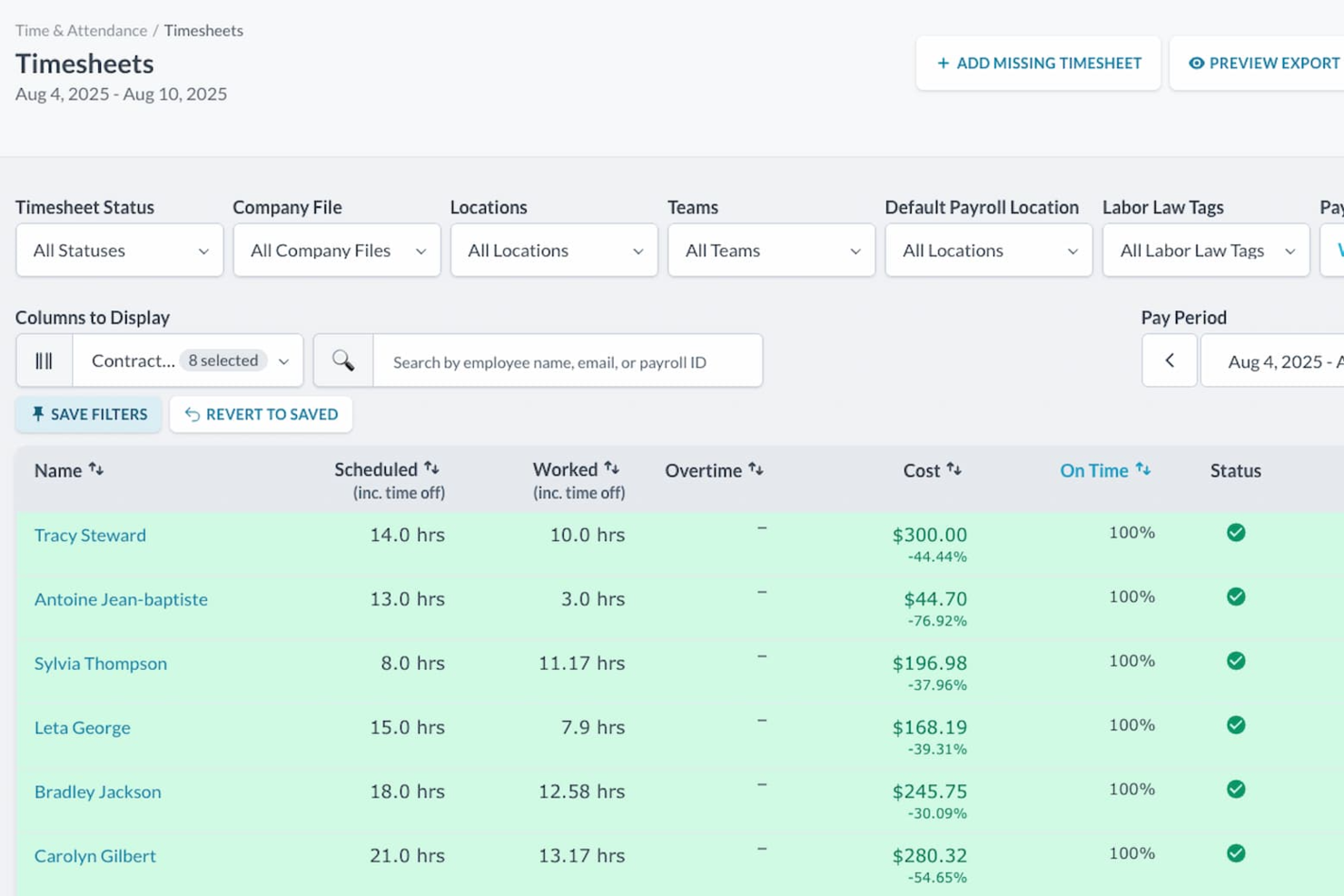
Managing hourly teams becomes far more predictable when you have scheduling tools that respond to changing demand, and that’s where Workforce.com stands out. You get a system designed specifically for shift-based operations, giving your managers a clear view of staffing needs while helping your team stay organized and prepared for each day.
Why I Picked Workforce.com
I picked Workforce.com because of its AI-driven labor forecasting feature that predicts staffing needs based on sales and foot traffic, which is crucial for businesses facing fluctuating demand. This unique capability helps you optimize your workforce, reducing both overtime and understaffing. Additionally, its shift management tools allow employees to manage their availability and find replacements, minimizing disruption from last-minute call-outs. These features collectively address the core challenges of employee scheduling, making Workforce.com a valuable asset for any organization.
Workforce.com Key Features
I also found several other features that enhance its utility as a scheduling tool:
- Shift swapping and bidding: Allows employees to request replacements or bid on open shifts without manager micromanagement.
- Compliance alerts: Flags scheduling conflicts like overtime risks or break violations before the schedule is published.
- Time-off management: Connects approved leave requests directly to the schedule so you don’t miss gaps in coverage.
- Mobile employee app: Gives staff access to their schedules, shift updates, and notifications from their phones.
Workforce.com Integrations
Integrations include 401Go, Abacus, ADP, Azure, Clover, EduMe, Gusto, QuickBooks, Lightspeed, Paychex, Paycom, Square, Wokrday, Vend, and Xero.
Pros and Cons
Pros:
- Accurate pay calculations based on roles, rules, and hours
- Forecasting tools help align staffing with predicted demand
- Mobile app supports clock-ins, shift actions, and self-service
Cons:
- Some industries may require integrations not listed publicly
- Analytics depth may not match standalone BI platforms

Best online time clock with scheduling
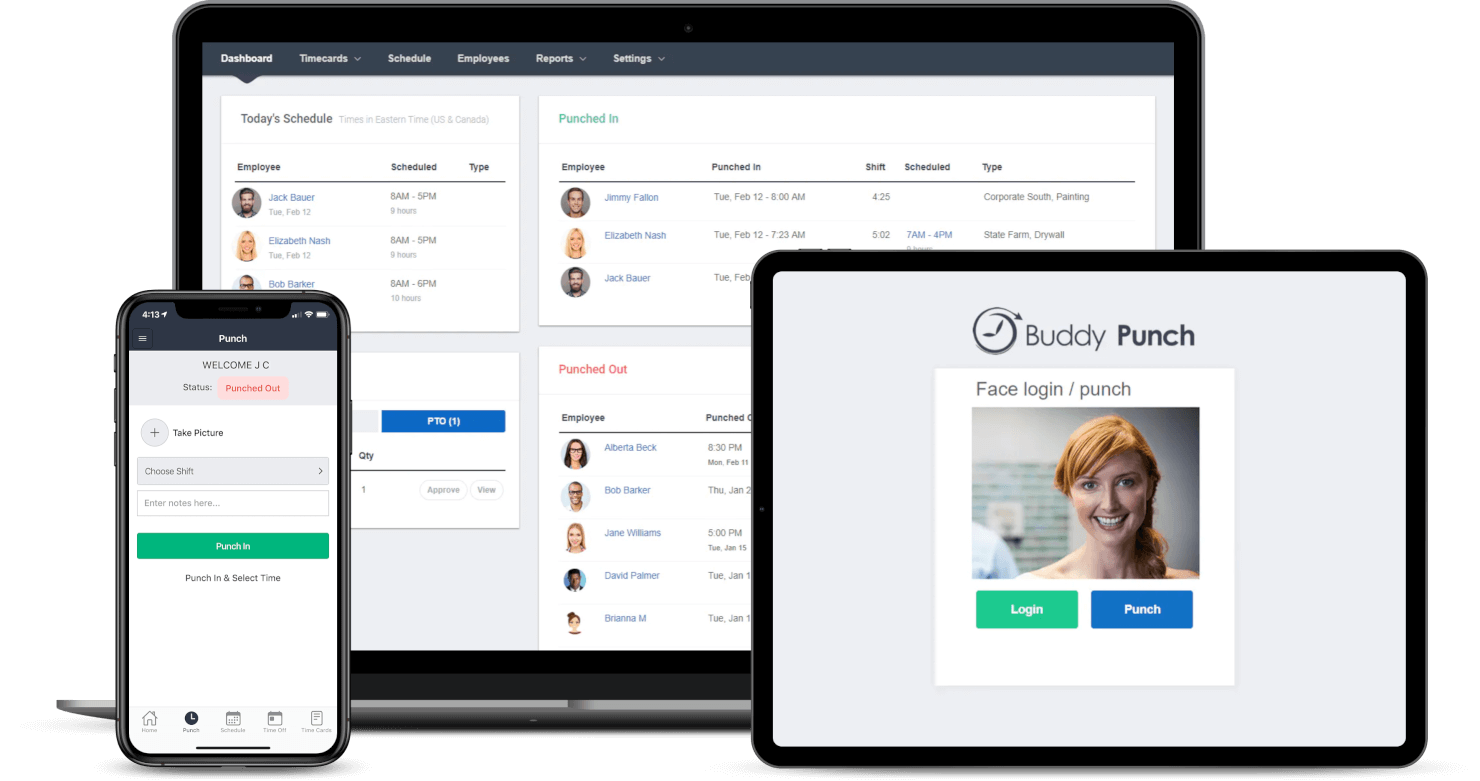
Buddy Punch is a web-based time clock and scheduling software. Your employees can view their current time card, request time off, submit a claim to correct a punch-in error, or even submit their time card for approval — all without ever leaving the Buddy Punch app. The interface has been built to ensure easy navigation and ease of use, with drag-and-drop schedule creation and the ability to create repeating/recurring shifts.
Buddy Punch’s key features work to keep your team accountable and honest. Through GPS tracking, you can stay on top of your staff’s location whenever they clock in/out of work. Some additional features include facial recognition and photos on punch, which run a biometric scan of your employees’ faces to verify who is attempting to punch in/out. In addition, Buddy Punch integrates with QuickBooks, ADP, Gusto, Paychex, Paylocity, PayPlus, SurePayroll, and Workday. With a Zapier account, you’ll have access to thousands of other apps and tools.
Buddy Punch costs from $3.49/user/month plus a $19/month base fee for their Standard time and attendance package. For enterprise organizations with over 200 employees, you can request a free quote. They also offer a 14-day free trial too.

Homebase
Best if you need a complete online HR platform
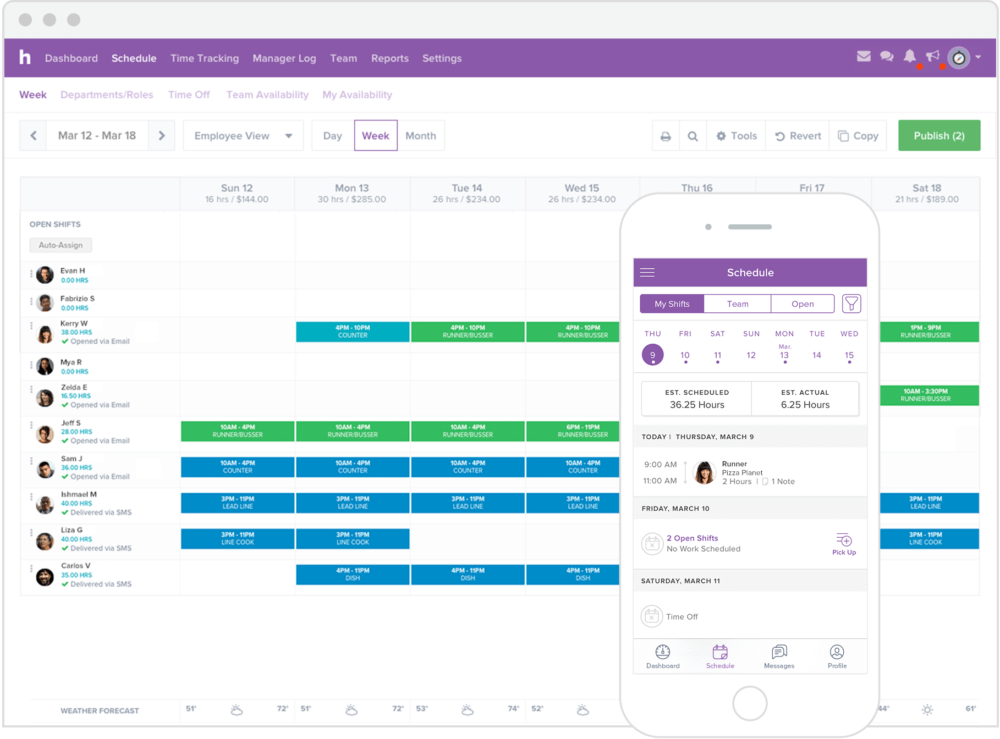
The Homebase team scheduling software is mainly used by small businesses such as small stores, beauty salons or fitness facilities, and other service providers. The platform provides an exhaustive set of features that let you run your HR tasks from start to finish, including hiring and onboarding, scheduling, time tracking, team communication, and more.
Its simplicity and vast array of functionalities have brought numerous distinctions such as “Top Rated Time Clock Software” by The Blueprint and a 5-star rating on QuickBooks Apps.
Homebase has a free plan you can use with an unlimited number of employees but fewer advanced features. This replaces a free trial.

Agendrix
Best for shift-based SMBs in Canada
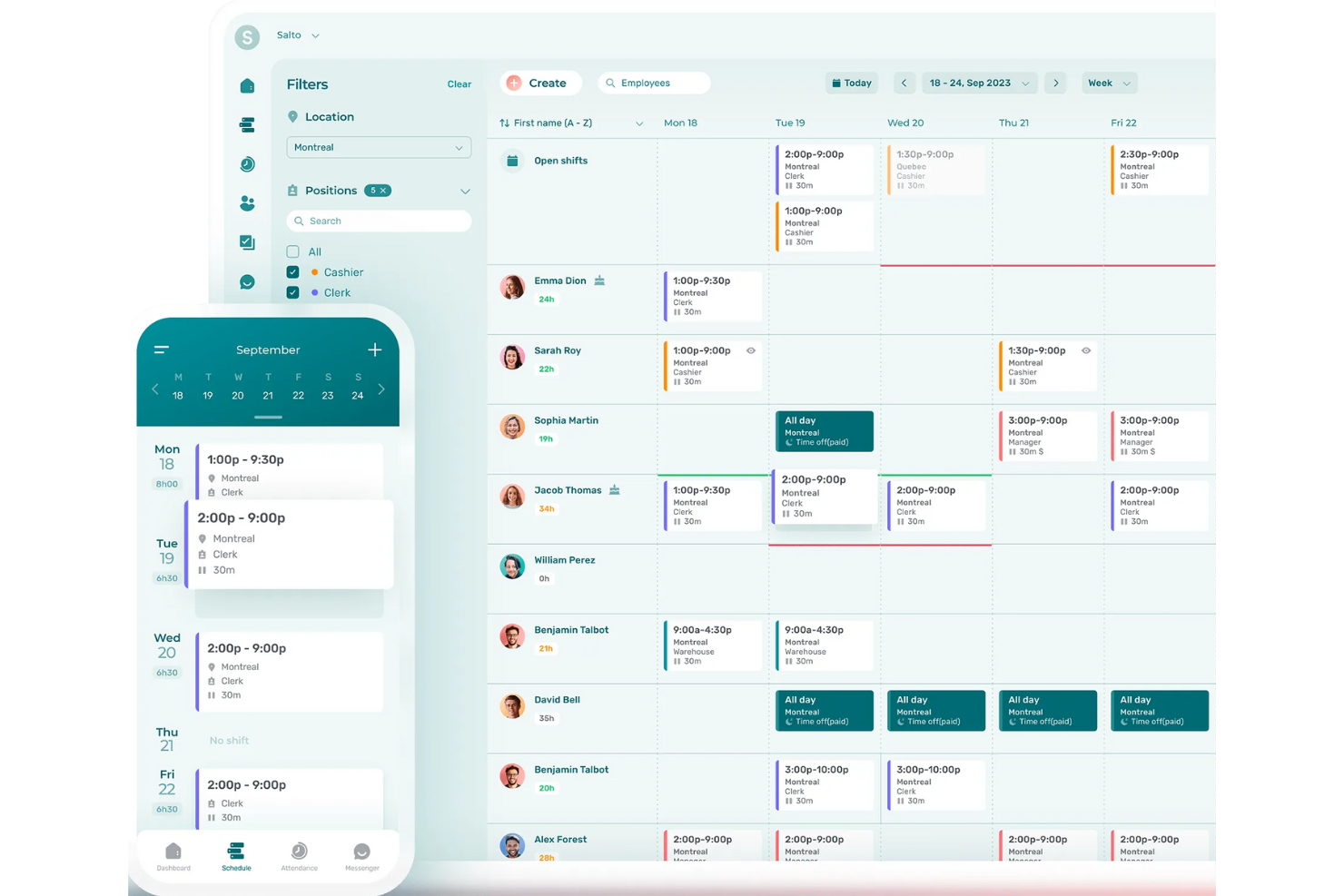
Agendrix is a Canadian platform that helps small and mid-sized shift-based businesses manage staff schedules, time tracking, and employee communication. Its online employee scheduling software supports complex scheduling needs across locations, roles, and availability levels. The platform and mobile app offer bilingual support in English and French, making it an accessible tool for diverse teams.
I picked Agendrix because it’s built with the realities of shift-based work in mind, especially for small teams juggling variable availability. You can build schedules manually or let the system auto-fill them based on availability, time off, and workload settings. I like that it supports multiple locations and gives managers specific access permissions, which makes it more usable for growing teams. The mobile app is also solid—employees can check schedules, confirm shifts, or request changes without needing a desktop.
Additionally, managers can see if an employee has viewed an assigned shift and require shift confirmations, adding a layer of accountability. Agendrix also allows managers to attach task lists to shifts, helping ensure daily responsibilities are clear and trackable.
Automated shift scheduling, shift confirmation tracking, bilingual interface (English/French), task assignment per shift, multi-location scheduling, role and availability management, built-in team messaging, and e-documents for HR.
EmployerD, Nethris, Sage 50, Acomba, QuickBooks, Ceridian Powerpay, ADP Workforce Now, Payworks, Lightspeed, Azur, Easypay, BeLocum, Hopem, and Folks HR.
7shifts
Best for restaurants
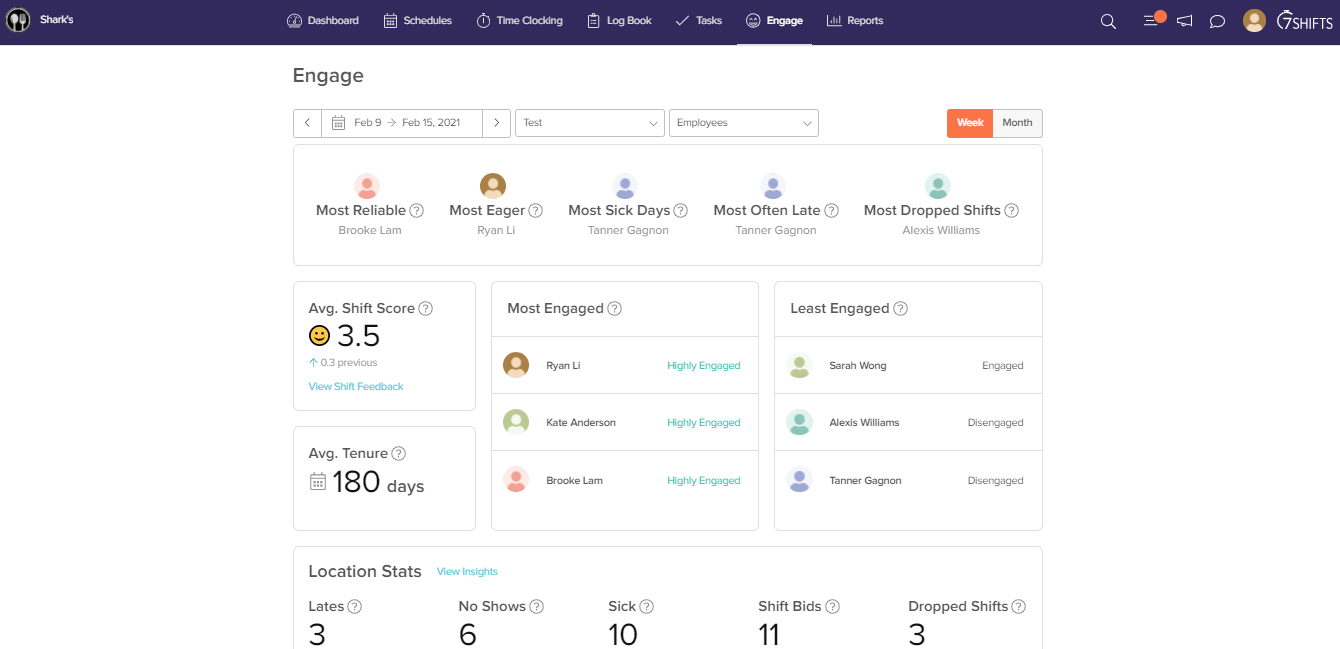
Own a restaurant? 7shifts is the preferred solution for well-known brands like Five Guys or Sambo’s but small full-service restaurants make full use of it as well. The AI-based schedule builder supports automatic schedule building and optimization so you can meet demands in real-time.
Workers can notify managers of availability changes from the app to support a thorough bidirectional collaborative system. To sync your sales and labor data with wages, 7shifts integrates with dozens of top POS and payroll solutions.
Paid 7shifts plan $24.99/month/location but you can choose their 14-day trial or use the free plan for simple scheduling features.

Best for field service or construction business
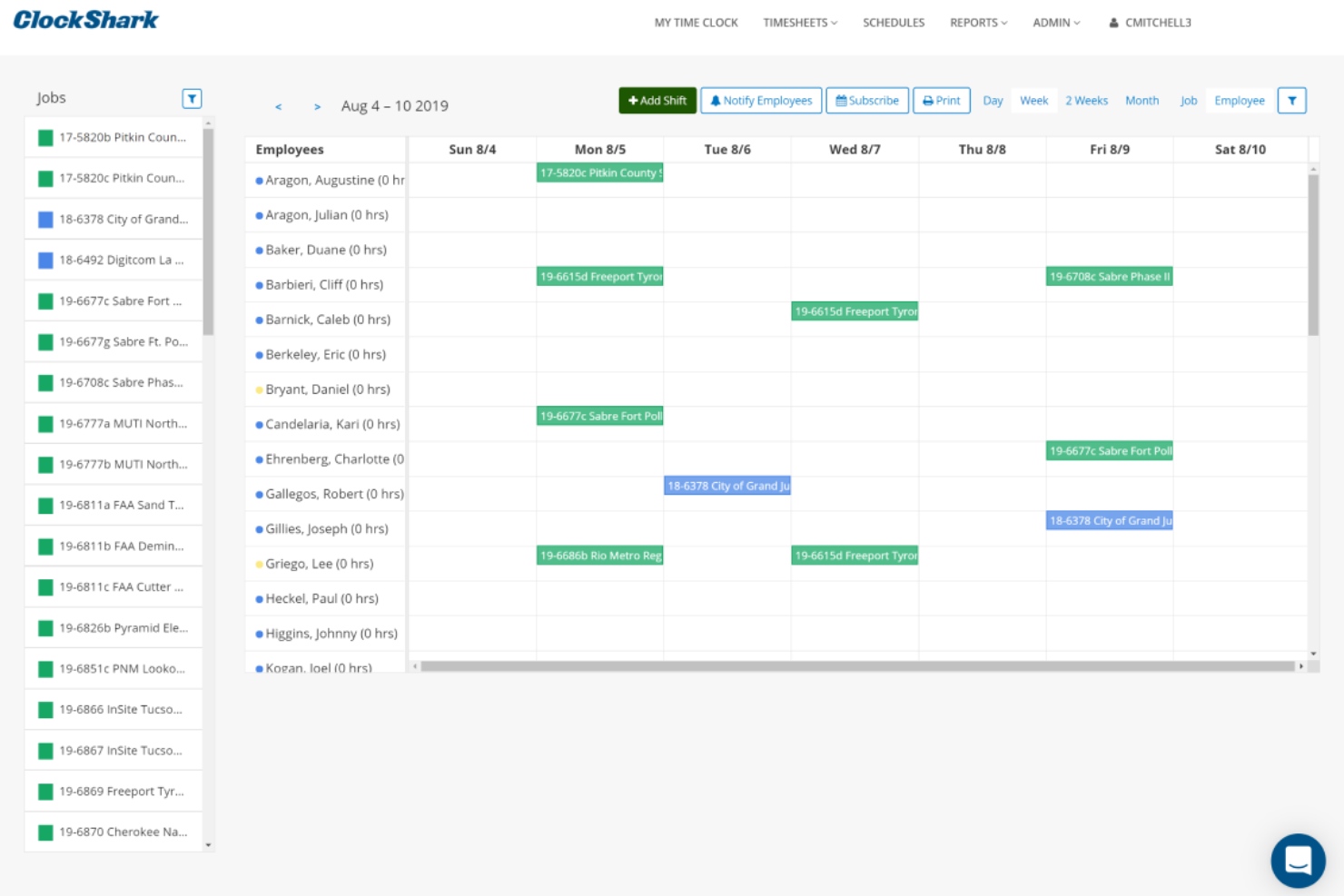
ClockShark is an online employee scheduling software with timesheets and time tracking for field services and construction businesses. Employees can clock in and clock out from their smartphones and all job costing data is recorded within the app so you can access it for simple payroll and invoice processing. You have multiple options for employees to access ClockShark: by web browser, mobile app, or even a ClockShark "kiosk" using a tablet device. You can leverage facial recognition tools and individual PINs to ensure the utmost security no matter how you choose to access the software.
Crew management is simple with ClockShark's work scheduling calendar. You can create and assign shifts, color-code entries, and drag-and-drop items to make changes quickly. Notifications will prompt affected parties in real-time if their shift is altered in any way (canceled, shortened, swapped, etc.). ClockShark also has GPS and geofencing capabilities baked in so you can see where and when people are checking in.
Overall, ClockShark is a must-have online employee scheduling software for field service or construction businesses to streamline their timesheet-to-payroll workflows.
ClockShark integrates with QuickBooks, Sage 100 Contractor, Xero, ADP, Paychex, and other apps.
ClockShark costs from $7/user/month plus a $16/month base fee. They also offer a 14-day free trial.

edays
Best for absence management
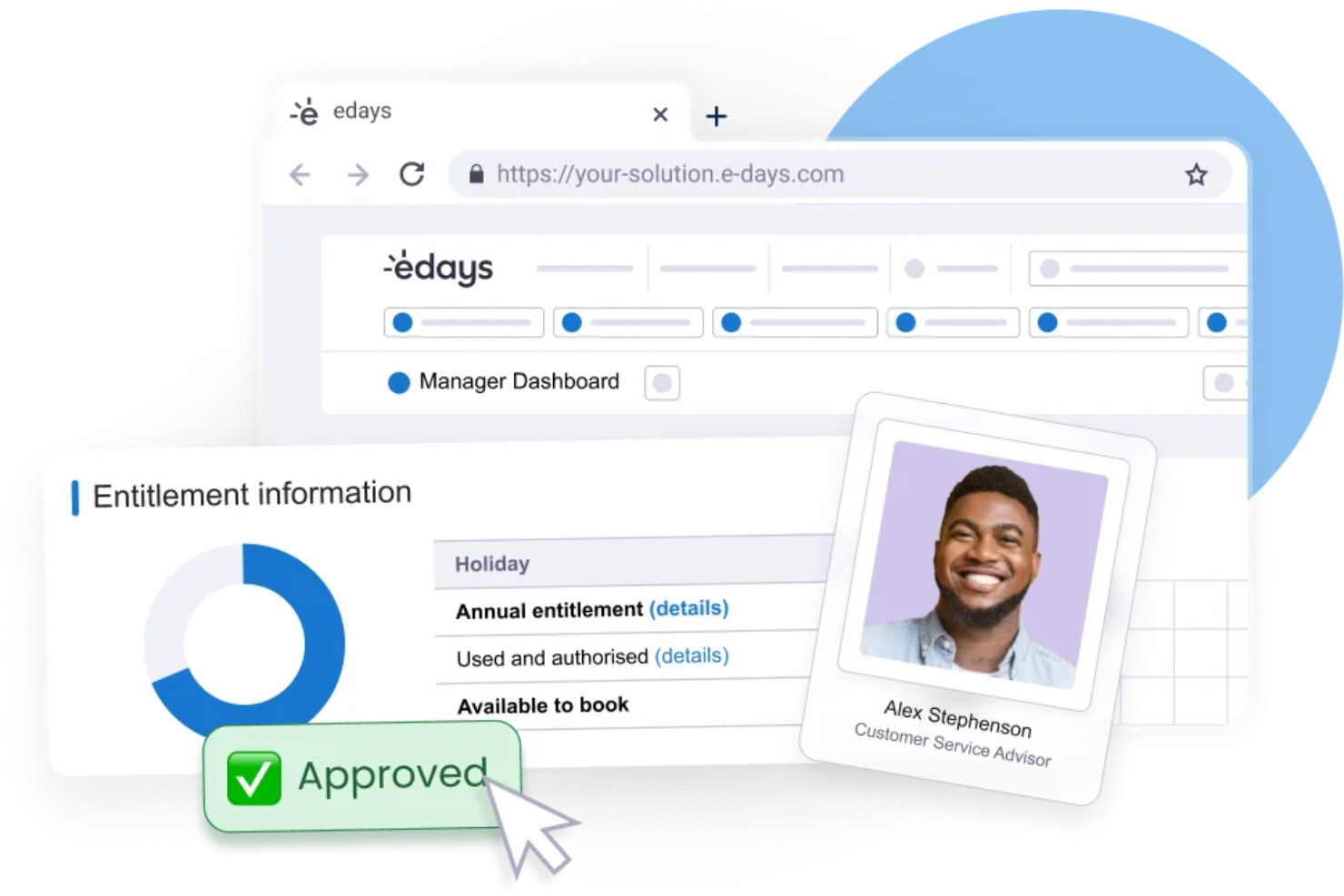
Navigating the complexities of employee scheduling can be a daunting task, but edays offers a solution tailored to meet the needs of businesses seeking efficiency in managing their workforce. Designed for organizations of all sizes, including those with a global reach, edays provides tools to handle various scheduling challenges, such as leave management and absence tracking. By offering a platform that integrates seamlessly with existing HR systems, edays addresses the need for a centralized approach to managing employee schedules, ultimately enhancing productivity and compliance across the board.
Why I Picked edays
I picked edays for its unique approach to online employee scheduling by focusing on comprehensive absence management. With features like customizable leave types and shared team calendars, edays allows you to manage complex scheduling scenarios effortlessly. The platform's ability to automate absence triggers and provide real-time insights into employee availability makes it a valuable tool for any organization looking to optimize its scheduling processes. In my view, the integration of these features with compliance tools ensures that your team can stay on top of both scheduling and regulatory requirements.
edays Key Features
In addition to its standout scheduling capabilities, edays offers several other features:
- Self-Service Holiday Booking: Employees can request leave conveniently through a web or mobile form.
- Entitlement Tracking: This feature allows you to monitor used, remaining, and pending leave entitlements.
- Public Holidays Import: Import over 200 regional public holidays or customize your own to fit your organizational needs.
- Time Off in Lieu (TOIL): Automatically track and request accrued overtime, providing flexibility in managing work hours.
edays Integrations
Integrations include SAP SuccessFactors, ADP, Workday, Microsoft Outlook, Google Calendar, Microsoft Teams, Slack, Xero, BambooHR, and Sage.
Pros and Cons
Pros:
- Global compliance and regional support
- Strong integrations with HR systems
- Robust absence and leave management
Cons:
- Reporting interface can feel cluttered
- Initial setup may feel complex
Other Online Employee Scheduling Software
Here are more apps that didn’t make the top list of best online employee scheduling software but are worth checking out:
- Bonsai Agency Software
For project-driven agencies
- Ubeya
For AI-powered shift scheduling
- Sage HR
For small and medium businesses
- eResource Scheduler
For managing schedules, timesheets, and financials
- Shiftboard
For highly regulated industries where you need to comply with diverse safety standards and labor laws
- Shiftbase
For easy shift scheduling
- Schedule360
For healthcare providers
- Insightful
For shift scheduling with integrated employee monitoring
- Resource Guru
For scheduling employees at agencies
- BambooHR®
For managing employees throughout the whole life cycle
- Justworks
For managing a distributed workforce
- Wrike
For companies looking resource scheduling with powerful project management features
- Paylocity
For AI-driven scheduling efficiency
- TimeTrex
For automated scheduling
- Parim
For event & security scheduling
- TimeClock Plus
For shift management
- Hub Planner by Milient
For resource allocation and availability mapping
- When I Work
For employee shift scheduling and time tracking
- Aladtec
For rescue and law enforcement organizations
- WhenToWork
For a one-click smart scheduling process


How I Evaluate Online Employee Scheduling Software
I split my evaluation into two layers: the baseline any scheduling tool must cover—like shift building and mobile access—and the differentiators that separate a good fit from the right one.
Core Functionality (Table Stakes For This List)
When I'm selecting tools for my list, I rank each one on a scale from 0 (does not offer the functionality) to 5 (excels in this area) for each core functionality listed below. Then, I calculate the tool's total score into a percentage. Each tool needs to achieve a minimum total score of 65% to be considered for inclusion.
- Shift Schedule Creation: I look for drag-and-drop builders or template-based tools that let managers assign shifts by role, department, or location without rebuilding the week from scratch.
- Availability & Time-Off Management: Employees should be able to submit availability windows and PTO requests directly, and managers need clear approval workflows—especially for shift swap scenarios.
- Mobile Access for Employees: A native mobile app matters here because hourly and field staff rarely sit at a desk. I check whether employees can view schedules, pick up shifts, and get push alerts from their phones.
- Time & Attendance Tracking: Whether it's a built-in clock-in/out feature or a tight integration with a time tracking tool, I evaluate how well scheduled hours reconcile against actual hours worked.
- Labor Compliance Rules: I look at how the platform handles overtime thresholds, mandated break periods, and predictive scheduling laws—especially whether rules can be configured per region or role.
- Team Communication Tools: Schedule changes need to reach staff fast. I evaluate whether the tool offers in-app messaging, shift alerts, or announcement features that keep managers from chasing people through texts or emails.
Once I have a list of tools that meet the criteria, I consider what sets each platform apart.
Differentiating Factors (What Sets Vendors Apart)
Here's how I compare and contrast different vendors:
Standout Features
Demand-based forecasting is a big differentiator—I look at whether the tool pulls in sales or foot traffic data to suggest staffing levels instead of leaving managers to guess. Multi-location scheduling matters for teams that share staff across sites, and I evaluate how well a platform handles cross-location visibility without duplicate records. Open shift marketplaces are also worth considering because they let eligible employees claim unfilled shifts on their own, reducing the back-and-forth that comes with last-minute coverage.
Beyond Features
Payroll and HRIS integrations are high on my list—scheduling data needs to flow into systems like ADP, Gusto, or QuickBooks without manual exports. I also evaluate industry fit, since a tool built for hospitality workflows may not suit healthcare teams managing credentialed staff. Pricing structure matters too. I check whether per-user or per-location models scale fairly as headcount grows, especially for businesses adding new sites or seasonal staff.
How to Choose Online Employee Scheduling Software
It’s easy to get bogged down in long feature lists and complex pricing structures. To help you stay focused as you work through your unique software selection process, here’s a checklist of factors to keep in mind:
| Factor | What to Consider |
|---|---|
| Scalability | Can the software grow with your team? Consider future growth and whether the platform can handle more users or increased scheduling complexity. |
| Integrations | Does it work with your existing tools like payroll systems or communication platforms? Ensure smooth data flow between systems. |
| Customizability | Can you tailor the software to fit your specific needs? Look for flexible settings and customizable templates to match your workflow. |
| Ease of use | Is the interface intuitive for your team? Choose a solution that minimizes training time and reduces the learning curve for all users. |
| Implementation and onboarding | How quickly can you get up and running? Evaluate the availability of training resources and support during the setup phase. |
| Cost | Does the pricing fit your budget? Compare subscription plans, check for hidden fees, and consider long-term costs versus benefits. |
| Security safeguards | Are your data and employee information protected? Look for encryption, user permissions, and compliance with data protection regulations. |
| Support availability | Will you have help when you need it? Check the availability of customer support, including live chat, phone support, and response times. |
What Is Online Employee Scheduling Software?
Online employee scheduling software is a digital tool that helps businesses create, manage, and optimize employee work schedules. HR professionals, managers, and team leaders typically use these tools to simplify scheduling, reduce conflicts, and improve communication. Features like shift swapping, availability tracking, and mobile access help with managing schedules efficiently and keeping everyone informed. Overall, these tools save time and improve workplace productivity.
Features
When selecting online employee scheduling software, keep an eye out for the following key features:
- Shift swapping: Allows employees to easily trade shifts, reducing scheduling conflicts and improving flexibility.
- Availability tracking: Helps managers see when employees are available to work, making scheduling more efficient.
- Mobile access: Enables employees to check schedules and make changes on-the-go, increasing accessibility.
- Payroll integration: Connects scheduling with payroll systems to ensure accurate and timely payments.
- Compliance tracking: Monitors labor law compliance, helping businesses avoid legal issues.
- Customizable templates: Offers pre-built schedule templates that can be tailored to fit specific business needs.
- Real-time updates: Provides instant schedule changes and notifications, keeping everyone informed.
- AI-driven suggestions: Uses artificial intelligence to recommend optimal scheduling based on past data.
- Communication tools: Integrates with messaging platforms to improve team communication and collaboration.
- Reporting and analytics: Delivers insights into scheduling patterns and labor costs, aiding in strategic decision-making.
Benefits
Implementing online employee scheduling software provides several benefits for your team and your business. Here are a few you can look forward to:
- Time savings: Automating schedule creation and updates reduces the time spent on manual scheduling tasks.
- Improved communication: Built-in messaging tools ensure everyone stays informed about schedule changes and updates.
- Increased flexibility: Features like shift swapping and mobile access allow employees to manage their schedules more easily.
- Cost efficiency: Payroll integration and reporting tools help control labor costs and prevent overscheduling.
- Enhanced compliance: Automated compliance tracking helps ensure adherence to labor laws and regulations.
- Better decision-making: Analytics and reporting provide insights into scheduling trends and labor usage, supporting strategic planning.
- Employee satisfaction: Allowing employees to participate in scheduling increases satisfaction and reduces turnover.
Costs & Pricing
Selecting online employee scheduling software requires an understanding of the various pricing models and plans available. Costs vary based on features, team size, add-ons, and more. The table below summarizes common plans, their average prices, and typical features included in online employee scheduling software solutions:
Plan Comparison Table for Online Employee Scheduling Software
| Plan Type | Average Price | Common Features |
|---|---|---|
| Free Plan | $0 | Basic scheduling, limited user access, and mobile app access. |
| Personal Plan | $5-$15/user/month | Advanced scheduling options, availability tracking, and shift swapping. |
| Business Plan | $20-$40/user/month | Payroll integration, compliance tracking, and customizable templates. |
| Enterprise Plan | $50+/user/month | AI-driven scheduling, detailed analytics, and dedicated customer support. |
FAQs
How secure is online employee scheduling software?
Yes, online employee scheduling software is generally secure. Most providers use encryption and follow data protection regulations to keep your information safe. When choosing a solution, check if it complies with standards like GDPR or HIPAA if applicable to your industry. Always ensure your team uses strong passwords and follows security best practices.
Can online employee scheduling software integrate with other systems?
Yes, many online employee scheduling tools integrate with other systems. You can connect them with payroll, HR, and communication platforms to streamline processes. Before purchasing, ensure the software supports the integrations you need. This will save time and reduce manual data entry.
Is training required to use online employee scheduling software?
Training is often helpful but not always required. Many tools are designed to be user-friendly and intuitive. However, offering training sessions or tutorials can help your team get the most out of the software. Look for providers that offer onboarding support, training videos, or interactive guides.