

10 Best Enterprise Intranet Software in 2026

Best Enterprise Intranet Software Shortlist


Enterprise intranet software gives you a private, company-wide space to connect your workforce, centralize communications, and share resources at scale. HR professionals managing dispersed, multilingual, or frontline teams need tools that go beyond basic file storage and chat—they need ways to deliver updates, recognize achievements, and ensure every employee has access to what matters.
Choosing the right system lets you support collaboration, align with compliance requirements, and get more value from the platforms your business already relies on. Below, I break down the top options so you can compare features, integration strengths, and fit for your organization’s needs.
Why Trust Our Software Reviews
Our team has been testing and reviewing software since 2012. As HR experts ourselves, we know how difficult—and important—it is to choose the right software.
For this guide, we evaluated tools using hands-on testing and independent research, scoring tools using our selection criteria. We also draw on insights from industry thought leaders and practicing HR experts.
Our reviews reflect our human editorial judgment, not a sales pitch.
Expert reviewers:
Compare the Best Enterprise Intranet Software
Compare pricing and specs, side by side, for the enterprise intranet software that made it onto my shortlist.
| Tool | Best For | Trial Info | Price | ||
|---|---|---|---|---|---|
| 1 | Best for IC teams managing multichannel reach | Free demo available | Pricing upon request | Website | |
| 2 | Best for all-in-one intranet with flat-rate licensing | Free demo available | Pricing upon request | Website | |
| 3 | Best for Workday-connected frontline intranets | Free trial available | From $3.75/user/month (billed annually) | Website | |
| 4 | Best for frontline and desk worker alignment | Free demo available | Pricing upon request | Website | |
| 5 | Best for multilingual frontline workforce comms | Free demo available | Pricing upon request | Website | |
| 6 | Best for Zoom-native social intranet at scale | Free demo available | Pricing upon request | Website | |
| 7 | Best for analyst-recognized intranet adoption | Free demo available | Pricing upon request | Website | |
| 8 | Best for global orgs on M365 and Google Workspace | Free demo available | Pricing upon request | Website | |
| 9 | Best for HITRUST and FedRAMP-certified intranet | 14-day free trial | From $9/user/month | Website | |
| 10 | Best for AI-native employee journeys at scale | Free demo available | Pricing upon request | Website |
Best Enterprise Intranet Software Reviews
Below are my detailed summaries of the best enterprise intranet software that made it onto my shortlist. My reviews offer a detailed look at the features, integrations, and best use cases of each platform to help you find the best one for you.

Best for IC teams managing multichannel reach
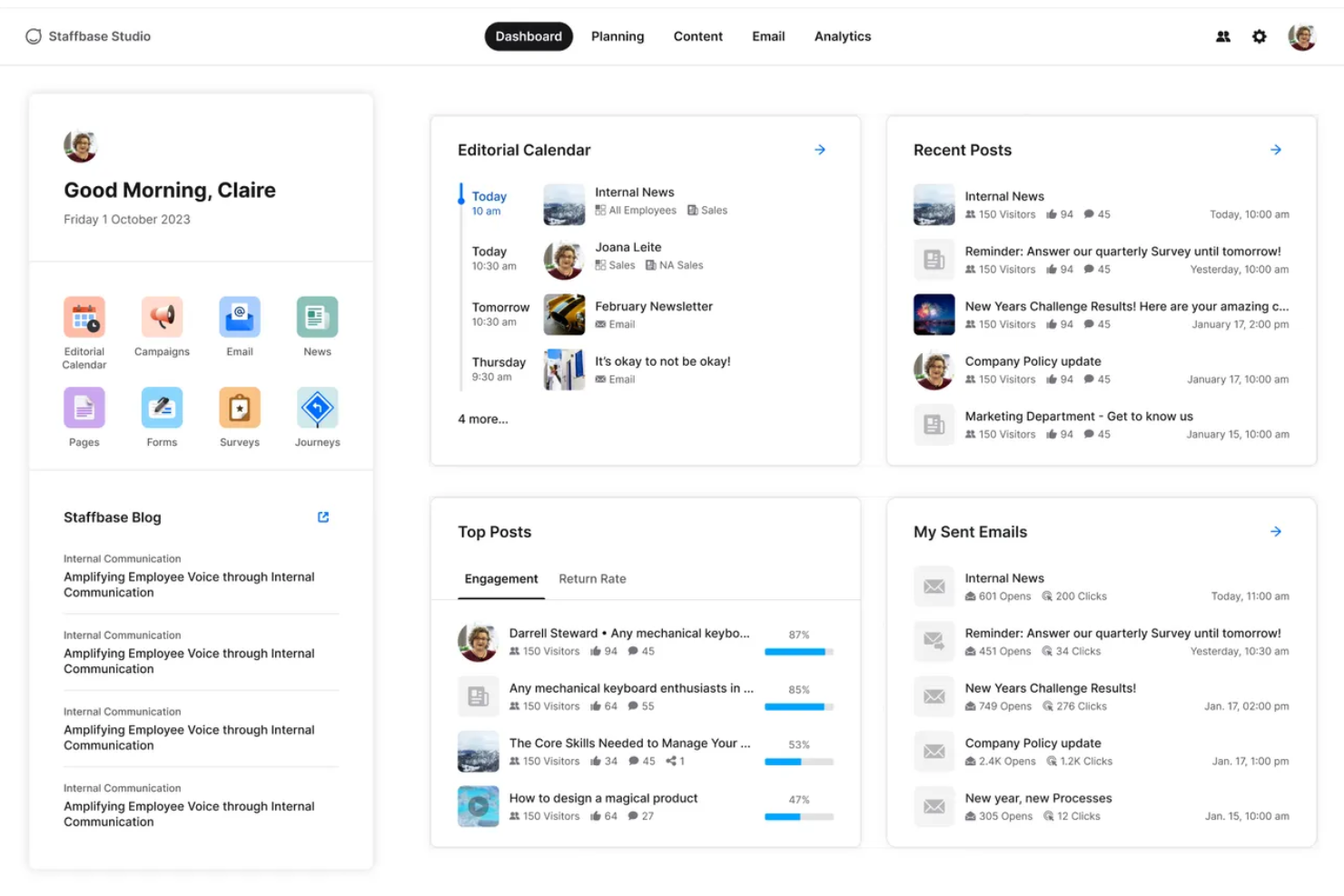
Staffbase is an enterprise intranet platform that brings together a no-code content editor, multichannel publishing, an AI-powered employee assistant, and frontline-ready mobile access across a single editorial workflow.
Who Is Staffbase Best For?
Staffbase is a strong fit for enterprise internal communications teams managing mixed workforces—where desk-based employees and frontline workers need to be reached through a single, unified channel strategy.
Why I Picked Staffbase
I picked Staffbase as one of the best because it's the only platform I've used that lets an IC team publish simultaneously to the intranet, employee app, email, digital signage, and Microsoft Teams from a single editorial workflow. What really sets it apart is the combination of per-channel analytics with read receipts and mandatory-read tracking, so you can see exactly where a message landed and who missed it. Its AI-powered Navigator assistant also surfaces verified answers from connected systems like SharePoint and Workday, cutting down on repetitive HR and IT queries without any manual curation.
Staffbase Key Features
- No-code drag-and-drop editor: Build and publish news posts and pages using a visual WYSIWYG editor with rich media embedding and branded templates—no developer needed.
- Employee journey automation: Trigger personalized onboarding, role-change, and exit communication sequences directly from HRIS data using lifecycle-stage audience rules.
- Federated search: Surface results from SharePoint, Google Drive, Confluence, and Box alongside Staffbase content in a single unified search experience.
- eNPS and pulse surveys: Run sentiment tracking and engagement measurement surveys that can be embedded in posts, emails, or sent as standalone campaigns with non-responder follow-up targeting.
Staffbase Integrations
Staffbase offers native integrations across the Microsoft ecosystem, Google Workspace, Workday, SAP SuccessFactors, ADP, Oracle, ServiceNow, Box, Confluence, and Cornerstone. Its REST API supports custom integrations.
Pros and Cons
Pros:
- Offline mobile app access for frontline employees
- Multichannel publishing from one editorial workflow
- AI-native assistant answers HR and IT questions
Cons:
- Implementation requires IT support and project resourcing
- No transparent public pricing available

Hub
Best for all-in-one intranet with flat-rate licensing
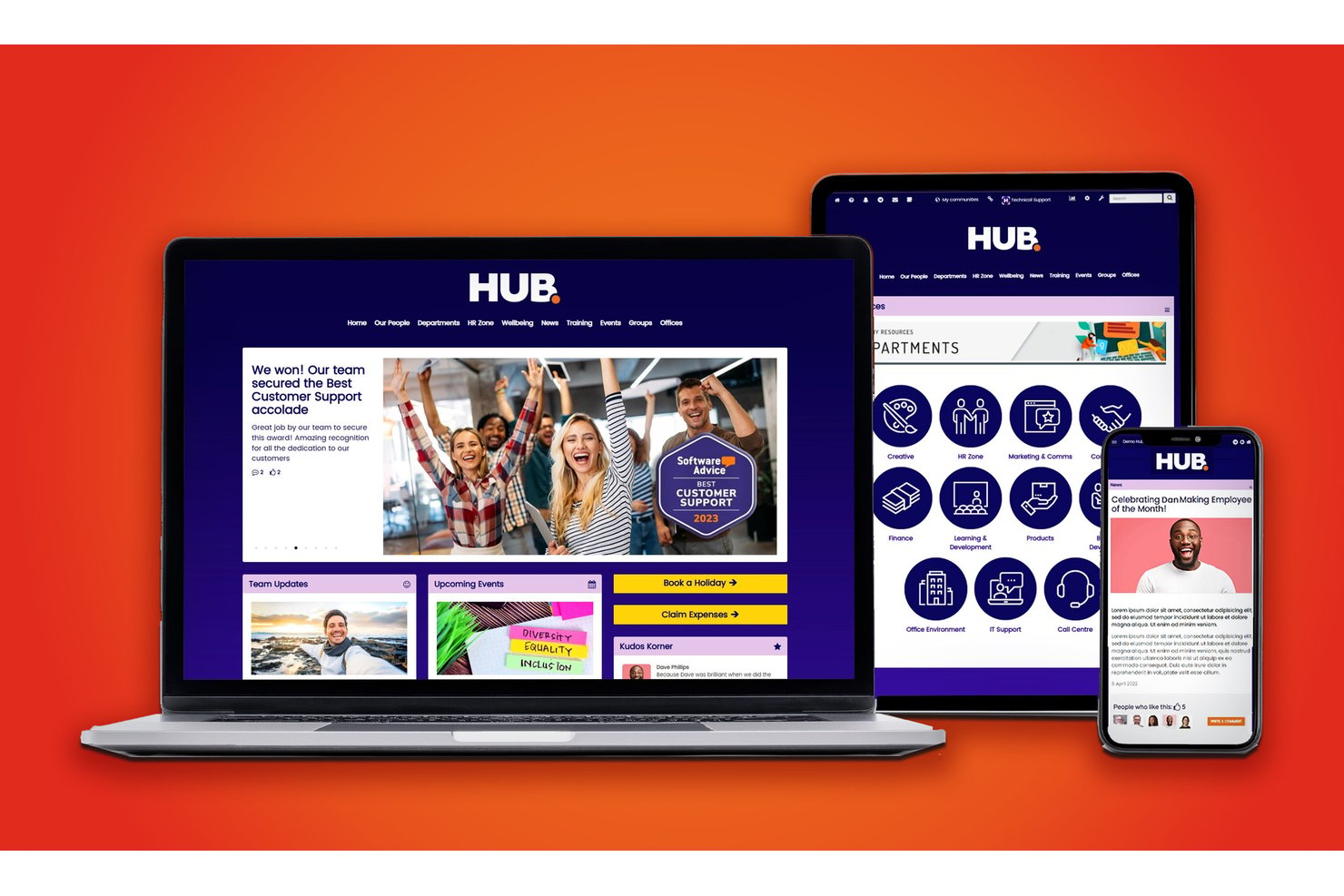
Hub is an intranet platform that brings together content publishing, employee directory, document management, social engagement, HR self-service tools, and an AI-powered knowledge base in a single environment.
Who Is Hub Best For?
Hub is a strong fit for mid-sized organizations whose HR, communications, and IT teams need a full-featured intranet without navigating tiered pricing or paying extra for core modules.
Why I Picked Hub
Hub earns its spot on my shortlist because its flat-rate licensing means every feature, from "Must Reads" compliance tracking to pulse surveys with wellbeing scoring, is included without gating anything behind a higher tier. I particularly like that HR and comms teams can run leave requests, internal job postings, and peer recognition from one environment without piecing together separate tools. The AI chatbot pulling answers directly from your company knowledge base is a genuinely useful touch for reducing repetitive HR queries at scale.
Hub Key Features
- Must Reads compliance tracking: Employees click to confirm they've read required content, with automated reminders sent to those who haven't.
- Pulse surveys with wellbeing scoring: Built-in surveys collect employee feedback and score results against wellbeing benchmarks.
- Federated search: A single search queries Hub and connected cloud drives like SharePoint, Google Drive, and Box simultaneously.
- Form builder with smart workflows: Custom forms route submissions to assigned owners, handling requests like IT tickets and holiday approvals.
Hub Integrations
Hub offers integrations with SharePoint, Google Drive, Box, Confluence, Slack, Microsoft Teams, Zendesk, Jira, Eventbrite, BambooHR, Microsoft 365, and Google Workspace, plus Microsoft Active Directory user sync.
Pros and Cons
Pros:
- Built-in compliance tracking for critical content
- 100+ granular permissions and audit trails
- All features included at one license price
Cons:
- No built-in multilingual publishing or translation
- Lacks native iOS and Android store apps
Blink
Best for Workday-connected frontline intranets
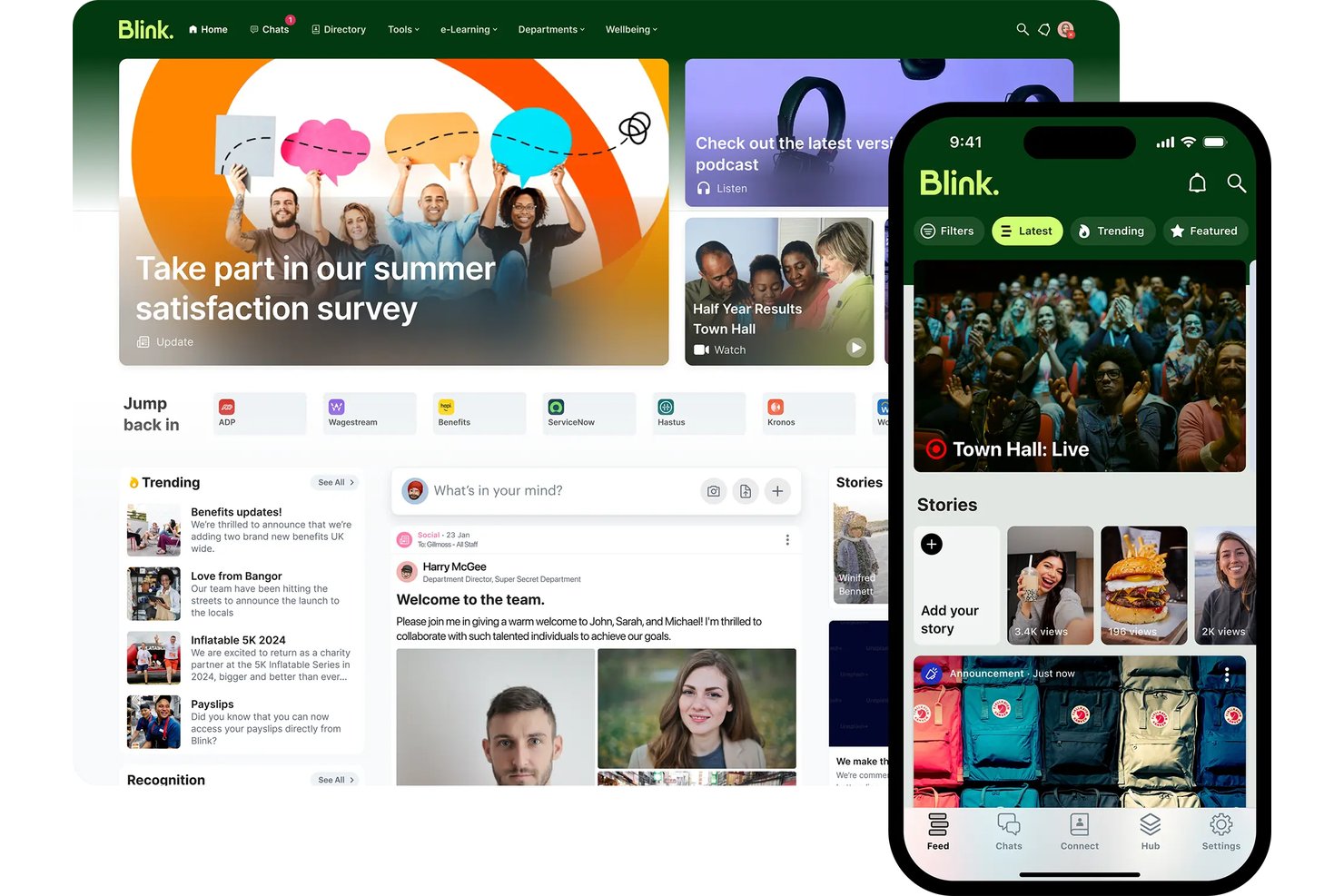
Blink is a mobile-first intranet platform built for frontline and deskless workforces, combining a social news feed, knowledge Hub, employee directory, pulse surveys, and AI-powered search.
Who Is Blink Best For?
Blink is a strong fit for mid-market and enterprise organizations with large frontline or deskless workforces—especially those already running Workday as their HRIS.
Why I Picked Blink
I picked Blink as one of the best because its Workday Platinum-certified, two-way integration goes far beyond basic provisioning. I've seen it surface Workday payslips, time-off requests, and learning reminders directly inside the Blink feed, so frontline workers get self-service HR access without ever logging into Workday separately. Blink's Employee Journeys then tie this together, automating onboarding content paths triggered by Workday start dates across populations that may never touch a desk.
Blink Key Features
- Blink IQ analytics: Real-time dashboards tracking reach, read receipts, engagement, and sentiment across the Feed, Chat, and Hub, with filtering by department, location, and job title.
- Mandatory Read: Pins critical announcements to the top of the Feed until employees acknowledge them, with read receipts tracked in real time.
- Communities: Dedicated virtual spaces organized around teams, ERGs, or initiatives, with flexible visibility and membership controls.
- Blink Lens: An AI analytics assistant within Blink IQ that answers data queries in plain language and flags metric changes without requiring a data analyst.
Blink Integrations
Blink offers native integrations with Workday, Microsoft SharePoint and M365, ServiceNow, Okta, Microsoft Entra ID, Google Workspace, Vimeo, and YouTube. Enterprise customers can use its Open API for custom integrations.
Pros and Cons
Pros:
- Multilingual publishing and AI translation included
- Workday-certified integration surfaces HR workflows natively
- Exceptional mobile access for frontline employees
Cons:
- No built-in task or workflow automation
- Knowledge management depth limited for heavy DMS needs

Interact
Best for frontline and desk worker alignment
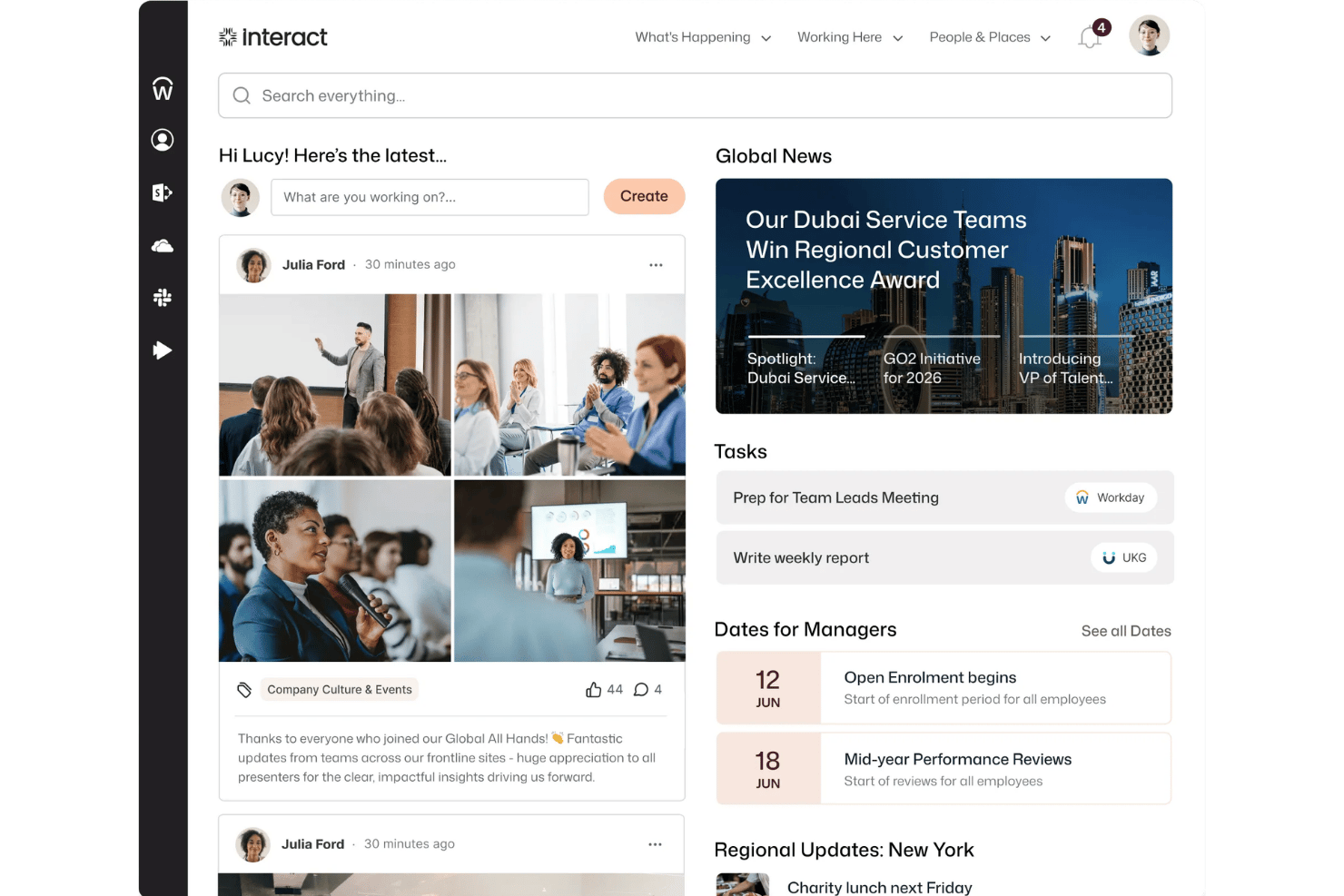
Interact is an AI-native enterprise intranet platform that combines personalized content publishing, employee recognition, pulse surveys, knowledge management, and a branded mobile app for frontline and desk-based workers.
Who Is Interact Best For?
Interact is a strong fit for enterprises with 1,000+ employees that need to connect desk-based and frontline workers through a single, mobile-ready intranet.
Why I Picked Interact
Interact earns its spot on my shortlist because no other platform I've seen does as much to keep frontline and desk workers reading from the same page. I especially like the Signal Agent, which continuously scans social feeds and comments to detect sentiment shifts before they become morale problems, and the native white-label mobile app that pushes role- and location-specific content to warehouse workers or field staff without requiring a corporate email address. The Editorial Calendar also lets comms and HR teams coordinate campaigns across desktop, mobile, and digital signage simultaneously, preventing the message overload that plagues mixed-workforce organizations.
Interact Key Features
- AI Content Intelligence: Drafts internal pages, FAQs, and guides while predicting engagement before you publish.
- Omnichannel publishing: A single update distributes simultaneously to desktop, mobile app, email newsletter, and digital signage.
- Pulse surveys and eNPS: Targeted surveys reach employees on desktop or mobile, with real-time dashboards tracking sentiment and participation by department.
- Employee Ideas: A structured idea submission tool, powered by Sideways 6, that lets frontline and desk-based employees submit ideas through campaigns with ROI tracking dashboards.
Interact Integrations
Interact supports 100+ integrations, including Microsoft 365, Google Workspace, Workday, UKG, SAP SuccessFactors, ServiceNow, Salesforce, and Slack. Its open API and Application Developer Kit support custom integrations.
Pros and Cons
Pros:
- Role-based content targeting for global teams
- Branded mobile app supports frontline engagement
- AI-driven employee sentiment detection and insights
Cons:
- Real-time mobile chat is a paid add-on
- Admin interface can feel overly complex

Haiilo
Best for multilingual frontline workforce comms
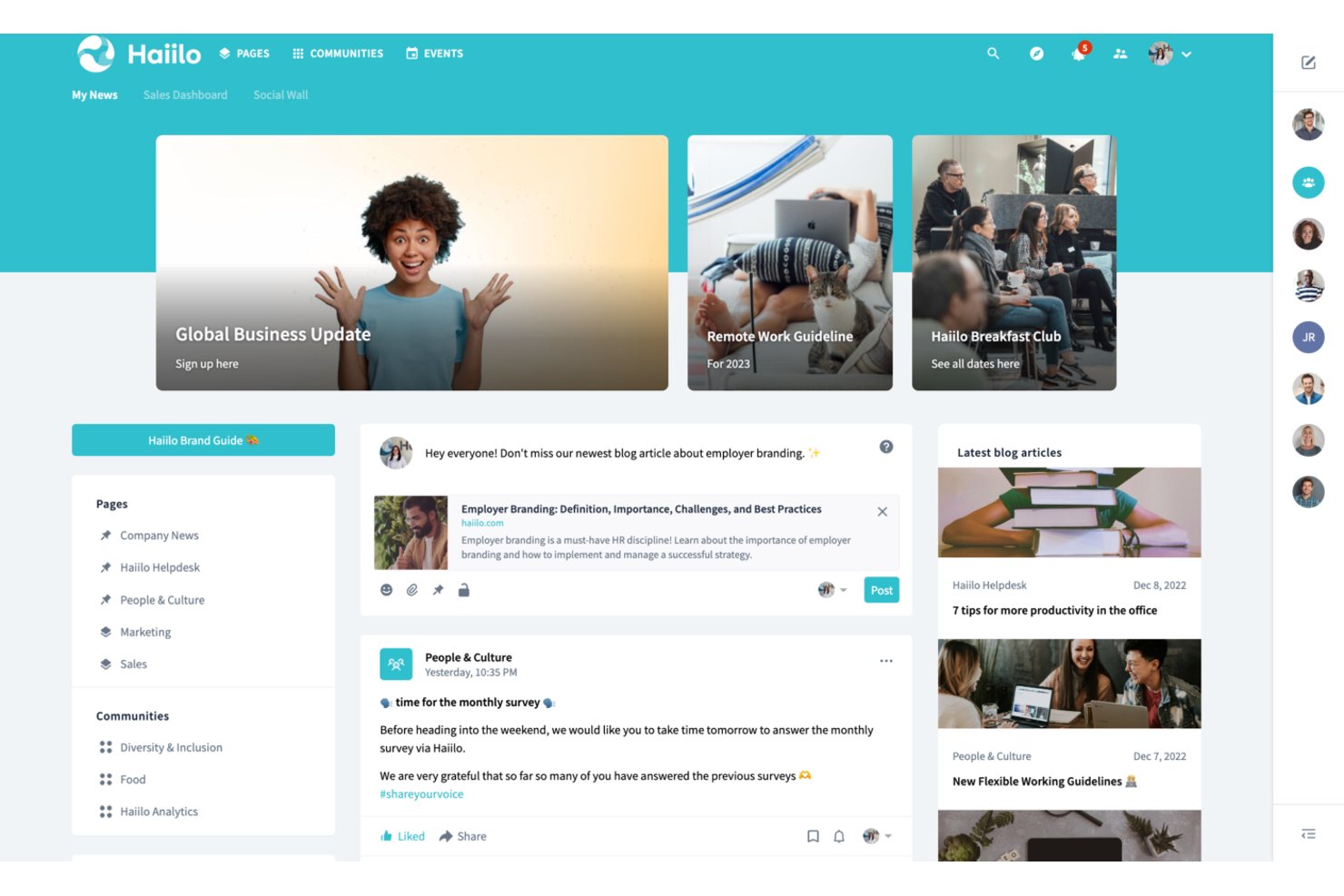
Haiilo is an enterprise intranet platform that brings together AI-powered content publishing, employee communications, knowledge management, social engagement tools, and a branded mobile app for frontline and desk-based workers alike.
Who Is Haiilo Best For?
Haiilo is a strong fit for mid-to-large enterprises with distributed or frontline workforces that need to reach employees across multiple languages and locations.
Why I Picked Haiilo
I picked Haiilo as one of the best because its native auto-translation across 28 languages genuinely sets it apart for companies with distributed, multilingual workforces. I've seen it remove a real barrier: a frontline worker in one country reads the same announcement as a colleague in another, each in their own language, with one-click translation handling the gap. The branded mobile app with push notifications and AI-spoken article summaries means deskless workers in retail, healthcare, or manufacturing stay connected without needing a desktop.
Haiilo Key Features
- Employee advocacy module: Share company content to external social channels with one-tap posting, AI-guided writing, and attribution analytics including LinkedIn impressions and UTM tracking.
- Pulse checks and polls: Collect real-time employee feedback directly within the intranet feed using built-in pulse surveys and poll tools.
- Enterprise Search Connector: Index Haiilo content in third-party search tools like Microsoft Search, and surface external content within Haiilo, with permissions respected throughout.
- Digital signage output: Publish internal communications to physical screens in locations like retail stores, hospitals, and warehouses directly from the content publishing workflow.
Haiilo Integrations
Haiilo offers 130+ pre-built integrations, including Workday, SAP SuccessFactors, Personio, HiBob, Okta, ServiceNow, and Jira. It also connects with Microsoft 365, Google Workspace, and Slack, with an open API for custom integrations.
Pros and Cons
Pros:
- AI assistant drafts, summarizes, and translates content
- Branded mobile app supports frontline workers
- Multilingual auto-translation covers 28 languages
Cons:
- Platform design customization options are limited
- Document search receives mixed user feedback
Workvivo
Best for Zoom-native social intranet at scale
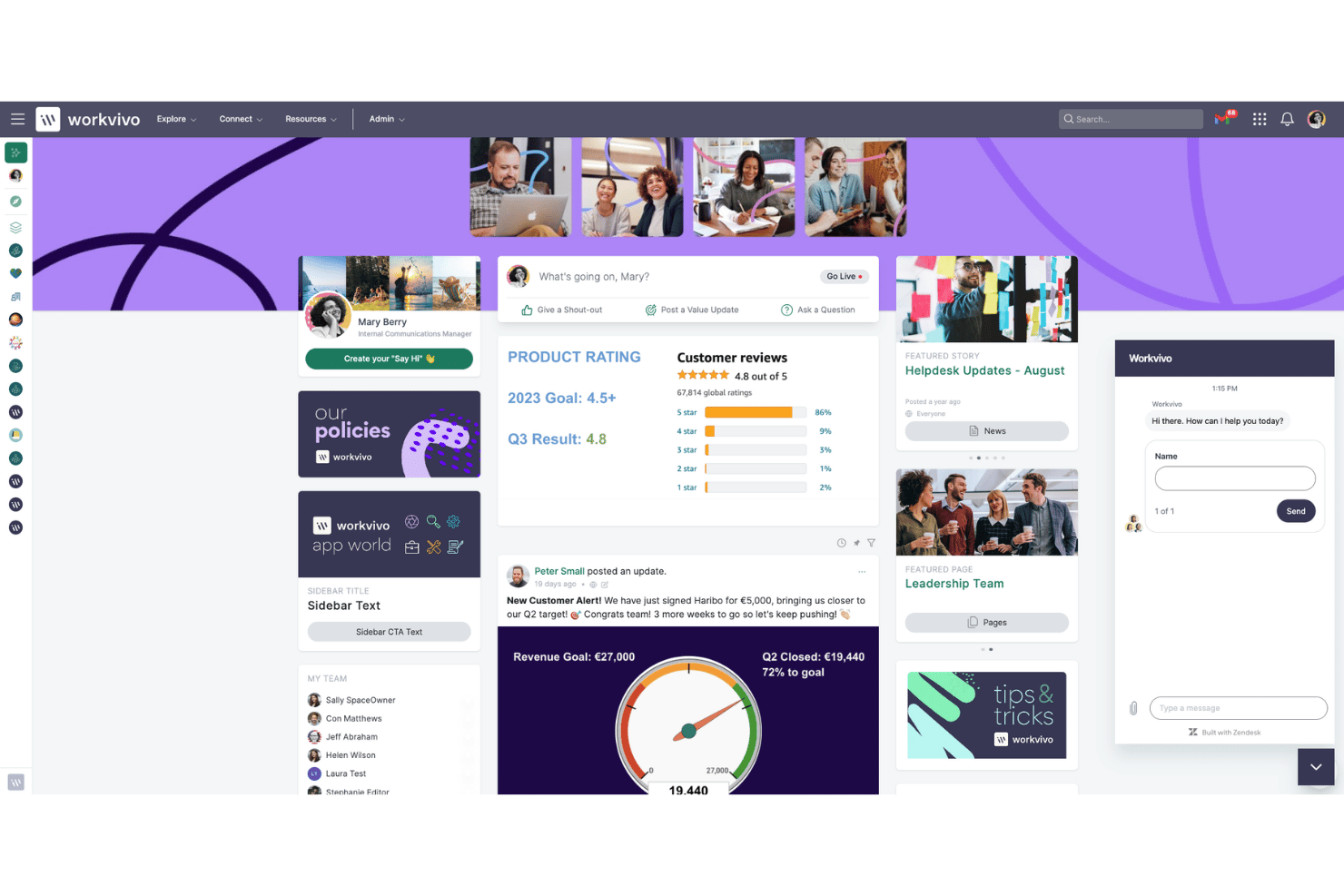
Workvivo is an enterprise intranet platform that brings together internal communications, employee engagement, knowledge management, and lifecycle automation in a social-media-style interface built for both desk-based and frontline workers.
Who Is Workvivo Best For?
Workvivo is a strong fit for large enterprises with significant frontline or deskless workforces that need a single platform to connect desk-based and field employees at scale.
Why I Picked Workvivo
I picked Workvivo as one of the best because it's the only enterprise intranet built natively inside the Zoom ecosystem, which means video, voice, and AI Companion aren't bolted on as afterthoughts. I love how Workvivo Journeys automates lifecycle moments like 30/60/90-day check-ins and onboarding without manual HR intervention, and Ask HQ lets employees search across SharePoint, Google Drive, and Workday in plain language from a single bar.
Workvivo Key Features
- Smart Activity Feed: A dynamic, personalized content feed that surfaces company news, posts, and updates based on each employee's role, team, and location.
- Workvivo Journeys: An automated workflow engine that triggers personalized content, tasks, and surveys for employees based on lifecycle stage, department, or start date.
- Seer engagement surveys: A people intelligence add-on with a 12-factor engagement model, pulse surveys, AI comment analysis, and manager dashboards with recommended next steps.
- Workvivo TV: A digital signage add-on that displays company communications on shared workplace screens, reaching frontline workers without requiring individual device logins.
Workvivo Integrations
Workvivo offers 40+ integrations, including Microsoft 365 and Entra ID, Google Workspace, Zoom, Slack, Salesforce, Workday, UKG, and ServiceNow. It also provides an open API, SDK, and webhooks for custom integrations.
Pros and Cons
Pros:
- Automates onboarding, check-ins, and policy rollouts
- AI-powered search spans all connected repositories
- Social-media-style engagement surpasses typical intranets
Cons:
- Search performance can lag in large organizations
- Some features require separate paid add-ons

Simpplr
Best for analyst-recognized intranet adoption
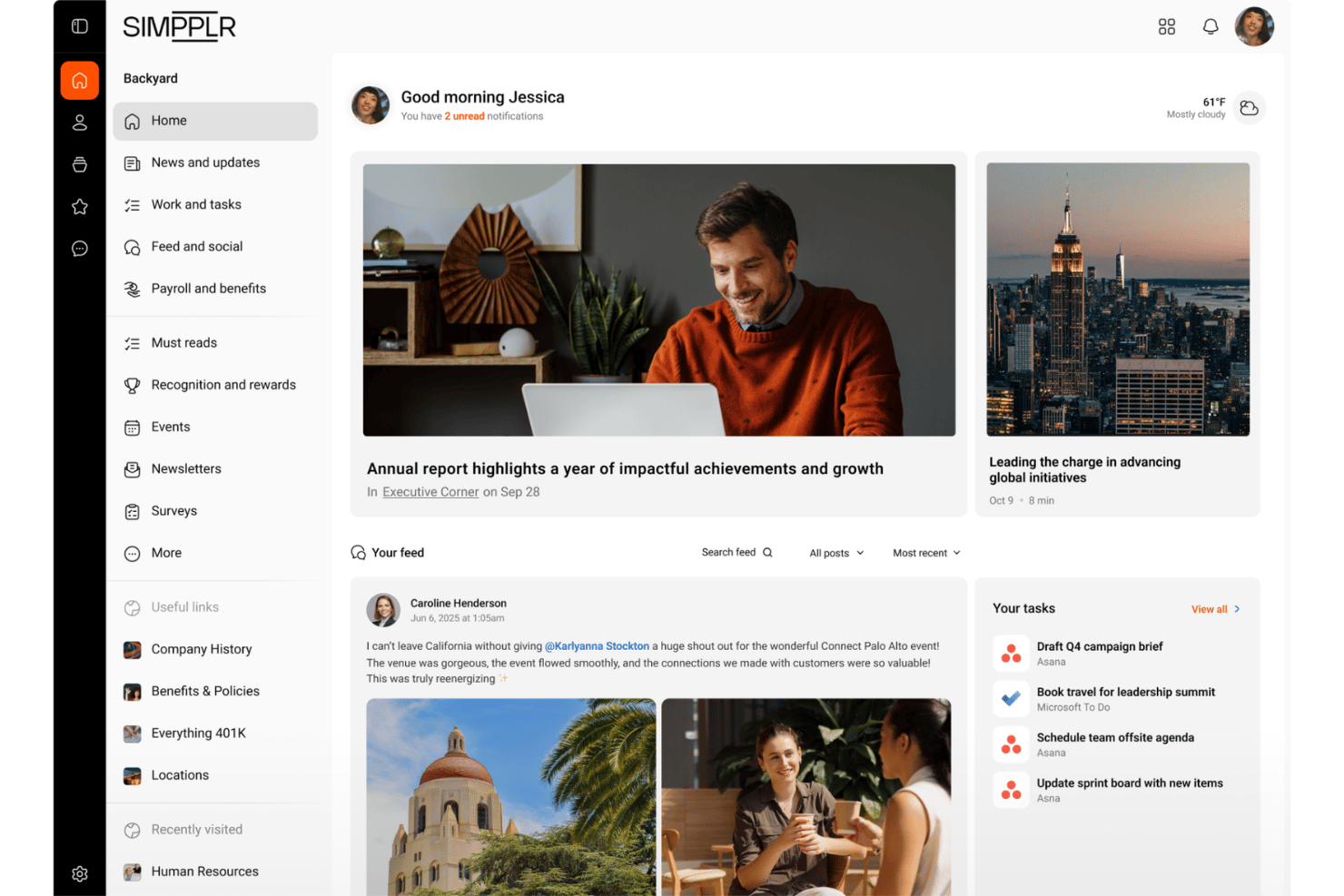
Simpplr is an AI-powered enterprise intranet platform that combines multichannel content publishing, federated knowledge search, employee directory management, pulse surveys, and sentiment analytics in a single Digital Work Hub.
Who Is Simpplr Best For?
Simpplr is a strong fit for enterprise HR and internal communications teams that need analyst-validated proof points to drive leadership buy-in for a new intranet investment.
Why I Picked Simpplr
Simpplr earns its spot on my shortlist because it's the only intranet vendor recognized as a leader across Gartner Magic Quadrant, Forrester Wave, G2, and IDC MarketScape simultaneously. I find that kind of cross-analyst validation genuinely useful when you're building a business case internally, since skeptical stakeholders are harder to push back against verified third-party recognition. The Auto-Governance Engine™ keeps content fresh automatically, and the EX Knowledge Graph personalizes homepages by role, tenure, and behavior without manual configuration.
Simpplr Key Features
- Comms AI workspace: A dedicated AI environment for internal communications teams that drafts channel-specific content matched to individual sender voice profiles and manages cross-channel publishing from a single interface.
- Recognition and rewards module: Employees can give peer-to-peer recognition tied to company values, with redeemable points, automated milestone awards, and nomination-based recognition options.
- AI-powered sentiment analysis: Captures emotional signals from both active and passive employee interactions over time, surfacing aggregated insights for HR and leadership via role-specific dashboards.
- ABAC-driven audience targeting: Attribute-based access control lets you segment and target content delivery by role, department, location, tenure, and lifecycle stage with granular precision.
Simpplr Integrations
Simpplr offers 200+ pre-built integrations, including Microsoft 365, Google Workspace, Workday, UKG, Oracle HCM, SAP SuccessFactors, Slack, Zoom, SharePoint, and Confluence. Its Extensibility Center provides open APIs for custom integrations.
Pros and Cons
Pros:
- Analyst leader in four major industry reports
- Auto-Governance Engine flags stale intranet content
- Industry-first AI-powered enterprise search
Cons:
- Surveys and analytics require premium add-ons
- Design flexibility limited by predefined templates

LumApps
Best for global orgs on M365 and Google Workspace
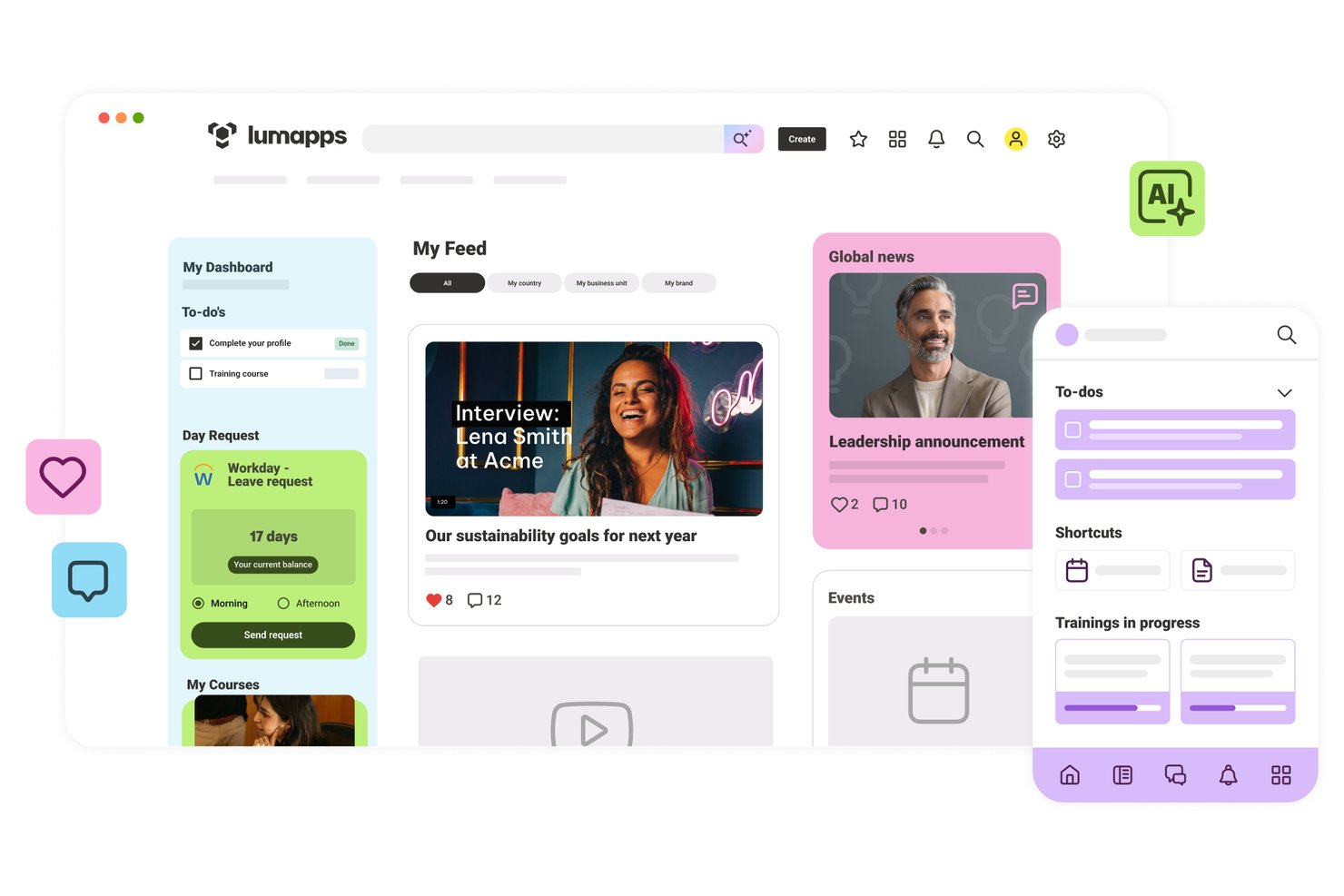
LumApps is an enterprise intranet platform built for global organizations, offering AI-powered content publishing, employee directories, knowledge management, pulse surveys, and deep integrations with Microsoft 365 and Google Workspace.
Who Is LumApps Best For?
LumApps is a strong fit for large, globally distributed organizations that run Microsoft 365 or Google Workspace and need a single intranet to connect desk-based and frontline employees across multiple languages and regions.
Why I Picked LumApps
LumApps earns its spot on my shortlist because it's one of the few intranet platforms built to run natively inside both Microsoft 365 and Google Workspace, not alongside them. I especially like its AI auto-translation across 200+ languages, which means a global communications team can publish once and reach frontline workers in dozens of regions without manual localization. The Agent Hub is also genuinely useful: employees can query HR policies or IT procedures in plain language and get answers sourced from governed company documents.
LumApps Key Features
- Mandatory-read tracking: Flag specific content as required reading and track which employees have confirmed they've seen it, with read-receipt data available to admins.
- Pulse surveys and sentiment analysis: Run built-in pulse surveys and collect anonymous feedback, with AI-driven sentiment analysis on comments and reactions to monitor workforce morale.
- Role-based homepage personalization: Deliver dynamically tailored homepages and content feeds based on each employee's department, location, role, and lifecycle stage.
- No-code Micro-App builder: Use the LumApps SDK and no-code builder to create custom widgets and mini-apps that surface data from third-party tools directly inside the intranet.
LumApps Integrations
LumApps offers 100+ integrations, including Microsoft 365, Google Workspace, Workday, SAP SuccessFactors, ServiceNow, Slack, and Microsoft Teams. It also supports custom connections through its open API and LumApps SDK.
Pros and Cons
Pros:
- Real-time employee sentiment analytics built in
- Auto-translates content to 200+ languages
- Strong AI tools for content and search
Cons:
- Frequent updates can confuse administrators
- Some analytics require premium add-ons

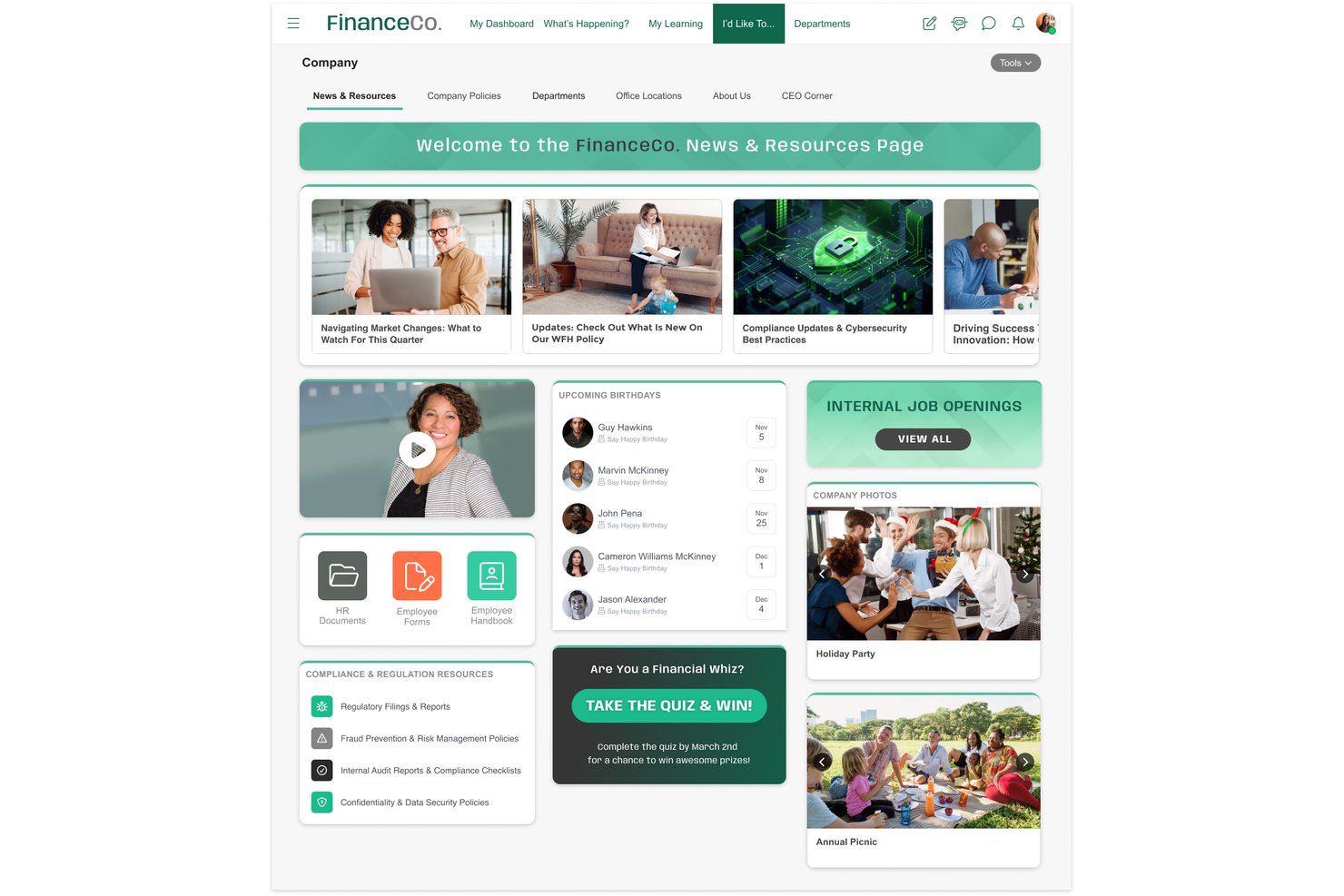
MangoApps is an enterprise intranet platform that combines a branded employee portal, AI-powered knowledge management, multi-channel content publishing, social engagement tools, and frontline workforce support across desk and deskless teams.
Who Is MangoApps Best For?
MangoApps is a strong fit for regulated industries like healthcare and government that need a certified, compliance-ready intranet for both desk and deskless employees.
Why I Picked MangoApps
MangoApps earns its spot on my shortlist because it's one of the only enterprise intranet platforms holding both HITRUST CSF and FedRAMP ATO certifications, which matters enormously if your organization operates in healthcare or the public sector. I particularly like that these aren't just checkboxes: the platform runs on single-tenant architecture with full data isolation, real-time audit logs, and DLP controls baked in at the platform level. Its AI assistants also inherit role-based permissions and never pull from the open internet, so governed knowledge delivery is built into the experience.
MangoApps Key Features
- Multi-channel content publishing: Publish a single piece of content simultaneously to the in-app feed, email, SMS, push notifications, and digital signage from one interface.
- Campaign and journey builder: Design multi-touch communication campaigns and employee lifecycle journeys with sequenced content delivery and scheduling.
- Pulse surveys and eNPS tracking: Run anonymous pulse surveys and eNPS polls with built-in analytics dashboards showing participation and sentiment by audience segment.
- Federated semantic search: Search across MangoApps and connected repositories like SharePoint, Google Drive, and ServiceNow in a single AI-powered query.
MangoApps Integrations
MangoApps offers 200+ native integrations, including Workday, UKG, ADP, BambooHR, SAP SuccessFactors, Microsoft 365, Google Workspace, Okta, ServiceNow, and Box. REST API and webhooks support custom integrations.
Pros and Cons
Pros:
- Supports frontline workers without corporate email
- Native AI tools with full governance
- Certified for HITRUST and FedRAMP compliance
Cons:
- Some users report mobile app inconsistencies
- Extensive features can feel overwhelming
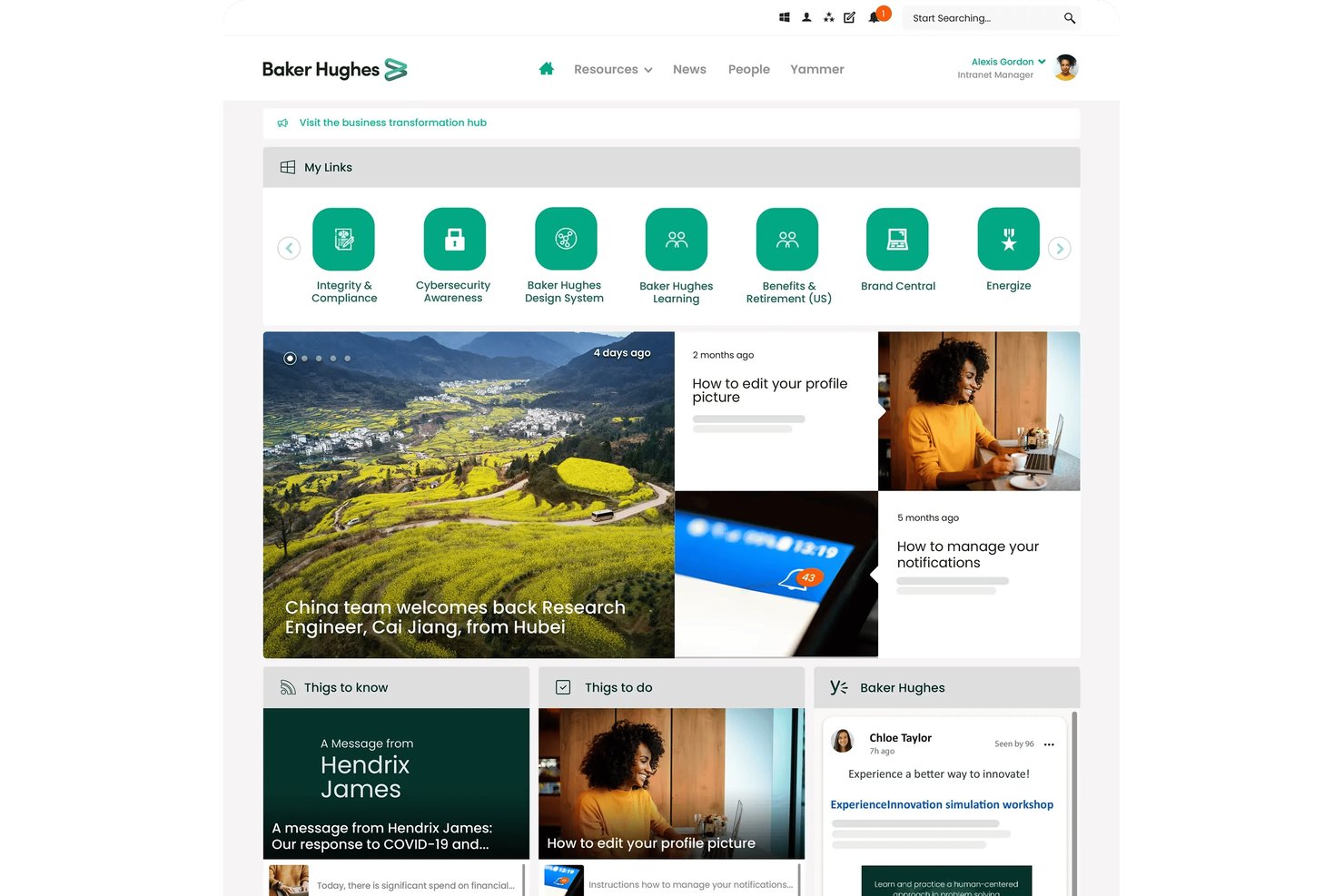
Unily is an AI-native enterprise intranet platform that combines multichannel content publishing, employee journey automation, unified enterprise search, social engagement tools, and conversational AI task execution across connected business systems.
Who Is Unily Best For?
Unily is built for large enterprises—typically 1,000+ employees—that need a centralized digital workplace with AI-driven personalization, lifecycle journey automation, and deep integrations across HR, IT, and productivity systems.
Why I Picked Unily
I picked Unily as one of the best because it's built from the ground up around AI, not retrofitted with it. What impresses me most is the Employee Journeys module, which automatically enrolls employees into sequenced, multichannel experiences (onboarding, parental leave, role transitions) based on live HRIS data synced from Workday or SAP. Pair that with Unily Glass, a conversational AI layer that lets employees complete HR requests or IT tickets without leaving the intranet, and you have a platform that genuinely operationalizes AI across the employee lifecycle.
Unily Key Features
- Unified enterprise search: Search across intranet content, people profiles, and connected external systems like SharePoint, Confluence, and ServiceNow from a single query interface.
- AI-powered content translation: Automatically publish content in multiple languages simultaneously, with protected-terms functionality that preserves brand names and acronyms across translations.
- Gamification tools: Award points, badges, and leaderboard rankings to employees, and let teams submit and upvote ideas through the built-in ideation hub.
- Broadcast email with analytics: Send targeted, scheduled email communications to segmented audiences and track delivery rates, open rates, and click-throughs from a single dashboard.
Unily Integrations
Unily supports 50+ integrations, including Microsoft 365, Google Workspace, Workday, SAP HR, HiBob, ServiceNow, Salesforce, Confluence, Slack, and Zoom. Platform Extensibility provides REST APIs and SDKs for custom integrations.
Pros and Cons
Pros:
- Conversational AI executes tasks across systems
- Advanced multi-language auto-translation support
- AI-native employee journey automation built-in
Cons:
- Key functions require add-on purchases
- Opaque enterprise pricing with no trial
Other Enterprise Intranet Software
Here are some additional enterprise intranet software options that didn’t make it onto my shortlist, but are still worth checking out:
- Claromentis
For on-premise intranet with compliance controls
- ThoughtFarmer
For knowledge-worker intranet with AI search
- Axero
For all-in-one intranet with on-prem option
- Jostle
For mid-market intranet with AI Q&A included
- Happeo
For Google Workspace-native intranet
- Microsoft SharePoint
For M365 document governance at enterprise scale
- Appspace
For omnichannel signage and intranet in one
- Firstup
For lifecycle-triggered intranet journeys
- Powell Intranet
For M365 intranet with grounded AI copilots
- Viva Connections
For M365 intranet across frontline and office


How I Evaluate Enterprise Intranet Software
I split my evaluation into baseline capabilities every tool must cover and the differentiators that separate a solid intranet from the right one for your workforce.
Core Functionality (Table Stakes For This List)
When I'm selecting tools for my list, I rank each one on a scale from 0 (does not offer the functionality) to 5 (excels in this area) for each core functionality listed below. I then calculate the tool's total score into a percentage, using 75% as a benchmark to help assess its overall fit for the list.
- Content & publishing: I check whether the platform supports drag-and-drop page building, scheduling, templates, and approval workflows—things IC teams need to keep company news timely and on-brand.
- Employee directory & profiles: A searchable directory with org chart navigation, skills tagging, and HRIS sync matters here, especially for orgs where new hires need to find the right person fast.
- Document & knowledge management: I evaluate how each tool handles versioning, permissions, and search across policies and knowledge base articles, since outdated or buried documents are a constant pain point for HR teams.
- Social engagement tools: Features like comments, reactions, polls, communities, and activity feeds show me whether employees can actually interact with content rather than just consume it.
- Permissions & access control: I look for granular role-based access, audience targeting, SSO, and SCIM provisioning so IT teams can manage who sees what without manual upkeep.
- Integrations & mobile access: The tool should connect with platforms like Microsoft 365, Google Workspace, Slack, and major HRIS systems, and offer a native mobile app with push notifications for frontline workers.
Once I have a list of tools that meet the criteria, I consider what sets each platform apart.
Differentiating Factors (What Sets Vendors Apart)
Here's how I compare and contrast different vendors:
Standout Features
I look for AI-powered search that goes beyond keyword matching—tools like Unily and Simpplr use generative AI to surface direct answers from policies and past posts, which cuts down repetitive questions hitting HR and IT. Multilingual auto-translation is essential for global workforces; I check whether platforms translate not just pages but also comments and push notifications. I also evaluate campaign analytics dashboards, since IC teams need read-receipt tracking and audience reach data to prove mandatory comms actually landed.
Beyond Features
I evaluate how well each platform supports deskless and frontline workers—things like shared-device login, QR-code onboarding, and offline mobile access matter when your workforce doesn't sit at a desk. HRIS integration depth is equally important; I check for pre-built connectors to systems like Workday, SAP SuccessFactors, or BambooHR that auto-sync org charts and trigger onboarding checklists from lifecycle events. I also consider total cost of ownership, since some vendors bundle AI and analytics into base pricing while others charge extra for each module as you scale.
How to Choose Enterprise Intranet Software
What should you focus on when narrowing down enterprise intranet software for your team’s real-world communication, security, and integration needs?
| If your priority is... | Look for... |
|---|---|
| Reaching non-desk or frontline workers | Shared-device sign-ins, offline mobile access, QR onboarding |
| Multilingual communications | Auto-translation for pages, notifications, and comments |
| HR system integration depth | Pre-built connectors for Workday, SAP, or BambooHR |
| Guaranteeing compliance or audit requirements | Audit logs, granular access controls, on-premises hosting |
| Measuring communications impact | Campaign analytics, read-receipt tracking tools |
How to Vet Your Shortlist
- Test frontline accessibility: Simulate a mobile login on a shared or offline device and document any barriers in under 30 minutes.
- Check multilingual support: Create a news post in one language, and verify auto-translation for comments and notifications within one live trial.
- Validate HRIS integration: Request a demo showing real-time sync from your HRIS (e.g., Workday) to the intranet's org chart within 2 business days.
- Request compliance proof: Ask for a recent audit log export and a copy of their SOC 2 or HITRUST certification before contract negotiations.
- Tradeoff: Decide whether deep integration with your HR tech stack or frontline usability matters more for your long-term intranet adoption.
What is Enterprise Intranet Software?
Enterprise intranet software is a digital platform that connects employees across an organization, centralizing company communications, resources, and collaboration tools in one secure space. You’ll use it to publish updates, store documents, manage internal knowledge, and foster employee engagement. This software plays a key role for HR and communications teams who need to reach dispersed, multilingual, or frontline workers while supporting compliance and aligning with existing workplace platforms.
Features
When selecting enterprise intranet software, keep an eye out for the following key features:
- Content and publishing: Create, manage, and schedule internal news, announcements, and updates using drag-and-drop page builders, customizable templates, and approval workflows. This keeps company information timely, consistent, and accessible to all employees.
- Employee directory and profiles: Give your team a searchable directory with detailed profiles, including skills, contact info, and org chart navigation. This makes it easier for employees to connect, find expertise, and understand reporting structures.
- Document and knowledge management: Organize policies, handbooks, and internal knowledge in one space with built-in version control, permission settings, and advanced search. You’ll ensure that everyone accesses accurate, up-to-date information without hassle.
- Social engagement tools: Enable comments, reactions, polls, and group communities that let employees interact with content and colleagues. This drives participation, surfaces feedback, and promotes company culture.
- Permissions and access control: Manage content visibility and editing rights through granular role-based permissions, audience targeting, SSO, and provisioning. This helps you protect sensitive data and ensure only the right people see the right information.
- Integrations and mobile access: Connect with tools like Microsoft 365, Google Workspace, Slack, and major HRIS systems. A native mobile app with push notifications helps you reach deskless or frontline workers as easily as office staff.
- Multilingual support: Translate updates, documents, comments, and notifications for global teams. This feature ensures everyone—regardless of language—stays informed and included.
- Campaign analytics: Track engagement with read receipts, click rates, and audience reach dashboards. These insights help HR and communications teams measure the impact of critical updates and compliance-related communications.
- HRIS integration: Sync employee data, org charts, and lifecycle events with systems like Workday, SAP SuccessFactors, or BambooHR. This automates updates and reduces manual work for your HR team.
- Frontline worker support: Offer shared-device login, QR-code onboarding, and offline mobile access to make the intranet practical for employees without regular computer access. This brings every team member into company communications, no matter where they work.
Benefits
Implementing enterprise intranet software provides several benefits for your team and your business. Here are a few you can look forward to:
- Centralized company communications: Bring news, updates, and policy changes together in one secure, searchable space using publishing tools and automated notifications.
- Improved employee connection: Help everyone find colleagues, skills, and teams quickly with directories, org charts, and profile search features.
- Simplified document and knowledge access: Make handbooks, policies, and internal knowledge easy to find and keep up to date with advanced search and version control.
- Enhanced engagement and feedback: Encourage company-wide participation through social features like commenting, reactions, and polls on internal posts.
- Stronger security and compliance: Control sensitive information with granular permissions, audit logs, and access controls aligned with compliance needs.
- Smooth integrations and mobile use: Connect Microsoft 365, Google Workspace, HRIS platforms, and more, plus reach deskless teams with mobile apps and push alerts.
- Global workforce inclusivity: Ensure all employees stay informed with multilingual support that includes auto-translation for updates, comments, and notifications.
Costs and Pricing
Selecting enterprise intranet software requires an understanding of the various pricing models and plans available. Costs vary based on features, team size, add-ons, and more. The table below summarizes common plans, their average prices, and typical features included in enterprise intranet software solutions:
Plan Comparison Table for Enterprise Intranet Software
| Plan Type | Average Price | Common Features |
|---|---|---|
| Free Plan | $0 | Basic content publishing, limited employee directory, document storage, and essential social engagement tools. |
| Personal Plan | $5–$10/user/month | Single user access, custom profiles, simple knowledge management, and limited integrations. |
| Business Plan | $8–$20/user/month | Multi-user access, advanced document control, team chat, analytics, SSO, integrations, and mobile access. |
| Enterprise Plan | $15–$40/user/month | Advanced permissions, HRIS sync, multilingual support, campaign analytics, compliance tools, and priority support. |
Enterprise Intranet Software FAQs
Here are some answers to common questions about enterprise intranet software:
How can I ensure our intranet supports deskless or frontline workers?
Start by looking for features like shared-device login, QR code onboarding, and offline mobile access. These features let frontline employees access resources and updates even without a dedicated work computer. During evaluation, ask vendors to demo a shared or offline login and test real-world scenarios, like accessing updates from a mobile app on a shop floor or warehouse.
Which HRIS integrations should I prioritize in an intranet platform?
Focus on pre-built connectors for your core HR system, like Workday, SAP SuccessFactors, or BambooHR. Prioritize platforms that offer real-time org chart sync and can trigger workflows from lifecycle events such as onboarding or transfers. This reduces manual updates and keeps data accurate for HR and IT teams.
How do campaign analytics help HR and communications teams?
Campaign analytics show you who’s opened, read, or ignored key messages and updates. Look for features like read receipts, click tracking, and audience breakdowns. This data helps you measure the impact of urgent updates, prove compliance with mandatory comms, and spot teams or locations that may need follow-up.
What’s the difference between permissions and access control in intranet software?
Permissions determine what users can do (edit, publish, view) within the intranet. Access control focuses on who can see specific content, often by audience, department, or user role. You’ll need both to keep sensitive information protected and ensure everyone sees what matters to their job.
Can enterprise intranet software handle multilingual communications automatically?
Yes, many platforms offer auto-translation for posts, comments, and notifications. This helps global teams stay informed and included, no matter what language they use day to day. Test this by creating updates and switching language settings during your trial.
Do most intranet platforms charge for every feature, or are some included?
It varies. Some vendors bundle AI, analytics, and multilingual support into standard pricing, while others charge extra for these modules as your usage grows. Review contracts closely and ask for a complete list of included and premium features before making a decision.