

10 Best AI Employee Recognition Software Tools Reviewed in 2026

10 Best AI Employee Recognition Software Shortlist


As an HR professional, you may well know how vital employee recognition is to maintaining morale and motivating your team. Yet, finding the right way to acknowledge achievers can be challenging. That's where AI employee recognition software comes in, offering innovative solutions tailored to your needs.
In my experience, these tools leverage AI to analyze employee performance and suggest personalized recognition strategies. They help you understand your team's dynamics and ensure everyone feels valued.
In this article, I'll share my unbiased, well-researched reviews of top AI recognition software. You'll discover tools that can transform how you engage with your team, making recognition a part of your daily operations.
Why Trust Our Software Reviews
We’ve been testing and reviewing HR software systems since 2019. As HR experts ourselves, we know how critical and difficult it is to make the right decision when selecting software.
We invest in deep research to help our audience make better software purchasing decisions. We’ve tested more than 2,000 tools for different HR management use cases and written over 1,000 comprehensive software reviews. Learn how we stay transparent & our software review methodology.
AI Employee Recognition Software Comparison Table
This comparison table summarizes pricing details for my top AI employee recognition software selections:
| Tool | Best For | Trial Info | Price | ||
|---|---|---|---|---|---|
| 1 | Best for recognizing frontline and deskless workers | 30-day free trial + free demo available | From $1/seat/month ($500/month minimum contract) | Website | |
| 2 | Best for celebrating personal milestones | Free demo available | Pricing upon request | Website | |
| 3 | Best with zero reward markups for employee payouts | Free demo available | Pricing upon request | Website | |
| 4 | Best for extensive reward options | Free demo available | Pricing upon request | Website | |
| 5 | Best for Amazon integration | Free demo available | Pricing upon request | Website | |
| 6 | Best for boosting team morale | Free demo available | Pricing upon request | Website | |
| 7 | Best for AI-driven employee insights | Free demo available | From $4,999/year | Website | |
| 8 | Best for peer-to-peer recognition | 30-day free trial and free demo available | From $0.25/per employee/month | Website | |
| 9 | Best for real-time feedback | 7-day free trial and free demo available | From $39/month | Website | |
| 10 | Best for large enterprises | Free demo available | Pricing upon request | Website |


Best AI Employee Recognition Software Review
Below are my detailed summaries of the best AI employee recognition software that made it onto my shortlist. My reviews offer a detailed look at the key features, pros & cons, integrations, and ideal use cases of each tool to help you find the best one for you.
Guusto
Best for recognizing frontline and deskless workers
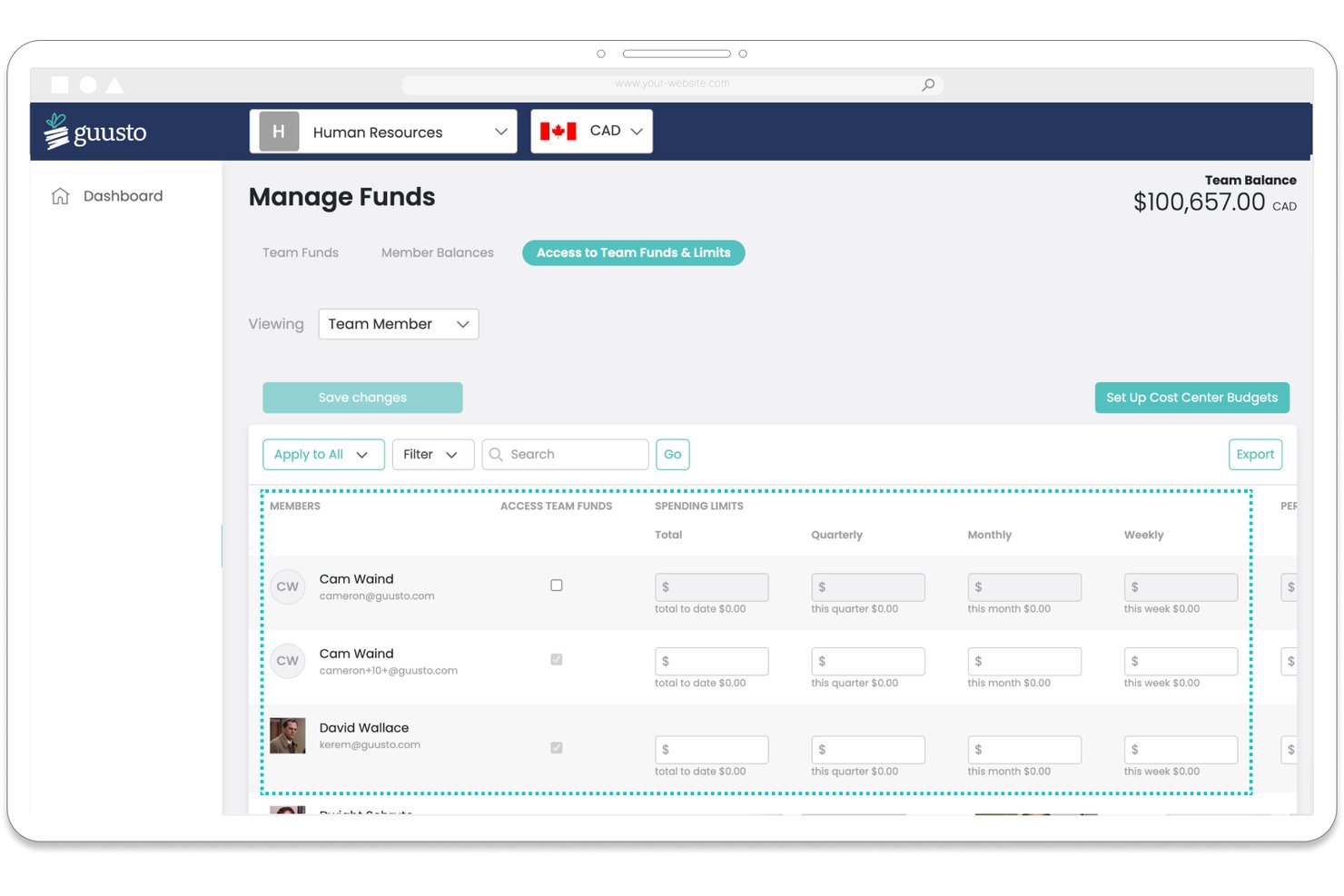
Guusto is an employee recognition platform that supports peer-to-peer and manager-led recognition, gift card and reward redemption, milestone automation, and AI-powered recognition scoring across email, SMS, QR code, and print delivery channels.
Who Is Guusto Best For?
Guusto is a strong fit for HR teams in healthcare, retail, hospitality, and manufacturing that need to recognize large frontline or deskless workforces without relying on corporate email or device access.
Why I Picked Guusto
I picked Guusto as one of the best because its multi-channel delivery is genuinely built for teams that never sit at a desk. A nurse, a warehouse associate, or a hotel housekeeper can receive and redeem a recognition reward via QR code, SMS, or printed card without ever creating an account. Layer in AI Recognition Scores that flag which employees a manager has consistently overlooked, and HR teams get a tool that closes real equity gaps in frontline recognition.
Guusto Key Features
- AI Recognition Scores: Evaluates manager recognition behavior across frequency, tone, specificity, and equity of distribution to surface employees who've been overlooked.
- Milestone and birthday automation: Automatically triggers recognition events based on HRIS data synced from platforms like BambooHR, Workday, and UKG Pro.
- No-markup direct dollar rewards: Reward budgets transfer at full face value across 100+ global merchants, with unclaimed rewards credited back to the sender's budget.
- Nomination Box: Lets employees submit peer nominations, with automated draws to select winners from the pool.
Guusto Integrations
Guusto offers native integrations with BambooHR, Workday, SAP SuccessFactors, UKG Pro, Dayforce, ADP, Rippling, Personio, Gusto, and Microsoft tools. It also supports integrations with Slack, Zapier, and an open API for custom connectivity.
Pros and Cons
Pros:
- Unclaimed rewards are refunded to budget
- AI nudges flag overlooked employees for recognition
- Recognizes deskless and frontline employees offline
Cons:
- Limited analytics depth and filtering options
- Lacks AI-driven message personalization features

Best for celebrating personal milestones
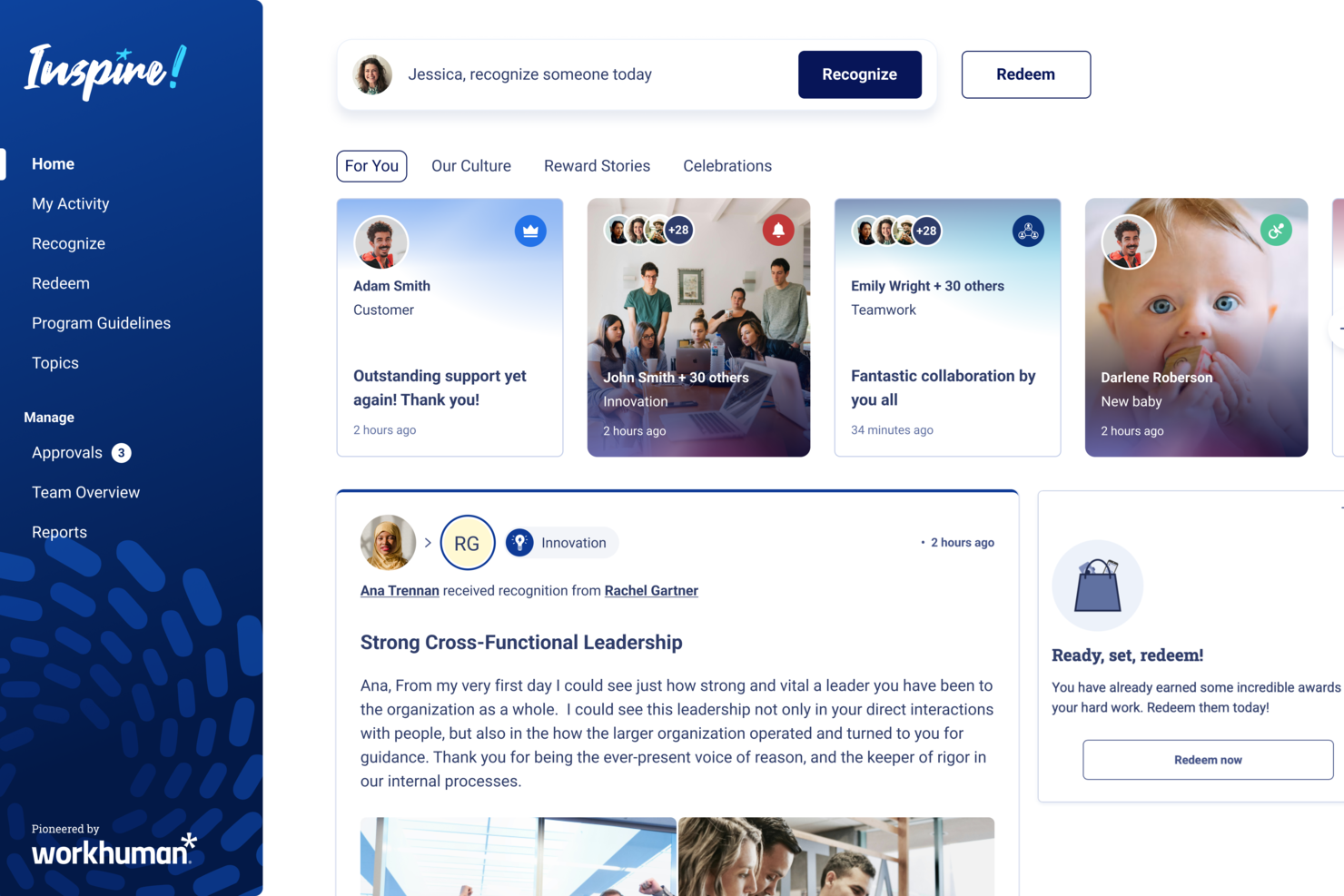
Workhuman is an innovative AI-driven employee recognition platform designed to transform workplace culture by boosting employee engagement and retention. Ideal for organizations aiming to create a positive work environment, Workhuman leverages data analytics to personalize recognition experiences. This platform is particularly appealing to businesses seeking to improve employee satisfaction and performance through simplified recognition processes.
Why I Picked Workhuman
I picked Workhuman for its unique ability to integrate AI with employee recognition, offering a personalized and data-driven approach to acknowledging contributions. The platform's AI-powered insights provide real-time intelligence that helps in understanding employee performance and skill gaps. Additionally, Workhuman's smooth integration into existing systems like Microsoft Teams and Slack ensures that recognition becomes a natural part of the daily workflow, improving accessibility and engagement.
Workhuman Key Features
In addition to its AI-driven insights, Workhuman offers several key features that make it a standout choice for employee recognition.
- Social Recognition: Facilitates peer-to-peer recognition, allowing employees to acknowledge each other's contributions in a meaningful way.
- Service Milestones: Automatically tracks and celebrates employee anniversaries and milestones, fostering a sense of achievement and belonging.
- Life Events: Allows employees to celebrate personal milestones within the workplace, uplifting the community and morale.
- Inclusion Advisor: Utilizes AI to provide insights into diversity and inclusion metrics, helping organizations foster an inclusive work environment.
Workhuman Integrations
Integrations include Microsoft Teams, Workday, Slack, Yammer, and Microsoft Outlook. Workhuman also offers an open API for custom integrations, ensuring flexibility and scalability for businesses.
Pros and Cons
Pros:
- Customizable global recognition programs
- Provides insights into employee sentiment
- Supports multiple languages and currencies
Cons:
- Complex implementation for smaller teams
- May require cultural sensitivity training

Best with zero reward markups for employee payouts
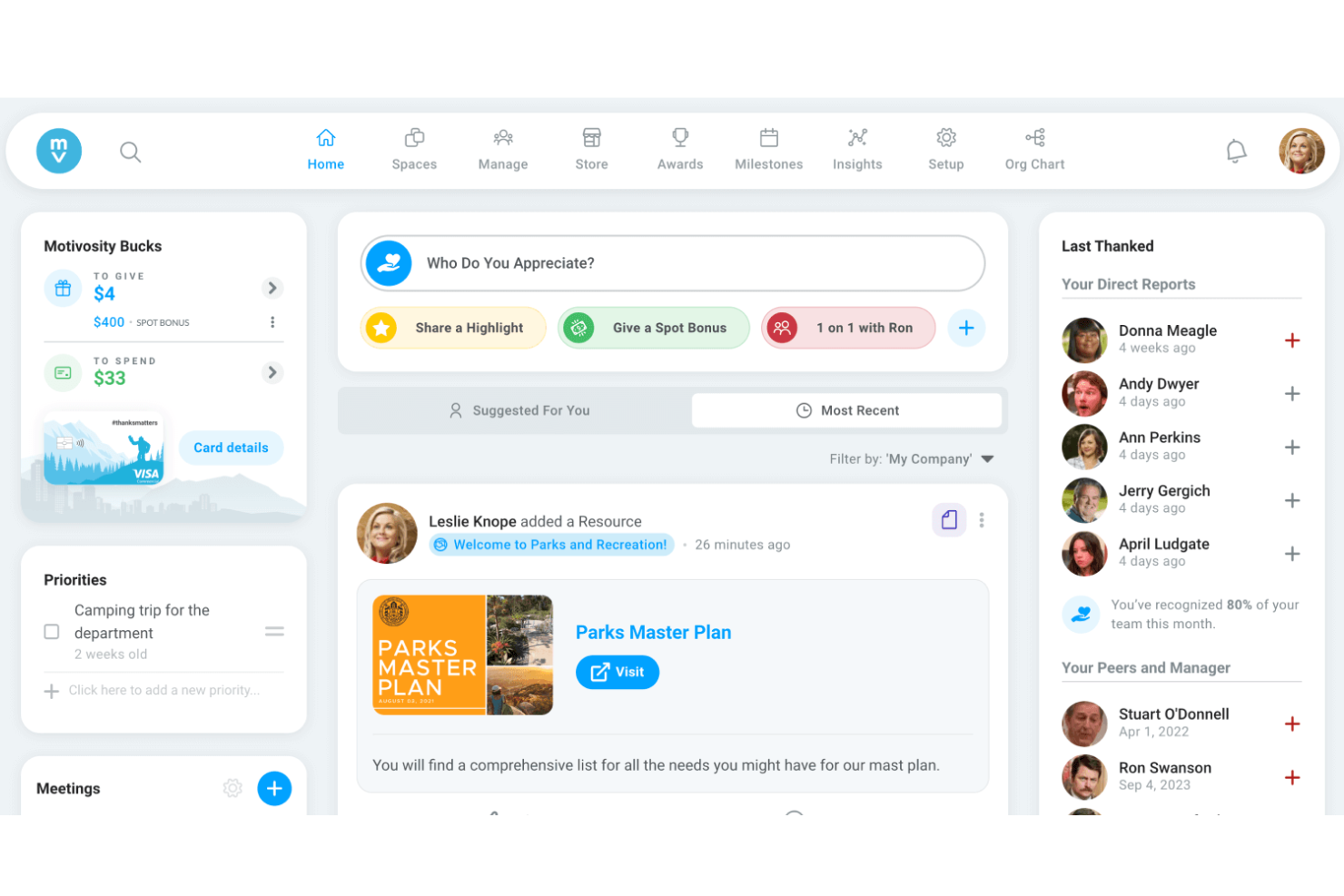
Motivosity is an AI-powered employee recognition and rewards platform that combines peer-to-peer recognition, milestone automation, a zero-markup global rewards catalog, and Appreciation Intelligence™ for surfacing recognition moments and drafting personalized messages.
Who Is Motivosity Best For?
Motivosity is a strong fit for mid-market HR and people operations teams managing distributed or multi-location workforces who need scalable, AI-assisted recognition programs.
Why I Picked Motivosity
Motivosity earns its spot on my shortlist because the zero-markup rewards model means every dollar an employee redeems goes directly to them, not to platform fees. I love that this is paired with a catalog of 500M+ products, 850+ gift cards, and PayPal or Venmo cashout options, so recognition never feels like a consolation prize. On top of that, Appreciation Intelligence™ surfaces who to recognize and when, then drafts personalized messages automatically across Slack and Claude.
Motivosity Key Features
- Recognition analytics dashboard: Track recognition frequency, participation, and equity with real-time, customizable dashboards.
- Multilingual AI translation: Instantly translates recognition messages for teams working across 70+ languages.
- DEI and bias detection: Flags under-recognition and biased language to promote more inclusive recognition.
- Pulse eNPS surveys: Quickly collect and view employee sentiment data using built-in, always-on pulse surveys.
Motivosity Integrations
Motivosity offers native integrations with Workday, ADP, BambooHR, Okta, Slack, Microsoft Teams, and Rippling, and provides an API for custom integrations.
Pros and Cons
Pros:
- DEI bias detection flags under-recognized employees
- AI drafts personalized recognition messages automatically
- Zero markup on all employee reward payouts
Cons:
- Mobile app experience lags behind desktop
- Analytics depth limited without premium tiers
New Product Updates from Motivosity

Motivosity Launches Appreciation Intelligence With AI Coaching and Automation
Motivosity introduces Appreciation Intelligence™ with Appreciation Coach, Insights AI, Motivosity Agents, and an MCP Connector. The new capabilities help teams improve recognition, automate routine tasks, and access employee recognition insights faster. For more information, visit Motivosity's official site.
 .
.
Best for extensive reward options
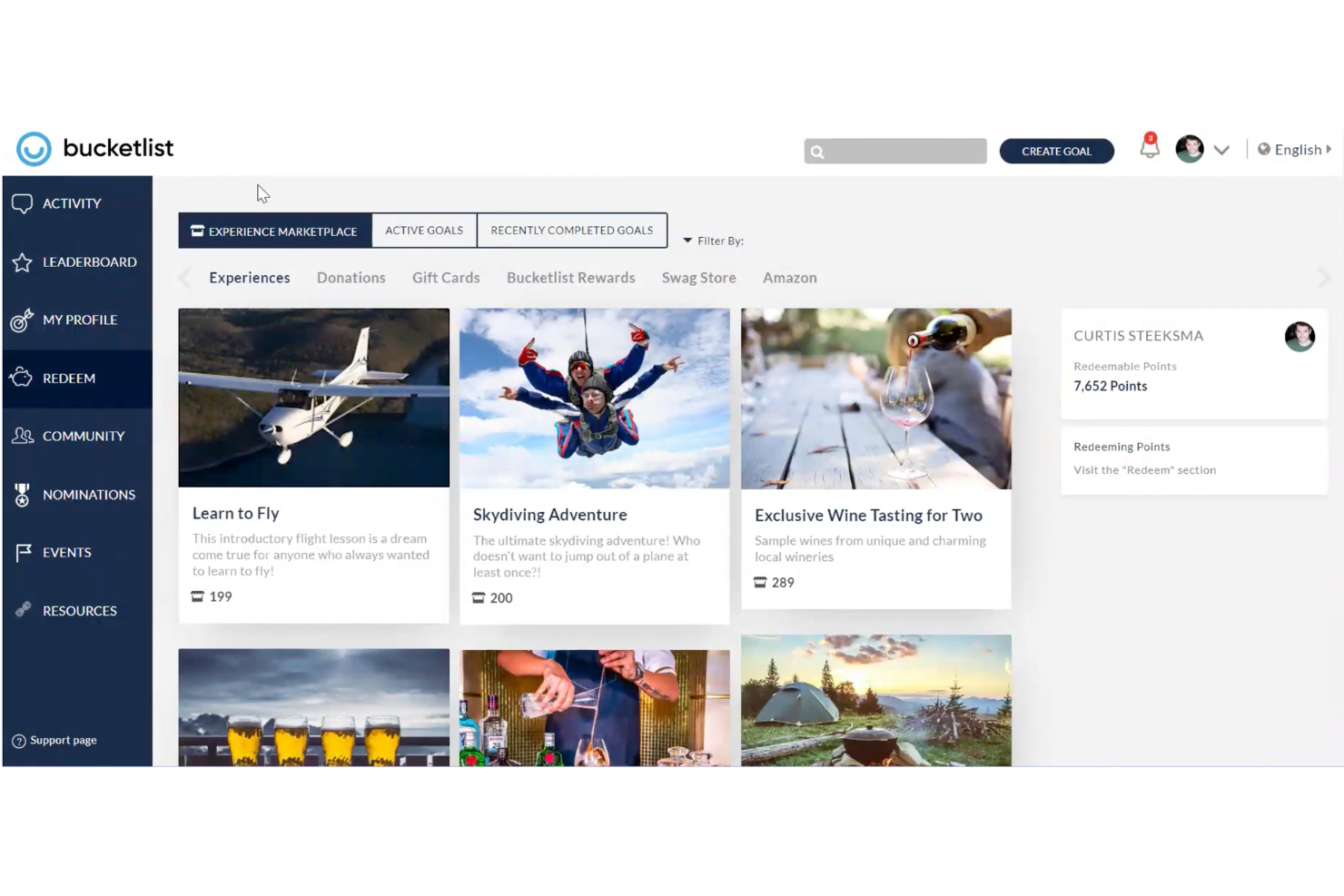
For businesses seeking to enhance employee engagement and retention, Bucketlist Rewards offers a solution designed for organizations of different sizes. The platform stands out for its extensive reward options, helping companies recognize employees in ways that match individual preferences. It is well-suited for teams with distributed or frontline workers, supporting milestone celebrations and structured recognition programs to help maintain morale and reduce turnover.
Why I Picked Bucketlist Rewards
I picked Bucketlist Rewards for its extensive reward options, giving employees access to a wide range of redemption choices that suit different preferences and locations. The platform uses a points-based system that connects recognition to company goals, allowing employees to select rewards that are meaningful to them. This approach helps organizations support engagement across remote, hybrid, and frontline teams.
Bucketlist Rewards Key Features
In addition to extensive reward options, Bucketlist Rewards offers:
- Customizable Recognition Programs: Tailor recognition initiatives to align with your company's values and goals, ensuring a personalized approach.
- Mobile App Accessibility: Facilitate recognition on-the-go with a mobile app, making it easy for employees to acknowledge peers anytime, anywhere.
- Real-Time Analytics: Gain insights into engagement and turnover metrics, helping you measure the impact of your recognition programs.
Bucketlist Rewards Integrations
Integrations include Slack, Microsoft Teams, and a variety of HR and communication tools, ensuring seamless implementation within your existing infrastructure.
Pros and Cons
Pros:
- Helps reinforce appreciation culture across departments
- Rewards catalog includes experiences and merchandise options
- Points-based system makes rewards simple to redeem
Cons:
- Points expiration policy lacks rollover flexibility
- Limited monthly points restrict frequent peer recognition

Awardco
Best for Amazon integration
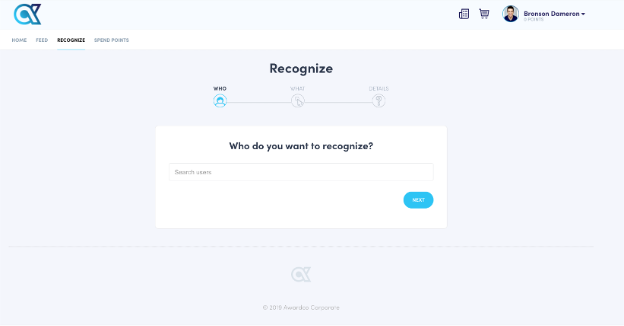
Awardco is an all-in-one recognition and rewards platform that leverages Amazon's extensive catalog to offer diverse reward options. Its main users are HR managers and teams looking to boost employee engagement through a wide range of reward choices supported by AI-driven insights.
Why I picked Awardco: Awardco integrates with Amazon to provide an unparalleled selection of rewards, including gift cards, custom swag, and popular Amazon items. It uses AI to analyze employee preferences and suggest meaningful recognition tailored to individual tastes.
The platform also supports public recognition, enhancing acknowledgements with visible employee appreciation. With such a broad array of options, Awardco is ideal for teams seeking flexibility in building engaging and personalized recognition programs.
Standout features & integrations:
Features include customizable reward programs, detailed analytics, and real-time recognition tracking. With Awardco, you can set up recognition initiatives that align with your organizational goals. The analytics feature helps you understand the impact of recognition on team performance.
Integrations include Amazon Business, Slack, Microsoft Teams, Workday, BambooHR, and ADP.
Pros and Cons
Pros:
- Dynamic, filterable internal recognition news feed
- Detailed analytics for performance tracking
- Extensive reward options via Amazon
Cons:
- Administrative burden for physical rewards
- Custom pricing model
Kudos
Best for boosting team morale
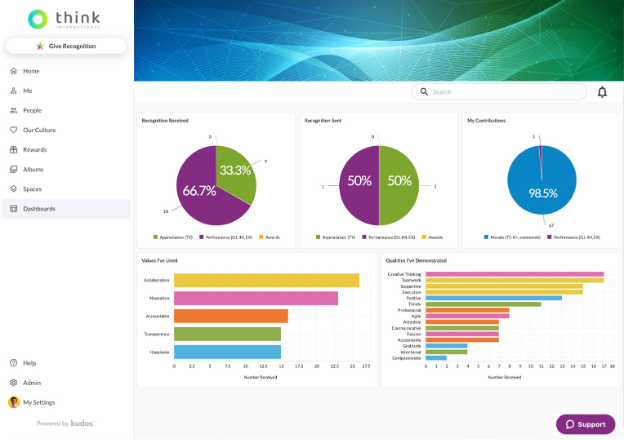
Kudos is an employee recognition and rewards platform designed to enhance workplace culture and engagement. Its main users are HR teams and managers looking to boost employee morale and performance through AI-driven recognition features.
Why I picked Kudos: Kudos stands out for its focus on boosting team morale through the use of AI. It includes an AI recognition assistant that helps managers identify achievements and offer timely recognition.
The platform also provides people analytics to give insights into employee engagement levels. This makes it easier for your team to feel valued and appreciated.
Standout features & integrations:
Features include peer recognition, automated celebrations, and HR insights. The platform uses AI to provide personalized recognition suggestions and track employee engagement. It also includes rewards programs to further motivate your team.
Integrations include Microsoft Teams, Microsoft Outlook, Slack, Google Workspace, LinkedIn, SAP SuccessFactors, BambooHR, and Workday.
Pros and Cons
Pros:
- Real-time recognition to promote timely appreciation
- AI-driven insights for leaders to tailor recognition strategies to team needs
- Automated milestones like work anniversaries and birthdays
Cons:
- Potential for recognition fatigue without clear guidelines
- Requires active user adoption

Workleap
Best for AI-driven employee insights
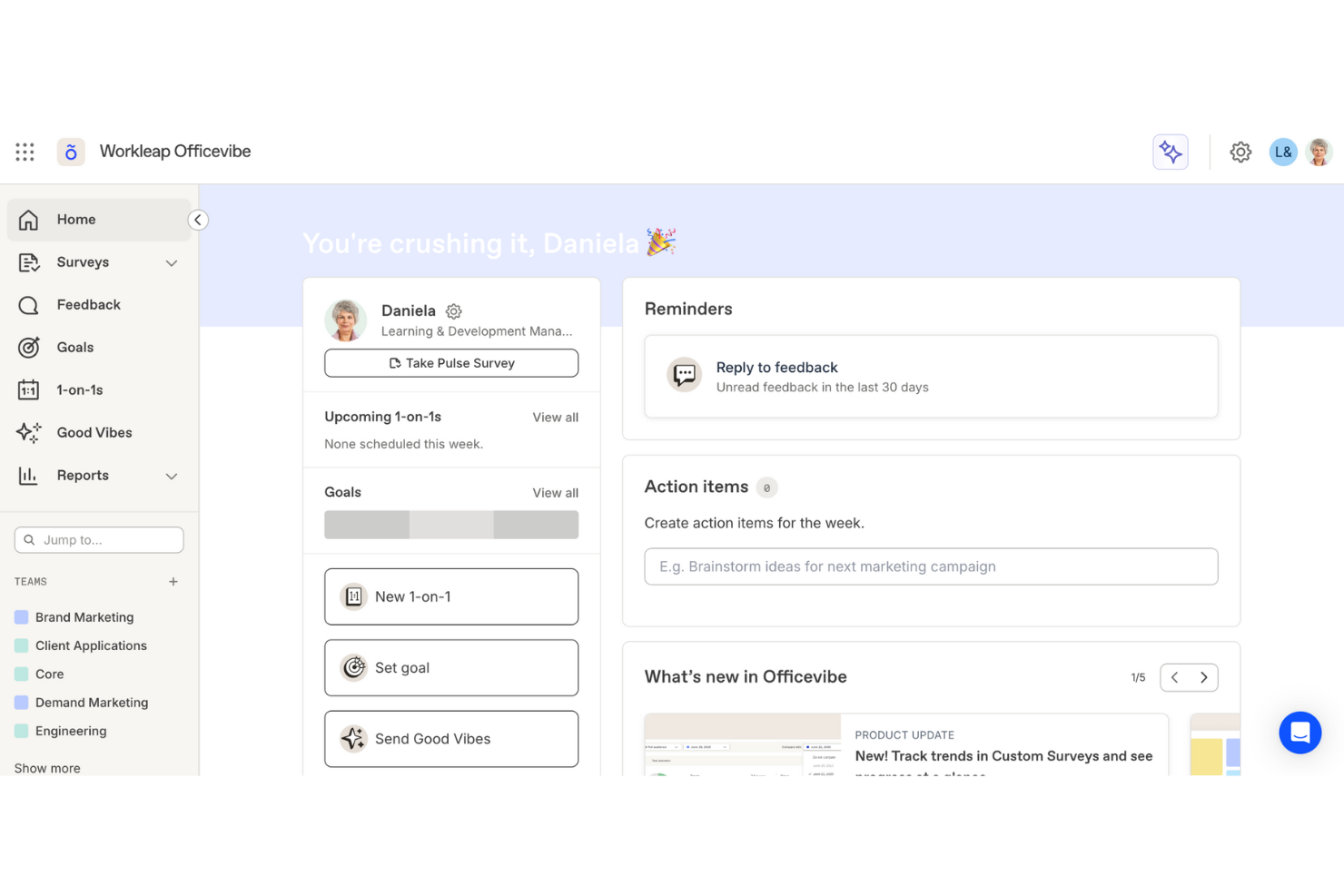
Workleap's Officevibe platform is designed to meet the needs of businesses seeking to enhance employee engagement and recognition. If you're looking to foster a culture of appreciation and improve workplace morale, this AI-driven tool offers a suite of features that can help. By enabling anonymous feedback and providing actionable insights, Workleap helps you identify and address issues early, ensuring that your team feels valued and motivated.
Why I Picked Workleap
I chose Workleap for its unique ability to combine AI-driven insights with employee recognition, making it an ideal tool for businesses focused on engagement. Its customizable surveys capture real-time feedback, ensuring you always understand your team's sentiments. The platform's Good Vibes recognition cards make recognizing achievements straightforward and meaningful, fostering a positive work environment. Additionally, AI-generated insights guide you in addressing issues effectively, supporting your efforts in maintaining a motivated and engaged workforce.
Workleap Key Features
In addition to AI-driven employee insights, Workleap offers:
- Continuous Feedback: Enables ongoing communication between managers and employees, facilitating regular performance discussions.
- Real-Time Analytics: Provides instant data analysis to help you quickly understand and respond to employee feedback.
- Structured Conversations: Supports guided discussions to address specific issues and improve team dynamics.
- Performance Management Integration: Offers tools to integrate recognition with performance tracking, providing a comprehensive view of employee contributions.
Workleap Integrations
Native integrations include Microsoft Teams, Slack, Google Workspace, BambooHR, and Asana.
Pros and Cons
Pros:
- Continuous feedback supports ongoing employee development
- Real-time insights help teams track engagement and collaboration
- Customizable surveys provide tailored insights for managers
Cons:
- Customization options are somewhat restricted
- Reporting tools lack depth for detailed data analysis
HiFives
Best for peer-to-peer recognition
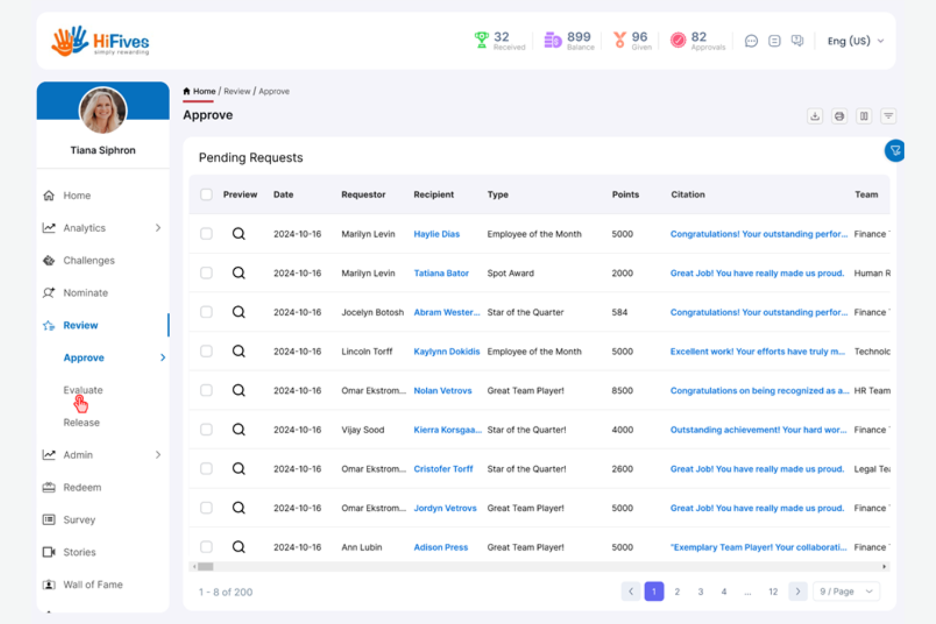
HiFives is a recognition and rewards platform designed to foster a culture of peer-to-peer appreciation. It primarily serves small to medium-sized businesses looking to enhance employee engagement through personalized recognition programs.
Why I picked HiFives: It excels in promoting peer-to-peer recognition, allowing team members to celebrate each other's achievements. Its AI features analyze interaction patterns to suggest timely recognition opportunities.
HiFives helps you create a supportive and collaborative work environment. The platform's focus on peer recognition strengthens team bonds and encourages a positive workplace culture.
Standout features & integrations:
Features include customizable recognition programs, real-time feedback, gamification, and detailed reporting on recognition trends. You can set up personalized awards that align with company values. The platform also offers insights into how recognition impacts team dynamics.
Integrations are not publicly available.
Pros and Cons
Pros:
- Customizable recognition programs
- Digital badges and leaderboards add gamified elements
- Nominations and e-card features encourage peer-to-peer support
Cons:
- Less modern user interface
- Global catalog lacks depth in specific markets

BRAVO
Best for real-time feedback
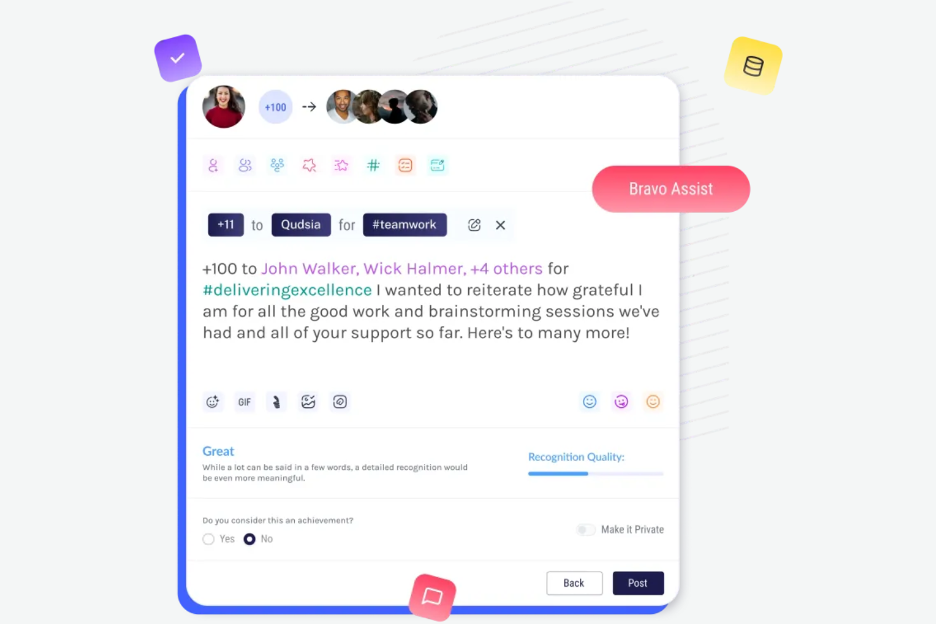
BRAVO is an AI-powered employee recognition platform designed to provide real-time feedback and boost engagement. Its main users are HR teams and managers who want instant insights into employee performance and recognition.
Why I picked BRAVO: For teams seeking real-time feedback, BRAVO offers AI-driven features that highlight immediate achievements and areas for improvement. The platform uses AI to send instant feedback prompts and recognition suggestions to managers.
BRAVO ensures your team receives timely acknowledgment for their efforts. It helps maintain a continuous feedback loop, fostering a culture of acknowledgment and improvement.
Standout features & integrations:
Features include instant recognition alerts, feedback analytics, and customizable recognition programs. BRAVO provides real-time notifications to keep everyone informed about achievements. It also offers goal tracking to monitor and evaluate employee contributions.
Integrations include Slack, Microsoft Teams, BambooHR, ADP, and Workday.
Pros and Cons
Pros:
- AI engine analyzes recognition messages and identifies trends
- Pulse survey and anonymous feedback
- Real-time feedback capabilities through the platform or integrations with tools like Slack
Cons:
- Privacy and Public feedback concerns
- Breadth of features can lead to a steeper learning curve
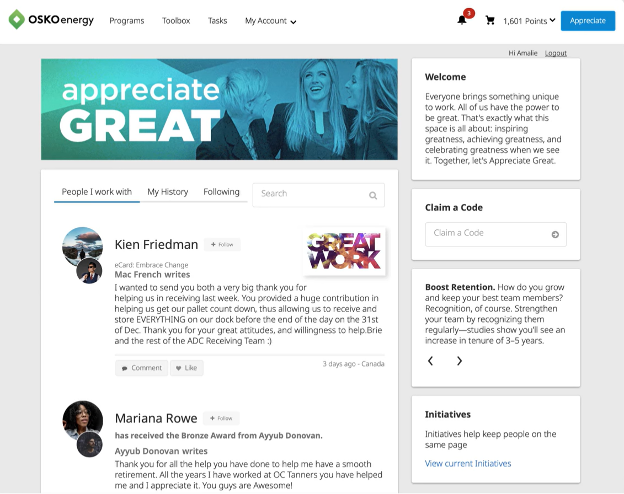
O.C. Tanner is an employee recognition platform designed primarily for large enterprises aiming to optimize workplace culture and engagement. It offers AI-driven insights to help organizations recognize achievements and foster employee satisfaction.
Why I picked O.C. Tanner: For large enterprises, O.C. Tanner provides scalable solutions that cater to complex organizational structures. Its AI features analyze employee data to deliver personalized recognition suggestions, ensuring everyone feels acknowledged.
The software supports global recognition programs, making it suitable for multinational companies. Its ability to handle large volumes of recognition data helps your team maintain a cohesive culture despite geographic dispersion.
Standout features & integrations:
Features include global recognition capabilities, customizable award options, and detailed analytics. The platform allows you to tailor recognition programs to fit your company's unique culture. You can also track the impact of recognition on employee engagement through reports.
Integrations include SAP SuccessFactors, Workday, Oracle Cloud HCM, UKG, Oracle PeopleSoft, ADP, Microsoft Teams, BambooHR, Google Chrome, and Slack.
Pros and Cons
Pros:
- Generative AI recognition coach to assist users
- Global rewards and fulfillment options
- Multi-currency support
Cons:
- Implementation time and complexity
- Prohibitive cost for non-enterprise organizations
Other AI Employee Recognition Software
Here are some additional AI employee recognition software options that didn’t make it onto my shortlist, but are still worth checking out:
- Semos Cloud
For integration capabilities
- Assembly
For customizable rewards
- Bonusly
For small to medium teams
- AdvantageClub.ai
For rewards variety
- Xoxoday
For employee engagement analytics
- Wrenly
For personalized recognition
- Rise.ai
For automated reward distribution
- Augeo
For scalable recognition programs


How I Evaluate AI Employee Recognition Software
Every tool on this list has to deliver AI that goes beyond a marketing label—I look for platforms where AI actually surfaces recognition moments, drafts meaningful messages, or flags equity gaps your team would otherwise miss. I split my evaluation into two layers: the core functionality a tool needs to qualify and the differentiating factors that separate good options from great ones.
Core Functionality (Table Stakes For This List)
When I'm selecting tools for my list, I rank each one on a scale from 0 (does not offer the functionality) to 5 (excels in this area) for each core functionality listed below. Then, I calculate the tool's total score into a percentage. Each tool needs to achieve a minimum total score of 65% to be considered for inclusion.
- AI-Driven Recognition Suggestions: I evaluate whether the AI proactively surfaces recognition moments—like flagging a team member who closed a major project milestone—or just offers static templates with no real intelligence behind them.
- Peer & Manager Recognition: Both peer-to-peer and top-down recognition workflows matter here, including social feeds, badges, and reactions that keep recognition visible across teams rather than buried in a manager's inbox.
- Rewards & Redemption Engine: I check for a points-based system with a diverse redemption catalog, looking at whether employees can choose from gift cards, merchandise, experiences, or charitable donations rather than a handful of generic options.
- AI Sentiment & Insights: The AI should analyze recognition content and participation patterns to detect things like equity gaps between departments or shifts in engagement sentiment, not just count how many kudos were sent.
- HRIS & Workflow Integrations: I look for native connections with major HRIS platforms and collaboration tools like Slack or Microsoft Teams, since recognition programs that live outside daily workflows tend to see low adoption.
- Recognition Analytics Dashboard: Dashboards should give HR leaders clear visibility into participation rates, recognition frequency by team, and program ROI—metrics that help you justify budget and spot gaps before they become retention issues.
Once I have a list of tools that meet this criteria, I consider what sets each platform apart.
Differentiating Factors (What Sets Vendors Apart)
Here's how I compare and contrast different vendors:
Standout Features
Predictive retention signals are a major differentiator—I look for AI that correlates recognition patterns with attrition risk, helping you flag disengaged employees before they start looking elsewhere. DEI and bias detection matters here too, especially AI that surfaces when certain teams or demographics are consistently under-recognized. I also evaluate generative message personalization, where AI drafts context-aware messages referencing specific contributions rather than producing cookie-cutter thank-yous.
Beyond Features
Data privacy is a big consideration—I check whether vendors offer transparent AI governance policies that explain how employee data is used for model training and sentiment analysis. Global rewards fulfillment also matters for distributed teams, particularly tax compliance handling and localized catalog options across regions. Pricing transparency rounds out my evaluation; I look for clear per-employee pricing with flexible budgeting controls that let you allocate recognition spend by department or location.
How to Choose AI Employee Recognition Software
It’s easy to get bogged down in long feature lists and complex pricing structures. To help you stay focused as you work through your unique software selection process, here’s a checklist of factors to keep in mind:
| Factor | What to Consider |
| Scalability | Will the software grow with your team? Consider whether it can handle an increasing number of users and larger data volumes as your organization expands. |
| Integrations | Does it work with your existing systems? Check compatibility with your HRIS, communication tools, and other platforms to ensure a smooth workflow. |
| Customizability | Can you tailor it to your needs? Look for options to customize recognition programs and dashboards to align with your company culture and goals. |
| Ease of use | Is it intuitive for all users? Evaluate the user interface for simplicity to ensure everyone on your team can use it without extensive training. |
| Implementation and onboarding | How quickly can you get started? Assess the resources needed for a successful rollout, including training materials and support during the setup phase. |
| Cost | Does it fit your budget? Compare pricing tiers and look for hidden costs, such as additional fees for premium features or support services. |
| Security safeguards | How does it protect your data? Ensure the software complies with industry standards for data protection and offers features like encryption and access controls. |
| Support availability | Will you get help when needed? Consider the availability of customer support and the channels offered, like live chat or phone support, to resolve issues promptly. |
What Is AI Employee Recognition Software?
AI employee recognition software is a tool designed to automate and enhance the way companies recognize and reward employees. HR professionals and managers use these tools to boost morale and engagement by providing timely and personalized recognition and perks. AI-driven analytics, personalized recognition suggestions, and real-time feedback capabilities help tailor recognition programs to fit team dynamics and individual preferences. These tools increase employee satisfaction and foster a culture of appreciation within organizations.
Features
When selecting AI employee recognition software, keep an eye out for the following key features:
- Real-time feedback: Provides immediate recognition to employees, enhancing engagement and motivation.
- Personalized recognition suggestions: Use AI to tailor recognition messages to individual employee preferences and achievements.
- Analytics and reporting: Offers insights into employee engagement levels and the impact of recognition programs.
- Customizable recognition programs: Allow you to design recognition initiatives that align with your organizational culture and goals.
- Peer-to-peer recognition: Enables employees to recognize each other's contributions, fostering a collaborative work environment.
- Integration capabilities: Connects smoothly with existing HR systems and tools for a unified workflow.
- Multi-language support: Accommodates diverse teams by offering recognition programs in multiple languages.
- Automated reward distribution: Simplifies the process of delivering rewards, saving time and reducing administrative tasks.
- Employee engagement tracking: Monitors employee interactions and engagement to help you understand team dynamics.
- Security safeguards: Ensure data protection through encryption and access controls, maintaining employee privacy.
Benefits
Implementing AI employee recognition software provides several benefits for your team and your business. Here are a few you can look forward to:
- Improved morale: Real-time feedback and personalized recognition boost employee spirits and motivation.
- Enhanced engagement: AI-driven insights help tailor recognition programs that resonate with your team, increasing participation.
- Informed decision-making: Analytics offer valuable data on employee engagement, helping you make better HR decisions.
- Time savings: Automated reward distribution reduces administrative tasks, freeing up time for more strategic activities.
- Stronger team dynamics: Peer-to-peer recognition encourages collaboration and strengthens relationships within your team.
- Cultural alignment: Customizable programs ensure recognition aligns with your company's values and goals.
- Global reach: Multi-language support allows you to implement recognition programs across diverse and international teams.
Costs & Pricing
Selecting AI employee recognition software requires an understanding of the various pricing models and plans available. Costs vary based on features, team size, add-ons, and more. The table below summarizes common plans, their average prices, and typical features included in AI employee recognition software solutions:
Plan Comparison Table for AI Employee Recognition Software
| Plan Type | Average Price | Common Features |
| Free Plan | $0 | Basic recognition capabilities, limited analytics, and community support. |
| Basic Plan | $2-$5/user/month | Enhanced recognition options, basic reporting tools, and email support. |
| Business Plan | $5-$20/user/month | Advanced analytics, customizable recognition programs, and integrations with HR systems. |
| Enterprise Plan | $20/user/month - custom pricing | Full suite of features, dedicated account management, and priority customer support. |
AI Employee Recognition Software FAQs
Here are some answers to common questions about AI employee recognition software:
How can AI employee recognition software improve team morale?
AI employee recognition software can boost team morale by providing timely and personalized recognition. By using AI to analyze an employee’s good work and preferences, the software can suggest meaningful ways to acknowledge contributions. This makes employees feel valued and appreciated, which can lead to increased motivation and job satisfaction. For example, you can set up automated recognition for meeting specific goals or milestones, which not only acknowledges success but also encourages continued effort.
Is it easy to integrate AI employee recognition software with existing HR systems?
Yes, most AI employee recognition software is designed to integrate smoothly with existing HR systems. Before purchasing, check the compatibility with your current platforms, like HRIS, your performance management system, payroll, and communication tools. Many software providers offer integration support or have pre-built connectors for popular systems like Workday, SAP SuccessFactors, and BambooHR. This ensures a smooth workflow and helps you maintain consistency across your HR operations.
Can AI employee recognition software be customized to fit our company culture?
Yes, many AI employee recognition tools offer customization options to align with your company culture. You can create recognition programs that reflect your core values and goals. Customization might include personalized award categories, tailored recognition messages, and specific reward options. This flexibility helps in creating a unique recognition experience that resonates with your team, ensuring that the recognition feels genuine and aligned with your organizational ethos.
What security measures should I expect from AI employee recognition software?
You should expect AI employee recognition software to have strong security measures to protect your data. Look for features like data encryption, access controls, and compliance with industry standards like GDPR or HIPAA. It’s important to verify that the software provider conducts regular security audits and has protocols in place for data breaches. This ensures that your employee information remains confidential and secure, giving you peace of mind in using the platform.
How do I measure the success of our AI employee recognition program?
To measure the success of your AI employee recognition program, track key metrics like employee engagement scores, retention rates, and feedback from recognition surveys. Many tools offer analytics dashboards that provide insights into how recognition impacts your team. For example, you might see an increase in productivity or a decrease in turnover rates. Regularly reviewing these metrics helps you understand the program’s effectiveness and make adjustments as needed to maximize its impact.
What’s Next:
If you're in the process of researching AI employee recognition software, connect with a SoftwareSelect advisor for free recommendations.
You fill out a form and have a quick chat where they get into the specifics of your needs. Then you'll get a shortlist of software to review. They'll even support you through the entire buying process, including price negotiations.