


Motivosity Review 2026: Pros, Cons, Features & Pricing



If you’ve been searching for a better way to recognize and reward your team, Motivosity might already be on your radar. As an employee recognition platform, it promises to make gratitude easy, visible, and tied to meaningful rewards. In this review, I'll break down its core features, where it shines, and where it may fall short so you can see if it’s the right fit for your workplace.
Motivosity Evaluation Summary
- Pricing upon request
- Free demo available
Why Trust Our Software Recommendations
Our team has been testing and reviewing software since 2012. As HR experts ourselves, we know how difficult—and important—it is to choose the right software.
For this guide, we evaluated tools using hands-on testing and independent research, scoring tools using our selection criteria. We also draw on insights from industry thought leaders and practicing HR experts.
Our reviews reflect our human editorial judgment, not a sales pitch.
Expert reviewers:
Motivosity Overview
Motivosity is built on a simple idea: when people feel seen and valued, they show up at their best. The platform makes recognition easy, social, and visible, helping turn everyday appreciation into sustained engagement. Its flexibility, cultural adaptability, and strong analytics make it a fit for organizations that want a customizable approach to building connections. Still, it’s not perfect—managing multiple program elements can take ongoing effort, for example—but overall, Motivosity remains a compelling option for fostering a culture of appreciation.
pros
-
Motivosity’s recognition and rewards programs are adaptable, allowing organizations to tailor program options to match their culture and operational style—ensuring the platform aligns well with a wide range of team structures.
-
Offers extensive customization and engagement analytics, making it a good fit for enterprise-level organizations that need flexibility and deeper insight into employee behavior.
-
Employees can publicly thank coworkers and be rewarded, helping build a culture of appreciation.
cons
-
Motivosity's reporting capabilities might be less detailed than some competitors.
-
The platform’s breadth of features may require consistent oversight, as admins need to manage budgets, monitor participation, and keep recognition initiatives aligned across teams.
-
With many program options and activity streams, the app can occasionally feel busy, especially for teams running multiple initiatives at once.
Is Motivosity Right For Your Needs?
Who Would be a Good Fit for Motivosity?
Motivosity is a great fit if you lead a team that thrives on energy, connection, and shared wins. Fast-moving startups, sales and service teams, and remote groups can all benefit from quick peer-to-peer recognition, visible milestones, and customization. HR departments and non-profits also gain value by making appreciation simple and central to culture, keeping employees and volunteers engaged.
-
Tech Startups
Motivosity’s interactive features can energize your innovative team and strengthen collaboration.
-
Customer Service Teams
Encourage peer-to-peer recognition, boosting morale and improving service quality.
-
Human Resources Departments
Simplify recognition processes and nurture a positive workplace culture with ease.
-
Remote Teams
Keep your distributed workforce connected and appreciated, fostering a sense of unity.
-
Sales Teams
Motivate your reps by celebrating wins and milestones with engaging recognition tools.
-
Non-Profit Organizations
Enhance volunteer and staff engagement by making recognition a central part of your mission.
Who Would be a Bad Fit for Motivosity?
Motivosity offers an engaging, people-focused approach to recognition, but it isn’t the right match for every organization. Teams that operate in traditional or regulated environments may find its feature set limiting. Likewise, workplaces built around temporary or contract labor won’t get as much value from a platform designed to support long-term culture building.
-
Field or On-Site Labor Teams
Employees without regular computer or mobile access may struggle to engage with a digital recognition platform.
-
Highly Regulated Industries
You may face compliance or restrictions that limit the use of gift cards and flexible rewards.
-
Manufacturing Departments
The platform’s focus on interactive recognition might not fit traditional manufacturing environments.
-
Contract Workers
You won’t benefit much from long-term recognition tools if your team members are temporary.
-
Legal Firms
Legal departments may require more robust reporting and tighter controls than Motivosity offers.
-
Unionized Workforces
Recognition and rewards programs may conflict with negotiated compensation structures or union guidelines.
How We Test & Score Our Tools
We’ve spent years building, refining, and improving our software testing and scoring system. The rubric is designed to capture the nuances of software selection and what makes a tool effective, focusing on critical aspects of the decision-making process.
Below, you can see exactly how our testing and scoring works across seven criteria. It allows us to provide an unbiased evaluation of the software based on core functionality, standout features, ease of use, onboarding, customer support, integrations, customer reviews, and value for money.
Core Functionality (25% of final score)
The starting point of our evaluation is always the core functionality of the tool. Does it have the basic features and functions that a user would expect to see? Are any of those core features locked to higher-tiered pricing plans? At its core, we expect a tool to stand up against the baseline capabilities of its competitors.
Standout Features (25% of final score)
Next, we evaluate uncommon standout features that go above and beyond the core functionality typically found in tools of its kind. A high score reflects specialized or unique features that make the product faster, more efficient, or offer additional value to the user.
We also evaluate how easy it is to integrate with other tools typically found in the tech stack to expand the functionality and utility of the software. Tools offering plentiful native integrations, 3rd party connections, and API access to build custom integrations score best.
Ease of Use (10% of final score)
We consider how quick and easy it is to execute the tasks defined in the core functionality using the tool. High scoring software is well designed, intuitive to use, offers mobile apps, provides templates, and makes relatively complex tasks seem simple.
Onboarding (10% of final score)
We know how important rapid team adoption is for a new platform, so we evaluate how easy it is to learn and use a tool with minimal training. We evaluate how quickly a team member can get set up and start using the tool with no experience. High scoring solutions indicate little or no support is required.
Customer Support (10% of final score)
We review how quick and easy it is to get unstuck and find help by phone, live chat, or knowledge base. Tools and companies that provide real-time support score best, while chatbots score worst.
Customer Reviews (10% of final score)
Beyond our own testing and evaluation, we consider the net promoter score from current and past customers. We review their likelihood, given the option, to choose the tool again for the core functionality. A high scoring software reflects a high net promoter score from current or past customers.
Value for Money (10% of final score)
Lastly, in consideration of all the other criteria, we review the average price of entry level plans against the core features and consider the value of the other evaluation criteria. Software that delivers more, for less, will score higher.
Core Features
Peer-To-Peer Recognition
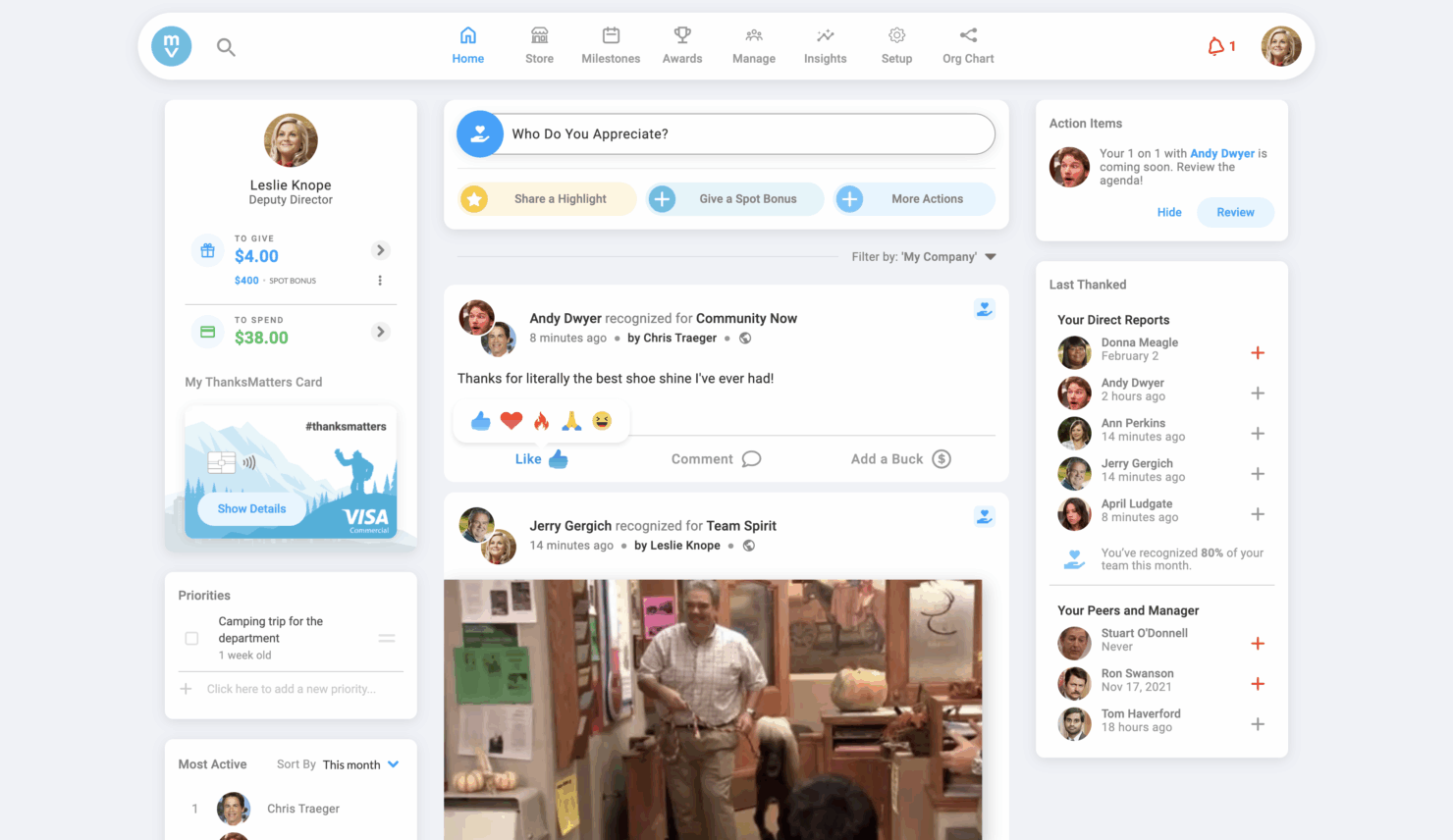
You can easily send a shoutout to a coworker to thank them for their help or effort. These messages show up for everyone, making recognition visible and meaningful.
Reward Points System
Every recognition comes with points you can give out, which teammates can save and spend on things they care about. It keeps recognition tied to real value without being complicated.
Company-Wide Feed
All recognition lives in a social-style feed where everyone can see and comment. This keeps gratitude public and boosts morale across teams.
Milestone Celebrations
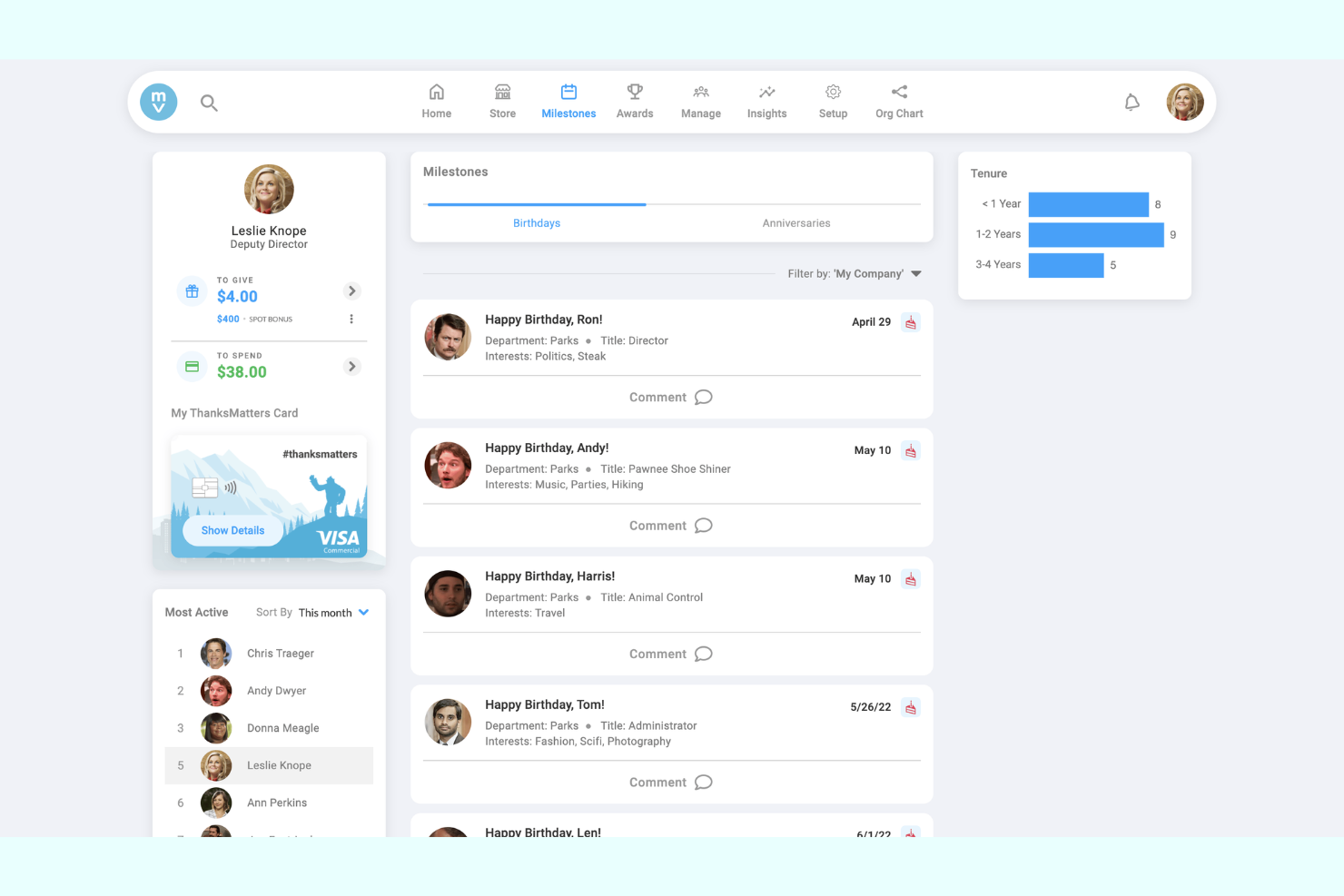
Work anniversaries and birthdays get highlighted automatically. You don’t have to remember the dates, and people feel valued on important days.
Manager Tools
Leaders can track how often their teams are recognized and who might be getting left out. It gives you insight into team health without extra effort.
Custom Rewards Catalog
Your team can pick rewards that fit them—like gift cards, company swag, or experiences. This flexibility makes the rewards feel personal and fun.
Standout Features
ThanksMatters Card
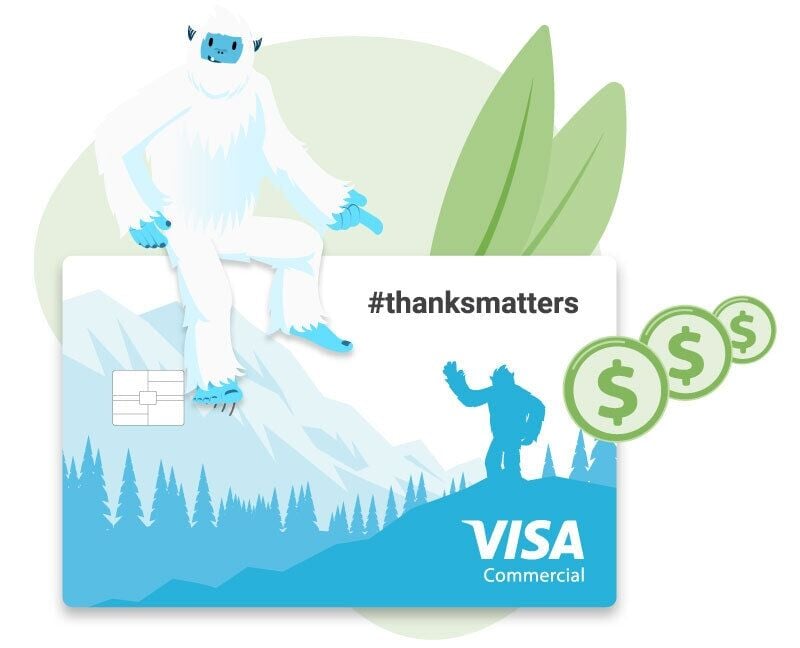
Recognition points can be spent on a prepaid Visa card that works anywhere. It’s simple, immediate, and gives your team freedom to use rewards how they want.
Community Funds
You can pool recognition points into team or company-wide funds for shared causes, like charity donations or group activities. It turns recognition into collective impact, not just individual perks.
Ease of Use
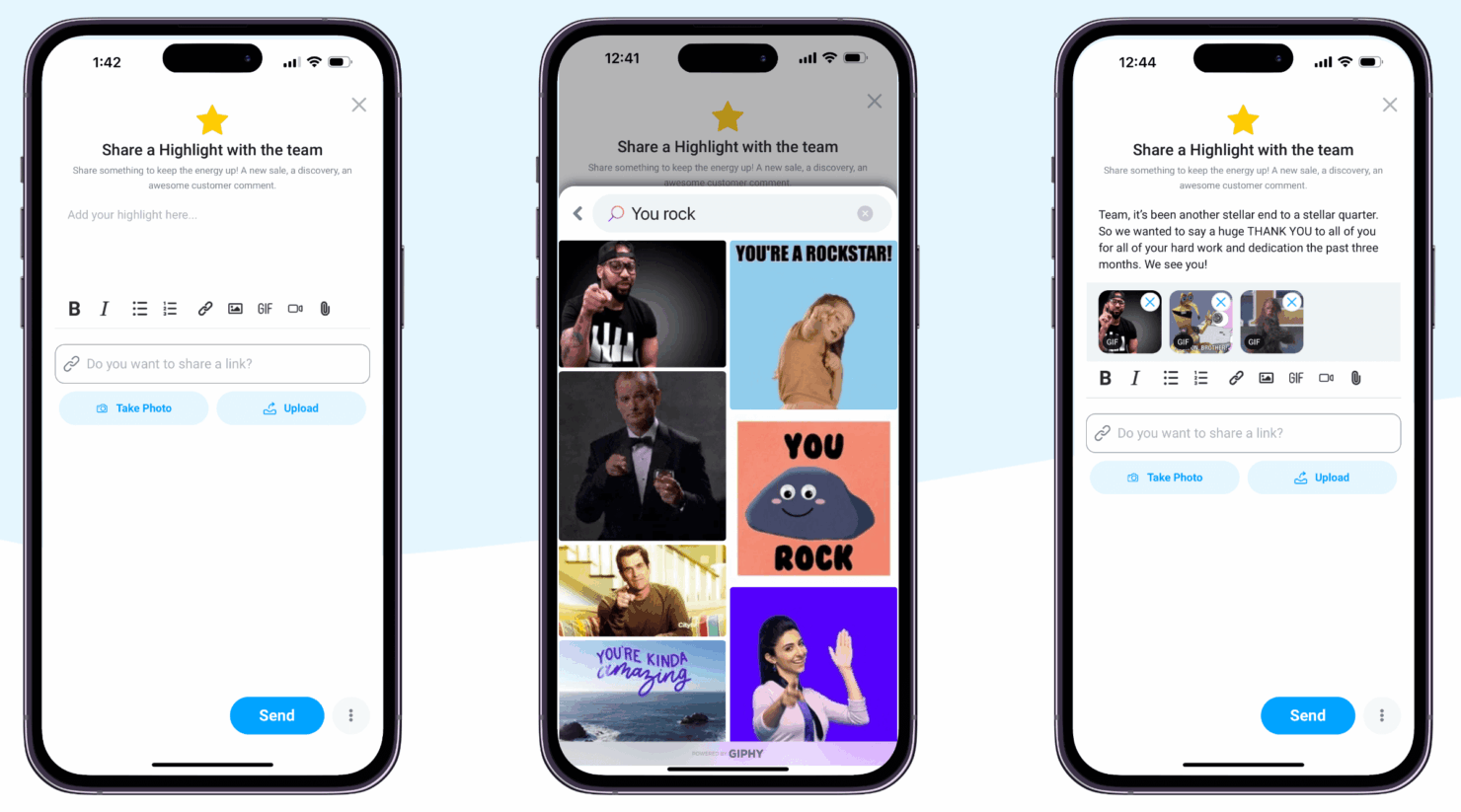
Motivosity shines in its user-friendly design, making it simple for your team to engage with recognition activities. The intuitive interface allows quick navigation, so you can easily access features like the recognition feed and leaderboards. Users also appreciate how straightforward it is to set up and start recognizing peers, even if you’re new to employee recognition software. This ease of use ensures your team can focus on building a positive culture without getting bogged down by complicated processes.
Onboarding
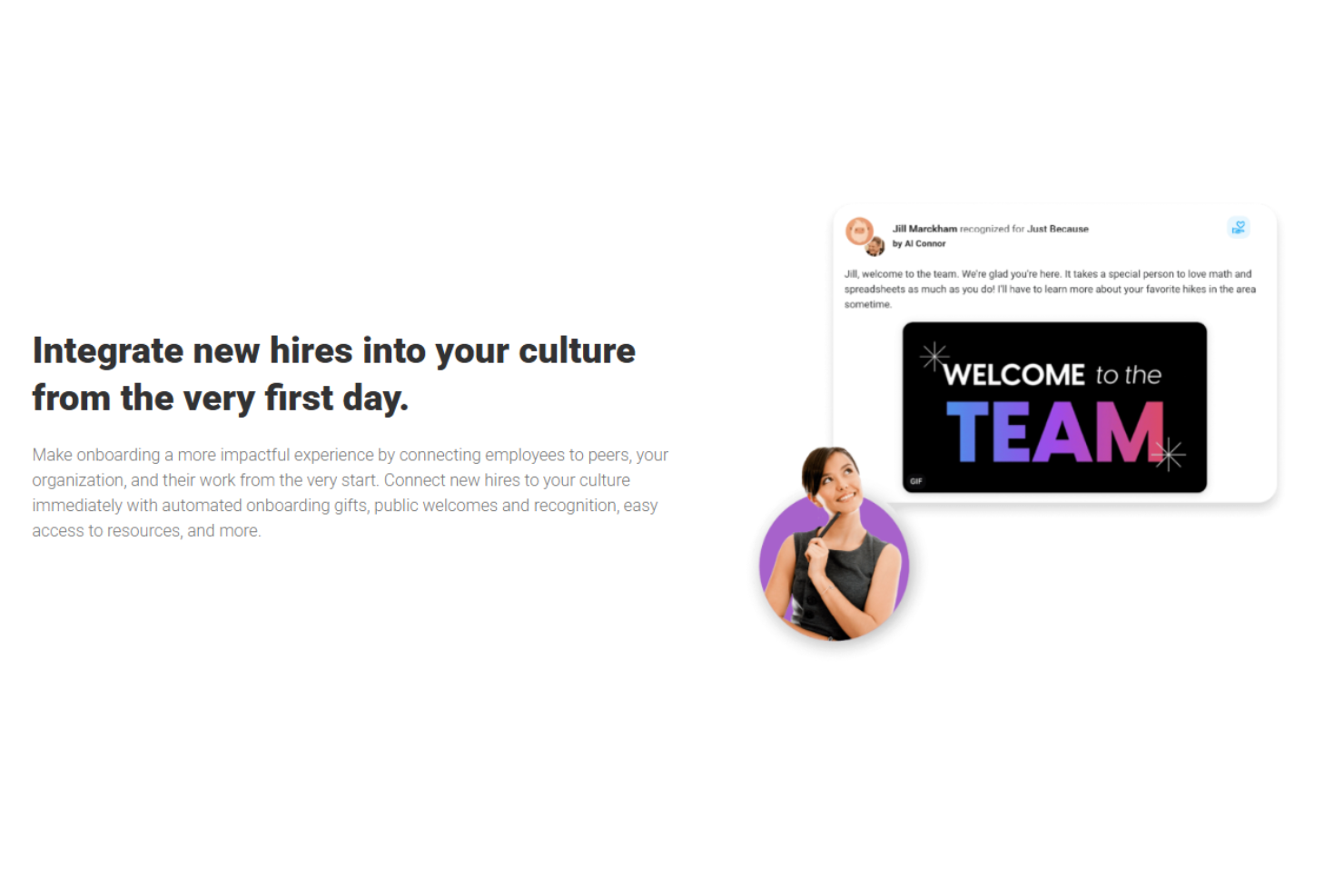
Motivosity offers a smooth onboarding experience, ensuring your team quickly gets up to speed. The platform provides clear instructions and helpful resources, like tutorials and FAQs, to guide new users. Users often praise the quick setup time and the support available for any initial questions. This efficient onboarding process means you can start seeing value from the software without unnecessary delays, helping your team dive into recognition activities right away.
Customer Support
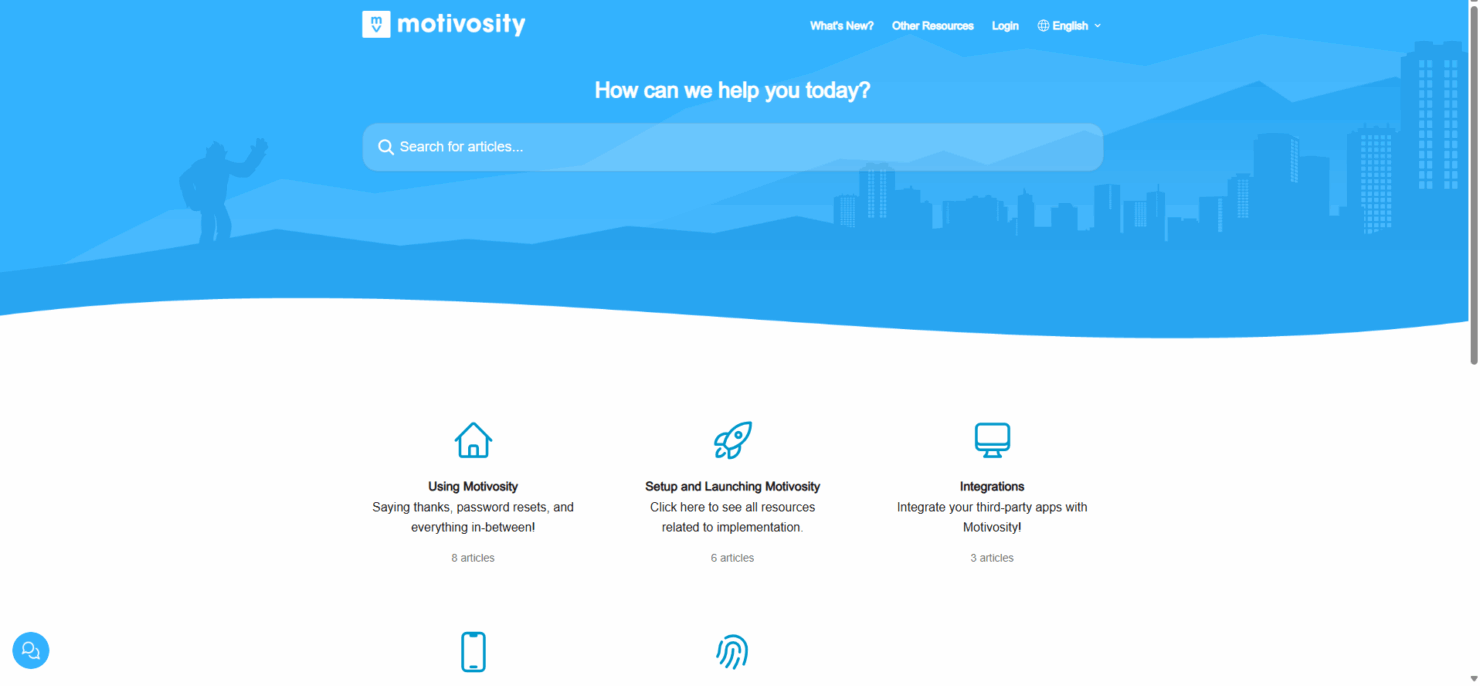
Motivosity has a pretty strong customer support setup. You can get help via email, live chat, phone, and there’s a knowledge base plus webinars and documentation to walk you through things. Users say support reps are generally responsive and helpful especially during onboarding or simpler issues, though more complex or technical problems sometimes take longer to resolve. For most things, you won’t be left hanging — but if you need deep customization or bug fixes, expect a bit more wait.
Integrations
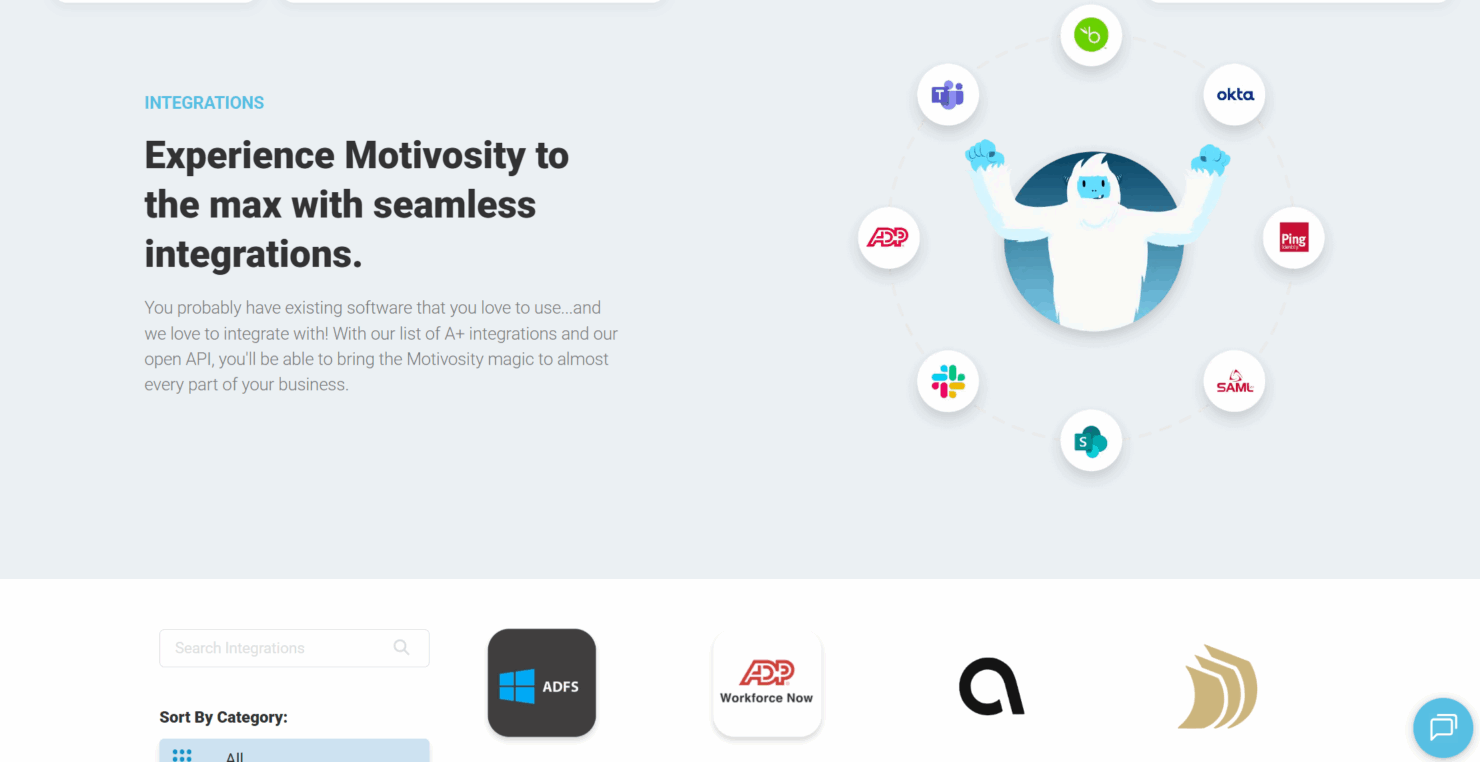
Integrations include ADP Workforce Now, Microsoft Teams, Slack, UKG Pro, SAP SuccessFactors, BambooHR, Dayforce, Google Workspace, Gusto, Paycor, Okta, Paylocity, and Workday.
There's also the Motivosity API for more custom integrations.
Value for Money
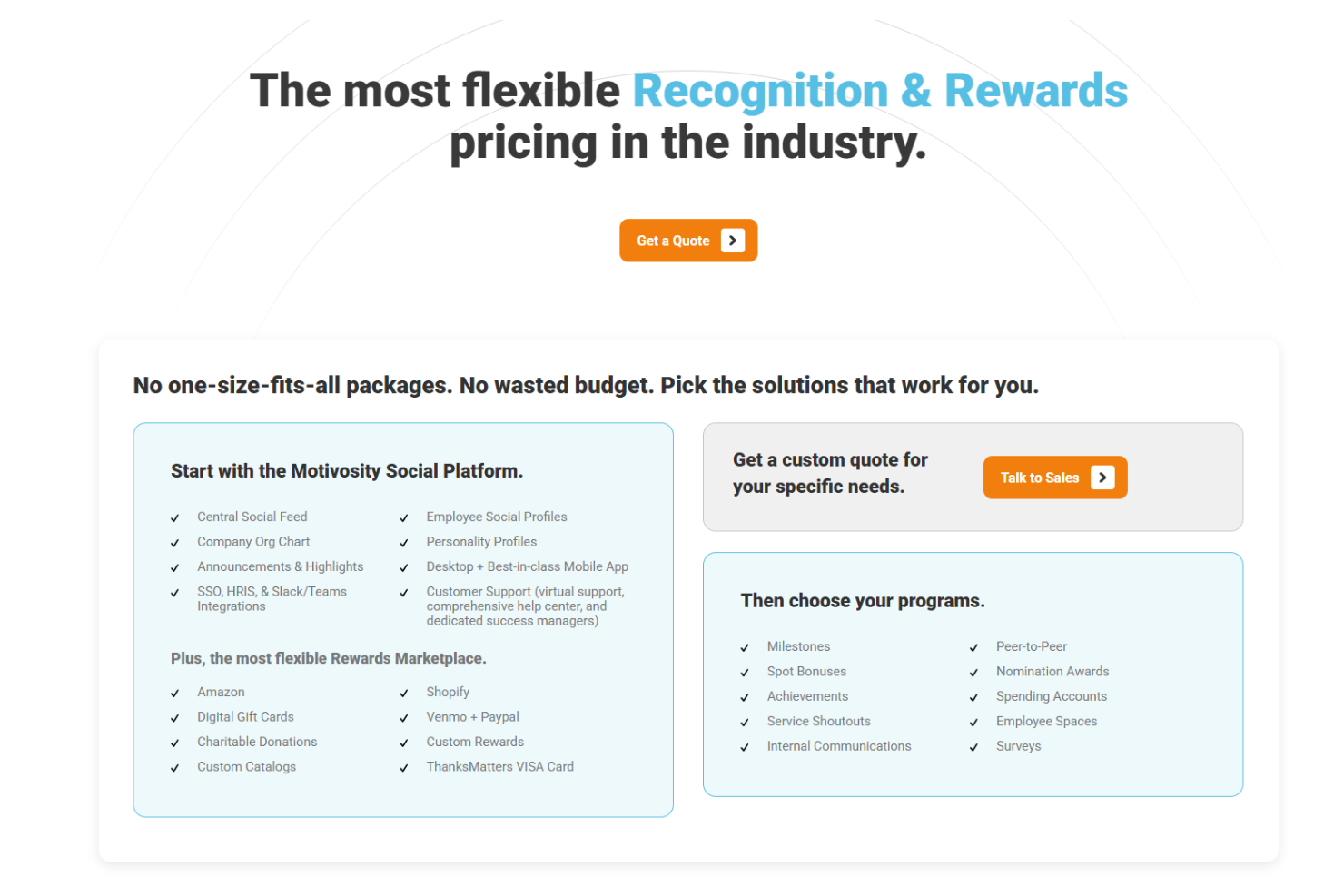
Motivosity offers competitive value. You get a lot of tools for recognizing, rewarding, and connecting employees, which often pays off in morale and retention. The cost can still feel significant, though, with a $3,000 minimum spend and one-time implementation fees.
- Small Business: Includes the platform and four programs — Milestones, Peer to Peer, Nomination Awards, Achievements, and Challenges. $3,000 minimum spend.
- Engagement: Builds on the base package with Employee Spaces and Internal Communications.
- Healthcare bundle: Includes Service Shoutouts and Spending Accounts along with core features.
- Financial Services bundle: Offers Spot Bonuses and Nomination Awards in addition to recognition and achievement tools.
New Product Updates from Motivosity

Motivosity Launches Appreciation Intelligence With AI Coaching and Automation
Motivosity launches Appreciation Intelligence™, bringing AI-powered coaching, reporting, automation, and AI integrations to the platform. The update helps organizations create more meaningful recognition while reducing administrative work. Highlights include:
- Appreciation Coach: Provide real-time suggestions to improve recognition messages.
- Insights AI: Ask questions in natural language and generate reports from Motivosity data.
- Motivosity Agents: Automate tasks such as creating recognition programs and reports.
- MCP Connector: Connect Motivosity data to AI tools like Claude and ChatGPT using existing permissions.
Visit Motivosity's official site for more details.
 for more details.
Motivosity Specs
- 360 Degree Feedback
- API
- Application Tracking
- Attendance Tracking
- Budgeting
- Calendar Management
- Dashboard
- Data Export
- Data Import
- Data Visualization
- Employee Database
- Employee Engagement
- Employee Incentive Management
- Employee Onboarding
- External Integrations
- Feedback Management
- Forecasting
- Multi-User
- Notifications
- Scheduling
- Timesheets
- Vacation & Absence Calendar
Motivosity FAQs
How does Motivosity handle user data security and compliance?
Can Motivosity fit our company culture?
How does Motivosity encourage ongoing employee engagement?
Is it easy to transition from another recognition platform to Motivosity?
How does Motivosity support remote teams?
What kind of customer support can we expect from Motivosity?
How does Motivosity measure the impact of employee recognition?
Can Motivosity handle multiple locations or departments?
Motivosity Company Overview & History
Motivosity is a people-first employee recognition and rewards company founded in 2013 by Scott Johnson, based in Lehi, Utah, where it is also headquartered today. The company has grown to around 80+ employees and generated an estimated $16.9 million in revenue as of 2025. It’s known for letting you run recognition, rewards, milestones, and surveys all in one platform built around making your team feel seen and appreciated.
Motivosity Major Milestones
- 2013: Founded by Scott Johnson.
- 2024: Launched Spaces, a feature adding digital hubs/groups for interest, announcements, and internal culture.
- 2025: Released Lifestyle Spending Accounts so you can offer perks like wellness stipends or learning budgets inside the platform.
- 2025: Reported ~$16.9M in revenue and maintained a team size of around 80+ staff.