

10 Best EOR Provider for Digital Services Company in 2026

Best EOR Provider for Digital Services Company Shortlist


An EOR provider for digital services companies is a service that lets you hire and pay global talent while handling compliance, payroll, and contracts on your behalf. If you need to scale your team across borders or bring on experts from anywhere without setting up foreign entities, the right EOR partner protects your business and keeps processes simple. This list will help you compare the top EOR providers for digital services in 2026, so you can make an informed, confident choice that fits your hiring, compliance, and operational needs.
Why Trust Our Software Recommendations
Our team has been testing and reviewing software since 2012. As HR experts ourselves, we know how difficult—and important—it is to choose the right software.
For this guide, we evaluated tools using hands-on testing and independent research, scoring tools using our selection criteria. We also draw on insights from industry thought leaders and practicing HR experts.
Our reviews reflect our human editorial judgment, not a sales pitch.
Expert reviewers:
Comparison Table: EOR Provider for Digital Services Company
This comparison table summarizes pricing details for my top EOR provider for digital services companies selections.
| Tool | Best For | Trial Info | Price | ||
|---|---|---|---|---|---|
| 1 | Best for U.S.-based EOR services | Not available | From $599/employee/month | Website | |
| 2 | Best for scalable global hiring and compliance | Free demo available | From $599/employee/month | Website | |
| 3 | Best for contractor-to-employee conversion globally | Free demo available | From $699/user/month | Website | |
| 4 | Best for indemnification-backed hiring | Free demo available | From $199/employee/month | Website | |
| 5 | Best for fast EOR onboarding | Free demo available | From $459/user/month (billed annually) | Website | |
| 6 | Best with centralised contractor management | Not available | Pricing upon request | Website | |
| 7 | Best for multi-country compliance | Free demo available | From $99/employee/month | Website | |
| 8 | Best for in-country HR and compliance ownership | Free demo available | From $599/user/month | Website | |
| 9 | Best for workforce expansion across 187 countries | Free demo available | Pricing upon request | Website | |
| 10 | Best for equity-ready international hiring | Free demo available | From $99/employee/month | Website |


Best EOR Provider for Digital Services Company Reviews
Below are my detailed summaries of the EOR providers for digital services companies that made it onto my shortlist. My reviews offer a detailed look at the features, pricing, and compliance capabilities of each platform to help you find the best one for you.

Best for U.S.-based EOR services
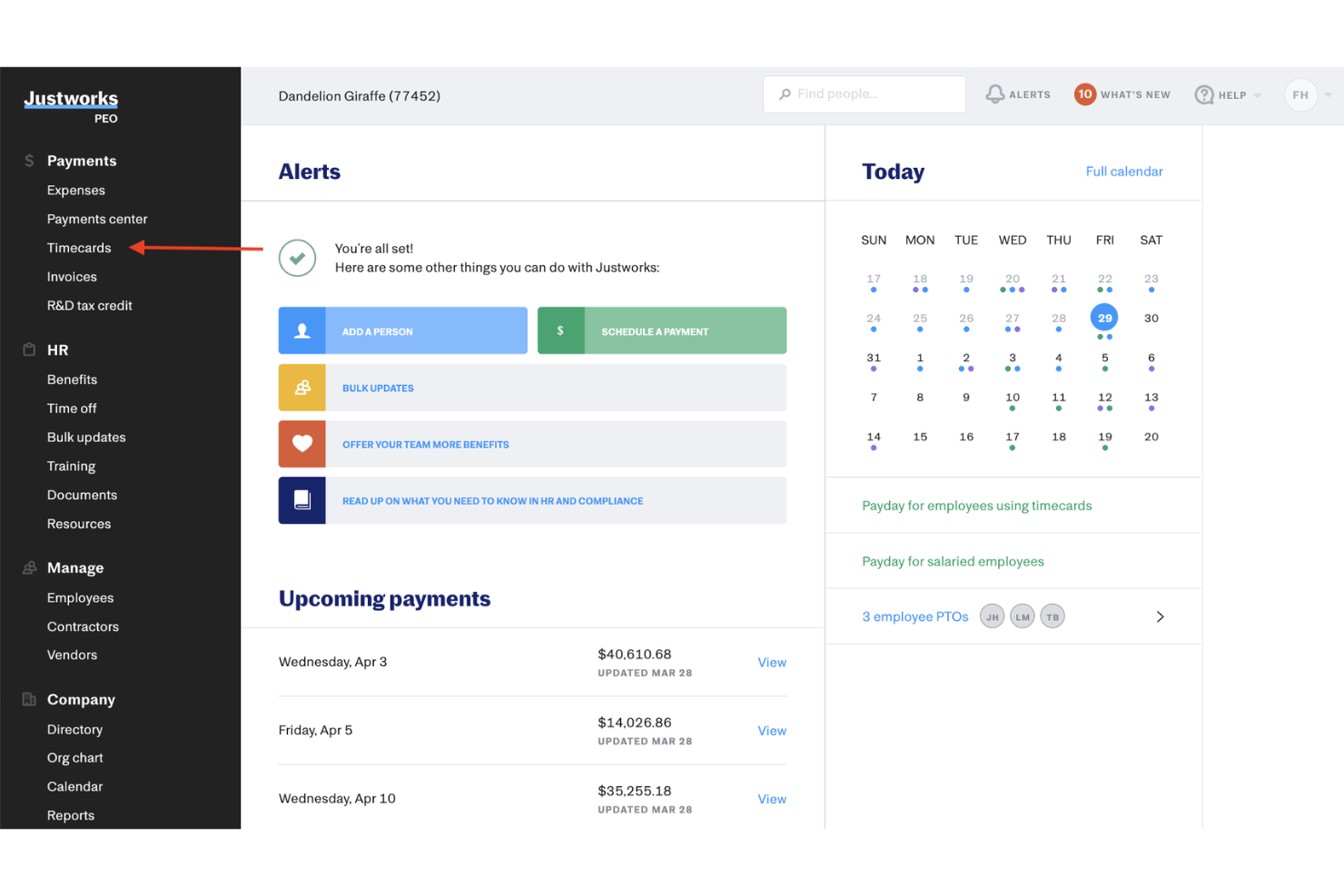
Justworks is a U.S.-focused employer of record platform that handles payroll, benefits administration, compliance, and HR support for companies hiring domestic workers.
Who Is Justworks Best For?
Justworks is a strong fit for U.S.-based digital companies that need to hire domestic workers compliantly without building out a full internal HR function.
Why I Picked Justworks
Justworks earns its spot on my shortlist because it's one of the few EOR platforms built specifically around the U.S. market, which matters when your digital company is hiring domestically and needs compliance handled at the state level. I particularly like its PEO-backed benefits access, which gives even small teams the purchasing power to offer health insurance on par with larger employers. Its built-in payroll and HR support also means you're not stitching together separate tools to stay compliant across multiple states.
Justworks Key Features
- W-2 employee management: Justworks classifies and manages domestic workers as W-2 employees, handling all associated tax filings and withholdings.
- Multi-state compliance tracking: The platform monitors state-specific employment laws and automatically applies the relevant rules for each location where you hire.
- Employee self-service portal: Workers can access pay stubs, benefits enrollment, and personal information directly through their own dashboard.
- Time and attendance tracking: Built-in tools let employees log hours and managers approve timesheets within the same platform used for payroll.
Justworks Integrations
Justworks documents 17 integrations, including QuickBooks, NetSuite, Xero, Sage Intacct, Greenhouse Recruiting, Lever, JazzHR, Brex, Ramp, and Vanta. Availability varies by plan, with EOR support listed for Leapsome.
Pros and Cons
Pros:
- Payroll and HR support stay together
- PEO-backed benefits help smaller teams compete
- Strong U.S. state compliance support
Cons:
- Domestic EOR focus narrows geographic coverage
- Limited fit for international hiring plans

Best for scalable global hiring and compliance
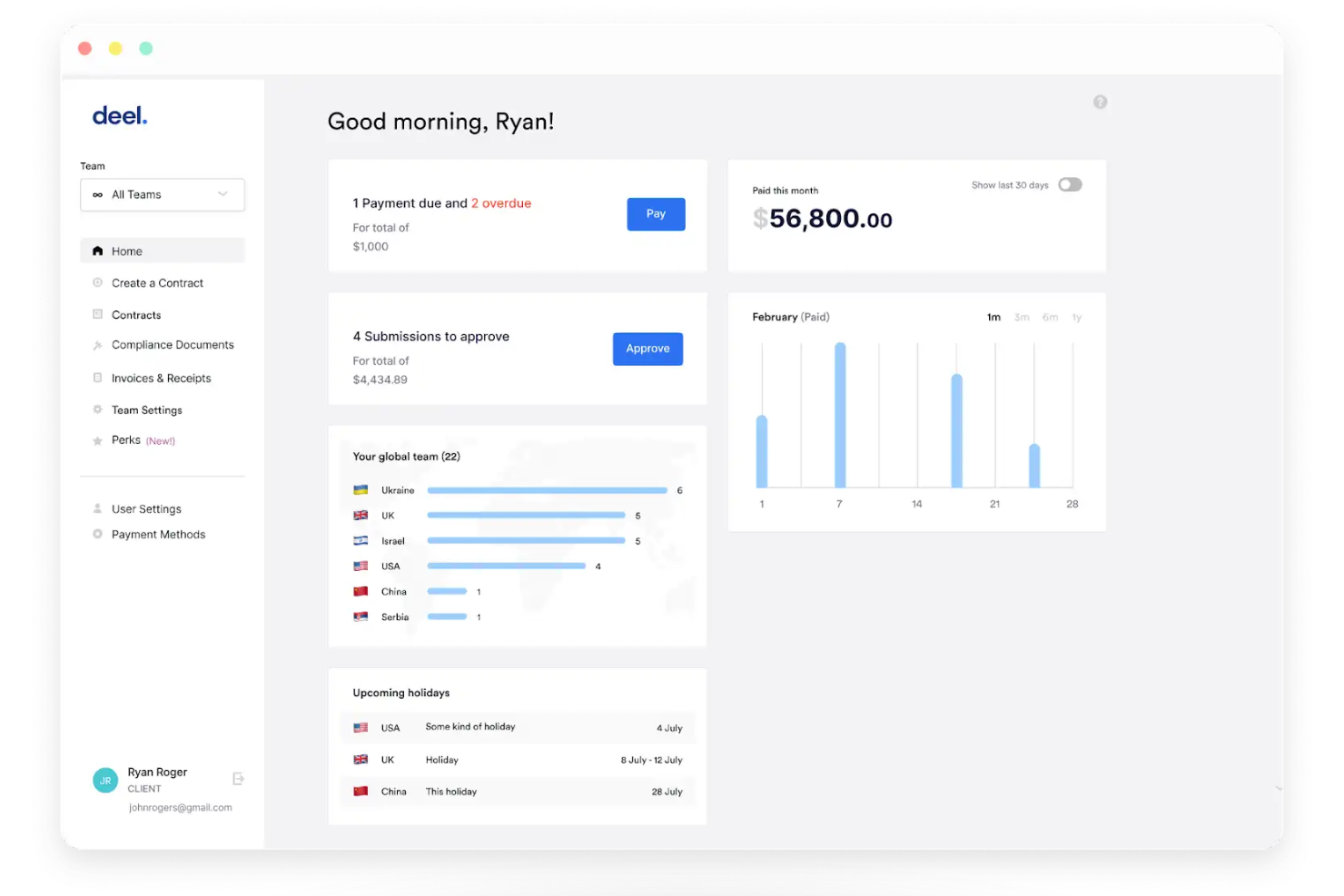
Deel is a global employer of record and hiring platform that covers international payroll, contractor management, compliance, and entity setup across 150+ countries.
Who Is Deel Hire Best For?
Deel Hire is a strong fit for scaling companies that need to hire across multiple countries without setting up local entities.
Why I Picked Deel Hire
Deel Hire earns its spot on my shortlist because it lets digital services companies hire full-time talent in 150+ countries without ever setting up a local entity. I particularly like its built-in compliance engine, which automatically applies local labor laws, tax rules, and contract templates by country. Its contractor-to-employee conversion feature is also a practical win: if your freelance developer in Brazil needs to go full-time, Deel handles the transition cleanly.
Deel Hire Key Features
- Global payroll processing: Run payroll in 150+ countries in local currencies, with automatic tax calculations and compliant pay slips for every jurisdiction.
- IP and equipment provisioning: Order and ship work equipment to remote employees worldwide directly through the platform.
- HR tool integrations: Connect Deel with tools like Slack, Greenhouse, and BambooHR to keep your existing tech stack in sync.
- Benefits administration: Offer and manage locally compliant benefits packages for international employees without setting up separate plans per country.
Deel Hire Integrations
Deel Hire integrates with Slack, Greenhouse, and BambooHR, helping digital services companies connect global hiring and payroll workflows with their existing HR technology.
Pros and Cons
Pros:
- Contractor-to-employee conversions simplify growth
- Local tax and labor compliance support
- Hiring across 150+ countries without entities
Cons:
- Country-specific rules still need review
- Support responses can take longer

Best for contractor-to-employee conversion globally
Oyster HR is a global employer of record platform that handles compliant employment contracts, multi-currency payroll, benefits administration, and contractor-to-employee conversion across 120+ countries.
Who Is Oyster HR Best For?
Oyster HR is a strong fit for digital services companies that regularly convert international contractors to full-time employees across multiple countries.
Why I Picked Oyster HR
Oyster HR earns its spot on my shortlist because its contractor-to-employee conversion workflows are the most purpose-built I've seen for digital services teams. When a contractor engagement matures into a full-time hire, Oyster's built-in misclassification analyzer flags risk before you make the move, and the Oyster Shell add-on provides up to $500,000 in protection if a classification dispute arises. I also like that IP assignment clauses come standard in every employment contract, which matters when your contractors are writing code or producing client deliverables.
Oyster HR Key Features
- Misclassification risk analyzer: A built-in tool that flags contractor misclassification risk before you change an engagement status.
- Salary Insights tool: Provides salary band benchmarks across 130+ countries to help you set competitive compensation for global tech hires.
- ATS integrations: Native connections to Greenhouse, Ashby, Workable, and TeamTailor link your hiring pipeline directly to compliant onboarding workflows.
- Oyster AI (Pearl): An AI assistant that delivers country-specific employment guidance and local hiring intelligence across supported markets.
Oyster HR Integrations
Oyster HR offers native integrations with Greenhouse, Ashby, Workable, TeamTailor, BambooHR, HiBob, Workday, Carta, Slack, and QuickBooks. It also provides an API for custom integrations and supports Zapier.
Pros and Cons
Pros:
- IP clauses protect code and client deliverables
- Global coverage supports distributed digital teams
- Contractor-to-employee conversion reduces misclassification risk
Cons:
- Partner support varies across complex jurisdictions
- Payroll delays frustrate larger distributed teams

Best for indemnification-backed hiring
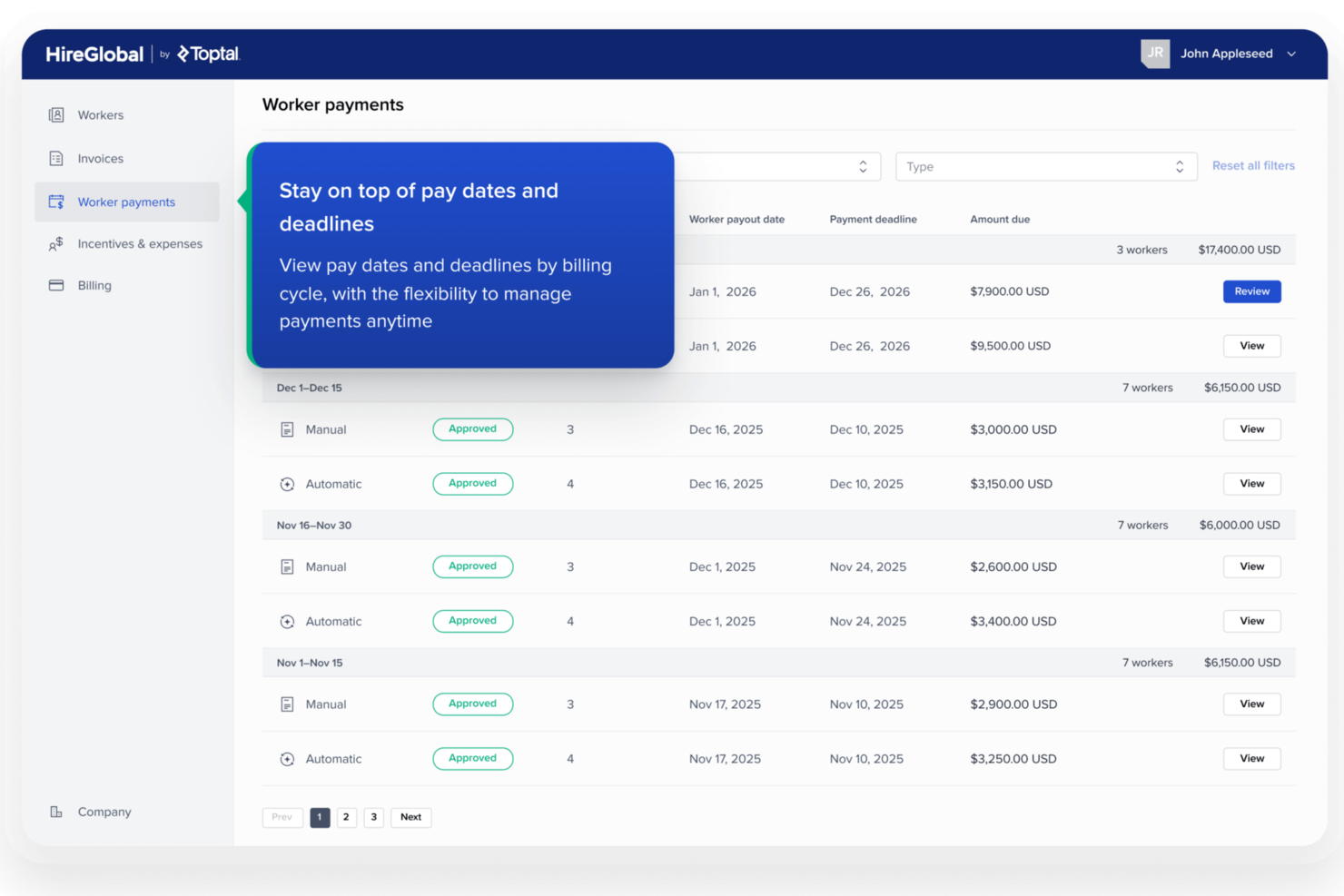
HireGlobal is an employer of record platform by Toptal that covers contractor management, virtual EOR, and full EOR across 180+ countries, with built-in compliance contracts, multi-currency payroll, and per-worker indemnification.
Who Is HireGlobal Best For?
HireGlobal fits digital services companies that need to hire and pay contractors or employees across multiple countries without setting up local entities, especially where misclassification liability is a real concern.
Why I Picked HireGlobal
I've included HireGlobal in my top picks because its $1M per-worker indemnification, built into the Virtual EOR tier, covers misclassification liability, IP exposure, and legal defense in one commitment. When you're contracting developers or designers across multiple countries, that kind of explicit, quantified coverage is rare. I also like that its 40+ in-house lawyers back locally compliant contracts across 180+ countries, reducing the guesswork on classification before you hire.
HireGlobal Key Features
- Multi-currency payroll: Runs payroll across 50+ currencies with a single consolidated invoice covering your entire global workforce.
- AOR-to-EOR conversion pathway: Moves workers from contractor to Virtual EOR to full EOR status under one master agreement, with no re-contracting required.
- Worker classification assessment: Evaluates each worker's role and recommends the most compliant engagement model before you hire.
- SOC 2 Type 1 and Type 2 attestation: Provides audited security controls across all five Trust Service Criteria, with AES-256 encryption for data in transit and at rest.
HireGlobal Integrations
HireGlobal doesn't have any native integrations publicly documented, and no public API or app marketplace is listed. Its HRIS combines onboarding, payroll, compliance, and workforce management in one platform.
Pros and Cons
Pros:
- Legal team supports local compliance contracts
- Fast contractor onboarding supports urgent hiring
- Per-worker indemnification protects digital IP
Cons:
- Benefits lack equity and stipend administration
- Partner entities can vary by country

Best for fast EOR onboarding
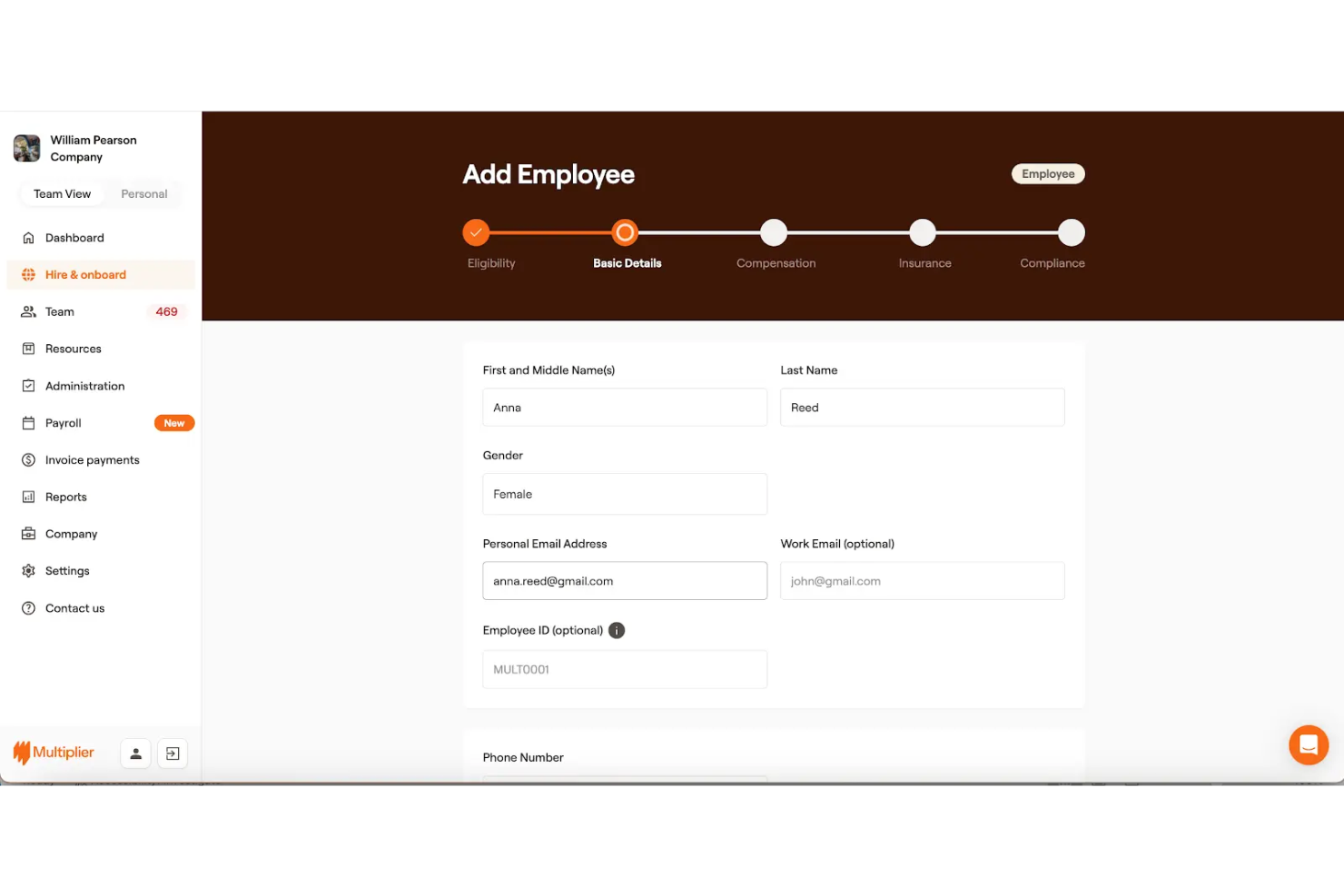
Multiplier is an employer of record platform that lets you hire, onboard, and pay full-time employees and contractors across 150+ countries, with built-in payroll, benefits, and compliance management.
Who Is Multiplier Best For?
Multiplier works well for digital services companies that need to onboard international employees quickly without getting bogged down in entity setup or local compliance paperwork.
Why I Picked Multiplier
Multiplier earns its spot on my shortlist because of how fast it gets new hires up and running across borders. I love that its guided onboarding flow can bring an international employee live in as little as a few minutes, with automated contracts generated to local legal standards. Its built-in intellectual property and invention assignment clauses are a real plus for digital services companies protecting proprietary work across jurisdictions.
Multiplier Key Features
- Multi-currency payroll: Run payroll in local currencies across 150+ countries from a single dashboard.
- Locally compliant contract generation: Auto-generates employment contracts tailored to the labor laws of each hire's country.
- Benefits administration: Manages country-specific benefits packages, including health insurance and statutory entitlements, for international employees.
- Contractor management: Onboards and pays freelance contractors globally, with built-in invoice management and compliance safeguards.
Multiplier Integrations
Multiplier offers API integrations with Workday, BambooHR, HiBob, Personio, and UKG, syncing employee and payroll data with your HRIS. Custom enterprise integrations also support SAP SuccessFactors, Oracle HCM, and ADP.
Pros and Cons
Pros:
- Supports employees and contractors across 150+ countries
- Local contracts include intellectual property clauses
- Rapid onboarding for international digital teams
Cons:
- Benefits coverage varies by hiring country
- Premium costs can challenge smaller agencies

Best with centralised contractor management
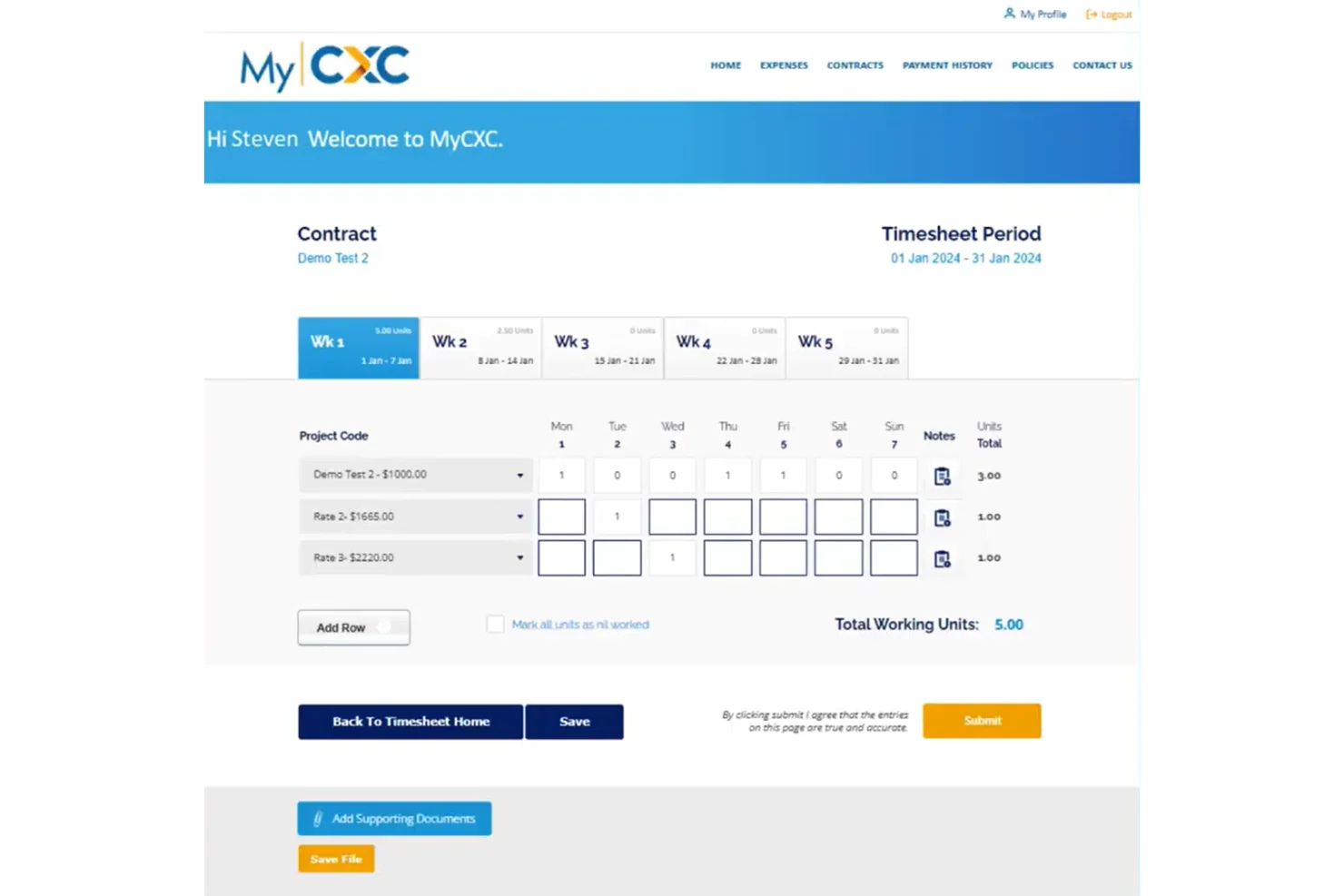
CXC Global is a contractor management and employer of record platform designed for businesses that engage global contingent workforces, offering compliance support, contractor onboarding, payroll processing, and workforce classification across multiple countries.
Who Is CXC Global Best For?
CXC Global is a strong fit for businesses managing large or complex networks of independent contractors across multiple countries.
Why I Picked CXC Global
CXC Global earns its spot on my shortlist because of how it handles centralised contractor management across multiple countries from a single platform. I like that it gives digital services companies one place to onboard contractors, run compliance checks, and process payroll, regardless of where those contractors are based. Its worker classification tools are particularly useful when you're juggling a mix of freelancers and project-based contractors across different jurisdictions.
CXC Global Key Features
- Multi-currency payment processing: CXC Global pays contractors in their local currency across a wide range of countries.
- Contractor self-service portal: Contractors can submit timesheets, upload documents, and track payment status through a dedicated online portal.
- Indemnification and liability coverage: CXC Global assumes legal responsibility for contractor engagements, reducing your business's exposure to misclassification risk.
- Invoice consolidation: CXC Global aggregates contractor invoices into a single billing statement, simplifying accounts payable for teams managing large contractor networks.
CXC Global Integrations
CXC Global’s native integrations are not clearly documented. It supports API-based integrations with HRIS and enterprise systems for custom connectivity.
Pros and Cons
Pros:
- Local-currency payments simplify international contractor administration
- Worker classification support reduces misclassification exposure
- Centralised management for global contractor networks
Cons:
- Best suited to larger, complex workforces
- Contractor focus may limit employee lifecycle coverage

Best for multi-country compliance
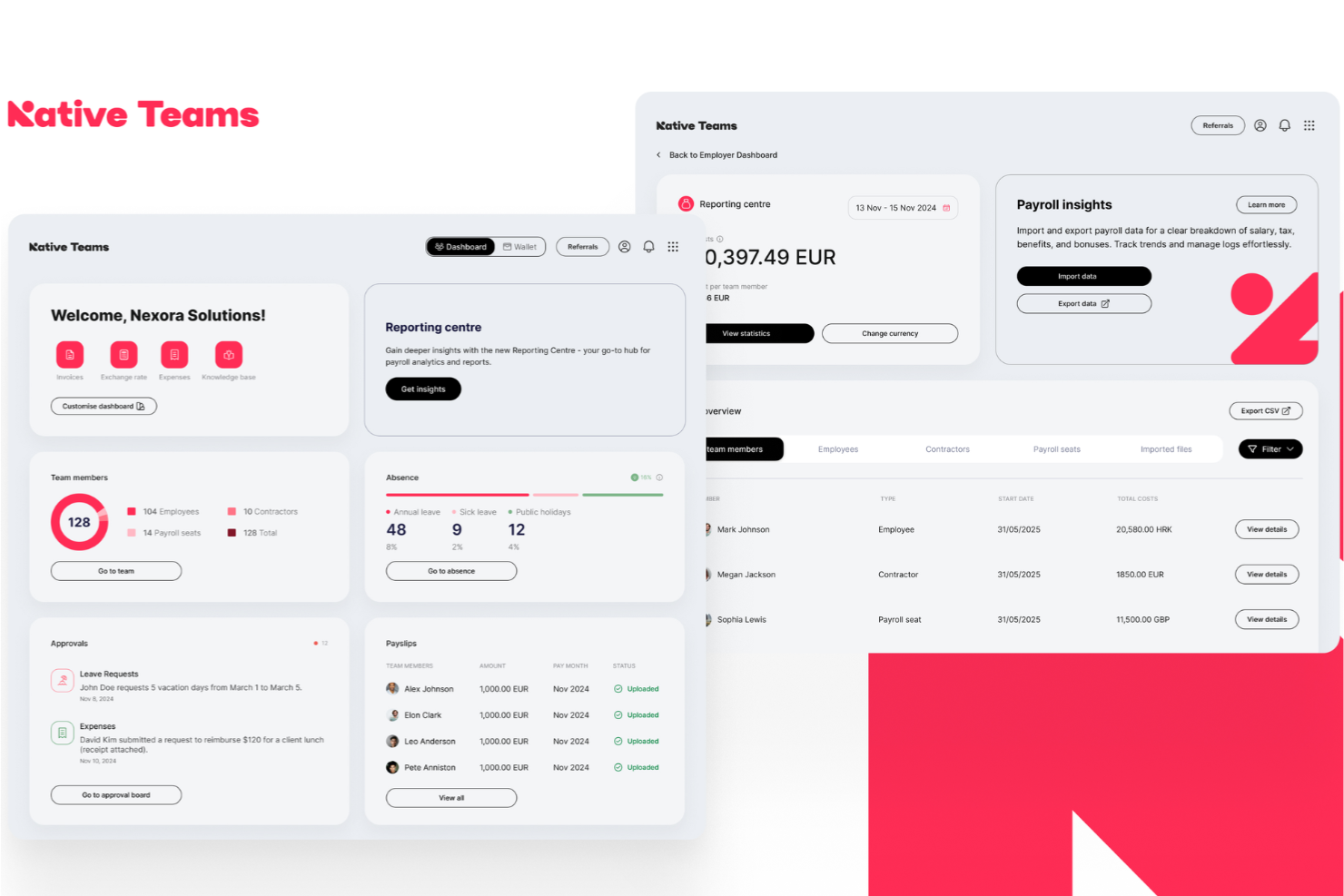
Native Teams is an employer of record platform that covers payroll processing, tax compliance, contract management, and benefits administration across multiple countries.
Who Is Native Teams Best For?
Native Teams works well for digital businesses managing contractors or employees across multiple countries who need consistent compliance without building local legal entities.
Why I Picked Native Teams
Native Teams earns its spot on my shortlist because of how well it handles compliance across multiple jurisdictions without requiring you to set up local entities. I particularly like its built-in tax compliance and contract management tools, which automatically adapt to local labor laws in each country you're operating in. If your team is spread across, say, five countries, Native Teams keeps payroll and legal obligations aligned in each one without you manually tracking every regional requirement.
Native Teams Key Features
- Multi-currency payroll processing: Native Teams lets you run payroll in local currencies across multiple countries from a single dashboard.
- Contractor-to-employee conversion: You can convert existing contractors into full employees through Native Teams without setting up a local entity.
- Localized benefits administration: Native Teams provides country-specific benefits packages that align with local statutory requirements and market norms.
- Integrated invoicing tools: Native Teams includes built-in invoicing features that let contractors and employees generate and manage invoices directly within the platform.
Native Teams Integrations
Native integrations are not clearly documented for Native Teams.
Pros and Cons
Pros:
- Contractor conversion avoids entity setup delays
- Localized benefits fit international hiring needs
- Multi-country compliance supports distributed digital teams
Cons:
- Country coverage details require verification
- Integrations are not clearly documented
Best for in-country HR and compliance ownership
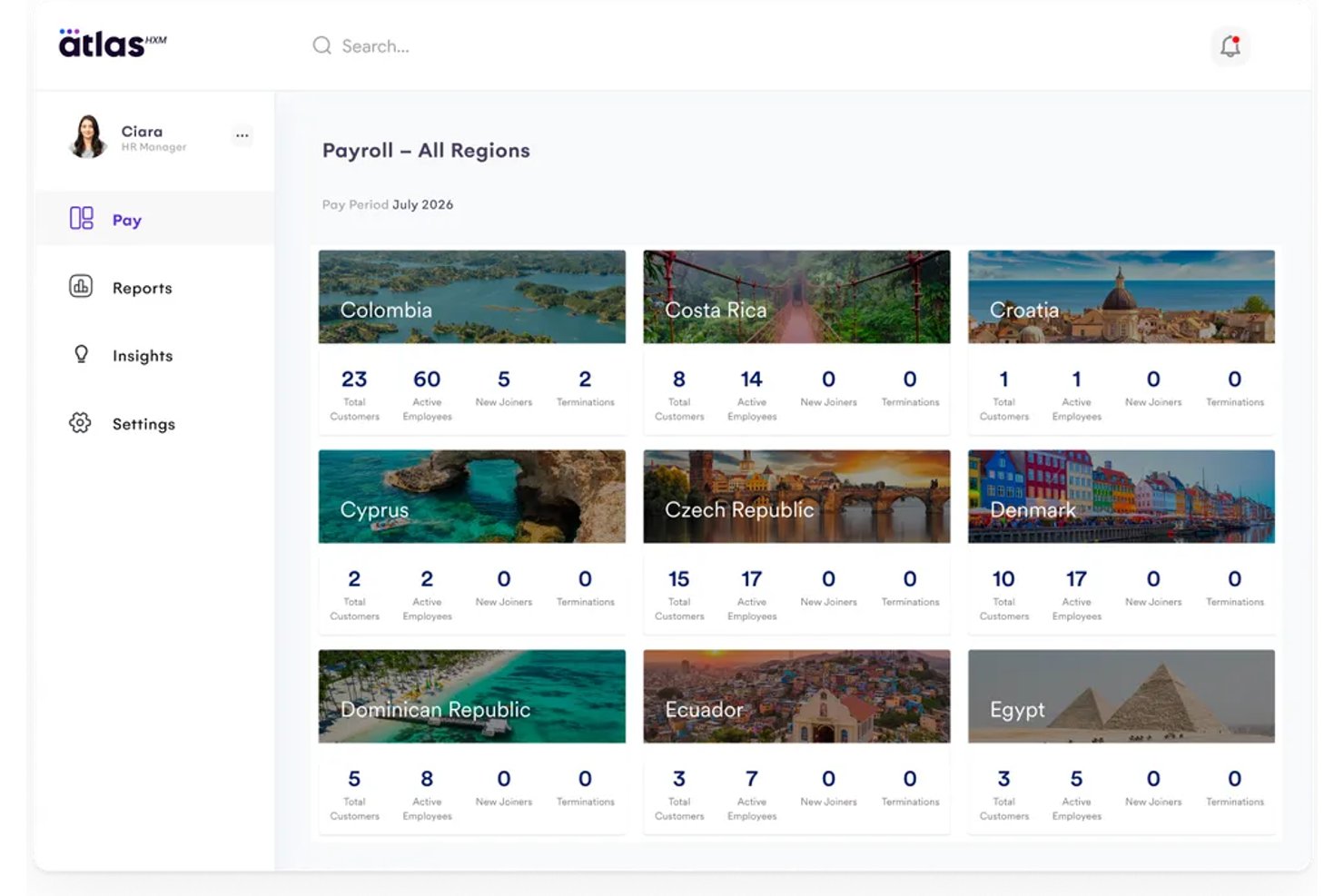
Atlas HXM is an employer of record platform that gives companies direct access to owned local entities, in-country HR teams, and built-in compliance infrastructure across global markets.
Who Is Atlas HXM Best For?
Atlas HXM is a strong fit for companies that need a direct, entity-backed EOR with in-country HR teams rather than a partner-dependent network.
Why I Picked Atlas HXM
Atlas HXM earns its spot on my shortlist because it operates through owned legal entities rather than third-party partners, which means your workers are actually employed by Atlas in-country. I find that distinction critical for digital services companies hiring across multiple markets, since it puts real local HR teams and compliance ownership behind each engagement. Features like direct entity-backed payroll and in-country HR support reduce the legal exposure that typically comes with contractor misclassification in fast-moving tech and services roles.
Atlas HXM Key Features
- Multi-country payroll processing: Atlas HXM runs payroll across global markets through its own entities, handling currency conversion, local tax filings, and statutory deductions in each country.
- Contractor-to-employee conversion: The platform lets you convert existing contractors into full-time employees within Atlas's legal entities, reducing misclassification risk.
- Equity and benefits administration: Atlas manages locally compliant benefits packages, including equity plan support, tailored to each country's statutory requirements.
- Employee self-service portal: Workers access pay slips, documents, and benefits details through a dedicated self-service interface without needing to contact HR directly.
Atlas HXM Integrations
Native integrations are not clearly documented.
Pros and Cons
Pros:
- Contractor conversions reduce misclassification exposure
- In-country HR teams support local employee issues
- Owned local entities reduce partner dependency
Cons:
- Benefits support requires careful local review
- Direct entity model may limit market availability

Best for workforce expansion across 187 countries
Safeguard Global is an employer of record platform that handles international hiring, payroll, and compliance across an exceptionally wide network of countries, with built-in workforce analytics and support for contractors and full-time employees alike.
Who Is Safeguard Global Best For?
Safeguard Global is a strong fit for digital services companies scaling international teams across multiple regions simultaneously.
Why I Picked Safeguard Global
Safeguard Global earns its spot on my shortlist because of the sheer breadth of its country coverage: 187 countries is genuinely hard to match when you're scaling a digital services team across multiple regions at once. I particularly like its Workforce as a Service model, which lets you hire full-time employees and contractors through the same platform without spinning up separate legal entities. Its built-in workforce analytics also give HR teams real visibility into headcount and labor costs across every region.
Safeguard Global Key Features
- Locally compliant payroll processing: Safeguard Global runs payroll in local currencies and applies country-specific tax rules for each hire.
- Dedicated in-country support: Each country comes with access to local HR and legal experts who handle compliance questions on the ground.
- Equity and benefits administration: The platform manages equity plans and localized benefits packages across multiple jurisdictions.
- Employee self-service portal: Workers can access pay stubs, tax documents, and personal HR information through a centralized online portal.
Safeguard Global Integrations
Native integrations are not clearly documented.
Pros and Cons
Pros:
- Local experts support regional compliance
- Supports employees and contractors together
- Coverage spans 187 countries
Cons:
- Workforce analytics may exceed smaller teams’ needs
- Country-specific processes require coordination

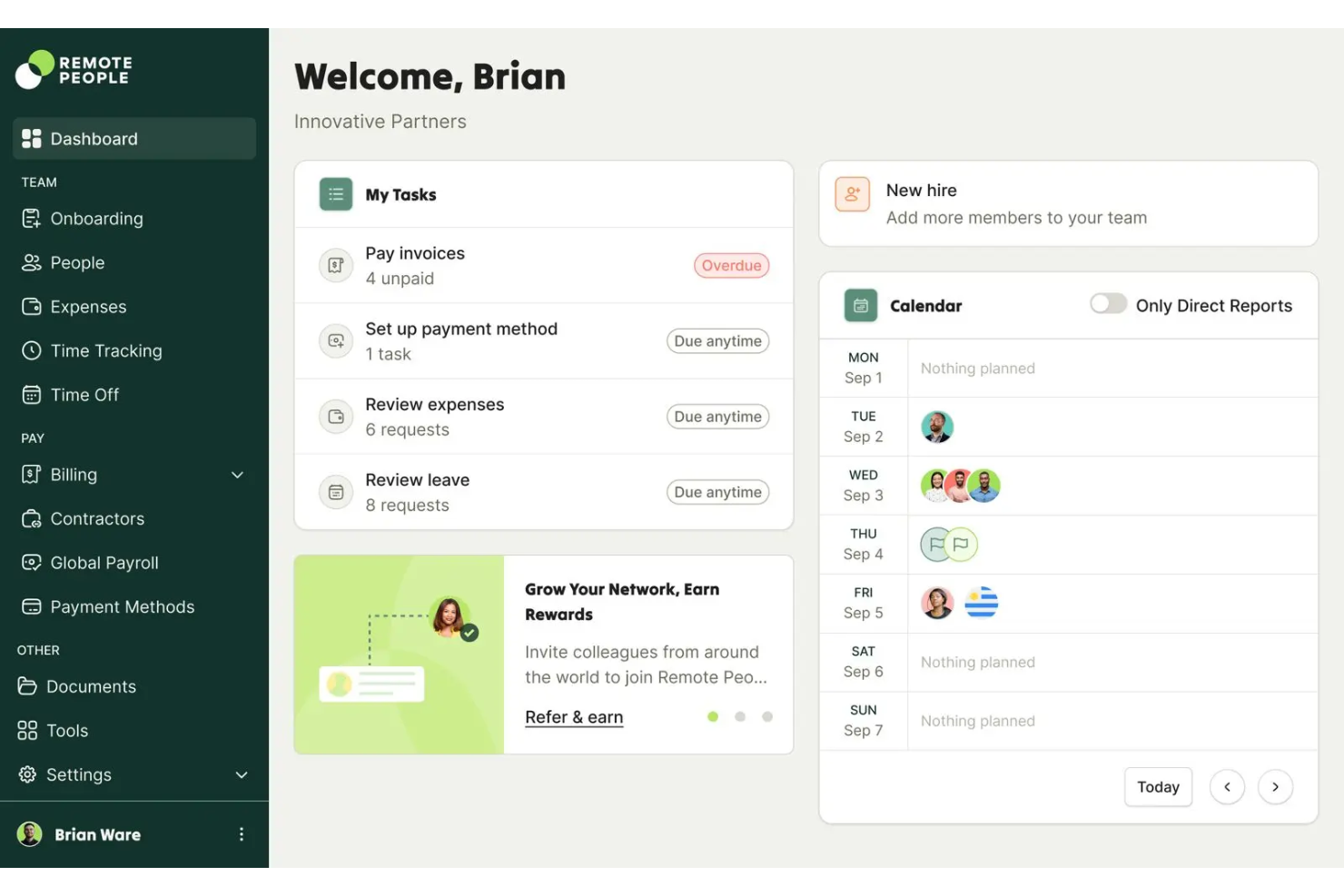
Remote People is a PEO broker and employer of record platform that connects digital services companies with vetted global employment partners, offering international payroll, compliance management, and equity plan support across multiple countries.
Who Is Remote People Best For?
Remote People is a strong fit for digital services companies that need to offer or manage equity plans for international employees across multiple countries.
Why I Picked Remote People
Remote People earns its spot on my shortlist because of how it handles equity plans for international employees, which is genuinely rare in this space. I like that it connects digital services companies with vetted local partners who can manage equity compliance across multiple countries, so your team isn't navigating foreign securities law alone. Its PEO broker model also means you get matched to the right employment partner for each market, rather than forcing every hire through a single provider.
Remote People Key Features
- Multi-country partner network: Remote People matches your business with vetted local employment partners in each target country rather than routing every hire through one provider.
- International payroll processing: The platform handles payroll calculations, currency conversions, and disbursements across multiple countries for your distributed team.
- Compliance management dashboard: Remote People tracks local labor law requirements and filing deadlines across jurisdictions, keeping your international hires legally covered.
- Contractor and employee classification support: The platform helps you determine the right engagement type for each worker based on local regulations and role structure.
Remote People Integrations
Remote People doesn't have any native integrations documented.
Pros and Cons
Pros:
- Handles employee and contractor classification
- Vetted local partners per target market
- Equity plan support across multiple countries
Cons:
- Service depth varies by local partner
- Partner model can add coordination layers
Other EOR Provider for Digital Services Company
Here are some additional EOR providers for digital services company options that didn’t make it onto my shortlist, but are still worth checking out:
- Remote
For IP-backed international tech hiring
- G-P
For enterprise-scale multi-country hiring
- Papaya Global
For data-driven global workforce oversight
- RemoFirst
For affordable global hiring without entity setup
- Rippling
For dedicated local HR experts
- Deel Payroll
For global hiring at scale
- Playroll
For dedicated support with every hire
- Pebl
For automated onboarding workflows
- TopSource
For global payroll expertise across markets
- Oyster
For compliant global hiring


How I Evaluate EOR Providers for Digital Services Companies
I split my evaluation into three parts. First, core functionality carries the most weight: I look for tools that legally hire, pay, and onboard remote developers across countries. Next, I consider equity administration and HRIS integrations, plus support, onboarding speed, pricing transparency, and security.
Core Functionality (Table Stakes For This List)
When I'm selecting tools for my list, I score each one on a scale from 0 (does not offer the functionality) to 5 (excels in this area) for each core functionality listed below. I then convert the total into a percentage to help assess each tool's overall fit, with extra weight on any functionalities I’ve deemed essential.
- Compliant Local Employment (Essential): I look for legal employment through owned or partnered entities, with local contracts and clear responsibility for compliance.
- Global Payroll (Essential): I assess multi-currency payroll, statutory deductions, payment timing, payroll reports, and support for distributed engineering teams.
- Benefits Administration: I check for locally compliant health, retirement, and statutory benefits that employees can review and manage.
- Localized Contracts: I evaluate country-specific contracts and policies, including updates when employment rules change.
- Country Coverage: I compare supported countries with the locations digital services teams commonly hire from and expand into.
- Lifecycle Management: I look for onboarding, time-off, expenses, employee self-service, and offboarding within one connected workflow.
Once I have a list of tools that meet the criteria, I consider what sets each platform apart.
Differentiating Factors (What Sets Vendors Apart)
Here's how I compare and contrast different vendors:
Standout Features
Equity management is a big one. I look for platforms that handle stock options and RSUs across multiple jurisdictions, since equity is often the main retention lever for engineering talent. API quality matters just as much—I check whether a provider offers native connectors to tools like Slack, accounting platforms, and HRIS systems so your team can automate onboarding and payroll workflows instead of toggling between dashboards. I also evaluate AI-powered compliance alerts that flag labor law or tax changes before they become problems.
Beyond Features
I check whether a provider owns its local entities or relies on third-party partners, since that directly affects how fast payroll issues get resolved and how much liability sits with you. Pricing structure matters just as much—I compare flat per-employee fees against percentage-of-salary models and look for hidden costs around contractor conversions or offboarding. I also evaluate security certifications like SOC 2 Type II and ISO 27001, especially when onboarding developers who'll access client codebases or sensitive repositories.
How to Choose EOR Provider for Digital Services Company
It’s easy to get bogged down in long feature lists and complex pricing structures. To help you stay focused as you work through your unique software selection process, here’s a checklist of factors to keep in mind:
| Factor | What to Consider |
| Scalability | Will the platform support headcount growth and expansion into new countries without extra setup or delays? |
| Integrations | Does it connect natively to your HRIS, payroll, or ATS systems to avoid manual work and data silos? |
| Customizability | Can you adapt workflows or templates to match your organization’s policies and processes? |
| Ease of use | Will busy HR and finance users find the interface intuitive for daily and monthly tasks? |
| Implementation and onboarding | What is the average timeline from contract to first employee onboarding, and are resources available to help? |
| Cost | Are pricing tiers and extra fees clearly defined, with no surprises around onboarding or termination charges? |
| Security safeguards | Does the provider comply with GDPR and other data privacy regulations in all relevant countries? |
| Compliance requirements | Are local tax, employment, and benefits rules automatically applied in each country where you’ll hire? |
What is an EOR Provider for Digital Services Company?
An EOR provider for a digital services company is a service provider that acts as the legal employer for your global team, handling payroll, contracts, and compliance across countries. A global EOR helps businesses hire employees and manage full-time employees without going through complex entity setup in each market. These providers help streamline global expansion by reducing compliance risks, supporting outsourcing, and working as trusted globalization partners. They also manage key areas like healthcare, protect intellectual property, and ensure secure processes aligned with cybersecurity standards. By removing the administrative hassle, EOR services give digital companies the flexibility to scale internationally while staying compliant and focused on growth.
Features
When selecting EOR provider for digital services company, keep an eye out for the following key features:
- Global payroll processing: Automates salary calculations, taxes, and payments for workers in multiple countries through a single platform.
- Employment contract management: Generates and stores compliant employment agreements tailored to each country’s legal requirements.
- Tax and compliance automation: Tracks local employment laws, tax rules, and compliance requirements to reduce legal risk and administrative overhead.
- Benefits administration: Offers localized benefits packages such as health insurance and retirement plans, organized and managed through the platform.
- Onboarding workflow tools: Guides new hires through uploading documents, completing forms, and signing contracts digitally from anywhere in the world.
- Time-off and leave tracking: Monitors statutory holidays, vacation, sick leave, and other absences with policies that comply with local regulations.
- Document storage and e-signature: Centralizes signed contracts, ID copies, and policy acknowledgments for quick digital access and audit readiness.
- In-country support access: Connects your team to local legal or HR experts for questions about contracts, compliance, or processes in each market.
- International payments management: Handles multiple currencies, payment timing, and cross-border transfer rules for smooth global transactions.
Benefits
Implementing EOR provider for digital services company provides several benefits for your team and your business. Here are a few you can look forward to:
- Faster global hiring: Onboard international team members quickly with digital contract tools and automated compliance workflows.
- Simplified compliance management: Reduce legal risk by having local labor laws, taxes, and employment rules handled by experts.
- Cost-effective expansion: Avoid the overhead of setting up foreign entities and manage payroll, benefits, and documents from a single system.
- Consistent employee experience: Deliver a uniform onboarding and HR experience across all countries with centralized processes and support.
- Centralized document management: Store, update, and access contracts, IDs, and HR records securely through a cloud-based dashboard.
- Access to local expertise: Get direct support from in-country HR or legal specialists for unique concerns and regulatory changes.
- Simplified payments: Manage multi-currency payroll and benefits through one platform, ensuring timely, compliant global transactions.
Costs and Pricing
Selecting EOR provider for digital services company requires an understanding of the various pricing models and plans available. Costs vary based on features, team size, add-ons, and more. The table below summarizes common plans, their average prices, and typical features included in EOR provider for digital services company solutions:
Plan Comparison Table for EOR Provider for Digital Services Company
| Plan Type | Average Price | Common Features |
| Free Plan | $0 | Access to basic resource library, email support, and limited compliance checklists. |
| Personal Plan | $200–$400/employee/month | Basic EOR services, international payroll processing, digital contract management, and document storage. |
| Business Plan | $500–$700/employee/month | All personal plan features, localized benefits administration, team analytics, multi-currency payments, and HR support. |
| Enterprise Plan | $800–$1200/employee/month | Business plan features, advanced compliance automation, dedicated account manager, custom integration options, and priority onboarding support. |
EOR Provider for Digital Services Company FAQs
Here are some answers to common questions about EOR provider for digital services company:
How does an EOR provider differ from a traditional payroll service?
An EOR provider acts as the legal employer for your international staff, handling contracts, compliance, and benefits. Traditional payroll services just process payments and tax withholdings—they don’t take on legal employment responsibilities in other countries.
Can a digital services company use an EOR provider for both employees and contractors?
Yes, many EOR providers support both employees and contractors, but the services may differ. EOR solutions offer full employment legal coverage, while contractor services typically handle payments and agreements without the same legal obligations.
What should I look for in contract management with an EOR provider?
Look for automated, country-specific contract generation, digital signature support, and easy access to completed agreements. This protects your company and ensures every hire is compliant with local laws.
Is switching to an EOR provider disruptive to current team members?
No, most EOR providers use guided migration tools to transfer employees smoothly. They manage the legal transition, update documents, and ensure pay continues without interruption, keeping employees informed throughout the process.
How long does it take to onboard a new hire through an EOR provider?
Onboarding can range from a single day to a few weeks, depending on the country and required documentation. Most digital onboarding workflows are designed to move quickly once the paperwork is in place.
How does an EOR handle IP transfer upon termination?
An EOR includes IP assignment clauses in the employment contract so all work created by the employee belongs to your company. On termination, they ensure any code, content, or assets are properly handed over in line with local law.