

10 Best Payroll Software for Hospitality in 2026

Best Payroll Software for Hospitality Shortlist


Payroll software for hospitality helps hotels, restaurants, and other service businesses manage payroll, tips, and compliance for hourly and tipped staff. If you’re looking for tools to handle shift changes, complex pay rules, and industry-specific challenges, you’re in the right place. This guide highlights what to look for as you choose the best fit for your team, so you can simplify payroll and focus on serving your guests.
Why Trust Our Software Reviews
Our team has been testing and reviewing software since 2012. As HR experts ourselves, we know how difficult—and important—it is to choose the right software.
For this guide, we evaluated tools using hands-on testing and independent research, scoring tools using our selection criteria. We also draw on insights from industry thought leaders and practicing HR experts.
Our reviews reflect our human editorial judgment, not a sales pitch.
Expert reviewers:
Best Payroll Software for Hospitality Summary
This comparison chart summarizes pricing details for my top payroll software for hospitality selections to help you find the best one for your budget and business needs.
| Tool | Best For | Trial Info | Price | ||
|---|---|---|---|---|---|
| 1 | Best for hourly staff onboarding in hospitality | Free plan available | From $30/location/month | Website | |
| 2 | Best for restaurant scheduling and payroll sync | 14-day free trial + free plan available | From $39.99/month | Website | |
| 3 | Best for hospitality compliance tracking | Free demo available | Pricing upon request | Website | |
| 4 | Best for enterprise multi-property payroll at scale | Free demo available | Pricing upon request | Website | |
| 5 | Best for all-in-one restaurant management | Free demo available | Pricing upon request | Website | |
| 6 | Best for multi-role overtime pay in restaurants | Free demo available | Pricing upon request | Website | |
| 7 | Best for workforce analytics in hospitality | Free demo available | Pricing upon request | Website | |
| 8 | Best for tip calculation and POS integration | Free plan + free demo available | From $69/month | Website | |
| 9 | Best for fast new hire payroll onboarding | Free demo available | From $49/month + $6/month/user | Website | |
| 10 | Best for shift-based wage rule enforcement | Free demo available | From $5/user/month (billed annually) | Website |

Payroll Software for Hospitality Reviews
Below are my detailed summaries of the best payroll software for hospitality that made it onto my shortlist. My reviews offer a detailed look at the features, best use cases, and integrations of each software to help you find the best one for you.

Homebase
Best for hourly staff onboarding in hospitality
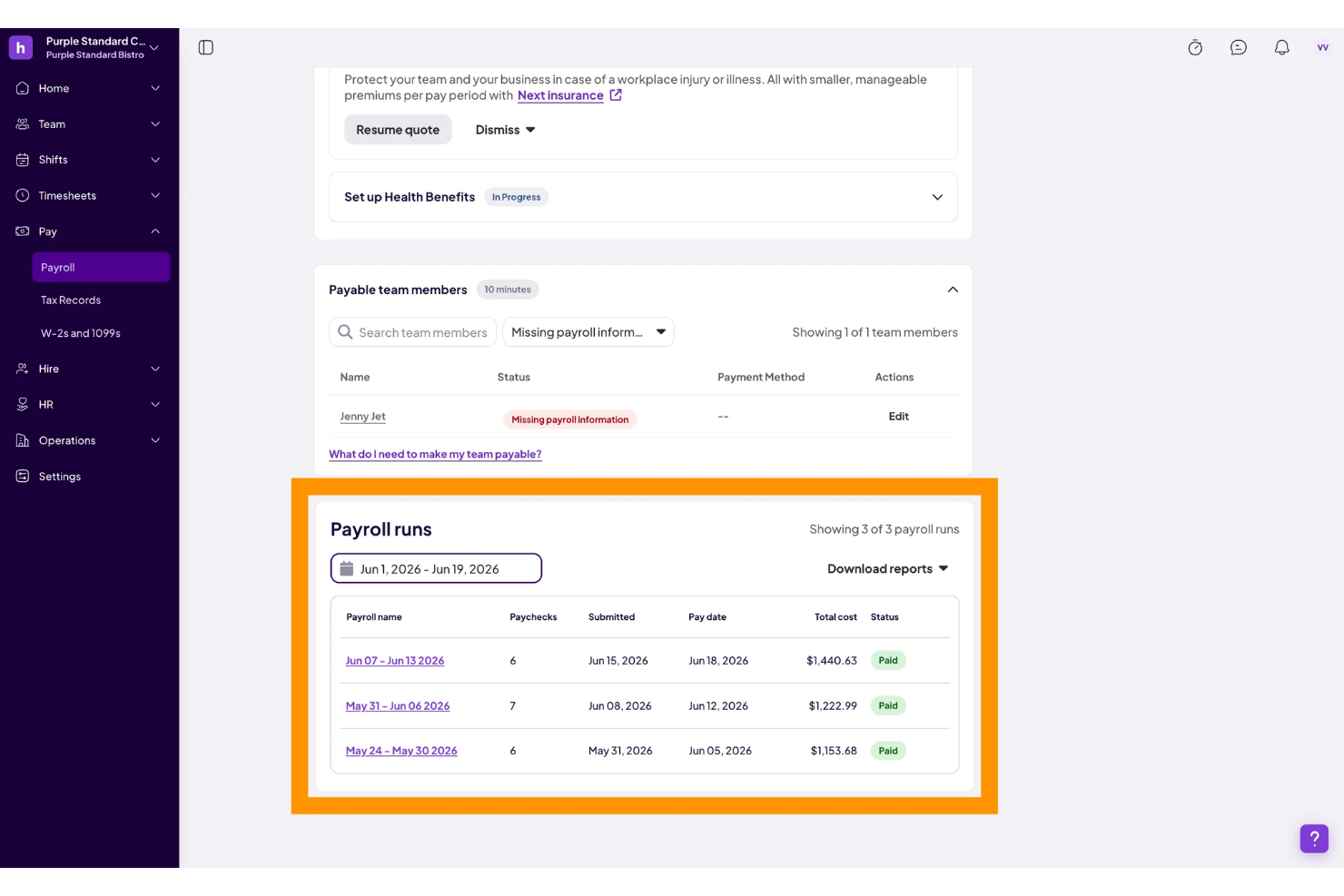
Homebase is a payroll and workforce management platform built for hourly teams, combining time tracking, scheduling, tip management, and automated tax filing with native POS integrations for hospitality businesses.
Who Is Homebase Best For?
Homebase suits small to mid-sized restaurant and retail operators who pay hourly staff and want scheduling, time tracking, and payroll in one place.
Why I Picked Homebase
I picked Homebase as one of the best because its employee self-onboarding flow handles W-4s, I-9s, and direct deposit setup in one place, which matters enormously when you're cycling through seasonal staff mid-season. Hours logged on the time clock feed directly into payroll without re-entry, so a new server's first week of shifts shows up in the next pay run automatically. I also like the Payroll Assistant, which flags missed clock-outs and break issues before they turn into payroll errors.
Homebase Key Features
- Tip management add-on: Centralizes tip pooling and distribution processes with data pulled from POS systems.
- Multi-location payroll: Lets you process payroll for all locations on the same run using a single EIN and schedule.
- Automated wage and hour compliance: Tracks overtime, breaks, and local laws for hourly hospitality staff.
- POS integrations: Connects directly with Toast, Square, Clover, Shopify, and Revel for synced hours, sales, and tip data.
Homebase Integrations
Homebase offers native integrations with Toast, Square, Clover, Shopify, and Revel for POS connectivity, and with QuickBooks Online for accounting. An API is available for custom integrations.
Pros and Cons
Pros:
- Same-day pay available for hourly workers
- Built-in tip pooling for tipped employees
- Hourly staff onboarding is fast and paperless
Cons:
- Limited multi-state payroll compliance support
- Tip management requires a paid add-on

7shifts
Best for restaurant scheduling and payroll sync
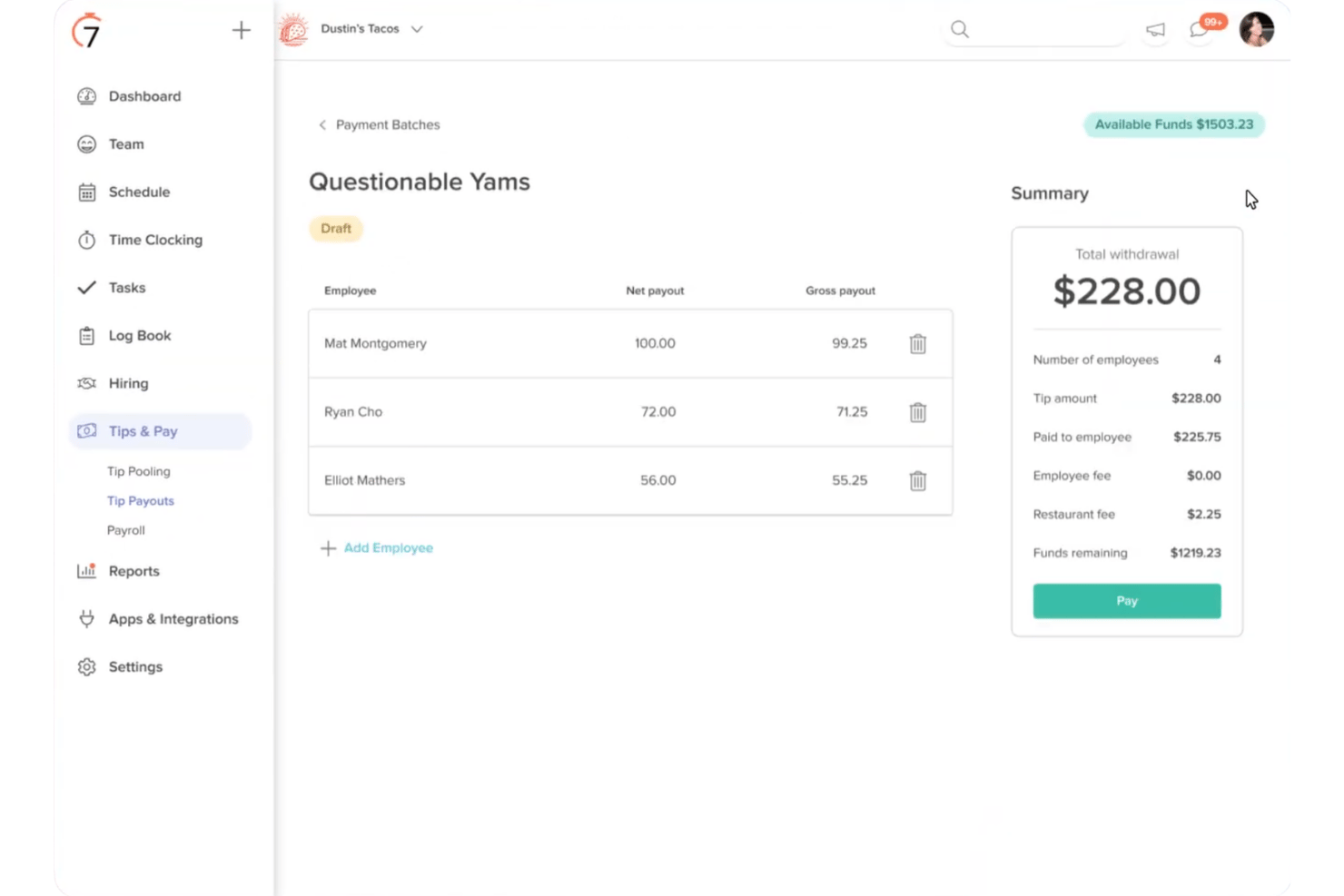
7shifts is a restaurant-focused payroll and workforce management platform that combines scheduling, time tracking, tip pooling, and full-service payroll processing in a single system built specifically for food service operations.
Who Is 7shifts Best For?
7shifts suits independent restaurants and small multi-location restaurant groups that already use its scheduling tools and want payroll to run from the same system.
Why I Picked 7shifts
I picked 7shifts as one of the best because the scheduling-to-payroll sync is genuinely tight: timesheets and tips flow from the floor into a payroll run in one step, cutting out the manual export-import cycle most restaurant operators deal with. I particularly like how tip pooling calculates splits by hours worked across roles automatically, and how blended overtime pulls from an employee's total pay across all their positions. Both features do real work during a busy week with mixed hourly and tipped staff.
7shifts Key Features
- Digital employee onboarding: New hires complete I-9 and E-Verify paperwork digitally, with the whole process taking around 10 minutes per employee.
- Multi-position pay rates: Employees can hold multiple roles with different pay rates, which carry through automatically from timesheets into payroll.
- On-demand pay via Clair: Employees can access earned wages and tips before payday at no cost to the employer.
- Location-level overtime rules: Daily, weekly, and consecutive-day overtime thresholds can be configured separately per location to match local labor law requirements.
7shifts Integrations
7shifts offers native integrations with Toast, Square, Clover, Lightspeed, TouchBistro, Revel, Aloha, Qu, Cake, and GoTab, plus QuickBooks for accounting. It also provides an API and partner marketplace for custom connectivity.
Pros and Cons
Pros:
- Digital onboarding supports fast seasonal hiring
- Blended overtime covers multiple employee positions
- Tip pooling calculates by hours and roles
Cons:
- Doesn't support broader hotel operations
- No confirmed Form 8027 filing

Netchex
Best for hospitality compliance tracking
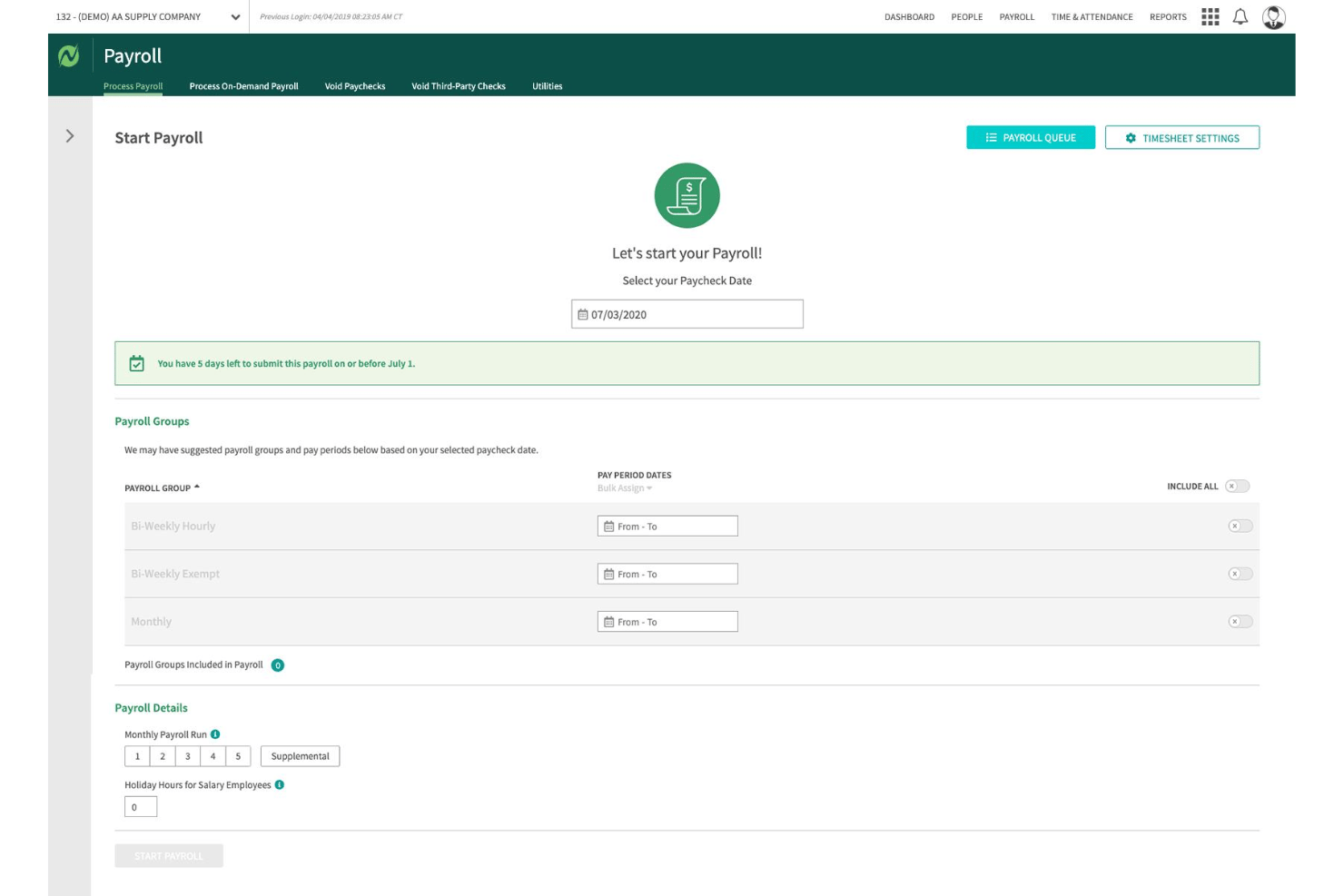
Netchex is a hospitality payroll and HR platform that handles multi-location payroll, tip tracking, wage compliance, hourly workforce onboarding, and POS integrations across restaurant and hotel operations.
Who Is Netchex Best For?
Netchex is a strong fit for multi-location hospitality operators—from hotel groups to restaurant franchises—that need to manage tip compliance, blended overtime, and hourly workforce onboarding across properties.
Why I Picked Netchex
I've included Netchex in my top picks because it handles hospitality compliance tracking in a way that's genuinely built for the industry's complexity. I particularly like how it automates state-by-state tip credit configurations and calculates minimum wage shortfalls by pay period, so if a tipped employee's base pay plus tips falls short, the system catches it automatically. Blended overtime across multiple roles within a single pay run is another feature I find compelling for operators running staff across departments.
Netchex Key Features
- Multi-location payroll management: Run payroll across multiple properties and EINs from a single login, with per-location and combined totals available in one view.
- POS integration: Connects with 14–23 restaurant POS platforms—including Toast, Oracle MICROS, and Aloha—to import employee hours and tips directly into payroll.
- Digital onboarding: New hires complete I-9, W-4, and direct deposit setup before their first shift, with e-signatures and E-Verify built in.
- ACA tracking: Automatically tracks ACA hours for variable-schedule and seasonal staff to support eligibility determinations across pay periods.
Netchex Integrations
Netchex offers 14–23 documented restaurant POS and back-office integrations, including Toast, Aloha, Oracle MICROS, Restaurant365, 7shifts, and Oracle OPERA PMS. It also connects with QuickBooks Online and supports GL exports to Sage and NetSuite.
Pros and Cons
Pros:
- Responsive implementation and support teams
- Supports multi-property payroll from one login
- Handles blended overtime across roles
Cons:
- Reporting feels dated and clunky
- Tip pooling capabilities remain unclear
UKG Pro
Best for enterprise multi-property payroll at scale
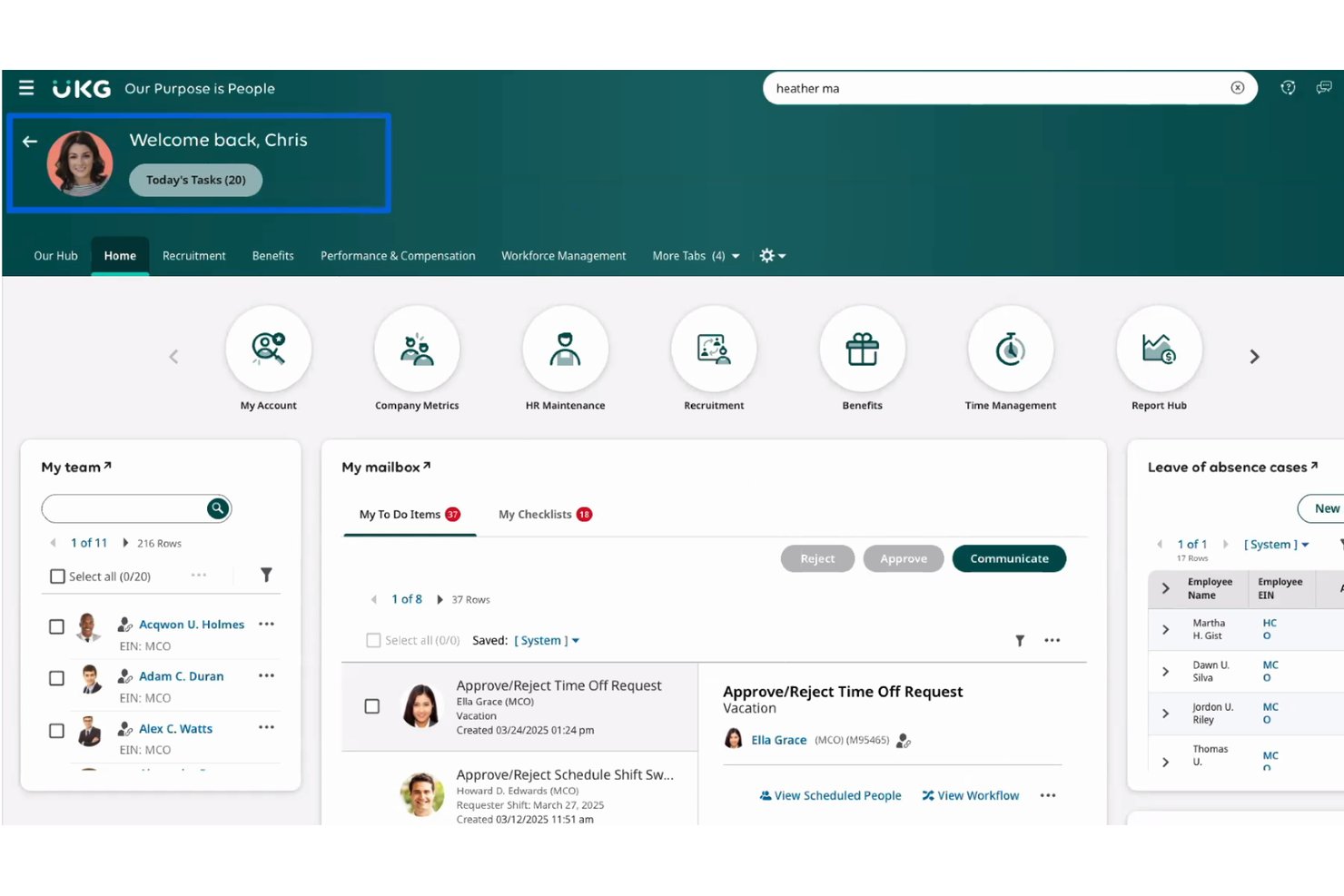
UKG Pro is an enterprise HCM suite that covers payroll, HR, time and attendance, and workforce scheduling, with built-in support for multi-rate pay, weighted-average overtime, and multi-entity payroll runs across large, multi-property operations.
Who Is UKG Pro Best For?
UKG Pro is built for enterprise hotel groups and large multi-property operators that need to run payroll across thousands of hourly workers, multiple EINs, and dozens of locations in a single pass.
Why I Picked UKG Pro
I picked UKG Pro as one of the best because it's the only tool on my list that can run payroll across thousands of hourly workers, dozens of properties, and multiple EINs in a single pass. I love how it handles weighted-average overtime natively, so when a housekeeper at an Aimbridge property works across two roles in one week, the blended rate calculates automatically. Its managed tax filing and multi-jurisdiction wage rule enforcement mean a finance director at a 50-property hotel group isn't manually reconciling state tax tables each pay period.
UKG Pro Key Features
- Rapid Hire: A high-volume hiring tool that automates up to 90% of sourcing, screening, scheduling, and onboarding via a mobile, text-based candidate flow.
- UKG Wallet: An earned wage access feature that gives hourly employees on-demand access to earned pay, including a fee-free prepaid card for unbanked workers.
- Bryte AI alerts: AI-driven monitoring that flags overtime risk, understaffing, and fatigue issues before they affect your payroll or scheduling.
- Managed tax filing: Fully managed federal and state tax filing, including W-2 and 1099 distribution, amended returns, and new-hire reporting across all your locations.
UKG Pro Integrations
UKG Pro offers marketplace integrations via Flexspring for NCR Aloha, Oracle MICROS, Toast, Lightspeed, TouchBistro, Revel, e-Restaurant, and POS Nation, plus a Toast partnership. 7shifts connects through a manual CSV time-and-attendance export rather than live sync.
Pros and Cons
Pros:
- Reviewers praise consolidated reporting and payroll processing
- Supports multi-property payroll and multi-EIN structures
- Handles weighted-average overtime across multiple roles
Cons:
- Reviewers report slow tax and ticket support
- Native tip pooling remains unconfirmed

Best for all-in-one restaurant management
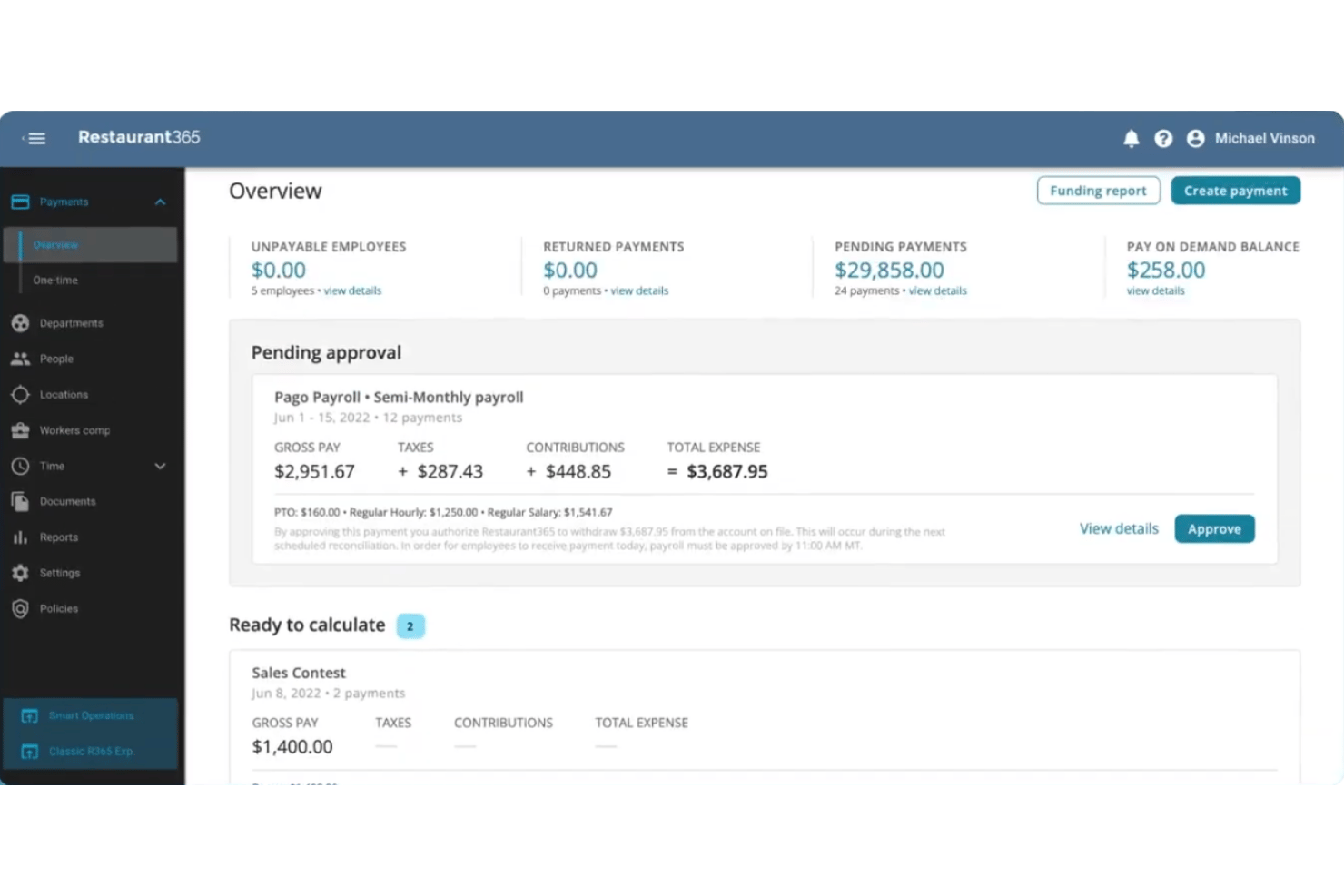
Restaurant365 is a restaurant-specific back-office platform with built-in payroll that connects POS labor data, tip automation, scheduling, time and attendance, HR, and accounting in one system.
Who Is Restaurant365 Best For?
Restaurant365 is a strong fit for multi-location restaurant groups that want payroll, tip management, scheduling, and accounting all running in one connected system.
Why I Picked Restaurant365
I picked Restaurant365 as one of the best because it's the only platform I've seen where tip automation, payroll, and accounting all run inside the same system built exclusively for restaurants. When a tipped employee's punch is edited, tip distributions recalculate automatically and lock once approved, with everything posting directly to the GL. I also love that it handles FICA tip credit tracking and Form 8027 reporting natively, which saves multi-location groups real time at year-end.
Restaurant365 Key Features
- Blended overtime calculation: Computes weighted average overtime rates for employees working multiple jobs in a single workweek, including a dedicated California calculation method.
- Bilingual employee self-service app: Lets employees view schedules, swap shifts, access paystubs, and update W-4s in both English and Spanish on iOS and Android.
- Multi-entity payroll setup: Supports separate payroll companies, funding accounts, and tax profiles per legal entity, with multi-state and multi-EIN configurations.
- Form 8027 reporting: Builds IRS Form 8027 reports by location using POS sales data and GL categories, with support for combining multiple reports into one electronic filing.
Restaurant365 Integrations
Restaurant365 documents 100+ POS integrations, including Toast, Square, NCR Aloha, Oracle MICROS, and PAR Brink, plus labor-only connections to 7shifts, Deputy, UKG/Kronos, and Paycom. It also supports custom integrations through an open API.
Pros and Cons
Pros:
- Payroll journals post directly to accounting
- Handles complex hospitality overtime rules
- Tip distributions recalculate after punch edits
Cons:
- After-hours support can be difficult
- Rehires require payroll onboarding again
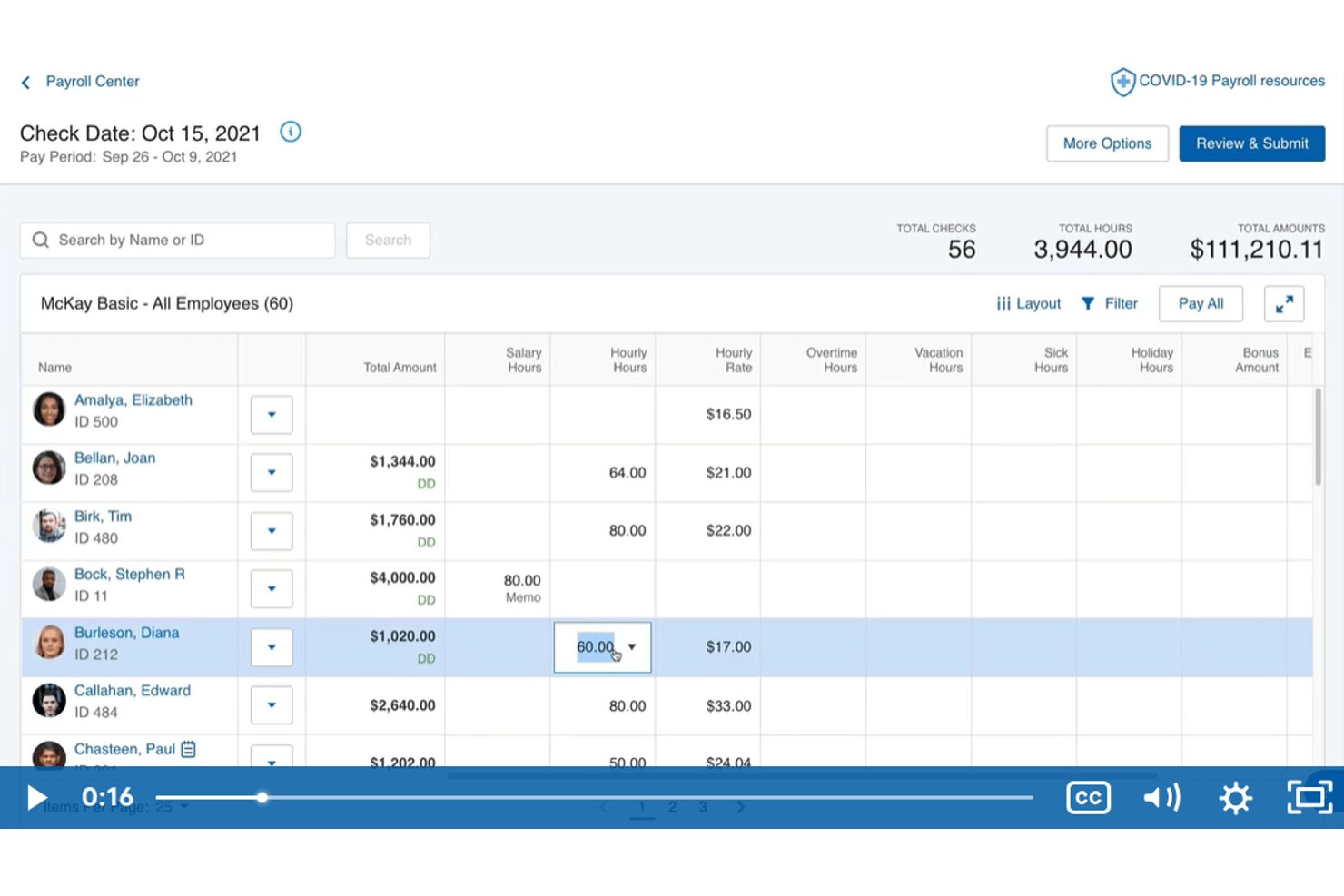
Paychex is a payroll and HR platform that handles multi-location time tracking, weighted overtime, shift differentials, wage compliance, and tax filing for hourly and variable-schedule workforces in hospitality.
Who Is Paychex Best For?
Paychex is a strong fit for multi-unit restaurant operators who need to manage weighted overtime, shift differentials, and variable pay rates across multiple locations.
Why I Picked Paychex
I picked Paychex as one of the best because it handles weighted overtime across multiple roles natively, which is exactly what restaurant operators need when one employee works prep cook hours one week and line cook hours the next. Paychex Flex Time calculates blended overtime rates automatically and tracks shift differentials per labor level. The Hunger Thirst Group runs seven restaurants through Paychex and cut payroll processing from three days to eight hours per pay period.
Paychex Key Features
- Bilingual mobile app: Employees can clock in and out, view pay stubs, request time off, and update direct deposit in English or Spanish.
- FICA tip credit calculator: A built-in calculator helps restaurant operators identify and claim the FICA tip tax credit on qualifying tipped wages.
- California meal-penalty tracking: Paychex Flex Time automatically tracks missed meal and rest breaks to support California labor law compliance.
- Same-day ACH direct deposit: Paychex supports same-day ACH payroll payments so hourly staff get paid faster without waiting for a standard processing window.
Paychex Integrations
Paychex has documented integrations with 7shifts, When I Work, Connecteam, SwyftOps, and Mindbody, plus marketplace integrations for Altametrics/eRestaurant and Delaget. It also offers an open API for custom integrations.
Pros and Cons
Pros:
- Bilingual apps support frontline self-service
- Restaurant case study reports faster processing
- Weighted overtime supports multiple restaurant roles
Cons:
- Reviewers report inconsistent support follow-up
- Tip pooling depends on partner solutions

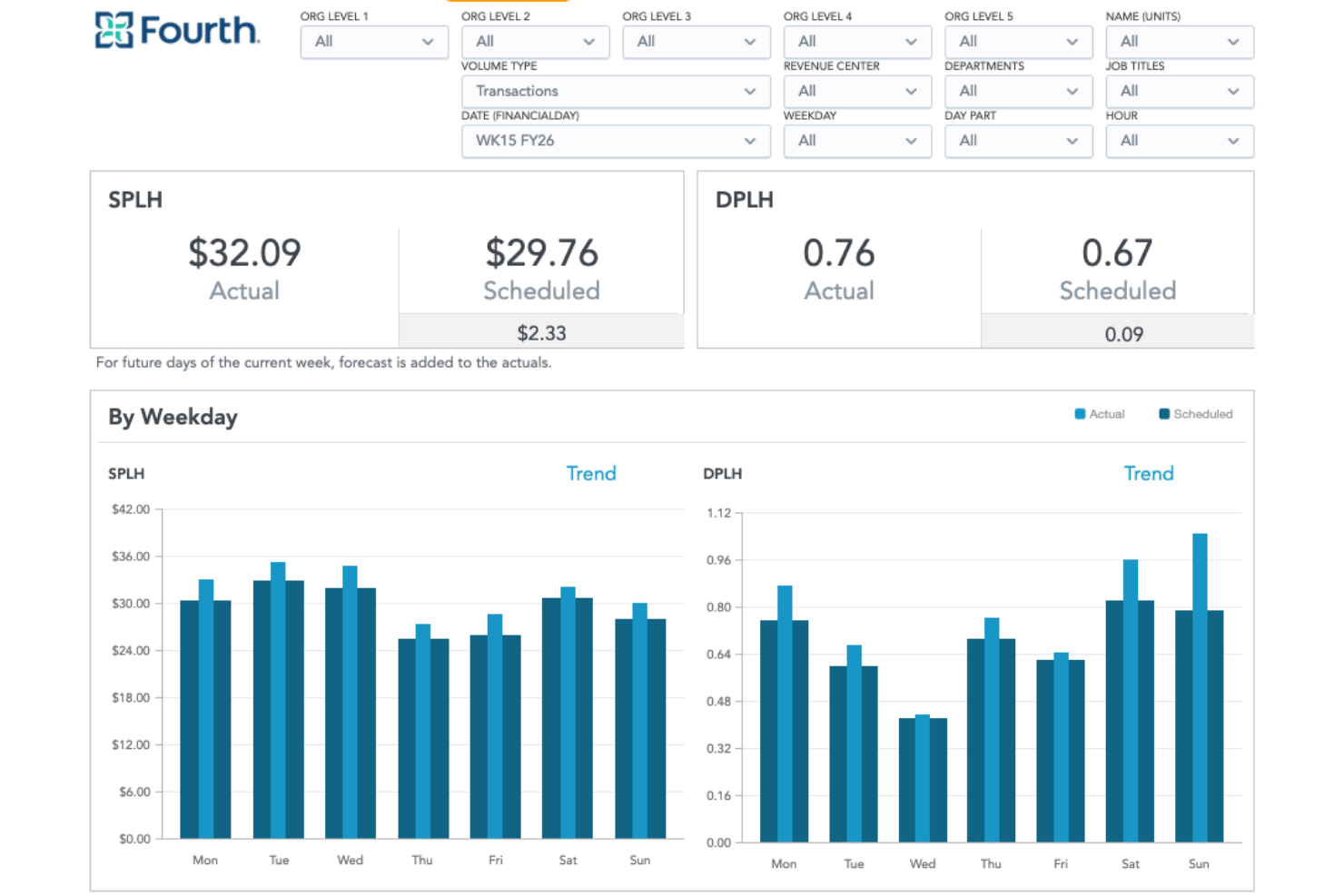
Fourth is a hospitality-focused workforce management and payroll platform that combines payroll processing, tip management, scheduling, time and attendance, earned wage access, and workforce analytics.
Who Is Fourth Best For?
Fourth fits multi-location restaurant operators who need scheduling, tip management, and payroll to work together without stitching separate tools together.
Why I Picked Fourth
Fourth earns its spot on my shortlist because of how deeply its workforce analytics are built for hospitality operations. I particularly like Fourth iQ, which pulls 7+ years of historical data to forecast labor demand by department, letting operators like hotel finance teams track daily and weekly labor KPIs without building reports from scratch. Paired with 50+ KPI dashboards that roll up across locations, it's the kind of labor visibility I'd want if I were managing a multi-unit restaurant group or a property like the Four Seasons Park Lane.
Fourth Key Features
- Tip pooling rules engine: Calculates tip pools and tip-outs daily by role, day part, and location using rules you set, with manager approval before payout.
- Earned wage access: Employees can draw up to 50% of earned wages after each shift at no cost to you as the employer.
- PeopleMatter onboarding: Tracks applicants and processes new hires with connections to Indeed, Snagajob, and other job boards.
- Multi-jurisdiction tax filing: Fourth calculates, files, and pays federal, state, and local payroll taxes across multiple jurisdictions on your behalf.
Fourth Integrations
Fourth offers 15+ documented POS integrations, including Toast, Aloha, Lightspeed U Series, PAR Brink, Simphony, and Revel, plus native HotSchedules and WebClock scheduling and time tracking. An API supports custom integrations.
Pros and Cons
Pros:
- Workforce analytics forecasts labor demand
- Payroll handles multi-jurisdiction tax filing
- Tip pooling supports role-based payout rules
Cons:
- Blended overtime calculations aren't documented
- Hotel-specific payroll details remain limited
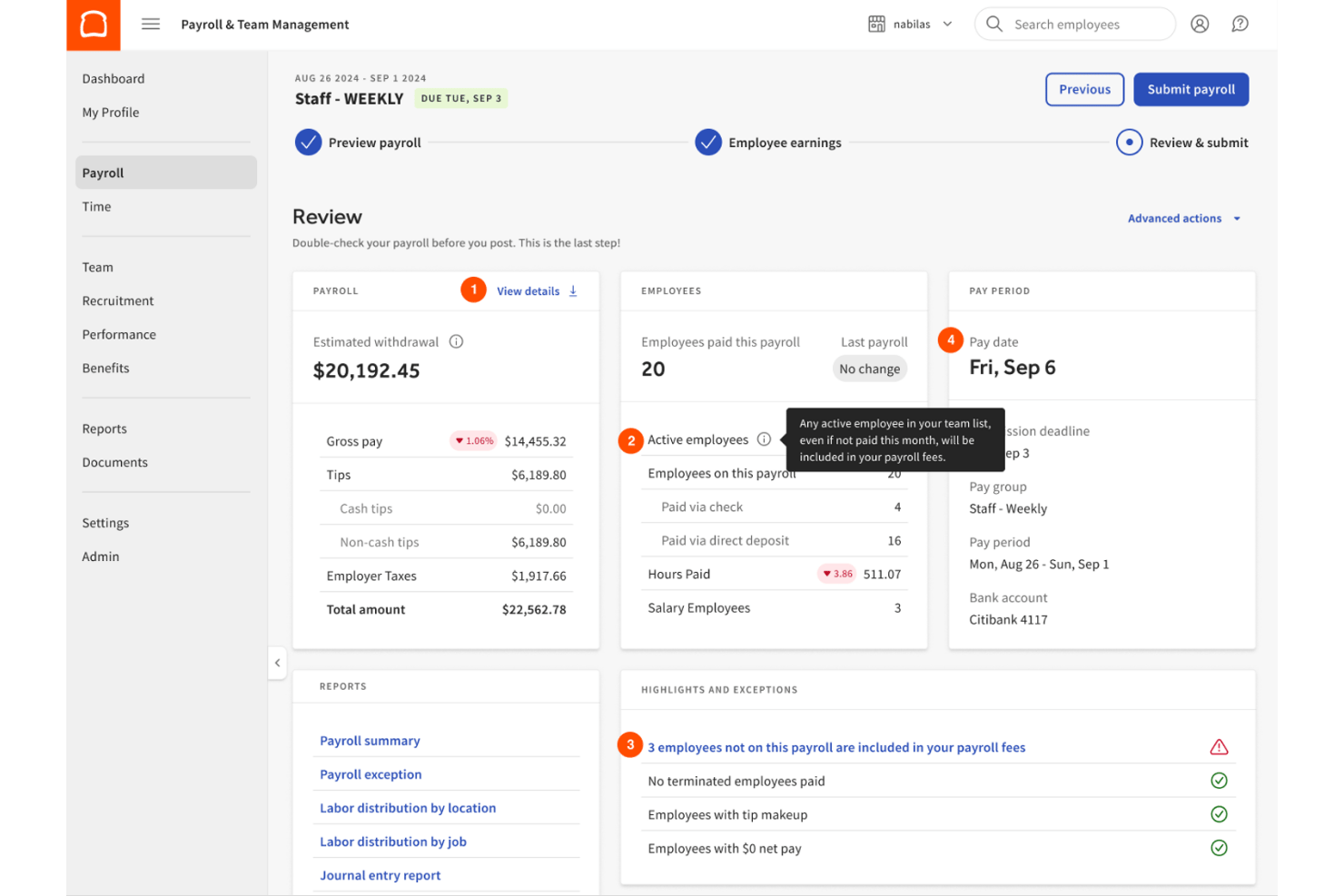
Toast Payroll is a restaurant-focused payroll platform that handles tip pooling, tip credit calculations, multi-location overtime, tax filing, and employee payments through native integration with Toast POS.
Who Is Toast Payroll Best For?
Toast Payroll is built for multi-location restaurant operators who already run Toast POS and need tip pooling, automated payroll, and real-time POS data to flow together without manual entry.
Why I Picked Toast Payroll
Toast Payroll earns its spot on my shortlist because no other payroll tool I've used pulls tip and hour data directly from the POS in real time, cutting out manual entry entirely. I love how Tips Manager lets you set unlimited pool rules by job or role, then automatically calculates each employee's share as shifts close. If tips plus direct wages ever fall short of minimum wage, Toast adds a tip makeup line without any manual intervention on your end.
Toast Payroll Key Features
- Multi-location overtime aggregation: Automatically totals hours across locations and FEINs before calculating overtime, so employees who work multiple sites are paid correctly.
- Auto Payroll: Flags auto clock-outs and unapproved tips before each run, then processes payroll automatically once issues are cleared.
- MyToast mobile app: Lets employees view hours, tips, shifts, and pay stubs directly from their phones.
- Digital onboarding checklist: New hires complete registration, I-9, W-4, and payment setup online, with an I-9 alert dashboard for managers.
Toast Payroll Integrations
Toast Payroll offers native integrations with Toast POS, Toast Tips Manager, Toast Scheduling, and QuickBooks Online. Its partner ecosystem also includes Restaurant365, 7shifts, ERGO NEXT, and Vestwell 401(k).
Pros and Cons
Pros:
- Digital onboarding suits high-turnover restaurant teams
- Multi-location overtime aggregation supports restaurant groups
- Automated tip makeup supports wage checks
Cons:
- Nevada daily overtime requires manual review
- No Form 8027 or 8846 filing

Gusto
Best for fast new hire payroll onboarding
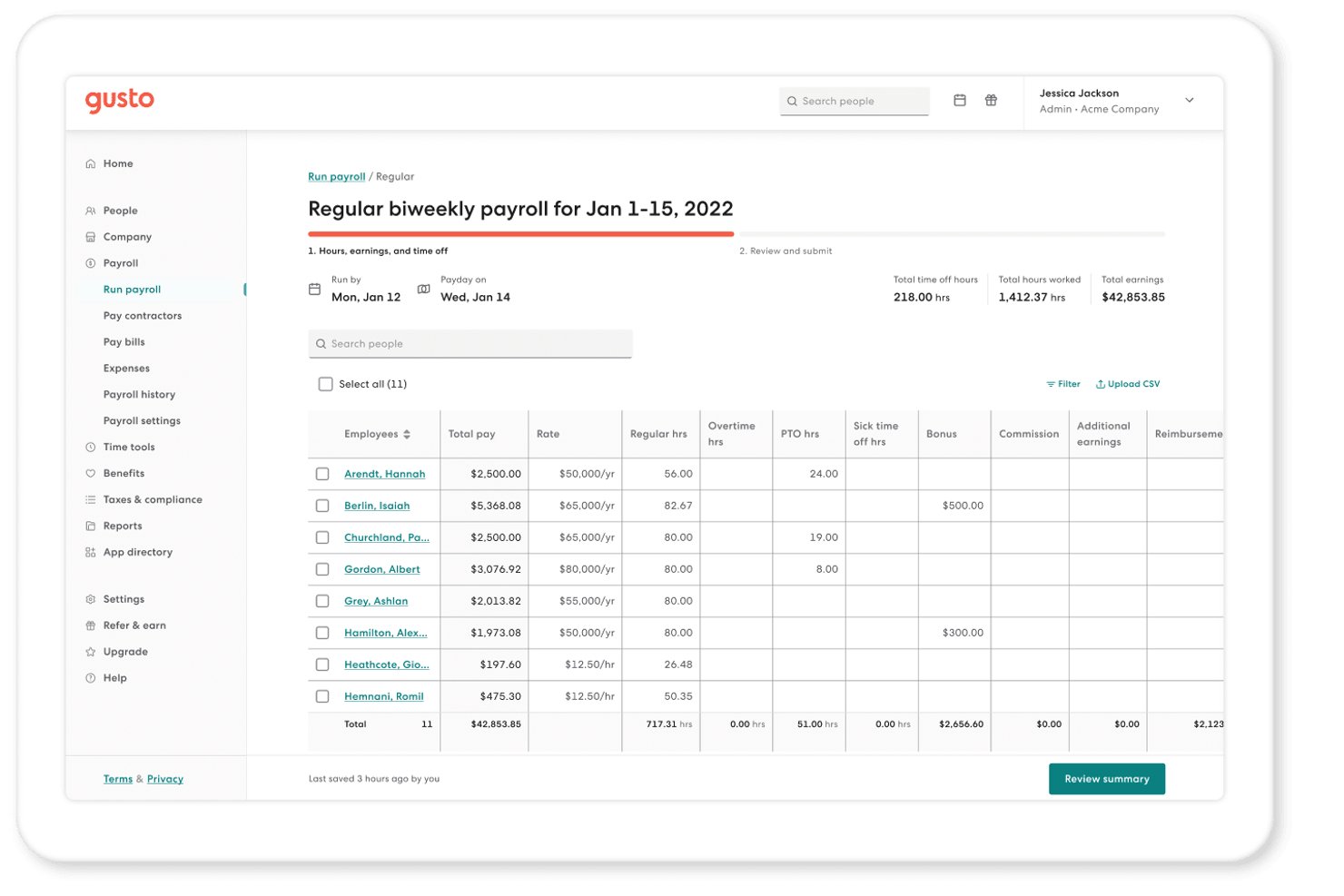
Gusto is a payroll platform that handles full-service tax filing, multi-rate pay, tip wage management, time tracking, and employee self-service onboarding for hourly and salaried workforces.
Who Is Gusto Best For?
Gusto is a strong fit for small, single-location restaurants or boutique hotels that prioritize fast, self-service onboarding and clear pricing over deep hospitality-specific POS integrations.
Why I Picked Gusto
I've included Gusto in my top picks because its self-service onboarding genuinely solves one of hospitality's biggest payroll headaches: getting new hires paid fast during a rush hire. New employees enter their own W-4, direct deposit, and I-9 details, and Gusto generates the I-9 automatically on acceptance. I also like its weighted-average overtime calculation, which handles a server-bartender split week without manual math.
Gusto Key Features
- Seasonal employee deactivation: Inactive employees aren't billed, and a built-in rehire workflow lets you reactivate seasonal staff each season without re-entering their details.
- Tip credit top-up automation: When tipped employees earn less than minimum wage, Gusto automatically adjusts their gross pay and flags the correction during the payroll run.
- State daily overtime rules: Gusto applies California, Alaska, Colorado, Nevada, and Kentucky daily and 7th-day overtime rules automatically when hours are recorded by workweek.
- Earned wage access via Clair: Employees can access up to 50% of their earned pay between pay periods, with free standard transfers and no interest charged.
Gusto Integrations
Gusto lists 152 integrations, including 7shifts, Homebase, Deputy, When I Work, Clover, Lightspeed/Upserve, talech, and SpotOn Teamwork. It lacks listed Toast, Square, Oracle Micros, or hotel PMS integrations.
Pros and Cons
Pros:
- Seasonal rehire workflows preserve employee details
- Weighted overtime handles multiple hospitality roles
- Self-service onboarding gets new hires paid faster
Cons:
- Multi-EIN payroll requires separate company profiles
- Tip pooling still requires manual calculations
New Product Updates from Gusto
Gusto Adds Solo Advisory Tools and Mobile Money Features
Gusto adds Solo S-Corp Advisory Tools and Gusto Money on Mobile for tax guidance, invoicing, and bill payments. These updates help accountants advise solopreneurs and let users manage business finances from their phones. For more information, visit Gusto’s official site.

Best for shift-based wage rule enforcement
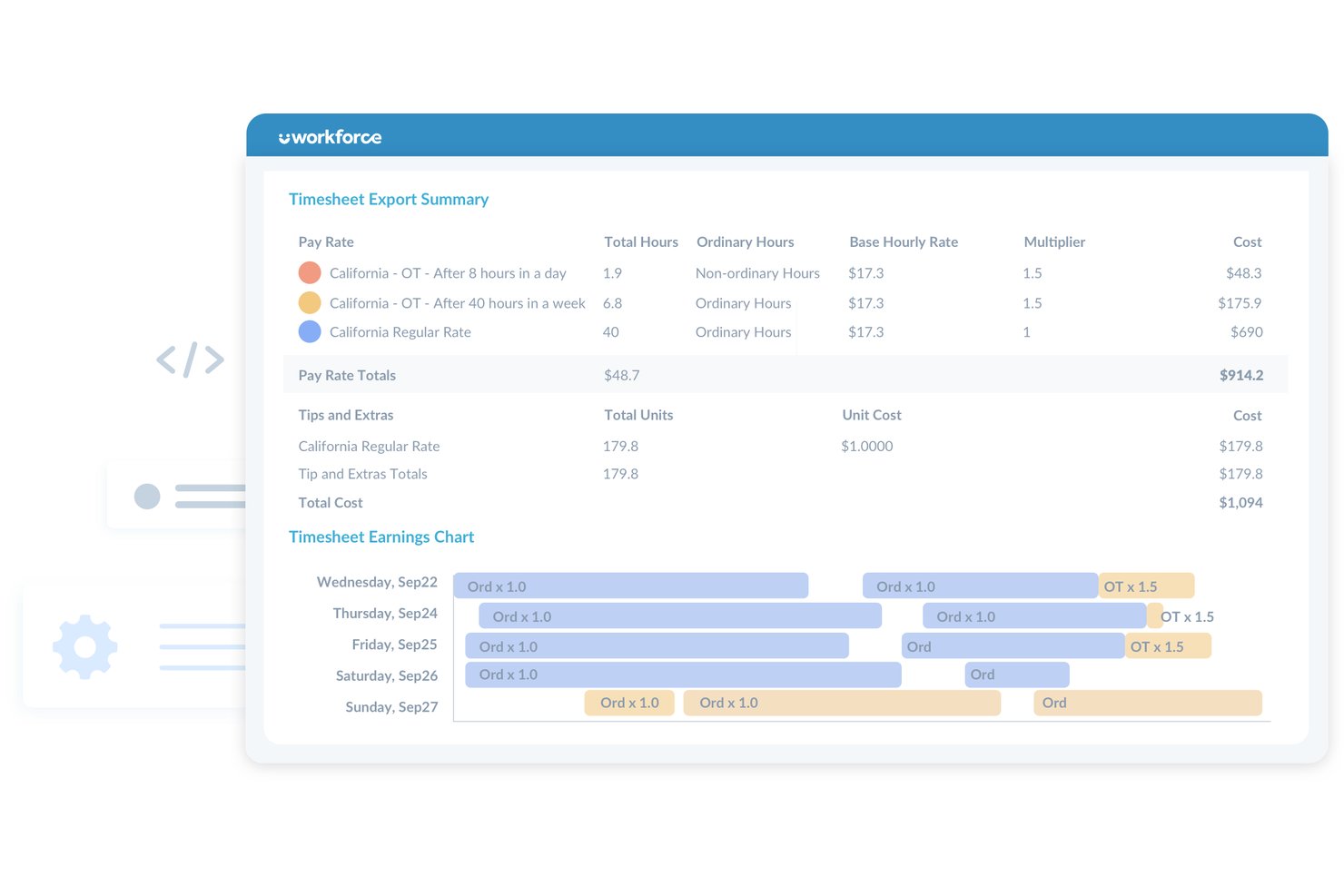
Workforce.com is a payroll and workforce management platform built for hourly, shift-based teams, combining scheduling, time tracking, tip pooling, wage and hour automation, and full-service payroll in one system.
Who Is Workforce.com Best For?
Workforce.com is a strong fit for restaurant groups and multi-location hospitality operators managing complex shift-based pay rules, tip pools, and hourly wage compliance across multiple roles and locations.
Why I Picked Workforce.com
Workforce.com earns its spot on my shortlist because of how tightly it enforces wage rules at the shift level, which is exactly where hospitality payroll tends to break down. I love that its weighted average overtime calculates automatically when a single employee works multiple roles at different pay rates in one week. The Minimum Wage Top-Up feature is also a standout for tipped operations: it monitors each tipped department shift by shift and adds a compensating payment automatically when tips plus wages fall short of the applicable minimum wage.
Workforce.com Key Features
- Tip pool configuration: Set up separate tip pools per shift, split by fixed percentage, points, or hours worked, with automatic manager exclusion built in.
- IRS tip reporting: Generates Forms 4070 and 8027 to support employee tip reporting and employer annual tip filing requirements.
- Multi-jurisdiction pay rates: Assign role- and location-specific pay rates across multiple states, cities, and countries within a single pay run.
- Pre-payroll validation: Flags scheduling and payroll discrepancies before a pay run processes, blocking invalid data from reaching employee paychecks.
Workforce.com Integrations
Workforce.com lists integrations with Toast, Square, Clover, Oracle Micros Simphony, NCR Aloha, Lightspeed, QuickBooks, Xero, ADP, and Workday. It also supports Open API and SFTP connections, but doesn’t list native 7shifts, HotSchedules, or hotel PMS integrations.
Pros and Cons
Pros:
- Pre-payroll checks catch wage-rule errors
- Tip pools preserve shift-level audit trails
- Weighted overtime handles multiple roles
Cons:
- Mobile clock-ins can load slowly
- Setup spans departments and pay rules
Other Payroll Software for Hospitality
Here are some additional payroll software for hospitality options that didn’t make it onto my shortlist, but are still worth checking out:
- Paylocity
For custom labor cost reporting
- Paycor
For restaurant-focused labor law compliance
- ADP Workforce Now
For multi-location operator payroll and pay cards
- Square Payroll
For hourly teams on Square's ecosystem
- ADP TotalSource
For PEO-backed multi-state hospitality payroll
- Workstream
For QSR multi-location hourly payroll
- Hybrid Payroll
For multi-property pay rate management


How I Evaluate Payroll Software for Hospitality
I split my evaluation into core requirements—like tip pooling, POS integration, and wage compliance—and the differentiators that separate a hospitality-ready platform from a generic payroll tool.
Core Functionality (Table Stakes for This List)
When I'm selecting tools for my list, I rank each one on a scale from 0 (does not offer the functionality) to 5 (excels in this area) for each core functionality listed below. I then calculate the tool's total score as a percentage, using 65% as a benchmark to help assess its overall fit for the list.
- Tip Management: I look for automated tip pooling, tip-out calculations, and tip credit tracking that flow directly into payroll runs without manual spreadsheet work.
- POS & Scheduling Integrations: The platform should connect natively with hospitality POS and scheduling tools so hours and tip data sync without CSV exports.
- Multi-Rate & Multi-Location Pay: I evaluate whether a server working as a host at a second location can be paid both rates in a single payroll run.
- Hospitality Wage Compliance: Automated tipped minimum wage rules, FLSA tip credit calculations, and overtime tracking across jurisdictions are what I check for here.
- Hourly & Variable Workforce Payroll: High-turnover teams need fast onboarding, variable schedule support, and the ability to process seasonal hires in bulk.
- Tax Filing & Direct Deposit: I look for automated multi-jurisdiction tax filings alongside flexible pay options like same-day or on-demand pay for hourly workers.
Once I have a list of tools that meet the criteria, I consider what sets each platform apart.
Differentiating Factors (What Sets Vendors Apart)
Here's how I compare and contrast different vendors:
Standout Features
Blended overtime calculation is a big differentiator. When a bartender also works host shifts at a different rate, the platform should automatically calculate the correct weighted overtime. I also evaluate same-day and on-demand pay options, which help reduce turnover among hourly staff who value flexible access to earned wages. Multi-location wage rules matter too—I look for a single dashboard that manages varying pay rates and overtime thresholds across properties.
Beyond Features
Pricing structure matters a lot in hospitality because headcount swings seasonally. I look for per-employee pricing that adjusts month to month, plus transparent fees for off-cycle runs and year-end filings. High-turnover support is equally important—bulk onboarding, rehire workflows, and multilingual self-service apps make a real difference when you're staffing up for peak season. I also evaluate compliance depth, especially around tipped wage reporting and ACA tracking for variable-hour employees.
How to Choose Payroll Software for Hospitality
How do you make sure the payroll software you select actually handles tip management, wage compliance, and hospitality scheduling the way your business needs?
| If your priority is... | Prioritize software with... |
|---|---|
| Integrated tip pooling and tip-out | Automated tip management tools |
| Multiple locations or properties | Multi-location pay rules and dashboards |
| Variable schedules or seasonal hiring | Rapid bulk onboarding support |
| Deep POS and scheduling integration | Native sync with your current POS system |
| Compliance with hospitality labour laws | Built-in wage compliance reporting |
How to Vet Your Shortlist
- Request a sample tip distribution report: Ask for an exported file showing how pooled tips and credits are calculated for a recent pay period.
- Run a live payroll trial: Process at least one payroll that covers multiple roles, rates, and properties using real or anonymized data.
- Ask for hospitality compliance documentation: Request a recent document or help center article detailing how wage and tipped labour compliance is maintained and updated.
- Test the POS integration: Connect your actual POS or scheduling system with the software in a sandbox environment and check for accurate sync within two business days.
- Weigh all-in-one support vs. niche strengths: Decide if you need an all-in-one HR/payroll stack or a specialized solution with deeper hospitality expertise.
What Is Payroll Software for Hospitality?
Payroll software for hospitality is a specialized platform that automates payroll, tip management, and compliance for hotels, restaurants, and hospitality businesses. It handles hourly, tipped, and seasonal staff pay, manages complex pay rates, integrates with POS and scheduling systems, and helps ensure you meet hospitality-specificlabourr regulations—so you can accurately pay teams working varied shifts and roles across multiple locations.
Features of Payroll Software for Hospitality
When selecting payroll software for hospitality, keep an eye out for the following key features:
- Tip management: Calculates, distributes, and reports pooled or individual tips, including tip credits, tip-out automation, and IRS Form 8027 compliance.
- Multi-location payroll: Processes payroll for employees who work across several properties or units, supporting location-specific pay rates and compliance rules.
- Variable pay rates: Handles multiple job roles for the same employee, automatically applying the correct rates and blended overtime calculations in each pay run.
- POS and scheduling integrations: Connects to hospitality POS and scheduling systems to automatically sync hours, sales, and shift details for payroll accuracy.
- Seasonal and bulk onboarding: Enables easy addition of seasonal, temporary, or high-volume new hires with enhanced document collection and self-service employee setup.
- Hospitality wage compliance: Maintains compliance with tipped minimum wage, FLSA tip credits, overtime, and local labour regulations unique to the hospitality industry.
- Automated tax filing: Manages federal, state, and local payroll taxes, including automated filings, W-2s, and year-end reporting.
- Direct deposit and pay options: Provides same-day, next-day, or earned wage access to meet the faster pay cycle needs common among hospitality workers.
- Employee self-service portal: Lets employees view pay stubs, manage personal information, and review tip allocations without HR support.
- Role-based access controls: Restricts or grants payroll visibility by location, department, or job role, protecting sensitive data and supporting complex org structures.
Benefits of Payroll Software for Hospitality
Implementing payroll software for hospitality provides several benefits for your team and your business. Here are a few you can look forward to:
- Accurate tip management: Automated calculations, distributions, and reporting minimize errors and support full compliance with tip pooling and tip credit rules.
- Simplified wage compliance: Built-in tools help you stay on top of complex labour laws, tipped minimum wages, and blended overtime requirements across multiple locations.
- Faster payroll cycles: Real-time integrations with your POS and scheduling systems mean payroll can run accurately and quickly, even with variable hours and high turnover.
- Easier high-volume onboarding: Self-service portals and bulk onboarding workflows let you bring on seasonal or temporary staff without bogging down your HR team.
- Centralized reporting: Multi-location dashboards and automated compliance reports give you a unified view of labour costs, overtime, and tax obligations across your properties.
- Flexible pay options: Features like same-day pay or earned wage access offer employees more control over when they get paid, which improves retention and morale.
- Reduced manual workload: Automated data sync, tax filings, and employee self-service free up time for HR and managers to focus on service, not paperwork.
Costs and Pricing of Payroll Software for Hospitality
Selecting payroll software for hospitality requires an understanding of the various pricing models and plans available. Costs vary based on features, team size, add-ons, and more. The table below summarizes common plans, their average prices, and typical features included in payroll software for hospitality solutions:
Plan Comparison Table for Payroll Software for Hospitality
| Plan Type | Average Price | Common Features |
|---|---|---|
| Free Plan | $0 | Basic payroll processing, limited employee count, and simple tip reporting. |
| Personal Plan | $5–$15/user/month | Payroll for small teams, essential compliance tools, and manual tip entry. |
| Business Plan | $15–$30/user/month | Multi-location payroll, automatic tip pooling, POS integrations, and basic tax filings. |
| Enterprise Plan | $30–$50+/user/month | Advanced compliance reporting, custom onboarding, dedicated support, and deep integrations across the tech stack. |
Payroll Software for Hospitality FAQs
Here are some answers to common questions about payroll software for hospitality:
Can payroll software for hospitality handle tip pooling and tip credits?
Yes, most solutions automate tip pooling, tip-out calculations, tip tracking, and monitor tip credit thresholds for compliance with IRS and labour laws. This helps ensure every employee receives the right amount and accurate payroll and tax records are available for audits.
How do these platforms support multiple locations and properties?
Hotel payroll software typically lets you set multiple pay rates, overtime rules, and labour cost reporting by location. This means you can manage tax regulations compliance and payroll from a single dashboard, even operating across jurisdictions alongside your property management system.
Do I need to manually sync POS or scheduling data with payroll?
No, leading payroll software for hospitality connects directly to popular POS systems and employee scheduling platforms, allowing hours, sales, and tip data to sync automatically without manual entry or uploads. This reduces time theft while maintaining strict data security.
What if our staff work multiple jobs or roles?
These platforms usually support blended overtime and variable rates, applying the correct wage to each role an employee works during the pay period, and accurately calculating overtime pay.
How to choose the best restaurant payroll software?
Look for built-in tip pooling automation and dual-rate pay calculations to handle mixed roles. You should select a platform that syncs directly with your POS system and time-tracking tools to prevent manual data entry errors. Make sure the software automates tax filings, calculates FICA tip credits, and tracks changing local labour laws. Finally, choose a system with a mobile app so your team members can check pay stubs and view their earnings.