

Kyan Health vs. Lyra Health: Comparison and Expert Reviews For 2026



If your organization is rethinking its employee mental health strategy, there’s a good chance Kyan Health and Lyra Health are both on your shortlist. Both platforms aim to move beyond traditional employee assistance program (EAP) models to a more modern EAP experience, but they solve workplace mental health care challenges in very different ways. If you’re evaluating both, you’re probably trying to balance factors like clinical depth, global scalability, broad behavioral health support, employee adoption, analytics, and overall ROI without adding another disconnected benefit employees rarely use.
In this comparison, I’ll break down the real differences between Kyan Health and Lyra Health, including care models, standout features, pricing structure, implementation experience, reporting capabilities, and overall value. I’ll also highlight where each platform performs best so you can make a more confident decision for your workforce.
Kyan Health vs. Lyra Health: An Overview
Kyan Health
Lyra Health
Why Trust Our Software Recommendations
Our team has been testing and reviewing software since 2012. As HR experts ourselves, we know how difficult—and important—it is to choose the right software.
For this guide, we evaluated tools using hands-on testing and independent research, scoring tools using our selection criteria. We also draw on insights from industry thought leaders and practicing HR experts.
Our reviews reflect our human editorial judgment, not a sales pitch.
Expert reviewers:
Kyan Health vs. Lyra Health Pricing Comparison
| Kyan Health | Lyra Health | |
|---|---|---|
| Free Trial | Free demo available | Free demo available |
| Pricing | Pricing upon request | Pricing upon request |
Kyan Health vs. Lyra Health Pricing & Hidden Costs
Kyan Health and Lyra Health both use custom quote-based pricing tailored to each organization’s workforce size, geographic coverage, and service requirements. Neither vendor publicly discloses standard pricing tiers, so you'll need to go through a sales process to understand total costs.
Kyan Health positions itself as a modular enterprise well-being digital platform combining counseling, coaching, analytics, AI-guided support, and optional performance-based pricing tied to engagement, satisfaction, and clinical outcomes. Lyra Health uses a more clinically intensive, outcomes-focused model that includes therapy, psychiatry, specialty care, and care navigation.
Before choosing a platform, I’d strongly recommend clarifying exactly which services, implementation support, integrations, analytics tools, and employee care options are included in your contract. Since both platforms rely heavily on customized deployments, long-term costs can vary depending on rollout complexity, workforce size, geographic expansion, and the level of clinical or organizational support your company requires.
Kyan Health vs. Lyra Health Feature Comparison
Kyan Health and Lyra Health both provide employees with access to personalized care pathways, counseling, coaching, self-guided mental health resources, and evidence-based digital care tools designed to improve engagement and accessibility. Each platform also supports HR teams with aggregated well-being analytics, workforce insights, and centralized program management features that help organizations track utilization and employee support trends.
Where they differ most is in how they approach care delivery and workforce mental health strategy. Kyan Health focuses on high-quality clinical care combined with preventative well-being, AI-guided care navigation, and continuous employee engagement through its “living EAP” model (designed to keep employees continuously engaged through self-care tools, ongoing check-ins, coaching, work-life support, and proactive mental health resources rather than relying only on reactive counseling sessions). It also supports neurodiverse needs, substance use, pediatric mental health, and broader work-life services as part of its care ecosystem.
Lyra Health takes a more clinically intensive approach centered around AI-powered provider matching, psychiatry services, structured care navigation, and coordinated higher-acuity mental healthcare delivery. Its model places stronger emphasis on clinically guided treatment pathways, ongoing care coordination, and rapid access to matched providers for employees and dependents with more complex mental health needs.
| Kyan Health | Lyra Health | |
|---|---|---|
| API | ||
| Batch Permissions & Access | ||
| Behavioral Tracking | ||
| Budgeting | ||
| Calendar Management | ||
| Compliance Tracking | ||
| Custom Data Forms | ||
| Custom Reports | ||
| Dashboard | ||
| Data Export | ||
| Data Import | ||
| Data Visualization | ||
| Employee Database | ||
| Employee Engagement | ||
| Employee Incentive Management | ||
| Employee Training | ||
| Expense Tracking | ||
| External Integrations | ||
| Feedback Management | ||
| Health Management | ||
| Multi-User | ||
| Notifications | ||
| Online Surveys | ||
| Risk Assessment | ||
| Safety Management | ||
| Social-Media Integration | ||
| Vacation & Absence Calendar | ||
| Workflow Management |
Kyan Health vs. Lyra Health Integrations
| Integration | Kyan Health | Lyra Health |
|---|---|---|
| Microsoft Teams | ✅ | ❌ |
| Slack | ✅ | ❌ |
| Google Workspace | ✅ | ❌ |
| Workday | ❌ | ✅ |
| SSO Support | ✅ | ✅ |
| ADP | ❌ | ✅ |
| API | ❌ | ✅ |
Both Kyan Health and Lyra Health support the core integrations most enterprises expect, including SSO, HRIS connectivity, and secure employee access workflows. Kyan Health leans more toward workplace collaboration and employee engagement integrations, while Lyra Health has a broader documented ecosystem tied to benefits administration and healthcare navigation partners. Neither platform operates like a highly customizable open-developer SaaS product, so organizations with more advanced integration requirements should confirm compatibility and implementation details during the buying process.
Kyan Health vs. Lyra Health Security, Compliance & Reliability
| Factor | Kyan Health | Lyra Health |
|---|---|---|
| Data Privacy | GDPR-native approach with strong employee confidentiality protections. | Supports HIPAA, GDPR, CCPA/CPRA, and strict access controls. |
| Regulatory Compliance | Aligns with HIPAA, GDPR, EU AI Act, and Swiss FADP. | Maintains SOC 2 Type II, HITRUST, ISO 27001, GDPR, and HIPAA support. |
| Encryption | Uses AES-256 encryption and secure EU-hosted infrastructure. | Uses TLS 1.2 in transit and AES-256 encryption at rest. |
| Access Controls | Role-based permissions and privacy-focused workforce analytics. | Role-based access controls, MFA, and least-privilege access policies. |
| Security Monitoring | Regular third-party penetration testing. Focuses on secure infrastructure and compliance-led governance. | Conducts penetration testing, vulnerability management, and risk assessments. |
In my view, both Kyan Health and Lyra Health provide strong enterprise-level security and privacy protections for sensitive employee mental health data. Kyan Health feels particularly well aligned for organizations balancing GDPR-native infrastructure, HIPAA-compliant care delivery, multinational data governance, and US workforce coverage. Lyra Health stands out for its extensive healthcare-focused compliance coverage, including HIPAA, HITRUST, SOC 2 Type II, and ISO 27001 certifications. No matter which platform you’re considering, I’d still suggest carefully reviewing each vendor’s security and compliance documentation during the evaluation process—especially if your organization operates under strict governance requirements.
Kyan Health vs. Lyra Health Ease of Use
| Factor | Kyan Health | Lyra Health |
|---|---|---|
| User Interface | Centralized platform combining care, resources, and work-life support. | Streamlined care navigation focused on quick provider matching and access. |
| Onboarding | Guided enterprise rollout with dedicated Customer Success support. | Structured implementation with launch guidance and member onboarding flows. |
| Scheduling | Direct booking for counseling, coaching, and support services. | Real-time appointment booking with AI-powered provider matching. |
| Language Support | Counselors available in 120+ languages across 200+ countries and territories. | Supports care in 65+ languages across 200+ countries and territories. |
| Employee Experience | Emphasizes preventative well-being, ongoing engagement, and self-guided support. | Prioritizes fast access to clinically matched care and specialty support. |
Both platforms deliver polished employee experiences with guided care navigation, digital scheduling, and streamlined access to support. Kyan Health feels especially strong for multinational organizations needing culturally localized care across regions and languages, while Lyra Health stands out for the depth of its clinical network and specialty-care ecosystem. In practice, the better fit depends less on basic usability and more on whether your organization prioritizes preventative global well-being engagement or broader high-acuity mental health support.
Kyan Health vs Lyra Health: Pros & Cons
Kyan Health
- AI-guided care pathways improve personalized employee support and accessibility.
- Global multilingual clinician network supports culturally relevant employee care.
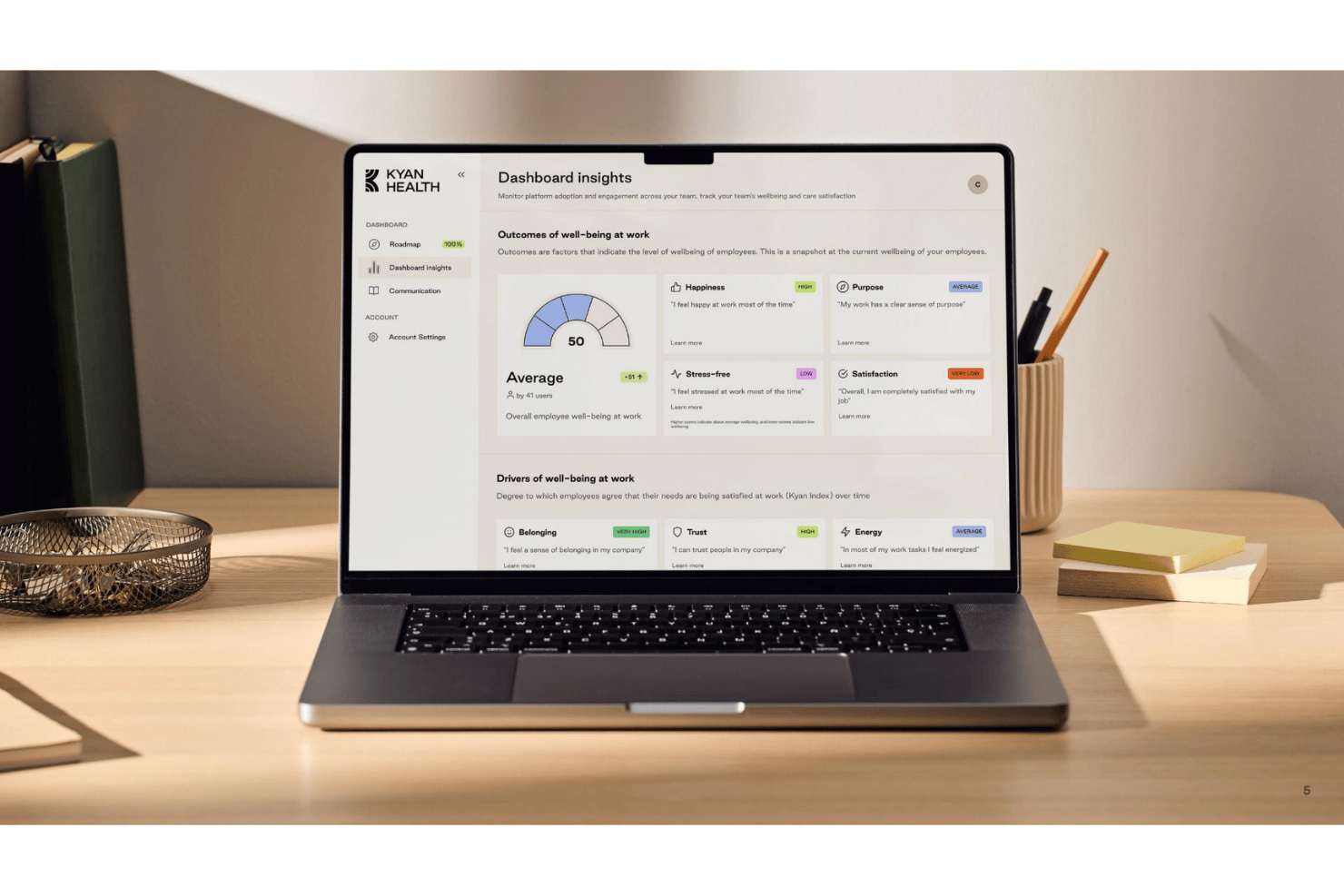
- Integrated well-being analytics help HR teams track workforce well-being trends.
- The breadth of the platform can feel overwhelming at first.
- Strong adoption depends on active HR-led rollout and employee communication.
- Initial platform setup involves more decisions than simpler traditional EAPs.
Lyra Health
- Provides fast access to evidence-based mental health providers.
- Supports therapy, coaching, psychiatry, and specialty care together.
- Uses AI-powered matching to improve provider compatibility.
- Pricing requires custom quotes and lacks public transparency.
- Primarily available through employer-sponsored mental health benefits.
- May feel overly complex for smaller teams or organizations.
Best Use Cases for Kyan Health and Lyra Health
Kyan Health
- Organizations Replacing Traditional EAPs Companies frustrated with low-utilization EAPs and disconnected well-being vendors seeking continuous engagement and broad work-life support.
- Multinational Enterprises Global organizations operating across multiple regions and cultures needing a multilingual, GDPR- and HIPAA-compliant platform with localized care across 200+ countries and territories.
- High-Stress Industries Industries such as healthcare, manufacturing, logistics, finance, or professional services that benefit from preventative well-being tools and quick counseling access.
- Hybrid and Remote Workforces Distributed teams needing digital-first, virtual counseling, self-guided resources, and AI care navigation across time zones.
- Large HR and People Operations Teams HR leaders requiring insight into workforce well-being trends, aggregated analytics, and manager enablement tools.
- Companies Focused on Burnout Prevention Organizations seeking to proactively address stress, absenteeism, and presenteeism with preventative care and continuous resources.
Lyra Health
- Global Workforces Lyra Health supports care across 200+ countries and territories with multilingual providers and virtual care access, making it well-suited for multinational organizations.
- Healthcare Organizations With advanced quality standards and crisis care, Lyra supports healthcare teams dealing with high stress and emotionally demanding roles.
- Large Enterprise Employers Large organizations benefit from Lyra’s scalable care network, workforce analytics, implementation support, and ability to coordinate care across thousands of employees and dependents.
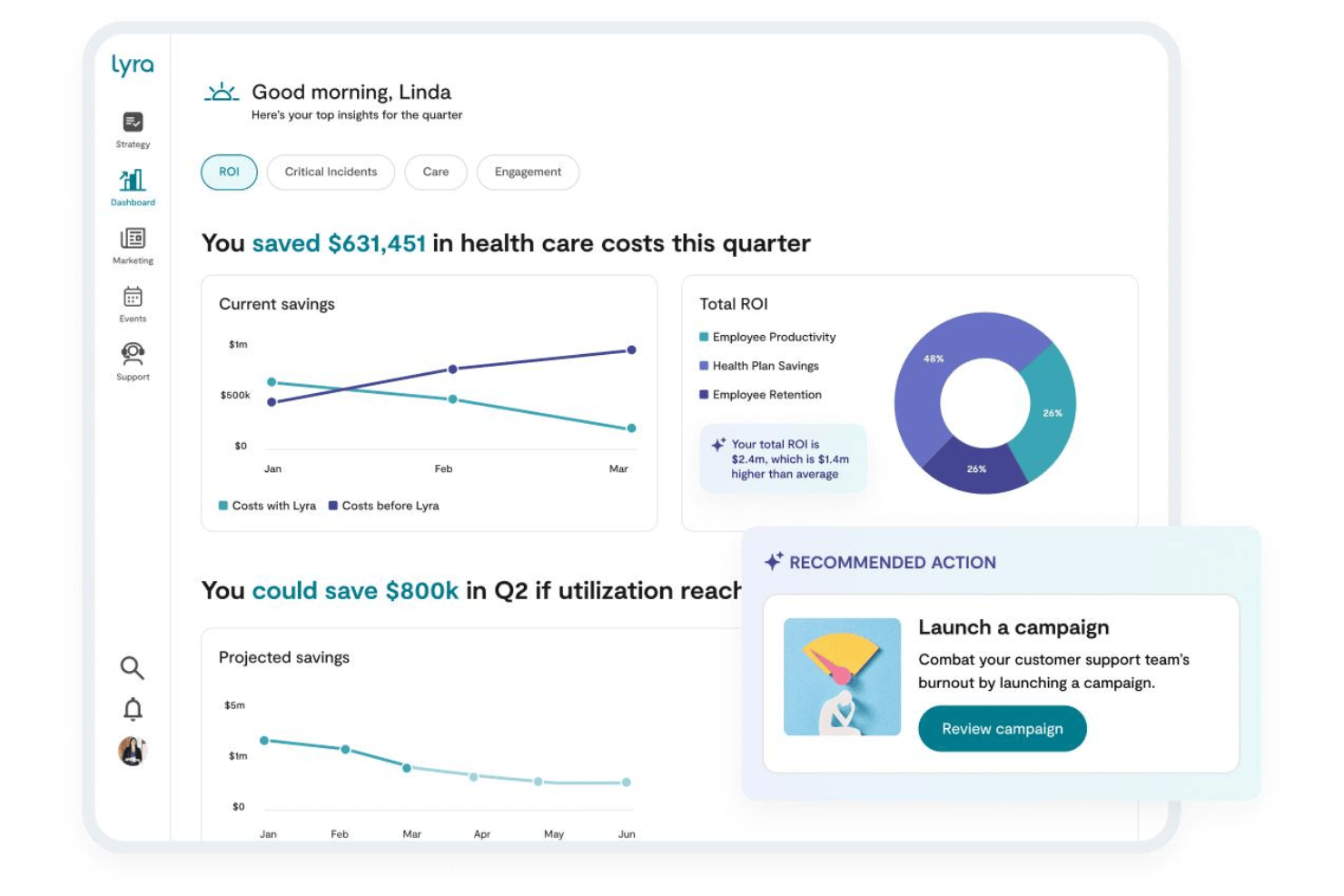
- HR and Benefits Teams HR leaders benefit from Lyra’s reporting dashboards, ROI insights, engagement tracking, and dedicated rollout support for managing workforce mental health programs effectively.
- High-Acuity Mental Health Support Organizations needing structured care coordination, psychiatry access, and clinically intensive mental health support can benefit from Lyra’s specialty-care ecosystem.
- Family-Focused Employers Companies that prioritize employee family well-being can take advantage of Lyra’s dependent support programs, pediatric mental health services, and family-focused care resources.
Who Should Use Kyan Health, And Who Should Use Lyra Health?
Kyan Health is a strong fit for organizations that want high clinical quality combined with preventative well-being, global scalability, and performance-based pricing. It works especially well for US and European enterprises looking to consolidate EAP, counseling, coaching, neurodiverse support, substance use support, pediatric mental health, work-life services, leadership enablement, and analytics into one platform with measurable outcomes.
Its HIPAA-compliant care delivery, US state-by-state licensure, and network of 11,000+ providers across all 50 US states also make it well-suited for enterprises balancing global scale with comprehensive US workforce coverage.
Lyra Health is a strong fit for organizations prioritizing a clinically intensive model with structured care navigation, rapid provider matching, and coordinated mental healthcare delivery.
I think it works especially well for large US-based enterprises managing complex mental health needs across employees and dependents, particularly those looking for psychiatry services, guided clinical pathways, and high-touch support for ongoing care coordination and treatment engagement.
Differences Between Kyan Health and Lyra Health
| Kyan Health | Lyra Health | |
|---|---|---|
| Care Delivery Model | Combines high-quality clinical care, preventative well-being, continuous engagement, and AI-guided support through its “living EAP” model. | Focuses more heavily on virtual and in-person clinical care coordination and structured higher-acuity mental healthcare support. |
| Employee Engagement Style | Encourages ongoing interaction through self-guided care and well-being tools. | Prioritizes rapid access to matched providers and clinically appropriate care pathways. |
| Global Compliance | Supports HIPAA-compliant care delivery alongside GDPR-native infrastructure, EU AI Act alignment, and Swiss FADP standards. | Maintains broad healthcare-focused compliance coverage, including HIPAA, HITRUST, SOC 2 Type II, and ISO 27001. |
| Language Support | Supports care in 120+ languages across 200+ countries and territories. | Supports care in 65+ languages across 200+ countries and territories. |
| Visit Kyan HealthOpens new window | Read Lyra Health ReviewOpens new window | |
| Provider Network Scale | Operates a network of 140,000+ counselors and coaches globally, including 11,000+ providers across all 50 US states. | Maintains a network of 30,000+ providers with extensive clinical care coordination capabilities. |
| Specialty Care Depth | Combines preventative well-being with counseling, coaching, neurodiverse support, substance use support, pediatric mental health, and work-life services. | Emphasizes psychiatry, structured care coordination, and clinically intensive mental healthcare pathways. |
| Visit Kyan HealthOpens new window | Read Lyra Health ReviewOpens new window |
Similarities Between Kyan Health and Lyra Health
| 24/7 Support Access | Both platforms provide around-the-clock access to digital well-being resources and crisis support pathways (like helplines). |
|---|---|
| AI-Guided Care Navigation | Both use AI-supported guidance and matching tools to help employees find appropriate care resources more efficiently. |
| Digital Scheduling | Both allow employees to book support sessions digitally through guided care and integrated scheduling workflows. |
| Global Workforce Support | Each platform is designed to support multinational organizations with multilingual care and distributed workforce accessibility. |
| Visit Kyan HealthOpens new window Read Lyra Health ReviewOpens new window | |
| HR Analytics | Each platform includes aggregated workforce analytics and reporting tools that help HR teams track engagement, utilization, and well-being trends. |
| Self-Guided Well-Being Tools | Each platform includes digital exercises, educational content, mindfulness activities, and self-care mental health resources employees can access anytime. |
| Visit Kyan HealthOpens new window Read Lyra Health ReviewOpens new window | |