

10 Best Applicant Tracking Software for Healthcare in 2026

Best Applicant Tracking Software for Healthcare Shortlist


Applicant tracking software for healthcare helps your team organize, track, and manage candidates through every step of the hiring process—all while keeping you compliant with healthcare regulations. If you’re looking to hire nurses, doctors, or support staff fast, you know just how complex healthcare recruiting can be.
You face credential checks, high-volume applications, and pressure to staff clinical roles without missing a beat. In this guide, you’ll find the top tools that help healthcare organizations like yours simplify recruitment, support credential management, and hire the right people.
Use this list to compare options and pick the software that best fits your hiring needs this 2026.
Why Trust Our Software Reviews
Our team has been testing and reviewing software since 2012. As HR experts ourselves, we know how difficult—and important—it is to choose the right software.
For this guide, we evaluated tools using hands-on testing and independent research, scoring tools using our selection criteria. We also draw on insights from industry thought leaders and and practicing HR experts.
Our reviews reflect our human editorial judgment, not a sales pitch.
Best Applicant Tracking Software for Healthcare Summary
This comparison chart summarizes pricing details for my applicant tracking software for healthcare to help you find the best one for your budget and business needs.
| Tool | Best For | Trial Info | Price | ||
|---|---|---|---|---|---|
| 1 | Best with AI-driven candidate profile enrichment | 14-day free trial + free demo available | From $15/user/month (billed annually) | Website | |
| 2 | Best for managing high-volume clinical applicants | Free demo available | From $14,995/year (billed annually) | Website | |
| 3 | Best for collaborative healthcare hiring teams | Free demo available | Pricing upon request | Website | |
| 4 | Best for large-scale medical facility support | Free demo available | Pricing upon request | Website | |
| 5 | Best for shift-based clinician placement tools | Free demo available | From $99/user/month | Website | |
| 6 | Best for employee referral programs | Free demo available | Pricing upon request | Website | |
| 7 | Best for healthcare staffing agency connections | Free demo available | Pricing upon request | Website | |
| 8 | Best for credential management | Free demo available | Pricing upon request | Website | |
| 9 | Best for licensed recruitment workflows | Free demo available | Pricing upon request | Website | |
| 10 | Best for job board integrations in medical hiring | Free demo available | Pricing upon request | Website |
Best Applicant Tracking Software for Healthcare Reviews
Below are my detailed summaries of the best applicant tracking software for healthcare that made it onto my shortlist. My reviews offer a detailed look at the features, best use cases, and integrations of each platform to help you find the best one for you.

Manatal
Best with AI-driven candidate profile enrichment
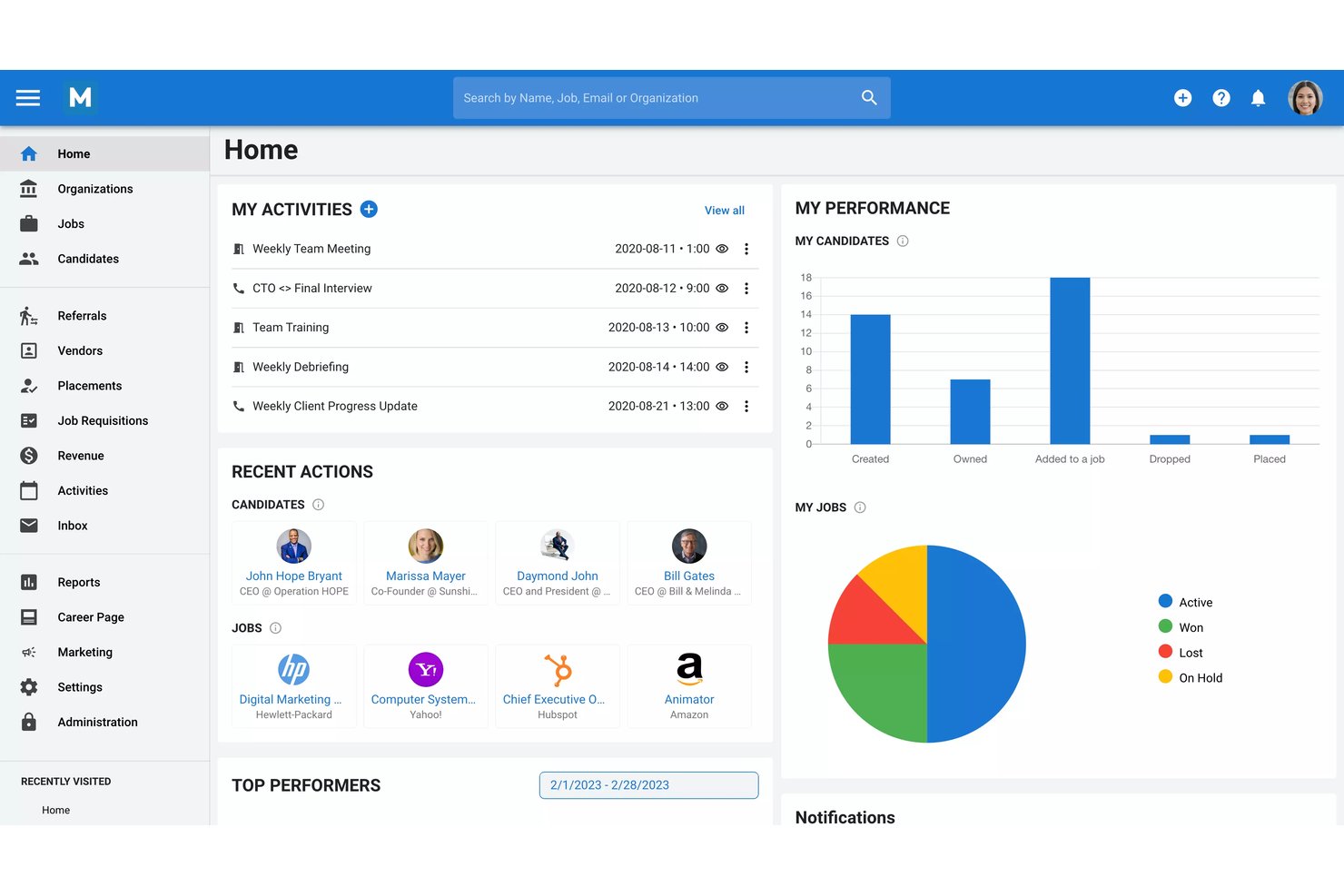
Manatal is an AI-powered applicant tracking system that combines candidate sourcing, pipeline management, AI-driven profile enrichment, and screening tools to support recruitment across clinical and non-clinical roles.
Who Is Manatal Best For?
Manatal suits small-to-mid-sized healthcare staffing agencies and recruitment teams that need AI-powered candidate matching without the cost or complexity of enterprise ATS platforms.
Why I Picked Manatal
I picked Manatal as one of the best because its AI candidate enrichment automatically pulls data from LinkedIn and 20+ social platforms to build fuller candidate profiles without manual research. In healthcare recruiting, where background depth matters before you even schedule a screen, that profile-building head start is genuinely useful. I also like that Manatal's AI scoring ranks candidates against job-specific clinical criteria using custom scorecards, so your shortlist reflects actual role requirements rather than keyword guesses.
Manatal Key Features
- Bulk job board posting: Distribute openings to over 2,500 global job boards directly from the platform.
- SMS and email candidate communication: Engage healthcare applicants through automated text messages and email templates.
- Customizable recruitment pipelines: Tailor hiring pipelines by department or specialty with kanban and list views.
- Healthcare credential tracking: Store and track licenses and certifications using custom fields within candidate profiles.
Manatal Integrations
Native integrations include LinkedIn, Gmail, Outlook, and Mailchimp. Manatal offers an open API for custom integrations.
Pros and Cons
Pros:
- Custom pipelines adapt to clinical role workflows
- Bulk posting reaches healthcare-specific job boards
- Mobile apply suits frontline shift workers
Cons:
- Lacks healthcare-specific hiring KPI dashboards
- No native credential primary source verification
New Product Updates from Manatal

Manatal Adds Candidate Login and Employee Portal to Career Pages
Manatal has added Candidate Login, Internal Employee Portal, and internal job visibility controls for Career Pages. These features help teams simplify applications, support employee mobility, and manage internal hiring workflows. For more information, visit Manatal’s official site.
 .
.
Best for managing high-volume clinical applicants
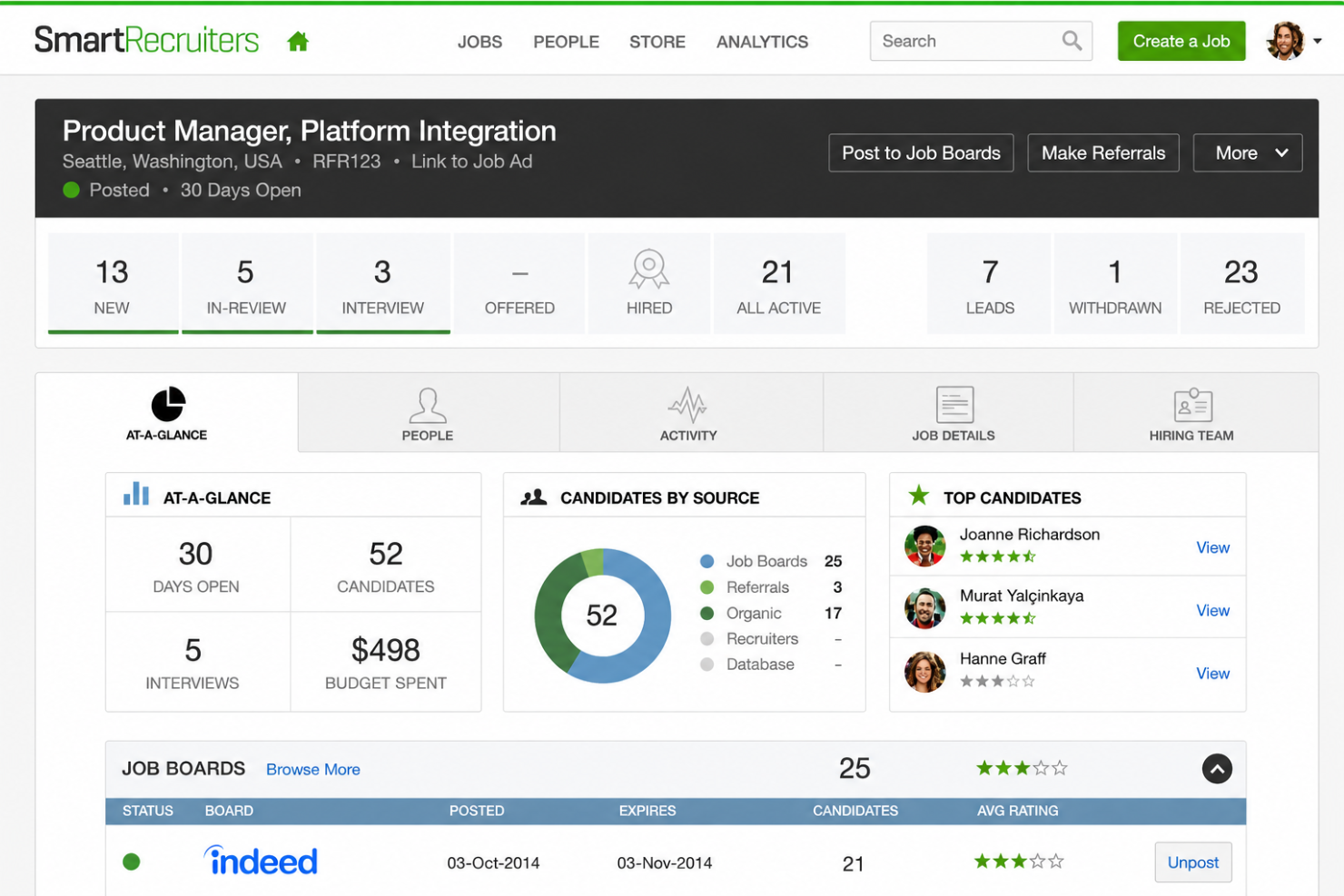
SmartRecruiters is an applicant tracking platform for healthcare organizations offering automated candidate screening, job distribution, compliance management, and centralized communication for volume hiring environments.
Who Is SmartRecruiters Best For?
Large healthcare systems and hospital recruiting teams are handling frequent, high-volume applicant intake and hiring for clinical roles.
Why I Picked SmartRecruiters
I picked SmartRecruiters as one of the best because I can automate candidate sourcing, use bulk actions to screen groups of clinicians, and coordinate interviews for dozens of clinical positions at the same time.
SmartRecruiters Key Features
- Mobile hiring app: Recruiters and hiring managers can review candidates and schedule interviews on mobile devices.
- Structured interview kits: Create and customize guided interview questions for healthcare roles.
- EEO and compliance reporting: Track regulatory data and diversity metrics for healthcare hiring.
- Branded career sites: Launch customizable career pages tailored to healthcare job categories.
SmartRecruiters Integrations
SmartRecruiters offers native integrations with LinkedIn, DocuSign, ADP, Google Workspace, Microsoft 365, Indeed, Checkr, Sterling, SAP SuccessFactors, and Workday. An API is available for custom integrations.
Pros and Cons
Pros:
- Adapts dashboard layouts to individual workflows
- Lacks deep custom reporting metrics
- Automated workflows for high-volume clinical roles
Cons:
- Approval workflows are mandatory
- Basic reporting capabilities
Lever
Best for collaborative healthcare hiring teams
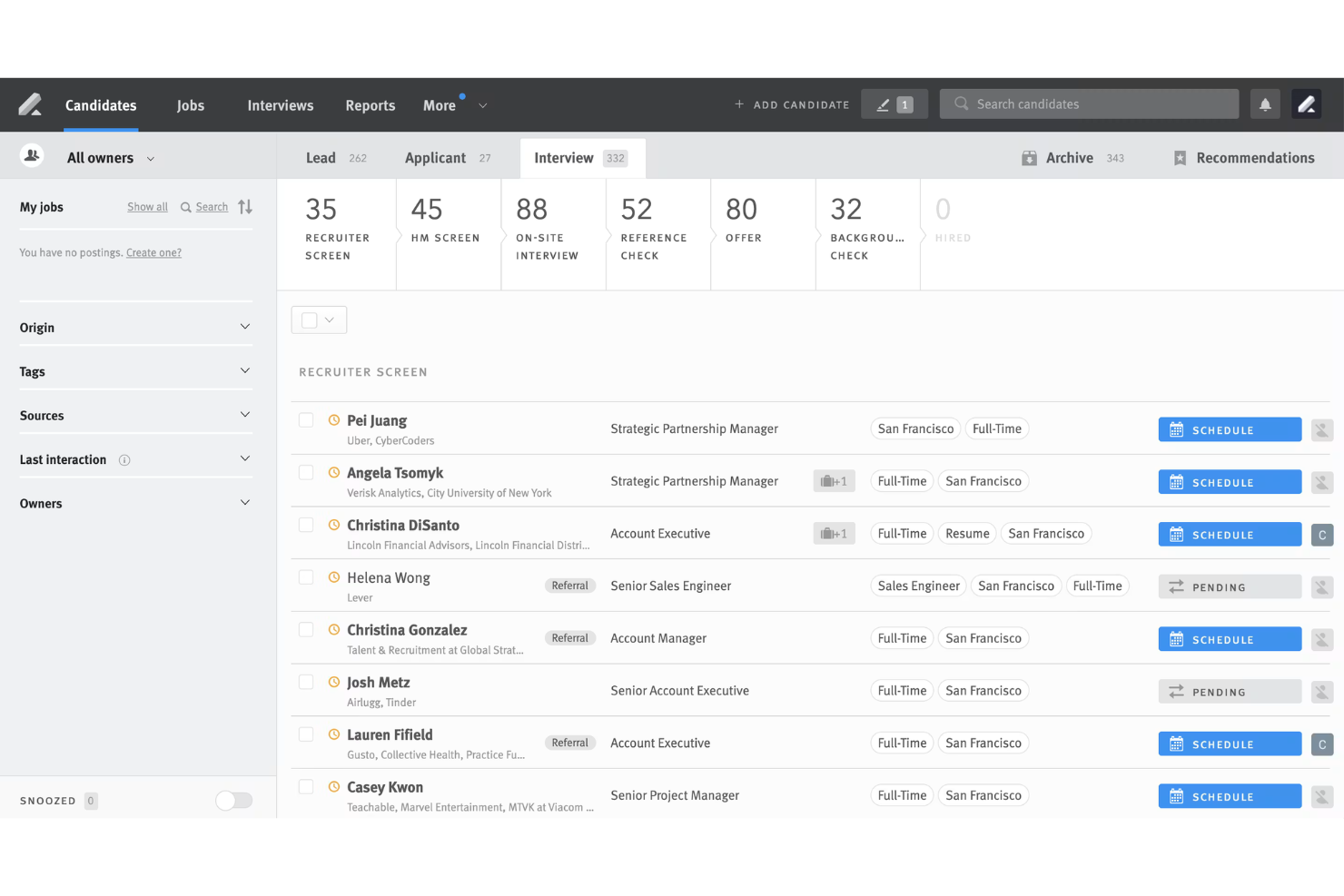
Lever is an applicant tracking system for healthcare teams, offering workflow automation, collaborative candidate evaluation, interview scheduling, and a unified talent database.
Who Is Lever Best For?
Hiring teams at midsize and large healthcare organizations that depend on collaborative feedback and streamlined interview coordination.
Why I Picked Lever
I picked Lever as one of the best because I can turn every hiring manager into an active reviewer, gather feedback directly on candidate profiles, and coordinate interviews without message overload for healthcare team hiring.
Lever Key Features
- Automated job posting: Distribute open roles to multiple healthcare job boards from one dashboard.
- Custom pipeline stages: Organize candidates by workflow stages specific to healthcare recruiting.
- EEO and compliance tracking: Monitor and report on applicant diversity and regulatory data collection.
- Resume parsing: Extract candidate data automatically for quick screening and profile creation.
Lever Integrations
Lever offers native integrations with LinkedIn, Zoom, DocuSign, Google Workspace, Microsoft 365, Namely, Checkr, and ADP. An API is available for custom integrations.
Pros and Cons
Pros:
- Automated email templates for recruiting
- Centralized database for tracking candidates
- Collaborative review workflow for hiring managers
Cons:
- Visual reporting requires an add-on
- Manual automation configuration required
iCIMS
Best for large-scale medical facility support
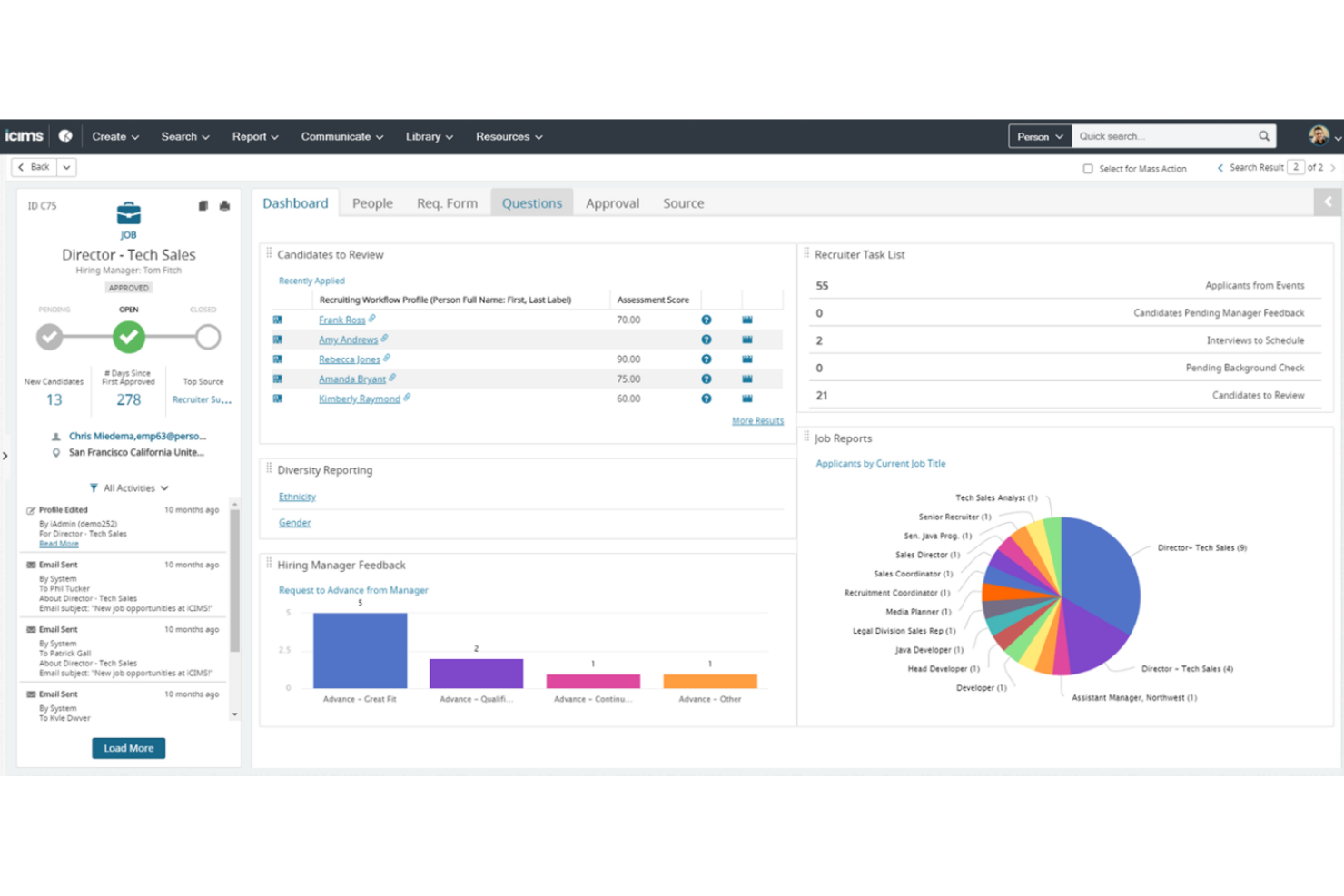
iCIMS is an enterprise applicant tracking system designed for healthcare organizations, offering job requisition management, candidate communications, workflow automation, and compliance tracking.
Who Is iCIMS Best For?
Large healthcare organizations with high-volume, multi-location hiring and complex compliance requirements.
Why I Picked iCIMS
I picked iCIMS as one of the best because my team can manage hundreds of requisitions at once, automate complex healthcare hiring workflows, and stay compliant with healthcare staffing regulations across multiple locations.
iCIMS Key Features
- AI-powered candidate matching: Automatically suggests top healthcare candidates for open roles based on qualifications and history.
- Built-in video interviewing: Let our team schedule and conduct interviews directly in the platform.
- Career site builder: Lets you create branded internal and external career pages tailored to your organization.
- Automated document collection: Requests, receives, and stores licenses or credentials required for healthcare roles.
iCIMS Integrations
iCIMS offers native integrations with DocuSign, Workday, UKG, Ceridian, Oracle, Microsoft 365, and SAP SuccessFactors. An API is available for custom integrations.
Pros and Cons
Pros:
- Custom career site and job distribution
- Automated healthcare compliance workflows
- Bulk candidate management for high-volume hiring
Cons:
- No built-in custom dashboard graphic generation
- Lacks automated feedback notifications
Bullhorn
Best for shift-based clinician placement tools
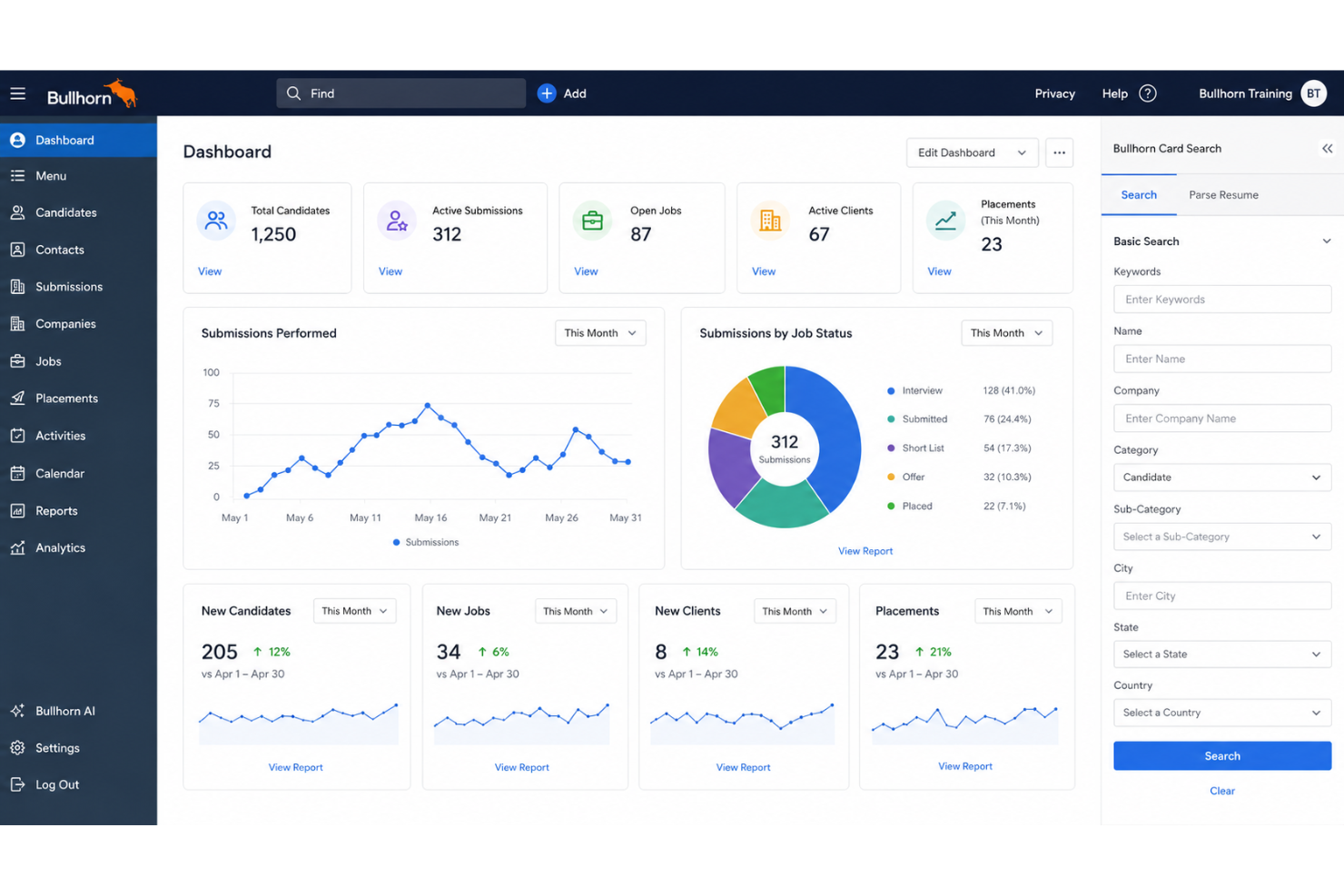
Bullhorn is a healthcare applicant tracking system offering clinician shift scheduling, credential management, time capture, and automated placement tools for staffing agencies and healthcare organizations.
Who Is Bullhorn Best For?
Healthcare staffing firms and workforce agencies need automated shift placement and credential management for clinicians across multiple facilities.
Why I Picked Bullhorn
I picked Bullhorn as one of the best because I can assign clinicians to shifts using automation, match staff to urgent openings with one click, and verify credentials directly within the placement workflow for healthcare staffing.
Bullhorn Key Features
- Credential tracking dashboard: Monitor expirations and renewal timelines for clinicians’ credentials.
- Mobile time capture: Clinicians can log hours and submit timesheets from their phones.
- Integrated client portal: Healthcare organizations can view assignments and request staff directly.
- Automated compliance alerts: Receive notifications when clinician records fall out of compliance.
Bullhorn Integrations
Bullhorn offers native integrations with Microsoft Outlook, Microsoft Teams, Indeed, TextUs, Canvas, and LinkedIn, and provides an API for custom integrations.
Pros and Cons
Pros:
- Support for healthcare staffing agencies
- Built-in credential compliance tracking
- Fast mass-assignment of clinicians to open shifts
Cons:
- Missing built-in clinical shift scheduling tools
- Lacks complex calculations for healthcare rates
Jobvite
Best for employee referral programs
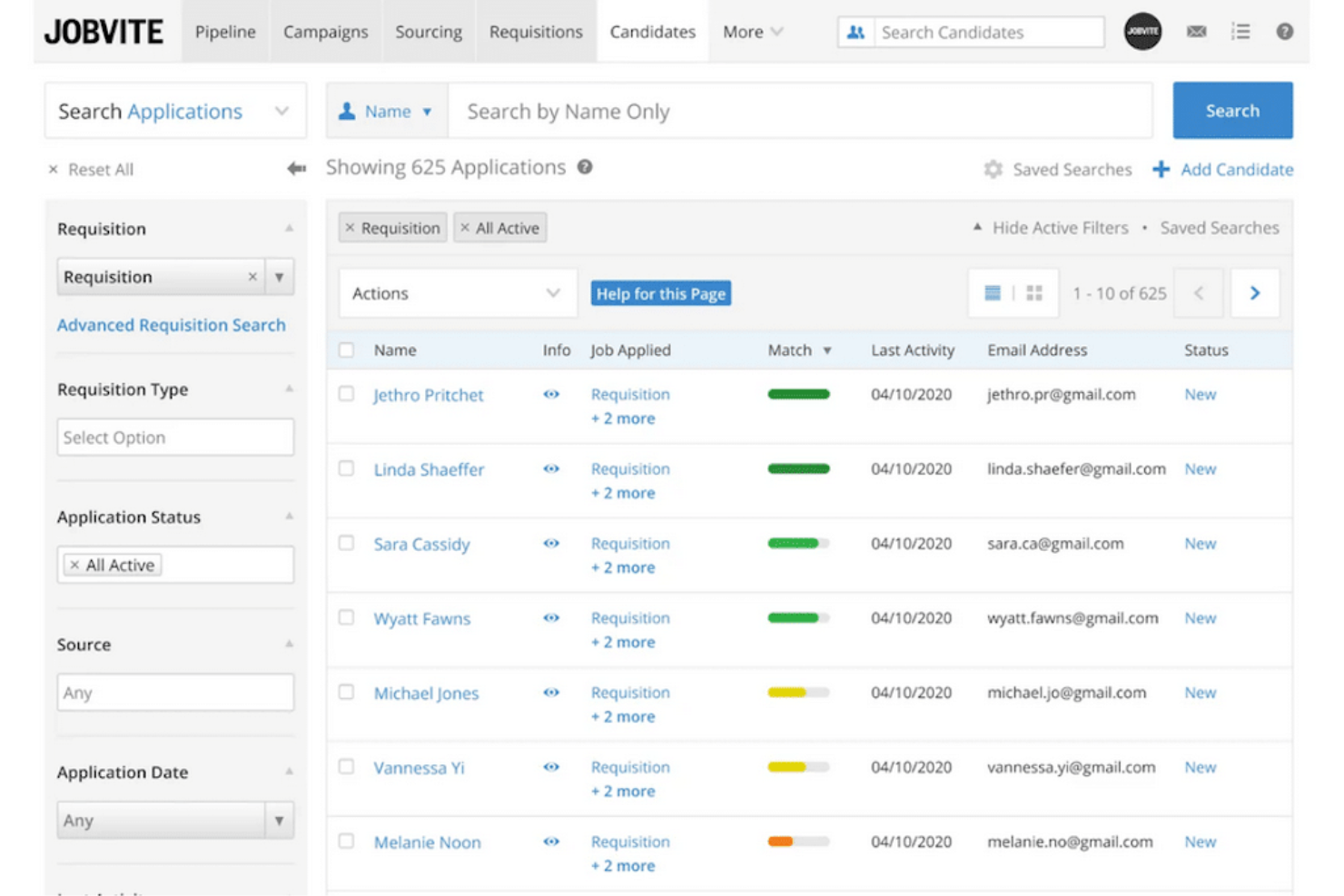
Jobvite is an applicant tracking system designed for healthcare organizations, offering end-to-end hiring workflow tools, automated candidate screening, employee referral management, and onboarding solutions.
Who Is Jobvite Best For?
Healthcare HR teams seeking to scale employee referral-driven hiring across multiple hospital locations or clinical departments.
Why I Picked Jobvite
I picked Jobvite as one of the best because I can launch referral campaigns, track referrals, and offer referral bonuses for internal staff hires. My team is able to automate referral requests across multiple departments and monitor employee engagement in referral activities.
Jobvite Key Features
- Mobile hiring app: Allows recruiters and hiring managers to review candidates and schedule interviews from mobile devices.
- Configurable workflows: Enables you to create custom hiring workflows to match healthcare-specific processes.
- Automated interview scheduling: Let candidates and interviewers self-select time slots through calendar integrations.
- Compliance tracking: Monitors hiring actions and maintains audit trails for healthcare regulatory requirements.
Jobvite Integrations
Jobvite provides native integrations with LinkedIn, ADP, Workday, DocuSign, Oracle PeopleSoft, Microsoft Outlook, Google Workspace, HireRight, and Checkr. An API is available for custom integrations.
Pros and Cons
Pros:
- Built-in candidate application data bias blocker
- Automated screening for high-volume roles
- Track referrals automatically
Cons:
- Workflow customization can require technical help
- Advanced analytics require upgrades
Best for healthcare staffing agency connections
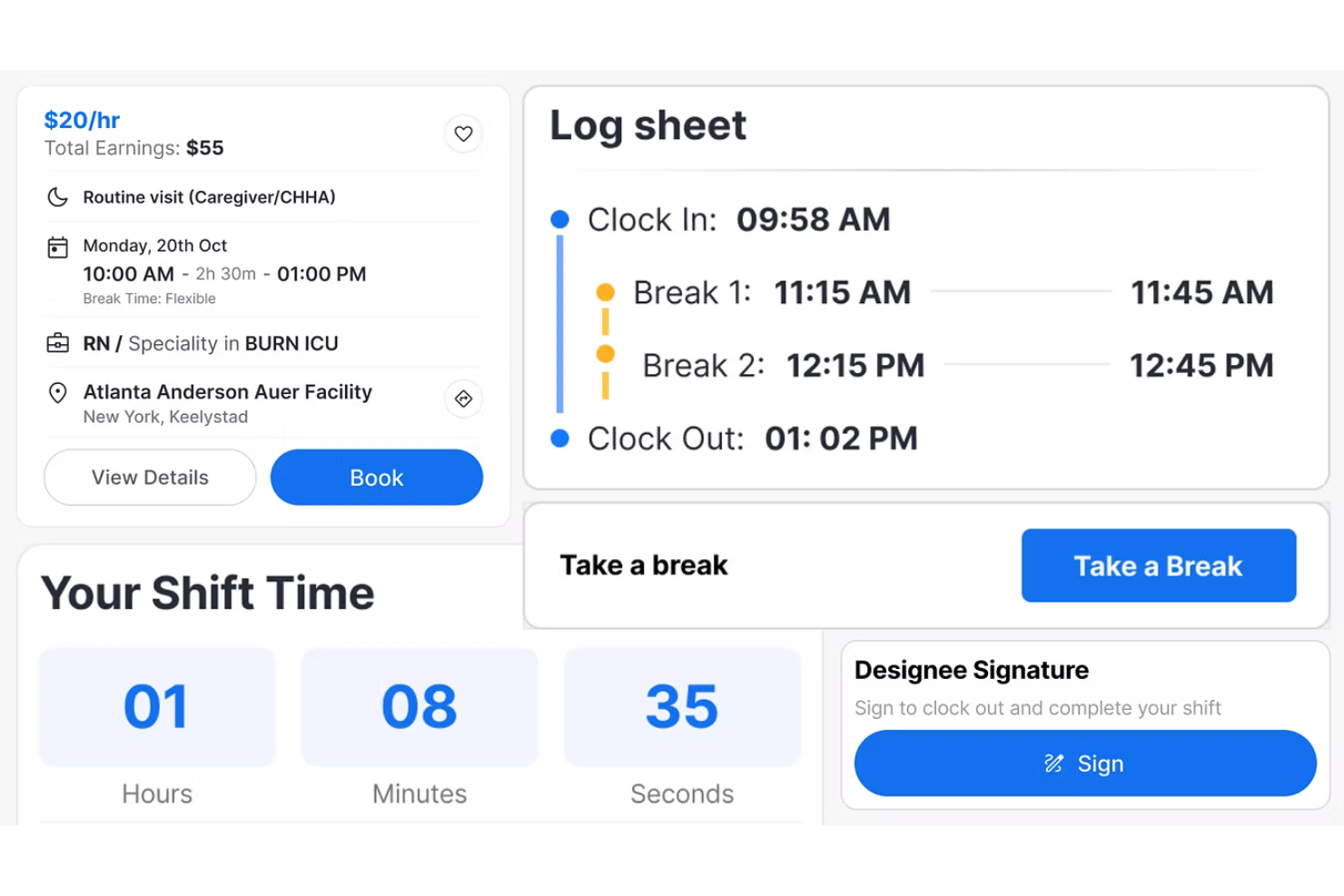
Vars Health is an applicant tracking system for healthcare organizations that offers credential management, job posting, shift scheduling, and digital candidate onboarding features in one platform.
Who Is Vars Health Best For?
Healthcare staffing agencies and hospitals are looking to centralize candidate sourcing, credential tracking, and placement management.
Why I Picked Vars Health
I picked Vars Health as one of the best because I can post shifts directly to staffing agencies, manage credential verifications in the same dashboard, and fill urgent roles with faster agency-candidate matching.
Vars Health Key Features
- Document management: Upload and store candidate credentials and licenses securely.
- Automated reminders: Set up compliance and expiration alerts for credentials.
- Shift scheduling tools: Assign candidates to open roles and manage shift calendars.
- Candidate messaging: Communicate with applicants through the built-in messaging system.
Vars Health Integrations
Integrations include Gusto, Checkr, Twilio, Google, Indeed, Amazon, Facebook, LinkedIn, X.com, and Monster.
Pros and Cons
Pros:
- Automated compliance reminders for documents
- Direct shift posting to staffing agency partners
- Credential management for healthcare roles
Cons:
- No options for manual candidate screening rules
- Lacks integrated payroll tax processing
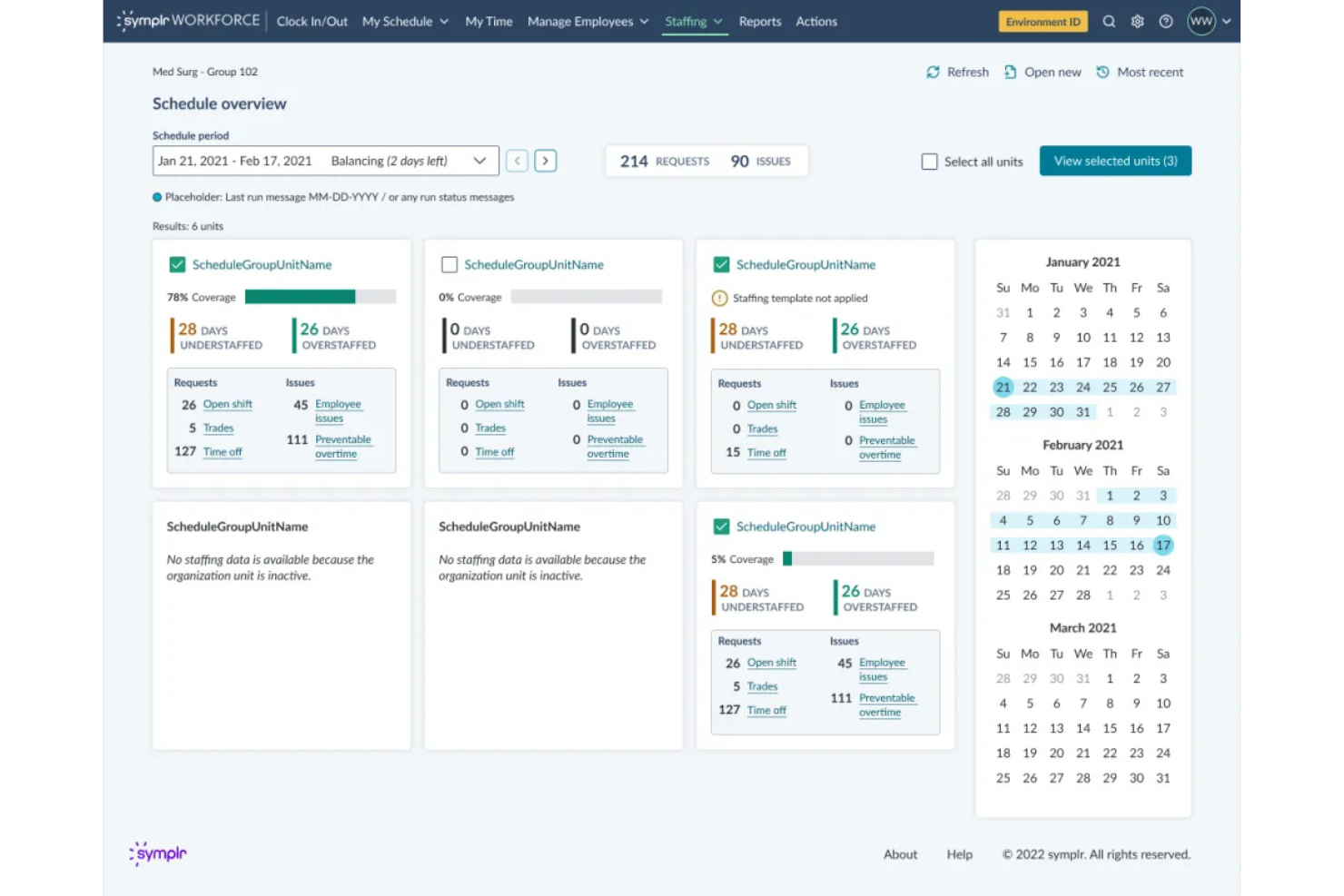
symplr Recruiting is a healthcare applicant tracking system that brings together applicant management, credential verification, automated interview scheduling, and onboarding workflows in one solution.
Who Is symplr Recruiting Best For?
Healthcare organizations that require strict credential tracking and compliance oversight during the hiring process.
Why I Picked symplr Recruiting
I picked symplr Recruiting as one of the best because I can track credentials directly in the system, automate reminders for expiring licenses, and pull compliance reports instantly during audits. These capabilities are vital in healthcare hiring.
symplr Recruiting Key Features
- Automated job postings: Post jobs to multiple healthcare-specific boards with one click directly from the platform.
- Role-based access controls: Set permissions for recruiters, managers, and compliance staff to protect sensitive information.
- Integrated interview scheduling: Schedule and manage interviews with automated calendar syncing and notifications.
- Onboarding document management: Store and organize all candidate documents needed for onboarding in one location.
symplr Recruiting Integrations
Integrations include DISA, ADP, Branch, KarmaCheck, JobRobotix, Paylocity, isolved, PeopleSoft, QuickBooks, and HubSpot.
Pros and Cons
Pros:
- Automated alerts for license expirations
- Customizable compliance management dashboards
- Built-in healthcare credential verification tools
Cons:
- Reporting templates lack advanced filtering options
- Limited public documentation on integrations
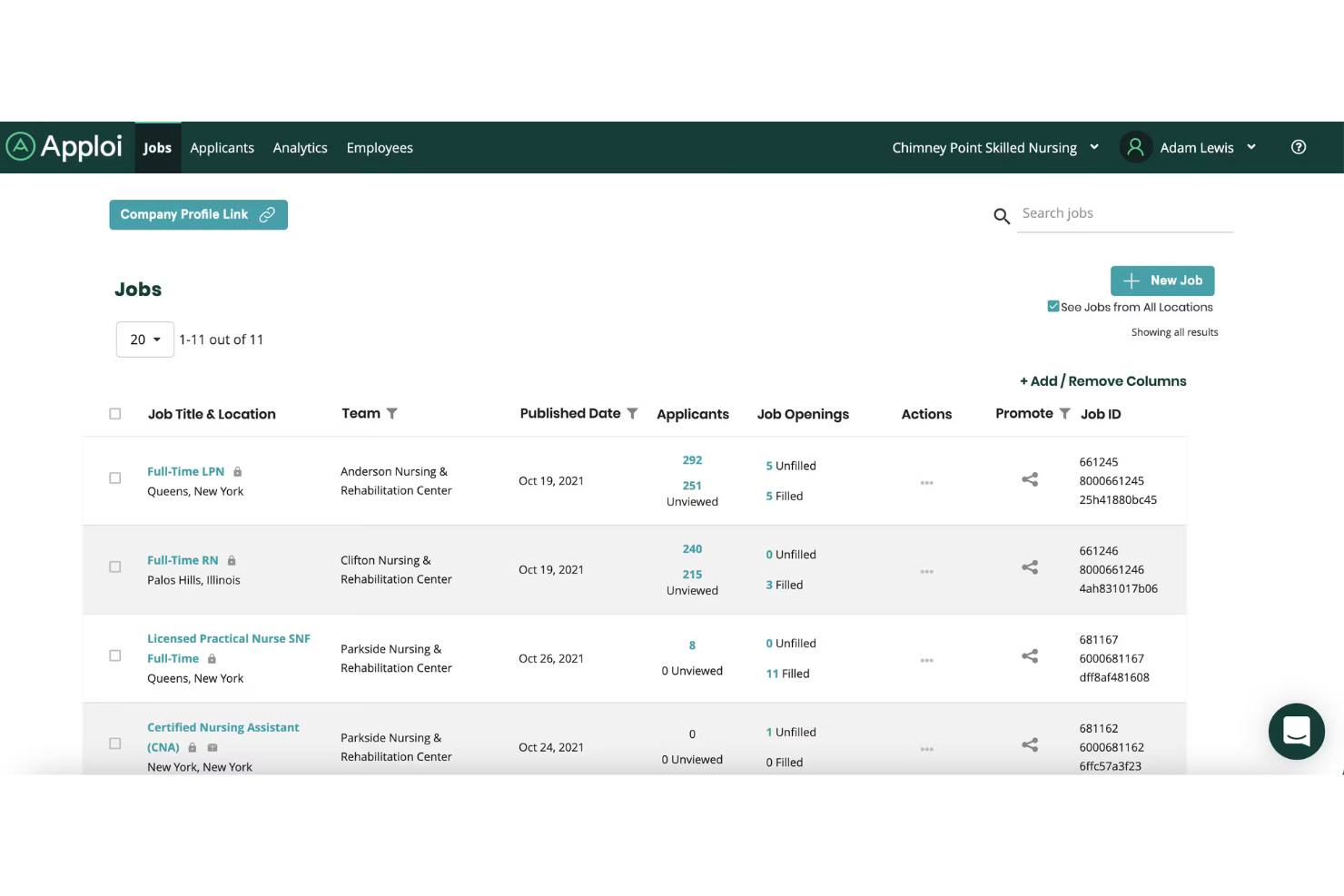
Apploi is applicant tracking software for healthcare that integrates job posting, candidate screening, credential management, and onboarding workflows, with specialized tools for handling licensed and certified roles.
Who Is Apploi Best For?
Healthcare recruiters and HR teams are hiring for licensed and credentialed positions in organizations with complex workforce requirements.
Why I Picked Apploi
I picked Apploi as one of the best because I can automate step-by-step hiring workflows specifically for licensed roles, sync credential checks with background screening, and quickly flag applicants missing required certifications. That precision is key for healthcare hiring.
Apploi Key Features
- Custom-branded career sites: Build and update branded job sites for your organization.
- Automated interview scheduling: Let candidates self-schedule interview slots with hiring managers.
- Mobile-first application forms: Candidates apply easily from mobile devices using simple, optimized forms.
- Centralized document storage: Store applicant resumes, credentials, and hiring paperwork in a single secure place.
Apploi Integrations
Apploi offers native integrations with background check providers like Checkr and Onfido. An API is available for building custom integrations.
Pros and Cons
Pros:
- Mobile application process for candidates
- Role-specific applicant workflows for compliance
- Built-in healthcare credential tracking automation
Cons:
- Limited reporting customization options
- No built-in onboarding module
Best for job board integrations in medical hiring
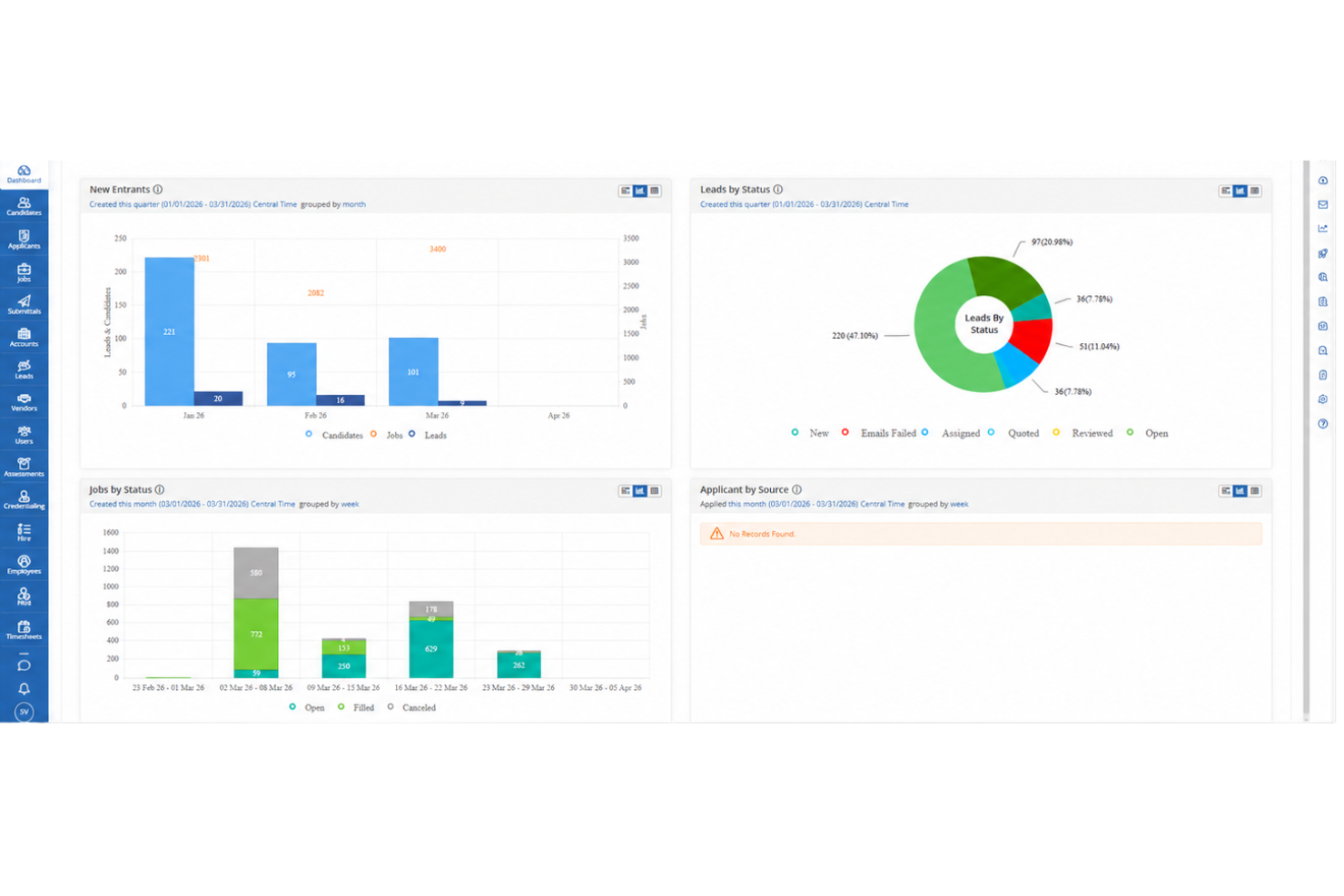
Talent Pathway is an applicant tracking system for healthcare organizations, offering automated job board posting, candidate communication, resume management, application tracking, and compliance management features in a single platform.
Who Is Talent Pathway Best For?
Healthcare recruitment teams need a streamlined job board distribution and centralized candidate tracking across multiple medical roles or facilities.
Why I Picked Talent Pathway
I picked Talent Pathway as one of the best because my team can publish jobs to medical job boards from one dashboard, manage candidate communication within the system, and automate updates across multiple hiring platforms.
Talent Pathway Key Features
- Resume parsing: Automatically extracts candidate data from uploaded resumes for easy review.
- Credential management: Lets you track certifications and licenses required for healthcare roles.
- Interview scheduling tools: Enable you to coordinate interview times directly with candidates.
- Custom workflow stages: Allows you to configure hiring pipelines to match your organization's process.
Talent Pathway Integrations
Integrations include LinkedIn, Indeed, Monster, ZipRecruiter, Glassdoor, Workday, QuickBooks, DocuSign, Zoom, and Gmail.
Pros and Cons
Pros:
- Allows custom hiring workflow templates
- Automated job board posting for medical roles
- Centralized credential tracking and alerts
Cons:
- No embedded training module
- Lacks a mobile application
Other Applicant Tracking Software For Healthcare
Here are some additional applicant tracking software for healthcare options that didn’t make it onto my shortlist, but are still worth checking out:
- Greenhouse
For custom recruitment workflows
- Workable
For multi-location hiring coordination
- JazzHR
For custom interview templates
- Tribepad
For safeguarding candidate data
- Pinpoint
For branded healthcare career sites
- Loxo
For AI-powered talent sourcing
- SAP SuccessFactors
For global healthcare workforce management
- Oracle Taleo
For analytics-driven hiring in healthcare
- BambooHR
For onboarding new medical staff
- Ceipal ATS
For compliance tracking in clinics
- uRecruits
For mobile-friendly candidate experiences


How I Evaluate Applicant Tracking Software for Healthcare
I split my evaluation into baseline criteria—like credential tracking and HIPAA compliance—and differentiators that separate the best tools for high-volume clinical hiring from the rest.
Core Functionality (Table Stakes For This List)
When I'm selecting tools for my list, I rank each one on a scale from 0 (does not offer the functionality) to 5 (excels in this area) for each core functionality listed below. Then, I calculate the tool's total score into a percentage. Each tool needs to achieve a minimum total score of 55% to be considered for inclusion.
- Healthcare Credential Verification: I check whether a platform can track licenses, certifications, and expiration dates for roles like RNs and respiratory therapists—not just store uploaded files.
- Compliance & Regulatory Management: Tools should support HIPAA-compliant data handling, OIG/SAM exclusion checks, and EEOC/OFCCP reporting built into the hiring workflow.
- High-Volume Requisition Management: Healthcare orgs often run hundreds of open reqs across multiple facilities, so I evaluate how well each tool handles bulk posting, templates, and multi-location hiring.
- Job Distribution & Career Sites: I look for syndication to healthcare-specific boards like Health eCareers or Nurse.com alongside general boards, plus branded career site support.
- Candidate Screening & Assessment: Each tool should offer configurable knockout questions and clinical-specific screening workflows—like filtering by active licensure or required certifications.
- HRIS & Onboarding Integration: Pre-built connectors to platforms common in healthcare (Workday, UKG, Infor) matter here, since manual handoffs between recruiting and onboarding slow down start dates.
Once I have a list of tools that meet this criteria, I consider what sets each platform apart.
Differentiating Factors (What Sets Vendors Apart)
Here's how I compare and contrast different vendors:
Standout Features
Text-to-apply and mobile-first application flows are a big deal for reaching bedside nurses and CNAs who aren't sitting at desktops. I also evaluate AI candidate matching, which can rank applicants against clinical role requirements like active licensure or specialty experience—saving recruiters hours on manual screening. Interview self-scheduling is another feature I look for, especially in hospitals running 24/7 shifts where coordinating between candidates and unit managers through email chains drags out time-to-hire.
Beyond Features
Data security matters more here than in most ATS categories—I check for SOC 2 Type II certification, BAA availability, and role-based access controls that match hospital governance structures. Integration depth is equally important; a platform that connects to credentialing vendors like Sterling or symplr alongside your HRIS saves your team from toggling between systems during onboarding. I also consider scalability, especially whether a tool can grow from a single clinic to a multi-hospital system without requiring a platform change.
How to Choose Applicant Tracking Software For Healthcare
It’s easy to get bogged down in long feature lists and complex pricing structures. To help you stay focused as you work through your unique software selection process, here’s a checklist of factors to keep in mind:
| Factor | What to Consider |
|---|---|
| Scalability | Will the software handle growth if you add new facilities, specialties, or locations? Check for user and posting limits. |
| Integrations | Does it connect natively with your HRIS, background check systems, and credentialing platforms? Prioritize prebuilt integrations. |
| Customizability | Can you adapt workflows, forms, and approvals to match your hiring, credentialing, or compliance processes? |
| Ease of use | Will recruiters, hiring managers, and clinicians quickly learn the system? Look for modern, simple interfaces. |
| Implementation and onboarding | How long will it take to go live and train your team? Ask vendors about realistic deployment timelines and support options. |
| Cost | What is included in the subscription, and what is extra? Clarify fees for support, compliance modules, and additional users. |
| Security safeguards | Will candidate data and credentials meet HIPAA or equivalent privacy needs? Assess encryption, access controls, and audit trails. |
| Compliance requirements | Does the platform support specialized reporting and workflows for healthcare regulations (e.g. OIG exclusion, licensure checks)? |
What Is Applicant Tracking Software For Healthcare?
Applicant tracking software for healthcare is a specialized system for managing job applications, screening candidates, and facilitating hiring processes within hospitals, clinics, and medical organizations.
It helps HR teams streamline credential checks, coordinate compliance workflows, and monitor hiring data, ensuring the right clinical and non-clinical staff are recruited efficiently and meet regulatory standards.
Features
When selecting applicant tracking software for healthcare, keep an eye out for the following key features:
- Job requisition management: Lets you create, approve, and post new clinical and non-clinical job openings with custom fields for department, location, and credential requirements.
- Credential verification tools: Automate license, certification, and background checks to ensure candidates meet healthcare compliance standards before moving forward.
- Automated interview scheduling: Allows both candidates and hiring managers to self-select interview times, minimizing scheduling conflicts and speeding up the hiring process.
- Compliance reporting: Generates reports on candidate screening, EEOC, OFCCP, and healthcare-specific regulations, maintaining a clear audit trail for regulatory bodies.
- Role-based access controls: Sets varying permissions for HR, department managers, and hiring committees, safeguarding sensitive candidate and credential data.
- Candidate communication hub: Centralizes email, SMS, and portal messaging to ensure candidates receive timely status updates and next steps.
- Pipeline visualization: Displays the status and stage of all candidates in each requisition, so you can quickly identify bottlenecks and prioritize actions.
- Internal candidate tracking: Highlights applications from current employees seeking new internal roles, supporting career mobility and retention efforts.
- Document management: Securely stores resumes, licenses, certifications, and offer letters, with easy retrieval and expiration alerts for regulatory compliance.
- Mobile accessibility: Enables HR teams and hiring managers to review applications, perform screenings, and update statuses from mobile devices.
Benefits
Implementing applicant tracking software for healthcare provides several benefits for your team and your business. Here are a few you can look forward to:
- Faster hiring cycles: Automated workflows and scheduling tools reduce time-to-hire for urgent clinical and support roles.
- Improved compliance: Built-in credential verification and audit-ready reporting help you meet healthcare regulations and internal policies.
- Enhanced candidate experience: Centralized communication and mobile-friendly applications keep candidates informed and engaged throughout the process.
- Better team collaboration: Role-based access and coordinated review features ensure hiring committees and HR work efficiently together.
- Data-driven decisions: Real-time dashboards and pipeline visualizations help you track hiring outcomes and optimize recruitment strategies.
- Reduced administrative burden: Automated background checks, document management, and internal mobility tools minimize manual data entry and paperwork.
Costs and Pricing
Selecting applicant tracking software for healthcare requires an understanding of the various pricing models and plans available. Costs vary based on features, team size, add-ons, and more. The table below summarizes common plans, their average prices, and typical features included in applicant tracking software for healthcare solutions:
Plan Comparison Table for Applicant Tracking Software For Healthcare
| Plan Type | Average Price | Common Features |
|---|---|---|
| Free Plan | $0 | Post limited jobs, manage basic applications, and access email support. |
| Personal Plan | $50-$100/month | Manage a small number of open jobs, basic interview scheduling, and simple compliance reports. |
| Business Plan | $150-$400/month | Multi-user access, enhanced credential checks, custom careers site, on-demand compliance reporting, and integrations. |
| Enterprise Plan | $500-$2000/month | Advanced workflow automation, unlimited job postings, tailored compliance modules, advanced analytics, and priority support. |
Applicant Tracking Software For Healthcare FAQs
Here are some answers to common questions about applicant tracking software for healthcare:
What makes applicant tracking software for healthcare different from generic ATS platforms?
Applicant tracking software for healthcare includes features tailored for medical organizations, such as credential verification, license tracking, and compliance tools, which aren’t standard in generic ATS solutions. It acts as a specialized software solution designed to handle the complex nuances of a modern health system, ensuring that patient care standards are supported right from the initial hiring phase.
Can healthcare applicant tracking systems help manage multiple facility locations?
Yes, many healthcare ATS platforms support multi-location management, allowing you to track requisitions, candidates, and compliance outcomes across various clinics, hospitals, or departments. This central hub makes the overall recruitment process much easier to oversee, especially when sourcing and organizing diverse talent pools for positions ranging from physicians to allied health professionals across the entire regional ecosystem.
How do these tools help with healthcare credentialing and licensure checks?
These systems often automate license verification and monitor credential expiration dates, helping you avoid compliance lapses and hire only fully qualified candidates. By utilizing a user-friendly dashboard, your talent acquisition team can quickly verify backgrounds, which drastically reduces your overall time-to-fill metrics for critical openings.
What typical integrations should I expect for healthcare ATS solutions?
You can expect integrations with HRIS or payroll systems, background check vendors, electronic health record (EHR) software, and scheduling platforms commonly used in healthcare
How can applicant tracking software improve the candidate experience?
Centralized communication, self-service scheduling, and transparent application status updates help candidates stay informed and engaged throughout the hiring process.