

10 Best SAP Competitors for HR & Payroll in 2026

10 Best SAP Competitors Shortlist


The best SAP competitors offer powerful HR and ERP functionality without the complexity, cost, or heavy implementation burden that often comes with enterprise-only platforms.
SAP HCM and SAP SuccessFactors are robust solutions, but they’re not always the right fit, especially for small to mid-sized businesses or fast-growing companies that need flexibility. High implementation costs, steep learning curves, and feature overload can make SAP feel like overkill if you only need core HR capabilities such as onboarding, payroll, time off, and performance management.
To help you find a potentially better match, I’ve reviewed and compared the top SAP alternatives across pricing, features, and use cases, so you can choose a solution that scales with your business and fits your budget.
Why Trust Our Software Reviews
We’ve been testing and reviewing HR Software since 2019. As HR professionals ourselves, we know how critical and difficult it is to make the right decision when selecting software.
We invest in deep research to help our audience make better software purchasing decisions. We’ve tested more than 2,000 tools for different HR use cases and written over 1,000 comprehensive software reviews. Learn how we stay transparent & our software review methodology.
SAP Competitors Comparison Table
This comparison table summarizes pricing details for my top SAP competitors selections:
| Tool | Best For | Trial Info | Price | ||
|---|---|---|---|---|---|
| 1 | Best for global HR and compliance | Free demo available | From $5/employee/month | Website | |
| 2 | Best for small to mid-size manufacturers | 30-day free trial | From $49/user/month | Website | |
| 3 | Best for integrated business solutions | 30-day free trial | From $65/user/month (billed annually) | Website | |
| 4 | Best for cloud-based ERP solutions | Free demo available | Pricing upon request | Website | |
| 5 | Best for comprehensive HR and workforce management | Free demo available | Pricing upon request | Website | |
| 6 | Best for employee self-service and insights | Free demo available | Pricing upon request | Website | |
| 7 | Best for AI-driven HR processes | Free demo available | Pricing upon request | Website | |
| 8 | Best for comprehensive HR management | Free demo available | Pricing upon request | Website | |
| 9 | Best for AI-powered talent management | Free demo available | Pricing upon request | Website | |
| 10 | Best for unified HR and IT management | Free demo available | Pricing upon request | Website |

Best SAP Competitors Reviews
In this analysis, I will provide an in-depth look at each of the top 10 SAP competitors. I will walk through the pros and cons of each tool, their features, and best use cases.
Deel HR
Best for global HR and compliance

Deel helps HR teams hire, pay, and manage employees and contractors in over 150 countries without needing to set up local entities, making it ideal for companies expanding internationally.
Why It's A Good SAP Competitor
I picked Deel because it lets your team onboard and pay global workers without creating foreign legal entities, saving weeks of setup and avoiding local employment complexity.
Its global payroll engine handles multi-currency payments and automatically applies local tax and labor rules so you stay compliant in every market you operate in. Deel also generates localized contracts for both full-time employees and independent contractors, ensuring legal accuracy across borders.
I like that you can manage HR data, benefits, compliance documentation, and payments from a unified dashboard, which cuts down on admin work and error-prone manual processes. Lastly, Deel’s focus on compliance—updating contracts and tax requirements as laws change—gives you confidence as your international workforce grows.
Deel Key Features
Here are some key features worth highlighting:
- Global Payroll: Run payroll in 150+ countries with local tax and labor regulation compliance.
- Employer of Record (EOR): Hire full-time employees abroad through Deel acting as the legal employer.
- Contractor Management: Generate compliant contracts and pay independent contractors in local currencies.
- Compliance Engine: Automated monitoring of local labor and tax laws to keep your operations legally up to date.
Deel Integrations
Integrations include Expensify, NetSuite, BambooHR, Workday, Xero, QuickBooks, Zapier, Jira, Okta, and Time Doctor.
Pros and Cons
Pros:
- Automates contract creation per local regulations
- Supports both employees and contractors globally
- Global payroll and compliance
Cons:
- Limited deep customization for complex org structures
- Not optimized as a mobile-first platform
New Product Updates from Deel HR

Deel Expands Stablecoin Wallet to 80+ Countries
Deel expands its Stablecoin Wallet to 80+ countries with dollar-backed balances and optional rewards. This gives eligible contractors more ways to hold and manage earnings inside Deel. For more information, visit Deel’s official site.
 .
.
MRPeasy
Best for small to mid-size manufacturers

MRPeasy is a cloud-based manufacturing resource planning (MRP) system built for small and mid-sized manufacturers that need serious production planning without enterprise complexity.
Why It's A Good SAP Competitor
I picked MRPeasy because it gives growing manufacturers the core production planning and inventory control features they actually use instead of overwhelming them with enterprise-only tools.
You can plan and reschedule production with drag-and-drop Gantt charts that automatically consider material and capacity constraints, helping you promise accurate lead times. MRPeasy also tracks inventory by lots, serial numbers, and barcode scans so you know exactly what’s in stock and what you need to reorder.
Its procurement module forecasts material requirements and even pre-fills purchase orders based on demand and shortages. Finally, built-in sales and quoting tools let you turn confirmed orders into shop-floor work orders without duplicate data entry.
MRPeasy Key Features
Here are some key features worth highlighting:
- Production Planning & Scheduling: Create and adjust production plans with material requirements and capacity awareness using intuitive scheduling tools.
- Inventory & Traceability: Track stock in real time with lot/serial number support and barcode scanning to reduce shortages and excess inventory.
- Procurement Forecasting: Automatically suggest and generate purchase orders based on critical stock levels and open manufacturing orders.
- Sales Order to Production: Convert confirmed sales orders directly into manufacturing orders with cost and delivery time estimates included.
MRPeasy Integrations
Integrations include QuickBooks Online, Xero, Shopify, Magento, WooCommerce, BigCommerce, Pipedrive, ShipStation, and Zapier for connecting with other business systems.
Pros and Cons
Pros:
- Helps estimate production costs and lead times quickly
- Provides a clear sales pipeline view for tracking orders
- Allows businesses to optimize purchasing with automatic PO generation
Cons:
- Initial setup can take time to configure properly
- Mobile app functionality is less robust than the desktop version
New Product Updates from MRPeasy
MRPeasy Expands REST API v2 With New Data Endpoints
MRPeasy expands REST API v2 with new endpoints for reports, dashboard data, production resources, stock, and settings. This gives users broader programmatic access to operational data. For more information, visit MRPeasy’s official site.
 .
.
Best for integrated business solutions

Microsoft Dynamics 365 is a cloud-based suite of business applications that unifies ERP (enterprise resource planning) and CRM (customer relationship management) functionalities into a single platform, helping growing and mid-sized enterprises manage sales, finance, operations, and customer relationships with shared data and workflows.
Why It's A Good SAP Competitor
I picked Microsoft Dynamics 365 because it combines core business functions—like CRM and ERP—into one platform so your sales, finance, and operations teams work from the same data set, reducing duplicated effort and miscommunication.
Its modular design lets you start with the apps you need (e.g., Sales or Finance) and expand into others (e.g., Supply Chain or Customer Service) as your business grows.
You can track a lead in CRM and connect it through to order fulfilment and finance without switching systems, helping your teams stay aligned, and built-in analytics and reporting with Power BI give your team data-driven visibility into performance trends, not just static reports.
Microsoft Dynamics 365 Key Features
Here are some key features worth highlighting:
- Modular ERP & CRM apps: Choose and mix capabilities like Sales, Finance, Field Service, and Supply Chain to match your business needs.
- AI-driven insights: Embedded analytics and scoring models help prioritise leads and forecast pipeline performance.
- Cloud access: Work from anywhere with a cloud-hosted platform that supports remote teams and reduces IT infrastructure overhead.
- Power Platform extension: Use Power BI, Power Apps, and Power Automate to build custom dashboards and workflow automations.
Microsoft Dynamics 365 Integrations
Integrations include Microsoft 365 (Office apps), Outlook, Teams, Power BI, SharePoint, Azure, OneNote, LinkedIn Sales Navigator, and Microsoft Power Platform tools (Power Apps, Power Automate).
Pros and Cons
Pros:
- Scalable for various business sizes
- Seamless integration with other Microsoft products
- Comprehensive business solution
Cons:
- Requires continuous updates and maintenance
- High implementation costs
Best for cloud-based ERP solutions

Acumatica is a cloud-based ERP solution designed to help businesses manage their operations and finances efficiently. It is best for cloud-based ERP solutions because it offers comprehensive functionality with the flexibility and accessibility of a cloud platform.
Why it's a good SAP Competitor: I chose Acumatica for the list because it provides a robust, cloud-based ERP solution that is both flexible and scalable. Its ability to offer a comprehensive suite of ERP tools on a cloud platform makes it a standout option. Acumatica's focus on flexibility and accessibility helps businesses manage their operations seamlessly from anywhere.
Standout features and integrations:
Features include financial management, project management accounting, CRM, inventory management, and reporting.
Integrations include Salesforce, Microsoft 365, Adobe, Avalara, Shopify, Magento, HubSpot, BigCommerce, Smartsheet, and DocuSign.
Pros and Cons
Pros:
- Scalable for growing businesses
- Comprehensive ERP functionality
- Flexible cloud-based platform
Cons:
- Can be complex to implement
- Pricing information not readily available
UKG Pro
Best for comprehensive HR and workforce management

UKG Pro is a HR and workforce management tool designed to streamline HR processes and improve workforce efficiency. It is best for comprehensive HR and workforce management because it offers a full suite of HR, payroll, and talent management solutions that cater to complex workforce needs.
Why it's a good SAP Competitor: I chose UKG Pro for the list because it excels in providing a comprehensive HR solution that covers all aspects of workforce management. Its integration of HR, payroll, and talent management into a single platform makes it a compelling choice. The ability to handle complex HR processes efficiently sets UKG Pro apart from other tools.
Standout features and integrations:
Features include payroll processing, talent acquisition, employee engagement, benefits administration, and workforce analytics.
Integrations include Microsoft 365, Salesforce, SAP, Oracle, QuickBooks, NetSuite, Adobe, Docusign, Google Workspace, and Slack.
Pros and Cons
Pros:
- Strong workforce analytics capabilities
- Integrated payroll and talent management
- Comprehensive HR and workforce management features
Cons:
- Requires extensive training for new users
- Complex implementation process
Dayforce
Best for employee self-service and insights
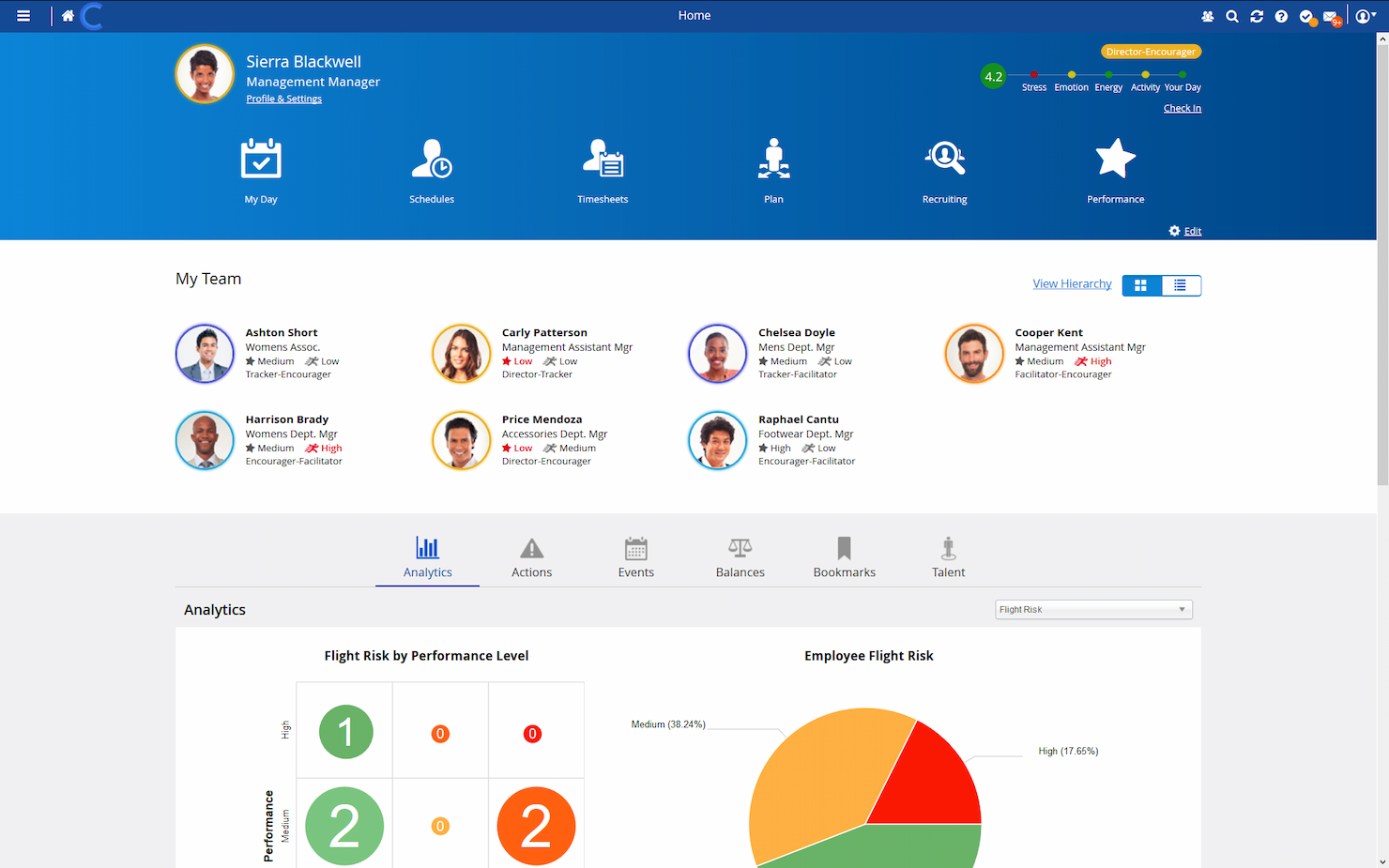
Dayforce is a comprehensive HCM platform that streamlines HR processes and empowers employees with self-service capabilities. It is best for employee self-service and insights because it provides tools that enhance workforce engagement and deliver actionable HR analytics.
Why it's a good SAP Competitor: I chose Dayforce for the list because it excels in providing employee self-service features and insightful analytics. Its ability to empower employees with self-service options and provide real-time data visualization for HR decisions sets it apart. Comparing it with other tools, Dayforce stands out for its focus on enhancing employee engagement and delivering comprehensive insights.
Standout features and integrations:
Features include payroll management, workforce management, talent acquisition, and benefits administration.
Integrations include Microsoft 365, SAP SuccessFactors, Workday, ADP, Oracle HCM, Salesforce, ServiceNow, QuickBooks, LinkedIn, and Google Workspace.
Pros and Cons
Pros:
- Streamlined HR processes
- Comprehensive HR analytics
- Extensive employee self-service capabilities
Cons:
- Requires training for optimal use
- Setup process is a bit complex


Oracle Fusion Cloud HCM is an AI-driven human capital management tool designed to streamline HR processes and enhance decision-making. It is best for AI-driven HR processes because it leverages advanced AI and machine learning to automate tasks and provide predictive insights.
Why it's a good SAP Competitor: I chose Oracle Fusion Cloud HCM for the list because it excels in utilizing AI to improve HR functions. Its advanced AI capabilities set it apart from other tools, making it a powerful solution for organizations seeking intelligent HR management. The tool's ability to provide predictive analytics and automate routine tasks makes it a standout choice.
Standout features and integrations:
Features include AI-driven recruiting, workforce modeling, talent management, and advanced analytics tools.
Integrations include Salesforce, Microsoft 365, Google Workspace, Slack, SAP, LinkedIn, Zoom, Workday, ServiceNow, and Docusign.
Pros and Cons
Pros:
- Predictive analytics
- Comprehensive HR functionalities
- Advanced AI capabilities
Cons:
- Steep learning curve
- High implementation costs

Workday HCM is a cloud-based human capital management software designed to streamline HR processes. It is best for comprehensive HR management due to its extensive suite of HR tools that cover everything from recruitment to payroll.
Why it's a good SAP Competitor: Workday HCM is a comprehensive HR management tool that centralizes and streamlines all aspects of human capital management. It is best for comprehensive HR management because it integrates payroll, talent management, and workforce planning into a unified system.
Standout features and integrations:
Features include workforce planning, recruiting, payroll, talent management, and analytics. These features enable organizations to manage their entire workforce lifecycle efficiently.
Integrations include Salesforce, Microsoft Azure, ServiceNow, Google Cloud, Adobe, IBM, Okta, Slack, Coupa, and SAP.
Pros and Cons
Pros:
- Extensive analytics capabilities
- Intuitive user interface
- Comprehensive HR functionalities
Cons:
- Costly for smaller organizations
- Implementation complexity

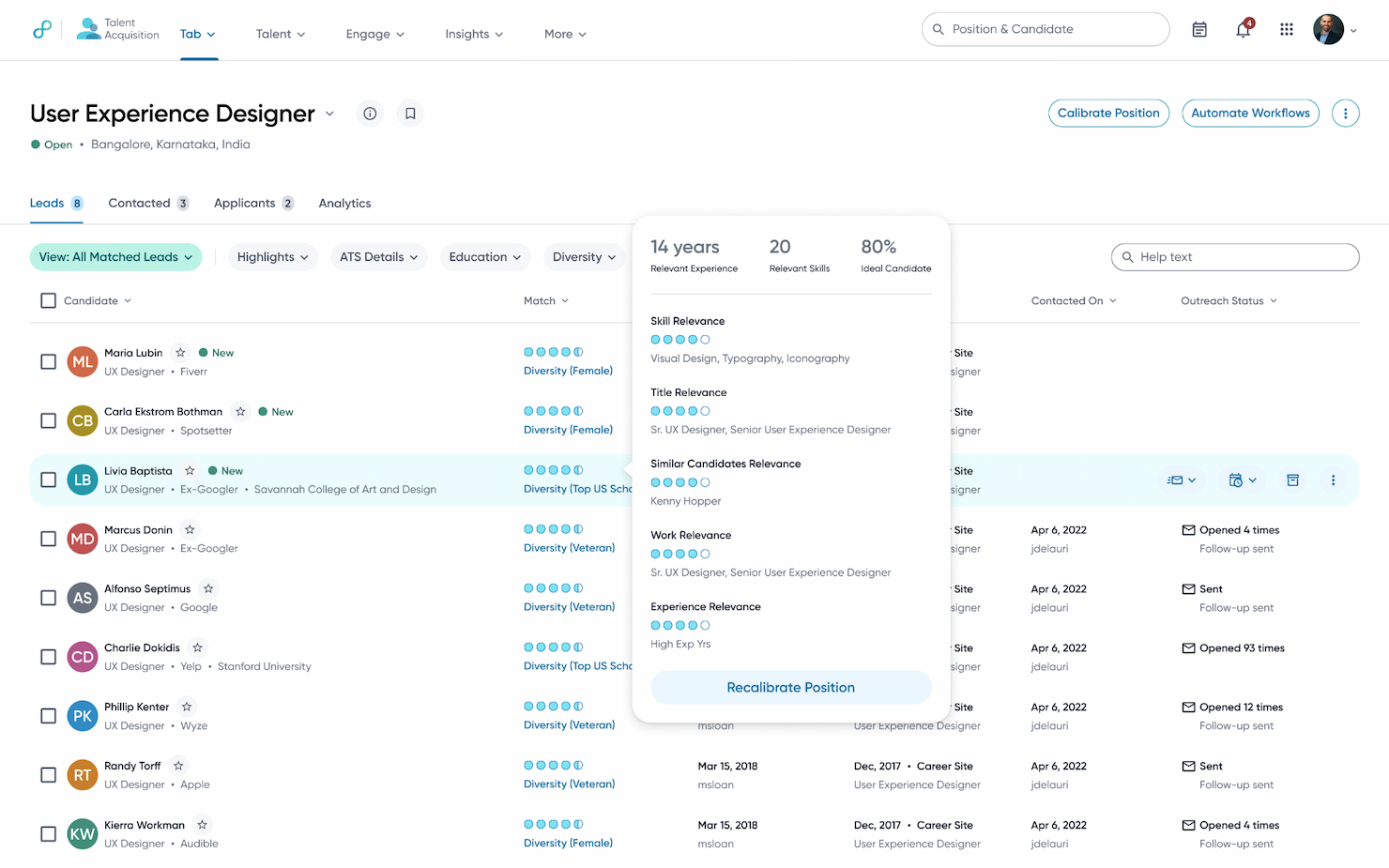
Eightfold is an AI-powered talent management platform designed to help businesses identify, hire, and retain top talent. It is best for AI-powered talent management because it leverages advanced machine learning algorithms to enhance recruitment processes and optimize workforce planning.
Why it's a good SAP Competitor: I chose Eightfold for the list because it stands out in the realm of talent management with its innovative use of AI. Its ability to provide deep insights into talent acquisition and retention makes it a compelling choice. Comparing it with other tools, Eightfold's unique approach to leveraging AI for predictive analytics and skill matching sets it apart.
Standout features and integrations:
Features include AI-driven talent acquisition, talent management, and workforce planning.
Integrations include Workday, SAP SuccessFactors, Greenhouse, Lever, iCIMS, LinkedIn, Oracle HCM, ADP, SmartRecruiters, and Taleo.
Pros and Cons
Pros:
- Integration with major HR platforms
- Comprehensive talent acquisition and retention features
- Advanced AI capabilities for talent management
Cons:
- Higher cost for smaller businesses
- Pricing information not readily available

Rippling
Best for unified HR and IT management
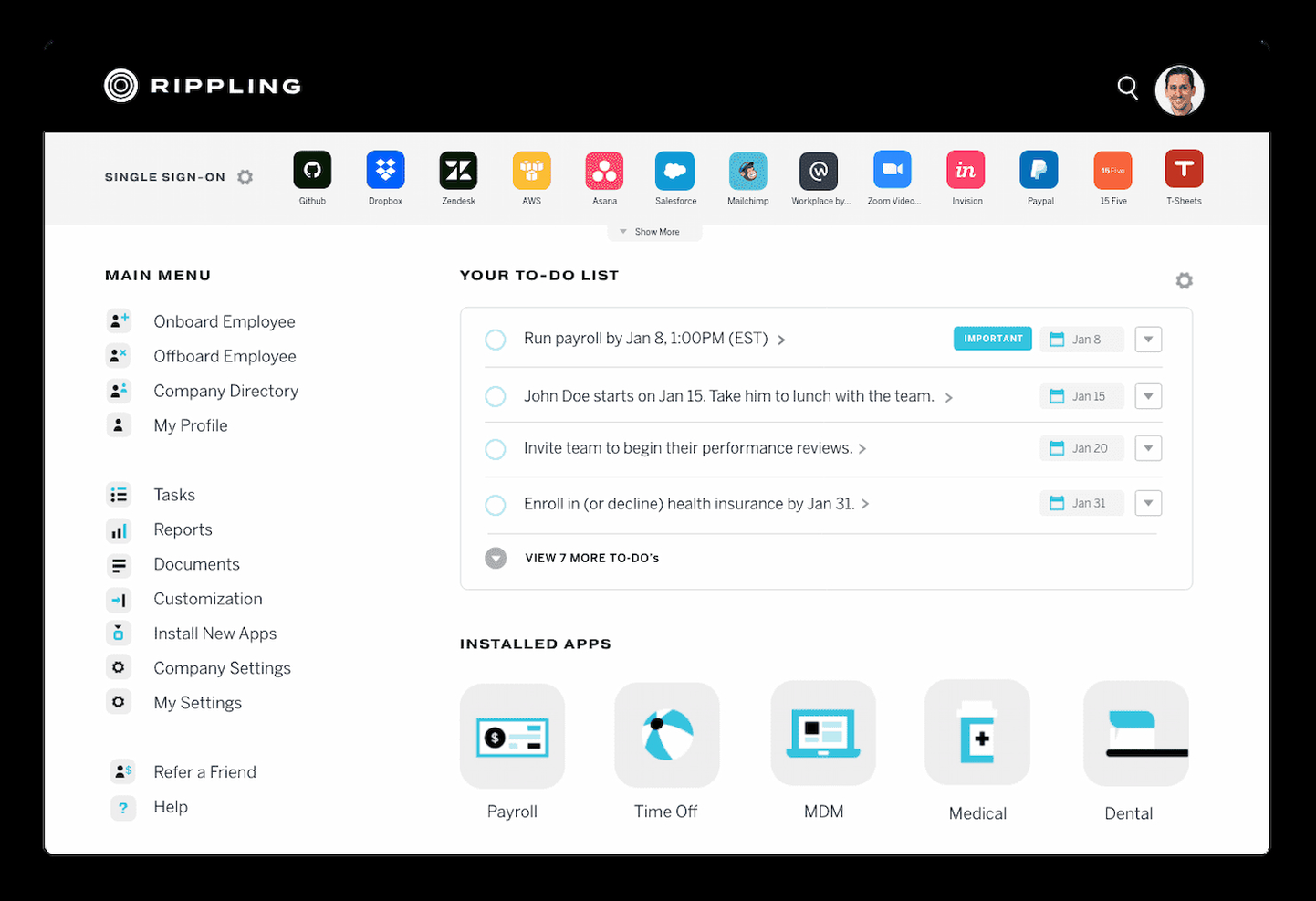
Rippling is a platform that unifies HR and IT management by automating employee onboarding, payroll, and device management. It is best for unified HR and IT management because it seamlessly integrates HR functions with IT tasks, streamlining workflows and reducing administrative burdens.
Why it's a good SAP Competitor: I chose Rippling for the list because it uniquely combines HR and IT management in a single platform. Its ability to automate complex processes and provide a unified approach to managing employees and their devices sets it apart. Rippling stands out for its simplicity and efficiency in handling both HR and IT tasks seamlessly.
Standout features and integrations:
Features include automated onboarding, payroll management, benefits administration, and device management.
Integrations include Slack, Google Workspace, Microsoft 365, Zoom, Slack, QuickBooks, Xero, Netsuite, Salesforce, and Dropbox.
Pros and Cons
Pros:
- Comprehensive device management
- Automated onboarding and payroll
- Unified HR and IT management
Cons:
- Requires training for optimal use
- Pricier for basic payroll management
New Product Updates from Rippling

Rippling AI Adds Plugins, Skills, and Automations
Rippling AI now supports plugins, skills, and automations so employees can connect approved third-party tools, package repeatable work into reusable AI instructions, and run recurring workflows under existing Rippling policies and permissions. For more information, visit Rippling's official site.
Other SAP Competitors
Below is a list of additional SAP competitors that we shortlisted, but did not make it to the top list. It’s definitely worth checking them out.
- Leapsome
For performance and engagement management
- BambooHR®
For user-friendly HR software
- Paylocity
For automated HR processes
- TimeTrex
For handling complex labor cost tracking
- Paycom
For single software HR management
- ADP Workforce Now
For scalable HR and payroll solutions
- Beekeeper
For employee communication and engagement
- Darwinbox
For comprehensive HR management
- DELMIAWorks Manufacturing ERP
For manufacturing industry needs
- Atlas
For global workforce management


Related HR Software Reviews
If you still haven't found what you're looking for here, check out these other related tools that we've tested and evaluated:
- HR Software
- Payroll Software
- Recruiting Software
- Employer of Record Services
- Applicant Tracking Systems
- Workforce Management Software
How I Evaluate SAP Competitors
I split my evaluation into two layers: the core capabilities—like global payroll and talent management—a platform must have, and the differentiators that separate the strongest SAP alternatives.
Core Functionality (Table Stakes For This List)
When I'm selecting tools for my list, I rank each one on a scale from 0 (does not offer the functionality) to 5 (excels in this area) for each core functionality listed below. Then, I calculate the tool's total score into a percentage. Each tool needs to achieve a minimum total score of 75% to be considered for inclusion.
- Core HR & Employee Records: I evaluate how each platform handles employee data, org structures, and job history—things like managing headcount across multiple entities or tracking position changes over time.
- Payroll & Benefits Administration: Multi-country payroll is where many SAP alternatives diverge, so I check whether a platform runs payroll natively or relies on partners, and how it handles benefits enrollment cycles.
- Talent Management Suite: From requisition-to-hire workflows through performance reviews and succession planning, I look for platforms that connect these stages rather than siloing them into separate modules.
- Learning & Development: A strong LMS matters here—I evaluate whether platforms support structured learning paths, certification tracking, and content integrations beyond just hosting uploaded files.
- Workforce Analytics & Reporting: I look at whether a platform offers configurable dashboards and custom report builders, particularly for use cases like attrition forecasting or headcount planning by department.
- Time, Attendance & Absence Management: Scheduling, leave policies, and time tracking should tie directly into payroll, so I check how tightly these modules are integrated rather than bolted on.
Once I have a list of tools that meet this criteria, I consider what sets each platform apart.
Differentiating Factors (What Sets Vendors Apart)
Here's how I compare and contrast different vendors:
Standout Features
AI-driven skills intelligence is a major differentiator—I look for platforms that infer skills from role history and surface internal mobility recommendations. Compensation management also matters, particularly merit cycle automation and pay equity analysis tied directly to performance data. I check whether a platform offers extensibility through open APIs or no-code workflow builders, since HR teams frequently need custom processes that go beyond out-of-the-box modules.
Beyond Features
Implementation timelines vary widely—some platforms deploy in weeks with preconfigured templates, while others require months of custom configuration and certified partners. I also evaluate ecosystem depth, especially prebuilt connectors to ERP and finance systems, since most SAP migrations involve rearchitecting data flows across the tech stack. Total cost of ownership is another key factor; I look at how vendors bundle modules and whether ongoing costs for integrations or upgrades create hidden expenses.
Features Of SAP Competitors
Here are some key features of SAP that your competitor software should be able to replicate or improve upon in order to be a good fit.
- User-Friendly Interface: Simplifies navigation and reduces training time.
- Scalability: Supports business growth without performance issues.
- Customization: Allows tailoring to specific business needs.
- Integration Capabilities: Easily connects with other business software and systems.
- Real-Time Analytics: Provides up-to-date insights for decision-making.
- Mobile Access: Enables use on smartphones and tablets.
- Security: Ensures data protection and compliance with regulations.
- Customer Support: Offers reliable and accessible help services.
- Cost-Effectiveness: Provides good value for the investment.
- Automation: Reduces manual tasks and increases efficiency.