

10 Best Global Payroll Services in India in 2026

Best Global Payroll Services in India Shortlist


Global payroll India refers to services that help businesses manage payroll, taxes, and compliance for employees working in India—whether you’re hiring locally or expanding internationally. If you’re searching for the best global payroll India providers, you want reliable options that make payments, onboarding, and legal requirements less stressful so your focus stays on growing your team. This guide highlights trusted platforms built to help HR professionals keep payroll accurate, compliant, and hassle-free. Use this list to compare your options and find the right fit for your company’s growth plans.
Why Trust Our Software Reviews
Our team has been testing and reviewing software since 2012. As HR experts ourselves, we know how difficult—and important—it is to choose the right software.
For this guide, we evaluated tools using hands-on testing and independent research, scoring tools using our selection criteria. We also draw on insights from industry thought leaders and practicing HR experts.
Our reviews reflect our human editorial judgment, not a sales pitch.
Expert reviewers:
Global Payroll Services in India Comparison Table
This comparison table summarizes pricing details for my top global payroll services in India selections:
| Tool | Best For | Trial Info | Price | ||
|---|---|---|---|---|---|
| 1 | Best for indemnification-backed hiring | Free demo available | From $19/user/month | Website | |
| 2 | Best for simplified local hiring | Free demo available | From $599/employee/month | Website | |
| 3 | Best for labor law automation | Free demo available | From $29/employee/month | Website | |
| 4 | Best with flat-rate EOR pricing for global teams | Free plan available | From $199/user/month | Website | |
| 5 | Best for global employee contracts | Free demo available | From $459/user/month (billed annually) | Website | |
| 6 | Best for unified workforce and payroll management | Free demo available | Pricing upon request | Website | |
| 7 | Best for quick onboarding | Free demo available | From $699/user/month | Website | |
| 8 | Best for real-time payroll processing insights | Free demo available | Pricing upon request | Website | |
| 9 | Best for enterprise payroll reporting | Free demo available | Pricing upon request | Website | |
| 10 | Best for payroll solutions for large enterprises | Free demo available | Pricing upon request | Website |


Best Global Payroll Services in India Reviews
Below are my detailed summaries of the best global payroll India providers that made it onto my shortlist. My reviews offer a detailed look at the features, best use cases, and pricing of each platform to help you find the best one for you.

Best for indemnification-backed hiring
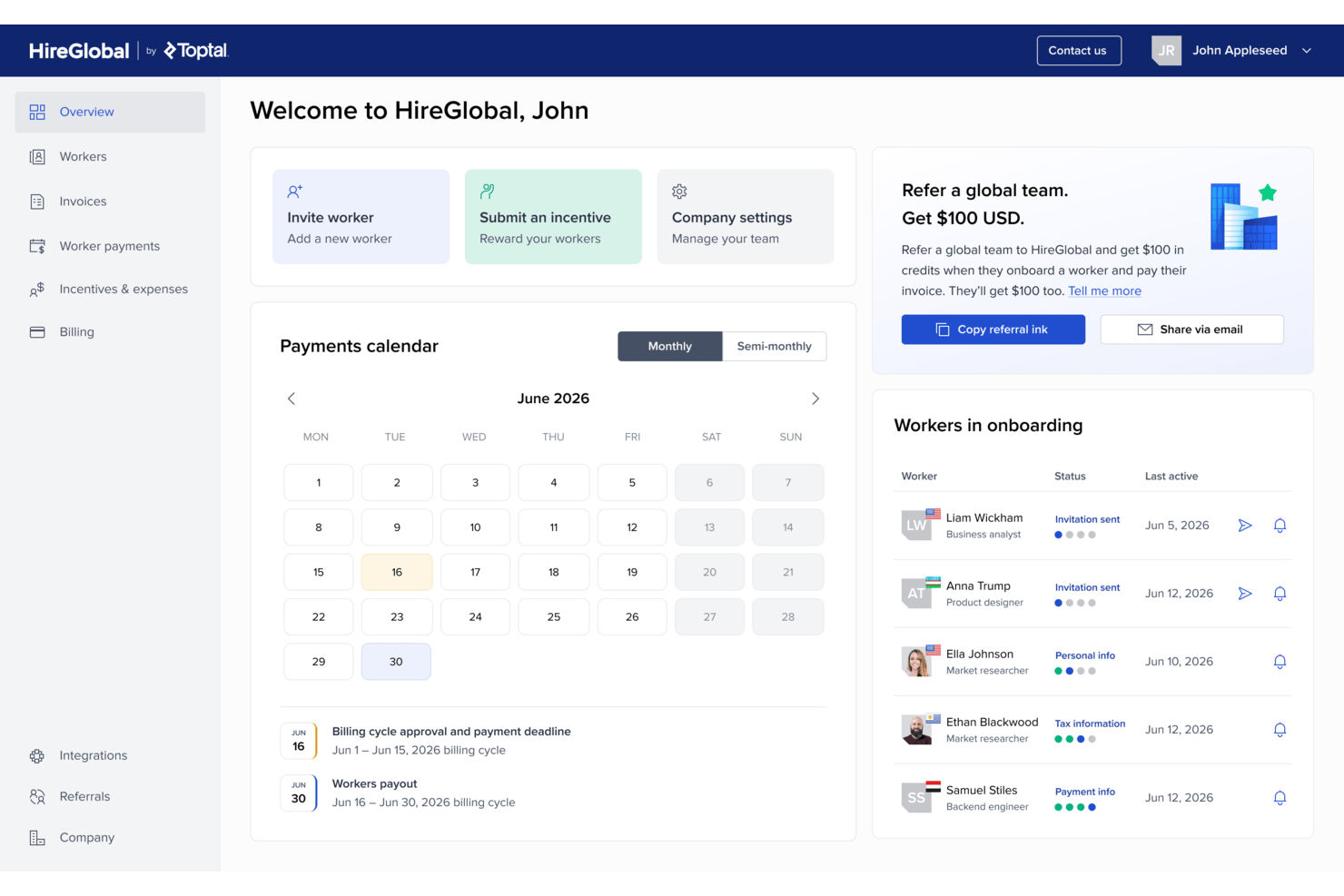
HireGlobal is a global employment platform by Toptal that covers contractor management, agent of record, employer of record, and local payroll across 180+ countries through a single unified system and consolidated invoicing.
Who Is HireGlobal Best For?
HireGlobal is a strong fit for multinational companies that want to hire across many countries on one platform and need financial protection built into their worker classification model.
Why I Picked HireGlobal
I've included HireGlobal in my top picks because its $1M-per-worker indemnification under the Virtual EOR model is something I rarely see in the global payroll space. If you're onboarding employees in India and want legal protection against misclassification risk, that coverage is backed by HireGlobal's legal defense support too. It also covers the full spectrum of worker types, so contractors and EOR employees can sit on the same platform with consolidated invoicing.
HireGlobal Key Features
- Four hiring models in one platform: Manage contractors, AOR, Virtual EOR, and EOR workers from a single system with consolidated invoicing.
- India EOR onboarding: Get employees hired and onboarded in India in 1–2 weeks, without setting up a local entity.
- Multi-currency global payments: Pay workers across 50+ currencies with no payment fees or currency markups charged by HireGlobal.
- Labour law monitoring: A team of 40+ lawyers tracks labour law changes and updates worker contracts automatically when regulations shift.
HireGlobal Integrations
HireGlobal integrates natively with TopTracker, Toptal's time tracking tool, for end-to-end time tracking, invoice approval, and payment processing within a single workflow.
Pros and Cons
Pros:
- Speeds India EOR onboarding without entities
- Supports multiple worker engagement models
- Provides worker indemnification with legal support
Cons:
- Partner-dependent EOR terms shift client risk
- India statutory payroll workflows remain unclear

G-P
Best for simplified local hiring
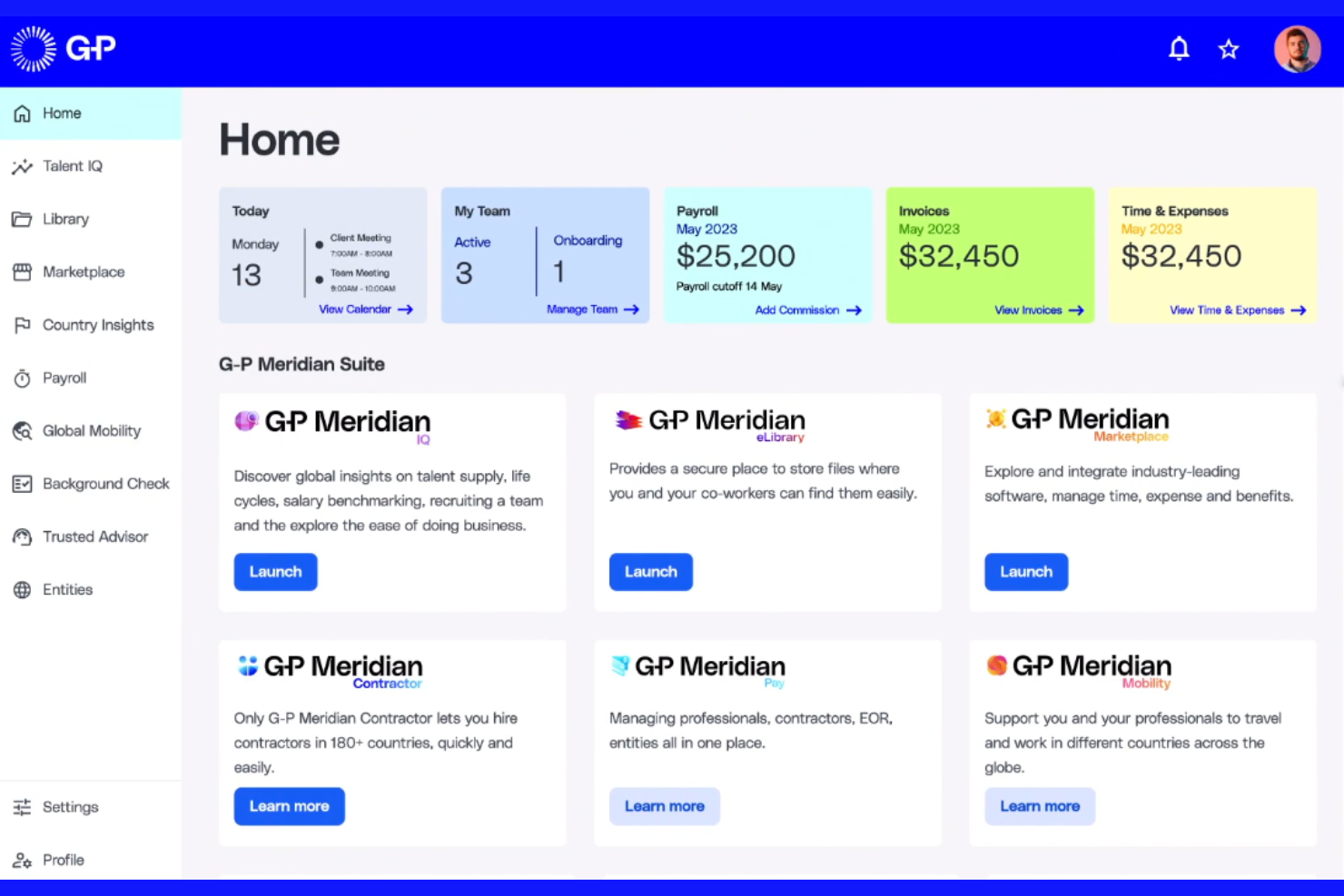
G-P is an employer of record platform that lets companies hire, onboard, and pay employees in India and 180+ countries without setting up a local legal entity.
Who Is G-P Best For?
G-P is a strong fit for multinational companies that want to hire in India quickly without navigating entity setup or local legal registration.
Why I Picked G-P
G-P earns its spot on my shortlist because I love how it handles India-specific statutory benefits automatically, including Provident Fund contributions, gratuity, and Employee State Insurance, without any manual configuration on your end. On top of that, its guided onboarding workflows cover document collection and benefits enrollment in one place, so new India hires can be up and running within days of an offer being signed.
G-P Key Services
- G-P Gia: An AI-powered HR agent that generates locally compliant employment contracts, offer letters, and HR documents for India in minutes
- G-P Contractor: Lets you hire and pay Indian contractors in INR across 190+ countries with built-in misclassification guidance
- Locally compliant benefits management: G-P administers India-specific statutory benefits, including PF, ESI, and gratuity, under its own legal entity
- Guided onboarding workflows: Structured onboarding flows collect required documentation from Indian employees, including PAN details and investment declarations
G-P Integrations
G-P offers native integrations with BambooHR, HiBob, Personio, SAP SuccessFactors, Workday, UKG Pro, UKG Ready, ADP Workforce Now, ADP TotalSource, and Paylocity. It also integrates with Google Workspace, Microsoft Entra ID, and Okta/Auth0 for SSO and user management, and provides an API for custom integrations.
Pros and Cons
Pros:
- Dedicated account managers for ongoing support
- Owns entities in most operating regions
- Covers 180+ countries without local entities
Cons:
- Additional fees beyond base pricing
- Relies on third-party payroll aggregators

Best for labor law automation
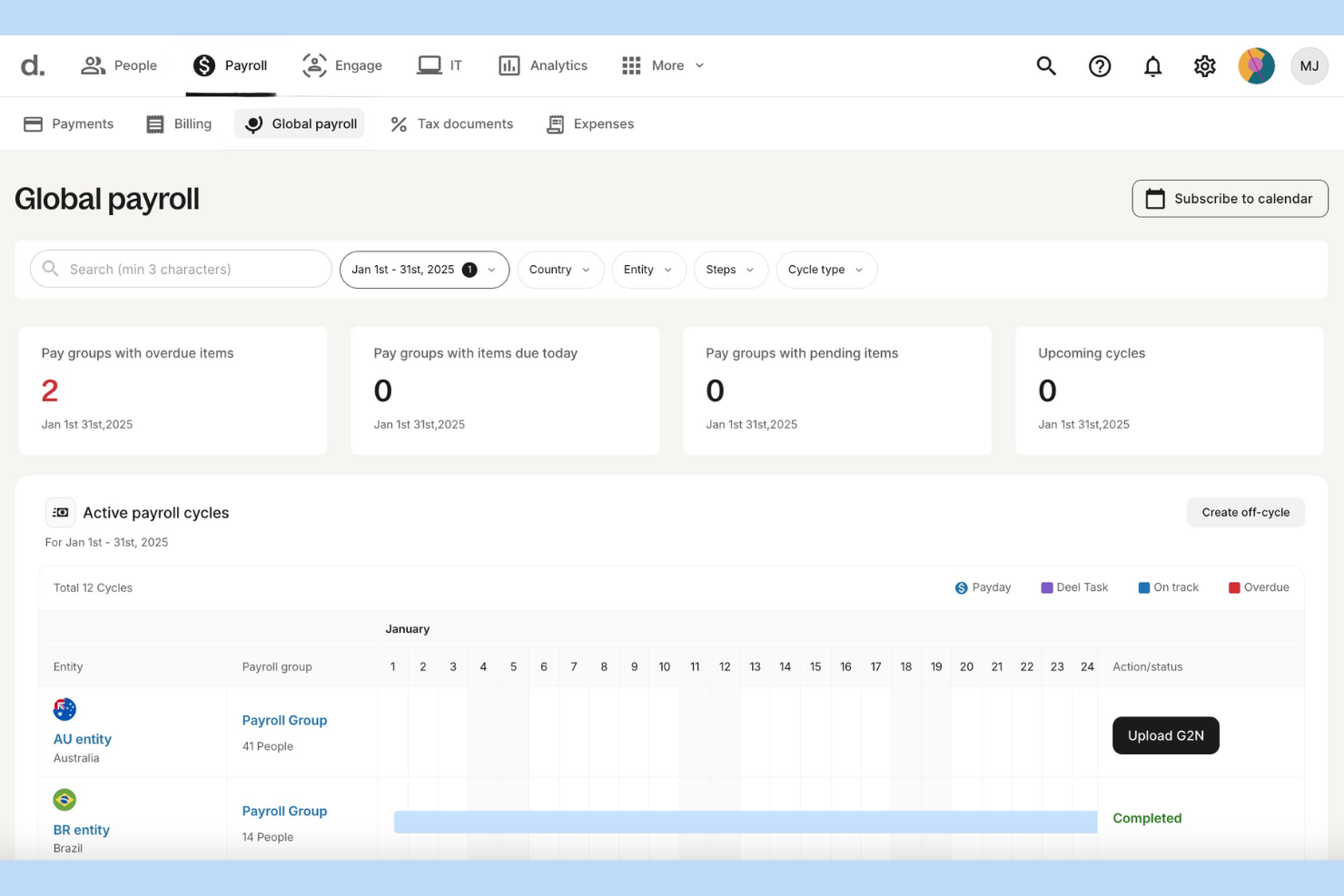
Deel Payroll is a global payroll and employer of record (EOR) platform that handles payroll processing, tax document collection, benefits administration, and labor law compliance for employees in India and 150+ countries.
Who Is Deel Payroll Best For?
Deel Payroll is a strong fit for globally distributed companies hiring full-time employees in India who need automated compliance across multiple jurisdictions.
Why I Picked Deel Payroll
Deel Payroll is one of my top picks because I love how it automates India's notoriously layered labor law requirements. India operates nearly 2,000 job categories with state-level minimum wage rules, and Deel tracks those automatically. I also find its built-in handling of Provident Fund contributions, Employee State Insurance, and Gratuity calculations particularly strong, as it removes the manual math that trips up most payroll teams. Its 250+ in-house local experts add another layer of compliance confidence that most platforms can't match.
Deel Payroll Key Services
- Localized benefits administration: Configure India-specific benefits like the Employees Provident Fund and Employees Pension Scheme directly within the platform dashboard.
- Multi-currency payroll payments: Approve payroll once and Deel handles foreign exchange, local payment rails, and payouts in Indian Rupees.
- AI anomaly detection: Built-in AI flags missing data and payroll variances before approval, catching errors before a pay run is finalized.
- Payroll Connect: View Deel-managed and third-party payrolls side by side in a single dashboard, useful for companies mid-transition to a new provider.
Deel Payroll Integrations
Deel offers integrations with QuickBooks, Xero, BambooHR, Expensify, NetSuite, Sage Intacct, Greenhouse, Workday, SAP, and SAP S/4HANA, and more. Deel API also lets you connect internal tools and customize data transfers for HRIS, finance, and ERP systems.
Pros and Cons
Pros:
- Supports payroll in 120+ currencies
- Contracts auto-update when local laws change
- Owns 250 legal entities across 150+ countries
Cons:
- Support response times stretch during peak payroll
- India adds country surcharges above base rate

Best with flat-rate EOR pricing for global teams
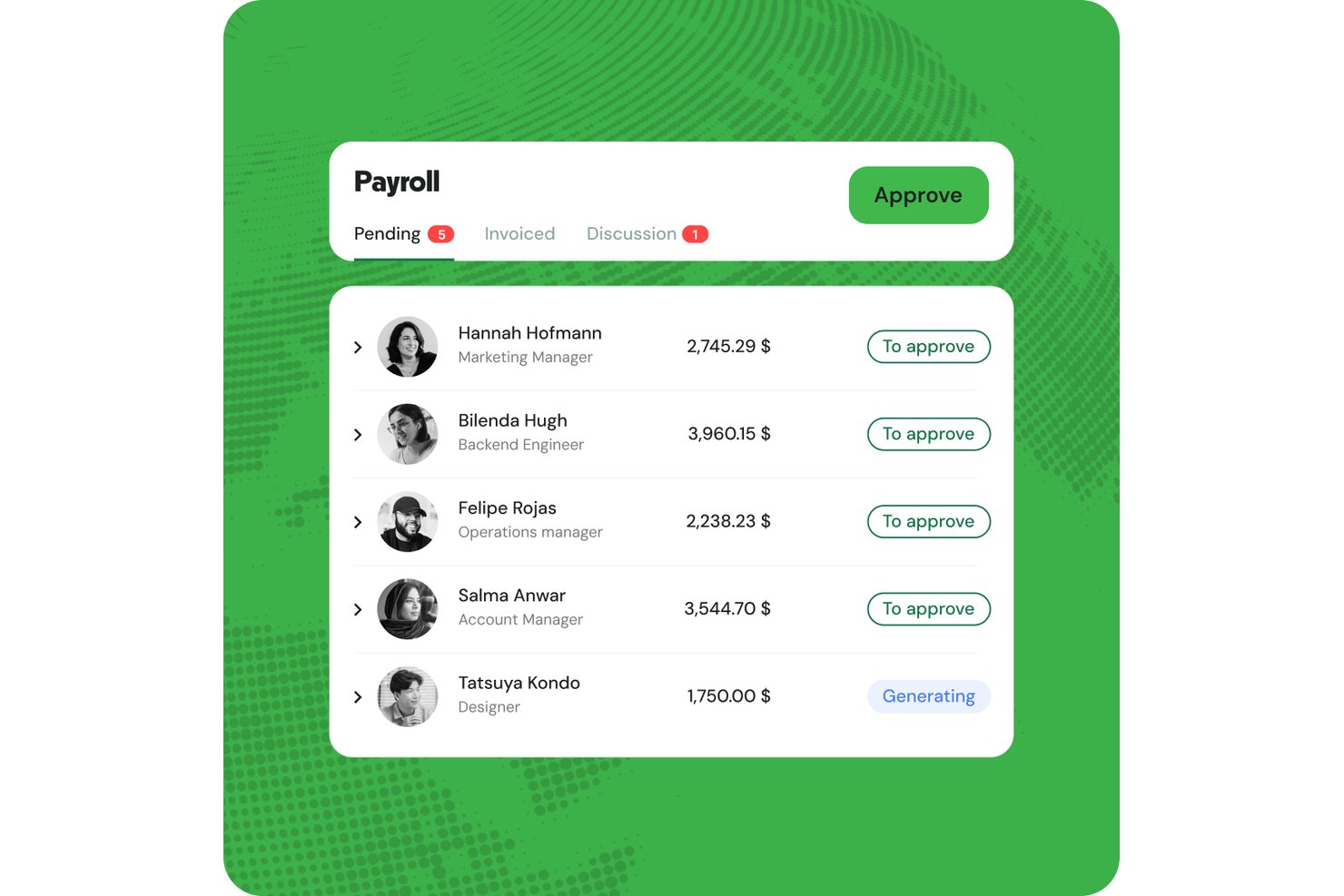
RemoFirst is a global Employer of Record platform that lets companies hire, onboard, and pay full-time employees and contractors across 185+ countries—including India—without setting up a local legal entity.
Who Is RemoFirst Best For?
RemoFirst is a strong fit for startups and growing SMBs that need a cost-accessible way to hire their first employees in India without enterprise-level spend.
Why I Picked RemoFirst
I picked RemoFirst as one of the best because its flat-rate $199/employee/month EOR pricing holds across India and 184 other countries, which makes headcount budgeting straightforward from day one. It covers India-specific statutory requirements like EPF, Professional Tax, gratuity accrual, and the FY2025–26 new tax regime defaults without charging extra per compliance item. I also like that the free contractor tier lets teams start hiring in India with zero commitment before converting to full EOR later.
RemoFirst Key Features
- Global payroll dashboard: Manage payroll runs for employees and contractors in 185+ countries, including consolidated views and approvals.
- Localized contract generation: Create compliant, locally tailored employment contracts for Indian hires and international team members.
- Visa and work permit support: Access global mobility assistance for India and 100+ other countries directly within the platform.
- On-demand statutory insights: Instantly see statutory costs, employer contributions, and local compliance requirements for hiring in India.
RemoFirst Integrations
RemoFirst offers native integrations with Workday, BambooHR, ADP Workforce Now, and GoCardless. An API is available for custom integrations.
Pros and Cons
Pros:
- Manages employees and contractors across 185+ countries
- Fast onboarding for India-based employees
- Covers India statutory requirements without manual intervention
Cons:
- Limited India-specific reporting for large enterprises
- EOR-only model limits entity payroll support

Best for global employee contracts

Multiplier is an employer of record and global payroll platform that lets you hire, onboard, and pay employees in India and 150+ other countries without setting up a local legal entity.
Who Is Multiplier Best For?
Multiplier is a strong fit for HR and legal teams at mid-sized companies managing employees across multiple countries who need locally compliant contracts without outside counsel.
Why I Picked Multiplier
I picked Multiplier as one of the best because contract generation is genuinely where it pulls ahead. When I'm hiring in India, I can generate a locally compliant employment contract in under five minutes, with all statutory terms pre-built for Indian labor law. Multiplier also handles India-specific documentation collection (PAN, Aadhaar, TDS setup) as part of onboarding, so nothing gets missed before payroll runs. For teams hiring across multiple countries at once, one contract template doesn't have to cover everything because Multiplier localizes each one automatically.
Multiplier Key Services
- Multi-currency salary payments: Pay India-based employees in INR or any of 100+ supported currencies, with bank transfer and crypto payment options available.
- Statutory benefits management: Multiplier handles EPF, ESI, gratuity, and Professional Tax contributions, sourcing benefits from a local provider network.
- Onboarding milestone tracking: Monitor each hire's onboarding progress directly in the platform, with visibility into outstanding steps before the first payroll run.
- Gross-to-net payroll reporting: Access data-driven reports including headcount, gross-to-net breakdowns, and cost center views across your global workforce.
Multiplier Integrations
Multiplier integrates with BambooHR, HiBob, Workday, SAP SuccessFactors, and Okta. It also supports payroll sync with Personio. Multiplier offers a public API for custom connections.
Pros and Cons
Pros:
- Built-in ESOP management across countries
- 24-hour onboarding in APAC markets
- Owns local entity in India directly
Cons:
- Invoice errors and formatting inconsistencies at scale
- Some countries still route through third-party partners

Rippling
Best for unified workforce and payroll management
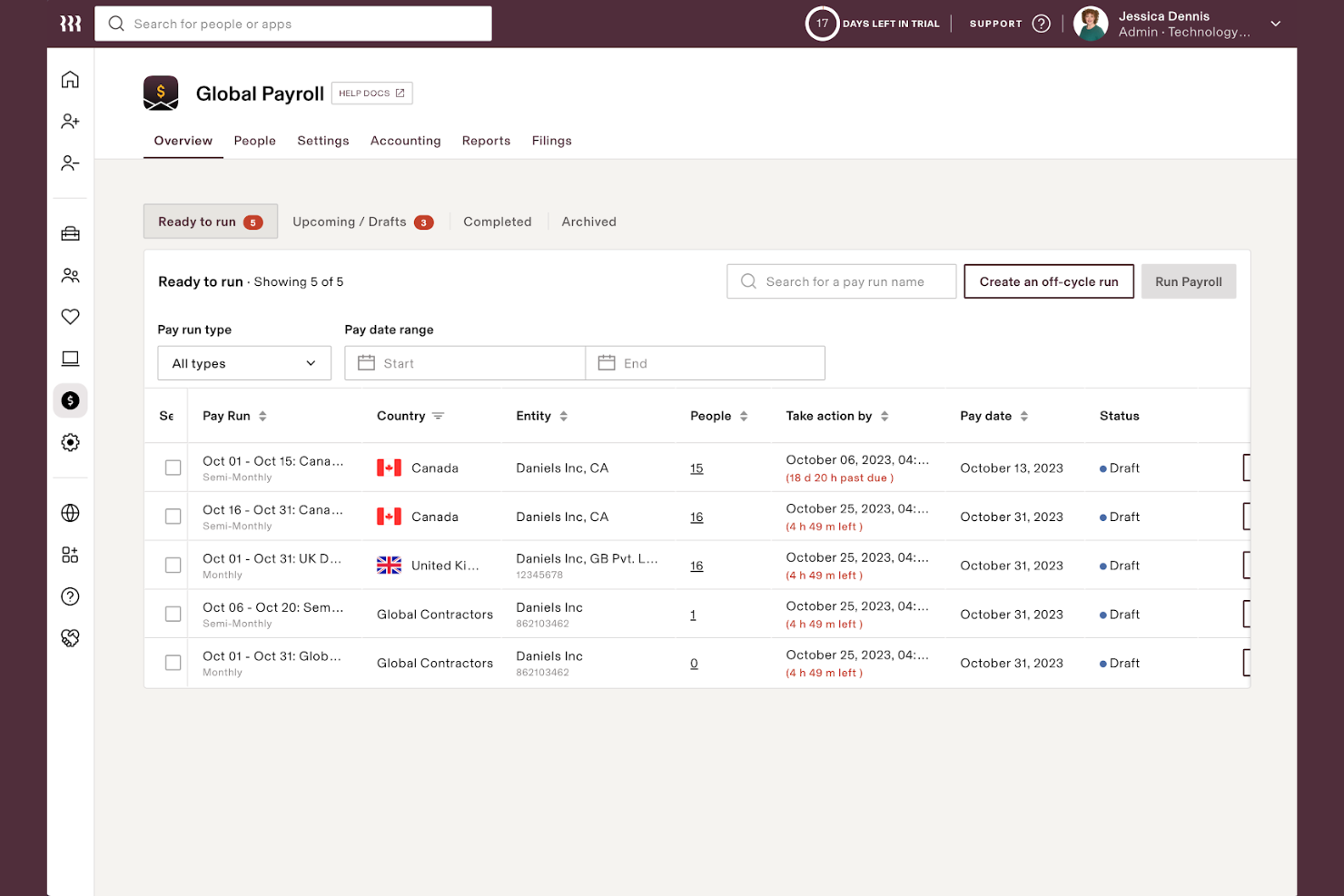
Rippling is a workforce platform that unifies global payroll, HR, and IT management, letting you run payroll across countries like India while managing devices, apps, and employee data from a single system.
Who Is Rippling Best For?
Rippling is a strong fit for mid-market and enterprise companies that manage HR, payroll, and IT together across India and other global markets.
Why I Picked Rippling
I picked Rippling as one of the best because what it does differently from every other tool on this list is keep HR, payroll, and IT on a single employee record. When someone in India gets a salary change or moves locations, payroll updates automatically, with no re-entry. Its own payroll engine (not a third-party aggregator) handles gross-to-net calculations, which means shorter block periods and fewer processing delays.
Rippling Key Services
- Off-cycle pay runs: Run additional pay cycles outside the regular schedule, at no extra cost, for bonuses, corrections, or terminations.
- Payslip visibility: Employees can view a full breakdown of hours, deductions, expense reimbursements, and benefits elections directly from their payslip.
- Payroll cost forecasting: Compare payroll costs across countries by period, including salaries, taxes, benefits, and reimbursements, before pay runs are finalized.
- Contractor and employee management: Pay both contractors and employees across countries from the same system, with the ability to convert between worker types as roles change.
Rippling Integrations
Rippling offers a range of native integrations, including Slack, Salesforce, Google Workspace, Microsoft 365, QuickBooks Online, Xero, NetSuite, Zoom, and Jira. An API is available for custom integrations.
Pros and Cons
Pros:
- Free unlimited off-cycle payroll runs included
- Native tax calculation, not third-party aggregators
- India statutory rules like PF and TDS built in
Cons:
- Some countries rely on local partners, adding extra fees
- Modular pricing makes total costs hard to predict
New Product Updates from Rippling

Rippling AI Adds Plugins, Skills, and Automations
Rippling AI now supports plugins, skills, and automations so employees can connect approved third-party tools, package repeatable work into reusable AI instructions, and run recurring workflows under existing Rippling policies and permissions. For more information, visit Rippling's official site.
Remote
Best for quick onboarding
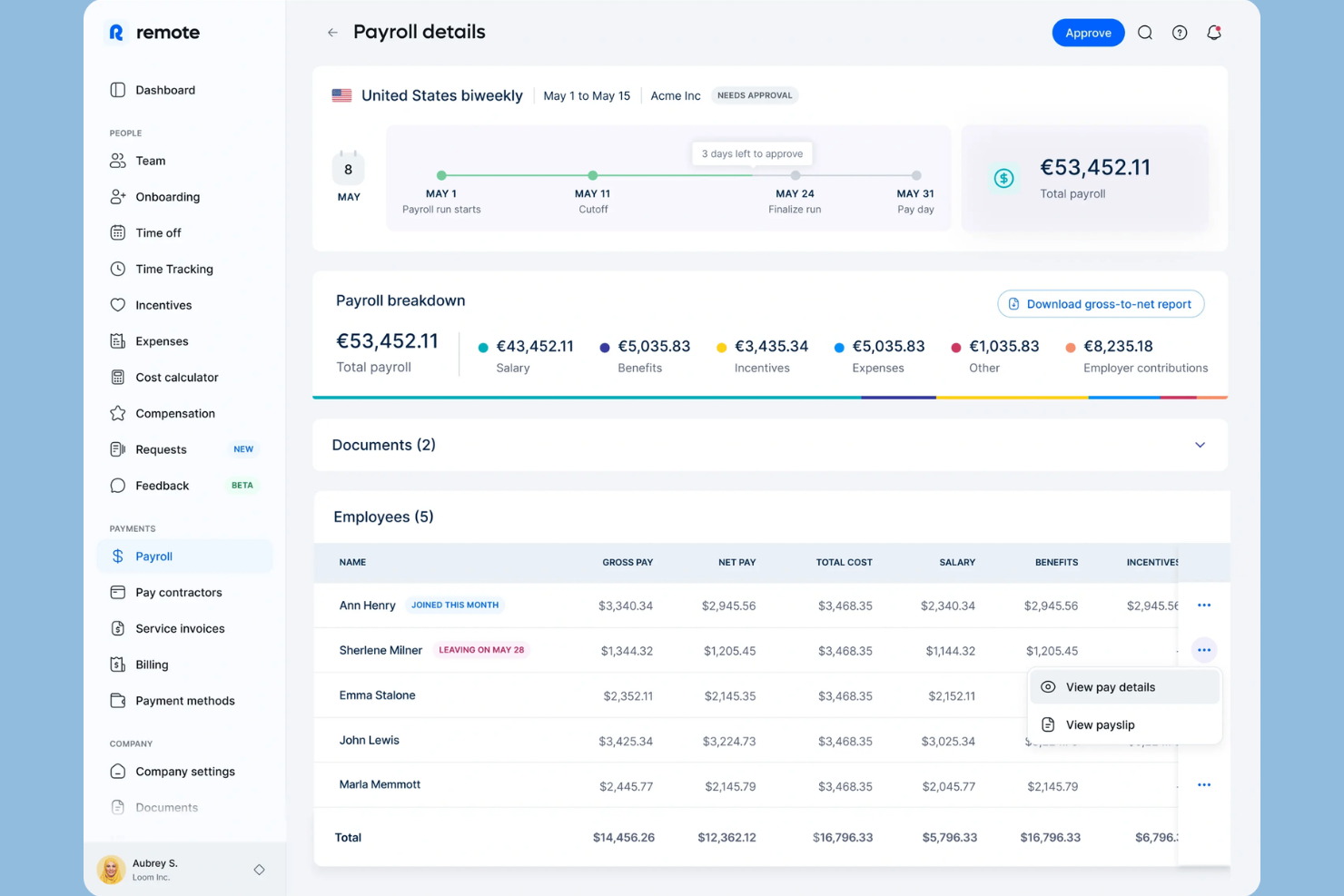
Remote is an employer of record and global payroll platform that handles India payroll processing, local tax compliance, contractor payments, and new hire onboarding without requiring a local legal entity.
Who Is Remote Best For?
Remote is a strong fit for startups and growing companies that need to hire in India quickly without setting up a local entity.
Why I Picked Remote
I picked Remote as one of the best because the speed at which it gets new India hires active is genuinely hard to match. The five-stage onboarding flow handles everything from the automated invite email to right-to-work checks, document collection, and payroll enrollment, without you manually coordinating any of it. New hires are on payroll and benefits from day one. Remote also lets you mix EOR and contractor arrangements within one account, so when you're scaling a team in India with different worker types, you're not managing two separate systems.
Remote Key Services
- Remote Watchtower: Automatically alerts you to changes in India payroll laws, tax withholding rules, and worker classification requirements as they happen.
- Virtual payroll wallet: Fund a wallet via bank transfer and Remote pays employees, tax authorities, and benefits providers in local currency after payroll approval.
- IP Guard: Protects your intellectual property when hiring in India, ensuring ownership stays with your company regardless of where workers are based.
- In-house payroll engine: Remote processes India payroll directly, without third-party providers, using on-the-ground local experts for compliance and calculations.
Remote Integrations
Remote offers native integrations with BambooHR, Greenhouse, Slack, QuickBooks, NetSuite, Xero, Workday, Personio, HiBob, and Gusto. It also connects with Zapier and provides an API for custom integrations.
Pros and Cons
Pros:
- Employee self-service mobile app on iOS and Android
- Bulk contractor onboarding in under five minutes
- Owns local entities with no third-party partners
Cons:
- Limited self-serve transparency in setup
- Payroll reporting lacks deep financial drill-downs
Dayforce
Best for real-time payroll processing insights
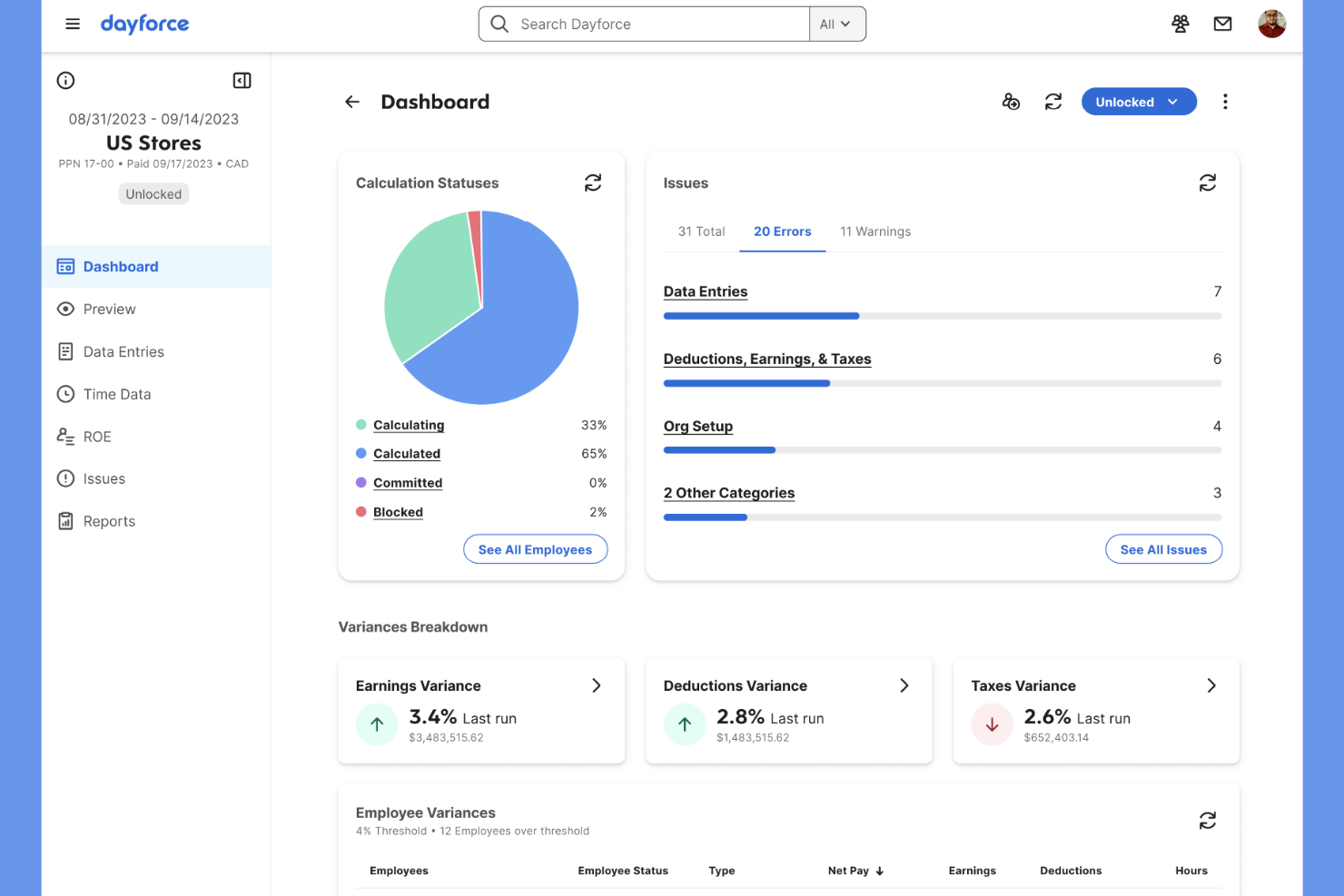
Dayforce is a global payroll platform with a single-vendor, multi-country architecture that combines a configurable rules engine, continuous real-time pay calculations, and built-in compliance monitoring across 200+ countries and territories.
Who Is Dayforce Best For?
Dayforce is a natural fit for payroll and HR operations teams at multinational companies that need live visibility into pay data before a run is finalized.
Why I Picked Dayforce
I picked Dayforce as one of the best because its continuous calculation engine genuinely sets it apart. Unlike batch-based payroll systems that only surface errors after a run, Dayforce recalculates pay in real time as data changes, so my team can catch discrepancies before payroll is ever finalized. I also rely on the global reports feature, which gives a consolidated view of pay group data across every country in a single dashboard, making cross-border payroll reviews far less painful.
Dayforce Key Services
- Local compliance management: Automatically applies country-specific tax rules and statutory requirements to each pay run.
- On-demand pay: Lets employees access earned wages before their scheduled pay date directly through the platform.
- Multi-currency payroll: Processes payroll across different currencies within a single system without manual conversion.
- Payroll audit trail: Logs every change made to payroll data, including who made it and when, for full traceability.
Dayforce Integrations
Dayforce offers open APIs, integration frameworks, and a growing marketplace of connectors to finance, ERP, applicant tracking, and niche HR tools. For third-party integrations, it supports multiple methods including APIs, import/export, and iPaaS platforms like Dell Boomi and more.
Pros and Cons
Pros:
- Single-database architecture eliminates data silos
- Supports global payroll across 200+ countries
- Continuous payroll calculation catches errors early
Cons:
- No employer of record service available
- Implementation is long and resource-heavy
ADP
Best for enterprise payroll reporting
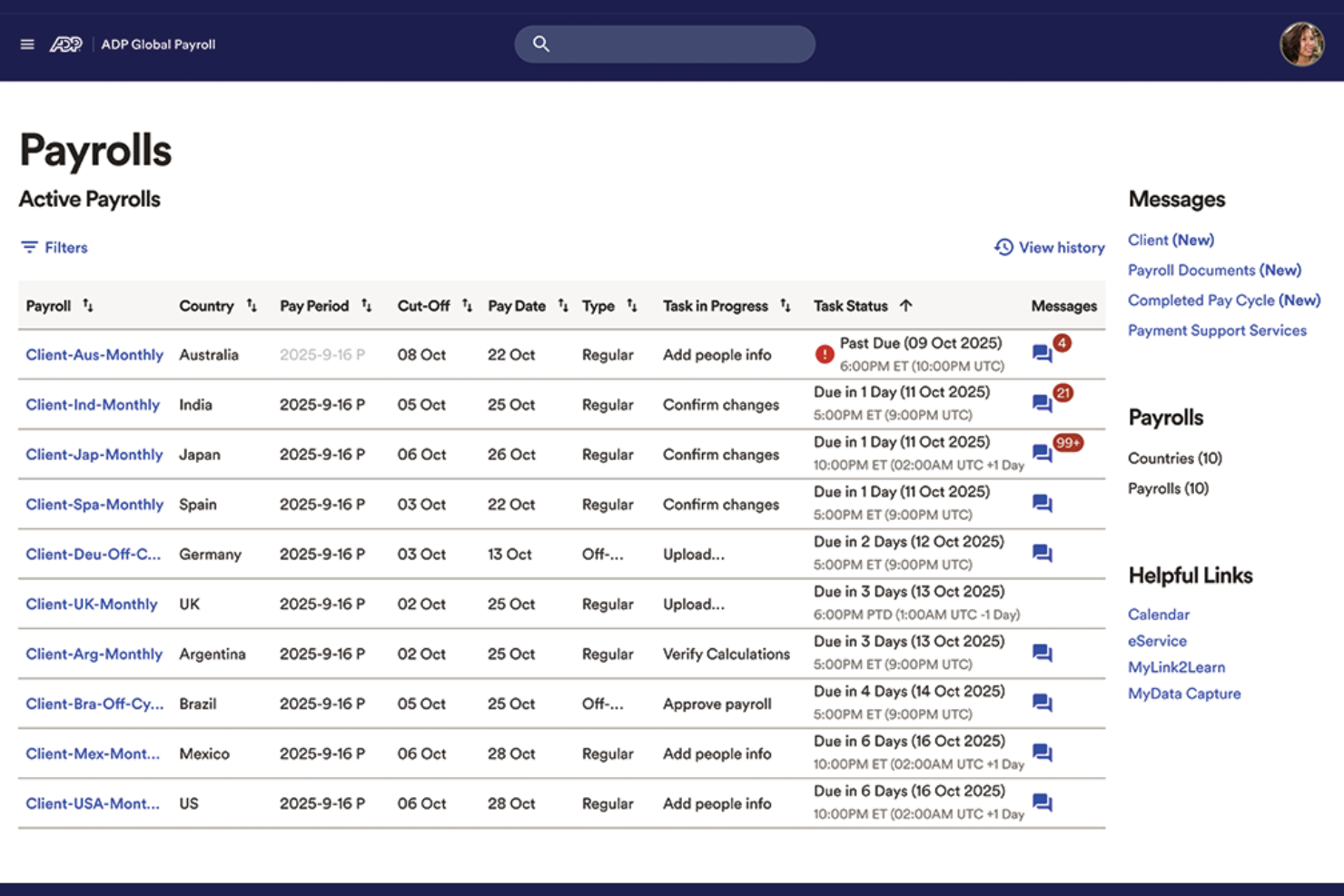
ADP GlobalView Payroll is a cloud-based, multi-country payroll platform that handles payslip generation, automated tax calculations, workforce analytics, and compliance across 140+ countries from a single system of record.
Who Is ADP Best For?
ADP GlobalView Payroll is built for large, multinational enterprises with complex payroll operations across multiple countries, particularly those with dedicated payroll or finance teams managing high employee volumes.
Why I Picked ADP
ADP GlobalView Payroll earns its spot on my shortlist because of what it does with payroll data at scale. The reporting layer gives finance and HR leaders consolidated, real-time visibility across every country from one dashboard, including gross-to-net breakdowns, cost trends, and predictive workforce analytics. I also value the built-in AI assistant, which flags payroll variances directly inside your workflow so you can investigate discrepancies before processing. That combination of live reporting and variance detection is where ADP clearly pulls ahead for enterprise teams.
ADP Key Services
- Multi-country payroll processing: Run payroll across 140+ countries from one system, with automated tax calculations and local compliance built in per country.
- Employee self-service portal: Give employees secure access to payslips, leave requests, and tax deductions through a unified portal available in 35 languages.
- Controlled payroll audits: Run automated audit checks across country offices before finalizing payroll, reducing manual errors in multi-entity environments.
- Flexible payroll outsourcing: Choose from three levels of managed payroll services, letting you decide how much ADP's team handles versus your in-house team.
ADP Integrations
ADP GlobalView Payroll supports connections with SAP SuccessFactors, Oracle HCM Cloud, and Workday, along with standard integrations between ADP GlobalView Payroll and ADP's own workforce management solutions. An API is also available for custom integrations, and ADP Marketplace offers additional partner-built connectors through providers like Flexspring.
Pros and Cons
Pros:
- Automated local tax calculation built in
- Consolidated multi-country payroll analytics dashboard
- Strong APAC and Europe payroll coverage
Cons:
- No easy one-click payroll cancellation option
- Reporting runs slowly for large workforces

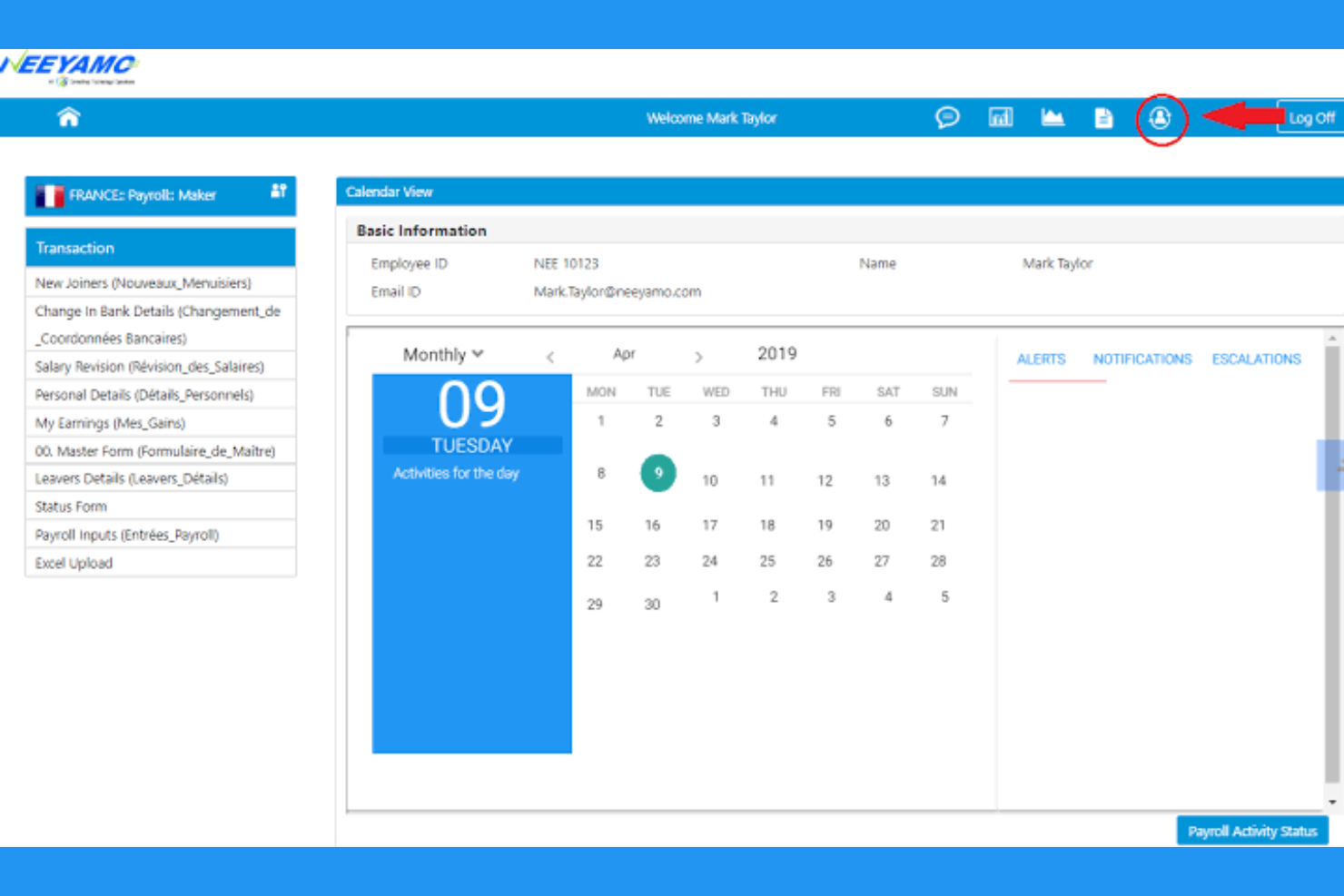
Neeyamo is a global payroll and HR operations platform built specifically for large enterprises managing distributed workforces, with native country payroll engines, statutory compliance tracking, and centralized employee data management across 100+ countries.
Who Is Neeyamo Best For?
Neeyamo is a strong fit for multinational enterprises with large, geographically dispersed headcounts that need in-country payroll processing managed at scale.
Why I Picked Neeyamo
I picked Neeyamo as one of the best for large enterprises because it's built to handle the sheer volume and complexity that comes with running payroll across thousands of employees in a country like India. I particularly like its statutory compliance tracking, which monitors changes to India's Provident Fund, ESI, and professional tax rules in real time, so my team isn't manually chasing regulatory updates. Its country-specific payroll engine handles India's multi-layered tax structure natively, rather than forcing a generic global engine to approximate local rules.
Neeyamo Key Services
- Multi-country payroll processing: Run payroll across 160+ countries from a single platform without switching between local systems.
- eHub employee data repository: A centralized database that stores and manages employee master data to support both HR and payroll operations.
- Statutory radar monitoring: A built-in compliance monitoring tool that tracks regulatory and statutory changes across countries in real time.
- Time and attendance management: Track, record, and plan employee work hours and time-off in line with organizational and local statutory policies.
Neeyamo Integrations
Neeyamo has certified connectors for Workday, SAP SuccessFactors, and Oracle HCM. You can also connect payroll systems using prebuilt templates, connectors, and certified HRIS integrations through its low-code IntegrationManager platform, and connect to cloud infrastructure including AWS and Azure.
Pros and Cons
Pros:
- Supports multi-currency payroll processing natively
- Built-in India PF and ESI tracking
- Covers 160+ countries from one platform
Cons:
- Reporting lacks real-time granular detail
- Setup and onboarding can take time
Other Global Payroll Services in India
Here are some additional global payroll India options that didn’t make it onto my shortlist, but are still worth checking out:
- Mercans
For in-country support and local expertise
- CloudPay
For global payroll workflow automation
- Payce
For native integration with HR systems
- Papaya Global
For multinational payroll coordination
- Keka HR
For employee self-service features
- Zoho Payroll
For integration with Zoho business tools
- greytHR
For statutory compliance automation
- Asanify
For automated salary disbursement
- Oyster
For distributed team onboarding
- TopSource
For outsourced payroll processing


How I Evaluate Global Payroll Services in India
I split my evaluation of the global payroll service providers into baseline requirements—TDS automation, PF/ESI handling, and Form 16 generation—and the differentiators that matter for businesses running payroll in India as part of a global workforce.
Core Functionality (Table Stakes For This List)
When I'm selecting tools for my list, I rank each one on a scale from 0 (does not offer the functionality) to 5 (excels in this area) for each core functionality listed below. Then, I calculate the tool's total score into a percentage. Each tool needs to achieve a minimum total score of 65% to be considered for inclusion.
- India Payroll Processing: I evaluate whether the platform handles full gross-to-net in INR with Indian salary structures like basic, HRA, LTA, and special allowances built in.
- Statutory Compliance: Each tool should cover TDS, PF, ESI, Professional Tax, LWF, and gratuity—plus keep up with state-level variations and legislative changes.
- Multi-Country Payroll: I look for a unified dashboard that lets you run India payroll alongside other countries, so your finance team isn't reconciling across separate systems.
- Local Tax Filings: The platform should generate Form 16, Form 24Q, PF/ESI challans, and digital payslips natively rather than requiring manual preparation outside the tool.
- EOR or Entity Support: Whether you have your own Indian entity or need an EOR to hire without one, I check that the vendor supports your specific operating model.
- Cross-Border Payments: INR disbursements to Indian bank accounts via NEFT or RTGS should be built in, along with FX conversion from your home currency.
Once I have a list of tools that meet this criteria, I consider what sets each platform apart.
Differentiating Factors (What Sets Vendors Apart)
Here's how I compare and contrast different vendors:
Standout Features
Statutory compliance automation is where vendors really diverge—I look for platforms that handle PF, ESI, and Professional Tax filing and remittance across Indian states without manual steps. An employee self-service portal matters too, especially one where employees can submit IT declarations, choose their tax regime, and upload investment proofs on mobile. I also evaluate Flexible Benefits Plan management, since configuring LTA, meal cards, and NPS components saves your team from building workarounds in spreadsheets.
Beyond Features
Deployment model matters a lot here. If your company doesn't have an Indian entity, you need an EOR—but if you do, payroll SaaS or a managed service is the better path. I also look at how well each platform connects to your existing stack, like syncing GL entries to Tally or NetSuite and pushing bank files for NEFT disbursements. Pricing transparency is worth checking too, especially whether statutory filings and off-cycle runs carry hidden fees.
How to Choose Global Payroll Services in India
Choosing between the best global payroll service providers can feel overwhelming, especially when you’re comparing long feature lists and complex pricing structures. To help you stay focused, here’s a checklist of factors to keep in mind as you evaluate your options:
| Factor | What to Consider |
|---|---|
| Scalability | Does the solution handle headcount growth or multi-entity setups across India? Check for easy expansion without disruptive migrations. |
| Integrations | Will the platform connect with your HRIS, accounting, ERP, or banking partners? Review available integrations or ask if custom connectors are possible. |
| Customizability | Can payroll elements, reporting, and workflows adapt to your company’s unique salary structures or local entity needs? Understand any configuration limits before buying. |
| Ease of use | Is the interface intuitive for both global admins and Indian HR users? Consider demoing workflows like payroll runs, corrections, and report exports. |
| Implementation and onboarding | What support is available during rollout? Clarify timelines, who leads data migration, parallel runs, and whether India-based consultants are involved. |
| Cost | Are pricing, add-ons, and statutory filing fees clear? Ask about per-employee costs, volume discounts, and extra charges for multi-country setups or off-cycle payrolls. |
| Security safeguards | How is sensitive payroll data protected and stored? Look for DPDP 2023 compliance, encryption, SOC 2/ISO certifications, and options for India data residency. |
| Compliance requirements | Does the platform keep pace with India’s tax updates, state variations, and labor rule changes? Assess the team’s process for updating rules and alerts. |
What Are Global Payroll Services in India?
In India, global payroll refers to a payroll technology solution that enables organizations to pay employees and contractors while staying compliant with local payroll regulations. These platforms automate salary processing, payroll administration, tax calculations, and statutory filings, while integrating payroll data into a unified system for multinational businesses.
They support global workforce management, simplify international expansion and global mobility, and often integrate with accounting software. Many providers also include features to support compliance with standards such as GDPR, helping organizations manage payroll securely across multiple countries.
Why Use Global Payroll Services in India?
Global payroll services help you pay employees in India while managing statutory deductions, payroll compliance, and local reporting from a single platform. If you’re hiring in India as part of a global workforce, they also make it easier to manage payroll across countries without relying on separate local providers.
India is one of the world’s largest talent markets, with a skilled workforce spanning software development, finance, customer support, and operations. The opportunity is exciting. The payroll? Slightly less so. Running payroll in India means keeping up with income tax deductions, Provident Fund (EPF), Employee State Insurance (ESI), professional tax (where applicable), gratuity, bonus requirements, and state-specific labor regulations.
I look for global payroll services that automatically calculate statutory deductions, generate payroll reports, and support local compliance requirements. Those features make it easier to pay employees accurately while managing payroll in India alongside the rest of your global workforce.
How is Payroll Calculated in India?
The number on an offer letter — Cost to Company (CTC) — is never what an employee takes home, and that gap trips up a lot of first-time employers in India. Getting from CTC to net pay means running the same salary through five or six statutory calculations, each with its own rate, cap, and eligibility rule.
It starts with how CTC is split. A salary structure isn't just one number — it's broken into basic pay, dearness allowance (DA), HRA, and other allowances, and that split matters because basic + DA (not the full CTC) is the base most statutory contributions are calculated on. Historically, employers kept basic pay low and allowances high specifically to shrink their EPF and gratuity bills. As of the Labour Codes that took full effect in 2026, that workaround is largely closed: if allowances exceed 50% of total remuneration, the excess is legally reclassified as "wages" and pulled back into the EPF, gratuity, and bonus base — meaning many companies now owe more in statutory contributions than their old salary structures assumed.
From there, the core deductions stack up:
- Employee Provident Fund (EPF): 12% of basic + DA from the employee, matched by 12% from the employer, going toward retirement savings.
- Employee State Insurance (ESI): Only for lower-income employees; 0.75% from the employee, 3.25% from the employer, funding medical benefits.
- Professional tax: A state-level tax (not every state levies it), capped at ₹2,500/year regardless of income.
- TDS (income tax withholding): Deducted monthly under Section 192 based on the employee's projected annual income and chosen tax regime; under the new regime, a lower income band is tax-free and, with the standard deduction and rebates, a higher effective threshold is tax-free.
- Gratuity: Not deducted from salary at all, but accrued by the employer: 15 days' pay per year of service, payable once an employee crosses 5 years, subject to a cap.
Net pay is what's left after subtracting the employee-side pieces: gross salary minus EPF, ESI, professional tax, and TDS. Employer-side contributions never touch the payslip but sit inside CTC — the real reason CTC and take-home pay can differ by 25-30% for the same job.
The takeaway: this calculation isn't fixed. It shifts by salary band, by state (professional tax varies or doesn't apply), and now by how the compensation structure is designed under the new wage rule — so the "same" offer can mean different take-home pay depending on how it's built.
Indian Payroll Taxes and Deductions
Every payroll run includes statutory deductions and employer contributions. The exact requirements depend on employee eligibility, salary level, and the state where they work.
| Component | Who Pays? | Rate | Purpose |
|---|---|---|---|
| Employees' Provident Fund (EPF) | Employer & Employee | 12% of basic + DA from each side | Mandatory retirement savings contribution |
| Employee State Insurance (ESI) | Employer & Employee | Employee 0.75%, Employer 3.25% of gross wages (below eligibility threshold) | Healthcare and disability benefits |
| Professional Tax | Employee | State-set slab rate, capped annually | State-level employment tax |
| Tax Deducted at Source (TDS) | Employee | Progressive slab rate, 0% to 30% | Income tax withheld from salary |
| Labour Welfare Fund (LWF) | Employer & Employee | Small fixed contribution, varies by state | State-specific welfare contribution |
Indian Leave Entitlements
Leave entitlements also affect payroll calculations. Your payroll software should track leave balances and apply the correct statutory payments based on local requirements.
| Leave Type | Typical Entitlement |
|---|---|
| Annual / Earned Leave | Varies by state and employer policy |
| Casual Leave | Available under many state labor laws |
| Sick Leave | Varies by state legislation |
| Maternity Leave | Up to 26 weeks for eligible employees |
| Paternity Leave | Determined by employer policy in most private-sector organizations |
Indian Public Holidays
Public holidays also influence payroll. Global payroll providers apply the correct holiday calendar based on where your employees work.
| Holiday Type | Payroll Impact |
|---|---|
| National Holidays | Republic Day (January 26), Independence Day (August 15), and Gandhi Jayanti (October 2) apply nationwide. |
| State Holidays | Additional paid holidays vary by state and must be reflected in payroll calculations. |
| Holiday Pay | Payroll systems account for holiday eligibility and any applicable overtime or premium pay. |
Termination terms in India
Final payroll includes all outstanding salary payments and any statutory entitlements owed when an employee leaves your business.
| Payroll Item | When It Applies |
|---|---|
| Final Salary | Salary earned up to the employee’s last working day |
| Unused Earned Leave | Paid where required under state law or company policy |
| Gratuity | 5 years of continuous service for permanent employees; Fixed-term/contract employees qualify on a pro-rata basis after 1 year under the new Labour Codes |
| Statutory Bonus | Where required under the Code on Wages |
| Notice Pay | Based on the employment contract and applicable labor laws |
How is Payroll Compliance Regulated in India?
Payroll compliance in India is managed by several government authorities, each overseeing a different part of the payroll process. If you’re paying employees in India, your payroll software should calculate the required deductions, generate statutory reports, and help you meet local filing requirements.
The key authorities include:
- Income Tax Department: Oversees Tax Deducted at Source (TDS), payroll tax withholding, and employer tax reporting.
- Employees’ Provident Fund Organisation (EPFO): Regulates Employees’ Provident Fund (EPF) contributions and employer registrations.
- Employees’ State Insurance Corporation (ESIC): Administers Employee State Insurance (ESI) contributions and employee benefits.
- State Governments: Oversee state-specific payroll obligations such as Professional Tax and Labour Welfare Fund where applicable.
What this means for payroll: Rather than tracking requirements across multiple authorities yourself, I’d look for payroll software that automatically updates statutory calculations, supports local filings, and keeps payroll records in one place. That’s especially helpful if you’re managing employees in India alongside teams in other countries.
Outsourcing Payroll in India
If you’re outsourcing payroll in India, you have two main options: work with a local payroll provider or choose a global payroll service. The right choice depends on where your employees are today and where your business is headed next.
Local Payroll Services Company
A local payroll provider specializes in payroll within India. If your entire workforce is based in India, you’ll usually get everything you need to manage statutory deductions, tax filings, and state-specific payroll requirements.
Best for:
- Businesses with employees only in India
- Domestic payroll processing
- Companies with no immediate international hiring plans
Global Payroll Services Company
A global payroll service provider manages payroll across multiple countries from a single platform. I think this is the better choice if you’re already hiring internationally or expect to expand into new markets, since you can manage payroll, reporting, and compliance across your global workforce without juggling multiple local providers.
Best for:
- Businesses with international employees
- Companies expanding into multiple countries
- Teams that want centralized payroll and reporting
Features of Global Payroll Services in India
When selecting global payroll India, keep an eye out for the following key features:
- India payroll processing: Processes salaries in INR and supports Indian salary structures, including allowances, deductions, and gross-to-net calculations for accurate payroll runs.
- Statutory compliance automation: Calculates, files, and remits Indian statutory obligations like TDS, PF, ESI, Professional Tax, and gratuity, reducing manual work and compliance risk.
- Form 16 and tax reporting: Automatically generates Form 16, Form 24Q, and related tax documents needed for employee tax filings, ensuring all statutory reports are ready on time.
- Employee self-service portal: Allows employees to access payslips, submit IT declarations, claim reimbursements, and upload investment proofs through a secure online portal.
- Multi-country payroll consolidation: Lets you manage payrolls for India and other countries within a single dashboard, supporting unified reporting and governance for global teams.
- Flexible benefits management: Supports configuration and management of India-specific, tax-optimized benefit plans such as LTA, meal cards, NPS, and mobile reimbursements.
- Integration with HR and finance systems: Connects Indian payroll with your HRIS, ERP, and accounting platforms, keeping data consistent and reducing manual data entry.
- Deployment model options: Offers flexibility to run payroll for your own Indian entity or use an Employer of Record (EOR) when you don't have a local presence.
- Bank payment integrations: Integrates with major Indian banks for direct NEFT/RTGS salary disbursement, ensuring timely and secure payments to employee accounts.
Benefits of Global Payroll Services in India
Implementing global payroll India provides several benefits for your team and your business. Here are a few you can look forward to:
- Reliable statutory compliance: Automated filings for TDS, PF, and other local obligations help keep your business in line with Indian regulations year-round.
- Unified global oversight: Manage payroll for India and other locations from a single dashboard, supporting accurate tracking and consolidated reporting.
- Smooth employee experience: Employees access payslips, submit declarations, and handle reimbursements through a self-service portal designed for the Indian context.
- Scalable operations: Easily adapt to growth, multiple legal entities, or shifts between EOR and local entity payroll without changing platforms.
- Fast payroll cycles: Built-in automation, integrations, and bank connectivity help your team process payroll and payments on time each month.
- Configurable benefits administration: Flexible benefits management supports LTA, NPS, meal cards, and other India-specific plans right within the solution.
- Data security and local compliance: Indian data residency, encryption, and compliance with the Digital Personal Data Protection Act help safeguard sensitive information.
Costs and Pricing of Global Payroll Services in India
Selecting global payroll India requires an understanding of the various pricing models and plans available. Costs vary based on features, team size, add-ons, and more. The table below summarizes common plans, their average prices, and typical features included in global payroll India solutions:
Plan Comparison Table for Global Payroll Services in India
| Plan Type | Average Price | Common Features |
|---|---|---|
| Free Plan | $0 | Basic payroll calculations, limited self-service access, and restricted statutory compliance tools. |
| Personal Plan | $5–$15/user/month | Full pay cycle management, payslip creation, statutory compliance filing, and basic email support. |
| Business Plan | $15–$30/user/month | Multi-country dashboard, electronic tax document generation, robust compliance support, integrations, and audit-ready reports. |
| Enterprise Plan | $30–$60/user/month | Custom reporting, dedicated onboarding, advanced workflow customization, enhanced security, and dedicated account management. |
Global Payroll Services in India FAQs
Here are some answers to common questions about global payroll India:
How does global payroll in India handle Indian tax and labor laws?
Global payroll India solutions automate calculations and filings for TDS, PF, ESI, and Professional Tax, keeping pace with regulatory changes so you stay compliant without manual intervention.
Can I process payroll for contractors and employees together?
Yes, most platforms let you run payrolls for employees and contractors in the same dashboard, but with workflows and compliance requirements tailored to each worker type.
Is it possible to pay Indian employees without having a local entity?
Yes, if your provider offers Employer of Record (EOR) services, you can legally hire and pay Indian talent without setting up an Indian legal entity.
What onboarding timelines should I expect?
Implementation can take two to eight weeks depending on your data complexity, the number of entities, and whether parallel payroll runs are required for transition.
Are employee data and payments secure on these systems?
Yes, leading platforms comply with the Digital Personal Data Protection Act and maintain ISO 27001/SOC 2 certifications, offering India-based data storage options and strong encryption safeguards.
This content is provided for general informational purposes only and does not constitute legal, tax, or other professional advice. It may not be complete, accurate, or current, and laws and practices may change without notice and vary by jurisdiction. You should not act on this information without obtaining advice from qualified legal or tax counsel in the relevant jurisdiction regarding your specific circumstances.