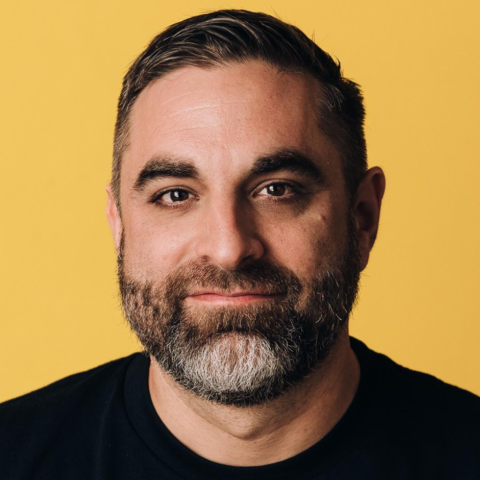
DisruptHR Founder Urges Leaders to Rethink Hierarchies and Build AI Literacy in a Time of Unrelenting Change
Jennifer McClure's career in HR went from a one-woman show at a manufacturing plant to VP of HR at a global organization. Now, she's the CEO of Unbridled Talent and the driving force behind DisruptHR.

Jennifer McClure
Founder of Unbridled Talent and DisruptAI
Leaders Must Ask Better Questions in the Age of AI: Jennifer emphasizes that with AI democratizing information, leaders must move from hierarchical control to horizontal collaboration — fostering psychological safety, cross-functional learning, and environments where both people and technology co-create ideas.
AI Turns HR Into a Strategic Powerhouse: AI reduces friction in reporting, analysis, and content creation, allowing HR to focus on storytelling, insight generation, and shaping the future of work. Leaders who treat AI as a partner, not a threat, become more strategic and influential.
Curiosity and Adaptability Will Define HR’s Future: For Jennifer, AI literacy grows through low-stakes experimentation, good prompting skills, and leaders modeling the behavior themselves. Organizations become AI-ready not by mastering tools, but by building confidence, clarity, and cultures of continuous learning.
We sat down with Jennifer to learn her views on where HR is headed and what leaders need to do to stay relevant. Here's what she told us.
The journey from one-person HR department to HR influencer
I'm Jennifer McClure, the CEO of Unbridled Talent, where I work as a professional speaker, trainer, and executive coach.
I'm also the Chief Excitement Officer of DisruptHR, a global movement focused on the future of work. Since the first event in December 2013, over 960 DisruptHR events have been held around the world, and more than 10,000 talks have been given.
My leadership journey began as an HR department of one at a small manufacturing plant. From there, I became an HR Manager at another plant. And my last corporate role was VP of HR at the largest playing card manufacturer in the world. This corporate experience spanned diverse industries, company sizes, and roles.
After leaving the corporate world, I spent about four years in Executive Search, focusing on helping organizations recruit top leaders, and I also earned an executive coaching certification. Then, in 2010, I launched Unbridled Talent.
Why AI requires shifting from hierarchical leadership to horizontal collaboration
With AI, my role has changed from being an expert with answers to being a curator of better questions.
That has meant letting go of a long-held assumption that experience automatically equals expertise. With AI, information is democratized — so the real differentiator isn’t what you know, but how you think. My job, now, is to help leaders navigate ambiguity, experiment boldly, and ensure that AI enables more human work, not less.
Organizationally, it also requires a mindset shift — from hierarchical to horizontal. The best ideas often emerge from collaboration between humans and machines, and that demands psychological safety, cross-functional learning, and a willingness to challenge traditional power dynamics.
Practically speaking, that means leaders have to create environments where people can speak up without fear, work across silos, and question long-standing assumptions. Organizations can reinforce this by celebrating experimentation, rotating people through different functions, and coaching leaders to respond to feedback with curiosity instead of defensiveness.
In short: Leadership in an AI-first world is less about commanding from the front and more about creating the conditions where people — and technology — can do their best thinking together.
Organizations become “AI-ready” when they focus less on mastering tools and more on building confidence, clarity, and a mindset of continuous learning.
How AI is transforming HR workflows and elevating the strategic role of HR leaders
As a sole proprietor leading two businesses, I don’t have a “team” in the traditional sense — but I do have a new team member that never sleeps: AI.
Over the past year, integrating AI into my workflows has fundamentally changed how I think, create, and lead. The transformation didn’t happen all at once; it’s evolved from curiosity to deep integration. When I first started using AI, I treated it like a search engine. Today, I treat it like a virtual collaborator — one that helps me scale creativity, strategy, and execution across everything from keynote development to marketing and operations.
But the deeper impact I’ve seen isn’t limited to my own business. I’m seeing a shift in how HR leaders and HR teams are integrating AI as well. For example, HR is shifting from being a reactive service center to a strategic problem solver. Leaders are using AI to analyze patterns in engagement survey comments across multiple years. What used to take weeks of review and analysis can now be done in hours. This shift isn’t just about efficiency; it’s elevating HR’s role from “reporting what happened” to “shaping what should happen next.”
I’m also seeing HR leaders change the way they work by using AI to reduce the overwhelm of data, reporting, and content creation. By empowering their teams with AI tools, they’re freeing up time for deeper reflection, better storytelling, and stronger communication — the skills that truly differentiate impactful leaders.
For me — and for the HR leaders I work with — the real transformation hasn’t been operational; it’s been a mindset. AI has pushed me from a “do-it-all-myself” approach to a co-creation mindset. It’s taught me to ask better questions, delegate more effectively — even to technology — and focus my energy where it adds the most value: thought leadership, storytelling, and human connection.
The HR leaders who embrace AI as a collaborator — not a threat — are becoming more strategic, more influential, and more future-ready. AI isn’t replacing their leadership. It’s amplifying it.

Why AI should be seen as a catalyst for human potential — not just a productivity tool

Many organizations view AI primarily as a tool for efficiency, not as a catalyst for transformation. They focus on automating tasks instead of reimagining how work gets done and how people can contribute at a higher level.
Automation is important, but only because it can provide time and space to focus more on higher-value activities, and therefore, fuel the transformation of both humans and the business.
In my own leadership, I’m addressing this disconnect by modeling a different mindset — one that asks, “How can AI make work more human?” I use AI to remove friction from my day-to-day operations so I can invest more energy in creativity, strategy, and connection.
And I encourage leaders to do the same: to see AI not as a replacement for people, but as an amplifier of human potential. The real promise of AI isn’t in doing more work faster — it’s in freeing us to do more meaningful work better.
How leaders can build AI literacy in organizations

I work with and advise HR leaders who are building AI literacy in their organizations. The most important step is helping people understand the “why” behind AI — how it can reduce friction, improve decision-making, and free them up for more meaningful work.
From there, I believe it's important to create low-stakes opportunities for employees to experiment. Most people aren’t resisting AI because they lack skill; they’re resisting because they lack confidence. Short practice sessions, prompt libraries, and simple use cases go a long way in removing fear.
I also think that we should be teaching prompting as a communication skill, not a technical one. When employees learn how to give context, ask better questions, and iterate, their comfort level increases quickly.
Finally, AI literacy grows fastest when leaders model the behavior themselves. When executives share how they use AI in their own workflows, it signals that curiosity and experimentation are part of the culture.
Organizations become “AI-ready” when they focus less on mastering tools and more on building confidence, clarity, and a mindset of continuous learning.
A simple AI tech stack for creativity, clarity, and high-impact leadership
My tech stack is intentionally simple but powerful — designed to keep me organized, creative, and connected across both of my businesses.
Google Workspace
I rely heavily on Google Workspace (Gmail, Calendar, Drive, and Gemini) to manage communication, scheduling, and act as a team collaboration tool.
Within Google Workspace, Gemini assists me with responding to emails, and of course, it includes grammar and spelling tools that help me to avoid mistakes in my writing with Google Docs, etc. I'm still learning how to better use the AI tools available within Google Workspace.
ChatGPT
ChatGPT has become my most transformative tool — it’s my creative and strategic collaborator for everything from keynote development to email communication and thought leadership content.
I have a Project folder set up within ChatGPT to function as my executive assistant. I've fed it information about me and my preferences, and given it rules and instructions for how it can best help me to maximize my productivity and focus on priority activities to achieve my goals.
Every day, I share screenshots of my task list for the day that are in Nozbe, as well as screenshots of my Gmail inboxes for both of my businesses, and my LinkedIn inbox. My executive assistant then helps me to prioritize and get the highest value work done within the time I have available. It also tracks those activities that are related to my goals, and helps me to stay current with my progress.
Trello
Trello has been a game-changer. It has completely transformed how I stay organized and on top of tasks across both of my businesses — especially with DisruptHR, where I’m managing activities for more than 170 licensed cities and tracking over 150 events each year.
Trello gives me a visual way to see everything that’s happening at once. It’s like having a real-time command center that keeps me focused and in control without feeling overwhelmed.
It’s simple, flexible, and endlessly customizable. And there are many AI features that I'm still learning.
For example, I've integrated my Trello tasks with the ChatGPT Executive Assistant that I mentioned above, so it can include them in my daily/weekly priorities and time blocks automatically.
Other tools
- I use Nozbe as my task and project management software.
- Microsoft Office — especially Word and PowerPoint — remains my go-to for creating client deliverables and slide decks that need formatting precision.
- Dropbox serves as my digital filing cabinet for contracts, presentations, and media assets.
- Evernote is my knowledge mangement tool and houses notes, research, and ideas in progress.
- I use Kit for my email newsletter and WordPress to manage my websites.
Overall, I've been gradually integrating Gemini and ChatGPT workflows more deeply into my daily systems. I’ve built automated workflows that draft communications, organize website updates, and streamline task scheduling — saving me hours each week. The result has been more efficiency, clearer focus, and a stronger creative rhythm. I’m spending less time on admin and more time doing the work that creates real impact.
But while AI supports the operations, the real transformation has been in how I lead. I use AI as a strategic thinking partner, helping me test ideas, weigh decisions, and approach challenges with more clarity and creativity. In that sense, AI has become part of my leadership operating system — not just my tech stack.
Most people aren’t resisting AI because they lack skill; they’re resisting because they lack confidence. Short practice sessions, prompt libraries, and simple use cases go a long way in removing fear.

Why adaptability and curiosity will define HR leadership in an AI-driven decade
This much is clear: The only constant in the next five years will be change.
In the world of work, technology will keep evolving faster than our policies, structures, and comfort zones. The leaders who thrive won’t be the ones who master every new tool — they’ll be the ones who stay curious, adaptable, and relentlessly human.
My prediction is that the most successful organizations will shift their focus from automation to amplification — using AI not to replace people, but to enhance their capacity for creativity, connection, and impact.
For me, that means my role will continue to evolve from “expert” to “experimenter.” The future will belong to leaders who are willing to question everything about how we work today — and who see technology as a partner in unlocking human potential, not a threat to it.
AI gives leaders an opportunity to rethink how work gets done
My best advice is this: Start experimenting — both personally and professionally.
You don’t have to be an AI expert to benefit from it, but you do have to be curious. The leaders who thrive in this new era aren’t the ones with all the answers; they’re the ones willing to explore, test, and learn in real time.
For those leading people or organizations, the opportunity isn’t just to use AI — it’s to rethink how we work.
Ask: “How can AI free up capacity for deeper human connection, creativity, and strategy?“ and “How can we build cultures that value experimentation and continuous learning over perfection?“
In my own work, I’ve learned that transformation doesn’t come from adopting new tools — it comes from adopting a new mindset. Lead with curiosity, stay grounded in your values, and view technology as a partner in unlocking human potential, not as a replacement for it.
That’s where the real transformation begins.
Follow along
You can follow along on LinkedIn and Jennifer's website as she continues to move the world of HR forward through curiosity, experimentation, and community. And check out DisruptHR!
More expert interviews to come on People Managing People!