

Reseña de Tracker: Ventajas, Desventajas, Funciones y Precios Explicados



You probably wouldn’t get far if you’re manually sifting through a high volume of resumes, trying to identify the right set of skills and match them with the right experience, all just to find someone who might fit the bill. Luckily, there’s no need for that anymore. With the right applicant tracking system (ATS), you can leave the parsing and drudgery up to the software, so you can focus on recruiting the right candidate.
Tracker is an applicant tracking system designed to help hiring managers streamline recruitment, manage candidate pipelines, and improve collaboration across teams. When you’re facing high volumes of applicants, compliance requirements, and the need for efficient communication, Tracker offers a flexible platform that combines ATS and CRM features.
In this review, I’ll provide you with a detailed look at Tracker’s features, best and worst use cases, pros and cons, and pricing—so you can decide if it’s the right fit for your hiring process.
Tracker Evaluation Summary
- From $79/user/month
- Free demo available
Por qué confiar en nuestras reseñas de software
Nuestro equipo lleva probando y evaluando software desde 2012. Como expertos en RR. HH., sabemos lo difícil —y lo importante— que es elegir el software adecuado.
Para esta guía, evaluamos las herramientas mediante pruebas prácticas e investigación independiente, puntuando las herramientas según nuestros criterios de selección. También nos basamos en la experiencia de líderes de opinión del sector y de profesionales de RR. HH. en activo.
Nuestras reseñas reflejan nuestro criterio editorial humano, no un discurso de ventas.
Revisores expertos:
Tracker Overview
When judging applicant tracking systems, Tracker stands out for its deep job board integrations, customizable workflows, and robust AI candidate ranking, making it a strong choice for staffing agencies and recruiting firms. Its interface is clean and intuitive, and the onboarding process and training resources help new users adapt. Pricing is competitive for the feature set, though smaller teams may find it more than they need. If you’re comparing options, Tracker’s robust reporting, automation, and integration capabilities make it especially appealing for organizations managing high-volume or multi-branch recruiting.
pros
-
Built-in CRM supports end-to-end client and candidate management.
-
Customizable workflows adapt to different recruiting processes.
-
Responsive customer support ensures fast issue resolution and guidance.
cons
-
There is something of a learning curve for advanced features.
-
Reporting tools require setup and configuration to maximize value.
-
Data migration onto Tracker can be costly.
Is Tracker Right For Your Needs?
Who Would be a Good Fit for Tracker?
Tracker is best suited for organizations that need advanced recruiting workflows, integrated CRM, and multi-branch management. Its feature set is especially valuable for staffing agencies, recruitment firms, and teams handling high-volume hiring or client management. If your business requires detailed reporting, automation, and the ability to manage both candidates and clients in one platform, Tracker’s capabilities align well with these needs.
-
Mid-sized Staffing Agencies Looking to Scale
Tracker supports mid-sized staffing agencies as they automate &expand hiring volumes, clients, and recruiters.
-
Recruitment Firms
Customizable workflows and automation support complex, multi-stage hiring processes.
-
IT Staffing Firms
Skills-based search and redeployment tracking help recruiters place talent faster.
-
Multi-Region & Multi-Brand Operations
Branch and division management supports offices across various regions from one database.
-
Agencies Switching From Legacy Platforms
Teams migrating from older systems get a modern interface without a retraining tax.
-
Executive Search
Integrated CRM and placement tracking support executive search and business development.
Who Would be a Bad Fit for Tracker?
Tracker may not be the best choice for small businesses, teams with simple hiring needs, or organizations seeking a lightweight, plug-and-play ATS. Its advanced features and CRM focus can be more than what’s needed for basic recruiting, and the interface may feel overwhelming for those not managing high volumes or complex processes.
-
Small Startups
Tracker’s extensive features can overwhelm teams with basic hiring needs.
-
Retail Hiring
High-volume, entry-level hiring may not require CRM or advanced workflows.
-
Nonprofit Organizations
Budget constraints and simple processes may not justify Tracker’s pricing.
-
Internal HR Teams
Companies hiring only for internal roles may not need client management tools.
-
Temporary Event Staffing
Short-term, rapid hiring needs may be better served by simpler platforms.
-
Education Sector
Schools and universities may find compliance and CRM features unnecessary.
Cómo probamos y puntuamos nuestras herramientas
Hemos pasado años construyendo, refinando y mejorando nuestro sistema de pruebas y puntuación de software. La rúbrica está diseñada para capturar los matices de la selección de software y lo que hace que una herramienta sea efectiva, centrándose en los aspectos críticos del proceso de toma de decisiones. A continuación, puedes ver exactamente cómo funcionan nuestras pruebas y puntuaciones a través de siete criterios. Esto nos permite ofrecer una evaluación imparcial del software basada en la funcionalidad principal, características destacadas, facilidad de uso, incorporación, soporte al cliente, integraciones, reseñas de clientes y relación calidad-precio.
Funcionalidad principal (25% de la puntuación final)
El punto de partida de nuestra evaluación siempre es la funcionalidad principal de la herramienta. ¿Tiene las funciones básicas que se espera encontrar? ¿Alguna de esas funciones básicas está restringida a planes de precio superiores? En esencia, esperamos que una herramienta se compare favorablemente con las capacidades básicas de sus competidores.
Características destacadas (25% de la puntuación final)
Luego, evaluamos características poco comunes que van más allá de la funcionalidad principal que normalmente se encuentra en herramientas de su tipo. Una puntuación alta refleja funciones especializadas o únicas que hacen que el producto sea más rápido, eficiente o que ofrezca un valor adicional al usuario. También evaluamos lo fácil que es integrar con otras herramientas comúnmente usadas en el entorno tecnológico para ampliar la funcionalidad y utilidad del software. Las herramientas que ofrecen muchas integraciones nativas, conexiones de terceros y acceso a API para construir integraciones personalizadas obtienen las mejores puntuaciones.
Facilidad de uso (10% de la puntuación final)
Consideramos qué tan rápido y fácil es ejecutar las tareas definidas en la funcionalidad principal utilizando la herramienta. El software que obtiene una puntuación alta está bien diseñado, es intuitivo, ofrece aplicaciones móviles, proporciona plantillas y hace que tareas relativamente complejas parezcan simples.
Incorporación (10% de la puntuación final)
Sabemos lo importante que es la rápida adopción del equipo para una nueva plataforma, por eso evaluamos qué tan fácil es aprender y usar una herramienta con una capacitación mínima. Evaluamos cuán rápido un miembro del equipo puede configurarse y comenzar a usar la herramienta sin experiencia. Las soluciones con mejores puntuaciones requieren poco o ningún soporte.
Soporte al cliente (10% de la puntuación final)
Revisamos cuán rápido y fácil es obtener ayuda mediante teléfono, chat en vivo o base de conocimientos. Las herramientas y empresas que ofrecen soporte en tiempo real obtienen las mejores puntuaciones, mientras que los chatbots obtienen las peores.
Reseñas de clientes (10% de la puntuación final)
Además de nuestras propias pruebas y evaluaciones, consideramos el puntaje neto de promotores de clientes presentes y pasados. Revisamos su probabilidad, dada la opción, de elegir nuevamente la herramienta por su funcionalidad principal. El software con una puntuación alta refleja un alto puntaje neto de promotores por parte de clientes actuales o anteriores.
Relación calidad-precio (10% de la puntuación final)
Por último, considerando todos los demás criterios, revisamos el precio promedio de los planes de entrada frente a las funciones principales y valoramos el resto de los criterios de evaluación. El software que ofrece más por menos tendrá una mejor puntuación.
Core Features
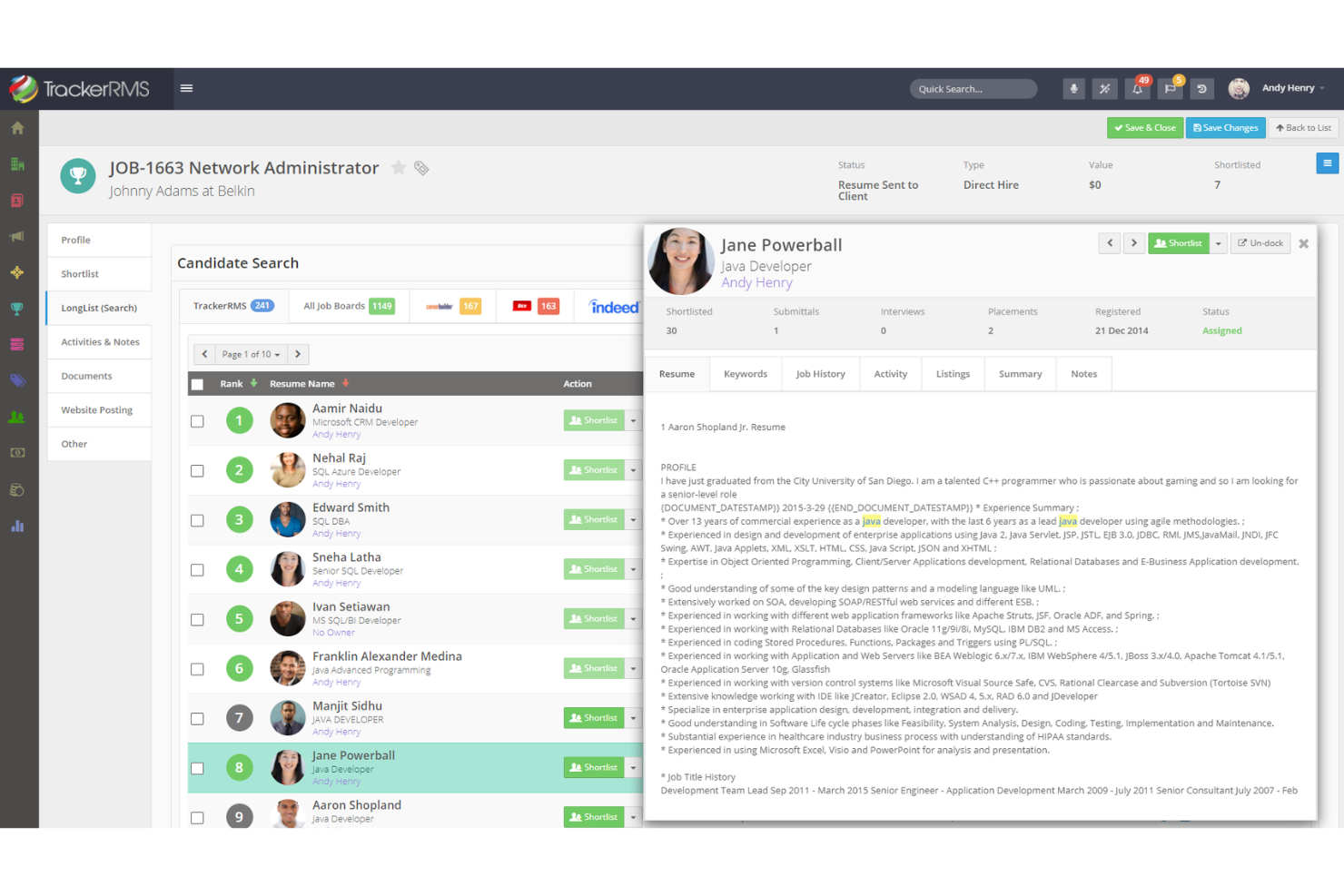
Centralized Candidate Database
Tracker stores all candidate data, resumes, and interactions in one searchable location. This reduces manual effort and speeds up candidate searches for recruiters.
Automated Job Posting
Post jobs to multiple boards and social media with one click. This expands your reach and saves time on repetitive posting tasks.
AI-Powered Ranking
Tracker uses AI to screen and rank candidates based on job fit. This shortens screening time and helps recruiters focus on top talent.
Automated Communication and Scheduling
Automate candidate messaging and sync interview scheduling with team calendars. This improves candidate experience and reduces interview no-shows.
Collaboration Tools
Share notes, feedback, and candidate status updates with your team in real time. This keeps everyone aligned and improves coordination on open roles.
Analytics and Reporting
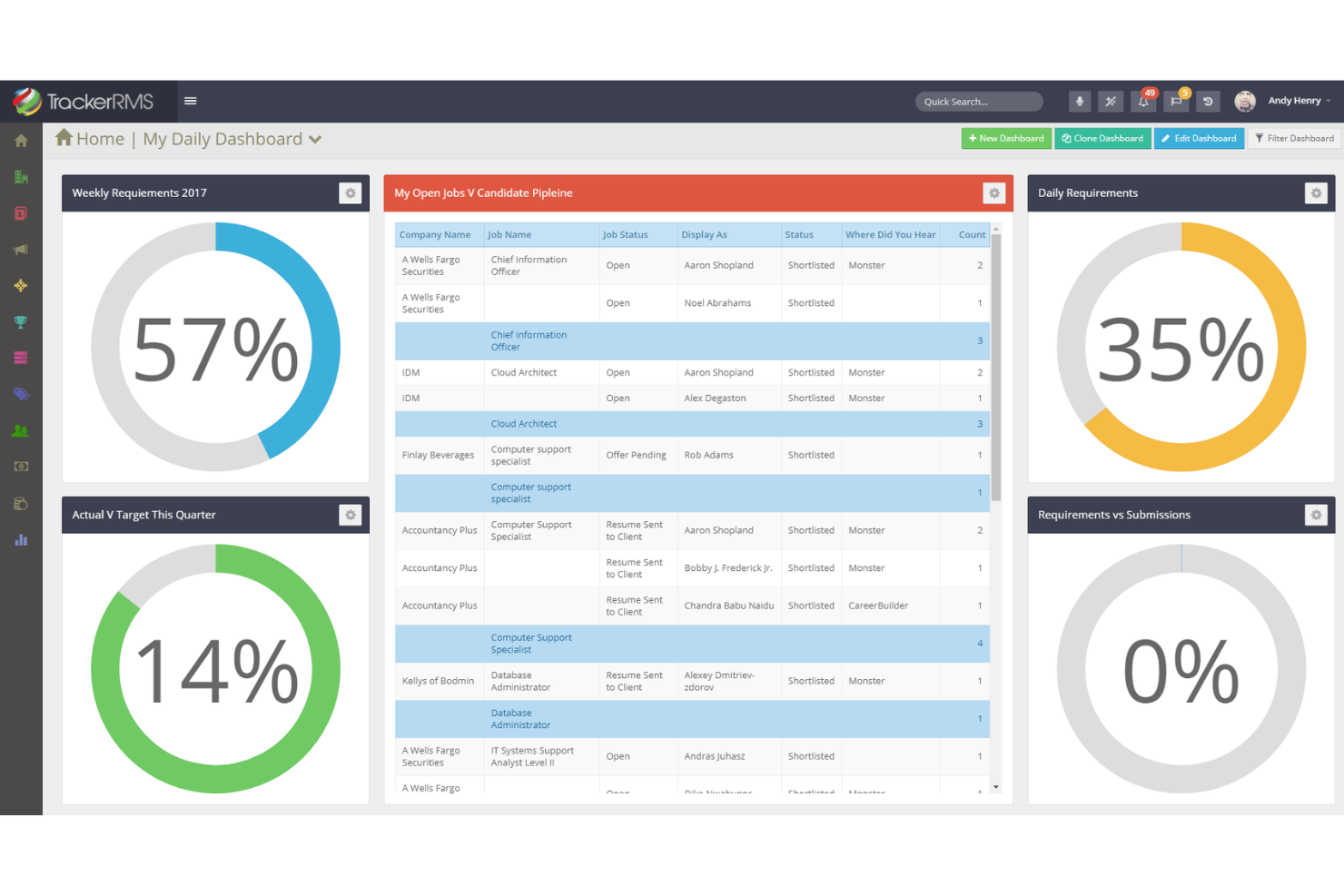
Track key metrics like time-to-fill and source performance with customizable dashboards. This supports data-driven hiring decisions and ROI analysis.
Standout Features
Built-In CRM Functionality
Tracker combines applicant tracking with client relationship management, letting users manage both clients and candidates. This is especially valuable for staffing agencies that need to track job orders, client communications, and placements together.
Compliance and Credential Management
Tracker offers tools for tracking candidate certifications, licenses, and compliance documents directly within the system. This feature is essential for industries like healthcare or finance.
Ease of Use
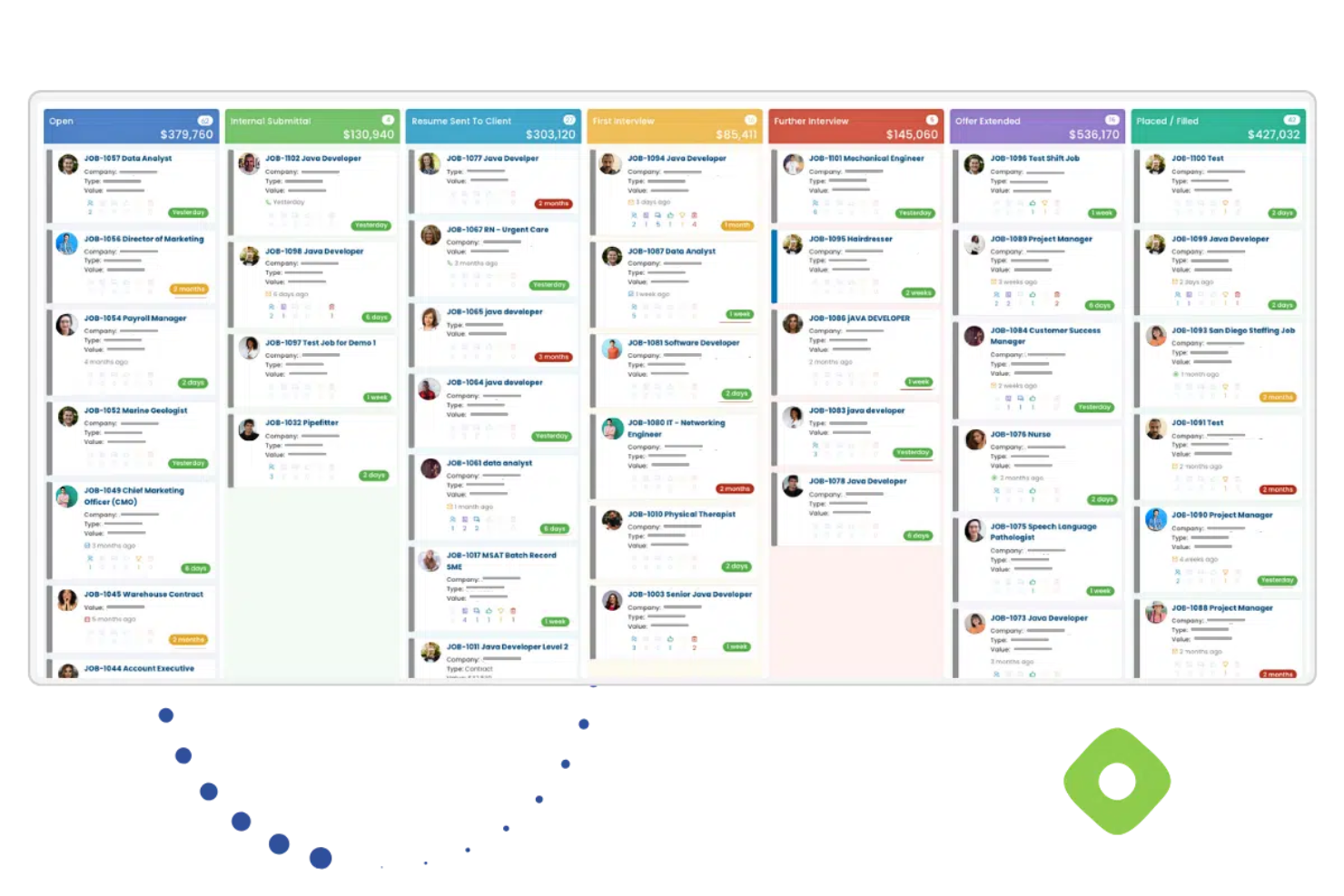
Tracker offers a user-friendly interface for easy navigation and day-to-day operation, however users have reported a learning curve when it comes to the more advanced features. However, its onboarding resources, in-app guidance, and responsive support team help users get up to speed. Once configured, the customizable dashboards and workflow automations make daily tasks more efficient. Users who need advanced functionality appreciate the depth, but those seeking a minimal, out-of-the-box solution may find the learning curve steeper.

Onboarding
Tracker’s onboarding process is thorough, with dedicated implementation support, training sessions, and a detailed knowledge base. Many users highlight the helpfulness of the support team during setup and the availability of step-by-step guides for key features. While the platform’s depth means onboarding can take time, the structured approach and responsive assistance help new users reach value quickly. This makes Tracker a strong choice for teams willing to invest in a guided rollout.
Customer Support
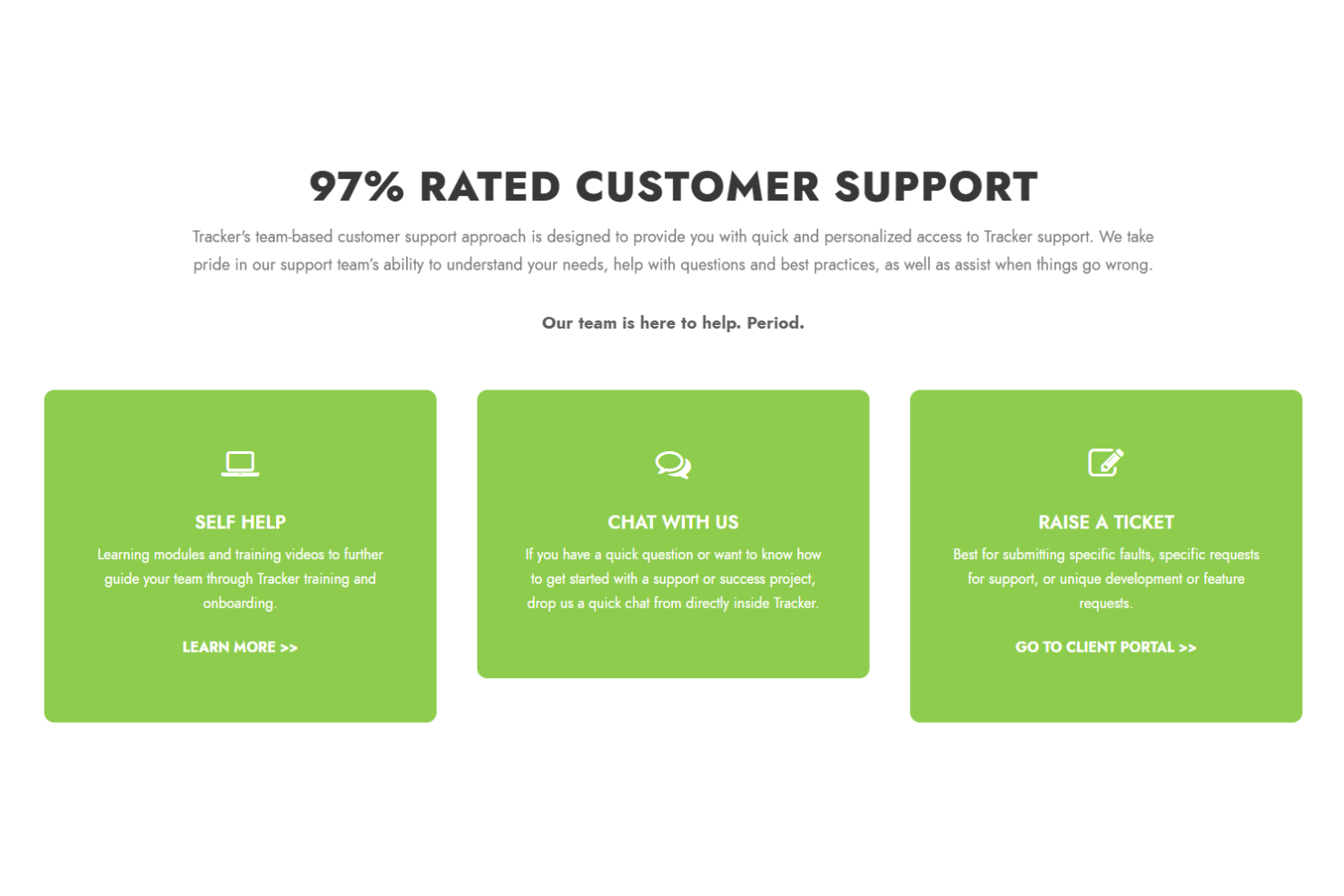
Tracker is frequently praised for its responsive and knowledgeable customer support team. Users report quick turnaround times on tickets and appreciate having access to live chat, email, and phone support. The support staff are noted for their willingness to walk users through complex issues and provide tailored solutions. This high level of assistance helps users resolve problems efficiently and contributes to a positive overall experience with the platform.
Integrations
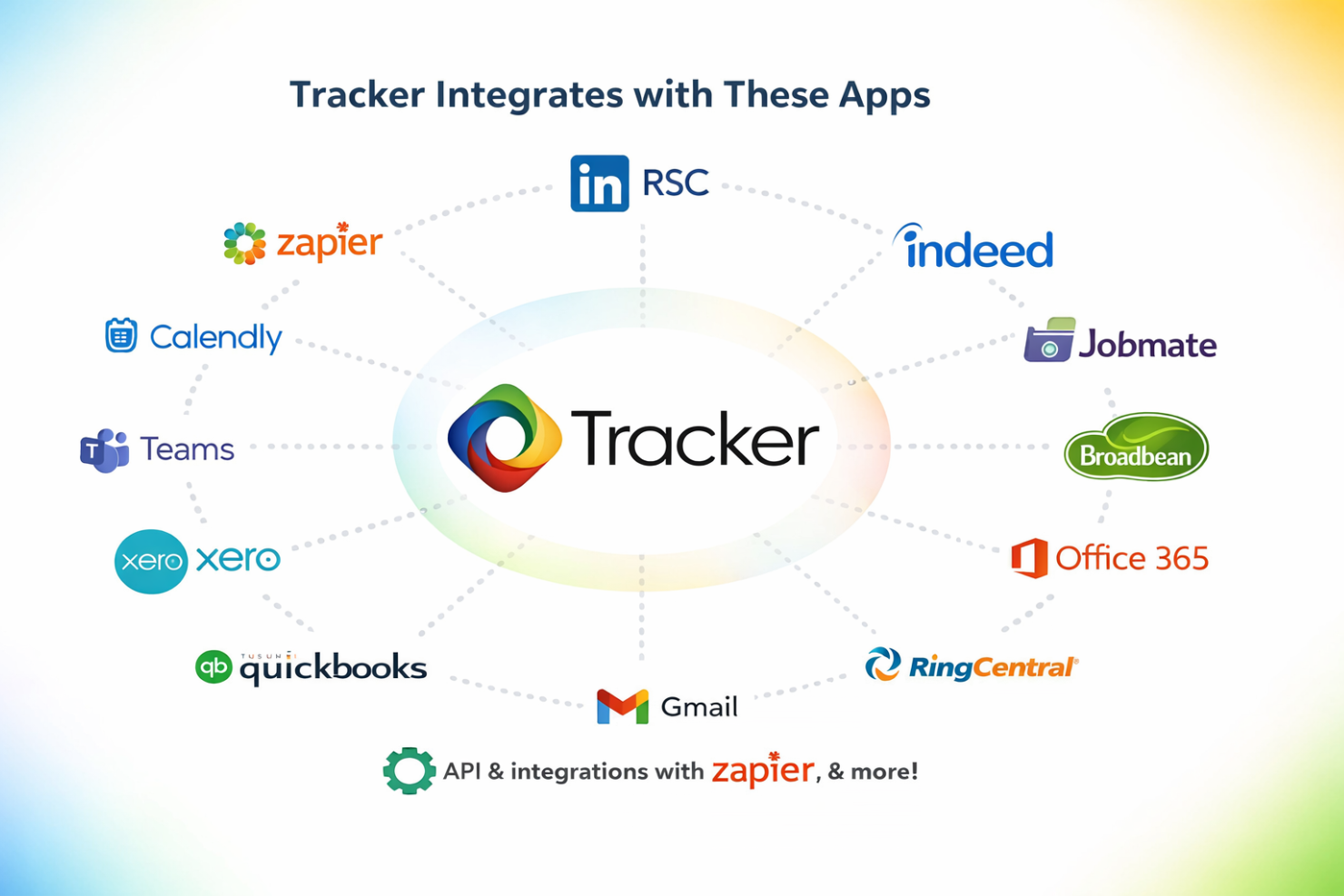
Tracker integrates with LinkedIn RSC, Indeed, Jobmate, Broadbean, Microsoft Office 365, Microsoft Teams, Gmail, QuickBooks, Xero, RingCentral, Calendly, and Zapier, among others.
Tracker also offers an API and connects with third-party integration tools like Zapier for expanded connectivity.
Value for Money
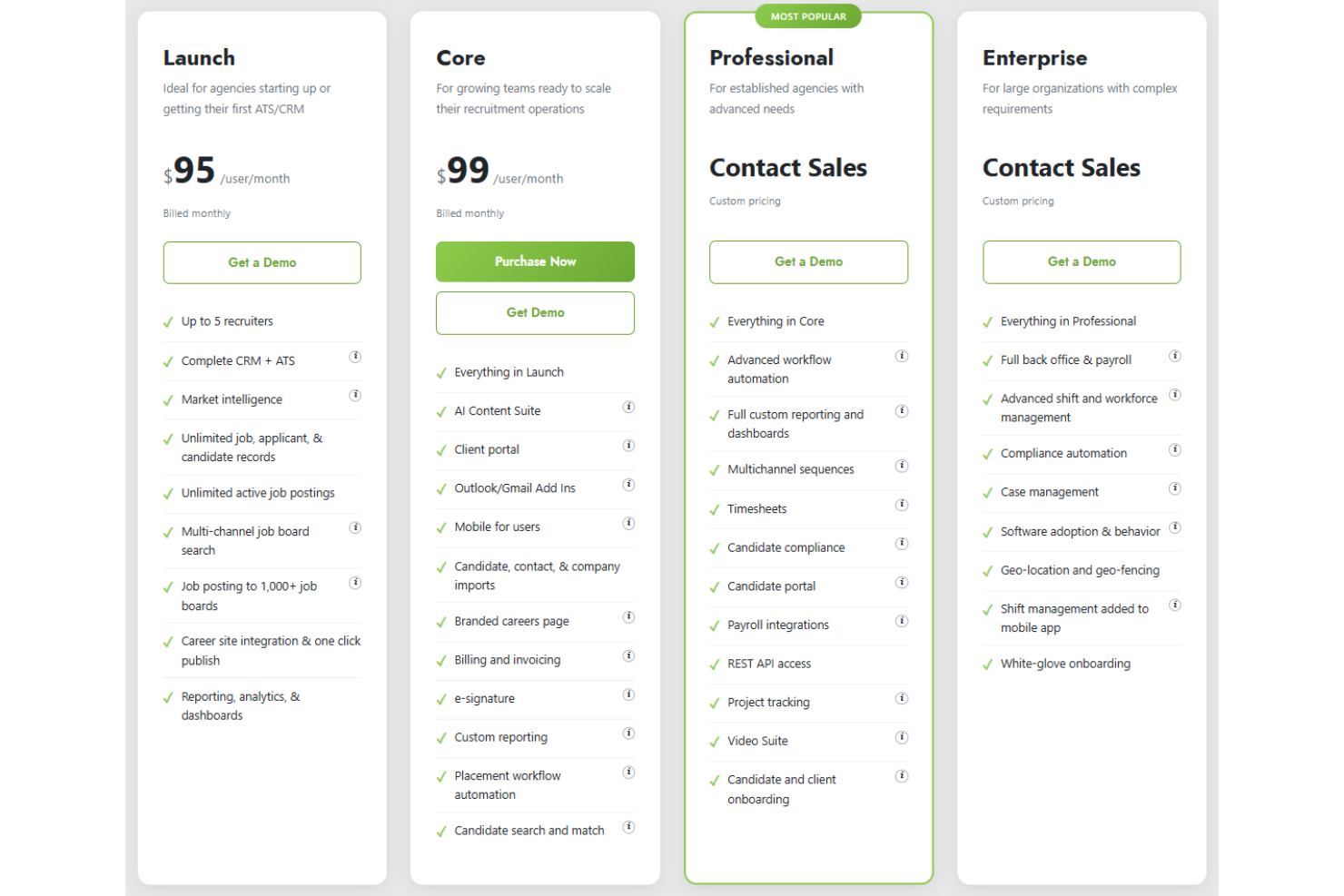
Tracker is considered a strong value for teams needing advanced features like CRM, automation, and compliance tools, though its pricing is higher than basic applicant tracking systems. Users find the investment worthwhile for the depth of functionality and responsive support, but smaller teams or those with simple needs may find the cost harder to justify.
- Launch: Includes complete ATS and CRM functionality, unlimited applicant records, and unlimited active job postings.
- Core: Adds AI content suite, a client portal, access to the mobile app, and basic workflow automation.
- Professional: Adds advanced workflow automation, custom reporting and dashboards, candidate compliance, and REST API access.
- Enterprise: Includes compliance automation, back office and payroll, case management, and geo-fencing.
Tracker Specs
- API
- Application Tracking
- Behavioral Testing
- Budgeting
- Calendar Management
- Candidate Database
- Cognitive Testing
- Contact Management
- Custom Assessments
- Dashboard
- Dashboards
- Data Export
- Data Import
- Data Visualization
- Email Integration
- Employee Database
- Employee Onboarding
- External Integrations
- Feedback Management
- Forecasting
- Interview Scheduling
- Multi-Source Feedback
- Multi-User
- Notifications
- Personality Testing
- Psychometric Testing
- Scheduling
- Status Notifications
- Travel Management
Tracker FAQs
How customizable are Tracker’s workflows and pipelines?
Does Tracker support high-volume or bulk candidate management?
What data security and compliance features does Tracker offer?
Can Tracker help manage both candidates and clients?
How does Tracker handle interview scheduling and communication?
What kind of reporting and analytics are available in Tracker?
Is there dedicated support or training for new Tracker users?
Can Tracker integrate with our existing HR or payroll systems?
Tracker Company Overview & History
Tracker, also known as TrackerRMS, is a privately held company headquartered in San Diego, California. Founded in 2005 by Andy Jones, Tracker specializes in integrated ATS and CRM software for staffing and recruitment firms across multiple industries. The company employs approximately 100–200 people and serves over 5,000 users worldwide, with offices in the US & UK. Tracker is not publicly traded and focuses solely on its flagship recruitment and CRM platform, with a reputation for strong customer service and ongoing innovation.
Tracker Major Milestones
- 2005: Tracker founded in San Diego, California.
- 2022: Greater Sum Ventures makes a majority investment in TrackerRMS.
- 2024: Tracker reaches over 5,000 active users and $12.6M in annual revenue.
- 2024: Assembles a global leadership team to support continued growth and innovation.