

Recensione di Tracker: Pro, Contro, Caratteristiche e Prezzi Spiegati



You probably wouldn’t get far if you’re manually sifting through a high volume of resumes, trying to identify the right set of skills and match them with the right experience, all just to find someone who might fit the bill. Luckily, there’s no need for that anymore. With the right applicant tracking system (ATS), you can leave the parsing and drudgery up to the software, so you can focus on recruiting the right candidate.
Tracker is an applicant tracking system designed to help hiring managers streamline recruitment, manage candidate pipelines, and improve collaboration across teams. When you’re facing high volumes of applicants, compliance requirements, and the need for efficient communication, Tracker offers a flexible platform that combines ATS and CRM features.
In this review, I’ll provide you with a detailed look at Tracker’s features, best and worst use cases, pros and cons, and pricing—so you can decide if it’s the right fit for your hiring process.
Tracker Evaluation Summary
- From $79/user/month
- Free demo available
Perché fidarsi delle nostre recensioni sui software
Il nostro team testa e recensisce software dal 2012. In quanto esperti HR noi stessi, sappiamo quanto sia difficile — e importante — scegliere il software giusto.
Per questa guida, abbiamo valutato gli strumenti attraverso test pratici e ricerche indipendenti, assegnando un punteggio agli strumenti in base ai nostri criteri di selezione. Ci basiamo inoltre sulle competenze di leader di pensiero del settore e di professionisti HR attivi.
Le nostre recensioni riflettono il nostro giudizio editoriale umano, non un discorso di vendita.
Revisori esperti:
Tracker Overview
When judging applicant tracking systems, Tracker stands out for its deep job board integrations, customizable workflows, and robust AI candidate ranking, making it a strong choice for staffing agencies and recruiting firms. Its interface is clean and intuitive, and the onboarding process and training resources help new users adapt. Pricing is competitive for the feature set, though smaller teams may find it more than they need. If you’re comparing options, Tracker’s robust reporting, automation, and integration capabilities make it especially appealing for organizations managing high-volume or multi-branch recruiting.
pros
-
Built-in CRM supports end-to-end client and candidate management.
-
Customizable workflows adapt to different recruiting processes.
-
Responsive customer support ensures fast issue resolution and guidance.
cons
-
There is something of a learning curve for advanced features.
-
Reporting tools require setup and configuration to maximize value.
-
Data migration onto Tracker can be costly.
Is Tracker Right For Your Needs?
Who Would be a Good Fit for Tracker?
Tracker is best suited for organizations that need advanced recruiting workflows, integrated CRM, and multi-branch management. Its feature set is especially valuable for staffing agencies, recruitment firms, and teams handling high-volume hiring or client management. If your business requires detailed reporting, automation, and the ability to manage both candidates and clients in one platform, Tracker’s capabilities align well with these needs.
-
Mid-sized Staffing Agencies Looking to Scale
Tracker supports mid-sized staffing agencies as they automate &expand hiring volumes, clients, and recruiters.
-
Recruitment Firms
Customizable workflows and automation support complex, multi-stage hiring processes.
-
IT Staffing Firms
Skills-based search and redeployment tracking help recruiters place talent faster.
-
Multi-Region & Multi-Brand Operations
Branch and division management supports offices across various regions from one database.
-
Agencies Switching From Legacy Platforms
Teams migrating from older systems get a modern interface without a retraining tax.
-
Executive Search
Integrated CRM and placement tracking support executive search and business development.
Who Would be a Bad Fit for Tracker?
Tracker may not be the best choice for small businesses, teams with simple hiring needs, or organizations seeking a lightweight, plug-and-play ATS. Its advanced features and CRM focus can be more than what’s needed for basic recruiting, and the interface may feel overwhelming for those not managing high volumes or complex processes.
-
Small Startups
Tracker’s extensive features can overwhelm teams with basic hiring needs.
-
Retail Hiring
High-volume, entry-level hiring may not require CRM or advanced workflows.
-
Nonprofit Organizations
Budget constraints and simple processes may not justify Tracker’s pricing.
-
Internal HR Teams
Companies hiring only for internal roles may not need client management tools.
-
Temporary Event Staffing
Short-term, rapid hiring needs may be better served by simpler platforms.
-
Education Sector
Schools and universities may find compliance and CRM features unnecessary.
Come Testiamo e Valutiamo i Nostri Strumenti
Abbiamo impiegato anni per costruire, perfezionare e migliorare il nostro sistema di test e valutazione dei software. Il modello è progettato per cogliere le sfumature della scelta del software e per evidenziare cosa rende uno strumento efficace, concentrandosi sugli aspetti più critici del processo decisionale. Di seguito puoi vedere esattamente come funziona la nostra valutazione e attribuzione dei punteggi secondo sette criteri. Questo ci consente di fornire una valutazione imparziale del software basandoci su funzionalità principali, caratteristiche distintive, facilità d’uso, onboarding, assistenza clienti, integrazioni, recensioni dei clienti e rapporto qualità/prezzo.
Funzionalità Principali (25% del punteggio finale)
Il punto di partenza della nostra valutazione sono sempre le funzionalità principali dello strumento. Possiede le funzioni di base che l’utente si aspetta? Alcune di queste funzioni sono disponibili solo in piani a prezzi più alti? In sostanza, ci aspettiamo che uno strumento rispecchi almeno le capacità base dei concorrenti.
Caratteristiche Distintive (25% del punteggio finale)
Successivamente valutiamo le funzionalità particolari che superano le funzionalità di base tipiche degli strumenti della sua categoria. Un punteggio alto riflette caratteristiche specializzate o uniche che rendono il prodotto più veloce, efficiente, o che offrono ulteriore valore all’utente. Valutiamo inoltre quanto sia semplice integrare il software con altri strumenti tradizionalmente presenti nel tech stack per espanderne funzionalità e utilizzo. Gli strumenti che offrono numerose integrazioni native, collegamenti di terze parti e accesso API per creare integrazioni personalizzate ricevono i punteggi migliori.
Facilità d’Uso (10% del punteggio finale)
Consideriamo quanto sia veloce e semplice svolgere i compiti definiti dalle funzionalità principali utilizzando lo strumento. I software con punteggi alti sono ben progettati, intuitivi, dispongono di app mobili, offrono modelli preimpostati e rendono semplici anche i compiti più complessi.
Onboarding (10% del punteggio finale)
Sappiamo quanto sia importante una rapida adozione di una nuova piattaforma all’interno di un team, quindi valutiamo quanto sia facile imparare e utilizzare uno strumento con una formazione minima. Valutiamo quanto rapidamente un membro del team possa iniziare a utilizzare lo strumento senza esperienza. Le soluzioni con punteggio alto richiedono poco o nessun supporto.
Assistenza Clienti (10% del punteggio finale)
Esaminiamo quanto sia facile e veloce ricevere supporto o trovare aiuto tramite telefono, chat dal vivo o knowledge base. Gli strumenti e le aziende che forniscono un’assistenza in tempo reale ottengono i punteggi migliori, mentre i chatbot ottengono i risultati peggiori.
Recensioni dei Clienti (10% del punteggio finale)
Oltre ai nostri test e valutazioni, consideriamo il punteggio net promoter dei clienti attuali e passati. Analizziamo la loro propensione, se potessero scegliere, a selezionare di nuovo lo strumento per le sue funzionalità principali. Un software con un punteggio alto riflette un elevato net promoter score da parte dei clienti attuali o passati.
Rapporto Qualità/Prezzo (10% del punteggio finale)
Infine, considerando tutti gli altri criteri, esaminiamo il prezzo medio dei piani base rispetto alle funzionalità principali e teniamo conto del valore degli altri criteri di valutazione. I software che offrono di più, a meno, ottengono un punteggio più alto.
Core Features
Centralized Candidate Database
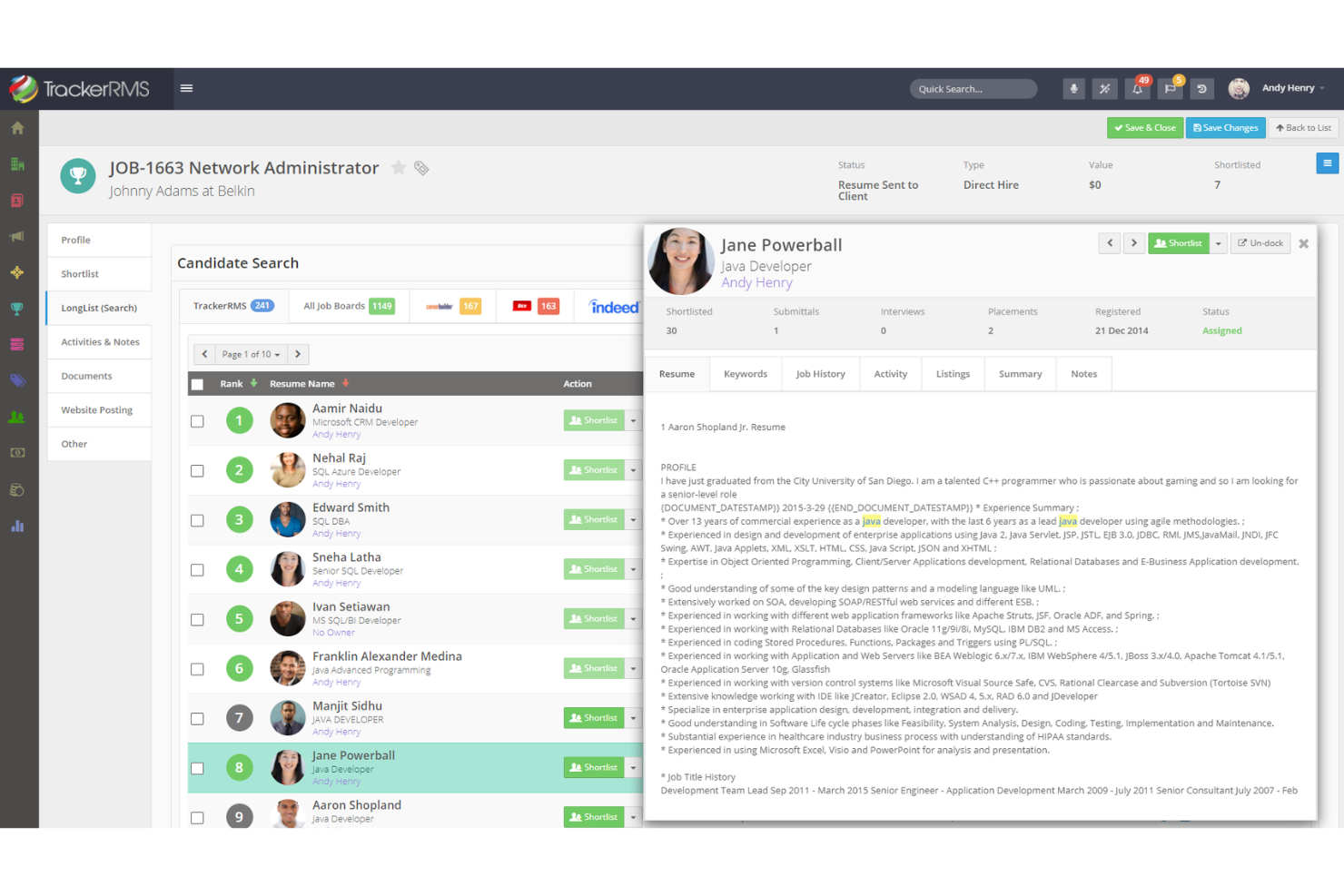
Tracker stores all candidate data, resumes, and interactions in one searchable location. This reduces manual effort and speeds up candidate searches for recruiters.
Automated Job Posting
Post jobs to multiple boards and social media with one click. This expands your reach and saves time on repetitive posting tasks.
AI-Powered Ranking
Tracker uses AI to screen and rank candidates based on job fit. This shortens screening time and helps recruiters focus on top talent.
Automated Communication and Scheduling
Automate candidate messaging and sync interview scheduling with team calendars. This improves candidate experience and reduces interview no-shows.
Collaboration Tools
Share notes, feedback, and candidate status updates with your team in real time. This keeps everyone aligned and improves coordination on open roles.
Analytics and Reporting
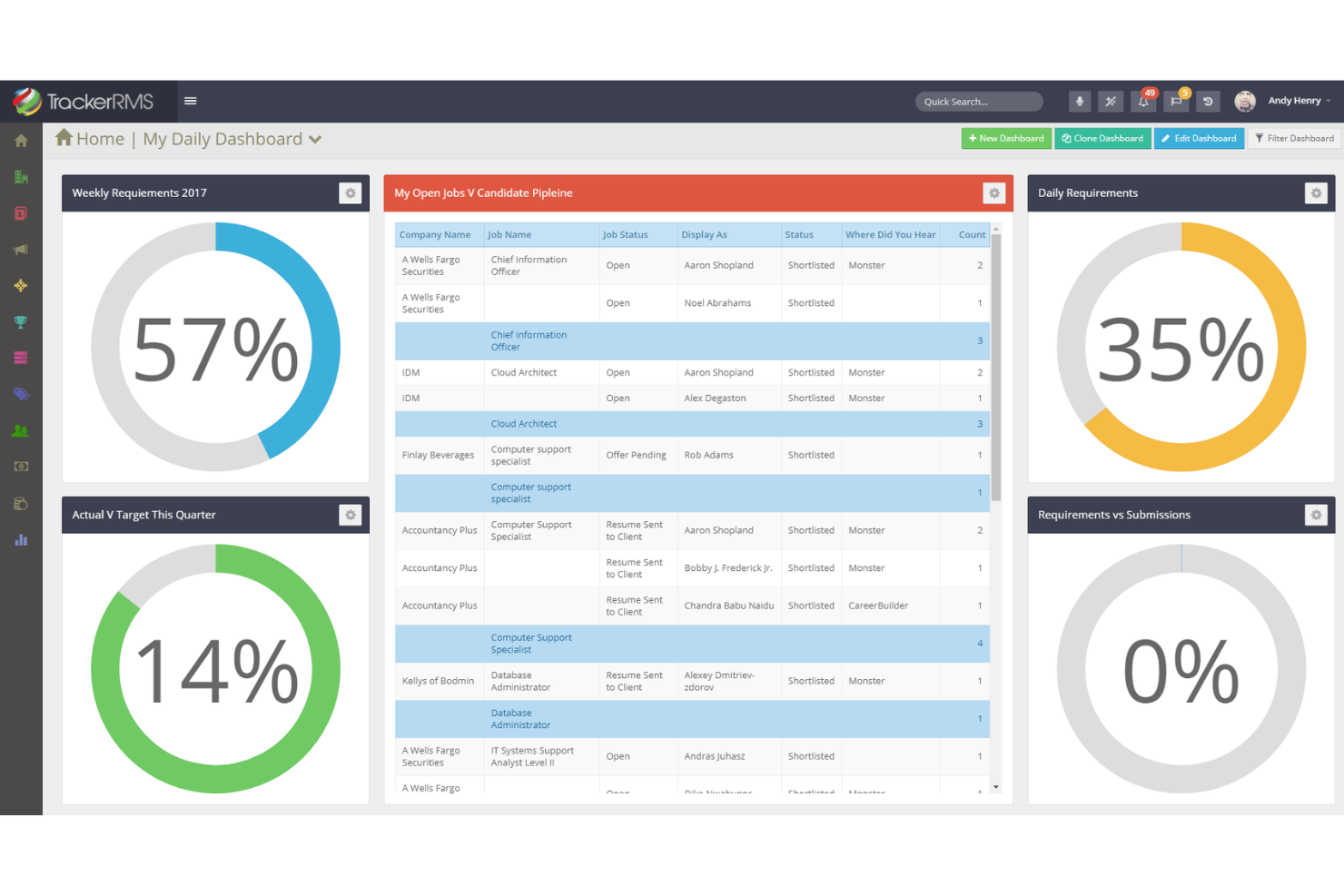
Track key metrics like time-to-fill and source performance with customizable dashboards. This supports data-driven hiring decisions and ROI analysis.
Standout Features
Built-In CRM Functionality
Tracker combines applicant tracking with client relationship management, letting users manage both clients and candidates. This is especially valuable for staffing agencies that need to track job orders, client communications, and placements together.
Compliance and Credential Management
Tracker offers tools for tracking candidate certifications, licenses, and compliance documents directly within the system. This feature is essential for industries like healthcare or finance.
Ease of Use
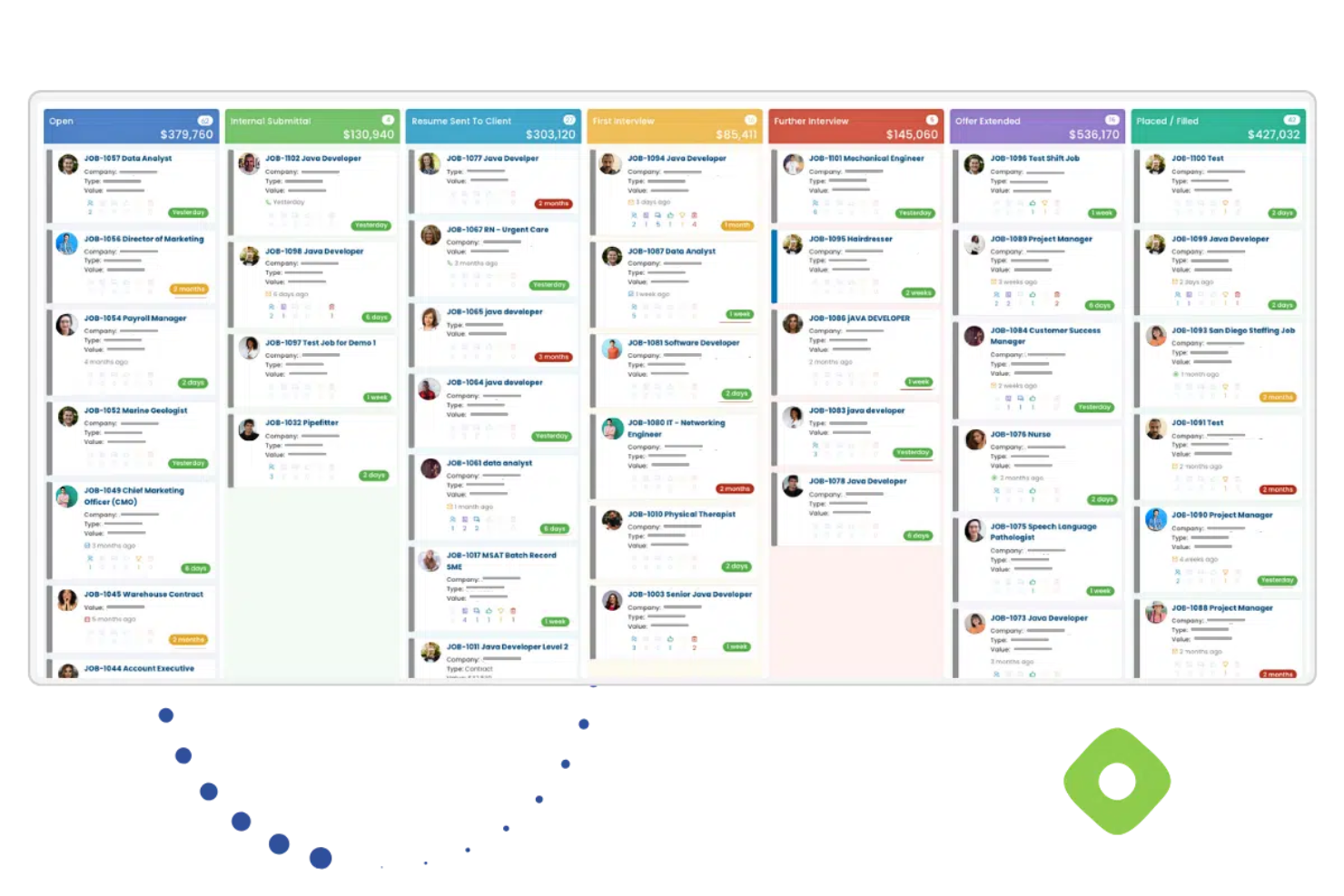
Tracker offers a user-friendly interface for easy navigation and day-to-day operation, however users have reported a learning curve when it comes to the more advanced features. However, its onboarding resources, in-app guidance, and responsive support team help users get up to speed. Once configured, the customizable dashboards and workflow automations make daily tasks more efficient. Users who need advanced functionality appreciate the depth, but those seeking a minimal, out-of-the-box solution may find the learning curve steeper.

Onboarding
Tracker’s onboarding process is thorough, with dedicated implementation support, training sessions, and a detailed knowledge base. Many users highlight the helpfulness of the support team during setup and the availability of step-by-step guides for key features. While the platform’s depth means onboarding can take time, the structured approach and responsive assistance help new users reach value quickly. This makes Tracker a strong choice for teams willing to invest in a guided rollout.
Customer Support
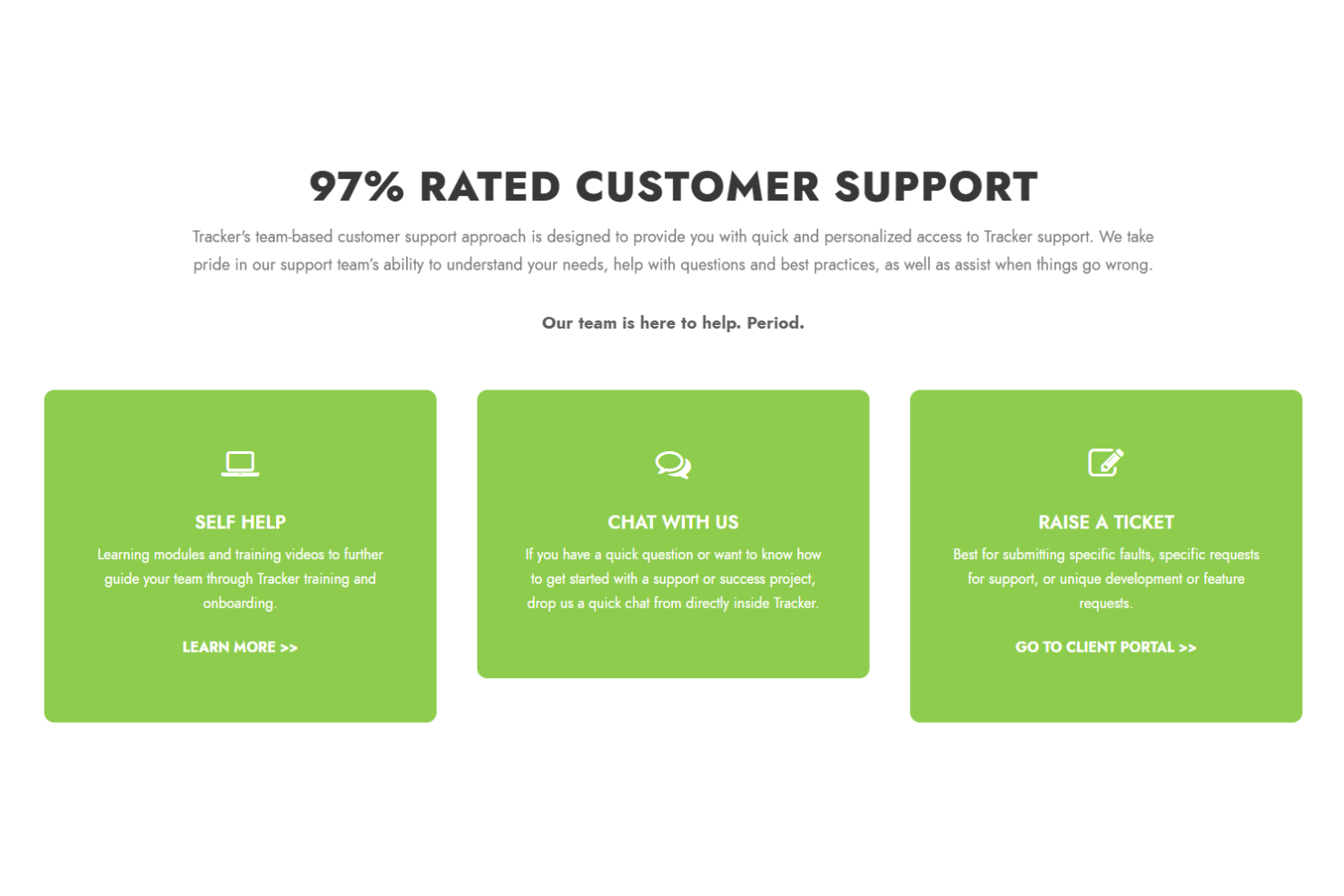
Tracker is frequently praised for its responsive and knowledgeable customer support team. Users report quick turnaround times on tickets and appreciate having access to live chat, email, and phone support. The support staff are noted for their willingness to walk users through complex issues and provide tailored solutions. This high level of assistance helps users resolve problems efficiently and contributes to a positive overall experience with the platform.
Integrations
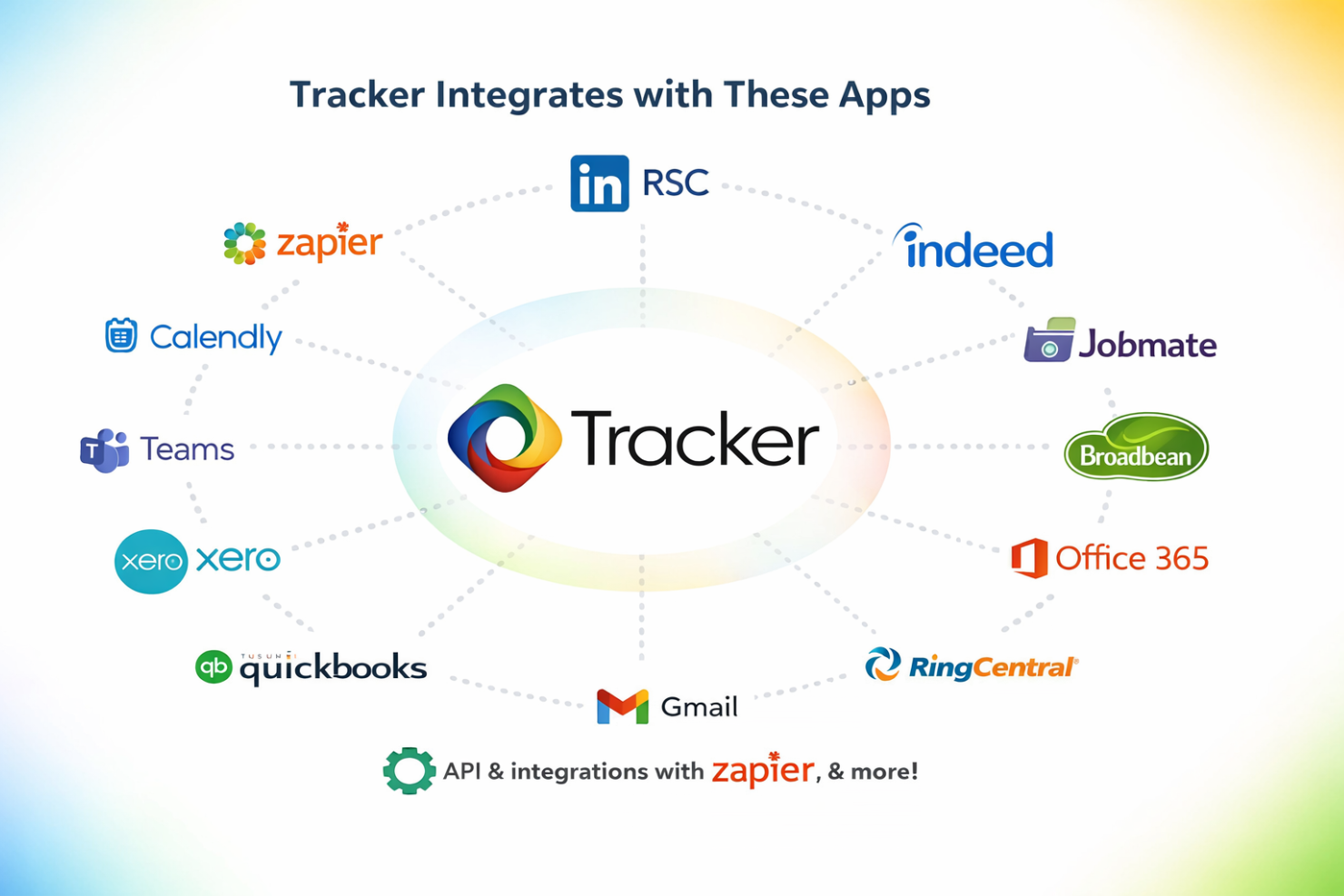
Tracker integrates with LinkedIn RSC, Indeed, Jobmate, Broadbean, Microsoft Office 365, Microsoft Teams, Gmail, QuickBooks, Xero, RingCentral, Calendly, and Zapier, among others.
Tracker also offers an API and connects with third-party integration tools like Zapier for expanded connectivity.
Value for Money
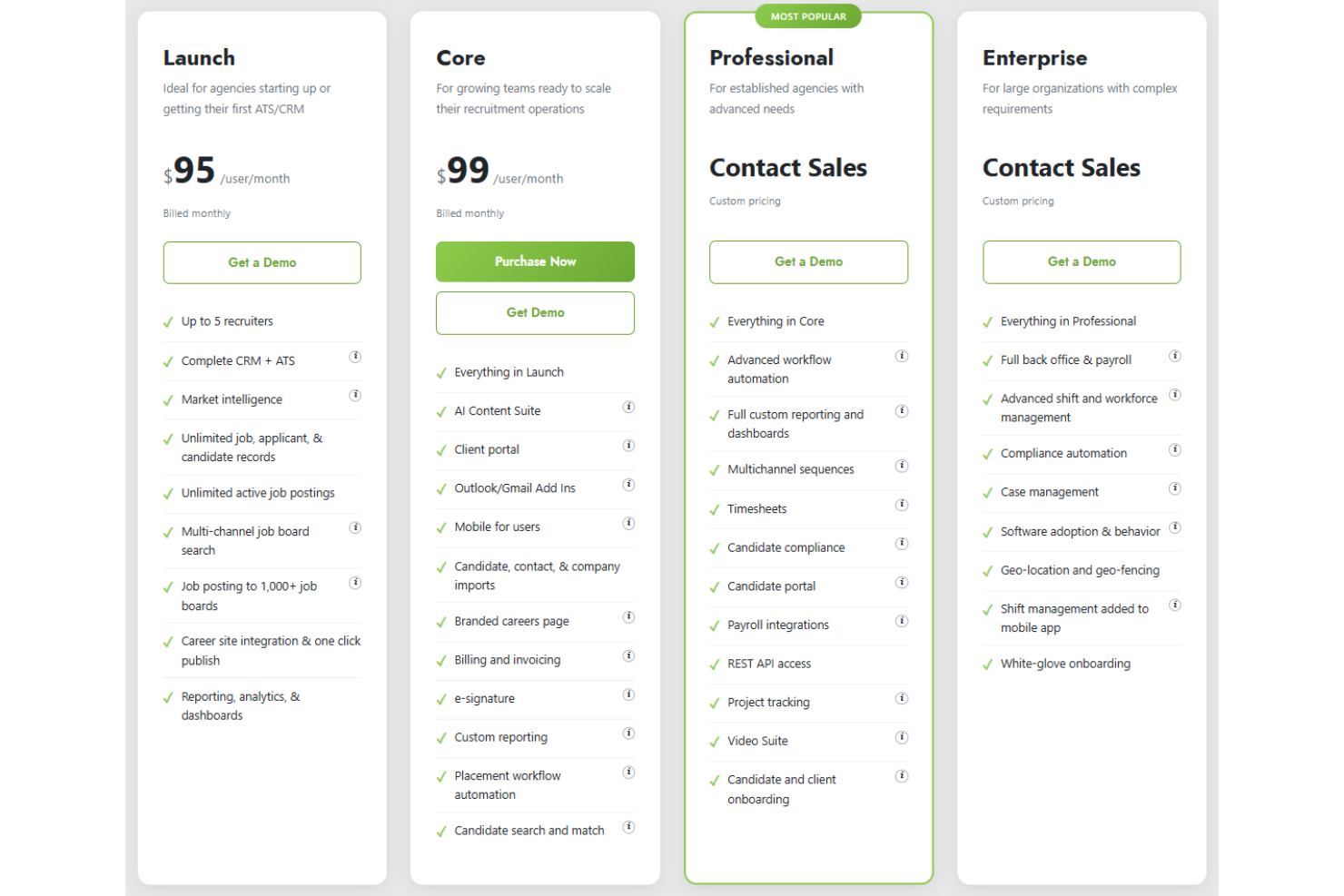
Tracker is considered a strong value for teams needing advanced features like CRM, automation, and compliance tools, though its pricing is higher than basic applicant tracking systems. Users find the investment worthwhile for the depth of functionality and responsive support, but smaller teams or those with simple needs may find the cost harder to justify.
- Launch: Includes complete ATS and CRM functionality, unlimited applicant records, and unlimited active job postings.
- Core: Adds AI content suite, a client portal, access to the mobile app, and basic workflow automation.
- Professional: Adds advanced workflow automation, custom reporting and dashboards, candidate compliance, and REST API access.
- Enterprise: Includes compliance automation, back office and payroll, case management, and geo-fencing.
Tracker Specs
- API
- Application Tracking
- Behavioral Testing
- Budgeting
- Calendar Management
- Candidate Database
- Cognitive Testing
- Contact Management
- Custom Assessments
- Dashboard
- Dashboards
- Data Export
- Data Import
- Data Visualization
- Email Integration
- Employee Database
- Employee Onboarding
- External Integrations
- Feedback Management
- Forecasting
- Interview Scheduling
- Multi-Source Feedback
- Multi-User
- Notifications
- Personality Testing
- Psychometric Testing
- Scheduling
- Status Notifications
- Travel Management
Tracker FAQs
How customizable are Tracker’s workflows and pipelines?
Does Tracker support high-volume or bulk candidate management?
What data security and compliance features does Tracker offer?
Can Tracker help manage both candidates and clients?
How does Tracker handle interview scheduling and communication?
What kind of reporting and analytics are available in Tracker?
Is there dedicated support or training for new Tracker users?
Can Tracker integrate with our existing HR or payroll systems?
Tracker Company Overview & History
Tracker, also known as TrackerRMS, is a privately held company headquartered in San Diego, California. Founded in 2005 by Andy Jones, Tracker specializes in integrated ATS and CRM software for staffing and recruitment firms across multiple industries. The company employs approximately 100–200 people and serves over 5,000 users worldwide, with offices in the US & UK. Tracker is not publicly traded and focuses solely on its flagship recruitment and CRM platform, with a reputation for strong customer service and ongoing innovation.
Tracker Major Milestones
- 2005: Tracker founded in San Diego, California.
- 2022: Greater Sum Ventures makes a majority investment in TrackerRMS.
- 2024: Tracker reaches over 5,000 active users and $12.6M in annual revenue.
- 2024: Assembles a global leadership team to support continued growth and innovation.