
How to Use Bucketlist Rewards for Peer-to-Peer Recognition


Peer-to-peer recognition is one of the most effective ways to build trust, reinforce values, and create momentum across your teams. When employees recognize each other consistently and publicly, recognition becomes part of how work gets done rather than an occasional HR initiative.
Bucketlist Rewards gives organizations the structure, flexibility, and visibility needed to run peer to peer employee recognition at scale. This article explains how the Bucketlist Rewards platform supports peer recognition, how teams use the features in practice, and how to turn everyday appreciation into a sustained culture driver.
 at scale. This article explains how the Bucketlist Rewards platform supports peer recognition, how teams use the features in practice, and how to turn everyday appreciation into a sustained culture driver.
Summary
- Peer-to-peer recognition allows employees to recognize each other directly for contributions and behaviors aligned to company values
- Bucketlist Rewards supports peer recognition through social recognition feeds, peer nomination workflows, points-based rewards, integrations, and reporting
- Organizations use Bucketlist to make peer recognition visible, consistent, and easy to participate in
- Real customer examples show how peer recognition becomes part of everyday culture when it is simple and accessible
- Analytics and dashboards help HR teams understand participation patterns and program usage
Why Peer-to-Peer Recognition Works
Peer recognition feels different from manager recognition because it comes from the people closest to the work. Colleagues see the extra effort, the collaboration, and the behind-the scenes wins that leaders may miss. When recognition flows across teams instead of only top down, it builds credibility and reinforces shared standards.
You don’t see everything. That’s why peer-to-peer recognition is so powerful—it ensures great work doesn’t go unnoticed.

Share This Quote on:
Jason Lindstrom
CEO & Co-Founder of Bucketlist Rewards
Organizations that prioritize peer to peer recognition often see higher participation rates and stronger alignment to company values because employees are actively shaping the culture themselves.
Core Peer Recognition Features in Bucketlist Rewards
The table below summarizes the key Bucketlist features that support peer-to-peer recognition. Each feature is explained in detail in the sections that follow.
| Feature | What It Enables | Why It Matters for Peer Recognition |
|---|---|---|
| Social Recognition Feed | Public peer shout-outs and comments | Makes recognition visible and reinforces positive behavior |
| Peer Nomination Workflows | Structured peer-driven awards | Supports formal recognition chosen by employees |
| Points and Rewards | Redeemable recognition points | Encourages participation and follow-through |
| Slack and Teams Integrations | Recognition in daily tools | Removes friction and increases usage |
| Global Rewards Catalog | Flexible reward choice | Keeps recognition meaningful across regions |
| Analytics and Dashboards | Participation and impact tracking | Helps HR measure adoption and ROI |
Social Recognition Feed
The social recognition feed is the foundation of peer recognition in Bucketlist. Employees can recognize coworkers in real time with a short message, a values tag, and optional points. These recognitions appear in a shared feed where teammates can react, comment, and amplify the message.
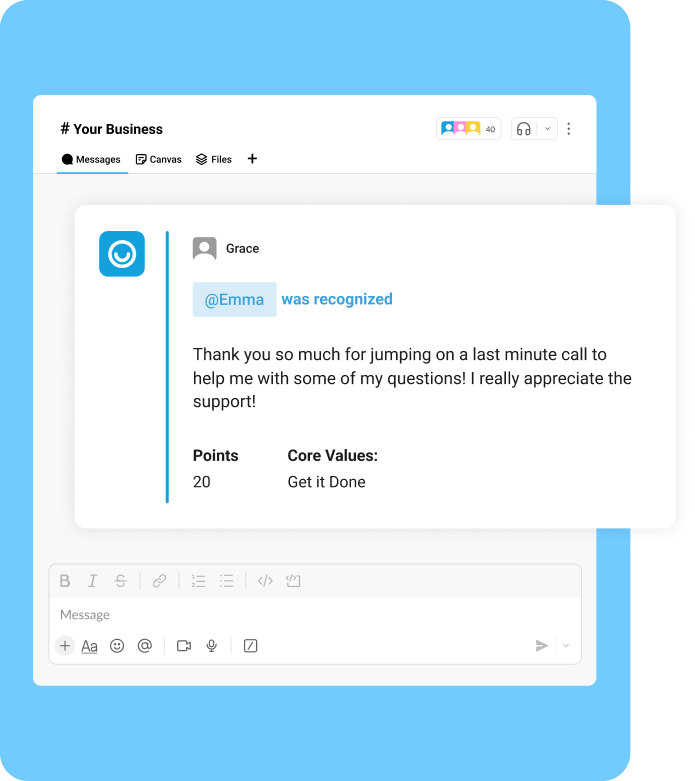
This visibility matters. With Bucketlist, employee recognition is no longer private or hidden in inboxes. It becomes part of the daily conversation in public.
At Movista, peer recognition quickly became part of how teams communicated.
“Our team loves it. It’s something that has become part of their day to day, and they enjoy the fact that there is a public way to recognize individuals.”
Practical example:
A project manager posts a recognition after a cross-functional launch, tagging the value Collaboration and awarding points. Other team members comment and add reactions, reinforcing the behavior and signaling that teamwork is noticed.
Peer Nomination Workflows
Peer nomination workflows allow organizations to run structured recognition programs where employees nominate each other for awards. These can be monthly, quarterly, or tied to specific initiatives.
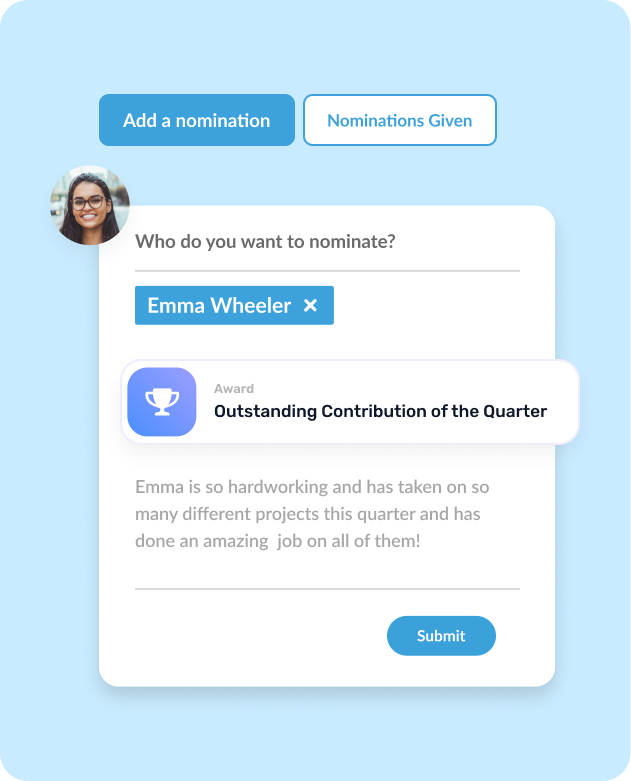
With Bucketlist, peer nominations include:
- Custom award categories
- Written nomination stories
- Optional approval workflows
- Public winner announcements in the recognition feed
This structure keeps recognition fair and scalable while ensuring peers remain at the center of the process.
At Credit Union of America, peer nominations helped shift recognition from occasional events to a consistent habit.
Recognition has become second nature. It’s not a program anymore. It’s who we are.

Share This Quote on:
Cody Blasi
Experience Manager, Credit Union of America
Practical example:
Employees nominate peers for a Values in Action award each month. Approved nominations are announced publicly, and winners receive points they can redeem for rewards of their choice.
Points and Rewards Tied to Peer Recognition
Points turn recognition into something employees can act on. While peer-to-peer recognition messages are powerful on their own, points increase participation and reinforce consistency.
Bucketlist Rewards allows organizations to:
- Attach points to peer recognitions
- Set monthly or quarterly point budgets
- Control which recognitions are rewardable
Employees can redeem points for gift cards, experiences, charitable donations, or company swag through the global rewards catalog.
At ProCogia, giving employees control over how they redeemed rewards increased engagement with peer recognition.
“We had an incredibly positive experience. I wholeheartedly recommend utilizing the Bucketlist platform for initiatives like this.”Shauna, People and Culture, ProCogia
Slack and Microsoft Teams Integrations
Peer recognition works best when it fits naturally into daily workflows. Bucketlist integrates directly with Slack and Microsoft Teams, allowing employees to recognize peers without leaving the tools they already use.
This lowers friction and removes the feeling that recognition is an extra task.
Practical example:
An employee types a Slack command to recognize a teammate after a client call. The recognition appears both in Slack and in the Bucketlist recognition feed, keeping everything centralized and visible.
Global Rewards Catalog
Recognition only feels meaningful when rewards reflect individual preferences. Bucketlist’s global rewards catalog gives employees the freedom to choose rewards that fit their lifestyle, location, and values.
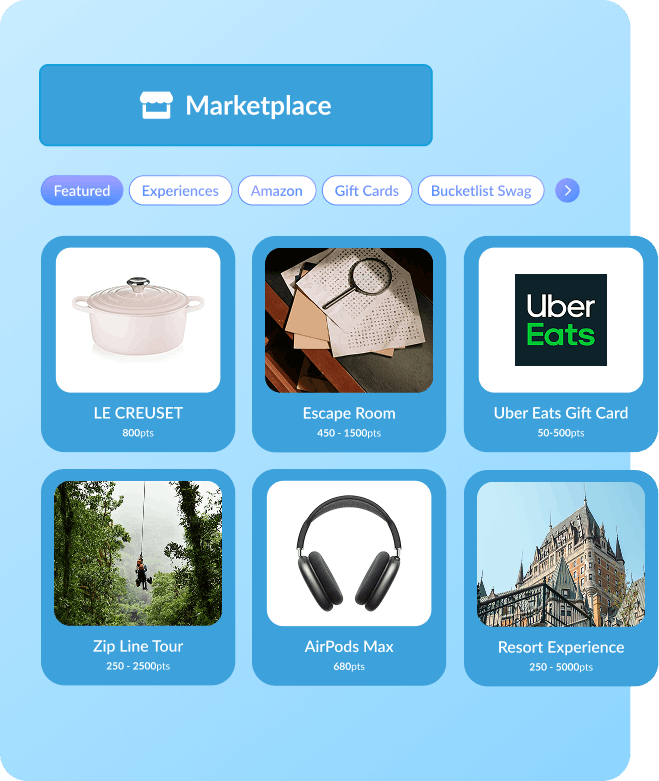
Options include:
- Digital gift cards
- Local and global experiences
- Merchandise and swag
- Charitable donations
This flexibility is especially important for distributed and international teams where one-size-fits all rewards fall flat.
Analytics and Dashboards
Bucketlist provides reporting tools that show how peer recognition is being used across the organization. HR teams and leaders can track:
- Participation rates
- Recognition frequency
- Giver and receiver balance
- Value tags and behavior trends
These insights help teams understand what is working and where to adjust.
At Credit Union of America, visibility into participation helped sustain leadership support and scale the program over time.
Peer-to-Peer Recognition Ideas Using Bucketlist
Here are practical peer recognition ideas that work well with Bucketlist features:
- Weekly peer shout-outs tied to company values
- Monthly peer-nominated MVP awards
- Cross-team recognition challenges with bonus points
- New hire welcome recognitions from peers
- Customer impact recognitions submitted by teammates
- Project completion recognitions shared publicly in the feed
- Peer recognition campaigns during busy seasons or change initiatives
Each idea can be supported through the social feed, peer nominations, or points system, depending on how formal you want the recognition to be.
Best Practices for Peer Recognition Success with Bucketlist
Design recognition around your values
Create recognition categories and value tags that reflect behaviors you want to see more often. Bucketlist makes these visible in every recognition.
Make recognition easy
Enable Slack or Teams integrations so employees can recognize peers without switching platforms.
Balance everyday and formal recognition
Use the social feed for frequent shout-outs and peer nominations for milestone or standout contributions.
Use data to guide decisions
Review dashboards regularly to identify participation gaps and recognize teams that model strong peer recognition habits.
Highlight recognition publicly
Use the recognition feed, internal communications, and meetings to reinforce that peer recognition matters.
Final Thoughts
Peer-to-peer recognition works when it is visible, consistent, and easy to use.Bucketlist Rewards provides the structure and flexibility organizations need to make peer recognition part of everyday work. By combining social recognition, peer nominations, meaningful rewards, and clear reporting, teams can build a culture where appreciation is shared, values are reinforced, and employees feel genuinely seen.
FAQs
What is peer-to-peer recognition?
Peer-to-peer recognition allows employees to recognize each other directly for contributions, collaboration, and values-driven behavior.
Can peer recognition work without managers approving everything?
Yes. Bucketlist supports both open peer recognition and nomination workflows with optional approvals, depending on governance needs.
How quickly can a peer recognition program launch?
Most organizations launch within a few weeks once recognition categories, rewards, and integrations are configured.
Is Bucketlist suitable for remote or global teams?
Yes. Global rewards, digital recognition, and integrations support distributed workforces.