



Multiplier Vs. Remote: Comparison & Expert Reviews for 2026



Hiring internationally should open doors, not create more admin. A strong EOR keeps the complexity behind the scenes so your team can stay focused on growth.
Juggling compliance, payroll, and onboarding for a global team can take you away from the heart of your work. If you’re comparing employer of record services like Multiplier and Remote, you’re probably searching for a simpler way to hire and support talent in new markets without surprises. Both offer unique strengths, workflows, and pricing, but the right choice really hinges on your business needs and priorities.
In this article, you’ll get a side-by-side look at Multiplier and Remote, including their pros and cons, standout use cases, pricing, security, and what it’s actually like to use each one. I’ll help you cut through the buzz and pick the best fit for where your organization is heading.
Multiplier vs. Remote: An Overview
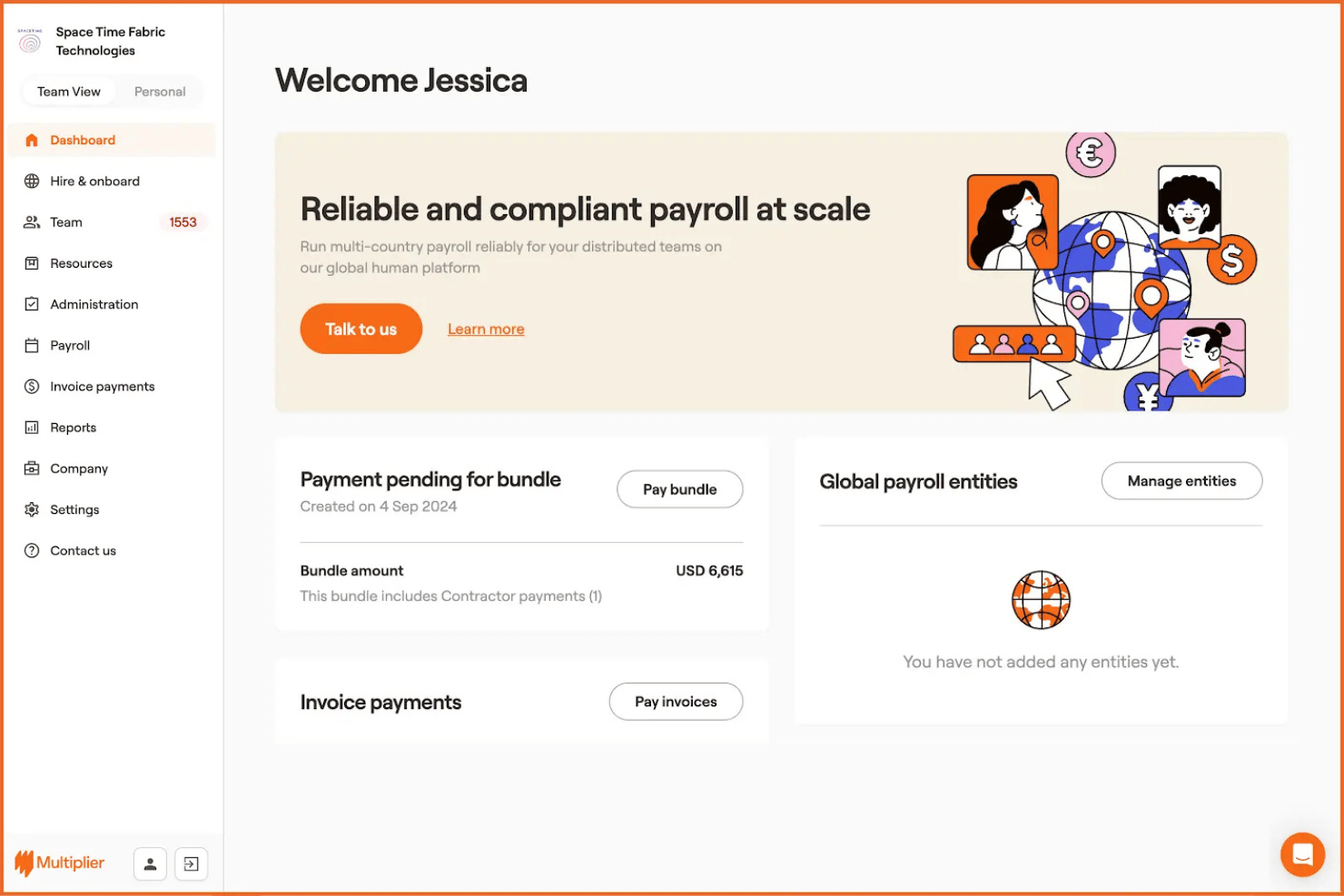
Multiplier
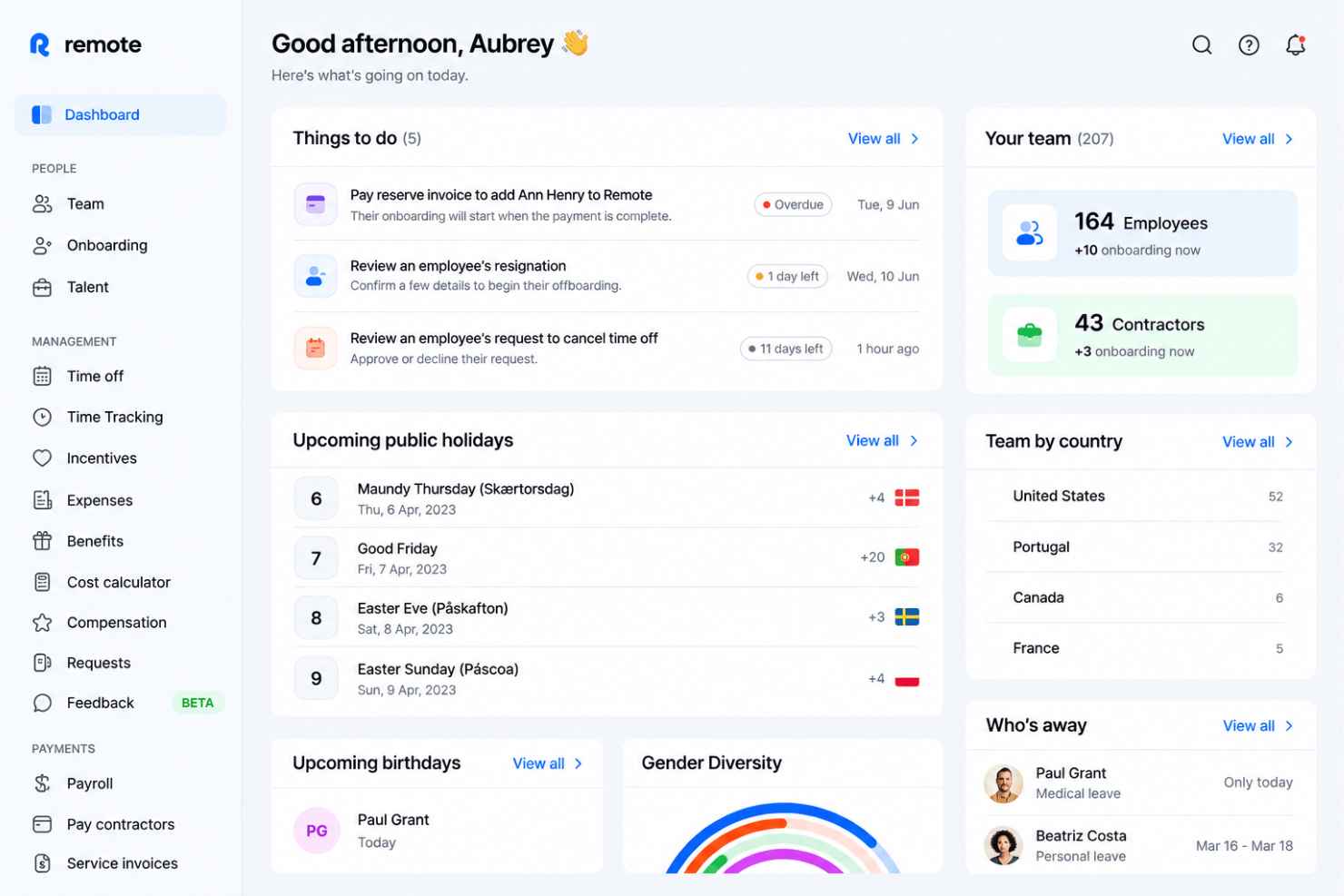
Remote
Why Trust Our Software Recommendations
Our team has been testing and reviewing software since 2012. As HR experts ourselves, we know how difficult—and important—it is to choose the right software.
For this guide, we evaluated tools using hands-on testing and independent research, scoring tools using our selection criteria. We also draw on insights from industry thought leaders and practicing HR experts.
Our reviews reflect our human editorial judgment, not a sales pitch.
Expert reviewers:
Multiplier vs. Remote Pricing Comparison
| Multiplier | Remote | |
|---|---|---|
| Free Trial | Free demo available | Free demo available |
| Pricing | From $459/employee/month (billed annually) | From $599/user/month (billed annually) |
Multiplier Vs. Remote Pricing & Hidden Costs
Multiplier and Remote both take a flat, per-worker monthly approach, both publish their rates openly, and both discount an annual commitment. The structures underneath are what differ. Multiplier splits its employer of record offering into three plans, and the parts most buyers assume are standard, meaning HRIS and accounting connections, onboarding automation, custom reporting, and open API access, sit on the middle plan rather than the entry one. Remote sells a single employer of record plan with the lot included. Multiplier’s headline rate undercuts Remote’s, so the fair comparison is Multiplier’s mid-tier against Remote’s one plan, not entry level against entry level.
To pick the right pricing model, dig into exactly what your business needs across volume of hires, benefits, locations, and integrations. Ask each vendor for a complete fee breakdown tied to your real-world scenarios, and get implementation and setup work confirmed in writing, because that is the line most likely to move once a country list gets complicated. I’d suggest pressing for clarity on post-hire support and exit costs, which often hide in the fine print. Then run the side-by-side with every probable add-on included, so you spot the true bottom-line difference rather than the headline rate.
Multiplier vs. Remote Feature Comparison
| Multiplier | Remote | |
|---|---|---|
| API | ||
| Application Tracking | ||
| Batch Permissions & Access | ||
| Compliance Tracking | ||
| Contract Management | ||
| Data Export | ||
| Data Import | ||
| Data Visualization | ||
| Database Search | ||
| Document Management | ||
| Employee Database | ||
| Employee Onboarding | ||
| Employee Training | ||
| External Integrations | ||
| HRIS Integration | ||
| Mobile App | ||
| Multi-Currency | ||
| Multi-User | ||
| Notifications | ||
| Password & Access Management | ||
| Payroll | ||
| Report & Compliance | ||
| Risk Assessment | ||
| Scheduling | ||
| Tax Management | ||
| Timesheets |
Multiplier Vs. Remote Integrations
| Integration | Multiplier | Remote |
|---|---|---|
| Workday | ✅ | ✅ |
| SAP SuccessFactors | ✅ | ❌ |
| BambooHR | ✅ | ✅ |
| Greenhouse | ❌ | ✅ |
| HiBob | ✅ | ✅ |
| Personio | ✅ | ✅ |
| API | ✅ | ✅ |
| Zapier | ❌ | ✅ |
| Oracle HCM | ✅ | ❌ |
| NetSuite | ❌ | ✅ |
The idea that Remote simply integrates with more is only half right. Multiplier goes deep on enterprise HRIS and payroll sync, connecting to Workday, SAP SuccessFactors, Oracle HCM, and the mid-market HRIS crowd, which is what you want when payroll data has to land in a system of record. Remote goes broad instead, spanning applicant tracking, accounting and finance, equity, security tooling, and chat, with a Zapier connection for everything else. Both publish an API. Just remember Multiplier keeps its integrations behind the middle plan, so the comparison is not quite like for like.
Multiplier Vs. Remote Security, Compliance & Reliability
| Factor | Multiplier | Remote |
|---|---|---|
| Data Privacy | GDPR compliant, with tight controls over employee information and payroll data. | GDPR compliant, with data encrypted in transit and a documented key management policy behind it. |
| Regulatory Compliance | Handles employment law compliance country by country, backed by a large in-house legal and tax bench. | In-house legal, payroll, and compliance teams in its operating markets, with relevant law changes surfaced in-platform. |
| IP Protection | Addresses ownership of work and confidentiality through locally tailored contract terms. | Transfers employee-created IP automatically and backs employer of record work with uncapped indemnity. |
| System Reliability | Hosted on AWS with continuous platform monitoring across payroll processing and user access. | Built for high availability, with continuous infrastructure monitoring, automated alerting, and tested disaster recovery. |
| Encryption | Encrypts payroll and personal data in transit and at rest on secure cloud infrastructure. | Encrypts data in transit and at rest, with regular independent audits on top. |
| Certifications | ISO 27001 certified and SOC 2 audited, with the same controls applied across every plan tier. | ISO 27001 certified and SOC 2 Type 2 audited, plus cloud security alliance accreditation. |
These two sit closer together than the marketing suggests. Both hold an ISO information security certification, both are SOC 2 audited, and both operate under GDPR, so a security questionnaire will come back looking much the same either way. Remote carries slightly more, adding cloud security accreditation and a financial resilience addendum for regulated buyers. The real gap is liability: Remote backs employer of record work with uncapped indemnity and automatic IP transfer, while Multiplier manages the same risk through locally compliant contracts and a large in-house legal and tax bench.
Multiplier Vs. Remote Ease of Use
| Factor | Multiplier | Remote |
|---|---|---|
| User Interface | Simple dashboard with clear navigation and easy access to contracts, payroll, and support. | Modern, clean interface designed for quick access to employee records and payroll tasks. |
| Onboarding Process | Same-day account setup and contracts generated in minutes, though the guided flow expects some manual data entry. | Fast online onboarding with auto-populated fields, built-in tips, and a dedicated specialist on EOR plans. |
| Employee Self-Service | Employees can view contracts and benefits, but some changes must go through administrators. | Full employee portal lets team members update details and download documents themselves. |
| Support Access | Live chat and email support with weekday round-the-clock cover, though direct phone help may be limited. | In-house legal, payroll, and HR specialists reachable in-platform, plus a detailed knowledge base. |
Both platforms move quickly. Multiplier opens an account the same day and generates a contract in minutes, with most first hires live within a couple of days once documents are in. Remote leans on smart forms and templates that auto-fill what they can, and it puts an onboarding specialist on employer of record plans. Multiplier expects more manual data entry along the way, while Remote pushes routine updates out to employees through its self-service portal. I think Multiplier wins the first week and Remote wins the year that follows.
Multiplier vs Remote: Pros & Cons
Multiplier
- Global payroll processing covers over 150 countries.
- Automated compliance management reduces localization work.
- Employee benefits management is included within the platform.
- Support response times can lag during onboarding spikes.
- No built-in applicant tracking system features.
- Self-serve reporting tools are limited in data depth.
Remote
- Owns local entities in every covered country.
- Fast onboarding and clear employment contracts.
- Transparent, flat monthly pricing structure.
- Limited on-demand support for smaller teams.
- Not built to replace a full HRIS.
- Payroll setup can face country-specific delays.
Best Use Cases for Multiplier and Remote
Multiplier
- Global Tech Startups Multiplier makes hiring developers worldwide easy with streamlined onboarding, contract management, and protections for IP.
- Remote Sales Teams Quick payroll setup and country-specific benefits help remote sales teams stay compliant and engaged from day one.
- Professional Services Firms Manage consultants and specialists across borders, as Multiplier takes care of contractor compliance and client-specific employment rules.
- Fast-Growth SaaS Companies Rapid onboarding workflows and simple document collection let SaaS companies keep up with fast-paced hiring needs.
- Distributed HR Departments The centralized dashboard helps HR teams manage payroll, leave, and documents for global teams without manual spreadsheets.
- Companies Entering New Markets Multiplier accelerates hiring in new countries by handling local labor laws, contract formatting, and statutory benefits.
Remote
- Global Tech Startups Remote makes it easy to hire and onboard talent in multiple countries, reducing the legal and payroll barriers that fast-growing tech startups face.
- Small HR Teams With automated workflows and a self-serve portal, HR teams with limited resources can manage contracts, payroll, and compliance without manual oversight.
- Remote-First Companies Remote’s international payroll, contract setup, and benefits administration all support a fully distributed workforce needing reliable local compliance.
- VC-Backed Scaleups The flat pricing, transparent cost calculator, and bulk action API let VC-backed growth companies budget and expand into new markets confidently.
- Professional Services Firms Companies hiring contractors and employees across regions can centralize document management and payments for smooth cross-border operations.
- Product-Led SaaS SaaS companies expanding overseas need strong HR integrations and fast onboarding, which Remote’s API and partner connectors deliver.
Who Should Use Multiplier, and Who Should Use Remote?
Multiplier makes the most sense for teams whose next hires are scattered across less common markets, or who need visa and immigration help, payouts in a wide spread of currencies, and equity issued to people in many jurisdictions at once. Its owned-entity network reaches further than Remote’s, and its entry pricing suits teams watching cost per head. Remote is the pick for businesses that want legal protection above all, with uncapped indemnity and automatic IP transfer behind every employer of record hire, plus a wider product range covering US PEO hiring, entity setup, and device management. If reach, immigration support, and per-head cost lead your list, Multiplier fits; if legal cover, integration breadth, and product range lead it, Remote pulls ahead.
Differences Between Multiplier and Remote
| Multiplier | Remote | |
|---|---|---|
| Country Reach | Owned-entity employer of record network spans a notably longer list of countries. | Fewer employer of record countries, but contractor and payroll reach extends much further. |
| Equity & Benefits | Country-specific benefits plus ESOPs issued in most jurisdictions, structured for local tax treatment. | Country-specific benefits with equity administration and tax guidance available alongside. |
| IP Protection | Handled through locally tailored contract terms covering ownership and confidentiality. | Automatic IP transfer built into the product, backed by uncapped indemnity on EOR work. |
| Immigration Support | Visa processing and work permit support across a wide set of countries as a core service. | Visas, work eligibility, and relocation project-managed by an in-house team as a paid add-on. |
| Integrations | Deep on enterprise HRIS and payroll sync, including Workday, SAP SuccessFactors, and Oracle HCM. | Broader spread across applicant tracking, accounting, equity, security tooling, and chat. |
| Read Multiplier ReviewOpens new window | Visit RemoteOpens new window | |
| Plan Structure | Three employer of record tiers, with integrations and automation reserved for the middle plan and up. | One employer of record plan with everything included and no tier to upgrade into. |
| Support Access | Live chat and email, with weekday round-the-clock cover rather than a full weekend service. | In-house specialists in its operating markets alongside a detailed online knowledge base. |
| User Interface | Simple, straightforward dashboard with easy access but limited automation. | Modern, self-service interface with auto-filled onboarding fields and more automation. |
| Read Multiplier ReviewOpens new window | Visit RemoteOpens new window |
Similarities Between Multiplier and Remote
| Automation Tools | Both services reduce manual work by automating key processes like payroll runs, tax calculations, and compliance tracking. Multiplier lets you customize workflows for things like equity, while Remote leans into fast auto-filled forms and global payment automations. |
|---|---|
| Contractor Coverage | Both vendors go beyond employees, offering contractor management and a contractor of record product that takes on classification risk directly. If your workforce mixes staff and freelancers across borders, either platform can keep contracts, payments, and compliance in one place rather than splitting them across tools. |
| Core HR Capabilities | Both Multiplier and Remote deliver the essential employer of record functions: payroll, tax compliance, local employment contracts, onboarding, and employee support in multiple countries. Each platform gives you a single hub for managing your international workforce, streamlining those big, cross-border HR headaches. |
| Digital Dashboards | Both Multiplier and Remote offer intuitive digital dashboards to manage onboarding, payroll, employee records, document storage, and compliance resources. While Remote’s design feels a touch more modern, Multiplier keeps navigation simple and clear so you always know where to click next. |
| Read Multiplier ReviewOpens new window Visit RemoteOpens new window | |
| Global Coverage | Both platforms let you hire and support employees across a long list of countries, and both employ through their own local entities rather than a third-party partner network. You can count on up-to-date local contracts, benefits administration, and country-specific compliance from either vendor, making it easier to scale internationally without spinning up entities yourself. |
| Transparent Pricing | Both Multiplier and Remote use a clear, flat-rate model per worker per month, which spares you the confusing percentage-based fees this category used to run on. Each publishes its rates openly, discounts an annual commitment, and states that onboarding and offboarding are not billed separately, so the headline comparison is at least an honest starting point. |
| Read Multiplier ReviewOpens new window Visit RemoteOpens new window | |