Best-Selling HR Expert Josh Bersin Shares How HR Leaders Can Create the “Superworkers” of Tomorrow
Josh Bersin has had a long career leading engineering, HR, and talent at companies like Exxon and IBM. These days, he helps executives and organizations use AI to reinvent themselves. And recently, he built an AI assistant called Galileo, which already accounts for a third of his company's business.

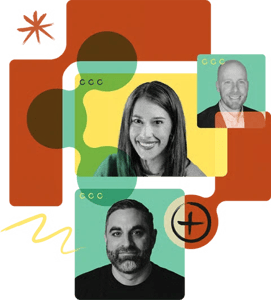
Josh Bersin
Founder of The Josh Bersin Company

AI creates superworkers—but only with hands-on leadership: AI’s real value isn’t speed or automation alone; it’s redesigning workflows. Leaders must actively use AI, model experimentation, and rethink work end-to-end to unlock exponential productivity.
Curiosity and skepticism are now core leadership skills: High-performing leaders question outputs, understand data quality, and treat AI as a hypothesis engine—not a source of truth.
HR’s biggest AI opportunity is strategic, not transactional: The highest ROI comes from AI-powered onboarding, learning, mobility, and workforce planning—not basic productivity tools.
We sat down with Josh to learn how HR leaders can create the "superworkers" of tomorrow. Here's what he had to say.
A career in IT, leadership, e-learning, and talent
My career has spanned 20+ years as an employee and leader, a few years as an entrepreneur, and another three decades as a senior HR advisor, consultant, and researcher.
I started my career as an engineer. Then, I worked in IT, spending two years at Exxon, ten years at IBM, and eight years at Sybase. In 1998, I joined the embryonic e-learning industry, working at a startup. We grew that company and eventually sold it to a bigger company, and suddenly I found myself becoming an expert in training, online learning, and talent management.
In 2001, right after 9/11, I was let go during the dot-com bubble and decided it was time for me to become an analyst. I focused initially on e-learning — a hot topic at the time. From there, I expanded our scope and, with my partner, built Bersin & Associates, a research and advisory firm focused on all areas of HR.
My technology background gives me enormous depth in all areas of HR tech, data, and AI. I feel blessed that I can bring together my personal leadership experience, my time managing at big companies, and my analyst work to help HR teams and leaders reinvent their companies, their organizations, and their personal careers.
The Josh Bersin Company may be small, but it’s mighty. With a team of 50 world-class people, we have a flat, "talent-dense" company where everyone works with clients and contributes exponentially to our overall success. I’ve learned how to attract exceptional people who believe in our mission and want to change the world of work. And, so far, that approach seems to be working.
CHROs now need to get comfortable with the technologies and new features, work closely with IT and data teams, and establish consulting and governance frameworks to guide the business in building strong roadmaps for high-value AI projects.

Why AI adoption is the biggest change HR leaders face today
By far the biggest new challenge in recent years is adoption, implementation, and use of AI in the workplace.
CHROs now need to get comfortable with the technologies and new features, work closely with IT and data teams, and establish consulting and governance frameworks to guide the business in building strong roadmaps for high-value AI projects.
Because of this, my focus has shifted to helping organizations integrate AI into all levels of decision-making, talent management, and strategic planning. In fact, I’d estimate that 80–90% of my time is spent speaking with CHROs and other senior leaders about how they should approach AI in HR— not just in the context of their people, important as that is, but as a strategic change enabler.
Why leaders must get hands-on with AI to drive real transformation
In the early days of the IBM PC, many executives avoided computers, leaving tasks to secretaries. That mindset doesn’t work anymore.
AI is so transformational across so many different axes of modern business and society. Leaders must get hands-on with this technology. They must understand it.
More than that, they must facilitate and model experimentation. AI is so customizable that anyone can use or build on top of it, and because of that, facilitation of experimentation has become a key leadership characteristic.
In my own leadership, I strive to not just talk the talk, but walk the walk every day.
How leaders can set clear ground rules for responsible AI use
It’s so easy for anyone to access a chatbot, ask it questions, and then walk into a meeting with information that may, or may not, be correct. This means leaders have to set the ground rules.
- Where are we going to get our data from?
- Can we trust it?
- And are we going to build internal tools of our own to ensure accuracy and reliability?
Most companies are now developing internal AI tools to prevent people from going out onto the internet and bringing in data that might be unreliable. Equally important is creating an environment where people can reinvent their jobs and their work.
Most people misunderstand AI’s real ROI. It isn't reading emails faster or creating a chart from a spreadsheet; it’s completely rethinking the workflow, building your own agents to automate your work, and then looking at workflows across multiple jobs to automate larger processes like customer experience, employee experience, recruiting, learning, and so on.
It’s so easy for anyone to access a chatbot, ask it questions, and then walk into a meeting with information that may, or may not, be correct. This means leaders have to set the ground rules.
How AI enables superworkers and supermanagers
AI is reshaping L&D and HR, but also reaching a previously overlooked part of the workforce: frontline and deskless employees. This AI-powered transformation is fundamentally changing how organizations operate from top to bottom.
This realization has led us to what we're calling AI-enabled "superworkers" — employees supported by AI agents and systems that up their productivity and output.
"Supermanagers," then, are human-centered leaders who are also augmented by AI. They foster a culture of experimentation, empower teams with autonomy, leverage AI for personalized development, democratize opportunity and growth, and prioritize transparency.
You can learn more about these concepts here and here.

Why questioning AI-generated data is now a core leadership skill
In traditional systems, small data issues don’t matter much and have limited impact. But in the context of AI, even a little polluted data can ripple across countless queries, affecting decisions and insights at scale.
And that means that everyone who uses these systems (which is now virtually everyone) needs to understand the associated data challenges.
Just because a large language model gives a confident answer doesn’t mean it’s correct. Users need to take a scientific approach: question those answers, verify the data, and make sure the insights are actually reliable.
And if you're involved in implementing an AI system, know that you’re going to spend a lot of time on data quality, ownership, and governance: areas you might have been able to "wing" before.
In our case, the work is qualitative and quantitative research, often at great depth and complexity. If an analyst came to me and said they’d just used ChatGPT to write a study that someone had paid thousands of dollars for, I don’t think they’d still be here that afternoon.
What I do want is for them to show me how they’d run analyses and explore "what-if" scenarios, leveraging the billions of data points our talent-intelligence partners provide. That’s a technical skill.

How leaders can build real understanding of AI in organizations
A second, equally important skill is understanding the depth and capabilities of AI, and not just treating it as a search tool.
Most people underutilize these systems; they don’t push them far enough, so they don’t get much value. In fact, I'd say that most of the people using Sora or TikTok to create AI-driven content are likely more advanced than the average office worker, who is only using AI to read emails.
That's why a culture of experimentation is so important. That, and a culture of learning from others.
Understanding AI takes time. It’s not something you can just take a course on and be done; everyone needs to use AI differently, because it adapts to you and learns from your interactions. These are non-deterministic systems — unlike an ERP system, where you just input data into fixed fields, you can use AI in countless ways.
Understanding AI's capabilities requires curiosity. The more curious someone is, the more interesting the applications they'll create. And those applications will directly and significantly impact their productivity and performance. As a result, those who are not curious risk being left behind.
It's up to organizations to encourage curiosity, treating experimentation and learning as skills.
An AI-powered HR stack that supports learning, insight, and scale
Our main engine is Sana AI. We also use tools like the AI video editor, Synthesia.
And we use our own tool, Galileo, internally for just about everything else. On a daily basis, it summarizes meetings, sifts through large volumes of data, and provides a highly useful corporate memory. It’s becoming indispensable for capturing insights and maintaining continuity across projects.
We built it using multiple LLMs, including ChatGPT, Claude, and other generative AI tools.

How AI is reshaping HR, L&D, and knowledge access
When overhauling workflows with AI, our focus is primarily on HR and L&D. We’ve streamlined candidate sourcing, improved talent matching, and created personalized learning pathways.
But we're also utilizing Digital Twin technology, which enables us to quickly retrieve information from anyone in the company without bothering them. This has been a big time saver. We also use it to answer questions like "What’s the status of the XYZ contract?" or "Show me all the conversations with ABC company" in a remarkably integrated way.
Why leaders must stay skeptical of AI’s confidence and convenience
I’m not worried about AI taking jobs, but there is something that concerns me: Are people learning fast enough about AI’s fundamental limits?
These things are dangerously self-confident, but often wrong. I use the phrase, "Not always right but seldom in doubt." The public domain models never say, "I don't know the answer to that question," and that’s a major problem.
In this new era, it’s important to remain permanently curious and a bit skeptical to question these systems, rather than presuming the AI’s answer is always right.
My gut tells me that as we learn to work with AI, this is going to be the dark side of convenience, similar to how lack of privacy is the price we paid for the convenience of smartphones.
How HR leaders can focus on high-ROI AI workflows
Here's my advice: Pick a lane.
Focus on the application areas and use cases that are most strategic. It may seem cool to give everyone a meeting tool, but maybe the bigger opportunity is to improve global onboarding, training, and mobility.
Work with IT. You need a standardized toolset, so employees aren’t going out on the Internet using whatever they can find. Once the approved technology and uses are properly and safely established, roll out versions of the tools and teach employees what’s new every week or two. That’s exactly how we do it here.
As for the AI architecture, there’s no one-size-fits-all answer. Some companies prohibit using any external data. And many restrict internal data from being used in AI systems except those approved by IT. These rules have to be defined in your own environment.
But from what I’ve seen over the last two years, the real innovations won’t come from OpenAI and other AI giants, but from real business users figuring out how to use AI to create better business models, products, and services.
That’s why superworkers being guided by supermanagers matter far more than simply how many trillions of tokens your system can process.
Focus on the application areas and use cases that are most strategic. It may seem cool to give everyone a meeting tool, but maybe the bigger opportunity is to improve global onboarding, training, and mobility.
Why curiosity is the most important skill for AI-era leaders
And one more thing. The most inspiring leaders I meet aren’t the most self-confident or arrogant; they’re the most curious, and they are always learning.
As I turn 70 next year, I still feel like a teenager in many ways, learning how to lead and how to help others every single day.
Stay humble and keep learning
Follow along
You can follow Josh Bersin's work on LinkedIn and his website as he continues to educate HR leaders on proper AI implementation. And check out his AI tool, Galileo.
More expert interviews to come on People Managing People!
Ready to rethink the AI era?
Join the People Managing People community. Free accounts give you weekly insights, practical frameworks, and peer strategies to help you lead smarter, not harder.