



Intuit Enterprise Suite vs. NetSuite: Vergleich und Expertenbewertungen für 2026


As organizations grow, managing finances, payroll, approvals, reporting, and day-to-day operations across multiple teams becomes increasingly complex. Choosing business management software that can support administrative workflows while improving visibility, automation, and control is an important decision.
Intuit Enterprise Suite and NetSuite are two leading business management platforms that help organizations manage financial operations, reporting, workflow automation, and day-to-day administrative processes.
In this comparison, I'll break down their features, pricing, pros and cons, security, and ideal use cases to help you determine which solution is the better fit for your organization.
Intuit Enterprise Suite vs. Oracle NetSuite: An Overview
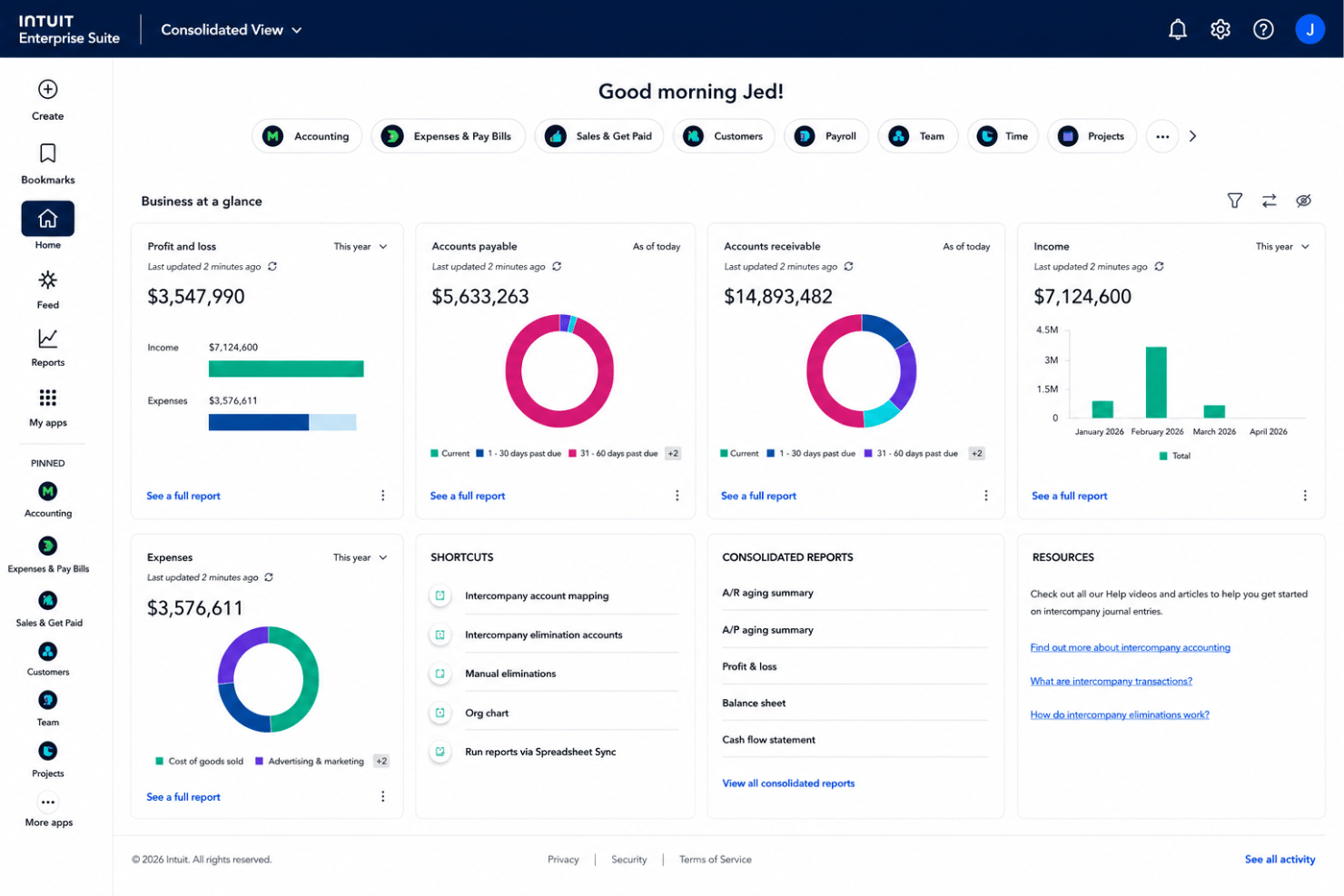
Intuit Enterprise Suite
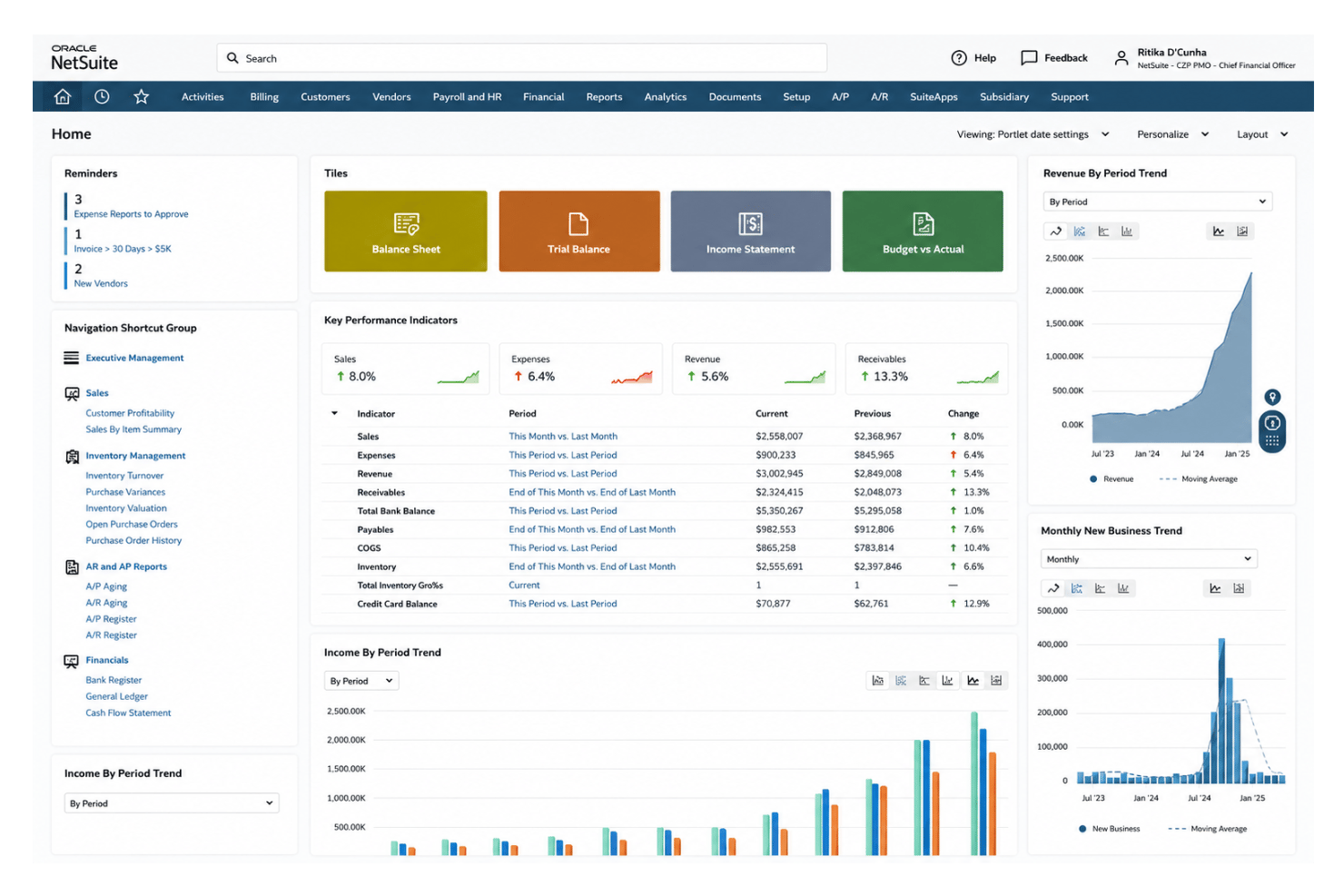
Oracle NetSuite
Warum Sie unseren Software-Bewertungen vertrauen können
Unser Team testet und bewertet Software seit 2012. Als HR-Experten wissen wir selbst, wie schwierig – und wichtig – es ist, die richtige Software auszuwählen.
Für diesen Leitfaden haben wir Tools mithilfe von praktischen Tests und unabhängiger Recherche bewertet und dabei unsere Bewertungskriterien angewendet. Zudem greifen wir auf Erkenntnisse von Branchenvordenkern und praktizierenden HR-Experten zurück.
Unsere Bewertungen spiegeln unser menschliches redaktionelles Urteilsvermögen wider, keine Verkaufsstrategie.
Expertenprüfer:
Intuit Enterprise Suite vs. Oracle NetSuite Pricing Comparison
| Intuit Enterprise Suite | Oracle NetSuite | |
|---|---|---|
| Free Trial | Free demo available | Free demo available |
| Pricing | Pricing upon request | Pricing upon request |
Intuit Enterprise Suite vs. NetSuite Preise & Versteckte Kosten
Intuit Enterprise Suite und NetSuite verwenden beide eine individuelle Preisgestaltung, daher müssen Sie sich für ein Angebot direkt an deren Vertriebsteams wenden. Die Preise hängen von Faktoren wie der Nutzeranzahl, den gewählten Modulen, den Implementierungsanforderungen und der allgemeinen Unternehmenskomplexität ab. Während beide Plattformen ein maßgeschneidertes Angebot erfordern, können Kosten für Implementierungsdienste, Add-ons, Integrationen und fortlaufenden Support die Gesamtkosten über das Grundabo hinaus erhöhen.
Um die Preise effektiv zu vergleichen, sollten Sie ein detailliertes Angebot einholen, das Implementierung, Support, Integrationen, zusätzliche Nutzer sowie optionale Module umfasst. Wenn Sie über die anfänglichen Abo-Kosten hinausblicken, können Sie besser einschätzen, welche Plattform den besten langfristigen Wert für die Bedürfnisse und Wachstumspläne Ihres Unternehmens bietet.
Intuit Enterprise Suite vs. Oracle NetSuite Feature Comparison
<div class="slate-p" data-slate-node="element" data-block-id="VDyC6l4GXI" data-slate-fragment="JTVCJTdCJTIyY2hpbGRyZW4lMjIlM0ElNUIlN0IlMjJ0ZXh0JTIyJTNBJTIySW50dWl0JTIwRW50ZXJwcmlzZSUyMFN1aXRlJTIwYW5kJTIwTmV0U3VpdGUlMjBib3RoJTIwcHJvdmlkZSUyMGNvbXByZWhlbnNpdmUlMjBidXNpbmVzcyUyMG1hbmFnZW1lbnQlMjBjYXBhYmlsaXRpZXMlMkMlMjBpbmNsdWRpbmclMjBmaW5hbmNpYWwlMjBtYW5hZ2VtZW50JTJDJTIwbXVsdGktZW50aXR5JTIwYWNjb3VudGluZyUyQyUyMHdvcmtmbG93JTIwYXV0b21hdGlvbiUyQyUyMHJlcG9ydGluZyUyQyUyMHByb2plY3QlMjBtYW5hZ2VtZW50JTJDJTIwYW5kJTIwQUktcG93ZXJlZCUyMGluc2lnaHRzLiUyMEJvdGglMjBwbGF0Zm9ybXMlMjBhcmUlMjBkZXNpZ25lZCUyMHRvJTIwaGVscCUyMGdyb3dpbmclMjBvcmdhbml6YXRpb25zJTIwc3RyZWFtbGluZSUyMG9wZXJhdGlvbnMlMjBhbmQlMjBpbXByb3ZlJTIwZmluYW5jaWFsJTIwdmlzaWJpbGl0eS4lMjIlN0QlNUQlMkMlMjJ0eXBlJTIyJTNBJTIycCUyMiUyQyUyMmlkJTIyJTNBJTIyb3lCRDJFUDA4byUyMiU3RCUyQyU3QiUyMmNoaWxkcmVuJTIyJTNBJTVCJTdCJTIydGV4dCUyMiUzQSUyMkhvd2V2ZXIlMkMlMjB0aGUlMjBwbGF0Zm9ybXMlMjBkaWZmZXIlMjBpbiUyMHNjb3BlJTIwYW5kJTIwZGVsaXZlcnkuJTIwSW50dWl0JTIwRW50ZXJwcmlzZSUyMFN1aXRlJTIwZm9jdXNlcyUyMG9uJTIwZGVsaXZlcmluZyUyMGVudGVycHJpc2UtbGV2ZWwlMjBmaW5hbmNpYWwlMjBtYW5hZ2VtZW50JTIwd2l0aCUyMGElMjBtb3JlJTIwc3RyZWFtbGluZWQlMjBpbXBsZW1lbnRhdGlvbiUyMGFuZCUyMG5hdGl2ZSUyMGNhcGFiaWxpdGllcyUyMGxpa2UlMjBwYXlyb2xsJTJDJTIwcGF5bWVudHMlMkMlMjBiaWxsJTIwcGF5JTJDJTIwYW5kJTIwYnVzaW5lc3MlMjBsZW5kaW5nLiUyMEluJTIwY29udHJhc3QlMkMlMjBOZXRTdWl0ZSUyMG9mZmVycyUyMGElMjBicm9hZGVyJTIwRVJQJTIwcGxhdGZvcm0lMjB3aXRoJTIwYWRkaXRpb25hbCUyMGNhcGFiaWxpdGllcyUyMHN1Y2glMjBhcyUyMENSTSUyQyUyMHByb2N1cmVtZW50JTJDJTIwb3JkZXIlMjBhbmQlMjBpbnZlbnRvcnklMjBtYW5hZ2VtZW50JTJDJTIwYW5kJTIwZ2xvYmFsJTIwYnVzaW5lc3MlMjBtYW5hZ2VtZW50JTJDJTIwbWFraW5nJTIwaXQlMjBhJTIwc3Ryb25nZXIlMjBmaXQlMjBmb3IlMjBvcmdhbml6YXRpb25zJTIwd2l0aCUyMG1vcmUlMjBjb21wbGV4JTIwb3BlcmF0aW9uYWwlMjBhbmQlMjBpbnRlcm5hdGlvbmFsJTIwcmVxdWlyZW1lbnRzLiUyMiU3RCU1RCwibmFtZSI6ImFjZi9zc2x4dnN5ZmVhdHVyZWNvbXBhcmlzb24iLCJtb2RlIjoicHJldmlldyIsImFuY2hvciI6ImZlYXR1cmUtY29tcGFyaXNvbjoifQ==
| Intuit Enterprise Suite | Oracle NetSuite | |
|---|---|---|
| API | ||
| Budgeting | ||
| Calendar Management | ||
| Customer Management | ||
| Dashboard | ||
| Data Export | ||
| Data Import | ||
| Data Visualization | ||
| Expense Tracking | ||
| External Integrations | ||
| Forecasting | ||
| Inventory Tracking | ||
| Multi-User | ||
| Notifications | ||
| Project Management | ||
| Scheduling | ||
| Supplier Management | ||
| Third-Party Plugins/Add-Ons |
Intuit Enterprise Suite vs. NetSuite Integrationen
| Integration | Intuit Enterprise Suite | NetSuite |
|---|---|---|
| Shopify | ✅ | ✅ |
| Salesforce | ✅ | ✅ |
| PayPal | ✅ | ✅ |
| Stripe | ✅ | ✅ |
| DocuSign | ✅ | ✅ |
| Square | ✅ | ✅ |
| Amazon Marketplace | ✅ | ✅ |
| HubSpot | ✅ | ✅ |
| Knowify | ✅ | ❌ |
| Wix | ✅ | ❌ |
| API | ✅ | ✅ |
| Zapier | ❌ | ✅ |
Sowohl Intuit Enterprise Suite als auch NetSuite unterstützen Integrationen in den Bereichen Finanzen, E-Commerce, Zahlungen, CRM und Betrieb. Intuit Enterprise Suite baut auf das größere Intuit-Ökosystem, um Lohnabrechnung, Zahlungen, Personalmanagement, Marketing und Unternehmensdaten miteinander zu verbinden, während NetSuite API-Zugriff, Zapier-Unterstützung und eine größere Flexibilität bei Konnektoren bietet. Insgesamt passt die Intuit Enterprise Suite zu Teams, die aufeinander abgestimmte Intuit-Workflows wünschen, während NetSuite besser für Unternehmen mit komplexeren Tech-Stacks und Integrationsbedarf geeignet ist.
Intuit Enterprise Suite vs. NetSuite Sicherheit, Compliance & Zuverlässigkeit
| Faktor | Intuit Enterprise Suite | NetSuite |
|---|---|---|
| Datenverschlüsselung | Verschlüsselt Daten während der Übertragung und im Ruhezustand, um sensible Finanz- und Betriebsinformationen zu schützen. | Verwendet Verschlüsselung für Geschäftsdaten und unterstützt Authentifizierungskontrollen auf Unternehmensniveau. |
| Regulatorische Compliance | Unterstützt SOC-Berichte, ISO 27001-zertifizierte Informationssicherheitspraktiken, PCI DSS-Compliance für relevante Zahlungsdienste sowie VPAT-Dokumentation. | Bietet umfangreiche Compliance-Dokumentation, einschließlich SOC, ISO, PCI und globalen Audit-Standards. |
| Zugriffskontrollen | Enthält rollenbasierte Zugriffskontrollen, damit Organisationen den Zugang zu sensiblen Finanz-, Lohn- und Betriebsdaten einschränken können. | Bietet feingranulare Berechtigungen, MFA, SSO und tokenbasierte Authentifizierung für komplexe Unternehmensumgebungen. |
| Zuverlässigkeit | Stellt Ressourcen im Bereich Unternehmenssicherheit und Compliance zur Verfügung, jedoch ist eine spezifische IES-Uptime-SLA nicht öffentlich gelistet. | Veröffentlicht detailliertere Informationen zur Infrastruktur und Verfügbarkeit, einschließlich Uptime- und Disaster-Recovery-Details. |
Die Intuit Enterprise Suite deckt wichtige Sicherheitskontrollen ab, darunter Verschlüsselung bei der Übertragung und Speicherung, rollenbasierte Zugriffskontrollen, SOC-Berichte, ISO 27001-zertifizierte Praktiken und PCI DSS-Compliance für relevante Zahlungsdienste. NetSuite macht hingegen öffentlich mehr Details zu Infrastruktur, Uptime und weltweiter Compliance zugänglich. Insgesamt eignet sich die Intuit Enterprise Suite für wachsende Unternehmen mit Anforderungen an sichere Finanz-, Verwaltungs- und Betriebsdaten, während NetSuite für Organisationen mit komplexeren Compliance-Anforderungen geeignet sein kann.
Intuit Enterprise Suite vs. NetSuite Benutzerfreundlichkeit
| Faktor | Intuit Enterprise Suite | NetSuite |
|---|---|---|
| Benutzeroberfläche | Nutzt eine vertraute Intuit-Oberfläche mit übersichtlicher Navigation für Finanzen, Lohnabrechnung, Berichterstattung und Workflows. | Bietet eine einheitliche ERP-Oberfläche für Finanzen, CRM, Beschaffung, Inventar, Projekte und globale Abläufe. |
| Onboarding | Bietet geführtes Onboarding, Kundenerfolgsunterstützung, Hilfe bei der Datenmigration und verschiedene Schulungsoptionen. | Setzt auf SuiteSuccess, Implementierungspartner, Trainingsressourcen und rollenbasierte Einrichtungshilfen. |
| Anpassung | Unterstützt konfigurierbare Workflows, Berichte, Integrationen, Entitäten, Dimensionen und Genehmigungen. | Ermöglicht umfassende ERP-Anpassungen über SuiteCloud, SuiteBuilder, SuiteFlow und SuiteScript. |
| Alltägliche Aufgaben | Erleichtert Teams das Management von Finanzprozessen, Lohnabrechnung, Zahlungen, Berichten und Genehmigungen durch verbundene Intuit-Tools. | Unterstützt tägliche Workflows in den Bereichen Finanzen, CRM, Lager, Beschaffung, Projekte und Tochtergesellschaften. |
| Support & Hilfe | Bietet Produktsupport, Kundenerfolgsguidance, Trainingspläne und Premium-Supportoptionen. | Stellt Support-Services, Trainingsprogramme, Implementierungsressourcen und Partner-Supportoptionen bereit. |
Die Intuit Enterprise Suite setzt auf geführte Einführung, vertraute Workflows und verbundene Business-Management-Tools für wachsende Organisationen. NetSuite unterstützt dagegen ein breiteres Spektrum an ERP-Prozessen, tiefere Konfigurierbarkeit und größere operative Strukturen. Die passende Lösung hängt davon ab, ob Ihr Team eine schlanke, von Intuit geführte Erfahrung oder eine hochgradig konfigurierbare ERP-Umgebung benötigt.
Intuit Enterprise Suite vs Oracle NetSuite: Pros & Cons
Intuit Enterprise Suite
- Multi-entity management simplifies financial operations across growing organizations.
- AI-powered automation helps reduce manual financial, administrative, and operational tasks.
- Advanced reporting and real-time business insights improve decision-making.
- May offer more functionality than smaller businesses with basic accounting needs.
- Organizations migrating from simpler accounting software may face a learning curve.
- Advanced customization and complex implementations require additional planning and configuration.
Oracle NetSuite
- Real-time dashboards support detailed and customizable reporting.
- Multi-subsidiary management works across currencies and countries.
- Automates manual tasks in HR, finance, and operations.
- Implementation projects often take several months to complete.
- Advanced features usually require additional modules or fees.
- User interface can feel cluttered in complex workflows.
Best Use Cases for Intuit Enterprise Suite and Oracle NetSuite
Intuit Enterprise Suite
- Multi-Entity Organizations Manage multiple legal entities, automate intercompany transactions, and consolidate financial reporting from a single system.
- Professional Services Firms Track projects, manage financial performance, and automate accounting workflows while improving visibility across teams.
- Technology & SaaS Companies Support growing operations with AI-powered reporting, forecasting, and financial controls as the business scales.
- Construction & Project-Based Businesses Manage project accounting, budgeting, and financial reporting with workflows designed for project-driven organizations.
- Manufacturing, Wholesale & Distribution Monitor financial performance across products, locations, and business units while improving operational visibility.
- Growing Mid-Market Businesses Organizations expanding across multiple entities or locations can benefit from enterprise-level financial management without the complexity of a traditional ERP.
Oracle NetSuite
- Mid-Sized Manufacturers NetSuite's inventory, production, and workflow automation features fit manufacturers managing multiple processes and warehouses.
- Global Companies The platform natively supports subsidiaries, currencies, and tax rules, making it ideal for cross-border and multi-entity businesses.
- Nonprofit Organizations Purpose-built nonprofit editions track grants, finances, and compliance requirements in a unified system.
- Finance Departments Finance teams get automated reporting, advanced analytics, and centralized financials for better decision-making and compliance.
- eCommerce Businesses Direct order, shipping, inventory, and CRM management help eCommerce companies keep up with online sales demands.
- Professional Services Firms Project accounting, resource tracking, and expense management streamline operations for consulting, IT, and service-driven companies.
Wer sollte die Intuit Enterprise Suite und wer sollte NetSuite nutzen?
Wenn Sie eine Unternehmenssoftware suchen, die KI-gestützte Automatisierung mit integrierten Intuit-Tools für Finanzen, Lohnabrechnung, Zahlungen, Rechnungsverwaltung und Berichterstattung kombiniert, passt die Intuit Enterprise Suite wahrscheinlich besser. Sie ist ideal, wenn Sie Multi-Entity-Management, erweiterte Berichterstattung und geführte Implementierung benötigen, ohne die volle Komplexität einer traditionellen ERP-Bereitstellung einzugehen.
Wenn Sie hingegen ein breiter aufgestelltes ERP-System benötigen, in dem KI globale Abläufe, komplexe Tochtergesellschaften, fortgeschrittenes Inventar, Beschaffung, CRM und hochgradig konfigurierbare Workflows abdeckt, könnte NetSuite besser passen. NetSuite Next bringt konversationelle Intelligenz, agentenbasierte Workflows und natürliche Sprachsuche mit, was es besonders für Organisationen macht, die KI-Unterstützung in einem umfassenden ERP-Umfeld wünschen.
Differences Between Intuit Enterprise Suite and Oracle NetSuite
| Intuit Enterprise Suite | Oracle NetSuite | |
|---|---|---|
| AI Experience | Uses Intuit AI Agents to support automation, financial insights, and workflow assistance across business operations. | Uses NetSuite Next and embedded AI for conversational intelligence, agentic workflows, natural-language search, and broader ERP analysis. |
| Customization Model | Supports configurable workflows, reports, integrations, dimensions, entities, and approvals. | Supports deeper ERP customization through SuiteCloud, SuiteBuilder, SuiteFlow, SuiteScript, and partner extensions. |
| Global Operations Depth | Supports growing businesses with multiple entities, locations, projects, and product lines. | Supports complex global operations through OneWorld, including subsidiaries, currencies, tax rules, and international reporting. |
| Implementation Approach | Uses guided onboarding with customer success support, migration help, training, and a shorter implementation timeline than traditional ERPs. | Uses a more formal ERP implementation model through SuiteSuccess, training, configuration, and implementation partners. |
| Native Financial Services | Includes built-in payment processing, bill pay, and access to business lending through the Intuit ecosystem. | Supports payments and bill pay, but some capabilities may rely on external partners, add-ons, or third-party apps. |
| Visit Intuit Enterprise SuiteOpens new window | Read Oracle NetSuite ReviewOpens new window |
Similarities Between Intuit Enterprise Suite and Oracle NetSuite
| Cloud-Based Access | Both platforms are cloud-based, allowing teams to access business data, workflows, and reports online. |
|---|---|
| Core Financial Management | Both support key financial workflows such as AR, AP, general ledger, project accounting, and financial reporting. |
| Multi-Entity Support | Both help organizations manage multiple entities and consolidate financial data across business units. |
| Reporting & Planning | Both offer reporting, dashboards, forecasting, budgeting, and business intelligence tools for decision-making. |
| User Permissions | Both include role-based permissions to help control access to sensitive business, finance, and operational data. |
| Visit Intuit Enterprise SuiteOpens new window Read Oracle NetSuite ReviewOpens new window | |