


Reseña de Juicebox 2026: Ventajas, Desventajas, Funciones y Precios Explicados



Proactive recruiting becomes harder when teams must build complex Boolean searches, sift through large talent pools, and manage follow-up across separate tools. Under tight timelines, HR and talent acquisition teams can spend more time sourcing than evaluating strong candidates.
Juicebox is AI recruiting software that combines plain-language candidate search, AI recruiting agents, outreach tools, and talent insights. It helps teams find relevant candidates, understand why they match through profile citations, and connect sourcing activity with supported ATS and CRM platforms.
In this review, I’ll cover Juicebox’s key features, use cases, pros and cons, pricing, onboarding, and limitations to help you decide if it’s the right AI recruiting software for your hiring team.
Juicebox Evaluation Summary
- From $99/user/month (billed annually)
- Free plan + free trial + free demo available
Por qué confiar en nuestras reseñas de software
Nuestro equipo lleva probando y evaluando software desde 2012. Como expertos en RR. HH., sabemos lo difícil —y lo importante— que es elegir el software adecuado.
Para esta guía, evaluamos las herramientas mediante pruebas prácticas e investigación independiente, puntuando las herramientas según nuestros criterios de selección. También nos basamos en la experiencia de líderes de opinión del sector y de profesionales de RR. HH. en activo.
Nuestras reseñas reflejan nuestro criterio editorial humano, no un discurso de ventas.
Revisores expertos:
Juicebox Overview
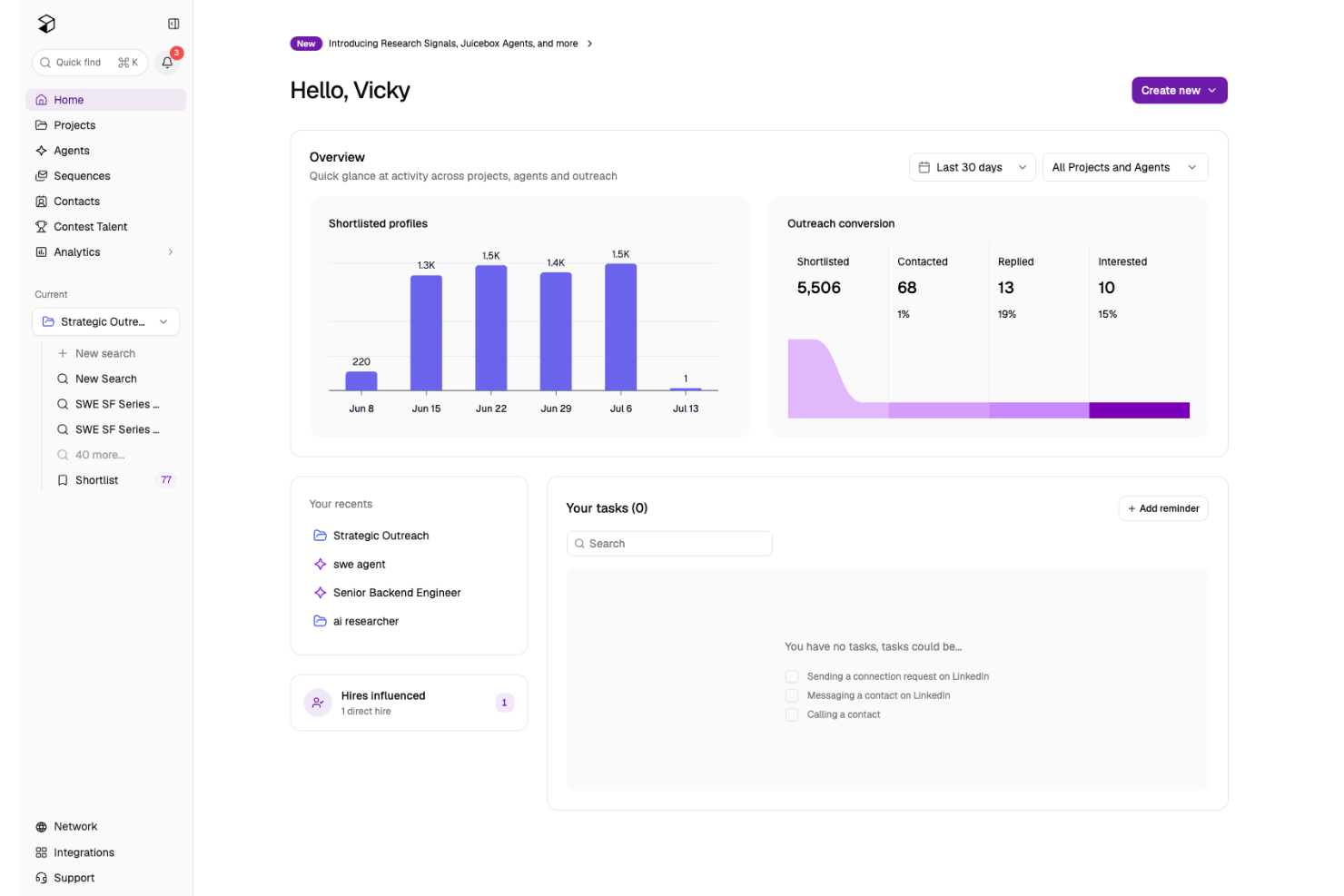
In my opinion, Juicebox stands out as a focused AI sourcing platform for proactive recruiting. Its plain-language search, profile citations, recruiting CRM, outreach, and Talent Insights make candidate discovery and engagement easier to manage. Juicebox Agents also reduce repetitive sourcing and follow-up work, though they perform best with clear hiring criteria. It is well-suited to mid-sized and enterprise teams, but it is not a standalone ATS.
pros
-
Plain-language search helps recruiters find candidates without complex Boolean strings.
-
AI sourcing agents automate discovery, evaluation, outreach, and follow-up, and can run across multiple open roles at once.
-
Profile citations explain candidate matches, while Talent Insights helps assess talent pools and hiring markets.
cons
-
AI Agents need clear search criteria and hiring goals to return relevant candidates.
-
Juicebox focuses on sourcing and outreach, so teams still need an ATS for the broader hiring lifecycle.
-
Recruiters must still review matches and make final hiring decisions.
Is Juicebox Right For Your Needs?
Who Would be a Good Fit for Juicebox?
Juicebox is a good fit for mid-sized and enterprise organizations that rely on proactive sourcing, outbound recruiting, and talent intelligence. It is especially relevant for teams hiring knowledge workers across technology, staffing, professional services, financial services, healthcare, manufacturing, retail, and other B2B sectors.
-
Technology and SaaS
Juicebox helps technology and SaaS companies proactively source candidates for specialized engineering, product, sales, and other knowledge-worker roles.
-
Staffing and Recruiting Agencies
Agencies can manage searches for multiple clients, organize reusable talent pools, and automate personalized outreach and follow-up, with per-client permissions and shared visibility across the team.
-
Professional Services Firms
Professional services firms can search for candidates based on industry background, seniority, technical expertise, and other role-specific requirements.
-
Financial Services Organizations
Juicebox supports financial services teams sourcing experienced professionals for specialized roles that may be difficult to fill through inbound applications alone.
-
Enterprise Talent Acquisition Teams
Enterprise teams can use Juicebox across multiple departments, locations, and open roles while connecting sourced profiles with supported recruiting systems.
-
B2B Knowledge-Worker Hiring
Juicebox suits B2B organizations that hire experienced professionals regularly and need an ongoing pipeline of proactively sourced candidates.
Who Would be a Bad Fit for Juicebox?
Juicebox is less suitable for organizations seeking a standalone ATS, relying mainly on inbound applications, or hiring too infrequently to justify a dedicated sourcing platform. It may also be a poor fit for industries centered on rapid, high-volume hourly recruitment, where applicant processing matters more than proactive outbound sourcing.
-
High-Volume Retail Hiring
Retailers hiring large numbers of hourly or seasonal workers may need tools focused more on rapid applicant processing, scheduling, and bulk hiring.
-
Hospitality and Food Service
Hotels, restaurants, and food service businesses filling frontline roles at volume may get limited value from a platform centered on outbound sourcing.
-
Warehousing and Logistics
Organizations hiring warehouse, delivery, and operational workers may prioritize candidate availability and application volume over proactive talent search and market insights.
-
Staffing Agencies Focused on Hourly Roles
Agencies placing hourly workers may need software built for rapid candidate intake, shift availability, and high-volume placement workflows.
-
Small Firms With Occasional Hiring
Organizations filling only a few roles each year may not use Juicebox frequently enough to justify a dedicated sourcing and outreach platform.
-
Inbound-Led Hiring Teams
Teams that already receive enough qualified applicants through job postings may have little need for Juicebox’s outbound search, outreach, and talent intelligence tools.
Cómo probamos y puntuamos nuestras herramientas
Hemos pasado años construyendo, refinando y mejorando nuestro sistema de pruebas y puntuación de software. La rúbrica está diseñada para capturar los matices de la selección de software y lo que hace que una herramienta sea efectiva, centrándose en los aspectos críticos del proceso de toma de decisiones. A continuación, puedes ver exactamente cómo funcionan nuestras pruebas y puntuaciones a través de siete criterios. Esto nos permite ofrecer una evaluación imparcial del software basada en la funcionalidad principal, características destacadas, facilidad de uso, incorporación, soporte al cliente, integraciones, reseñas de clientes y relación calidad-precio.
Funcionalidad principal (25% de la puntuación final)
El punto de partida de nuestra evaluación siempre es la funcionalidad principal de la herramienta. ¿Tiene las funciones básicas que se espera encontrar? ¿Alguna de esas funciones básicas está restringida a planes de precio superiores? En esencia, esperamos que una herramienta se compare favorablemente con las capacidades básicas de sus competidores.
Características destacadas (25% de la puntuación final)
Luego, evaluamos características poco comunes que van más allá de la funcionalidad principal que normalmente se encuentra en herramientas de su tipo. Una puntuación alta refleja funciones especializadas o únicas que hacen que el producto sea más rápido, eficiente o que ofrezca un valor adicional al usuario. También evaluamos lo fácil que es integrar con otras herramientas comúnmente usadas en el entorno tecnológico para ampliar la funcionalidad y utilidad del software. Las herramientas que ofrecen muchas integraciones nativas, conexiones de terceros y acceso a API para construir integraciones personalizadas obtienen las mejores puntuaciones.
Facilidad de uso (10% de la puntuación final)
Consideramos qué tan rápido y fácil es ejecutar las tareas definidas en la funcionalidad principal utilizando la herramienta. El software que obtiene una puntuación alta está bien diseñado, es intuitivo, ofrece aplicaciones móviles, proporciona plantillas y hace que tareas relativamente complejas parezcan simples.
Incorporación (10% de la puntuación final)
Sabemos lo importante que es la rápida adopción del equipo para una nueva plataforma, por eso evaluamos qué tan fácil es aprender y usar una herramienta con una capacitación mínima. Evaluamos cuán rápido un miembro del equipo puede configurarse y comenzar a usar la herramienta sin experiencia. Las soluciones con mejores puntuaciones requieren poco o ningún soporte.
Soporte al cliente (10% de la puntuación final)
Revisamos cuán rápido y fácil es obtener ayuda mediante teléfono, chat en vivo o base de conocimientos. Las herramientas y empresas que ofrecen soporte en tiempo real obtienen las mejores puntuaciones, mientras que los chatbots obtienen las peores.
Reseñas de clientes (10% de la puntuación final)
Además de nuestras propias pruebas y evaluaciones, consideramos el puntaje neto de promotores de clientes presentes y pasados. Revisamos su probabilidad, dada la opción, de elegir nuevamente la herramienta por su funcionalidad principal. El software con una puntuación alta refleja un alto puntaje neto de promotores por parte de clientes actuales o anteriores.
Relación calidad-precio (10% de la puntuación final)
Por último, considerando todos los demás criterios, revisamos el precio promedio de los planes de entrada frente a las funciones principales y valoramos el resto de los criterios de evaluación. El software que ofrece más por menos tendrá una mejor puntuación.
Core Features
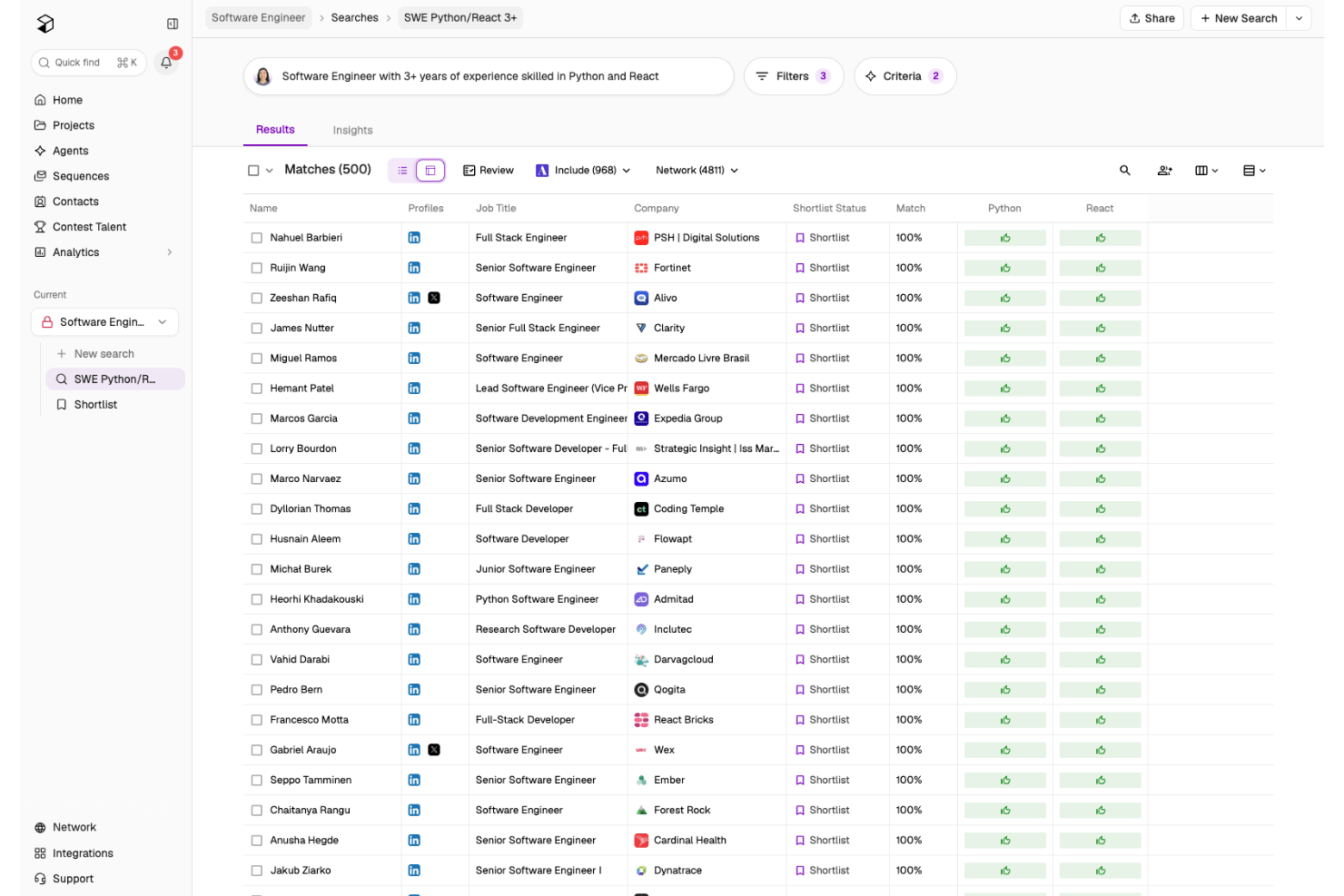
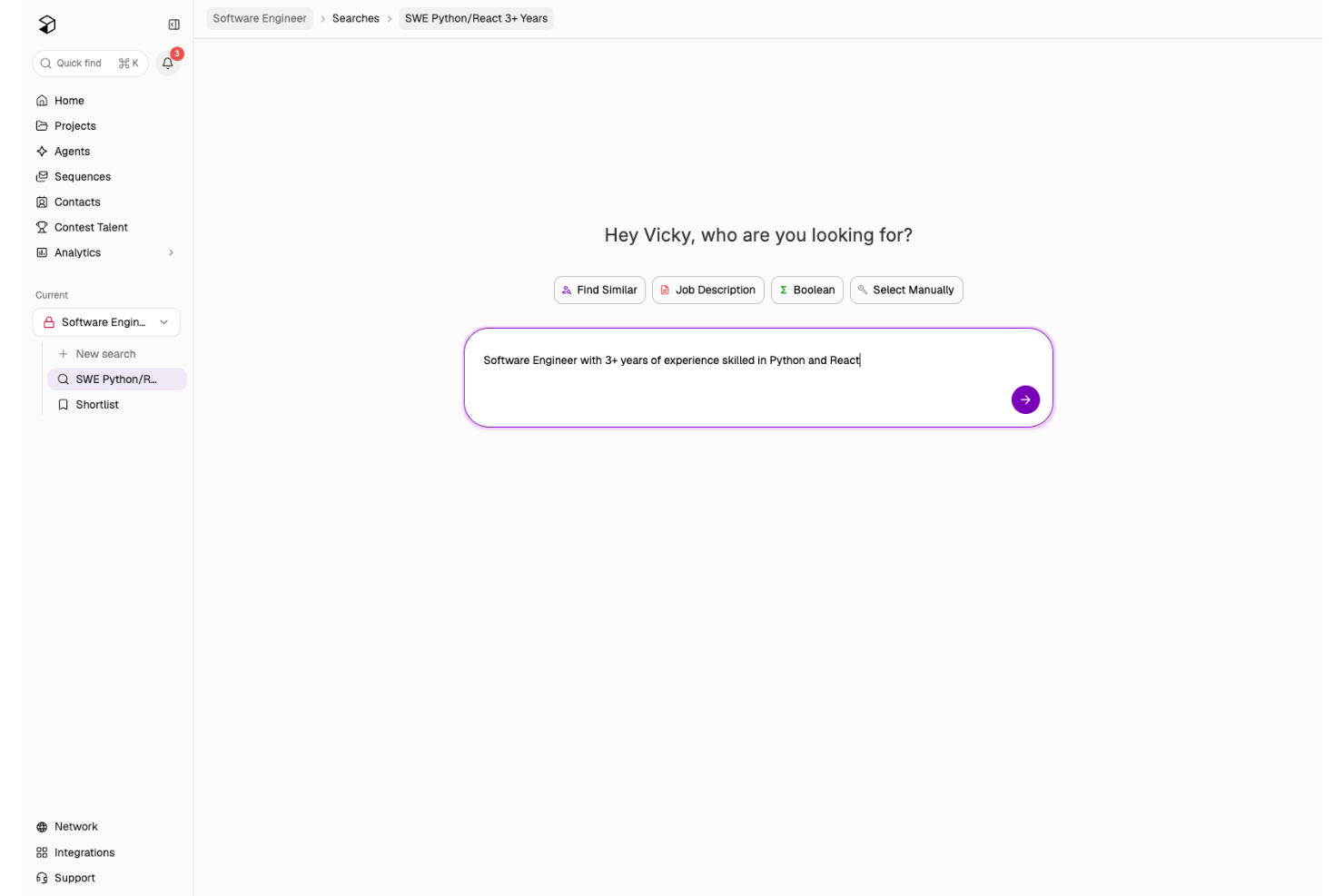
Plain-Language Search
Juicebox lets users describe an ideal candidate in plain language instead of building complex Boolean strings. It searches across more than 800 million candidate profiles sourced from 30+ different sources, with filters for skills, experience, seniority, location, and education.
AI Candidate Evaluation
Juicebox evaluates profiles against defined sourcing criteria and highlights relevant qualifications and experience. This helps teams prioritize profiles for review, but the platform does not make or contribute to hiring decisions.
Recruiting CRM
The built-in CRM centralizes candidate profiles, notes, tags, tasks, and activity history. Teams can organize talent pools, revisit previous prospects, and maintain context across active and future searches.
Candidate Outreach
Juicebox supports automated outreach using role details and candidate information. Multi-step sequences and scheduled follow-ups reduce repetitive work, while engagement tracking helps teams assess message performance.
Juicebox Agents
Juicebox Agents automate sourcing, candidate evaluation, outreach, and follow-up based on defined hiring goals. Teams can configure agents for different roles, though clear criteria are needed to produce relevant results.
ATS and CRM Integrations
Juicebox connects with supported ATS and CRM platforms so sourced candidates can move into existing hiring workflows. A supported ATS integration helps teams transfer profiles without replacing their current recruiting systems.
Standout Features
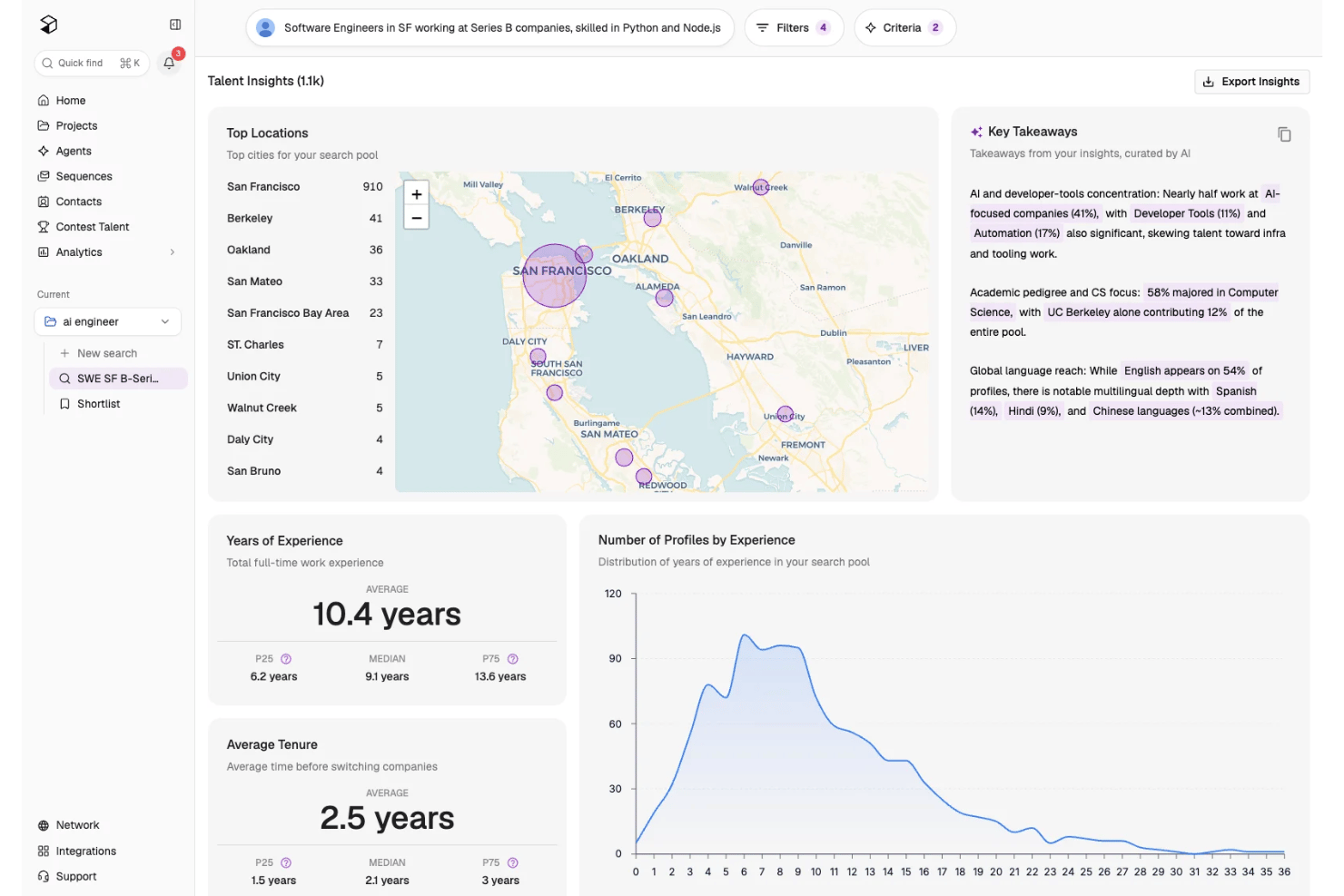
Talent Insights
Talent Insights analyzes the wider talent pool behind a search, including patterns across skills, locations, employers, seniority, and experience. HR and talent acquisition teams can use these findings to refine role requirements and sourcing strategies.
Explainable AI
Juicebox uses profile citations to show the evidence behind candidate matches. Instead of relying on an unexplained score, users can review why someone fits the search and apply their own judgment.
Ease of Use
Juicebox has a clean, modern interface that keeps search, candidate profiles, CRM activity, outreach, and Talent Insights easy to move between. Juicebox’s plain-language search lowers the learning curve for users who do not work with complex Boolean strings, while the broader workflow feels focused rather than overloaded. The main area that takes more setup is Juicebox Agents, since their usefulness depends on how clearly teams define role requirements, search criteria, and outreach goals.
Onboarding
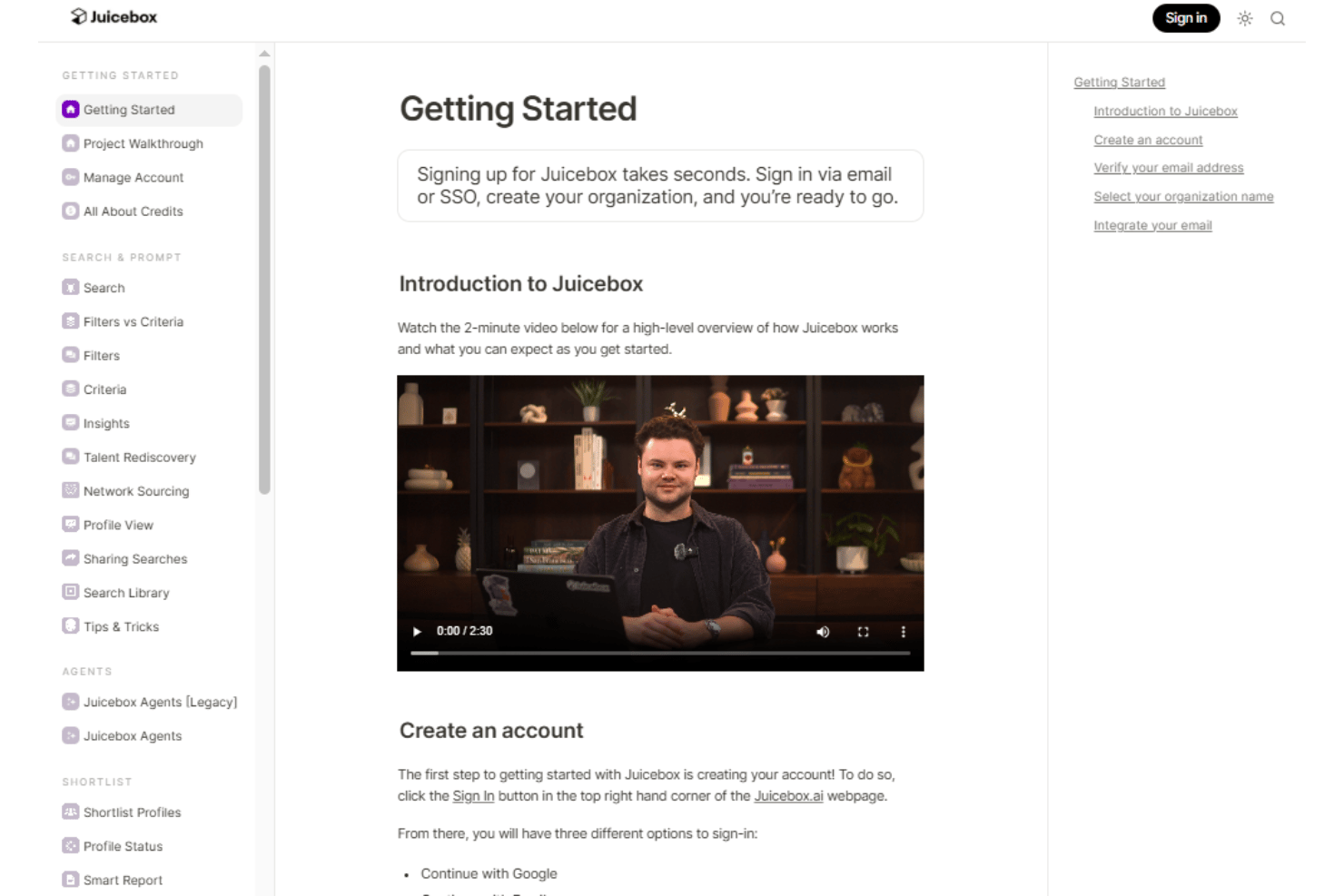
Juicebox supports self-serve setup for individuals and smaller teams, while Business customers receive onboarding and training. Larger implementations can also include migration assistance and help connecting supported ATS or CRM systems, which is useful for organizations moving existing candidate data and workflows into the platform.
Customer Support
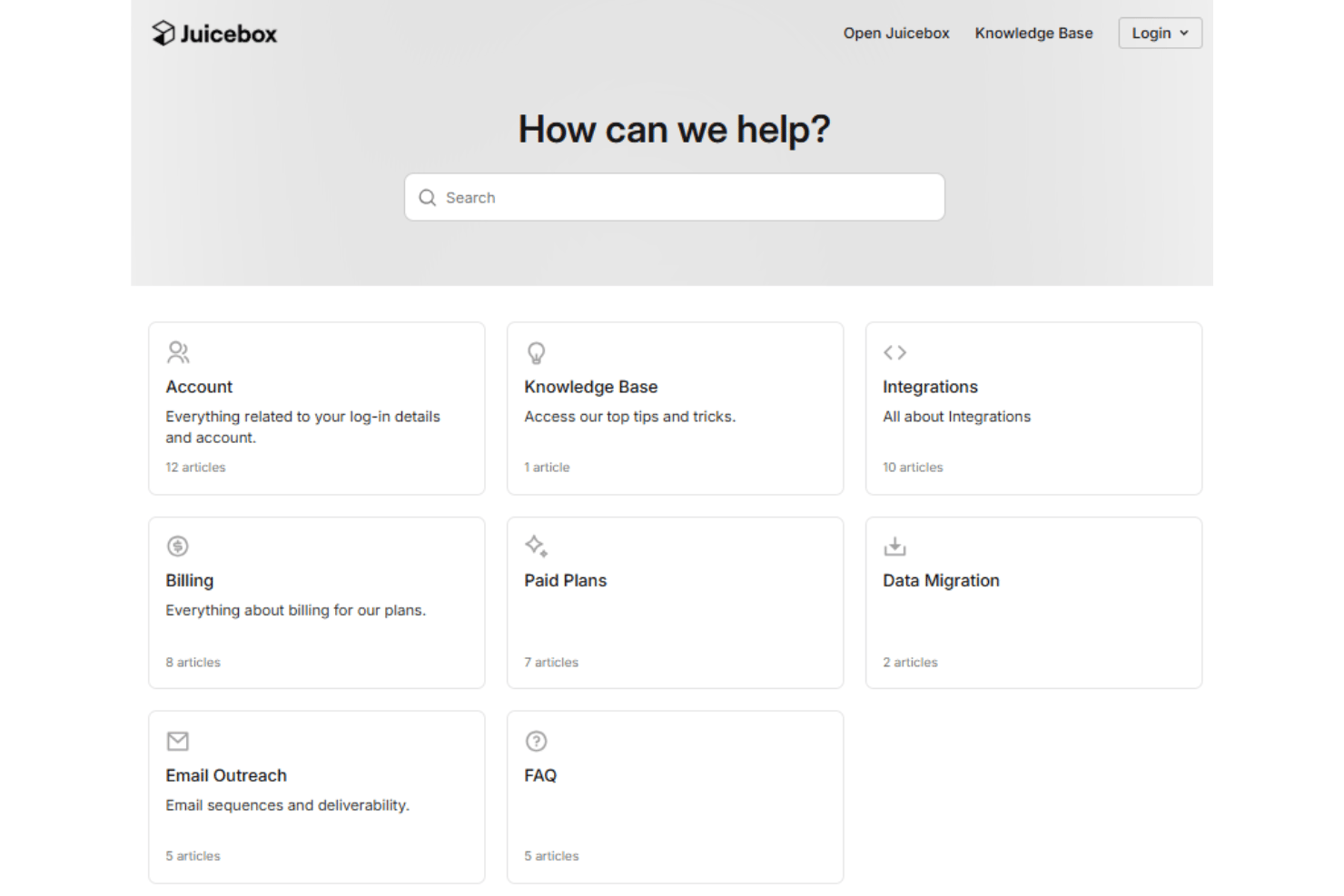
All users can access Juicebox’s Knowledge Base and Help Center, alongside chat and email support for product questions. The platform also offers same-day help with candidate searches, while Business customers receive priority support through email, chat, and Slack with a guaranteed 24-hour response time.
Integrations
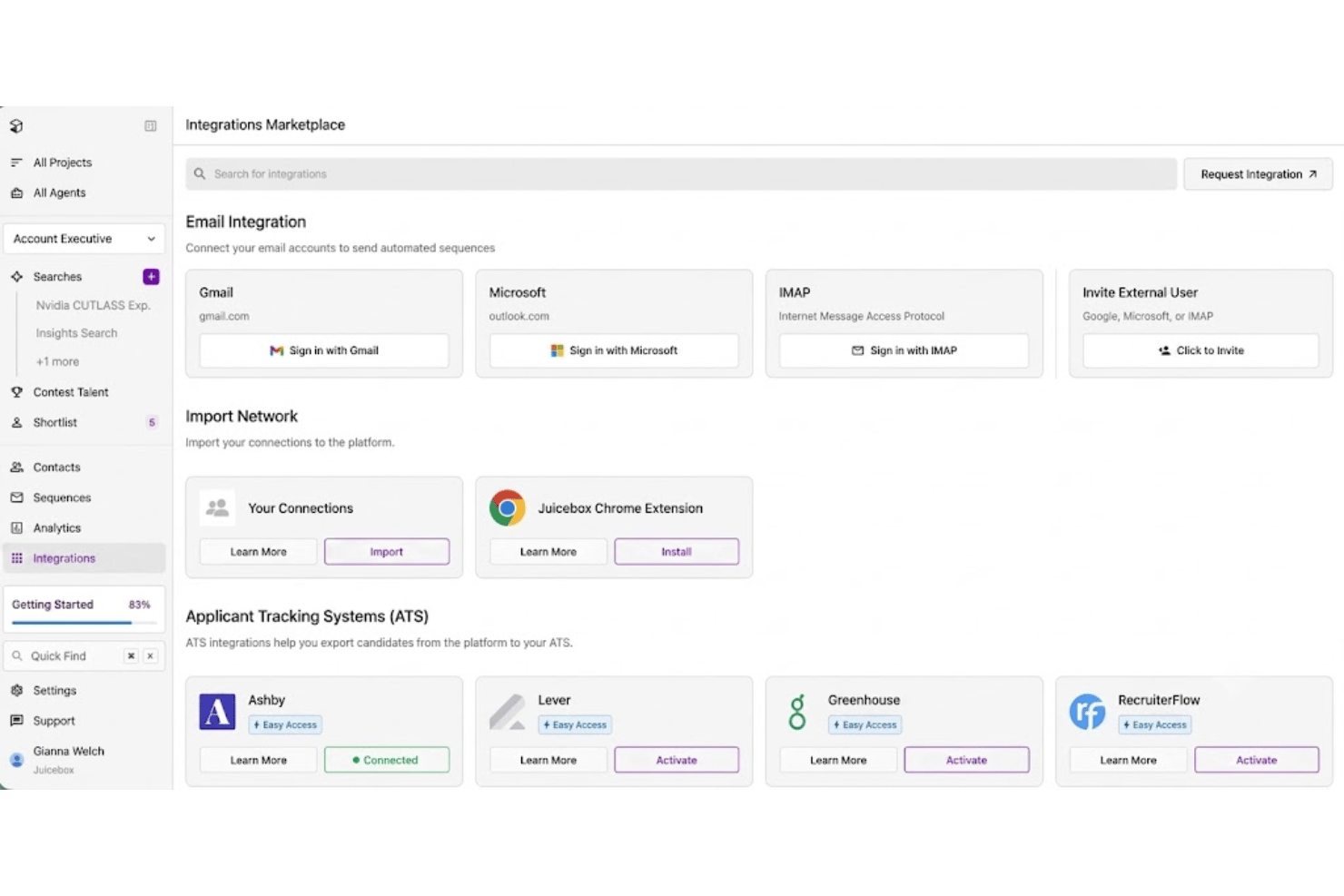
Juicebox integrates with platforms such as Lever, SmartRecruiters, Greenhouse, Ashby, Crelate, Bullhorn, and Workday. It also connects with Gmail and Outlook for outreach, offers a Chrome extension, and supports ATS, CRM, and CSV exports.
Value for Money
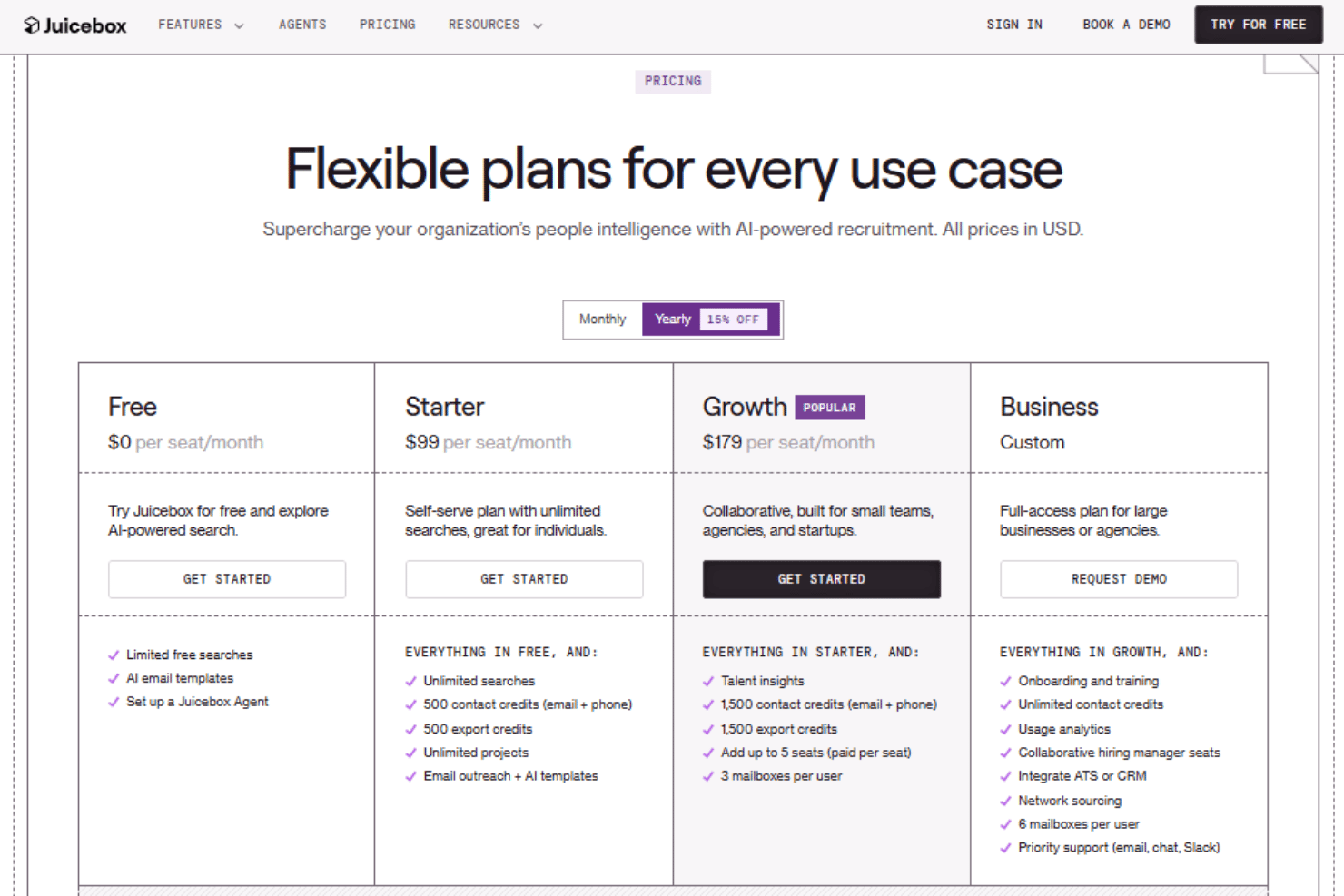
Juicebox’s pricing scales with search volume, contact and export allowances, collaboration needs, integrations, and support. Smaller teams can start with self-serve sourcing and outreach tools, while larger organizations gain Talent Insights, hiring manager access, implementation support, and connections to existing recruiting systems. Juicebox Agents are priced separately, so teams planning to automate sourcing and outreach should account for the additional cost.
- Free: Includes limited searches, AI email templates, and the ability to set up a Juicebox Agent.
- Starter: Adds unlimited searches, contact and export credits, unlimited projects, and email outreach.
- Growth: Adds Talent Insights, higher credit allowances, team collaboration, and multiple mailboxes.
- Business: Adds onboarding and training, ATS and CRM integrations, usage analytics, hiring manager seats, network sourcing, and priority support.
- Juicebox Agents add-on: Automates candidate sourcing, shortlisting, outreach, and follow-up, with unlimited contact and email credits.
Juicebox Specs
- 360 Degree Feedback
- API
- Application Tracking
- Batch Permissions & Access
- Behavioral Testing
- Budgeting
- Calendar Management
- Candidate Database
- Cognitive Testing
- Compliance Tracking
- Dashboard
- Data Export
- Data Import
- Data Visualization
- Email Integration
- Employee Database
- Employee Engagement
- Employee Incentive Management
- Employee Onboarding
- External Integrations
- Feedback Management
- Forecasting
- Interview Scheduling
- Multi-User
- Notifications
- Onboarding
- Personality Testing
- Psychometric Testing
- Referral Tracking
- Scheduling
- Soft Skill Testing
- Softphone
- Status Notifications
- Travel Management
Juicebox FAQs
How does Juicebox use AI during candidate sourcing?
Is Juicebox an applicant tracking system?
Do Juicebox Agents replace recruiters or make candidate decisions?
What candidate data does Juicebox use?
Is Juicebox secure and compliant?
Does Juicebox undergo AI bias testing?
How does Juicebox protect customer data used with AI?
Juicebox Company Overview & History
Juicebox is a privately held AI recruiting software company headquartered in San Francisco, California, and founded in 2022 by David Paffenholz and Ishan Gupta. The company participated in Y Combinator’s Summer 2022 batch and develops PeopleGPT, Juicebox Agents, recruiting CRM, outreach, and talent intelligence tools for proactive sourcing and outbound recruiting. Juicebox primarily serves mid-sized and enterprise organizations, including staffing and recruiting agencies, technology companies, and talent acquisition teams.
Juicebox Major Milestones
- 2022: Juicebox was founded by David Paffenholz and Ishan Gupta and participated in Y Combinator.
- 2023: Juicebox expanded PeopleGPT with two-way ATS integrations, additional search fields, and enhanced project collaboration.
- 2025: Juicebox announced $36 million in funding, including a $30 million Series A and a previously undisclosed $6 million seed round.
- 2026: Juicebox raised an $80 million Series B, bringing its total funding to $116 million.