


Recensione di Gem: Pro, Contro, Caratteristiche e Prezzi Spiegati



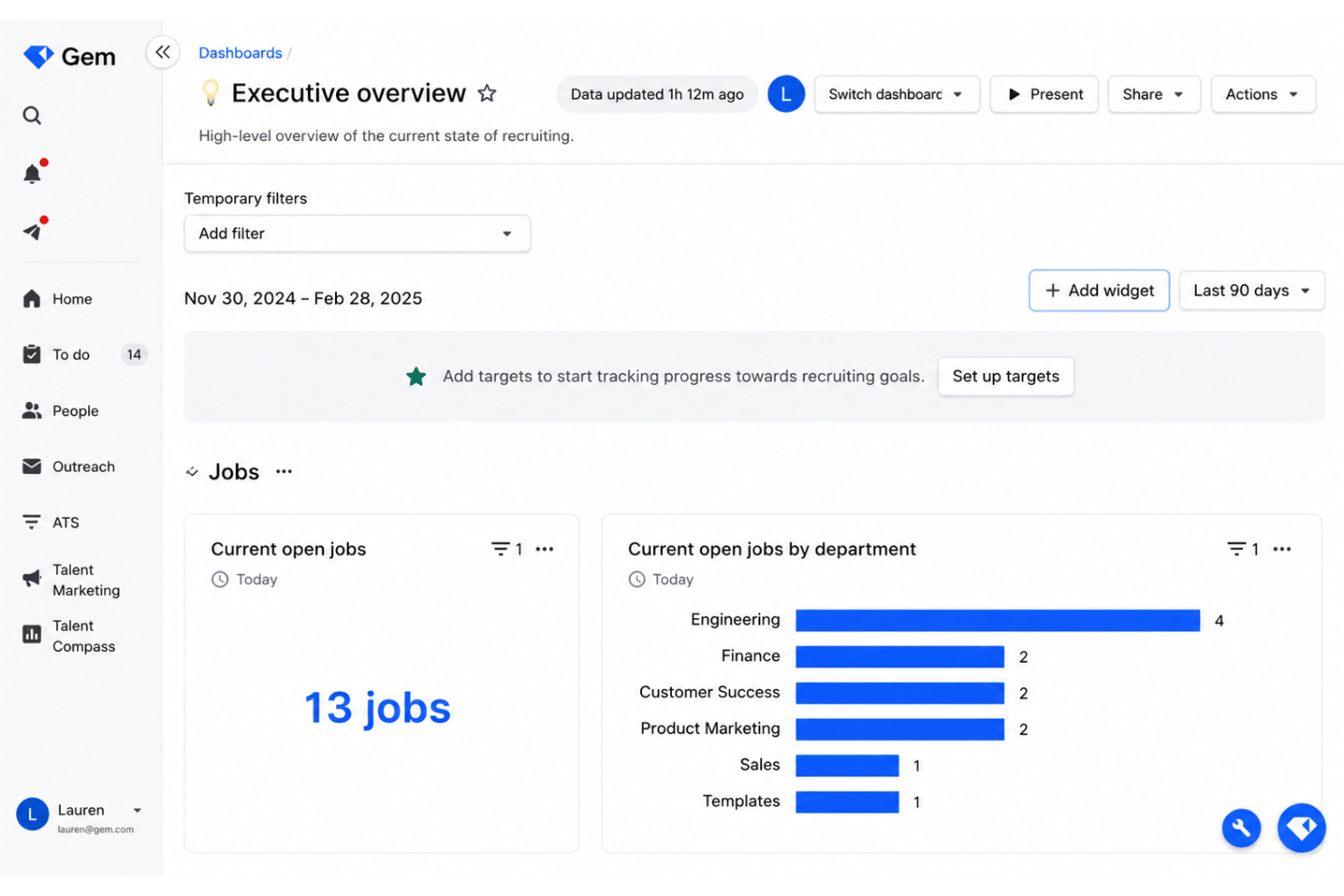
Gem is an AI recruiting software that combines applicant tracking, CRM, and sourcing into one platform for talent acquisition teams managing high-volume or complex hiring pipelines. I'd consider it over a tool like Greenhouse if your team wants sourcing and pipeline management built in natively, rather than relying on separate integrations to cover your full recruiting workflow.
Gem Evaluation Summary
- From $99/user/month (billed annually)
- 7-day free trial
Perché fidarsi delle nostre recensioni sui software
Il nostro team testa e recensisce software dal 2012. In quanto esperti HR noi stessi, sappiamo quanto sia difficile — e importante — scegliere il software giusto.
Per questa guida, abbiamo valutato gli strumenti attraverso test pratici e ricerche indipendenti, assegnando un punteggio agli strumenti in base ai nostri criteri di selezione. Ci basiamo inoltre sulle competenze di leader di pensiero del settore e di professionisti HR attivi.
Le nostre recensioni riflettono il nostro giudizio editoriale umano, non un discorso di vendita.
Revisori esperti:
Gem Overview
In my experience, Gem is a top choice for scaling teams who need deep analytics, high-volume outreach, and seamless integration with core HR systems. I find the interface very intuitive and onboarding straightforward, especially for teams new to AI recruiting tools. Compared to many platforms, Gem’s automation and pipeline visualization stand out, though its pricing is higher and advanced customizations can be limited. I’d suggest Gem for organizations prioritizing data-driven decision-making, collaborative workflows, and actionable sourcing insights—especially if you want to unify your talent operations without complex setup.
pros
-
Sourcing automation uncovers passive candidates missed by others
-
Visual pipeline analytics give real-time hiring insights
-
Email outreach tracking shows candidate engagement and response rates
cons
-
Pricing is higher than most recruiting platforms
-
Some dashboards require manual updating for accuracy
-
Boolean search lacks advanced filtering options
-

Justworks
Visit WebsiteThis rating combines scores from multiple user review sites to reflect overall customer sentiment about the product.4.6 -
Small Improvements
Visit WebsiteThis rating combines scores from multiple user review sites to reflect overall customer sentiment about the product.4.3 -
HiBob
Visit WebsiteThis rating combines scores from multiple user review sites to reflect overall customer sentiment about the product.4.5




Come Testiamo e Valutiamo i Nostri Strumenti
Abbiamo impiegato anni per costruire, perfezionare e migliorare il nostro sistema di test e valutazione dei software. Il modello è progettato per cogliere le sfumature della scelta del software e per evidenziare cosa rende uno strumento efficace, concentrandosi sugli aspetti più critici del processo decisionale. Di seguito puoi vedere esattamente come funziona la nostra valutazione e attribuzione dei punteggi secondo sette criteri. Questo ci consente di fornire una valutazione imparziale del software basandoci su funzionalità principali, caratteristiche distintive, facilità d’uso, onboarding, assistenza clienti, integrazioni, recensioni dei clienti e rapporto qualità/prezzo.
Funzionalità Principali (25% del punteggio finale)
Il punto di partenza della nostra valutazione sono sempre le funzionalità principali dello strumento. Possiede le funzioni di base che l’utente si aspetta? Alcune di queste funzioni sono disponibili solo in piani a prezzi più alti? In sostanza, ci aspettiamo che uno strumento rispecchi almeno le capacità base dei concorrenti.
Caratteristiche Distintive (25% del punteggio finale)
Successivamente valutiamo le funzionalità particolari che superano le funzionalità di base tipiche degli strumenti della sua categoria. Un punteggio alto riflette caratteristiche specializzate o uniche che rendono il prodotto più veloce, efficiente, o che offrono ulteriore valore all’utente. Valutiamo inoltre quanto sia semplice integrare il software con altri strumenti tradizionalmente presenti nel tech stack per espanderne funzionalità e utilizzo. Gli strumenti che offrono numerose integrazioni native, collegamenti di terze parti e accesso API per creare integrazioni personalizzate ricevono i punteggi migliori.
Facilità d’Uso (10% del punteggio finale)
Consideriamo quanto sia veloce e semplice svolgere i compiti definiti dalle funzionalità principali utilizzando lo strumento. I software con punteggi alti sono ben progettati, intuitivi, dispongono di app mobili, offrono modelli preimpostati e rendono semplici anche i compiti più complessi.
Onboarding (10% del punteggio finale)
Sappiamo quanto sia importante una rapida adozione di una nuova piattaforma all’interno di un team, quindi valutiamo quanto sia facile imparare e utilizzare uno strumento con una formazione minima. Valutiamo quanto rapidamente un membro del team possa iniziare a utilizzare lo strumento senza esperienza. Le soluzioni con punteggio alto richiedono poco o nessun supporto.
Assistenza Clienti (10% del punteggio finale)
Esaminiamo quanto sia facile e veloce ricevere supporto o trovare aiuto tramite telefono, chat dal vivo o knowledge base. Gli strumenti e le aziende che forniscono un’assistenza in tempo reale ottengono i punteggi migliori, mentre i chatbot ottengono i risultati peggiori.
Recensioni dei Clienti (10% del punteggio finale)
Oltre ai nostri test e valutazioni, consideriamo il punteggio net promoter dei clienti attuali e passati. Analizziamo la loro propensione, se potessero scegliere, a selezionare di nuovo lo strumento per le sue funzionalità principali. Un software con un punteggio alto riflette un elevato net promoter score da parte dei clienti attuali o passati.
Rapporto Qualità/Prezzo (10% del punteggio finale)
Infine, considerando tutti gli altri criteri, esaminiamo il prezzo medio dei piani base rispetto alle funzionalità principali e teniamo conto del valore degli altri criteri di valutazione. I software che offrono di più, a meno, ottengono un punteggio più alto.
Core Features
Automated Sourcing
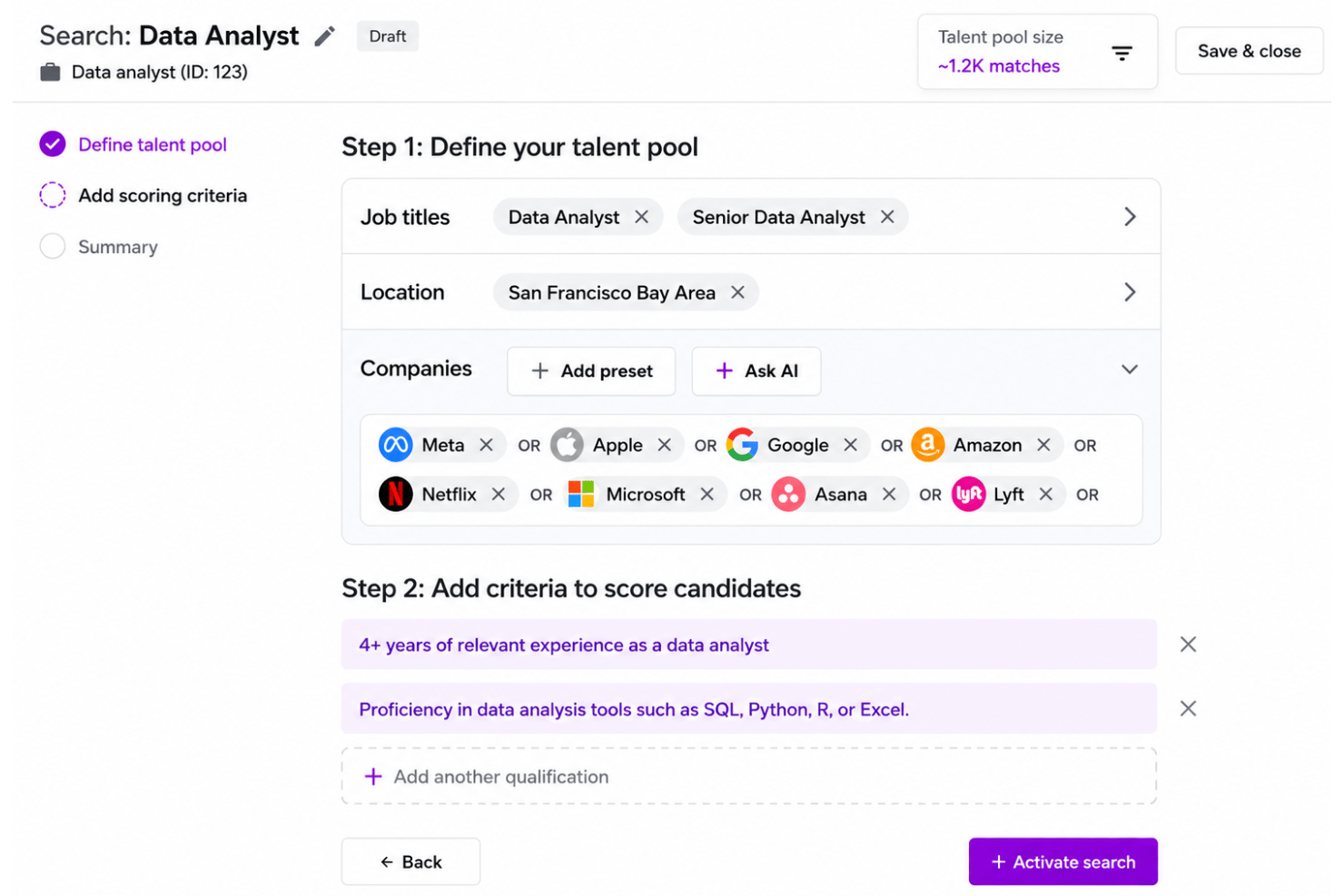
Gem scans multiple platforms to find passive and active talent. It surfaces high-potential candidates your team might otherwise overlook.
Outreach Sequencing
You can build automated, multi-step email sequences directly in Gem. The tool tracks each candidate’s engagement with your outreach.
Pipeline Visualization
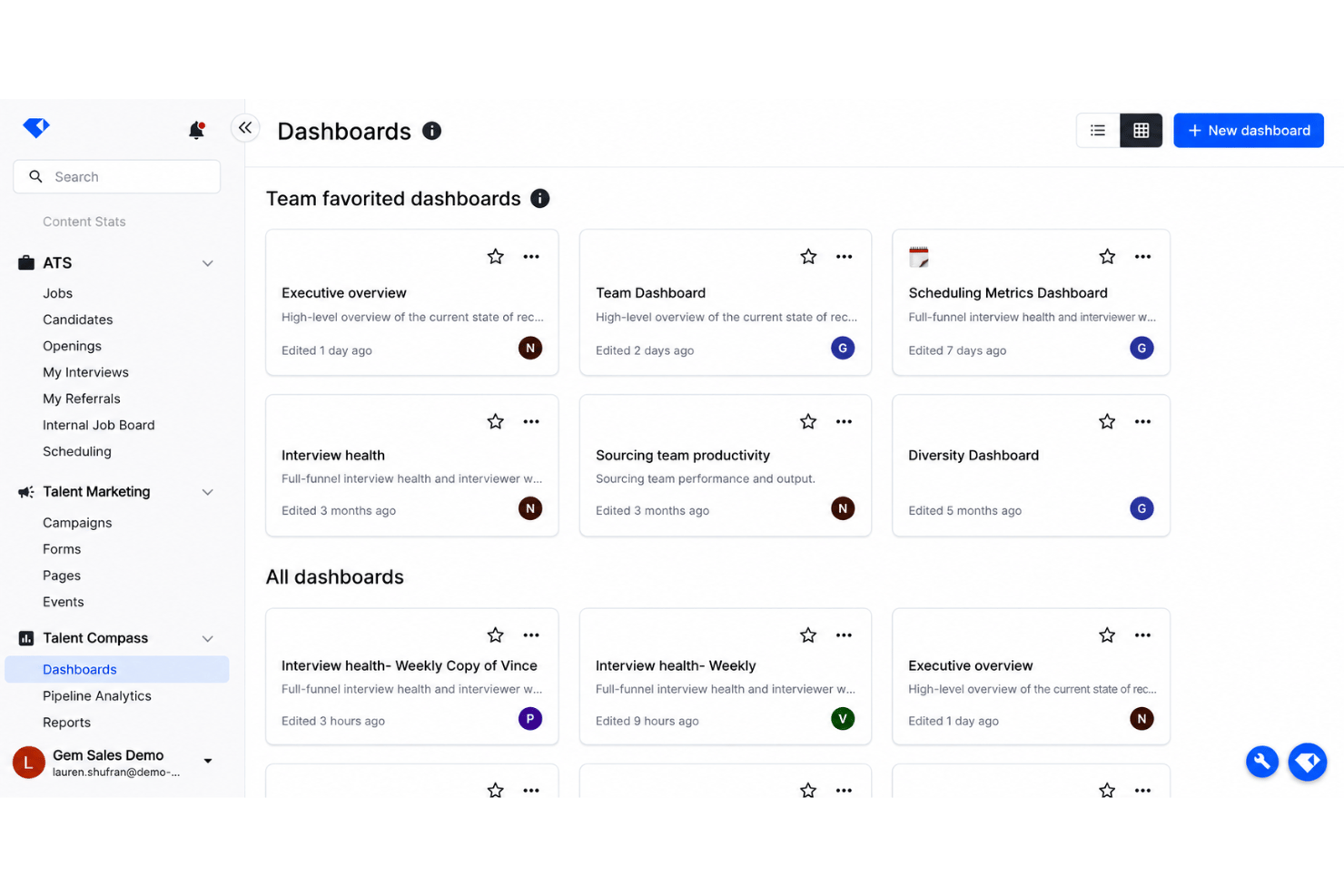
Gem offers customizable dashboards to monitor every stage of hiring. You see bottlenecks and trends in real time.
AI Candidate Matching
Gem’s AI suggests best-fit candidates for open roles based on your criteria. This helps surface qualified applicants quickly without manual screening.
Diversity Insights
You get clear metrics on pipeline diversity and representation at each stage. This supports informed decisions about inclusive hiring.
Automated Follow-Ups
Gem schedules and sends reminders or nudges to candidates automatically. This reduces manual tracking and keeps talent engaged throughout the process.
Ease of Use
Gem is refreshingly user-friendly, with a clean interface that makes outreach and pipeline management straightforward even for new users. I think its drag-and-drop dashboards and clear email tracking reduce guesswork, while automated outreach saves recruiters time. Many users praise how quickly they can get value without heavy training or complex set-up.
Integrations
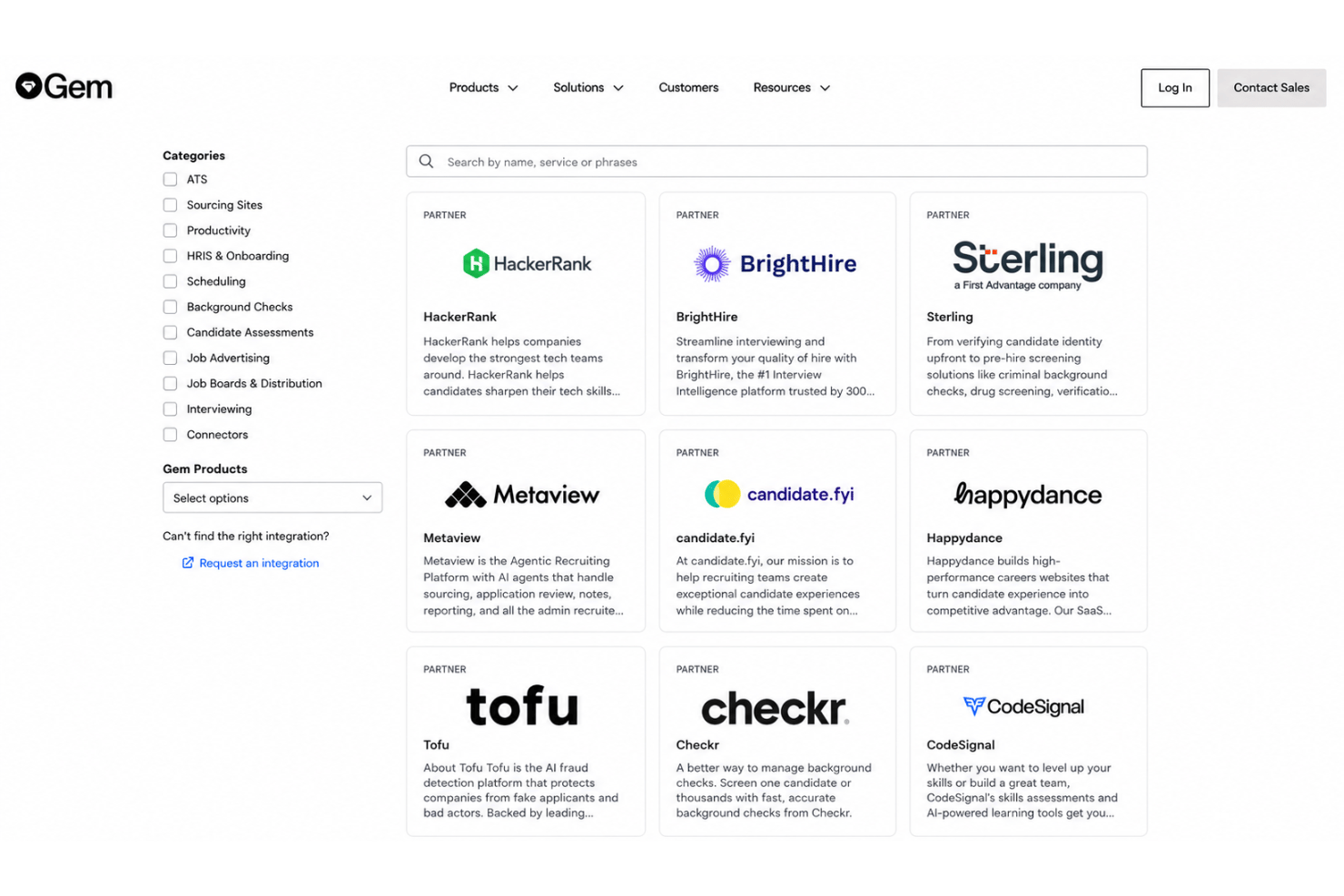
Gem integrates with Greenhouse, Lever, Workday, SAP SuccessFactors, SmartRecruiters, Google Workspace, Outlook, and Slack, among others.
Gem also provides a restful API for custom integrations and connects with select third-party integration tools.
Gem Specs
- 2-Factor Authentication
- 360 Degree Feedback
- API
- Application Tracking
- Attendance Tracking
- Batch Permissions & Access
- Compliance Tracking
- Dashboard
- Data Export
- Data Import
- Data Visualization
- Employee Database
- Employee Engagement
- Employee Incentive Management
- Employee Onboarding
- Employee Training
- Expense Tracking
- External Integrations
- Feedback Management
- Multi-User
- Notifications
- Payroll
- Performance Appraisal
- Scheduling
- Time Management
- Timesheets
- Travel Management
- Vacation & Absence Calendar




- 14 tecniche di gestione delle prestazioni da un espertoOpens new window
- 15 Statistiche Sul Coinvolgimento Dei Dipendenti Da Conoscere Nel 2026Opens new window
- Che cos'è la Gestione del Capitale Umano: Una Guida CompletaOpens new window
- Come il software di gestione dei contatti può beneficiare la tua aziendaOpens new window
- Consigli per la gestione delle persone che ogni manager dovrebbe conoscereOpens new window
- Cos'è un Sistema di Gestione dell'Apprendimento? Guida CompletaOpens new window
- Cos'è un Software di Gestione delle Attività e Come Può Aiutarti?Opens new window
- Gestione strategica delle risorse umane: sfrutta il potere delle tue personeOpens new window
- Il Ruolo delle Risorse Umane nella Gestione delle Crisi: Processo e ConsigliOpens new window
- La Tua Prossima Carriera Potrebbe Essere nella Gestione delle Risorse Umane?Opens new window