


Recensione Sage Intacct 2026: Pro, Contro, Caratteristiche e Panoramica dei Prezzi


Sage Intacct is a business management software built for mid-market organizations that need more than basic accounting, like multi-entity consolidation, project accounting, and real-time financial dashboards. I'd explore it as an option if your finance team has outgrown QuickBooks but isn't ready for a full ERP like SAP. Where QuickBooks handles straightforward bookkeeping well, Sage Intacct gives teams the dimensional reporting and automation to manage complex, multi-layered operations without the implementation weight of an enterprise platform.
Sage Intacct Evaluation Summary
- Pricing upon request
- Free demo available
Perché fidarsi delle nostre recensioni sui software
Il nostro team testa e recensisce software dal 2012. In quanto esperti HR noi stessi, sappiamo quanto sia difficile — e importante — scegliere il software giusto.
Per questa guida, abbiamo valutato gli strumenti attraverso test pratici e ricerche indipendenti, assegnando un punteggio agli strumenti in base ai nostri criteri di selezione. Ci basiamo inoltre sulle competenze di leader di pensiero del settore e di professionisti HR attivi.
Le nostre recensioni riflettono il nostro giudizio editoriale umano, non un discorso di vendita.
Revisori esperti:
Sage Intacct Overview
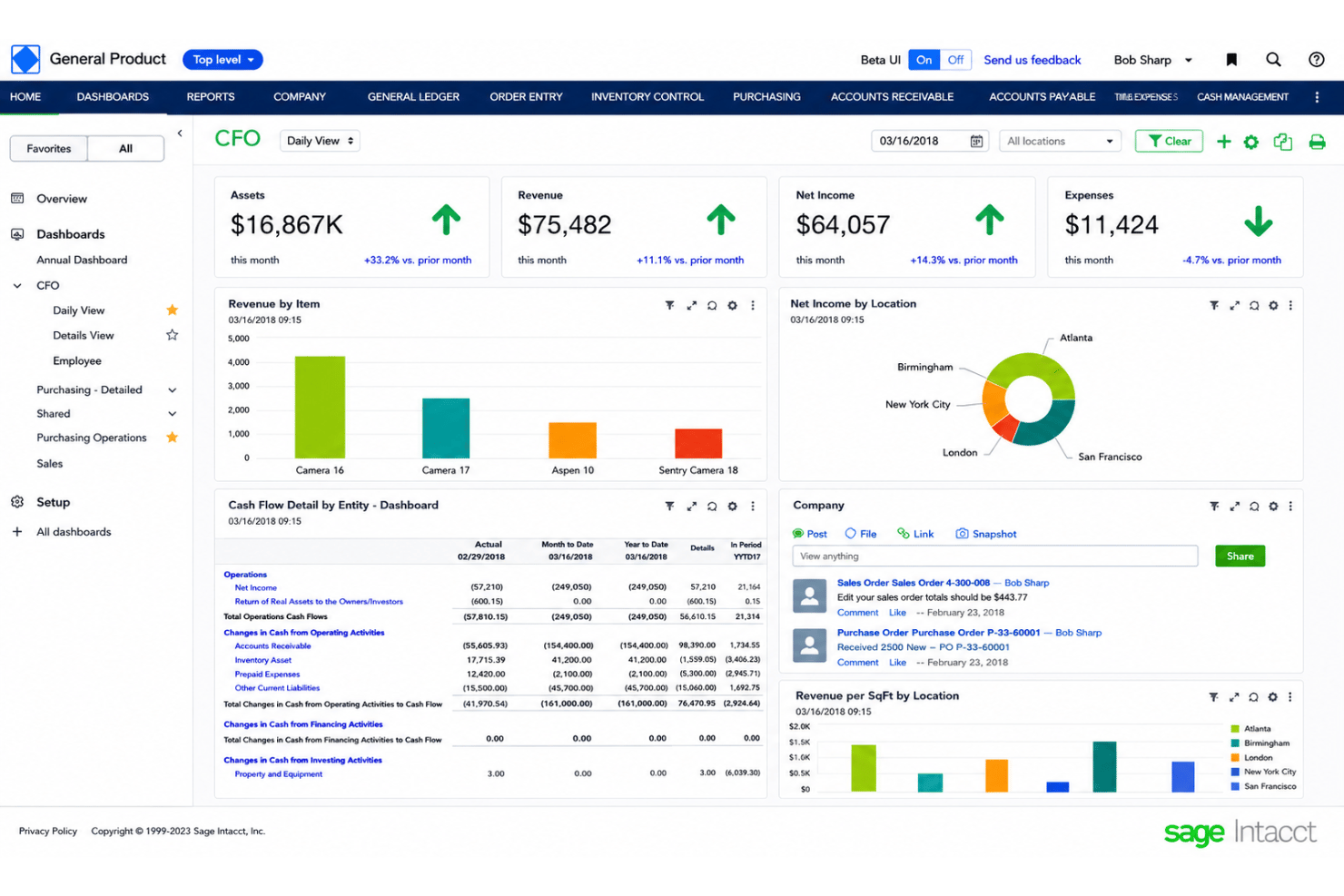
When I compare Sage Intacct to other business management software, its real strength is in advanced financial automation and customizable reporting that outpaces many competitors. The interface is clean and intuitive, but the learning curve during onboarding can be steeper than with some alternatives.
If you’re judging software on scalability and financial clarity, I think Sage Intacct is a choice that pays off as your team grows.
pros
-
Real-time dashboards enable fast, accurate decision making
-
Multi-entity consolidations save time for global organizations
-
Audit trail automates compliance for financial processes
cons
-
Report customization requires specialized knowledge and training
-
Approval workflows lack flexibility for unique business processes
-
User interface updates can disrupt familiar navigation paths
Is Sage Intacct Right For Your Needs?
Who Would be a Good Fit for Sage Intacct?
Sage Intacct is best suited to finance-driven organizations, multi-entity companies, and businesses with complex reporting requirements. Healthcare providers, nonprofits, and SaaS companies benefit from deep automation, granular reporting, and audit-ready controls. Teams needing global consolidations or strict compliance controls will also find Sage Intacct’s feature set highly valuable.
-
Healthcare Organizations
Fast consolidations, strict compliance features, and detailed audit trails support industry regulations and patient billing complexity.
-
SaaS Companies
Revenue recognition automation and multidimensional reporting help SaaS CFOs track metrics and comply with accounting standards easily.
-
Nonprofit Finance Teams
Fund accounting, grant management, and donor reporting are built-in to meet nonprofit financial transparency and tracking needs.
-
Multi-Entity Corporations
Automated currency conversion, intercompany eliminations, and centralized reporting simplify accounting for businesses with numerous subsidiaries.
-
Hospitality Chains
Sage Intacct handles complex property-level accounting, period comparisons, and operational metrics across multiple locations.
-
Professional Services Firms
Project accounting, time entry, and resource costing features support consulting, legal, and engineering firms needing transparency into billable hours and margins.
Who Would be a Bad Fit for Sage Intacct?
Sage Intacct isn’t ideal for startups, small businesses with limited budgets, or teams needing simple all-in-one platforms. Companies with minimal financial reporting needs or those prioritizing inventory management or sales workflows may be better served elsewhere. Users looking for fast, self-guided onboarding or highly customizable task automation might also hit limitations.
-
Small Retail Shops
Lack of robust inventory management and higher cost puts Sage Intacct out of reach for most local retailers.
-
Early-Stage Startups
Complex setup and premium licensing offer limited ROI for startups with a handful of clients or modest accounting needs.
-
Freelancers
A single user managing basic invoicing or expenses will find Sage Intacct unnecessarily complex and expensive.
-
Manufacturing Companies
Manufacturing resource planning and shop floor controls are not strong suits, making it a weak choice for product-based operations.
-
Sales-Focused Teams
If you need an all-in-one CRM, order management, and sales automation platform, Sage Intacct lacks deep native features here.
-
Self-Service Admin Users
Teams that want rapid, low-touch onboarding or DIY automation without IT support often find the initial setup and configuration too involved.
Come Testiamo e Valutiamo i Nostri Strumenti
Abbiamo impiegato anni per costruire, perfezionare e migliorare il nostro sistema di test e valutazione dei software. Il modello è progettato per cogliere le sfumature della scelta del software e per evidenziare cosa rende uno strumento efficace, concentrandosi sugli aspetti più critici del processo decisionale. Di seguito puoi vedere esattamente come funziona la nostra valutazione e attribuzione dei punteggi secondo sette criteri. Questo ci consente di fornire una valutazione imparziale del software basandoci su funzionalità principali, caratteristiche distintive, facilità d’uso, onboarding, assistenza clienti, integrazioni, recensioni dei clienti e rapporto qualità/prezzo.
Funzionalità Principali (25% del punteggio finale)
Il punto di partenza della nostra valutazione sono sempre le funzionalità principali dello strumento. Possiede le funzioni di base che l’utente si aspetta? Alcune di queste funzioni sono disponibili solo in piani a prezzi più alti? In sostanza, ci aspettiamo che uno strumento rispecchi almeno le capacità base dei concorrenti.
Caratteristiche Distintive (25% del punteggio finale)
Successivamente valutiamo le funzionalità particolari che superano le funzionalità di base tipiche degli strumenti della sua categoria. Un punteggio alto riflette caratteristiche specializzate o uniche che rendono il prodotto più veloce, efficiente, o che offrono ulteriore valore all’utente. Valutiamo inoltre quanto sia semplice integrare il software con altri strumenti tradizionalmente presenti nel tech stack per espanderne funzionalità e utilizzo. Gli strumenti che offrono numerose integrazioni native, collegamenti di terze parti e accesso API per creare integrazioni personalizzate ricevono i punteggi migliori.
Facilità d’Uso (10% del punteggio finale)
Consideriamo quanto sia veloce e semplice svolgere i compiti definiti dalle funzionalità principali utilizzando lo strumento. I software con punteggi alti sono ben progettati, intuitivi, dispongono di app mobili, offrono modelli preimpostati e rendono semplici anche i compiti più complessi.
Onboarding (10% del punteggio finale)
Sappiamo quanto sia importante una rapida adozione di una nuova piattaforma all’interno di un team, quindi valutiamo quanto sia facile imparare e utilizzare uno strumento con una formazione minima. Valutiamo quanto rapidamente un membro del team possa iniziare a utilizzare lo strumento senza esperienza. Le soluzioni con punteggio alto richiedono poco o nessun supporto.
Assistenza Clienti (10% del punteggio finale)
Esaminiamo quanto sia facile e veloce ricevere supporto o trovare aiuto tramite telefono, chat dal vivo o knowledge base. Gli strumenti e le aziende che forniscono un’assistenza in tempo reale ottengono i punteggi migliori, mentre i chatbot ottengono i risultati peggiori.
Recensioni dei Clienti (10% del punteggio finale)
Oltre ai nostri test e valutazioni, consideriamo il punteggio net promoter dei clienti attuali e passati. Analizziamo la loro propensione, se potessero scegliere, a selezionare di nuovo lo strumento per le sue funzionalità principali. Un software con un punteggio alto riflette un elevato net promoter score da parte dei clienti attuali o passati.
Rapporto Qualità/Prezzo (10% del punteggio finale)
Infine, considerando tutti gli altri criteri, esaminiamo il prezzo medio dei piani base rispetto alle funzionalità principali e teniamo conto del valore degli altri criteri di valutazione. I software che offrono di più, a meno, ottengono un punteggio più alto.
Core Features
Financial Reporting and Dashboards
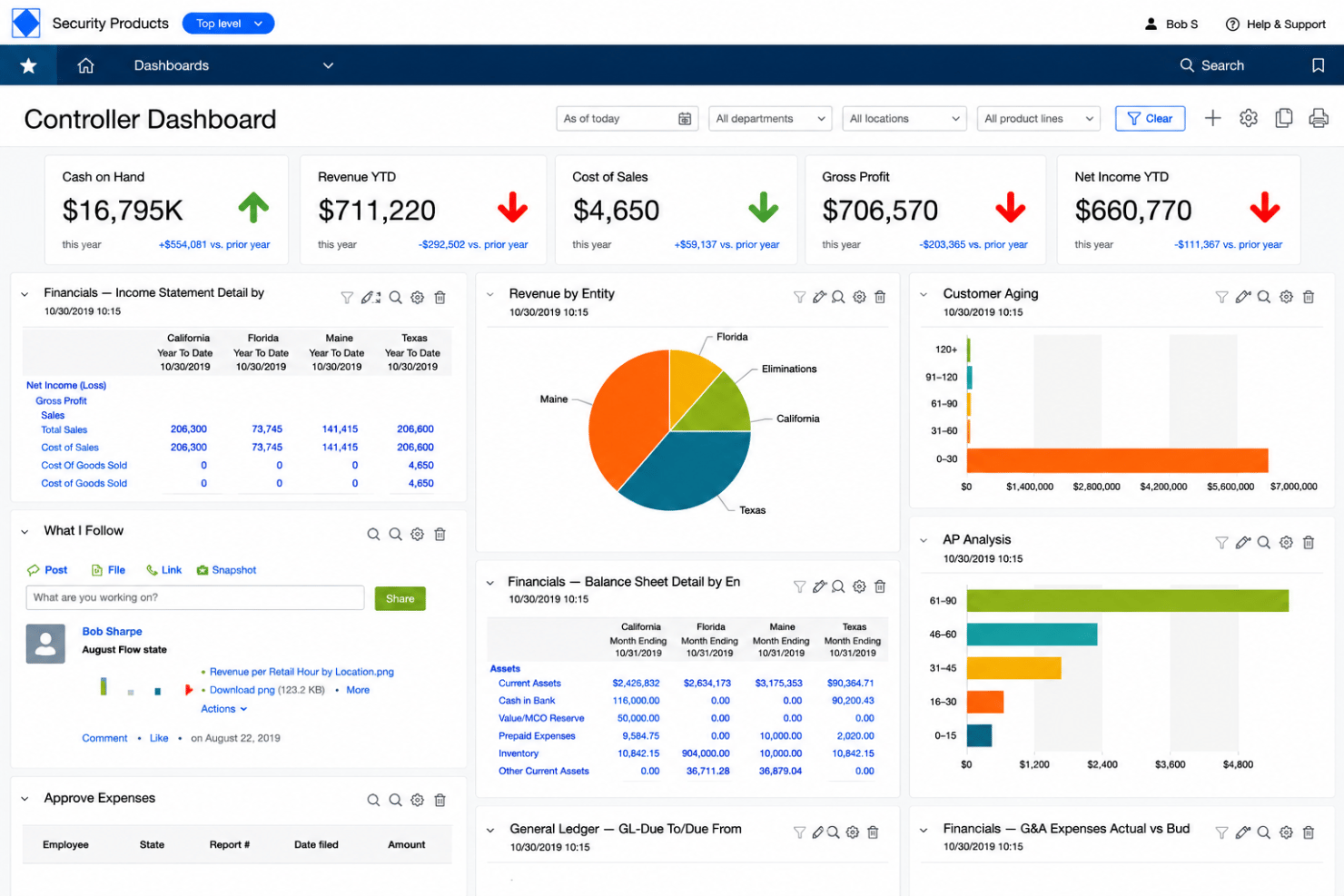
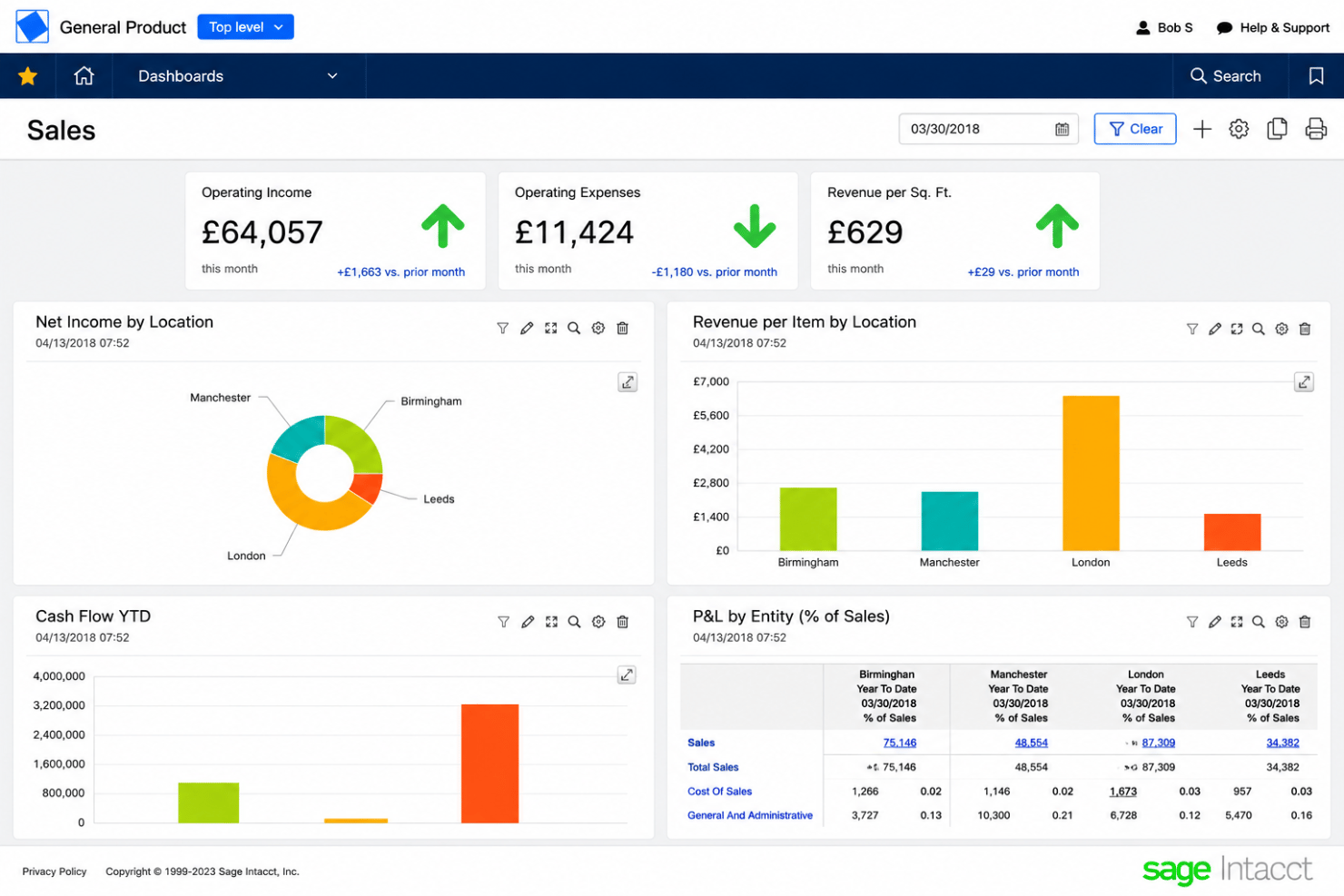
Generate real-time custom reports and interactive dashboards for instant insights. Users can track KPIs across departments and drill down into transaction details.
Multi-Entity and Global Consolidations
Automatically consolidate financial data from multiple entities in different currencies. This simplifies month-end close for organizations with subsidiaries or international operations.
Accounts Payable Automation
Route invoices for approval, match them to purchase orders, and streamline payment workflows. The system reduces manual entry and helps prevent duplicate payments.
Accounts Receivable Management
Automate invoicing, payment processing, and collections tracking. Teams get a clear view of outstanding balances and customer payment trends.
Budgeting and Planning
Collaborate on budgets, forecasts, and what-if scenarios within the platform. Decision-makers can compare actuals to budgets in real time.
Audit Trail and Compliance Tools
Every transaction is tracked with a detailed audit trail for transparency. Automated controls support internal policies and simplify compliance checks.
Standout Features
Dimensional Accounting
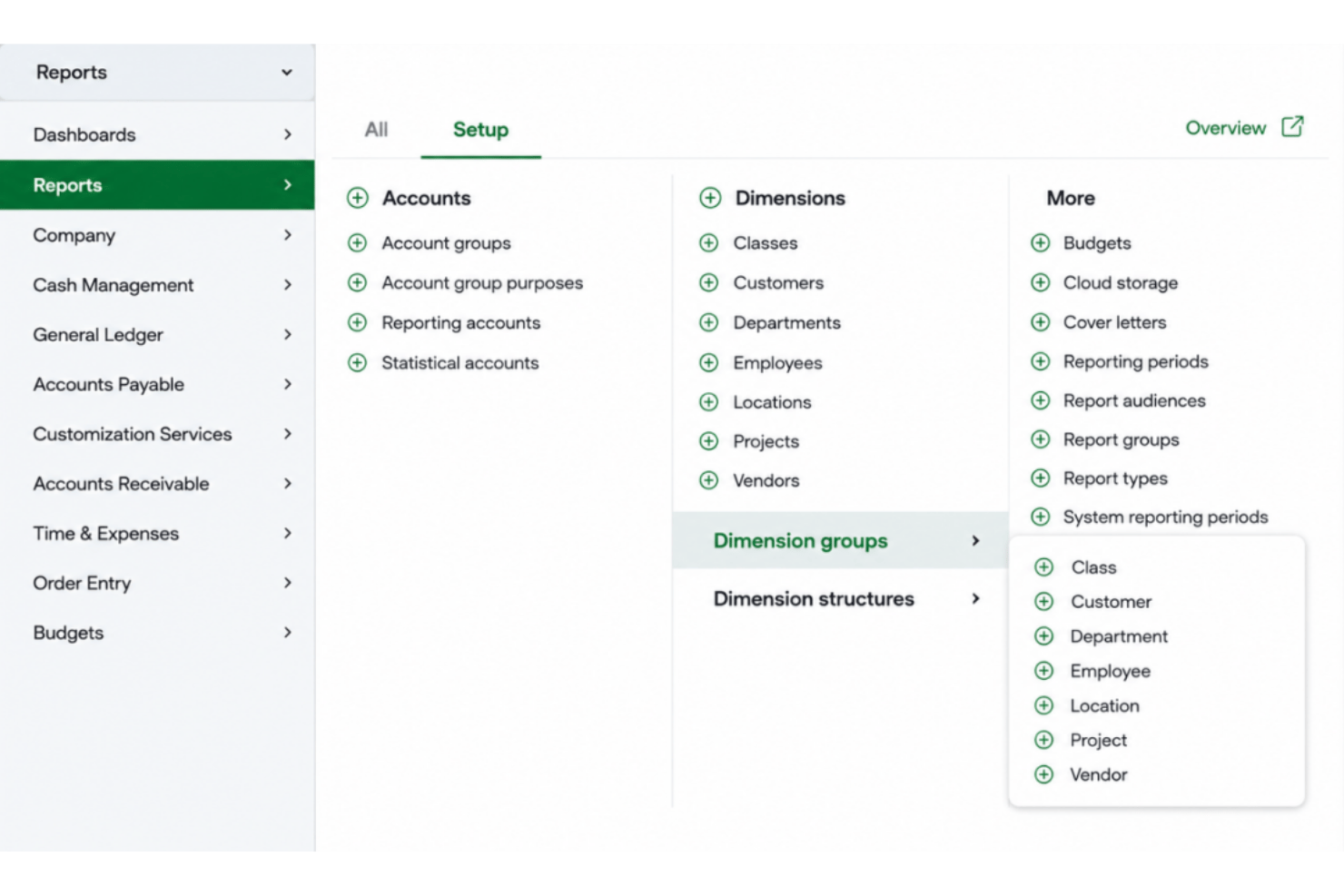
Tag transactions with custom dimensions like location, project, or department. This lets users filter and analyze financial data far beyond standard chart of accounts.
AI-Powered Outlier Detection
The AI engine flags unusual transactions and possible errors before posting. Teams can quickly investigate and resolve discrepancies, reducing financial risk.
Ease of Use
Sage Intacct offers a more intuitive experience than many financial management tools, with clean dashboards and logical navigation for core tasks. However, some users mention complex workflows for custom reports and unique approvals, which can slow onboarding.
Most teams find day-to-day actions fast and accessible once processes are learned, so I think usability is best for users willing to invest some upfront time.
Onboarding
Sage Intacct’s onboarding is thorough but can feel time-consuming, especially for teams new to cloud accounting. I’ve seen users mention helpful step-by-step guides, video tutorials, and a responsive support team, but complex setups sometimes require consultant help. If you value clear guidance and multiple support channels, Intacct’s resources stand out once you’re up and running.
Customer Support
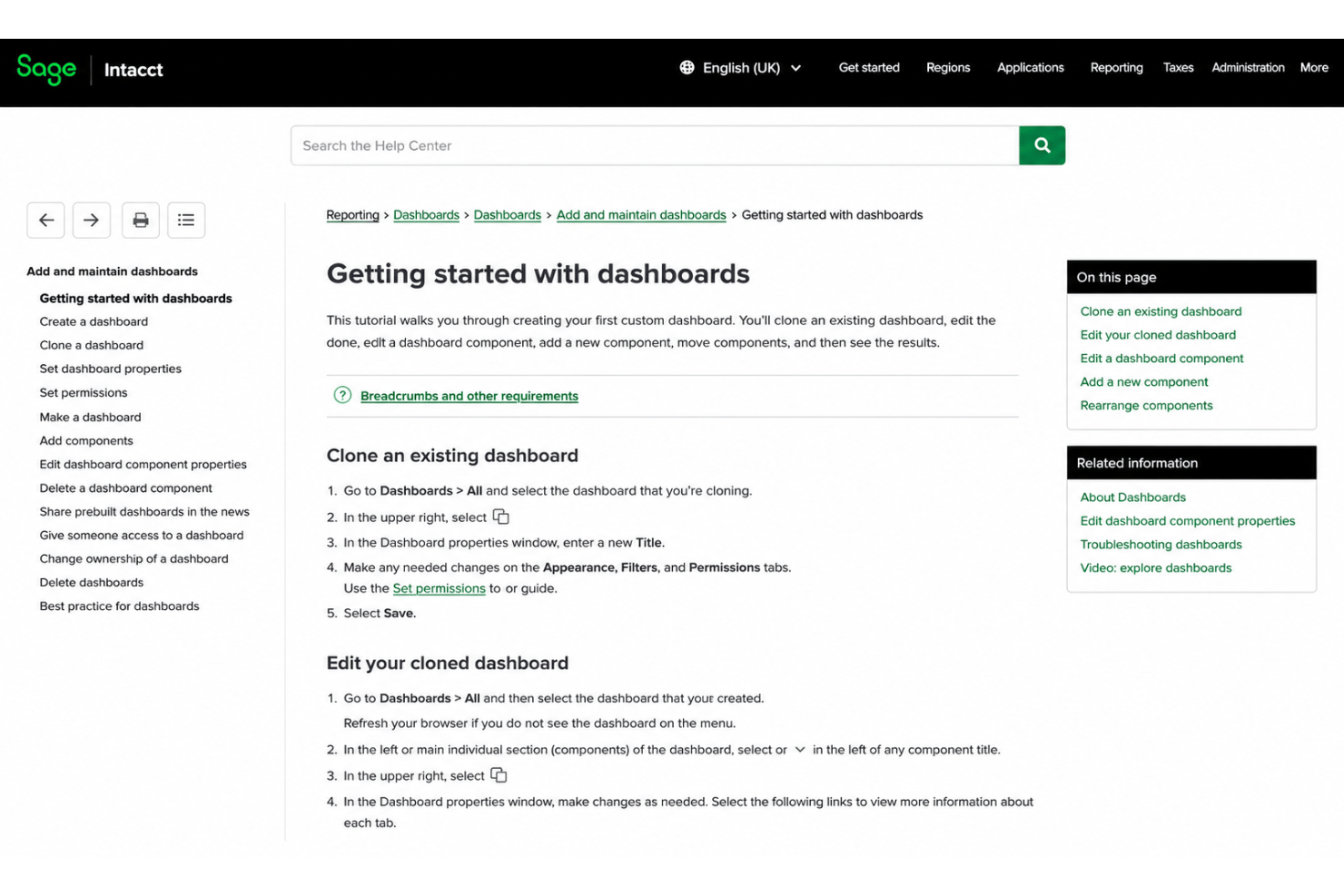
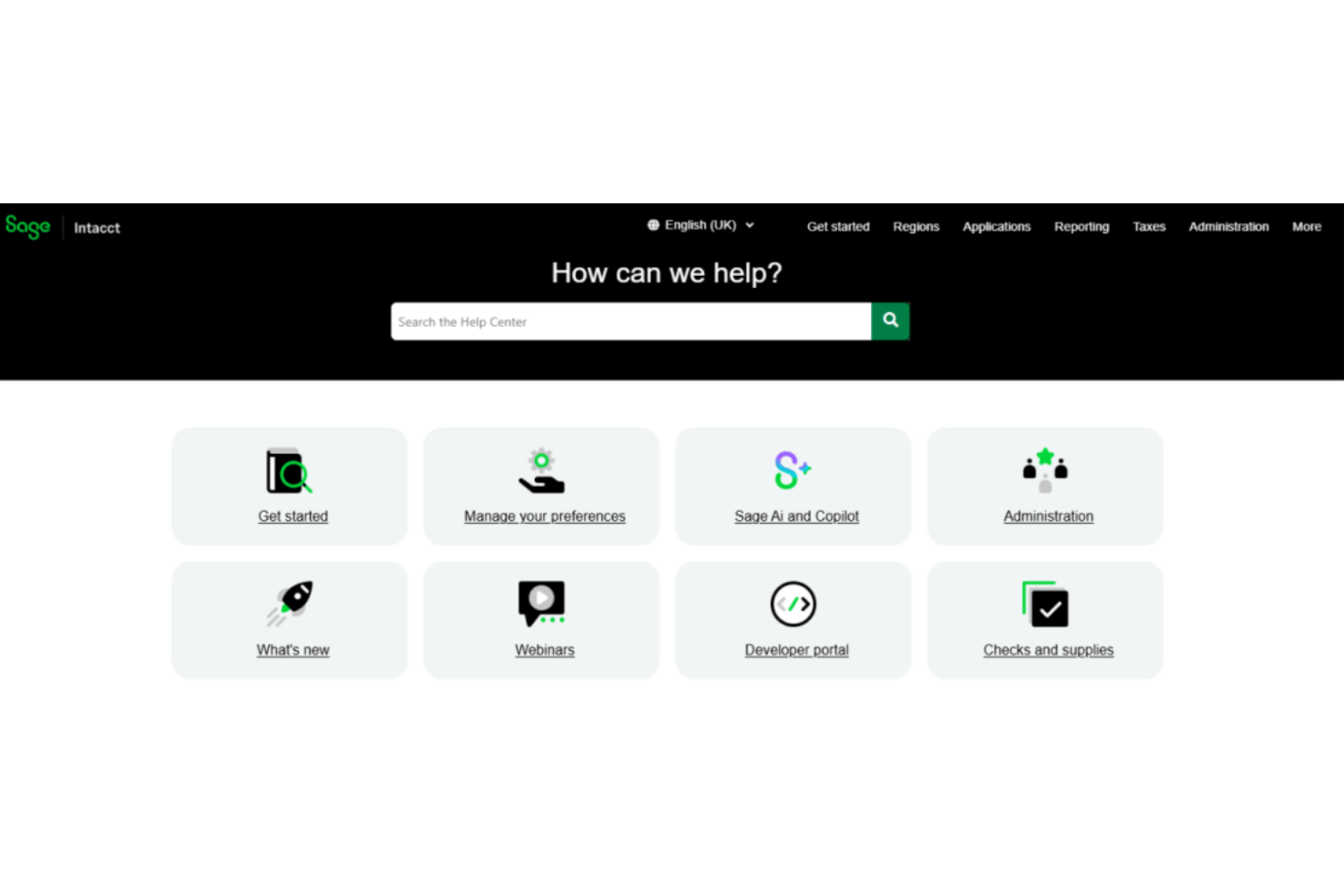
Sage Intacct’s customer support earns high marks for quick response times and knowledgeable staff, especially through chat and phone. Many users appreciate the dedicated account managers and online help center with guides and forums. That said, some report longer wait times during peak periods, but on the whole, I’d judge support as reliable and well-structured.
Integrations
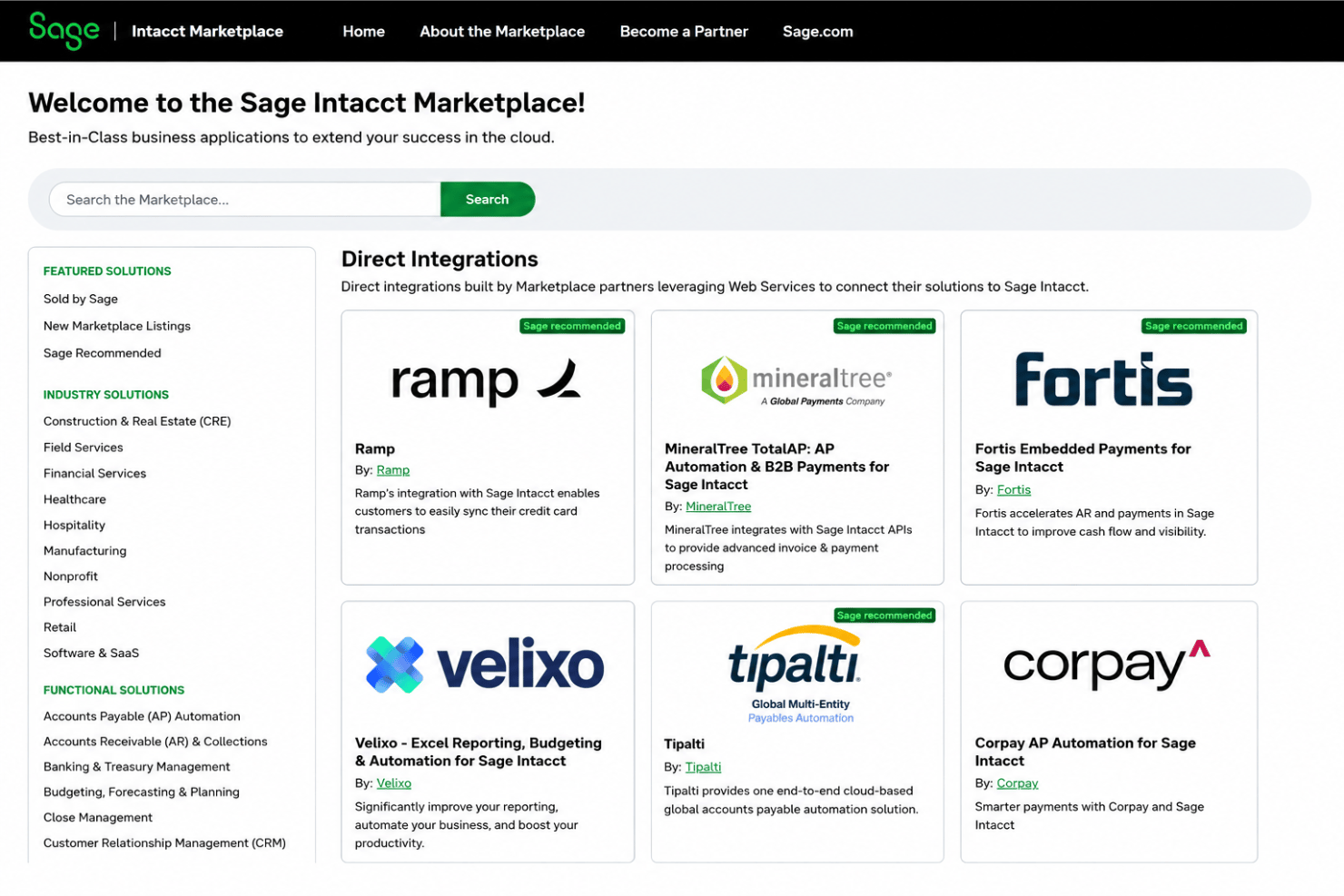
Sage Intacct integrates with Salesforce, ADP, Avalara, Expensify, Bill.com, American Express, Stripe, SAP Concur, ISV Marketplace apps, and Paychex, among others.
It also offers a robust API and supports third-party integration tools for connecting with additional platforms.
Value for Money
Sage Intacct uses custom pricing, with costs available only upon request. While the lack of public pricing can make it harder to compare options, the platform is designed for mid-sized and growing businesses that need advanced financial management, automation, and reporting. Pricing typically depends on factors such as the number of users, selected modules, and implementation requirements.
Sage Intacct Specs
- 2-Factor Authentication
- Accounts Payable
- Accounts Receivable
- API
- Balance Sheet
- Billing/Invoicing
- BitCoin
- Budgeting
- Calendar Management
- Contact Management
- CRM Integration
- Customer Management
- Dashboard
- Data Export
- Data Import
- Data Visualization
- Expense Tracking
- External Integrations
- Forecasting
- General Account Ledger
- Inventory Tracking
- Multi-Currency
- Multi-User
- Notifications
- P&L
- PayPal
- Payroll
- SAP Integration
- Stripe
- Supplier Management
- Tax Management
Sage Intacct FAQs
How does Sage Intacct support multi-entity or global organizations?
What onboarding and training resources are available for HR and finance teams?
Can Sage Intacct track HR or people data alongside financials?
How customizable are Sage Intacct’s dashboards and reporting tools?
What security features and compliance certifications does Sage Intacct provide?
Is Sage Intacct suitable for organizations requiring industry-specific compliance?
What happens if our organization grows or needs change—do we need to switch systems?
What level of support can we expect post-implementation?
Sage Intacct Company Overview & History
Sage Intacct is a cloud-based financial management platform headquartered in San Jose, California. Founded in 1999 as Intacct, the company became part of The Sage Group plc in 2017. Today, Sage Intacct is trusted by more than 30,000 finance teams and serves organizations across industries including healthcare, nonprofit, financial services, and professional services.
As part of Sage, the platform continues to expand its AI-powered automation, reporting, and financial management capabilities.
Sage Intacct Major Milestones
- 1999: Intacct was founded by Odysseas Tsatalos and David Thomas as one of the first cloud-native accounting software companies.
- 2001: Released its web-based accounting platform for businesses.
- 2017: Acquired by The Sage Group plc for $850 million and rebranded as Sage Intacct.
- 2026: Continues to expand its AI-powered financial management platform with intelligent automation, AI agents, and advanced reporting capabilities.