Recensione di Zinc: Pro, Contro, Caratteristiche e Prezzi Spiegati



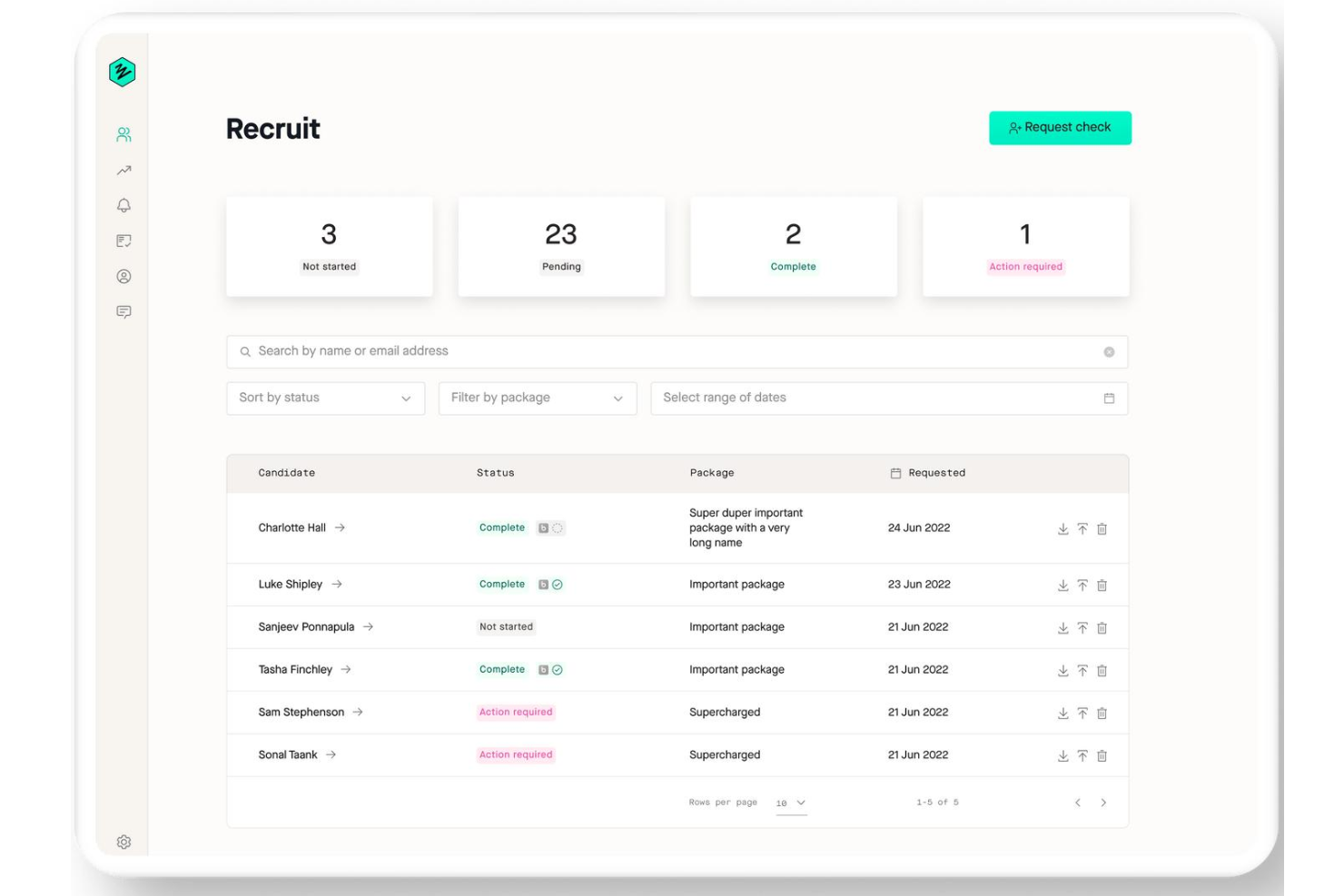
Zinc is a pre-employment testing software built around automated reference checking. It collects structured feedback from a candidate's references through digital surveys, cutting out the manual back-and-forth. I'd consider it if your team wants faster, more consistent reference data without chasing candidates and their contacts by phone or email. Compared to broader screening platforms like HireRight, Zinc is a better fit when reference intelligence is your core priority rather than managing full background report workflows.
Zinc Evaluation Summary
- Pricing upon request
- Free demo available
Perché fidarsi delle nostre recensioni sui software
Il nostro team testa e recensisce software dal 2012. In quanto esperti HR noi stessi, sappiamo quanto sia difficile — e importante — scegliere il software giusto.
Per questa guida, abbiamo valutato gli strumenti attraverso test pratici e ricerche indipendenti, assegnando un punteggio agli strumenti in base ai nostri criteri di selezione. Ci basiamo inoltre sulle competenze di leader di pensiero del settore e di professionisti HR attivi.
Le nostre recensioni riflettono il nostro giudizio editoriale umano, non un discorso di vendita.
Revisori esperti:
Zinc Overview
If you’re judging pre-employment testing software on transparency, automation, and candidate experience, Zinc is a top contender. I think its automated reference and background checks, clean interface, and fast onboarding make it easy for HR teams to adopt. Pricing is straightforward, and integrations with major ATS platforms help it fit into existing workflows. While it doesn’t offer deep skills testing, Zinc outperforms on compliance and candidate communication. I’d suggest it’s best for teams who want to speed up hiring without losing the human touch—especially in fast-moving, high-volume environments.
pros
-
Automates reference and background checks for faster hiring
-
Offers transparent candidate communication and real-time status updates
-
Supports a wide range of global compliance checks
cons
-
Lacks in-depth skills or cognitive testing features
-
Customer support response times can be slow
-
Limited customization for complex or unique screening workflows
-

Justworks
Visit WebsiteThis rating combines scores from multiple user review sites to reflect overall customer sentiment about the product.4.6 -
Small Improvements
Visit WebsiteThis rating combines scores from multiple user review sites to reflect overall customer sentiment about the product.4.3 -
HiBob
Visit WebsiteThis rating combines scores from multiple user review sites to reflect overall customer sentiment about the product.4.5



Come Testiamo e Valutiamo i Nostri Strumenti
Abbiamo impiegato anni per costruire, perfezionare e migliorare il nostro sistema di test e valutazione dei software. Il modello è progettato per cogliere le sfumature della scelta del software e per evidenziare cosa rende uno strumento efficace, concentrandosi sugli aspetti più critici del processo decisionale. Di seguito puoi vedere esattamente come funziona la nostra valutazione e attribuzione dei punteggi secondo sette criteri. Questo ci consente di fornire una valutazione imparziale del software basandoci su funzionalità principali, caratteristiche distintive, facilità d’uso, onboarding, assistenza clienti, integrazioni, recensioni dei clienti e rapporto qualità/prezzo.
Funzionalità Principali (25% del punteggio finale)
Il punto di partenza della nostra valutazione sono sempre le funzionalità principali dello strumento. Possiede le funzioni di base che l’utente si aspetta? Alcune di queste funzioni sono disponibili solo in piani a prezzi più alti? In sostanza, ci aspettiamo che uno strumento rispecchi almeno le capacità base dei concorrenti.
Caratteristiche Distintive (25% del punteggio finale)
Successivamente valutiamo le funzionalità particolari che superano le funzionalità di base tipiche degli strumenti della sua categoria. Un punteggio alto riflette caratteristiche specializzate o uniche che rendono il prodotto più veloce, efficiente, o che offrono ulteriore valore all’utente. Valutiamo inoltre quanto sia semplice integrare il software con altri strumenti tradizionalmente presenti nel tech stack per espanderne funzionalità e utilizzo. Gli strumenti che offrono numerose integrazioni native, collegamenti di terze parti e accesso API per creare integrazioni personalizzate ricevono i punteggi migliori.
Facilità d’Uso (10% del punteggio finale)
Consideriamo quanto sia veloce e semplice svolgere i compiti definiti dalle funzionalità principali utilizzando lo strumento. I software con punteggi alti sono ben progettati, intuitivi, dispongono di app mobili, offrono modelli preimpostati e rendono semplici anche i compiti più complessi.
Onboarding (10% del punteggio finale)
Sappiamo quanto sia importante una rapida adozione di una nuova piattaforma all’interno di un team, quindi valutiamo quanto sia facile imparare e utilizzare uno strumento con una formazione minima. Valutiamo quanto rapidamente un membro del team possa iniziare a utilizzare lo strumento senza esperienza. Le soluzioni con punteggio alto richiedono poco o nessun supporto.
Assistenza Clienti (10% del punteggio finale)
Esaminiamo quanto sia facile e veloce ricevere supporto o trovare aiuto tramite telefono, chat dal vivo o knowledge base. Gli strumenti e le aziende che forniscono un’assistenza in tempo reale ottengono i punteggi migliori, mentre i chatbot ottengono i risultati peggiori.
Recensioni dei Clienti (10% del punteggio finale)
Oltre ai nostri test e valutazioni, consideriamo il punteggio net promoter dei clienti attuali e passati. Analizziamo la loro propensione, se potessero scegliere, a selezionare di nuovo lo strumento per le sue funzionalità principali. Un software con un punteggio alto riflette un elevato net promoter score da parte dei clienti attuali o passati.
Rapporto Qualità/Prezzo (10% del punteggio finale)
Infine, considerando tutti gli altri criteri, esaminiamo il prezzo medio dei piani base rispetto alle funzionalità principali e teniamo conto del valore degli altri criteri di valutazione. I software che offrono di più, a meno, ottengono un punteggio più alto.
Core Features
Automated Reference Checks
Zinc automates collecting and verifying references, reducing manual follow-up for HR teams.
Criminal Record Checks
Run criminal background checks across 195 countries to support global hiring and compliance.
Right-to-Work Verification
Easily confirm a candidate’s right to work in any country, helping you stay compliant with local regulations.
Education and Credential Checks
Validate global qualifications and certifications to ensure candidates meet role requirements.
Custom Check Packages
Build and save custom screening packages for different roles and job titles, then launch checks with one click.
Real-Time Candidate Updates
Candidates receive live status updates, improving transparency and reducing uncertainty during the screening process.
Ease of Use
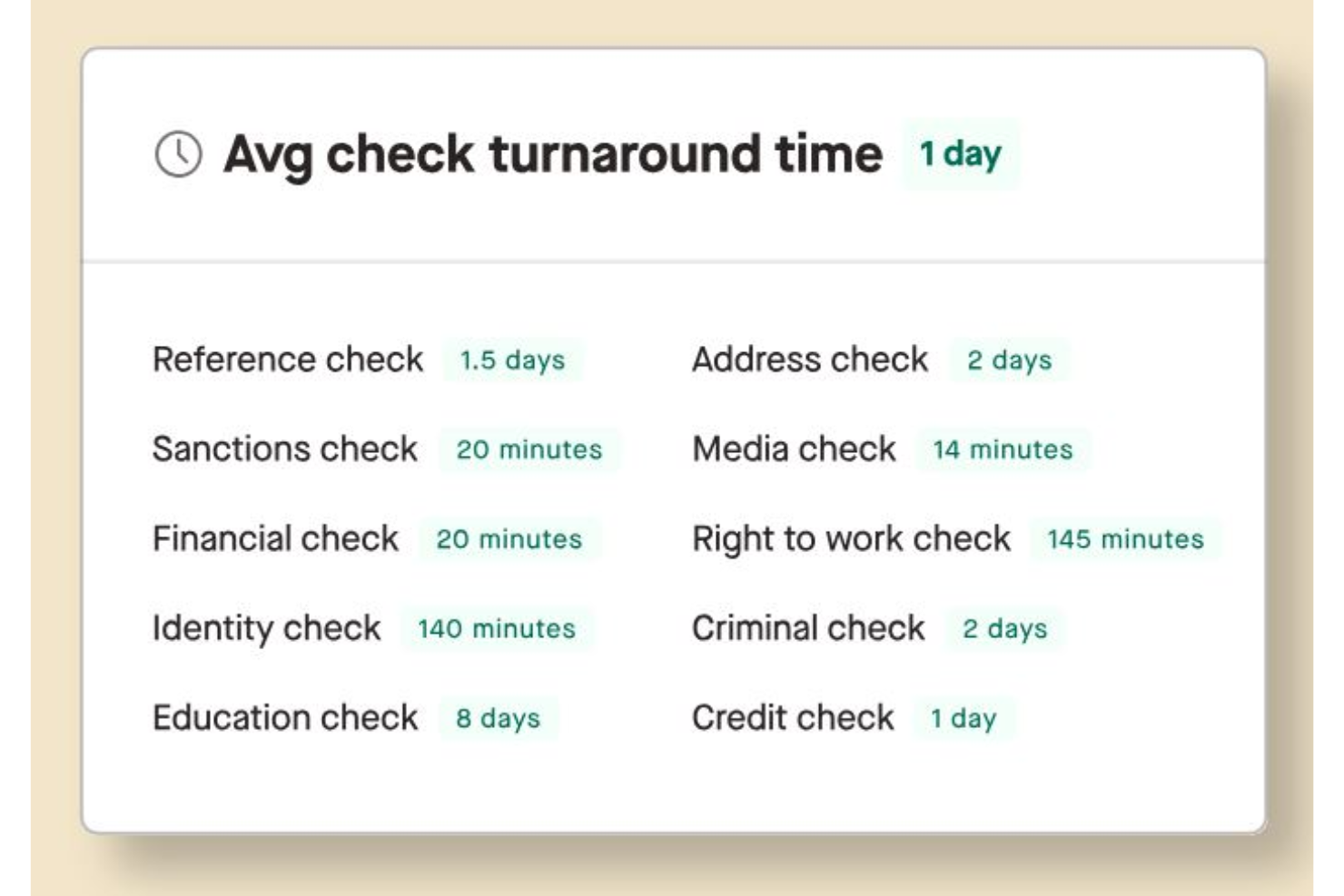
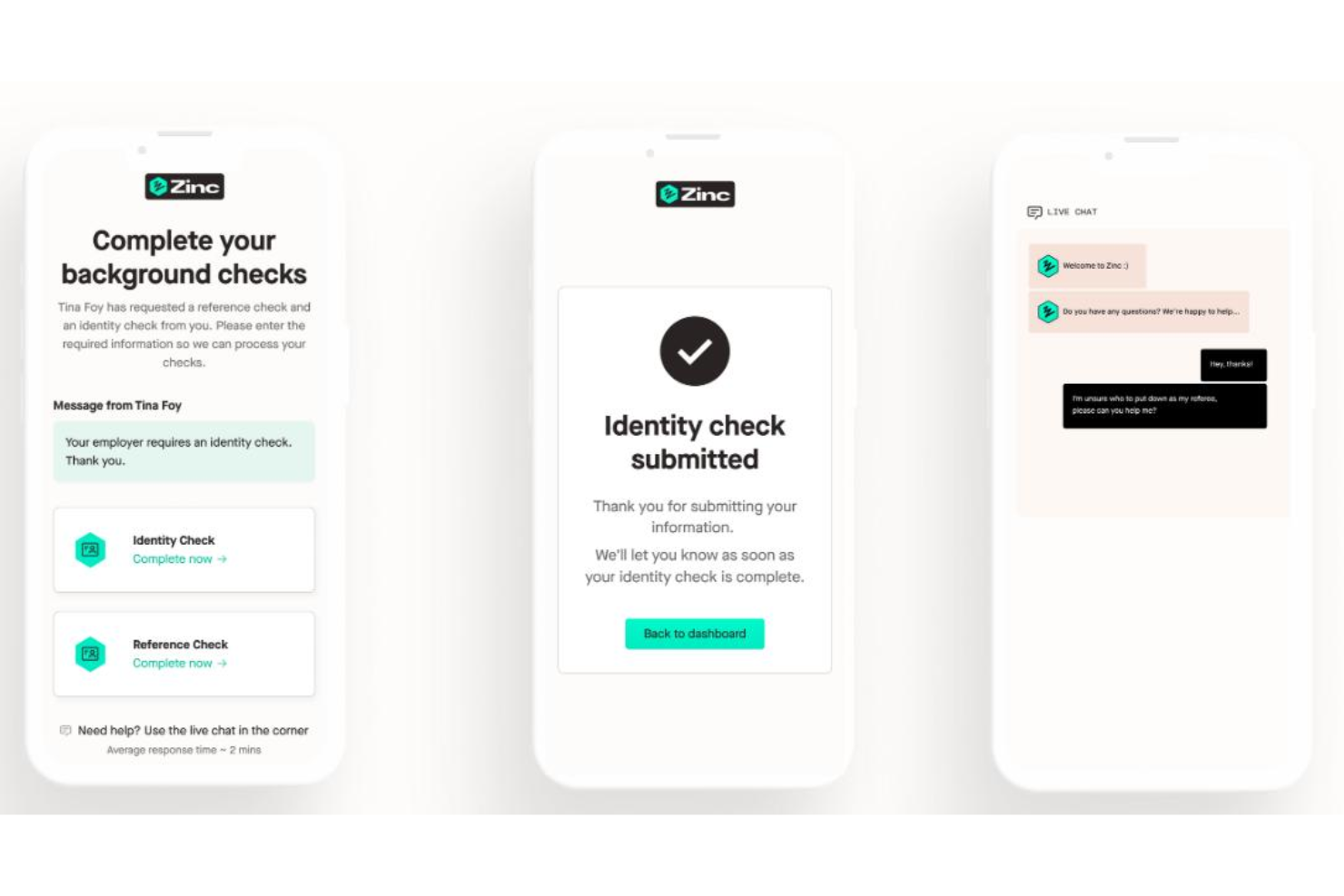
Zinc is refreshingly straightforward, with a clean dashboard and intuitive workflows that let HR teams launch checks in just a few clicks. Users often mention how easy it is to set up and navigate, even for those new to digital screening tools. The candidate self-service portal and automated status updates cut down on back-and-forth emails, making the process smoother for both HR and applicants. Overall, Zinc’s usability stands out in a crowded market.
Integrations
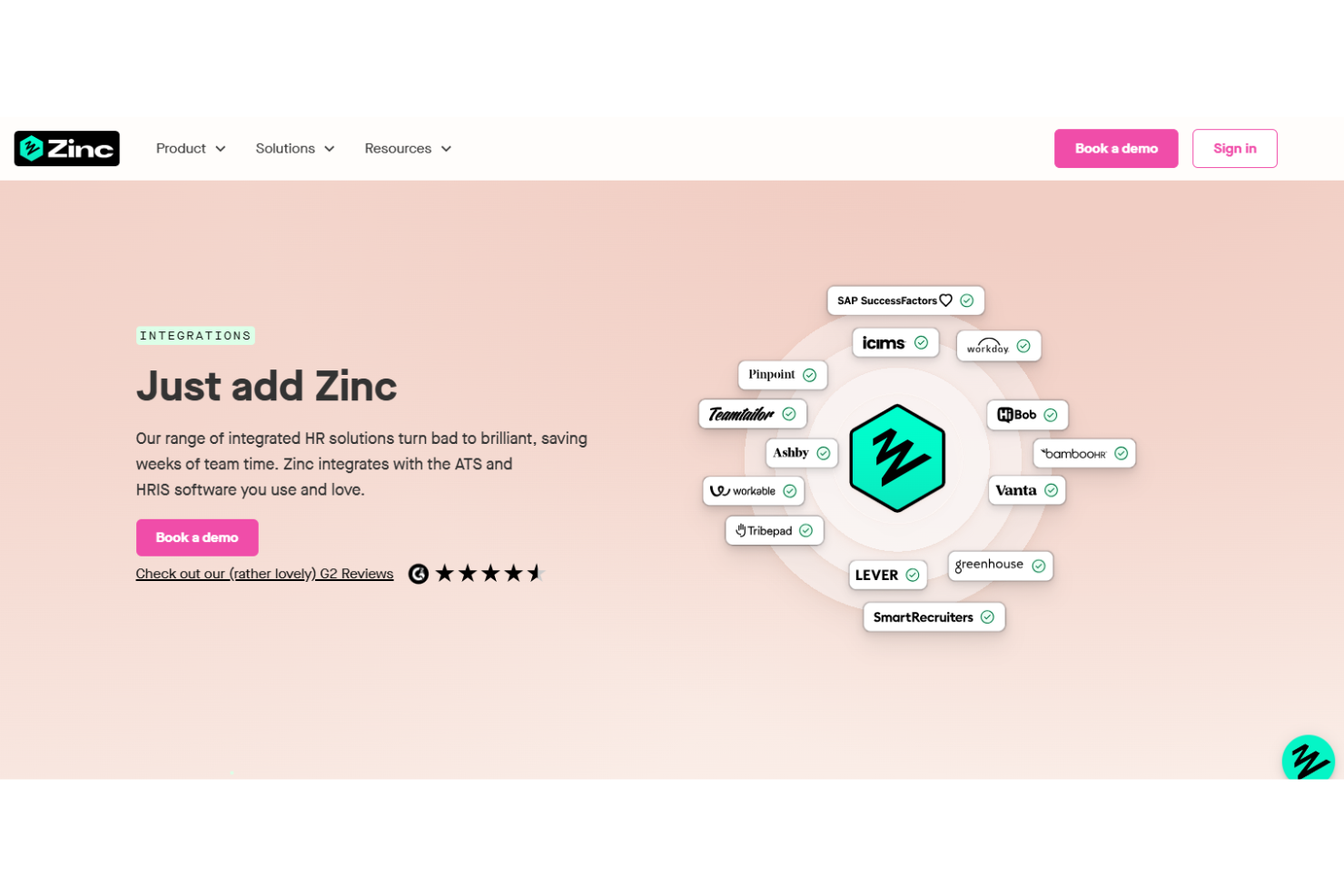
Zinc integrates with popular HRIS platforms like Greenhouse, Workday, Workable, Lever, Greenhouse, and HiBob, among others.
Zinc also offers a Rest API for custom integrations and can connect with additional HRIS and ATS platforms through enterprise solutions.
Zinc Specs
- API
- Application Tracking
- Calendar Management
- Contact Management
- Dashboard
- Data Export
- Data Import
- Data Visualization
- Database
- Employee Onboarding
- External Integrations
- Feedback Management
- Multi-User
- Notifications
- Scheduling