What First-Time LMS Buyers Get Wrong (And How to Avoid It)


Buying your first learning management system (LMS) sounds straightforward until you actually start the process.
You search for “best LMS,” open a few comparison pages, and suddenly you are staring at dozens of platforms that all promise ease of use, scalability, and fast results. Demos blur together, feature lists grow longer, and internal stakeholders start asking questions you are not fully ready to answer.
For many HR managers and L&D leaders, this is unfamiliar territory. You may be great at building programs, supporting people, and rolling out initiatives, but choosing software that will engage every employee feels like a high-stakes decision.
And it is.
The good news is that most first-time LMS mistakes are predictable. They come from reasonable expectations that simply do not hold up in practice. Understanding where buyers tend to go wrong can help you avoid costly detours and choose a system that actually works for your team.
The real challenge of buying your first LMS
The hardest part of buying an LMS is not comparing features; it's actually selecting the right one. It’s translating business needs into software decisions.
First-time buyers are often asked to “figure out training” quickly. Maybe onboarding has become inconsistent. Maybe compliance training is being tracked in spreadsheets. Maybe managers are asking for development paths that do not exist yet.
At the same time, the LMS market is crowded and noisy. Vendors position themselves as all-in-one solutions, while review sites emphasize depth and complexity. This creates a gap between what buyers think they need and what will actually help them succeed.
What first-time buyers often expect and why it backfires
Most first-time LMS buyers share a few expectations that feel sensible but often cause problems later.
One expectation is that more features equal a better decision. In reality, feature-heavy platforms often come with steeper learning curves, longer implementation timelines, and higher ongoing effort. Teams end up paying for capabilities they never fully use.
Another expectation is that implementation will be a one-time project. Many buyers assume that once the LMS is set up, it will run itself. In practice, the day-to-day usability of the system matters far more than the initial rollout. If admins struggle to manage content or learners find the experience clunky, adoption drops quickly.
There is also an assumption that scaling is something to worry about later. First-time buyers sometimes choose tools optimized only for their current size. When the company grows or training needs expand, they discover the system cannot keep up without painful migrations or upgrades.
These expectations are understandable, but they are also where many teams lose time, momentum, and confidence.
The most common mistakes first-time LMS buyers make
Based on how organizations struggle after buying an LMS, a few mistakes show up repeatedly.
- Overbuying complexity. Teams choose platforms designed for highly customized, intricate training environments that require dedicated IT resources and ongoing administrative support. When time, internal expertise, or ownership is limited, the system quickly becomes a burden rather than a help.
- Underestimating setup and maintenance. Buyers focus on launch day and overlook how much effort it can be to create courses, assign training, manage users, and pull reports week after week.
- Ignoring the learner experience. An LMS can appear powerful from an administrative or configuration standpoint, yet still feel confusing or frustrating for employees. When learners are unsure where to go or why training matters, completion rates inevitably suffer.
- Treating reporting as an afterthought. Many teams realize too late that they cannot easily answer basic questions like who completed training, where learners drop off, or how programs are performing.
- Choosing for today only. A system that works for onboarding 20 people may not work when you need to train managers, roll out compliance globally, or support multiple audiences.
None of these mistakes come from bad intentions. They come from focusing on the wrong signals during evaluation.
What actually matters when choosing your first LMS
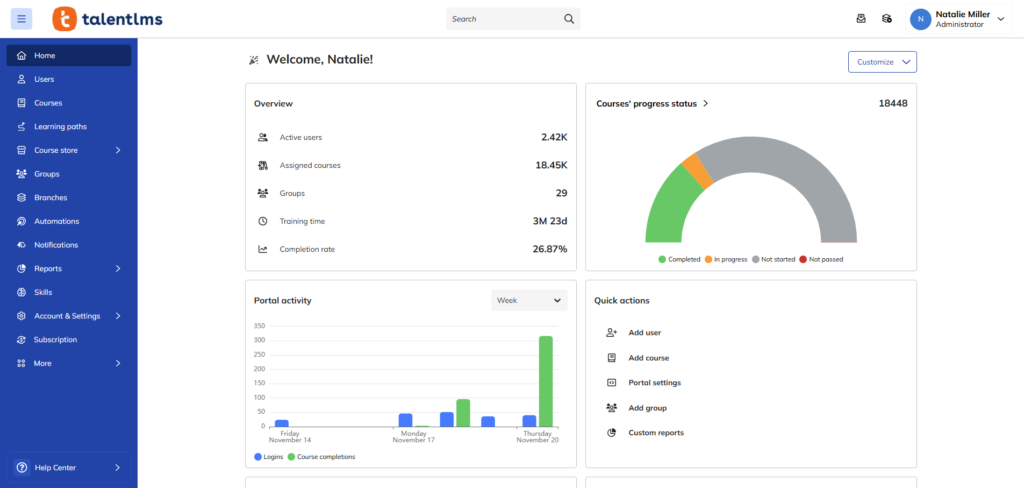
A good first LMS does not try to impress you with complexity. It helps you get results quickly and repeat them consistently.
For most first-time buyers, a strong LMS shares a few core characteristics.
- It allows you to launch fast. You should be able to create courses, invite learners, and start training within weeks, not months.
- It is intuitive for both admins and learners. If you need extensive training just to run your LMS, something is off. Day-to-day tasks should feel straightforward.
- It supports real-world use cases. Onboarding, compliance, manager training, and internal knowledge sharing should be easy to set up without custom development.
- It provides clear visibility. You should be able to see progress, completion, and trends without exporting data or building complex reports.
- It grows with you. As your team expands or your training strategy evolves, the system should scale accordingly.
How teams solve this in practice
Many organizations address these challenges by choosing platforms designed to reduce friction, particularly during setup and early adoption. Rather than trying to design a perfect system from day one, teams often start with a single, urgent use case, such as onboarding new hires or rolling out mandatory training, and build from there.
That focus on speed matters. When training needs are urgent, traditional LMS implementations can demand months of attention. On average, vendors require 3.1 months to get fully up and running. For first-time buyers, that timeline often conflicts with immediate business needs. Platforms like TalentLMS shorten that gap, allowing teams to go live in just 1.6 months and start delivering training while momentum is still high.
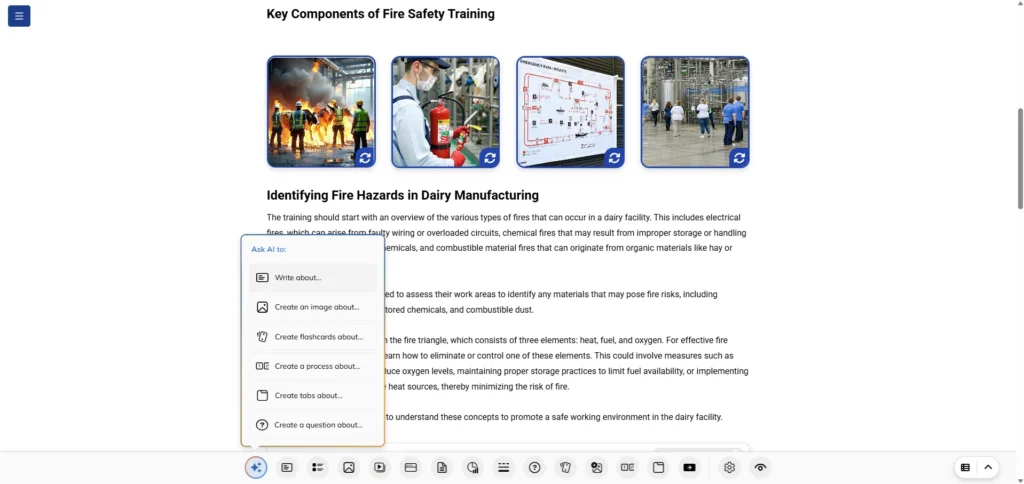
Launching training becomes far more manageable when course creation is simple and structured. With AI-assisted content creation, clear learning paths, and fast setup, teams can move from idea to execution seamlessly.
For many teams, the first real test of an LMS is compliance training, where accuracy, consistency, and traceability matter immediately, making compliance training another common early need.
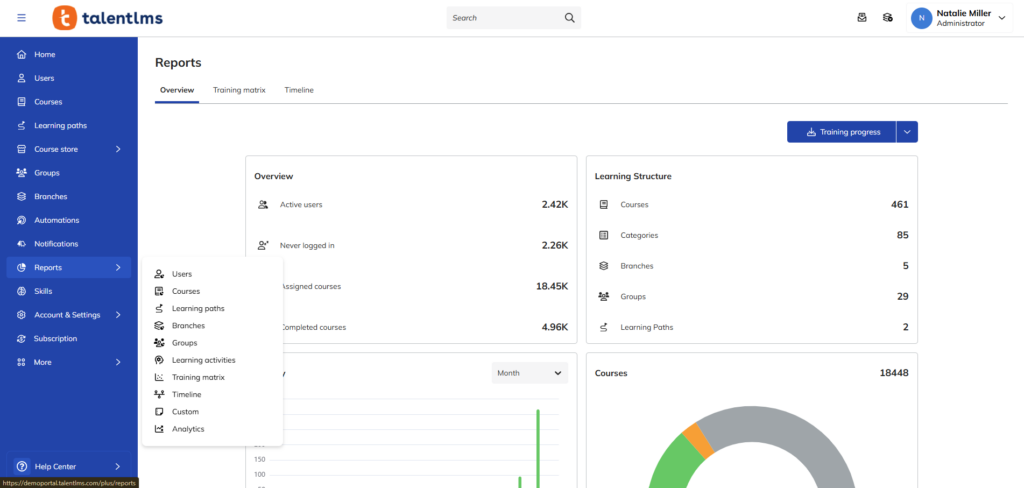
A practical LMS supports required course assignments, completion tracking, certificates and recertifications, and clear reporting for audits or internal reviews. This removes manual tracking and reduces risk.
Manager and team training also benefit from low administrative overhead. When managers can easily access relevant courses and learners understand what is expected of them, training feels like support rather than a burden.
In many cases, the difference is not the number of features available, but how accessible those features are to the people running training day to day.
Practical tips for first-time LMS buyers
If you are evaluating LMS options for the first time, a simple framework can help cut through the noise.
First-time LMS buyer checklist
As you evaluate LMS options through demos and trials, use the following questions as guidance with vendors and during hands-on testing.
- Can we realistically launch within weeks, not months?
- Will learners understand how to use this without extra guidance?
- Can admins manage courses, users, and reports without constant support?
- Does the system support our current needs and future ones?
- Can we clearly measure participation and business outcomes?
If you struggle to get clear answers to these questions, that is a signal worth paying attention to.
It can also help to test the system with real content instead of relying only on demos. Try building a short course, assigning it to a small group, and pulling a report. The experience will tell you more than any feature list.
How to evaluate LMS solutions
When it comes time to make a decision, it helps to take a step back from feature lists and resist the urge to choose the platform that looks most impressive on paper.
Start by prioritizing confidence and clarity. A good first LMS should make you feel capable, not dependent. It should support your goals without requiring specialized expertise or ongoing tech involvement.
 should make you feel capable, not dependent. It should support your goals without requiring specialized expertise or ongoing tech involvement.
Next, look for vendors that speak honestly about what their platform does well and where it fits best. Pay attention to how they support first-time buyers, not just experienced L&D teams.
Finally, remember that your first LMS is a foundation. Choosing a system that reduces risk, simplifies execution, and supports your organization’s ongoing growth will serve you far better than one that promises everything but delivers complexity.