

AI Is Rewarding The Loudest Employees

Most reward systems were built for a world where speed, volume, and visible output were reliable signals of performance. But AI now produces all three at scale. That leaves organizations facing an uncomfortable question: if AI can generate more output than ever, what exactly are you rewarding?
In this episode, David Rice sits down with Anju Choudhary, Chief People Officer at Xoxoday, to explore why recognition systems need a redesign for the AI era. They discuss the growing gap between productivity and impact, the importance of recognizing human-centered behaviors like judgment and collaboration, and why the most important question leaders can ask isn’t “What do we want people to do?” but “What do we want people to feel?”
What You’ll Learn
- Why traditional reward systems increasingly reward AI-generated output instead of human contribution
- How recognition programs can reinforce culture, values, and desired behaviors in real time
- Why impact matters more than productivity metrics in an AI-augmented workplace
- How leaders can identify and reward collaboration, judgment, and creativity
- The risks of rewarding visible AI adoption instead of meaningful business outcomes
- Why employee experience is shaped more by how people feel than by what they do
- How AI can support recognition without replacing human leadership and attention
Key Takeaways
- Audit what you’re actually rewarding. If your system prioritizes speed, volume, and output, AI may be collecting the rewards while human contributions go unnoticed.
- Recognize behaviors in real time. Quarterly awards have value, but behavior change happens when recognition is immediate and connected to a specific action.
- Measure impact, not activity. More output doesn’t necessarily mean more value. Focus on outcomes, influence, and business impact.
- Reward the “how,” not just the “what.” High performers who bring others along create more sustainable success than those who sprint alone.
- Watch for productivity theater. AI can generate impressive-looking work at scale. Leaders need to distinguish visibility from genuine contribution.
- Use data as a signal, not a substitute. Analytics can highlight patterns, but leaders still need to pay attention to people, context, and relationships.
- Different roles will adopt AI differently. Measuring success through AI usage alone creates unfair comparisons and erodes trust.
- Free humans from repetitive work. The goal isn’t replacing human connection—it’s creating more capacity for coaching, support, and meaningful leadership.
- Design experiences around emotion. People rarely remember a workplace experience because of what they did. They remember how it made them feel.
- Feeling replaceable creates resistance. Many AI adoption challenges are less about capability and more about employees questioning their future value.
Chapters
- 00:00 — Rewarding the Wrong Things
- 01:52 — From Output to Impact
- 05:13 — Productivity Theater
- 06:14 — Values in Action
- 08:55 — Rewarding Human Skills
- 11:25 — The Power of How
- 14:17 — Innovation vs. Performance
- 18:40 — Real-Time Recognition
- 23:15 — Uneven AI Adoption
- 29:22 — AI and Better Leadership
- 32:29 — Human-Centered Onboarding
- 35:17 — Rethinking Recognition
- 37:00 — What Do You Want People to Feel?
- 38:45 — Closing Thoughts
Meet Our Guest
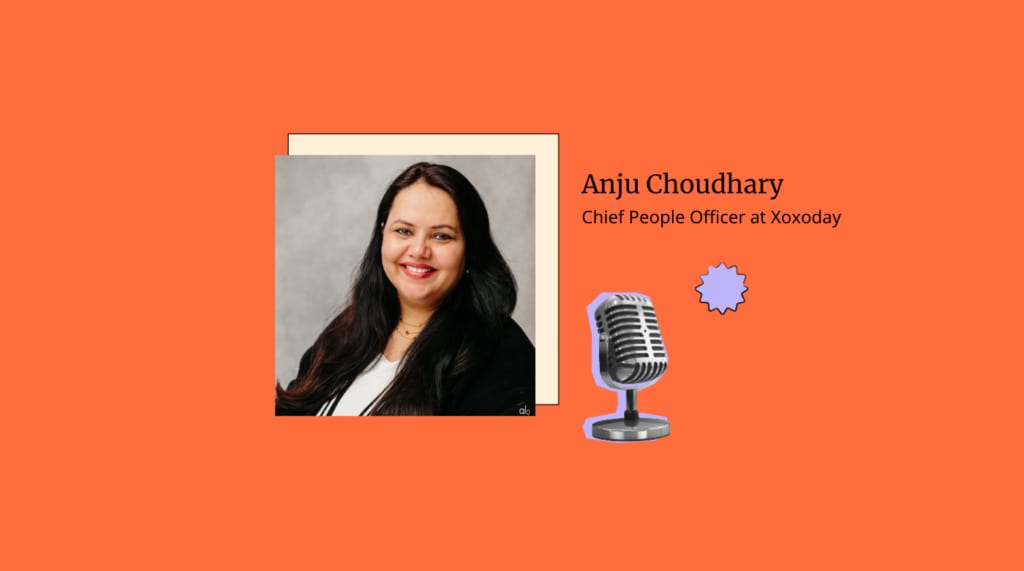
Anju Choudhary is the Chief People Officer at Xoxoday, bringing more than two decades of experience in people strategy, leadership development, talent transformation, and organizational culture. Known for her expertise in building high-performance, future-ready organizations, she has led large-scale initiatives across learning and development, talent management, employee engagement, diversity, equity and inclusion, and business transformation. A certified coach and passionate advocate for continuous learning, Anju combines data-driven people practices with a strong focus on leadership, culture, and employee experience to drive sustainable business growth and organizational excellence.
Related Links:
- Join the People Managing People Community
- Subscribe to the newsletter to get our latest articles and podcasts
- Connect with Anju on LinkedIn
- Visit Xoxoday
Related articles and podcasts:
David Rice: Your reward system was built to recognize speed, volume, and measurable outputs. AI produces all three. So what are you actually rewarding now? Anju Choudhary is Chief People Officer at Xoxoday, and she's asking organizations to audit their systems before they accidentally incentivize the wrong things.
Because right now, most companies are still rewarding productivity theater, inflated output with no real impact. Meanwhile, the genuinely human contributions like judgment, collaboration, and creative problem-solving go unnoticed. On today's show, we're talking about what happens when work changes faster than incentives do. When AI handles execution, the human stuff becomes the differentiator. But those behaviors are harder to see and measure.
So how do leaders get specific about which behaviors they actually want more of? Choudhary says you start by asking the right question. Not, what do you want people to do, but what do you want people to feel? Because we don't remember experiences by what we did, we remember by how we felt. At a time where people are quietly sabotaging their organization's AI efforts, it's worth asking why. And more often than not, it's not because they can't do the work. It's because they feel replaceable. You've made them feel like their skills no longer matter.
And people don't base their actions on what they can do, they base them on how they feel. So today we're going to cover why reward systems built for output are now rewarding AI's contributions, the sticky note recognition method and why real time matters, how to shift from productivity metrics to purpose and impact, why what do you want people to feel is the question that matters most, and the quiet sabotage happening when people feel replaceable.
I'm David Rice. This is People Managing People. And if your recognition program is still measuring speed and volume while AI handles all of that, this conversation shows you what needs to change. Let's get into it.
All right. Well, Anju, welcome to the podcast.
Anju Choudhary: Thank you, David, for having me. It's like we are meeting regularly in conferences and today on a podcast. So for a change.
David Rice: Yeah, it was lovely meeting you in San Francisco. We had a great chat, and I was chatting with you there about some of the things going on with reward systems and how we can like motivate certain types of behaviors. As I was sitting down to think about this episode, I was thinking like most reward systems were built to recognize a few things, right?
Things like speed, volume, measurable outputs. At least most organizations I think I've ever worked with are very output obsessed, right? But AI produces all three. And I'm curious, what does that mean for what those programs, those rewards programs are actually rewarding? And like when do you audit your reward system and figure out if it's incentivizing the things that you want versus it might, might be doing something else, right?
Anju Choudhary: I want to start with saying I'm AI pro. So before we, we get there, I don't want people to think that I'm skeptical about the technology and the use of it. But I want to warn people that when we talk about behaviors, repeatable behaviors, and how we've been thinking about output, productivity, efficiency, and suddenly AI comes in the picture.
So all of the elements that we wanted from our people, now AI can do it. So how do we reward and incentivize our humans at work? And you and I have been at HumanX, where we heard people say, "Our human colleagues and our AI colleagues." So- Yeah. ... yeah, some of these things are going to be a constant, where we're thinking about productivity, efficiency and how we build things better.
But the idea about creativity, collaboration, communication, doing things for the purpose and the impact, those are the things that we want to continue seeing our human colleagues continue to do. And when you want to reward Things and behaviors you want to see being repeated in future, you need to see is your system thinking about it really in air quotes.
Have you designed a tool and a process that is going to allow people to see what's important for you? So recently we were having a conversation where another HR colleague of mine said agility and growth mindset are super critical for them. So I'm like, "How are you telling people that? How are you showing people that this is what is important for you?"
And she's "Actually, I'm not sure. Those are inbuilt in our values, but we're not really doing that." So a quick example would be in our system at Xoxoday, we do allow people to be recognizing their peers and stakeholders and really articulating, using AI, articulate and show what they did that they're appreciating, connected to your larger goals and KPIs of that person, but also the goals of the company.
And when other people, the new employees, when they onboard and they see Anju is being recognized for X, Y, and Z, those values, those KPIs, that's an indication that, oh, so that's how I become successful here. So making sure when you audit your tools and system, they're not just designed to measure and appreciate and recognize productivity and the numbers, but also the impact and what's critical for you to be able to see in future.
David Rice: I like what you said there about focusing on the impact part because I mean, AI really can create some productivity theater, right? So definitely it appears that you're doing all this stuff, but in reality, does it have any impact? Does it have any sort of actual business relevance or are you just generating a lot more stuff that gets put into the system and it sort of like inflates the output, but then output as a result becomes a pretty weak signal, right?
So I think we can end up reinforcing behaviors that made sense pre-AI, but they're not really gonna move the needle now, and I like the way you kinda framed that there. In terms of values to me, I-- whenever everybody says values, I immediately think of those things on the wall. And then it's "Well, yeah, but does that actually happen?"
But because, there's a bit of lag, and the work changes faster than incentives do now. And now it's to have the values keep pace, you have to reward it in real time. At least that's what it feels like to me.
Anju Choudhary: Yeah, yeah, absolutely. So you can't do it a month later. You can't do it in your quarterly all-hands call.
You can't do that. I wanna actually double-click on what you said about values. Recently, we were having conversation, and IPO Circle hosted an event where we were talking about values from the co-founder of Uber, who said they had thirteen values or fifteen or something an exorbitant number. When you have to spend time memorizing what those values are, you're not really living them.
So he said, "Now we go to three," and then we actually go further into the behaviors that you wanna see under those values. And I love how he actually shared an example, and he said, "We had champion's mindset as one of the thing, and then we slowly evolved that to champion's heart because they are trying to appease more to the purpose and the impact."
And I love how values, like you said, would then be only things written on the wall or behind the badge unless they're really practiced, and they're actually inbuilt and woven through everything that we do every day. How do you see people walk that through? One of the interview questions that I like to ask in the companies where I'm about to have a conversation is "How do you see those values being showcased on day-to-day basis?"
I worked at IBM for about eight years. One of the value was trust and personal responsibility in all relationships. And the reason I remember word by word that value is because I actually saw people doing that on everyday basis. So another example would be when you see people walking that talk and doing that behavior, reward and recognize that, so they know this is what you want from them.
And when you do the culture champion awards on a quarterly basis, those are great. Continue to do that. But that's very long time ahead. Half of the things are forgotten. Another leader actually shared something really simple, which I would love to share, a sticky note of recognition. And I'm like, "What's that?"
So she said she's got all her team members' names written there, and it's next to her desktop. And as she goes along her week, she actually makes sure that she watches out for those behaviors and recognize in that instance and strike them out as she goes along. So one, she's keeping up with recognition and rewarding that.
Number two, she's going to watch out for what you want to do, and in that moment, immediately do that. And I thought that was so wonderful that you don't have to wait at the end of the month or at the end of the quarter to do it.
David Rice: So one of the questions I wanted to ask you was, like, if AI is handling more execution, the sort of genuinely human contributions, right, things like judgment, ethical reasoning, collaboration, creative problem-solving, right, like, all these things that we talk about all the time that become more valuable, not less, those are, like, harder to see and measure, though.
I'm curious, like, how do leaders get specific about which behaviors they actually want more of in this AI-augmented workplace?
Anju Choudhary: Yes and no. They're hard to quantify when you used a good judgment, when you give somebody feedback that lands, when you had used a creative problem-solving hack. But the impact of that wouldn't be hard to measure.
The impact of that is going to be connected to, are people feeling happier here? Are employees more engaged here? So you don't have a direct causation, but correlation. And for that reason, we like to really use data analytics to support that. What I mean by that is when we say this is a-- this manager is performing better than the others, we're going to connect that to manager effectiveness survey results.
How are their inclusion survey results for that team from the company? How are their real matrices for the output of results that they're producing? So if it's a sales team, what are the targets? If it's an HR team, what are their targets? Are they meeting their KPIs? Sometimes it might feel that it's ambiguous, but when those things are performed really well, then it will show results into these other areas that you can measure.
So for example, when some of the things are going to be obvious, use opportunities wherever you can observe these behaviors. That is one-on-one meeting, group meetings, any other opportunities that you see, find and identify and recognize those. When you are having hard times, especially in this remote and distributed world where the information flow is lagged because something that happened in India, and I-I'm not there with that team, and I'm sitting here in the US, and I haven't been able to observe.
That's when you provide tools like ours, because, for example, we have a Cheers to Peers award. There are other people who are going to watch out for you, and they're going to elevate that and actually spotlight that behavior for you to observe. Second, connect that to the data that you as HR team are already collecting, and then connect it to that person, and then overall impact for the company, for the team and your KPIs.
David Rice: It was interesting you said there, like the causation and correlation piece. The thing with correlation, right, is it can be a little bit subtle. So it's-- I think it requires leaders to be a little bit more present and not just, data-driven or... 'Cause if you, if you can't see it, it's tough to reinforce it, right?
I think it's kinda measuring not just what got done, but how it got done, and we gotta be more present in that conversation.
Anju Choudhary: One hundred percent. Not just the what, but the how is important, too. Something as simple as I was reading a report card for my elementary kid, and the teacher actually said he was reading at sixth-grade level while he was in fourth, so I'm not gonna give him exceptional.
He-- It's a satisfactory. He's actually lagged out. And I was like, actually, the output itself is not as important as how much hard work did you do? Did you try to get better from where you were? Not just what you got at the end of it, but how you got there is also important. Something that resonates very strongly with me is feedback that I received from my manager as a first-time manager in an international company.
And he said, "Anju, I love the passion and the energy that you bring to the work, but I also notice that you're going way too fast, and what might happen is you might be the only person at the finish line, and when you turn around, you'll not find your people. So you have to actually bring your people along on that journey.
You have to work with other people." And I loved how he actually articulated it for me, and I'm so glad that I learned that pretty early in my career to go along with people, to bring them along on that journey, really being mindful of what are their goals versus my goals, and how can I bring it to our goals together?
And that has been super, super helpful. So not just that finish line, but how you got there is super important as well. And to be able to notice that, you need to be present. You need to be able to really showcase. One other tip that I want to share really quick is as I join new teams or as I join a new company, I try to work with the team to articulate something called as a README, which is how do I work best, which is I'm really not a morning person.
I'm most creative self in the evening, so if you receive an email from me, I will try to do a schedule send, but if you do receive by mistake, you don't have to respond to that. I'm trying to get things sorted during that time. This is how I like to get feedback. This is how I give feedback. And everybody comes together and share theirs that allow you to figure out what is the best way to work together.
And then we also have a teamwork document as well, so when new people came in, we would actually elevate, and that shared the subculture of the team. It actually allowed us to be far more productive than we used to be in the past.
David Rice: That's really interesting about the sort of What you're rewarding in terms of getting obsessed with certain things, the end product, right?
Getting to the finish line, like you said. There's always that risk of leaders getting lost in rewarding, visible AI adoption, for example. People who look like early adopters, they can demo a prompt really well. But there's another group oftentimes that's adding genuine value with or without that sort of visibility.
I'm curious, how do you design a recognition program that doesn't accidentally create sort of the performance of innovation rather than actual innovation?
Anju Choudhary: Yeah. And it's not easy to do, so I would warn people against it because sometime the loudest voices are the ones that you remember, that are most memorable for some people.
Sometime you only hear ideas from people who have been able to present it the first. But what I've learned working in, again, multicultural, multigenerational, global environment is you'd have to think about how people work differently. For example, I've learned there's some people who want to digest that information and then come back to you.
So being mindful of reaching out to, "I've not heard from you, David, today. Do you have any feedback?" Or creating processes with which you allow to do that afterwards. In terms of designing a program, again, there is a tendency that I've noticed when one person is being recognized by five or six people, everybody tags along on their journey.
Who have we not recognized? Where have we not seen that? So if your program itself allow you to see where those gaps are, for example, let's say a marketing team uses the reward and recognition program perfectly, and you see a lot of kudos from there, but then let's see another team, and it's not happening.
Also, if you've seen David receiving multiple kudos in the past or shout-outs in the past and suddenly there is a drop, is there a performance or a burnout? So again, tools and system actually... Thankfully, with AI, you're allowed to get that analytics that allow you to see, oh, what just happened? Where is the dip?
Where did this go bad? Are there certain areas where you can identify opportunities for growth for this person? And how one person who's going ahead in, let's say, using AI really, really well, could they mentor other people? So this becomes not just your tool for reward and recognition, but also to identify pockets of talent that you want to elevate, areas of burnout where you n- need to pay attention, and number three, opportunities for growth.
So you're not just thinking about spotlighting, but also looking at the entire spectrum of that reward and recognition program. I think I'm really excited about the opportunity for AI integration in that, because most people would take an opportunity to say something when they don't like something, but they're too tired or exhausted or too busy to recognize.
So when AI comes in, you can put a few words in it. One, define the entire spectrum of your message. Number two, that you can edit again. Number two, help you connect and identify those behaviors from value and pick it up for you and present it really nicely. So I'm excited.
David Rice: I like the way you, you framed all that, especially when you said the person who's speaking talks the loudest, the loudest voice in the room.
It's... I've been in several environments where that sort of took over, and it's, it almost allowed that person to gamify the system in their advantage because they could dominate conversation about it. This just creates a lot of noise in the system that doesn't need to be there sometimes. So it's an important distinction and an important sort of approach that I think you're outlining there.
Anju Choudhary: Oh, speaking of just the loudest voices being heard, our system actually, and I just don't want to continue to talk about only Xoxoday, but think of your reward and recognition program. How does it nudge to say, "Hey, you've been just, for example, appreciating Sarah all this time, and you have these other colleagues too that you work with."
So it, it nudges people in that direction of thinking about how you, not just within the team, one or two people that you're recognizing, but there are other people that you might want to think about as well.
David Rice: So, Xoxoday's platform, though, it's built around real time, in-the-moment recognition. What does timing matter so-- or why does timing matter so much in behavior formation, and what does that mean for leaders who are trying to shape culture during a transformation that's happening faster than most annual review cycles are gonna capture?
Anju Choudhary: Yeah. Well, okay, it's a very loaded question, but very important one. Again, we working in this environment where things are changing so rapidly, you're taking actions pretty quickly. You're working in a matrix organization. You're working across geographies. So it's super important to take action as quickly as possible and recognize those behaviors as quickly as possible, otherwise you've lost it.
My biggest concern with performance management systems have been it is a very heartbreaking exercise because it takes all the energy out of you. There are multiple people engaged. At the end of it, if you received a five, you don't know what can you continue to do. If you received a two, you don't know what can you do differently 'cause who even remembers?
So the annual performance management system being a tool to recognize, I'm sorry, if you're doing-- continue to do that, it is time to wake up and do it differently. So from goal perspective, we're changing it to more quarterly review of those goals so you can keep up. I have a feeling it might just be even faster to a monthly review of your goals because, like I said, who even knows what new plugins are coming in Claude that are going to impact your business altogether?
So you gotta think about differently. When it comes to reward and recognition, I remember I used to have a brag sheet for myself, where every day, by end of the day, I'll write what did I do amazing? 'Cause honestly, I wouldn't remember all the great things that I did by-- so to put in my performance review.
So think of this on manager's or company's side. If employees by themselves can't remember all the great work they're doing, how are you going to remember by end of the week or end of the month that what amazing work David did in HumanX conference or somewhere else? So in that moment, do that recognition.
It values so much more 'cause it energizes people to continue to repeat those behaviors in future. When those behaviors that you want to see are going to make your organization successful, and collectively all of that is pooled together, is going to help you and your organization be successful. Like I said- It's going to be hard.
It's not easy. So create a process for yourself. Even if you don't have a tool like ZozoDay, you can create a process like we said, the sticky note, a spreadsheet that you can have where you're going through one by one. Also, articulate what behaviors are important for you in the moment. So you might have three or four or five values that you have.
Great to connect with them, but what is important for your organization right now so you can reach your goals? Articulate those and continue to reiterate them so people know what good looks like here.
David Rice: Yeah. No, it, it makes sense for the sort of real-time recognition. Behavior tends to stick when the feedback loop is a lot tighter, right?
And so, if it shows up months later, I think, for a lot of employees, it loses its meaning. It's well We're bringing that up. Do they think I haven't done anything since then? You know what I mean? And it's sorta because you yourself get lulled into sort of, what's the next thing, what's the next thing, what's the next thing?
It's just a natural way about how we work, and then now in this fast-moving environment where AI is pushing us even faster, that gap between action and feedback probably matters even more, I would think.
Anju Choudhary: Also, what you just said, let's go back to that. Haven't I done anything else of value since then? See, that's the point.
I don't know. I don't know. What, what do I continue to do? What does my manager, David, find important? Maybe I thought that was important, and David didn't, and that's what happened. We missed an opportunity. So as an employee, I did other things. Those were important. But as a manager, you thought that something I did three months back, that one was important.
Well, we lost three months now. How do we get that back? So if you did highlight that, I would continue to do that one 'cause I had no idea that's what you wanted me to do.
David Rice: Yeah, that sense of value loses its sting after three months. Right.
Anju Choudhary: Correct.
David Rice: If the quarterly goals have changed, the whole thing is different now, so it's...
Yeah. AI hasn't distributed its, its productivity benefits equally, right? So across the organizations, it's safe to say, some roles, some teams, individuals are absorbing far more change than others. I'm curious how the reward systems need to account for that sort of disparity, and what does it look like when recognition inadvertently rewards the people who, I don't wanna say had the easiest transition, but maybe it was simpler than it would be for another team.
Anju Choudhary: I wanna take a personal example first. So when COVID happened, and every parent's "Oh, my God, it's a disaster. How do kids do online learning?" Well, we were at unfair advantage. My kids have been doing online programs in the past, and they were more familiar. So to your point, there are people who, one, in research or technology much aligned.
One, they're designed to be more closer to AI. Number two, they might be in a space that allow them to transition easily. Number three, they're working in the space that more cohesive for inclusion of AI versus our legal folks aren't going to be able to use. They're going to be more focused about creating guardrails and taking it slow and safe.
So by the design of the jobs, there will be people who will go faster. And then from our learning behaviors, too, there are a few people who are more experimental. They'd love to be your champions. They'll start off. But at the same time, what I've noticed is, how are people using AI? When you just design or draft an email and make it prettier, well, that's not transformational.
You're consuming all the bits and data, but it's not necessarily transformational. When I'm creating my outfit of the day using AI, honestly, it's not doing any much of purpose for the job. So what are you going to reward and recognize? But how's that changing people's way of working? So maybe if you articulate that, because it's going to be different for different teams.
For example, I've noticed internally our marketing team has been champion. They've been pretty good with rolling on. Our engineering team as well. However, there are other teams which are much slower. Sales still trying to figure out that other than drafting an email, how else can I use AI? How can I be much smarter with this?
Because the human connection that we want to create with our people is still important. When you have a AI-drafted message that goes on LinkedIn, it's not getting those open rates for them. So there's still need for that. So again, to your point, the numbers aren't really as clear. So if you're going to just say Percentage of use or how people are consuming tokens, that's not a really good way to articulating how AI is beneficial for the job.
But you could think of if this is my 100% capacity in each job, how, what parts human can do, what parts AI can do, what parts human and AI together can do, and how making progress on those areas. And that is whatever the extra time that now is available to Anju, how can she use this more strategically? So unfortunately, it's not a simple matrix.
It's going to be very different for different roles and being able to... Again, there are multiple AI tools that I've learned during HumanX, which will allow you to see not just engagement, but also efficiency of those tools and how are people using it, and how does it have impact on their job, day-to-day job.
David Rice: Yeah, that was something that that I heard quite a bit there as well about token usage not really being representative of true adoption or meaningful adoption, even more to the point, 'cause yeah, you might be using it, but, or are you just asking it random questions or like you said, preparing your outfit or planning dinner?
That's not really helpful. So but yeah, I, I agree, and like I think the other thing that happens here is when we don't keep the context of roles in mind when we think about how people are adopting it, and you just like blanket say "Well, you guy- you all aren't keeping up," or, "You gotta do more with it," it just erodes trust even further in leaders because it's like you don't even understand what it's capable of for, for my job.
And then it's "Do you know what I do?" And as soon as somebody starts to ask themselves that, their level of trust just keeps going down and down and down from there. And I think we've already got a trust problem, so it's worth being very cognizant and careful about how you design these systems.
Anju Choudhary: Most of the time, I think earlier people were concerned about adoption or just getting people on board with AI.
So the push was like, do something, do anything, do whatever you want to do with AI. And then as soon as people made that move from moving from ChatGPT or OpenAI to Claude and being conscious of now the tokens and usage, they came to a point is "Oh, so how are we using?" So the what was the initial part, and now how is what we are thinking about.
And it's important again to be able to, yes, you can organize birthday parties using AI and think of it in different ways, but honestly, being mindful of the impact of that on the environment is going to be crucial as well. And I don't think that came up to people early on because it was a lot of these tools have been free.
So as soon as we're going to think about how, we're going to be more mindful of why do I need to use it and how can it make a difference? Because yes, I found the benefit personally for me when I could draft an email quicker and make sure from HR perspective, do I have the language that it need to have?
This is great, but again, it's not transformational. And to get to that space, you really need to dig deeper into every day how do we function and break down each job responsibility. One size fits all is not going to happen in this case.
David Rice: Absolutely. It's funny 'cause I, I've been at all these conferences, and in each one I've heard about the email problem.
And I'm like, "Oh, this... When I thought of work slop, I guess that wasn't what I was thinking of three months ago." But now I'm like, "Actually, I guess we have an email problem." Folks gotta really think about what they're using it for, and yeah, I agree. There is the question of do you wanna consume the energy elsewhere for this, or is it worth maybe just putting a little bit of your own energy into this and being good at this and holding onto your value, which is one of them, is to communicate in a very human way.
It's something that I've been paying attention to the last few months is like the changing conversation about for what and how, which is interesting. There's also an interesting tension in using an AI-powered platform to recognize and reinforce human behavior, right? I'm curious, at what point does smart automation become sort of a substitute for leaders actually paying attention to their people?
And like we were talking about before, you really do have to be paying attention for those subtleties, right? So how do you make sure the tools are amplifying human judgment rather than replacing it or allowing leaders to fall asleep at the wheel?
Anju Choudhary: We were discussing a while back all the data that we collect from various surveys, now we have an opportunity to really use that in a very meaningful way to be able to articulate and connect with those behaviors that you want to see.
We've always had this problem that HR collects way too much data, and before we can even take an action, there's time for another survey to happen. And those are important. You want to keep a pulse on what's happening within your organization, within each team, and how you can serve them better. But honestly, we were always overwhelmed with too much to do and too little time.
So here's this opportunity where you can be more human, use that data to articulate what are your the eighty/twenty rule. What are the twenty percent of the things that are going to have eighty percent of impact? And how are you going to use that human element to create those so you can make a more inclusive, a better workplace for everybody to perform and really get into the action mode.
So I think that is an opportunity. Again, getting deeper and being able to double-click and create culture champions that go far and wide, that are observing those behaviors that you want to reward and recognize. We have that as a part of an opportunity to use AI as a way of providing those insights that you can now action upon.
David Rice: Yeah, I think that's important, right? 'Cause you don't want it to feel generic I think people can recognize when something is thoughtful versus when it's been automated, right? And so I think keeping that part, that human touch in the leadership equation, but using it to better understand where you need to apply it, that's the big advantage, the big win yeah, I'm wondering if you feel like, the tools are helping leaders notice more rather than scale less attention.
Anju Choudhary: Yeah. You cannot let it babysit your people management responsibility. That's not what it's going to do, because people would know. They know when you're sending a generic message versus something more thoughtful.
One of the example of being more thoughtful that I have is when I joined-- about 2019, we'd moved from Southern California over here. On the same day, I was going to my new job, and my son was going to the new school. End of the day, we come back, and we're having this discussion, and I've received, "Oh, looking forward to work with you, excited to have you on board," all those messages, which is great.
You get to learn about the new team and explore further. He had a bunch of letters that the teacher actually told everyone, "Hey, we have a new fifth grader coming in." And the messages were, "I'm the Asian girl who sit in the corner. I know everything about library, so if you have any questions, reach out to me."
Another kid said, "I love baseball. Sometime I skip lunch to go play, so if you wanna play baseball, I'm ready." And I loved that. This was the best onboarding experience that he had at school. And now I'm at corporate, and mine was more generic. So to think about how do you really use that effort and bandwidth to create more humane experiences, more personalized experiences, I would highly advise somebody to do that instead of the generic welcome onboard message.
David Rice: Yeah, I would like that, we need that, so I can just say, "I'm the guy with the dad jokes and the snarky comments in the random Slack channel."
Anju Choudhary: That. I love that. See? Instant connection.
David Rice: You know exactly what to expect then. All your sort of one-on-one meet and greet things that you do in the first 90 days, then it's not a total wild card every time, 'cause those first 90 days could be a little bit like, "Oh, God, how am I gonna remem-..."
I... Me personally, I'm always like, "How am I gonna remember all these people?" But if I have a thing to latch onto oh, it's the, the girl that knows where all the stuff is stored, or it's the guy who's the baseball nut or whatever,
Anju Choudhary: exactly. So you have this opportunity, again, to really think about there are things that are energy suckers in your job.
This is repeated. Nobody cares. If they're asking, "Hey, how many PTOs have I left?" AI agents can solve for that. But now somebody's going on a maternity leave, you can sit with them, create a plan with them, and say, "When you come back, here's how we'll support you during this time." So that human element, you're really utilizing for the right purpose, to supporting where the support is needed, versus the AI can do the repeats and continue work.
David Rice: Yeah, putting more conscious human thought into a lot of things where we probably need to put more conscious human thought, right? Like you said, the maternity leave experience being a great example. Kinda at my final question here, so I'll ask this. If a CEO or a chief people officer, they come to you tomorrow and they say, "Listen, we're going through this major AI transformation.
What's the first thing I should change about how we recognize and reward people?" What do you tell them?
Anju Choudhary: What do you want people to feel or take away from that program? Keep that paramount, because it's easy to forget what people said, but it actually connects deeply to how it makes you feel. If it's going to connect deeply with them, create that program and watch it grow, because that's the crux of it.
Can I take a quick example? Yeah, yeah. I've used my travel day points to actually buy a flying experience for my son when he turned 11, and now it's created such an emotional bond. It's "Mom, when are you getting more points?" So... And I want to continue to perform and collect those points so I can really share.
So there's this emotional bond, not just for myself, but even with my family. When you perform higher, you get recognized, and you get this. But also the things that I get recognized for, those are important for me. When people say, "Anju creates this place for me where I find that I belong," that's meaningful to me.
So that is the crux of my job. That is what I want to do, create an opportunity for people to be able to perform their best job. And when I get recognized to do that, I'm more motivated to continue to do that every day.
David Rice: I love that you said wh- how you want them to feel and not what do you want them to do.
Because that tends to be the thing that we get a little obsessed about is, well, what are people doing with this? And what can people do? And what should people do? And all this. And that's a valid conversation 'cause it's work. But when we talk about experience, you don't remember exper-- We think we remember experiences by what we do, but actually we remember experiences by what we felt is the reality.
I can think of anything, right? Like I'm a big hiker, and when I get to the top of the mountain, I don't remember it because I hiked to the top of a mountain. I remember the way I felt when I got there and what I saw and what all of that sort of the impression that left on me, and that's what made the experience more rich and meaningful and valuable to me.
And we've got to think about that in the same way. What do you want people to feel? You don't want-- Yeah, they can do all this stuff, but if afterwards they feel like you are trying to replace them or automate them or push them out of the system, that's an awful experience that's going to lead to a lot of other toxicity.
This kind of feeling tends to breed very quickly. I think that's why we're getting so much resistance and so much sort of like, I don't want to say sabotage, but there are stories about people just like quietly sabotaging their organization's AI efforts. And I think that a lot of that comes back to you've made them feel replaceable.
You've made them feel like their skills no longer matter. Yeah, they can do all these things, but they're not basing their actions off what they can do. They're basing it off of how they feel. That's why I really like that you said that. Well, thank you for coming on the show today. This has been great.
Anju Choudhary: Thank you so much for having me, David. It's always great to meet with you, to catch up with you. I loved our conversation. Thank you.
David Rice: Absolutely. Well, listeners, if you like this and you want more like it, be sure to head on over to peoplemanagingpeople.com/subscribe. Get signed up for the newsletter. And in the meantime, it might be good to think about how you're making folks feel, not just what you're making them do.

