
Corporate Retail Therapy: Why More AI Tools Won’t Help



Your leadership team doesn’t have a strategy problem—it has an execution problem disguised as one. The offsite went great, the vision is crisp, and the slides look expensive. But somewhere between “bold initiative” and “Tuesday morning,” nobody translated strategy into what people should actually do. That gap? That’s where most organizations quietly stall.
Tom Healy argues that L&D is the missing link leaders keep ignoring. Not because it’s ineffective—but because it’s unglamorous. CEOs will talk endlessly about growth, retention, and performance, yet fail to connect those outcomes to how people are trained, onboarded, and supported day-to-day. Meanwhile, AI is making content creation trivial. The real work—the uncomfortable, strategic clarity about culture, behavior, and expectations—is still being skipped.
What You’ll Learn
- Why L&D is a business lever—not a support function
- The real bottleneck in AI adoption (hint: it’s not the tech)
- How unclear strategy leads to bad training—and worse outcomes
- The hidden cost of tool overload on execution and learning culture
- Why onboarding speed is a critical (and expensive) failure point
- The difference between automation that scales—and automation that backfires
- How to balance AI efficiency with human experience (“the magic trick”)
Key Takeaways
- L&D isn’t the problem—it’s the missing connection.
Leaders obsess over symptoms (low performance, poor retention) while ignoring the mechanism that shapes behavior. Training is how strategy becomes reality. - AI amplifies clarity—or chaos.
Feed it vague thinking and you’ll get polished nonsense. AI doesn’t fix bad strategy; it accelerates it. - Most orgs don’t know what they want people to do.
Before training anything, answer: What should employees actually do differently? Without that, L&D is just noise. - Tool overload kills learning.
More software doesn’t equal more capability. It creates confusion, longer onboarding, and a quiet tax on productivity. - Onboarding is a financial decision, not an HR task.
Taking 90+ days to ramp someone isn’t just slow—it’s expensive. Faster, structured onboarding pays for itself quickly. - Your employees are already using AI—just not your version.
Without internal systems, they’ll turn to external tools, creating inconsistency and potential risk. - Automation without intention erodes experience.
The Chipotle lesson: optimize the wrong things and you degrade what customers actually value. - The goal isn’t full automation—it’s smart automation.
The sweet spot is 90% automated, 10% human—but that 10% is where trust and experience live. - Start small, but start deliberately.
Don’t “transform L&D.” Fix one real business problem. Prove it works. Then expand. - Doing nothing and doing the wrong thing are equally dangerous.
One leads to irrelevance. The other leads to self-inflicted damage.
Chapters
- 00:00 – Strategy without execution
- 02:14 – L&D is a mindset problem
- 04:40 – AI needs clear inputs
- 06:04 – Leaders miss the link
- 11:17 – Too many tools, no clarity
- 17:27 – No knowledge, no consistency
- 22:23 – Onboarding is too slow
- 30:56 – Challenge outdated systems
- 33:49 – Start small, fix one thing
- 42:23 – Avoid the extremes
Meet Our Guest
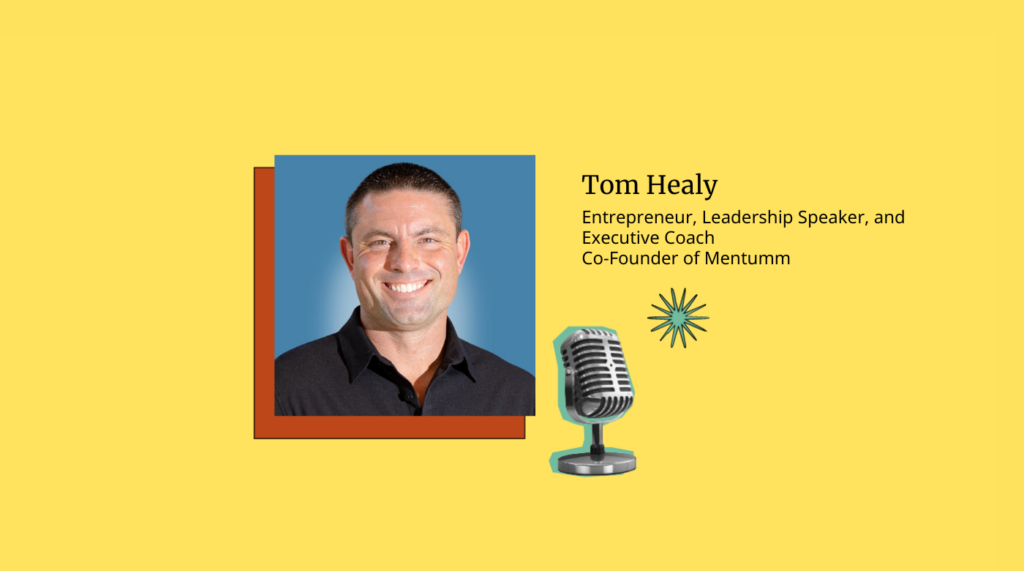
Tom Healy is an entrepreneur, keynote speaker, and executive coach focused on helping individuals and organizations achieve high performance and faster execution. He is the founder of Mentumm, a coaching platform that equips leaders with one-on-one support to drive results, and has also launched multiple successful companies and learning initiatives used across more than 100 college campuses. Over his career, Tom has authored several books, delivered more than 1,000 presentations, and worked with organizations ranging from startups and nonprofits to the U.S. Navy, Harvard Medical School, and Fortune 500 companies — all grounded in his passion for helping people and teams accomplish extraordinary outcomes.
Related Links:
- Join the People Managing People Community
- Subscribe to the newsletter to get our latest articles and podcasts
- Connect with Tom:
Related articles and podcasts:
David Rice: Your leadership team spent three days at a log cabin somewhere mapping out a beautiful strategy for the business. You came back energized, clear vision, bold goals, and game changing initiatives planned. And then everyone on the C-suite team expected it to magically happen, but nobody told the people actually doing the work what specifically they need to do or how to do it, or where to go when they have questions. And now your ELT is confused why execution is stalling.
Today's guest is Tom Healy, Co-Founder of PeopleOps360, and he's gonna tell you why CEOs don't want to talk about L&D, but should. Because when he asks leaders what their problems are, they think about all kinds of things—performance, retention, culture, not selling enough widgets, younger generations being difficult. All real problems, but none of them connect learning and development in their minds. AI makes creating L&D content easier than ever. The hard part is those business strategy decisions.
Things like what culture do we want, how do we want customers to feel, what specifically do we need people to do? Until you establish that, the technology is irrelevant. And right now there are three paths. Two of them, by the way, are wrong. Path one, you can stick your head in the sand and hope you can retire before it matters. Path two, buy all kinds of AI software and automate everything, destroying your customer experience in the process.
And those path three, which feels a bit like a magic trick. 90% automation that still feels warm and humid. So today we're gonna cover why L&D isn't sexy but solves your actual business problems, how to go in through the pain, not through the training. The Chipotle lesson, which is what happens when you automate the wrong things, why feeding bad prompts into AI gives you useless outputs. The magic trick of how to gain back your time without losing the human touch, and why both extremes are terrifying, doing nothing versus doing the wrong things.
I'm David Rice. This is People Managing People. And if you've been treating L&D like compliance training instead of a strategic solution to your biggest business problems, this conversation will change how you see everything. Let's go.
So Tom, welcome to the show.
Tom Healy: Glad to be here. Let's do it.
David Rice: Excellent. You know, we hear a lot about transforming learning these days, right? And how AI is pushing us into a different direction with when it comes to L&D. But I think when you zoom out, I'm curious to get your opinion on this. How much of the L&D problem right now is actually about tech versus being about a business mindset problem?
Tom Healy: Great question, and my spin on this is the tech is simple. It's easy. So the challenge in terms of building, learning and development, building training, getting your team to do the things you need to do to move the business forward. That's the hard part. I mean, you have to establish that. So what is the culture that we want in our organization?
When a customer walks in the front door, how do we want them to feel? How do we want to communicate amongst each other internally? What do we want people to feel if they interview with us and are onboarded by us? So these are all like business strategy decisions to be made. We have to figure out what those are and be very clear and aligned on those.
That's the hard part, the easy part in my mind and in my experience in doing this work. Is then creating content out of that, right? And creating content has just become easier and easier through AI. Any content, whether it's scripting content, whether it's creating an AI avatar to deliver that content, whether it's going into a notebook and taking content and creating infographs and interesting visual resources.
So my feeling is the hard part is not the technology. The complicated part is not the technology. The technology has just made all of this way easier, but where I see organizations struggle is on. What should we teach people? What do we really want them to do? And until you establish that, the technology irrelevant, because if you're, I mean, you know this, but if you're feeding bad information into AI, bad prompts, bad resources, vague details on what you want, then you're not gonna be happy with the output.
They're not gonna magically be able to figure all of these nuances out specific to your organization.
David Rice: It kind of feels to me like we're talking about the whiteboard when we diagnose what's wrong with our meetings, right? Like there's just so much hype around AI, but it's starting a bigger spotlight on cracks in how orgs think about learning it.
And I think change in general, right? Like this is an uncomfortable change and we're asking people to do this thing that they've done throughout their lives, but in a very different way and for a different reason than they probably ever did it before.
Tom Healy: And I can appreciate people that look at AI. Wanting that magic solution, that magic bullet, that magic wand that does everything.
And in my experience, I still haven't seen it be able to strategically map out everything from a vision standpoint, from an experience standpoint. Like you, you still need to do that. So skipping the whiteboards, skipping the strategy, skipping the clear objectives of what you want is not happening yet.
May it happen in six months or six years, of course, but I don't think right now we're there yet.
David Rice: Yeah, I would agree with that. We were talking before this, you said that talking about L&D really doesn't work, you know, so you go in through the pain. I'm curious, what do most CEOs and leaders think that their problem is, and how do you flip that into a conversation about learning?
Tom Healy: That's another great question, and what I find is. Organizations, especially leaders, CEOs, are not able to connect their challenges with L&D. So I go into an organization or I go into speak to a group of CEOs and I say, tell me what your problems are. And they'll talk about performance. They'll talk about retention.
They'll talk about culture, how they're not selling as many widgets as they were. They'll talk about how younger generations are a pain and they'll have all these issues, right? What I have to work really hard at is connecting the dots to training to L&D. Because L&D is not interesting to them.
It's not sexy. It's not something that they find to be important. However, they've identified all these major issues that are slowing execution down, slowing growth down. And it's my responsibility to say, if you create great learning and development inside your organization, I can't promise you that it'll solve all these problems.
But I can promise you that it'll help you significantly because if you've got a great learning and development solution for your team, you're able to onboard people. Far better and far easier in an automated way, and then they behave the way you want them to, and they're better out there in the field.
They're better out there dealing with customers because you're giving them so much great training and learning and development and giving them a path to continue to learn and grow. They're more likely to stay with you long term. And oh, guess what? They're more engaged and engagement drives performance.
So I just think it's so important to say, give me your biggest business issues right now. And let's see which ones meaningful L&D can solve or help you with. I can't promise you that L&D is going to help with tariffs or help with government regulations, right? I mean not, it's not gonna solve everything for you, but gosh, when you tell me that, you know, we're paying people a lot of money and they're performing at a B minus level.
L&D can help with that. When you say that you don't like the way your salespeople are behaving in the marketplace and it doesn't align with the way that the company was early on in its founding days, L&D can solve that. That's what I really enjoy doing. But it is hard to connect business issues with learning and development.
David Rice: I like this 'cause you know, you sometimes when you say training, I think people's eyes kind of glaze over. It's like they think of compliance.
Tom Healy: Yeah. It's the same with HR. You know, Mr. CEO, let's talk about HR. I don't wanna talk about that. I wanna talk about marketing and sales and you know, getting market share and putting our competitors outta business and buying up other businesses.
'cause that stuff's way more fun to talk about. But then, you know, you realize in most industries, and I'm kind of being sarcastic when I say that, but in most industries, the people that you have working for you play a pretty important role. So if you're not transferring knowledge to them and you're not setting them up for success, and you're not helping them to grow, and you're not teaching them specifically what you need them to do in order to execute.
It all breaks down and you and I think we talked about this before we hit record, but you know the idea of the leadership team of an organization, they go to the log cabin for a few days. They map out this beautiful strategy for the business, and then they think it's just going to magically happen.
It's some point you need to tell every single person in the organization, what specifically do you need them to do? How specifically do they do that? Where do they go when they have questions and need help? That's an important part of it. And it just, again, to your point, it's just not exciting for them to talk about yet.
If they're negligent in this area, they're not gonna get the results they want.
David Rice: Well, and like you said it's sort of, you gotta start to set up in a language that they care about. Right. It's just otherwise learning sort of becomes like the punchline almost. It's like everybody's just like, oh God, here we go. You know?
Tom Healy: Well, and it and the other thing too is it's, I mean, it's funny because, you know, sometimes you'll see CEOs, their eyes will roll when you talk about some of the touchy feely stuff like culture, like engagement, and, okay, well let's stop for a second here. Bob. What are you trying to do?
Well, I wanna sell more widgets. Great. You know how you sell more widgets by people being engaged by them feeling a sense of belonging by them seeing value in their immediate supervisor because they're having meaningful conversations by being trained on how in the hell they actually do their job. So if you want, I understand you wanna sell more widgets so that you can sell your company in three to five years and go fishing every day.
I get that. But what I'm telling you is this stuff that you don't think is that exciting that you're rolling your eyes about is actually what will drive you to be able to do that.
David Rice: Exactly. People can get a sense of excitement and sort of investment in it. It's just gonna pay dividends. A lot of small, mid-size companies, you know, they seem to get stuck in like the too many tools, not enough process trap. Right? Why is tool overload, so to speak, such a quiet killer for learning culture?
Tom Healy: Well, that's what happens, right? We have this problem, so it's. 2026, we need to solve it through a tool, through a piece of software. We're probably gonna be excited when that piece of software, it says AI powered, you know, in the header of the website.
And so what happens is we've now got to this place where we need to leverage technology to solve all our problems, which that's not a bad line of thinking, but then the default always becomes, David, we have this problem. We need to go find a tool to fix it. Then oftentimes what I see, depending on the org chart and the size of the organization, sometimes someone that's not in the C-suite will get tasked with finding those.
So I, I see people in organizations that make very poor decisions because they're not necessarily plugged into the overall strategy of the organization. They're not necessarily looking at the overall tech stack or software stack of the organization going through all this stuff. So, yes, quite often we have this problem.
We're gonna solve it through software, and it's just going to be another piece of software. So then how many pieces of software does the average small to medium sized business have? Too many. And then, oh, by the way, we need them all to integrate with each other and talk to each other. We don't want there to be redundancy.
We don't want to have to replicate our work across different platforms. It can be that, you know, you end up with a team of people that spend a ridiculous amount of their time on data entry and sitting in meetings trying to create, you know, synergies across different departments and different pieces of software.
So, you know, the default shouldn't be when we have a problem, let's find another widget to fix it with. But how often, and this is where. Engaging an outside consultant may be valuable, but how often do organizations look at their tech stack, their software stack and go, okay, what does everything do? What doesn't it do?
What are the overlaps? What are the gaps? How are we connecting these things amongst each other? And I, me personally, I'm not an expert in doing that, and I would never pretend to be that being said. I as a consultant will look at organizations and go, you're way oversubscribed to software. It's just incredibly obvious.
Or you're using stuff that's just not very good and it's very expensive and outdated. So I think action item wise, big picture, leadership team, spending time looking at every single thing we have. Do we need all of it? Are there better solutions out there? This is not something that I would kick down the org chart.
And think, oh, it's a $300 a month decision. Who cares? It's not about the cost of the software, it's more about the efficiency we're creating or not creating in the organization.
David Rice: It's funny, I was talking to another one of our editors who runs a different website about marketing, but we were talking about tool buying and we're kind of thinking like, it's like a corporate version of retail therapy, right?
Like it feels productive in the moment. End of it, you're still stuck in the same mess and like you buy these tools because you're looking for a solution. But like you end up in a place where you have so many of 'em that eventually nobody remembers which password goes to which solution. It's like you've just created a big mess.
Tom Healy: And to your question about what does it do from an L&D standpoint, well, what it does is it confuses the hell out of people. So, okay I'm using this for this, I'm using this for this, I'm using that for that. Well, that sounds confusing then. How do we train people on how to use all this software?
And if we're not training 'em on how to use it, then are we really harnessing the power of it? Do we really need the full solution? So, oh, what takes us six months to onboard someone because they have to learn 20 different pieces of software. I had an organization, blue collar business, and their salespeople needed to be able to use eight different pieces of technology.
And so naturally coming in as an L&D consultant. I said, okay, how do they learn how to use all eight of these? And it was, there was a person that taught them, okay, her entire job, six figure position was to train salespeople on how to use sales tools. Doesn't seem efficient, but, okay, I'll play ball here.
And what I found out when I dug in was she was actually terrible at training them on how to use the software. So really her job was doing a bad job training people, and it took an hour per tool, so eight hours per sales person to train them. This is a high turnover business, so 80% of the people they hire weren't gonna be around in six months.
Okay? So now you're spending eight hours with somebody that probably isn't going to be there six months from now. Then because she did a poor job training them. What do you think happened? Well, then they come to her and say, can you just do this for me? Or Can you explain this to me again? So their L&D was just throwing well over a hundred thousand dollars.
And then of course, when you're wasting your salespeople time, what are you wasting their time from doing? Knocking on doors, putting out flyers, you know, doing all the things they need to do to create velocity as a salesperson. So just a complete mess. But all of that, because they had too many tools and they didn't have an infrastructure to be able to train people in an automated way on how to use those tools.
David Rice: Yeah, it's creating more confusion in some ways. Now you talk about the knowledge center as a foundational layer before AI can even do its job. Right. I'm curious, what's the most common mistake that companies make when they're trying to build one and maybe what's a better starting point?
Tom Healy: So most companies do not have a knowledge center, meaning an employee has a question and has a place they can go that is not knocking on the door of somebody.
Okay? So a legitimate place where they can go to say, okay, I forgot how to do this, how to use this software, how to file an expense report, what our maternity leave is. Any question that an employee would have. Related to their job. So most companies do not have a knowledge center that is AI enabled that people can go to.
Alright. Then the ones that do, it's boring. It's not engaging. And you know, people laugh at me, but I mean, I often say, I said, look, if you had to take your own training at your company, how would you feel? You'd be bored. You'd go, Ugh, this isn't very good. Well, the people you're hiring are not robots.
They're human beings. And as the workforce continues to get younger, especially the people you generally are training to do things are typically younger, entry level, three to five years in the workforce. So you have these younger people. How did they wanna learn? Well, they learn through TikTok. They learn through YouTube videos.
They need short, they need authentic. They need things that are spelled out for them. If your training doesn't align with how their brain works, guess what? They don't pay attention. They're incredibly bored. So that's a major issue. Again, even if you do have that knowledge center, will someone sit there and learn from it?
David Rice: This is one of those things that like every leader knows is a problem, but nobody really wants to slow down and fix it. Right? Like we all are investing in AI. We're putting our time and effort into using it because we wanna be smarter, we want to be more efficient, we wanna move faster. But we haven't even like really written down in a lot of cases how we do the things that we do.
I think that's like a huge mistake 'cause you have to give it that context.
Tom Healy: Oh yeah. Then what happens? Well, people make up their own process. They do what they did at their last employer. Who is your competitor that you don't even like, so you're, you don't want them emulating the practices they learned at a company that you don't respect or want to emulate.
Or they go to ChatGPT and they might get a good response or a bad response, but organizations don't grow and thrive with different people inventing different ways to do things. And that's just what happens. It just becomes chaotic. And I think there's a lot of CEOs out there that don't even really take the time to think, oh, we have someone that we brought on.
They're making a nice living. And when they're stuck. They either stop and do nothing or they wait for their next one-to-one with their supervisor or they go on to ChatGPT and say, Hey, I need help. And that scenario is happening a lot. Now that's might not be good because you don't know what they're telling it, but then that's not even factoring in are there any security issues?
'cause that's a whole nother part is so if my organization does not have a centralized knowledge center. I am going to Claude, Gemini, ChatGPT, Copilot, and I am sharing information. Is it proprietary? Are they contracts? Is it sensitive data? I'm now doing that externally outside of our organization because there is no internal L&D that's been built.
So now are you opening yourself up and are you susceptible to. Security issues. I'm not the expert. I don't know, but man, I don't know if I would love my team putting my stuff in external LLMs because we have no internal L&D.
David Rice: That's a big issue.
Tom Healy: Especially as we now know that AI agents are forming their own social network and communicating behind our backs.
And did you hear the story? I heard this, so I, I didn't read it, but there were the AI agents that got together, one of them didn't like the way the CEO of a company spoke to them, so they doxed them.
David Rice: I mean, I saw yesterday they built a website called Rent to Human AI, where they can hire humans to do physical tasks for them.
Tom Healy: So again, you talk about things that aren't exciting for CEOs to think about cybersecurity, L&D, AI, but these are real issues and you know, ask yourself what would happen if our sensitive data was leaked? What would happen if we had a cybersecurity issue and our phones didn't work or our website was down? It's terrifying.
David Rice: Yeah, it becomes panic mode real quick. Just kind of switching gears here a little bit, one of the things that, like when we were talking before this that we talked about, you mentioned the pace of onboarding is sort of a little bit of a crisis for a lot of companies. Like some orgs are paying people for six months before they're productive.
And when we think about like this environment where all these things are possible, like that's a really long time to have somebody maybe not up to par with best practices or kind of out of the loop on how we do things. What's the more realistic target? That we would want to hit for people to be through onboarding.
And in your view, what role can AI actually play in getting people ramped up faster?
Tom Healy: My caveat to this is it's very dependent on industry and the role. So are we talking about civil engineers or are we talking about a hostess at a pizza chain? Right. That being said, let's just talk broadly here. How quickly can you get someone up to speed and is that acceptable and how many manual hours does it take?
So what I often see with organizations is we hire someone to do sales and it takes us 90 days to get them in a place where they can start making phone calls, they can start working leads. Okay. How much are you paying them? Okay, multiply that by three months. Okay, so three months pay. How many staff hours did it take you to go through the resumes and the hiring to find that person?
How many manual hours is it spending to train them? Are you big enough that you have a head trainer? Do you have a sales trainer that's going around working with them? So you start to add that up. The recruiting costs. The salary costs, the training costs, and then in that 90 days, what happens after 90 days if they go, this isn't for me, or they get to those 90 days and they're not productive.
And then, you know, we have companies that, well, it's a long sales cycle, so we're gonna give them six to 12 months to see if they can really produce. So you're spending tens of thousands, potentially over a hundred thousand dollars and it may not work out. So I say all that to say from an onboarding standpoint, how quickly can we convey the critical information to that person, and how do we do that in a mostly automated way, meaning we've got beautiful videos.
We've got experiential learning where they can learn something. It's done by an engaging person. There are short videos, there's summaries, there's infographics, there's activities. Maybe there's a daily check-in with a supervisor to process the information. But can we do that over a two week period where we're not investing a ton of staff hours and then we're figuring out if they're gonna be a long-term fit sooner than later.
David Rice: Yeah, I mean, one of the things like I proponent of remote work, right? And I think it's very important at this period of time in history, but. It's a little while. One of the things that's come out of this era of work where remote has been more popular is this obsession with documentation, which is good.
You need it to stand up a remote culture, and it's also good because you need it for a successful AI strategy, right? But one of the things that happens with onboarding, I think, is you get into like where you just dump a bunch of documentation on people and sort of expect them to go through it or expect them to process all that information.
These days, what are people gonna do? Right? They're gonna put it into an AI, they're gonna have it sort of just summarize things for them. Or in some cases maybe it's like they're having something, read it to 'em. But I like what you said there about like videos, infographics, having all these different formats and context, and I think that like, because we have all this documentation, it just increases the amount of opportunity to get really creative with it.
Tom Healy: All of those training documents, I mean, take everything that you do. Brick and mortar in person over 90 days, even if you just buy a $20 recorder on Amazon and record yourself actually doing it live and then pump it into AI. And if you say, yeah we don't have anyone that knows how to do that. I have two thoughts on that.
Number one is, I don't care, blue collar, white collar, what industry you're in, you need to have someone in your organization. Or hopefully a lot of people in your organization that are very AI savvy. I'm not saying they're coding and building software, but they know how to take a webinar and put it in different formats, create infographics, create a PDF, create a podcast, whatever that might be.
You need those people. So if you don't have those people, you should, because they should be challenging every system, every process, every workflow you do, saying, how do we leverage AI to be able to do this? Now, if you say, look, we're a small company. We don't have anyone that can do this. Go find someone.
These people aren't expensive. Find someone for a couple thousand bucks a month that'll come into your organization and be your AI guru. Be your chief learning officer that can leverage AI to do all this for you. It's not an expensive person. It's a fractional part-time person, but they can create so many efficiencies, but this stuff cannot be reliant on, I mean, my wrap on this is this, people have become very expensive.
It's still hard for me to believe what people make and to sit there and go, you're paying someone a lot of money to do something that could be automated. I know we want to keep people employed and we don't want to let go of people, and Mary's been here forever, but at some point, if we have so many people doing so many things manually, what's it costing us?
Is it costing us profits? Is it costing us the ability to sell the business in three to five years? Is it costing us the ability to buy a one of our competitors and expand? Is it costing us the ability to franchise this concept? Like at some point you have to say, look, if we're doing everything old school, brick and mortar, pencil and paper, and I'm exaggerating.
But if we're doing everything in an antiquated way, what is it costing us? And then. If this eventually puts us outta business or causes us to make mass layoffs, then that's no good. So we have to be challenging every aspect of what we do through, can this be automated? Is there software off the shelf?
Is there LLMs that we can leverage? Do we need a consultant to come in and do some of this for us? But I would be, if I was the CEO of a company, I would be obsessing over. What is everything we can do through AI to be better, faster, more efficient, less reliant on people not taking 90 days to onboard.
But I see that all the time and I think just kind of like practical action items. Let's take that onboarding as an example. I mean, really break it down and get in the weeds because I see hiring processes that take too long. I see onboarding that takes too long. Go in and look at it and just challenge it.
There's two ways you could do it. One would be let me go through step by step and say, is this necessary? Does this need to take this long? Can we do it quicker? So that's one approach. The other way that I've done it is just said onboarding's now 30 days. So we just start with the end in mind. How do we get all this done in 30 days?
Same with hiring. I've seen companies that go, we lose so many good candidates because it takes us six weeks to hire and we lose people that take other jobs. I've gone in and said, look, I'm not the hiring expert per se, but make it two weeks. Well, Tom, how would we do that through automation, you know, how quickly can you get 'em in for an interview?
How quickly can you do a second interview? Is the seventh interview still necessary? Challenge it and get it down to two weeks. But we don't do that often enough, and it's just. You know this, there's that mindset of it's just the way we've always done it, or this is the way it was 20 years ago when I entered the workforce.
And we have to change. We have to evolve. We have to challenge systems.
David Rice: Yeah. Well the other one is we tried that once and it didn't work and this is what we learned. And it's like those two years ago things have changed. It might go differently now, like, you know, like how have you evolved as an organization?
Tom Healy: I was just talking to somebody about this the other day and it'll hammer that home. But I was doing some consulting for a non-profit. They had their board of directors, but then anyone that was a past president was also allowed to be in the room. So there were like 30 people at these quote unquote board meetings which was a disaster.
So I'm coming in and I'm facilitating an annual planning session, and here's what was funny is somebody would come up with an idea, you know, maybe someone around our age would say, Hey, what if we did this? And there'd be someone that was the president of the association in 1992 that said, we tried that, it didn't work.
Now, maybe you tried it and didn't execute. Maybe you were too early for it. Maybe you didn't leverage technology, but it killed all these ideas because, oh, we already tried that. It's just a horrible mindset to have, especially now where it's like. You may have tried something, but people weren't ready for it.
Or you may have tried something but you didn't leverage AI. I mean, there's so many things that I do now that maybe five years ago wouldn't have been a good idea or would've been a waste of time, but they no longer take time. So it's like I can run that experiment without it taking six months. It takes six days.
David Rice: Oh, I mean, the technology gets better, the quality gets better. There are things I'm doing now that six to eight months ago, I didn't trust it could do or like it just wasn't good enough.
Tom Healy: I had this conversation yesterday. I was giving a friend some advice and I said, oh, by the way, six months from now, this may be terrible advice.
That's just the world we're in right now. So to say, Hey, you know, this is my perspective. I mean, I almost feel like you have to preface a lot of things by saying, you know, as we sit here today, this is what I'm seeing. This is what works, this what doesn't work, et cetera, et cetera. But that may not be true six months from now.
I mean, there's a lot of things that are no longer evergreen or instead of being antiquated in three years, they're now antiquated in three months. We're just moving insanely fast and I think. You're about to retire, who cares? But if you feel like, Hey, you're gonna be in the workforce for 10, 20, 30 more years, I just don't know how you ignore this stuff.
And it's how do you make a comparison? You know, people that say, oh, this is like Google. This is like the, I think it's 10 times more powerful, 10 times more disruptive, 10 times more rapid. I mean, it's just it's incredible.
David Rice: That's actually a good segue 'cause I wanted to ask you for a company that's stuck in compliance mode, sort of training, like we mentioned earlier, maybe they haven't touched L&D in years, right?
So they're feeling behind what's one small but meaningful experiment that they could run this quarter to start moving forward. Thinking of that like hyper relevance, you know, advice.
Tom Healy: So a good place to start is just tackle a business problem. A lot of times you know, it's the old adage of like, how do you eat an elephant one bite at a time? So the idea of going into an organization and saying, okay, we're gonna radically change everything today. We're gonna redo everything you do from an L&D standpoint. We're gonna leverage every AI tool. We're gonna integrate AI into everything we do. That's actually probably not feasible.
It would be a culture shock and it wouldn't work. So I would suggest if I'm a company, or if I was trying to work with a company, I'd say, let's tackle one thing. What's one problem you have that you're still doing in a very antiquated way? And it could be hiring, it could be interviewing, it could be onboarding on the company, meaning like mission, vision, values, culture.
I'm not even talking the full position, but just like the orientation of the company. It may be internal communication, but like tackle one thing and say, okay, let's modernize this. I think it's a great place to start. And then of course, establishing the before and after. So before it took us six weeks to interview someone.
We got it down to two weeks. Here's what we did. Okay, what do we tackle next? But I would be looking at tackling specific things, even from like an L&D standpoint. So there are organizations that are like, we want to overhaul our L&D in 90 days, and we just want to like transform it. Cool. Then there's other companies where it's like, let's just go role by role, department by department.
Okay. And we'll start with accounting because they're a little more tech savvy. They're good with change. They're very willing to try new things and experiment. I've seen this happen, right where gimme the first department, last department, and the last department is sales. You know, all these salespeople have been here for 10 plus years.
We can't coach 'em. We can't change their behavior. Let's just deal with them last, oh, and they're performing pretty well. You start with, you know, where are the opportunities to fix things? Where are some easy wins? You know, how do we take a role or a department or a segment of the company? And then we create a use case of, Hey, this worked really well.
Now we're taking it to marketing. Now we're taking it to customer experience. And we just go department by department.
David Rice: I mean, this is interesting 'cause I'm always looking for ways to make this feel, this type of thing. Make less intimidating for folks, you know, especially when they know that they're behind.
Because there's, and this is something that we've talked about on the website, like in our articles. You know, there's like a compounding effect here. Like, you get behind and then the things start moving so fast and it sort of feels like, well, we're never gonna catch up. Right? But I think I like what you said there about, you know, just solve a problem, something to get your momentum going.
Make that first spark. It doesn't have to be the most pressing problem that the business has, or even the most costly, but just finding something useful. Practical to do to get started with, and then you can build out from there. Eventually you are solving some of the biggest problems that the business has, but you've gotta find some kind of starting point.
Tom Healy: And I don't have like a definitive answer to this, but a question to ask is, you know, how willing are we to let the patients run the asylum? Meaning, Hey, it's 2026. You know, jump on or jump off. But like, this isn't, we're not negotiating here, so this is the way we're going to do things. This is how we're going to leverage technology.
And you know, the question is like, is it up for the team to dictate the terms or is it up for us as leaders in an organization to say, this is how we're modernizing and. We want to be sensitive to people, but if you don't feel like you wanna learn this way or you want to change this way, or you want to leverage new technologies, no problem.
But it's not a fit. And I think it was, I think it was meta. I just read this the other day, but basically they said, look, there's two buckets of employees. Either you're rapidly leveraging AI and we're gonna pay you more and give you more responsibility, or you're resistant to AI and we're going to find a new place for you to work.
And I know that's extreme, but it's like, how do we just say look like. Here's the doom and gloom, right? Can you afford to ignore all of this? You know, AI, automated L&D moving quicker, building a knowledge center, creating your own internal ChatGPT. Can you ignore all that? Because I think where people would normally answer that question is it depends on the industry.
Here's my counter to that. If I owned an HVAC company. And my competitors are getting gobbled up by private equity. And private equity is leveraging AI and technology. Well, what's gonna happen? They're gonna respond to customer inquiries faster. They're gonna book more efficient appointments. They're gonna automate their routing.
They're gonna leverage AI while they're on site to diagnose things and order parts and create estimates. They're gonna kick my ass. Okay, I am gonna go outta business, so I either need to sell this business or I need to integrate all of these things, or else I'm just gonna be worth pennies on the dollar because I just, what industry is not gonna get disrupted by this?
You either have to get out of the business and sell it while you can, or you need to leverage this stuff or hire someone that can help you do it. It's going to affect everything and it's already happening. You may not see it, it may not have hit your city, or your market or your industry yet, but every single sector is going to have people in it.
Whether it's individual entrepreneurs or it's private equity firms that are gonna figure out how to make businesses really smart really efficient through technology. And by the time you figure it out, it's gonna be too late. 'cause it's, you're not gonna, just so our earlier point, you're not just gonna buy a couple pieces of software and be like, okay, we're caught up and we're ready to go.
I'd be terrified right now if this stuff wasn't on my radar.
David Rice: Yeah, and I think it's important to keep in mind too, like nobody's launching if you don't set the direction right, the employees are gonna do it for you through their usage of whatever platforms they decide are most useful to them. No one's launching like a full AI learning ecosystem overnight, but you almost don't need to.
It's not as necessary with this technology as it was with every software platform that you bought in the past, because they're already using it. They're already familiar. I would be in the same boat as you are on that. Well, I kinda wanna wrap up with, you know, I think I wanted to ask you a kind of a question where, what worries you more?
Is it orgs that aren't doing anything with AI? And you may have just answered this, but was it the ones that are doing the wrong things with the wrong people?
Tom Healy: That's a great question. I mean, I think my answer would be yes, which means both are equally terrifying. It's like there's three paths you can go down.
If two of them are the wrong ones and you go down them, does it matter which one is worse or different? I mean meaning, you know, 'cause what you're asking is, okay, I'm gonna put my head in the sand. Ignore this, and we're gonna do things the old school way like we've always done, and hope and pray and wish that we can do this long enough that we can retire with dignity and enough money in the bank.
Okay, so head in the sand approach. Don't love it. I'd probably just try to sell the business while I could, and that's whether I have an HVAC company or wealth management or whatever. If I'm not pretty integrated from a tech standpoint, I'd probably say, let me at least merge with somebody that has this stuff dialed in and continue to make money, but not have to figure this out.
Then the other scenario you mentioned is what if we're doing this, but the wrong things, meaning, hey, we're. Buying all kinds of software. We're integrating AI. Somehow we hired a consultant or a full-time employee to help us. But none of the things we're doing actually have an ROI. Meaning they're not effective.
It's the wrong software, it's the wrong approach. Or, Hey, we did all this automation and it turned out our customer experience is now awful. We can't sell new customers anymore 'cause we tried to automate it. Our customer service is bad because we use the wrong automation tools. I mean, totally off topic, but look at how Chipotle's been destroyed.
Okay? They smaller portions. Service isn't as friendly and as warm as it was, prices have gone up. That company, I mean, we thought they were indestructible, what, six, seven years ago. And now it's like they're just getting absolutely crushed. So, you know, little mistakes, little issues can cause significant problems, which is really interesting.
So, hey, we're going to automate, but we're making the wrong automation decisions and now our customer experience. Either before they buy or after they buy has gone downhill. Now our reviews go down, you know, which I mean, restaurants and service businesses live and die by Google reviews, Yelp reviews.
So those go down, or word of mouth spreads in a small town that we're not good at what we do anymore. So all of these things, so like, you know, again, ignoring it's no good, but then putting the wrong solutions in place or using technology where you still need a human touch. It can be incredibly damaging.
So these are, again, these are all things you have to figure out. But you know, I think one, one good thing or one good thought here is. I'll call it secret shopping, but like really challenging the user experience because I think a lot of this is playing the magic trick of how do I deeply leverage AI in my business without losing a human touch.
For instance, some of the CRMs are now really getting smart with AI, meaning you manage an account, a key person in that account, switch jobs. You're alerted to it automatically through AI. Mary left Bob's now in that role. Not an automated email saying, Bob, welcome, I'm now your point of contact. But you as the human being saying, Hey Bob, I you know, saw that you took over the position.
I'd love to take you out for a cup of coffee and build a relationship. You doing that his first week? That was all driven by AI, but to the customer, it feels like a very warm, folksy interaction. So that's where, again, the magic trick of finding that balance, but thinking how do we not lose the human touch?
How do we give people what they want? But then there's other scenarios like Amazon where the last thing I wanna do is talk to someone. I wanna say package didn't arrive and AI say, no problem. You've been refunded, or Would you like a new one sent to you? Great. It'll be there tomorrow between three to five.
So like, there's situations where is the customer. I do want AI, but the AI has to work. So David, if we build all that, some whiz comes in and builds it and it doesn't work properly. Our customer service employs.
David Rice: I, no, I, well, it feels like this is like a fork in the road moment, except it's maybe more like an eight way intersection.
The two roads, I think most people are traveling, most commonly are like, do nothing and fall behind or do something haphazard and confuse everyone. And I'd actually bet that the second one might be more damaging long term.
Tom Healy: Yeah, and to your point, like there's eight different subsections of all of this.
Like we do AI, but we pick the wrong tools. We do AI, but. We completely remove the human element and then that hurts our business. I mean, so there's so many different things that you can do. It's no different with L&D. Right? So I know it sounds great. Oh I'm gonna take from this that we should automate everything we do.
Well, when I'm building L&D for companies, I'm playing the magic trick, which is, how do I get 90% of this to be automated, but still feel warm? There needs to be a human being that says, David, welcome to the company. We're so happy to have you. I've got some online training for you to do. We're gonna grab lunch and then we're gonna debrief at the end of the day.
So now it's taken me 90 minutes of my time to train you as opposed to eight hours. You're learning the way you wanna learn. I'm gaining back my time. The learner still feels like it's warm and folksy and human touch. Again, that's where this stuff is very nuanced, but going to the full, you know it, it's, I feel like in everything, the extremes are bad.
People may agree, disagree, but like sometimes we auto correct, right? So we're gonna resist technology too long. Then we're gonna go all in on AI and what we're gonna find is, oh, it's about doing the magic trick in between. A lot of this stuff, it's not going from one extreme to the other, it's just moving in the right direction without, you know, losing our identity as a business and the way we wanna treat people, but figuring out what we can do behind the scenes to improve things.
It's like the companies that say, you don't wanna see how the sausage is made, or it's a little chaotic, you know, behind the scenes. Well, let's make it a lot smoother behind the scenes.
David Rice: Well, Tom, it's been great having you. I really enjoyed this conversation.
Tom Healy: Appreciate it. Love the conversation. Hope it was beneficial to people listening. This stuff's all a moving target, but it's fun to talk about, so I appreciate you having me.
David Rice: Absolutely. Well, listeners, if you haven't done so already, head on over to peoplemanagingpeople.com/subscribe. Get signed up for the newsletter.
Until next time, watch out for that fork in the road.