

The Human-AI Handoff Is More Complicated Than Companies Think

Most enterprise AI strategies start with the same question: What can we automate? It’s a reasonable question if your ambition is to make the existing workplace run faster. It’s a much less useful one if you’re trying to build something better.
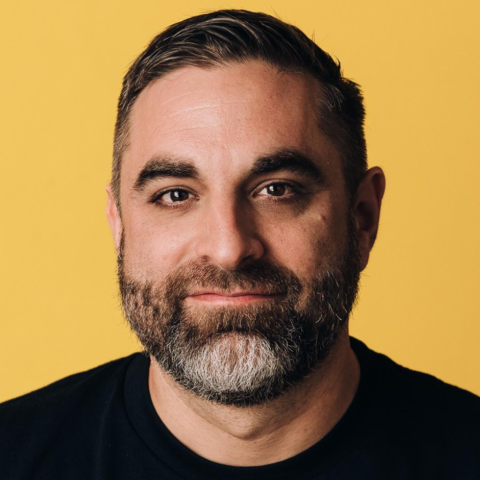
In this episode, David Rice speaks with Paula Goldman, Chief Ethical and Humane Use Officer at Salesforce, about why human-AI collaboration demands a different approach to organizational design. They explore the hidden value of workplace friction, why employees need a seat at the table when redesigning work, and the danger of measuring AI success exclusively through efficiency. Because saving time is one thing. Preserving the judgment, relationships, and expertise that make an organization effective is another.
What You’ll Learn
- Why designing for human-AI collaboration requires a fundamentally different mindset than automating existing workflows.
- How organizations can determine when human interaction matters more than AI efficiency.
- Why seemingly inefficient workplace rituals often support learning, trust, and professional judgment.
- How involving frontline employees in AI implementation leads to better design and adoption.
- Why AI transformation must account for how employees develop expertise, not just how they perform tasks.
- How to evaluate AI ROI through meaningful business outcomes rather than hours saved or usage metrics.
- Why the future of management depends on stronger coaching, judgment, and relationship-building skills.
Key Takeaways
- Efficiency isn’t the same as value. Automating tasks means little if it undermines trust, learning, or judgment.
- Design AI around human needs. Emotional context and customer preferences matter as much as task complexity.
- Protect productive friction. Informal conversations and shared experiences often build the expertise organizations depend on.
- Involve employees early. Frontline knowledge helps organizations design AI systems that actually improve work.
- Don’t automate away expertise. Employees still need opportunities to develop the judgment required to oversee AI.
- Measure outcomes, not just efficiency. Customer satisfaction, retention, and quality matter more than hours saved alone.
- Prepare everyone to manage AI. Effective delegation, oversight, and intervention require training, not just new tools.
- Put productivity gains to work. Use freed-up capacity to strengthen coaching, relationships, and meaningful contributions.
Chapters
- 00:00 – Beyond Automation
- 01:51 – AI-Human Collaboration
- 03:58 – The Human Handoff
- 08:23 – The Value of Friction
- 11:18 – Mindful Friction
- 13:02 – HR’s Role in AI
- 14:32 – Employee Involvement
- 18:39 – Navigating Change
- 20:36 – Building Human Expertise
- 23:50 – The Cost of Learning
- 26:19 – Rethinking AI ROI
- 29:52 – Measuring What Matters
- 31:53 – Human-Centered AI
- 36:05 – The Future of Management
- 38:43 – Closing Thoughts
Meet Our Guest

Paula Goldman is the Executive Vice President and Chief Ethical and Humane Use Officer at Salesforce, where she leads the company’s efforts to develop and deploy trustworthy technology, with a focus on responsible AI, data ethics, and human-centered innovation. Previously, she served as Vice President of the Tech and Society Solutions Lab and Impact Investing at Omidyar Network. A recognized leader in AI ethics and governance, Paula also served on the U.S. National AI Advisory Committee, where she chaired the Generative AI Working Group. She holds a Ph.D. from Harvard University and is passionate about ensuring emerging technologies benefit society while promoting transparency, accountability, and trust.
Related Links:
- Join the People Managing People Community
- Subscribe to the newsletter to get our latest articles and podcasts
- Check out this episode’s sponsor: Teamflect
- Connect with Paula on LinkedIn
Related articles and podcasts:
David Rice: Most enterprise AI conversations start with the same question: What can we automate? But that is the wrong place to start. On today's show, I'm talking with Paula Goldman, Chief Ethical and Humane Use Officer at Salesforce, about the difference between designing for automation and designing for human-AI collaboration.
They're not the same thing. Automation asks what steps you can remove. Collaboration asks what work could become now that humans have a new capability available to them. The handoff between AI and humans isn't as clear as we like to pretend either. When customers are angry, they want a person. When they're embarrassed, they often prefer the AI.
Blanket assumptions about where that line belongs are gonna cost organizations trust in ways that are hard to recover from. Paula's core argument is that as AI becomes more powerful, judgment and relationship building become more important, not less. Productivity is an intermediate outcome. The more interesting question is what you do with the capacity that it creates.
So today we're covering why starting with automation causes leaders to miss how human work creates value, how to think about the AI human handoff for your specific use cases, why every employee is now being asked to manage AI with the same lack of training managers once got, and what designing for human flourishing actually looks like in practice.
I'm David Rice. This is People Managing People, and if your AI strategy is organized around what you can automate rather than what work could become, this conversation will reframe the whole question for you. Let's get into it.
Meet Teamflect, the number one rated performance management and employee engagement platform built for Microsoft Teams.
Trusted by over one thousand organizations. Easy to use, yet enterprise-grade solution. Visit Teamflect.com to learn more.
Well, Paula, welcome to today's show.
Paula Goldman: Thanks for having me.
David Rice: I wanted to start the conversation around you know, a lot of the enterprise AI conversation, it still begins with some version of, "Well, what can we automate?"
Right? You kind of argue that designing for automation and designing for human-AI collaboration are fundamentally different things. And if we start with automation as sort of the objective, what does that cause leaders to miss about human work and how it creates value?
Paula Goldman: Thank you. I think you put that question really well, and I think there's a few parts to it.
One is just kind of the difference between a transformative outcome and a slight boost in efficiency. But it's like we need to be asking, "What does AI make possible for our businesses? How can we further delight our customers, our employees, and so on?" But I think even at a more base level I, I think the question is really about also recognizing where human interaction is fundamental to the success of an outcome.
Where the connection, for example, between someone that's answering the phone and someone that's called in is gonna make the difference between a really disappointed customer and a delighted one, or where human coaching for an employee is gonna make the difference between motivation and growth and not, right?
And I think, you know, we can get into so much detail about it, but I think we've vastly underestimated why that's important. I mean, AI is so powerful. There's so much we can do with it. But the right question is: how do we get people and AI working together well to get responsible outcomes and outsized outcomes, not just, like, where we plug in AI?
David Rice: Part of our issue sometimes is that we-- you know, efficiency and value, they tend to be a little bit synonymous in our minds, but a workflow can become dramatically more efficient while at the same time worse at producing things that matter: trust, learning, creativity, judgment, right? Automation tends to treat the existing workflow as sort of like the unit of analysis.
What steps can we remove? Collaboration, I think asks a different question, which is "What could this workflow become now that humans have a new kind of capability available to them?"
Paula Goldman: I think you said that very well.
David Rice: I think this is particularly relevant for CHROs because a, a finance leader, they're gonna see twenty percent capacity released.
HR needs to ask sort of, what happens to the job expertise, organizational system around that capacity. So I think this is just one of the big things that we're kind of having to wrestle with right now. You've talked about designing the handoff between AI and humans. But that boundary, it's not as simple as AI handles routine work and humans handle complex work.
We say that, but I don't think it's that clean. And sometimes people actually prefer AI for really s-- highly sensitive interactions, while other people, they kinda-- seemingly simple moments depend enormously on human connection. I'm curious, in your opinion, like, how should organizations determine where that boundary belongs instead of making just sort of, these blanket assumptions about it?
Paula Goldman: And it's not that that sort of truism, let, you know, let AI handle the routine, let people handle the complex. It's not that it's wrong. It's actually a pretty good starting place, but Actually, when you start looking at individual use cases, that's where it gets very interesting, right? So, take customer service, for example.
It is true, right? If AI has never seen a question before, it's probab-- and doesn't have any data on the answer to the question, it probably shouldn't handle it. But there's other rules of thumb, too. If something's highly regulated, you know, like One Eight Hundred Accountant, which does financial advice for small businesses, like, if they get into a regulated category like tax advice, they want a human to handle it.
But then if you start thinking about customer emotion or emotional connection, that's where it gets really interesting, right? So tons of studies, tons of data that says when customers are angry, they generally want to talk to a person. When they're embarrassed, let's say maybe it's a medical condition or just something that they don't want to feel like they're being judged for or something, there's a slight disposition for AI.
And that's where I think really understanding those trends, those preferences, where people want to talk to people, where they don't, is really important because when you think about just customer service, continuing with this example, it's really important, not just as a matter of efficiency, but this is where you keep your customer or you don't, right?
And you don't get many chances for that. And that's why I think we're just starting to scratch the surface of how collaboration really works in practice, that paying attention to the human side of it is really important.
David Rice: Yeah, maybe the distinction is not as simple as, you know-- or it's not simple versus complex, but it's actually what do people want from this interaction, right?
You mentioned that when they're angry, they want to talk to a human. I think also if they feel maybe embarrassment or fear of judgment, right, where AI feels a little bit psychologically safer than a person just because we've had those, like, interactions over the course of our life where, yeah, human beings, it felt weird, right?
Or it made us feel uncomfortable. I'm kind of curious 'cause that suggests organizations need user research, not just process mapping, before deciding where humans belong. I wouldn't say the boundary problem, it's not permanent either, right? People may initially want human reassurance and later become comfortable with AI, or the reverse becomes the case.
So it's kind of a question of choice, and I, I think we're using task complexity as the proxy for where, where humans add value. Do you think it's like emotional consequence is actually a better variable?
Paula Goldman: I think they're both really important variables, right? And that the people are ignoring the sort of human connection side of things, probably to their peril.
I think they're both very valuable things to factor in. And I also think you're right things will change. Over time, people may grow more used to interacting with AI, and AI is obviously getting better and better and more and more powerful. But, you know- What else could happen is that people value human connection more, right?
That it may matter more. That actually as consumers and employees use AI more and are kind of filtering out, they use AI to sort of filter out what's coming in, coming at them, right? Marketing messages and so on, that we'll have fewer and fewer human touch points, and they will matter much, much more, right?
And so I think it's a little bit hard to predict how this is all gonna play out, but having written the book, I just feel very, very confident that we are underestimating the importance of the human side of the interaction.
David Rice: You told me this great story when we were talking before this about social workers who resisted an AI tool designed to save them from returning to the office after field visits, and then leadership saw that trip as inefficiency, right?
The workers saw it as the place where they processed difficult cases together. That feels like a much bigger lesson for CHROs to me, 'cause, like, how do you distinguish waste from the seemingly inefficient human interactions that actually impact trust, learning, judgment, resilience the most?
Paula Goldman: Right. And that was a good example of where, you know, sort of really understanding that ritual of what...
You know, people are-- Not only is the-- Like, you go out into the field, you have difficult cases Sometimes there are things you've never seen before. Sometimes there are things that just maybe have a, an emotional toll on you as a worker. You wanna go back and process and learn together because maybe your colleague has seen something before.
This is a question of, it's not that AI can't help you take those notes or do that process, but how does it best both support both the efficiency and the collaborative learning that's taking place there? And that's where just a small tweak of really understanding what the goal is, not just to save time, it's to increase learning amongst the team.
It's to get the best answers to serve the individual people who are being supported through these caseworkers and so on. It's a small tweak that could make an incredible difference. And in that case, the story I told you, it was, like, from a c-- town council in the UK where that pilot just got rejected.
And again, it's a small little tweak of making it a bit more of a human-centric implementation that would've saved that, and saved the efficiency and also all of the learning that went along with it.
David Rice: We spent decades talking about friction as a bad thing and how to remove it, right? And now AI kinda gives us this unprecedented power to actually do that.
But I think what we're f- gonna find more... And I talked with somebody a little over a year ago, an author, and he was talking about positive friction and how that is an actual thing, right? And so, the drive back to the office looked like transportation waste when you saw it on a process map, right?
But in reality, it was peer supervision, it was the ability to decompress together, share informal knowledge. And so, I think we're gonna find similar examples exist everywhere, right? Junior employees overhearing senior colleagues, the conversations that go on after meetings, you know, asking someone who sits by you how they'd handle something.
These interactions, they're invisible, but they're incalculable to ROI and, and sort of employee development. So I think there's a connection to sort of rework there.
Paula Goldman: I agree. Yeah, I agree. Actually, I think you made two really important points. So one was just about the value of kind of the different rituals that may take place within a work environment and really paying attention to them.
But you also said something about the value of positive friction, which I really agree with. And at Salesforce, we call this mindful friction. Same concept, that AI is really powerful, or technology is really powerful. It can come up with answers in so many different domains. But there are places where the difference between a successful outcome and a failed outcome is a human stepping in with judgment.
And so one of the things I spend a lot of time on every single day is, where are those moments where you really wanna nudge someone to take a second look? It might be because it's a very consequential decision that AI is recommending you know, in an employment screening context or screening someone for a loan or something like that, where you really want human supervision.
But it might be just as simple as, like You really want someone to be engaged, and that's gonna make a big difference. You have to do it very, very carefully, but I think that, that idea that friction is bad is not universally true, that there are places where we definitely need friction in the system.
David Rice: I think I heard someone f- once call this load-bearing inefficiencies, which I thought was just a funny way to say it.
But I'm curious, does it fall to the CHRO to sort of identify which inefficiencies are... And we're saying inefficiencies in quotes here because they may not be in the, in the reality of things.
Paula Goldman: Yeah, exactly.
David Rice: Does it fall to the CHRO to identify which ones are that before allowing AI sort of transformation to just remove it?
Paula Goldman: This is such an interesting question, and let me start by saying, I think that the role of HR is so essential, so essential in helping all these different functions within a company use AI in a way that gets the best outcomes and, and that means all kinds of things for the HR org, right, and, you know, all kinds of new types of responsibilities.
I also think, though in some ways, this question has to be devolved to every function where they know. You know, the marketing org really knows, like, where does tastemaking and human authenticity really matter in the messages that we're creating? And where are the things where we can just ask AI to personalize a message 20,000 different ways for 20,000 different customers?
And how do we find the right marriage of that? But it's both. This is what's super interesting is that all of a sudden, AI is everywhere, right? It's not just one or two apps that a company's using. It's like, at least in the Salesforce context, it's deep in everything we're doing across every single function.
And, and so you need people that are, like, experts at those functions to really determine which are the hero use cases, and then you need HR leaning in and thinking about, how do we make sure that human expertise is really there and central on making for the best outcomes?
David Rice: One implication of sort of what we talked about beforehand is that employees can't simply be the recipients of AI transformation, right?
They have information about the work that people that sort of design these transformations maybe don't. And so organizations, they can't redesign every workflow by committee is the problem is like-- So w-- I'm curious what does meaningful employee participation look like without slowing the transformation down to a point that executives become uncomfortable with it?
Paula Goldman: Yeah, yeah. No, and I think that's a fair question, but I don't think You know, one of the things I say in my book is workers should have a seat at the table. And, and I think that story that we talked about, about social workers is a good example of why not doing it is counterproductive. But there are ways to do it where you're actually making it accelerate outcomes and anticipate problems before they actually become really, really big.
So here's some ideas. These are, like, based on what I do actually at Salesforce and with my team. We do things like hackathons where we have, you know, employees coming up with ideas for how to use AI. One of my favorite examples of this is we had neurodivergent employees hacking how to use AI in Slack in such a way that they weren't feeling overwhelmed by all the different forms of information that they were getting flooded with.
And then we end up using those ideas for focus mode in Slack. And so there's so many examples of, like, how involving people increases that type of innovation. But it's not just hackathons, it's asking for feedback in the application. It's involving people in the brainstorming about which apps are going to be really, really important.
And it's listening to that feedback, right? Because the game-- the name of the game is not just rolling out AI and saying you must adopt it. It's how people are actually using it in their day-to-day work to get better outcomes. And the truth is, the people that are closest to it actually know how to do that.
There's another story in the book that is a friend of mine, Amanda Ballantyne, who used to run innovation for the AFL-CIO. She was telling me this story about going to a Stellantis factory, an automobile factory, where they had this partnership where workers on the shop floor were teaching other workers how to work with robotics.
And because they had actually done it, they had actually worked with robotics. You know, one of the teachers she saw had created her own app for the students about how to troubleshoot the robot, right? That is born of real experience. That is helping actually drive efficiency. And it's an example of why you don't just roll out technology as a mandate from the top down.
You really involve people in it, and you'll get much better outcomes.
David Rice: And I think you know, there's some hesitancy to do this, but I think everybody needs to keep in mind there's a big difference between employees having a veto power versus providing design intelligence. And I think frontline employees, they know about...
I, I think about this because from my own point of view, I've worked in hospitality, transportation, operations, all these different areas, right? Frontline employees, they tend to know about sort of these workarounds or rules that don't quite appear in your SOPs a lot of time. They have like shadow workflows.
Paula Goldman: No, that's exactly... That's exactly it. And there's some times when AI can sort of pick up on that tacit knowledge and help make it more available to people, and that's great. And then there's times where there's just all this stuff that is not gonna come up. It's not explicitly codified. It's someone reading the room, or it's someone really understanding how this has been done for years and figuring out how to do it, and that's why you wa- you actually want that expertise, right?
You want-- That's gonna get you much, much better results.
David Rice: I would frame it less as the participation itself, almost less as consultation with employees, and more like requirement gathering. Because there's an adoption argument, right? People are more likely to use a system when they recognize their reality in its design.
Paula Goldman: A hundred percent. Yeah. That's a great way of framing it. Yeah.
David Rice: We, we see it across different types of technology, right? It's a legitimate attention to have. I guess my question for you would be like how do you distinguish between legitimate frontline knowledge from resistance that's basically, "I don't want my job to change"?
Paula Goldman: This is so important, and I'm really glad you asked this question. Here's what I wanna say. We're living through such a big transformation in the way that we work. You know, change is hard, and again, but I actually think this is another reason why involving people and giving them a seat at the table and really understanding, or as you just said, sort of like requirement gathering, makes for much better outcomes, is that like we're asking people to change the way they work, right?
It's easy to underestimate that there's a massive emotional curve that they go through, and that there's knowledge that needs to be brought to bear there. And so how do you do this well? I actually think, you know, it's, it's thinking about what... So one of the questions we talked about, what needs to stay human?
And getting opinions about that, right? Doesn't mean that every single opinion dictates the outcome, but like really listening to that and really understanding where are the places where that kind of judgment and relationship building and so on, or just adjudicating edge cases makes a big difference.
But involving people in that, in that design of like what should work look like makes a really big difference. I just-- We just did this with our own team, and, you know, I think there's a little bit of like you get used to one way of working, and you get really good at it, and then you're asked to change it, and that's hard.
And people need to be like brought along and bought into it, and they need to see that actually it's gonna make the work better, right? And I think when they see that, it gets very, very exciting. But it is hard. It's, it is change management.
David Rice: Yeah, absolutely. There's another dimension to human/AI collaboration, and I think like this I'm seeing this more and more as a talking point.
It's something I've been talking to folks about on this show for over a year now, but it's something CHROs are gonna have to wrestle with, right? And that is if we systematically hand certain cognitive tasks to AI, then we're not just redesigning jobs. We may be redesigning how people develop expertise and their ability to sort of shape what comes out of the workplace.
So I'm curious, like, how should leaders think about what humans need to keep doing? Not because AI can't do it. I think at some point it will probably do all things better than us. But because doing it is how people develop the judgment that they need to be successful in their roles, and I think there's a distinction here between can AI perform this task and should humans stop performing this task?
Paula Goldman: Yeah, 100%. Actually, I think you make, again-- Well, you always make lots of really great points, multiple points at once. So let's start with can AI do it versus should it, right? We went through some examples early in the conversation about that in the com- customer service context. Other contexts as well, where the difference between can and should makes the difference between success and failure.
I was just thinking from an HR perspective about nudge tech and technology that helps managers get more thorough performance reviews and give more thorough feedback. But there's a difference between AI helping to collect that information and a manager not only taking accountability for what that review looks like, but also delivering it because that, you know, it makes the difference between motivation and not.
That's why, you know, you're nudging someone to check in more often with their team versus having AI check in for you. Doesn't really work, right? So I think that can versus should distinction is really important. And then that question of developing expertise is really, really crucial, right? That's why we see so many new forms of-- I mean, why there's a resurgence in conversation about apprenticeship, why there's a resurgence in conversation about training and skills and so on.
I do think this question will look different in five or ten years, right? You know, you wouldn't have said, like-- Think just as an analogy, when the spreadsheet came out, right? You know, there was hand-wringing about people losing expertise about performing different calculations and so on.
You still need to know the basics, but then you get sort of get used to a technology. You find ways of double-checking the outcome. What-- Knowing what you can rely on, what you can't. And I think for that reason, we're also starting to see new roles emerge where it's like you're actually learning the basics by supervising AI, right?
You're learning the basics by understanding, for example, if you were using AI in a sales context And you're seeing all these sort of inbound questions come in and AI sort of answering them. Where is it working? Where is it not working? How can we improve it? And you're-- so there's new ways of learning the business that are gonna have to emerge because AI is changing how business gets done.
David Rice: Yeah. And, you know, we're of an age where growing up, we had all these experiences where-- that built the expertise. And I think the thing that we've got to decide right now is that some tasks may need to remain deliberately human as training tasks, even though I know the AI can do it faster. But that then creates kind of an uncomfortable economic question, 'cause your CFO is ultimately gonna come to you and go, "Okay, well, who pays for your developmental inefficiency?"
And that, I think, is gonna be a, a bit of a tough one to answer.
Paula Goldman: But I don't-- As you said before, it's not... I think that's the wrong way of framing efficiency, right? We're talking about people learning how to-- ultimately how to manage AI systems, and there's so many examples about why that sort of management, that judgment, that oversight makes a massive difference for the outcome.
So this is not about an inefficiency. To the contrary, this is about you're gonna make this massive investment in AI, you better have people who both know the business and know how to judge what tasks to delegate to AI and what not to, right? And when you have both of these things, the sky's the limit for what you can do.
When you don't, you're kinda throwing money at a problem without solving the problem. So to my mind, this is actually a better way of thinking about the efficiency question.
David Rice: Yeah, I agree. I think where my concern comes in is that, you know, we're talking about something like these are skills you develop because you may need them, they're gonna be part of your work five years from now.
But the folks that you had to convince that are used to thinking in quarters, they're used to thinking in short-term gains, there's a lot of short-termism in the market. I do think some of that's changing. I sometimes wonder about the challenge of convincing those folks that we've got to keep these in place because this will become increasingly important as this technology develops and we integrate it more and more.
Paula Goldman: Yeah, yeah. I think you also conversely saw these examples where people were totally remaking different functions and then going back and saying, "Actually, humans have a gigantic role to play here," right? So it's I feel like we are learning this lesson, and I, I don't think these things are a- I mean, I don't think these things are actually in tension with each other.
That is to say, when you actually get the human role right, and when you actually teach people how to manage the technology that's changing how work gets done, you get better outcomes much faster.
David Rice: You know, most AI business cases, they're relatively good at capturing sort of what disappears, right? You know, the hours saved, tasks automated, head count capacity created, that kind of thing.
I think they're a little bit worse at measuring what might disappear with it, which is, you know, we mentioned that tacit knowledge transfer The relationships, the judgment, mentoring, even those informal moments where people make sense of difficult work together, right? I'm curious, do you think our current definition of AI ROI systematically sort of undervalues that human side of work?
Paula Goldman: It's changing, but yes. And that's why, you know, one of the trends that I really is we're starting to measure AI ROI by outcomes, right? Versus just so, like, how many customer calls did it actually resolve versus just how many hours got saved or something like that. Those are two different ways of measuring the same problem.
How many... If you're using AI for training, you know, did people's skills actually get augmented or not? If you're using it in, let's say, a legal setting, you know, and you're using it for research are you actually getting a measurable improvement in the quality of the briefs that you're filing? Or are you, as we all know, getting a whole bunch of hallucinations that are getting filed and having your lawyer censored for that, right?
So again, when you change the way that you're looking at it to sort of the holistic metric, then you start to account for both what AI is capable of and what's not, what it's not capable of, and where you need people in the loop and double-checking things, or where you need actual human judgment, or you need people actually learning the ropes while they're doing it, as we've talked about before.
And so I think that's actually very positive, and I'm pretty confident that's where we'll end up, is that we're gonna be measuring more holistic business outcomes. And when you do that, you're gonna be making better investments in the technology, and you're gonna have a clearer roadmap for where people's jobs should be evolving in a way that's exciting in a way that's empowering and gives people more power and more opportunity to do Bigger and better things at work.
David Rice: Yeah, I agree with you.
I think, like we are moving away from-- I've had a conversation and several times recently, I'm saying a conversation 'cause it's the same face, but it's, you know, the conversation about measuring usage, right? And so, like we're starting to see people go, "That's not it." Because I think the thing that is people are starting to realize is like there are accountable gains, but y-you're gonna struggle with diffused losses with certain things, right?
So yeah, like hours saved that you can measure that immediately. But if you take like something like weaker judgment, you may not be able to detect that for a year, two years, you know? And so there's like an asymmetry there where the benefit is booked now, but the capability cost is deferred. And that, I think more and more people are gonna getting turned on to that and being like, "Okay, we got-- I have to measure this differently."
Paula Goldman: Or even like CSAT or something like that, right? So yeah, AI can answer all of your customer questions. That doesn't mean you're gonna convert the deal or that your customer is happy with the service they got and whatnot. And again, like AI is really powerful. It can do a lot of things. It-- And that's very, very exciting.
You just wanna measure it, measure it in the right way so that you're getting that right balance of where are the places where you really do want people stepping in and why does that matter.
David Rice: Well, I guess that my natural follow-up question to that would be like, what would you actually measure? Because I just wrote a story recently called Can You Measure Judgment?
Because I've heard people say, "Well, you can't measure judgment." I'm like, "Well, actually, we've seen that there are certain things. There are signs and there are behaviors that you can measure, right?" So like the problem I have with well, we can't me-- it's tough to measure that. It's like, well, then efficiency is gonna win every argument So what would you measure, I guess, if you were looking at this and thinking like, "I wanna be able to show the long-term impacts," and sort of if we're approving this huge transformation budget, what needs to maybe appear in that business case that isn't there today?
Paula Goldman: Let's think about from a customer perspective first. Then we could think about it internally. But from a customer perspective yes, as we just said, you could measure hours saved, and you should. You should. But you should also measure customer satisfaction. You should measure customer attrition.
You should measure, you know, how many customers are converting from those sales efforts, whether they're AI-assisted and augmented or not. But notice that none of the things that I've just said, and I could go on, are new. These are holistic ways we measure our business right now. We're just kind of, you know, in this weird blip in time where we're, you know, obsessed about AI, and so we're zeroing in on this kind of one intervention.
But when you really integrate it into the system and you look at those things, then you realize it's a mix of strategies that you need. You do want your customer to land on your website and be able to ask any question that they want about your product and get escalated to a h-- like, if it's a simple transaction, go ahead go transact online.
If it's a more difficult one, escalate it to a person who might be able to close the deal and actually really talk the customer through what problem they're experiencing and help them reframe that problem, right? And so I guess what I'm trying to say is I don't think we need new metrics. I just think we need to apply them.
We just need to be level-headed about how we apply them.
David Rice: Yeah, no, I would agree with that. And you said something when we chatted before this that I really liked. You said, "Technology is powerful, but it's not the protagonist. We are." If we take that seriously, then the goal of AI transformation can't be, you know, simply just making people more productive, right?
So what should organizations actually want humans to become better at as machines become more capable?
Paula Goldman: Let me just take a step back for a second. Why did I write a book? I like, I ask myself that question a lot 'cause, and believe me, my husband asks me that question all the time. And I will say I was kinda getting upset 'cause I had all these really smart friends when this latest AI wave.
I had all these smart friends reach out to me who were so nervous, and they were saying to me like, they didn't quite say it like this, but, you know, whether it was my friends reaching out to me or these board conversations, these customer conversations, this nervousness of "Do we still matter? Are people becoming obsolete?"
And it was so clear to me through all of my interactions with so many different customers, just like observing technology over time, that it was really the opposite was true, was that as AI becomes more powerful, that question of judgment and relationship building becomes more and more important, and that really what's happening is that we are all becoming managers of AI.
We are gonna be needing to manage... We are becoming turbocharged, and to be able to do that, we need to effectively manage the technology and understand what it's good at and not good at, and then being able to step in. And so I think this sort of speaks directly to your question because this isn't just about building a faster horse, right?
It's about us imagining what's possible when you can name whatever it is in your role, when AI is able to personalize interactions at a hyperscale in marketing, or when AI is able to answer all those first-line questions that come in from customers, or in HR when AI is able to give all of your employees all the information that they need about benefits at the tip of their fingertips, and you can change that effort to something else.
What is possible, right? All of the things that I just said, that is gonna become table stakes. What matters, like you need people that are in those roles that know how to leverage those efficiencies and then do something better for their customers or their employees. And that's why it's so, so important that we have people that not only are fluent in AI but are empowered in their judgment and empowered to think of new things.
That's the moment that we're in. Not a faster horse, a reimagined business, right? And that's why I'm so passionate about this whole conversation.
David Rice: No, I agree. I've, I've... I'm hearing more leaders sort of become attuned to the fact that this is like an organizational design choice rather than just accepting sort of the inevitable consequence of this technology entering the workplace.
And I'm hearing more people say "Well, this, you know, it's not necessarily about everybody having the answer," especially leaders. Leaders are realizing like, "I don't have the answers." But a good leader can ask the right questions, and so And then it's about judgment and sort of framing problems and building trust in your people so that they feel free to take responsibility, right?
And so yeah productivity is an intermediate outcome, but I don't think it's like the end-all be-all. The more interesting question is what are we doing with the capacity that this creates?
Paula Goldman: That's exactly right. And, and by the way, productivity is very important. Yeah, of course. It's extremely important, but I'm not burn shading it.
I'm just saying you know, to get even in, in this intermediate stage, you know, we've seen all these AI disasters. You need people overseeing it. You really need people that understand the boundaries of where AI should step in and where people should. And also, you need people that are empowered to reimagine things and to really keep their customers and their employees at the center of the transformation, and those are the companies that I think are gonna win.
I'm already seeing it.
David Rice: I'm seeing like jobs getting redesigned, and I think managers are a great example of that, right? If AI can remove sort of the reporting and the admin work that goes along with that, the manager-- Then it becomes you actually want something different from your manager. You're looking for them to become a better coach Or to get more out of their direct reports.
And this creates the opening for them to do that, but it also creates a different framework of what you are actually looking for from a manager. So-- 'cause I talk all the time about it's a little weird that we've had this thing in the last fifty years or a hundred years of work where oh, I was really good at my job, my individual contributor job, so I became a manager.
And then I have no i- it's not actually my personality type to coach, right? So, now you can free it up. They don't have to be brilliant at this, but if they're really good at sharing knowledge and helping people see a better way of doing things, that's your manager. They maybe weren't the best at doing the IC work, you know?
Paula Goldman: No, that's-- So first of all, what you just said, this is one of my pet peeves. And by the way, I think we're at this moment where all of a sudden we don't know it, we don't talk about it this way, but we're asking now almost every single employee to manage AI. Similar lack of training. We're just like, "Go do it," right?
It was kind of one of my motivations to write this book. But more broadly, again what you just said is a great example. I was thinking about my manager when I actually started writing this book 'cause a couple years ago I started having the idea for this book. My manager at the time was a man named John Stormer, and he didn't-- I told him about this idea.
Wasn't part of my day job. He didn't say "No, that's a bad idea." He didn't subtly redirect me. He just kind of quietly fed my imagination, sent me podcasts, sent me news articles, and kind of quietly conveyed this belief that it was important. And from that belief, this whole book blossomed and g- sort of gave me the confidence to put out this perspective in the world.
And I think we underestimate how much that kind of connection really matters. Again, no one asked me to write this book, right? It came from a place of inspiration and connection that was nurtured by not only him, but so many different people in my community. And that's the kind of thing that we don't want to lose when AI becomes more and more powerful.
That's the kind of thing we want to design into, actually make mo-- not only not lose, but make more prevalent. That's the kind of opportunity that gives me chills. That's what we want to go after.
David Rice: We're in the same boat there. Well, Paula, this was a great conversation. I appreciate you giving us some of your time today.
Paula Goldman: Oh, thanks for having me. And so thanks for asking such great questions. I loved it.
David Rice: Listeners, if you haven't done so already, you know, we would definitely want to go over and check out our AI Signal. We're doing an executive briefing every week with the one thing you've got to think about this week, whether that's attention, a question that you need to ask in your next leadership team meeting, a tool to assess the work that's going on right now.
Be sure to sign up for that. And until next time, think of the possibilities. We're redesigning work here.
Run performance reviews and bring employee engagement insights into your favorite AI tool. Connect Teamflect to ChatGPT, Claude, or any LLM to check goals, write reviews, evaluate feedback, create tasks, and more, all through a simple chat. Try Teamflect now for free.

