
Why Mindset Beats Skill in AI Transformation


You were told AI would clear your calendar. Instead, you’re answering 800 chats a day and wondering what, exactly, you accomplished. Productivity is up. So is the volume. You 10x your output and somehow inherit 10x the work. Welcome to the hamster wheel.
In this episode, Eliza Jackson, COO at ButcherBox, and I unpack the real transformation behind AI at work. It’s not about learning a new tool. It’s about unlearning how you work. It’s about rethinking what you own versus what you delegate. And it’s about building the kind of resilience and mindset that don’t show up on a résumé—but determine whether your team can survive what’s coming.


What You’ll Learn
- Why AI transformation is fundamentally a mindset shift—not a tech rollout
- How to operationalize resilience when it’s invisible in traditional metrics
- Why mandating AI adoption creates the wrong conditions for learning
- How peer-led change can outperform top-down strategy in ambiguous environments
- What happens when productivity increases but reflection disappears
- Why hiring for curiosity and humility now beats hiring for pedigree
Key Takeaways
- Resilience has to be defined—or it disappears.
If 11 people hear “resilience,” you’ll get 11 interpretations. ButcherBox embeds shared language into hiring, coaching, and performance so mindset isn’t abstract—it’s observable and coachable. You don’t scale resilience by accident. You name it, repeat it until you’re sick of it, then say it three more times. - You can’t mandate learning.
AI isn’t just a new tool—it rewires workflows. Mandating usage may drive compliance, but it erodes psychological safety. Real adoption happens when people are given space to experiment, struggle, and rethink what they own versus what they delegate to an agent. - Peer-led transformation builds credibility faster than executive edicts.
ButcherBox’s AI task force wasn’t driven by hierarchy. It was driven by curiosity. Non-technical employees built agents to solve their own workflow pain points. The lesson? Innovation often comes from people quietly reworking their day—not from a glossy strategy deck. - Technical skill without critical thinking is a liability.
Training people to “use the tool” isn’t enough. If employees can compliantly operate AI but can’t critically evaluate when and how to use it, you’ve created risk—not leverage. The real upskilling challenge is cognitive, not procedural. - Burnout is a design flaw, not a personal weakness.
If every day feels like just keeping up with chat threads, no one has space to think. Reducing meetings. Building reflection time. Creating shared norms around self-governance. These aren’t soft perks—they’re prerequisites for good decision-making. - Hire for mindset. Develop for skill.
ButcherBox is promoting leaders into roles they’re not “fully qualified” for on paper—because they have curiosity, humility, and business acumen. In an environment where knowledge is democratized, the advantage goes to those who can think, not just execute. - You have to govern your tools—or they’ll govern you.
AI didn’t force 10x workloads on anyone. We did that. The promise of the technology isn’t “do more again.” It’s “choose better.” That requires discipline, not just access.
Chapters
- 00:00 – The productivity paradox
- 02:05 – Hiring for mindset
- 06:19 – Defining resilience
- 07:08 – AI as workflow rewrite
- 12:47 – Peer-led adoption
- 16:39 – Embracing imperfection
- 18:03 – Mindset vs. usage
- 21:30 – Focus and resilience
- 25:16 – Curiosity over pedigree
- 31:14 – Engineers at risk
- 37:39 – Adapting to speed
- 39:48 – Creating space to think
- 41:42 – Self-governance
Meet Our Guest
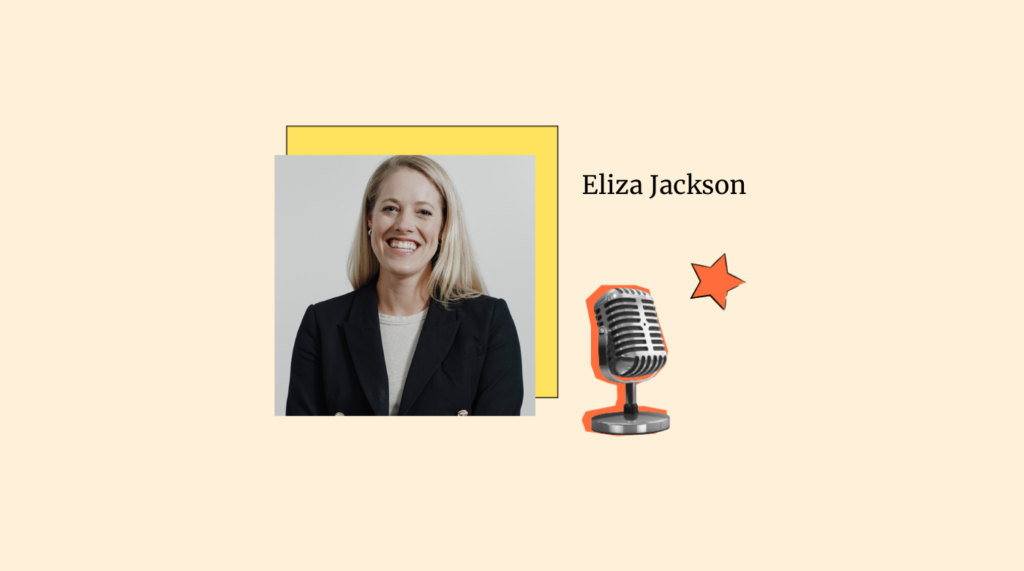
Eliza Jackson is the Chief People & Administrative Officer at ButcherBox, where she drives operational excellence across engineering, supply chain, procurement, growth initiatives, and the employee experience to support the company’s mission and culture. Prior to joining ButcherBox, Eliza served as Associate Chief Operating Officer and Founding Director of Operations at Uncommon Schools, and she holds advanced degrees in Education Leadership from Teachers College, Columbia University. Known for her strategic leadership and people-first approach, she champions resilience, adaptability, and intentional culture-building in fast-changing environments.
Related Links:
- Join the People Managing People Community
- Subscribe to the newsletter to get our latest articles and podcasts
- Connect with Eliza on LinkedIn
- Check out ButcherBox
Related articles and podcasts:
David Rice: You were promised that AI would take work off your plate. Instead, you're doing more, again. You 10 x your productivity, and this just means that you're juggling 10 times the amount of stuff. You respond to 800 chats in a day and can't remember a single thoughtful decision that you made. You get to the end of the workday and think, what did I even do?
Welcome to the hamster wheel. Today's guest is Eliza Jackson, she's the Chief Operating Officer at ButcherBox, and she's living this paradox right alongside you. Because what nobody tells us about AI transformation is that it's not about learning a new tech tool. It's about completely rethinking what you own versus what you delegate to an agent.
It's about unlearning entire workflows and you can't mandate that kind of change. But here's what Eliza has figured out that a lot of operations leaders haven't. The qualities that actually matter in this new reality, things like resilience, adaptability, growth, mindset. They're quiet. They don't show up on resumes or performance reviews.
And if you're still hiring people for pedigree and perfect conditions, you're missing the people who can actually handle what's coming. So ButcherBox does something different. They build resilience and adaptability into the culture through shared language, accessible coaching for everybody, not just executives, and knowing people at an identity level, not just at work.
They learned that you can't scale transformation without scaling the human capacity to handle it. So today we're gonna cover how to operationalize resilience when it's invisible in traditional metrics, why mandating AI adoption sets bad conditions for learning, the conundrum of high stakes, demanding speed while learning requires reflection, how to self govern your relationship with tools instead of letting them govern you, and why say it until you're sick of it then say it three more times is maybe the only way that change management works.
I'm David Rice. This is People Managing People. And if you've caught yourself thinking, I'm just doing more again, this conversation shows you how one COO is breaking the cycle. So let's get into it.
Eliza, welcome.
Eliza Jackson: I'm so excited to be here.
David Rice: We were talking before this and you were telling me that you've prioritized building a resilient and adaptive workforce over just, you know, scaling skills, but those qualities, you know, they're not always visible on a resume, right? Or even obvious in performance reviews.
So I'm curious, how are you actually spotting, measuring, or rewarding that kind of adaptability inside ButcherBox?
Eliza Jackson: You know, I think not credit to myself, but to our founder and the folks on the early team, they have always been unbelievable about having very clear core values. Not the kind that are just like on the wall and people walk by, but are really embedded in the culture.
And so that exists from interview through performance suite, through peer feedback, and is really geared towards what are the mindsets that we want in terms of the employees that work for us. I would say like throughout the employee life cycle, you are pretty clear on what we're looking for. Like what are the qualities that would make you a good fit in terms of culture.
Are we clear that you have a growth mindset that you wanna take feedback, that you wanna participate as part of a community and. We then basically make sure that others feel comfortable calling each other out, that they get that kind of feedback from a manager. And we're very mindset based. So that's true in culture.
That's true in coaching. That's true in a performance conversation. Like there is one part that's about you hitting your metrics and the technical components of the job. But I would say more important are folks working on and getting better at the core value rubric? Do they embody our operating principles?
Then are they leaning into a culture of growth and wanting to get better for us? We will hire someone who has far less experience, and if they're excited and willing to work on the technical skills, then we feel really confident that we can get them there.
David Rice: That's interesting. Like you mentioned that you know, people calling things out and I think so many orgs say that they want adaptability.
Then they still pretty much hire for pedigree and performance under sort of perfect conditions. Right. I'm curious sort of how you operationalize this 'cause like where do you see resilience show up in someone's day to day? Like how do you make sure it doesn't go unnoticed just because I mean, it is quiet?
Eliza Jackson: Yeah, absolutely. One of the most important parts of our culture, and I think something that feels really unique here, is that people really know each other. They know each other, not just at work. They know about each other's families. They know what happened, you know, when you were walking your dog on Tuesday.
They know each other, I would say like at a deep identity level. And to me that allows people to see some of the qualities that are a little bit deeper than just like, do you know how to do the Excel spreadsheet? And I would say most of the way that we build that and operationalize that is through a coaching for all model.
It is nearly impossible to do that if you just are using your own internal team. So we partner with a company called BetterUp. Their model is essentially accessible coaching, not just at the executive level. And it is both about, you know, what are you working on in terms of your own growth and development professionally, but a lot of it is about your own identity work.
To me, you need your folks to be really tapped into that, to be able to recognize mindset in each other and in yourself. You know, I think people are pretty good about like doing their own self work, and so I would say we're able to see that better in one another. And then to the question about like some of these, you know, some of what you would pick up on if someone's like showing resilience in the day-to-day is more subtle.
I think it's getting really clear about what you mean when you say. Build resilience or show empathy or express humility. We're big on getting tight on like what's the language? What does it mean to be resilient and how do we have shared language around that? Because what I might think resilience looks like might be totally different than what you think.
And so at least if our employees are operating with the same shared language, I think that helps them to see examples in each other and in themselves. And then we do a lot of training around it. So they do a lot of like practice.
David Rice: It's like anything else within communication, you say the same words and 11 people, different people are gonna get 11 different ideas about what you just said, so.
Eliza Jackson: We always say you know, it's like whatever the sort of joke is about change management. Like you should say the thing enough times that you feel like you're gonna be sick and then you should say it three more times. But it's true. It's like, you know, just because I, if I wrote part of a rubric and I feel like I understand it, a brand new employee who has never worked here, who doesn't have experience with the community, might take it completely differently than the way I intended it.
And so I think like clarity of language and then like the practice piece is huge. We do a lot of professional development and people need to see examples and they need to talk through it and ask questions and to make it come to life.
David Rice: You just brought it up there. There's a change management and this being a key component of it.
A lot of companies, it feels like, are still treating AI right? Like a tech initiative. I'm curious, like what do you have to unlearn about transformation and how it works in a company where the majority of people don't naturally maybe identify as innovators, right?
Eliza Jackson: You know, I think the work around AI to me is so much about the mindset.
What I've been most struck by is I think. How deeply it changes your workflow and the way that you learn it is not just about getting better at prompting ChatGPT or Perplexity or Claude, right? Like I'll use the Microsoft Suite as an example. If you really are leaned into that, the way that you work when you sit down at your computer is completely different than the way you worked yesterday.
And so I think there is this piece around learning and unlearning. Is heavily embedded in AI that people don't talk about, which was why I'm not like a huge fan of some of the policies around mandating it because I just don't think that sets a good condition for learning for people. It's a very different way of working and it isn't just about like learning one new tech tool.
It is about rethinking what you own in your own work, what you delegate to a, an agent or you use a first pass through. Like a conversational chat bot. It's a real redo on the way that we work, and I don't know if people have like fully leaned into that yet.
David Rice: Part of what's really unique about this is like I'm seeing it all the time with us, is everybody just has a different suite of tools that they're using.
So it's like, I could tell you like the prompt that I use, but I don't know what model you use. You may not get the same response, so you may get like. You know, because everybody has sort of like their preferences or their, you know, I was introduced to this and then I subscribed to it and I've just been using it ever since and I've gotten comfortable building in there.
Now you're telling me to use something else, and now I got used to a whole new tool. So it's just like this discomfort in there. What's interesting is I think we've built this sort of like mythology around innovation, right? It's loud, it's fast, it's led by like the tech people, but I think in a lot of orgs.
Transformation actually comes from people who don't even call it that they're just doing their jobs differently. You know what I mean? So I love that you're pushing against that sort of bias.
Eliza Jackson: I completely agree with that. And I had the privilege early on of picking the brain of a COO of a, like a mind body app.
And one of the things that he. Had done that I was, that spoke to me so deeply in the, 'cause this was probably like two years ago, is he had basically in a very small team enabled it so that every employee could build their own agent and you did not have to be technical. And he said he was like, actually some of the people who are best at building these agents for their own workflow are people who were teachers before who like are able to understand kind of the flow of.
How do I get better and tighter in the question asking so that the agent can give me back what I need? And he was like, it's actually not that technical. And I thought it was brilliant what he did because he empowered people to build their own agents for their own jobs to solve problems that were hardest for them.
And I think that just takes some of the. Mystery out of it. 'cause I think there is this feeling of like, I, you know, I'm not an engineer so I can't do it, or I'm not a technical person, so I don't think I should try. And I think to your point, a lot of the time innovation is actually just coming in the micro moments with people in their day-to-day jobs when they're rethinking and trying something totally different.
David Rice: Oh, totally. We had David Swanagon on recently, he runs like the machine leadership journal and he was talking about how actually when they studied it. Engineers aren't the best prompters. It's actually like people who are in marketing and people who do other things completely right. These really well thought out prompts.
It's that's a good example of what you're talking about right there.
Eliza Jackson: No, not really. It's really like, can you, critical thinking to get a better output.
David Rice: I keep framing it. Like use it to help you think.
Eliza Jackson: Yes.
David Rice: You know what I mean? Don't not just to like get a result.
Eliza Jackson: Totally. It's been interesting, I had a conversation with one of the employees at BetterUp Labs, so they do a ton of research and obviously I've been pretty heavily ingrained in like what is AI doing to different, like mindsets at work and how is it shaping people's work habits?
And they did this study that I thought was so interesting of people were given like a really technical training, you know, with like a set of AI tools and then a training where they got to know the cat bot basically. So like they started to understand like how it thought they got, they leaned into different like prompting styles and they learned some of the logic behind it.
But they really were not taught like any technical roles and the people in that category who did more like relationship building with AI. I think, I might get this data wrong, but it's, we're, you know, like 60% more proficient at using the tools than the folks who got the really technical training. And that doesn't surprise me, right?
Because there's so much of this that's about your own curiosity and willingness to try and to your point, like it doesn't have to be that everybody's using the exact same tool in some perfect way. You just gotta like learn to try something to change your workflow. But I thought that was really interesting 'cause so much of the way that.
The world is going in terms of trainings is like, I will teach you how to use perplexity in this way. And I don't think that really works for folks.
David Rice: It's kind of better that everybody's not using the same stuff and sort of doing the same thing. Right. Because like you all took a pretty or orthodox past, you have a peer led AI task force and it sort of decentralizes authority and trust in a big way.
Like how did you decide who leads that work and what kind of internal friction did it surface, if any, i'm curious.
Eliza Jackson: Yeah. I will say it was. I don't sit in most of their weekly meetings now, but it's been some of the most fun work that I've gotten to do, I would say in my whole career, because at least here, like so much of our work is like, okay, we have a cross-functional group.
It's really clear who the people are on this project. They're gonna go solve this thing. This we, you're right, we took a very different approach, which is that we had we used the pilots and passengers model that is a better up term, which is basically like pilots are people who are. Really curious about AI, wanna learn, think it will advance their work.
And we got a small group of people from different departments who were in that category to basically design a peer strategy around how we adopted AI. And I will say way less friction than I was anticipating. I think actually. Folks could hear and learn from their peers probably much better than they could have learned if like our HR or our tech team had done a training on a policy.
I will say for my own like anxiety, that part was a little harder 'cause I really had to let go. So like, they call them carve trainings and they do these like monthly trainings and it's basically like a combination of some sort of like how you enhance your workflow. And then they do, if you wanna do some of the technical stuff, you can like, they can teach you how to.
Code and they're led by peers. And I told the guy who was running them in the beginning like, you should go for it. I will not, I will give you feedback if you want. And that was a good exercise in letting out. But what has been a not surprising lesson is that they've been incredibly successful.
They love the work, they're interested in it, and they really want it to be successful.
David Rice: Well, it is really interesting to me 'cause sort of, it means you're taking away the usual guardrails and hierarchy that I think a lot of orgs depend on to make them comfortable with this type of thing. Was there any discomfort in there with you all for that like, 'cause I think not everybody wants to follow someone who isn't officially in charge.
I'm curious how you navigated it and like sort of socialized it.
Eliza Jackson: So I started the original pilot with this group and I think it actually really helped that I am a non-technical person because they're in these meetings. I was by far the least technical person sitting in them. And I would just try to ask questions that didn't make sense to me.
Get them to kind of explain some of the work that they were doing. And so I think once in that room they saw like, okay, there isn't some person, you know, 'cause I think this is often what's happening in organizations. Like, well, someone higher up should be leading this strategy. And what I said to them is like, I don't know how to do this.
This is what I think we wanna go after in quarter one, and then I wanna iterate it and build on it. There is not a perfect roadmap for this, and so we need to co-design this, but there is not some perfect solution that I'm going after. And if you think there's someone else who's gonna come in and give us that.
And so I think that helped them to feel empowered to drive the change. And I will say there was. In the very beginning 'cause we, we worked slowly on it in the background and then once it had like picked up more speed and we'd built a decent amount of agents and they had done some like company trainings.
There was a period where there was like a lot of discomfort, a lot of discomfort from cyber, a lot of discomfort from legal. There was a lot. And I sort of said just like send it back to me. I think that's a hard conversation to tell people. Like you have to get comfortable with the fact that this is not going to be perfect.
David Rice: Yeah, I mean, it goes for employees too, right? Because it's so hard to, I mean, some of 'em are gonna feel like they're being automated outta their job, and other ones they're gonna be like, well, isn't this supposed to be better than me? It's like, well, no, not necessarily. That's not what I'm saying. You know?
Eliza Jackson: Like, no.
David Rice: You have to teach it to be on your level almost, you know?
Eliza Jackson: Totally. And I do think what helped is this group, the couple of folks in this group are incredibly smart, but very humble. They did a really good job of going to departments and saying like, can you tell me what are the three biggest pain points or the three like problems you would wanna solve that are just like, that drive you crazy every day?
And I think they built a lot of trust. Instead of saying, you know, coming in and saying like, we're gonna build five agents, they would go in and be like, okay, what is most annoying in your workflow? And they built credibility by solving some of those problems for people. And then once. I think once people got more comfortable, like, oh you're actually, should I make my job easier?
Then that helps.
David Rice: That gets to mindset, and you spoke about that a little bit earlier. There's this rush to sort of like upskill for AI, but like people tend to focus on tools, right? Not mindset. When you zoom out. I guess, what do you think we're in danger of missing if we only train for usage instead of preparing people to sort of lead inside this like ambiguity and this thing, that can go a million different ways, quite frankly, depending on how you use it.
Eliza Jackson: That does really worry me because I, what we know to be true now is that every day feels different and you know, whether you're using like a framework, like a VUCA or a bannie, there are a million of them, but it basically means like there is. Some pretty unpredictable challenge that comes up almost every day now, and I don't think that is going to change.
And if we don't equip our leaders to learn how to lead through ongoing change, to build resilience, to possess optimism and hope in an environment that is hard to lead in. I think what you run the risk of is that people will have a lot of technical skills, like they will know how to use, you know, they can run off 10 tools that they know how to use, but they can't actually critically think about them.
They can't get to the next step. They can't think about how it changes their workflow or the way they work with someone else. Like I actually think that will really hurt innovation because this is a very different way to lead than it was even probably five years ago. My opinion is that people need some real mindset coaching and support to learn how to do that.
David Rice: I couldn't agree more. Too often we're treating this like it is just another technology platform like it's teams or Slack or something. But the deeper shift here is cognitive, right? If we don't help people get more comfortable with uncertainty and how to critically think through what this thing generates, and I think this is true, even as we go beyond generative AI into the next phases, it's just as important.
Right. We've gotta get, all the tools in the world are gonna matter if people can't think the way that they need it, about not just what they do, but about what they're generating and putting into the world.
Eliza Jackson: Yeah. And I think that's part of what you see. You know, I'm not saying that obviously the work around sort of the right guardrails and set of legal guard rails, set of cyber guardrails that matter so much.
But I do think a part of what. Is under that anxiety is that there isn't a trust that people can make good decisions about how they're using the tools. And to me that's often because someone learned how to use it. Like they can compliantly use the tool, but they can't think about should I actually take this piece of data and put it in this kind of tool?
What could happen next? Like there isn't that. It's just like, well, I can, so I will. And I think you have to help people critically think about. Not just the tool, but how it fits in with their job and their workflow and how they work with others.
David Rice: Well, it's interesting too 'cause the challenge being critical thinking is what concerns me.
And I was talking to somebody about this recently and not to get like political or anything like that, but you know, like we've seen a failure of critical thinking around things like politics, social commentary, right? You see the comment threads on Facebook and you're like. Who says that? You're like, what are we doing?
What concerns me is I think a lot of people haven't learned to think critically at a base level about a lot of things in life. Maybe, you know, family or something like that. But like a lot of things in life, we're kind of falling short in this area right now, and we have a culture just based on the modern life that we live of, like instant gratification.
Nothing is delayed, nothing is like, you don't really have to work through it. Everything is made for you to just be able to turn it on and get what you want. And I think, yeah, this is just an interesting challenge to have around this technology.
Eliza Jackson: I was in schools for a long time and one of the this of research that I think is so interesting is currently is in kindergarten and like honestly in elementary school, kids' ability to learn to read has decreased a lot.
And that's not because their baseline skills are different, it's because they can't focus. On something that isn't the cortisol hit. So the, you know, like if you're getting a cortisol hit from social media or from your phone or from a YouTube video, that feels very different than you like staring at a page.
And so the focus component is actually like causing a lot of problems in like teaching, get that a read. And I think that's so true for the way we see people engage in learning new tools. And I find this in myself too. So this is not a judgment. I'll try something for like two minutes and I'm like, I don't understand how to do that.
I'll just try something else. And it's like we are losing the ability to stick with it until it gets easier. And I think that is so much of what we talk about in resilience, right? Like resilience is way, way down. 'cause people are just task switching and they're just moving on to something else that captures their attention instead of trying to work through the thing until it gets easier.
Like the struggle part is kind of gone.
David Rice: This resonates so much 'cause like, so like my son's learning how to play basketball, right? Right. We're going through like the early stages of him becoming a basketball player. It's exciting. But I'm explaining to him like sort of what it takes. I try to tell him, you know, like my dad used to tell me like, most things in life worth doing are kind of hard and like, this is gonna take a lot of time.
You just have to be patient, blah, blah, blah. But then it's like, I come inside and I wanna pick up my guitar again, which I haven't done in years. Right. I'm like, it's time to finally get this thing off the wall and start playing it again. And working back through that and trying to like get myself to where it's easier again, I'm struggling with it and I'm like, oh man, like I've adapted to this life too.
Like where everything is just easy and instant and like I'm having a hard time staying with this to get to where I want to be, so it's like.
Eliza Jackson: Absolutely, I, we've talked about that a lot, which is that. It's interesting 'cause I can both, you know, certainly like be critical in what I see in others and see in some of like the younger generations of folks that we've hired.
And then I 100% see it in myself. And to your point, to work through something that feels hard and get to the other side and then have that level of like pride that you did it. Like that reward loop looks so different now. And that really worries me because I do actually think what's needed. Where we are with AI is actually like a lot of what you're talking about, like this mindset of it's gonna be hard and that it's gonna be worth it 'cause it's hard.
But we're not really designed as a society now to possess those kinds of mindsets and qualities. And so I'm not really sure what happens there. 'cause the two feel like they're really at odds.
David Rice: Absolutely. It's almost like it's not a reward loop, it's like a figure eight cross with an infinity symbol that is all the context switching.
'cause we're doing so much of it that like cognitively. It's exhausting.
Eliza Jackson: Everybody's burnt out and no one can think well, because you're, you know, on a video, but you're actually like sending a team's message and then you're texting someone under the table and like, you can't actually have one complete thought.
You certainly can't critically think in an environment like that.
David Rice: No. And then the next thing you know, the news is like flashing alerts and you're like, oh my God, what is going on now?
Eliza Jackson: Yeah. Maybe the promise is just like, get away from the computer. I don't actually know.
David Rice: Oh, I mean, no screen time is very helpful.
I mean, I find that like I keep. Longing for it. You know, it's like, let me just disconnect from everything and like, just disappear into fresh air.
Eliza Jackson: Totally agree.
David Rice: Well, we were talking before this you made a comment that stuck with me. So, you know, being the most technical person in the room isn't what helps you grow anymore, and that turns some of the like, traditional hiring logic upside down.
I'm curious, like what's an example of a candidate you wouldn't have hired five years ago, but you'd absolutely kind of bet on today?
Eliza Jackson: I was gonna make a joke that we wouldn't have allowed me to manage technology, which is probably still true. No. But actually our, what will be our next generation of technology leader, Kyle, he has a data and data science background, and the role that he is moving into is much broader than that.
So he is gonna manage, in addition to data and data science, he will also manage engineering, DevOps infrastructure, like some really like backend technical teams. And even in my life cycle of being a Butcher Bot, we've had a couple of folks that have sat in his role since I've been here, every candidate we've hired has been insanely technical, like has tons of experience in that regard.
And when we decided to put him in this role, what we're screening for is mindset a hundred percent. There is half the job that he doesn't have the technical skills for, and I have complete faith in his ability to lead because he has. The business acumen, he has the curiosity, he has the humility. He will be great at this, but it means that we are not hiring someone who has 10 years of experience in the direct technical skills that you wouldn't usually go after.
David Rice: This resonated with me 'cause like I think I felt for a long time that we've been sort of like overvaluing technical fluency and sort of undervaluing things like curiosity, humility. The range to kind of do different things and the people who grow fast aren't always the ones who start strong. Right. You know, they're the ones that stay open.
They're the ones that just think differently. Right. And so like, I'm curious how that's showing up in your hiring conversations.
Eliza Jackson: Mike and I were saying the other day that it's been, it's really fun to see because one of the areas when I first started that he felt like we'd lost a little bit in the company.
Was this ability to have a talent factory. So to be able to bring people in who were humble and hungry and had the right mindsets but didn't have the skills. And then over time let them grow and learn into like bigger and expanded roles and help pair them with external coaches that had more of the technical skills.
And he felt like we'd lost our way a little bit. And what's been really exciting is we've had our CFO, who's a amazing leader and dear friend, just moved on to another. Role. And when we had the conversation about would we go out to market and hire a person to backfill him, the answer was no. His number two, we wanted to give her a shot to be the SVP and grow into the C-level role because we know she has all the mindsets that we would look for.
And so I think our hiring strategy has shifted a lot over the last couple years because we've had way more internal leaders move into these roles as we've cultivated the talent. I would say that is entirely because of their mindset. It's certainly not because of their decades of experience somewhere else, because they have been with us for the last couple years.
And then secondarily, I'd say when we go to market and hire, you know, it's interesting. I think we are in a place where it's still very mixed. There's a lot of buzz around like hiring for mindset and you know, all those pieces. But actually when you look at the talent market and especially the use of AI, so much of what's being screened for is direct.
Experience, which like doesn't have to me. So our head of recruiting has to do, in addition to using AI, she has to do a lot of like cultivating of relationships and getting to know people and like really cultivating talent.
David Rice: No, absolutely. Like this sort of like the traditional education and skills paradigm.
Like these days I'm like, does it matter? A lot of the knowledge has been democratized. So what I need is like somebody, you know, like when I was going through college. I had this professor that taught logic and reason and he was talking about your holistic sort of thought process. And when I think back on that now, I'm like, a lot of that is very valuable at this point because really that's what we need is people who can think holistically, who can think like outside of the box a little bit or understand enough about something else to be able to make a decision about it or to understand how their work influences it.
So it's just becoming more and more important that we are able to do that.
Eliza Jackson: Agreed. I mean, that's so much of the conversation that we had. Our talent software, you know, has some like great abilities now to be able to just have AI screen every resume through the process. And we had a really interesting conversation about it where we went through and our VP of people, myself.
Like three of our other very senior leaders would never have made it to a first round interview for our roles. Had we used that. Quite frankly, if you look at my resume, like I don't really, I didn't really have any business getting the original job I had here. Not if you were just screening for direct experience.
So we said where we landed was like, you have to use your own thinking and your own like logic and reasoning and your own applying what you know about the person with the resume to figure out if they're a good fit. Because that is just one piece and it is not gonna tell you the whole story. And I think so much of that is like being able to contextualize the candidate.
David Rice: You're facing sort of a, an interesting thing right now, particularly when it comes to like tech talent, right? Engineers, you know, they're sort of splitting into different camps, so like there's some that are leaning into AI very heavily. There's those that I think maybe feel quietly at risk. How do you balance forward momentum with like sort of the empathy for people who feel like their skills might be devaluing faster than they can adapt?
Eliza Jackson: And I, I think that feeling and that sentiment is very valid. And so we've tried to just name that, that the worry around your job and the worry around how it changes or whether it exists is valid. And I can completely understand the feeling of like, I've built all these technical skills and now you're telling me.
Someone who has not done any of these things can come in and do 70% of this because they can use AI. Like that's a hard pill to swallow. And so I think trying to approach it from the human level on that side and give people some space to work through that is necessary, which is why I don't love the mandating piece, because I don't think it creates good psychological safety to work through some of that.
And I think you've gotta see directional curiosity and progress and interest. Like we have to meet in the middle on this. It's not fair for me to just come in and be like, that's ridiculous. You feel like that? You just need to use these tools and like move on. That can't happen. And I think the engineers have to meet you part way, which is that they're interested about how tools impact their workflow and that they acknowledge that they're imperfect.
But that doesn't mean that they stop you using. That was some friction we had in the early days of like, well, the, okay, this isn't delivering on the promise. It said, I don't wanna use it anymore. And it's like, okay, the tools are not perfect, just like we're not perfect. So you have to like keep trying. And we have seen a real split in our engineering format.
David Rice: Yeah, I mean, there's something that's, it's like, it's painful, right? Watching people who used to feel confident start questioning whether or not they're even relevant. Of course, at the same time, as a business, you've gotta move, right? You've gotta keep up with things. It's one of the harder balancing acts right now for a lot of leaders, I think, because what I'd say is like, you, we've said this on the podcast before, but like you've gotta challenge yourself to unlearn, relearn, what else can I learn about this technology or do with it?
What I keep coming back to is like, you've gotta inspire enough creativity so that person feels like, okay, well I don't want to use it that way. But I actually do kind of want to use it for this other thing that I, you know, it's bothering me that I don't know more about it, or it's something that's in my job that like takes up too much of my time for this thing that I actually really want to do.
We've done a poor job of communicating out and making people comfortable with that. And the news doesn't help. Right, because they go on LinkedIn and they just see stories about layoffs. It does not help anything.
Eliza Jackson: It does not. No. And I, you know, I think you're so right, which is that. To me, the condition under which people can use the tools like creating that condition is so much of that.
And I think that is why I feel really compelled to continue with a lot of this like peer led strategy because we gave them. A problem to solve and what we said to them, this task force in the like, you know, meeting one was I said, I was like, I actually don't feel connected to where we end, how we solve this.
I wanna solve this deeply, but like, I don't know enough about the technology to know what we should do. And so I want you to just work through it and come up with what you think we should. They did that and then they decided, and that was like a pretty big decision for the company. And we were like, okay, great.
If this is what you think we should do, this makes sense to me. We will do that. So I think their peer leadership with others has been really helpful. 'cause it's so different. Like sure, an executive team can say you should innovate, you should be curious. If you wanna solve it differently than I would like, go ahead, that's fine.
But unless people actually get authentic practice doing it and then they know that's celebrated. That's the only way they're gonna wanna do that. Like you gotta let them practice it. And so I think having peers do it and see like, oh, they were allowed to do that. Like they had the freedom to choose, they had the freedom to use it differently and that was okay.
I think it'll take us some time until every person feels like that.
David Rice: I think that like Fal Ho is powerful. And the big piece that you said there is celebrating it, right? Like people wanna know and if they see that this is getting rewarded, end of the day, everybody wants rewards. That's what. We're not that complicated of creatures, you know?
Eliza Jackson: No, I just wanna feel good at what they do. And I think that's why performance has been so hard over the last couple of years, because the way that it's measured and what success looks like is so different than how people thought of it before. And so I think a lot of people just feel deeply unsuccessful because they're not clear on what success looks like, because it's like changing under your feet all the time.
So helping them to figure out how you can feel success in a ever-changing environment is so much of the work.
David Rice: Well, I think it's interesting too because like you've built this culture that, you know, I think clearly values experimentation, but psychological safety to your point, like it doesn't scale automatically.
I'm curious, what are you most worried about breaking down as sort of the pace of change accelerates? 'cause I don't think it's actually gonna slow down or we're never gonna find a peaceful moment again.
Eliza Jackson: Will we? 'cause I would really like one.
David Rice: Yeah, you and a lot of other people, but I don't know.
Eliza Jackson: What worries me is that the rate of change that we see, or like the pace that we see in terms of how quickly things are changing will be too fast.
For people to keep up with it. So like I worry that the critical thinking piece can't quite keep up to how fast AI is changing. And so there is this component of burnout with people where they feel like they just kind of get it and then something's different. They just kind of get it. And then something's different.
And I don't know enough to know, but I would be interested to better understand how quickly and how well can people develop the mindsets that are needed. To adapt in that environment. Like I haven't read any research on this, but I would be really interested to learn about, which is like, can everyone do that?
If so, like what are the conditions you would need to create to make that true? Will we be able to answer that question given how fast it's all moving? Like, I don't know, as a leader who obviously like, cares deeply about my people and deeply about culture, like at night I'm like, oh God I just dunno.
We're like doing quite right by people to create like the right learning environment.
David Rice: Well, no, it's, it is such an interesting question, right? 'cause so much of like mindset comes from your lived experience. And your approach to everything is like, we're going back to childhood on some of this stuff. You know what I mean?
So like, again, can you create that? Is everyone capable of it? We have this other problem is that we tend to talk about culture. It's like something that you protect but not something that you test. I think that we've got, especially when pressure's on, right, which I think everybody's feeling, we're all kind of in this uncertain business environment.
There's a lot of pressure to like get moving with this technology and do more things and be more productive and all this stuff. And so it's like, I think for a lot of places, like this isn't the time to test culture, but actually it's the perfect time. And to experiment, like can we create that psychological safety that's necessary for everybody to take this on?
Some people aren't gonna be as capable of it as others.
Eliza Jackson: Right. And I think, you know, in an ideal world, instead of this, like you sort of think of it as like this pressure cooker, which does not create the condition for people to learn well, which is like, do more, do it with more technology, do it faster, what you could do in a day, do 10 times that amount.
And then it's like, okay, learn this thing in a better and new way. That isn't how you learned before. That is not a great learning environment for most people, and people just get like a little bit on the hamster wheel. I have felt that deeply myself where I think back to the day and I'm like, what did I even do?
Did I just respond to 800 chats? Like did I think about anything? I decided, I don't think so. And so we are not doing this well yet at all, but our hope is that we're trying to get people to build in some more reflective time to like. Take a little bit of a pause in their day. We've done a lot of work around reducing meetings, like trying to just what we can control.
Could we take the pressure off a little bit? Because I actually think people perform much better when that's true. But to your point, we're in this really hard conundrum where the stakes are so high. The balancing those two things is really tough, but I think you need to give people a little bit more space to learn to be able to perform.
David Rice: I mean, it's fair. I've been asked recently, like to think about where I'm spending the time and then where could you be instead of maybe doing that thing, which is, you know, it's fine. It's a job, but it's like, where could you be experimenting for the next thing? Because you do, you get caught in the hamster wheel, right?
Like it happens to all of us because you know that everybody's relying on you for this or you, there's a deadline on that. It all just sort of spirals into this. I've gotta have habits, I've gotta have my routine in order to get all this stuff done, which is fine, but at the same time, like how are you able to build in the experimentation into your routine. That's harder.
Eliza Jackson: Agreed. And what I will say though, or like the part that feels encouraging to me is as we've started to try to push people to do that more, and I've tried really hard to push that in my own calendar and practice pretty quickly. I feel like you see. The reward on why that matters to do it like you make one good decision because you gave yourself the 30 minutes to like think through something and you're like, oh, I don't think I could have done that had I just been in chat all day had I just been whatever else.
And so I think my hope is that as people start to build some habits around it and they can like slow themselves down a little bit, there'll be a fast enough reward loop that then more of that will happen. That's the behavior hope I think 'cause I don't think anyone would say that we could keep working at this point and that's gonna be what lasts.
Like no one is that.
David Rice: Or is that what anybody wants? Like not really. I thought the promise of this technology was supposed to take a lot off our plates. Like we need to keep that north star, you know.
Eliza Jackson: It can, as long as you can be a better like self governor of the way that you use the tools. Because to be honest, like the tools are not actually forcing us to work at this pace. We are allowing the behavior.
David Rice: Everything always comes back to like, yeah, but we're the ones doing this. Like we're making the choices. You know what I mean? Like the AI wasn't like 9, 9, 6 is the best schedule for human beings. You know what I mean?
Eliza Jackson: We do laugh about it 'cause I'm like, sometimes I just look at us, myself included. I'm like, we just can't help ourselves.
David Rice: Just can't get out of our own way. It's amazing.
Eliza Jackson: No. I know we were laughing 'cause we ju we we just launched in Target, which we're very excited about in the beginning of the new year and one of the other executives who I work closely with, we were laughing 'cause I was like, remember when we said we were definitely gonna do less and now it feels like we're doing.
The most. She was like, no, I know. I know. We're gonna take it. And when we're just gonna do these two things, we always laugh at each other. Like, okay, we're just gonna do these two things and then we'll add 15 more. And so we're trying to just build some shared language with each other of like being the owner of your time and like really self-governing the way that you work.
Because I think we are the only ones that can change it.
David Rice: Well, the one that gets me is like, they're like, you can 10 x your productivity. It was made to sound like I would be doing the same amount and I'm like, no, I'm just doing more again. Like, you know, what am I doing? Like yes, I've 10 Xed it, but now I've just got 10 times the amount of stuff up in the air.
I was juggling enough as it was, you know.
Eliza Jackson: That should be the name of the book. I'm just doing more again.
David Rice: Oh yeah, no, 'cause everybody feels it.
Eliza Jackson: Although I will say, you know, there are, my husband is actually one of these people and we always joke like maybe when we grow up we can be more like him. But he is someone who I think has enough sort of like inner peace and calm.
He truly interacts with the tools in a way that I think they're intended. Like he thinks about them, he figures out how he wants to use them. He like does some research, he tries something, he likes it. He doesn't, he moves on to the next thing. I'm always like, that is what I want to do. And then the next day I get up and do 500 things but, you know.
David Rice: Well, I think the more important thing is he is interacting with a mal. He intense. I don't know if that's what the tools want, but that's definitely the healthiest way to look at it. Well look, Eliza, it's been great having you on the show. I really enjoyed this conversation.
Eliza Jackson: Thanks so much for having me.
David Rice: Absolutely. Well listeners, until next time, if you haven't done so already, head on over to peoplemanagingpeople.com/subscribe. Get signed up for the newsletter. You get all the latest content that we're creating, latest podcasts send straight to your inbox.
And until next time, say things until you are sick of it, and then three more times. I'm gonna keep using that one.