

10 Best Diversity Recruiting Software for DEI in 2026

Best Diversity Recruiting Software List


With so many different diversity recruiting software available, figuring out which is right for you is tough. You know you want to source a more diverse array of candidates and eliminate unconscious bias from your hiring process, but you need to figure out which tool is best. In this post, I'll help you make your choice easy by sharing my insights on the best diversity recruiting software based on my personal recruiting experience.
Why Trust Our Software Recommendations
Our team has been testing and reviewing software since 2012. As HR experts ourselves, we know how difficult—and important—it is to choose the right software.
For this guide, we evaluated tools using hands-on testing and independent research, scoring tools using our selection criteria. We also draw on insights from industry thought leaders and practicing HR experts.
Our reviews reflect our human editorial judgment, not a sales pitch.
Expert reviewers:
Diversity Recruiting Software Comparison Table
This comparison table summarizes pricing details for my top diversity recruiting software selections.
| Tool | Best For | Trial Info | Price | ||
|---|---|---|---|---|---|
| 1 | Best for objective skill-based screening | Free trial available | From $150/month (billed annually) | Website | |
| 2 | Best for objective candidate assessment | Free demo available | Pricing upon request | Website | |
| 3 | Best for unbiased AI-driven candidate screening | 14-day free trial + free demo available | From $15/user/month (billed annually) | Website | |
| 4 | Best for AI governance and bias audit trails | Free demo available | Pricing upon request | Website | |
| 5 | Best for global recruitment automation | 30-day free trial + free demo available | From $85/user/month (billed annually) | Website | |
| 6 | Best for anonymizing applications and resumes | Free demo available | Pricing upon request | Website | |
| 7 | Best for EEO reporting and surveys | Free demo available | Pricing upon request | Website | |
| 8 | Best for full-funnel DEI measurement and benchmarking | 7-day free trial | From $99/user/month (billed annually) | Website | |
| 9 | Best for sourcing diverse talent at scale | Free trial + free demo available | From $149/month (billed annually) | Website | |
| 10 | Best for bias-tested AI across the full hiring funnel | Free demo available | Pricing upon request | Website |

Best Diversity Recruiting Software Reviews
Here’s a brief description of each diversity recruiting software system that showcases each tool’s best use case and noteworthy features. I’ve also included screenshots to give you a snapshot of their user interface too.
Best for objective skill-based screening
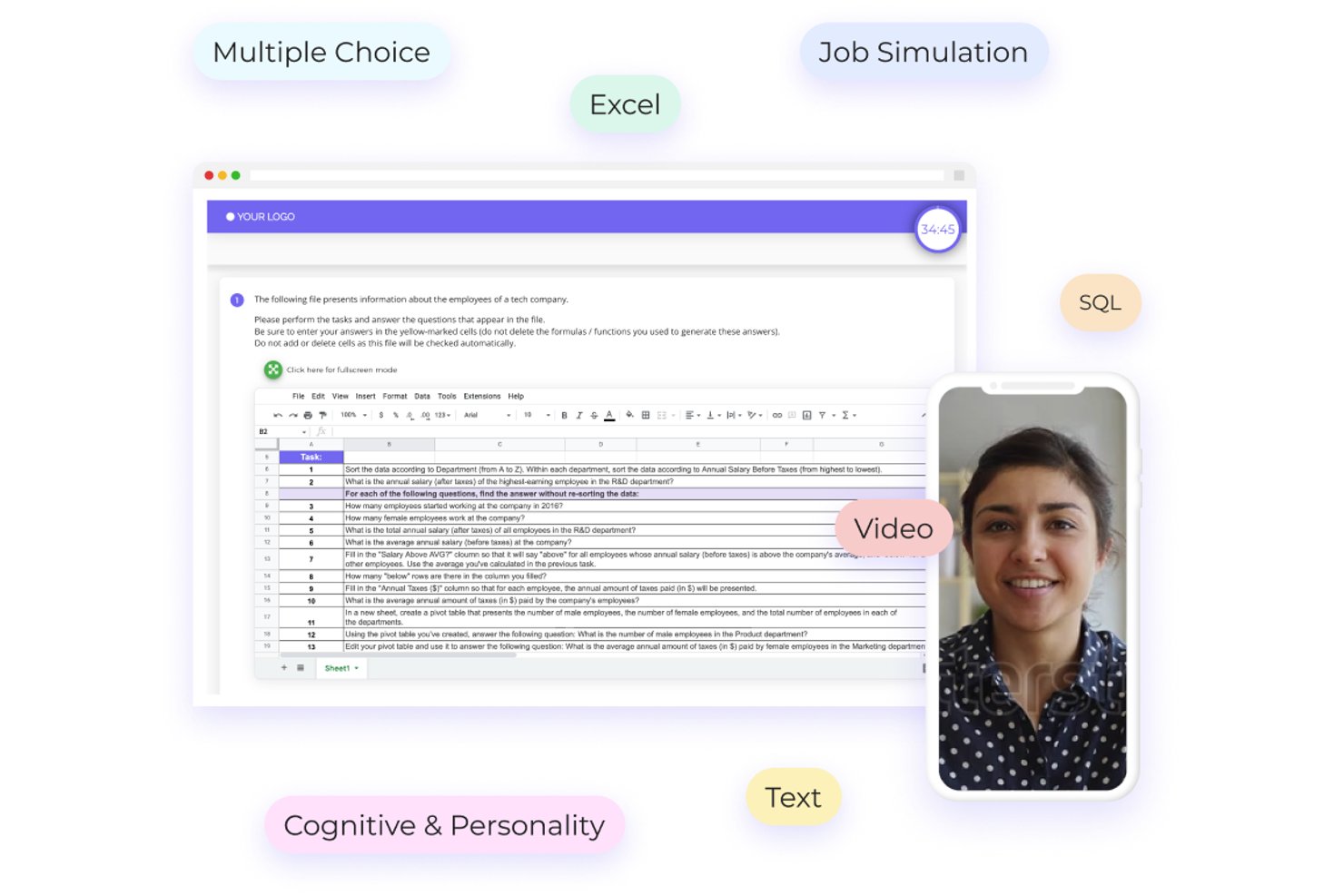
Canditech is an AI-powered pre-employment assessment platform that screens candidates through skill-based job simulations, standardized scoring, blind review, and structured video interviews.
Who Is Canditech Best For?
Canditech is a strong fit for corporate recruiters who want to replace resume screening with standardized, skill-based assessments that reduce unconscious bias at the evaluation stage.
Why I Picked Canditech
I picked Canditech as one of the best because its approach to bias reduction happens at the evaluation stage itself, not just in policy. I love that every candidate receives identical instructions, time limits, and scoring criteria, so hiring decisions reflect actual skill rather than background or demographics. Canditech's blind review mode surfaces candidates by initials only, and its AI auto-scoring explicitly disregards accent and appearance when evaluating video and open-text responses.
Canditech Key Features
- AI Assessment Builder: Generates a tailored assessment automatically from a job description, so every candidate for the same role receives the same test regardless of how they were sourced.
- One-way video interviews: Candidates record responses to standardized questions, with AI transcription and structured rating tools applied consistently across all submissions.
- Candidate accommodations: Extended time and accessibility settings—screen reader support, high color contrast, and screen magnification—can be enabled per candidate to support equitable evaluation.
- Auto pass/reject thresholds: Score-based rules automatically advance or remove candidates, applying the same cut-off criteria to every applicant without manual discretion.
Canditech Integrations
Canditech offers 40+ native ATS and HRIS integrations, including Workday, Greenhouse, Lever, iCIMS, SAP SuccessFactors, Oracle Recruiting Cloud, Ashby, and SmartRecruiters. It also supports a custom API, Analytics API, and Zapier.
Pros and Cons
Pros:
- AI auto-scores video without accent or appearance
- Anonymized reviews hide candidate name and identity
- Standardized scoring eliminates subjective reviewer bias
Cons:
- Lacks outreach or diverse talent sourcing tools
- No demographic or DEI analytics dashboards

Best for objective candidate assessment
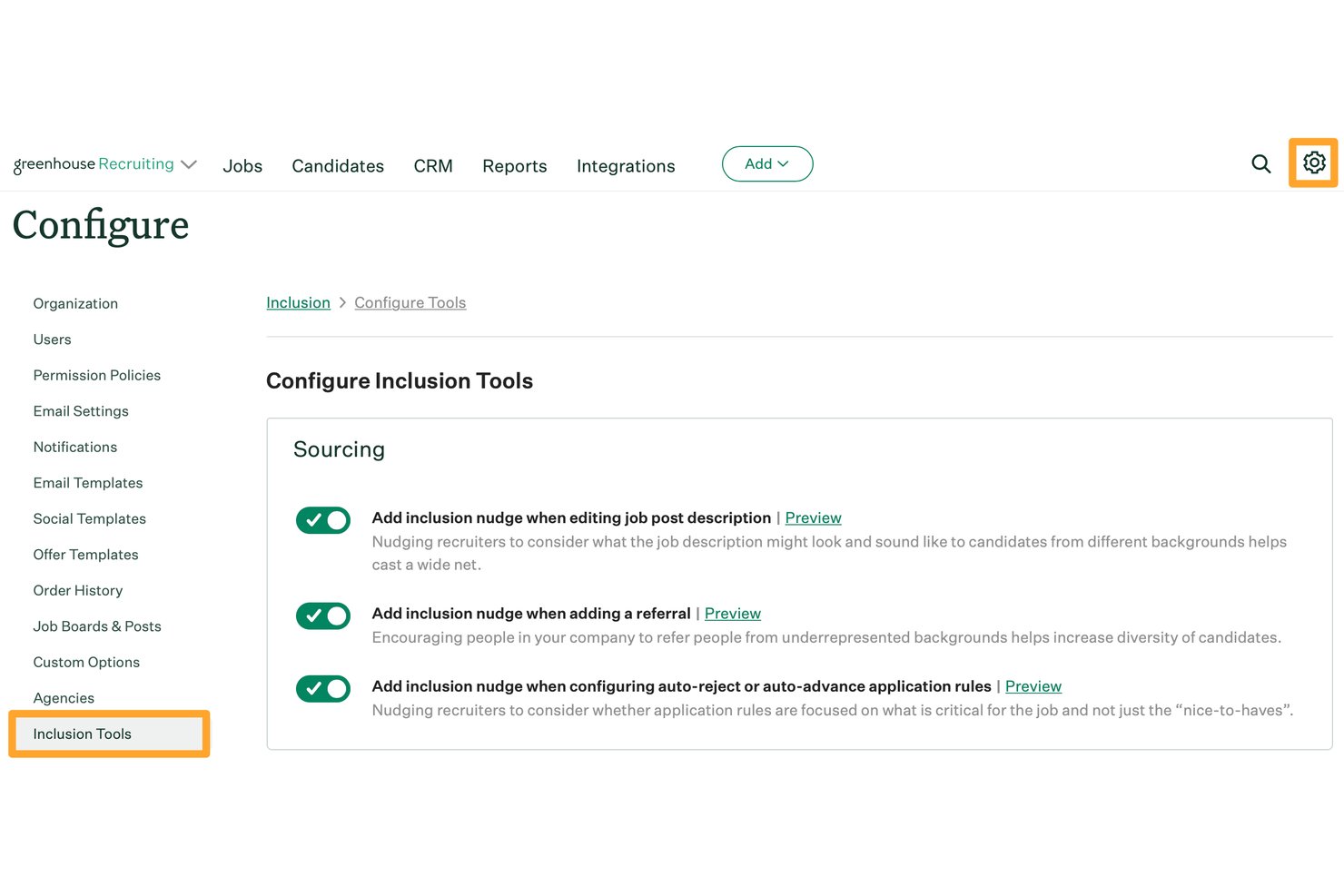
Greenhouse is an applicant tracking system with built-in structured hiring tools, DEI analytics, bias auditing, and demographic data collection designed to support equitable recruiting across the full hiring funnel.
Who Is Greenhouse Best For?
Greenhouse is a strong fit for mid-size to enterprise recruiting teams that want structured, bias-resistant evaluation built into every stage of the hiring process.
Why I Picked Greenhouse
Greenhouse earns its spot on my shortlist because its structured hiring framework tackles evaluation bias at the process level, not as an afterthought. Every plan includes interview kits and scorecards, so all interviewers rate candidates against the same defined criteria rather than gut instinct. On the Pro tier, resume anonymization goes further, blurring names, photos, and demographic signals before a hiring manager ever sees an application.
Greenhouse Key Features
- Pipeline by demographic report: Tracks candidate pass rates by demographic group at each hiring milestone to surface drop-off disparities across the funnel.
- EEOC reporting: Generates anonymized applicant and hire counts filtered by race, gender, veteran status, and disability status across jobs, departments, and stages.
- Candidate name pronunciation and pronouns: Lets candidates submit preferred name pronunciation, personal pronouns, and preferred first name directly in the application.
- Warden AI bias auditing: Continuously audits Talent Matching against 10 protected classes using disparate impact analysis, with results published publicly.
Greenhouse Integrations
Greenhouse offers 400+ pre-built integrations, including partner connections with Jopwell, Circa, DiversityJobs, Textio, SeekOut, Blendoor, and Unbiasify. It also provides a native BI Connector for Google Sheets and an open API for custom integrations.
Pros and Cons
Pros:
- Publicly audited AI for bias transparency
- DEI reporting tracks pipeline disparities directly
- Structured evaluation and bias mitigation included
Cons:
- DEI features tier-gated to higher plans
- No owned diverse talent communities
New Product Updates from Greenhouse

Greenhouse Opens Candidate Insights and Talent Matching Assistants to Beta
Greenhouse opens Candidate Insights and Talent Matching assistants to beta for candidate questions and natural-language search. This helps recruiters review candidates and build searches faster. For more information, visit Greenhouse’s official site.
 .
.
Manatal
Best for unbiased AI-driven candidate screening
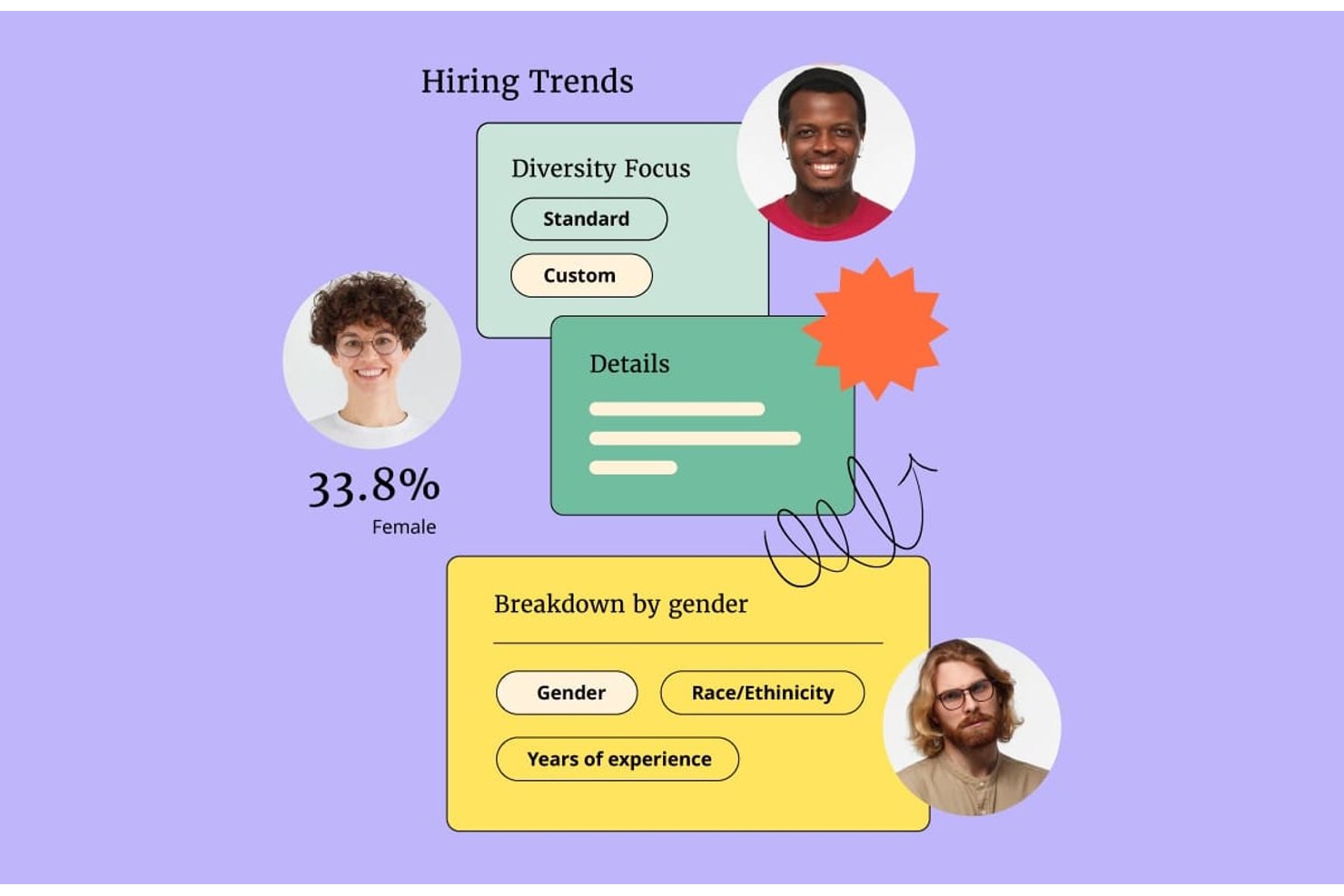
Manatal is an AI-powered ATS that combines multichannel job distribution, AI candidate scoring, CV redaction, structured scorecards, and asynchronous AI-driven interviews to support consistent, bias-reduced hiring.
Who Is Manatal Best For?
Manatal suits corporate recruiters at small to mid-sized companies who want an affordable AI-powered ATS with built-in scoring and structured evaluation tools to bring more consistency to their hiring process.
Why I Picked Manatal
I picked Manatal as one of the best because its AI candidate scoring is designed to evaluate applicants on skills, experience, and education while explicitly ignoring gender and ethnicity. Paired with a CV redaction workflow that lets you block out names, photos, and graduation dates before sharing profiles with hiring managers, it creates a more consistent screening process. I also like that native scorecards let the whole hiring team submit structured evaluations and view responses side by side, reducing the drift that comes from unstructured gut-feel feedback.
Manatal Key Features
- AI candidate scoring: Ranks applicants based on skills, experience, and education while explicitly excluding gender and ethnicity from its evaluation criteria.
- 2,500+ job board integrations: Distributes job postings across a wide network of global and local boards from a single dashboard.
- AI Interviewer: Conducts asynchronous video interviews at scale, generating role-specific questions and delivering transcripts and AI summaries into the platform.
- Consent management suite: Automates candidate consent collection, tracks consent status per profile, and supports data deletion requests to maintain compliance.
Manatal Integrations
Manatal offers integrations with BambooHR, HiBob, SAP SuccessFactors, Oracle Taleo, ADP, Codility, Google Workspace, Microsoft 365, and Adobe Sign. Enterprise Plus includes an Open API, plus integrations with n8n and Zapier.
Pros and Cons
Pros:
- Native scorecards standardize candidate evaluations
- Manual CV redaction supports blind screening
- AI scoring claims to ignore bias attributes
Cons:
- Diversity talent pools and sourcing missing
- No built-in DEI dashboards or self-ID workflows
New Product Updates from Manatal

Manatal Adds Candidate Login and Employee Portal to Career Pages
Manatal has added Candidate Login, Internal Employee Portal, and internal job visibility controls for Career Pages. These features help teams simplify applications, support employee mobility, and manage internal hiring workflows. For more information, visit Manatal’s official site.
 .
.
iCIMS
Best for AI governance and bias audit trails
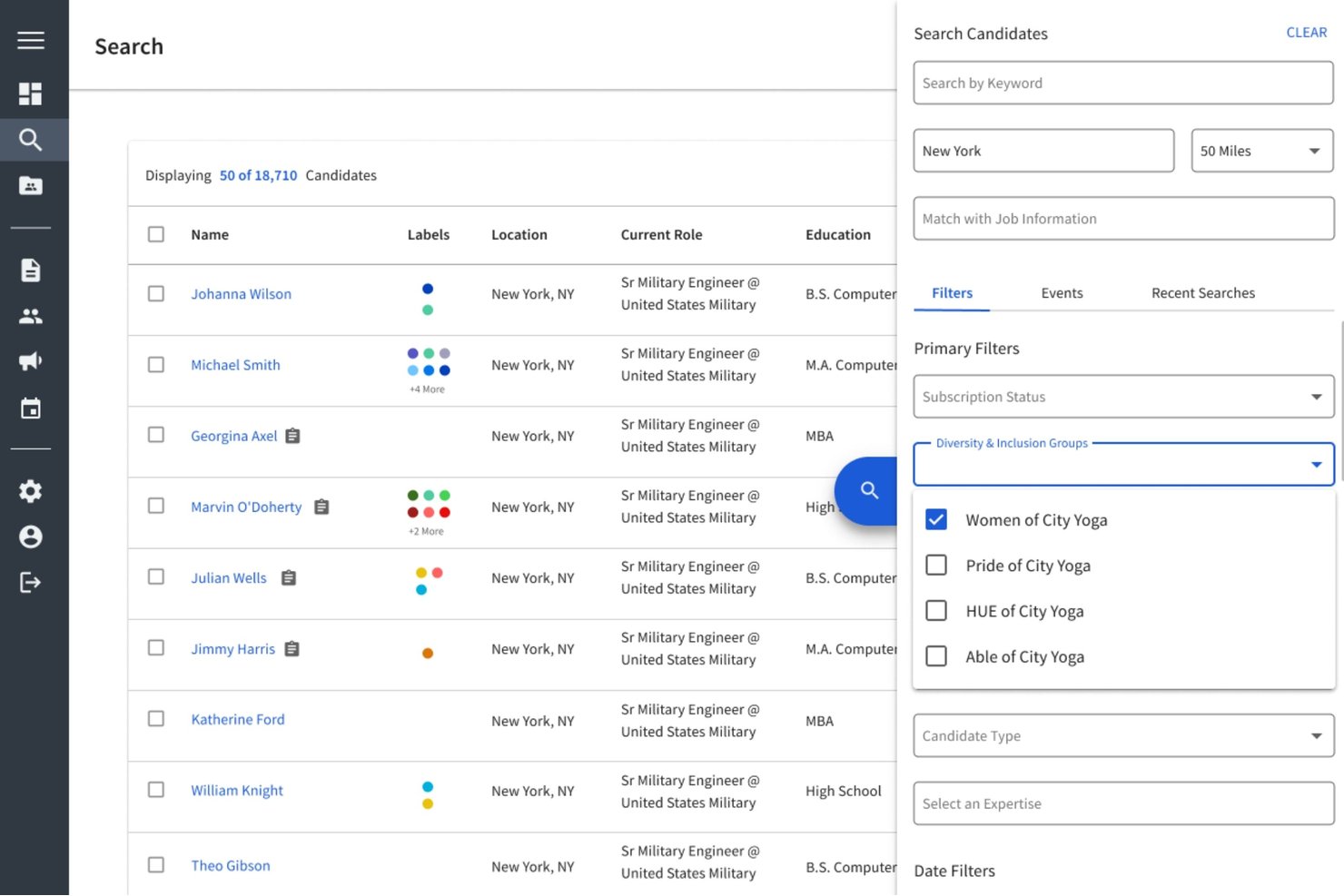
iCIMS is an enterprise talent acquisition suite that covers sourcing, candidate engagement, ATS screening, and DEI analytics, with native resume redaction, AI governance controls, and bias audit tooling built across the hiring funnel.
Who Is iCIMS Best For?
iCIMS suits enterprise talent acquisition teams that need documented AI bias audits and full-funnel DEI analytics built into their core ATS.
Why I Picked iCIMS
iCIMS earns its spot on my shortlist because its AI governance infrastructure goes deeper than any other ATS I've reviewed in this category. I'm particularly impressed by the independent bias audits it commissions annually for its Candidate Ranking feature, plus weekly internal disparity monitoring, which together give TA leaders a documented, auditable record of how their AI is performing. On top of that, the resume redaction tool lets you configure exactly who sees candidate identifiers and at which hiring stage, so bias controls aren't just switched on globally but actually built into the workflow.
iCIMS Key Features
- DEI analytics dashboard: Tracks demographic-based hiring goals, monitors drop-off by demographic at each funnel stage, and triggers automated alerts when metrics fall outside set thresholds.
- Candidate nurture campaigns: iCIMS Engage lets recruiters run targeted outreach campaigns to build and warm pipelines from underrepresented talent pools.
- GenAI interview question generation: The AI recruiting assistant generates structured interview questions to support consistent, standardized candidate evaluation across hiring teams.
- EEO self-identification capture: Application workflows include built-in EEO, veteran, and disability self-ID fields to support compliance reporting and applicant flow tracking.
iCIMS Integrations
iCIMS offers 800+ marketplace integrations, including Microsoft Teams, with connectors for job boards, HRIS, background checks, and assessments. Its flexible APIs support custom integrations across your recruiting stack.
Pros and Cons
Pros:
- Full-funnel DEI analytics included standard
- Resume redaction with customizable visibility controls
- Industry-leading AI governance and bias auditing
Cons:
- DEI Analytics feature disabled by default
- No proprietary diverse-talent sourcing network

Best for global recruitment automation
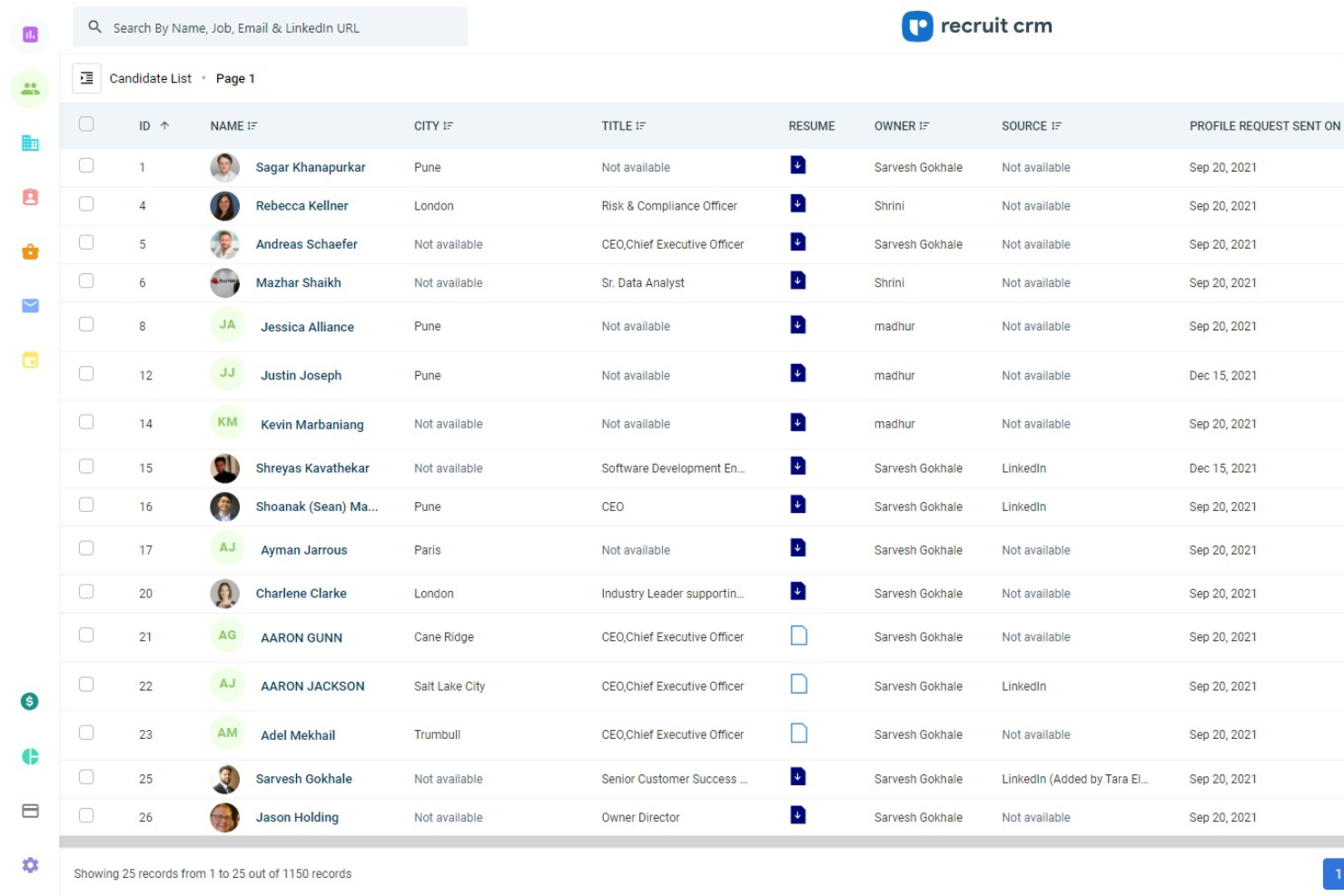
Recruit CRM is an AI-powered ATS and recruitment CRM that combines candidate sourcing, pipeline management, anonymized CV formatting, and multi-channel outreach across 3,000+ job boards.
Who Is Recruit CRM Best For?
Recruit CRM is a strong fit for recruitment agencies and executive search firms managing high-volume, global hiring across multiple clients and regions.
Why I Picked Recruit CRM
I've included Recruit CRM in my top picks because its global recruitment automation makes it genuinely useful when you're sourcing diverse talent across multiple regions at scale. I like that its VONQ-powered multiposting pushes roles to 3,000+ job boards simultaneously, which widens your candidate reach without duplicating effort. Its CV anonymization feature masks identifying details like name and gender before profiles reach decision-makers, giving bias reduction a real foothold in your submission workflow.
Recruit CRM Key Features
- AI candidate matching: Scores candidates against weighted job criteria using natural-language job description analysis to surface ranked matches.
- Custom application forms: Lets you add role-specific screening questions to job applications, supporting consistent, structured candidate evaluation.
- Advanced Boolean search: Enables targeted candidate searches across the resume database using complex search strings, including diversity-focused query templates.
- Workflow automation: Connects 1,000+ apps and automates multi-step recruiting tasks, including outreach triggers and pipeline progression, via a Workato-based engine.
Recruit CRM Integrations
Recruit CRM documents integrations with VONQ, LogicMelon, LinkedIn, Xing, ZoomInfo, Gmail, Outlook, and Twilio, plus Zapier and an open API for custom connections. No dedicated DEI or enterprise HRIS integrations are documented.
Pros and Cons
Pros:
- Highly customizable application and evaluation workflows
- Global job board posting expands sourcing reach
- CV anonymization supports blind candidate review
Cons:
- Lacks dedicated diversity talent pools or filters
- No DEI dashboards or demographic analytics
Pinpoint
Best for anonymizing applications and resumes
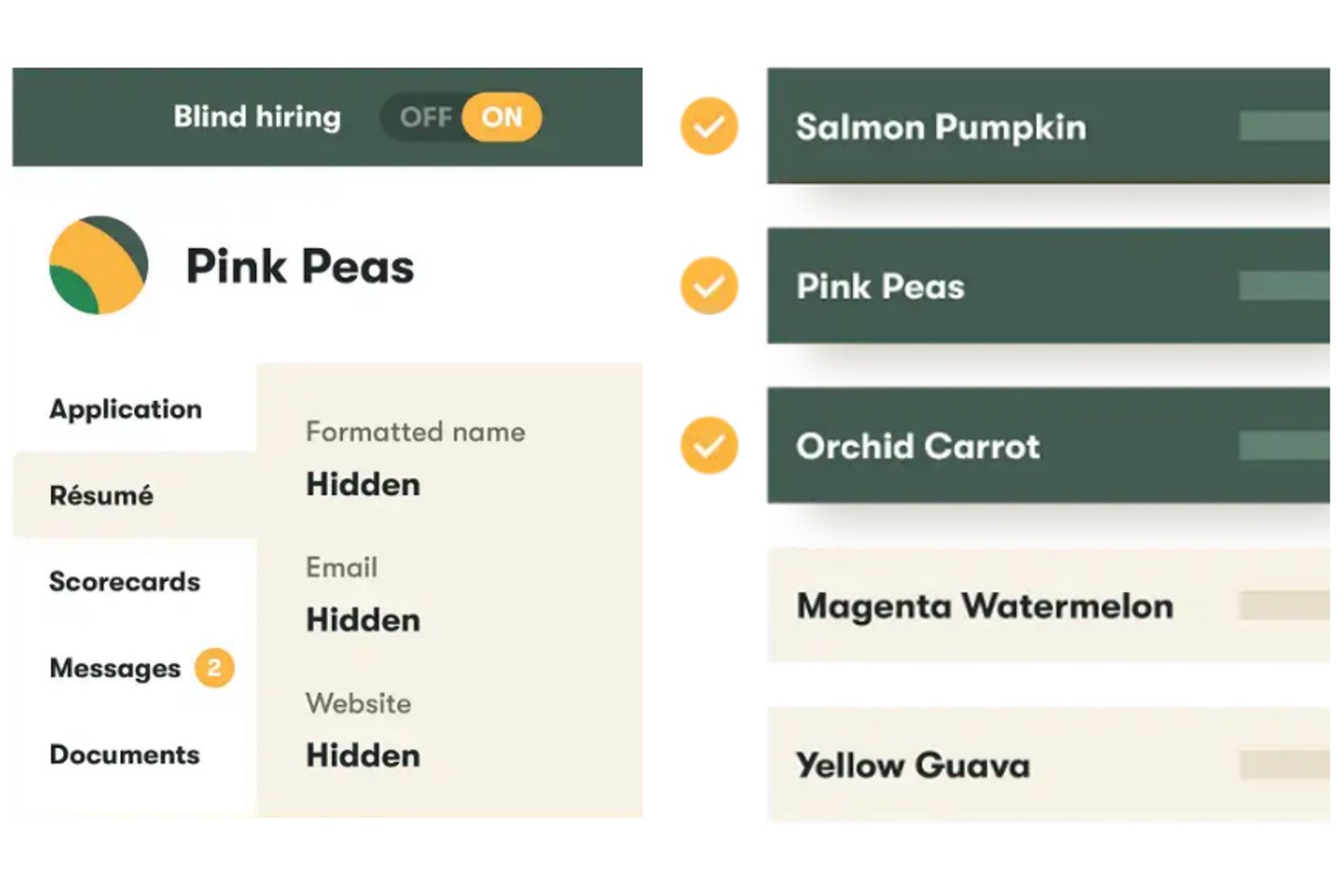
Pinpoint is an ATS with built-in diversity recruiting tools, covering anonymized screening, structured scorecards, DEI funnel reporting, EEO data collection, and niche job board distribution.
Who Is Pinpoint Best For?
Pinpoint is a strong fit for mid-size to enterprise recruiting teams that want anonymized screening and structured evaluation built directly into their ATS workflow.
Why I Picked Pinpoint
Pinpoint earns its spot on my shortlist because its anonymized screening goes well beyond hiding a candidate's name. You can configure exactly which details get redacted on a job-by-job basis, including education history, and full identity is only revealed once a candidate accepts an interview invite, with an audit trail throughout. I also like that its AI Match Score evaluates candidates against a shared set of criteria rather than ranking them against each other, which pairs naturally with anonymized screening to reduce bias at two separate stages of the funnel.
Pinpoint Key Features
- DEI funnel dashboards: Track candidate pass-through and drop-off rates at each hiring stage, broken down by demographic group, to surface where representation gaps appear.
- EEO questionnaire builder: Embed customizable, region-specific equal opportunity questions directly into application forms, with separate delivery options for sourced candidates.
- Niche job board distribution: Post roles to diversity-focused boards like myGwork, Women in Tech, and LGBT Jobs from within the platform alongside mainstream job boards.
- ISO 42001-certified AI governance: Pinpoint's AI tools are audited against the ISO 42001 standard, with documented impact assessments and traceable AI outputs.
Pinpoint Integrations
Pinpoint offers 100+ native integrations, including Workday, SAP SuccessFactors, ADP Workforce Now, myGwork, and Power BI. It also supports custom connections through its API and plugin framework, plus SCIM and SSO.
Pros and Cons
Pros:
- AI Match Score avoids comparative candidate ranking
- Structured scorecards foster objective candidate evaluation
- Anonymized screening masks resumes and applications
Cons:
- No owned network of underrepresented candidates
- Anonymized screening only on select plans
New Product Updates from Pinpoint

Pinpoint Adds Copilot, Hire Surveys, and LinkedIn Apply Connect
Pinpoint adds Copilot in Teams, Quality of hire surveys, LinkedIn Apply Connect integration, and onboarding updates. These releases expand AI, hiring insights, integrations, and onboarding capabilities. For more information, visit Pinpoint’s official site.

Best for EEO reporting and surveys
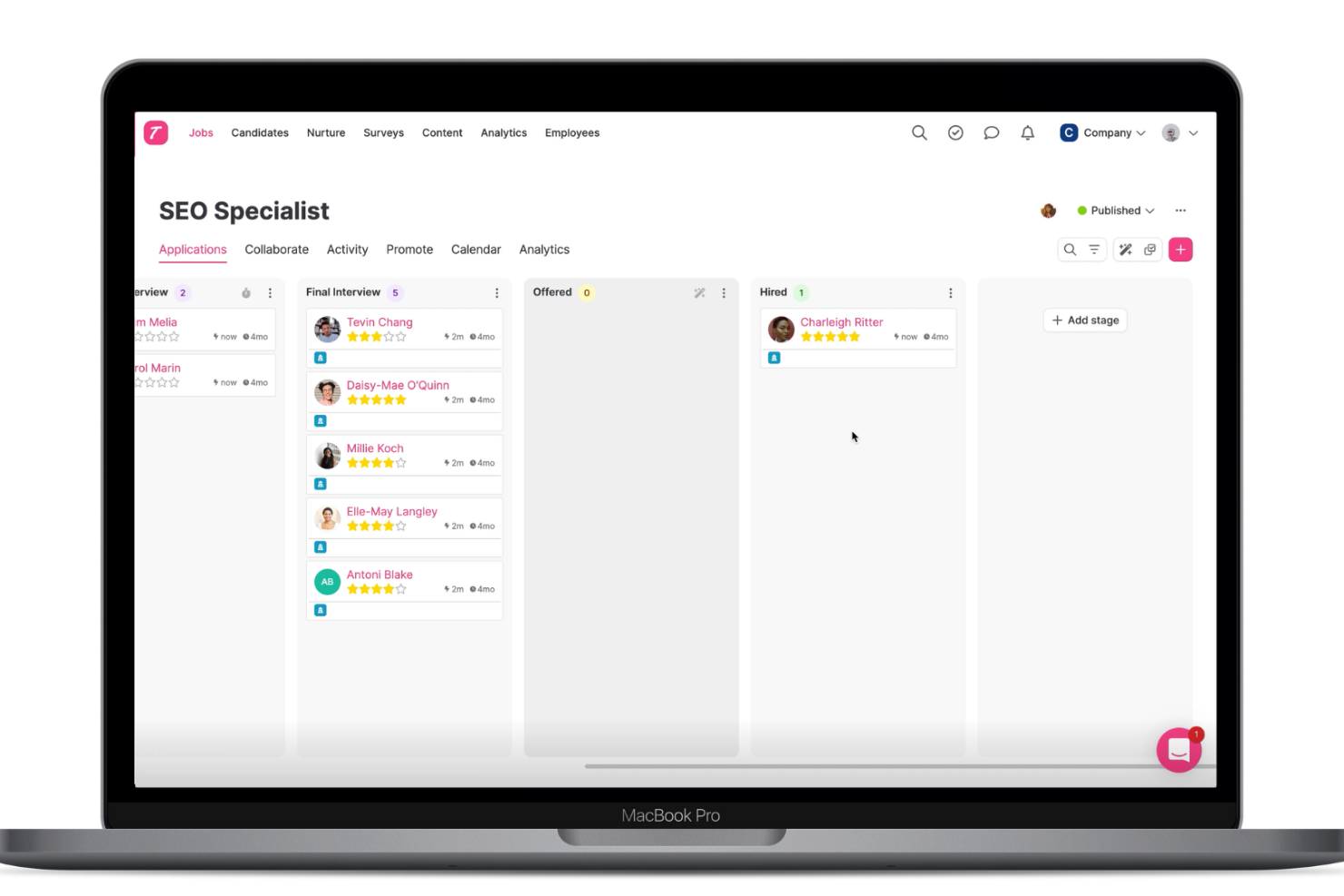
Teamtailor is a full-suite ATS that combines structured hiring workflows, anonymous candidate screening, EEO survey collection, and funnel-level diversity reporting in a single platform.
Who Is Teamtailor Best For?
Teamtailor is a strong fit for talent acquisition teams that need EEO survey collection and funnel-level demographic reporting built directly into their ATS.
Why I Picked Teamtailor
Teamtailor earns its spot on my shortlist because its EEO survey and reporting setup is more thoughtful than what you'd typically find in a mainstream ATS. I like that the EEO export links demographic responses directly to funnel stage, rejection reason, and hire date, so you can actually see where underrepresented candidates drop off, not just how many applied. The anonymous mode goes further than most, redacting names inside cover letters and comments and carrying that masking through to externally shared candidate links.
Teamtailor Key Features
- Structured interview kits: Per-role kits with standardized question sets, defined skills, and scorecards so every candidate is evaluated against the same criteria.
- Talent pool nurture campaigns: Recruiters can build passive candidate pipelines and send targeted email campaigns to subscribed talent when matching roles open.
- Custom survey builder: Create forms with multiple question types, conditional logic, and stage-based triggers to collect candidate feedback or self-ID data at any point in the hiring flow.
- Candidate comparison view: Side-by-side candidate profiles let hiring teams review and rate applicants against each other using consistent, scorecard-based criteria.
Teamtailor Integrations
Teamtailor offers 450+ integrations, including LinkedIn, DiverseJobsMatter, SHL, Alva Labs, and TestGorilla. It also supports custom connections through its JSON:API, webhooks, and Zapier.
Pros and Cons
Pros:
- Interview kits and scorecards standardize evaluations
- EEO export connects demographic data to funnel stage
- Anonymous screening masks names and documents thoroughly
Cons:
- Limited benchmarking and DEI goal-setting features
- No dedicated diverse-talent community or search filters

Gem
Best for full-funnel DEI measurement and benchmarking
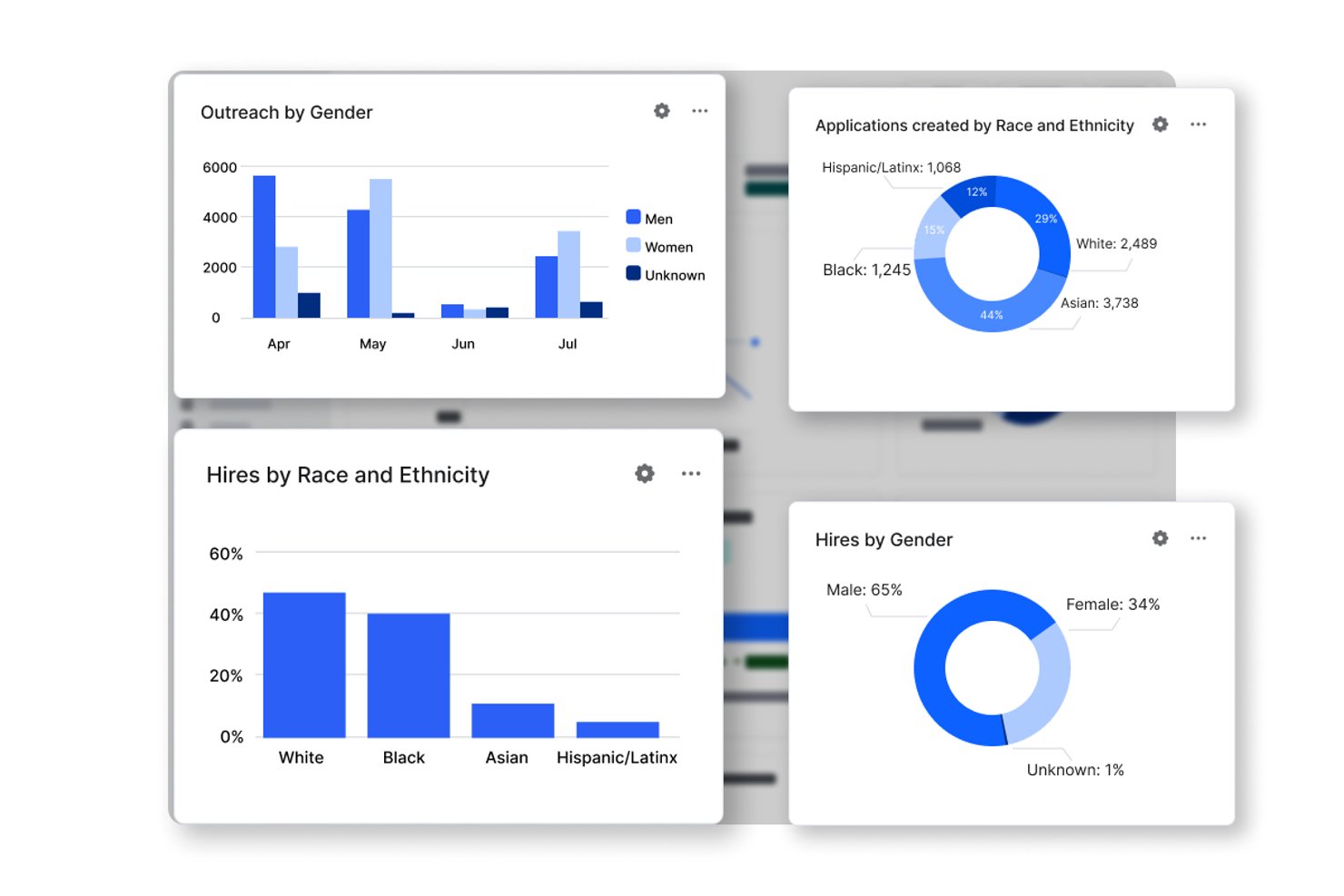
Gem is a diversity recruiting platform that combines AI-driven sourcing, full-funnel DEI analytics, structured candidate evaluation, and peer benchmarking across gender and race/ethnicity at every stage of the hiring process.
Who Is Gem Best For?
Gem is a strong fit for talent acquisition and DEI teams that need to measure representation across every stage of the hiring funnel, not just at the point of hire.
Why I Picked Gem
I picked Gem as one of the best because no other tool I've reviewed tracks DEI representation from first outreach through hire the way Gem does. Most ATS-native EEO reports only capture applicants, but Gem's funnel analytics show you exactly where underrepresented candidates drop off, starting at the top-of-funnel. I also rate its peer benchmarking highly: you can compare your pipeline diversity ratios against 1,200+ companies, filtered by industry and size.
Gem Key Features
- AI sourcing agent: Searches 800M+ candidate profiles using natural-language queries, with match scores and verified contact data.
- Custom demographic surveys: Configurable self-ID forms with gender, race/ethnicity, veteran status, and disability fields, attachable by job location.
- Diversity event tracking via Splash integration: Captures registrants and attendees from diversity recruiting events and routes them into automated nurture sequences.
- AI Scorecard Summaries: Generates structured post-interview summaries to support consistent, evidence-based candidate evaluation during debriefs.
Gem Integrations
Gem documents five native ATS integrations: Greenhouse, Workday, Lever, iCIMS, and SAP SuccessFactors. It also connects with LinkedIn Recruiter, SeekOut, Splash, Checkr, and CodeSignal for sourcing, diversity events, screening, and assessments.
Pros and Cons
Pros:
- Published independent third-party AI bias audit
- Peer benchmarking with over 1,200 companies
- Tracks DEI metrics across the full funnel
Cons:
- No built-in diverse-talent communities offered
- Demographic data is largely algorithmically inferred
SeekOut
Best for sourcing diverse talent at scale
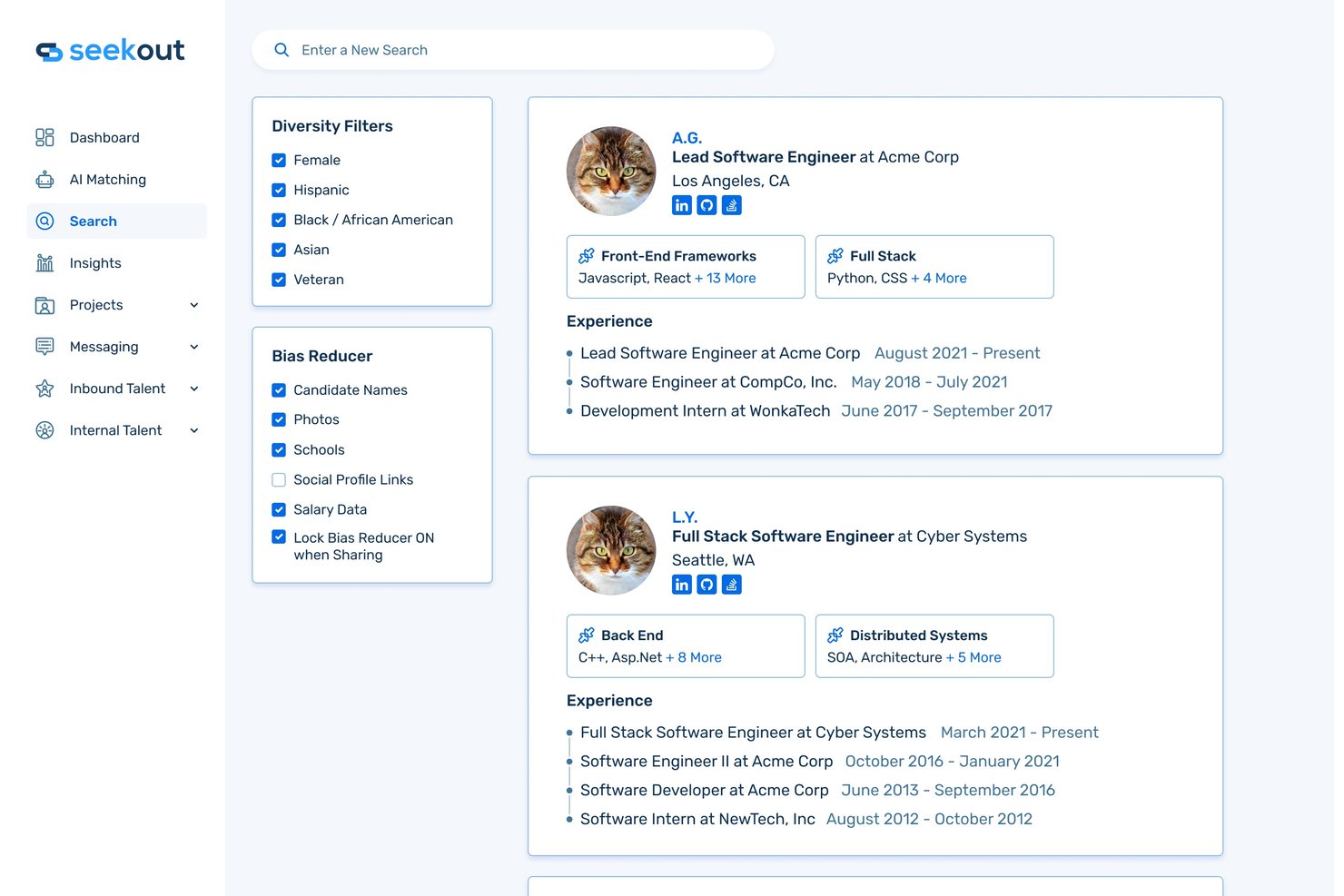
SeekOut is a talent sourcing platform that searches across 1B+ candidate profiles using AI-powered search, diversity filters, bias reduction tools, and structured evaluation scorecards.
Who Is SeekOut Best For?
SeekOut suits enterprise talent acquisition teams that need to build diverse candidate pipelines at scale across technical, healthcare, and security-cleared talent pools.
Why I Picked SeekOut
SeekOut earns its spot on my shortlist because no other tool I've tested comes close to its depth of diversity-specific sourcing filters across 1B+ candidate profiles. I particularly like the Bias Reducer, which strips names, photos, and other identifying details so your team evaluates skills first, and the one-click diversity filters that surface women, veterans, and underrepresented groups across regional indexes. The AI Scorecards then score every candidate against job-specific rubrics, keeping evaluation consistent once those diverse pipelines are built.
SeekOut Key Features
- Specialized talent pools: Access dedicated databases for healthcare, security-cleared, and GitHub talent, each searchable with the same diversity filters as the main index.
- ATS rediscovery: Search past applicants and silver medalists from your existing ATS alongside SeekOut's 1B+ external profiles in a unified view.
- AI Inbound Screening ("Sam"): Evaluates inbound applicants at scale using AI video interviews, per-qualification reasoning, and automated scoring with visible evidence.
- SeekOut MCP: Run SeekOut searches and diversity insights directly inside Claude, ChatGPT, Gemini, or Microsoft 365 Copilot using 14 guided workflows.
SeekOut Integrations
SeekOut offers 21+ ATS, CRM, and HCM integrations, including Workday, iCIMS, Greenhouse, Lever, Bullhorn, Jobvite, and SAP SuccessFactors. Its Full Recruiting Funnel tier supports custom integrations and bidirectional candidate-data sync.
Pros and Cons
Pros:
- AI Scorecards keep evaluation structured and fair
- Bias Reducer enables blind sourcing and screening
- Diversity filters infer multiple demographics at once
Cons:
- Advanced diversity features require custom-tier upgrade
- No self-ID or EEO-1 data collection
Eightfold AI
Best for bias-tested AI across the full hiring funnel
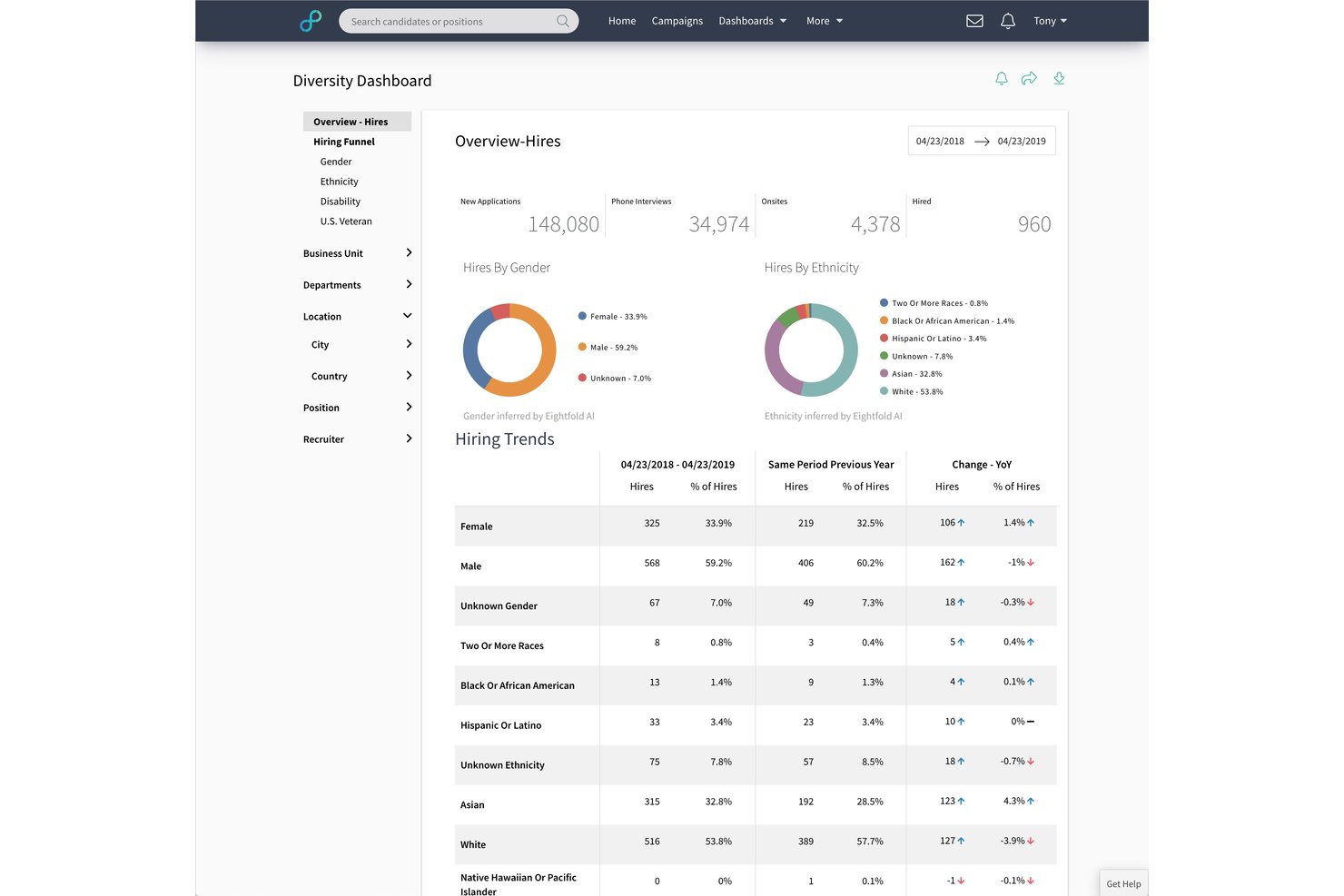
Eightfold AI is an AI-native talent intelligence platform that spans sourcing, screening, candidate engagement, structured interviewing, and DEI analytics—with bias testing, candidate masking, and skills-inference matching built across the full hiring funnel.
Who Is Eightfold AI Best For?
Eightfold AI is built for enterprise talent acquisition and D&I teams at large organizations that need AI-driven bias controls embedded across every stage of hiring—not just screening.
Why I Picked Eightfold AI
Eightfold AI earns its spot on my shortlist because bias testing isn't a one-time checkpoint here—it runs on every model update, across sourcing, screening, and evaluation. I particularly like how candidate masking is configurable by jurisdiction, so you can strip names, photos, and demographic markers at different funnel stages based on your legal context. The Diversity Dashboard then tracks where underrepresented candidates drop off by stage, giving D&I teams concrete data to act on rather than just aggregate pass-through rates.
Eightfold AI Key Features
- Skills-inference matching: AI infers skills from career history to surface candidates whose résumés understate their actual capabilities.
- Talent rediscovery: Automatically re-engages past applicants, alumni, and silver-medalist candidates from existing talent pools.
- AI Interviewer: Conducts structured, standardized interviews across 24+ languages, producing consistent scores and summaries for every candidate.
- Personalized job recommendations: Serves candidates tailored role suggestions on the career site, explicitly closing the self-selection gap for underrepresented groups.
Eightfold AI Integrations
Eightfold AI integrates with Workday Recruiting and Greenhouse for recruiting workflows. It also offers a UKG Marketplace integration and connects with HackerRank, ID.me, CLEAR, and Criteria Corp for assessment and candidate verification.
Pros and Cons
Pros:
- Masks candidate demographics across all funnel stages
- Publishes third-party bias and fairness audits
- Runs bias tests on every model update
Cons:
- Analytics drill-down and filtering are limited
- No pronoun or name-pronunciation capture feature
Other Diversity Recruiting Software
Here are a few more worthwhile options that didn’t make the best diversity recruiting software list but are still solid options worth considering:


Related HR Software Reviews
If you still haven't found what you're looking for here, check out these other related tools that we've tested and evaluated:
- HR Software
- Payroll Software
- Recruiting Software
- Employer of Record Services
- Applicant Tracking Systems
- Workforce Management Software
How I Evaluate Diversity Recruiting Software
I split my evaluation into baseline requirements a tool must meet and the differentiators that separate a genuinely useful platform from one that just checks a box.
Core Functionality (Table Stakes For This List)
When I'm selecting tools for my list, I rank each one on a scale from 0 (does not offer the functionality) to 5 (excels in this area) for each core functionality listed below. I then calculate the tool's total score into a percentage, using 65% as a benchmark to help assess its overall fit for the list.
- Diverse Talent Sourcing: I look for access to specialized job boards, diversity-focused talent pools, and community partnerships that go beyond generic candidate search.
- Bias Mitigation Tools: Features like candidate anonymization, standardized screening criteria, and bias-aware recommendations help me gauge how well a tool reduces subjectivity.
- Inclusive Recruiting & Outreach: I evaluate whether the platform offers inclusive job posting guidance, targeted diversity campaigns, or community engagement tools for underrepresented groups.
- DEI Analytics & Reporting: Tracking representation across funnel stages matters here, from sourcing through offer acceptance, with dashboards that surface drop-off patterns.
- Equitable Candidate Evaluation: Structured scorecards, competency-based assessments, and calibrated interview workflows show me a tool takes consistent evaluation seriously.
- DEI Data & Compliance: I check for secure self-identification data collection, demographic reporting, and support for regulatory requirements like EEO and OFCCP filings.
Once I have a list of tools that meet the criteria, I consider what sets each platform apart.
Differentiating Factors (What Sets Vendors Apart)
Here's how I compare and contrast different vendors:
Standout Features
I look for built-in adverse impact analysis that flags when selection rates for protected groups dip below the four-fifths threshold—this saves teams from manually running calculations after every hiring cycle. AI model bias auditing matters just as much, especially whether a vendor publishes third-party audit results and lets you disable AI scoring where regulations require it. I also evaluate diversity panel orchestration, where tools automatically balance interview panels by gender, ethnicity, or department and track composition against your DEI targets per requisition.
Beyond Features
I evaluate how deeply a tool integrates with your existing ATS and HRIS. Bias checks and DEI scorecards only get used when they surface inside a recruiter's daily workflow in Greenhouse or Workday—not in a separate tab. Algorithmic transparency matters just as much; I look for vendors that publish third-party bias audit results and let you disable AI scoring where local regulations require it. I also check whether the vendor bundles DEI advisory services like interviewer training and executive reporting templates, since adoption stalls fast without process change alongside the software.
Trends in Diversity Recruiting Software
Staying on top of trends in diversity recruiting software is crucial for recruiters and hiring managers to ensure they are effectively addressing diversity and inclusion in their hiring processes.
By staying informed about the latest advancements in diversity recruiting software, recruiters can leverage innovative tools and features to attract a more diverse pool of candidates. Understanding emerging trends also allows recruiters to maximize the potential of technology in reducing bias and promoting equitable hiring practices. Here is are 5 current trends in the world of diversity recruiting software:
AI-Driven Candidate Sourcing
One significant trend is the use of artificial intelligence (AI) in sourcing candidates. AI-driven tools are increasingly able to identify a diverse pool of candidates by analyzing data beyond traditional recruitment channels. This approach directly addresses the challenge of finding the right people in a limited pool of diverse candidates. By leveraging AI, companies can tap into a broader talent pool, ensuring a more inclusive hiring process.
Advanced Analytics for Application Management
Dealing with a large volume of applications and data is a major challenge for HR professionals. Advanced analytics in diversity recruiting software offers a solution by providing deep insights and efficient management of application pools. These tools often include features such as:
- Data Organization: Advanced analytics tools help categorize and prioritize candidates, making it easier to manage large volumes of applications.
- Diversity Metrics: These tools include diversity metrics in their analysis, ensuring a diverse range of candidates is considered.
- Actionable Insights: The use of analytics offers actionable insights, aiding HR professionals in making informed decisions.
Employers and HR teams should leverage advanced analytics in their recruiting software to streamline the application management process and ensure a diverse candidate pool.
Skills-Based Matching Algorithms
The challenge of comparing applicant skills is efficiently met by the development of skills-based matching algorithms. These algorithms ensure that the most suitable candidates are identified based on the competencies required for a role, promoting unbiased decision-making. Other benefits of these tools include:
- Accurate Skill Assessment: The algorithms evaluate candidates based on their skills, leading to a more accurate assessment of their suitability.
- Unbiased Selection: By focusing on skills, these algorithms reduce the influence of unconscious bias in the hiring process.
- Efficient Matching: These algorithms can help streamline the recruitment process by quickly identifying the best-fit candidates for a position.
Try incorporating skills-based matching algorithms in their recruitment processes to ensure fair and efficient candidate selection.
Bias Elimination in Screening
To combat unconscious bias in the hiring process, new software tools are incorporating features that anonymize applications, removing identifiers like names, gender, and ethnicity. This trend is critical for building a more diverse workforce, as it ensures that candidates are evaluated solely on their qualifications and experience. It directly addresses the need for eliminating bias in the recruitment process.
Seamless ATS/HRIS Integration
The need for integrating diversity recruiting software with existing ATS or HRIS systems is increasingly being met by newer, more adaptable solutions. These solutions offer seamless integration capabilities, ensuring that the transition to a more inclusive recruitment process does not disrupt existing workflows. This trend is particularly significant for HR administrators and People Ops professionals looking to streamline their processes while enhancing their diversity recruitment efforts.
These emerging trends in diversity recruiting software are not only shaping the future of hiring practices, but also directly addressing the specific challenges and needs of recruitment professionals. By embracing these trends, companies can ensure a more efficient, unbiased, and diverse hiring process, ultimately leading to a more inclusive and dynamic workforce.
What is Diversity Recruiting Software?
Diversity recruiting software is a cloud-based SaaS tool that helps organizations source and hire more diverse talent by eliminating unconscious bias from the hiring process. It achieves this through special algorithms designed to find candidates with different backgrounds, and other features such as skill matching and blind hiring (where candidate details are anonymized until you invite them to an interview). This type of software also assists in simplifying each step of the recruiting process, from sourcing to interviewing to making an offer.
Using diversity recruitment software is an easy way to source top talent and boost your DEI (diversity, equity, and inclusion) simultaneously. It will help you broaden your company's recruitment outreach so you can build a more inclusive culture, and provide an excellent and equitable candidate experience for all applicants.
Diversity Recruiting Software: FAQs
Do you have a few questions about diversity recruiting software and what it has to offer? These answers to frequently asked questions are a great place to start:
What is diversity recruiting?
Diversity recruiting is a subset of talent acquisition with a specific focus on expanding an organization’s cultural makeup to incorporate more underrepresented groups. Many organizations have recently incorporated specific diversity, equity and inclusion (DEI) strategic goals, to help them build a more inclusive culture within their organization. Key groups of focus include women, ethnic minorities, members of the LGTBQ community, and candidates with physical disabilities or neurodivergent challenges.
Interest in improving DEI metrics grew within the corporate world in direct relation to many racially charged events that occurred in 2020 within the USA. Those events include the killings of George Floyd, Breonna Taylor, and others, which in turn spawned the Black Lives Matter movement. This is underscored by data from Gartner showing the demand for recruiters with diversity hiring experience jumped 800% between 2017-18 and 2019-20.
Why is diversity recruiting important?
Diversity recruiting is important because it helps to eliminate unconscious bias and level the playing field for many types of qualified candidates. Improving the diversity of your leadership team has also been shown to improve innovation revenue by as much as 19%. This is a clear indication of the positive effect of talent diversification. If all your employees come from the same cultural and socio-economic background, they may all problem solve and ideate in a similar way. When you involve more diverse perspectives, you’ll widen your corporate perspective and increase the likelihood of having staff who think outside the box.
Diversity recruiting can also make your company stronger. As Rosalind Hudnell, director of global diversity and inclusion at Intel, said:
“Because of our diverse workforce, we’ve experienced a boost in productivity. When you can move people to contribute to their fullest, it has a tremendous impact, […] We have a vast amount of diversity [within the company] that comes into work every day to build technology that plays out around the world. You can’t be successful on a global stage without it.”.
Diversity recruitment software enables you to find diverse candidates with speed and efficiency, saving your HR professionals time so they can work on improving your company culture.
What key features are included in diversity recruiting software?
Here are some features you can expect to find in the best diversity recruiting software:
- Applicant tracking: The software should enable you to track the activity and engagement of the candidates in your talent pipeline in real-time, making it easier to spot top applicants.
- Personal data anonymization: The solution should help you anonymize the personal data of your candidates so you can mitigate unconscious bias. This is often called blind screening or blind hiring.
- Automation: The software should help speed up your recruiting process with automation, so your HR professionals won’t have to waste time on repetitive tasks. Many systems also incorporate advanced algorithms in combination with artificial intelligence (AI) and machine learning to helps teams uncover the best candidates too.
- Analytics and reporting: The software should come with powerful analytics and reporting features so you can get an overview of your inclusivity efforts.
Other Resources to Improve Your Corporate Diversity
The absence of diversity limits your access to great candidates because of their untraditional backgrounds. Diversity recruiting software expands your candidate pool, enabling you to source great applicants and build a workforce that drives your company toward new heights.
Check out these other resources to discover how to build a business with DEI at its core too:
- What Does DEI Really Mean And How Can You Approach It?
- 12 Key DEI Metrics to Track for an Inclusive Workplace
- Diversity is More Than a Metric, a podcast with Anthony Clay from Indi
- How to Create an Org Built on Diversity, Equity & Inclusion, a podcast with Katie Zink from Social Construct Consulting
- To Find the Best Talent, Have a Clear Understanding of Your Values