Recruit CRM Review 2026: Pros, Cons, Features, and Pricing



Recruit CRM is a recruiting CRM built for staffing agencies and executive search firms that need to track candidates, manage client relationships, and log placements in one place. I'd consider it if you want the core functionality of a tool like Bullhorn but with a faster setup, a cleaner interface, and pricing that doesn't require an enterprise contract to get started.
Recruit CRM Evaluation Summary
- From $85/user/month (billed annually)
- 30-day free trial + free demo available
Why Trust Our Software Recommendations
Our team has been testing and reviewing software since 2012. As HR experts ourselves, we know how difficult—and important—it is to choose the right software.
For this guide, we evaluated tools using hands-on testing and independent research, scoring tools using our selection criteria. We also draw on insights from industry thought leaders and practicing HR experts.
Our reviews reflect our human editorial judgment, not a sales pitch.
Expert reviewers:
Recruit CRM Overview
When judging Recruit CRM against its competitors, I find the intuitive interface, flexible pipeline customization, and detailed email tracking make it a strong pick, especially for boutique and mid-sized agencies. Pricing is transparent, and onboarding is quick, but while integrations cover popular tools, API-based customizations require more effort.
If you’re choosing a system for collaborative recruiting, global outreach, or candidate management with minimal training headaches, I think Recruit CRM outperforms in ease of use and hands-on support, but may underperform if you need highly complex, enterprise-level workflows and deep reports out of the box.
pros
-
Custom pipeline stages for each recruiting process
-
Chrome sourcing extension automatically adds candidates from LinkedIn
-
Built-in email sequencing and bulk outreach tools
cons
-
Mobile app features are less comprehensive than desktop
-
Reports offer limited filtering and visualization options
-
Mass updating records can feel slow with large databases
-

Justworks
Visit WebsiteThis rating combines scores from multiple user review sites to reflect overall customer sentiment about the product.4.6 -
Small Improvements
Visit WebsiteThis rating combines scores from multiple user review sites to reflect overall customer sentiment about the product.4.3 -
HiBob
Visit WebsiteThis rating combines scores from multiple user review sites to reflect overall customer sentiment about the product.4.5




How We Test & Score Our Tools
We’ve spent years building, refining, and improving our software testing and scoring system. The rubric is designed to capture the nuances of software selection and what makes a tool effective, focusing on critical aspects of the decision-making process.
Below, you can see exactly how our testing and scoring works across seven criteria. It allows us to provide an unbiased evaluation of the software based on core functionality, standout features, ease of use, onboarding, customer support, integrations, customer reviews, and value for money.
Core Functionality (25% of final score)
The starting point of our evaluation is always the core functionality of the tool. Does it have the basic features and functions that a user would expect to see? Are any of those core features locked to higher-tiered pricing plans? At its core, we expect a tool to stand up against the baseline capabilities of its competitors.
Standout Features (25% of final score)
Next, we evaluate uncommon standout features that go above and beyond the core functionality typically found in tools of its kind. A high score reflects specialized or unique features that make the product faster, more efficient, or offer additional value to the user.
We also evaluate how easy it is to integrate with other tools typically found in the tech stack to expand the functionality and utility of the software. Tools offering plentiful native integrations, 3rd party connections, and API access to build custom integrations score best.
Ease of Use (10% of final score)
We consider how quick and easy it is to execute the tasks defined in the core functionality using the tool. High scoring software is well designed, intuitive to use, offers mobile apps, provides templates, and makes relatively complex tasks seem simple.
Onboarding (10% of final score)
We know how important rapid team adoption is for a new platform, so we evaluate how easy it is to learn and use a tool with minimal training. We evaluate how quickly a team member can get set up and start using the tool with no experience. High scoring solutions indicate little or no support is required.
Customer Support (10% of final score)
We review how quick and easy it is to get unstuck and find help by phone, live chat, or knowledge base. Tools and companies that provide real-time support score best, while chatbots score worst.
Customer Reviews (10% of final score)
Beyond our own testing and evaluation, we consider the net promoter score from current and past customers. We review their likelihood, given the option, to choose the tool again for the core functionality. A high scoring software reflects a high net promoter score from current or past customers.
Value for Money (10% of final score)
Lastly, in consideration of all the other criteria, we review the average price of entry level plans against the core features and consider the value of the other evaluation criteria. Software that delivers more, for less, will score higher.
Core Features
Customizable Recruitment Pipelines
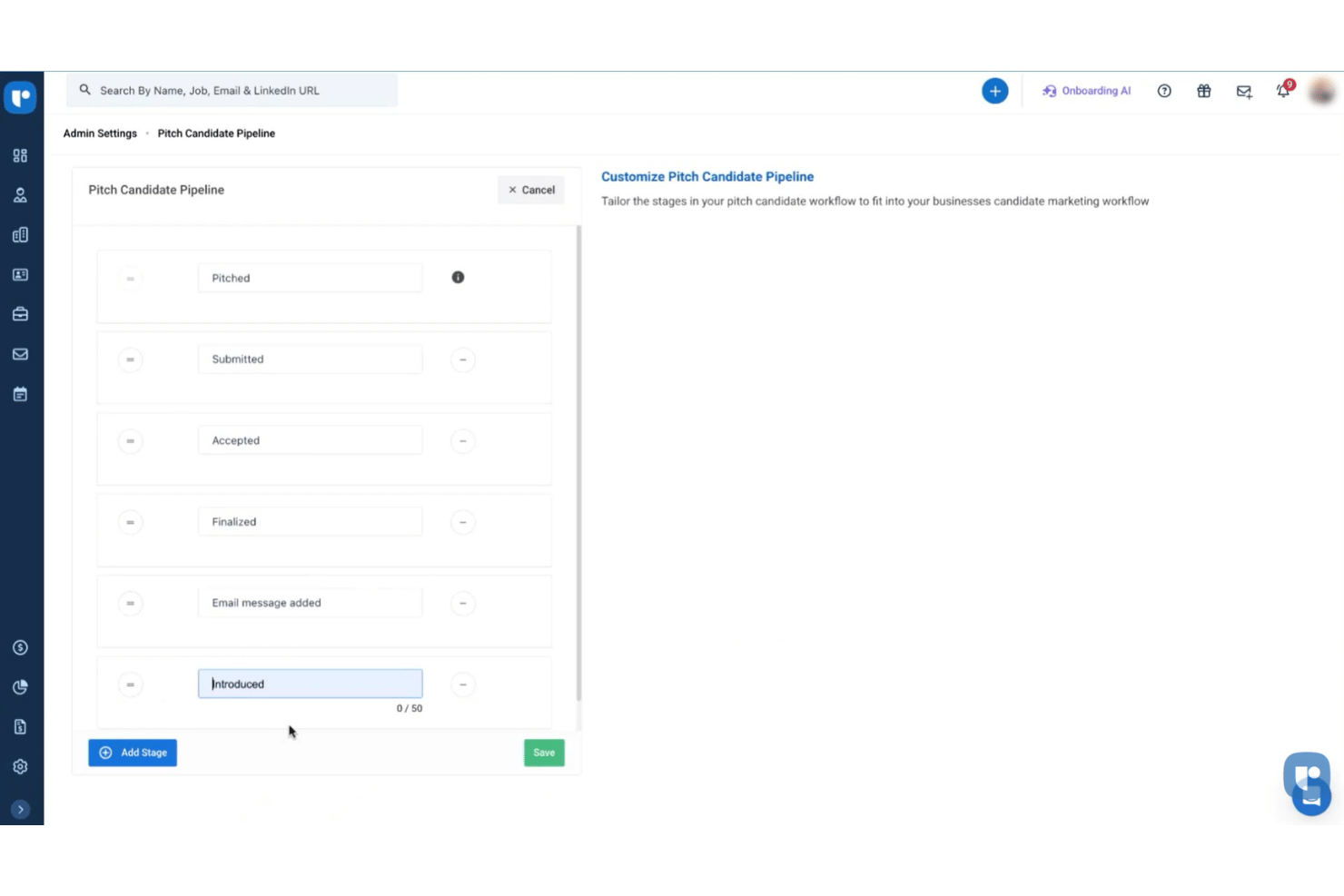
Set unique stages for each job or client and move candidates visually through hiring steps. This makes tracking progress and bottlenecks clear at a glance.
Resume Parsing and Search
Automatically extract candidate data from resumes and store them in searchable profiles. Find qualified talent quickly with advanced keyword and filter tools.
Chrome Sourcing Extension
Add candidates directly from LinkedIn and other sites into your database in one click. This streamlines sourcing and cuts out manual data entry.
Built-in Email Sequencing
Schedule personalized email campaigns and follow-ups to candidates or clients. See who opened, clicked, and replied—all within your dashboard.
Task and Activity Management
Assign, track, and monitor tasks for yourself or team members linked to candidates and jobs. Set reminders to ensure you never miss crucial follow-ups.
Reporting and Analytics Dashboard
View metrics like placement rates, pipeline velocity, and consultant performance. Use dashboards to make data-backed business and hiring decisions.
Ease of Use
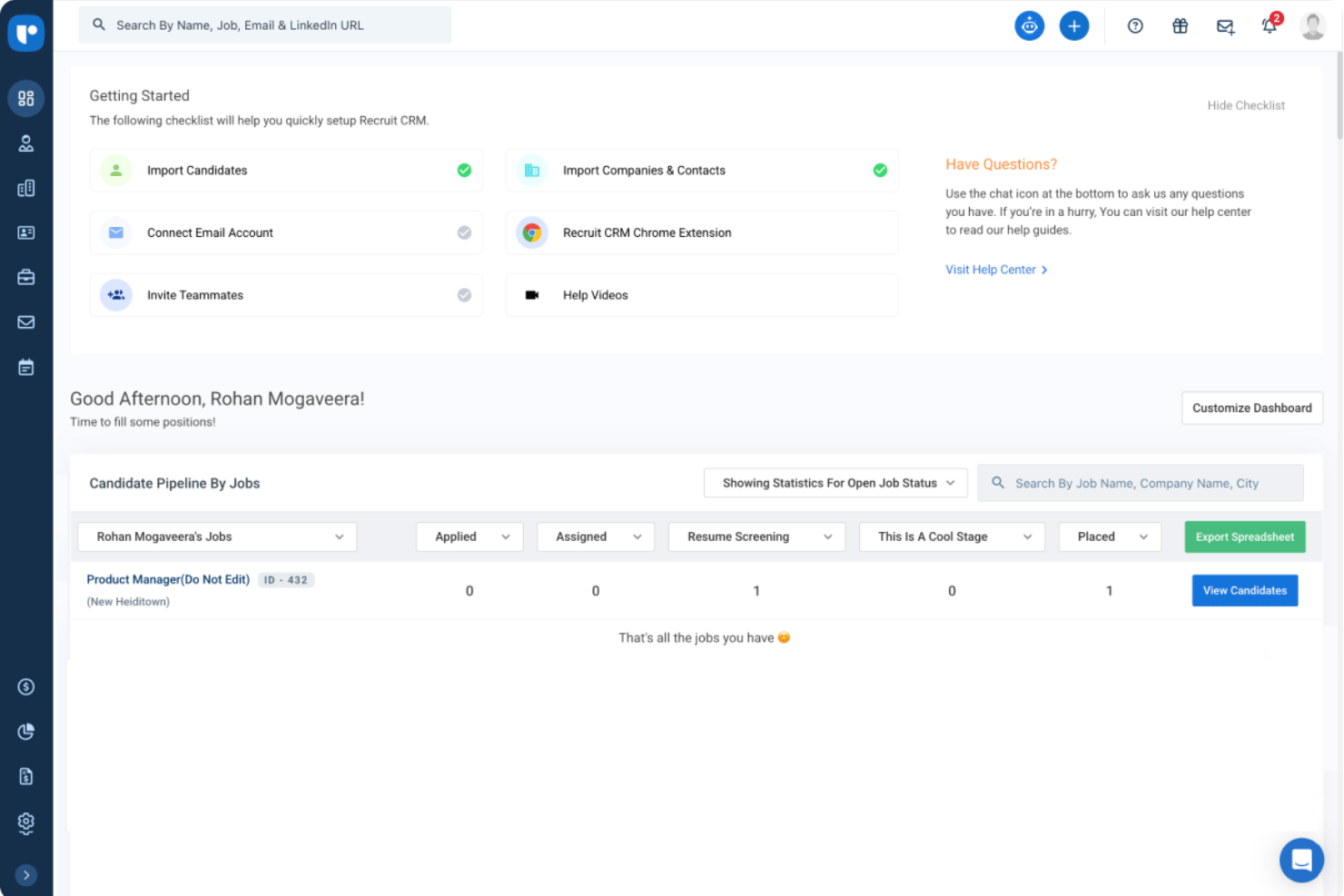
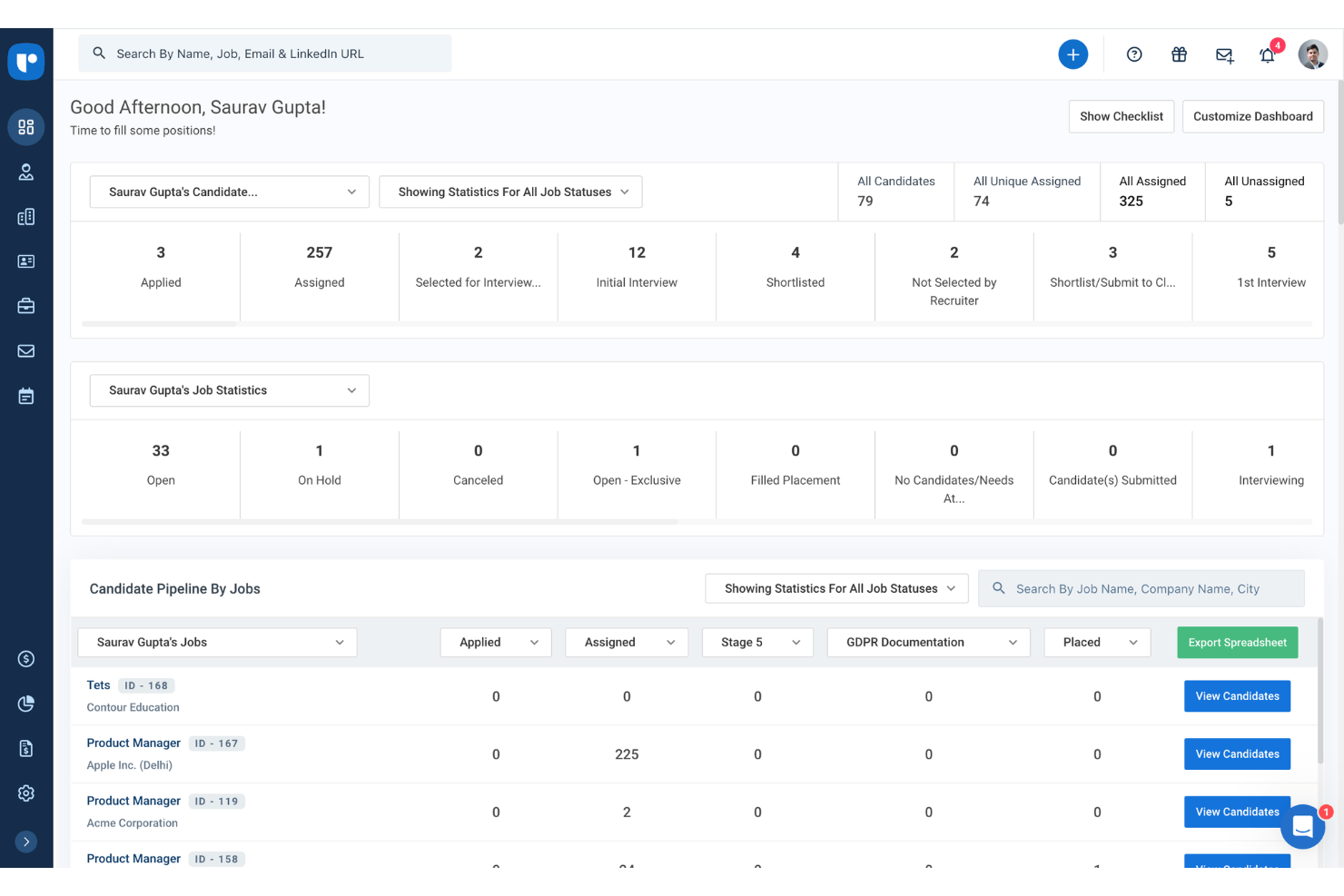
Recruit CRM’s user-friendliness is above average for recruiting CRM software, thanks to clear dashboards, color-coded pipelines, and drag-and-drop candidate management.
Users regularly point out how quick setup, easy access to sourcing tools, and built-in email outreach speed up daily tasks. You might still hit occasional lag with bulk data edits, but day-to-day workflow feels intuitive and smooth.
Integrations
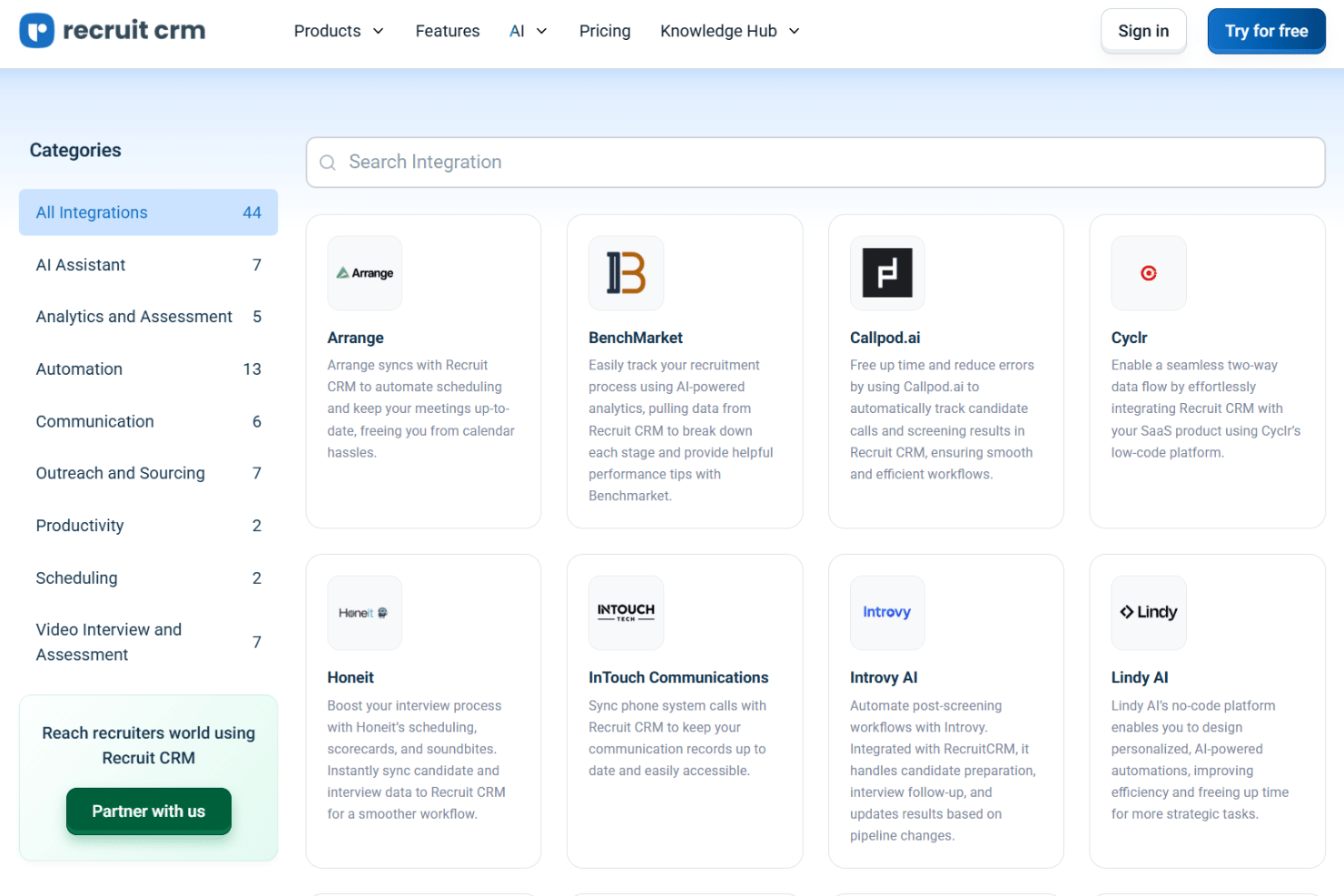
Recruit CRM integrates with LinkedIn, Gmail, Outlook, Mailchimp, Slack, WhatsApp, Zapier, Google Calendar, Microsoft Teams, and Zoom, among others.
Recruit CRM also offers an open API and connects with third-party integration tools like Zapier.
New Product Updates from Recruit CRM

Recruit CRM Adds AI Candidate Matching and Resume Parsing
Recruit CRM introduces AI candidate matching with bimetric scoring and enhanced resume parsing powered by Sovren. These updates improve candidate discovery and streamline screening with more accurate data extraction. Highlights include:
- AI Candidate Matching: Uses bimetric scoring to match candidates based on full profiles.
- Enhanced Resume Parsing: Extracts detailed data from resumes with improved accuracy.
- Multilingual Support: Parses resumes across multiple languages for global hiring.
- Profile Enrichment: Updates candidate records with structured data automatically.
Visit Recruit CRM’s official site for more details.
 for more details.
Recruit CRM Specs
- API
- Application Tracking
- Behavioral Testing
- Budgeting
- Calendar Management
- Candidate Database
- Cognitive Testing
- Contact Management
- Custom Assessments
- Dashboard
- Dashboards
- Data Export
- Data Import
- Data Visualization
- Email Integration
- Employee Database
- Employee Onboarding
- External Integrations
- Feedback Management
- Forecasting
- Interview Scheduling
- Multi-Source Feedback
- Multi-User
- Notifications
- Personality Testing
- Psychometric Testing
- Scheduling
- Status Notifications
- Travel Management