

10 Best Free Recruiting Software Reviewed in 2026

Best Free Recruiting Software Shortlist


Choosing the right free or low-cost recruiting software to help you attract and hire top talent without exceeding your budget makes for a tricky selection process. Fear not! I understand your challenges and I’m here to help you make this process easier. Drawing on my personal experience testing different recruiting tools, I will recommend the best free recruiting software for your hiring needs.
Why Trust Our Software Reviews
We’ve been testing and reviewing HR software systems since 2019. As HR experts ourselves, we know how critical and difficult it is to make the right decision when selecting software.
We invest in deep research to help our audience make better software purchasing decisions. We’ve tested more than 2,000 tools for different HR management use cases and written over 1,000 comprehensive software reviews. Learn how we stay transparent & our software review methodology.
Best Free Recruiting Software: Pricing Comparison Chart
This comparison chart summarizes pricing details for my top recruiting software selections that also offer free plans to help you find the best software for your budget and business needs.
| Tool | Best For | Trial Info | Price | ||
|---|---|---|---|---|---|
| 1 | Best for AI-driven candidate recommendations | 14-day free trial + free demo available | From $15/user/month (billed annually) | Website | |
| 2 | Best for integrated ATS and CRM tools | 30-day free trial + free demo available | From $85/user/month (billed annually) | Website | |
| 3 | Best for customizable employee onboarding | 14-day free trial | From $2/user/month | Website | |
| 4 | Best for small businesses | 7-day free trial + free demo available | From $99/month (billed annually) | Website | |
| 5 | Best for AI-powered global recruiting | Free plan available | From $149/month | Website | |
| 6 | Best free talent intelligence platform | Free demo + 7-day free trial available | From $149/user/month (billed annually) | Website | |
| 7 | Best ATS for software integrations | Free plan available (up to 4 employees) | From $2/employee/month | Website | |
| 8 | Best for AI-driven recruitment features | Free trial available | From $4.99/month (billed annually) | Website | |
| 9 | Best for recruiter-focused AI hiring | Free demo available | Pricing upon request | Website | |
| 10 | Best for collaborative hiring | 14-day free trial + free plan available | From $157/month (billed annually) | Website |
Best Free Recruiting Software Reviews
Here are detailed summaries of the best free recruiting software that made it into my top 5 list, including notes on why I picked them. Each review offers a detailed look at the key features, pros & cons, integrations, and ideal use cases of each system to help you find the best tool for you.

Manatal
Best for AI-driven candidate recommendations
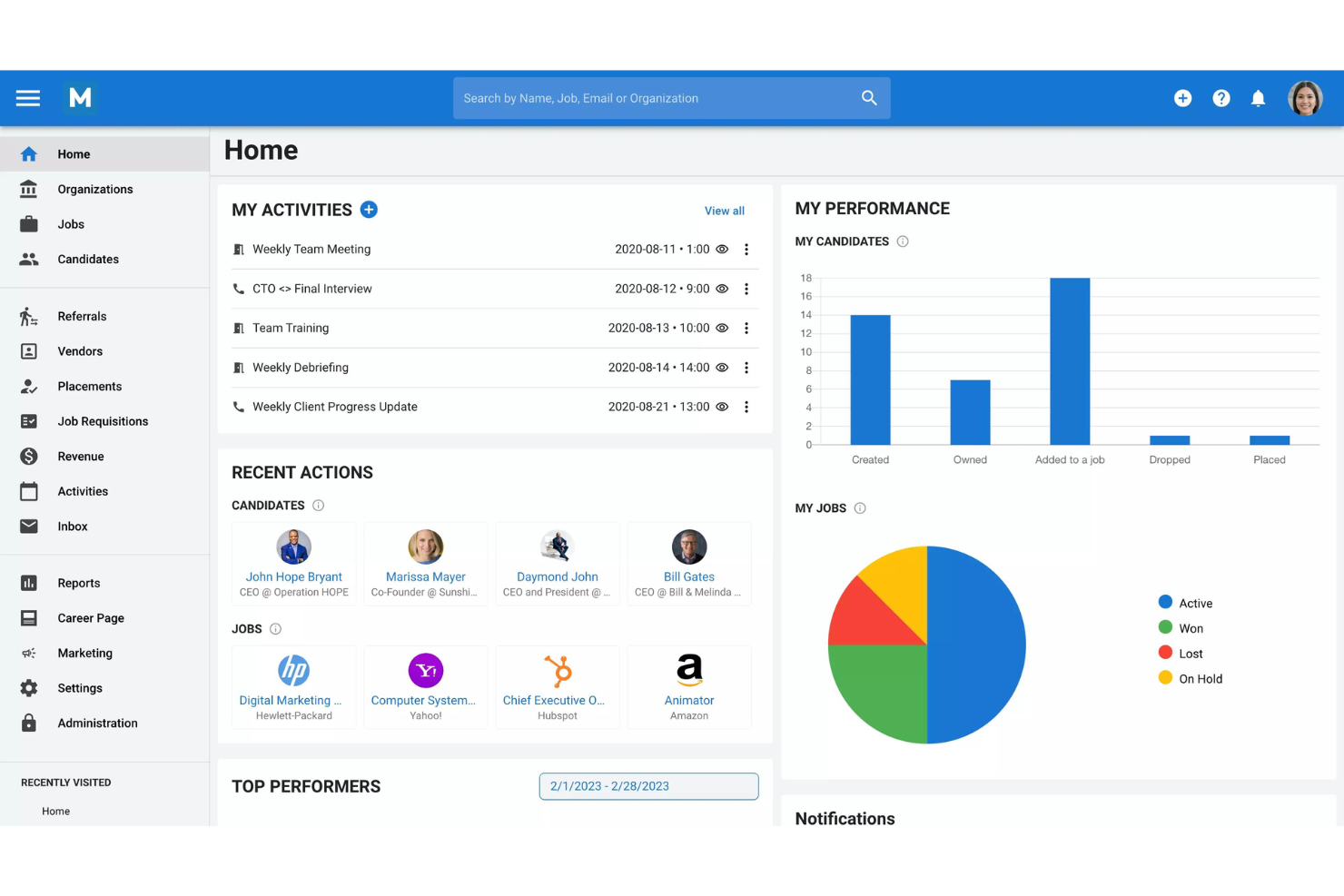
Manatal is a recruiting software platform that combines applicant tracking, AI-powered candidate sourcing, resume parsing, and job board integrations for hiring teams.
Who Is Manatal Best For?
Manatal is a good fit for small to mid-sized businesses and staffing agencies that need an AI-powered ATS without a heavy implementation lift.
Why I Picked Manatal
Manatal earns its spot on my shortlist because its AI candidate recommendations reduce the manual work of shortlisting. When my team posts a role, Manatal's AI scores and ranks candidates already in the database against the job criteria—so instead of reading through every resume, I get a prioritized list of best-fit profiles. I also like the AI Advanced Search, which combines semantic search with Boolean filters and relevance scoring to surface candidates I would have missed. The candidate enrichment feature pulls in social and public data to build profiles beyond the resume, giving me more context before I reach out.
Manatal Key Features
- Drag-and-drop pipeline: Move candidates across customizable hiring stages using a kanban or list view directly within the ATS.
- Workflow automation: Set up automated, personalized email communications that trigger when candidates move between pipeline stages.
- Interview scorecards: Create structured evaluation forms and share them with your team to compare candidate rankings in one view.
- Onboarding milestone tracking: Add starting dates, probation periods, and end-of-employment dates to candidate profiles and customize milestones at the job level.
Manatal Integrations
Manatal offers native integrations with Indeed, Codility, Mailchimp, Google Suite, Microsoft 365 - Office 365, LinkedIn, ZipRecruiter, Monster, Talent.com, and Google for Jobs. It also connects with Zapier.
What's Free?
Manatal offers a 14-day free trial with access to all features and no credit card required. After the trial, continued use requires a paid subscription.
Pros and Cons
Pros:
- Platform is straightforward to use
- Users can customize their recruitment workflows
- Robust AI-powered tools
Cons:
- Lacks self-scheduling tools for candidates
- No mobile app
New Product Updates from Manatal

Manatal Adds Candidate Login and Employee Portal to Career Pages
Manatal has added Candidate Login, Internal Employee Portal, and internal job visibility controls for Career Pages. These features help teams simplify applications, support employee mobility, and manage internal hiring workflows. For more information, visit Manatal’s official site.
 .
.
Best for integrated ATS and CRM tools
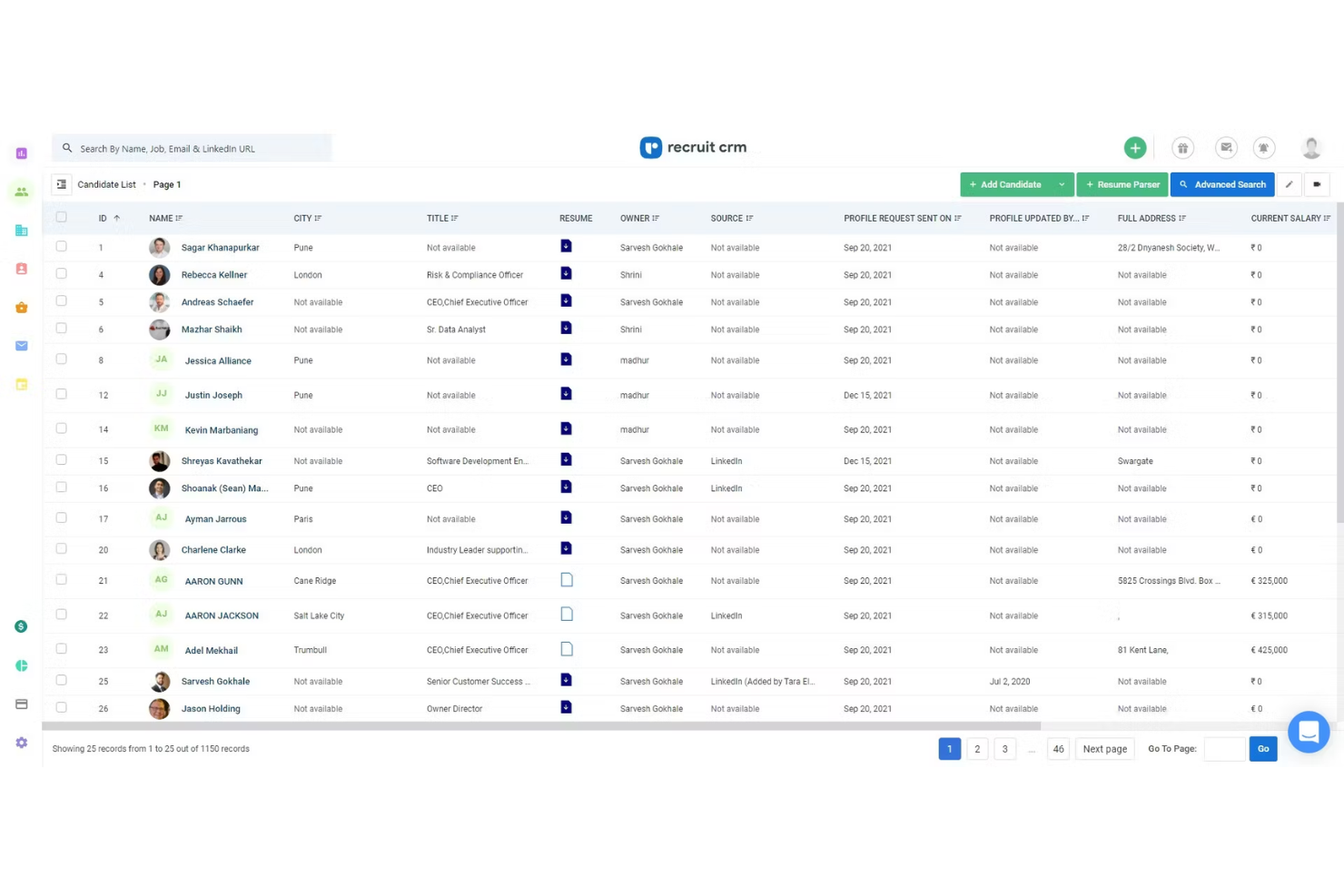
Recruit CRM is a recruiting software platform that combines applicant tracking, candidate sourcing, and CRM tools for recruitment teams and agencies.
Who Is Recruit CRM Best For?
Recruit CRM is a strong fit for staffing agencies and independent recruiters who need to manage both candidates and client relationships in one place.
Why I Picked Recruit CRM
Recruit CRM earns its spot on my shortlist because it's one of the few free recruiting tools that genuinely combines ATS and CRM functionality in a single platform. I like that candidate tracking and client relationship management live side by side—so when I'm moving a candidate through the pipeline, I can also track the client deal linked to that same placement. The AI resume parsing is a real time-saver too, pulling structured candidate profiles directly from PDF or Word attachments. The Kanban board gives my team a clear visual of every candidate's stage across multiple open roles at once.
Recruit CRM Key Features
- Automated sequencing: Set up automated email, LinkedIn, and SMS outreach sequences to keep candidates and clients engaged throughout the hiring process.
- AI candidate matching: Surface candidates who match your ideal profile and share precise match results directly with clients.
- Advanced search: Search your candidate database using Boolean logic, keyword filters, and radius-based location searches across resumes and profile fields.
- Job multiposting: Post open roles across multiple job boards and manage all campaigns from one place.
Recruit CRM Integrations
Recruit CRM offers native integrations with LinkedIn, Gmail, Outlook, Mailchimp, Slack, and Google Calendar. It also connects with Zapier and provides an API for custom integrations.
What's Free?
Recruit CRM offers a free trial for an unlimited period of time.
Pros and Cons
Pros:
- Intuitive interface
- Good reporting and analytics tools
- Efficient candidate tracking and management
Cons:
- May be expensive for small businesses
- Could offer more advanced CRM features
New Product Updates from Recruit CRM

Recruit CRM Adds AI Candidate Matching and Resume Parsing
Recruit CRM Recruit CRM introduces AI candidate matching and enhanced resume parsing. These updates help recruiters identify candidates faster and improve screening accuracy. For more information, visit Recruit CRM's official site.
 .
.
TalentHR
Best for customizable employee onboarding
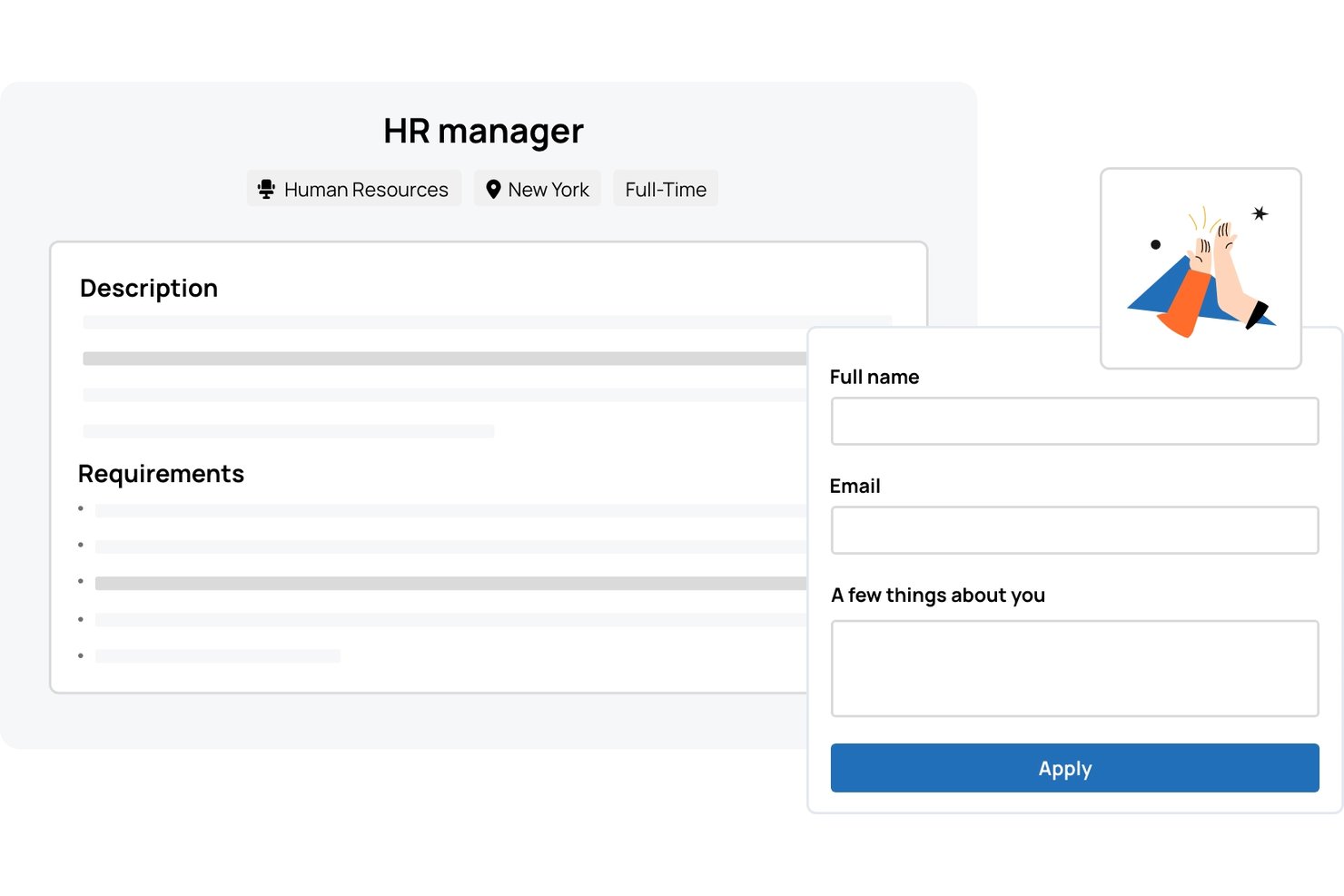
TalentHR is an HR and recruiting platform designed for small teams, offering a built-in applicant tracking system, customizable careers pages, centralized candidate management, and structured employee onboarding workflows.
Who Is TalentHR Best For?
TalentHR suits small business HR teams and startup founders who want to handle recruiting, onboarding, and employee management in one place.
Why I Picked TalentHR
I picked TalentHR as one of the best because I can fully customize onboarding workflows for each new hire, automate document requests, and set up unique task lists for different roles—perfect for teams that want flexible onboarding control.
TalentHR Key Features
- Customizable hiring pipeline: Create and edit recruitment stages to match your team’s hiring process.
- Built-in careers page: Publish and manage job openings on your branded public careers site.
- Resume parsing: Automatically extract candidate data from uploaded resumes for streamlined review.
- Team collaboration tools: Share evaluations and interview feedback with other decision makers in the platform.
TalentHR Integrations
Native integrations are not clearly documented. TalentHR offers an API for custom integrations.
Pros and Cons
Pros:
- Structured candidate evaluation and feedback tools
- Built-in careers page for job posting
- Customizable onboarding for different roles
Cons:
- Bulk candidate actions can feel clunky
- Limited native integrations available
AvaHR
Best for small businesses
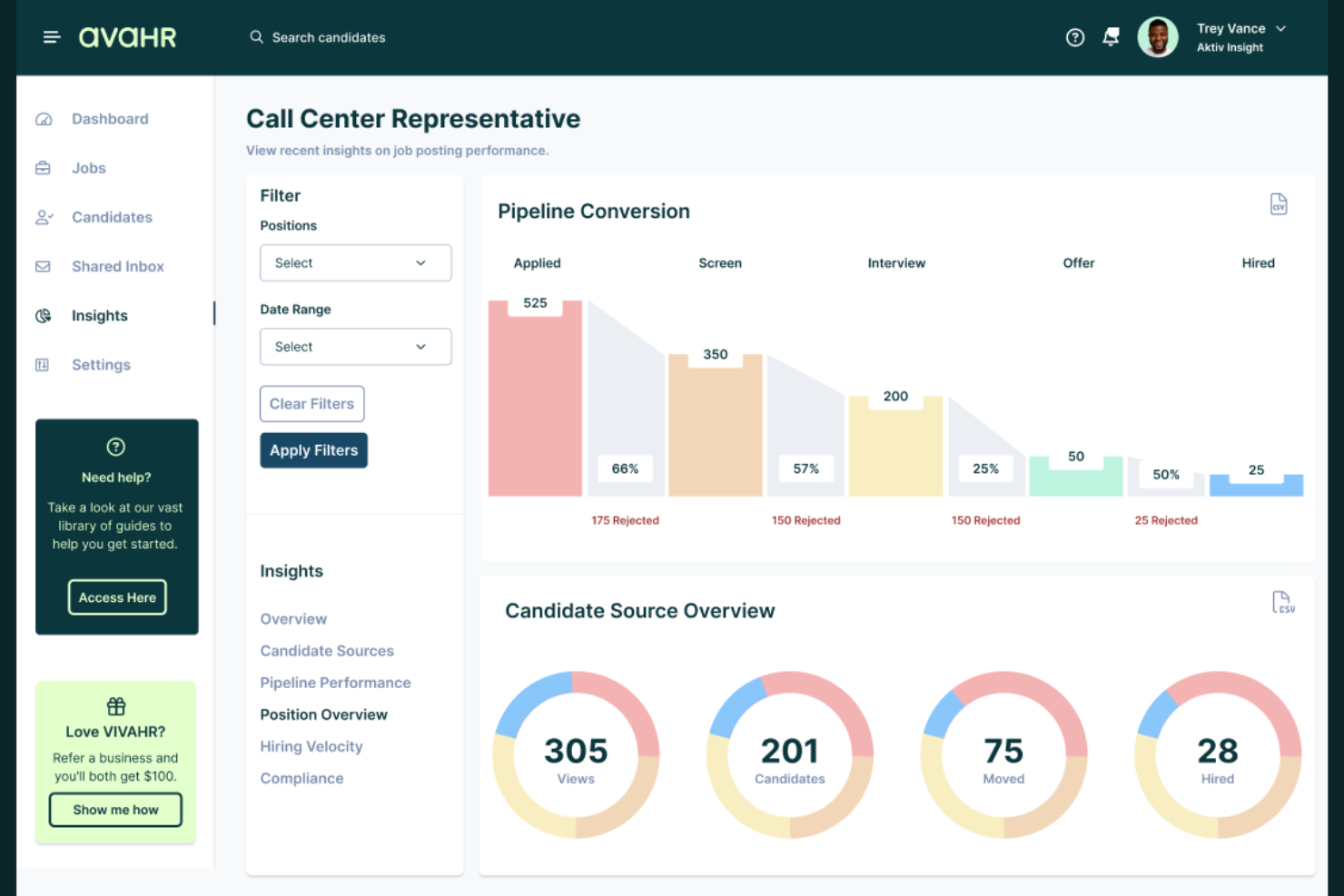
AvaHR is a recruiting software platform that provides applicant tracking, job posting, candidate management, and interview scheduling features designed for small business hiring.
Who Is AvaHR Best For?
AvaHR is a good fit for small business owners and HR generalists who need a straightforward hiring tool without the complexity of enterprise-grade recruiting platforms.
Why I Picked AvaHR
AvaHR earns its spot on my shortlist because it's built specifically for small businesses that don't have a dedicated recruiting team. I like that it includes culture profiles—micro landing pages where you can add videos, photos, and job descriptions that give candidates a real sense of your workplace before they apply. That's a feature I rarely see at this price point. I also find the custom hiring pipelines genuinely useful: you can build separate pipelines for different roles using a drag-and-drop interface, and automated actions handle candidate communications at each stage without any manual follow-up.
AvaHR Key Features
- Candidate AI scoring: Automatically ranks incoming applicants so you can identify your strongest candidates without manually reviewing every resume.
- Employee referral program: Lets your existing team submit referrals directly through the platform, creating a built-in sourcing channel alongside job board postings.
- Offer letters and eSignatures: Generate offer letter templates and collect digital signatures from within the platform, removing the need for a separate document tool.
- Custom questionnaires: Add role-specific screening questions to your application so candidates self-qualify before reaching your pipeline.
AvaHR Integrations
Integrations include Ninja Forms, Formstack, Wufoo, Google Forms, BambooHR, Willo, Starred, GoCo, Engage Talent, Namely, Checkr, Enboarder, Verified First, and GoodHire.What's Free?
AvaHR offers a 7-day free trial with access to all features. After the trial, continued use requires a paid subscription. There is no free-forever plan.
Pros and Cons
Pros:
- Offers collaboration tools that facilitate team-based recruiting
- Provides customizable workflows
- Integration with many job boards
Cons:
- May not be suitable for larger organizations with high-volume hiring needs
- Lacks some advanced features such as AI-powered recruiting tools

Snaphunt
Best for AI-powered global recruiting
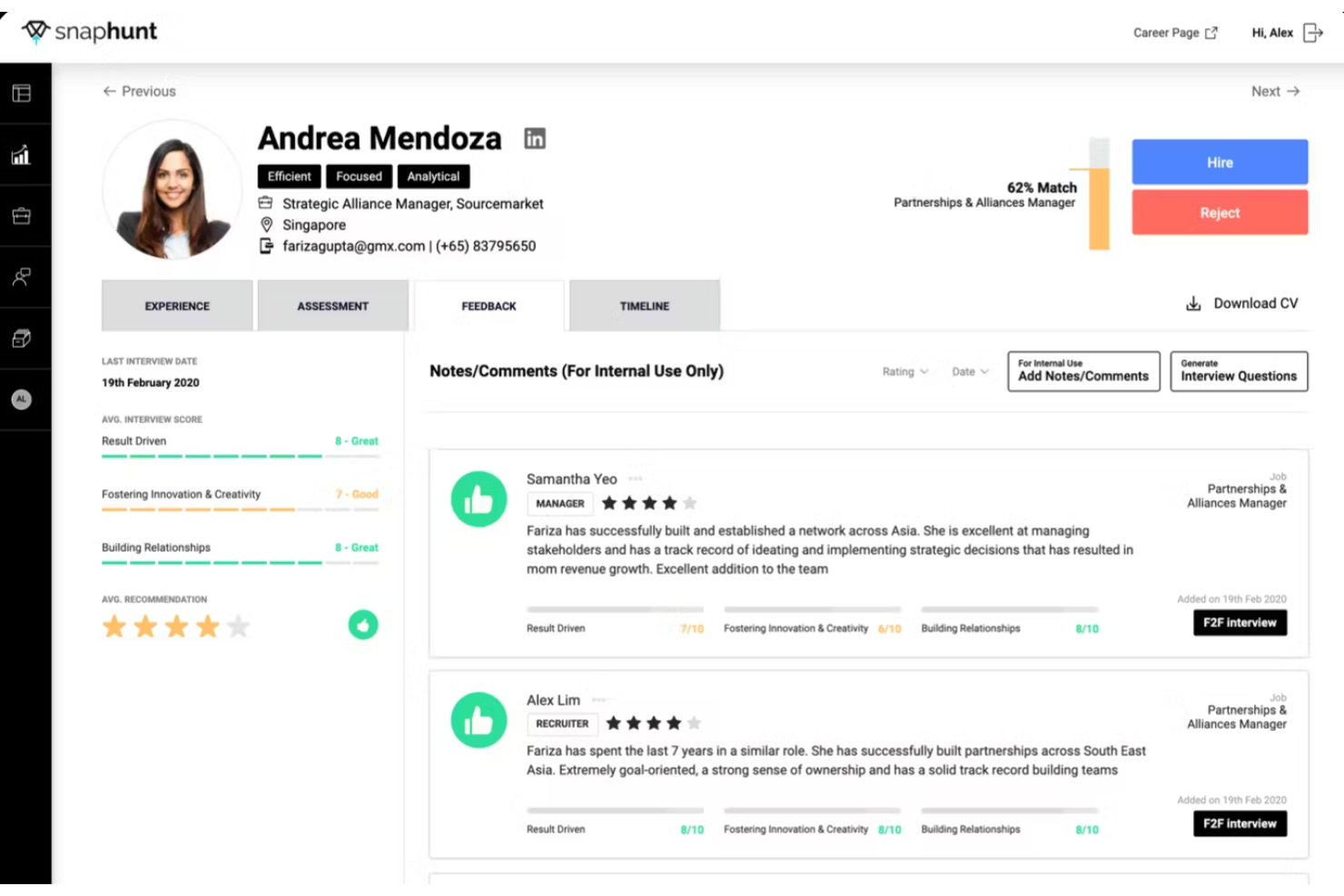
Snaphunt is a recruiting platform that combines AI-driven candidate sourcing, global job posting, and applicant tracking for teams hiring across multiple regions.
Who Is Snaphunt Best For?
Snaphunt is a good fit for HR teams and recruiters at small to mid-sized companies hiring across multiple countries or regions.
Why I Picked Snaphunt
I picked Snaphunt as one of the best because of how it handles global candidate sourcing through AI. I like that it taps into 8M+ jobseekers on its own platform and 300M+ open web profiles, then automatically distributes job posts across leading boards—so my team isn't manually posting to a dozen different channels. The AI-powered shortlisting also surfaces relevance scores and deep applicant insights like salary expectations and notice periods, which means I'm spending less time filtering and more time on the candidates who fit. MARTHA, Snaphunt's AI reference-checking assistant, is a distinctive feature that uses voice calls to verify references and flag reliability concerns before a hire is made.
Snaphunt Key Features
- Cultural fit assessments: Snaphunt's proprietary psychometric tool, Snapsych, measures candidates' work style and motivation to evaluate alignment with your company's values.
- Asynchronous video interviews: Record and review candidate video responses on your own schedule, then coordinate live interviews with multiple stakeholders directly in the platform.
- Personalized candidate outreach: Send dynamic, personalized messages at scale to engage targeted candidates and build relationships across your talent pipeline.
- Automated job description generation: Generate role-specific job descriptions automatically, reducing the time spent on manual writing before a job post goes live.
Snaphunt Integrations
Native integrations are not clearly documented.
What's Free?
Snaphunt offers a free-forever plan that lets you post jobs, manage applicants, and access its talent pool. Some advanced features and premium support are only available on paid plans.
Pros and Cons
Pros:
- Automated outreach and video interviewing
- Global reach for talent sourcing
- Extensive AI-driven candidate matching
Cons:
- May require integration adjustments for specific workflows
- Higher starting price for smaller teams

Loxo
Best free talent intelligence platform

Loxo is a recruiting software platform that combines applicant tracking, automated sourcing, talent CRM, and AI-driven talent intelligence tools for hiring teams.
Who Is Loxo Best For?
Loxo is a strong fit for recruiters and talent acquisition teams—especially at staffing agencies and growing companies—who need AI-powered sourcing and candidate management in a free plan.
Why I Picked Loxo
I included Loxo on my shortlist because its free plan includes genuine talent intelligence features—not just basic ATS functionality. I particularly like the AI-powered candidate sourcing, which automatically surfaces matching candidates from a built-in database of over 800 million profiles without a paid upgrade. My team can manage the full recruitment pipeline, from outreach to offer, using the integrated CRM and multi-channel communication tools (email, SMS, and calls) all within the free tier.
Loxo Key Features
- Drag-and-drop pipeline management: Move candidates through custom stages visually, with a master pipeline view showing all candidates across every job at once.
- Resume forwarding and CSV import: Add candidates to your database by forwarding a resume to your unique email address or importing a CSV file directly into Loxo.
- Chrome extension for candidate capture: Save candidates from any webpage directly into your Loxo database without switching tabs or manually re-entering data.
- Loxo Boost programmatic job posting: Distribute job postings across a network of 30,000+ job boards with AI determining the best placement based on job title, description, and location.
Loxo Integrations
Loxo integrates natively with LinkedIn, Indeed, Glassdoor, Google Calendar, Microsoft Outlook, Slack, Salesforce, Zoom, Mailchimp, and QuickBooks.What's Free?
Loxo offers a free-forever plan that includes unlimited users and access to core features like ATS, CRM, and AI sourcing. Some advanced features and integrations are only available on paid plans.
Pros and Cons
Pros:
- Integrated ATS for a unified recruitment process
- Global talent database with enriched data profiles
- AI-driven candidate sourcing for precise matching
Cons:
- Integrations are limited to paid plans only
- Higher costs may be prohibitive for smaller businesses

WebHR
Best ATS for software integrations

WebHR is a cloud-based recruiting and HR platform that covers applicant tracking, job posting, candidate management, and workflow automation for hiring teams.
Who Is WebHR Best For?
WebHR is a good fit for small to mid-sized businesses that need an all-in-one HR and recruiting platform with a free starting tier.
Why I Picked WebHR
WebHR earns its spot on my shortlist because of how well its ATS connects with the broader recruiting ecosystem. I like that it integrates directly with job boards like Indeed, LinkedIn, ZipRecruiter, and Glassdoor, so my team can post openings and pull in applications without switching between platforms. The recruitment module also connects to the employee module, which means a hired candidate's data flows straight into onboarding without any manual re-entry. The automatic "We Are Hiring" image generation for social media posts is a small but useful touch that saves time during active hiring pushes.
WebHR Key Features
- Collaborative hiring tools: Share candidate profiles, leave feedback, and run advanced searches across your hiring team from a single workflow.
- Diversity and inclusion (D&I) toolkit: Track and report on D&I metrics to align your recruitment process with organizational goals.
- Recruitment reports and analytics: Access over 175 ready-to-use, exportable reports covering metrics like time-to-fill, cost-per-hire, and source effectiveness.
- Database-wide job announcements: Automatically notify all candidates in your existing talent database when a new role opens up.
WebHR Integrations
WebHR offers native integrations with Microsoft Azure AD, Google Workspace, OneLogin, Okta, Microsoft Dynamics, Breezy, Indeed, Dr Job, Eluta, JazzHR, MyJobHelper, ZipRecruiter, Recruit, Zoom, WhatsApp, Slack, Asana, Bonusly, Box, Dropbox, FreshBooks, LinkedIn, Neuvoo, QuickBooks, SurePayroll, and Xero.
What's Free?
WebHR offers a free-forever plan. Some advanced features and integrations require a paid plan.
Pros and Cons
Pros:
- Streamlined interview scheduling and feedback
- Clear tracking and management of candidates
- Comprehensive integration with HR functions
Cons:
- Not completely free, though still quite affordable
- Limited customization for specific recruitment needs

Best for AI-driven recruitment features

Unnanu Hire is a modern recruitment platform that leverages artificial intelligence (AI) to enhance the efficiency and effectiveness of the hiring process. This tool supports recruiters and hiring managers by automating candidate sourcing, screening, and engagement, which helps reduce the time to hire.
Why I picked Unnanu Hire: I chose Unnanu Hire for its innovative use of AI to transform traditional recruitment processes. The platform stands out due to its ability to automate and personalize the candidate experience while providing data-driven insights for better decision-making. I believe it is best for AI-driven recruitment because it significantly streamlines operations, enabling businesses to focus on selecting the most qualified candidates.
Standout features & integrations:
Standout features include intelligent matching algorithms that pair job openings with suitable candidates based on skills, experience, and cultural fit. The platform offers automated communication tools that keep candidates engaged and informed throughout the hiring process, plus tools to track job applicant statuses and workflows that link into onboarding activities. Additionally, its detailed analytics dashboard allows recruiters to track performance and optimize their strategies effectively.
Unnanu Hire integrates with popular tools such as LinkedIn, Indeed, Glassdoor, Google Calendar, Microsoft Outlook, Slack, Salesforce, Zoom, QuickBooks, and Trello to streamline various aspects of the recruitment workflow.
What’s Free: Unnanu’s free plan includes unlimited job postings, real-time messaging, and mass email distribution with some limitations and no credit card required. Their AI-powered resume evaluator feature is also available as an add-on.
Pros and Cons
Pros:
- Comprehensive analytics dashboard
- Automated communication tools
- AI-driven candidate matching and screening
Cons:
- AI evaluations costs extra
- Limited access to the customer support team on lower plans

Skima.ai
Best for recruiter-focused AI hiring

Skima.ai is an AI-powered recruiting platform that helps teams automate candidate sourcing, screening, and engagement using recruiter-focused workflows and intelligent matching tools.
Who Is Skima.ai Best For?
Skima.ai is a strong fit for recruiters and talent acquisition teams looking to use AI to speed up candidate sourcing and screening.
Why I Picked Skima.ai
Skima.ai earns its spot on my shortlist because it's one of the few recruiting platforms built entirely around how recruiters actually think and search. I love that instead of building Boolean strings or stacking filters, I can type a plain-language query like "senior Java developer with fintech experience in London" and get ranked, scored candidates in seconds. The AI matching score—a 0–100 rating for every candidate—means I can open a shortlist and immediately know who's worth a closer look, with explainable reasoning behind each score. The resume parser also extracts 200+ data points per profile with ~99% accuracy, so even older or oddly formatted resumes in my ATS don't get overlooked.
Skima.ai Key Features
- AI campaigns: Run automated, personalized outreach to candidates across email, SMS, and phone calls from a single dashboard.
- Public job posting: Distribute job listings to multiple job boards, career sites, and social media platforms in one click.
- Candidate segmentation: Tag and group candidates into segments to tailor outreach based on skills, status, or role type.
- Recruitment analytics: Track pipeline progress, email open and click rates, time-to-fill, and conversion rates via real-time dashboards.
Skima.ai Integrations
Integrations include Zoho, Lever, Greenhouse, Workday, Bamboo HR, Bullhorn, LinkedIn, Zapier, Salesforce, Slack, Microsoft Teams, and Google Workspace.What's Free?
Skima.ai offers a free demo so you can see the platform in action before committing. There is no free-forever plan or time-limited free trial currently available.
Pros and Cons
Pros:
- Supports personalized multi-channel engagement
- Automated candidate outreach at scale
- Easy to unify candidate data sources
Cons:
- No clear offline recruiting support tools
- AI matches not always 100% accurate

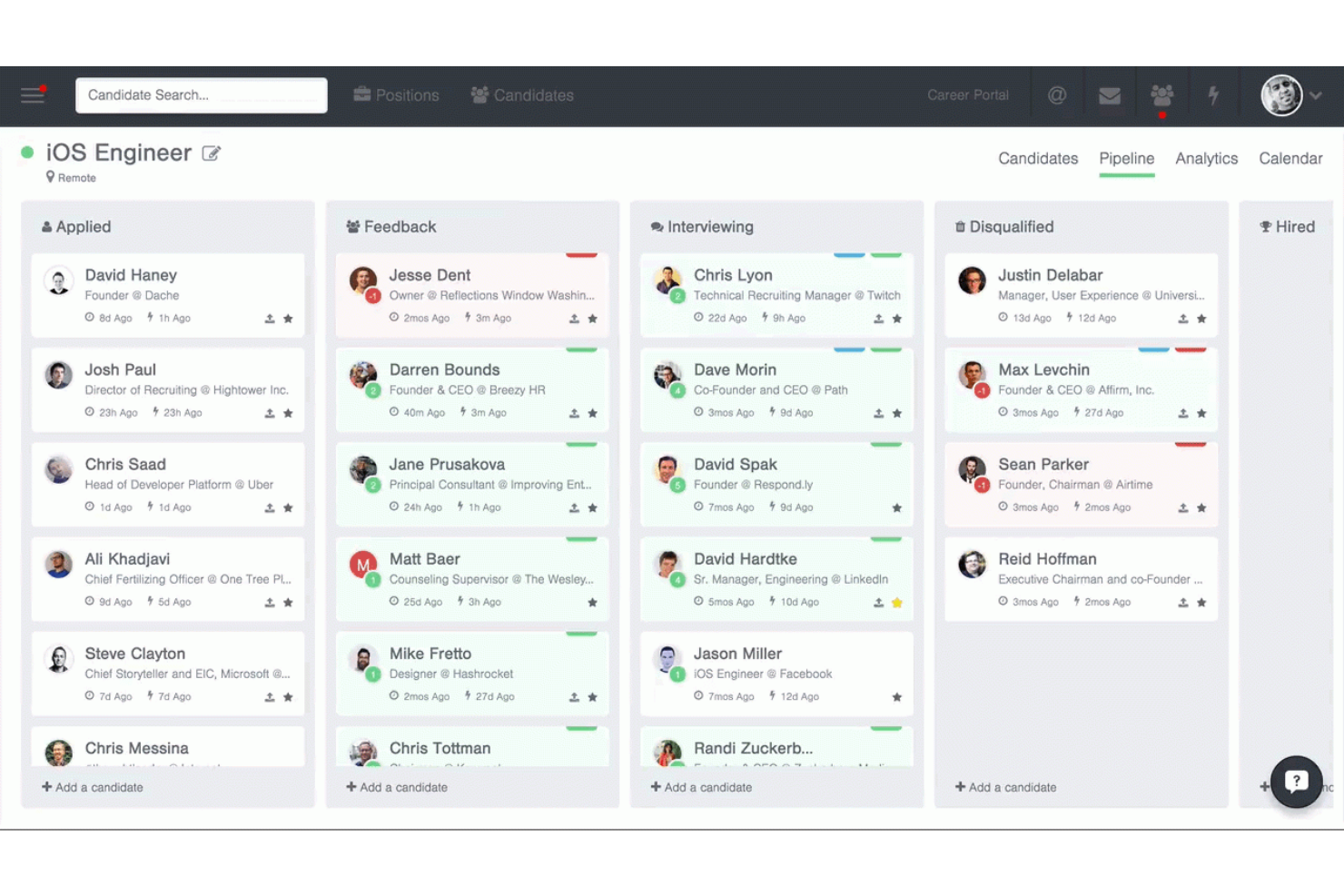
BreezyHR is a recruiting software platform that lets you manage job postings, track applicants, and organize candidate pipelines with built-in tools for team collaboration and communication.
Who Is BreezyHR Best For?
BreezyHR is a good fit for small to mid-sized businesses that involve multiple team members in the hiring process.
Why I Picked BreezyHR
BreezyHR earns its spot on my shortlist because of how well it brings a hiring team together around a single candidate. I love that shared hiring conversations let everyone on the team compare notes, create to-dos, and discuss candidates directly inside the platform—no separate threads or forwarded emails needed. The side-by-side interviewer availability view makes scheduling across a team genuinely simple, and one-way video screening means my team can review candidate responses on our own time rather than coordinating live calls. For teams where hiring decisions involve more than one person, that kind of built-in coordination is hard to replicate with a basic ATS.
BreezyHR Key Features
- Drag-and-drop pipeline management: Customize hiring stages and move candidates through your pipeline with a visual kanban-style interface.
- Touchless pre-screening: Automatically advance or disqualify candidates based on their responses to custom questionnaires.
- Job board advertising: Post open roles to 50+ free job sites, including Indeed, LinkedIn, and Google, in a single click.
- Employee referral management: Build and manage a structured employee referral program directly inside BreezyHR.
BreezyHR Integrations
BreezyHR offers 30+ native integrations, including Checkr, Gusto, Indeed, Bryq, Criteria, HackerRank, TestGorilla, BambooHR, Slack, and Zoom. It also connects with Zapier and provides an API for custom integrations.
What's Free?
BreezyHR offers a free-forever plan that includes unlimited users and candidates, but limits you to one active job position at a time. Some advanced features and integrations are only available on paid plans.
Pros and Cons
Pros:
- Automated scheduling and video interviewing features
- Standardized candidate evaluations with scorecards
- Visual pipeline management for easy tracking
Cons:
- Limited customization options in the free plan
- Higher price point compared to some competitors
Other Free Recruiting Software
Here are some additional free recruiting software options that didn’t make it onto my shortlist, but are still worth checking out:
- Join
For a free ATS and one-click job postings
- Plural
For branded careers page and talent retention
- MightyRecruiter
For automated candidate delivery
- RecruitingCRM
Free recruitment software for agencies and independent recruiters
- Zoho Recruit
For end-to-end talent acquisition
- OrangeHRM
Open-source recruiting and HR management software
- Calendly
Free platform for interview scheduling


Related HR Software Reviews
If you still haven't found what you're looking for here, check out these related tools that we've tested and evaluated:
- HR Software
- Payroll Software
- Recruiting Software
- Employer of Record Services
- Applicant Tracking Systems
- Workforce Management Software
How I Evaluate Free Recruiting Software
I look at free recruiting software in two layers: the core ATS, job posting, and pipeline features a tool must have to qualify, and the differentiators that set the best options apart.
Core Functionality (Table Stakes For This List)
When I'm selecting tools for my list, I rank each one on a scale from 0 (does not offer the functionality) to 5 (excels in this area) for each core functionality listed below. Then, I calculate the tool's total score into a percentage. Each tool needs to achieve a minimum total score of 65% to be considered for inclusion.
- Free Plan Availability: I check whether the platform offers a permanent free tier with enough headroom to actually run a hiring process, not just a time-limited trial that expires mid-search.
- Job Posting & Distribution: Each tool should let you create listings and push them to external job boards or a hosted careers page rather than forcing manual copy-paste to each site.
- Applicant Tracking Pipeline: I look for stage-based workflows that move candidates from application to offer, so you can see at a glance where every applicant stands across open roles.
- Candidate Database & Search: A searchable, filterable candidate database matters because past applicants often fit future roles, and I evaluate how easy it is to tag, segment, and resurface profiles.
- Resume Parsing & Intake: Good parsing pulls contact details, experience, and skills into structured records automatically, saving you from manually entering data for every applicant who applies.
- Collaboration & Communication Tools: Hiring rarely happens solo, so I evaluate whether team members can leave scorecards, share notes, and email candidates from within the platform.
Once I have a list of tools that meet this criteria, I consider what sets each platform apart.
Differentiating Factors (What Sets Vendors Apart)
Here's how I compare and contrast different vendors:
Standout Features
Interview scheduling automation is a big differentiator. Tools that offer calendar-synced self-scheduling links cut the back-and-forth that bogs down small teams juggling multiple open roles. I also look for a branded careers page, since it gives startups and growing companies a professional hiring presence without building a separate site. Reporting features like time-to-hire and source tracking help HR generalists show leadership which channels actually bring in quality candidates.
Beyond Features
Free plan generosity matters a lot here. I evaluate how many active jobs, users, and candidates a platform allows before pushing you toward a paid tier. Integrations are another key factor—connecting your recruiting tool with Google Workspace, Slack, or an existing HRIS avoids the double data entry that eats into an HR generalist's day. Compliance also weighs in, especially GDPR consent capture and candidate data deletion workflows, since handling applicant data carries real regulatory risk regardless of company size.
How to Choose Free Recruiting Software
As you work through your unique software selection process, keep the following points in mind:
- Feature Set: Ensure the software includes essential features such as applicant tracking, job posting, resume parsing, and communication tools. For instance, a small business may need a straightforward system for tracking applicants. At the same time, a larger company might require more robust features like integration with social media for broader job postings.
- Ease of Use: The interface should be user-friendly to avoid a steep learning curve. A busy HR department will benefit from intuitive navigation and clear functionalities, allowing them to manage recruitment efficiently without extensive training.
- Scalability: Consider whether the software can accommodate your company's growth. A startup planning to expand rapidly needs software that can easily scale up to handle increasing job applications and expanded recruitment efforts.
- Customer Support: Look for software that offers reliable customer support or standalone help resources such as FAQ repositories and automated chatbots to answer questions. Though human-centric support channels aren’t often included with free software, having access to help when needed is crucial, especially for organizations without a dedicated IT department.
- Reputation and Reviews: Research user feedback and reviews to gauge the software's reliability and performance. For example, a non-profit organization with limited resources would benefit from choosing software that is well-regarded by similar entities for its effectiveness and lack of hidden costs.
Trends in Free Recruiting Software
Recruiting software is continuously evolving to meet the changing demands of talent acquisition practices. Here are several trends that are shaping the future of recruiting software today:
- AI-Powered Candidate Screening: Artificial intelligence is increasingly prevalent in free recruiting platforms. It automates the screening process, evaluating candidates efficiently, reducing time-to-hire and improving match quality.
- Mobile-First Application Processes: Recruiting tools are prioritizing mobile accessibility, allowing candidates can apply for jobs directly from their smartphones. This is important for reaching a wider, tech-savvy applicant pool.
- Enhanced Communication Tools: These tools facilitate real-time interaction between recruiters and candidates. The trend is crucial for maintaining engagement and speeding up the recruitment cycle.
- Data-Driven Recruitment Analytics: Recruiting software is offering more sophisticated analytics capabilities. These provide insights into hiring processes and candidate experiences that inform strategic HR decisions.
- Integration with Social Media Platforms: Software increasingly integrates with social media for candidate sourcing, allowing recruiters to tap into a vast network of potential applicants. The trend is important for its ability to leverage social networks in recruitment.
What is Free Recruiting Software?
Free recruiting software is a digital platform designed to assist hiring teams. It is used by HR professionals, freelance or in-house recruiters, staffing agencies, and hiring managers to attract, screen, and select candidates.
The software posts job openings, manages applications, and facilitates communication between employers and potential employees. Free recruiting software, in particular, helps organizations looking to fill vacancies without incurring the costs associated with paid recruiting solutions.
Components of free recruiting software typically include job posting capabilities, applicant tracking systems, and communication tools. These elements work together to manage the flow of candidates, from initial contact through to the final hiring decision.
The software provides a central location for all recruitment-related activities, making the hiring process more organized and efficient for users.
Features of Free Recruiting Software
When considering free recruiting software, it's essential to focus on the features that can support your hiring process effectively.
While budget constraints might limit access to premium tools, several key functionalities are available in free versions that can still significantly help you find and hire the best candidates. Here are the most important features of recruiting software to look for:
- Applicant Tracking System (ATS): An ATS is crucial for organizing and managing applicant data, making navigating numerous applications easier.
- Job Posting and Distribution: This feature allows you to post jobs to multiple platforms simultaneously, increasing the visibility of your openings.
- Resume Parsing: Resume parsing simplifies the review process by automatically pulling key details from resumes, saving valuable time.
- Candidate Sourcing: Effective sourcing tools help you find potential candidates proactively, even before they apply.
- Collaborative Hiring: Collaboration features enable multiple team members to participate in the hiring process, leading to more informed decisions.
- Interview Scheduling: This feature helps to schedule interviews efficiently, reducing the back-and-forth communication often required.
- Communication Tools: Keeping in touch with applicants is made easier with built-in messaging systems and SMS (text) communication abilities.
- Reporting and Analytics: Analytics help you understand the effectiveness of your hiring strategies and where improvements can be made.
- Mobile Accessibility: With mobile access, you can manage the recruitment process from anywhere, at any time.
- Customizable Career Pages: Tailoring your career page can make your company stand out to potential applicants, and allows you to personalize the candidate experience.
These features can provide a solid foundation for your recruitment efforts even in free recruiting software. They help maintain organization, improve communication, and ultimately, assist in making more strategic hiring decisions.
While free tools may not offer the breadth of features paid versions do, they can still be incredibly valuable for businesses looking to improve their recruitment process without incurring additional costs.
Benefits of Free Recruiting Software
Free recruiting software can be a valuable asset for businesses looking to attract and manage candidates without incurring additional costs. These tools offer a range of functionalities that can support the recruitment process, from sourcing to hiring.
Here are several benefits that you can expect to gain from implementing free recruiting software:
- Cost Savings: Free recruiting software allows businesses to allocate their resources elsewhere as they save on the costs typically associated with paid recruitment platforms.
- Ease of Access: Companies can easily adopt these tools with no financial investment required, making it easier to start recruiting efforts immediately.
- Scalability: As a business expands, free recruiting software can scale to accommodate increased recruitment needs without necessitating an immediate upgrade to paid services.
- Candidate Reach: Job posting features enable businesses to reach a wider audience, increasing the chances of finding the right candidate.
- Data Management: These platforms provide a centralized location for all candidate data, improving the efficiency of the recruitment process by keeping information organized and accessible.
Costs & Pricing of Recruiting Software
Free recruiting software can be particularly appealing for small businesses or startups looking to streamline their hiring process without incurring significant costs.
However, it's important to understand that while the software may be free, features, usage, or support may be limited compared to paid plans. Below is a summary of the plan options and their pricing for recruiting software.
Plan Comparison Table for Recruiting Software
| Plan Type | Average Price | Common Features |
| Free Plan | $0 | Job posting on free job boards, candidate management, interview scheduling, basic reporting, limited storage, and API calls |
| Entry-Level | $15 - $30 per user per month | Includes free plan features plus additional job postings, enhanced candidate sourcing, and support |
| Mid-Range | $35 - $60 per user per month | All entry-level features plus advanced analytics, CRM capabilities, and increased storage and API limits |
| Enterprise | $75 - $90 per user per month | Comprehensive feature set including AI-powered tools, unlimited job postings, and full customization options |
Evaluating the key features of a free plan and whether they align with your business's recruitment needs is essential when considering a free recruiting software plan.
While free options can offer valuable tools for managing the hiring process, understanding the limitations and potential for scalability is crucial for long-term recruitment success.
Free Recruiting Software FAQs
Here are some answers to frequently asked questions you may have about recruiting software and how it works:
How can free recruiting software benefit my business?
Free recruiting software can help streamline your hiring process by automating tasks such as posting job ads, tracking applications, and scheduling interviews. This allows you to save time and reduce administrative burdens while increasing your ability to attract and engage quality candidates.
Are there any limitations to using free recruiting software?
Yes, free recruiting software often comes with limitations such as reduced features, capped number of users or job postings, limited support, and less customization compared to paid versions. These constraints might affect the efficiency of your recruitment process as your business grows.
How does free recruiting software make money for its providers?
Free recruiting software providers typically offer basic services at no cost to attract users, then charge for premium features, additional users, enhanced support, or extended functionalities. Some may also display ads or collect data for marketing purposes.
Can free recruiting software integrate with other HR tools?
While some free recruiting software offers limited integration capabilities, others may allow you to connect with popular HR tools such as HRIS systems, email platforms, and calendar apps. Integration options vary widely, so it’s important to check the specifics for each tool.
What security measures should I look for in free recruiting software?
Ensure the software provides essential security features such as data encryption, secure user authentication, and regular backups. Also, verify that the provider complies with relevant data protection regulations like GDPR or CCPA to safeguard candidate information.
How can I transition from free to paid recruiting software if needed?
Most free recruiting software providers offer upgrades or add-ons to paid plans that unlock additional features and capabilities. Ensure you understand the upgrade process, what new features you’ll gain, and how data migration works to avoid disrupting your recruitment activities.
Is training available for free recruiting software?
Some providers offer basic online tutorials, user manuals, chatbots, or community forums for free users, while more comprehensive training and support usually come with paid plans. Check the availability of these resources to ensure your team can effectively use the software.
What should I consider before choosing free recruiting software?
Evaluate your recruitment needs, the size of your team, and your hiring volume. Consider the software’s ease of use, available features, integration capabilities, and the provider’s reputation. It’s also wise to read reviews and possibly test the software before fully committing to it.
What’s Next?
To remain up to date on all the latest in people management, subscribe to our newsletter for leaders and managers. You'll receive insights and offerings tailored to leaders and HR professionals straight to your inbox.