


CuraLinc Review: Pros, Cons, Features and Pricing Guide



CuraLinc is a workplace mental health platform built around employee assistance programs and concierge-style care navigation. It's worth considering if your organization needs structured mental health support—counseling, coaching, and crisis services—with a model that prioritizes connecting employees to the right care quickly. If you've looked at Lyra Health but want a provider with a stronger EAP foundation and more flexible, utilization-based pricing, CuraLinc is worth a close look.
CuraLinc Evaluation Summary
- Pricing upon request
- Free demo available
Why Trust Our Software Reviews
We’ve been testing and reviewing HR software systems since 2019. As HR experts ourselves, we know how critical and difficult it is to make the right decision when selecting software.
We invest in deep research to help our audience make better software purchasing decisions. We’ve tested more than 2,000 tools for different HR management use cases and written over 1,000 comprehensive software reviews. Learn how we stay transparent & our software review methodology.
CuraLinc Overview
When comparing CuraLinc to competitors, I think its clinician-led support model and broad care continuum are its biggest strengths, especially for organizations supporting employees with varying mental health needs. The platform combines counseling, coaching, digital tools, crisis response, and specialized care pathways in a way that feels more comprehensive than many traditional EAPs.
That said, the product ecosystem can feel fragmented at times, and pricing transparency is limited. If you’re evaluating solutions for a midsize or enterprise organization that values high-touch support and measurable outcomes, CuraLinc is worth serious consideration.
pros
-
24/7 clinician-led support with rapid response times.
-
Broad care continuum beyond traditional employee assistance programs.
-
Strong provider matching and personalized mental health support.
cons
-
Mental health reporting features are limited compared to others.
-
Product ecosystem can feel fragmented across multiple platforms.
-
Mobile app experience receives mixed user satisfaction reviews.
Is CuraLinc Right For Your Needs?
Who Would be a Good Fit for CuraLinc?
CuraLinc is a strong fit for organizations that need clinically led mental health support with fast access to care, crisis response, and a broader continuum of services than a traditional employee assistance program. It is especially well-suited for large or operationally complex organizations that support diverse workforces, higher-stress environments, or employees with varying levels of mental health needs.
-
Manufacturing & Logistics
CuraLinc’s 24/7 clinical support and crisis counseling give shift workers reliable mental health resources regardless of their hours.
-
Large Enterprises
Enterprise-scale reporting, custom add-ons, and wide-reaching employee support make CuraLinc a match for complex organizational structures.
-
Higher Education
Colleges and universities can use CuraLinc’s counseling, digital wellbeing tools, coaching, and multicultural support to serve diverse faculty, staff, and student-worker populations.
-
Safety-Sensitive Industries
Organizations in transportation, manufacturing, public safety, or other high-risk environments can benefit from CuraLinc’s crisis intervention, specialized care pathways, and proactive support resources.
-
Healthcare Organizations
Healthcare employers can use CuraLinc’s counseling, manager consultations, substance use support, and rapid-access psychiatry services to address burnout and higher-acuity mental health concerns.
-
Human Resources Teams
HR gets anonymous utilization reporting, live manager training, and dedicated implementation support for rolling out programs organization-wide.
Who Would be a Bad Fit for CuraLinc?
CuraLinc is less suited for organizations looking for a lightweight, self-serve wellness app or a highly customizable software platform with deep developer integrations. It works best for those who value clinician-led care and hands-on support, so companies wanting a purely digital experience or transparent SaaS-style pricing may find it less appealing. It may also not suit organizations requiring extensive security certifications, advanced API ecosystems, or very low-cost tools.
-
Small Startups
CuraLinc’s feature set and minimum user requirements may not suit teams with fewer than 50 employees.
-
Tech-Only Teams
Companies seeking app-based, self-directed mental health tools with no live human support will find CuraLinc’s clinical focus unnecessary.
-
API-Driven Organizations
Companies prioritizing open APIs, developer tools, or extensive third-party integrations may find CuraLinc less flexible than software-first HR platforms.
-
Extensive Public Trust-Center Documentation Requirements
Companies that require publicly available SOC 2 reports, ISO certifications, detailed API documentation, or developer-focused security transparency may need additional verification during procurement.
-
Budget-Conscious Employers
Organizations seeking transparent, low-cost pricing may struggle with CuraLinc’s quote-based sales process and lack of publicly available pricing details.
-
Companies Wanting a Single Unified App Experience
Because CuraLinc still operates across multiple apps and portals, organizations wanting one highly polished and unified user experience may find the platform ecosystem somewhat fragmented.
How We Test & Score Our Tools
We’ve spent years building, refining, and improving our software testing and scoring system. The rubric is designed to capture the nuances of software selection and what makes a tool effective, focusing on critical aspects of the decision-making process.
Below, you can see exactly how our testing and scoring works across seven criteria. It allows us to provide an unbiased evaluation of the software based on core functionality, standout features, ease of use, onboarding, customer support, integrations, customer reviews, and value for money.
Core Functionality (25% of final score)
The starting point of our evaluation is always the core functionality of the tool. Does it have the basic features and functions that a user would expect to see? Are any of those core features locked to higher-tiered pricing plans? At its core, we expect a tool to stand up against the baseline capabilities of its competitors.
Standout Features (25% of final score)
Next, we evaluate uncommon standout features that go above and beyond the core functionality typically found in tools of its kind. A high score reflects specialized or unique features that make the product faster, more efficient, or offer additional value to the user.
We also evaluate how easy it is to integrate with other tools typically found in the tech stack to expand the functionality and utility of the software. Tools offering plentiful native integrations, 3rd party connections, and API access to build custom integrations score best.
Ease of Use (10% of final score)
We consider how quick and easy it is to execute the tasks defined in the core functionality using the tool. High scoring software is well designed, intuitive to use, offers mobile apps, provides templates, and makes relatively complex tasks seem simple.
Onboarding (10% of final score)
We know how important rapid team adoption is for a new platform, so we evaluate how easy it is to learn and use a tool with minimal training. We evaluate how quickly a team member can get set up and start using the tool with no experience. High scoring solutions indicate little or no support is required.
Customer Support (10% of final score)
We review how quick and easy it is to get unstuck and find help by phone, live chat, or knowledge base. Tools and companies that provide real-time support score best, while chatbots score worst.
Customer Reviews (10% of final score)
Beyond our own testing and evaluation, we consider the net promoter score from current and past customers. We review their likelihood, given the option, to choose the tool again for the core functionality. A high scoring software reflects a high net promoter score from current or past customers.
Value for Money (10% of final score)
Lastly, in consideration of all the other criteria, we review the average price of entry level plans against the core features and consider the value of the other evaluation criteria. Software that delivers more, for less, will score higher.
Core Features
24/7 Clinician-Led Support
Employees get direct access to licensed clinicians any time, day or night. This ensures someone is available for urgent or ongoing mental health needs.
Digital Mental Health and Self-Guided Tools
CuraLinc combines live care with digital resources like guided exercises, wellbeing content, mood check-ins, and structured programs for stress, anxiety, and resilience.
Counseling, Coaching, and Work-Life Services
Employees can access short-term counseling, coaching, and work-life support through one platform. This broader care continuum helps organizations support both everyday stress and more serious concerns.
Personalized Care Navigation
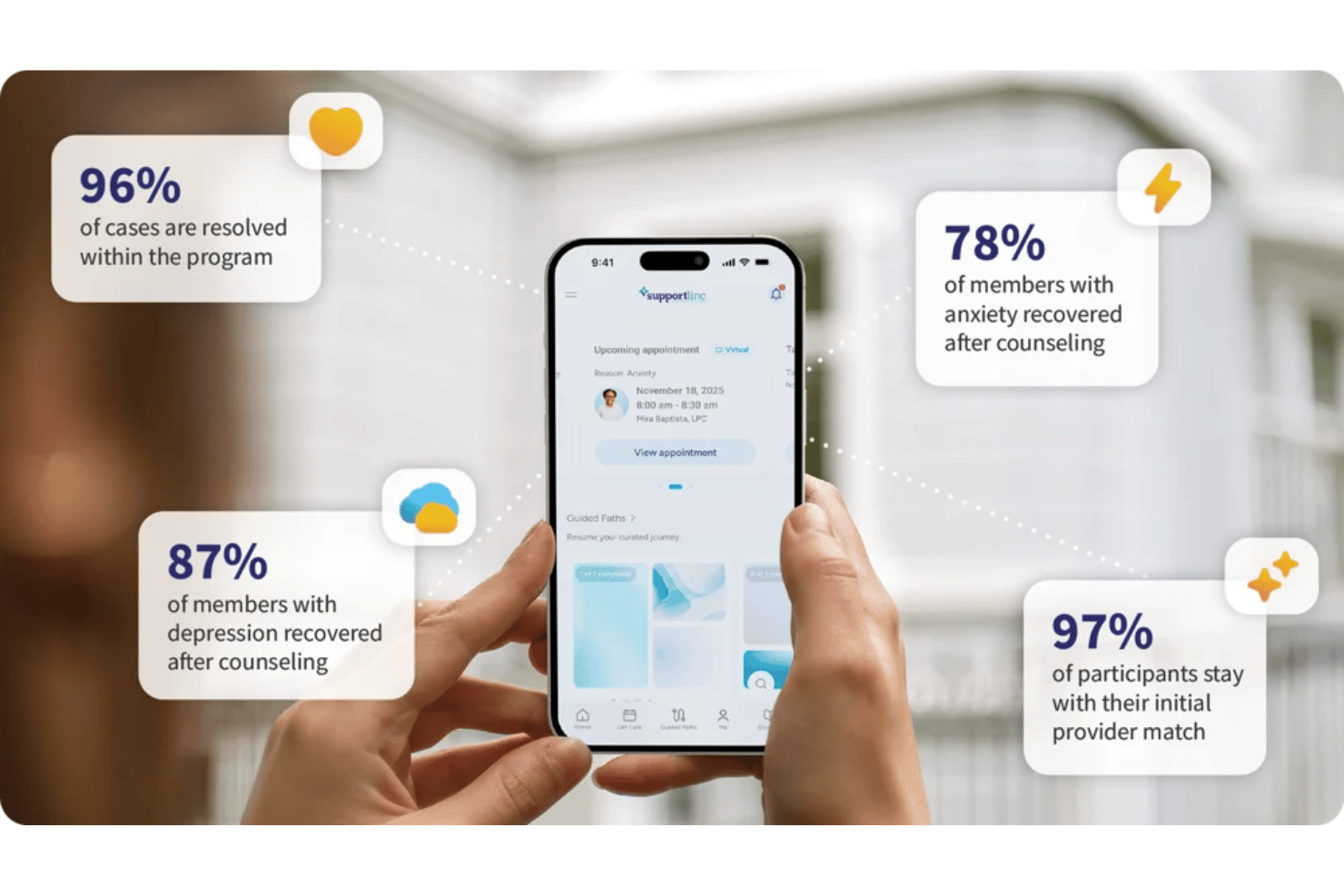
Employees are matched with the right services based on their unique concerns. Care navigators follow up to ensure each person receives appropriate support.
Organizational Reporting and Analytics
HR and benefits teams receive utilization reporting, engagement insights, and outcomes data through CuraLinc’s employer-facing tools. Reporting is designed to measure program impact while protecting employee confidentiality.
Manager Consultation and Training
CuraLinc offers manager consultations, workplace training, webinars, and crisis-response resources. These tools help leaders recognize concerns and respond appropriately within the workplace.
Standout Features
Substance Use Support Program
Employees have access to a dedicated pathway for substance use concerns. This program includes confidential counseling and ongoing recovery support beyond standard EAP offerings.
Virtual Support Groups and Mindstream Sessions
Employees can join live or on-demand group sessions focused on topics like burnout, mindfulness, stress, sleep, and resilience. These programs add a proactive wellness layer beyond one-on-one counseling.
AI Care Companion
CuraLinc includes an AI-supported engagement tool designed to keep employees connected between sessions. The feature helps reinforce progress, surface risks early, and guide users toward appropriate care resources.

Ease of Use
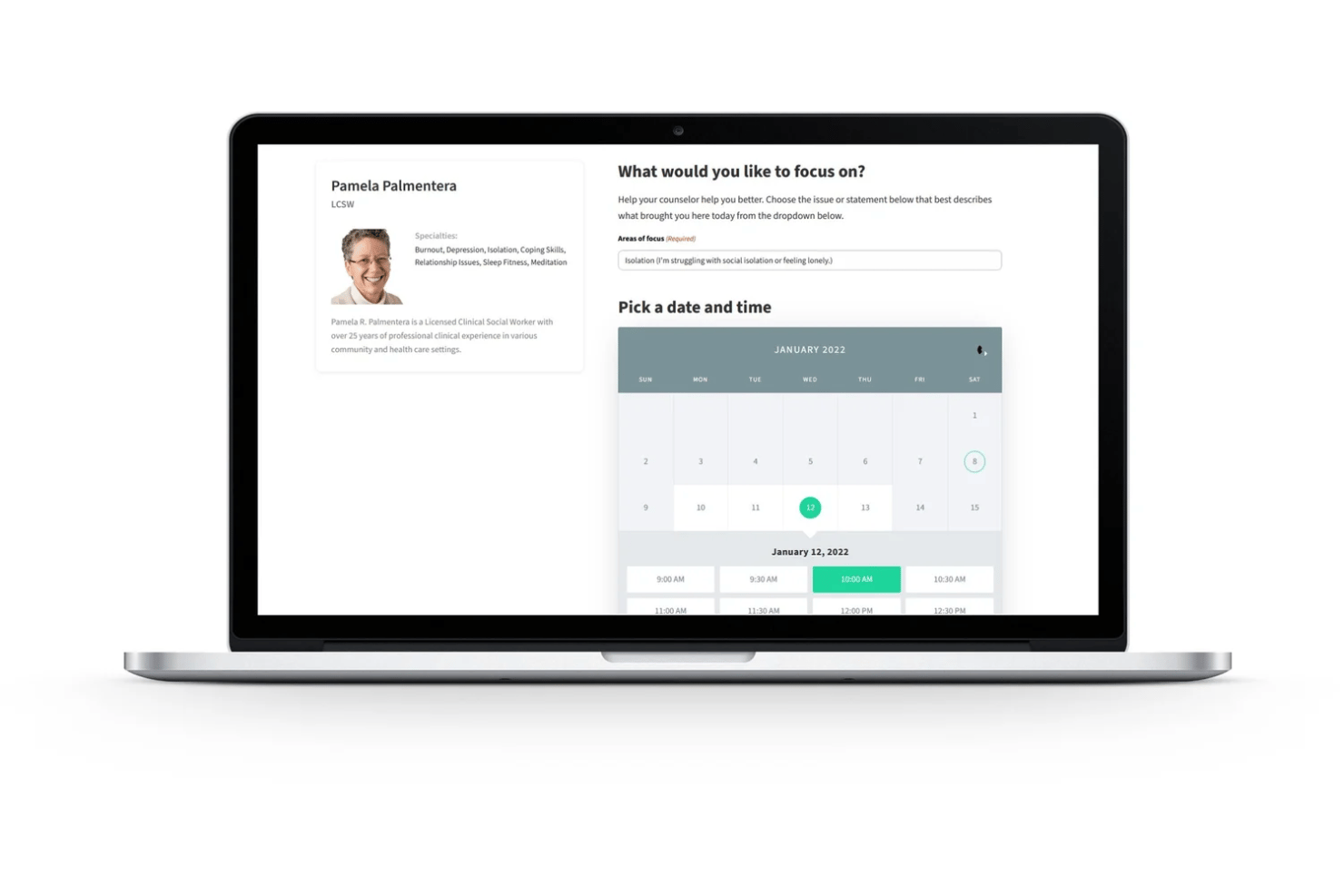
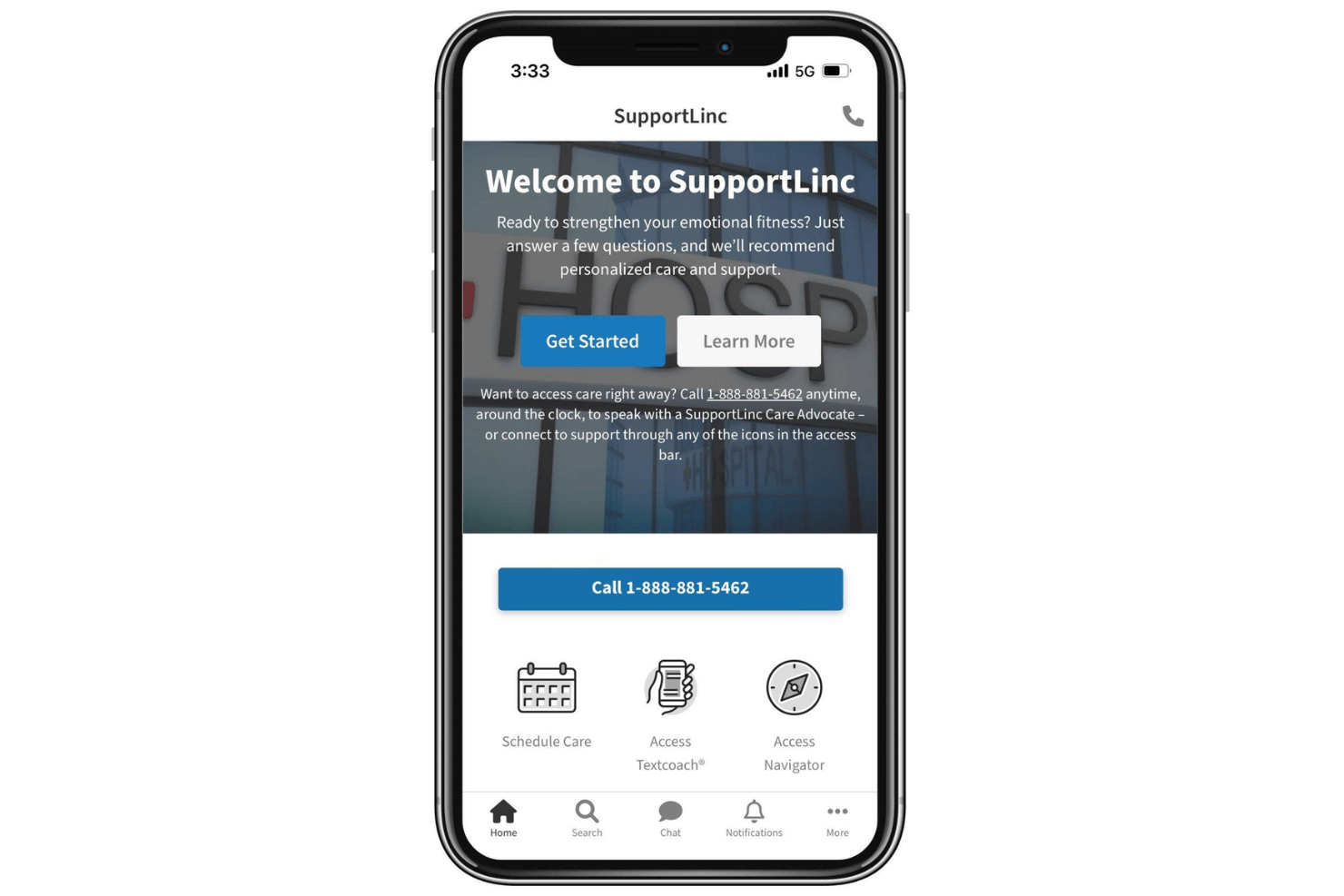
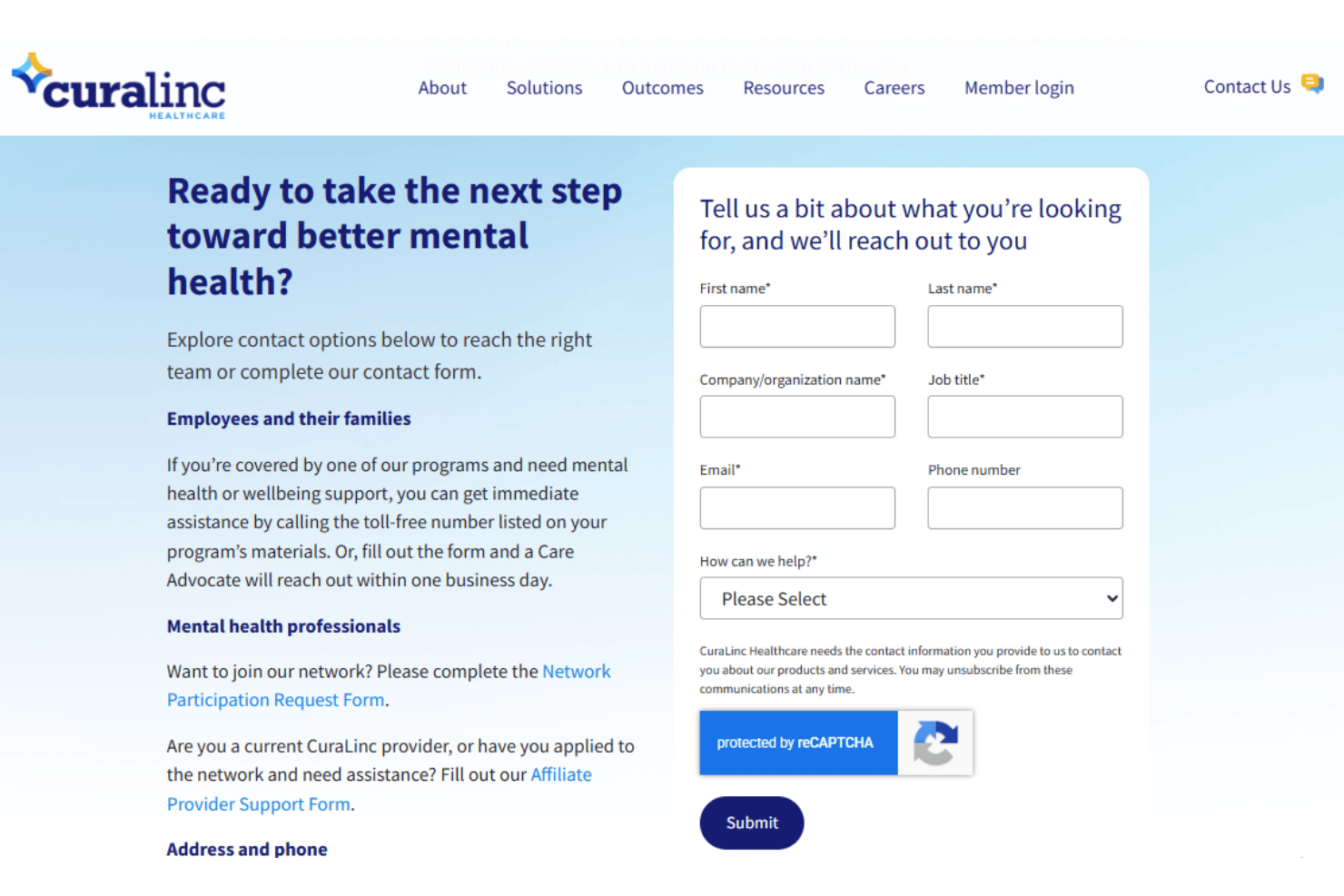
CuraLinc is generally easy to navigate, with guided care pathways that help employees quickly access counseling, coaching, and wellbeing resources. I like that the platform offers multiple ways to connect with support, including phone, digital tools, and text-based care, which makes the experience feel more flexible than some traditional EAPs. That said, usability can vary depending on which CuraLinc app or portal your organization uses, and some mobile app reviews mention outdated navigation and occasional login frustrations.
Onboarding
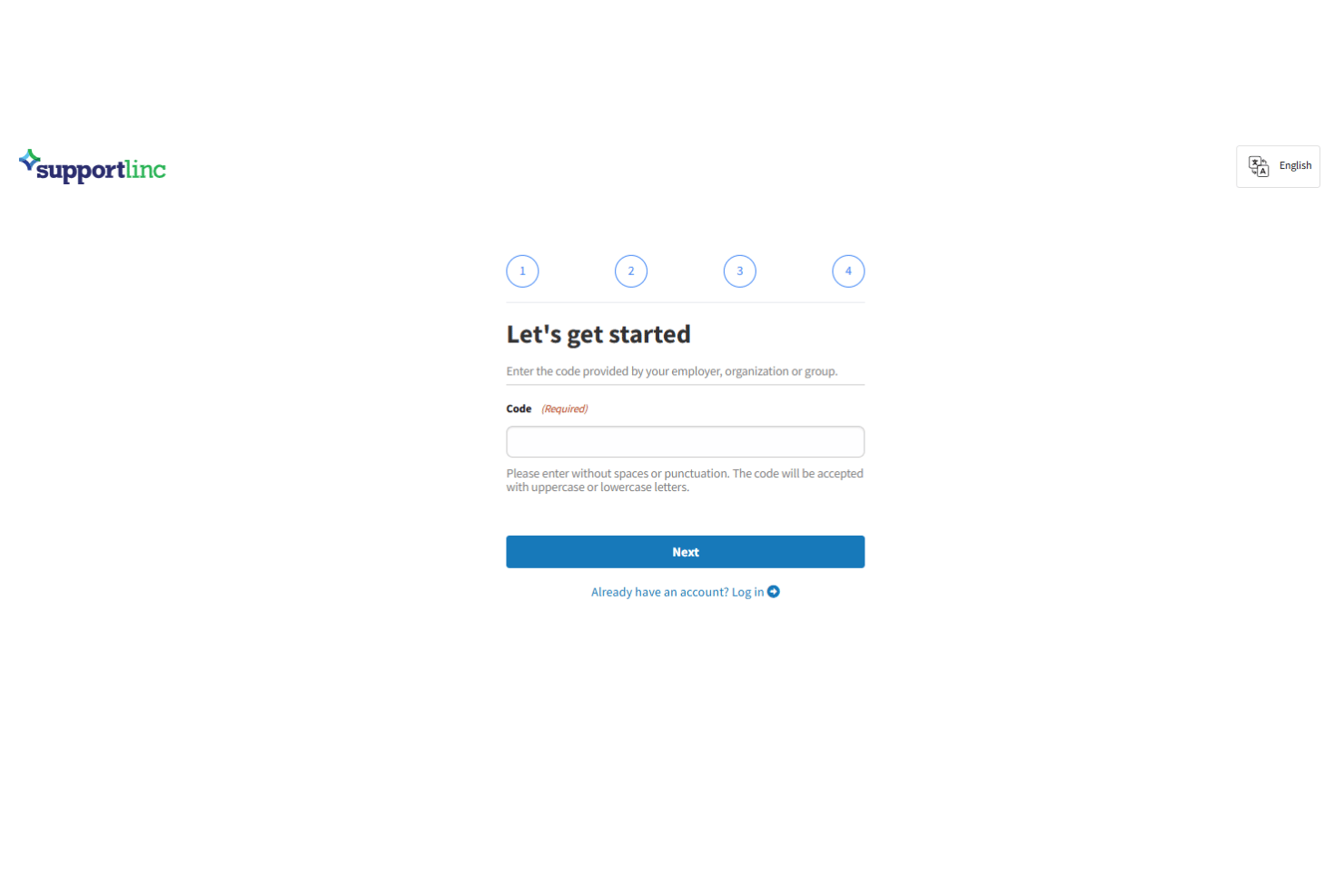
CuraLinc’s onboarding process feels more guided than fully self-serve, which works well for organizations that want hands-on support during rollout. Employees can create accounts using a company group code, while HR teams receive implementation support, communication materials, and ongoing assistance from relationship managers. I think the biggest advantage is the personalized care navigation, since employees are directed toward the right services instead of having to figure everything out on their own.
Customer Support
CuraLinc stands out for its 24/7 clinician-led support model, with employees able to connect directly with licensed professionals at any time. The platform also provides dedicated support channels for HR teams, providers, and administrators, along with ongoing relationship management for client organizations. I think the strongest part of CuraLinc’s support approach is the proactive care navigation, which helps employees stay engaged with treatment instead of only receiving one-time assistance.
Integrations
CuraLinc offers a partnership integration with Oshi Health , connecting mental health and digestive healthcare through a gut-brain axis approach. This integration helps employees access coordinated support for conditions where emotional wellbeing and digestive health are closely linked. The partnership expands CuraLinc’s care network by combining behavioral health resources with specialized gastrointestinal care services.

Value for Money
CuraLinc offers strong value for midsize and enterprise organizations that want a clinically focused employee assistance program with both human support and digital mental health tools. While pricing is not publicly available, the platform emphasizes predictable pricing, broad care coverage, and measurable outcomes, including counseling, coaching, crisis response, and wellbeing resources within a single ecosystem.
CuraLinc’s services can include clinician-led counseling, digital self-guided tools, manager support, organizational reporting, substance use disorder programs, rapid-access psychiatry, and virtual wellbeing sessions. Because pricing is customized based on organization size, services, and implementation needs, you’ll need to contact the company directly for a quote.
CuraLinc Specs
- API
- Batch Permissions & Access
- Behavioral Tracking
- Budgeting
- Calendar Management
- Compliance Tracking
- Custom Data Forms
- Custom Reports
- Dashboard
- Data Export
- Data Import
- Data Visualization
- Employee Database
- Employee Engagement
- Employee Incentive Management
- Employee Training
- Expense Tracking
- External Integrations
- Feedback Management
- Health Management
- Multi-User
- Notifications
- Online Surveys
- Risk Assessment
- Safety Management
- Social-Media Integration
- Vacation & Absence Calendar
- Workflow Management
CuraLinc FAQs
How quickly can employees access a clinician through CuraLinc?
What languages are supported by CuraLinc’s services?
What reporting tools does CuraLinc provide for HR teams?
Can CuraLinc help managers support employees in distress?
How does CuraLinc handle data security and compliance?
Is there support for substance use or addiction concerns?
Does CuraLinc offer onsite support or custom programming?
What happens if an employee prefers not to use digital tools?
CuraLinc Company Overview & History
CuraLinc Healthcare is a Chicago-based provider of employee mental health and wellbeing programs, serving organizations of all sizes across North America. The company was founded in 2003 and is privately held, offering a range of EAP and mental health solutions designed for accessibility and effectiveness. CuraLinc is known for its focus on clinical quality, bilingual service delivery, and its partnerships with behavioral health and workplace wellness organizations. Its workforce size, financial information, and client roster are not publicly disclosed on its website.
CuraLinc Major Milestones
- 2003: Company founded in Chicago, Illinois.
- 2004: Launched its signature employee assistance program (EAP).
- 2012: Expanded digital offerings to include online assessments and wellbeing resources.
- 2021: Featured in national news for expanding mental health support during the COVID-19 pandemic.
- 2023: Recognized by USA Today and other outlets for innovation in behavioral healthcare delivery.