

Lyra Health Review: Pros, Cons, Features and Pricing Overview



Lyra Health is a workplace mental health platform built for employers who want to offer meaningful mental health benefits—not just an EAP that sits unused. It's worth considering if your organization needs a vetted provider network, personalized care matching, and measurable outcomes data to share with leadership. I'd choose it over Spring Health if breadth of care matters to your workforce, particularly for employees who need more than short-term coaching and want access to therapy or medication management.
Lyra Health Evaluation Summary
- Pricing upon request
- Free demo available
Why Trust Our Software Reviews
We’ve been testing and reviewing HR software systems since 2019. As HR experts ourselves, we know how critical and difficult it is to make the right decision when selecting software.
We invest in deep research to help our audience make better software purchasing decisions. We’ve tested more than 2,000 tools for different HR management use cases and written over 1,000 comprehensive software reviews. Learn how we stay transparent & our software review methodology.
Lyra Health Overview
When I compare Lyra Health to competing workplace mental health platforms, what stands out most is how deeply it combines technology, clinical care, and care navigation into a single experience. Instead of offering only therapy referrals or wellness content, Lyra supports everything from self-guided resources and coaching to medication management and high-acuity specialty care. I also like that its AI-powered matching and connected provider network are built to reduce wait times and improve first-match success rates.
While pricing isn’t publicly transparent and the platform may feel more robust than smaller teams need, Lyra Health is one of the strongest options I’ve seen for employers that want scalable, outcomes-driven mental health support.
pros
-
Provides fast access to evidence-based mental health providers.
-
Supports therapy, coaching, psychiatry, and specialty care together.
-
Uses AI-powered matching to improve provider compatibility.
cons
-
Pricing requires custom quotes and lacks public transparency.
-
Primarily available through employer-sponsored mental health benefits.
-
May feel overly complex for smaller teams or organizations.
Is Lyra Health Right For Your Needs?
Who Would be a Good Fit for Lyra Health?
Lyra Health is a strong fit for organizations that want a comprehensive, clinically driven mental health benefit rather than a basic EAP or wellness app. The platform delivers the most value for employers managing large or distributed workforces, complex employee mental health needs, or family-focused benefits strategies. Its combination of fast care access, specialty support, AI-powered matching, and workforce analytics makes it especially appealing for companies that want measurable outcomes alongside broader care coverage.
-
Global Workforces
Lyra Health supports care across 200+ countries and territories with multilingual providers and virtual care access, making it well-suited for multinational organizations.
-
Healthcare Organizations
With advanced quality standards and crisis care, Lyra supports healthcare teams dealing with high stress and emotionally demanding roles.
-
Large Enterprise Employers
Large organizations benefit from Lyra’s scalable care network, workforce analytics, implementation support, and ability to coordinate care across thousands of employees and dependents.
-
HR and Benefits Teams
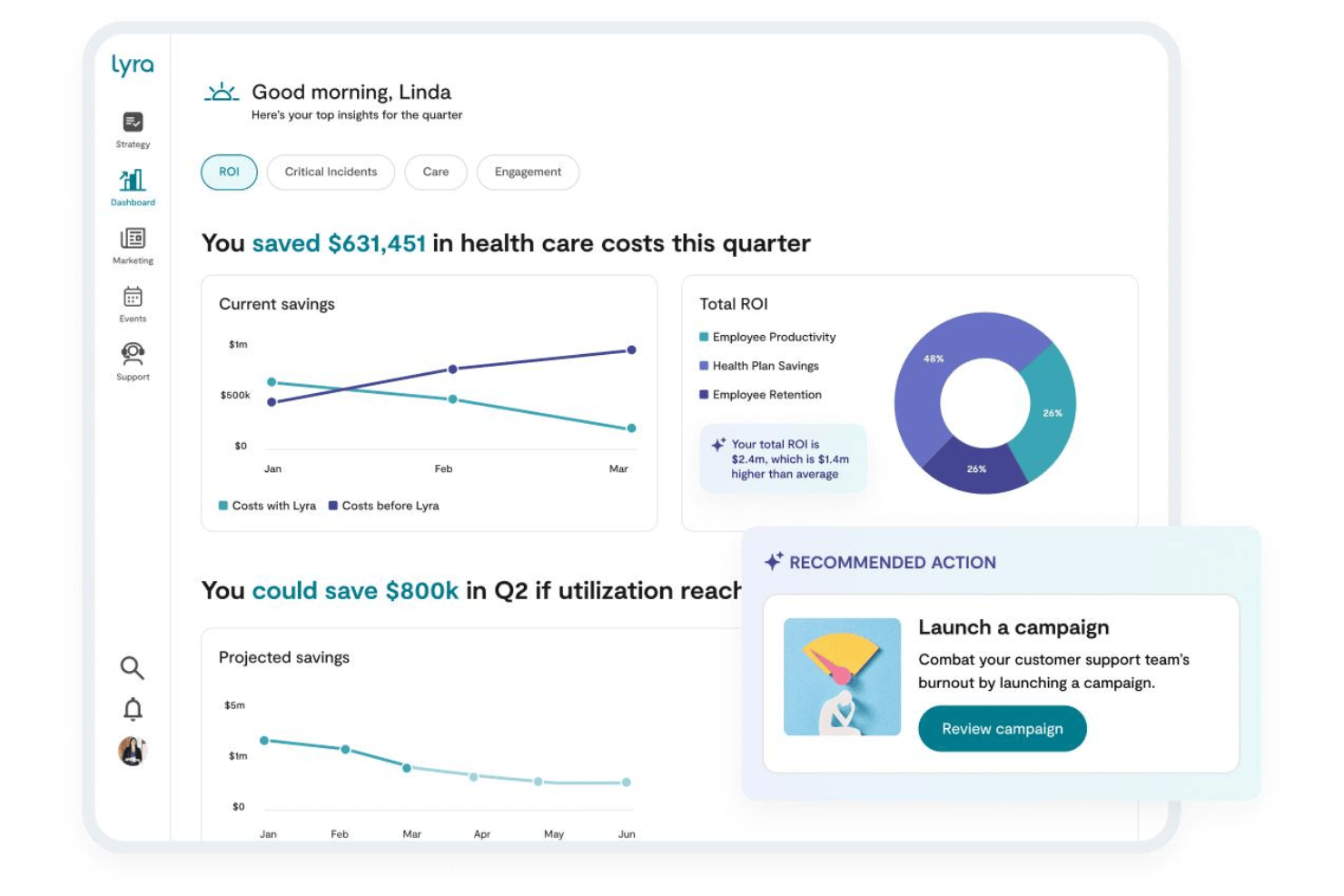
HR leaders benefit from Lyra’s reporting dashboards, ROI insights, engagement tracking, and dedicated rollout support for managing workforce mental health programs effectively.
-
High-Acuity Mental Health Support
Organizations needing structured care coordination, psychiatry access, and clinically intensive mental health support can benefit from Lyra’s specialty-care ecosystem.
-
Family-Focused Employers
Companies that prioritize employee family well-being can take advantage of Lyra’s dependent support programs, pediatric mental health services, and family-focused care resources.
Who Would be a Bad Fit for Lyra Health?
Lyra Health is probably not the best fit for organizations looking for a lightweight, low-cost wellness solution or a simple self-serve EAP replacement. The platform delivers the most value when companies fully use its broader care network, analytics, specialty services, and implementation support. Smaller organizations with limited budgets, businesses wanting transparent off-the-shelf pricing, or teams that prefer highly localized in-person care models may find Lyra more robust and service-heavy than they need.
-
Small Startups
Lyra’s enterprise-focused pricing and feature depth may overwhelm smaller teams with simpler mental health support needs.
-
Remote Rural Locations
Lyra’s provider network may not cover remote areas, limiting in-person therapy or crisis support for rural employees.
-
Organizations Needing On-Site Clinics
Companies prioritizing fully on-site or locally centered mental health programs may prefer providers with stronger physical clinic networks.
-
Organizations Wanting Simple EAP Coverage
Companies needing only short-term counseling or referral services may find Lyra more comprehensive and expensive than necessary.
-
Budget-Restricted Nonprofits
Nonprofits with tight budgets may struggle to justify Lyra’s higher costs compared to more basic solutions.
-
Teams Seeking Lightweight Wellness Apps
Organizations wanting basic meditation or wellness tools without managed clinical care may find Lyra unnecessarily complex.
How We Test & Score Our Tools
We’ve spent years building, refining, and improving our software testing and scoring system. The rubric is designed to capture the nuances of software selection and what makes a tool effective, focusing on critical aspects of the decision-making process.
Below, you can see exactly how our testing and scoring works across seven criteria. It allows us to provide an unbiased evaluation of the software based on core functionality, standout features, ease of use, onboarding, customer support, integrations, customer reviews, and value for money.
Core Functionality (25% of final score)
The starting point of our evaluation is always the core functionality of the tool. Does it have the basic features and functions that a user would expect to see? Are any of those core features locked to higher-tiered pricing plans? At its core, we expect a tool to stand up against the baseline capabilities of its competitors.
Standout Features (25% of final score)
Next, we evaluate uncommon standout features that go above and beyond the core functionality typically found in tools of its kind. A high score reflects specialized or unique features that make the product faster, more efficient, or offer additional value to the user.
We also evaluate how easy it is to integrate with other tools typically found in the tech stack to expand the functionality and utility of the software. Tools offering plentiful native integrations, 3rd party connections, and API access to build custom integrations score best.
Ease of Use (10% of final score)
We consider how quick and easy it is to execute the tasks defined in the core functionality using the tool. High scoring software is well designed, intuitive to use, offers mobile apps, provides templates, and makes relatively complex tasks seem simple.
Onboarding (10% of final score)
We know how important rapid team adoption is for a new platform, so we evaluate how easy it is to learn and use a tool with minimal training. We evaluate how quickly a team member can get set up and start using the tool with no experience. High scoring solutions indicate little or no support is required.
Customer Support (10% of final score)
We review how quick and easy it is to get unstuck and find help by phone, live chat, or knowledge base. Tools and companies that provide real-time support score best, while chatbots score worst.
Customer Reviews (10% of final score)
Beyond our own testing and evaluation, we consider the net promoter score from current and past customers. We review their likelihood, given the option, to choose the tool again for the core functionality. A high scoring software reflects a high net promoter score from current or past customers.
Value for Money (10% of final score)
Lastly, in consideration of all the other criteria, we review the average price of entry level plans against the core features and consider the value of the other evaluation criteria. Software that delivers more, for less, will score higher.
Core Features
Personalized Care Navigation
Care navigation matches employees with providers and resources tailored to their needs. This ensures each person finds the right level of care quickly.
Therapy and Coaching Services
Lyra offers evidence-based therapy and coaching, both in-person and virtually. Employees can select from a network of vetted clinicians and coaches.
Digital Mental Health Programs
Self-guided programs cover issues like stress and sleep, with interactive lessons available anytime. These digital care paths support early intervention and ongoing wellness.
Crisis Support Services
Immediate crisis support is available 24/7 through phone or chat. Employees can connect with licensed professionals during urgent mental health situations.
Comprehensive Reporting and Analytics
Administrators get dashboards tracking engagement, outcomes, and program usage. This helps HR teams measure impact and refine offerings as needs evolve.
Medication Management
Employees can access psychiatric care and medication management directly through Lyra’s platform. Medication support is integrated with therapy and coaching for more coordinated care.
Family and Dependent Support
Care extends beyond employees, including their families and dependents. Family members can access therapy, coaching, and digital resources through Lyra’s platform.
Standout Features
AI-Powered Provider Matching
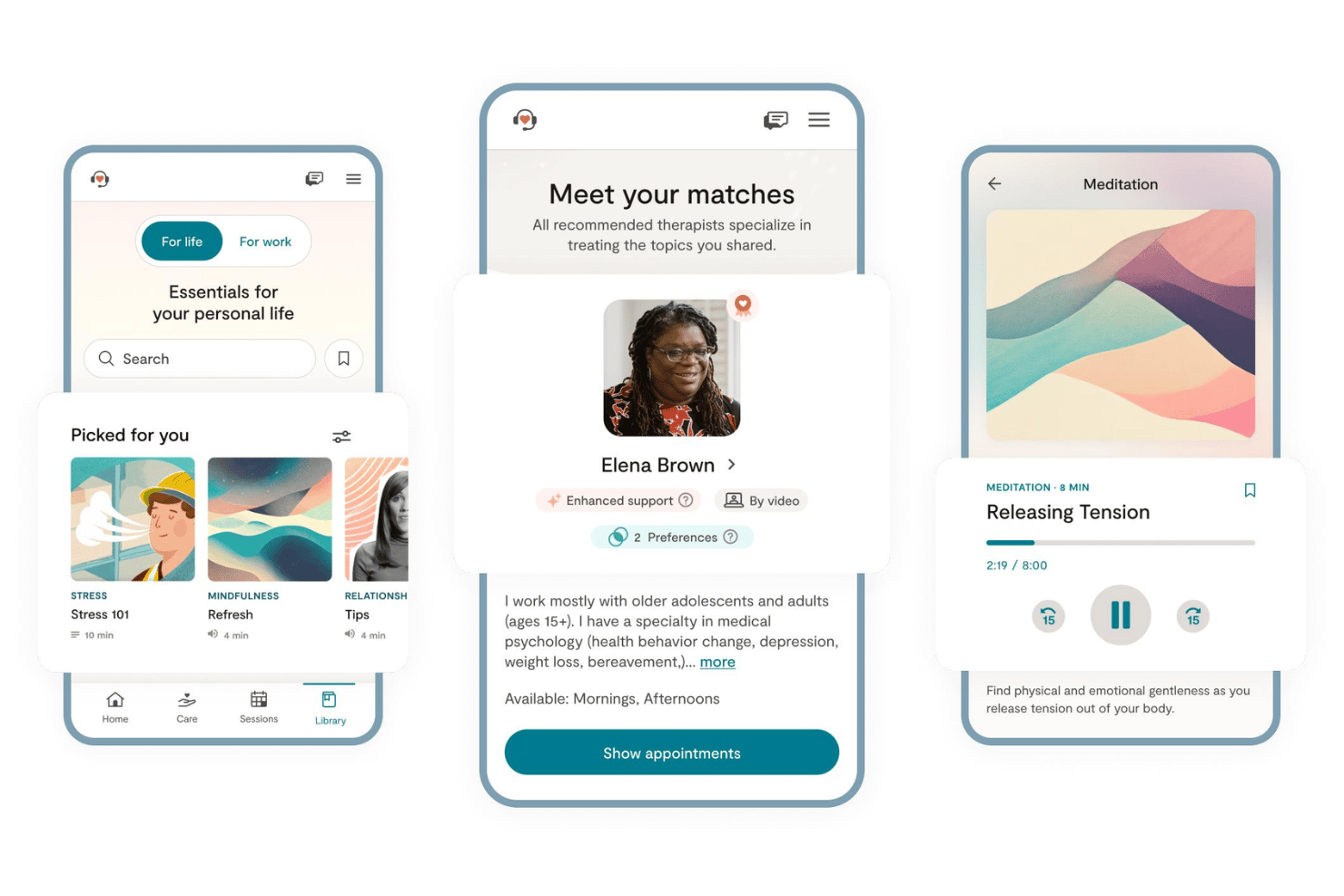
Lyra’s AI-driven matching system connects employees with providers based on needs, preferences, availability, and clinical fit. I think this is one of the platform’s biggest differentiators because it helps employees find appropriate care faster and improves first-provider match success.
Specialty Mental Health Care
Unlike many workplace mental health platforms, Lyra supports higher-acuity and specialized care needs, including substance use treatment, crisis support, neurodiversity services, intensive outpatient coordination, and pediatric mental health care. This makes the platform feel much more comprehensive than a traditional EAP replacement.
Ease of Use
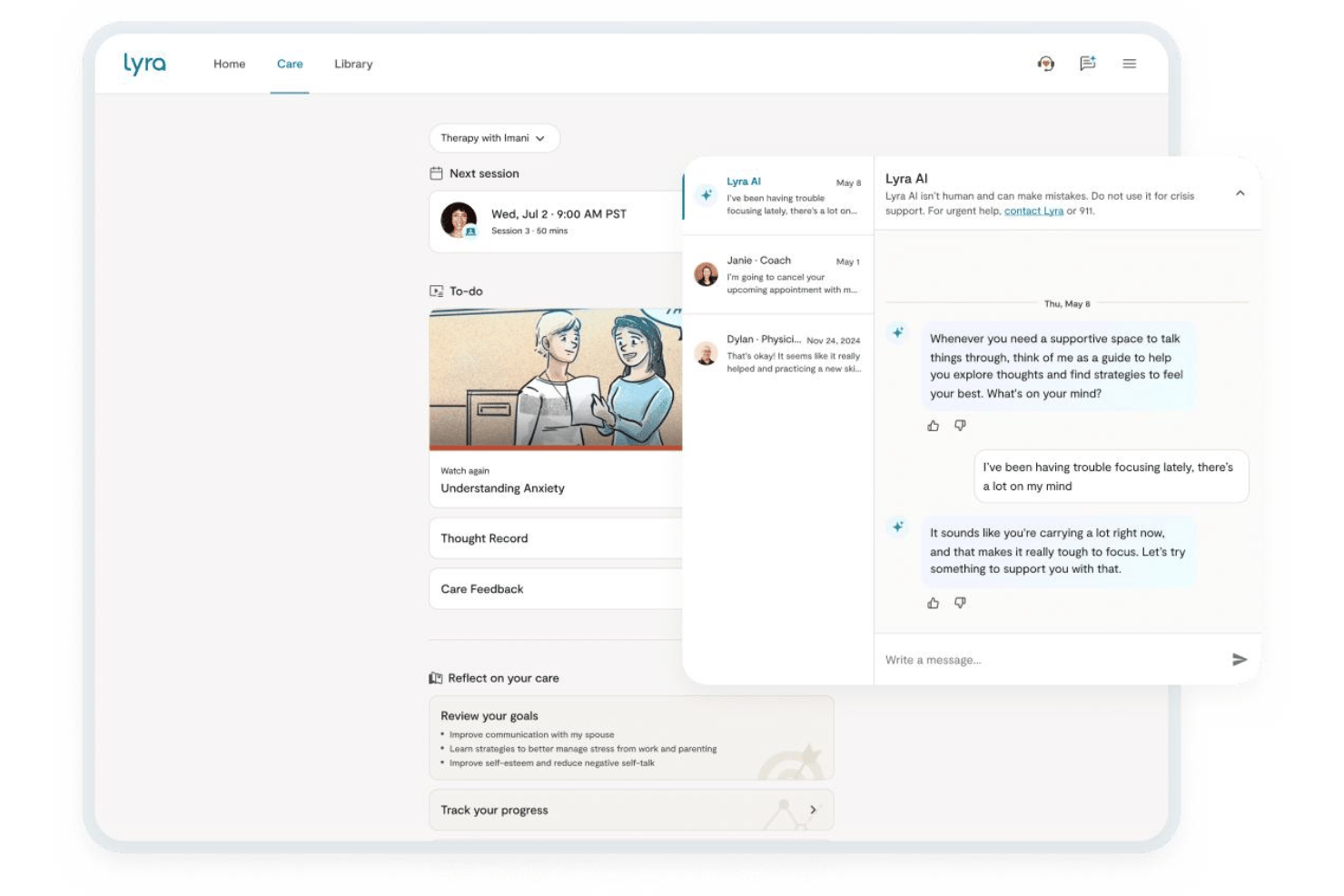
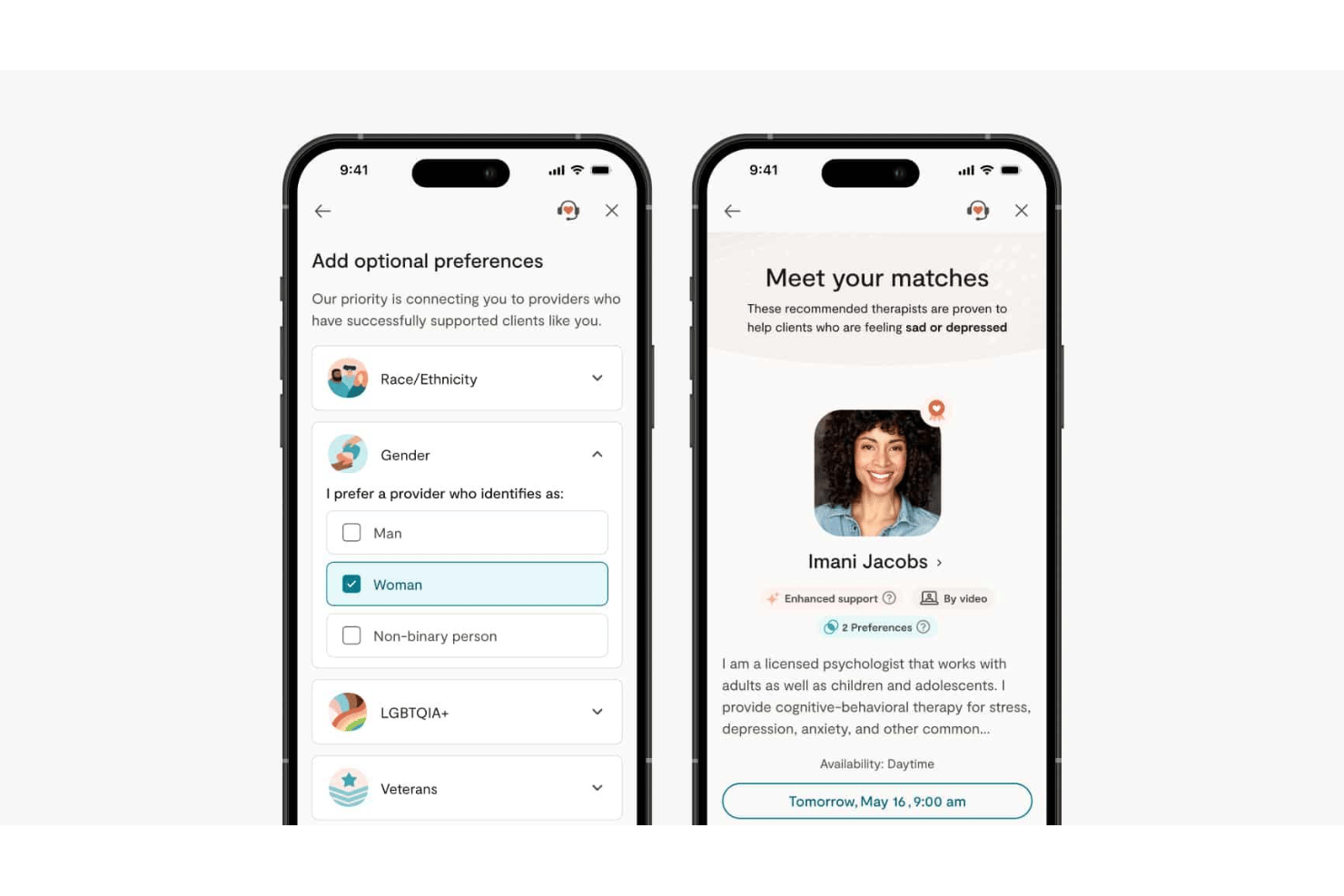
Lyra Health’s platform is polished and easy to navigate, especially for employees trying to access care quickly. I like that the experience is built around guided intake, AI-powered provider matching, and real-time appointment booking, which removes much of the friction people often face when searching for mental health support. The mobile app and self-service resources also make it easy for employees to engage with care between sessions, while HR teams benefit from centralized reporting and workforce insights without needing to manage a complicated interface.
Onboarding
I think Lyra Health handles onboarding particularly well for both employees and employers. Employees can activate their benefits, answer a short intake questionnaire, and get matched with providers in just a few steps, while employers receive implementation guidance, launch support, and communication resources during rollout. From what I’ve seen, the onboarding process feels more hands-on and structured than many traditional EAP programs, which helps organizations drive faster adoption across teams.
Customer Support
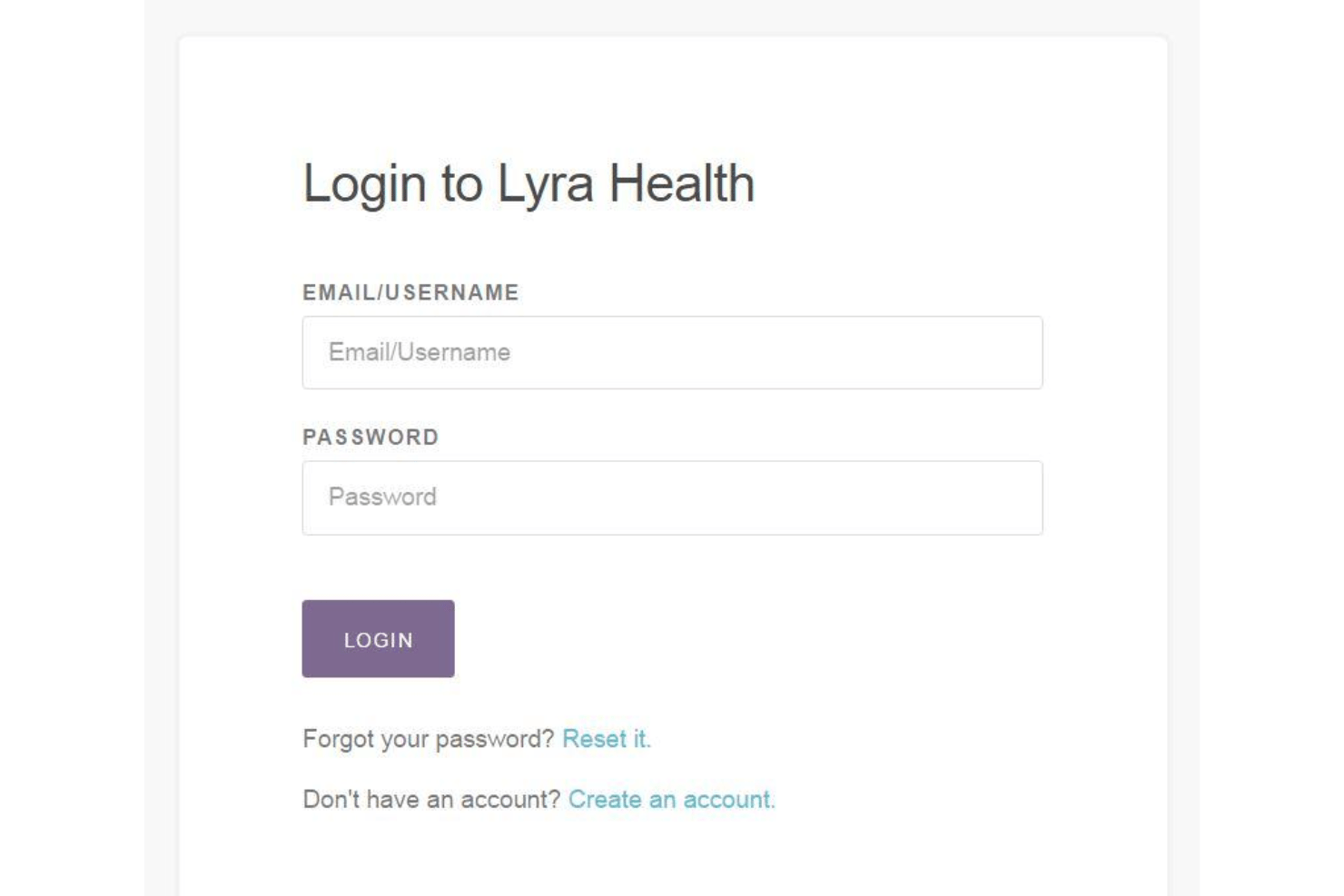
Lyra Health provides support through phone, email, care navigation, and crisis-response services, with 24/7 assistance available for urgent mental health situations. I think one of the platform’s biggest strengths is its human-centered support model, especially the use of Care Navigators who help employees coordinate care and transition between different levels of support when needed. Employers also benefit from dedicated implementation and account support, although some users may still experience occasional delays during periods of high demand.
Integrations
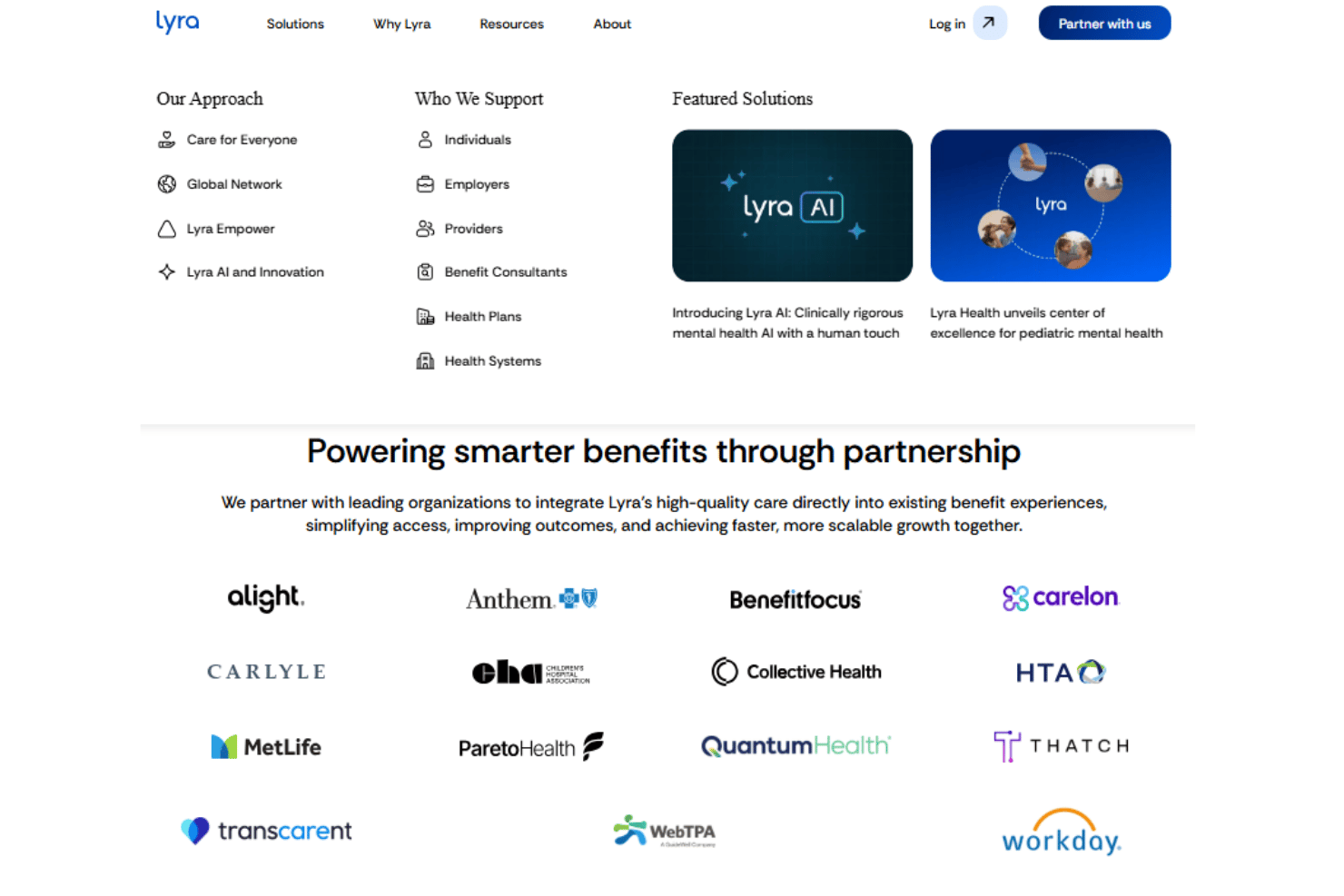
Lyra Health integrates with several benefits, HR, and healthcare ecosystem platforms, including Workday Wellness, Alight, Benefitfocus, Quantum Health, Carelon, and Collective Health. Through its Lyra Link ecosystem, the platform also connects with health and wellness partners like Hinge Health, Cleo, Virta, and Wellthy to support more coordinated employee care. While Lyra clearly supports API-driven integrations and secure data sharing, it does not publicly offer an open developer platform or detailed public API documentation.
Value for Money
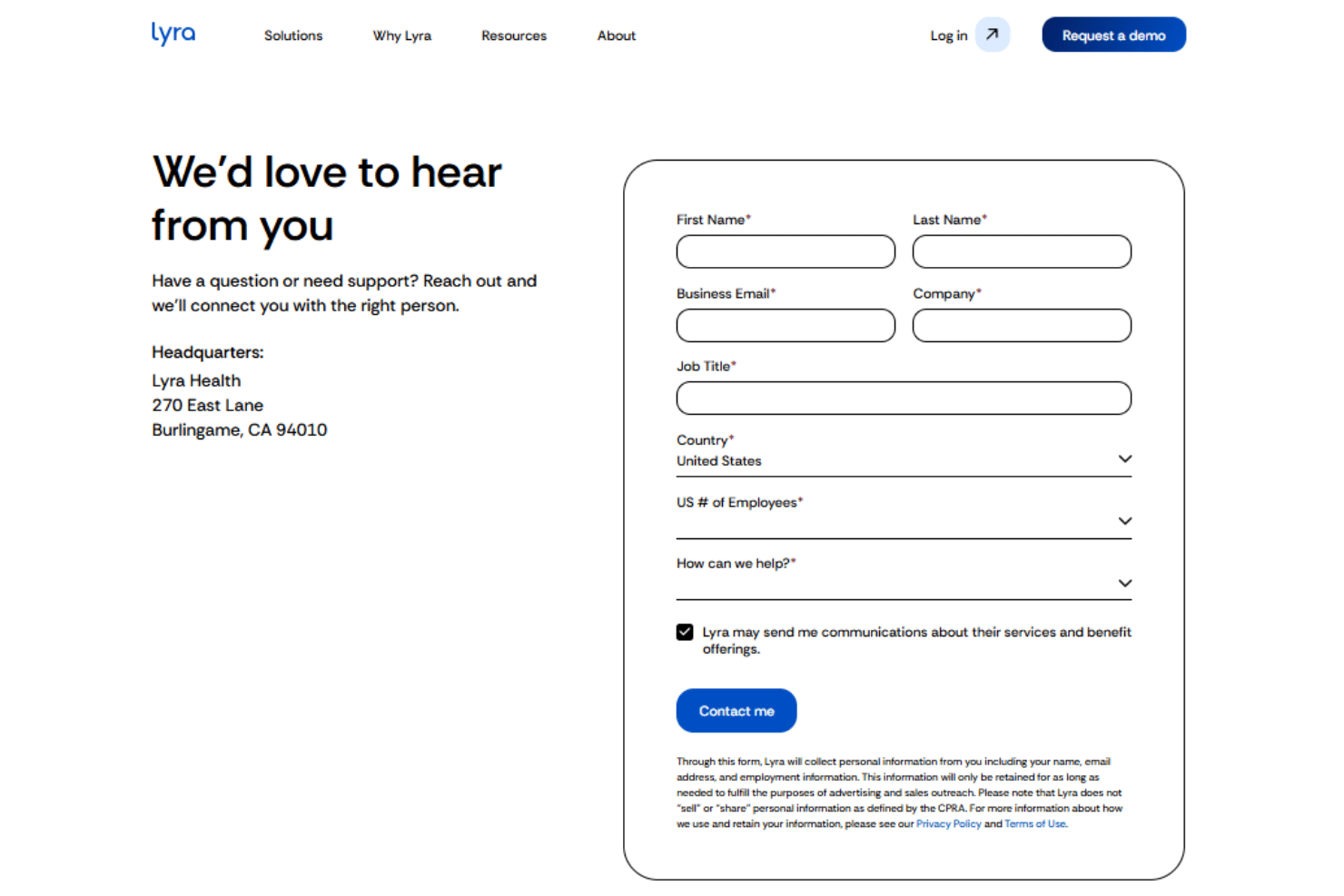
Lyra Health positions itself as a premium, outcomes-focused mental health benefit rather than a low-cost EAP alternative. The platform delivers strong value for larger organizations that want fast access to care, broad specialty support, measurable outcomes, and global coverage, especially since Lyra combines software, provider networks, care navigation, and implementation support into one offering. The biggest drawback is pricing transparency, because costs are fully customized and require speaking with sales for a quote.
Lyra does not publicly list fixed pricing tiers or packaged plans. Instead, pricing is tailored based on factors like organization size, workforce needs, geographic coverage, and selected services. The company also promotes outcomes-based pricing models tied to engagement, access, and clinical improvement metrics rather than traditional per-seat SaaS pricing.
Lyra Health Specs
- API
- Batch Permissions & Access
- Behavioral Tracking
- Budgeting
- Calendar Management
- Compliance Tracking
- Custom Data Forms
- Custom Reports
- Dashboard
- Data Export
- Data Import
- Data Visualization
- Employee Database
- Employee Engagement
- Employee Incentive Management
- Employee Training
- Expense Tracking
- External Integrations
- Feedback Management
- Health Management
- Multi-User
- Notifications
- Online Surveys
- Risk Assessment
- Safety Management
- Social-Media Integration
- Vacation & Absence Calendar
- Workflow Management
Lyra Health FAQs
How quickly can employees start using Lyra Health after enrollment?
What types of mental health professionals are in Lyra’s network?
Can Lyra Health support remote or international employees?
How does Lyra Health handle data security and compliance?
How customizable are Lyra’s solutions for different workforce needs?
What’s included in Lyra’s reporting and analytics for HR teams?
What support is available for non-English-speaking employees?
How does Lyra measure and report mental health outcomes?
Lyra Health Company Overview & History
Lyra Health, founded in 2015 and headquartered in Burlingame, California, is a leader in workforce mental health care with over 1,300 employees. The company serves major employers—including brands like Starbucks, Morgan Stanley, Genentech, and Uber—offering mental health benefits that combine evidence-based therapy with digital tools and analytics. Lyra is recognized for its data-driven approach to measurable improvements in employee well-being and is valued for fostering an inclusive and innovation-oriented company culture.
Lyra Health Major Milestones
- 2015: Lyra Health founded by David Ebersman.
- 2016: Launched its first mental health care benefits platform for employers.
- 2021: Raised $200 million in Series F funding, reaching a $4.6 billion valuation.
- 2022: Named to the CNBC Disruptor 50 list, gaining national recognition for innovation in mental health.
- 2023: Expanded global provider network and launched new digital care tools.
- 2024: Served more than 15 million members and secured partnerships with leading Fortune 500 employers.