
Moodle Review: Pros, Cons, Features, and Pricing


Moodle is a learning management system (LMS) that provides a platform for creating personalized learning environments. It best serves educational institutions, nonprofits, and training departments in universities and corporate HR teams. Moodle offers open-source flexibility for tailored educational experiences.
Moodle addresses issues such as customization needs and budget constraints for educational institutions and corporate training teams. This article covers Moodle's features, pros and cons, use cases, and pricing so you can decide if it aligns with your training and development needs.
Moodle Evaluation Summary
- Pricing upon request
- Free trial + free demo available
Why Trust Our Software Reviews
We’ve been testing and reviewing HR software systems since 2019. As HR experts ourselves, we know how critical and difficult it is to make the right decision when selecting software.
We invest in deep research to help our audience make better software purchasing decisions. We’ve tested more than 2,000 tools for different HR management use cases and written over 1,000 comprehensive software reviews. Learn how we stay transparent & our software review methodology.
Moodle Overview
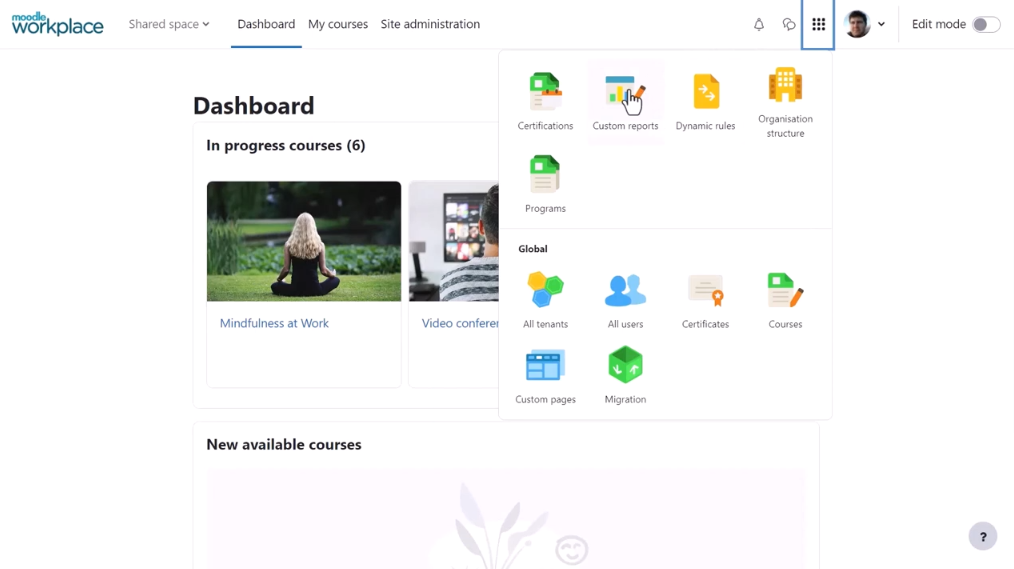
In my opinion, Moodle is a strong contender in the LMS market due to its flexibility and cost-effectiveness. It offers customization options and a wide range of features, making it ideal for educational institutions and training departments. However, its interface can be complex, and the learning curve might be steep for beginners. Compared to competitors, Moodle's open-source nature allows for extensive adaptability, though it might require skilled administrators to fully realize its potential. If your team values customization and budget-friendly e-learning solutions, Moodle could be the right choice for you.
pros
-
It has a large online community and extensive documentation.
-
It supports a wide range of learning activities and resources.
-
You can customize the platform to fit your needs.
cons
-
Your team may need technical skills to fully utilize Moodle's features.
-
You might find the setup process time-consuming.
-
The interface can be confusing for new users.
-

Checkr
Visit WebsiteThis is an aggregated rating for this tool including ratings from Crozdesk users and ratings from other sites.4.5 -
Kudoboard
Visit WebsiteThis is an aggregated rating for this tool including ratings from Crozdesk users and ratings from other sites.4.8 -
Native Teams
Visit WebsiteThis is an aggregated rating for this tool including ratings from Crozdesk users and ratings from other sites.4.9



How We Test & Score Our Tools
We’ve spent years building, refining, and improving our software testing and scoring system. The rubric is designed to capture the nuances of software selection and what makes a tool effective, focusing on critical aspects of the decision-making process.
Below, you can see exactly how our testing and scoring works across seven criteria. It allows us to provide an unbiased evaluation of the software based on core functionality, standout features, ease of use, onboarding, customer support, integrations, customer reviews, and value for money.
Core Functionality (25% of final score)
The starting point of our evaluation is always the core functionality of the tool. Does it have the basic features and functions that a user would expect to see? Are any of those core features locked to higher-tiered pricing plans? At its core, we expect a tool to stand up against the baseline capabilities of its competitors.
Standout Features (25% of final score)
Next, we evaluate uncommon standout features that go above and beyond the core functionality typically found in tools of its kind. A high score reflects specialized or unique features that make the product faster, more efficient, or offer additional value to the user.
We also evaluate how easy it is to integrate with other tools typically found in the tech stack to expand the functionality and utility of the software. Tools offering plentiful native integrations, 3rd party connections, and API access to build custom integrations score best.
Ease of Use (10% of final score)
We consider how quick and easy it is to execute the tasks defined in the core functionality using the tool. High scoring software is well designed, intuitive to use, offers mobile apps, provides templates, and makes relatively complex tasks seem simple.
Onboarding (10% of final score)
We know how important rapid team adoption is for a new platform, so we evaluate how easy it is to learn and use a tool with minimal training. We evaluate how quickly a team member can get set up and start using the tool with no experience. High scoring solutions indicate little or no support is required.
Customer Support (10% of final score)
We review how quick and easy it is to get unstuck and find help by phone, live chat, or knowledge base. Tools and companies that provide real-time support score best, while chatbots score worst.
Customer Reviews (10% of final score)
Beyond our own testing and evaluation, we consider the net promoter score from current and past customers. We review their likelihood, given the option, to choose the tool again for the core functionality. A high scoring software reflects a high net promoter score from current or past customers.
Value for Money (10% of final score)
Lastly, in consideration of all the other criteria, we review the average price of entry level plans against the core features and consider the value of the other evaluation criteria. Software that delivers more, for less, will score higher.
Core Features
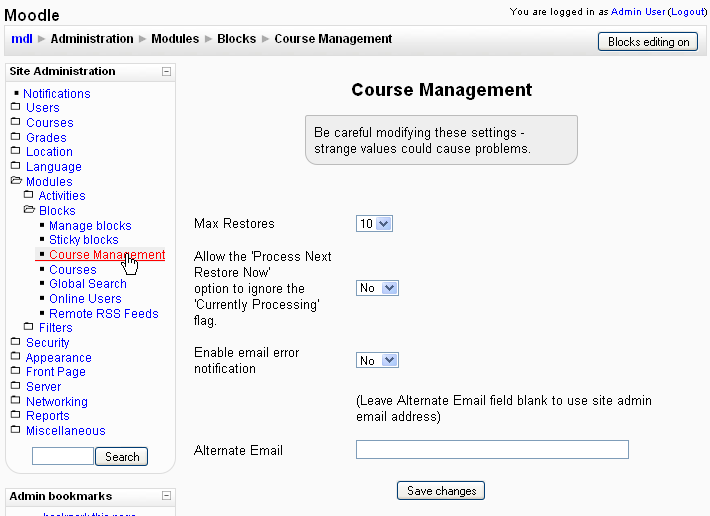
Course Management: You can create and manage courses to offer a variety of online learning formats to suit your needs. Moodle's flexibility lets you tailor courses to fit different learning styles.
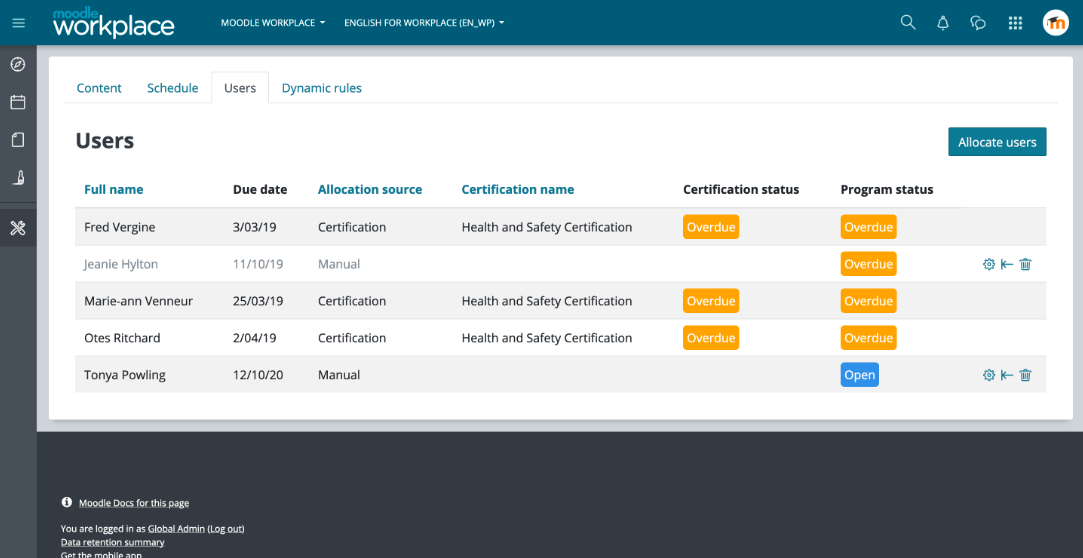
User Roles: Assign roles for teachers, students, or admins, giving each user the access they need. This ensures your team operates smoothly with clear responsibilities.
Quizzes and Assessments: Design quizzes with multiple question types to evaluate learning progress. Moodle's extensive assessment tools help you track and improve performance.
Communication Tools: Use forums, messaging, and chat to foster interaction among your learners. This keeps your team engaged and connected.
Reporting and Analytics: Track progress with detailed reports on user activity and course completion. You can use this data to improve online learning experiences and outcomes.
Mobile Access: Moodle's user-friendly mobile app lets your team learn on the go, providing flexibility and convenience.
Ease of Use
Moodle is a full-featured LMS platform, though its interface can feel a bit dated and complex compared to some competitors. The platform's flexibility and extensive customization options are great for advanced users but might be overwhelming for first-time learners. The learning curve can be steep, particularly for those not familiar with its structure. Despite this, once you get the hang of it, Moodle offers detailed tools for course creation and management that can greatly improve your educational initiatives.
Integrations
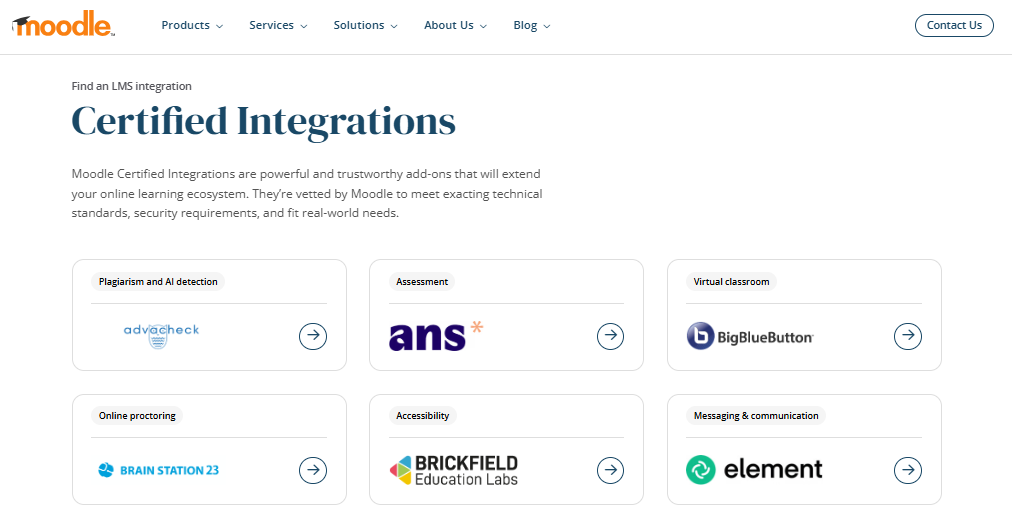
Moodle integrates with Microsoft Teams, Zoom, BigBlueButton, Turnitin, SafeAssign, Mahara, PoodLL, Panopto, and Jitsi.
Moodle also has a powerful API and supports connections with third-party integration tools.
Moodle Specs
- API
- Class Management
- Comparative Reporting
- Corporate/Business
- Dashboards
- Data Export
- Data Import
- Data Visualization
- Document Comparison
- Employee Training
- External Integrations
- Feedback Management
- Gamification
- Gradebook
- Mobile App
- Multi-User
- Notifications
- Personal Learning
- Report & Compliance
- Report Cards
- Scheduling
- SCORM
- Student Registration
- Video Courses