

Tracker vs. Bullhorn: Comparison and Expert Reviews for 2026


Juggling endless resumes, clunky workflows, and candidate drop-offs can make even the most seasoned recruiter question their applicant tracking systems (ATS). Maybe it’s about time to pick out a new one.
If you’re deciding between Tracker and Bullhorn, you’re likely searching for a platform that not only keeps your hiring pipeline organized but also helps your team deliver a standout candidate experience. Tracker is known for its robust automations and customizable workflows, making it a favorite for teams that want flexibility without a steep learning curve. Bullhorn, on the other hand, stands out with its deep integrations, especially for staffing agencies managing high-volume placements.
In this article, you’ll get a clear, side-by-side look at how each system tackles your daily recruiting headaches, so you can confidently choose the right fit for your team.
Tracker vs. Bullhorn: An Overview
Tracker
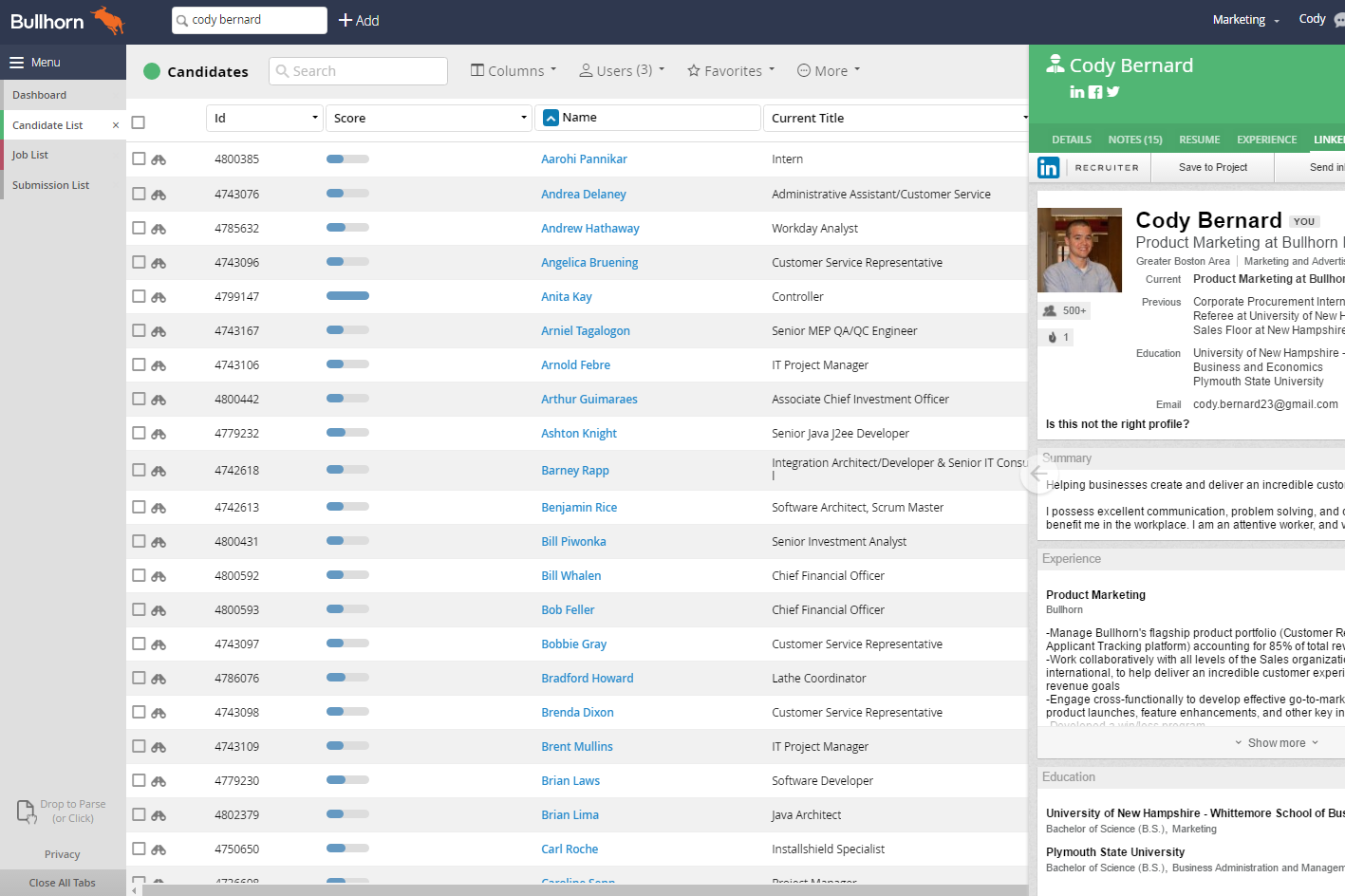
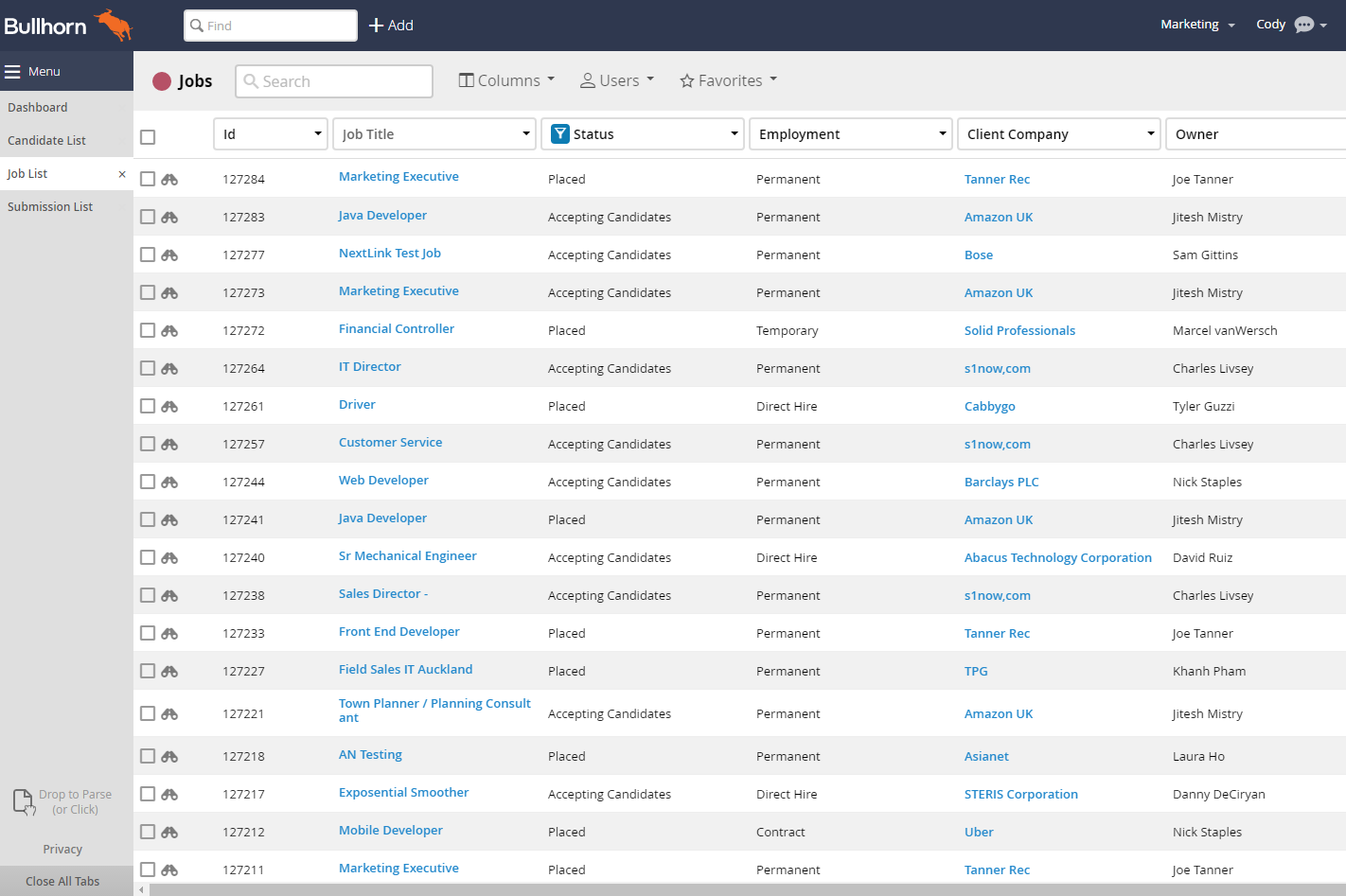
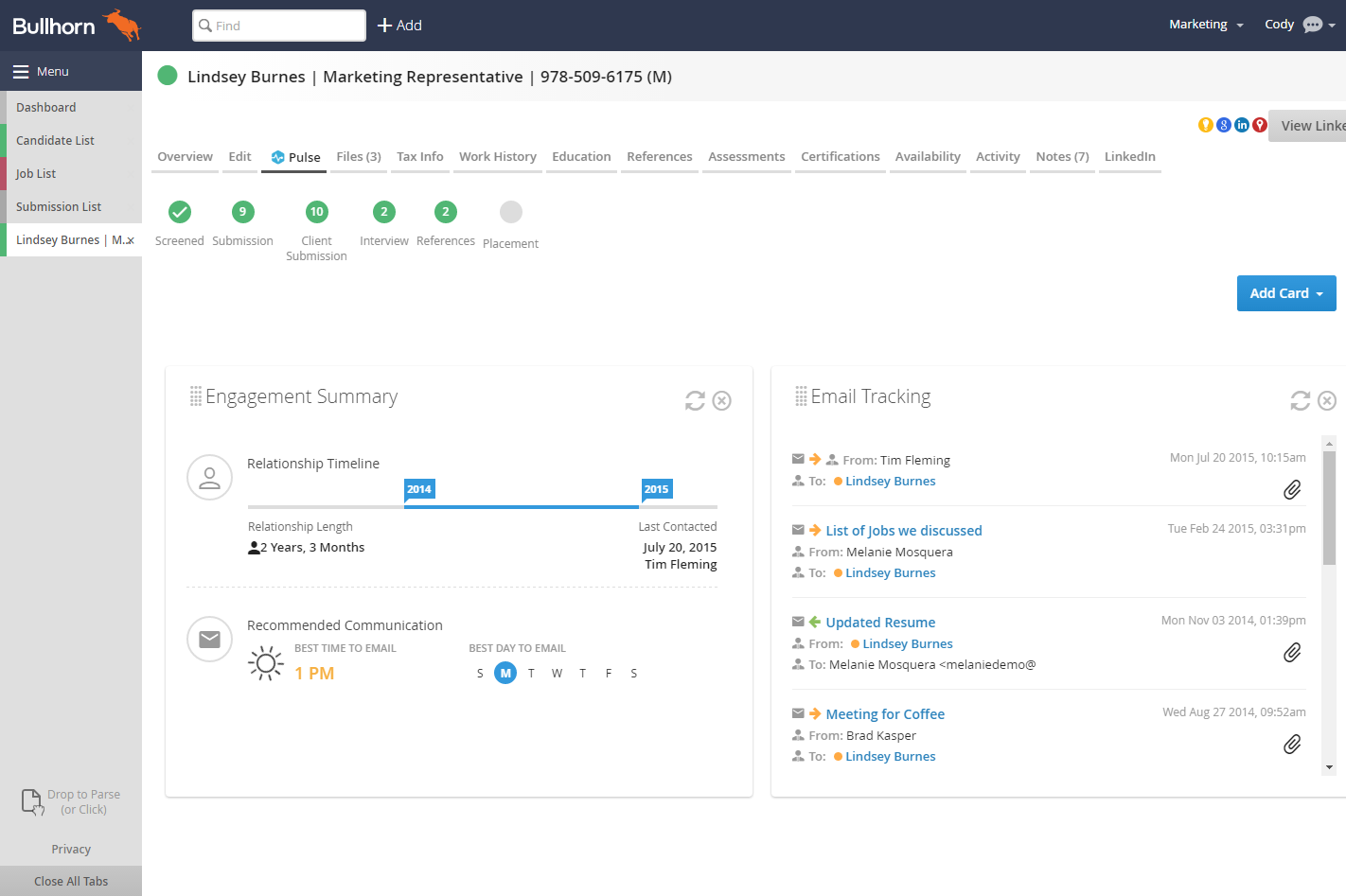
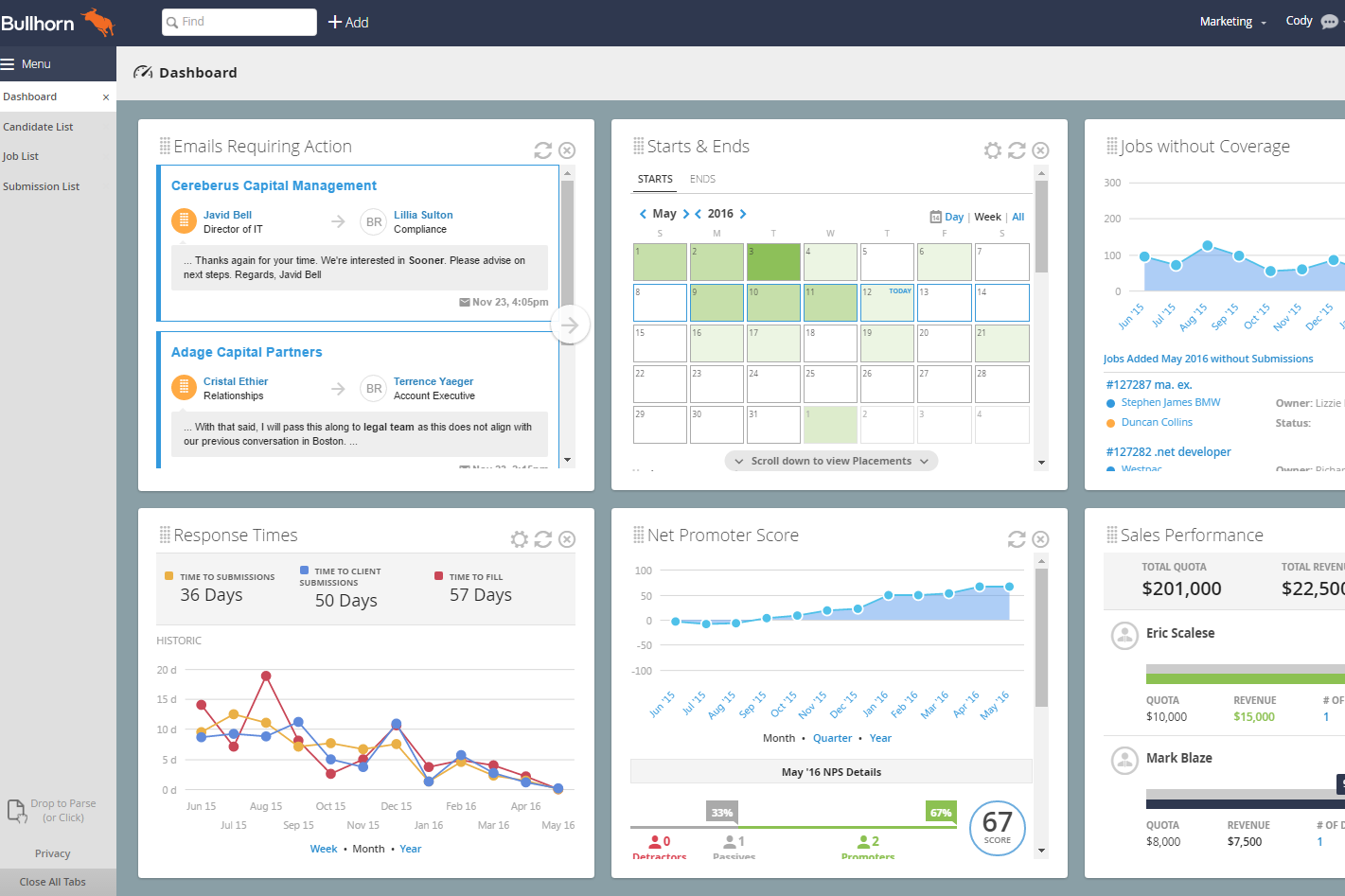
Bullhorn
Why Trust Our Software Reviews
Tracker vs. Bullhorn Pricing Comparison
| Tracker | Bullhorn | |
|---|---|---|
| Free Trial | Free demo available | Free demo available |
| Pricing | Pricing starts at $95/user/month | Pricing upon request |
Tracker vs. Bullhorn Pricing & Hidden Costs
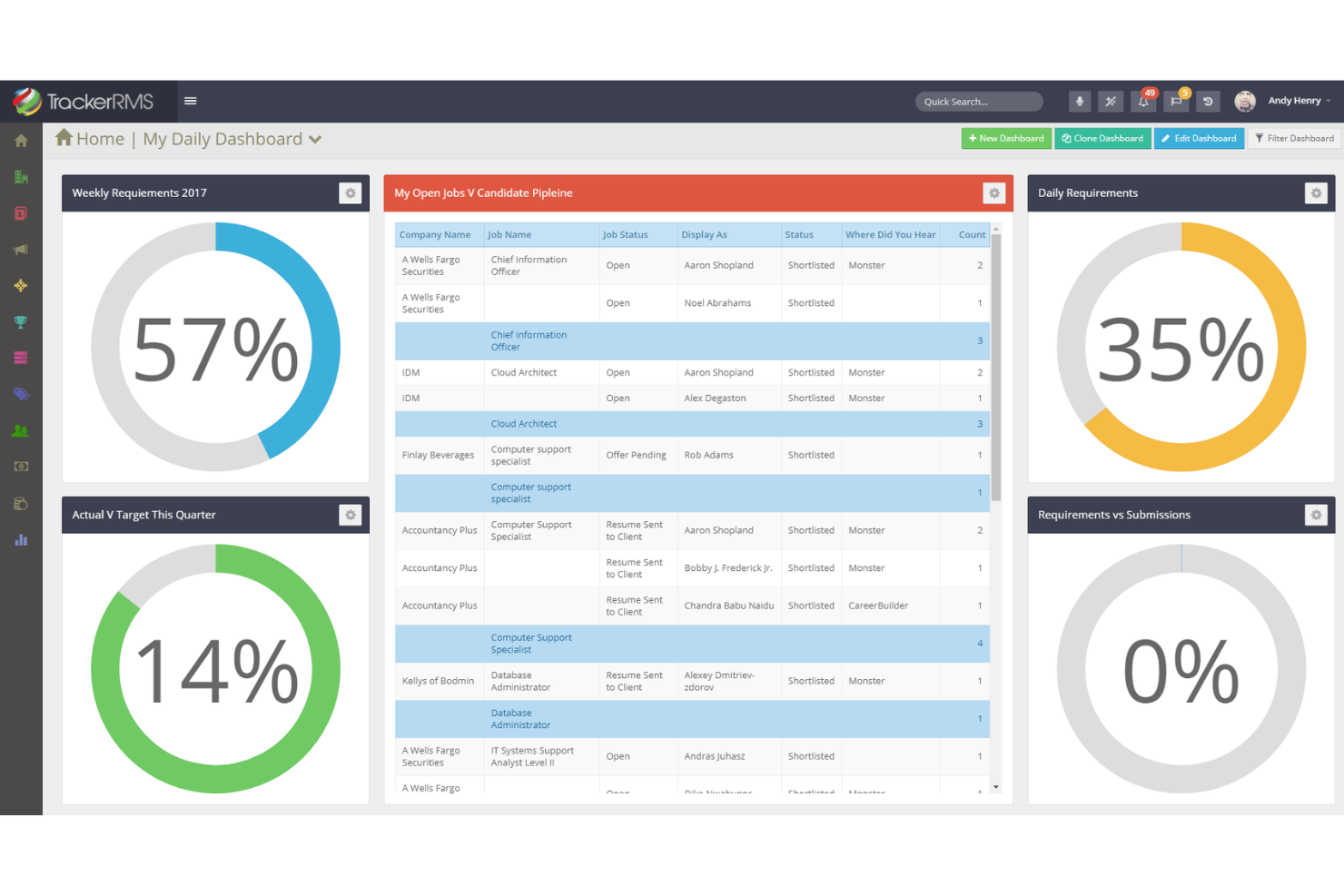
Tracker uses a transparent, per-user tiered subscription model that includes core features, with the higher tiers typically being tailored to suit your needs. Bullhorn's pricing, however, isn't readily transparent and requires a custom quote for each of its modules.
To choose the right vendor, start by mapping out your must-have features and estimating how your team and hiring needs might scale over time. Ask each provider for a detailed breakdown of what’s included, clarify costs for onboarding, support, and integrations, and request references from similar organizations to uncover any unexpected expenses before you commit.
Tracker vs. Bullhorn Feature Comparison
Tracker’s customizable workflow automation and integrated AI tools help you manage candidate pipelines and client relationships without constant manual updates. Bullhorn’s fast resume parsing and robust reporting features let you quickly process applicants, making it easier to stay organized and responsive throughout your day.
| Tracker | Bullhorn | |
|---|---|---|
| API | ||
| Application Tracking | ||
| Behavioral Testing | ||
| Budgeting | ||
| Calendar Management | ||
| Candidate Database | ||
| Cognitive Testing | ||
| Contact Management | ||
| Custom Assessments | ||
| Dashboard | ||
| Dashboards | ||
| Data Export | ||
| Data Import | ||
| Data Visualization | ||
| Email Integration | ||
| Employee Database | ||
| Employee Onboarding | ||
| External Integrations | ||
| Feedback Management | ||
| Forecasting | ||
| Interview Scheduling | ||
| Multi-Source Feedback | ||
| Multi-User | ||
| Notifications | ||
| Personality Testing | ||
| Psychometric Testing | ||
| Scheduling | ||
| Status Notifications | ||
| Travel Management |
Tracker vs. Bullhorn Integrations
| Integration | Tracker | Bullhorn |
| ✅ | ✅ | |
| Indeed | ✅ | ✅ |
| Microsoft Outlook | ✅ | ✅ |
| Gmail | ✅ | ✅ |
| DocuSign | ✅ | ❌ |
| Sage | ✅ | ❌ |
| QuickBooks | ✅ | ❌ |
| 8x8 | ❌ | ✅ |
| Aircall | ❌ | ✅ |
| Broadbean | ✅ | ✅ |
| API | ✅ | ✅ |
| Zapier | ✅ | ✅ |
Tracker and Bullhorn both cover the most popular integrations, but Bullhorn stands out with specialized options like 8x8 and its integration marketplace, while Tracker offers unique connections such as QuickBooks and DocuSign. Both platforms support API and Zapier, so you can connect to almost any tool your team relies on, making either a strong choice for integration flexibility.
Tracker vs. Bullhorn Security, Compliance & Reliability
| Factor | Tracker | Bullhorn |
| Data Privacy | Follows GDPR and CCPA, with customizable data retention and consent tools. | Offers GDPR and CCPA compliance, data anonymization, and candidate consent tracking. |
| Encryption | Uses SSL/TLS encryption for data in transit and at rest. | Provides end-to-end encryption for all stored and transmitted data. |
| Uptime & Reliability | Guarantees 99.9% uptime with real-time system status updates. | Delivers 99.99% uptime and proactive monitoring for high availability. |
| Access Controls | Role-based permissions and audit logs for user activity. | Advanced user permissions, SSO, and detailed audit trails. |
| Regulatory Compliance | Regularly updated to meet global hiring and privacy regulations. | Dedicated compliance team ensures adherence to evolving regulations. |
Bullhorn edges ahead with slightly higher uptime and advanced access controls, but both platforms deliver strong security and compliance foundations. Tracker’s customizable privacy tools are a standout for teams with specific data handling needs, while Bullhorn’s proactive compliance support and reliability make it a safe bet for larger organizations.
Tracker vs. Bullhorn Ease of Use
| Factor | Tracker | Bullhorn |
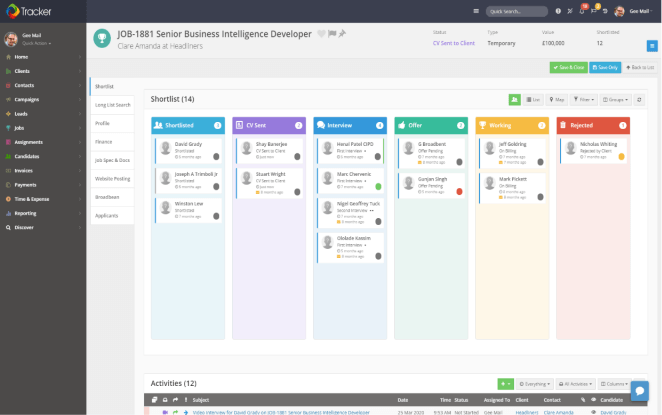
| User Interface | Clean, modern dashboard with drag-and-drop workflows and intuitive navigation. | Feature-rich interface with customizable dashboards, but can feel crowded for new users. |
| Onboarding | Guided onboarding with in-app tutorials and responsive support. | Personalized onboarding and training, but setup can be time-consuming for complex needs. |
| Customization | Highly flexible workflows and fields that adapt to your process. | Deep customization options, though some changes require admin support. |
| Learning Curve | Quick to learn for most users, more advanced features have a learning curve. | Steeper learning curve, especially for teams new to advanced features. |
| Ongoing Support | Fast, friendly support via chat, email, and phone. | 24/7 support with a dedicated account manager for enterprise clients. |
Tracker is easier to pick up and use right away, while Bullhorn offers more options that may require extra training. Tracker shines for teams that want a straightforward, flexible experience, while Bullhorn’s depth is best suited for users who need a wide array of features and don’t mind a steeper learning curve.
Tracker vs Bullhorn: Pros & Cons
Tracker
- Integrations with job boards streamlines multiple job postings.
- Customizable workflows adapt to different recruiting processes.
- Built-in CRM supports end-to-end client and candidate management.
- Mobile experience is less robust than desktop version.
- Reporting tools require setup and configuration to maximize value.
- There is something of a learning curve.
Bullhorn
- Strong reporting and analytics for tracking hiring metrics.
- Advanced automation reduces manual recruiting tasks.
- Combines ATS and CRM for unified candidate management.
- Interface can feel outdated compared to newer platforms.
- Pricing is higher than many other ATS providers.
- System performance can be slow during peak usage.
Best Use Cases for Tracker and Bullhorn
Tracker
- Staffing Agencies Tracker’s CRM and ATS integration streamlines client and candidate management in one place.
- Recruitment Firms Customizable workflows and automation support complex, multi-stage hiring processes.
- Healthcare Staffing Tracker handles credential tracking and compliance for regulated industries.
- Multi-Location Companies Branch management features allow oversight across multiple offices or regions.
- Sales Recruitment Built-in sales pipeline tools help track both job orders and placements.
- Executive Search Advanced search and reporting support long, relationship-driven hiring cycles.
Bullhorn
- Sales Recruitment Teams Combines sales pipeline management with candidate tracking.
- IT Recruiting Firms Tracks specialized talent pools and integrates with job boards.
- Healthcare Staffing Manages credentialing, compliance, and rapid placement needs.
- Recruitment Process Outsourcing Handles bulk candidate sourcing and detailed compliance tracking.
- Large Enterprises Supports complex workflows and multiple recruiters across departments.
- Staffing Agencies Bullhorn’s automation and CRM features streamline high-volume placements and client management.
Who Should Use Tracker, and Who Should Use Bullhorn?
Tracker is a great fit for small to mid-sized recruiting teams, staffing agencies, or HR departments that want a flexible, easy-to-learn system without a lot of setup headaches. If you value a clean interface, quick onboarding, and customizable workflows, Tracker will help your team move fast and stay organized. Bullhorn is best for larger staffing firms or agencies with complex, high-volume recruiting needs, especially those who needs deep integrations, advanced automation, and enterprise-level support. If your team is ready to invest in a powerful platform and can handle a steeper learning curve, Bullhorn delivers the scale and features to match your ambitions.
Differences Between Tracker and Bullhorn
| Tracker | Bullhorn | |
|---|---|---|
| Integration Options | Broad integration set, including QuickBooks and Sage. | Extensive integrations, especially for staffing and analytics. |
| Pricing Model | Transparent, tiered per-user pricing with clear inclusions. | Custom-quoted, modular pricing based on selected features. |
| User Interface | Simple, modern, and easy to navigate for new users. | Feature-rich but denser, with a steeper learning curve. |
| Workflow Customization | Highly flexible workflows and fields for unique processes. | Deep customization, but some changes require admin assistance. |
| Visit TrackerOpens new window | Read Bullhorn ReviewOpens new window |
Similarities Between Tracker and Bullhorn
| Candidate Management | Both offer robust candidate tracking, resume parsing, and talent pool management to streamline hiring. |
|---|---|
| Communication Tools | Both provide built-in email and calendar integrations for seamless candidate and client communication. |
| Compliance Support | Both support GDPR and CCPA compliance, data privacy controls, and consent management for secure hiring practices. |
| Job Board Posting | Both integrate with major job boards like LinkedIn, Indeed, and Broadbean for easy job distribution. |
| Reporting & Analytics | Both deliver customizable dashboards and reporting tools to help you track KPIs and hiring performance. |
| Visit TrackerOpens new window Read Bullhorn ReviewOpens new window | |