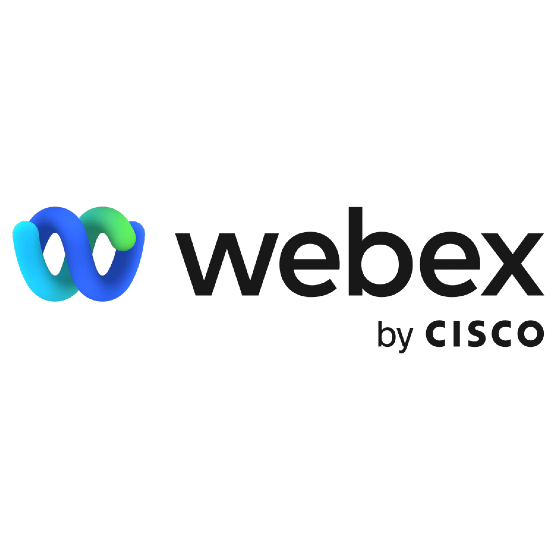




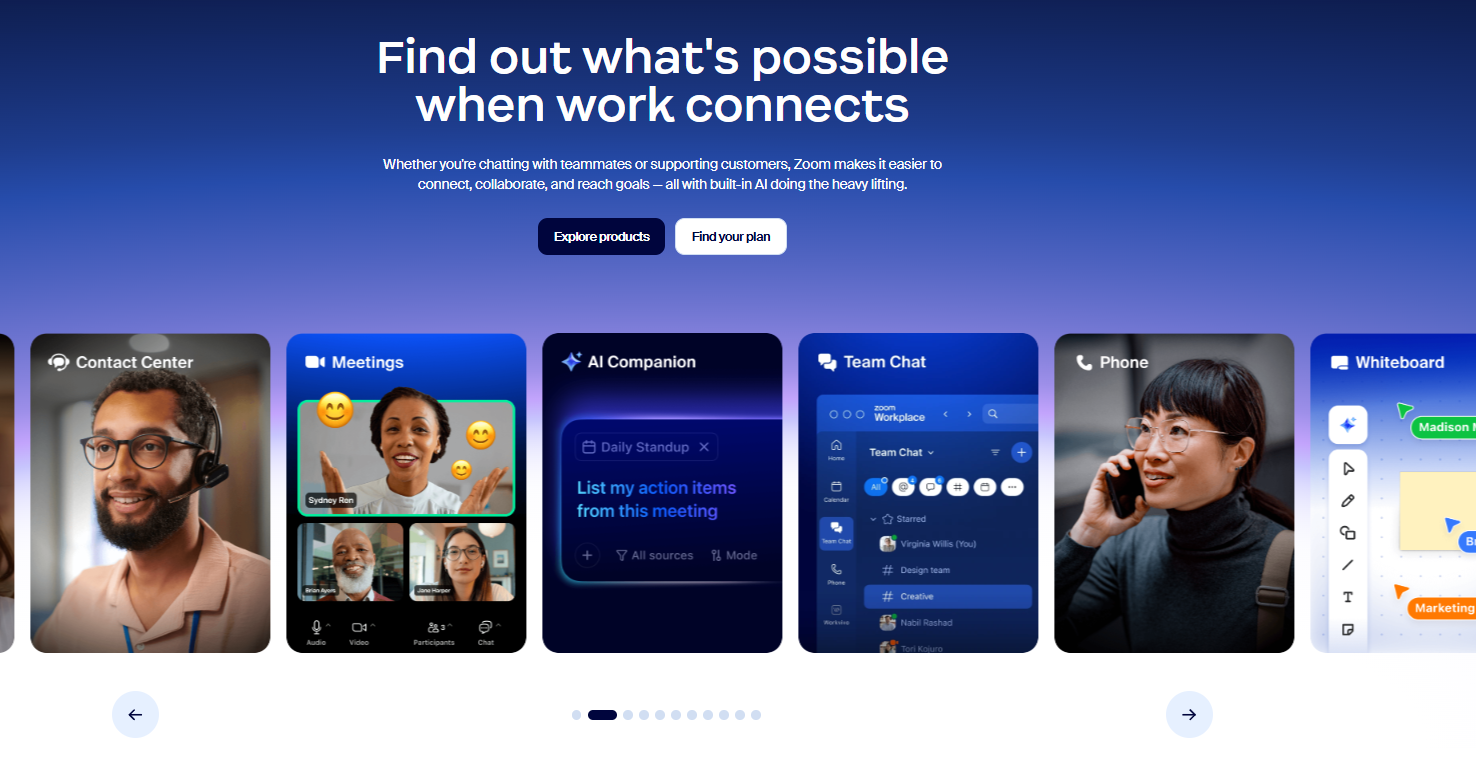
Zoom is a meeting scheduling software that facilitates virtual meetings with ease. It best serves remote teams, educational institutions, and customer service departments needing reliable communication. Zoom offers seamless connectivity and high-quality video for efficient meetings.
Zoom addresses scheduling conflicts and communication gaps for remote teams and departments like HR and customer service. In this article, I'll cover Zoom's features, pros and cons, use cases, pricing, and more, so you can decide if this software aligns with your scheduling and communication needs and goals.
Zoom Evaluation Summary
- From $14.16/user/month (billed annually)
- Free plan available
Why Trust Our Software Reviews
We’ve been testing and reviewing HR software systems since 2019. As HR experts ourselves, we know how critical and difficult it is to make the right decision when selecting software.
We invest in deep research to help our audience make better software purchasing decisions. We’ve tested more than 2,000 tools for different HR management use cases and written over 1,000 comprehensive software reviews. Learn how we stay transparent & our software review methodology.
Zoom Overview
In my opinion, Zoom is a solid choice for meeting scheduling software, especially for teams needing reliable video conferencing. It excels in user-friendliness and integration capabilities, making it a strong contender against competitors like Microsoft Teams or Google Meet. While its customer support could improve, the seamless interface and robust features offer great value for money.
Zoom stands out with its breakout rooms and virtual backgrounds, which are perfect for educational settings and creative industries. However, if your team heavily relies on customer support, you might want to weigh this aspect. Overall, Zoom is well-suited for dynamic environments that prioritize efficient communication and collaboration.
pros
-
You can easily set up and join meetings with just a few clicks.
-
The video quality is consistently high, keeping your team connected and engaged.
-
Breakout rooms allow for effective small group discussions during larger meetings.
cons
-
Your team might face occasional connectivity issues during peak usage times.
-
The user interface can feel cluttered if you're managing multiple meetings.
-
Customer support response times can be slower than expected when you need help.
-

Native Teams
Visit WebsiteThis is an aggregated rating for this tool including ratings from Crozdesk users and ratings from other sites.4.6 -
Remote People
Visit WebsiteThis is an aggregated rating for this tool including ratings from Crozdesk users and ratings from other sites.5 -
Checkr
Visit WebsiteThis is an aggregated rating for this tool including ratings from Crozdesk users and ratings from other sites.4.5




How We Test & Score Our Tools
We’ve spent years building, refining, and improving our software testing and scoring system. The rubric is designed to capture the nuances of software selection and what makes a tool effective, focusing on critical aspects of the decision-making process.
Below, you can see exactly how our testing and scoring works across seven criteria. It allows us to provide an unbiased evaluation of the software based on core functionality, standout features, ease of use, onboarding, customer support, integrations, customer reviews, and value for money.
Core Functionality (25% of final score)
The starting point of our evaluation is always the core functionality of the tool. Does it have the basic features and functions that a user would expect to see? Are any of those core features locked to higher-tiered pricing plans? At its core, we expect a tool to stand up against the baseline capabilities of its competitors.
Standout Features (25% of final score)
Next, we evaluate uncommon standout features that go above and beyond the core functionality typically found in tools of its kind. A high score reflects specialized or unique features that make the product faster, more efficient, or offer additional value to the user.
We also evaluate how easy it is to integrate with other tools typically found in the tech stack to expand the functionality and utility of the software. Tools offering plentiful native integrations, 3rd party connections, and API access to build custom integrations score best.
Ease of Use (10% of final score)
We consider how quick and easy it is to execute the tasks defined in the core functionality using the tool. High scoring software is well designed, intuitive to use, offers mobile apps, provides templates, and makes relatively complex tasks seem simple.
Onboarding (10% of final score)
We know how important rapid team adoption is for a new platform, so we evaluate how easy it is to learn and use a tool with minimal training. We evaluate how quickly a team member can get set up and start using the tool with no experience. High scoring solutions indicate little or no support is required.
Customer Support (10% of final score)
We review how quick and easy it is to get unstuck and find help by phone, live chat, or knowledge base. Tools and companies that provide real-time support score best, while chatbots score worst.
Customer Reviews (10% of final score)
Beyond our own testing and evaluation, we consider the net promoter score from current and past customers. We review their likelihood, given the option, to choose the tool again for the core functionality. A high scoring software reflects a high net promoter score from current or past customers.
Value for Money (10% of final score)
Lastly, in consideration of all the other criteria, we review the average price of entry level plans against the core features and consider the value of the other evaluation criteria. Software that delivers more, for less, will score higher.
Core Features
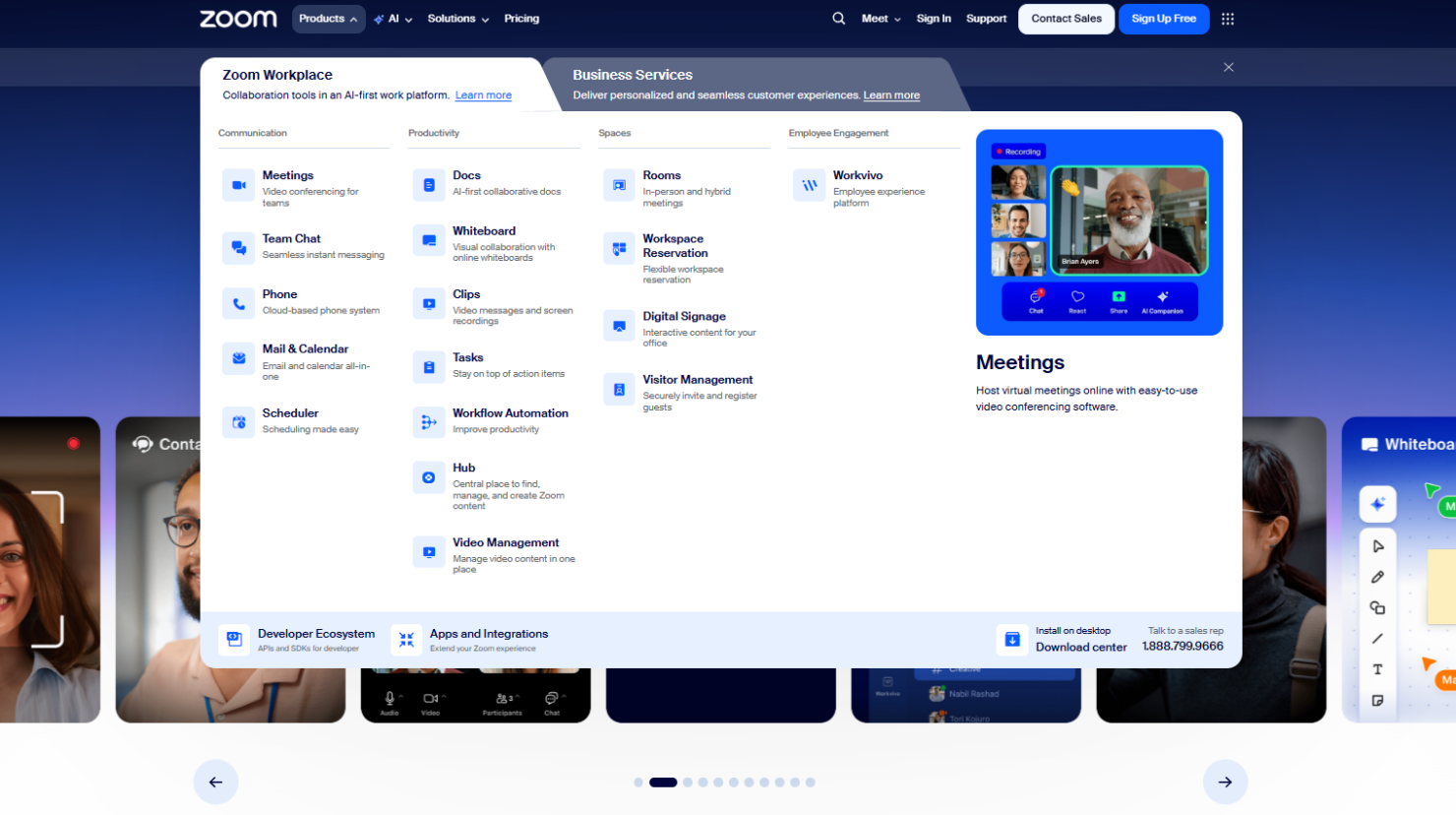
High-Quality Video Conferencing: Zoom delivers clear video calls and audio, that keep your team connected. It stands out with its consistent quality, even in large meetings.
Screen Sharing: You can share your screen effortlessly during meetings, making presentations and collaborations smooth. This feature is valuable for showing documents or slides in real-time.
Meeting Recording: Record your meetings with ease and store them securely in Zoom’s cloud storage, so your team can revisit important discussions, training sessions, or follow-ups anytime.
Zoom Phone: Zoom includes Zoom Phone, a cloud-based VoIP phone system that lets your team make and receive calls alongside video meetings, keeping voice and video communication in one platform.
Chat Functionality: Engage with your team using built-in team chat during meetings, allowing quick text communication without interrupting the speaker.
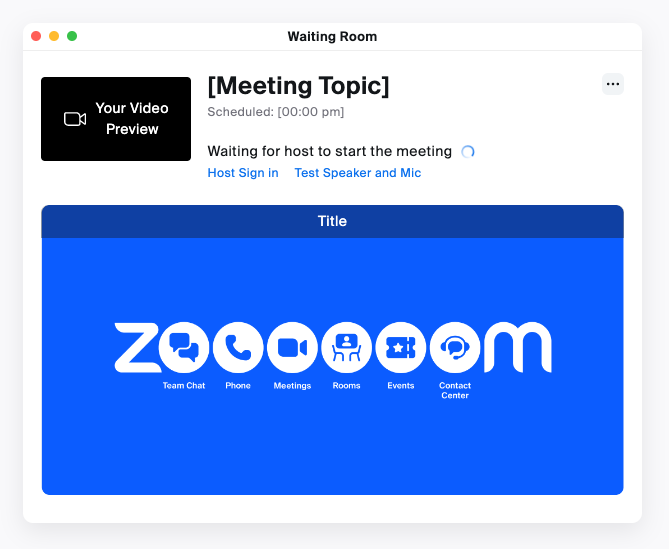
Waiting Room: Control who joins your online meeting by holding participants in a waiting room, giving the meeting host greater control over attendance and security.
Ease of Use
Zoom is incredibly user-friendly, and the Zoom app makes it easy for your team to join or host meetings from desktop or mobile devices with just a few clicks. The intuitive interface means you won't waste time navigating complex menus or settings. Features like screen sharing and breakout rooms are straightforward, allowing you to focus on your work rather than the technology. Users appreciate the smooth experience, often highlighting how quickly they get meetings started without technical hiccups. This makes Zoom a top choice for hassle-free virtual communication.
Integrations
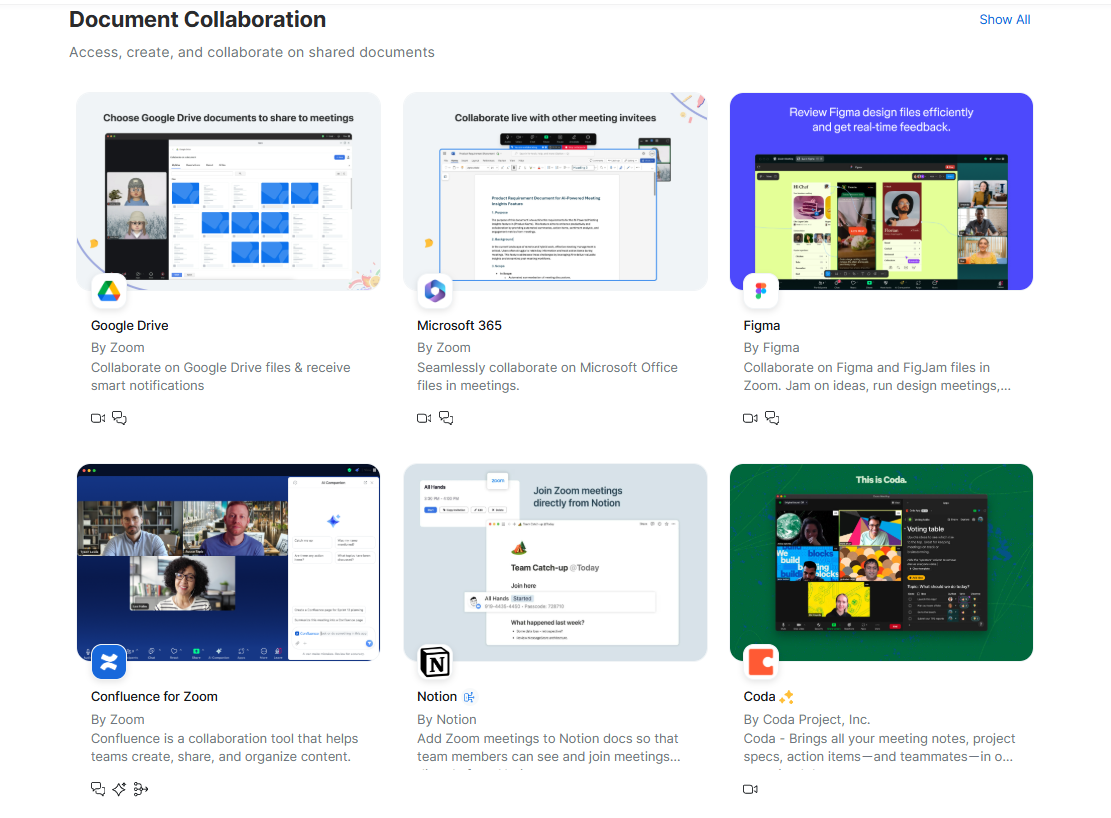
Zoom integrates with Microsoft Teams, Google Workspace, Slack, Calendly, Notion, Outlook, Salesforce, HubSpot, Freshworks CRM, and Figma. Zoom also offers an API and connects with third-party integration tools, allowing further customization and functionality.
Zoom Specs
- API
- Calendar Management
- Chat
- Contact Management
- Contact Sharing
- External Integrations
- History/Version Control
- Multi-User
- Notifications
- Scheduling