How an AI Founder and Talent-Development Expert Drives Organization-Wide AI Adoption Without Losing the Human Touch
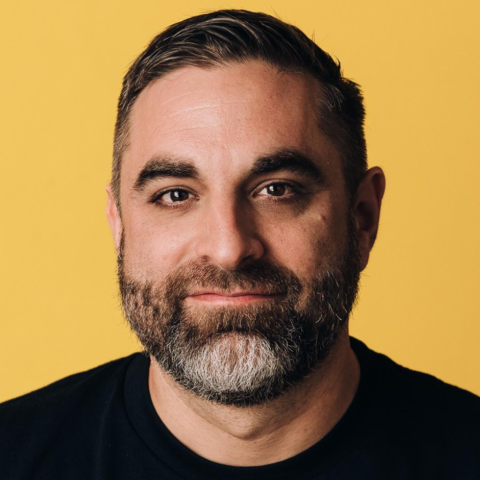
Elena Agaragimova is a global talent-development expert, speaker, and cofounder of Shiftwell.ai, a human-centered performance and wellbeing platform. With over 15 years of experience, she’s worked across higher education, corporate learning, and entrepreneurship, helping individuals and organizations build more effective and empowered workplaces.

Elena Agaragimova
Co-Founder of Shiftwell AI

Human-Centered AI Adoption Drives Real Results: Successful AI integration isn’t about collecting tools, it’s about solving real problems. When leaders focus on culture, communication, and systems people actually use, AI enhances performance instead of adding noise.
Leaders Must Champion AI Curiosity and Safety: Organization-wide adoption starts with transparency and trust. By encouraging experimentation and clarifying that AI frees employees for higher-value work, leaders turn fear into innovation.
Emotional Intelligence Is the New Competitive Edge: In the age of AI, the best leaders are deeply human. Skills like empathy, self-awareness, feedback, and relationship-building now define what it means to lead and to last.
We sat down with Elena to understand how she’s approaching leadership, people development, and AI in this time of rapid transformation — and why addressing root causes matters more than surface-level fixes. Here's what she had to say.
Building high-performing, soul-centered workplaces
I'm a global talent-development expert, speaker, and cofounder of Shiftwell.ai.
For over 15 years, I’ve worked across higher education, corporate learning, and entrepreneurship, helping individuals and organizations unlock growth through practical, neuroscience-backed strategies. I’m passionate about building high-performing, soul-centered workplaces and preparing the next generation for the future of work.
My journey started with hands-on experience in technology and team building. During my time at university, I was part of several projects, including developing a web application to help students manage their schedules more effectively. That experience taught me the importance of user-centered design and how to work collaboratively in a team. I also interned at a tech company, where I gained practical experience in coding and software testing — work that deepened my understanding of the software development lifecycle.
That foundation shaped how I approach leadership today. Over the years, I’ve managed small teams internally and worked with external teams on leadership development and rising-manager programs. I’ve also led software development projects that required close collaboration with marketing and sales, ensuring that what we built was aligned with business goals and customer needs.
All of these experiences — from building products to leading teams — have shaped how I think about communication, collaboration, continuous learning, and the kind of environments where people can truly thrive.
Why most performance tools fail and how to fix the real root causes

Over the years in the Learning and Development space, we've watched companies spend millions of dollars on tools, initiatives, and platforms for employee performance, productivity, and well-being with little to no ROI.
Many times, employees don't even use these tools, as they are not solving the real problem of performance. Year after year, burnout and employee disengagement scores increase, even while more money is being poured into these spaces.
It’s because we’re not solving the real problem — we’re just putting band-aids on broken legs.
My cofounders and I wanted to change that. We set out to create an AI tool that actually gets to the root cause of performance issues, well-being challenges, and productivity problems. A tool that puts ownership into the employee's hands with 24/7 support, while providing managers and organizations valuable reporting and information about where to actually spend their time and resources to effectively drive the business forward.
That tool is Shiftwell.ai. It creates a truly personalized experience for the users. It helps them identify gaps and then create an action plan to actually take steps toward closing those gaps. It also provides accountability and consistency — which is the biggest thing people struggle with when it comes to behavior change.
And it provides data for the managers on areas they need to focus on with their team to drive the team performance forward. That is a game-changer. No more guessing what your team needs or how to go about it. It takes the heavy lifting off managers and HR.
I might be biased, but I am fully obsessed with our tool, and I think we will have a great impact on organizations across the globe.
But as much as I believe in what AI can do, I also know it’s not the answer to everything.
The AI tools that save time, cut costs, and boost performance

AI can be a real partner in business if you know how to use it effectively. You also need to know when to not use it.
I think it can be great for the admin tasks — it saves a lot of time and sometimes money. I’m currently using a number of time-saving tools for the following tasks:
- Marketing and lead generation: We use tools like ScoreApp, which is great for creating quizzes and waitlists. For example, we used it to create an HR Audit quiz. Here’s a live version.
- Lead follow up: We use CRM systems that have AI functionalities and make it easy to keep track of leads and status — for example, Odoo or Zoho CRM.
- Recruiting: For hiring, Greenhouse is, in my opinion, the best recruiting software tool out there. It has a great user experience, powerful features, and built-in AI capabilities to assist with screening, scheduling, and generating job content.
- Performance reviews: We use our own tool to prepare for performance reviews — something that used to take a huge chunk of mental energy. One example is using an AI coach to practice conversations, set goals, and create actionable steps to work toward those goals over time.
- Content generation and podcasting: We use tools like Castmagic, which is a fire of a tool when it comes to repurposing content. We also use Opus Clip, which creates clips with automatic B-roll — perfect for pushing out podcast snippets and YouTube Shorts.
- Scheduling: For social media scheduling, we use Publer, which helps us schedule out our content across many platforms.

I cannot express how many hours of time and money I save with these tools.
But when, for example, a strategic decision needs to be made, a people problem needs to be solved, or a creative solution needs to be activated, a human brain is required. You need an original, authentic approach built on years of experience and knowledge of the sector, the group of people, and the context.
So far, we’re keeping all decision-making, strategy, and culture-setting in human hands.
Maybe AI will be able to handle those types of tasks in the future. But, at least at our company, we are not there yet.
Inside Shiftwell.ai’s tech stack and how it’s built
While I'm on the topic of tech and tools, our AI platform is built on Anthropic Claude, hosted on AWS Bedrock, and powered by custom models developed in Python.
The customer-facing website is built using Golang, running on EC2 and AWS Lambda, with MariaDB and ValKey (an open-source Redis alternative) for data storage and caching — both hosted on AWS.
How to move from siloed AI use to organization-wide implementation
There is a lot of potential with AI. But the strategy of how to effectively apply it is still a work in progress. Organizations are not always ready to implement AI across the board, so it is often quite siloed and ad hoc, as opposed to being a strategic plan of implementation across the whole company.
I think the first step is for leadership to have the conversation. And it's okay if the conversation starts with this: "We know we need to consider AI in our business, but beyond admin and some creative work, we’re not sure how else we can implement it. This is where we need your help." In fact, that's good.
Simply stating, “We’re not yet sure how to approach this,” offers a transparent path forward and allows you to get ideas from your team. Because I bet there will be several people in the company who are already experimenting with AI — and they can probably offer help with the initial step.
By activating internal ambassadors to take on this step, you’re off to a good start. That’s the role of leadership, after all — to bring or hire the right people to the conversation.
Another part is addressing the fear people might have around their jobs becoming obsolete if they rely on AI too much. Leadership’s role is to communicate that employees will now focus their time on new and more impactful activities.
How to build a culture of AI curiosity and experimentation at work
I spend a lot of time thinking about and learning ways AI can potentially disrupt our business, team, and product.
Within the team, we encourage experimentation and trying different tools that can help us in our business. We encourage knowledge sharing through lunch-and-learns or working groups where someone from the team shares a new cool tool or way to simplify a process.
And I know other organizations are running mini workshop groups where people can explore AI tools, or sending folks to trainings like Azure AI or Appian AI — especially for those working on low-code platforms.
Personally, I stay on top of AI trends and new functionalities by subscribing to newsletters, podcasts, and blogs from people who are experts in this area — both those who are pro AI and those who are against it. I like to see all sides of the story and then decide what might be best for me, the business, and the team.
A few I enjoy that often feature guests talking about AI:
- Dan Shipper’s AI & I podcast
- Lex Fridman’s podcast
- Diary of a CEO — they bring on a lot of experts in this area.
- John Sanei's newsletter — he's a futurist who focuses on how we maintain our humanity in the age of AI. His podcast, Expansive, also explores topics like AI and how organizations are adapting.
It is still uncertain where this will go, but one thing is for sure: Disruption is now the norm, so we need to stay as educated and informed as possible from all sides of the aisle.
It is still uncertain where this will go, but one thing is for sure: Disruption is now the norm, so we need to stay as educated and informed as possible from all sides of the aisle.

How AI is transforming leadership and people development

So far, the biggest way AI is changing the way I lead is that I now need a different game plan for how to approach people development.
It starts with giving team members access to the tools I mentioned earlier — all of which save time, money, and effort, allowing them to focus on things only they can do. For example, creating new products, coming up with new ideas, improving how we work, focusing more on customer satisfaction, and building relationships with stakeholders.
That shift requires an increase in AI literacy, which I just covered. But it also requires more focus on human skills rather than technical or administrative ones. Leaders have to create opportunities for learning these skills too.
The future of leadership in the age of AI
Over the next five years, the only kind of leader that will survive is one who has:
- Strong emotional intelligence
- Powerful communication skills
- Good personal brand among their team
- Vision and mission that inspire and motivate
- The ability to create teams that are thinking about the future as part of their daily work life, rather than merely executing tasks
- And a willingness to be disrupted.
In other words, with AI, leaders need to lean into the human elements of their jobs. Here are the key skills that have been transformational in how I approach leadership:
- Listening: Really listening to my team and others. There is so much that can be "heard" in the body language, timing, tone of voice, etc. Learning to hear what people are not saying is equally, if not more, important than hearing the words that are coming out of their mouths. This takes experience, self-awareness, and reflection.
- Relationship building: Getting to know each team member. Recognizing that each team member will need something different from you as a leader, depending on the person's values, motivations, and aspirations. My job is to understand the strengths and values of each person and help them be their best — based on what "best" means to them.
- Self-awareness: As a high achiever, I used to project my excessive work mentality onto others and painfully learned that not everyone will be aiming for the same things as you when it comes to their careers. That was a hard lesson.
- Being open to feedback: It took me a while to see feedback as a privilege. It can be painful to hear and even harder to implement and change aspects of oneself. But once you realize what a privilege it is to have someone tell you where you can improve — it's like a life hack to grow, succeed, and ultimately, build wealth.
My job is to understand the strengths and values of each person and help them be their best — based on what “best” means to them.
Follow along
You can follow Elena on LinkedIn to stay connected with her work, insights, and journey at Shiftwell.ai.
More expert interviews to come on People Managing People!