

10 beste Buchhaltungssoftware mit Lohnabrechnungsfunktionen im Jahr 2026

Beste Buchhaltungssoftware mit Lohnabrechnungsfunktionen – Vorauswahl


Buchhaltungssoftware mit Lohnabrechnungsfunktionen kombiniert zentrale Finanzmanagement-Tools mit einer integrierten Verarbeitung von Mitarbeiterzahlungen. Dadurch können Sie Ihre Bücher verwalten, die Lohnabrechnung durchführen sowie Lohnaufwendungen und -verbindlichkeiten in einem System erfassen. Wenn Sie nach Möglichkeiten suchen, Zahlen korrekt zu halten, Zeit zu sparen und gesetzliche Vorgaben einzuhalten, ist die Wahl der richtigen Lösung entscheidend. In diesem Leitfaden vergleiche ich Buchhaltungssoftware mit Lohnabrechnungsfunktionen für Unternehmen – von kleinen Teams bis hin zu komplexen Großunternehmen. Sie erfahren, welche Optionen sich am besten für integrierte Lohnabrechnung und Buchhaltung, die Automatisierung der Übertragung von Lohnabrechnungsdaten ins Hauptbuch, Steuerunterstützung und unterschiedliche Unternehmensgrößen eignen.
Warum Sie unseren Software-Bewertungen vertrauen können
Unser Team testet und bewertet Software seit 2012. Als HR-Experten wissen wir selbst, wie schwierig – und wichtig – es ist, die richtige Software auszuwählen.
Für diesen Leitfaden haben wir Tools mithilfe von praktischen Tests und unabhängiger Recherche bewertet und dabei unsere Bewertungskriterien angewendet. Zudem greifen wir auf Erkenntnisse von Branchenvordenkern und praktizierenden HR-Experten zurück.
Unsere Bewertungen spiegeln unser menschliches redaktionelles Urteilsvermögen wider, keine Verkaufsstrategie.
Expertenprüfer:
| Tool | Best For | Trial Info | Price | ||
|---|---|---|---|---|---|
| 1 | Best for project-based payroll cost tracking | Free demo available | Pricing upon request | Website | |
| 2 | Best for enterprise finance and global payroll | Free demo available | Pricing upon request | Website | |
| 3 | Best for open-source accounting and payroll | 14-day free trial | From $5/month | Website | |
| 4 | Best for modular accounting and payroll apps | Free plan available | From $8.95/user/month (billed annually) | Website | |
| 5 | Best for payroll postings to enterprise ledgers | Free demo available | Pricing upon request | Website | |
| 6 | Best for payroll data in real-time financials | Free demo available | Pricing upon request | Website | |
| 7 | Best for automatic payroll journal entries | 30-day free trial | From $40/month | Website | |
| 8 | Best for accounting and payroll under one login | 30-day free trial | From $17/month | Website | |
| 9 | Best for desktop accounting with payroll | 30-day free trial | From $124.42/month | Website | |
| 10 | Best for desktop payroll with tax tables | 30-day free trial | From $40/month with payroll | Website |
Testberichte zu Buchhaltungssoftware mit Lohnabrechnungsfunktionen
Im Folgenden finden Sie meine ausführlichen Zusammenfassungen der besten Buchhaltungssoftware mit Lohnabrechnungsfunktionen, die es auf meine Vorauswahl geschafft hat. Meine Testberichte bieten einen detaillierten Einblick in die Funktionen, Preise und besten Einsatzmöglichkeiten jeder Software, damit Sie die für Sie passende Lösung finden können.
Best for project-based payroll cost tracking
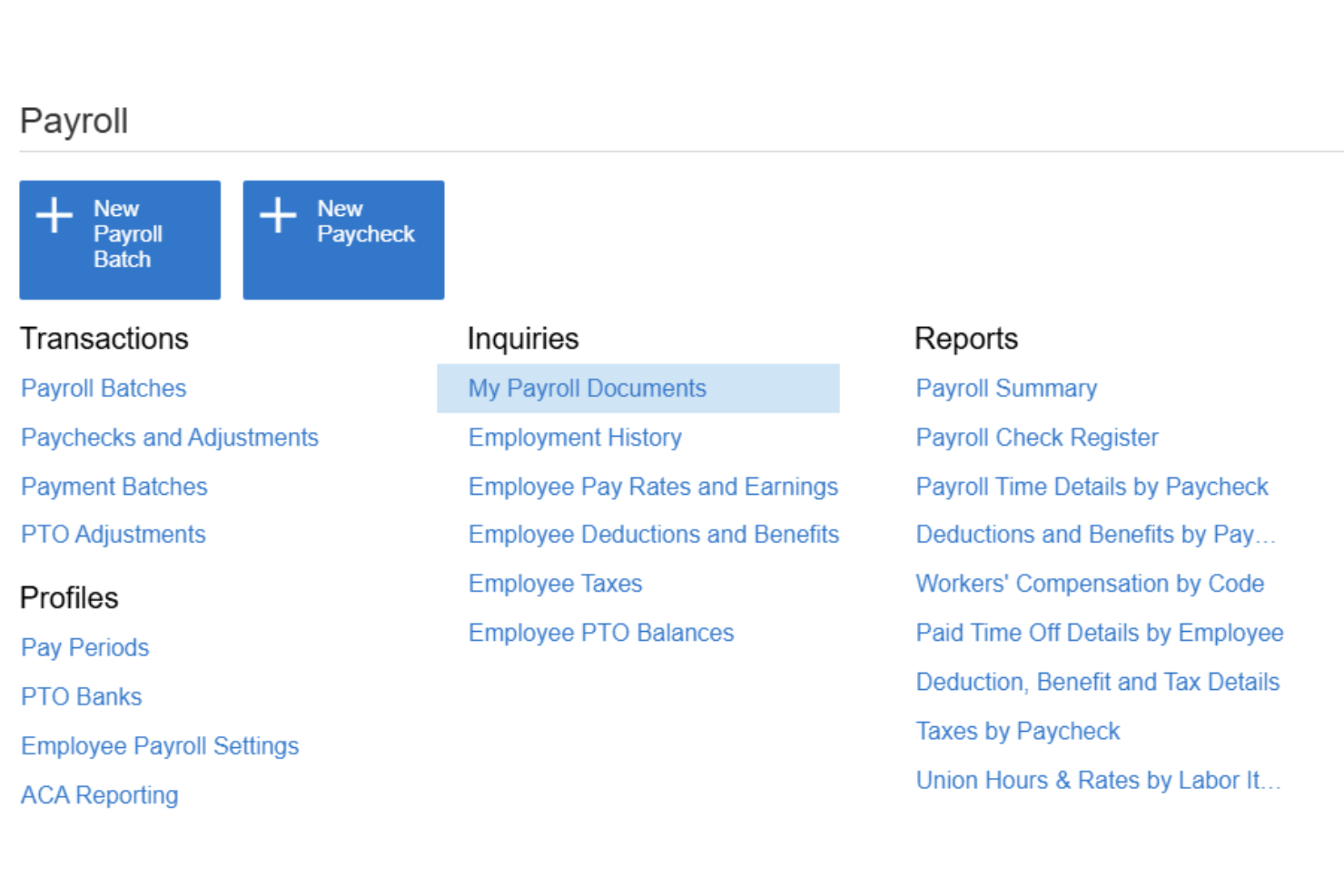
Acumatica is a cloud ERP platform for mid-market businesses that integrates full-cycle payroll processing, general ledger accounting, project cost tracking, and time management in a single system.
Who Is Acumatica Best For?
Acumatica is a strong fit for mid-market construction, manufacturing, and professional services companies that need payroll costs tied directly to projects and job codes.
Why I Picked Acumatica
I picked Acumatica as one of the best because no other accounting platform I've used lets you slice payroll costs by project, task, cost code, union, and shift simultaneously. When my team runs payroll, those costs post automatically to the GL with mapping that mirrors how the project is structured, not just a generic wage account. I also rely on the certified payroll reporting, which is a must-have for construction jobs with prevailing wage requirements.
Acumatica Key Features
- Employee self-service portal: Employees can access pay stubs, tax forms, direct deposit details, and PTO requests online or from a mobile device.
- Payroll tax and compliance: Supports current federal, FICA, state, and local tax information, electronic payroll filings, compliance dashboards, and payroll audit trails.
- Multi-entity accounting: Manage payroll and accounting across multiple companies or locations from one central platform.
- Native time entry integration: Time data imports directly into payroll runs with approval workflows and missing-time reminders.
Acumatica Integrations
Acumatica offers native integrations with Microsoft 365, DocuSign, Avalara, ADP, and Tableau. An API is available for custom integrations.
Pros and Cons
Pros:
- Certified payroll reporting for prevailing wage jobs
- Supports payroll across multiple entities simultaneously
- Project-level payroll cost allocation built in
Cons:
- No self-serve implementation without a partner
- Complex configuration for smaller payroll teams
Workday
Best for enterprise finance and global payroll
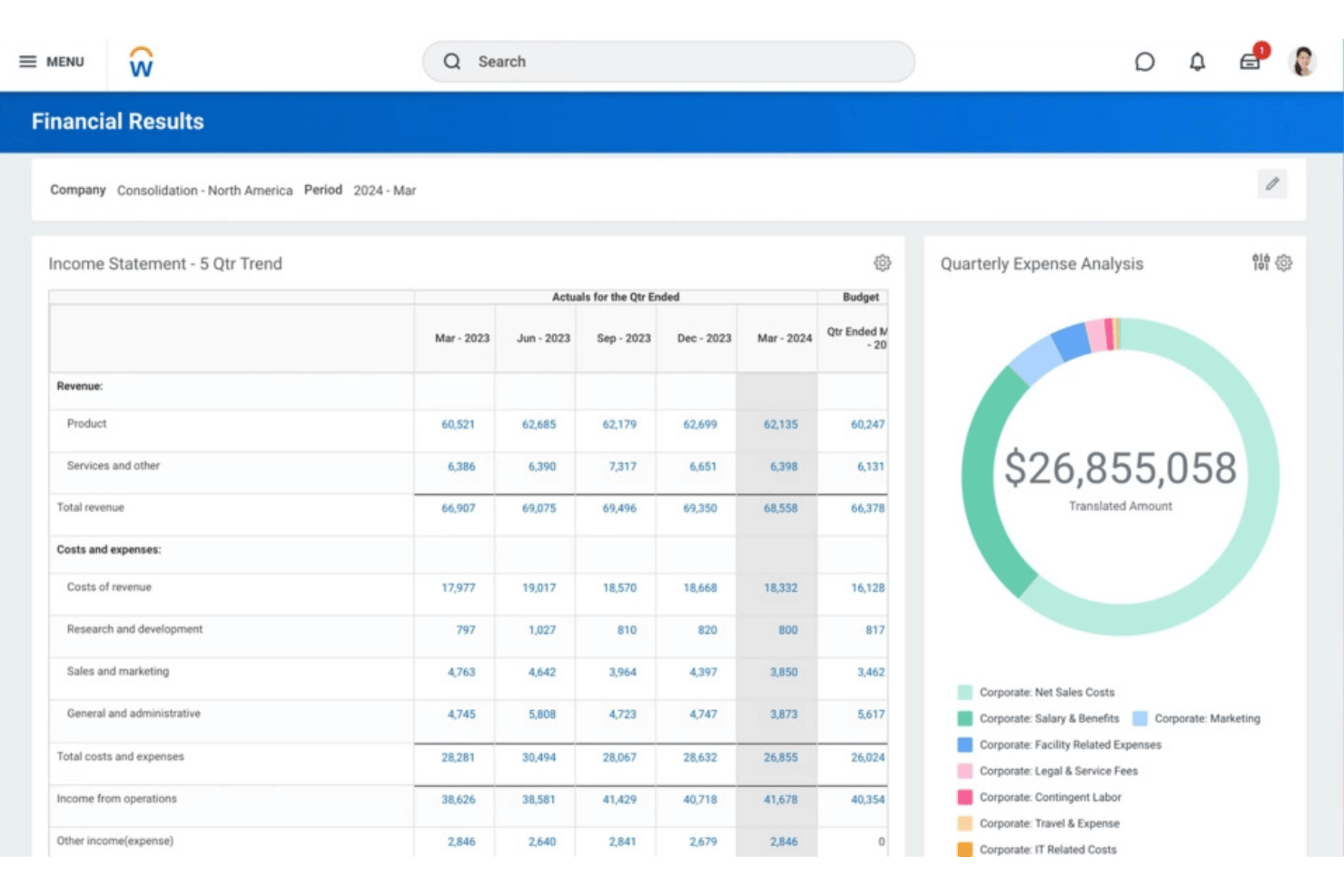
Workday is an enterprise-grade platform that unifies payroll processing, financial management, and HCM in a single system, with a native general ledger, continuous payroll calculation, and global payroll capabilities supported by Workday and its partner ecosystem.
Who Is Workday Best For?
Workday is built for large and enterprise organizations that need to manage complex, multi-entity finance and payroll operations across multiple countries from one platform.
Why I Picked Workday
I picked Workday because it connects enterprise payroll directly with financial management. Payroll results can generate accounting entries and feed labor costs into the general ledger, while Workday Financial Management handles core accounting functions such as the general ledger, accounts payable and receivable, fixed assets, and consolidation.
Workday Key Features
- Payroll accounting: Workday automatically generates accounting entries based on payroll results and supports labor-cost allocation.
- General ledger integration: Payroll results can flow into Workday Financial Management using account posting rules, fiscal schedules, ledger types, and other accounting configurations.
- Continuous payroll: Workday supports continuous payroll processing rather than treating payroll solely as a discrete end-of-period process.
- Global payroll: Native/direct payroll coverage is supplemented by Workday's global partner ecosystem and bidirectional integrations.
- Employee self-service: Employees can access payroll information through Workday's mobile-first experience; Workday documentation specifically supports employee access to payslips on mobile.
- Time-to-payroll: Approved time can feed payroll calculations by associating time calculation tags with earnings or deductions.
Workday Integrations
Workday offers native integrations with ADP, Kronos, Salesforce, Microsoft 365, SAP, ServiceNow, and Oracle, and provides an API for custom integrations.
Pros and Cons
Pros:
- Employee self-service reduces HR admin workload
- Native payroll coverage across 180+ countries
- Payroll and finance live in one system
Cons:
- Requires significant IT involvement during setup
- Overkill for businesses under 500 employees

ERPNext
Best for open-source accounting and payroll
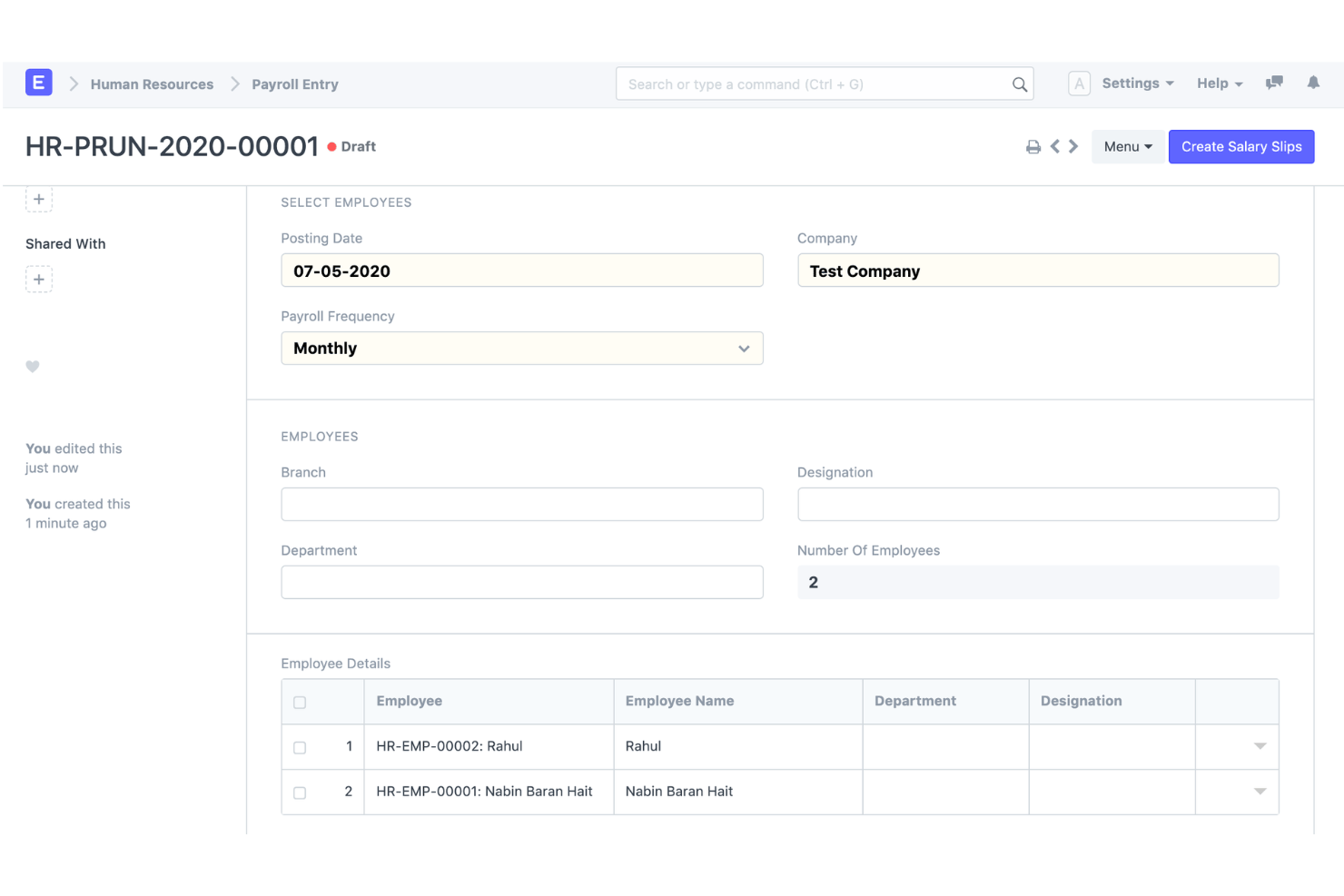
ERPNext is an open-source ERP platform that combines double-entry accounting, native payroll processing, HR management, and inventory tracking in a single self-hosted or cloud-deployed system.
Who Is ERPNext Best For?
ERPNext suits technically resourceful SMBs and growing mid-market companies that need a full-featured ERP without per-user licensing costs.
Why I Picked ERPNext
ERPNext earns its spot on my shortlist because the payroll module posts directly to the general ledger using the same chart of accounts and cost centers you configure for the rest of your books. I like that because you're working from a single codebase, there's no middleware syncing payroll data to a separate accounting system. The open-source license also means I can modify salary components or GL account mappings to match a specific structure, without waiting on a vendor roadmap.
ERPNext Key Features
- Integrated payroll: Salary structures, earnings and deductions, payroll periods, salary slips, and bulk payroll processing.
- Payroll accounting: Payroll expenses/payments can be connected to the accounting system rather than maintained in a completely separate payroll product.
- General ledger: ERPNext provides a full double-entry GL and automatically generates ledger entries from submitted accounting transactions.
- Cost centers and projects: Payroll can be associated with projects, while ERPNext accounting supports cost centers, projects and other accounting dimensions.
- Multi-company/multi-currency accounting: ERPNext supports multiple companies, subsidiaries, branches and currencies with consolidated reporting.
- Customization: ERPNext is open source and built on the Frappe framework, with low-code/no-code customization capabilities.
ERPNext Integrations
ERPNext offers native integrations with PayPal, Razorpay, Amazon S3, Slack, Dropbox, Shopify, and WooCommerce. An API is available for custom integrations.
Pros and Cons
Pros:
- Strong payroll-to-accounting connection
- Open-source accounting and payroll
- Broad ERP functionality beyond finance
Cons:
- Payroll compliance/localization varies by country
- More setup and configuration than turnkey SMB accounting/payroll products

Odoo
Best for modular accounting and payroll apps
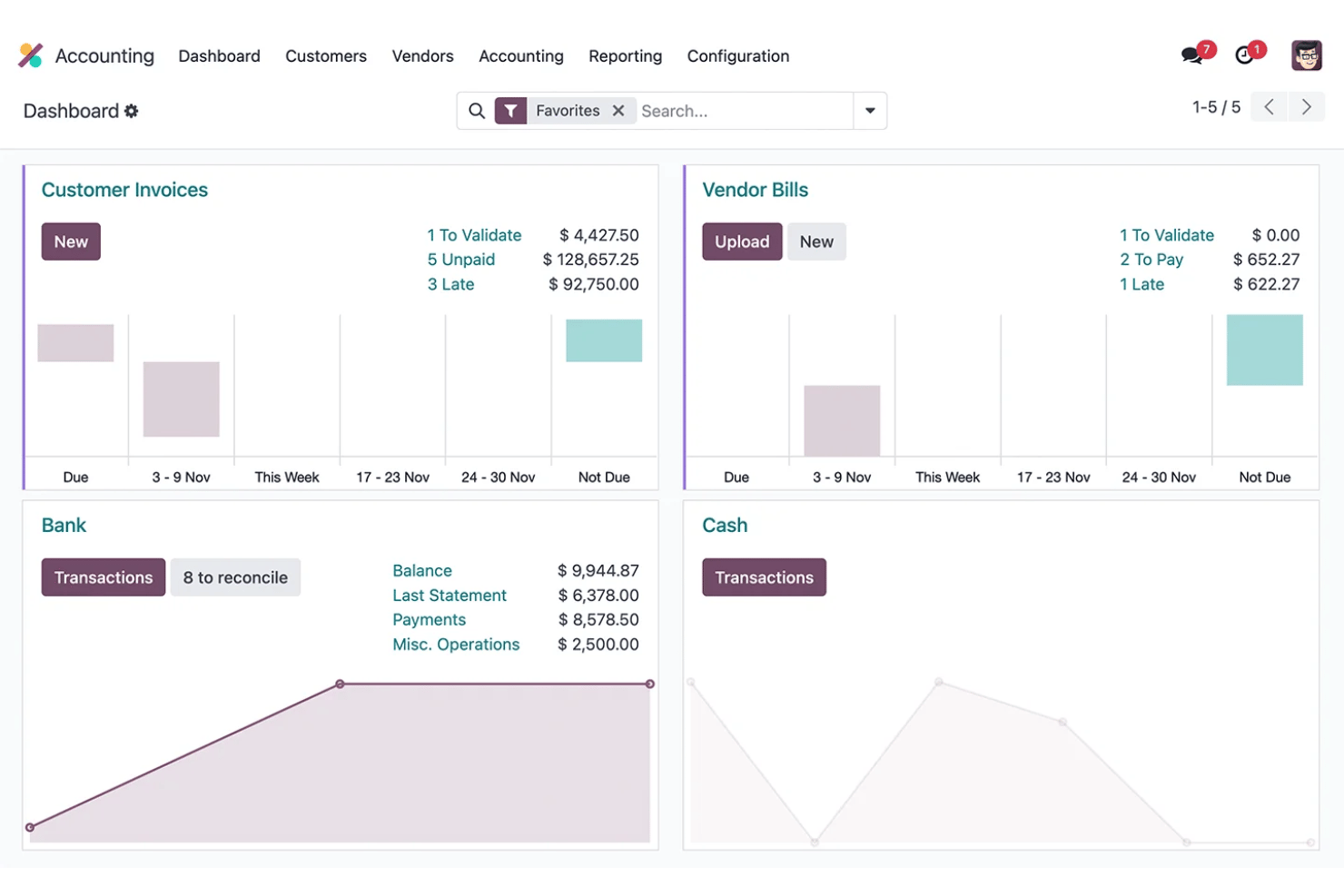
Odoo is an open-source ERP platform that combines modular accounting, payroll, HR, and expense management in a single shared database.
Who Is Odoo Best For?
Odoo is a strong fit for growing SMBs with 6–250 employees that want to consolidate accounting, payroll, and HR into one platform without managing multiple disconnected tools.
Why I Picked Odoo
I picked Odoo because businesses can combine its full accounting application with payroll and other business apps in one modular platform. When Accounting and Payroll are used together, payroll salary rules can be mapped to debit and credit accounts, helping connect employee pay with the general ledger without relying on a completely separate accounting system.
Odoo Key Features
- Accounting: Full double-entry accounting with AP/AR, reconciliation, financial reporting, assets and budgets.
- Payroll accounting: Salary rules can be mapped to debit and credit accounts, connecting payroll calculations with accounting journals.
- Pay runs: Businesses can generate and process multiple payslips together, including grouping payroll by salary structure, department or job position.
- Time-to-payroll: Payroll uses employee work entries to calculate worked time before applying salary structures and rules.
- Payroll localization: Country-specific payroll configurations account for local taxes, fees, allowances and regulatory requirements where supported.
- Multi-company accounting: Odoo supports multiple companies, with different fiscal localizations where appropriate.
Odoo Integrations
Odoo offers native integrations with Stripe, Plaid, PayPal, Authorize.Net, and Shopify, with an API available for custom integrations.
Pros and Cons
Pros:
- Open-source codebase allows deep customization
- Payroll posts automatically to the general ledger
- Modular apps scale with your business needs
Cons:
- Initial setup demands significant technical configuration
- Payroll tax filing requires third-party support
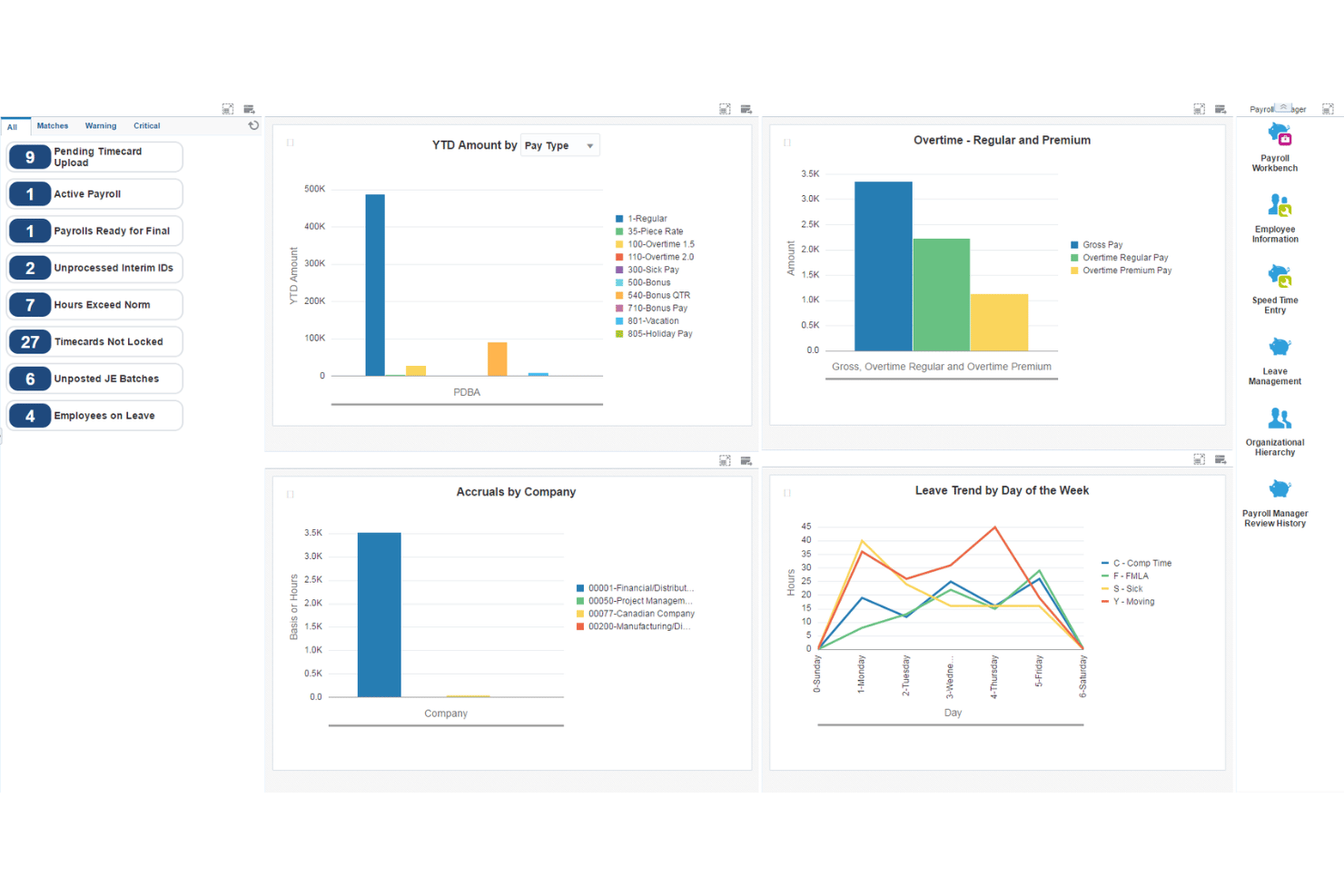
JD Edwards EnterpriseOne is an enterprise ERP suite from Oracle that combines full-cycle payroll, general ledger accounting, AP/AR, fixed assets, and human capital management across on-premises, cloud, and hybrid deployments.
Who Is JD Edwards EnterpriseOne Best For?
JD Edwards EnterpriseOne is built for large enterprises in manufacturing, distribution, and asset-heavy industries that need integrated payroll and financial management at scale.
Why I Picked JD Edwards EnterpriseOne
I picked JD Edwards EnterpriseOne because its payroll system connects deeply with enterprise financial management. Payroll can generate and post journal entries to the general ledger using configurable Automatic Accounting Instructions, while payroll liabilities such as taxes and insurance can flow into Accounts Payable.
JD Edwards EnterpriseOne Key Features
- Payroll-to-GL integration: Payroll can generate journal entries and update the EnterpriseOne general ledger, with automatic or manual posting options.
- Automatic Accounting Instructions: AAIs determine how generated accounting entries are distributed across GL accounts, giving larger organizations considerable control over payroll accounting.
- Payroll liabilities and AP: EnterpriseOne can automatically create vouchers for payroll taxes, insurance premiums, and other third-party payroll liabilities through its Accounts Payable integration.
- Labor costing: Payroll supports labor and labor-burden distributions, including wages, taxes, insurance, hours, and account information. Those transactions can flow into the Account Ledger.
- US payroll: EnterpriseOne supports federal, state, and local withholding/reporting requirements, with Vertex used for tax-withholding calculations.
- Canadian payroll: There's also dedicated Canadian payroll functionality covering earnings, deductions, taxes, gross-to-net/net-to-gross calculations, leave accruals, and government-regulated tax information.
JD Edwards EnterpriseOne Integrations
JD Edwards EnterpriseOne offers native integrations with Oracle Cloud Infrastructure, Oracle Analytics Cloud, Oracle Database, and has an API for custom integrations.
Pros and Cons
Pros:
- Configurable GL account mapping for payroll runs
- Handles multi-entity payroll and accounting natively
- Granular labor cost posting by department
Cons:
- Not suited to small or mid-sized businesses
- Implementation requires significant IT and consulting resources
NetSuite
Best for payroll data in real-time financials
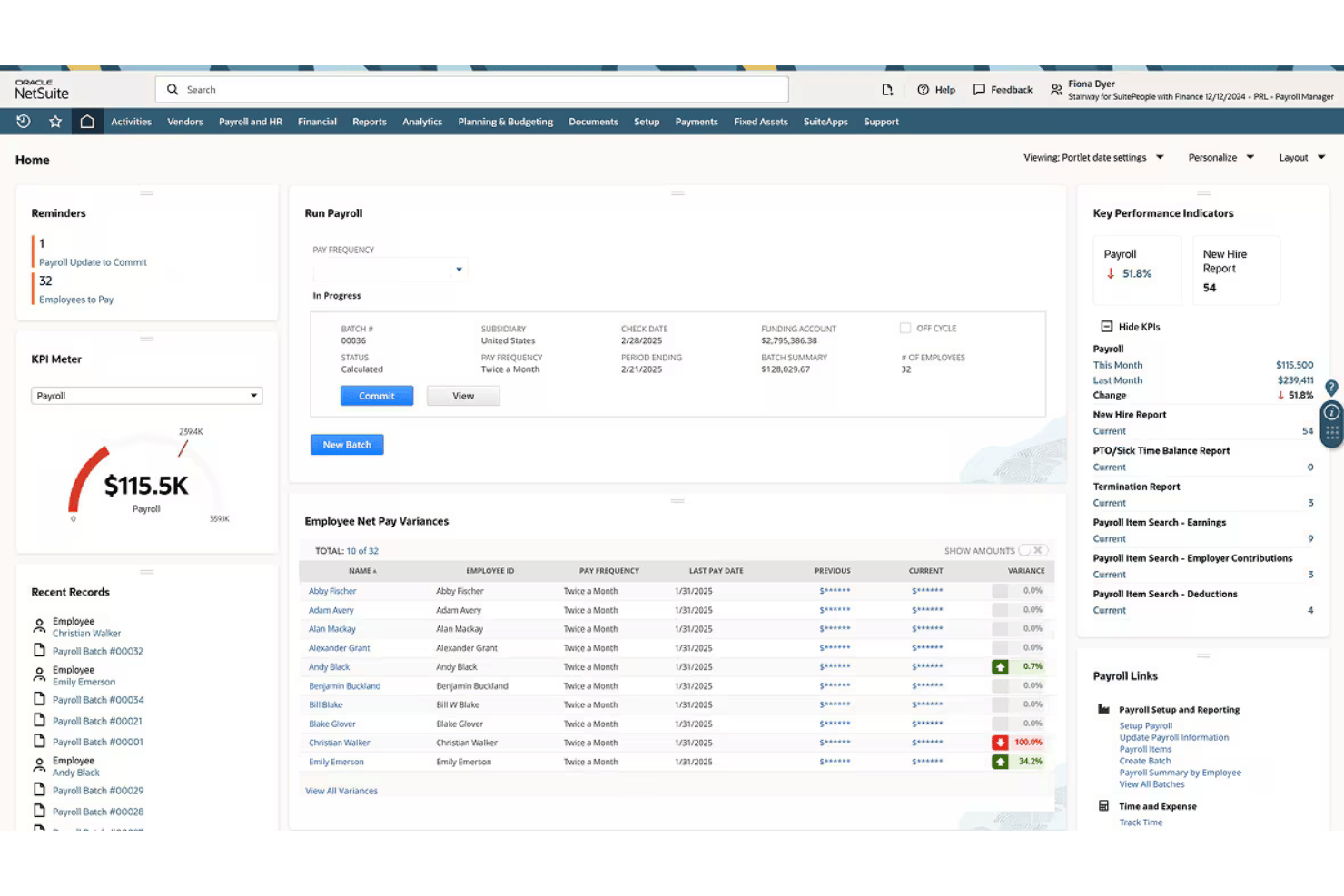
NetSuite is a cloud-based ERP platform that combines full-cycle US payroll processing with a complete general ledger, where every payroll run posts directly to financial accounts in real time.
Who Is NetSuite Best For?
NetSuite is a strong fit for mid-market companies that need payroll, accounting, and HR managed within a single ERP rather than across disconnected tools.
Why I Picked NetSuite
I picked NetSuite as one of the best because the moment a payroll run completes, every wage, tax, and deduction posts to the general ledger automatically. I love that I can drill down from a trial balance directly to an individual paycheck, which makes payroll audits far less painful. The dashboards also break down payroll expenses by department, location, or subsidiary, giving finance and HR a shared view of labor costs without manual reconciliation.
NetSuite Key Features
- Multi-subsidiary payroll: Run payroll across multiple business entities with consolidated or subsidiary-specific reporting.
- Employee self-service portal: Let employees view pay stubs, tax forms, and update their own personal and banking details.
- Automated ACA compliance: Prepare, file, and manage Affordable Care Act (1095-C/1094-C) forms within the platform.
- Custom payroll dashboards: Access over 100 standard payroll reports and interactive dashboards for payroll analytics.
NetSuite Integrations
NetSuite offers native integrations with SuitePeople HR, SuiteTime, and other NetSuite business management modules. An API is available for custom integrations.
Pros and Cons
Pros:
- Built-in HR, time tracking, and payroll
- Supports multi-entity and multi-subsidiary payroll
- Payroll posts directly to the GL
Cons:
- US-only payroll limits global workforce management
- Implementation takes months for most businesses

Wave
Best for automatic payroll journal entries
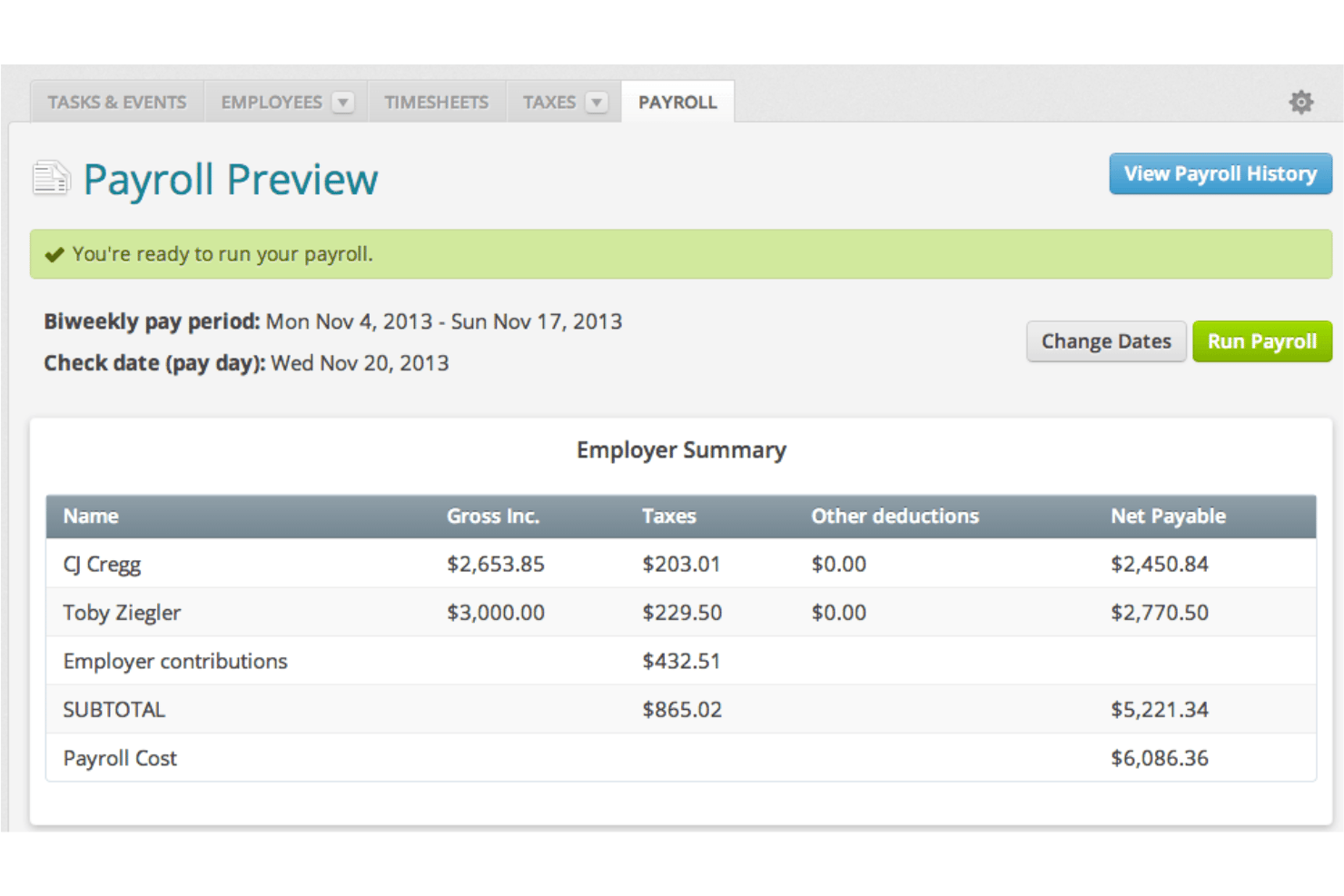
Wave is a small business accounting and payroll platform that combines double-entry bookkeeping, invoicing, and full-cycle payroll processing in a single system.
Who Is Wave Best For?
Wave is built for owner-operators and small businesses that need payroll and accounting in one place without paying for features they won't use.
Why I Picked Wave
I picked Wave as one of the best because each payroll run automatically posts as journal entries into the accounting ledger, with wages, taxes, and deductions mapped to the correct accounts in real time. Because payroll and accounting share one data model, there's no manual export or reconciliation. I also like that W-2s, 1099-NECs, and wage reports are all generated from within that same system.
Wave Key Features
- Direct deposit payments: Send paychecks straight to employee and contractor bank accounts at no additional cost.
- Employee self-service portal: Let team members securely view pay stubs and manage personal information online.
- Automatic payroll tax filing: Calculate, withhold, and file federal and state payroll taxes for US-based businesses.
- Year-end tax form generation: Create and deliver W-2 and 1099-NEC forms for employees and contractors within the system.
Wave Integrations
Native integrations are not clearly documented. An API is available for custom integrations.
Pros and Cons
Pros:
- W-2 and 1099-NEC forms generated in-platform
- Automatic journal entries after every payroll run
- Payroll and accounting share one data model
Cons:
- Limited support for growing teams beyond 10 employees
- Payroll only available in the US and Canada, excluding Quebec

Best for accounting and payroll under one login
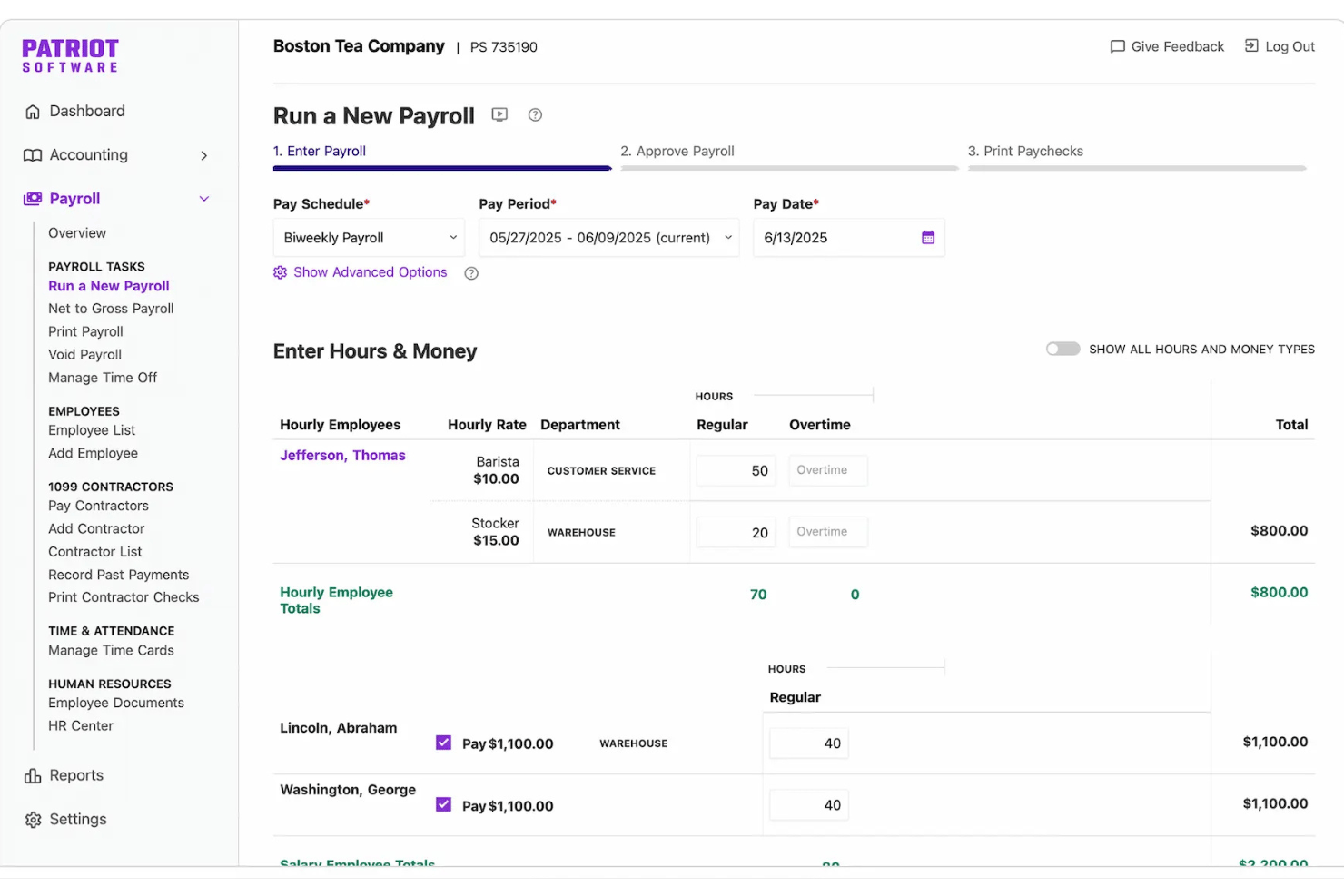
Patriot Software is a small business accounting and payroll platform that combines double-entry bookkeeping, invoicing, direct deposit, and payroll processing in a single login, with payroll tax filing available through its Full Service Payroll plan.
Who Is Patriot Software Best For?
Patriot Software is a strong fit for small business owner-operators and payroll administrators who need to manage books and run payroll without juggling two separate systems.
Why I Picked Patriot Software
I picked Patriot Software as one of the best because both payroll and accounting live under a single login, and the connection between them is automatic. Every time I run payroll, Patriot posts a journal entry directly to the general ledger, mapping wages, tax withholdings, and deductions to the correct accounts without any manual work. I also like the dual-ledger system, which lets me toggle between cash and accrual accounting without switching tools or duplicating records.
Patriot Software Key Features
- Multi-state payroll tax filing: Full Service Payroll calculates, files, and deposits federal, state, and local payroll taxes on your behalf.
- Employee self-service portal: Employees can access pay stubs, tax documents, and update their direct deposit information online.
- Time and attendance add-on: Track employee hours and time-off accruals that sync directly to payroll with a dedicated module.
- Contractor and 1099 processing: Issue payments to contractors and generate 1099 forms within the same platform as employee payroll.
Patriot Software Integrations
Patriot Software offers native integrations with Vestwell for 401(k) plans, SimplyInsured for health insurance, and ERGO NEXT for workers' compensation. An API is available for custom integrations. Native integrations with other accounting or payroll tools are not clearly documented.
Pros and Cons
Pros:
- Full Service Payroll automates payroll tax filing
- Supports both cash and accrual accounting
- Payroll auto-posts to the general ledger
Cons:
- No native HR or benefits administration features
- Reporting tools lack depth for advanced users

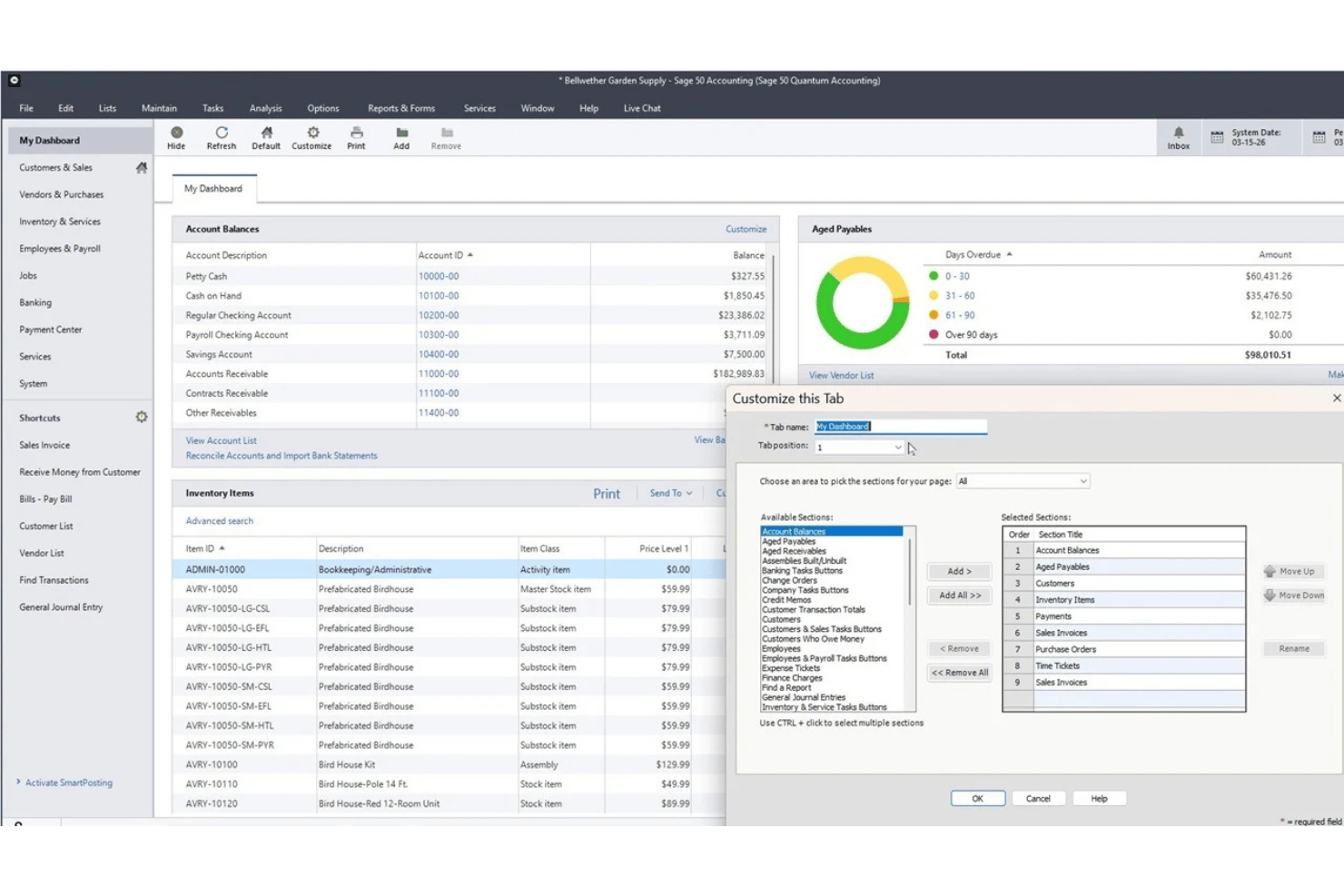
Sage 50 Accounting is a small business accounting platform available in cloud and desktop editions, combining financial management, inventory, job costing, and an integrated payroll module.
Who Is Sage 50 Accounting Best For?
Sage 50 is a strong fit for small businesses and in-house bookkeepers that need detailed accounting, job costing, and payroll functionality in one system.
Why I Picked Sage 50 Accounting
I've included Sage 50 Accounting in my top picks because the payroll module is built directly into the accounting system, not bolted on as a third-party integration. I like that payroll runs automatically post as journal entries to the general ledger, mapping wages, taxes, and deductions without any manual reconciliation. The combination of job costing and payroll in one desktop environment is where Sage 50 really stands apart, letting you see whether a project turned a profit after labor costs are fully accounted for.
Sage 50 Accounting Key Features
- Job costing module: Track labor, materials, and overhead by job or project for full job profitability.
- Multi-company management: Manage transactions and reporting across multiple business entities in a single system.
- Inventory management: Monitor stock levels, serial numbers, vendors, and assemblies directly within the accounting platform.
- Advanced reporting tools: Access over 150 reports covering areas such as payables, receivables, expenses, profits, inventory, payroll, and jobs, with options to customize and drill down into transactions.
Sage 50 Accounting Integrations
Sage 50 Accounting offers native integrations with Microsoft 365, AutoEntry, and Sage Payroll. An API is available for custom integrations.
Pros and Cons
Pros:
- Strong audit trail for payroll transactions
- Deep job costing built into accounting
- Payroll posts directly to the general ledger
Cons:
- Payroll and e-filing require separate subscriptions
- Payroll requires an additional subscription

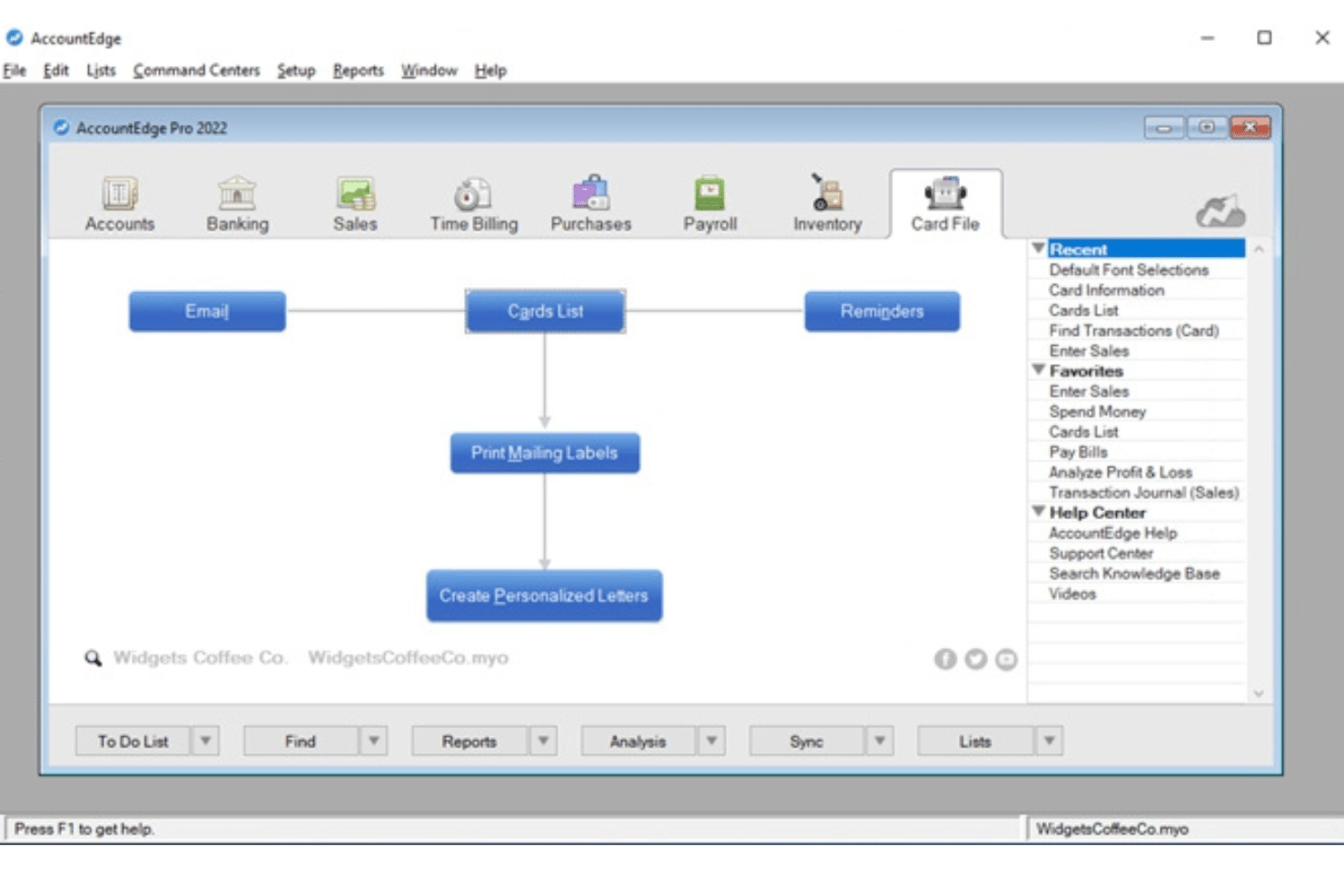
AccountEdge is a desktop-based accounting platform for small businesses that combines double-entry bookkeeping, inventory, and invoicing with an optional payroll add-on for unlimited employees and access to current federal, state/provincial, and local payroll tax rates.
Who Is AccountEdge Best For?
It's a strong fit for owner-operators and small business payroll admins who prefer desktop accounting software and want to process payroll for unlimited employees without per-employee fees.
Why I Picked AccountEdge
AccountEdge earns its spot on my shortlist because of how it handles payroll tax tables. Rather than relying on a cloud service for tax updates, AccountEdge lets you download and apply federal, state, and local tax tables directly in the desktop software. I also like that payroll runs post automatically as journal entries to the GL. Wages, taxes, and deductions map to the correct accounts with no manual re-entry.
AccountEdge Key Features
- Double-entry general ledger: Provides a full accounting suite with chart of accounts, journal entries, AP/AR, and financial reports.
- Inventory and item tracking: Monitors inventoried and non-inventoried items, assemblies, and manages multiple locations and custom variations.
- Customizable reporting: Offers hundreds of standard financial, payroll, and compliance reports, plus advanced analytics via Power BI exports.
- Integrated time billing: Enables entry of timesheets, applies custom billing rates by employee or project, and links hours directly to payroll.
AccountEdge Integrations
AccountEdge offers add-ons for bank feeds, direct deposit, payroll forms and e-filing, AccountEdge Connect, Web Pay, and payment processing. AccountEdge Connect adds browser-based access for sales, purchases, time billing, and employee timesheets that sync back to the desktop software.
Pros and Cons
Pros:
- Handles unlimited employee payroll runs
- Payroll entries post automatically to GL
- Downloadable tax tables update payroll calculations
Cons:
- Tax filing not automated by vendor
- Direct deposit and payroll e-filing cost extra
Weitere Buchhaltungssoftware mit Lohnabrechnungsfunktionen
Hier finden Sie einige weitere Optionen für Buchhaltungssoftware mit Lohnabrechnungsfunktionen, die es nicht auf meine Vorauswahl geschafft haben, aber dennoch einen Blick wert sind:
- Striven
For payroll in operational workflows
- QuickBooks Workforce
For connected payroll, HR, and books
- Microsoft Dynamics GP
For advanced payroll deductions and benefits
- SAP S/4HANA
For global payroll with SAP finance


Wie ich Buchhaltungssoftware mit Lohnabrechnungsfunktionen bewerte
Wenn Lohnabrechnungsdaten nicht sauber ins Hauptbuch übertragen werden, weiß ich, dass dem Werkzeug einer der größten Vorteile der Kombination von Lohnabrechnung und Buchhaltung fehlt. Daher trenne ich unverzichtbare Funktionen von den Merkmalen, die Plattformen wirklich voneinander abheben.
Kernfunktionen (Grundvoraussetzungen für diese Liste)
Bei der Auswahl der Anwendungen für meine Liste bewerte ich jede einzelne auf einer Skala von 0 (bietet die Funktion nicht an) bis 5 (ist in diesem Bereich hervorragend) für jede der unten aufgeführten Kernfunktionen. Anschließend rechne ich die Gesamtpunktzahl der Anwendung in einen Prozentsatz um und verwende 65 % als Richtwert, um die allgemeine Eignung für die Liste zu beurteilen.
- Integrierte Lohnabrechnung: Ich achte auf integrierte oder eng angebundene Lohnabrechnungsläufe mit Direktüberweisung und flexiblen Zeitplänen, damit Unternehmen Zahlungen an Mitarbeiter und Auftragnehmer abwickeln können, ohne Lohnabrechnungsdaten manuell zwischen Systemen übertragen zu müssen.
- Hauptbuchhaltung: Ich prüfe, ob das Hauptbuch die Kreditoren- und Debitorenbuchhaltung, Buchungssätze und anpassbare Berichte unterstützt – beispielsweise eine nach Abteilungen aufgeschlüsselte Gewinn- und Verlustrechnung.
- Automatisierung der Lohnsteuer: Da sich steuerliche Anforderungen häufig ändern, bewerte ich, wie das Werkzeug Einbehalte berechnet, Steuerzahlungen und -meldungen unterstützt und, sofern verfügbar, Formulare zum Jahresende wie W-2s erstellt.
- Mitarbeiterdaten & Abzüge: Jedes Profil sollte Vergütungssätze, Einbehalte, Leistungen und Pfändungen speichern – Angaben, die Sie sonst in einem separaten System erfassen müssten.
- Synchronisierung von Lohnabrechnung und Hauptbuch: Nach jedem Lohnabrechnungslauf sollten Löhne und Steuerschulden automatisch auf die richtigen Hauptbuchkonten gebucht werden, mit einem Prüfpfad für die Überprüfung zum Quartalsende.
- Erfassung von Arbeitszeit & bezahltem Urlaub: Integrierte Zeiterfassungsbögen und Richtlinien zur Ansammlung von bezahltem Urlaub, die direkt in die Lohnabrechnung einfließen, ersparen Ihnen die erneute Eingabe von Stunden in jeder Abrechnungsperiode.
Sobald ich eine Liste von Anwendungen habe, die die Kriterien erfüllen, prüfe ich, wodurch sich die einzelnen Plattformen voneinander abheben.
Unterscheidungsmerkmale (wodurch sich Anbieter abheben)
So vergleiche ich die verschiedenen Anbieter miteinander:
Herausragende Funktionen
Ein Selbstbedienungsportal für Mitarbeiter reduziert Anfragen an die Personalabteilung – Beschäftigte können ihre eigenen Gehaltsabrechnungen abrufen, Angaben zur Direktüberweisung aktualisieren und Urlaubsanträge einreichen, ohne dass ein ständiger Austausch erforderlich ist. Ich bewerte außerdem die Verwaltung von Auftragnehmern und 1099-Formularen, insbesondere wenn Ihr Team sowohl W-2-Beschäftigte als auch Freiberufler umfasst, die zum Jahresende 1099-NEC-Formulare benötigen. Die Steuererklärung in mehreren Bundesstaaten ist ebenfalls wichtig, besonders bei verteilten Teams, bei denen jede neue Einstellung zusätzliche Anforderungen an die jeweilige Steuerzuständigkeit auslösen kann.
Mehr als nur Funktionen
Preistransparenz ist ein wichtiger Punkt – ich prüfe, ob die Gebühren für die Lohnabrechnung im Buchhaltungsabonnement enthalten sind oder als Zusatzgebühr pro Mitarbeiter berechnet werden, da sich diese Kosten mit wachsendem Team schnell summieren. Auch die Unterstützung bei der Migration ist wichtig, insbesondere wenn Sie unterjährig wechseln und Löhne sowie Steuerabzüge seit Jahresbeginn (YTD) korrekt importieren müssen. Außerdem achte ich auf Funktionen für die Zusammenarbeit mit Buchhaltern, etwa rollenbasierte Berechtigungen, die Ihrem Buchhalter Zugriff auf das Hauptbuch ermöglichen, ohne die Genehmigungen für die Lohnabrechnung zu beeinflussen.
So wählen Sie Buchhaltungssoftware mit Lohnabrechnungsfunktionen aus
Welche Buchhaltungssoftware mit Lohnabrechnungsfunktionen die richtige ist, hängt davon ab, wie die jeweilige Plattform Ihre individuellen Anforderungen an Compliance, Automatisierung und HR-Aufgaben erfüllt. Legen Sie vor der Auswahl einer Plattform fest, wie eng Lohnabrechnung und Buchhaltung miteinander verbunden sein müssen. Ein Komplettsystem kann den Abstimmungsaufwand verringern, während Buchhaltungssoftware mit einer Lohnabrechnungserweiterung mehr Flexibilität bieten kann. Wenn Sie bereits einen Anbieter für die Lohnabrechnung nutzen, kann eine zuverlässige Integration ausreichen – vorausgesetzt, Lohnaufwendungen und -verbindlichkeiten werden korrekt in Ihr Hauptbuch übertragen.
| Wenn Ihre Priorität ... ist | Achten Sie auf ... |
|---|---|
| Korrekte Einreichung von Lohnsteuererklärungen | Automatisierte Steuerberechnungen, Unterstützung bei der Einreichung und Compliance-Updates |
| Nahtlose Synchronisierung von Lohnabrechnung und Buchhaltung | Native, automatisierte Zuordnung von Buchungssätzen zum Hauptbuch |
| Verwaltung von Stunden- und Gehaltsempfängern | Flexible Zeiterfassung und kombinierte Lohnabrechnungsläufe |
| Abwicklung von Lohnabrechnungen in mehreren Rechtsgebieten | Steuerunterstützung für jeden Bundesstaat und jede lokale Zuständigkeit, in denen Sie Mitarbeiter beschäftigen |
| Einfacher Wechsel von Ihrem alten System | Unterstützte Migration von Lohnabrechnungsdaten und Importe der bisherigen Jahreswerte |
So prüfen Sie Ihre Vorauswahl
- Prüfen Sie die Unterstützung bei Jahresabschluss und Steuererklärungen: Bestätigen Sie, welche W-2- und 1099-Formulare die Software erstellt oder einreicht. Prüfen Sie außerdem, welche Rechtsgebiete unterstützt werden und ob für die Einreichung zum Jahresende zusätzliche Kosten anfallen.
- Einen simulierten Abrechnungslauf durchführen: Richten Sie einen Test-Abrechnungslauf mit Ihren üblichen Zahlungsplänen, Vergütungen, Abzügen und Auftragnehmern ein. Prüfen Sie anschließend, wie die daraus resultierenden Aufwendungen und Verbindlichkeiten im Hauptbuch gebucht werden.
- Ein Support-Ticket für ein Migrationsszenario einreichen: Beschreiben Sie, dass Sie unterjährig die bisherigen Lohndaten importieren müssen, und beurteilen Sie die Ausführlichkeit und Bearbeitungszeiten der Antwort.
- Die Verantwortung für Steuererklärungen klären: Bestätigen Sie, ob der Anbieter die Lohnsteuern in Ihrem Namen berechnet, einreicht und bezahlt. Prüfen Sie außerdem, welche Rechtsgebiete der Anbieter abdeckt und wer Fehler oder verspätete Einreichungen bearbeitet.
- Kontrolle und Bequemlichkeit abwägen: Entscheiden Sie, ob Sie hochgradig anpassbare Buchhaltungstools mit integrierter Lohnabrechnung oder ein auf die Lohnabrechnung ausgerichtetes System mit grundlegender Buchführung wünschen.
Was ist Buchhaltungssoftware mit Lohnabrechnungsfunktionen?
Buchhaltungssoftware mit Lohnabrechnungsfunktionen kombiniert zentrale Finanztools mit einer integrierten oder angebundenen Lohnabrechnung. Dazu können beispielsweise die Hauptbuchhaltung, die Kreditoren- und Debitorenbuchhaltung, die Rechnungsstellung und die Finanzberichterstattung gehören. Mit diesen Plattformen können Sie die Vergütung von Mitarbeitern berechnen, Abzüge und Steuern verwalten sowie Lohnaufwendungen und -verbindlichkeiten in Ihrem Buchhaltungssystem erfassen, ohne Daten manuell zwischen separaten Tools übertragen zu müssen.
Im Gegensatz zu eigenständiger Lohnabrechnungssoftware verbinden diese Plattformen die Lohnabrechnungsaktivitäten direkt mit Ihren Finanzdaten. Je nach Software können abgeschlossene Abrechnungsläufe automatisch Buchungssätze erzeugen, Aufwands- und Verbindlichkeitskonten aktualisieren, Personalkosten Abteilungen oder Projekten zuordnen und Lohndaten in Finanzberichte übernehmen.
Funktionen
Achten Sie bei der Auswahl von Buchhaltungssoftware mit Lohnabrechnungsfunktionen auf die folgenden wichtigen Funktionen:
- Integrierte Lohnabrechnung: Führen Sie Lohnabrechnungen durch, berechnen Sie die Vergütung vom Brutto- bis zum Nettobetrag und verknüpfen Sie Mitarbeiterlöhne, Abzüge und Lohnverbindlichkeiten mit Ihren Buchhaltungsdaten.
- Verwaltung von Lohnsteuern: Berechnen und behalten Sie anwendbare Lohnsteuern ein, mit Optionen für Steuerzahlungen, Einreichungen und Jahresendformulare wie W-2s und 1099s, abhängig von Plattform und Tarif.
- Synchronisierung mit dem Hauptbuch: Ordnen Sie Lohnabrechnungstransaktionen automatisch dem richtigen Kontenplan zu, damit Lohnaufwendungen und Steuerverbindlichkeiten stets aktuell sind.
- Verwaltung von Mitarbeiterdaten: Speichern Sie Vergütungssätze, Steuerabzüge, Abzüge für Zusatzleistungen und Beschäftigungsdaten in individuellen Mitarbeiterprofilen.
- Zahlungen an Auftragnehmer und 1099-Zahlungen: Bezahlen Sie Auftragnehmer gemeinsam mit Mitarbeitern und vereinfachen Sie die Einreichung von 1099-NEC-Formularen zum Jahresende innerhalb desselben Systems.
- Erfassung von Arbeitszeit und bezahlter Freistellung: Erfassen Sie geleistete Arbeitsstunden und bezahlte Abwesenheiten und übernehmen Sie diese Daten direkt in die Abrechnungsläufe, um genaue Gehaltszahlungen zu gewährleisten.
- Direkteinzahlung und Zahlungsoptionen: Bieten Sie Mitarbeitern und Auftragnehmern flexible Zahlungsoptionen wie Direkteinzahlungen, Zahlungskarten oder gedruckte Schecks.
- Portale zur Selbstbedienung für Mitarbeiter: Ermöglichen Sie Mitarbeitern, ohne Unterstützung der Personalabteilung auf Gehaltsabrechnungen zuzugreifen, Steuerformulare einzusehen, Urlaub zu beantragen und persönliche Daten zu verwalten.
- Individuelle Berichte und Analysen: Erstellen Sie Lohn- und Finanzberichte, die Personalkosten, Überstunden und die Nutzung von Zusatzleistungen hervorheben, um bessere Geschäftsentscheidungen zu treffen.
- Sicherheits- und Berechtigungskontrollen: Legen Sie Zugriffsebenen für Benutzer fest, setzen Sie Genehmigungen durch und erstellen Sie Prüfpfade, um Lohn- und Finanzdaten zu schützen.
Vorteile
Die Einführung von Buchhaltungssoftware mit Lohnabrechnungsfunktionen bietet Ihrem Team und Ihrem Unternehmen mehrere Vorteile. Hier sind einige davon:
- Weniger manuelle Dateneingabe: Die automatische Synchronisierung zwischen Lohnabrechnung und Hauptbuch verhindert doppelte Eingaben und hilft, kostspielige Fehler zu vermeiden.
- Verbesserte Einhaltung von Lohnsteuervorschriften: Automatisierte Berechnungen und Werkzeuge zur Einhaltung von Vorschriften können dazu beitragen, dass Lohnsteuern und die Berichterstattung zum Jahresende den geltenden bundesweiten, einzelstaatlichen und lokalen Anforderungen entsprechen.
- Schnellere Abrechnungsläufe: Integrierte Zeiterfassung und Direkteinzahlungen beschleunigen jeden Abrechnungslauf – von der Lohnberechnung bis zur Zustellung der Gehaltszahlung.
- Mehr Transparenz für Mitarbeitende: Self-Service-Portale ermöglichen es Mitarbeitenden, Gehaltsabrechnungen, Steuerformulare und Urlaubssalden einzusehen, ohne dass es zu Engpässen in der Personalabteilung kommt.
- Genauere Finanzberichterstattung: Die Echtzeit-Übertragung von der Lohnabrechnung ins Hauptbuch stellt sicher, dass Lohn-, Steuer- und Leistungsdaten stets in den Geschäftsberichten berücksichtigt werden.
- Einfachere Abrechnung von Auftragnehmern und in mehreren Bundesstaaten: Plattformen, die Auftragnehmer und mehrere Steuerhoheitsgebiete unterstützen, können den manuellen Aufwand bei der Bezahlung verschiedener Arbeitnehmertypen an unterschiedlichen Standorten reduzieren. Unternehmen, die international expandieren, können außerdem unseren Leitfaden zur globalen Lohnabrechnung in Mexiko lesen.
- Verbesserte Sicherheit und Kontrolle: Rollenbasierte Berechtigungen und Prüfpfade schützen sensible Lohn- und Finanzdaten vor unbefugtem Zugriff.
Kosten & Preise
Die Auswahl einer Buchhaltungssoftware mit Lohnabrechnungsfunktionen erfordert ein Verständnis der verschiedenen verfügbaren Preismodelle und Tarife. Die Kosten variieren erheblich je nachdem, ob die Lohnabrechnung enthalten ist, als Zusatzoption verkauft wird oder als Teil einer größeren ERP-Suite erworben wird. Produkte für kleine Unternehmen kombinieren häufig ein monatliches Buchhaltungsabonnement mit einer festen Grundgebühr für die Lohnabrechnung und Gebühren pro Mitarbeitendem, während Unternehmensplattformen typischerweise eine individuelle Preisgestaltung auf Grundlage von Modulen, Nutzern, Unternehmensgröße und Implementierungsbedarf verwenden. Die folgende Tabelle fasst die gängigsten Preismodelle zusammen:
Gängige Preismodelle für Buchhaltungssoftware mit Lohnabrechnungsfunktionen
| Tarifart | Durchschnittlicher Preis | Übliche Funktionen |
|---|---|---|
| Kostenlose Buchhaltung | $0 Grundtarif; Lohnabrechnung kostet in der Regel extra | Grundlegende Buchführung, Rechnungsstellung, Finanzberichte und optionale kostenpflichtige Lohnabrechnung |
| Buchhaltung + Zusatzmodul für Lohnabrechnung | Monatliche Buchhaltungsgebühr + Grundgebühr für die Lohnabrechnung und/oder Gebühr pro Mitarbeitendem | Integrierte Buchhaltung, Lohnabrechnung, Direktüberweisung und Übertragung von der Lohnabrechnung ins Hauptbuch |
| Nutzerbasierte oder modulare Software | Monatliche oder jährliche Gebühren abhängig von der Nutzerzahl und den ausgewählten Modulen | Buchhaltungs- und Lohnabrechnungsmodule mit zusätzlichen Tools für Personalwesen, Inventar, Projekte oder operative Aufgaben |
| ERP für Unternehmen | Individuelles Angebot | Erweitertes Finanzmanagement, Lohnabrechnung, Unterstützung mehrerer Unternehmen, Berechtigungen, Integrationen und Implementierungsservices |
FAQs zu Buchhaltungssoftware mit Lohnabrechnungsfunktionen
Hier finden Sie Antworten auf häufige Fragen zu Buchhaltungssoftware mit Lohnabrechnungsfunktionen:
Kann ich mit einer Buchhaltungssoftware mit integrierter Lohnabrechnung sowohl Angestellte als auch Auftragnehmer bezahlen?
Viele Buchhaltungsplattformen mit Lohnabrechnungsfunktionen unterstützen sowohl W-2-Angestellte als auch 1099-Auftragnehmer. Die Möglichkeiten zur Bezahlung von Auftragnehmern und zur Erstellung von Steuerformularen unterscheiden sich jedoch je nach Produkt und Tarif. Wenn Sie beide Arbeitnehmerarten beschäftigen, prüfen Sie, ob die Software Zahlungen an Auftragnehmer unterstützt und die erforderlichen W-2- und 1099-NEC-Formulare erstellt oder einreicht.
Wie funktioniert die Einreichung von Lohnsteuererklärungen in diesen Systemen?
Die Unterstützung bei der Lohnsteuer variiert je nach Plattform und Tarif. Einige Systeme berechnen die einbehaltenen Beträge, überlassen die Einreichung und Zahlungen jedoch Ihnen, während umfassende Lohnabrechnungsprodukte die Bundes-, Landes- und lokalen Lohnsteuern in Ihrem Namen berechnen, einreichen und bezahlen können. Prüfen Sie vor der Auswahl eines Systems, welche Steuergebiete und Formulare zum Jahresende unterstützt werden.
Welche Unterstützung ist bei der Migration von Lohndaten eines früheren Anbieters verfügbar?
Die meisten Anbieter bieten Unterstützung bei der Einrichtung an. Einige stellen spezielle Migrationsexperten bereit, die beim Import der Lohnabrechnungsdaten seit Jahresbeginn helfen und einen reibungslosen Übergang gewährleisten.
Können Angestellte selbst auf Gehaltsabrechnungen und Steuerformulare zugreifen?
Ja, Portale zur Selbstbedienung für Angestellte sind weit verbreitet. Sie ermöglichen es den Mitarbeitenden, Gehaltsabrechnungen abzurufen, Steuerdokumente einzusehen und persönliche Daten zu aktualisieren, ohne die Personalabteilung einzubeziehen.
Ist eine erweiterte Zeiterfassung enthalten oder benötige ich Tools von Drittanbietern?
Einige Lösungen verfügen über eine integrierte Zeiterfassung, während andere nahtlose Integrationen mit Stechuhr-Anwendungen anbieten – in beiden Fällen sorgen sie für eine genaue Erfassung der Arbeitsstunden bei der Lohnabrechnung.