


Intuit Enterprise Suite vs. Sage Intacct: Vergleich & Expertenbewertungen für 2026


HR and operations teams often feel the impact when back-office systems don’t work well together. Payroll, approvals, reporting, and financial workflows can become harder to manage as the organization adds more teams, entities, or locations.
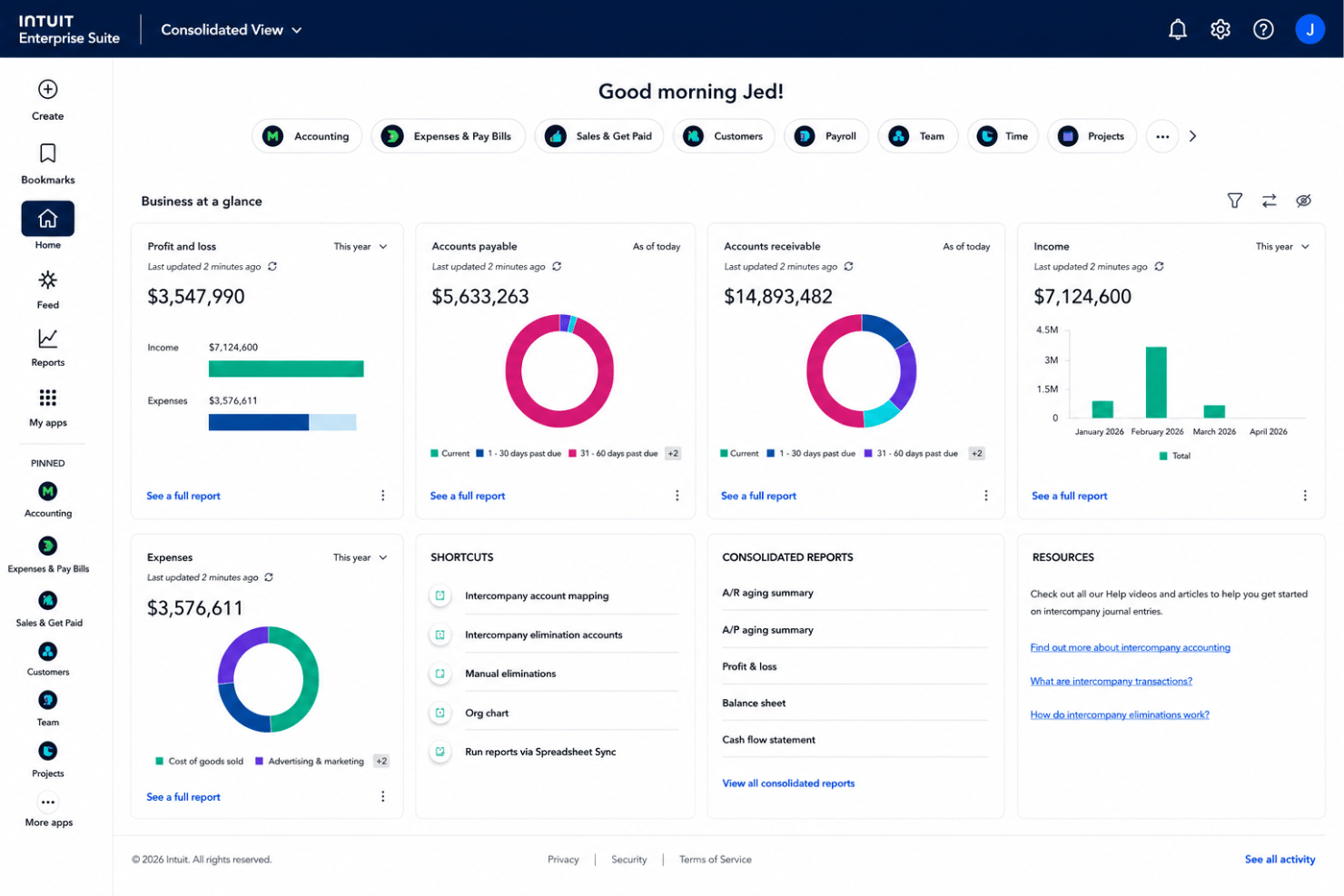
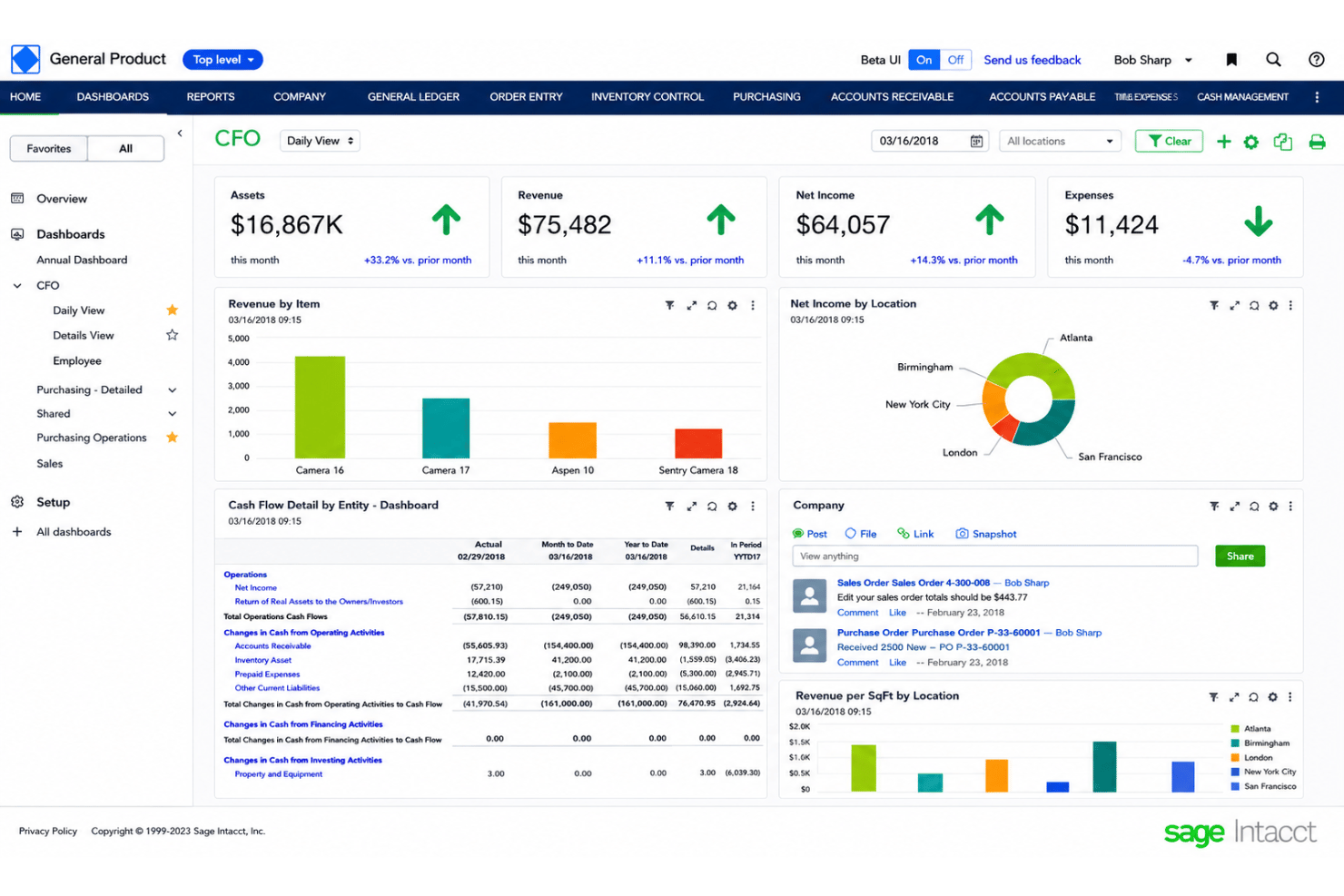
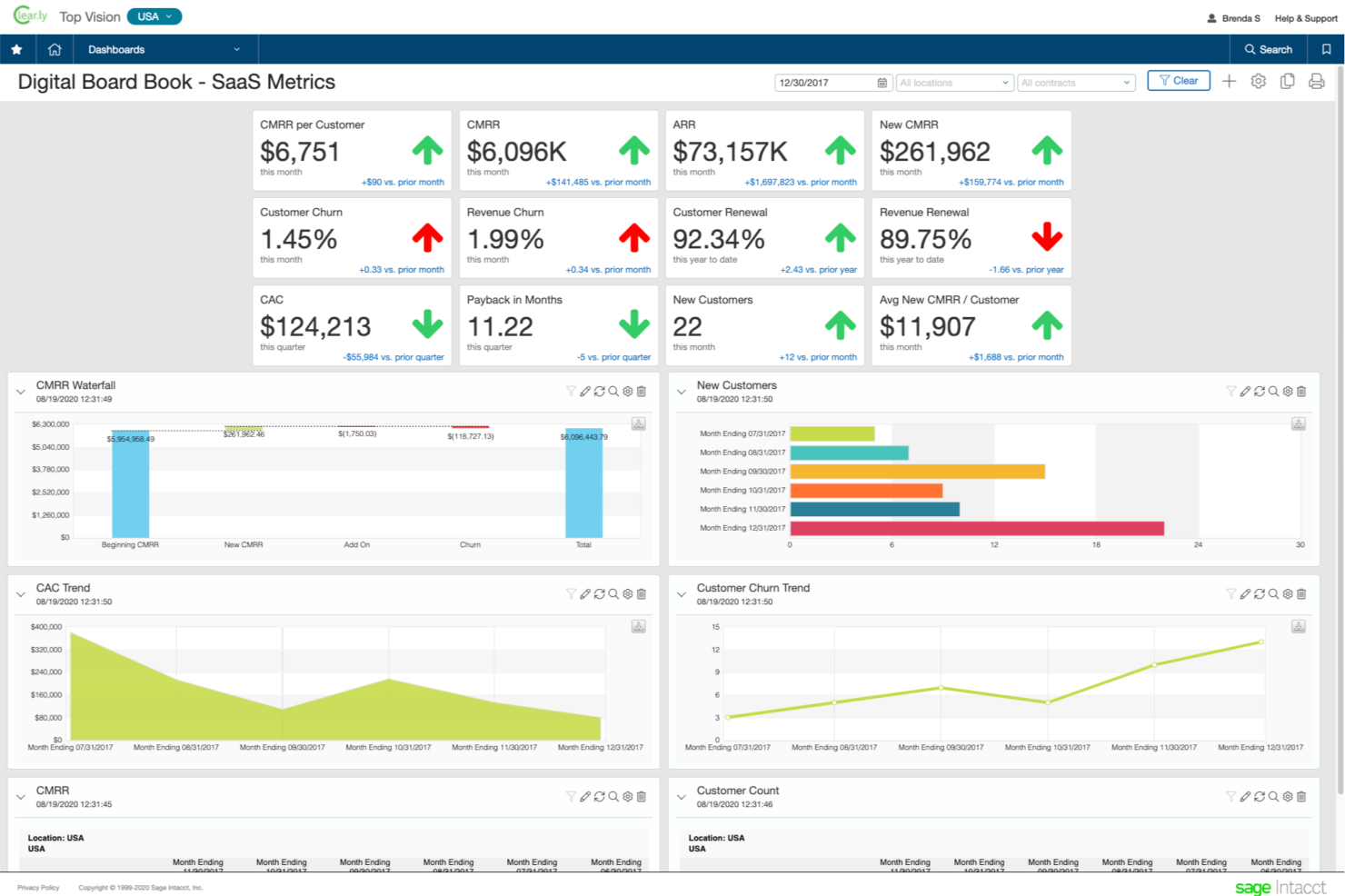
Intuit Enterprise Suite and Sage Intacct are both business management software that help growing organizations manage reporting, automation, multi-entity operations, and financial visibility. Intuit Enterprise Suite supports broader connected workflows across finance, payroll, payments, and administrative operations, while Sage Intacct is more finance-focused with strong accounting, reporting, and financial controls.
In this comparison, I’ll break down their features, pricing, pros and cons, security, and ideal use cases to help you decide which platform fits your organization best.
Intuit Enterprise Suite vs. Sage Intacct: An Overview
Intuit Enterprise Suite
Sage Intacct


Warum Sie unseren Software-Bewertungen vertrauen können
Unser Team testet und bewertet Software seit 2012. Als HR-Experten wissen wir selbst, wie schwierig – und wichtig – es ist, die richtige Software auszuwählen.
Für diesen Leitfaden haben wir Tools mithilfe von praktischen Tests und unabhängiger Recherche bewertet und dabei unsere Bewertungskriterien angewendet. Zudem greifen wir auf Erkenntnisse von Branchenvordenkern und praktizierenden HR-Experten zurück.
Unsere Bewertungen spiegeln unser menschliches redaktionelles Urteilsvermögen wider, keine Verkaufsstrategie.
Expertenprüfer:
Intuit Enterprise Suite vs. Sage Intacct Pricing Comparison
| Intuit Enterprise Suite | Sage Intacct | |
|---|---|---|
| Free Trial | Free demo available | Free demo available |
| Pricing | Pricing upon request | From £1,200/month |
Intuit Enterprise Suite vs. Sage Intacct Preisgestaltung & Versteckte Kosten
Die Intuit Enterprise Suite und Sage Intacct verwenden beide individuelle Preismodelle, daher müssen Sie für ein Angebot direkt Kontakt mit jedem Anbieter aufnehmen. Die Preisgestaltung beider Plattformen hängt in der Regel von Faktoren wie der Anzahl der Nutzer, den gewählten Modulen, Einheiten, Add-ons, dem Implementierungsaufwand sowie der generellen Unternehmenskomplexität ab. Das bedeutet, dass sich keines der beiden Tools einfach durch öffentlich zugängliche Preisinformationen vergleichen lässt – insbesondere für Teams, die Finanzen, Lohnabrechnung, Berichterstellung und Verwaltung in mehreren Abteilungen oder Einheiten managen.
Um die Kosten genau zu vergleichen, fordern Sie von beiden Anbietern detaillierte Angebote an, die Implementierung, Schulung, Support, Integrationen, zusätzliche Nutzer und etwaige erforderliche Add-ons einschließen. Wenn Sie über das Grundabonnement hinausblicken, bekommen Sie ein umfassendes Bild der langfristigen Gesamtkosten und können die Plattform auswählen, die am besten zu den finanziellen, administrativen und operativen Anforderungen Ihres Unternehmens passt.
Intuit Enterprise Suite vs. Sage Intacct Feature Comparison
<div class="slate-p" data-slate-node="element" data-block-id="_ZT3xkuGvs" data-slate-fragment="JTVCJTdCJTIyY2hpbGRyZW4lMjIlM0ElNUIlN0IlMjJ0ZXh0JTIyJTNBJTIySW50dWl0JTIwRW50ZXJwcmlzZSUyMFN1aXRlJTIwaXMlMjBidXNpbmVzcyUyMG1hbmFnZW1lbnQlMjBzb2Z0d2FyZSUyMGJ1aWx0JTIwdG8lMjBjb25uZWN0JTIwZmluYW5jaWFsJTIwbWFuYWdlbWVudCUyMHdpdGglMjBicm9hZGVyJTIwYWRtaW5pc3RyYXRpdmUlMjBvcGVyYXRpb25zJTJDJTIwaW5jbHVkaW5nJTIwcGF5cm9sbCUyQyUyMHBheW1lbnRzJTJDJTIwYmlsbCUyMHBheSUyQyUyMHdvcmtmb3JjZSUyMHRvb2xzJTJDJTIwd29ya2Zsb3clMjBhdXRvbWF0aW9uJTJDJTIwYW5kJTIwQUktcG93ZXJlZCUyMGluc2lnaHRzLiUyMEl0cyUyMHZhbHVlJTIwY29tZXMlMjBmcm9tJTIwZ2l2aW5nJTIwSFIlMkMlMjBmaW5hbmNlJTJDJTIwYW5kJTIwb3BlcmF0aW9ucyUyMHRlYW1zJTIwYSUyMG1vcmUlMjBjb25uZWN0ZWQlMjB3YXklMjB0byUyMG1hbmFnZSUyMGFwcHJvdmFscyUyQyUyMHJlcG9ydGluZyUyQyUyMGNhc2glMjBmbG93JTJDJTIwYW5kJTIwbXVsdGktZW50aXR5JTIwd29yayUyMHRocm91Z2glMjB0aGUlMjBicm9hZGVyJTIwSW50dWl0JTIwZWNvc3lzdGVtLiUyMiU3RCU1RCUyQyUyMnR5cGUlMjIlM0ElMjJwJTIyJTJDJTIyaWQlMjIlM0ElMjJsSUFfTDN6aGxOJTIyJTdEJTJDJTdCJTIyY2hpbGRyZW4lMjIlM0ElNUIlN0IlMjJ0ZXh0JTIyJTNBJTIyU2FnZSUyMEludGFjY3QlMkMlMjBhdWYlMjBkZXIlMjBhbmRlcmVuJTIwU2VpdGUlMkMlMjBpc3QlMjBlaW5lJTIwS2klQzMlQkJhc2llcnRlJTIwYmlsaGFsdGVyJTIwZiVDMyVCOHIgQnVjaGhhbHR1bmdzLWluZm9ybWF0aW9uJTIwdW5kJTIwRmluYW56d2VzdGVuc2NoYWZ0JTJDJTIwYmVrYW5udCUyMGZ1ciUyMHN0YXJrZW4lMjBCZXJpY2h0ZXJzdGF0dW5nZW4lMkMlMjBNdWx0aXJpbnRlZ2llci0lMjB1bmQlMjBHbG9iYWxlJTIwS29uc29saWRpZXJ1bmdlbiUyQyUyMERpbWVuc2lvbmFsYm9vaGx0dW5nJTJDJTIwQVBHdXRvbWF0aXNpZXJ1bmdlbiUyQyUyMEFia3JlY2hubnVuZyUyQyUyMEJ1ZGdldGluZyUyQyUyMHByw6Zma3R2ZXJmb2xnZSUyMHVuZCUyMEtJLUJhc2llcnRlJTIwQXVzc2Vya2VyLiUyMERpZSUyMEludHVpdCUyMEVudGVycHJpc2UlMjBTdWl0ZSUyMHVuZGVyc2NoZWlkZXQlMjBzaWNoJTIwZHVyY2glMjB6dXMlbmFjaCUyMHZlcmJpbmRlbiUyMENvbm5la3RpdCYjOTIxO3MtV29ya2Zsb3dzJTIwaW4lMjBzaWNoZXIlMjBFrG5hbnplJTIwaW0lMjBGaW5hbnp1bmQlMjBhZG1pbmlzdHJhdGlvbnMtQmVyZWljaCUyQyUyMHdoZXJlaW4lMjBTYWdlJTIwSW50YWNjdCUyMGJlaSUyMGRlciUyMHRpZWZlcmdlaGVuZGVuJTIwQnVjaGhhbHR1bmcgdm9uJTIwS29udHJvbGxlbiUyMHVuZCUyMGZpbmFuemllbGxlciUyMEVpbnNsZWlna2Vpby4lMjIlN0QlNUQlMkMlMjJ0eXBlJTIyJTNBJTIycCUyMiUyQyUyMmlkJTIyJTNBJTIyX1pUM3hrdUd2cyUyMiU3RCU1RA==
| Intuit Enterprise Suite | Sage Intacct | |
|---|---|---|
| API | ||
| Accounts Payable | ||
| Accounts Receivable | ||
| Budgeting | ||
| Calendar Management | ||
| Customer Management | ||
| Dashboard | ||
| Data Export | ||
| Data Import | ||
| Data Visualization | ||
| Expense Tracking | ||
| External Integrations | ||
| Forecasting | ||
| General Account Ledger | ||
| Inventory Tracking | ||
| Multi-User | ||
| Notifications | ||
| Payroll | ||
| Supplier Management | ||
| Tax Management |
Intuit Enterprise Suite vs. Sage Intacct Integrationen
| Integration | Intuit Enterprise Suite | Sage Intacct |
|---|---|---|
| Shopify | ✅ | ✅ |
| Salesforce | ✅ | ✅ |
| PayPal | ✅ | ✅ |
| Stripe | ✅ | ✅* |
| DocuSign | ✅ | ✅* |
| Square | ✅ | ✅ |
| Amazon Marketplace | ✅ | ✅* |
| HubSpot | ✅ | ✅ |
| Knowify | ✅ | ❌ |
| Wix | ✅ | ✅* |
| API | ✅ | ✅ |
| Zapier | ❌ | ✅ |
*Verfügbar über einen Drittanbieter-Konnektor, einen Sage Intacct Marketplace-Partner, API oder Zapier-Integration.
Sowohl Intuit Enterprise Suite als auch Sage Intacct unterstützen Integrationen für E-Commerce, Zahlungen, CRM und Finanzprozesse. Die Intuit Enterprise Suite setzt auf direkte App-Anbindungen und das größere Intuit-Ökosystem, während Sage Intacct viele Tools über Marketplace-Partner, Drittanbieter-Konnektoren, APIs oder Zapier anbietet. Insgesamt eignet sich die Intuit Enterprise Suite für Teams, die verbundene Workflows in den Bereichen Finanzen, Lohnabrechnung, Zahlungen und Administration wünschen, während Sage Intacct finanzorientierten Teams flexible Integrationsmöglichkeiten bietet.
Intuit Enterprise Suite vs. Sage Intacct Sicherheit, Compliance & Zuverlässigkeit
| Faktor | Intuit Enterprise Suite | Sage Intacct |
|---|---|---|
| Datenverschlüsselung | Verschlüsselt Daten während der Übertragung und im Ruhezustand, um sensible Finanz- und Betriebsinformationen zu schützen. | Verwendet mindestens 256-Bit-Verschlüsselung für Datenübertragungen und Verschlüsselung im Ruhezustand mittels Triple-DES mit 128 Bit oder AES-256 Speicher-Verschlüsselung. |
| Regulatorische Compliance | Unterstützt SOC-Berichte, ISO 27001-zertifizierte Informationssicherheitspraktiken, PCI DSS-Compliance für relevante Zahlungsdienste und VPAT-Dokumentation. | Unterstützt SOC 1 Typ II, SOC 2 Typ II, ISAE 3402/3000, PCI Level 1, HIPAA, DSGVO und ISO 27001. |
| Benutzerzugriffskontrolle | Beinhaltet rollenbasierte Zugriffskontrollen, um den Zugriff auf vertrauliche Finanz-, Lohn- und Betriebsdaten zu beschränken. | Verwendet Zugriffskontrollen, Benutzer-Authentifizierung, Sicherheitsprotokollierung und MFA für kritische Geschäftssysteme. |
| Betriebszeit & Verfügbarkeit | Stellt Ressourcen für Unternehmenssicherheit und Compliance bereit, ein spezifisches Intuit Enterprise Suite SLA zur Verfügbarkeit ist jedoch nicht öffentlich gelistet. | Bietet Abonnementgutschriften, falls die Verfügbarkeit für abgedeckte Sage Intacct-Dienste unter 99,8 % fällt. |
Die Intuit Enterprise Suite deckt die wichtigsten Sicherheitskontrollen ab, die wachsende Unternehmen benötigen, darunter Verschlüsselung während der Übertragung wie auch im Ruhezustand, rollenbasierte Zugriffskontrollen, SOC-Berichte, ISO 27001-zertifizierte Praktiken und PCI DSS-Compliance für entsprechende Zahlungsdienste. Sage Intacct hingegen veröffentlicht detailliertere Dokumentationen rund um Audits, Compliance und Verfügbarkeit. Insgesamt eignet sich die Intuit Enterprise Suite für wachsende und mittelständische Unternehmen, die eine sichere Verwaltung finanzieller, administrativer und betrieblicher Daten benötigen, während Sage Intacct besonders dann passt, wenn strengere Prüfungs-, Compliance- oder dokumentierte Wiederherstellungsanforderungen bestehen.
Intuit Enterprise Suite vs. Sage Intacct Benutzerfreundlichkeit
| Faktor | Intuit Enterprise Suite | Sage Intacct |
|---|---|---|
| Benutzeroberfläche | Verwendet eine vertraute Intuit-typische Oberfläche, konzipiert für Finanz-, Lohn-, Berichts- und Workflow-Aufgaben. | Bietet eine auf den Finanzbereich zugeschnittene Benutzeroberfläche, die für Berichte, Dashboards, Dimensionen und Kontrollen optimiert ist. |
| Onboarding | Bietet eine geführte Einrichtung mit einem dedizierten Customer Success Manager, Migrationshilfe und maßgeschneiderten Trainingsplänen. | Bietet Unterstützung bei der Implementierung durch Sage Intacct Professional Services mit individueller Einrichtung und Trainingsangeboten. |
| Alltägliche Aufgaben | Ermöglicht Teams die Verwaltung von Lohnabrechnung, Zahlungen, Berichten, Genehmigungen und administrativen Workflows über vernetzte Intuit-Tools. | Unterstützt finance-lastige Arbeitsprozesse wie Berichterstattung, Konsolidierungen, Kreditoren- und Debitorenbuchhaltung, Budgetierung und Audit-Tracking. |
| Support-Ressourcen | Bietet Produktsupport, Customer-Success-Betreuung, Trainingspläne und optional Premium-Supportstufen. | Stellt technischen Support, Schulungen über die Sage University, Dokumentation, Produktspezialisten und Community-Ressourcen bereit. |
Im Hinblick auf die Benutzerfreundlichkeit setzt Intuit Enterprise Suite auf geführte Einführung, vertraute Intuit-Workflows und integrierte Tools für Finanzen, Lohnabrechnung, Zahlungen, Berichte und administrative Genehmigungen. Sage Intacct hingegen richtet sich stärker an den Finanzbereich und bietet tiefere Reporting-Möglichkeiten, Dimensionen, Konsolidierungen, Kreditoren-/Debitorenbuchhaltung, Budgetierung und Audit-Kontrollen. In der Praxis erscheint die Intuit Enterprise Suite praktischer für Teams, die vernetzte administrative Workflows wünschen, während Sage Intacct für Teams geeignet ist, die eine umfassendere finanzielle Struktur benötigen.
Intuit Enterprise Suite vs Sage Intacct: Pros & Cons
Intuit Enterprise Suite
- Multi-entity management simplifies financial operations across growing organizations.
- AI-powered automation helps reduce manual financial, administrative, and operational tasks.
- Advanced reporting and real-time business insights improve decision-making.
- May offer more functionality than smaller businesses with basic accounting needs.
- Organizations migrating from simpler accounting software may face a learning curve.
- Advanced customization and complex implementations require additional planning and configuration.
Sage Intacct
- Real-time dashboards enable fast, accurate decision making
- Multi-entity consolidations save time for global organizations
- Audit trail automates compliance for financial processes
- Report customization requires specialized knowledge and training
- Approval workflows lack flexibility for unique business processes
- User interface updates can disrupt familiar navigation paths
Best Use Cases for Intuit Enterprise Suite and Sage Intacct
Intuit Enterprise Suite
- Multi-Entity Organizations Manage multiple legal entities, automate intercompany transactions, and consolidate financial reporting from a single system.
- Professional Services Firms Track projects, manage financial performance, and automate accounting workflows while improving visibility across teams.
- Technology & SaaS Companies Support growing operations with AI-powered reporting, forecasting, and financial controls as the business scales.
- Construction & Project-Based Businesses Manage project accounting, budgeting, and financial reporting with workflows designed for project-driven organizations.
- Manufacturing, Wholesale & Distribution Monitor financial performance across products, locations, and business units while improving operational visibility.
- Growing Mid-Market Businesses Organizations expanding across multiple entities or locations can benefit from enterprise-level financial management without the complexity of a traditional ERP.
Sage Intacct
- Healthcare Organizations Fast consolidations, strict compliance features, and detailed audit trails support industry regulations and patient billing complexity.
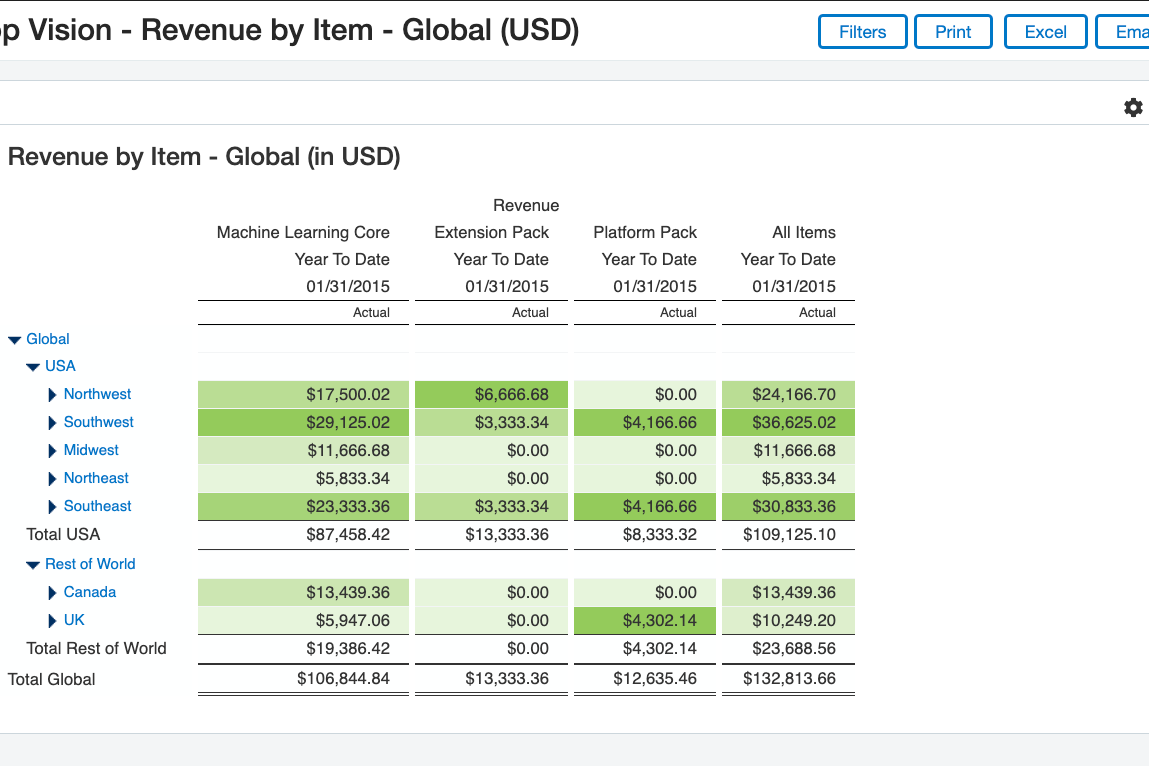
- SaaS Companies Revenue recognition automation and multidimensional reporting help SaaS CFOs track metrics and comply with accounting standards easily.
- Nonprofit Finance Teams Fund accounting, grant management, and donor reporting are built-in to meet nonprofit financial transparency and tracking needs.
- Multi-Entity Corporations Automated currency conversion, intercompany eliminations, and centralized reporting simplify accounting for businesses with numerous subsidiaries.
- Hospitality Chains Sage Intacct handles complex property-level accounting, period comparisons, and operational metrics across multiple locations.
- Professional Services Firms Project accounting, time entry, and resource costing features support consulting, legal, and engineering firms needing transparency into billable hours and margins.
Wer sollte Intuit Enterprise Suite und wer sollte Sage Intacct nutzen?
Wenn Sie eine Unternehmensmanagement-Software suchen, die Finanzen, Lohnabrechnung, Zahlungen, Berichterstattung und administrative Workflows verbindet, ist die Intuit Enterprise Suite wahrscheinlich die bessere Wahl. Sie ist ideal, wenn Ihre HR-, Finanz- und Betriebsteams KI-basierte Automatisierung, Multi-Entity-Transparenz und Intuit-Ökosystem-Tools benötigen, um tägliche Verwaltungsarbeiten voranzutreiben, ohne die volle Komplexität eines traditionellen ERP-Systems in Kauf nehmen zu müssen.
Benötigt Ihr Team hingegen eine tiefere Buchhaltungsstruktur, komplexeres Reporting, prüfungsfähige Kontrollen und eine deutlich ausgeprägte finanzielle Steuerung, kann Sage Intacct die bessere Option sein. Die Lösung eignet sich hervorragend für finanzorientierte Organisationen, darunter das Gesundheitswesen, Non-Profit, SaaS, Hotellerie und Multi-Entity-Teams, die dimensionale Buchhaltung, Budgetierung, Konsolidierung und compliance-orientierte Arbeitsprozesse benötigen.
Differences Between Intuit Enterprise Suite and Sage Intacct
| Intuit Enterprise Suite | Sage Intacct | |
|---|---|---|
| AI Focus | Uses Intuit AI Agents to support business insights, workflow assistance, and automation across financial and administrative operations. | Uses AI for finance-focused tasks such as outlier detection, accounting insights, and anomaly review. |
| Implementation Approach | Uses guided onboarding with customer success support, migration help, training, and a shorter implementation path than many traditional ERP deployments. | Typically has a longer implementation timeline, especially for complex reporting, dimensions, and finance controls. |
| Native Money Services | Includes payment processing, bill pay, and access to lending through the Intuit ecosystem. | Supports payment processing, while bill pay may rely on external partners and lending is not a core capability. |
| Platform Focus | Broader business management software that connects finance, payroll, payments, bill pay, workforce tools, reporting, and administrative workflows. | AI-powered accounting and financial management software focused on finance teams, reporting, controls, and consolidations. |
| Reporting & Planning Packaging | Includes enhanced reporting, dashboards, forecasting, budgeting, and AI-powered insights as part of its broader business management approach. | Offers strong reporting and planning tools, but advanced reporting and forecasting capabilities may depend on selected modules or add-ons. |
| Visit Intuit Enterprise SuiteOpens new window | Visit Sage IntacctOpens new window |
Similarities Between Intuit Enterprise Suite and Sage Intacct
| Cloud Access | Both are cloud-based platforms that let teams access business and financial data online. |
|---|---|
| Core Financial Workflows | Both support AR, AP, financial reporting, project accounting, and day-to-day finance operations. |
| Custom Pricing | Both use quote-based pricing that depends on factors like users, modules, entities, add-ons, and implementation needs. |
| Multi-Entity Management | Both support multi-entity management for organizations with multiple business units, entities, or locations. |
| User Permissions | Both include role-based permissions to help control access to sensitive financial, administrative, and operational data. |
| Visit Intuit Enterprise SuiteOpens new window Visit Sage IntacctOpens new window | |